-By CA Mitesh Katira
Mob : +91 983377556
E-mail:mitesh@apdoshi.com
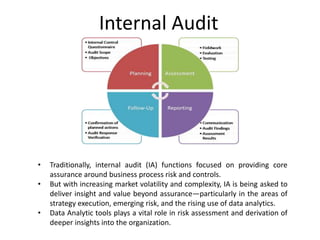
• Traditionally, internal audit (IA) functions focused on providing core
assurance around business process risk and controls.
• But with increasing market volatility and complexity, IA is being asked to
deliver insight and value beyond assurance—particularly in the areas of
strategy execution, emerging risk, and the rising use of data analytics.
• Data Analytic tools plays a vital role in risk assessment and derivation of
deeper insights into the organization.
Internal Audit
Risk Management
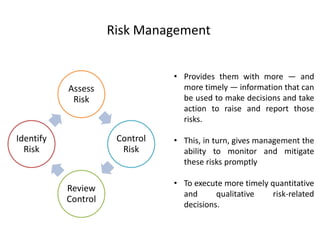
• Provides them with more — and
more timely — information that can
be used to make decisions and take
action to raise and report those
risks.
• This, in turn, gives management the
ability to monitor and mitigate
these risks promptly
• To execute more timely quantitative
and qualitative risk-related
decisions.
Assess
Risk
Control
Risk
Review
Control
Identify
Risk
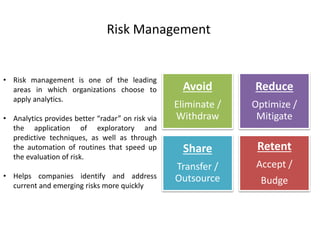
Avoid
Eliminate /
Withdraw
Reduce
Optimize /
Mitigate
Share
Transfer /
Outsource
Retent
Accept /
Budge
Risk Management
• Risk management is one of the leading
areas in which organizations choose to
apply analytics.
• Analytics provides better “radar” on risk via
the application of exploratory and
predictive techniques, as well as through
the automation of routines that speed up
the evaluation of risk.
• Helps companies identify and address
current and emerging risks more quickly
What Data Analytics is…?
• Analytics is not a technology; it’s a concept. It refers to the use of certain
technologies, skill sets, and processes for the exploration, evaluation, and
investigation of business operations.
• To drive planning, gain insight, and optimize the internal audit lifecycle.
• Makes extensive use of data, statistical and quantitative analysis, explanatory and
predictive modeling, and fact-based management to drive decision making.
• Analytics methodology, analysis tools, performance management, descriptive
statistics, exploratory data analysis, confirmatory data analysis, as well as data
management.
• Provides hindsight, insight, and foresight.
Why Data Analytics …?
• Traditional internal audit methodologies have served their purpose well for
decades.
• However, as the business landscape for most organizations becomes increasingly
complex and fast paced, there is a movement toward leveraging advanced
business analytic techniques to refine the focus on risk and derive deeper insights
into the organization.
• Leading Internal Audit functions are embracing recent enhancements in data
mining technology and data visualization tools to deliver results more dynamically
in response to risk, dive deeper into organizational data, and deliver profound fact-
based insights.
• Business analytics holds incredible promise to enhance the internal audit process.
• Key to delivering on this promise is asking the right questions, embedding analytics
into the culture of the Internal Audit function, and aligning the analytics
implementation with the planning process and overall organizational operational
and strategic objectives.
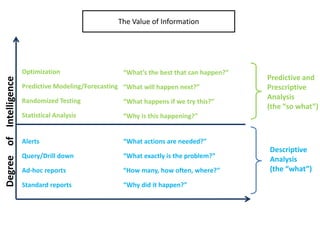
Optimization
Predictive Modeling/Forecasting
Randomized Testing
Statistical Analysis
“What’s the best that can happen?”
“What will happen next?”
“What happens if we try this?”
“Why is this happening?”
“What actions are needed?”
“What exactly is the problem?”
“How many, how often, where?”
“Why did it happen?”
Alerts
Query/Drill down
Ad-hoc reports
Standard reports
Predictive and
Prescriptive
Analysis
(the “so what”)
Descriptive
Analysis
(the “what”)
DegreeofIntelligence
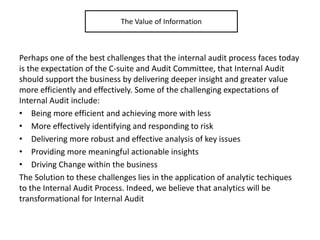
The Value of Information
Perhaps one of the best challenges that the internal audit process faces today
is the expectation of the C-suite and Audit Committee, that Internal Audit
should support the business by delivering deeper insight and greater value
more efficiently and effectively. Some of the challenging expectations of
Internal Audit include:
• Being more efficient and achieving more with less
• More effectively identifying and responding to risk
• Delivering more robust and effective analysis of key issues
• Providing more meaningful actionable insights
• Driving Change within the business
The Solution to these challenges lies in the application of analytic techiques
to the Internal Audit Process. Indeed, we believe that analytics will be
transformational for Internal Audit
The Value of Information
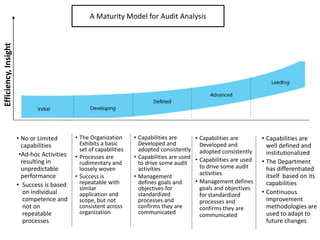
• No or Limited
capabilities
•Ad-hoc Activities
resulting in
unpredictable
performance
• Success is based
on individual
competence and
not on
repeatable
processes
A Maturity Model for Audit Analysis
• The Organization
Exhibits a basic
set of capabilities
• Processes are
rudimentary and
loosely woven
• Success is
repeatable with
similar
application and
scope, but not
consistent across
organization
• Capabilities are
Developed and
adopted consistently
• Capabilities are used
to drive some audit
activities
• Management
defines goals and
objectives for
standardized
processes and
confirms they are
communicated
• Capabilities are
Developed and
adopted consistently
• Capabilities are used
to drive some audit
activities
• Management defines
goals and objectives
for standardized
processes and
confirms they are
communicated
• Capabilities are
well defined and
institutionalized
• The Department
has differentiated
itself based on its
capabilities
• Continuous
improvement
methodologies are
used to adapt to
future changes
Efficiency,Insight
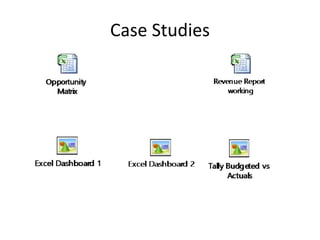
Case Studies
Internal Audit with Data Analytics

Internal Audit with Data Analytics

  • 1.
    -By CA MiteshKatira Mob : +91 983377556 E-mail:mitesh@apdoshi.com
  • 2.
    • Traditionally, internalaudit (IA) functions focused on providing core assurance around business process risk and controls. • But with increasing market volatility and complexity, IA is being asked to deliver insight and value beyond assurance—particularly in the areas of strategy execution, emerging risk, and the rising use of data analytics. • Data Analytic tools plays a vital role in risk assessment and derivation of deeper insights into the organization. Internal Audit
  • 3.
    Risk Management • Providesthem with more — and more timely — information that can be used to make decisions and take action to raise and report those risks. • This, in turn, gives management the ability to monitor and mitigate these risks promptly • To execute more timely quantitative and qualitative risk-related decisions. Assess Risk Control Risk Review Control Identify Risk
  • 4.
    Avoid Eliminate / Withdraw Reduce Optimize / Mitigate Share Transfer/ Outsource Retent Accept / Budge Risk Management • Risk management is one of the leading areas in which organizations choose to apply analytics. • Analytics provides better “radar” on risk via the application of exploratory and predictive techniques, as well as through the automation of routines that speed up the evaluation of risk. • Helps companies identify and address current and emerging risks more quickly
  • 5.
    What Data Analyticsis…? • Analytics is not a technology; it’s a concept. It refers to the use of certain technologies, skill sets, and processes for the exploration, evaluation, and investigation of business operations. • To drive planning, gain insight, and optimize the internal audit lifecycle. • Makes extensive use of data, statistical and quantitative analysis, explanatory and predictive modeling, and fact-based management to drive decision making. • Analytics methodology, analysis tools, performance management, descriptive statistics, exploratory data analysis, confirmatory data analysis, as well as data management. • Provides hindsight, insight, and foresight.
  • 6.
    Why Data Analytics…? • Traditional internal audit methodologies have served their purpose well for decades. • However, as the business landscape for most organizations becomes increasingly complex and fast paced, there is a movement toward leveraging advanced business analytic techniques to refine the focus on risk and derive deeper insights into the organization. • Leading Internal Audit functions are embracing recent enhancements in data mining technology and data visualization tools to deliver results more dynamically in response to risk, dive deeper into organizational data, and deliver profound fact- based insights. • Business analytics holds incredible promise to enhance the internal audit process. • Key to delivering on this promise is asking the right questions, embedding analytics into the culture of the Internal Audit function, and aligning the analytics implementation with the planning process and overall organizational operational and strategic objectives.
  • 7.
    Optimization Predictive Modeling/Forecasting Randomized Testing StatisticalAnalysis “What’s the best that can happen?” “What will happen next?” “What happens if we try this?” “Why is this happening?” “What actions are needed?” “What exactly is the problem?” “How many, how often, where?” “Why did it happen?” Alerts Query/Drill down Ad-hoc reports Standard reports Predictive and Prescriptive Analysis (the “so what”) Descriptive Analysis (the “what”) DegreeofIntelligence The Value of Information
  • 8.
    Perhaps one ofthe best challenges that the internal audit process faces today is the expectation of the C-suite and Audit Committee, that Internal Audit should support the business by delivering deeper insight and greater value more efficiently and effectively. Some of the challenging expectations of Internal Audit include: • Being more efficient and achieving more with less • More effectively identifying and responding to risk • Delivering more robust and effective analysis of key issues • Providing more meaningful actionable insights • Driving Change within the business The Solution to these challenges lies in the application of analytic techiques to the Internal Audit Process. Indeed, we believe that analytics will be transformational for Internal Audit The Value of Information
  • 9.
    • No orLimited capabilities •Ad-hoc Activities resulting in unpredictable performance • Success is based on individual competence and not on repeatable processes A Maturity Model for Audit Analysis • The Organization Exhibits a basic set of capabilities • Processes are rudimentary and loosely woven • Success is repeatable with similar application and scope, but not consistent across organization • Capabilities are Developed and adopted consistently • Capabilities are used to drive some audit activities • Management defines goals and objectives for standardized processes and confirms they are communicated • Capabilities are Developed and adopted consistently • Capabilities are used to drive some audit activities • Management defines goals and objectives for standardized processes and confirms they are communicated • Capabilities are well defined and institutionalized • The Department has differentiated itself based on its capabilities • Continuous improvement methodologies are used to adapt to future changes Efficiency,Insight
  • 10.