Integrating GNSS within
another safety critical transport mode
Luc Tytgat, EASA
Director Strategy and Safety Management
TE.GEN.00409-001
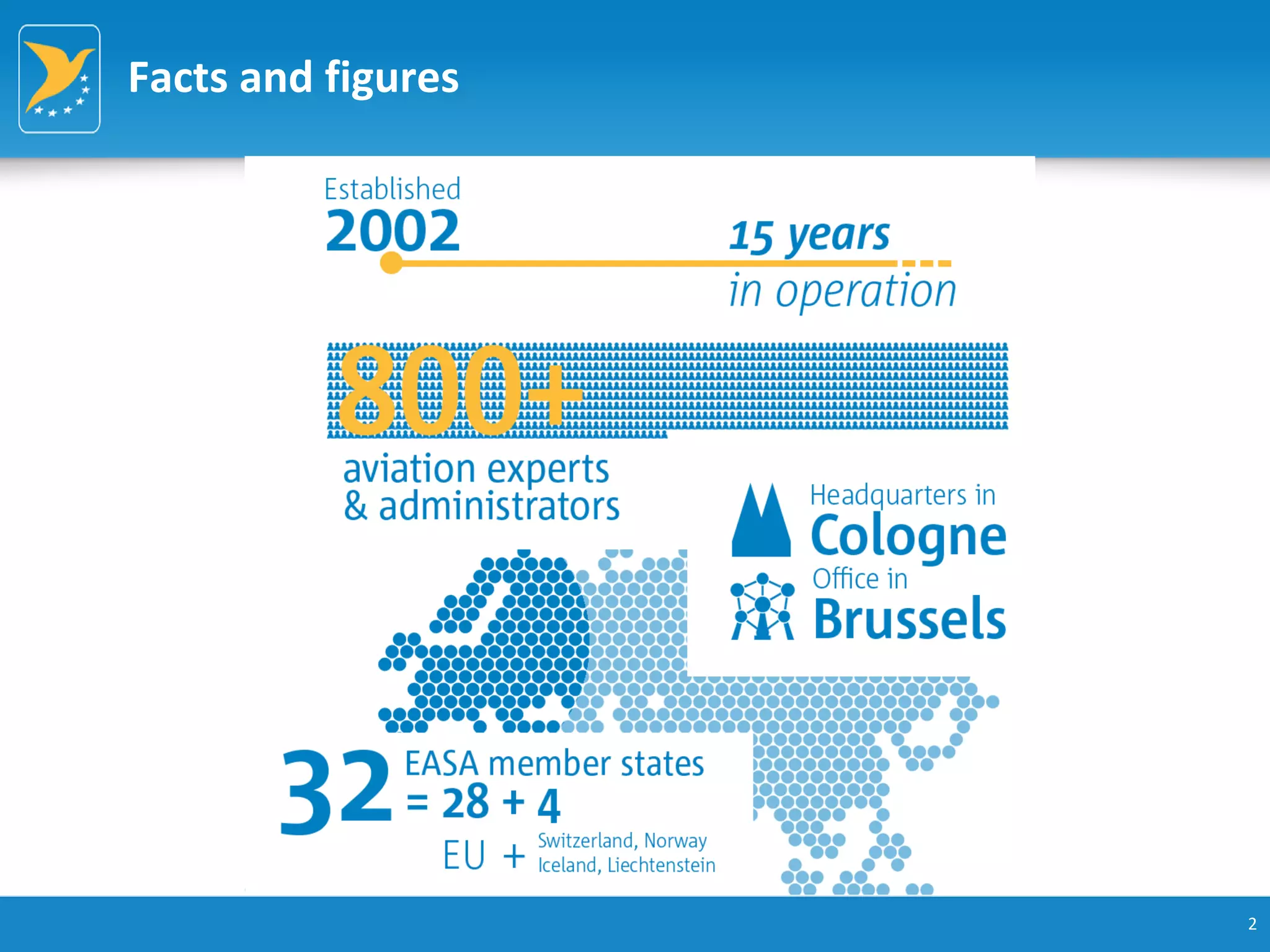
Facts and figures
2
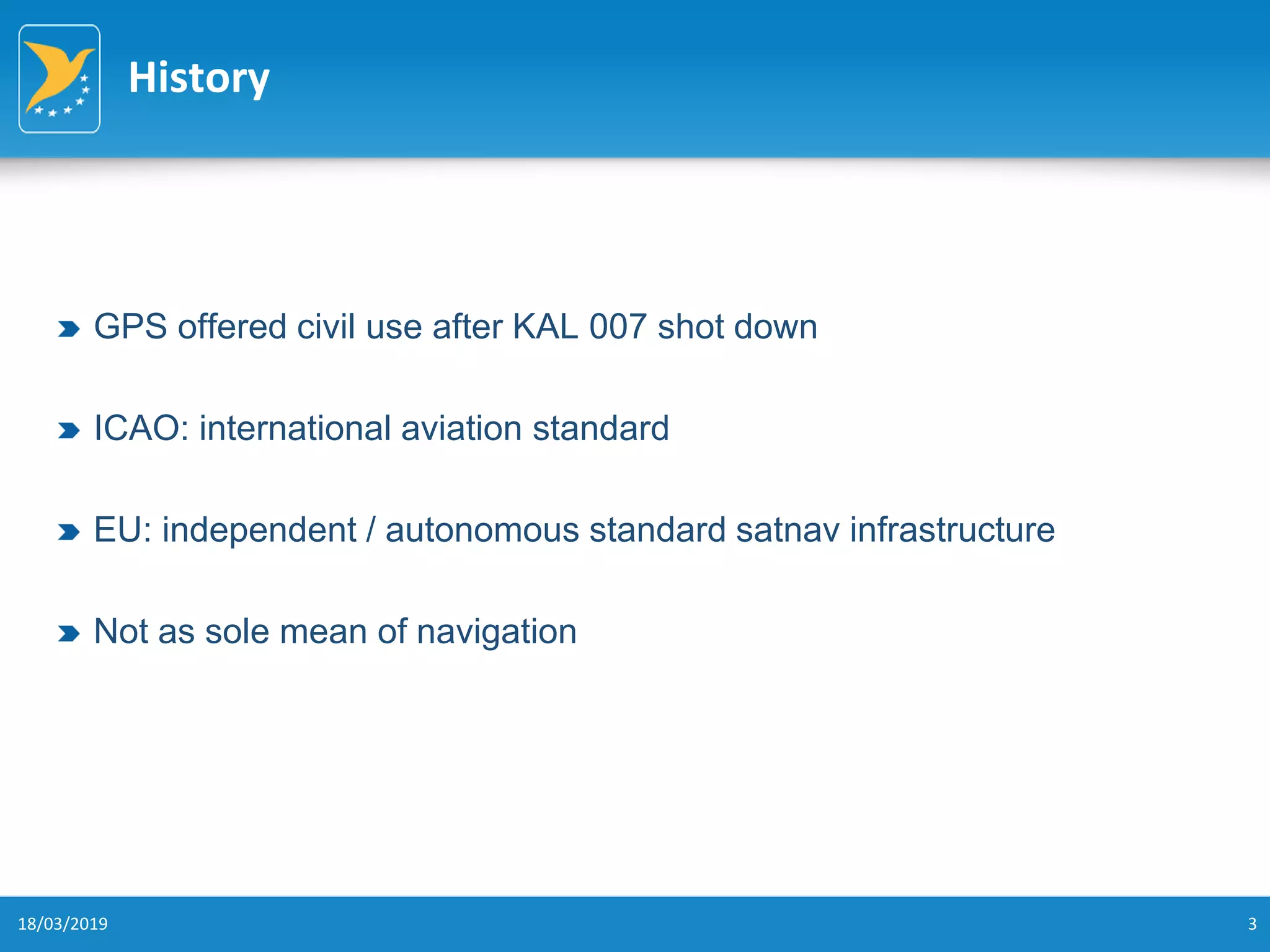
History
GPS offered civil use after KAL 007 shot down
ICAO: international aviation standard
EU: independent / autonomous standard satnav infrastructure
Not as sole mean of navigation
318/03/2019
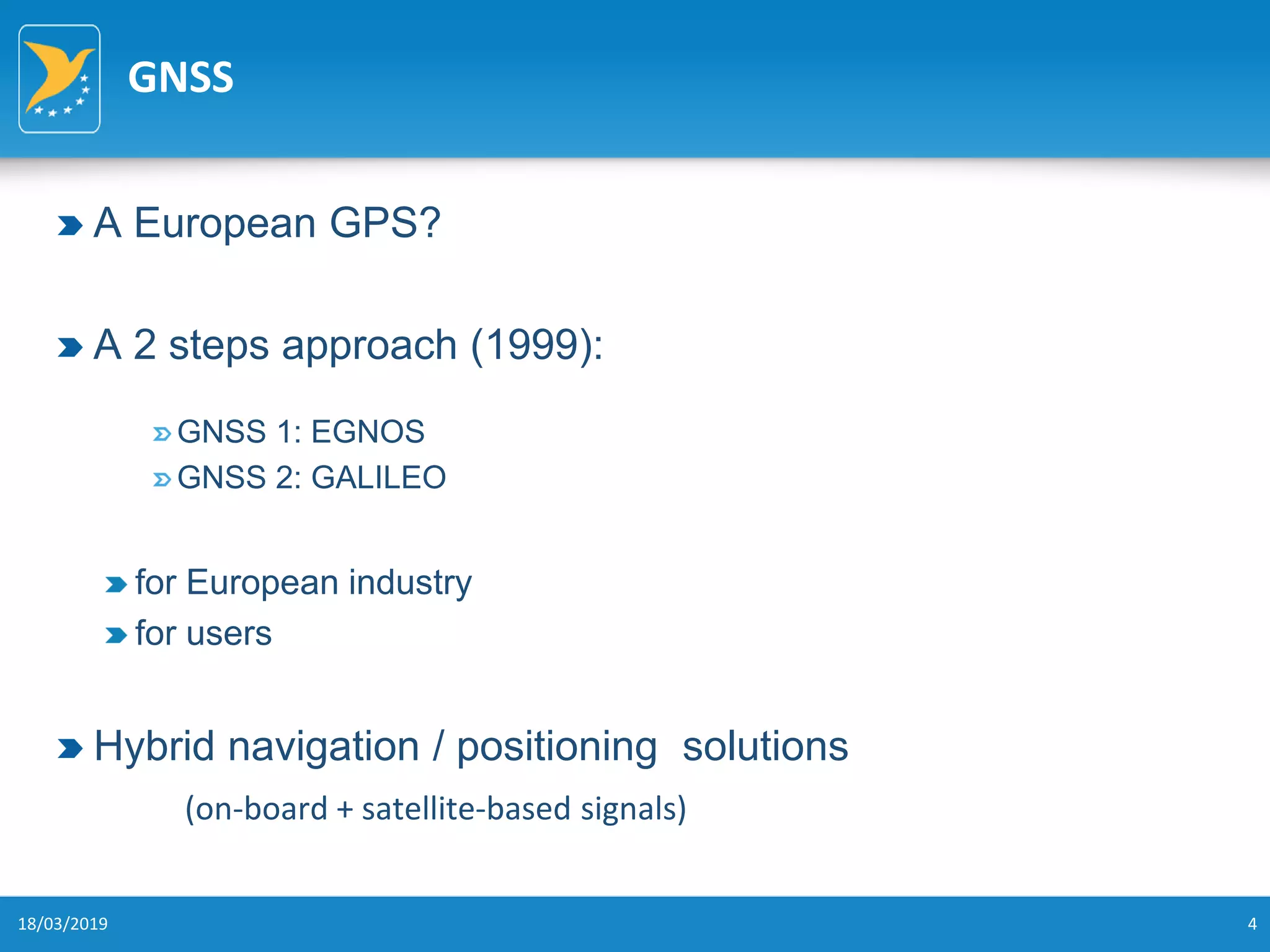
GNSS
A European GPS?
A 2 steps approach (1999):
GNSS 1: EGNOS
GNSS 2: GALILEO
for European industry
for users
Hybrid navigation / positioning solutions
(on-board + satellite-based signals)
418/03/2019
Aviation quality requirements
Phases of flight
En Route
Terminal operations
Departure operations
Non-precision approach
Precision approach
Performance requirements
Horizontal/vertical accuracy
ex. 16m
Time to alert
ex. 6s.
Integrity
ex. 1 x 1x10-7 / hour
Availability
ex. 0,99999 of the time
Continuity
ex. 1-8x10⁻⁶ /15s.
18/03/2019 5
GNSS signal in space-performance requirements (ICAO)
18/03/2019 6
Typical Operation Accuracy
horizontal
95%
Accuracy
vertical
95%
Integrity Time-to-alert Continuity Availability
En-route 3.7 km
(2.0 NM)
N/A 1 – 1×10⁻⁷/h 5 min 1 – 1× 10⁻⁴/h
to 1 – 1×10⁻⁸/h
0.99 to
0.99999
En-route, Terminal 0.74 km
(0.4 NM)
N/A 1 – 1×10⁻⁷/h 15 s 1 – 1× 10⁻⁴/h
to 1 – 1×10⁻⁸/h
0.99 to
0.99999
Initial approach,
Intermediate
approach,
Non-precision
approach (NPA),
Departure
220 m
(720 ft)
N/A 1 – 1×10⁻⁷/h 10 s 1 – 1× 10⁻⁴/h
to 1 – 1×10⁻⁸/h
0.99 to
0.99999
Approach
operations with
vertical guidance
(APV-I)
16.0 m
(52 ft)
20 m
(66 ft)
1 – 2× 10⁻⁷
in any approach
10 s 1 – 8× 10⁻⁶
per 15 s
0.99 to
0.99999
Approach
operations with
vertical guidance
(APV-II)
16.0 m
(52 ft)
8.0 m
(26 ft)
1 – 2× 10⁻⁷
in any approach
6 s 1 – 8× 10⁻⁶
per 15 s
0.99 to
0.99999
Category I precision
approach
16.0 m
(52 ft)
6.0 m to 4.0 m
(20 ft to 13 ft)
1 – 2× 10⁻⁷
in any approach
6 s 1 – 8× 10⁻⁶
per 15 s
0.99 to
0.99999
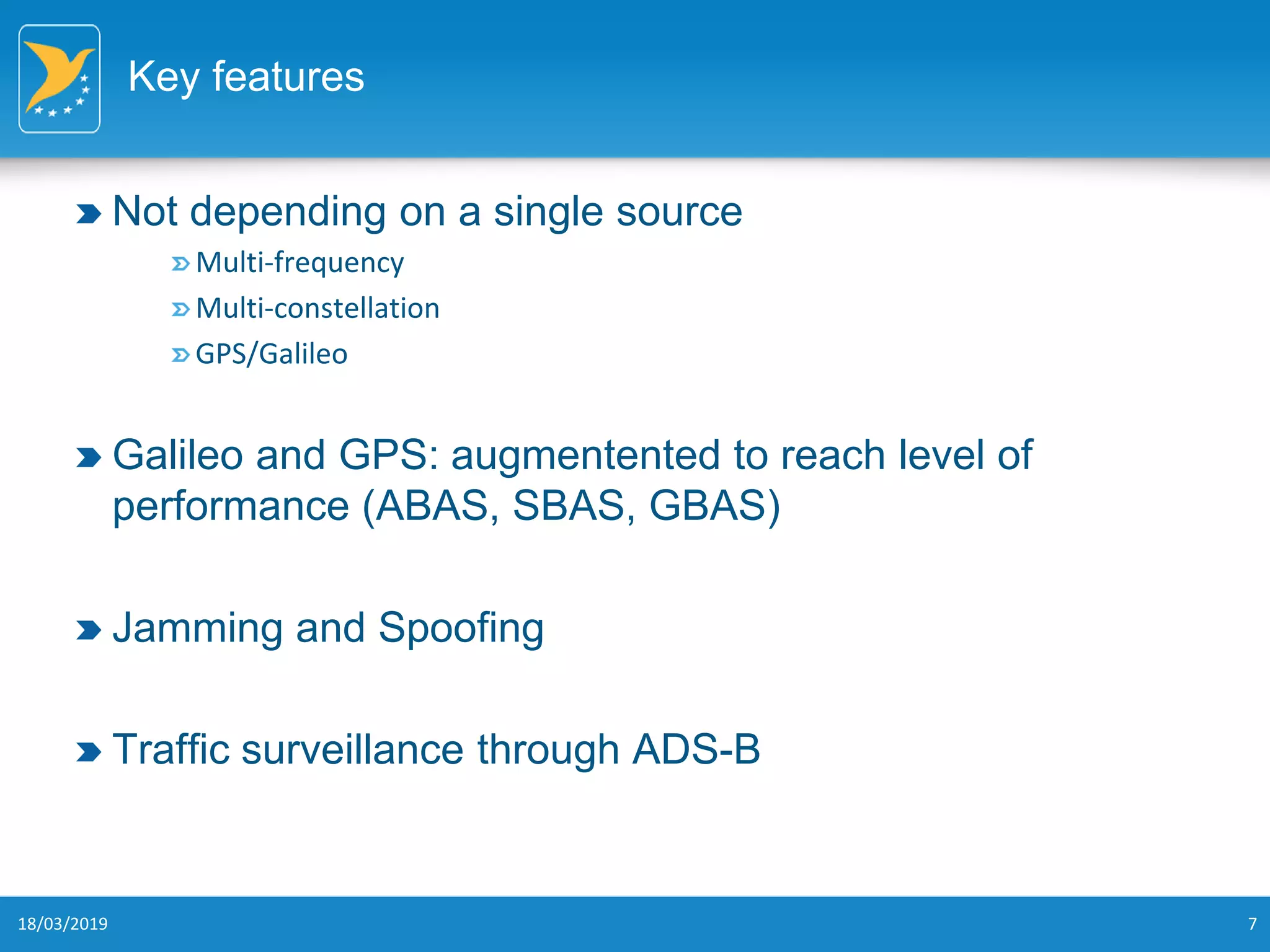
Key features
Not depending on a single source
Multi-frequency
Multi-constellation
GPS/Galileo
Galileo and GPS: augmentented to reach level of
performance (ABAS, SBAS, GBAS)
Jamming and Spoofing
Traffic surveillance through ADS-B
18/03/2019 7
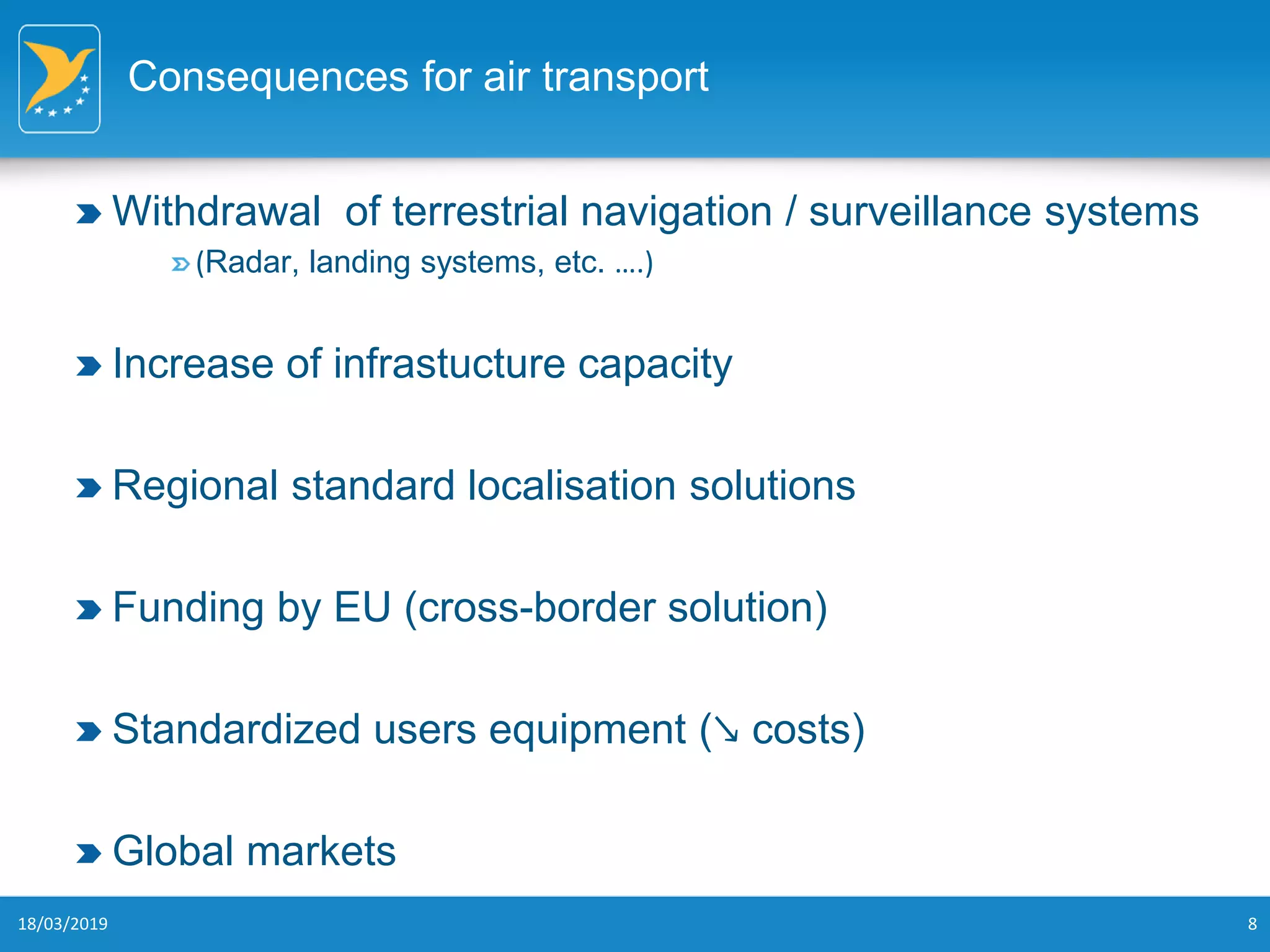
Consequences for air transport
Withdrawal of terrestrial navigation / surveillance systems
(Radar, landing systems, etc. ….)
Increase of infrastucture capacity
Regional standard localisation solutions
Funding by EU (cross-border solution)
Standardized users equipment (↘ costs)
Global markets
18/03/2019 8
Special feature
Search and rescue / distress tracking
Compatible with drones, helicopters, airport ground vehicles
EU owned infrastructure
EU oversight / certification of service provider
18/03/2019 9
Facts
600 runways / 150 airports
AIRBUS: fleet equipped with GNSS / EGNOS receiver
Business aviation: decision of French aviation authority
18/03/2019 10
Thank you for your attention
18/03/2019 11

Integrating GNSS within another safety critical transport mode

  • 1.
    Integrating GNSS within anothersafety critical transport mode Luc Tytgat, EASA Director Strategy and Safety Management TE.GEN.00409-001
  • 2.
  • 3.
    History GPS offered civiluse after KAL 007 shot down ICAO: international aviation standard EU: independent / autonomous standard satnav infrastructure Not as sole mean of navigation 318/03/2019
  • 4.
    GNSS A European GPS? A2 steps approach (1999): GNSS 1: EGNOS GNSS 2: GALILEO for European industry for users Hybrid navigation / positioning solutions (on-board + satellite-based signals) 418/03/2019
  • 5.
    Aviation quality requirements Phasesof flight En Route Terminal operations Departure operations Non-precision approach Precision approach Performance requirements Horizontal/vertical accuracy ex. 16m Time to alert ex. 6s. Integrity ex. 1 x 1x10-7 / hour Availability ex. 0,99999 of the time Continuity ex. 1-8x10⁻⁶ /15s. 18/03/2019 5
  • 6.
    GNSS signal inspace-performance requirements (ICAO) 18/03/2019 6 Typical Operation Accuracy horizontal 95% Accuracy vertical 95% Integrity Time-to-alert Continuity Availability En-route 3.7 km (2.0 NM) N/A 1 – 1×10⁻⁷/h 5 min 1 – 1× 10⁻⁴/h to 1 – 1×10⁻⁸/h 0.99 to 0.99999 En-route, Terminal 0.74 km (0.4 NM) N/A 1 – 1×10⁻⁷/h 15 s 1 – 1× 10⁻⁴/h to 1 – 1×10⁻⁸/h 0.99 to 0.99999 Initial approach, Intermediate approach, Non-precision approach (NPA), Departure 220 m (720 ft) N/A 1 – 1×10⁻⁷/h 10 s 1 – 1× 10⁻⁴/h to 1 – 1×10⁻⁸/h 0.99 to 0.99999 Approach operations with vertical guidance (APV-I) 16.0 m (52 ft) 20 m (66 ft) 1 – 2× 10⁻⁷ in any approach 10 s 1 – 8× 10⁻⁶ per 15 s 0.99 to 0.99999 Approach operations with vertical guidance (APV-II) 16.0 m (52 ft) 8.0 m (26 ft) 1 – 2× 10⁻⁷ in any approach 6 s 1 – 8× 10⁻⁶ per 15 s 0.99 to 0.99999 Category I precision approach 16.0 m (52 ft) 6.0 m to 4.0 m (20 ft to 13 ft) 1 – 2× 10⁻⁷ in any approach 6 s 1 – 8× 10⁻⁶ per 15 s 0.99 to 0.99999
  • 7.
    Key features Not dependingon a single source Multi-frequency Multi-constellation GPS/Galileo Galileo and GPS: augmentented to reach level of performance (ABAS, SBAS, GBAS) Jamming and Spoofing Traffic surveillance through ADS-B 18/03/2019 7
  • 8.
    Consequences for airtransport Withdrawal of terrestrial navigation / surveillance systems (Radar, landing systems, etc. ….) Increase of infrastucture capacity Regional standard localisation solutions Funding by EU (cross-border solution) Standardized users equipment (↘ costs) Global markets 18/03/2019 8
  • 9.
    Special feature Search andrescue / distress tracking Compatible with drones, helicopters, airport ground vehicles EU owned infrastructure EU oversight / certification of service provider 18/03/2019 9
  • 10.
    Facts 600 runways /150 airports AIRBUS: fleet equipped with GNSS / EGNOS receiver Business aviation: decision of French aviation authority 18/03/2019 10
  • 11.
    Thank you foryour attention 18/03/2019 11