Inside the Process_ Understanding How Penetration Testing Services Really Work.pdf
Penetration testing services are not just about finding problems. They help businesses understand how attackers think, where blind spots exist, and what steps are needed to strengthen long-term resilience.
Inside the Process_ Understanding How Penetration Testing Services Really Work.pdf
1.
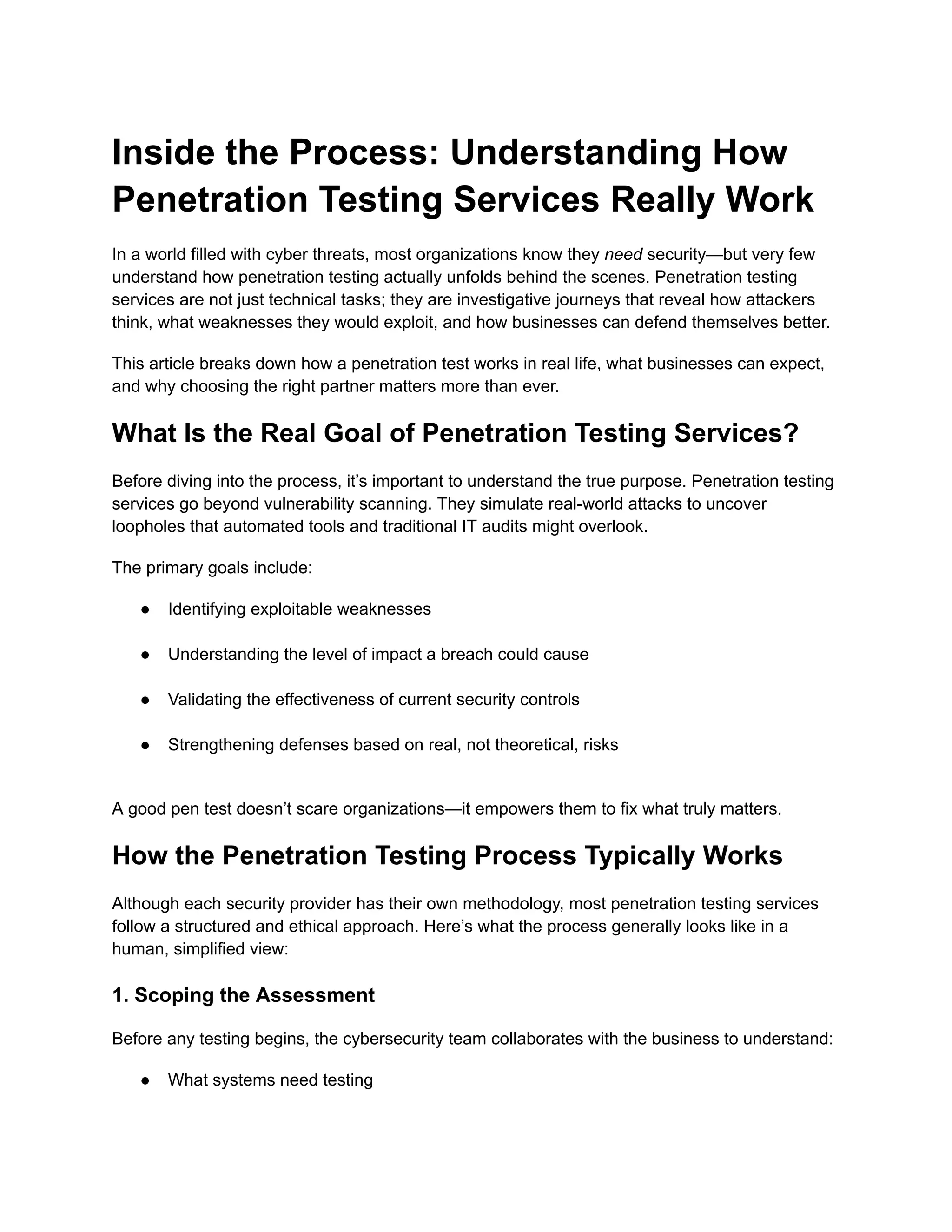
Inside the Process:Understanding How
Penetration Testing Services Really Work
In a world filled with cyber threats, most organizations know they need security—but very few
understand how penetration testing actually unfolds behind the scenes. Penetration testing
services are not just technical tasks; they are investigative journeys that reveal how attackers
think, what weaknesses they would exploit, and how businesses can defend themselves better.
This article breaks down how a penetration test works in real life, what businesses can expect,
and why choosing the right partner matters more than ever.
What Is the Real Goal of Penetration Testing Services?
Before diving into the process, it’s important to understand the true purpose. Penetration testing
services go beyond vulnerability scanning. They simulate real-world attacks to uncover
loopholes that automated tools and traditional IT audits might overlook.
The primary goals include:
● Identifying exploitable weaknesses
● Understanding the level of impact a breach could cause
● Validating the effectiveness of current security controls
● Strengthening defenses based on real, not theoretical, risks
A good pen test doesn’t scare organizations—it empowers them to fix what truly matters.
How the Penetration Testing Process Typically Works
Although each security provider has their own methodology, most penetration testing services
follow a structured and ethical approach. Here’s what the process generally looks like in a
human, simplified view:
1. Scoping the Assessment
Before any testing begins, the cybersecurity team collaborates with the business to understand:
● What systems need testing
2.
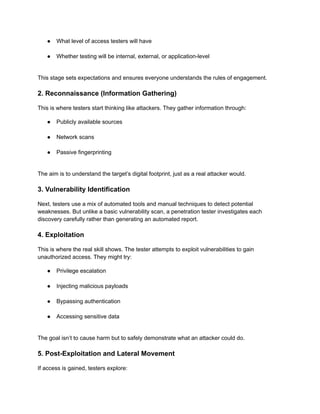
● What levelof access testers will have
● Whether testing will be internal, external, or application-level
This stage sets expectations and ensures everyone understands the rules of engagement.
2. Reconnaissance (Information Gathering)
This is where testers start thinking like attackers. They gather information through:
● Publicly available sources
● Network scans
● Passive fingerprinting
The aim is to understand the target’s digital footprint, just as a real attacker would.
3. Vulnerability Identification
Next, testers use a mix of automated tools and manual techniques to detect potential
weaknesses. But unlike a basic vulnerability scan, a penetration tester investigates each
discovery carefully rather than generating an automated report.
4. Exploitation
This is where the real skill shows. The tester attempts to exploit vulnerabilities to gain
unauthorized access. They might try:
● Privilege escalation
● Injecting malicious payloads
● Bypassing authentication
● Accessing sensitive data
The goal isn’t to cause harm but to safely demonstrate what an attacker could do.
5. Post-Exploitation and Lateral Movement
If access is gained, testers explore:
3.
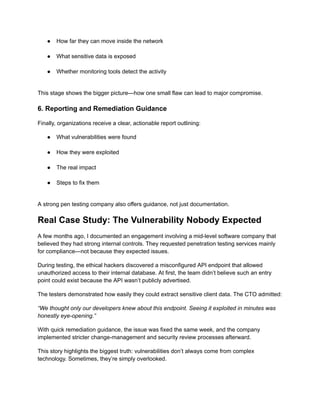
● How farthey can move inside the network
● What sensitive data is exposed
● Whether monitoring tools detect the activity
This stage shows the bigger picture—how one small flaw can lead to major compromise.
6. Reporting and Remediation Guidance
Finally, organizations receive a clear, actionable report outlining:
● What vulnerabilities were found
● How they were exploited
● The real impact
● Steps to fix them
A strong pen testing company also offers guidance, not just documentation.
Real Case Study: The Vulnerability Nobody Expected
A few months ago, I documented an engagement involving a mid-level software company that
believed they had strong internal controls. They requested penetration testing services mainly
for compliance—not because they expected issues.
During testing, the ethical hackers discovered a misconfigured API endpoint that allowed
unauthorized access to their internal database. At first, the team didn’t believe such an entry
point could exist because the API wasn’t publicly advertised.
The testers demonstrated how easily they could extract sensitive client data. The CTO admitted:
“We thought only our developers knew about this endpoint. Seeing it exploited in minutes was
honestly eye-opening.”
With quick remediation guidance, the issue was fixed the same week, and the company
implemented stricter change-management and security review processes afterward.
This story highlights the biggest truth: vulnerabilities don’t always come from complex
technology. Sometimes, they’re simply overlooked.
4.
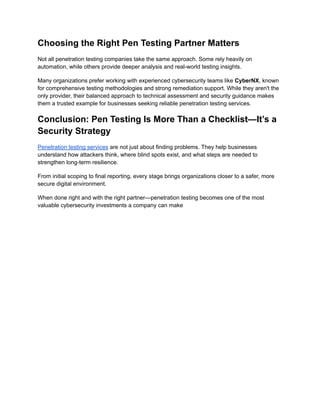
Choosing the RightPen Testing Partner Matters
Not all penetration testing companies take the same approach. Some rely heavily on
automation, while others provide deeper analysis and real-world testing insights.
Many organizations prefer working with experienced cybersecurity teams like CyberNX, known
for comprehensive testing methodologies and strong remediation support. While they aren't the
only provider, their balanced approach to technical assessment and security guidance makes
them a trusted example for businesses seeking reliable penetration testing services.
Conclusion: Pen Testing Is More Than a Checklist—It’s a
Security Strategy
Penetration testing services are not just about finding problems. They help businesses
understand how attackers think, where blind spots exist, and what steps are needed to
strengthen long-term resilience.
From initial scoping to final reporting, every stage brings organizations closer to a safer, more
secure digital environment.
When done right and with the right partner—penetration testing becomes one of the most
valuable cybersecurity investments a company can make