


Jonathan E. Martin
                            Head of School
St. Gregory College Preparatory School (AZ)
                       www.21k12blog.net
Video
http://goo.gl/6qfoM
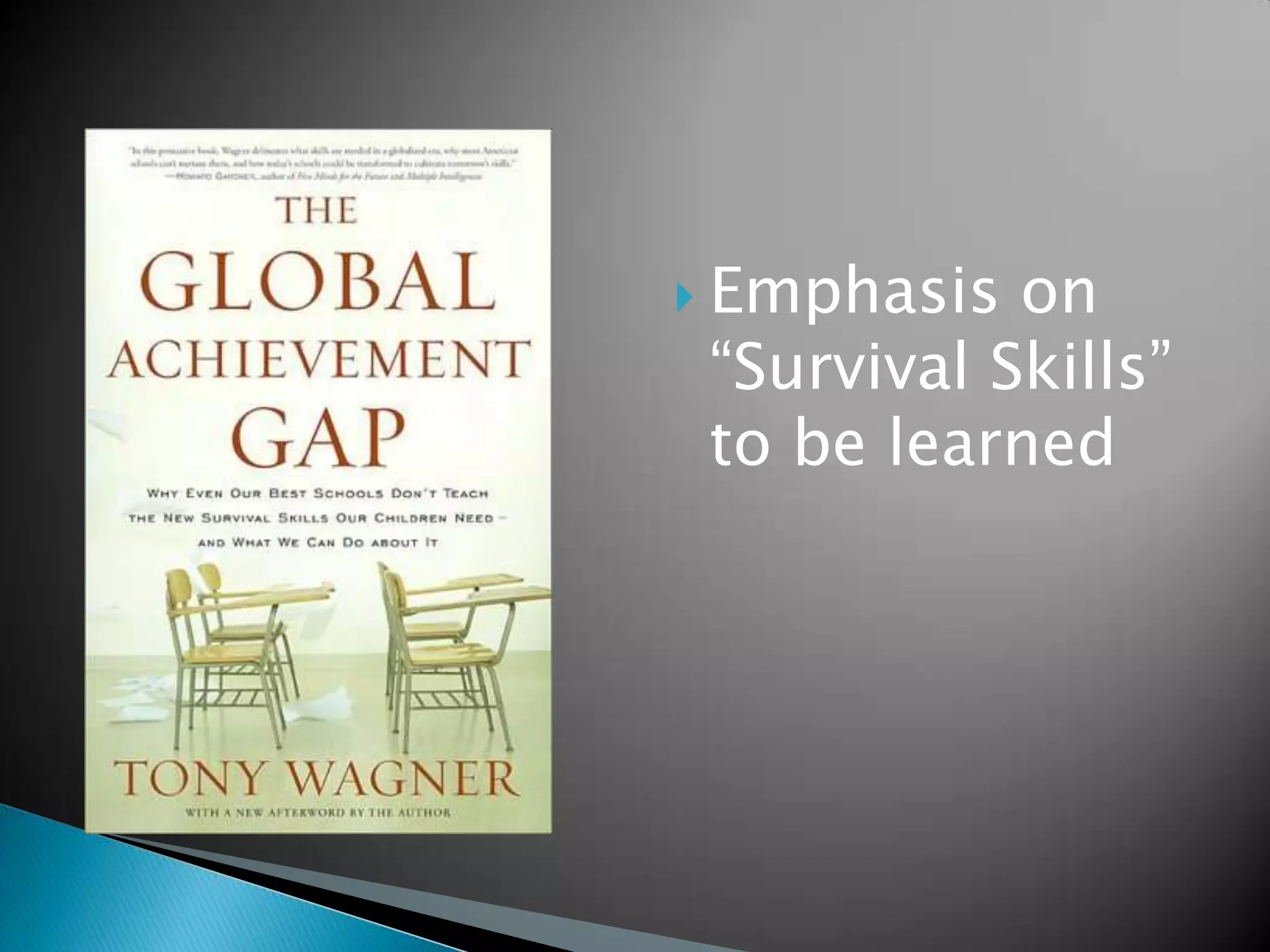
 Emphasis  on
 ―Survival Skills‖
 to be learned
Assess What
Matter Most
Teachers
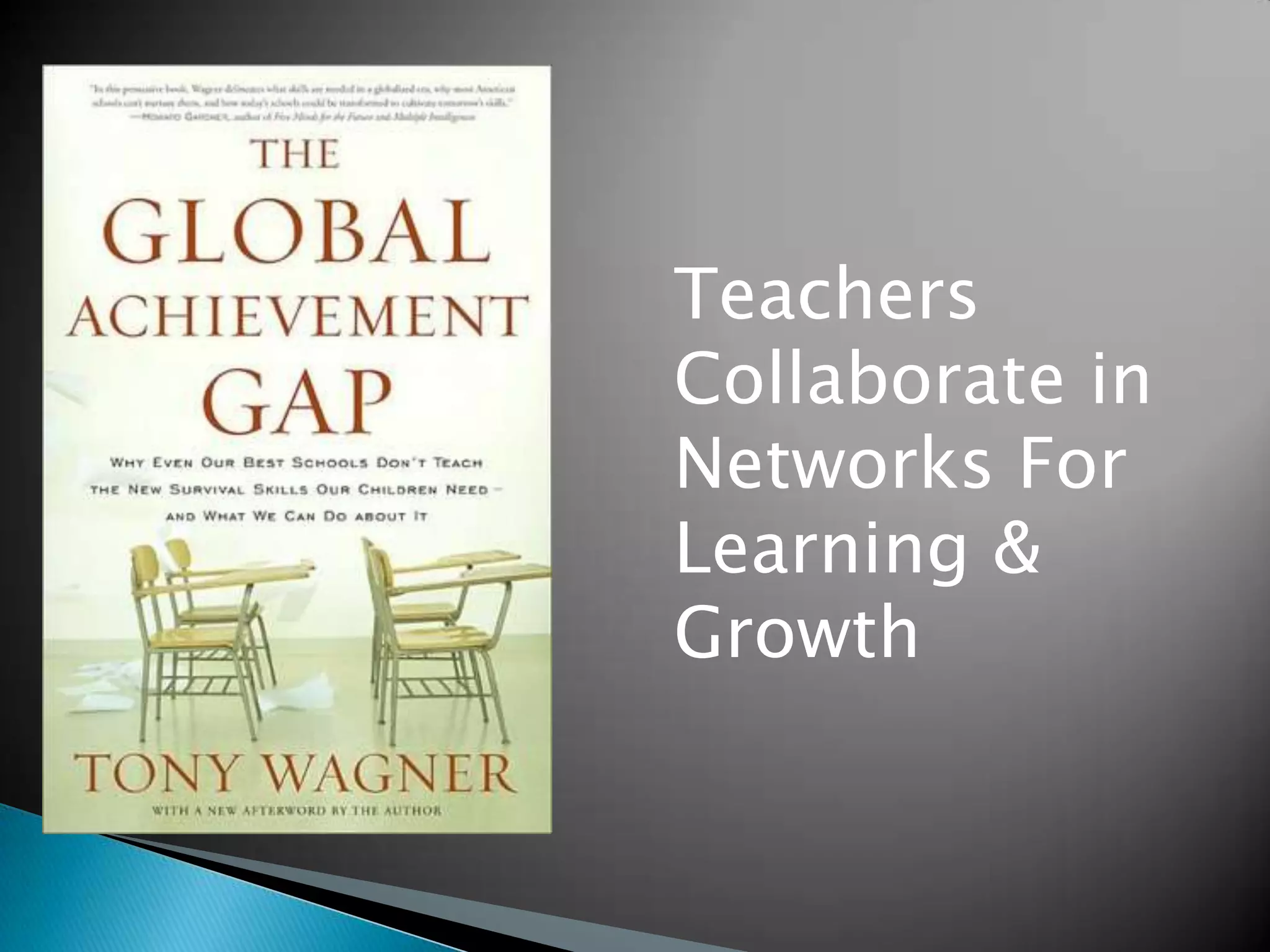
Collaborate in
Networks For
Learning &
Growth
The schools
are academically
demanding.
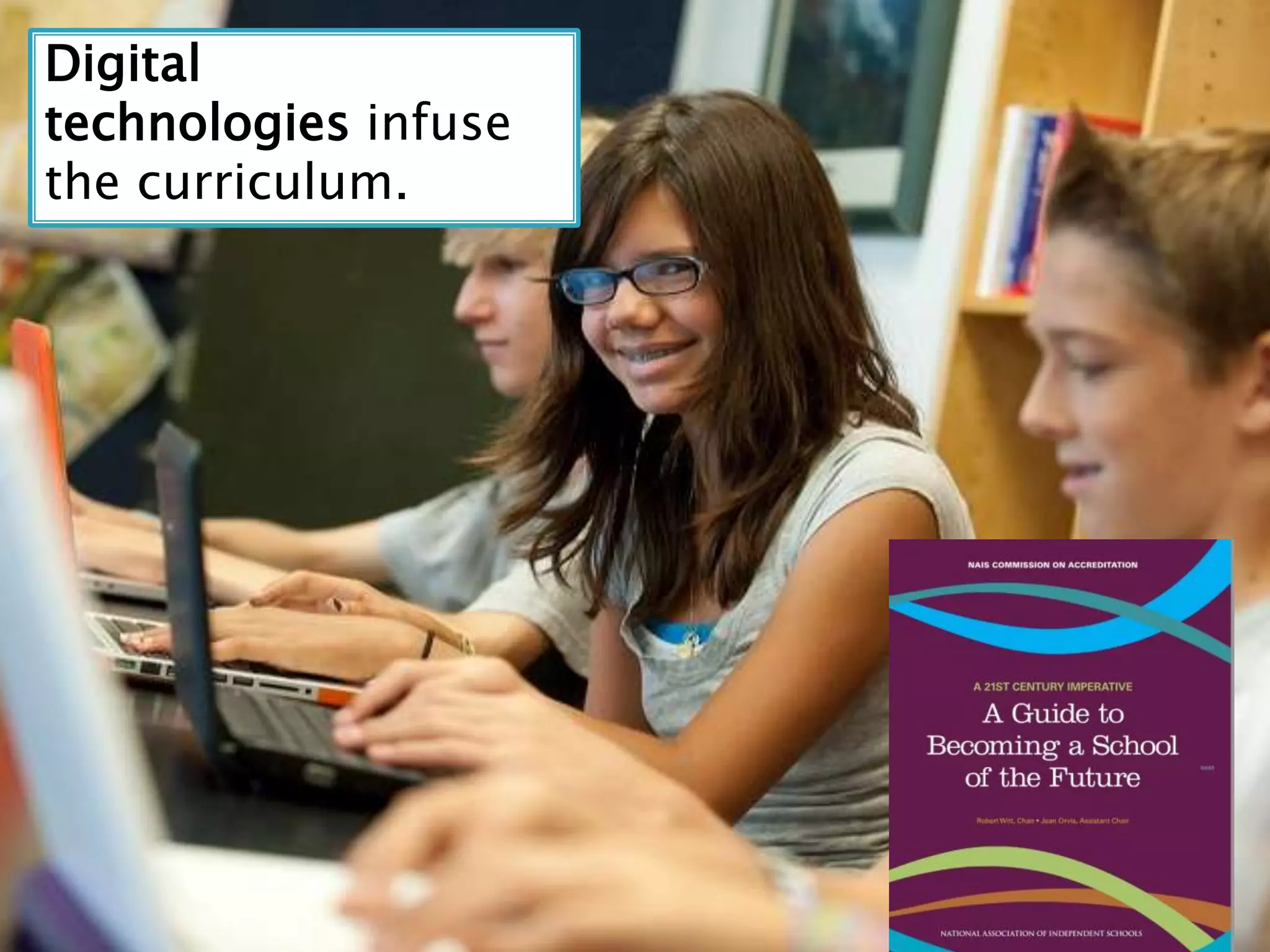
Digital
technologies infuse
the curriculum.
Project-based
learning is
integral to
school’s program
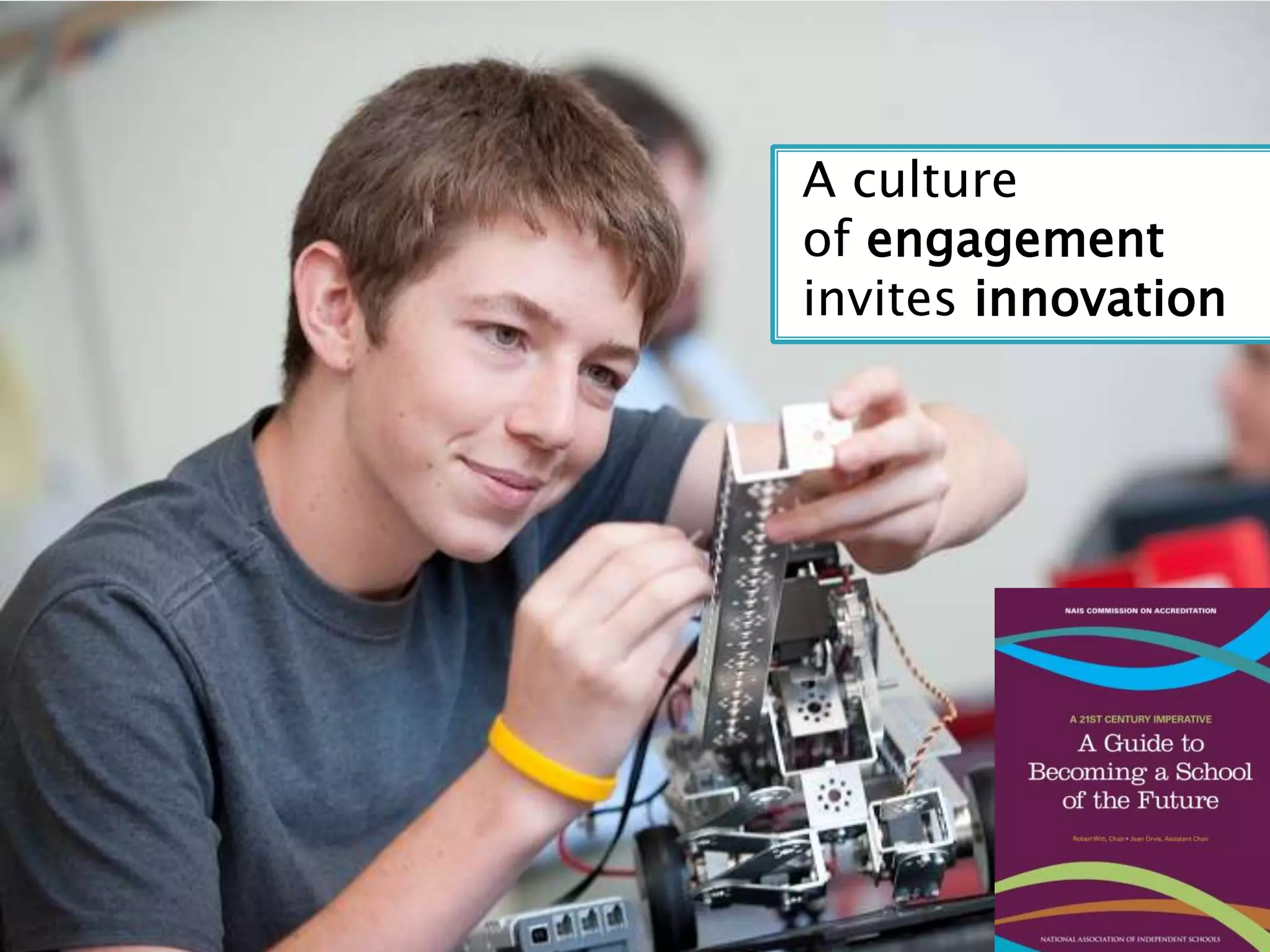
A culture
of engagement
invites innovation
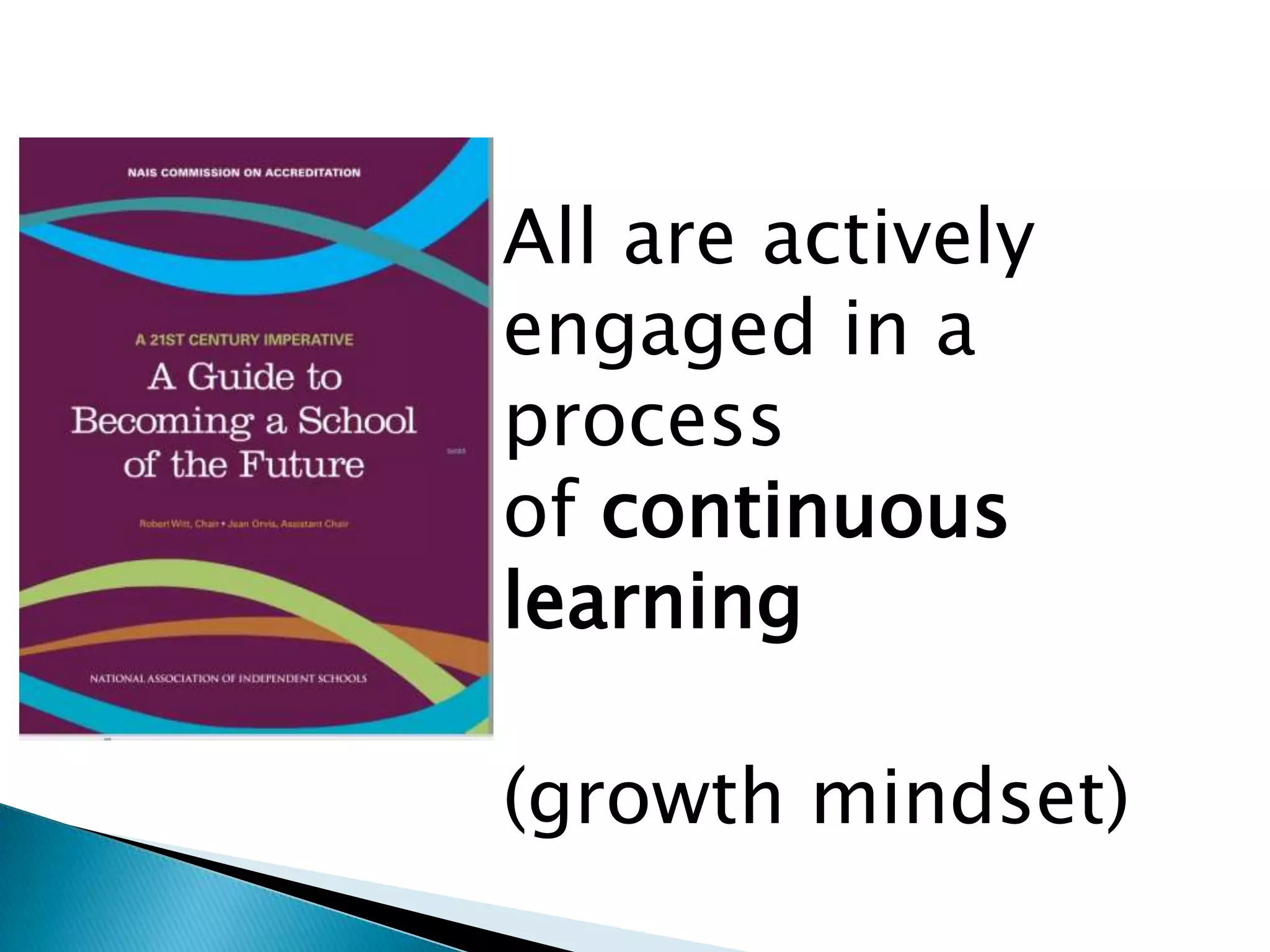
All are actively
engaged in a
process
of continuous
learning

(growth mindset)
4C’s/6 C’s &
Backward
Design
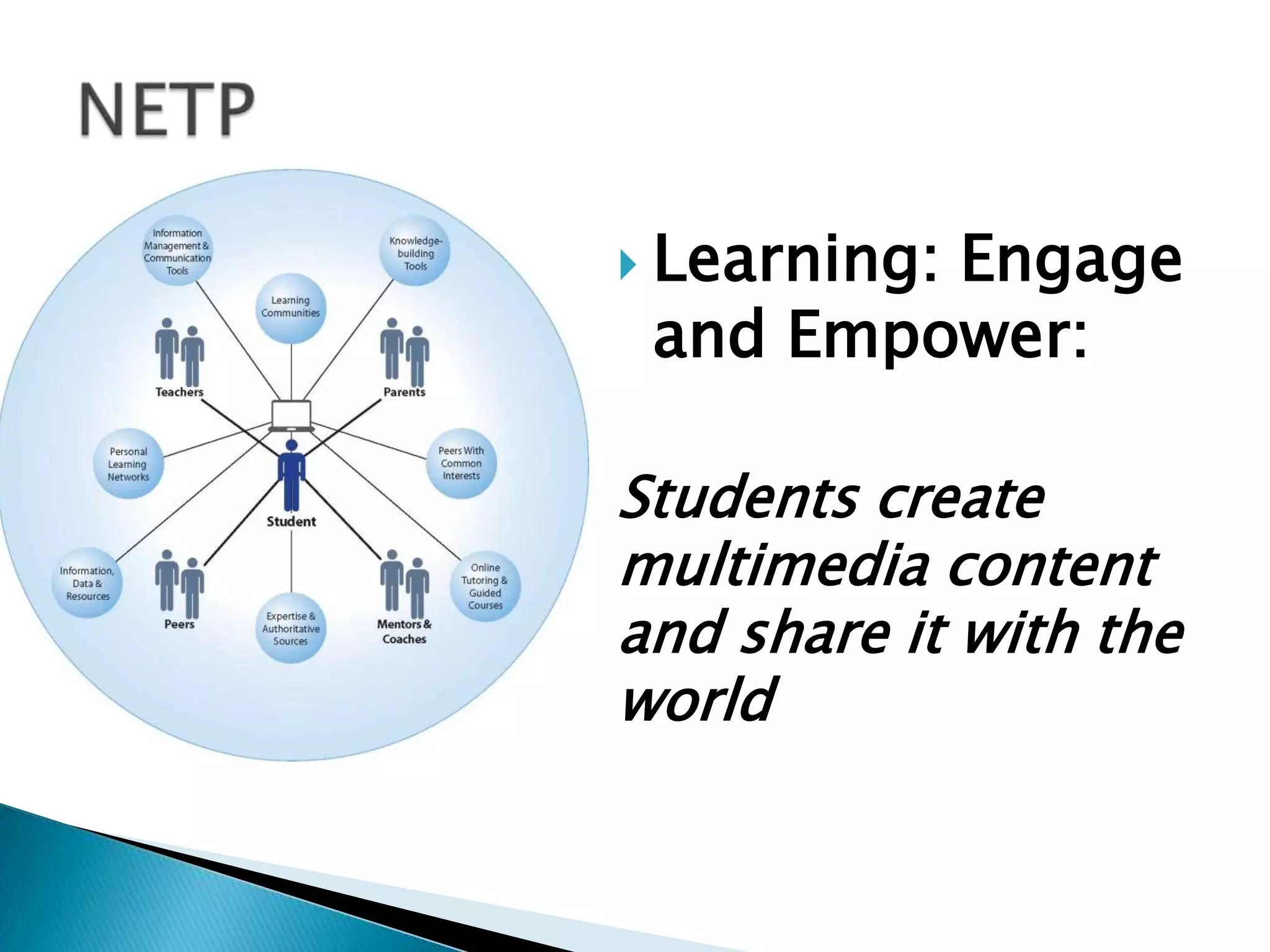
 Learning:
         Engage
 and Empower:

Students create
multimedia content
and share it with the
world
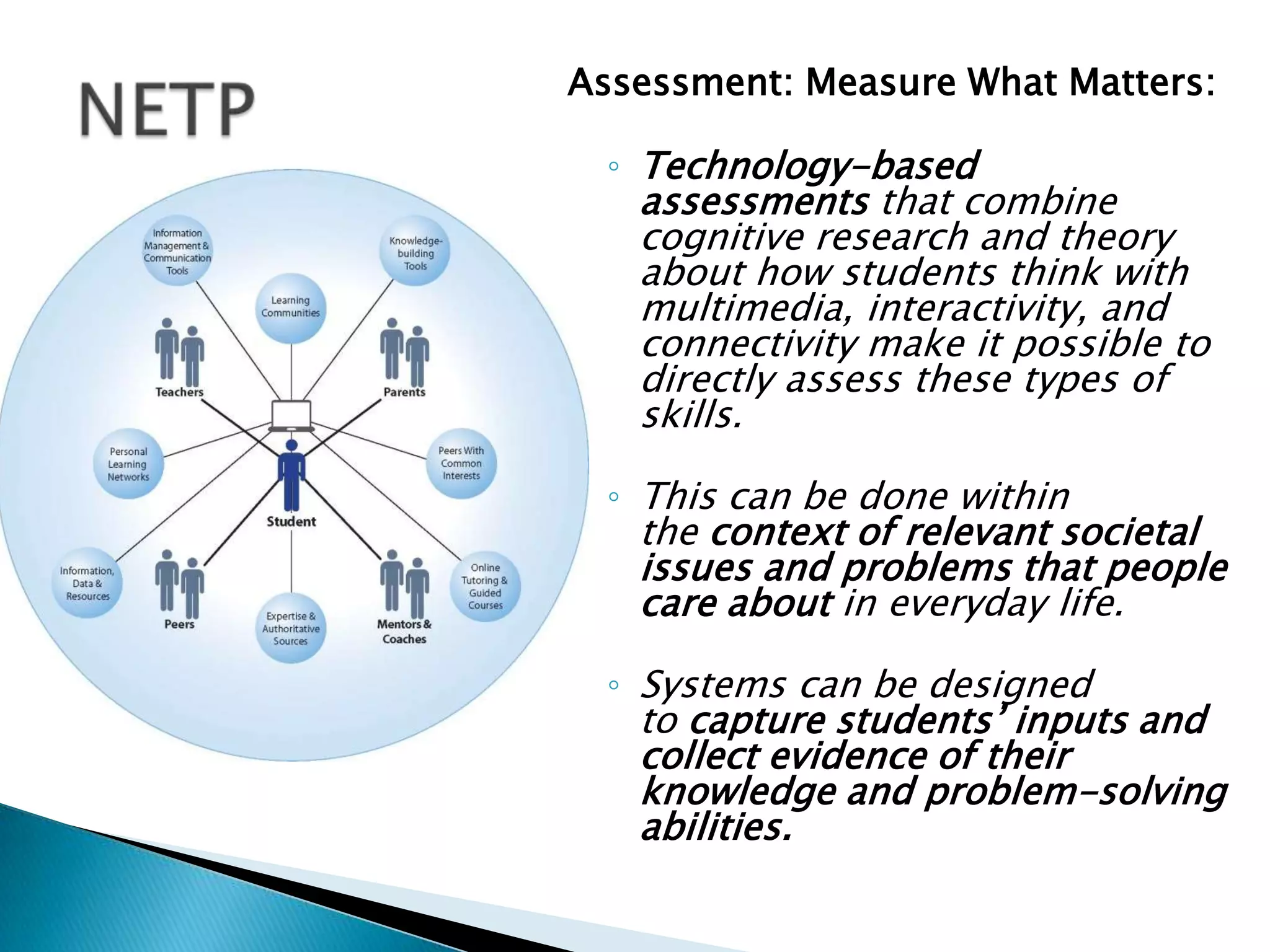
Assessment: Measure What Matters:

  ◦ Technology-based
   assessments that combine
   cognitive research and theory
   about how students think with
   multimedia, interactivity, and
   connectivity make it possible to
   directly assess these types of
   skills.

  ◦ This can be done within
   the context of relevant societal
   issues and problems that people
   care about in everyday life.

  ◦ Systems can be designed
   to capture students’ inputs and
   collect evidence of their
   knowledge and problem-solving
   abilities.
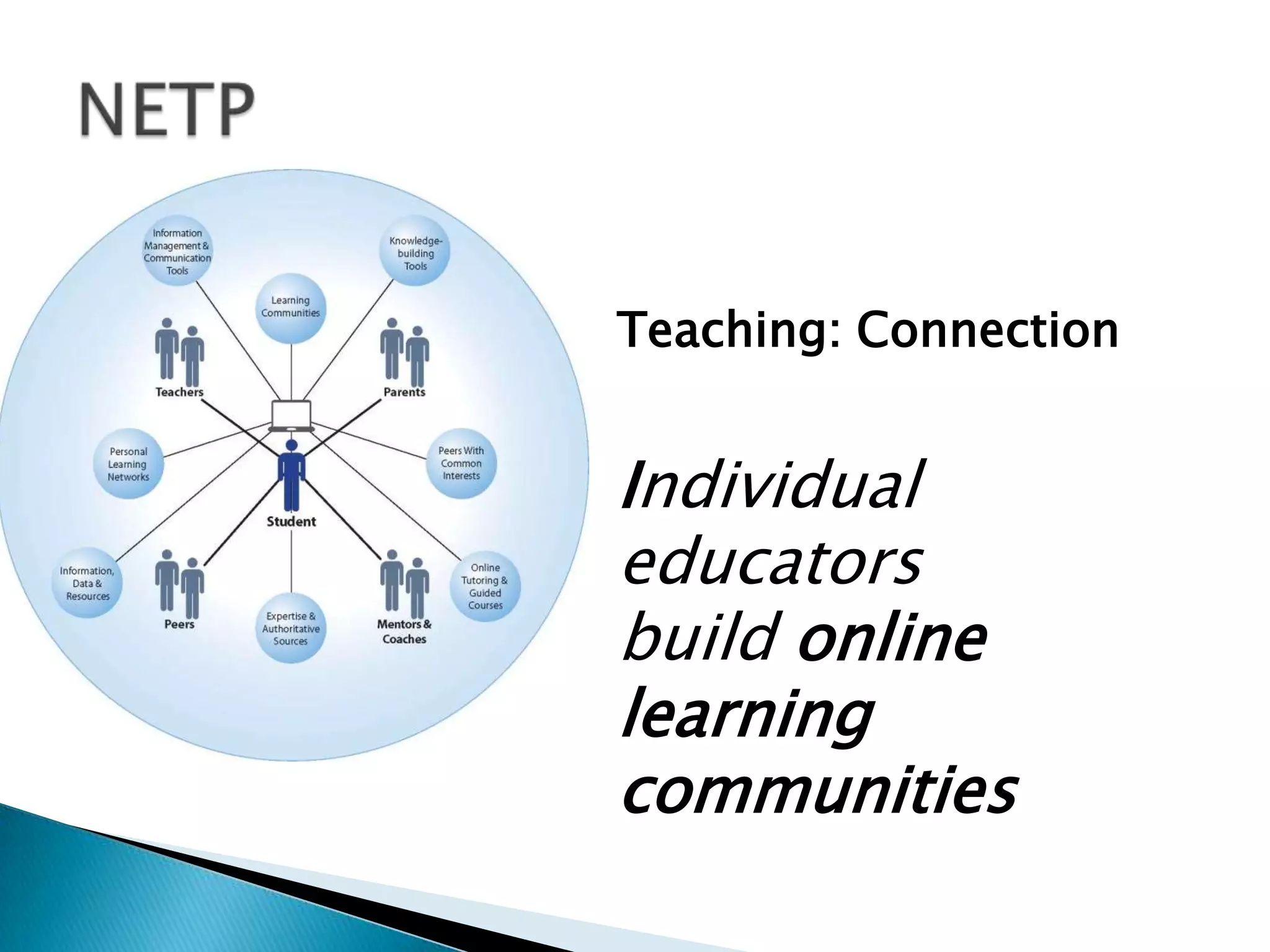
Teaching: Connection


Individual
educators
build online
learning
communities
http://goo.gl/7htO0
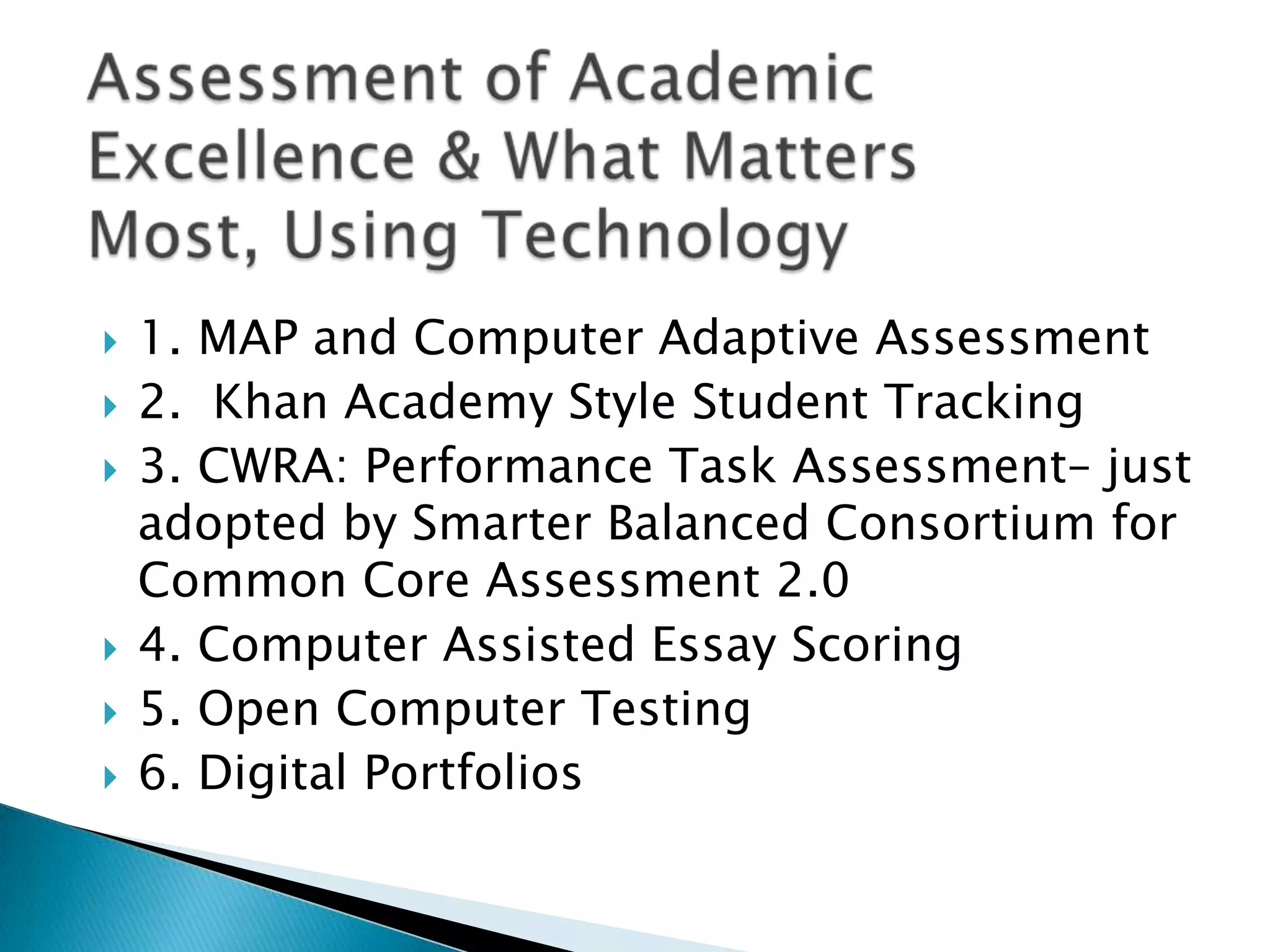
1.   Assessment of Academic Excellence & What Matters
     Most, Using Technology

2.   Focus on Key Skills/Outcomes, the C’s (especially)
     Creativity/Innovation

3.   Networked Educators Collaboratively
     Working/Planning/Researching/Learning

4.   Digitally Empowered, Networked Students Using
     Informational Resources Effectively & Responsibly

5.   PBL(T) and Students Learning by
     Doing/Creating/Producing/Designing/Building/Publishing
   1. MAP and Computer Adaptive Assessment
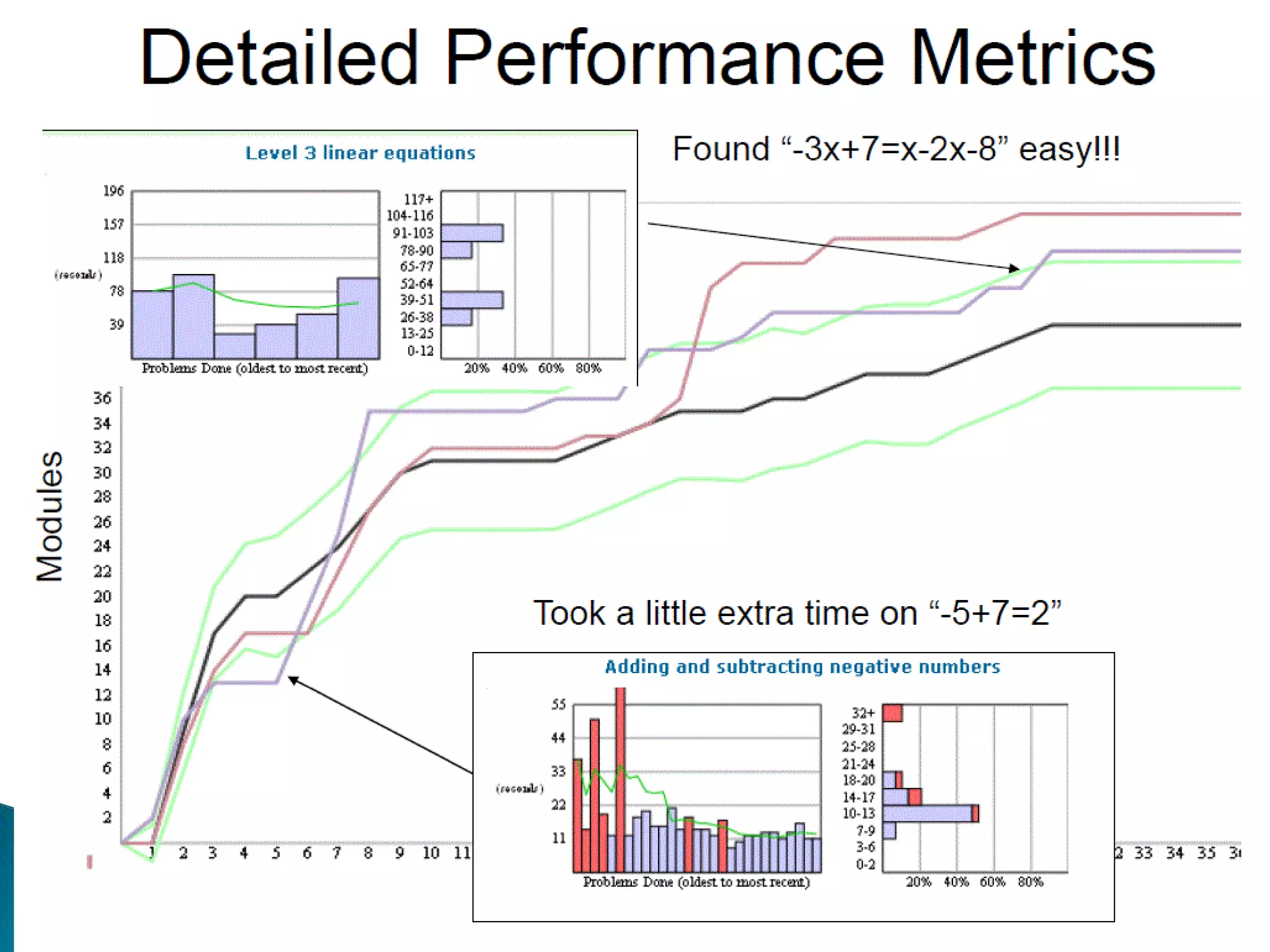
   2. Khan Academy Style Student Tracking
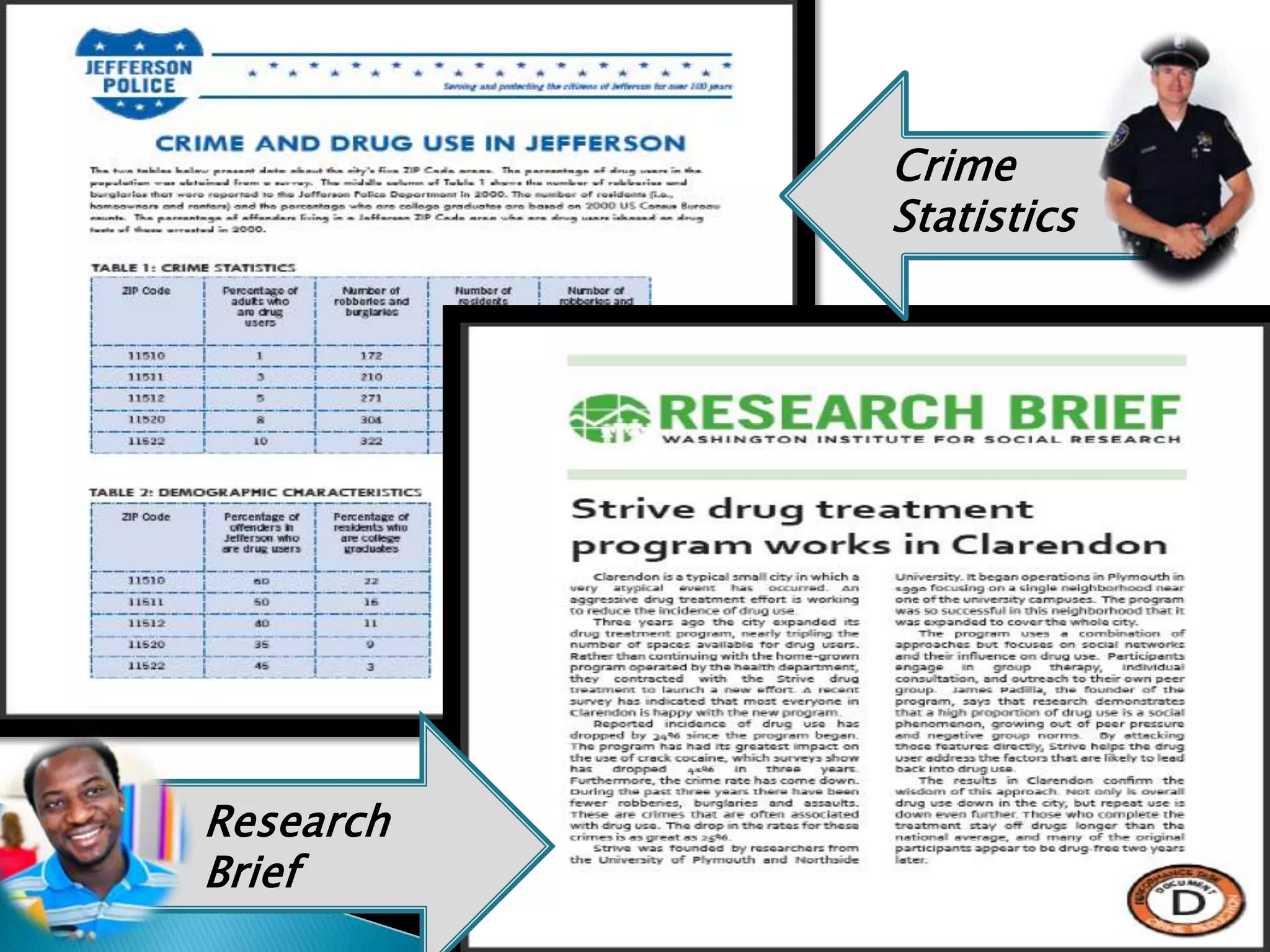
   3. CWRA: Performance Task Assessment– just
    adopted by Smarter Balanced Consortium for
    Common Core Assessment 2.0
   4. Computer Assisted Essay Scoring
   5. Open Computer Testing
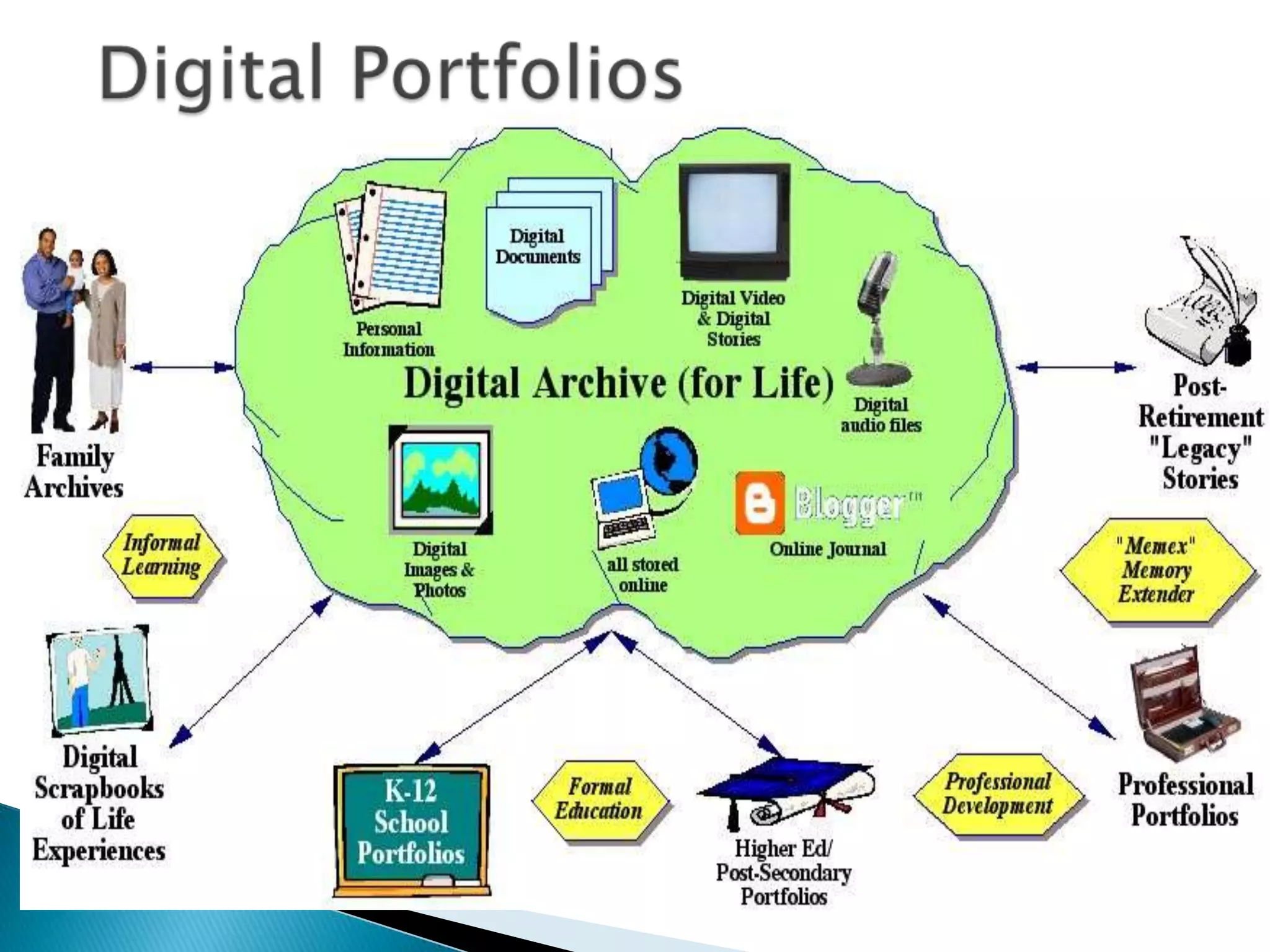
   6. Digital Portfolios
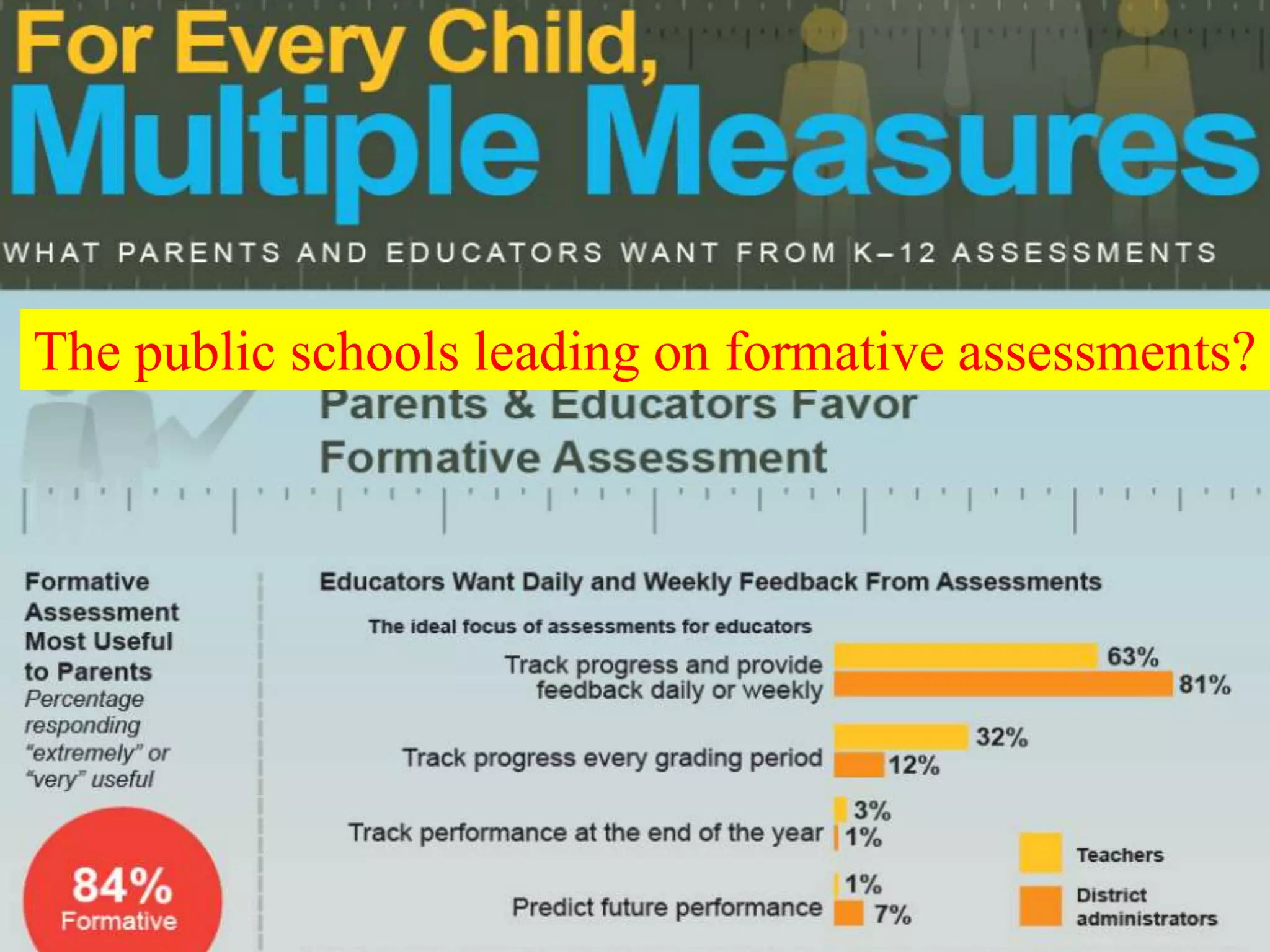
The public schools leading on formative assessments?
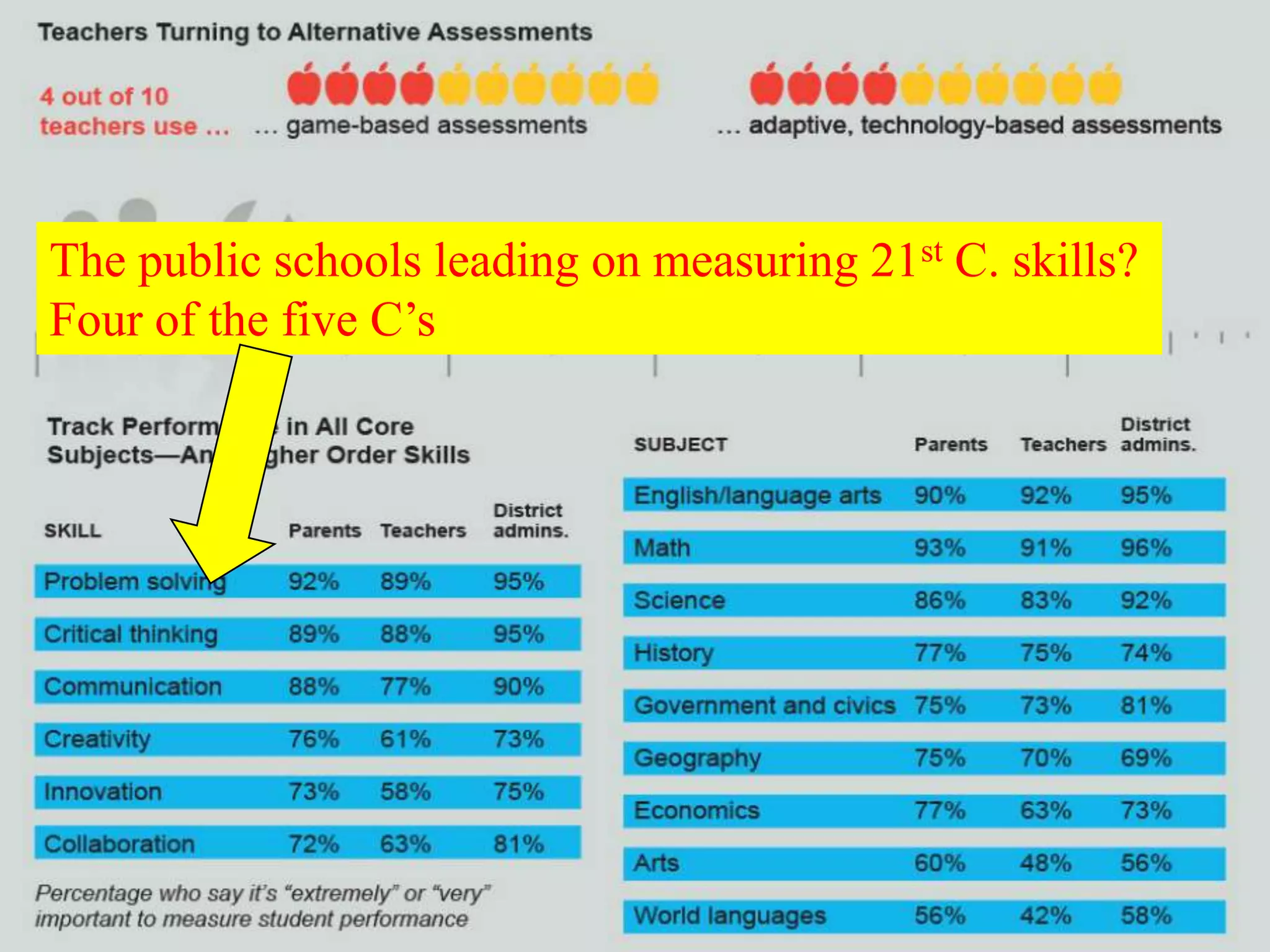
The public schools leading on measuring 21st C. skills?
Four of the five C’s
http://www.youtube.com/watch?v=nTF
EUsudhfs 11:56-
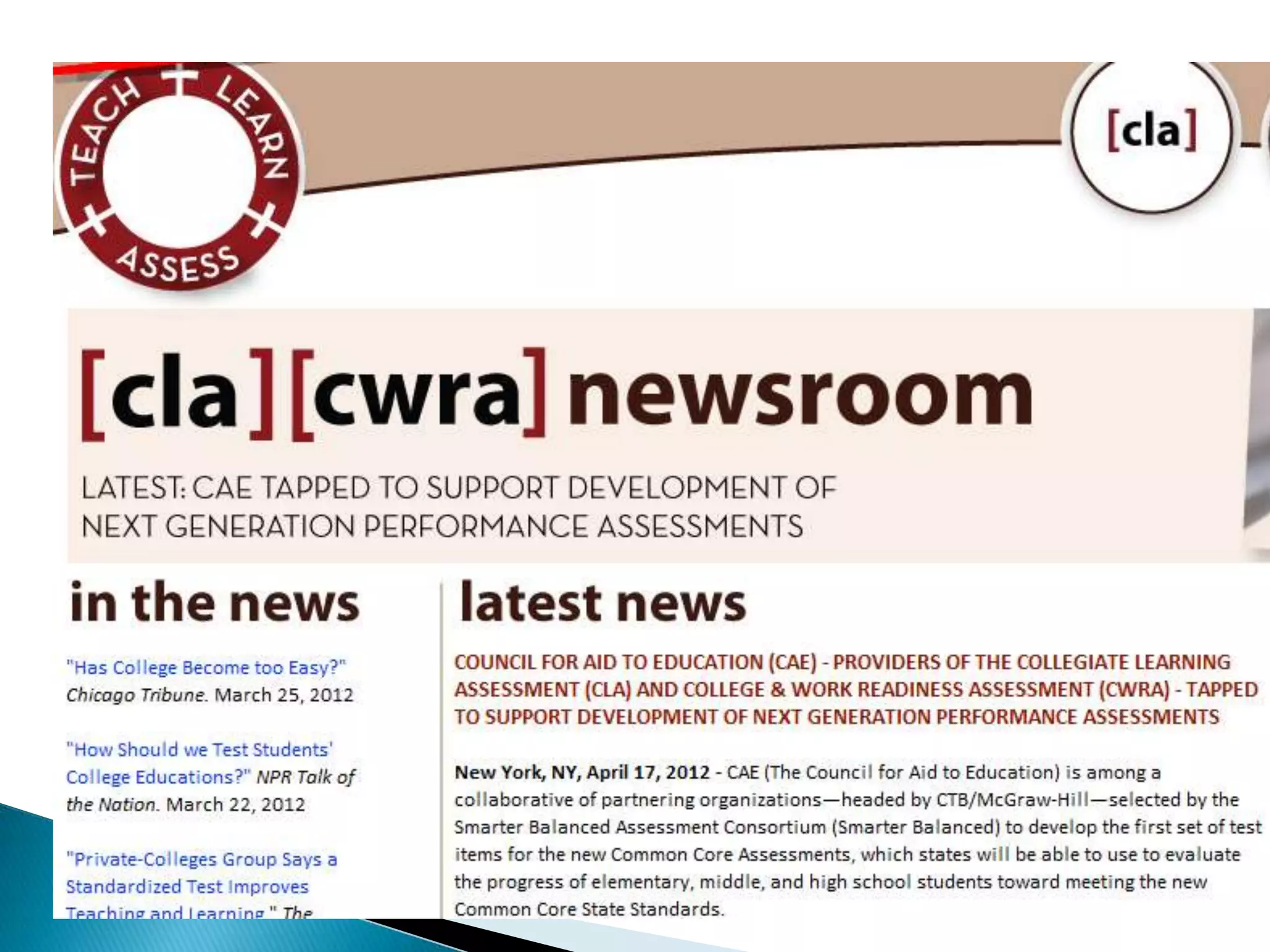
4a. CWRA
Crime
           Statistics


Research
Brief
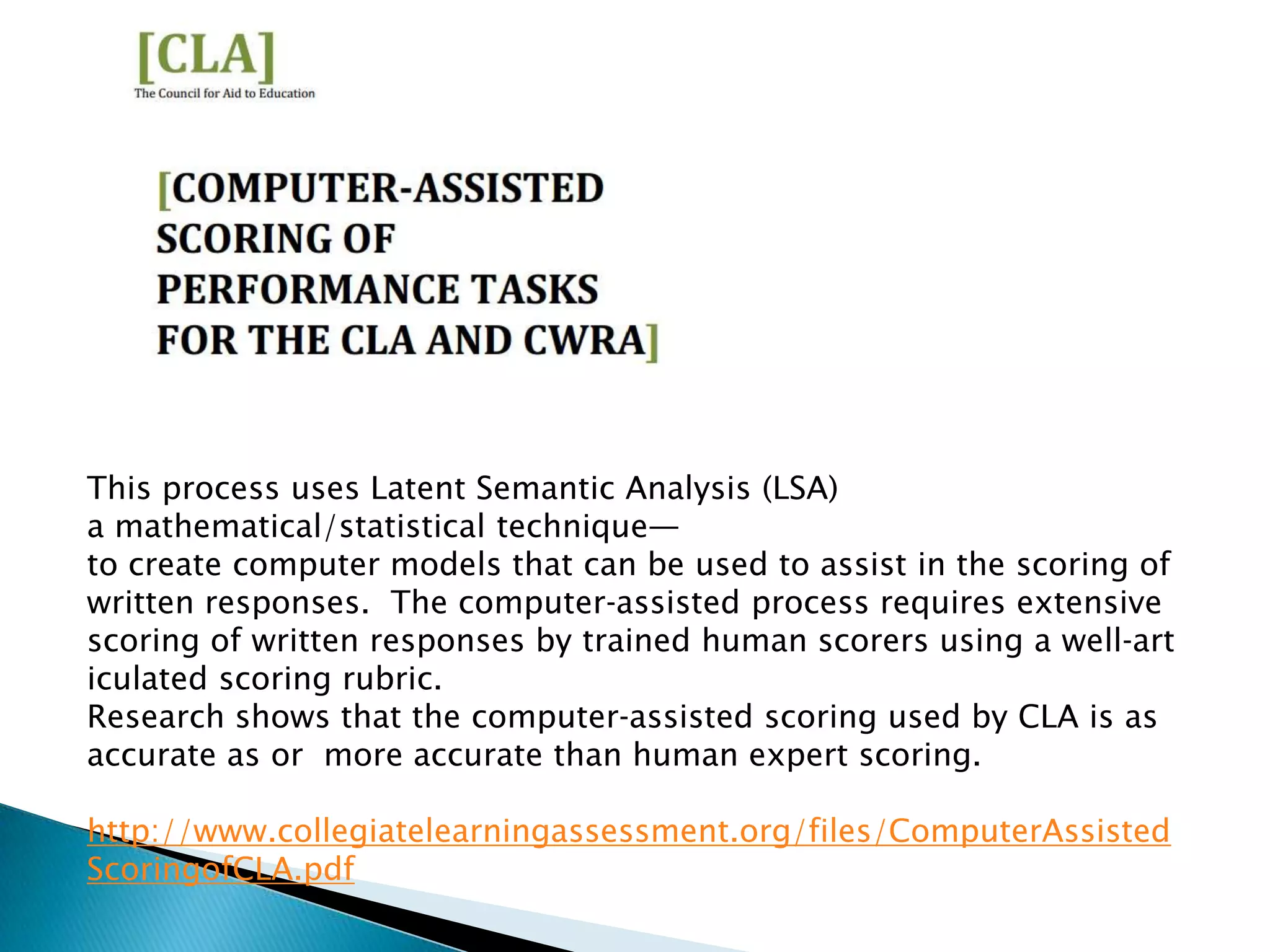
This process uses Latent Semantic Analysis (LSA)
a mathematical/statistical technique—
to create computer models that can be used to assist in the scoring of
written responses. The computer‐assisted process requires extensive
scoring of written responses by trained human scorers using a well‐art
iculated scoring rubric.
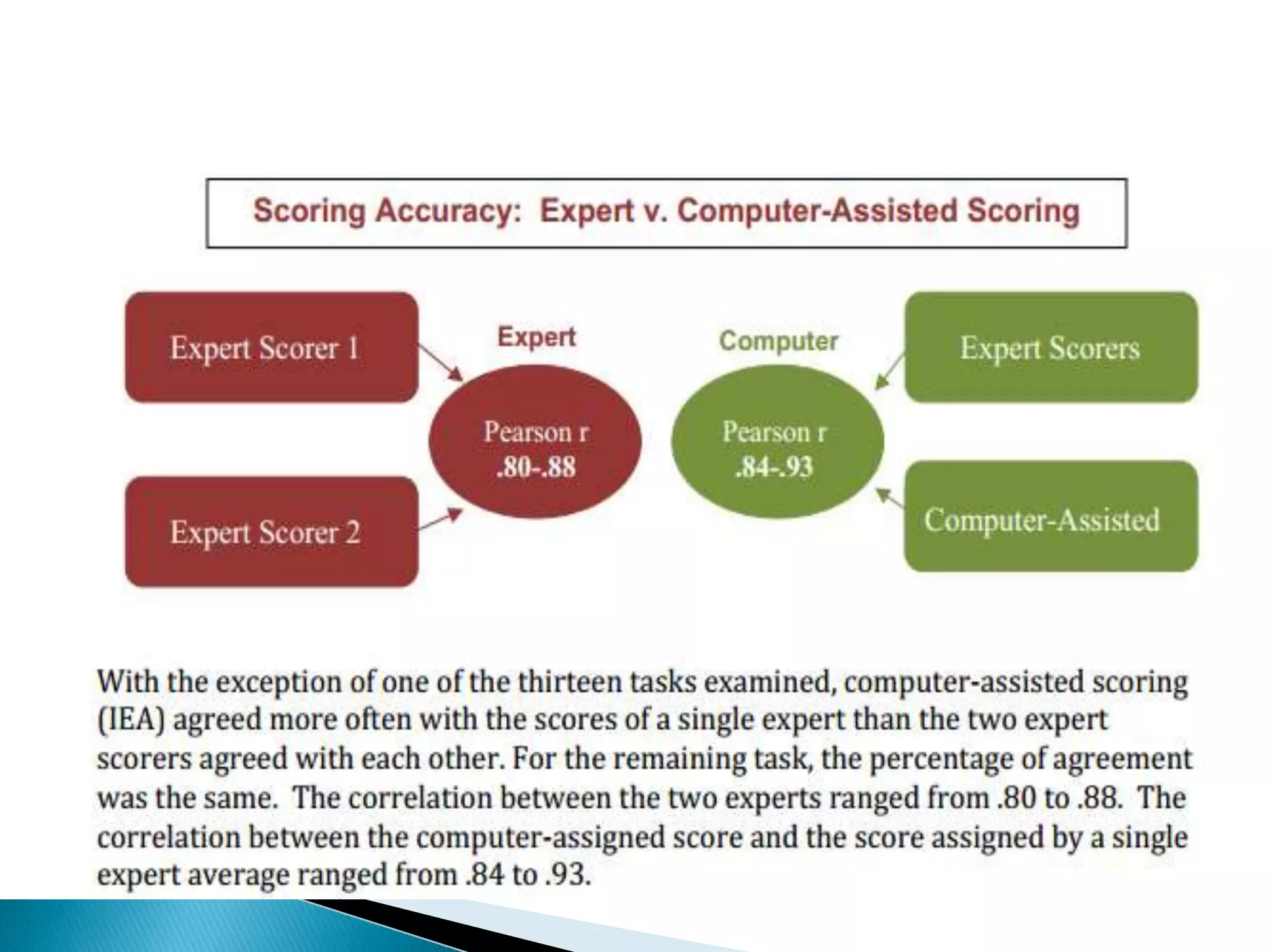
Research shows that the computer‐assisted scoring used by CLA is as
accurate as or more accurate than human expert scoring.

http://www.collegiatelearningassessment.org/files/ComputerAssisted
ScoringofCLA.pdf
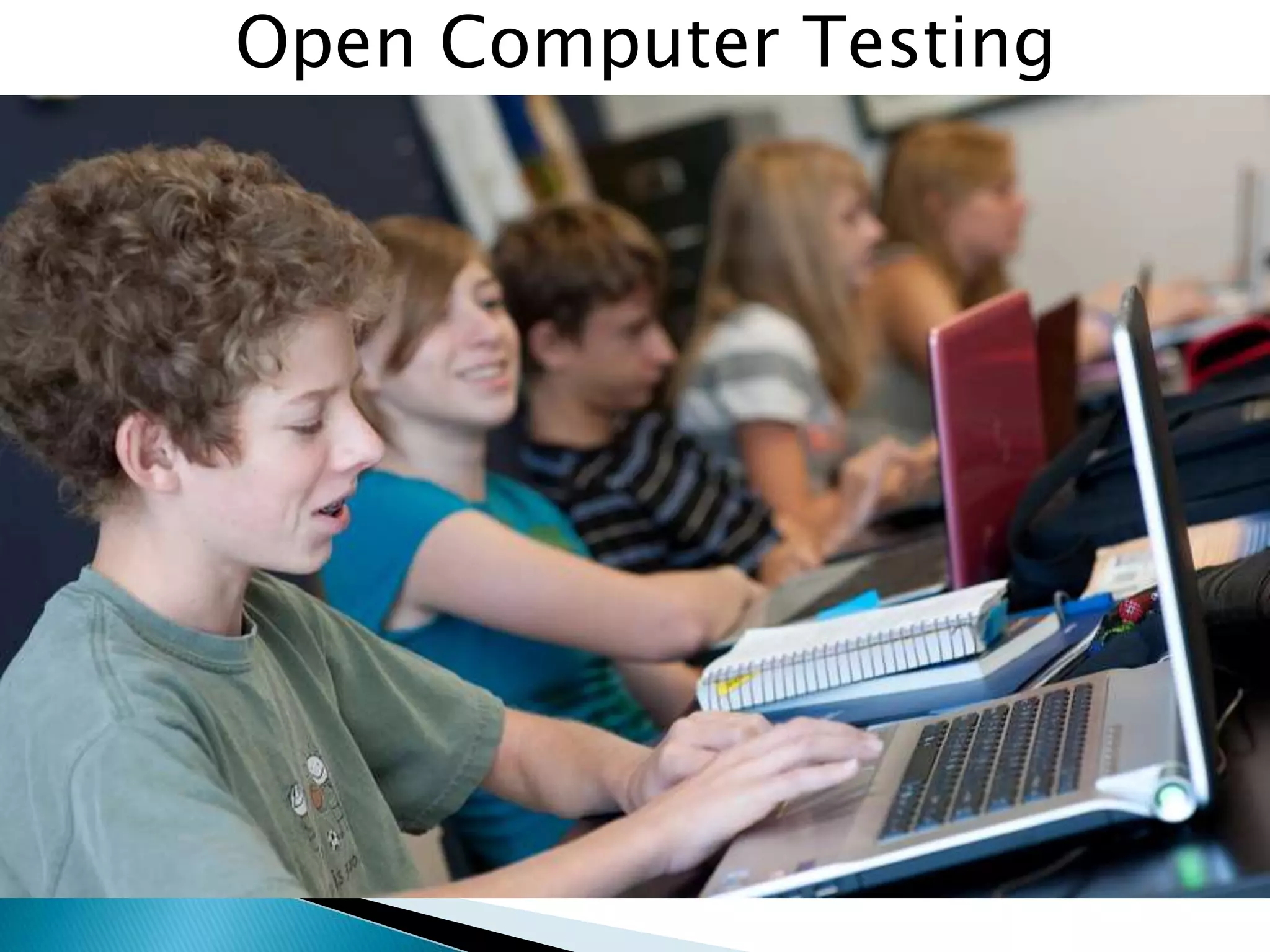
Open Computer Testing
7) Calculate the frequency of radiation with a wavelength
of 115 nm. Show work or indicate specific solution
method (reproduce text entered in command line of
Wolfram). (3 pts)

       [Wolfram is the general solution method, although
failure to understand the relationships between photon
wavelength, frequency, and energy often leads to incorrect
answers. Here a case where one needs to understand how
Wolfram structures this particular "knowledge" to get the
correct answer]
   For Schools, OCT provides a vehicle to prioritize
    and drive instruction toward 21st century
    skills, applied thinking, and better preparation
    for future careers.

   For Teachers, OCT entails rethinking assessment
    and designing ―google-proof‖ questions which
    demand higher order thinking and information
    literacy and assess more lasting understanding.

   For Students, OCT when well designed is
    rigorous, and more authentic, more
    motivating, and requires greater information
    access, analysis, and application skills, better
    organization, and stronger real-world
    problemsolving skills.
21k12blog.net/oct
Prepare 3 slides, each with a use, current or
emerging, of technology which supports these six
   core components of schools of the future.
       Insert the slide in the right section.
     Each slide should feature one use, an
 image/logo, a link, and no more than 8 words,
 Be prepared to discuss/explain your slide in no
            more than 20 seconds.

               http://goo.gl/sOsfv
Apps
Current
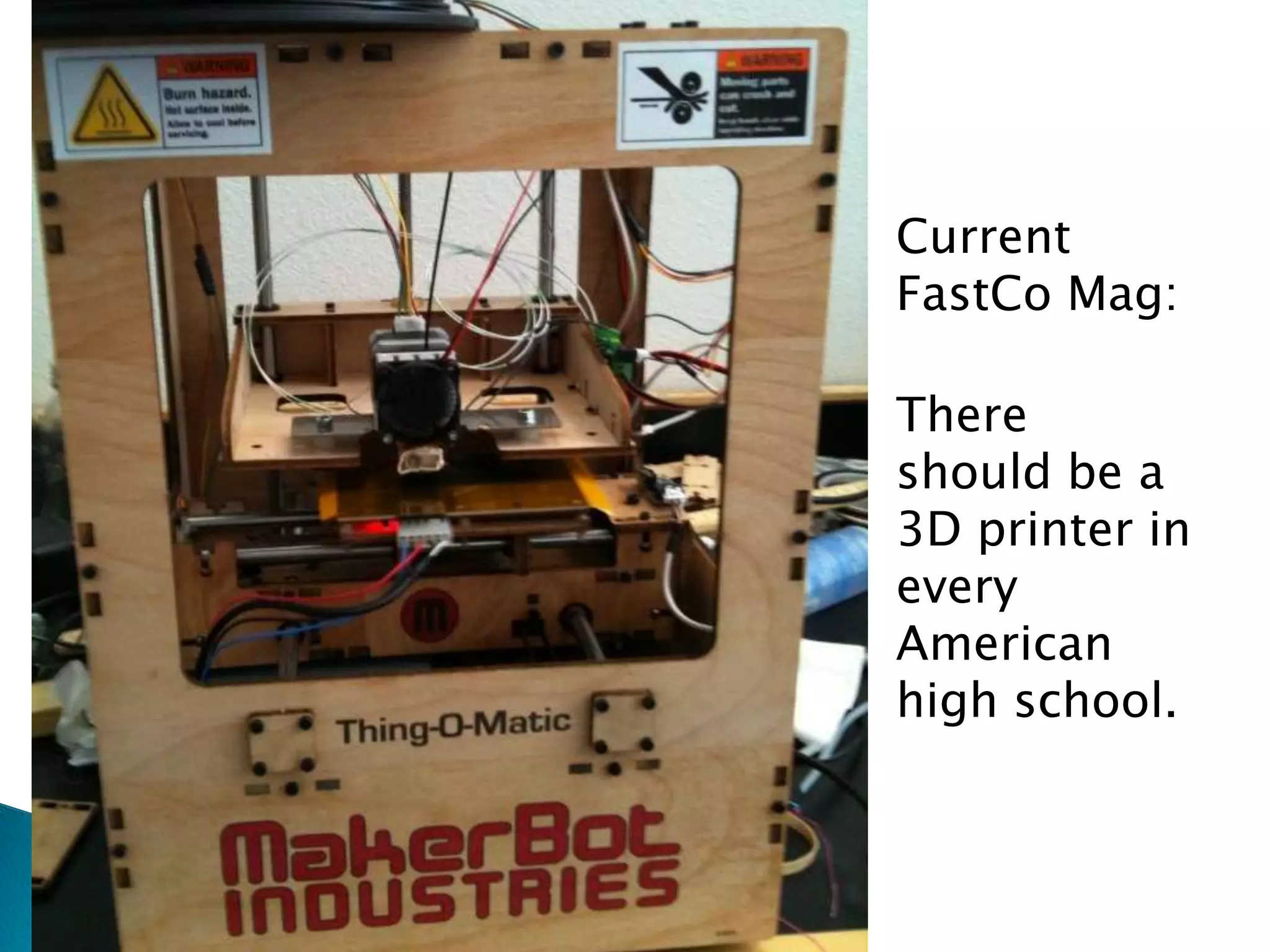
FastCo Mag:

There
should be a
3D printer in
every
American
high school.
www.21k12blog.net

jonathanemartin@gmail.com

Twitter: @JonathanEMartin

Innovative uses of technology in schools of the future

  • 1.
    Jonathan E. Martin Head of School St. Gregory College Preparatory School (AZ) www.21k12blog.net
  • 4.
  • 5.
  • 6.
     Emphasis on ―Survival Skills‖ to be learned
  • 7.
  • 8.
  • 9.
  • 10.
  • 11.
  • 12.
  • 13.
    All are actively engagedin a process of continuous learning (growth mindset)
  • 14.
  • 15.
     Learning: Engage and Empower: Students create multimedia content and share it with the world
  • 16.
    Assessment: Measure WhatMatters: ◦ Technology-based assessments that combine cognitive research and theory about how students think with multimedia, interactivity, and connectivity make it possible to directly assess these types of skills. ◦ This can be done within the context of relevant societal issues and problems that people care about in everyday life. ◦ Systems can be designed to capture students’ inputs and collect evidence of their knowledge and problem-solving abilities.
  • 17.
  • 20.
  • 21.
    1. Assessment of Academic Excellence & What Matters Most, Using Technology 2. Focus on Key Skills/Outcomes, the C’s (especially) Creativity/Innovation 3. Networked Educators Collaboratively Working/Planning/Researching/Learning 4. Digitally Empowered, Networked Students Using Informational Resources Effectively & Responsibly 5. PBL(T) and Students Learning by Doing/Creating/Producing/Designing/Building/Publishing
  • 22.
    1. MAP and Computer Adaptive Assessment  2. Khan Academy Style Student Tracking  3. CWRA: Performance Task Assessment– just adopted by Smarter Balanced Consortium for Common Core Assessment 2.0  4. Computer Assisted Essay Scoring  5. Open Computer Testing  6. Digital Portfolios
  • 24.
    The public schoolsleading on formative assessments?
  • 25.
    The public schoolsleading on measuring 21st C. skills? Four of the five C’s
  • 26.
  • 28.
  • 29.
    Crime Statistics Research Brief
  • 31.
    This process usesLatent Semantic Analysis (LSA) a mathematical/statistical technique— to create computer models that can be used to assist in the scoring of written responses. The computer‐assisted process requires extensive scoring of written responses by trained human scorers using a well‐art iculated scoring rubric. Research shows that the computer‐assisted scoring used by CLA is as accurate as or more accurate than human expert scoring. http://www.collegiatelearningassessment.org/files/ComputerAssisted ScoringofCLA.pdf
  • 33.
  • 34.
    7) Calculate thefrequency of radiation with a wavelength of 115 nm. Show work or indicate specific solution method (reproduce text entered in command line of Wolfram). (3 pts) [Wolfram is the general solution method, although failure to understand the relationships between photon wavelength, frequency, and energy often leads to incorrect answers. Here a case where one needs to understand how Wolfram structures this particular "knowledge" to get the correct answer]
  • 36.
    For Schools, OCT provides a vehicle to prioritize and drive instruction toward 21st century skills, applied thinking, and better preparation for future careers.  For Teachers, OCT entails rethinking assessment and designing ―google-proof‖ questions which demand higher order thinking and information literacy and assess more lasting understanding.  For Students, OCT when well designed is rigorous, and more authentic, more motivating, and requires greater information access, analysis, and application skills, better organization, and stronger real-world problemsolving skills.
  • 37.
  • 39.
    Prepare 3 slides,each with a use, current or emerging, of technology which supports these six core components of schools of the future. Insert the slide in the right section. Each slide should feature one use, an image/logo, a link, and no more than 8 words, Be prepared to discuss/explain your slide in no more than 20 seconds. http://goo.gl/sOsfv
  • 50.
  • 51.
    Current FastCo Mag: There should bea 3D printer in every American high school.
  • 54.

Editor's Notes

  • #4 My journey began in Summer 2008