Download as PDF, PPTX
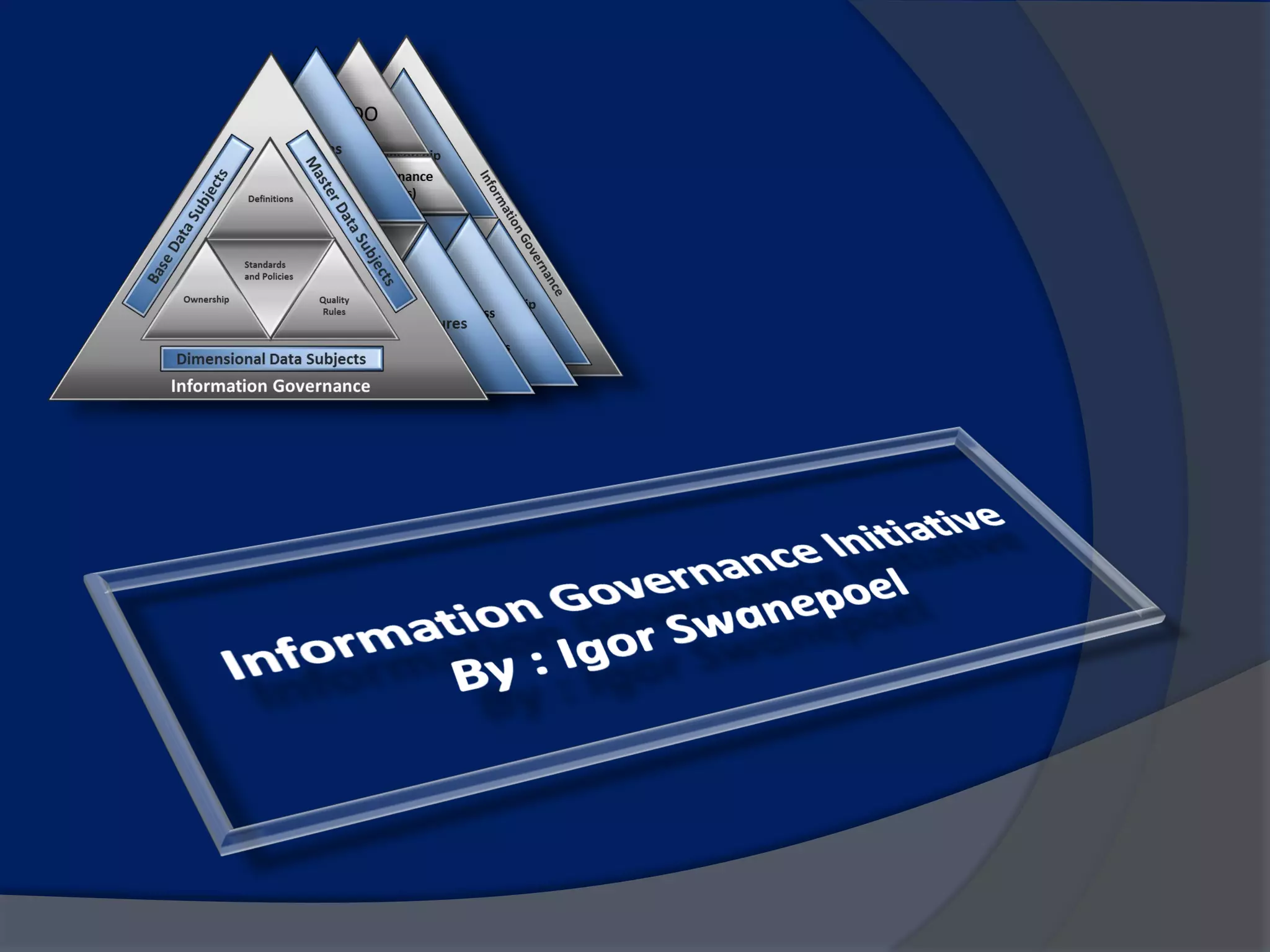
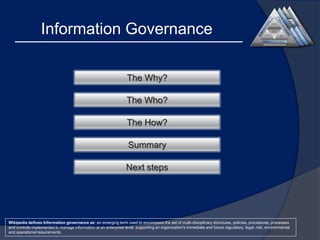
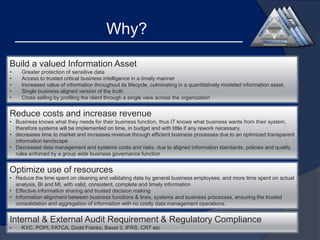
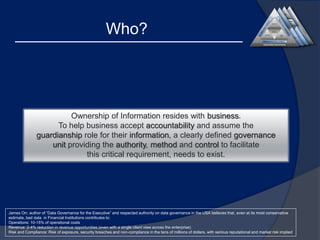
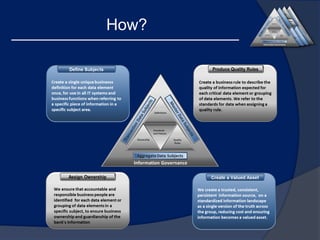
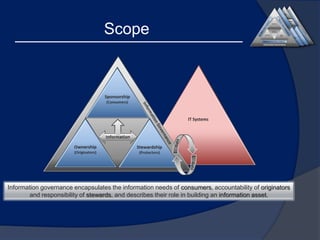
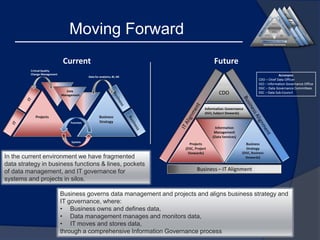
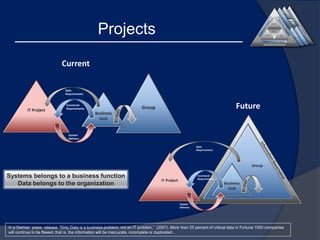
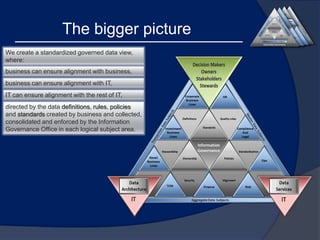
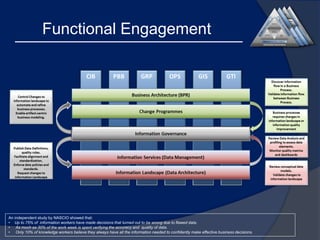
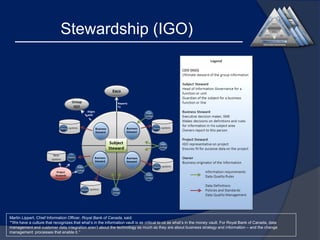
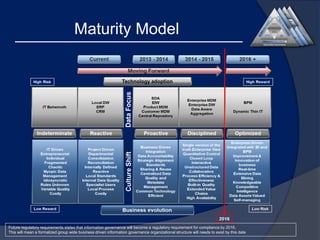
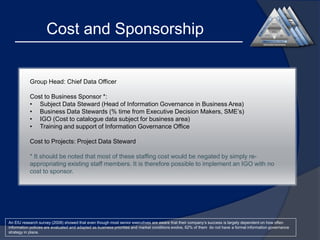
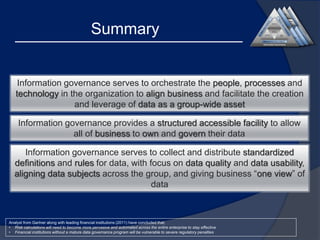
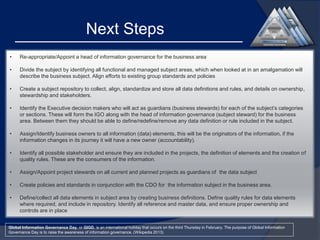

The document discusses information governance, including its definition, why it is important, who is responsible, and how to implement it. Specifically, it notes that information governance aims to manage information at an enterprise level to support regulatory, risk, and operational requirements. It discusses building a valued information asset, reducing costs and increasing revenue, and optimizing resource use as benefits. Ownership resides with the business, with a governance unit providing authority and control. The "how" section outlines scoping information governance, moving from a current fragmented state to a future state of alignment. It provides examples of projects, maturity models, and next steps to implement information governance.


![[EN] Information Governance | Article by Dr. Ulrich Kampffmeyer | PROJECT CON...](https://cdn.slidesharecdn.com/ss_thumbnails/artikelinformationgovernance7700zeicheneng-131015022042-phpapp01-thumbnail.jpg?width=640&height=640&fit=bounds)


