Induction Generator
Prepared by:-
Sonu kumar Bairwa
Asynchronous (Induction)
Generators
 Most wind turbines in the world use a so-
called three phase asynchronous (cage
wound) generator, also called an induction
generator to generate alternating current.
 This type of generator is not widely used
outside the wind turbine industry, and in
small hydropower units, but the world has
a lot of experience in dealing with it
anyway:
 The curious thing about this type of
generator is that it was really originally
designed as an electric motor.
 In fact, one third of the world's electricity
consumption is used for running induction
motors driving machinery in factories,
pumps, fans, compressors, elevators, and
other applications where you need to convert
electrical energy to mechanical energy.
 One reason for choosing this type of
generator is that it is very reliable, and tends
to be comparatively inexpensive.
 The generator also has some mechanical
properties which are useful for wind turbines.
The Cage Rotor
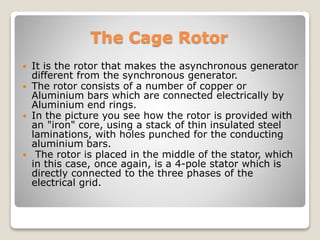
 It is the rotor that makes the asynchronous generator
different from the synchronous generator.
 The rotor consists of a number of copper or
Aluminium bars which are connected electrically by
Aluminium end rings.
 In the picture you see how the rotor is provided with
an "iron" core, using a stack of thin insulated steel
laminations, with holes punched for the conducting
aluminium bars.
 The rotor is placed in the middle of the stator, which
in this case, once again, is a 4-pole stator which is
directly connected to the three phases of the
electrical grid.
Motor Operation
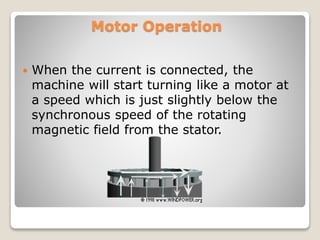
 When the current is connected, the
machine will start turning like a motor at
a speed which is just slightly below the
synchronous speed of the rotating
magnetic field from the stator.
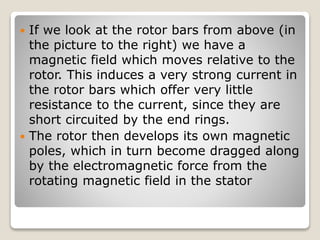
 If we look at the rotor bars from above (in
the picture to the right) we have a
magnetic field which moves relative to the
rotor. This induces a very strong current in
the rotor bars which offer very little
resistance to the current, since they are
short circuited by the end rings.
 The rotor then develops its own magnetic
poles, which in turn become dragged along
by the electromagnetic force from the
rotating magnetic field in the stator
Generator Operation
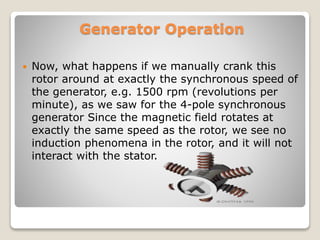
 Now, what happens if we manually crank this
rotor around at exactly the synchronous speed of
the generator, e.g. 1500 rpm (revolutions per
minute), as we saw for the 4-pole synchronous
generator Since the magnetic field rotates at
exactly the same speed as the rotor, we see no
induction phenomena in the rotor, and it will not
interact with the stator.
 But what if we increase speed above 1500
rpm, In that case the rotor moves faster
than the rotating magnetic field from the
stator, which means that once again the
stator induces a strong current in the
rotor.
 The harder you crank the rotor, the more
power will be transferred as an
electromagnetic force to the stator, and in
turn converted to electricity which is fed
into the electrical grid.
Generator Slip
 The speed of the asynchronous generator will
vary with the turning force (moment, or
torque) applied to it. In practice, the
difference between the rotational speed at
peak power and at idle is very small, about 1
per cent. This difference in per cent of
the synchronous speed , is called the
generator's slip. Thus a 4-pole generator will
run idle at 1500 rpm if it is attached to a grid
with a 50 Hz current. If the generator is
producing at its maximum power, it will be
running at 1515 rpm.
 It is a very useful mechanical property
that the generator will increase or
decrease its speed slightly if the torque
varies. This means that there will be less
tear and wear on the gearbox. (Lower
peak torque).
 This is one of the most important reasons
for using an asynchronous generator
rather than a synchronous generator on a
wind turbine which is directly connected
to the electrical grid.
Automatic Pole Adjustment of the Rotor
 Did you notice that we did not specify the
number of poles in the stator when we
described the rotor? The clever thing
about the cage rotor is that it adapts itself
to the number of poles in the stator
automatically. The same rotor can
therefore be used with a wide variety of
pole numbers.
Grid Connection Required
 the permanent magnet synchronous generator we
showed that it could run as a generator without
connection to the public grid.
 An asynchronous generator is different, because it
requires the stator to be magnetised from the grid
before it works.
 You can run an asynchronous generator in a stand
alone system, however, if it is provided with
capacitors which supply the necessary magnetisation
current.
 It also requires that there be some remanence in the
rotor iron, i.e. some leftover magnetism when you
start the turbine. Otherwise you will need a battery
and power electronics, or a small diesel generator to
start the system
Induction generator

Induction generator

  • 1.
  • 2.
    Asynchronous (Induction) Generators  Mostwind turbines in the world use a so- called three phase asynchronous (cage wound) generator, also called an induction generator to generate alternating current.  This type of generator is not widely used outside the wind turbine industry, and in small hydropower units, but the world has a lot of experience in dealing with it anyway:
  • 3.
     The curiousthing about this type of generator is that it was really originally designed as an electric motor.  In fact, one third of the world's electricity consumption is used for running induction motors driving machinery in factories, pumps, fans, compressors, elevators, and other applications where you need to convert electrical energy to mechanical energy.  One reason for choosing this type of generator is that it is very reliable, and tends to be comparatively inexpensive.  The generator also has some mechanical properties which are useful for wind turbines.
  • 4.
    The Cage Rotor It is the rotor that makes the asynchronous generator different from the synchronous generator.  The rotor consists of a number of copper or Aluminium bars which are connected electrically by Aluminium end rings.  In the picture you see how the rotor is provided with an "iron" core, using a stack of thin insulated steel laminations, with holes punched for the conducting aluminium bars.  The rotor is placed in the middle of the stator, which in this case, once again, is a 4-pole stator which is directly connected to the three phases of the electrical grid.
  • 5.
    Motor Operation  Whenthe current is connected, the machine will start turning like a motor at a speed which is just slightly below the synchronous speed of the rotating magnetic field from the stator.
  • 6.
     If welook at the rotor bars from above (in the picture to the right) we have a magnetic field which moves relative to the rotor. This induces a very strong current in the rotor bars which offer very little resistance to the current, since they are short circuited by the end rings.  The rotor then develops its own magnetic poles, which in turn become dragged along by the electromagnetic force from the rotating magnetic field in the stator
  • 7.
    Generator Operation  Now,what happens if we manually crank this rotor around at exactly the synchronous speed of the generator, e.g. 1500 rpm (revolutions per minute), as we saw for the 4-pole synchronous generator Since the magnetic field rotates at exactly the same speed as the rotor, we see no induction phenomena in the rotor, and it will not interact with the stator.
  • 8.
     But whatif we increase speed above 1500 rpm, In that case the rotor moves faster than the rotating magnetic field from the stator, which means that once again the stator induces a strong current in the rotor.  The harder you crank the rotor, the more power will be transferred as an electromagnetic force to the stator, and in turn converted to electricity which is fed into the electrical grid.
  • 9.
    Generator Slip  Thespeed of the asynchronous generator will vary with the turning force (moment, or torque) applied to it. In practice, the difference between the rotational speed at peak power and at idle is very small, about 1 per cent. This difference in per cent of the synchronous speed , is called the generator's slip. Thus a 4-pole generator will run idle at 1500 rpm if it is attached to a grid with a 50 Hz current. If the generator is producing at its maximum power, it will be running at 1515 rpm.
  • 10.
     It isa very useful mechanical property that the generator will increase or decrease its speed slightly if the torque varies. This means that there will be less tear and wear on the gearbox. (Lower peak torque).  This is one of the most important reasons for using an asynchronous generator rather than a synchronous generator on a wind turbine which is directly connected to the electrical grid.
  • 11.
    Automatic Pole Adjustmentof the Rotor  Did you notice that we did not specify the number of poles in the stator when we described the rotor? The clever thing about the cage rotor is that it adapts itself to the number of poles in the stator automatically. The same rotor can therefore be used with a wide variety of pole numbers.
  • 12.
    Grid Connection Required the permanent magnet synchronous generator we showed that it could run as a generator without connection to the public grid.  An asynchronous generator is different, because it requires the stator to be magnetised from the grid before it works.  You can run an asynchronous generator in a stand alone system, however, if it is provided with capacitors which supply the necessary magnetisation current.  It also requires that there be some remanence in the rotor iron, i.e. some leftover magnetism when you start the turbine. Otherwise you will need a battery and power electronics, or a small diesel generator to start the system