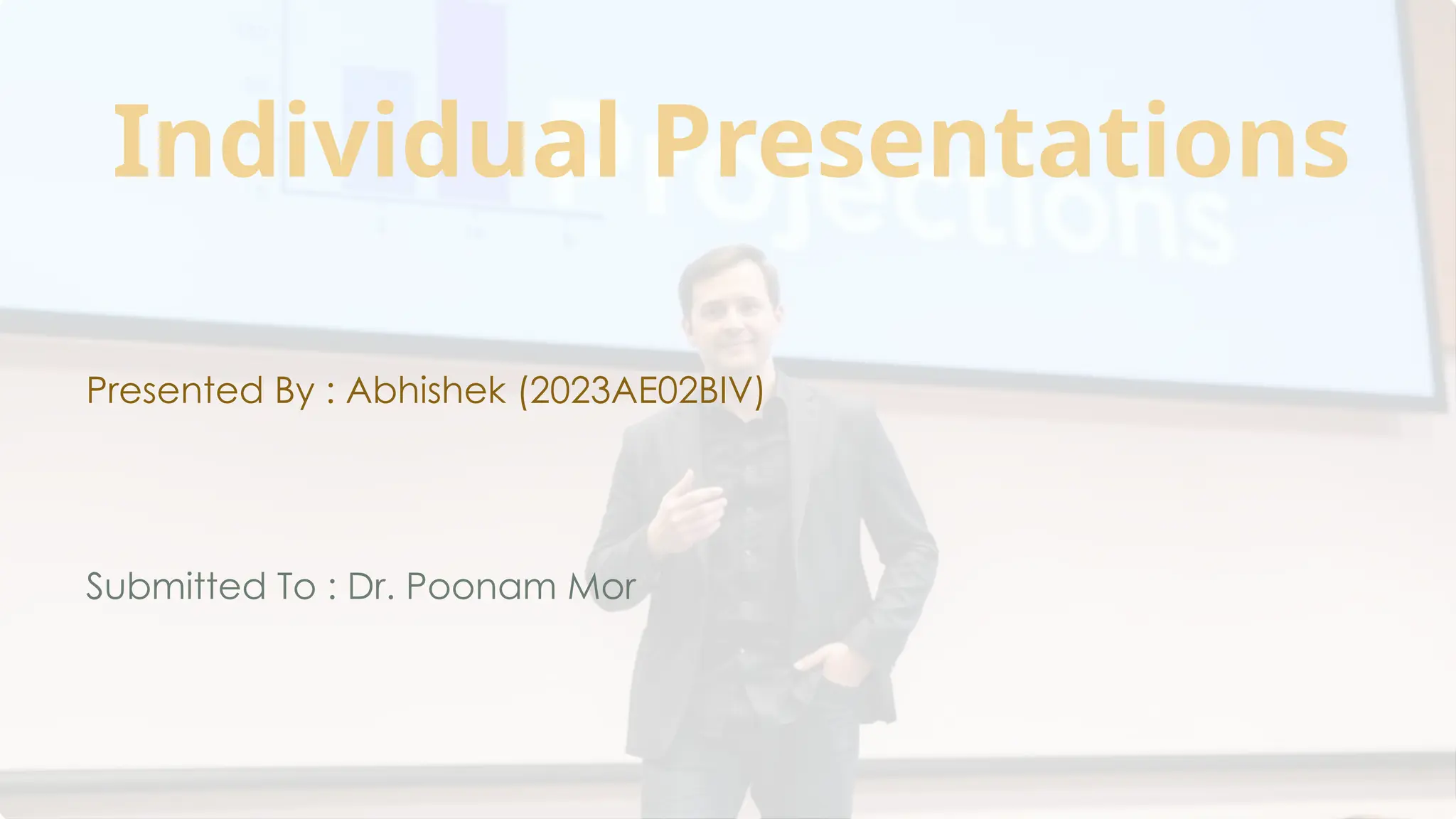
Individual Presentations
Presented By : Abhishek (2023AE02BIV)
Submitted To : Dr. Poonam Mor
Importance of Strong Presentation Skills
In today's competitive world, the ability to communicate effectively through presentations is a highly valuable skill.
Strong presentation skills are essential for professionals across various industries, from business and finance to
education and healthcare. These skills allow you to:
• Articulate your ideas and vision clearly and persuasively
• Engage and connect with your audience
• Build credibility and establish authority
• Influence decisions and drive action
• Advance your career and open doors to new opportunities.
By investing in your presentation skills, you invest in your professional development and unlock your potential to make
a lasting impact.
Defining Your Presentation Objective
Before you even begin crafting your presentation, it's critical to define your specific objective. What do you want your
audience to understand, believe, or do after hearing your presentation? A clear objective serves as your guiding star,
shaping the content, structure, and delivery of your presentation.
Consider these key questions when defining your objective:
• What is the key message you want to convey?
• What specific action do you want your audience to take?
• What change or outcome do you hope to achieve?
Having a defined objective ensures that your presentation is focused, purposeful, and ultimately successful in
achieving its intended goals.
Crafting an Engaging Narrative
The most effective presentations tell a story. A compelling narrative captures the audience's attention, holds their
interest, and leaves a lasting impression. To craft an engaging narrative, follow these steps:
• Establish a clear beginning, middle, and end. Introduce your topic, develop your key points, and conclude with a
strong call to action.
• Use a compelling hook to grab attention from the start. This could be a surprising statistic, a thought-provoking
question, or a relatable anecdote.
• Structure your content logically and progressively. Connect your ideas seamlessly and build towards a clear
understanding.
• Incorporate storytelling techniques to enhance your presentation. Share personal experiences, use vivid
language, and connect with your audience on an emotional level.
By weaving a compelling narrative, you transform your presentation from a dry recitation of facts into a captivating
experience that resonates with your audience.
Effective Visual Aid Design
Visual aids are powerful tools that enhance your presentation's impact and reinforce your message. They can make
complex information easier to understand, break up the monotony of a long presentation, and add a professional
touch. When designing visual aids, consider these tips:
• Keep them clear, concise, and visually appealing. Avoid clutter and use high-quality images, graphs, and charts.
• Use a consistent design theme for a cohesive look. Choose a color palette, font style, and image style that
complements your presentation and brand.
• Less is more. Don't overload your slides with too much text. Use visuals to illustrate your points and supplement,
not replace, your spoken words.
• Emphasize key points and use clear call-to-actions. Help your audience remember the most important
information.
Well-designed visual aids can elevate your presentation, making it more memorable and impactful.
Developing Confident Body Language
Nonverbal communication is as important as your spoken words. Confident body language can enhance your
presence, build trust with your audience, and elevate the overall impact of your presentation. Here's how to develop
confident body language:
• Maintain eye contact with your audience. Engage with them individually and make them feel seen and heard.
• Use open and inviting posture. Stand tall, with relaxed shoulders and a slight smile.
• Move naturally and with purpose. Use gestures to emphasize points, but avoid pacing or fidgeting.
• Project your voice clearly and with enthusiasm. Vary your tone and volume to keep your audience engaged.
By mastering your body language, you radiate confidence, connect with your audience, and deliver a powerful and
memorable presentation.
Handling Q&A and Audience Interaction
The Q&A session is an opportunity to engage with your audience directly and address their questions and concerns. It's a valuable
part of the presentation process, allowing you to clarify information and build a stronger connection with your listeners. To handle
Q&A effectively, follow these guidelines:
• Be prepared for common questions. Anticipate potential inquiries and formulate concise and informative responses.
• Listen attentively to each question. Make eye contact, nod, and show that you're genuinely interested in what they have to say.
• Respond clearly, concisely, and respectfully. Avoid jargon and deliver your answers with confidence.
• Acknowledge and address all questions. Even if a question has already been answered, reiterate the key points for the benefit of
everyone in the audience.
• Stay calm and positive. Maintain a respectful and professional demeanor, even when faced with challenging questions.
By embracing the Q&A session, you create a more interactive and engaging experience for your audience, turning a potential
challenge into an opportunity for further learning and connection.
Practice, Feedback, and Continuous Improvement
The key to delivering impactful presentations is continuous practice and a commitment to improvement. Don't be afraid to practice
your presentation multiple times, refining your delivery and seeking constructive feedback along the way. Here's how to make the
most of practice and feedback:
• Practice in front of a mirror, a friend, or a small group. Get comfortable with the material and identify areas for improvement.
• Record yourself and watch the playback. Observe your body language, tone, and pacing to identify areas for refinement.
• Seek feedback from trusted colleagues, friends, or mentors. Ask for specific suggestions on how to improve your presentation
skills.
• Attend workshops or courses to enhance your presentation skills. Gain new knowledge and techniques from experienced
professionals.
• Refine your presentation based on feedback and practice consistently. The more you practice, the more confident and
comfortable you'll become.
By embracing practice, seeking feedback, and continuously refining your skills, you'll elevate your presentations to new heights,
delivering impactful and memorable experiences for your audience.
B Y - A B H I S H E K ( 2 0 2 3 A E 0 2 B I V )
THANK YOU

Individual-Presentations for self development (Abhishek).pptx

  • 1.
    Individual Presentations Presented By: Abhishek (2023AE02BIV) Submitted To : Dr. Poonam Mor
  • 2.
    Importance of StrongPresentation Skills In today's competitive world, the ability to communicate effectively through presentations is a highly valuable skill. Strong presentation skills are essential for professionals across various industries, from business and finance to education and healthcare. These skills allow you to: • Articulate your ideas and vision clearly and persuasively • Engage and connect with your audience • Build credibility and establish authority • Influence decisions and drive action • Advance your career and open doors to new opportunities. By investing in your presentation skills, you invest in your professional development and unlock your potential to make a lasting impact.
  • 3.
    Defining Your PresentationObjective Before you even begin crafting your presentation, it's critical to define your specific objective. What do you want your audience to understand, believe, or do after hearing your presentation? A clear objective serves as your guiding star, shaping the content, structure, and delivery of your presentation. Consider these key questions when defining your objective: • What is the key message you want to convey? • What specific action do you want your audience to take? • What change or outcome do you hope to achieve? Having a defined objective ensures that your presentation is focused, purposeful, and ultimately successful in achieving its intended goals.
  • 4.
    Crafting an EngagingNarrative The most effective presentations tell a story. A compelling narrative captures the audience's attention, holds their interest, and leaves a lasting impression. To craft an engaging narrative, follow these steps: • Establish a clear beginning, middle, and end. Introduce your topic, develop your key points, and conclude with a strong call to action. • Use a compelling hook to grab attention from the start. This could be a surprising statistic, a thought-provoking question, or a relatable anecdote. • Structure your content logically and progressively. Connect your ideas seamlessly and build towards a clear understanding. • Incorporate storytelling techniques to enhance your presentation. Share personal experiences, use vivid language, and connect with your audience on an emotional level. By weaving a compelling narrative, you transform your presentation from a dry recitation of facts into a captivating experience that resonates with your audience.
  • 5.
    Effective Visual AidDesign Visual aids are powerful tools that enhance your presentation's impact and reinforce your message. They can make complex information easier to understand, break up the monotony of a long presentation, and add a professional touch. When designing visual aids, consider these tips: • Keep them clear, concise, and visually appealing. Avoid clutter and use high-quality images, graphs, and charts. • Use a consistent design theme for a cohesive look. Choose a color palette, font style, and image style that complements your presentation and brand. • Less is more. Don't overload your slides with too much text. Use visuals to illustrate your points and supplement, not replace, your spoken words. • Emphasize key points and use clear call-to-actions. Help your audience remember the most important information. Well-designed visual aids can elevate your presentation, making it more memorable and impactful.
  • 6.
    Developing Confident BodyLanguage Nonverbal communication is as important as your spoken words. Confident body language can enhance your presence, build trust with your audience, and elevate the overall impact of your presentation. Here's how to develop confident body language: • Maintain eye contact with your audience. Engage with them individually and make them feel seen and heard. • Use open and inviting posture. Stand tall, with relaxed shoulders and a slight smile. • Move naturally and with purpose. Use gestures to emphasize points, but avoid pacing or fidgeting. • Project your voice clearly and with enthusiasm. Vary your tone and volume to keep your audience engaged. By mastering your body language, you radiate confidence, connect with your audience, and deliver a powerful and memorable presentation.
  • 7.
    Handling Q&A andAudience Interaction The Q&A session is an opportunity to engage with your audience directly and address their questions and concerns. It's a valuable part of the presentation process, allowing you to clarify information and build a stronger connection with your listeners. To handle Q&A effectively, follow these guidelines: • Be prepared for common questions. Anticipate potential inquiries and formulate concise and informative responses. • Listen attentively to each question. Make eye contact, nod, and show that you're genuinely interested in what they have to say. • Respond clearly, concisely, and respectfully. Avoid jargon and deliver your answers with confidence. • Acknowledge and address all questions. Even if a question has already been answered, reiterate the key points for the benefit of everyone in the audience. • Stay calm and positive. Maintain a respectful and professional demeanor, even when faced with challenging questions. By embracing the Q&A session, you create a more interactive and engaging experience for your audience, turning a potential challenge into an opportunity for further learning and connection.
  • 8.
    Practice, Feedback, andContinuous Improvement The key to delivering impactful presentations is continuous practice and a commitment to improvement. Don't be afraid to practice your presentation multiple times, refining your delivery and seeking constructive feedback along the way. Here's how to make the most of practice and feedback: • Practice in front of a mirror, a friend, or a small group. Get comfortable with the material and identify areas for improvement. • Record yourself and watch the playback. Observe your body language, tone, and pacing to identify areas for refinement. • Seek feedback from trusted colleagues, friends, or mentors. Ask for specific suggestions on how to improve your presentation skills. • Attend workshops or courses to enhance your presentation skills. Gain new knowledge and techniques from experienced professionals. • Refine your presentation based on feedback and practice consistently. The more you practice, the more confident and comfortable you'll become. By embracing practice, seeking feedback, and continuously refining your skills, you'll elevate your presentations to new heights, delivering impactful and memorable experiences for your audience.
  • 9.
    B Y -A B H I S H E K ( 2 0 2 3 A E 0 2 B I V ) THANK YOU