Indigo
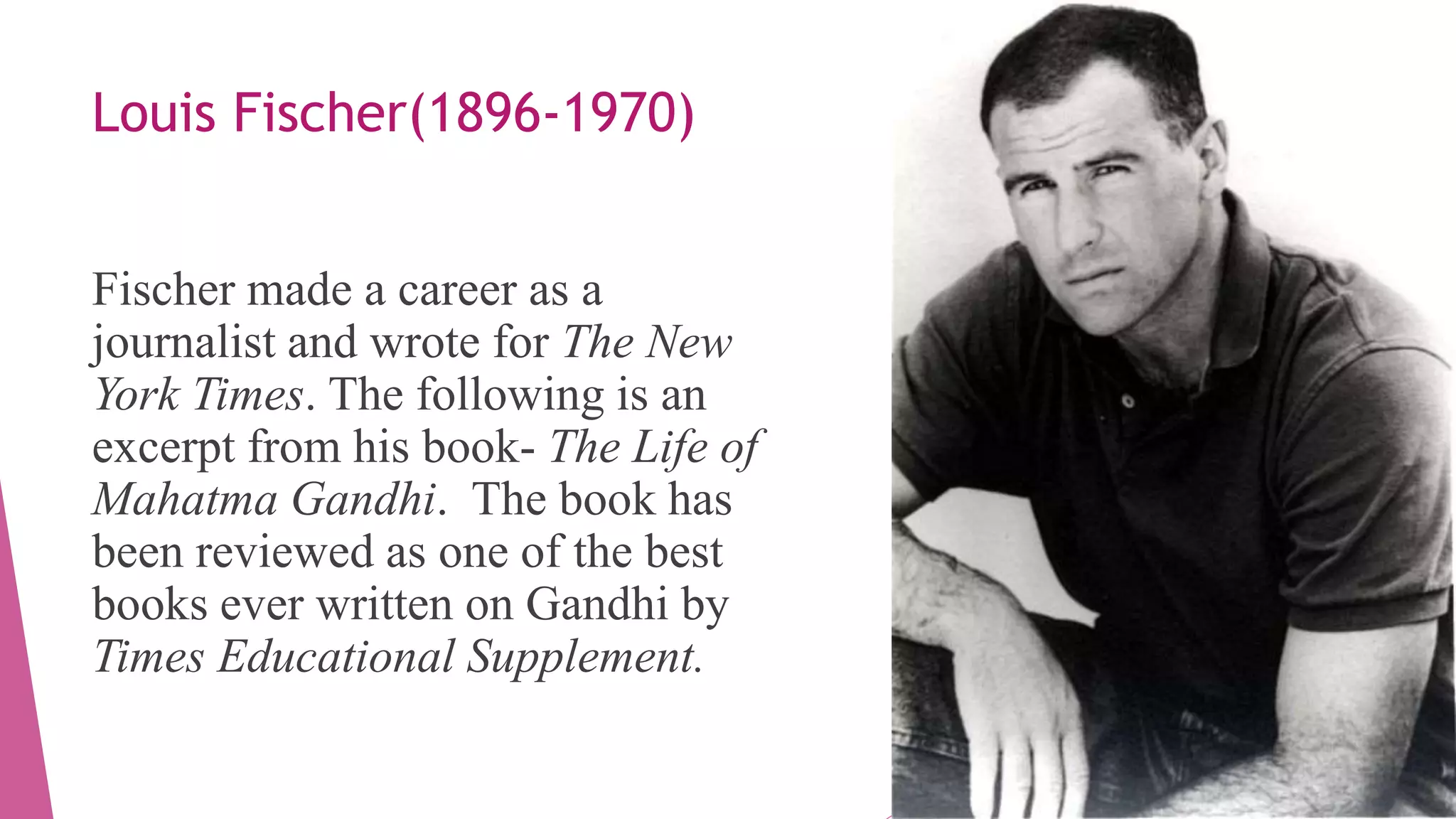
Louis Fischer(1896-1970)
Fischer made a career as a
journalist and wrote for The New
York Times. The following is an
excerpt from his book- The Life of
Mahatma Gandhi. The book has
been reviewed as one of the best
books ever written on Gandhi by
Times Educational Supplement.
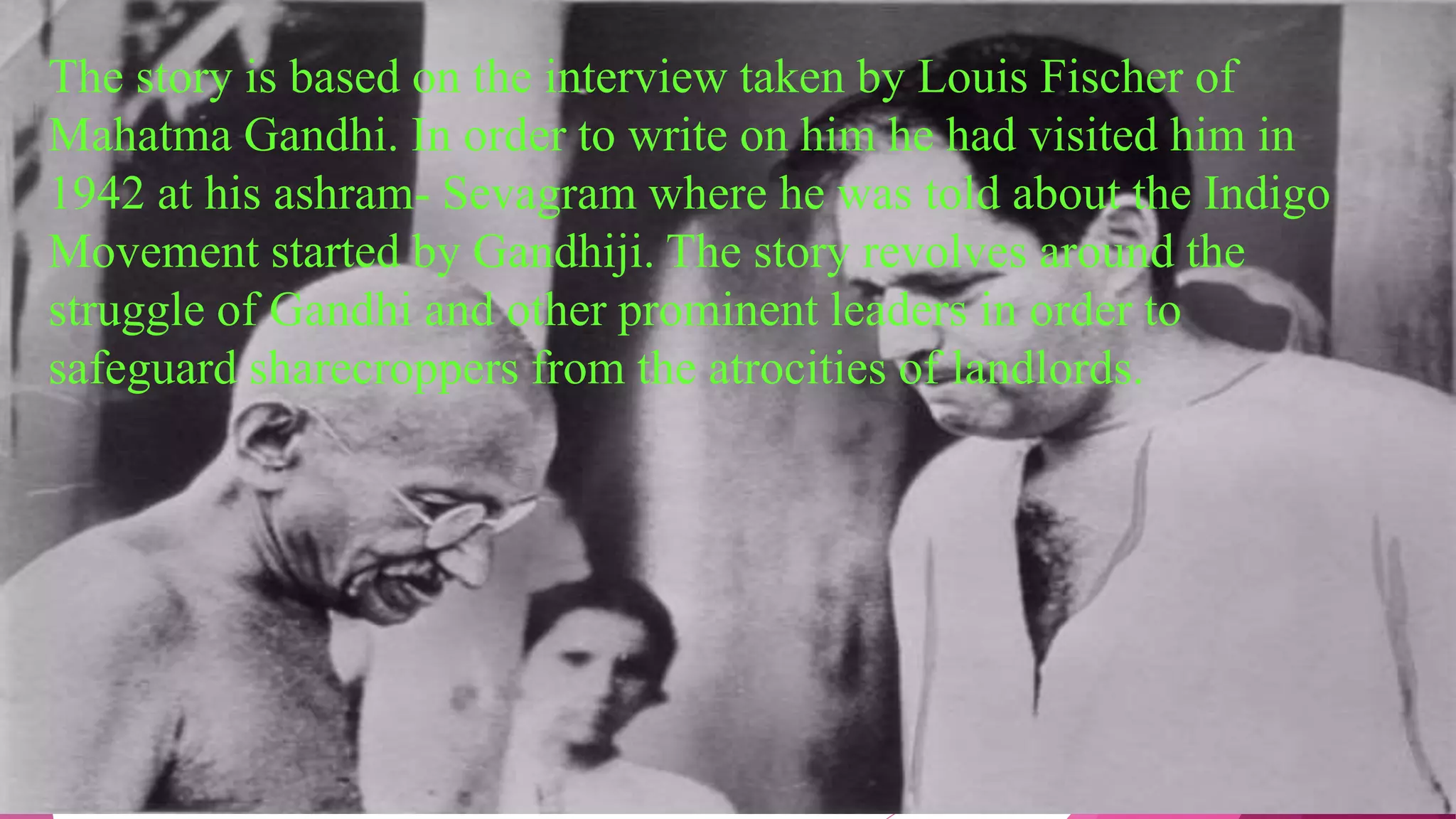
The story is based on the interview taken by Louis Fischer of
Mahatma Gandhi. In order to write on him he had visited him in
1942 at his ashram- Sevagram where he was told about the Indigo
Movement started by Gandhiji. The story revolves around the
struggle of Gandhi and other prominent leaders in order to
safeguard sharecroppers from the atrocities of landlords.
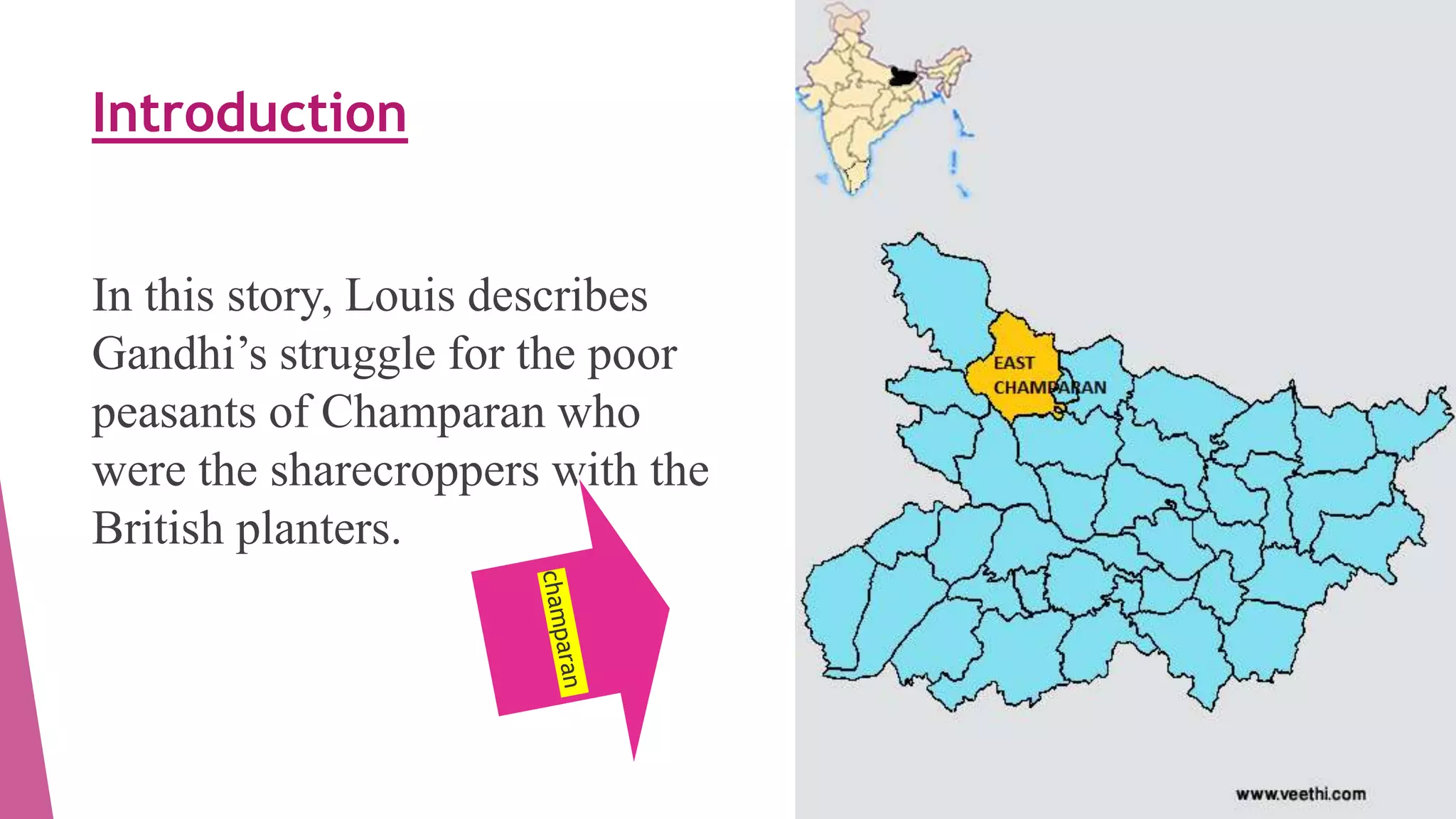
Introduction
In this story, Louis describes
Gandhi’s struggle for the poor
peasants of Champaran who
were the sharecroppers with the
British planters.
Peasants- a poor smallholder or agricultural
labourer of low social status
British planters
They led a miserable life and were forced to grow indigo
according to an agreement.
They suffered a great
injustice due to the
landlord system in
Bihar.
Gandhi waged a war for about a year against
their atrocities and brought justice to the poor
peasants.
Characters
Raj Kumar Shukla: A
sharecropper
Charles Freer Andrews: A
follower of Gandhi
Kasturba: Wife of Gandhi Devdas: youngest son of Gandhi
This story describes
Gandhi’s struggle for the
poor peasants of
Champaran.
In those days most of tillable land in the Champaran
district was divided into large estate owned by Englishmen
and worked by Indian tenants.
The chief commercial crop was Indigo.
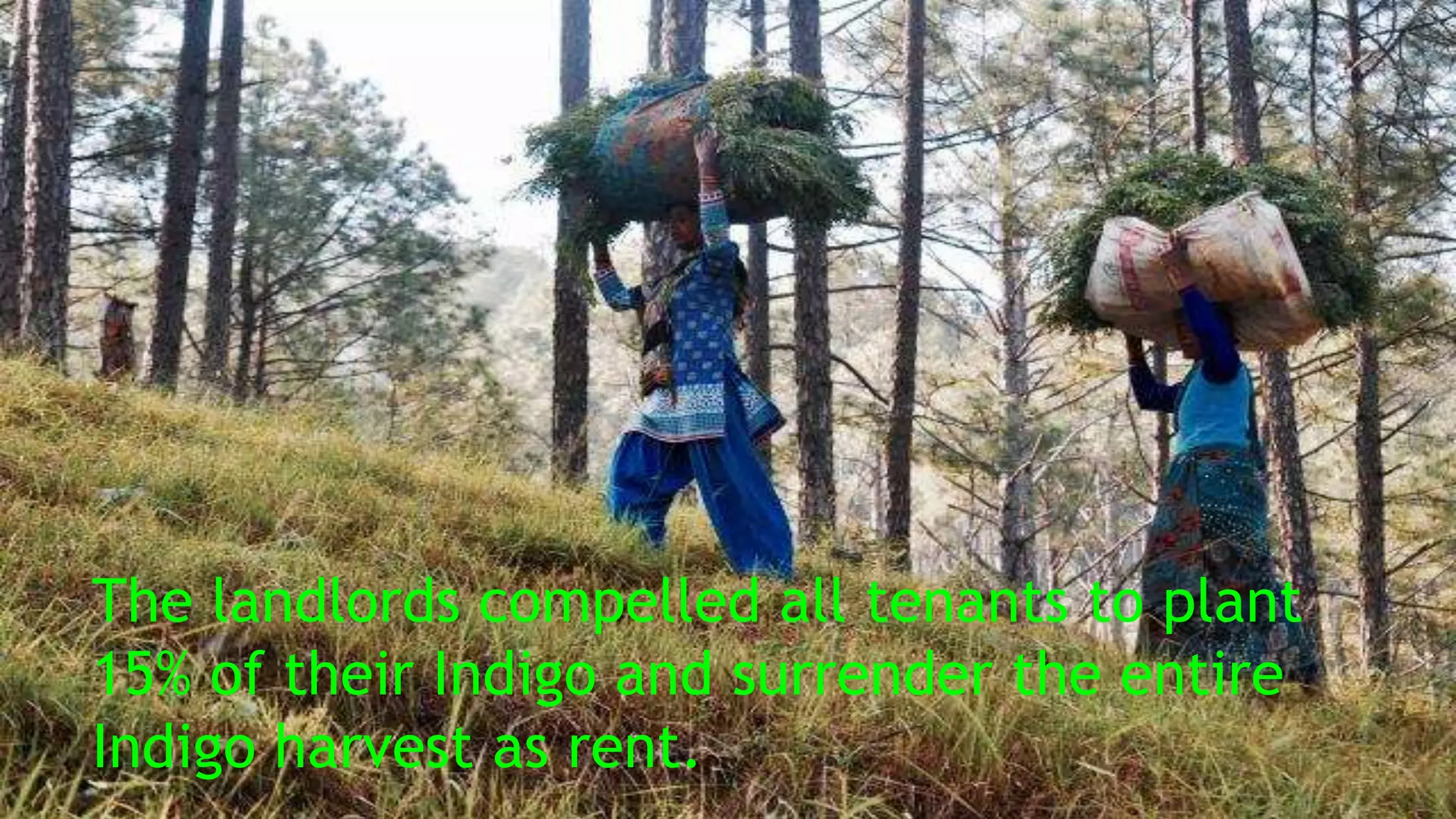
The landlords compelled all tenants to plant
15% of their Indigo and surrender the entire
Indigo harvest as rent.
The British didn’t
need the Indigo
crop any more
when Germany
had developed
synthetic Indigo.
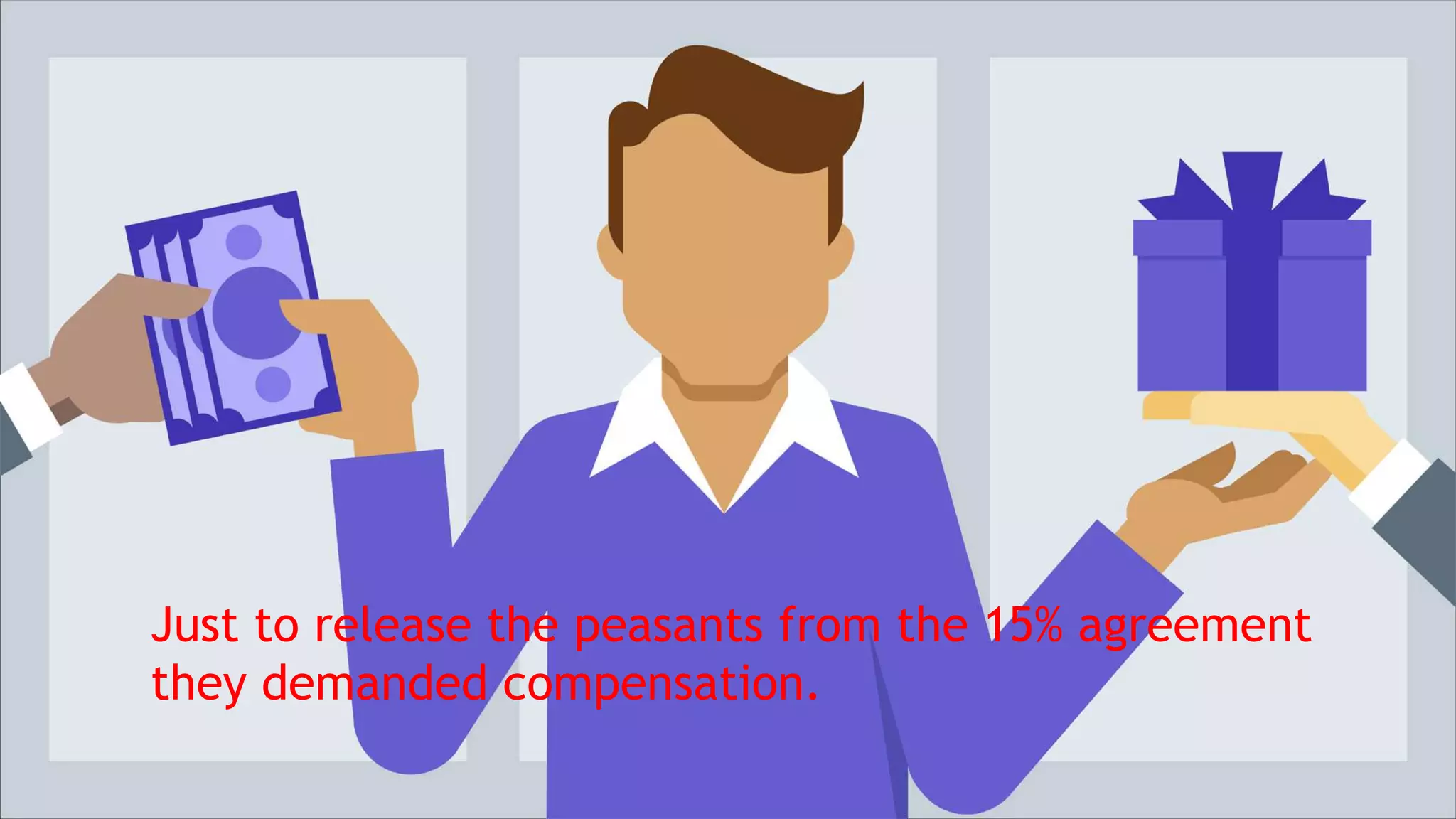
Just to release the peasants from the 15% agreement
they demanded compensation.
Some illiterate peasants agreed but the others
refused.
One of the sharecroppers named Raj Kumar
Shukla met Gandhi in this regard and compelled
him to visit Champaran because of the long term
injustice of landlords.
Shukla and Gandhiji went to Patna from Bihar From there
Shukla take Gandhi to the house of a lawyer named
Rajendra Prasad.
Poor peasant misunderstand mahatma Gandhi as a
another poor peasant because of his humble behavior.
He checkout before taking an important step for peasants justice.
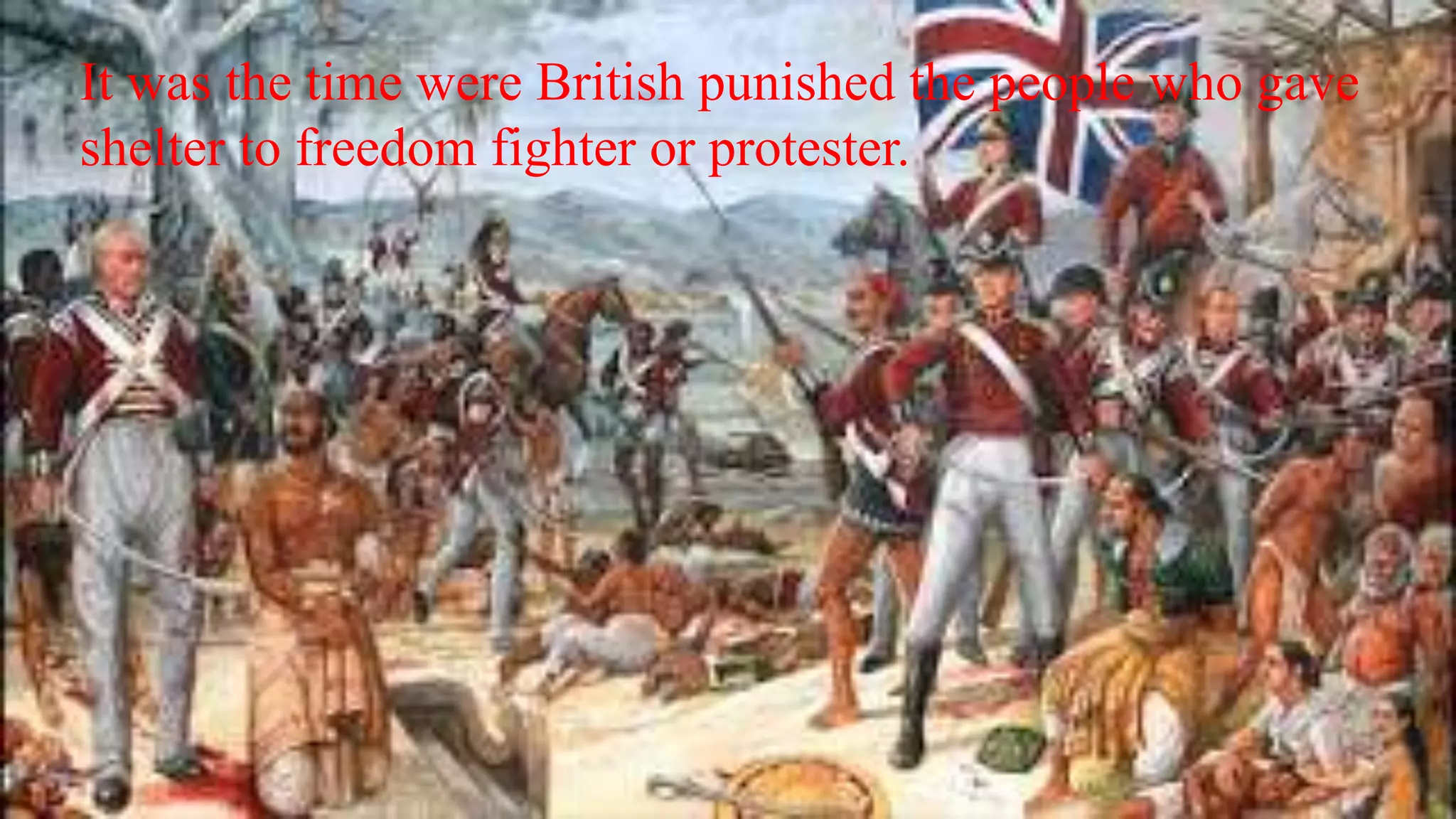
It was the time were British punished the people who gave
shelter to freedom fighter or protester.
Gandhi’s arrival and the nature of his mission spread
like a wildfire.
lawyers and peasant support him.
All accepted that the charges of the poor peasants
were very high and it was irritating for them
Gandhi revolt against them for collecting
more money form the sharecroppers.
He achieved to get justice after a yearlong
battle for the peasants.
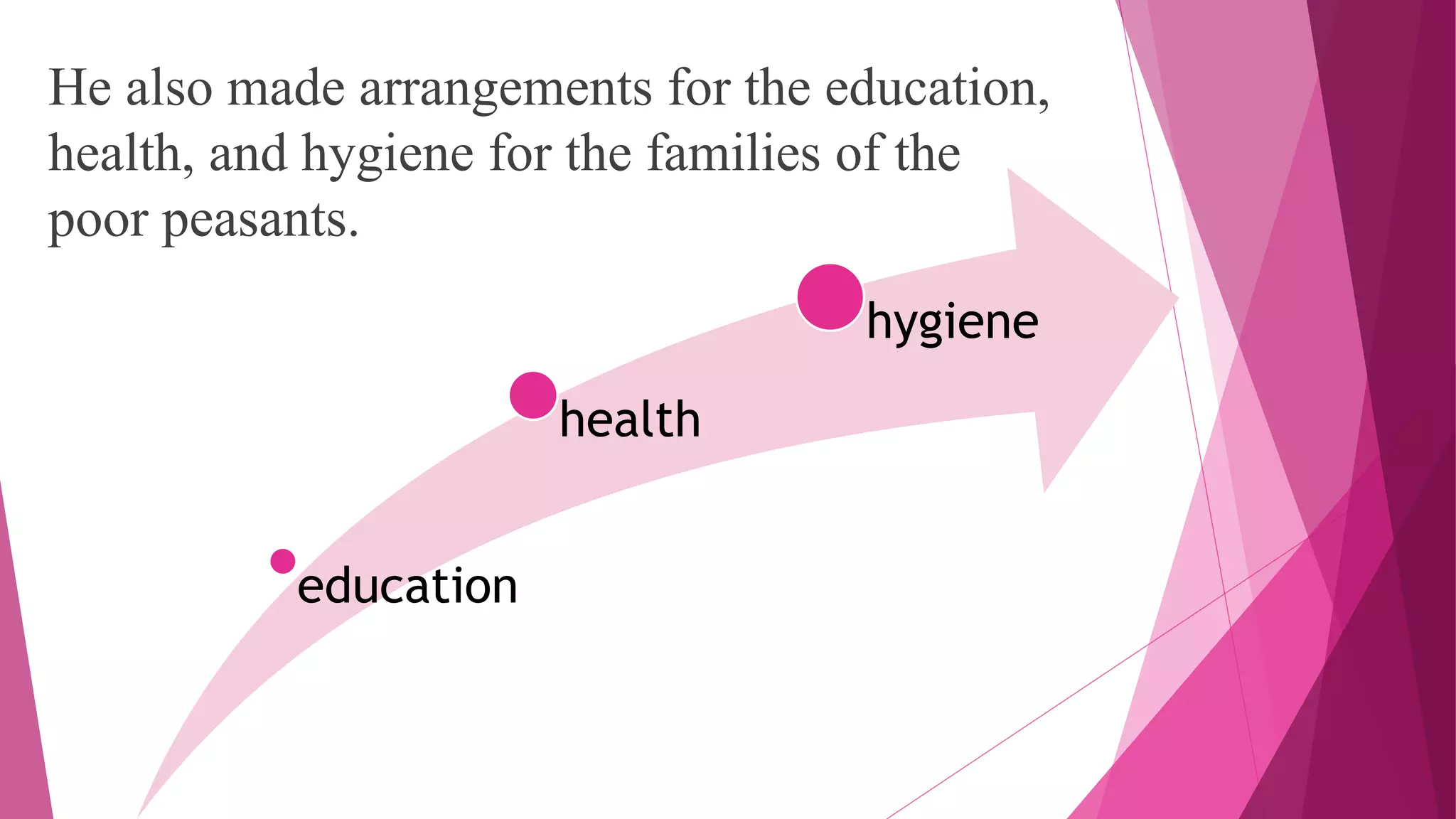
He also made arrangements for the education,
health, and hygiene for the families of the
poor peasants.
education
health
hygiene
He gave them the lesson of self-reliance
Indigo powerpoint

Indigo powerpoint

  • 1.
  • 2.
    Louis Fischer(1896-1970) Fischer madea career as a journalist and wrote for The New York Times. The following is an excerpt from his book- The Life of Mahatma Gandhi. The book has been reviewed as one of the best books ever written on Gandhi by Times Educational Supplement.
  • 3.
    The story isbased on the interview taken by Louis Fischer of Mahatma Gandhi. In order to write on him he had visited him in 1942 at his ashram- Sevagram where he was told about the Indigo Movement started by Gandhiji. The story revolves around the struggle of Gandhi and other prominent leaders in order to safeguard sharecroppers from the atrocities of landlords.
  • 4.
    Introduction In this story,Louis describes Gandhi’s struggle for the poor peasants of Champaran who were the sharecroppers with the British planters.
  • 5.
    Peasants- a poorsmallholder or agricultural labourer of low social status
  • 6.
  • 7.
    They led amiserable life and were forced to grow indigo according to an agreement.
  • 8.
    They suffered agreat injustice due to the landlord system in Bihar.
  • 9.
    Gandhi waged awar for about a year against their atrocities and brought justice to the poor peasants.
  • 10.
    Characters Raj Kumar Shukla:A sharecropper Charles Freer Andrews: A follower of Gandhi Kasturba: Wife of Gandhi Devdas: youngest son of Gandhi
  • 11.
    This story describes Gandhi’sstruggle for the poor peasants of Champaran.
  • 12.
    In those daysmost of tillable land in the Champaran district was divided into large estate owned by Englishmen and worked by Indian tenants.
  • 13.
    The chief commercialcrop was Indigo.
  • 14.
    The landlords compelledall tenants to plant 15% of their Indigo and surrender the entire Indigo harvest as rent.
  • 16.
    The British didn’t needthe Indigo crop any more when Germany had developed synthetic Indigo.
  • 17.
    Just to releasethe peasants from the 15% agreement they demanded compensation.
  • 18.
    Some illiterate peasantsagreed but the others refused.
  • 19.
    One of thesharecroppers named Raj Kumar Shukla met Gandhi in this regard and compelled him to visit Champaran because of the long term injustice of landlords.
  • 20.
    Shukla and Gandhijiwent to Patna from Bihar From there Shukla take Gandhi to the house of a lawyer named Rajendra Prasad.
  • 21.
    Poor peasant misunderstandmahatma Gandhi as a another poor peasant because of his humble behavior.
  • 22.
    He checkout beforetaking an important step for peasants justice.
  • 23.
    It was thetime were British punished the people who gave shelter to freedom fighter or protester.
  • 24.
    Gandhi’s arrival andthe nature of his mission spread like a wildfire.
  • 25.
    lawyers and peasantsupport him.
  • 26.
    All accepted thatthe charges of the poor peasants were very high and it was irritating for them
  • 27.
    Gandhi revolt againstthem for collecting more money form the sharecroppers.
  • 28.
    He achieved toget justice after a yearlong battle for the peasants.
  • 29.
    He also madearrangements for the education, health, and hygiene for the families of the poor peasants. education health hygiene
  • 30.
    He gave themthe lesson of self-reliance