LESSON 3
FUNCTION AND PHILOSOPHICAL PERSPECTIVE ON ART
LESSON OBJECTIVES:
1. Distinguish directly functional and indirectly functional art;
2. Explain and discuss the basic philosophical perspectives on the art;
3. Discuss and realize the function of some art forms in daily life, and;
4. Apply concepts and theories on beauty and aesthetics in real life
scenarios.
What do you think
is the purpose of
building Rizal
monument in
Luneta Park?
Aristotle claimed that every must in the world has an
end, or telos in Greek, which translates into “purpose.”
Every substance, defined as formed matter, moves
according to a fixed path towards its aim. This telos,
according to Aristotle, is intricately linked with function.
For a thing to reach its purpose, it also must fulfill its
function.
FUNCTIONS OF ART
An inquiry on the function of art is an inquiry on
what art is for. When it comes to function, different
art forms come with distinctive functions. Some art
forms are more functional than others. The value of
the art in question lies in the practical benefits one
gains from it. Obviously made for a specific
purpose.
Personal Functions of Art
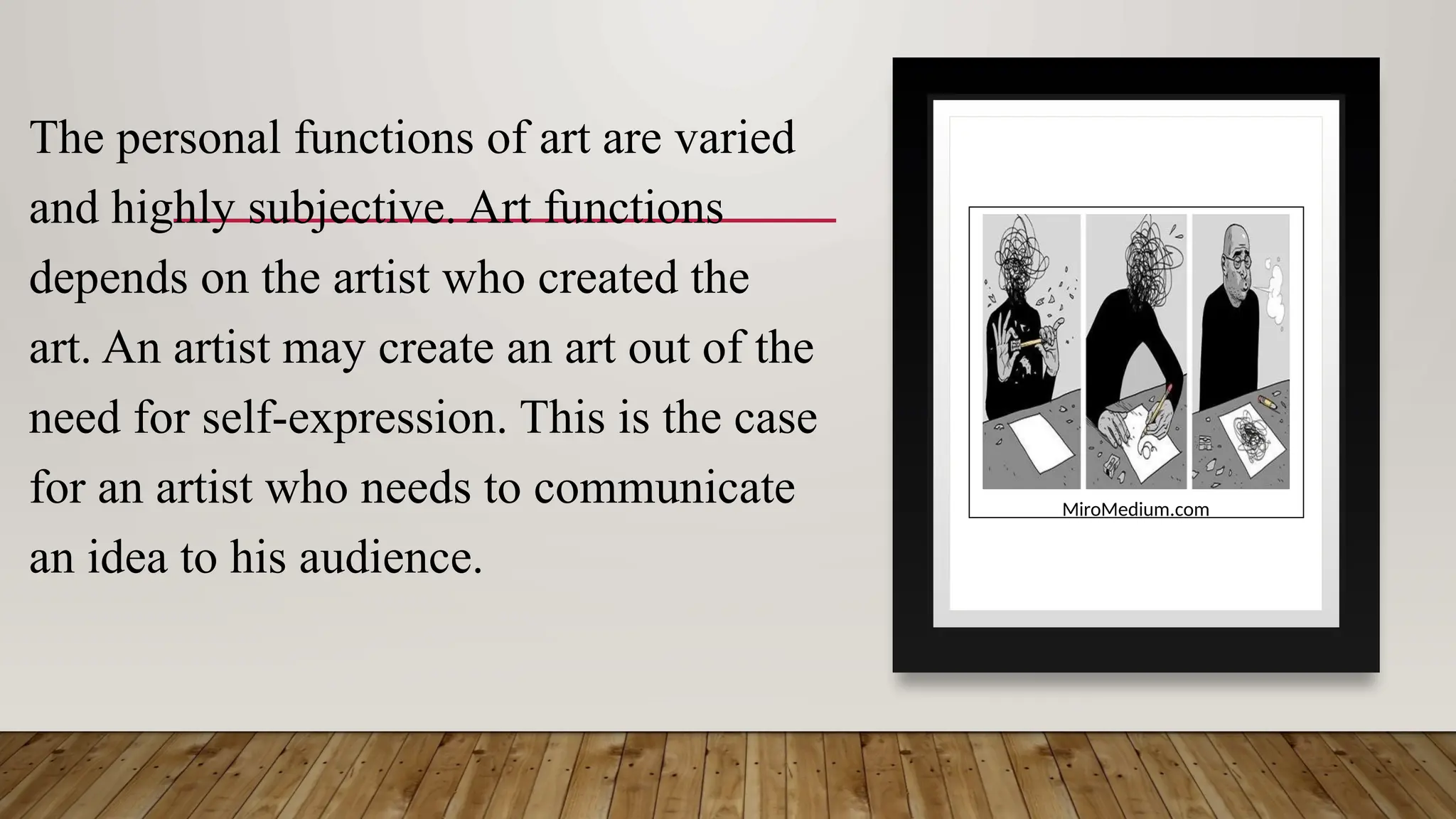
The personal functions of art are varied
and highly subjective. Art functions
depends on the artist who created the
art. An artist may create an art out of the
need for self-expression. This is the case
for an artist who needs to communicate
an idea to his audience.
MiroMedium.com
SOCIAL FUNCTIONS OF ART
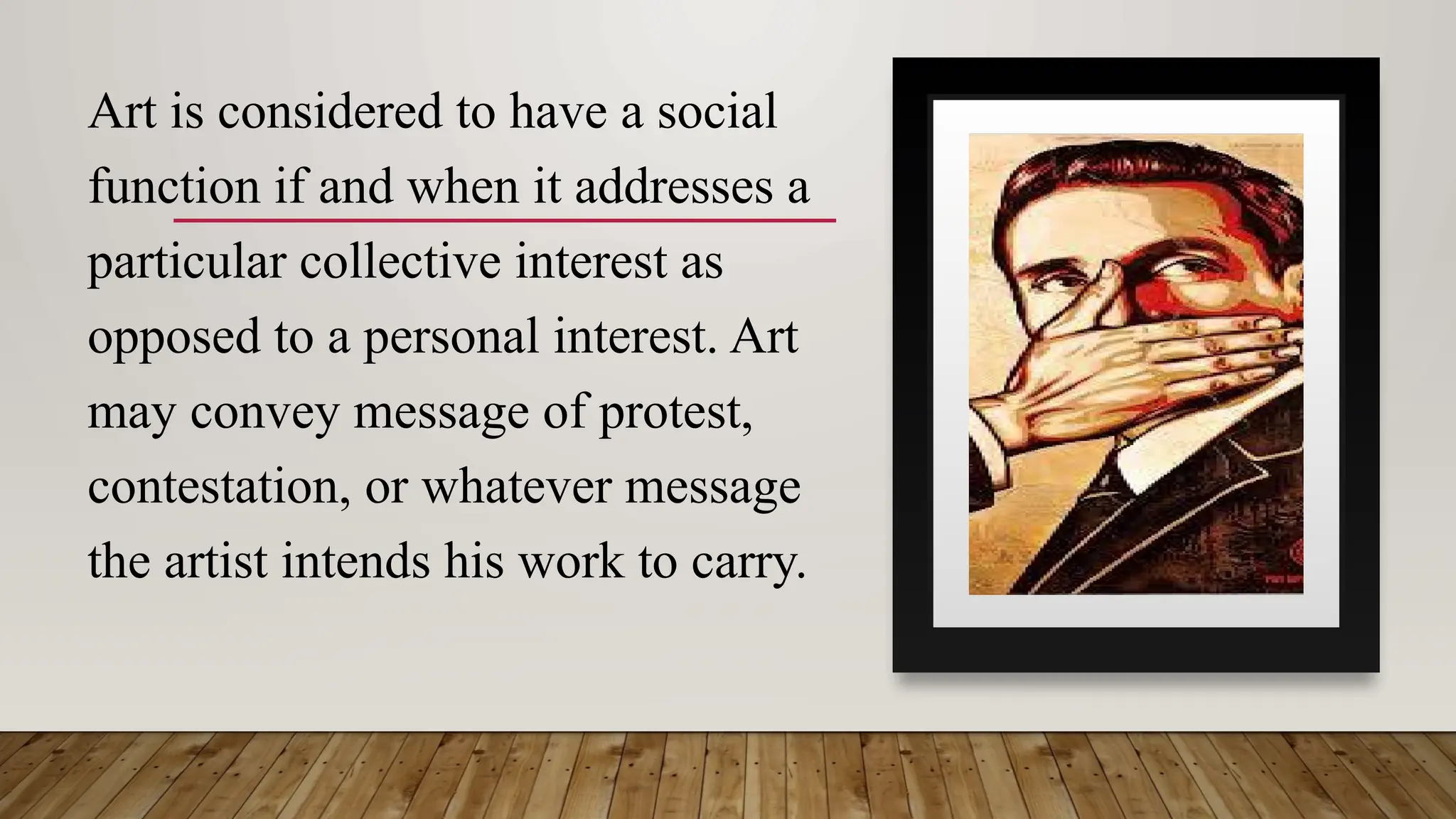
Art is considered to have a social
function if and when it addresses a
particular collective interest as
opposed to a personal interest. Art
may convey message of protest,
contestation, or whatever message
the artist intends his work to carry.
Physical Functions of Art
The physical functions of art can be
found in artworks that are crafted to
serve some physical purpose.
Architecture, jewelry-making, interior
design all serves physical functions. A
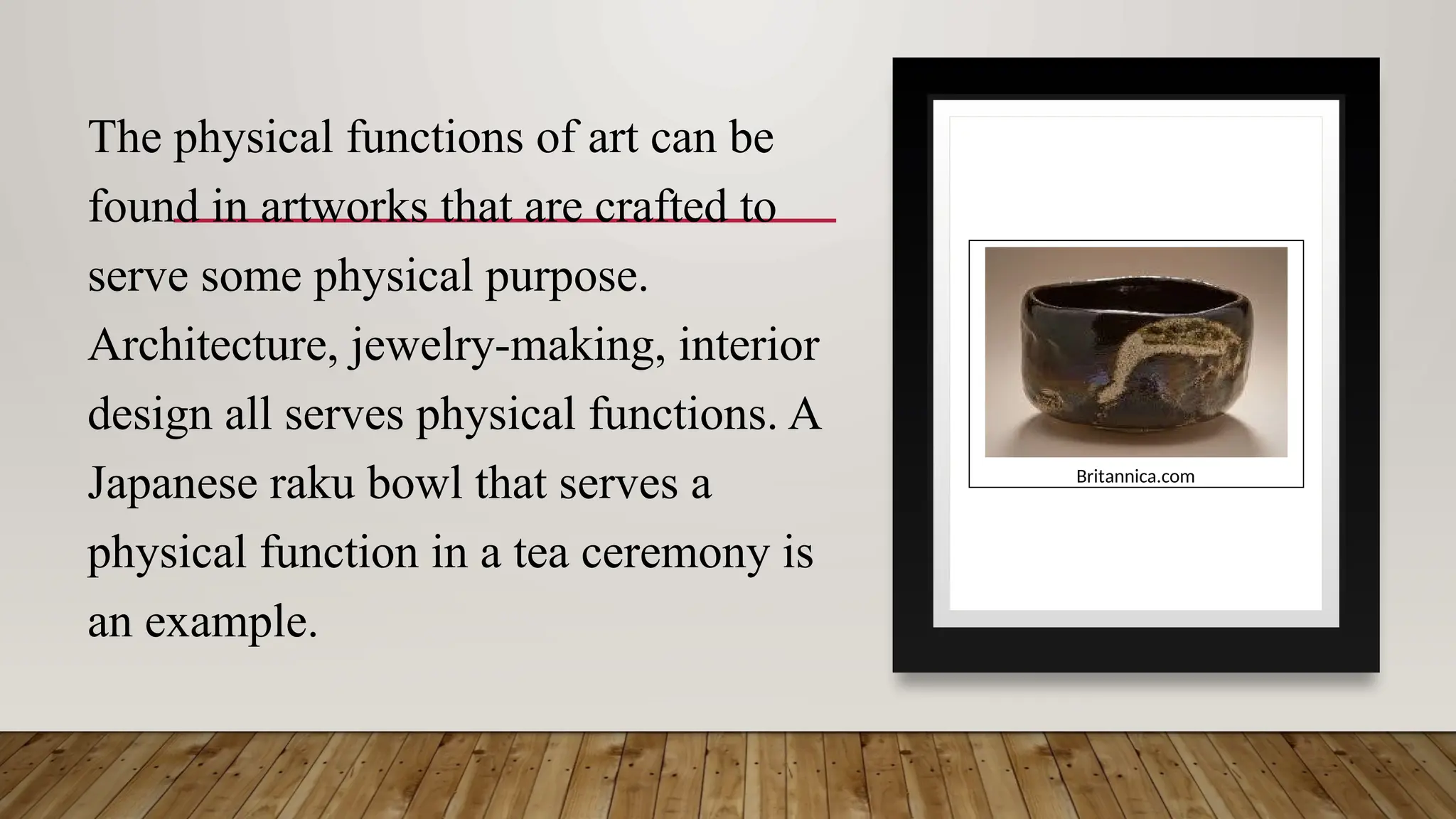
Japanese raku bowl that serves a
physical function in a tea ceremony is
an example.
Britannica.com
Other Functions of Art
Music
Music was principally used for dance and religion. The ancient
world saw music as an instrument to facilitate worship and
invocation to gods. Music was essential for synchronicity of
dancers. Music guarantees that warriors were simultaneous.
Today, music has expanded its functions and coverage. There is
a lot of music that has no connection to dance or religion.
Sculptures
Sculptures have been made by man most
particularly for religion. In the Roman
Catholic world, the employment of
sculptures for religious purposes has
remained vital, relevant, and symbolic.
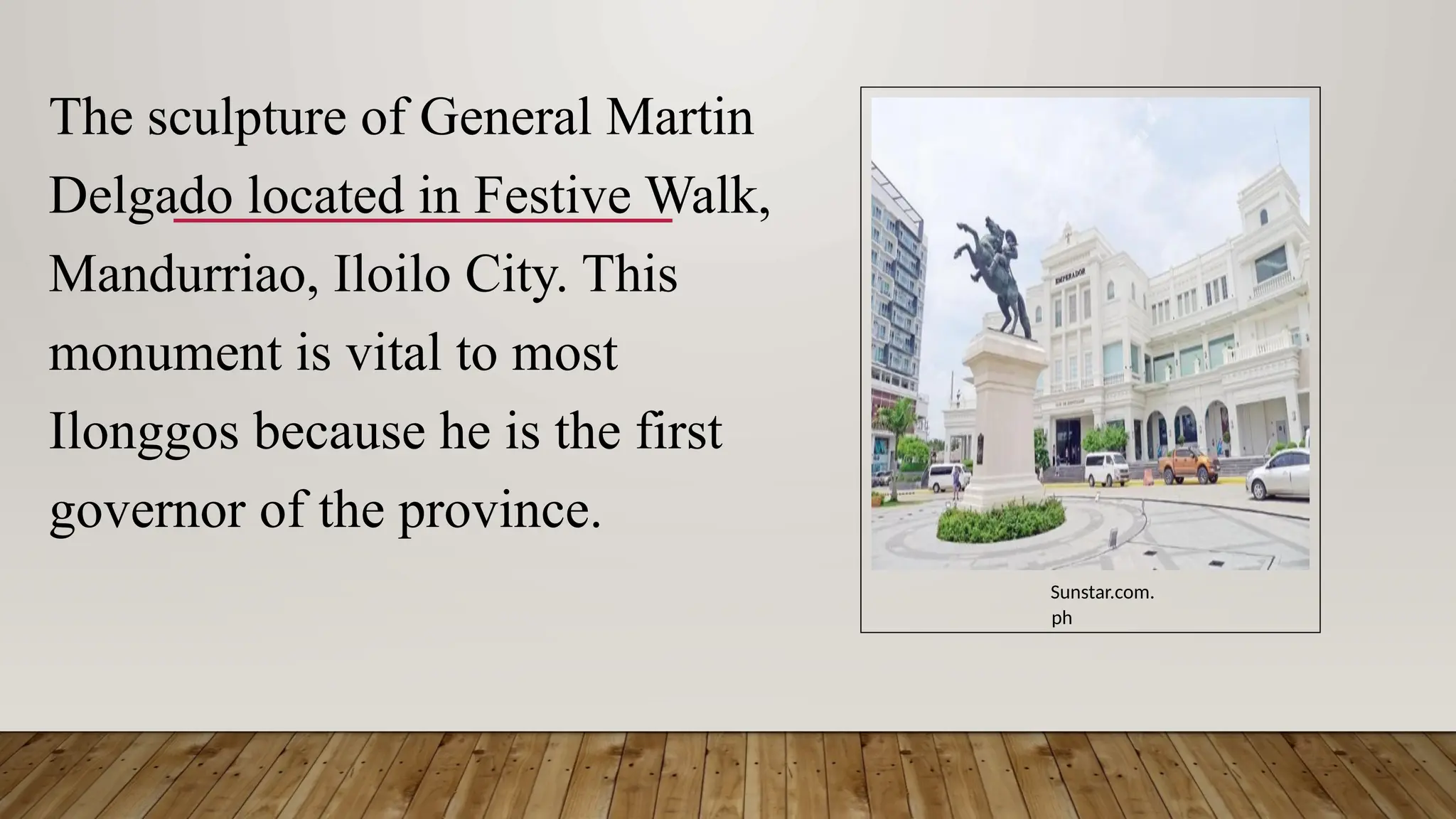
The sculpture of General Martin
Delgado located in Festive Walk,
Mandurriao, Iloilo City. This
monument is vital to most
Ilonggos because he is the first
governor of the province.
Sunstar.com.
ph
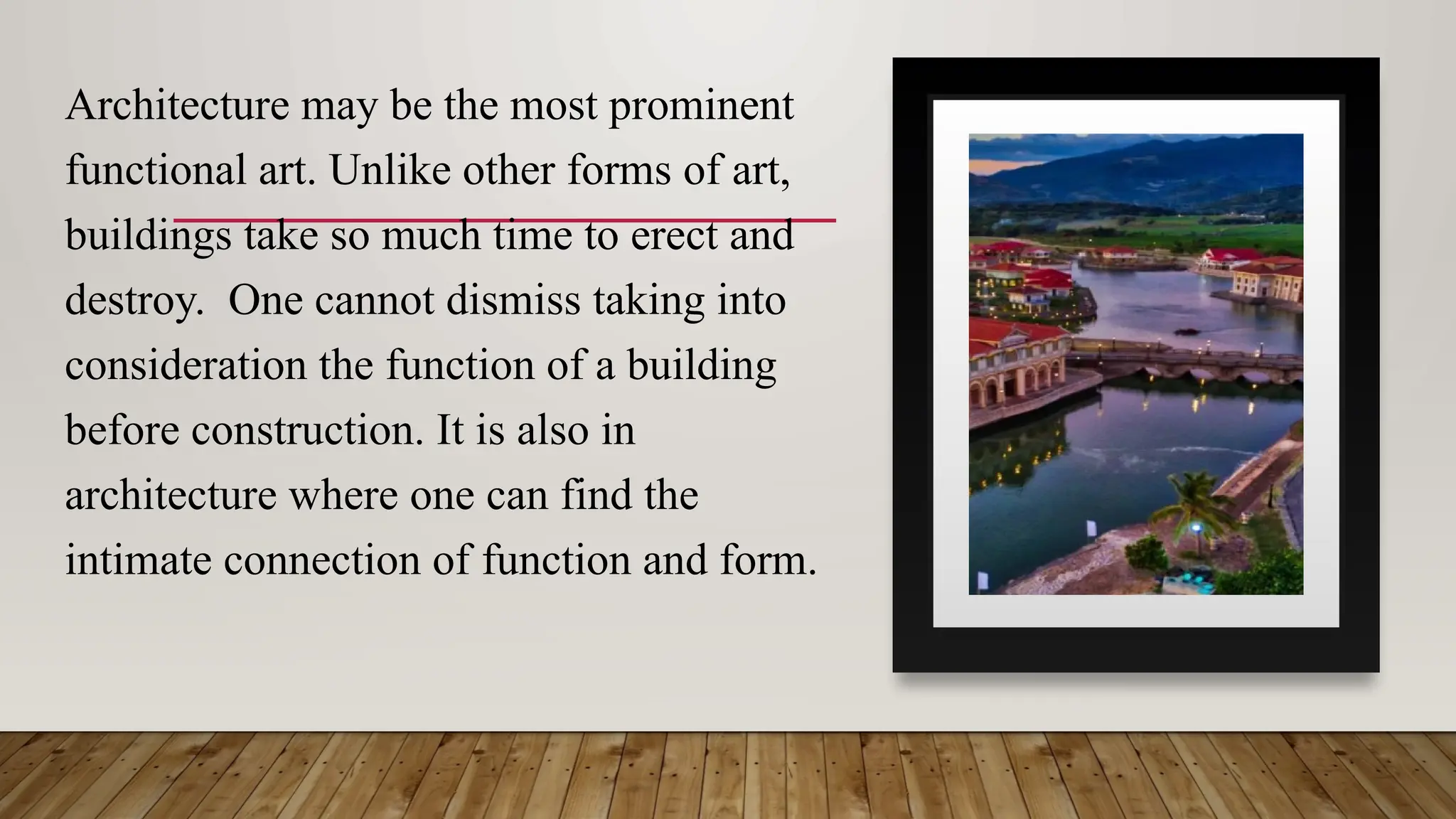
ARCHITECTURE
Architecture may be the most prominent
functional art. Unlike other forms of art,
buildings take so much time to erect and
destroy. One cannot dismiss taking into
consideration the function of a building
before construction. It is also in
architecture where one can find the
intimate connection of function and form.
Does art always have to be
functional?
While it has been shown that most arts are functional, still there
are some which are not. The value of a work of art does not
depend on function but the work itself. Meanwhile, those whose
functions are ascertained have a different story. A functional
object cannot be claimed to be beautiful unless it can perform its
function sufficiently. Art demands so much more than mere
efficiency. Efficiency cannot be mistaken as beauty
PHILOSOPHICAL
PERSPECTIVES ON ART
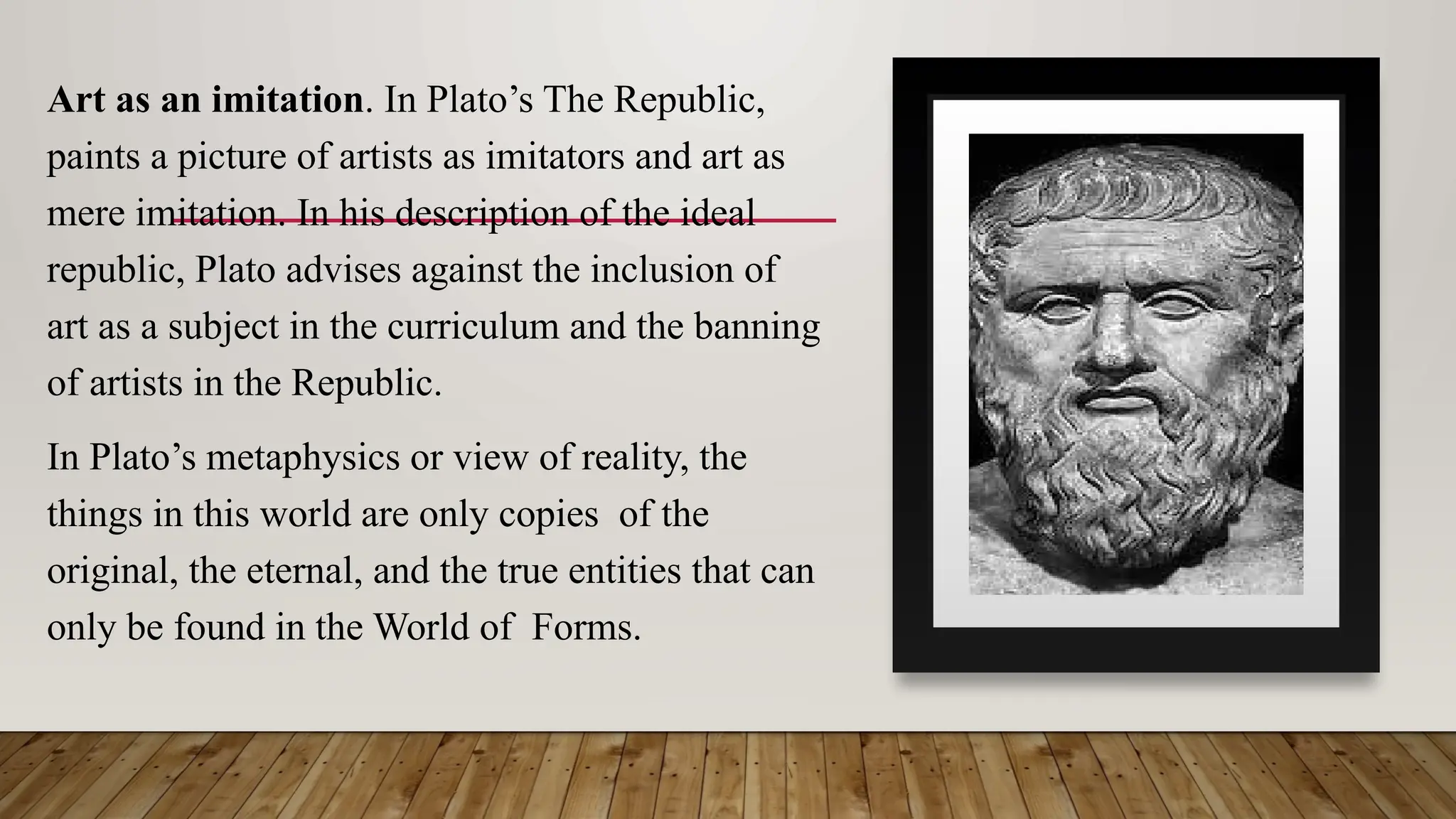
Art as an imitation. In Plato’s The Republic,
paints a picture of artists as imitators and art as
mere imitation. In his description of the ideal
republic, Plato advises against the inclusion of
art as a subject in the curriculum and the banning
of artists in the Republic.
In Plato’s metaphysics or view of reality, the
things in this world are only copies of the
original, the eternal, and the true entities that can
only be found in the World of Forms.
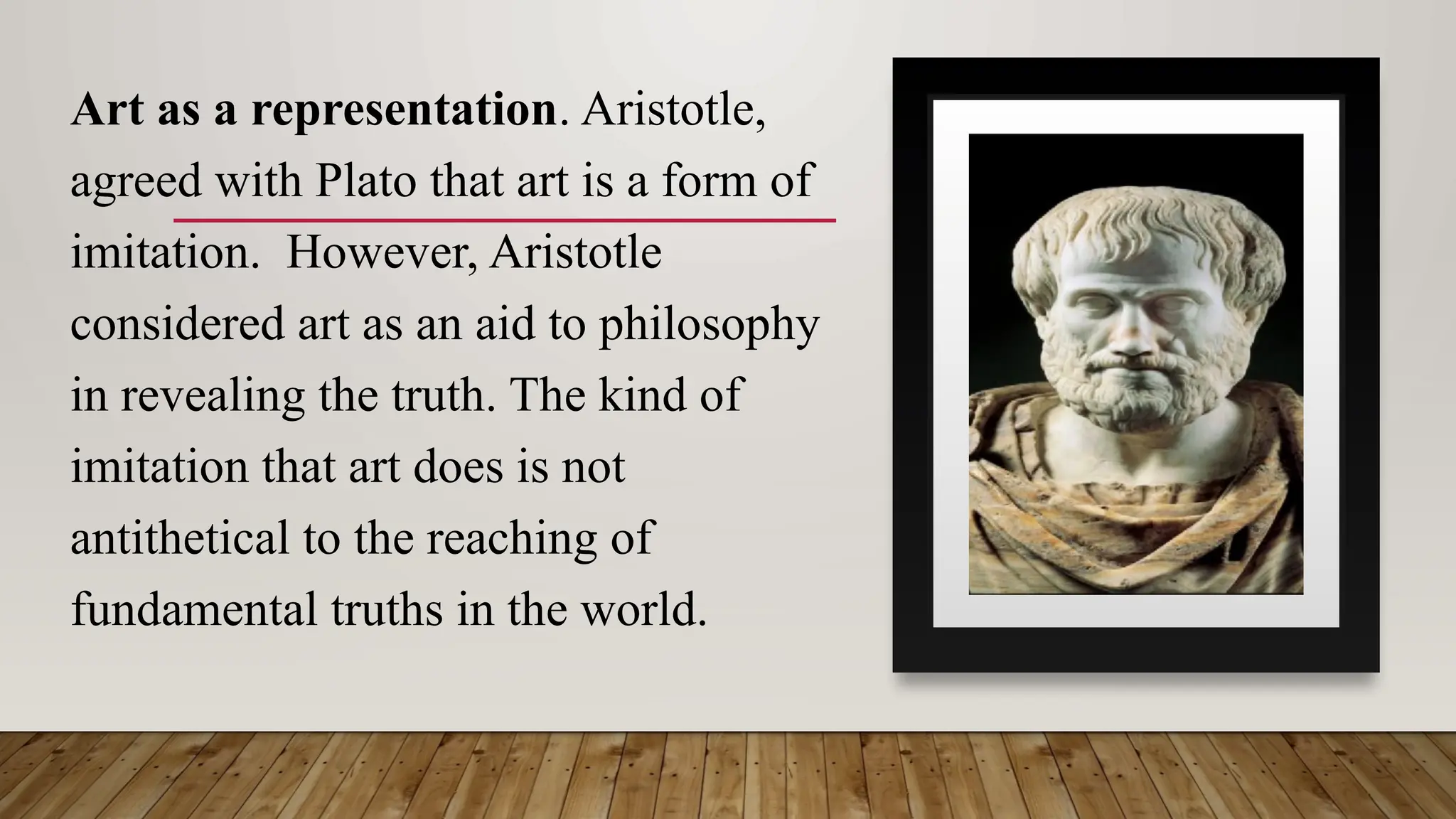
Art as a representation. Aristotle,
agreed with Plato that art is a form of
imitation. However, Aristotle
considered art as an aid to philosophy
in revealing the truth. The kind of
imitation that art does is not
antithetical to the reaching of
fundamental truths in the world.
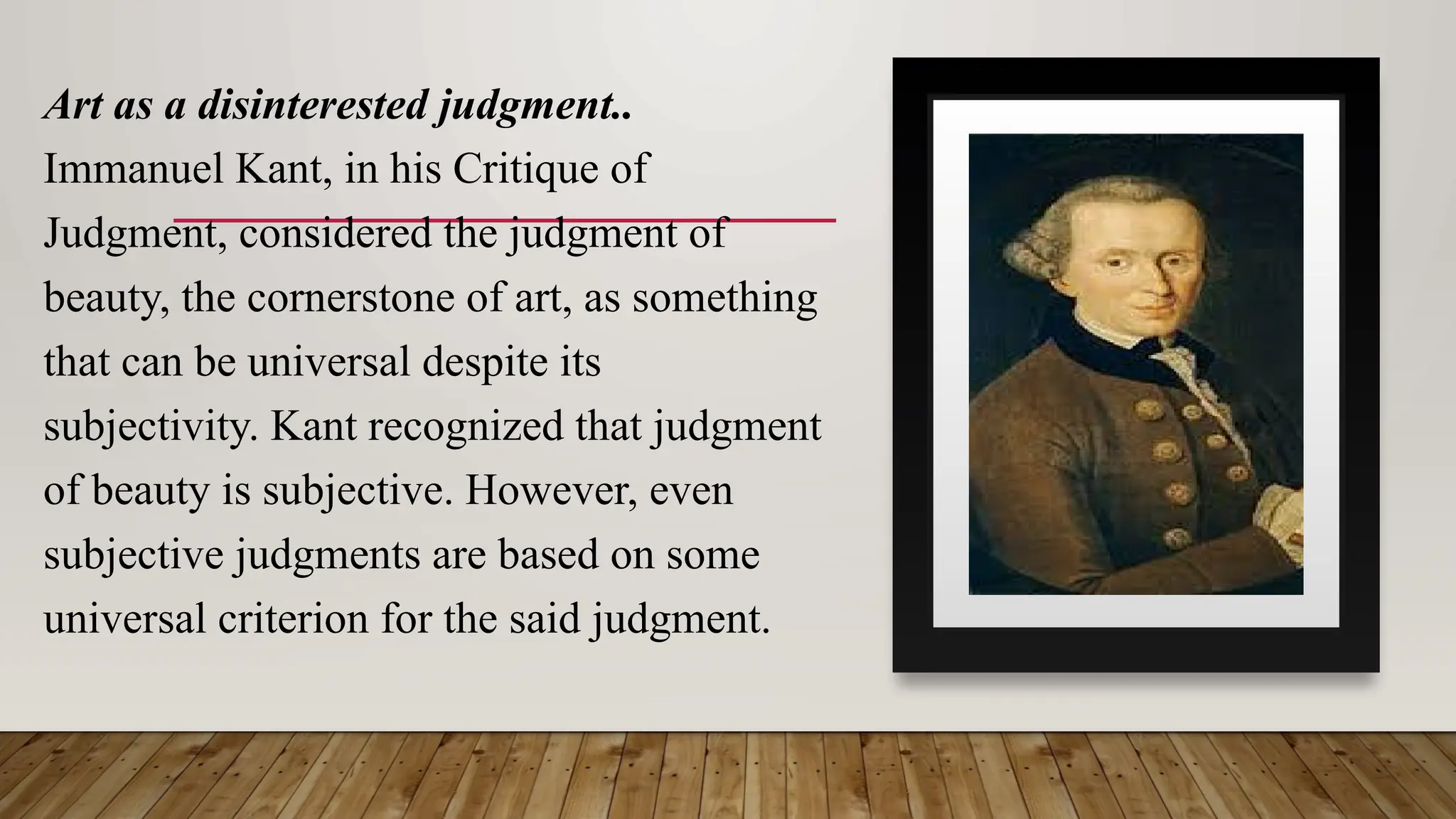
Art as a disinterested judgment..
Immanuel Kant, in his Critique of
Judgment, considered the judgment of
beauty, the cornerstone of art, as something
that can be universal despite its
subjectivity. Kant recognized that judgment
of beauty is subjective. However, even
subjective judgments are based on some
universal criterion for the said judgment.
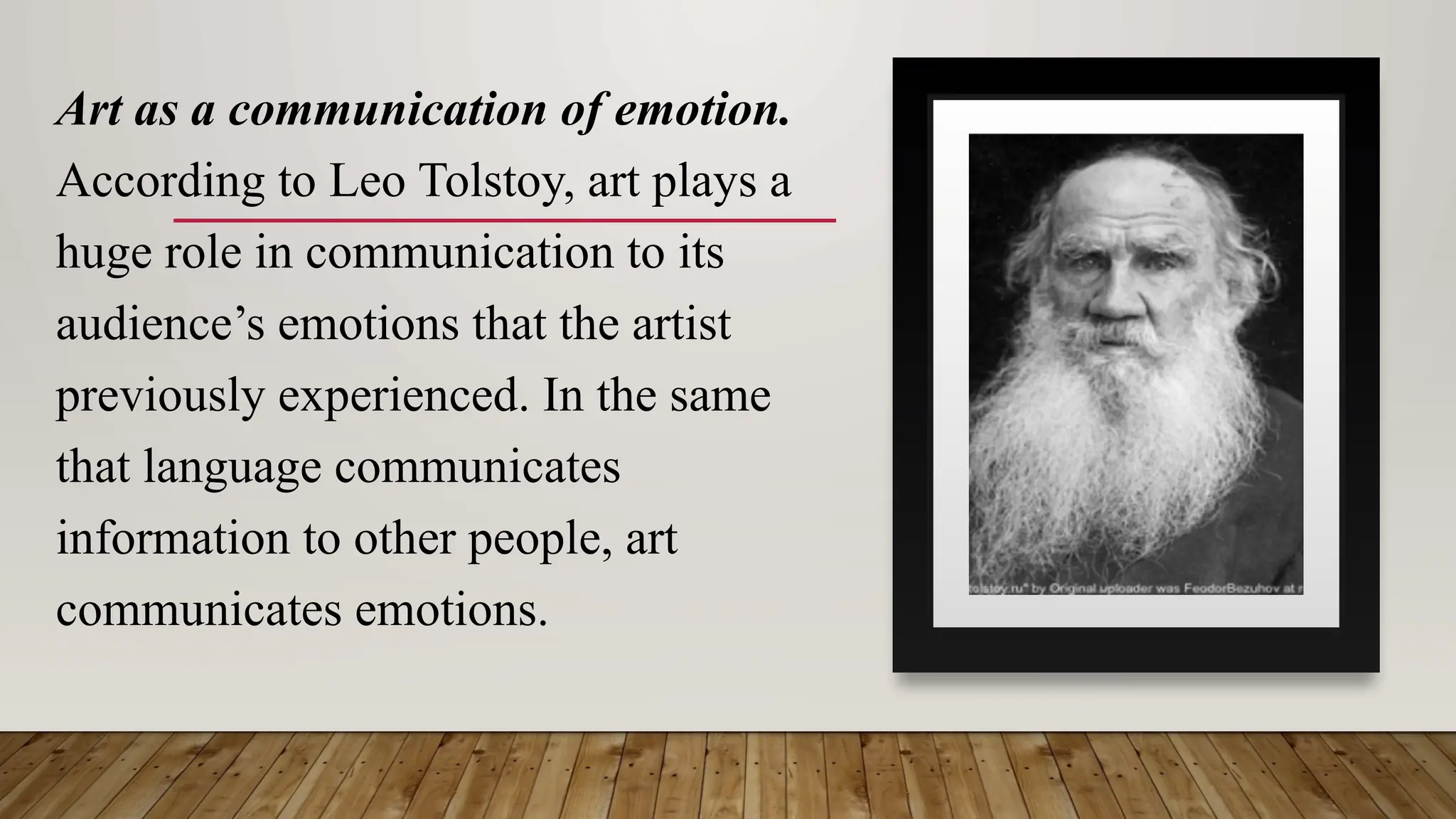
Art as a communication of emotion.
According to Leo Tolstoy, art plays a
huge role in communication to its
audience’s emotions that the artist
previously experienced. In the same
that language communicates
information to other people, art
communicates emotions.
ThankYou for
Listening!

inbound4969615880444164601.pptx Functions of art and philosophical perspective on art

  • 1.
    LESSON 3 FUNCTION ANDPHILOSOPHICAL PERSPECTIVE ON ART
  • 2.
    LESSON OBJECTIVES: 1. Distinguishdirectly functional and indirectly functional art; 2. Explain and discuss the basic philosophical perspectives on the art; 3. Discuss and realize the function of some art forms in daily life, and; 4. Apply concepts and theories on beauty and aesthetics in real life scenarios.
  • 3.
    What do youthink is the purpose of building Rizal monument in Luneta Park?
  • 4.
    Aristotle claimed thatevery must in the world has an end, or telos in Greek, which translates into “purpose.” Every substance, defined as formed matter, moves according to a fixed path towards its aim. This telos, according to Aristotle, is intricately linked with function. For a thing to reach its purpose, it also must fulfill its function.
  • 5.
  • 6.
    An inquiry onthe function of art is an inquiry on what art is for. When it comes to function, different art forms come with distinctive functions. Some art forms are more functional than others. The value of the art in question lies in the practical benefits one gains from it. Obviously made for a specific purpose.
  • 7.
  • 8.
    The personal functionsof art are varied and highly subjective. Art functions depends on the artist who created the art. An artist may create an art out of the need for self-expression. This is the case for an artist who needs to communicate an idea to his audience. MiroMedium.com
  • 9.
  • 10.
    Art is consideredto have a social function if and when it addresses a particular collective interest as opposed to a personal interest. Art may convey message of protest, contestation, or whatever message the artist intends his work to carry.
  • 11.
  • 12.
    The physical functionsof art can be found in artworks that are crafted to serve some physical purpose. Architecture, jewelry-making, interior design all serves physical functions. A Japanese raku bowl that serves a physical function in a tea ceremony is an example. Britannica.com
  • 13.
  • 14.
  • 15.
    Music was principallyused for dance and religion. The ancient world saw music as an instrument to facilitate worship and invocation to gods. Music was essential for synchronicity of dancers. Music guarantees that warriors were simultaneous. Today, music has expanded its functions and coverage. There is a lot of music that has no connection to dance or religion.
  • 16.
  • 17.
    Sculptures have beenmade by man most particularly for religion. In the Roman Catholic world, the employment of sculptures for religious purposes has remained vital, relevant, and symbolic.
  • 18.
    The sculpture ofGeneral Martin Delgado located in Festive Walk, Mandurriao, Iloilo City. This monument is vital to most Ilonggos because he is the first governor of the province. Sunstar.com. ph
  • 19.
  • 20.
    Architecture may bethe most prominent functional art. Unlike other forms of art, buildings take so much time to erect and destroy. One cannot dismiss taking into consideration the function of a building before construction. It is also in architecture where one can find the intimate connection of function and form.
  • 21.
    Does art alwayshave to be functional?
  • 22.
    While it hasbeen shown that most arts are functional, still there are some which are not. The value of a work of art does not depend on function but the work itself. Meanwhile, those whose functions are ascertained have a different story. A functional object cannot be claimed to be beautiful unless it can perform its function sufficiently. Art demands so much more than mere efficiency. Efficiency cannot be mistaken as beauty
  • 23.
  • 24.
    Art as animitation. In Plato’s The Republic, paints a picture of artists as imitators and art as mere imitation. In his description of the ideal republic, Plato advises against the inclusion of art as a subject in the curriculum and the banning of artists in the Republic. In Plato’s metaphysics or view of reality, the things in this world are only copies of the original, the eternal, and the true entities that can only be found in the World of Forms.
  • 25.
    Art as arepresentation. Aristotle, agreed with Plato that art is a form of imitation. However, Aristotle considered art as an aid to philosophy in revealing the truth. The kind of imitation that art does is not antithetical to the reaching of fundamental truths in the world.
  • 26.
    Art as adisinterested judgment.. Immanuel Kant, in his Critique of Judgment, considered the judgment of beauty, the cornerstone of art, as something that can be universal despite its subjectivity. Kant recognized that judgment of beauty is subjective. However, even subjective judgments are based on some universal criterion for the said judgment.
  • 27.
    Art as acommunication of emotion. According to Leo Tolstoy, art plays a huge role in communication to its audience’s emotions that the artist previously experienced. In the same that language communicates information to other people, art communicates emotions.
  • 28.