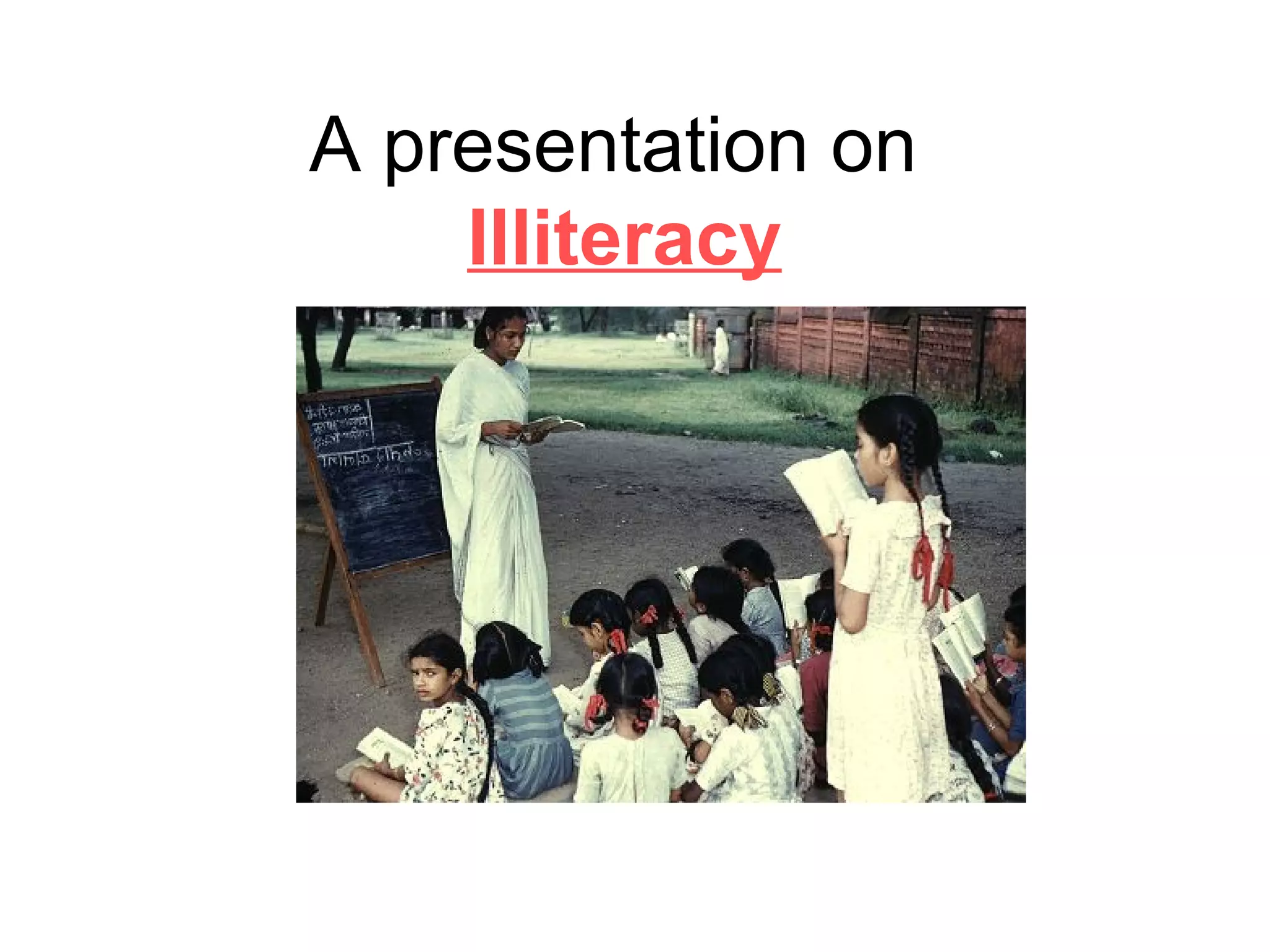
A presentation on
    Illiteracy
Contents of the Presentation
•   What is Illiteracy ?
•   Why is Illiteracy ?
•   Impacts of Illiteracy
•   Solutions to Remove Illiteracy
•   Conclusion
What is Illiteracy???...
• Inability to read and write, either because
  of lack of education or because of learning
  difficulties or other intellectual impairment
  such as brain damage.
• Illiteracy is a term used to describe
  reading and writing skills that are
  inadequate tasks that require reading
  skills beyond a basic level.
Why is Illiteracy???...
The under developed countries are mostly in the shackles of illiteracy.
     There are many causes of illiteracy.

Some of the major causes are:

1. Economical condition of people(poverty).
     So childrenneed to work and can’t be spared for school.

2. Ineffective implementation of educational programmes in rural
     areas.

3. Lack of entrepreneurship by the educated to share and spread
     knowledge.

4. Preference to work rather than study (no internal economic
     incentive).

5. Emigration of educated individuals (external economic incentive).
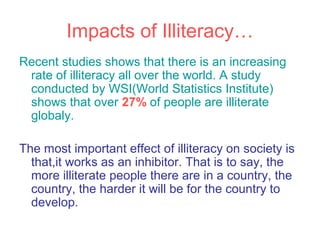
Impacts of Illiteracy…
Recent studies shows that there is an increasing
 rate of illiteracy all over the world. A study
 conducted by WSI(World Statistics Institute)
 shows that over 27% of people are illiterate
 globaly.

The most important effect of illiteracy on society is
  that,it works as an inhibitor. That is to say, the
  more illiterate people there are in a country, the
  country, the harder it will be for the country to
  develop.
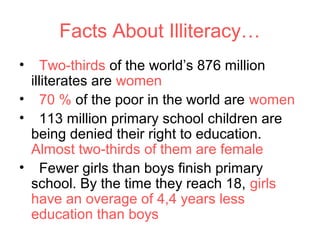
Facts About Illiteracy…
•   Two-thirds of the world’s 876 million
 illiterates are women
• 70 % of the poor in the world are women
• 113 million primary school children are
 being denied their right to education.
 Almost two-thirds of them are female
• Fewer girls than boys finish primary
 school. By the time they reach 18, girls
 have an overage of 4,4 years less
 education than boys
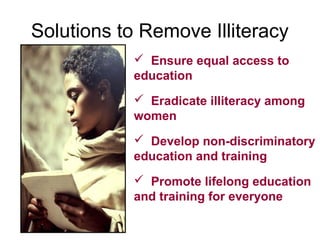
Solutions to Remove Illiteracy
            Ensure equal access to
           education
            Eradicate illiteracy among
           women
            Develop non-discriminatory
           education and training
            Promote lifelong education
           and training for everyone
Solutions to Remove Illiteracy
•   Promote and facilitate the integration of a gender perspective in
    policy planning, programming, implementation and evaluation
    activities

•   Address and promote women’s priorities and vision of
    development goals and approaches through greater participation of
    women at all levels and in all areas of UNESCO’s action;

•   Establish region-specific programmes and activities that benefit
    girls and women of various ages

•   Set up capacity-building in Member States

•   Increase the awareness of and respect for women's human rights
    as explained in the Convention on the Elimination of All Forms of
    Discrimination Against Women (CEDAW)
Conclusion
“We must do more and better.”

“How can poverty be eradicated when
 the roots of ignorance are left
 undisturbed?”
ANY QURIES???...
Illitracy

Illitracy

  • 1.
  • 2.
    Contents of thePresentation • What is Illiteracy ? • Why is Illiteracy ? • Impacts of Illiteracy • Solutions to Remove Illiteracy • Conclusion
  • 3.
    What is Illiteracy???... •Inability to read and write, either because of lack of education or because of learning difficulties or other intellectual impairment such as brain damage. • Illiteracy is a term used to describe reading and writing skills that are inadequate tasks that require reading skills beyond a basic level.
  • 4.
    Why is Illiteracy???... Theunder developed countries are mostly in the shackles of illiteracy. There are many causes of illiteracy. Some of the major causes are: 1. Economical condition of people(poverty). So childrenneed to work and can’t be spared for school. 2. Ineffective implementation of educational programmes in rural areas. 3. Lack of entrepreneurship by the educated to share and spread knowledge. 4. Preference to work rather than study (no internal economic incentive). 5. Emigration of educated individuals (external economic incentive).
  • 5.
    Impacts of Illiteracy… Recentstudies shows that there is an increasing rate of illiteracy all over the world. A study conducted by WSI(World Statistics Institute) shows that over 27% of people are illiterate globaly. The most important effect of illiteracy on society is that,it works as an inhibitor. That is to say, the more illiterate people there are in a country, the country, the harder it will be for the country to develop.
  • 6.
    Facts About Illiteracy… • Two-thirds of the world’s 876 million illiterates are women • 70 % of the poor in the world are women • 113 million primary school children are being denied their right to education. Almost two-thirds of them are female • Fewer girls than boys finish primary school. By the time they reach 18, girls have an overage of 4,4 years less education than boys
  • 7.
    Solutions to RemoveIlliteracy  Ensure equal access to education  Eradicate illiteracy among women  Develop non-discriminatory education and training  Promote lifelong education and training for everyone
  • 8.
    Solutions to RemoveIlliteracy • Promote and facilitate the integration of a gender perspective in policy planning, programming, implementation and evaluation activities • Address and promote women’s priorities and vision of development goals and approaches through greater participation of women at all levels and in all areas of UNESCO’s action; • Establish region-specific programmes and activities that benefit girls and women of various ages • Set up capacity-building in Member States • Increase the awareness of and respect for women's human rights as explained in the Convention on the Elimination of All Forms of Discrimination Against Women (CEDAW)
  • 9.
    Conclusion “We must domore and better.” “How can poverty be eradicated when the roots of ignorance are left undisturbed?”
  • 10.