




© ACCA Public
ACCA
Professional Conduct and Disciplinary
Insights
© ACCA Public
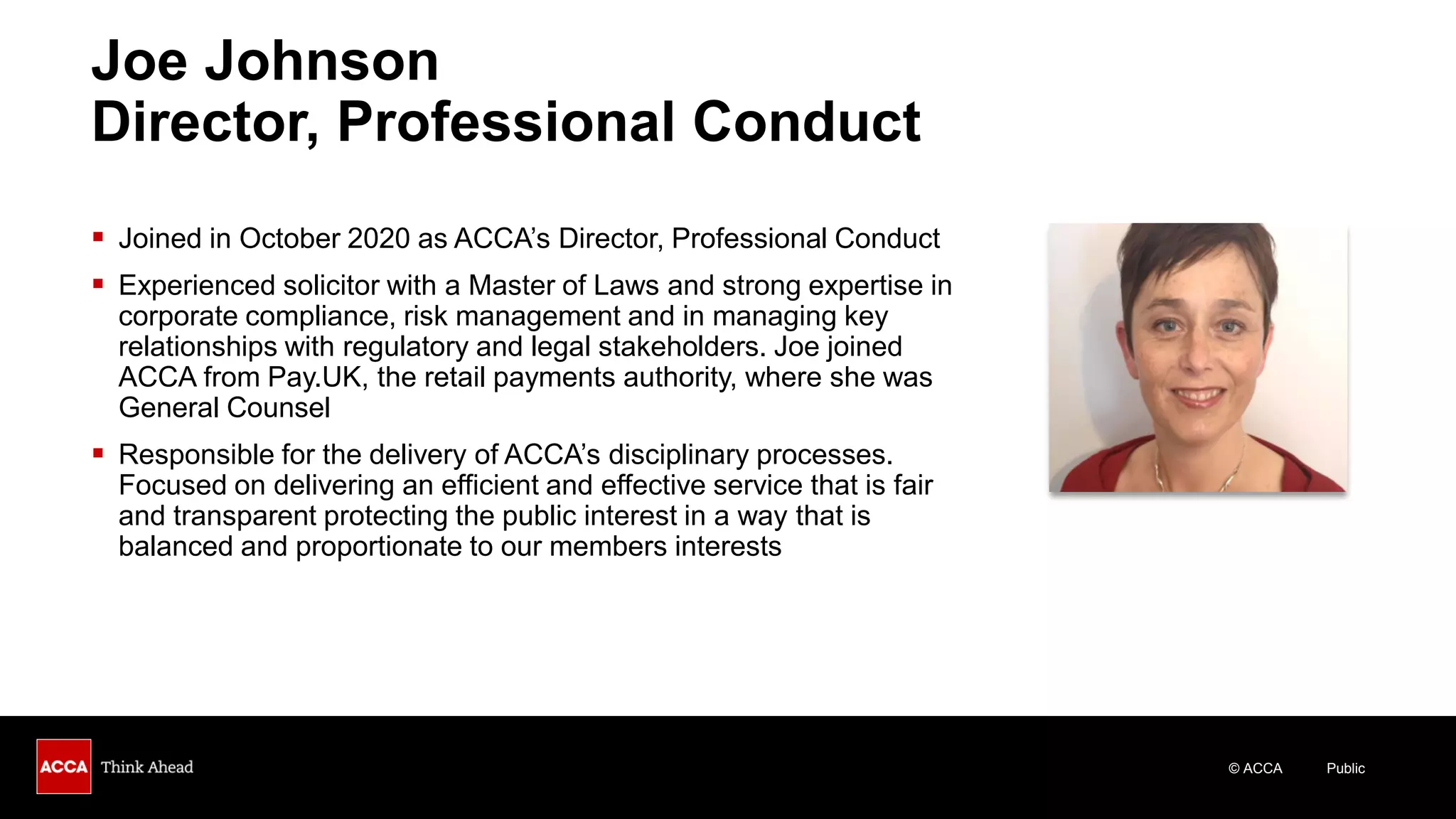
▪ Joined in October 2020 as ACCA’s Director, Professional Conduct
▪ Experienced solicitor with a Master of Laws and strong expertise in
corporate compliance, risk management and in managing key
relationships with regulatory and legal stakeholders. Joe joined
ACCA from Pay.UK, the retail payments authority, where she was
General Counsel
▪ Responsible for the delivery of ACCA’s disciplinary processes.
Focused on delivering an efficient and effective service that is fair
and transparent protecting the public interest in a way that is
balanced and proportionate to our members interests
Joe Johnson
Director, Professional Conduct
© ACCA Public
© ACCA Public
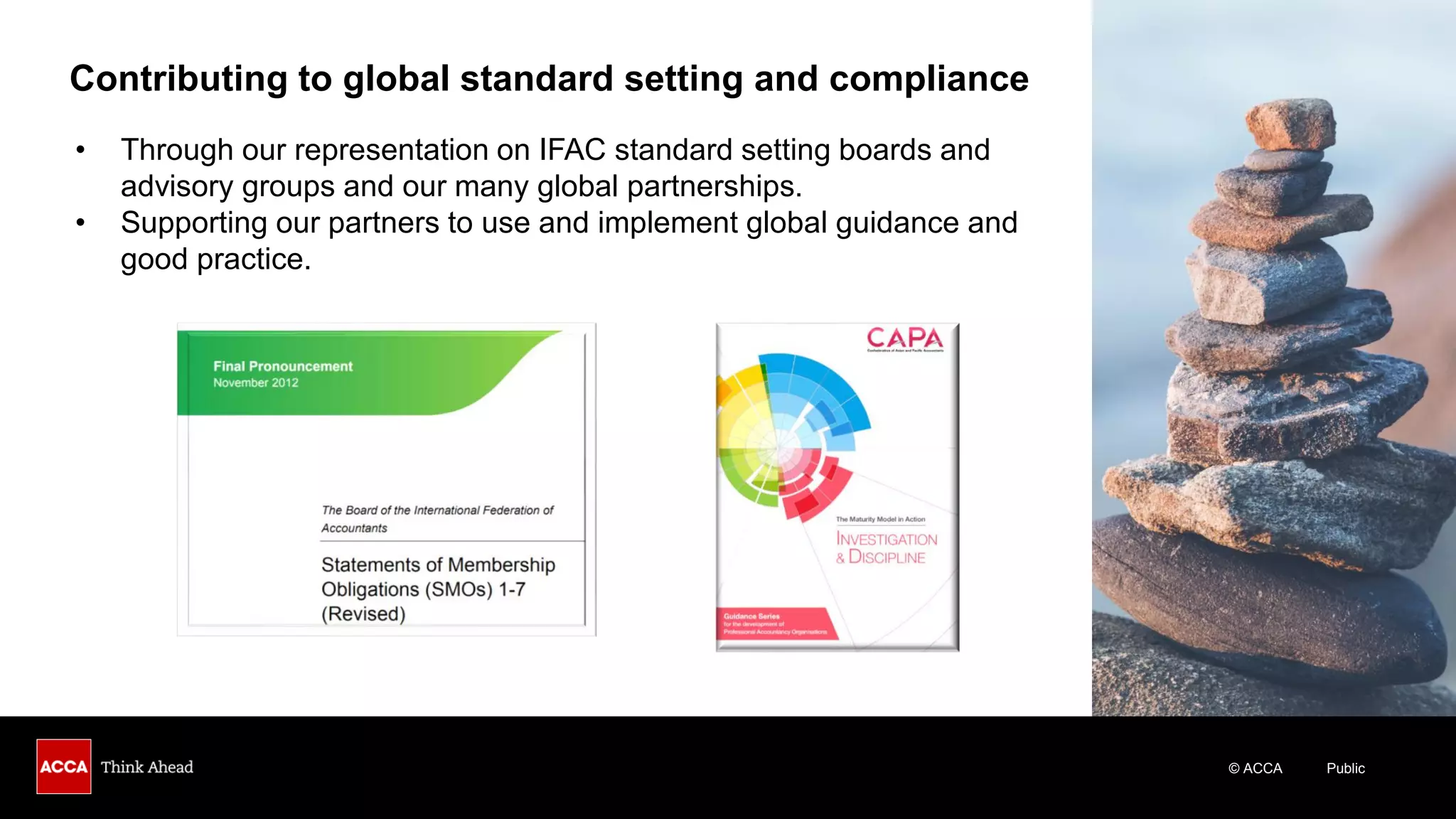
Contributing to global standard setting and compliance
• Through our representation on IFAC standard setting boards and
advisory groups and our many global partnerships.
• Supporting our partners to use and implement global guidance and
good practice.
© ACCA Public
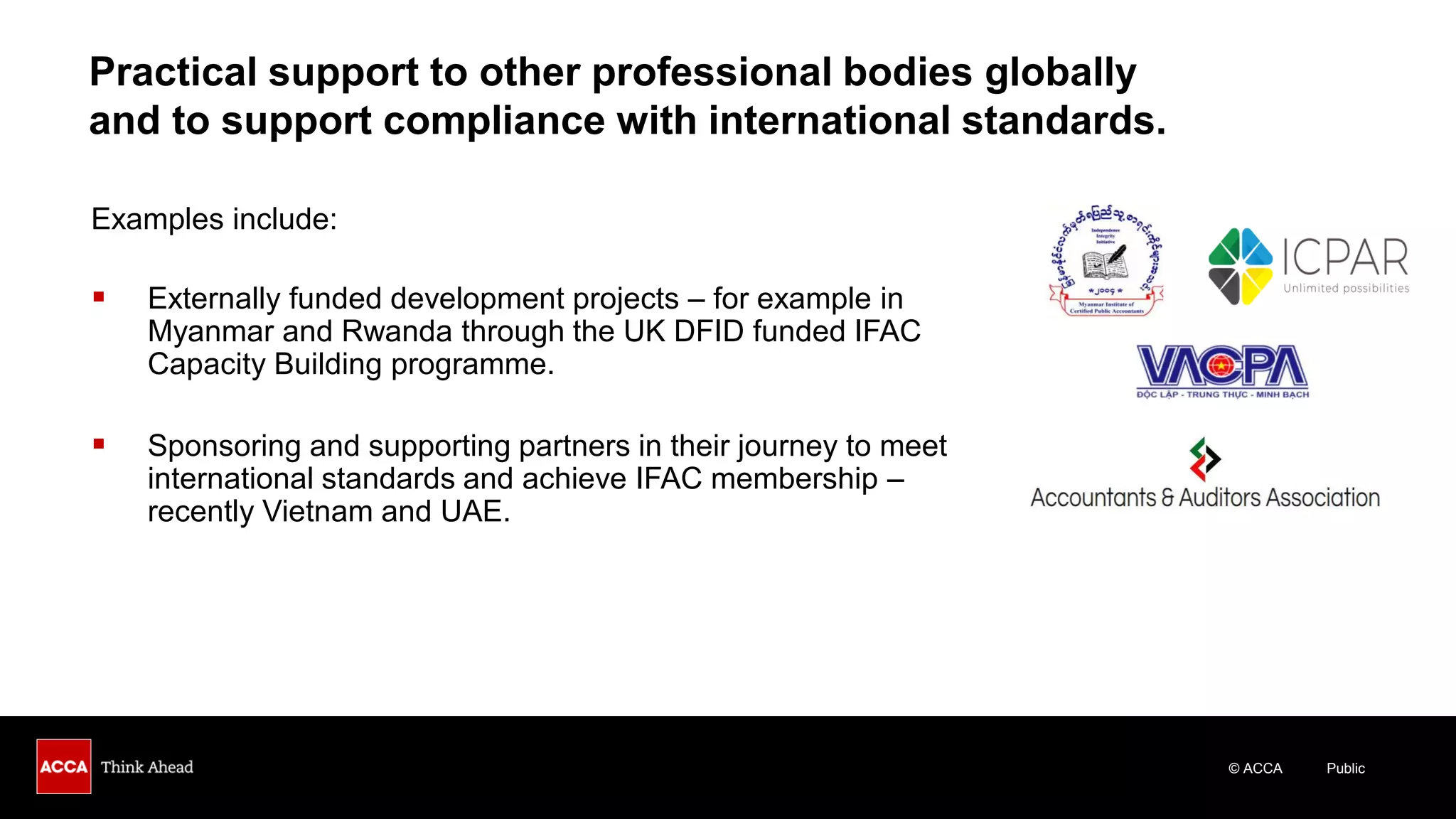
Examples include:
▪ Externally funded development projects – for example in
Myanmar and Rwanda through the UK DFID funded IFAC
Capacity Building programme.
▪ Sponsoring and supporting partners in their journey to meet
international standards and achieve IFAC membership –
recently Vietnam and UAE.
Practical support to other professional bodies globally
and to support compliance with international standards.
© ACCA Public
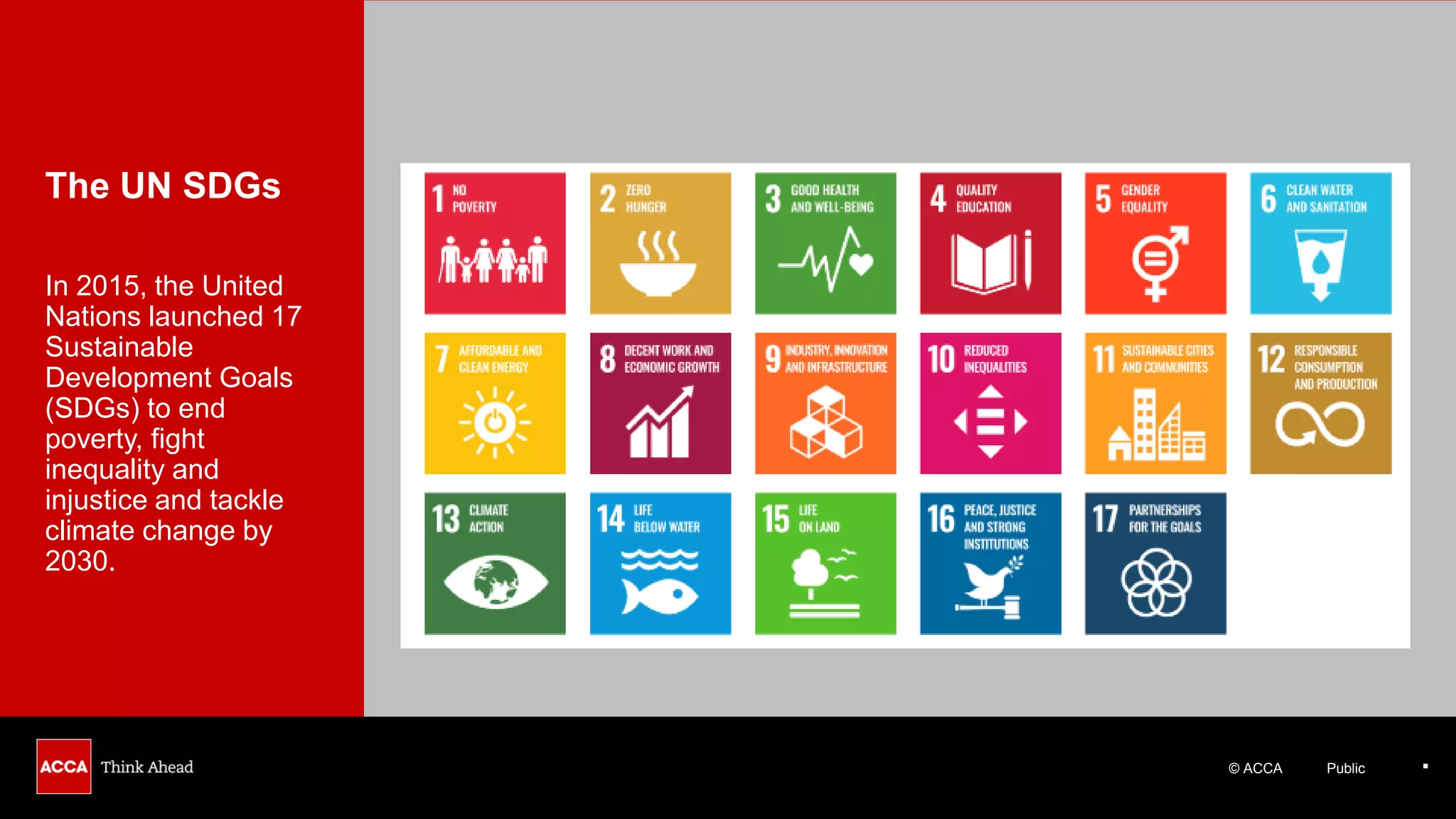
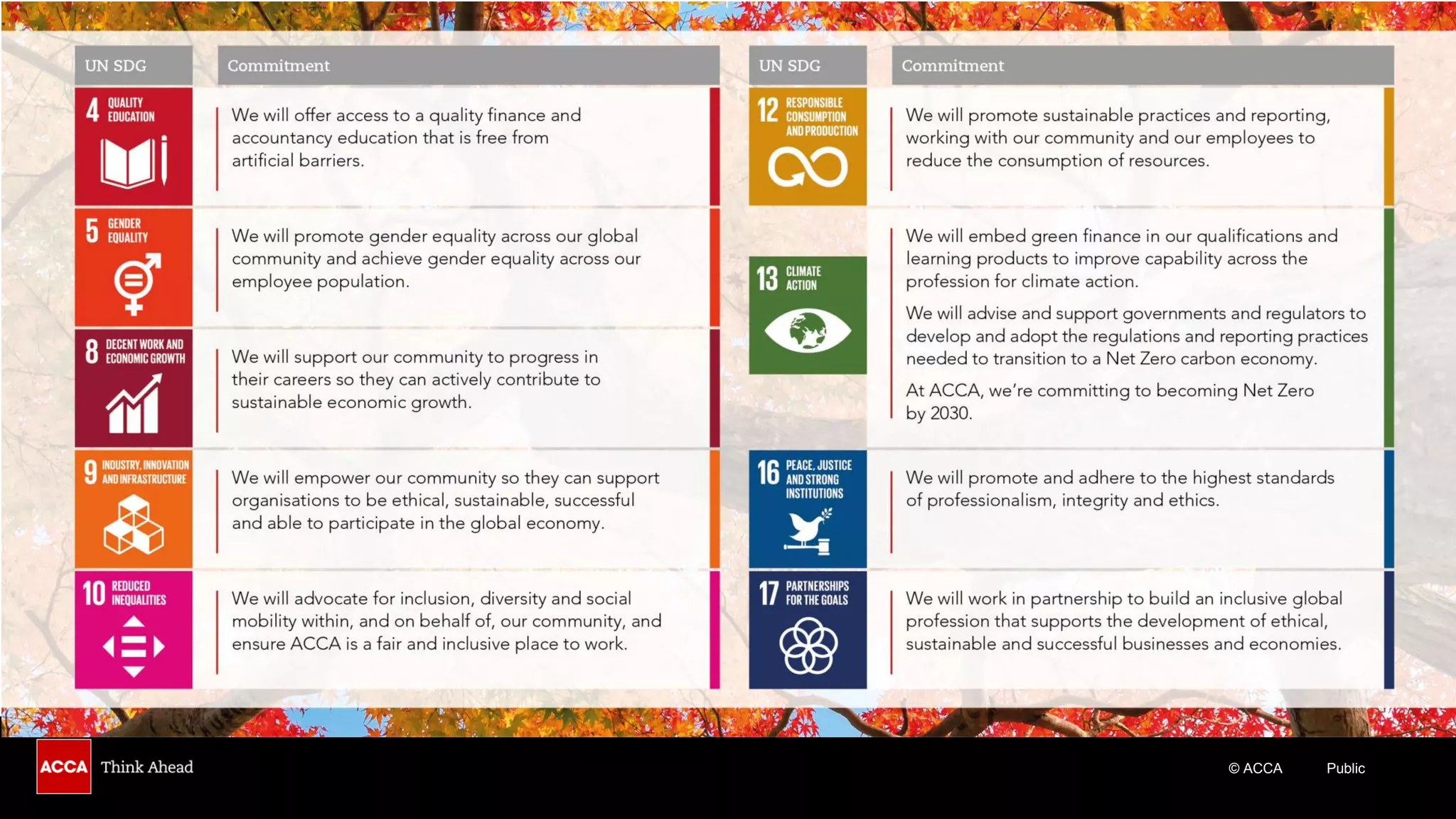
The UN SDGs
In 2015, the United
Nations launched 17
Sustainable
Development Goals
(SDGs) to end
poverty, fight
inequality and
injustice and tackle
climate change by
2030.
▪
© ACCA Public
© ACCA Public
‘IFAC member bodies shall identify and
undertake actions to have a just and effective
investigative and disciplinary system in place
for their members’
Para 10, Statement of Membership Obligations, Final
Pronouncement November 2012
© ACCA Public
Underlying
principles
▪ Public interest
▪ Proportionate
▪ Fair and
transparent
▪ Independence
and impartiality
© ACCA Public
Public
interest
▪ Protection of the
public
▪ Maintenance of
public confidence
in the profession
▪ Declaring and
upholding proper
standards of
conduct in the
profession
© ACCA Public
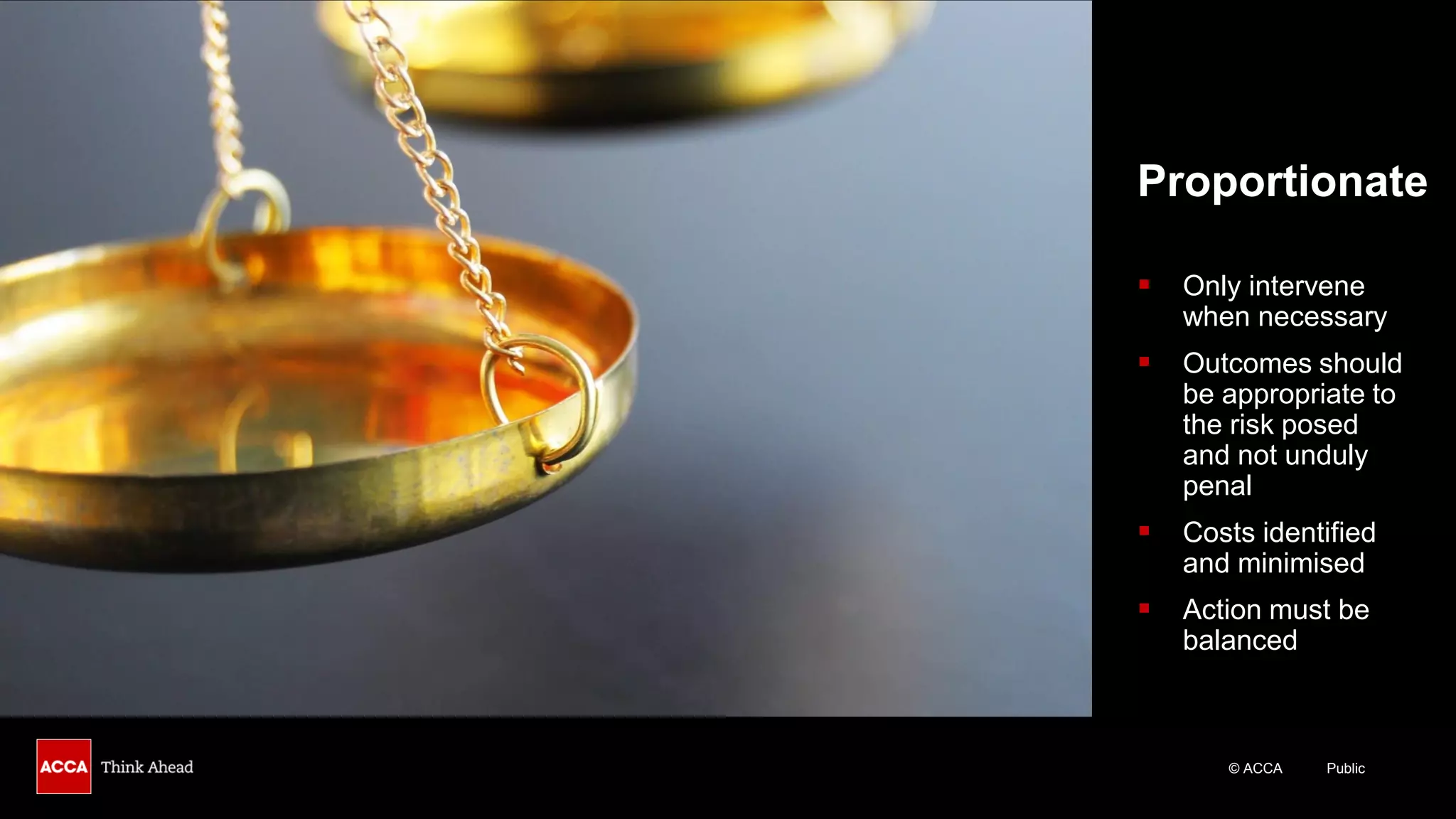
Proportionate
▪ Only intervene
when necessary
▪ Outcomes should
be appropriate to
the risk posed
and not unduly
penal
▪ Costs identified
and minimised
▪ Action must be
balanced
© ACCA Public
Fair and
transparent
▪ Documented
processes
▪ Principles of
natural justice
▪ Consistent
▪ Accountable
▪ Well respected
and credible
© ACCA Public
Independence
and
impartiality
▪ Separation of
decision
making
▪ Conflicts of
interest
▪ Bias and
apparent bias
© ACCA Public
“just & effective investigative
& disciplinary service”
Operational and Other Considerations
© ACCA Public
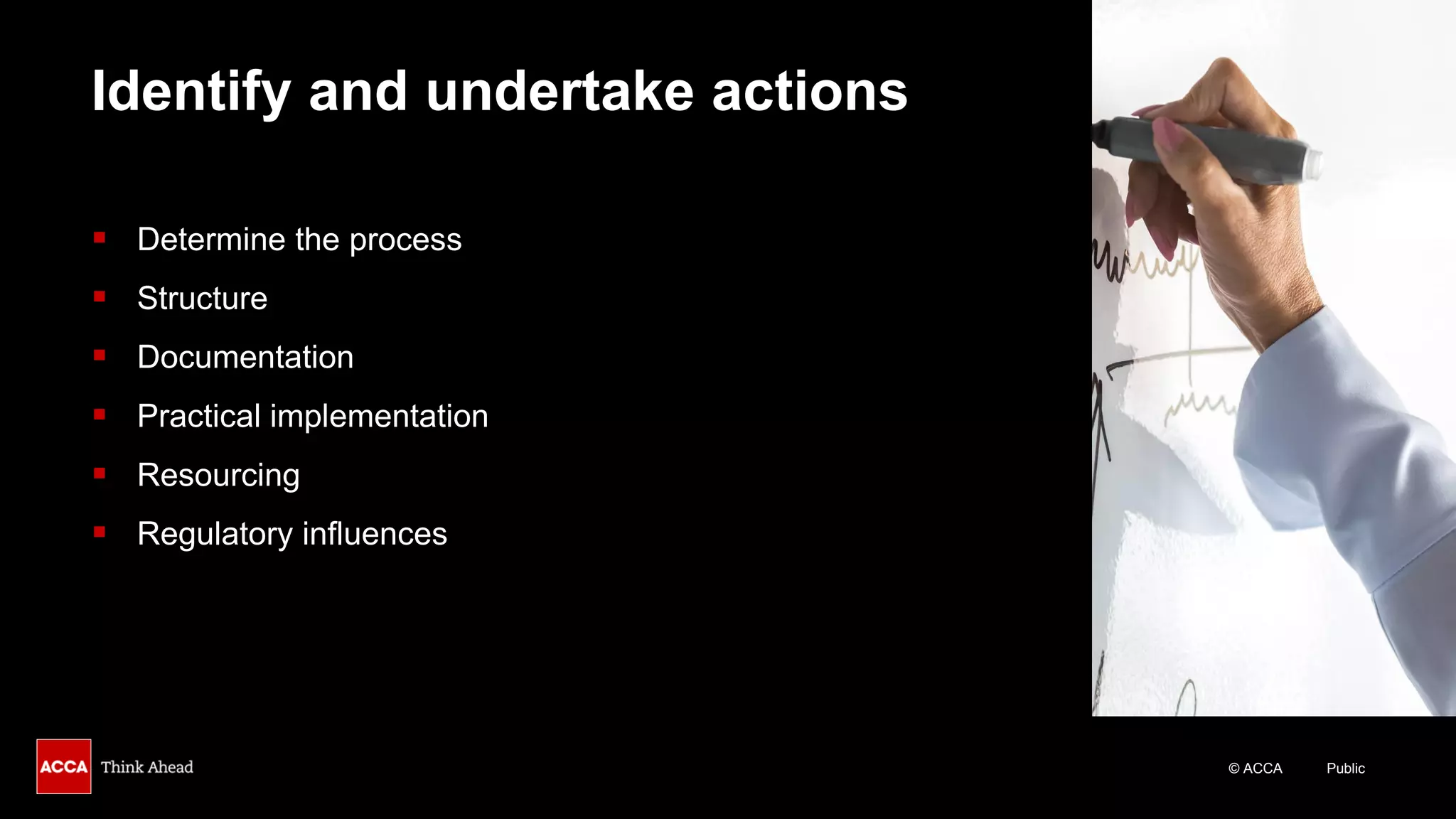
Identify and undertake actions
▪ Determine the process
▪ Structure
▪ Documentation
▪ Practical implementation
▪ Resourcing
▪ Regulatory influences
© ACCA Public
Documentation
▪ Rules and
regulations
▪ Guidance
▪ Processes and
procedures
▪ Templates
▪ Correspondence
▪ Storage
© ACCA Public
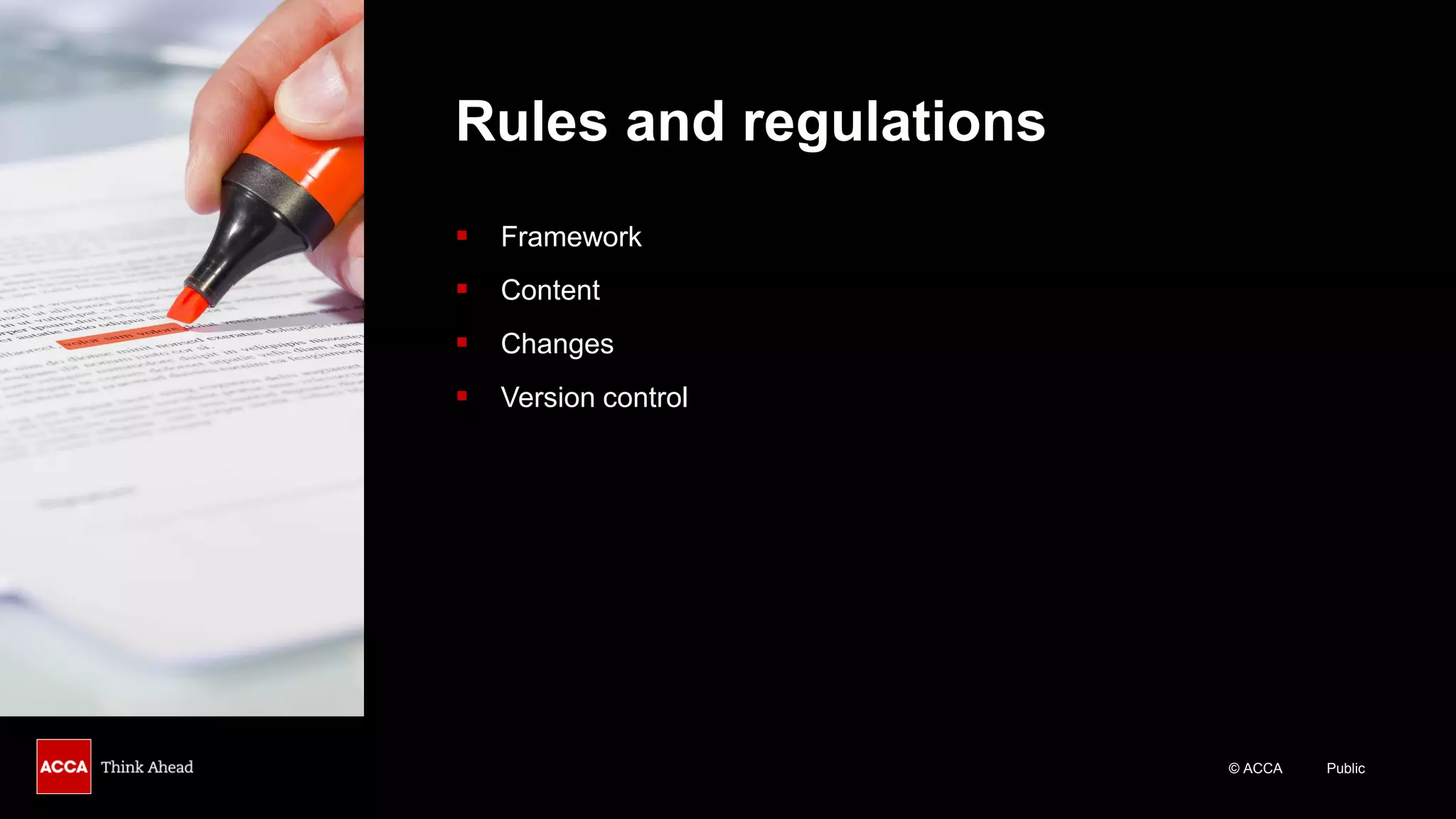
Rules and regulations
▪ Framework
▪ Content
▪ Changes
▪ Version control
© ACCA Public
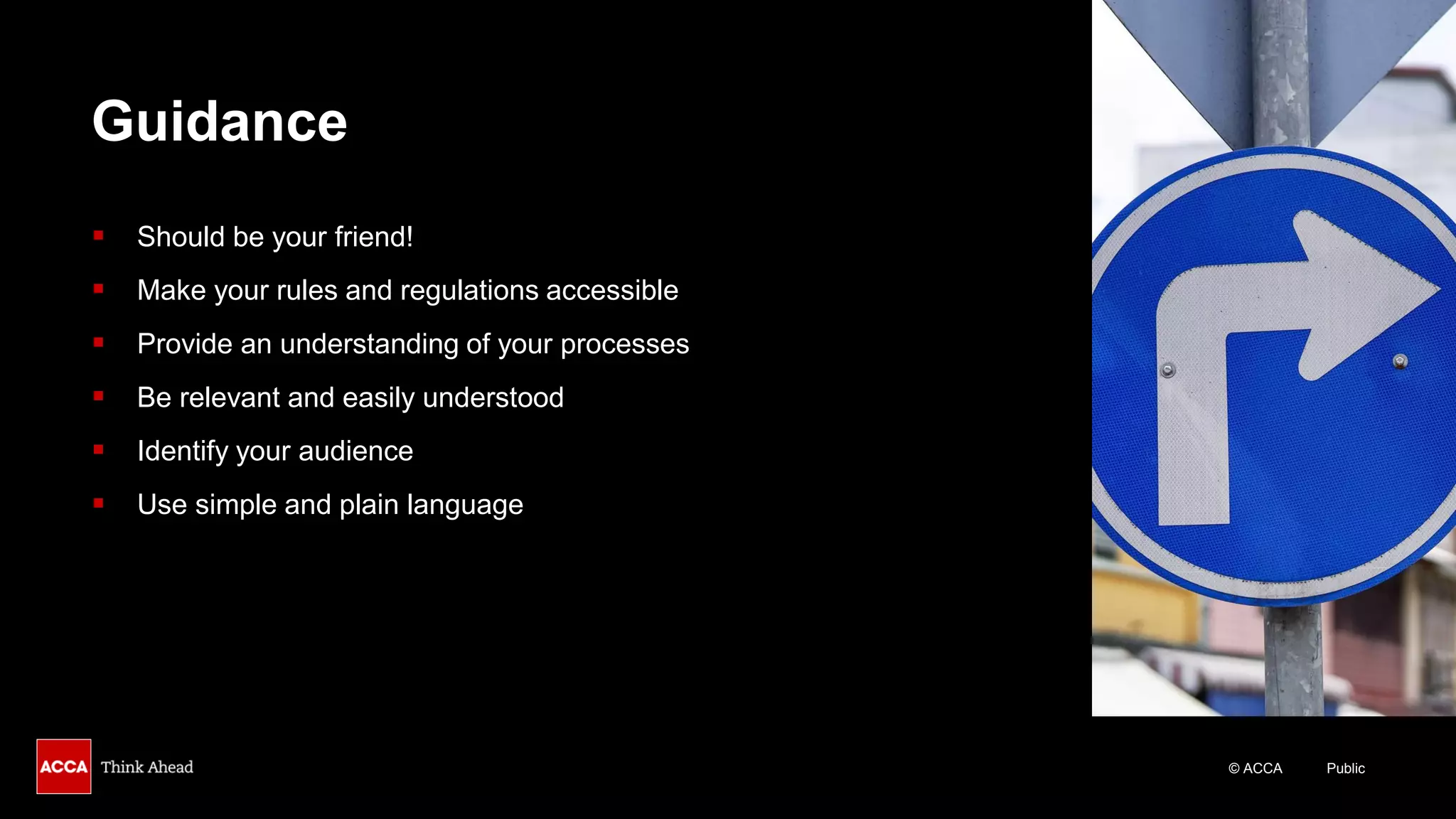
Guidance
▪ Should be your friend!
▪ Make your rules and regulations accessible
▪ Provide an understanding of your processes
▪ Be relevant and easily understood
▪ Identify your audience
▪ Use simple and plain language
© ACCA Public
Processes and procedures
▪ Work on an end-to-end basis
▪ Identify different tasks and how they inter-link
▪ Be simple, make them easy to follow
▪ Be practical – check that they can be implemented
▪ Ensure colleagues are properly trained
▪ Review them periodically
▪ Update them when lessons are learned
© ACCA Public
Templates
▪ Identify documents that you will re-use on a case-by-case basis (eg
file opening/closing)
▪ Consider the format
▪ Decide what information is needed
▪ Think about your audience
▪ Make the template easy to use
▪ Identify any practical considerations (eg links needed for reporting,
technical considerations etc)
© ACCA Public
Correspondence
▪ Identify correspondence that you will use for each case (eg file
opening letter)
▪ How will it be sent?
▪ What does it need to include?
▪ Is it easily understood?
▪ Think about tone of voice
© ACCA Public
Storage
▪ Consistency – use storage protocols
▪ Access considerations
▪ Confidentiality and security
▪ Retention
▪ Case management systems – do they help?
▪ Regulatory
▪ Data protection and privacy
▪ Local laws
© ACCA Public
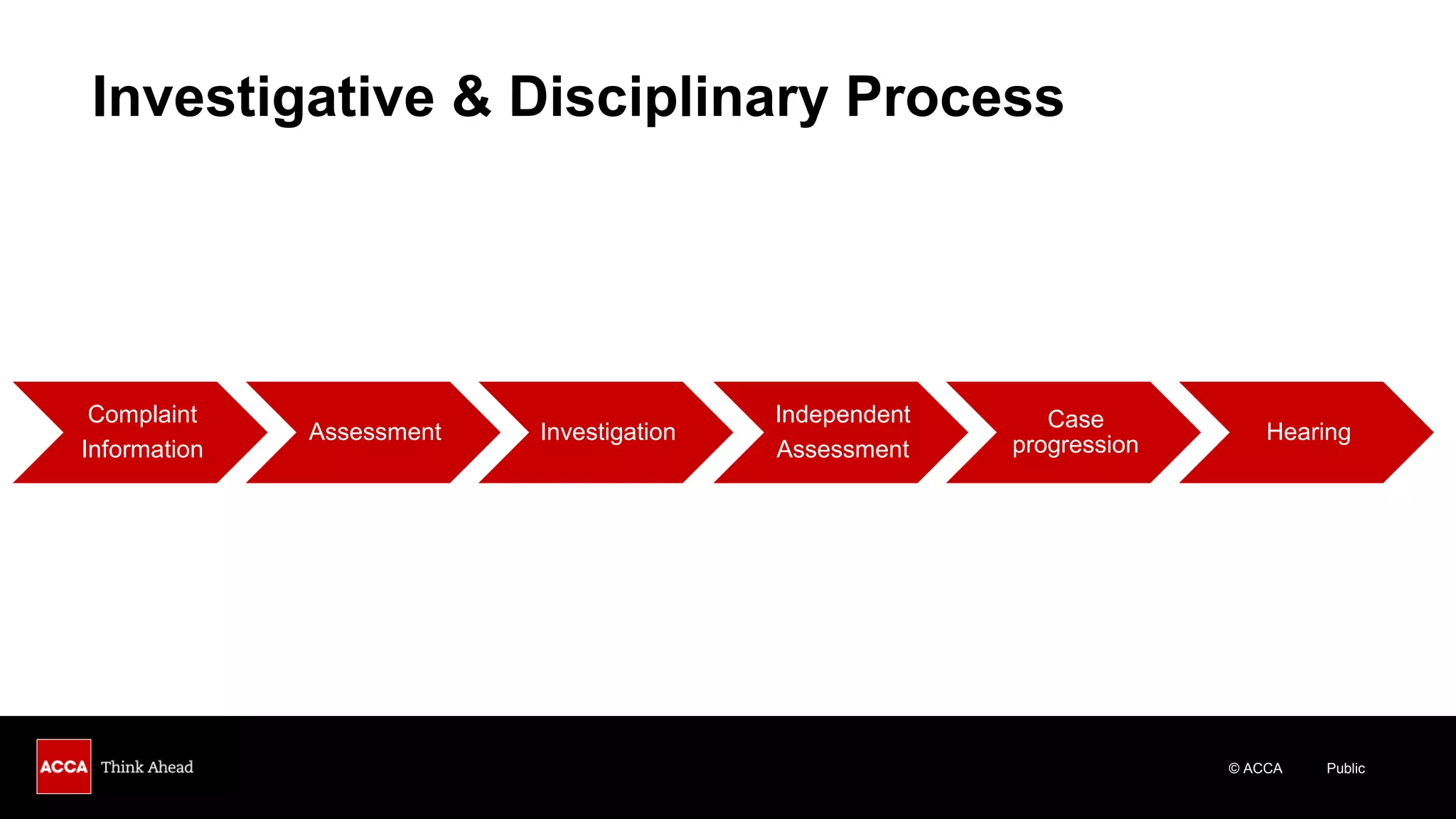
Investigative & Disciplinary Process
Independent
Assessment
Case
progression
Hearing
Complaint
Information
Assessment Investigation
© ACCA Public
Assessment
▪ Origin and identification of complaints
▪ What complaints to investigate
▪ Overview of investigations and disciplinary framework
▪ Other considerations
▪ Challenges that might come up during an investigation
© ACCA Public
Investigations
▪ Identification of all potentially relevant issues
▪ Obtain and preserve all relevant evidence/documentation as far as
possible
▪ Due process and disclosure
▪ Objective analysis of all material gathered
▪ Decision as to next steps (including outcomes if appropriate)
▪ Clear well-reasoned decision
▪ Independent check point
© ACCA Public
Hearings
▪ Fair and public
▪ Held within a reasonable time
▪ Conflicts and bias
▪ Venue – remote or in person?
▪ Independence of decision making
▪ Sanctions
▪ Public decision and reasons
© ACCA Public
Member’s rights
▪ Understand the case against them
▪ Be present
▪ Be represented (but not to be provided with representation)
▪ Provided with interpreter
▪ To cross examine
▪ Call witnesses
▪ Be given an explanation of how the decision was reached
▪ Appeal
© ACCA Public
Other considerations
▪ Interim orders
▪ Parallel proceedings
▪ Health concerns
▪ Notifications – internal and external
▪ Management oversight
▪ Complaints about your handling of a complaint or investigation
▪ High profile, reputational and other risks
© ACCA Public
Measuring performance
▪ Accountability
▪ Regulatory influences
▪ Protection of the public interest
▪ Complainant satisfaction
▪ Fairness to all members
▪ Capacity requirements
▪ KPIs
© ACCA Public
And finally…
▪ Underlying principles are key
▪ Embed them in your structure and all that you do
▪ Fair and effective systems take many forms
▪ Be practical
▪ Resource should be focused on highest risk cases
▪ ACCA is here to help!
© ACCA Public
Thank You

IFAC-ACCA Investigation and Discipline Systems workshop

  • 1.
    © ACCA Public ACCA ProfessionalConduct and Disciplinary Insights
  • 2.
    © ACCA Public ▪Joined in October 2020 as ACCA’s Director, Professional Conduct ▪ Experienced solicitor with a Master of Laws and strong expertise in corporate compliance, risk management and in managing key relationships with regulatory and legal stakeholders. Joe joined ACCA from Pay.UK, the retail payments authority, where she was General Counsel ▪ Responsible for the delivery of ACCA’s disciplinary processes. Focused on delivering an efficient and effective service that is fair and transparent protecting the public interest in a way that is balanced and proportionate to our members interests Joe Johnson Director, Professional Conduct
  • 3.
  • 4.
    © ACCA Public Contributingto global standard setting and compliance • Through our representation on IFAC standard setting boards and advisory groups and our many global partnerships. • Supporting our partners to use and implement global guidance and good practice.
  • 5.
    © ACCA Public Examplesinclude: ▪ Externally funded development projects – for example in Myanmar and Rwanda through the UK DFID funded IFAC Capacity Building programme. ▪ Sponsoring and supporting partners in their journey to meet international standards and achieve IFAC membership – recently Vietnam and UAE. Practical support to other professional bodies globally and to support compliance with international standards.
  • 6.
    © ACCA Public TheUN SDGs In 2015, the United Nations launched 17 Sustainable Development Goals (SDGs) to end poverty, fight inequality and injustice and tackle climate change by 2030. ▪
  • 7.
  • 8.
    © ACCA Public ‘IFACmember bodies shall identify and undertake actions to have a just and effective investigative and disciplinary system in place for their members’ Para 10, Statement of Membership Obligations, Final Pronouncement November 2012
  • 9.
    © ACCA Public Underlying principles ▪Public interest ▪ Proportionate ▪ Fair and transparent ▪ Independence and impartiality
  • 10.
    © ACCA Public Public interest ▪Protection of the public ▪ Maintenance of public confidence in the profession ▪ Declaring and upholding proper standards of conduct in the profession
  • 11.
    © ACCA Public Proportionate ▪Only intervene when necessary ▪ Outcomes should be appropriate to the risk posed and not unduly penal ▪ Costs identified and minimised ▪ Action must be balanced
  • 12.
    © ACCA Public Fairand transparent ▪ Documented processes ▪ Principles of natural justice ▪ Consistent ▪ Accountable ▪ Well respected and credible
  • 13.
    © ACCA Public Independence and impartiality ▪Separation of decision making ▪ Conflicts of interest ▪ Bias and apparent bias
  • 14.
    © ACCA Public “just& effective investigative & disciplinary service” Operational and Other Considerations
  • 15.
    © ACCA Public Identifyand undertake actions ▪ Determine the process ▪ Structure ▪ Documentation ▪ Practical implementation ▪ Resourcing ▪ Regulatory influences
  • 16.
    © ACCA Public Documentation ▪Rules and regulations ▪ Guidance ▪ Processes and procedures ▪ Templates ▪ Correspondence ▪ Storage
  • 17.
    © ACCA Public Rulesand regulations ▪ Framework ▪ Content ▪ Changes ▪ Version control
  • 18.
    © ACCA Public Guidance ▪Should be your friend! ▪ Make your rules and regulations accessible ▪ Provide an understanding of your processes ▪ Be relevant and easily understood ▪ Identify your audience ▪ Use simple and plain language
  • 19.
    © ACCA Public Processesand procedures ▪ Work on an end-to-end basis ▪ Identify different tasks and how they inter-link ▪ Be simple, make them easy to follow ▪ Be practical – check that they can be implemented ▪ Ensure colleagues are properly trained ▪ Review them periodically ▪ Update them when lessons are learned
  • 20.
    © ACCA Public Templates ▪Identify documents that you will re-use on a case-by-case basis (eg file opening/closing) ▪ Consider the format ▪ Decide what information is needed ▪ Think about your audience ▪ Make the template easy to use ▪ Identify any practical considerations (eg links needed for reporting, technical considerations etc)
  • 21.
    © ACCA Public Correspondence ▪Identify correspondence that you will use for each case (eg file opening letter) ▪ How will it be sent? ▪ What does it need to include? ▪ Is it easily understood? ▪ Think about tone of voice
  • 22.
    © ACCA Public Storage ▪Consistency – use storage protocols ▪ Access considerations ▪ Confidentiality and security ▪ Retention ▪ Case management systems – do they help? ▪ Regulatory ▪ Data protection and privacy ▪ Local laws
  • 23.
    © ACCA Public Investigative& Disciplinary Process Independent Assessment Case progression Hearing Complaint Information Assessment Investigation
  • 24.
    © ACCA Public Assessment ▪Origin and identification of complaints ▪ What complaints to investigate ▪ Overview of investigations and disciplinary framework ▪ Other considerations ▪ Challenges that might come up during an investigation
  • 25.
    © ACCA Public Investigations ▪Identification of all potentially relevant issues ▪ Obtain and preserve all relevant evidence/documentation as far as possible ▪ Due process and disclosure ▪ Objective analysis of all material gathered ▪ Decision as to next steps (including outcomes if appropriate) ▪ Clear well-reasoned decision ▪ Independent check point
  • 26.
    © ACCA Public Hearings ▪Fair and public ▪ Held within a reasonable time ▪ Conflicts and bias ▪ Venue – remote or in person? ▪ Independence of decision making ▪ Sanctions ▪ Public decision and reasons
  • 27.
    © ACCA Public Member’srights ▪ Understand the case against them ▪ Be present ▪ Be represented (but not to be provided with representation) ▪ Provided with interpreter ▪ To cross examine ▪ Call witnesses ▪ Be given an explanation of how the decision was reached ▪ Appeal
  • 28.
    © ACCA Public Otherconsiderations ▪ Interim orders ▪ Parallel proceedings ▪ Health concerns ▪ Notifications – internal and external ▪ Management oversight ▪ Complaints about your handling of a complaint or investigation ▪ High profile, reputational and other risks
  • 29.
    © ACCA Public Measuringperformance ▪ Accountability ▪ Regulatory influences ▪ Protection of the public interest ▪ Complainant satisfaction ▪ Fairness to all members ▪ Capacity requirements ▪ KPIs
  • 30.
    © ACCA Public Andfinally… ▪ Underlying principles are key ▪ Embed them in your structure and all that you do ▪ Fair and effective systems take many forms ▪ Be practical ▪ Resource should be focused on highest risk cases ▪ ACCA is here to help!
  • 31.