
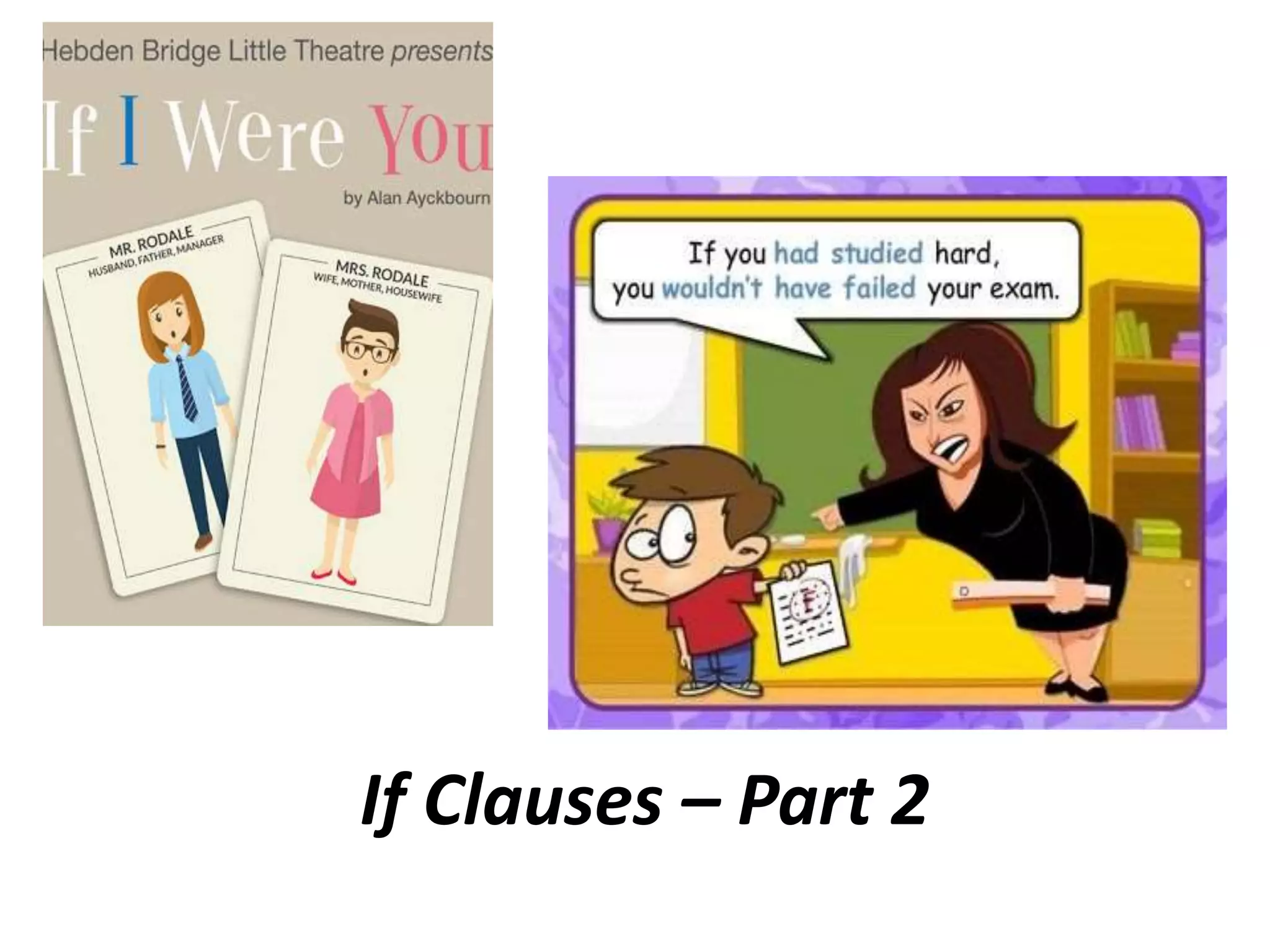

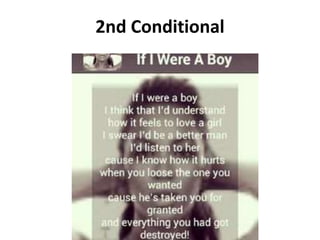
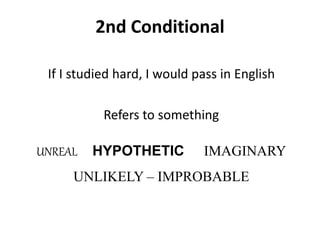
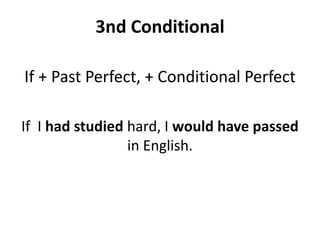
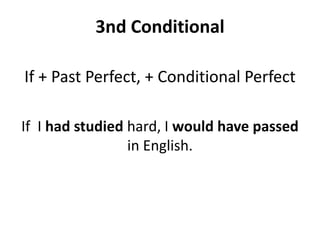
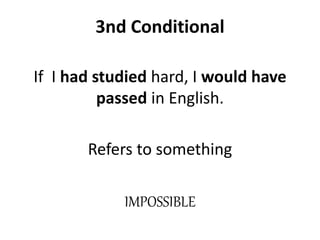
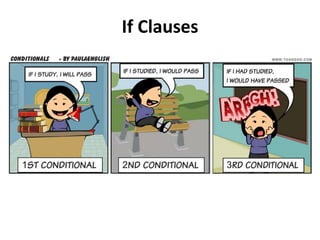



The document discusses different types of "if clauses" in English grammar. It explains that a second conditional refers to something that is unreal, hypothetical or imaginary in the present. A third conditional refers to something that is impossible and expresses a hypothetical situation in the past. It emphasizes that to form the past tense of "to be" in a second conditional, the verb is always "were" rather than "was", and a third conditional uses the past perfect tense.


![Conditionalclauses 090508080137-phpapp02[1]](https://cdn.slidesharecdn.com/ss_thumbnails/conditionalclauses-090508080137-phpapp021-130402040948-phpapp02-thumbnail.jpg?width=640&height=640&fit=bounds)


