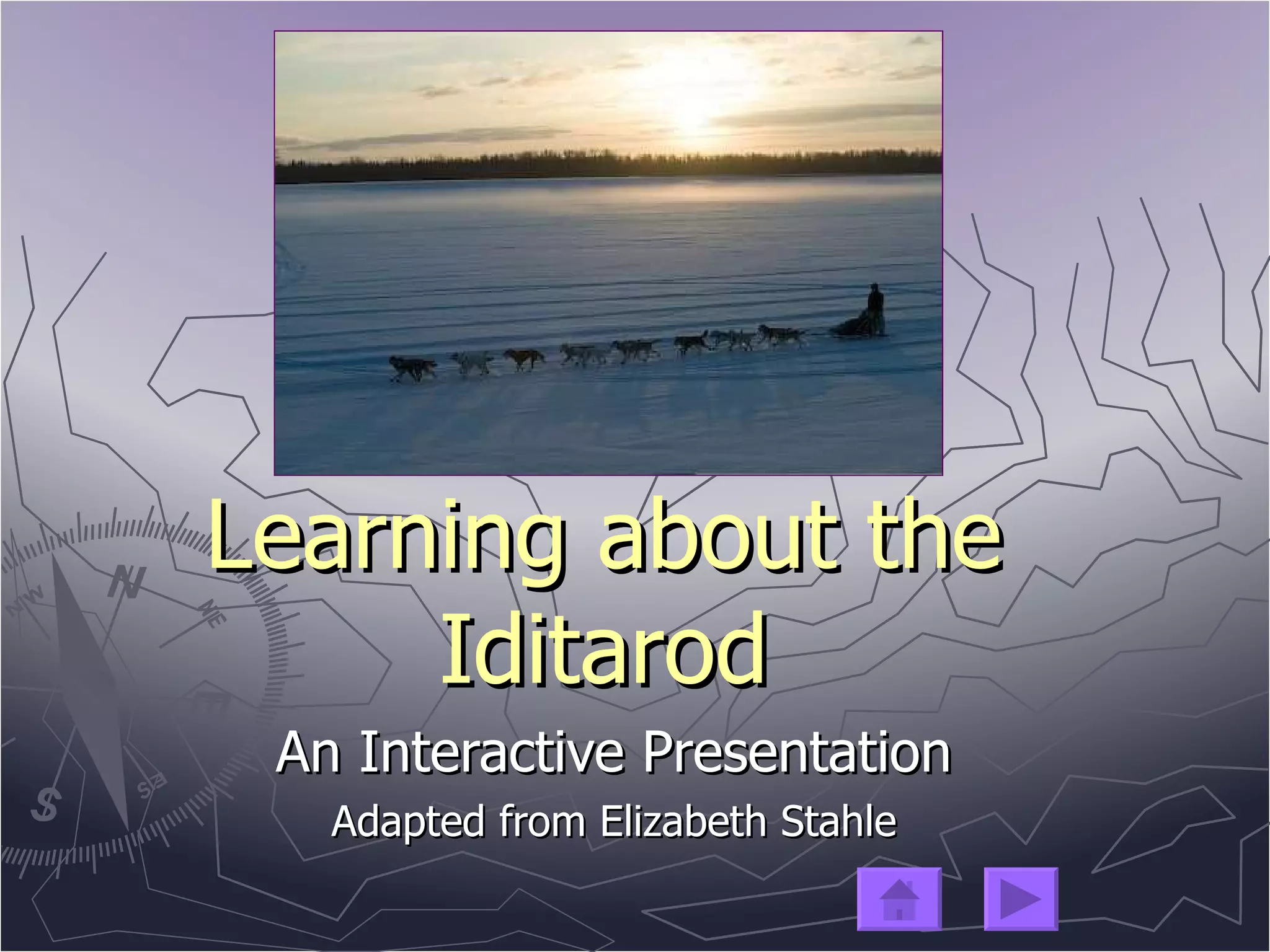
Learning about the   Iditarod An Interactive Presentation Adapted from Elizabeth Stahle
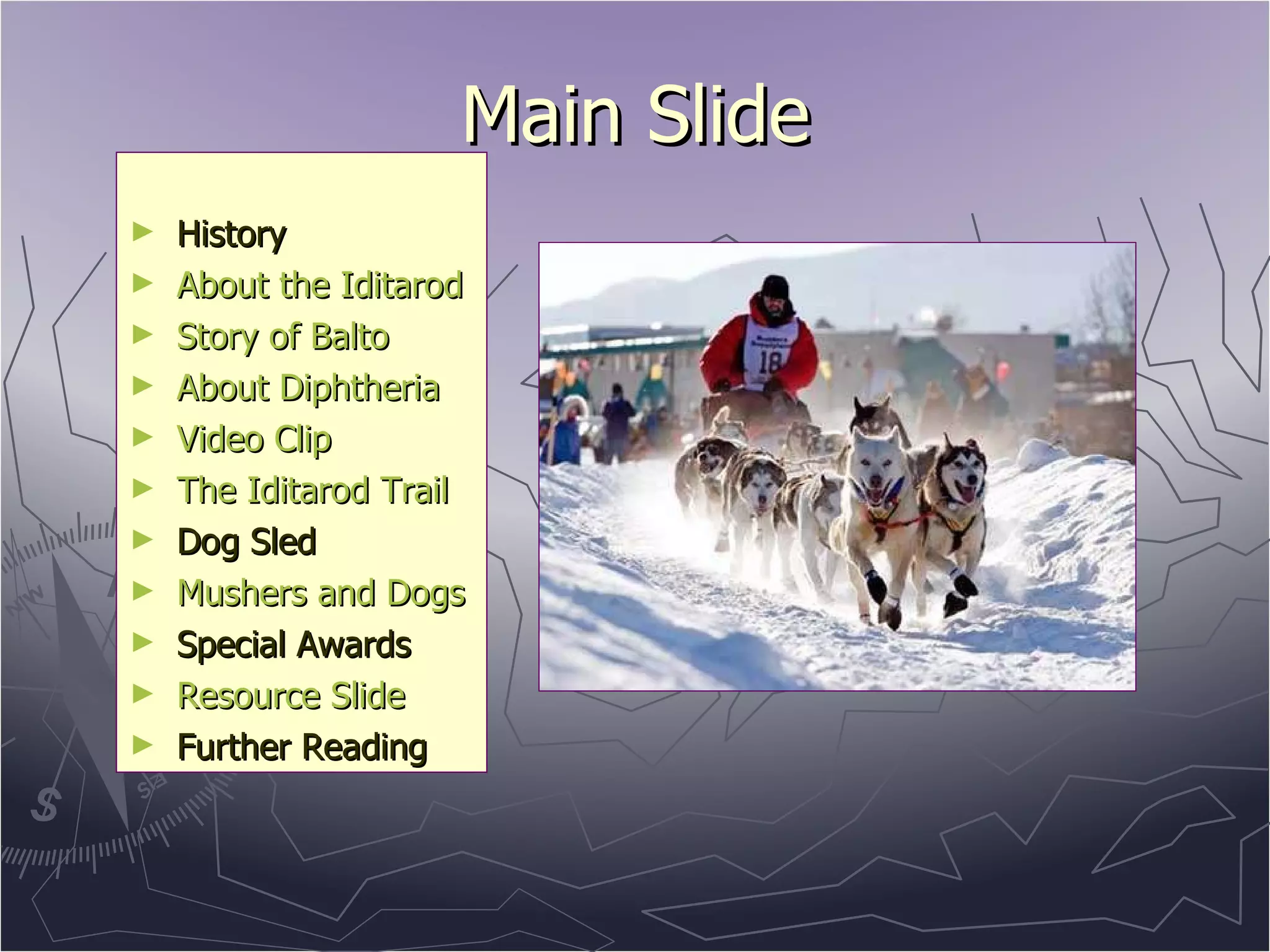
Main Slide History  About  the  Iditarod Story of Balto About Diphtheria The  Iditarod  Trail Dog Sled  Mushers  and  Dogs Special Awards Resource Slide Further Reading
How did the Iditarod start? Looking at History… 1925 Nome Diphtheria Outbreak Serum was located in Anchorage (train relayed it Nenana) 20 mushers teamed up cover 674 miles from Nenana to Nome Wild Bill Shannon went with nine dogs on the 52-mile trip where he would hand the serum to another musher.  The temperature was 35 degrees below zero Shannon and 19 other mushers, including champion racer Leonhard Seppala got the medicine to Nome. http://www.gi.alaska.edu/ScienceForum/ASF15/1531.html
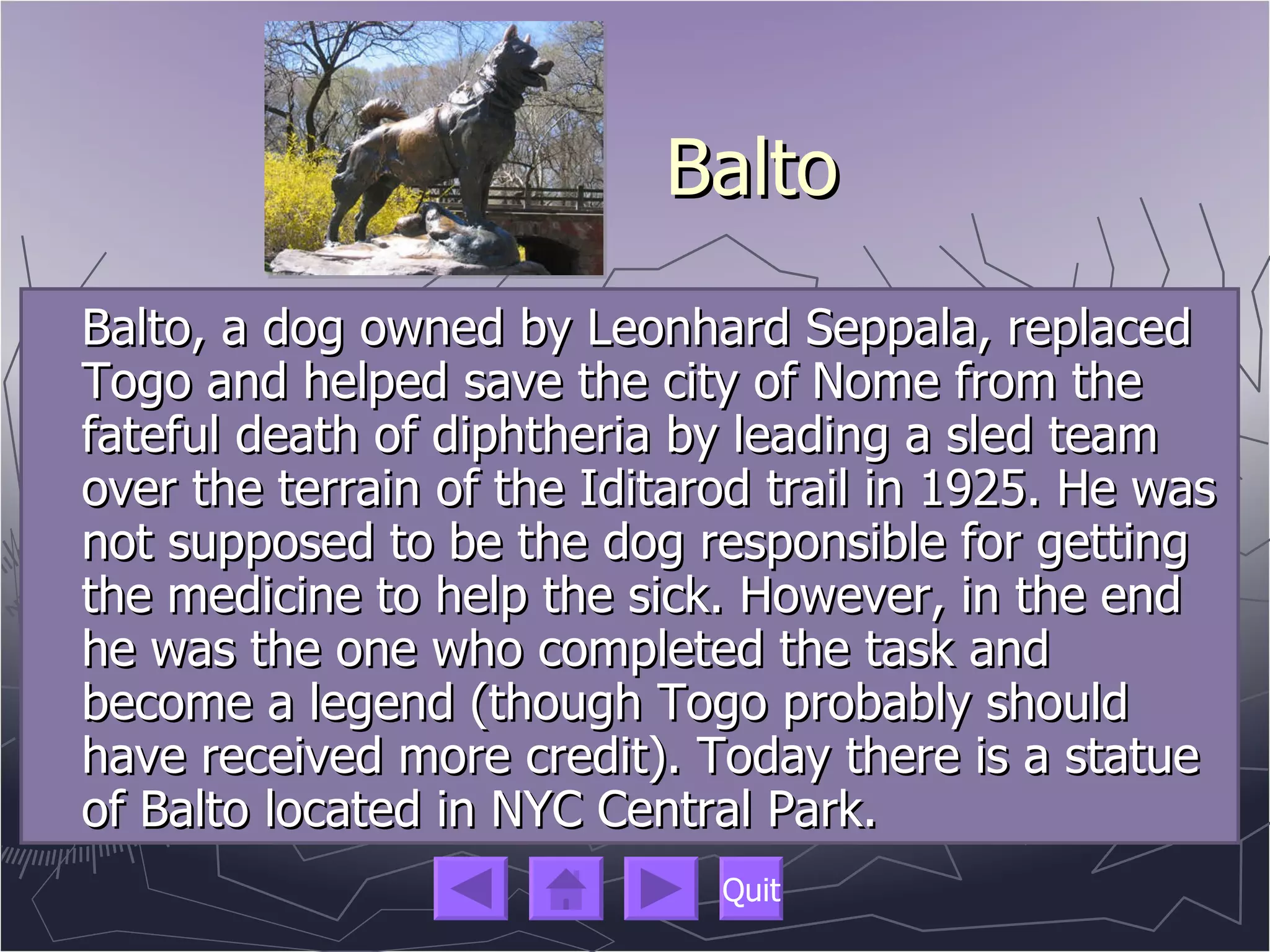
Balto, a dog owned by Leonhard Seppala, replaced Togo and helped save the city of Nome from the fateful death of diphtheria by leading a sled team over the terrain of the Iditarod trail in 1925. He was not supposed to be the dog responsible for getting the medicine to help the sick. However, in the end he was the one who completed the task and become a legend (though Togo probably should have received more credit). Today there is a statue of Balto located in NYC Central Park. Balto
(  Inupiaq:  Sitnasuaq  ),   Population 4,500 Founded in 1901 .  Native Alaskans  Inupiaq  Eskimos  are about 60%, whites 40% of population. No road connections - you must fly to access Nome (jet service daily from Anchorage or Fairbanks),  The climate in Nome is arctic with very cold winters featured by an average temperature of -15º. Nome Nome  is located on the southern shore of the Seward Peninsula, on Norton Sound.
Inupiaq  eskimo igloo
How far from Denver?
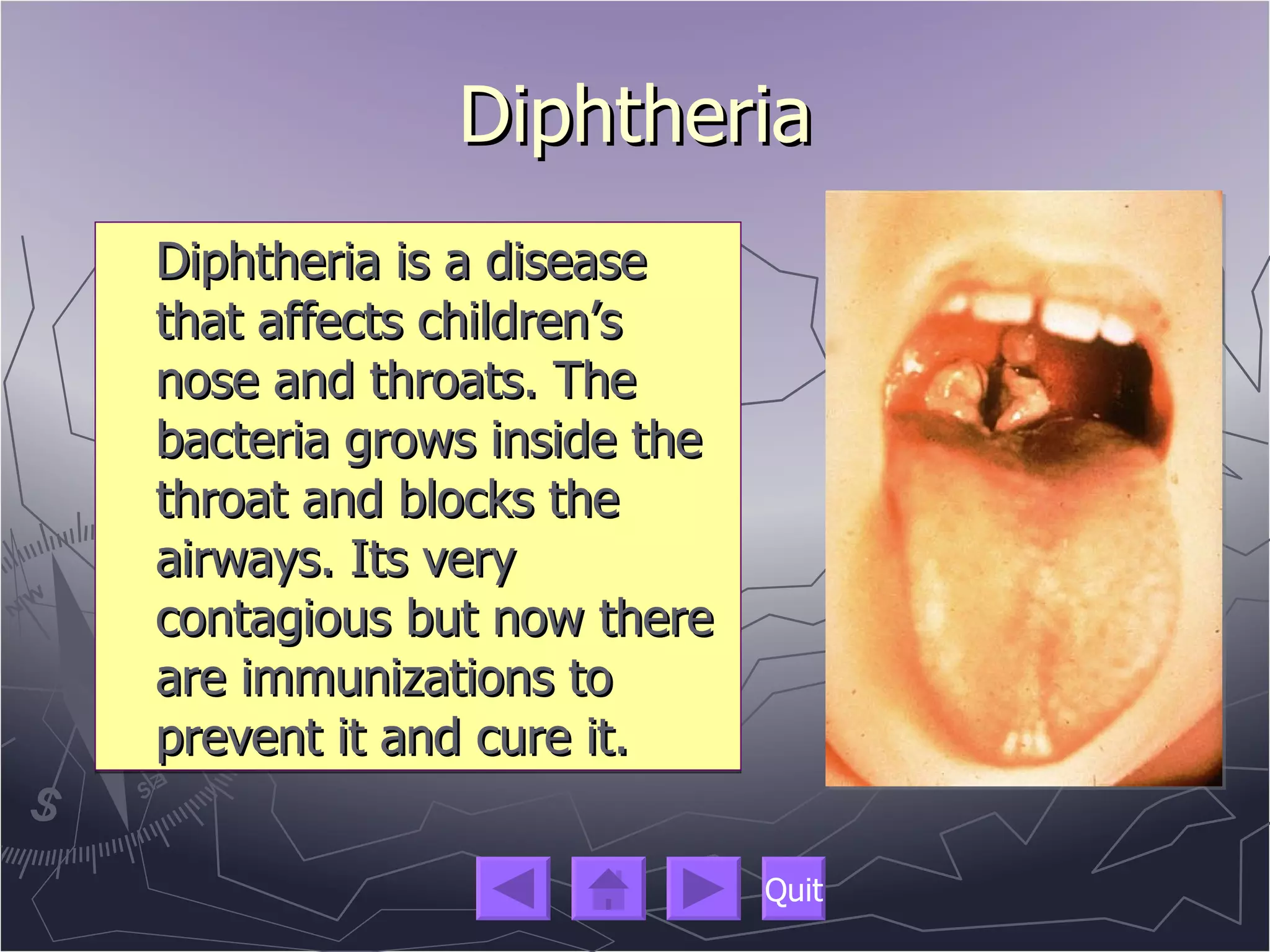
Diphtheria Diphtheria is a disease that affects children’s nose and throats. The bacteria grows inside the throat and blocks the airways. Its very contagious but now there are immunizations to prevent it and cure it.
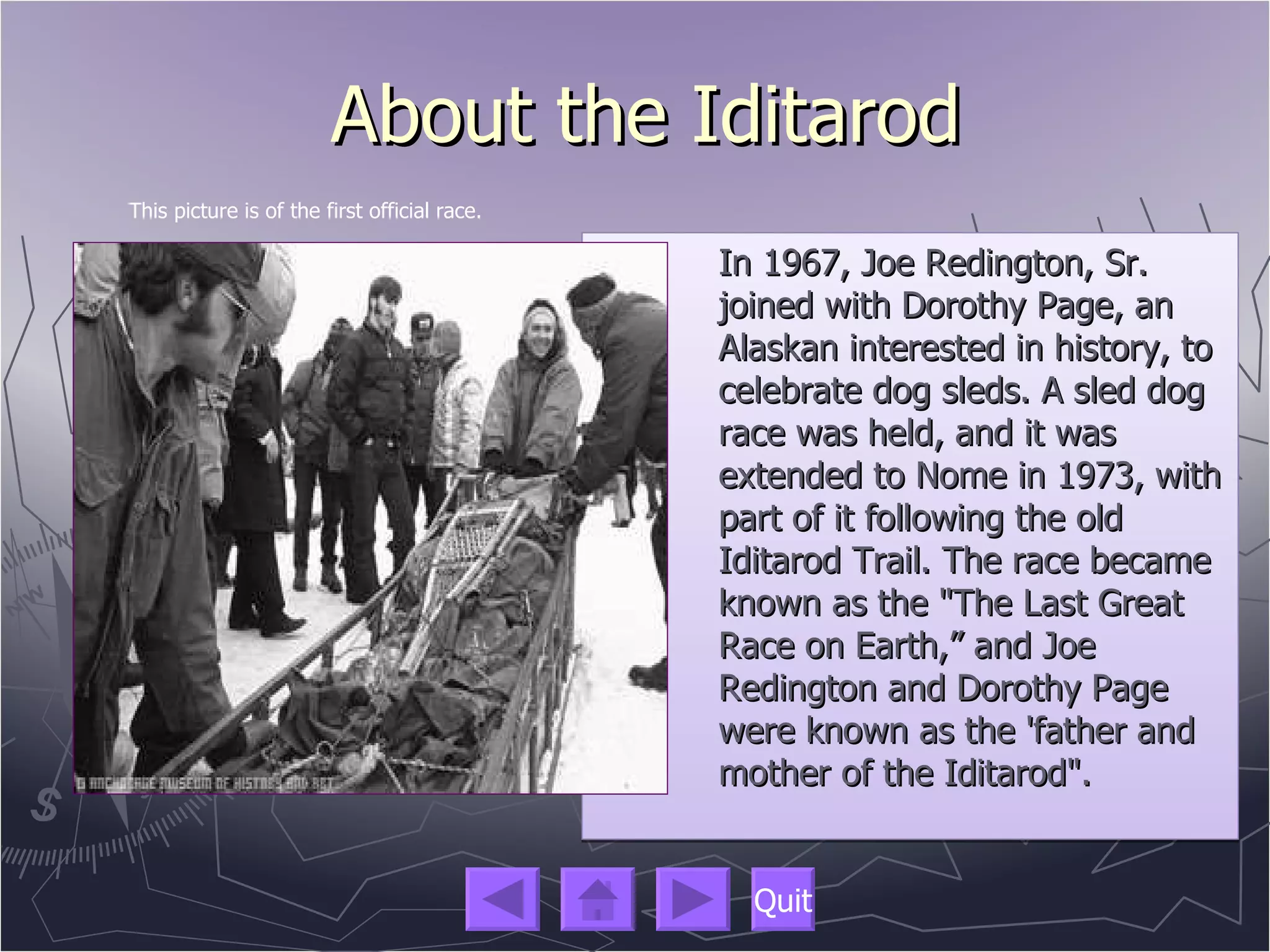
About the Iditarod In 1967, Joe Redington, Sr. joined with Dorothy Page, an Alaskan interested in history, to celebrate dog sleds. A sled dog race was held, and it was extended to Nome in 1973, with part of it following the old Iditarod Trail. The race became known as the "The Last Great Race on Earth,” and Joe Redington and Dorothy Page were known as the 'father and mother of the Iditarod".   This picture is of the first official race.
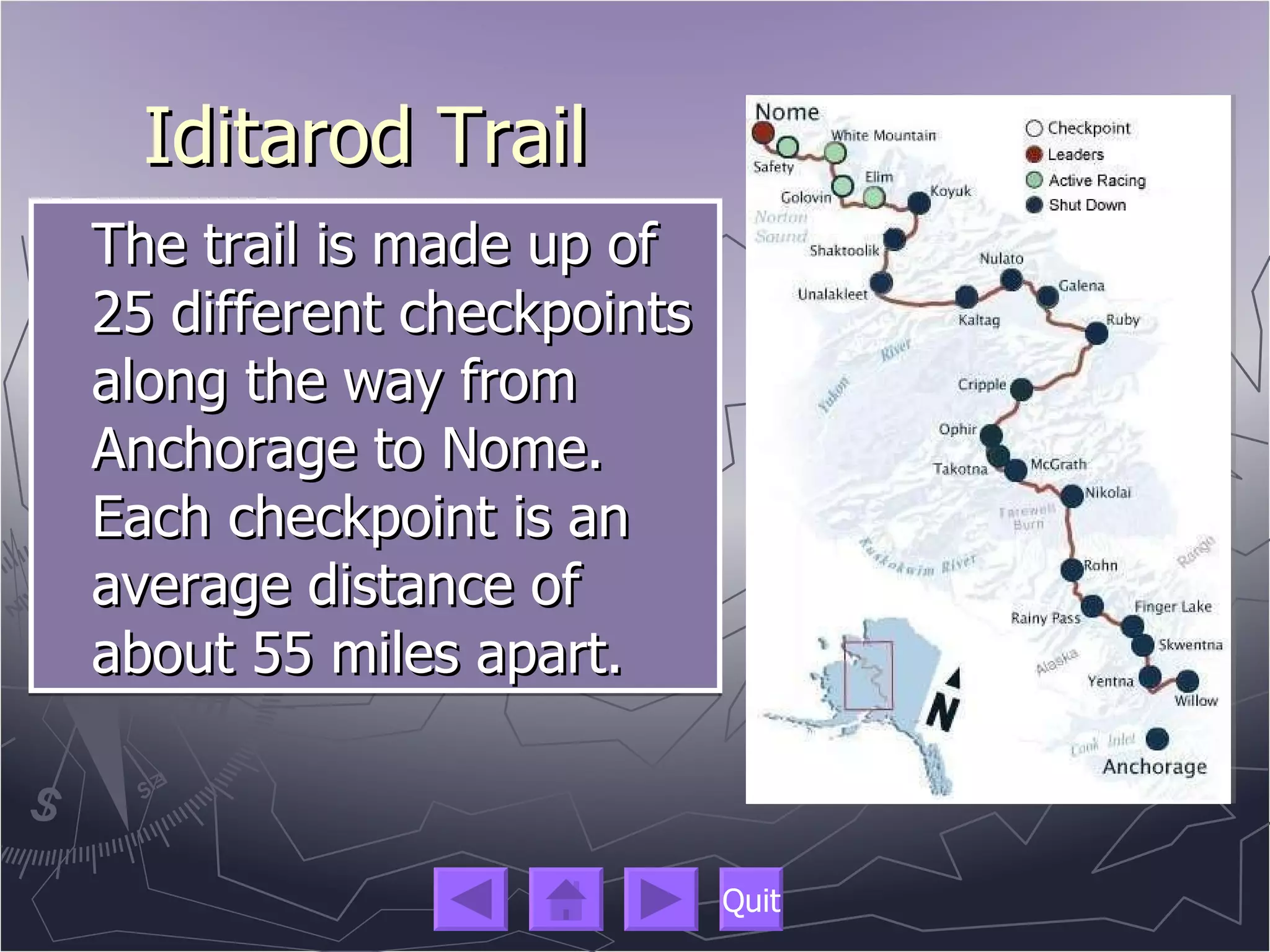
Iditarod Trail The trail is made up of 25 different checkpoints along the way from Anchorage to Nome. Each checkpoint is an average distance of about 55 miles apart.
Nome  is the finish line for the annual Iditarod Race. Known as "The Last Great Race on Earth", mushers and dogs travel 1,049 miles from Anchorage to Nome each March.
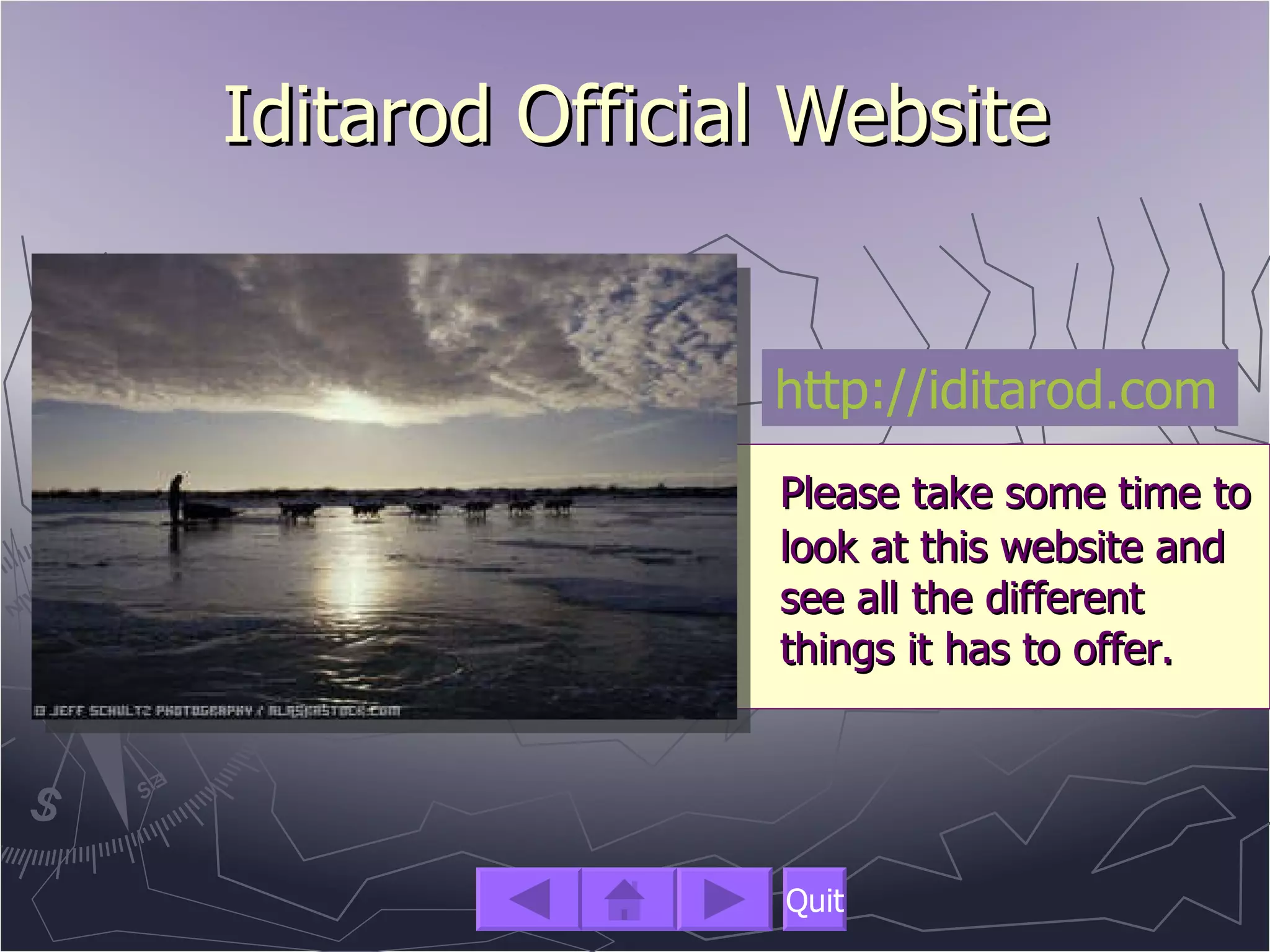
Iditarod Official Website Please take some time to look at this website and see all the different things it has to offer. http://iditarod.com
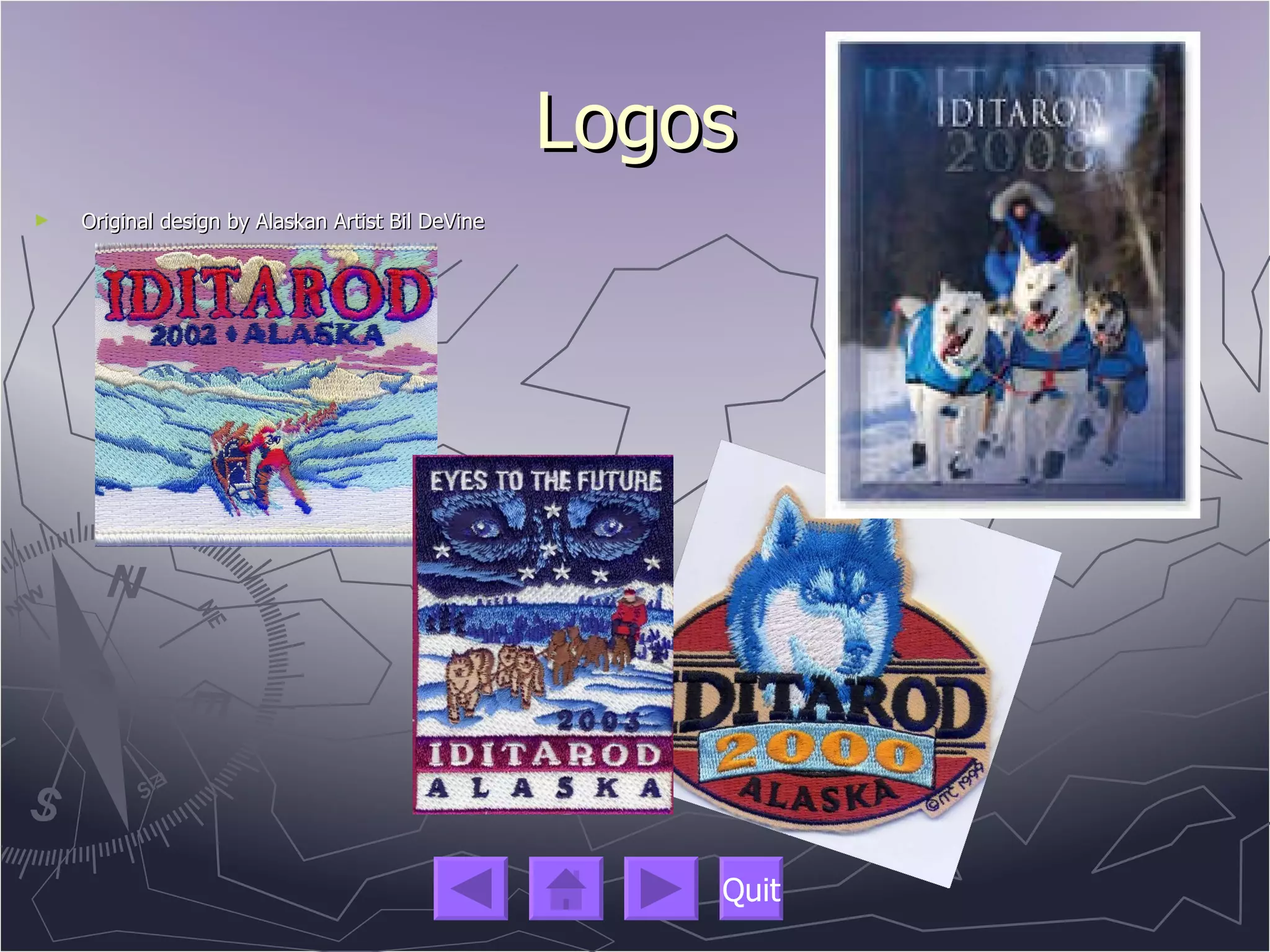
Logos Original design by Alaskan Artist Bil DeVine
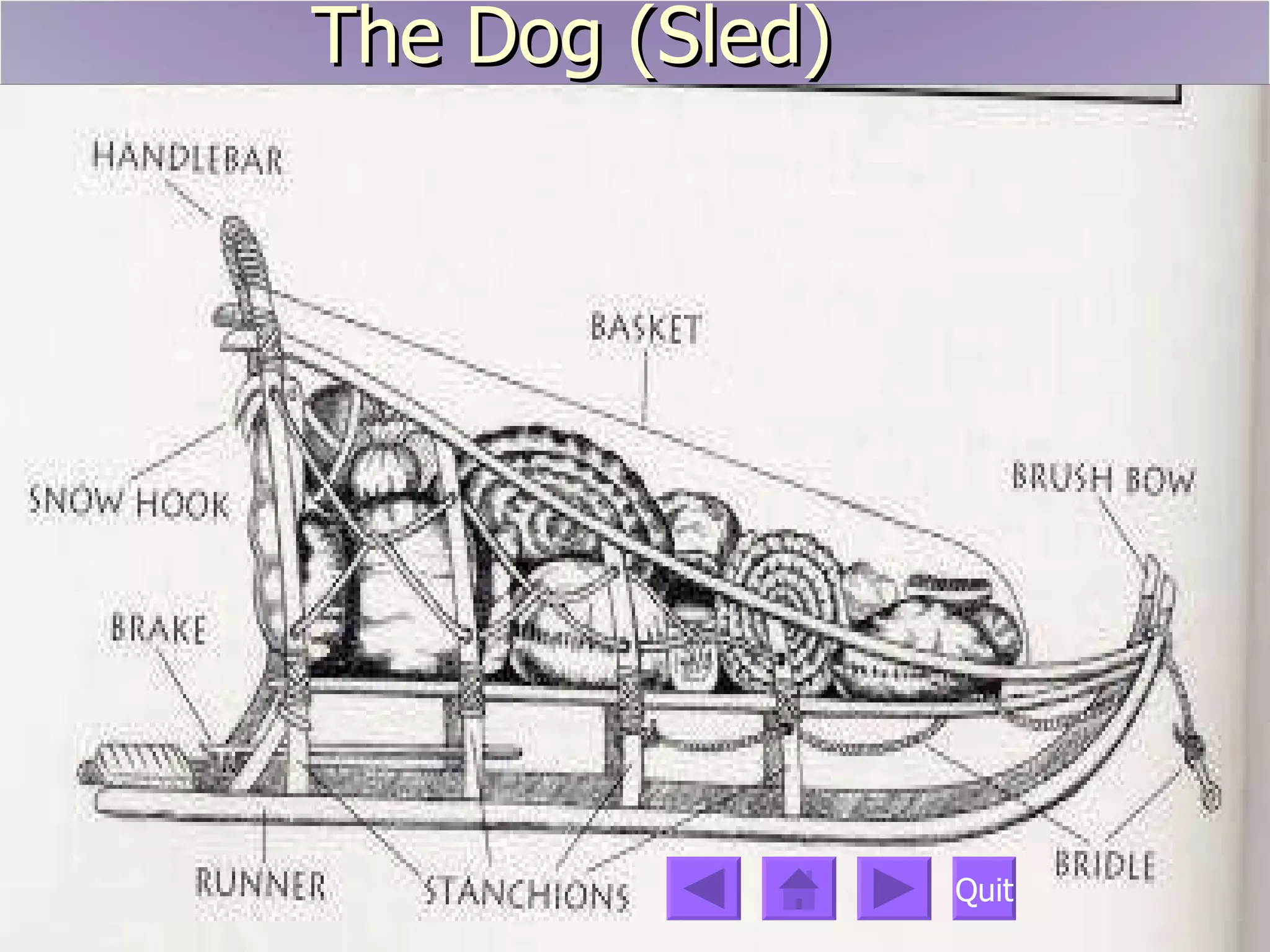
The Dog (Sled) Quit
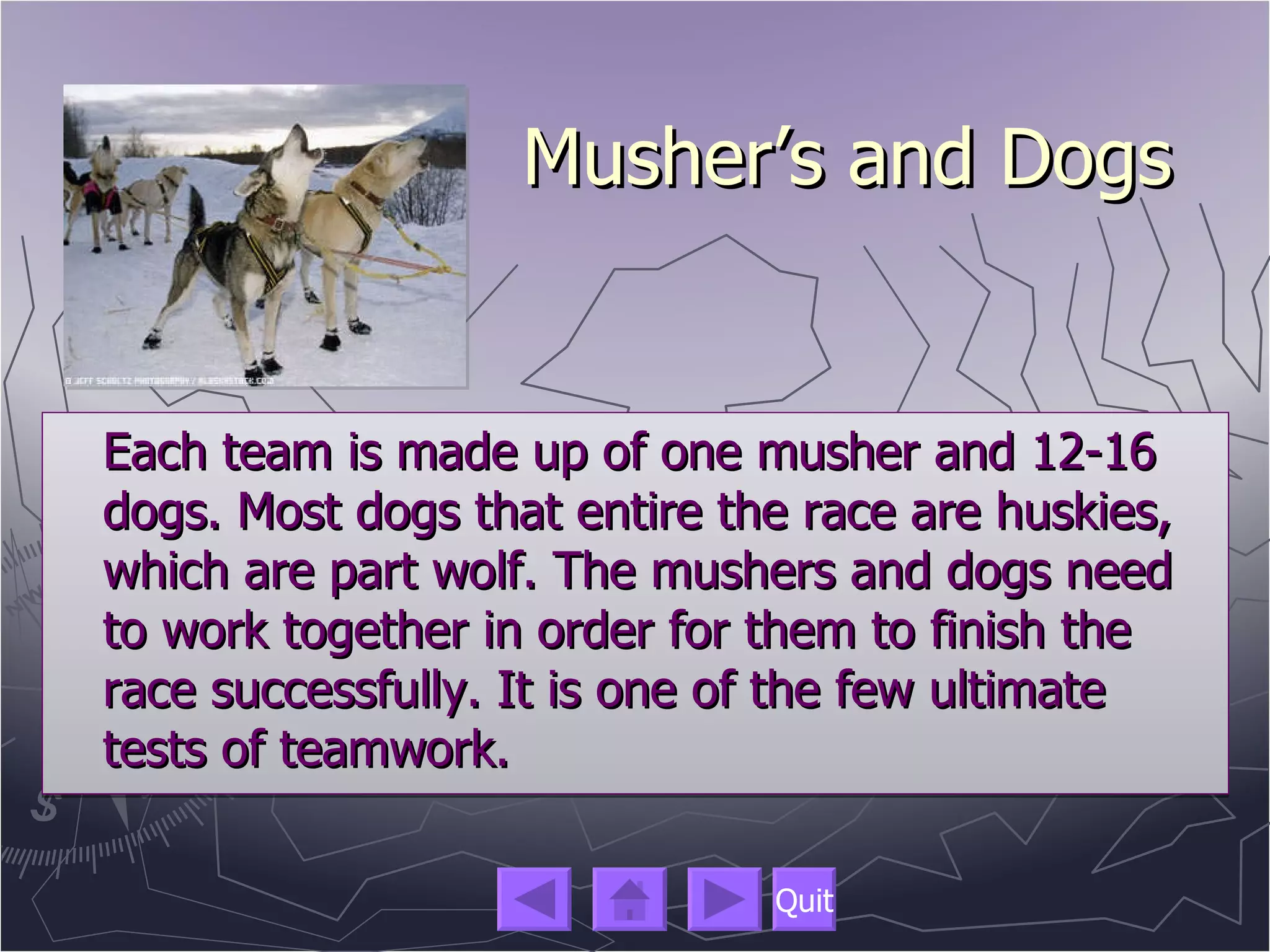
Musher’s and Dogs Each team is made up of one musher and 12-16 dogs. Most dogs that entire the race are huskies, which are part wolf. The mushers and dogs need to work together in order for them to finish the race successfully. It is one of the few ultimate tests of teamwork.
Musher Profiles
Special Awards Golden Harness Award-  awarded to the best lead dog as voted on by the mushers Sportsmanship Award Most Inspirational Musher Leonhard Seppala Award-  given to the musher who takes the best care of his team (voted on by the veterinarians)   Red Lantern Award-  Last place (must remain competitive, the Widow’s Lamp)
Further Reading

Iditarod History

  • 1.
    Learning about the Iditarod An Interactive Presentation Adapted from Elizabeth Stahle
  • 2.
    Main Slide History About the Iditarod Story of Balto About Diphtheria The Iditarod Trail Dog Sled Mushers and Dogs Special Awards Resource Slide Further Reading
  • 3.
    How did theIditarod start? Looking at History… 1925 Nome Diphtheria Outbreak Serum was located in Anchorage (train relayed it Nenana) 20 mushers teamed up cover 674 miles from Nenana to Nome Wild Bill Shannon went with nine dogs on the 52-mile trip where he would hand the serum to another musher. The temperature was 35 degrees below zero Shannon and 19 other mushers, including champion racer Leonhard Seppala got the medicine to Nome. http://www.gi.alaska.edu/ScienceForum/ASF15/1531.html
  • 4.
    Balto, a dogowned by Leonhard Seppala, replaced Togo and helped save the city of Nome from the fateful death of diphtheria by leading a sled team over the terrain of the Iditarod trail in 1925. He was not supposed to be the dog responsible for getting the medicine to help the sick. However, in the end he was the one who completed the task and become a legend (though Togo probably should have received more credit). Today there is a statue of Balto located in NYC Central Park. Balto
  • 5.
    ( Inupiaq: Sitnasuaq ), Population 4,500 Founded in 1901 . Native Alaskans Inupiaq Eskimos are about 60%, whites 40% of population. No road connections - you must fly to access Nome (jet service daily from Anchorage or Fairbanks), The climate in Nome is arctic with very cold winters featured by an average temperature of -15º. Nome Nome is located on the southern shore of the Seward Peninsula, on Norton Sound.
  • 6.
  • 7.
    How far fromDenver?
  • 8.
    Diphtheria Diphtheria isa disease that affects children’s nose and throats. The bacteria grows inside the throat and blocks the airways. Its very contagious but now there are immunizations to prevent it and cure it.
  • 9.
    About the IditarodIn 1967, Joe Redington, Sr. joined with Dorothy Page, an Alaskan interested in history, to celebrate dog sleds. A sled dog race was held, and it was extended to Nome in 1973, with part of it following the old Iditarod Trail. The race became known as the "The Last Great Race on Earth,” and Joe Redington and Dorothy Page were known as the 'father and mother of the Iditarod". This picture is of the first official race.
  • 10.
    Iditarod Trail Thetrail is made up of 25 different checkpoints along the way from Anchorage to Nome. Each checkpoint is an average distance of about 55 miles apart.
  • 11.
    Nome isthe finish line for the annual Iditarod Race. Known as "The Last Great Race on Earth", mushers and dogs travel 1,049 miles from Anchorage to Nome each March.
  • 12.
    Iditarod Official WebsitePlease take some time to look at this website and see all the different things it has to offer. http://iditarod.com
  • 13.
    Logos Original designby Alaskan Artist Bil DeVine
  • 14.
  • 15.
    Musher’s and DogsEach team is made up of one musher and 12-16 dogs. Most dogs that entire the race are huskies, which are part wolf. The mushers and dogs need to work together in order for them to finish the race successfully. It is one of the few ultimate tests of teamwork.
  • 16.
  • 17.
    Special Awards GoldenHarness Award- awarded to the best lead dog as voted on by the mushers Sportsmanship Award Most Inspirational Musher Leonhard Seppala Award- given to the musher who takes the best care of his team (voted on by the veterinarians) Red Lantern Award- Last place (must remain competitive, the Widow’s Lamp)
  • 18.