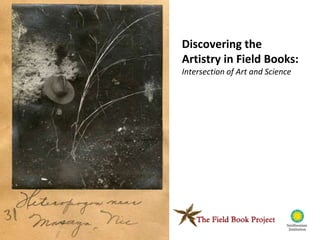
Discovering the
Artistry in Field Books:
Intersection of Art and Science
National Museum of Natural
History & Smithsonian
Institution Archives
                              Mission: to create a Field
                             Book Registry, one online
                             location for field book
                             content everywhere.
Why the Field
 Book Project?

• Field books are not co-
  located
• Access points are
  inconsistent
• Field Books are Hidden
  Collections!
What do we do?

+ CATALOG
+ Conserve
+ Digitize
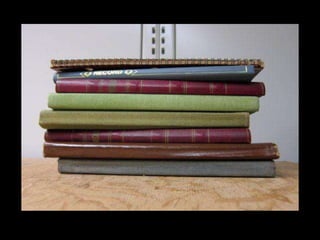
What are
field books?
           Unpublished, original
           record of field events
           leading up to and
           including the collection of
           biological specimens.
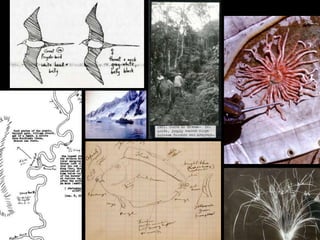
What can these materials tell us?


   + Specimens
   + Environment
   + Collecting Event
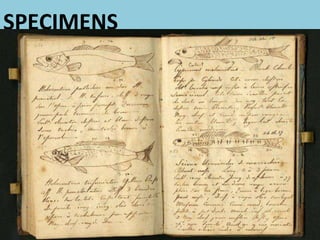
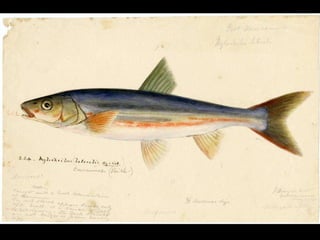
SPECIMENS
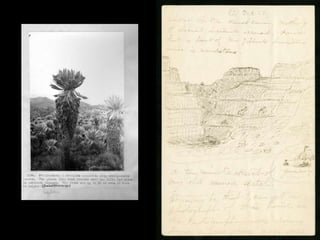
ENVIRONMENT
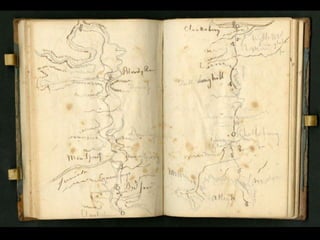
+ paint a picture of a specific
place at a specific time

+ what did the landscape look
like? What species thrived?
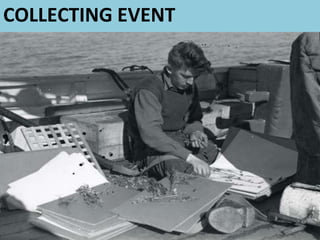
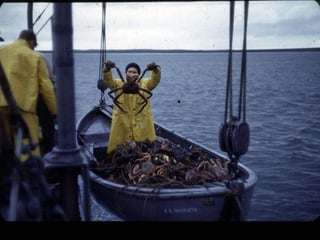
COLLECTING EVENT
COLLECTING EVENT
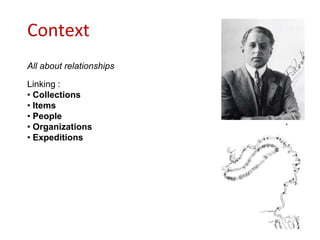
Context
All about relationships

Linking :
• Collections
• Items
• People
• Organizations
• Expeditions
Overview of Description
          EAC Organization                             NCD Collection
OrgId: EACO9                               CollectionId: NCDC78
Name: Smithsonian Institution,             Title: Frederick Coville,
National Museum of Natural History,        field books, 1890-1924
Department of Botany                       Owner: EACO9
                                           Creator: EACP173
                                           Description: The collection consists of
              EAC Person                   Coville's field notes from botanical
                                           collecting and observation efforts in …
PersonId: EACP173
Name: Coville, Frederick
(Frederick Vernon), 1867-1937
Dates: 1867-1937                                           MODS Item
Biographical history: Frederick Vernon         MODSid: MODSI1281
Coville, botanist and blueberry breeder,       Collection: NCDC78
was born in New York and educated…             Title: Field notes, Death Valley
                                               Expedition, 1891
                                               Dates: 1891.05.10-1891.07.30
           EAC Expedition                      Creator: EACP173
ExpId: EACE0017                                Expedition: EACE 0017
Name: Death Valley Expedition                  Abstract: This item contains narrative
Dates: 1890-1891                               notes and lists of botanical specimens
Description: The Death Valley Expedition       collected or observed during Coville's
was the first biological survey to …           research in Death Valley . …
Challenges

What is it?
Crowdsourcing
Flickr:
http://tinyurl.com/fbpflickr

Blog:
http://nmnh.typepad.com/fieldbooks/

Twitter:
http://twitter.com/!/fieldbookproj


Website
http://mnh.si.edu/rc/fieldbooks/
Field Book Project Team
Rusty Russell
Collections & Informatics, Botany
Anne Van Camp
Director, SI Archives

Carolyn Sheffield, Project Manager
Sonoe Nakasone, Cataloging Coordinator
Lesley Parilla, Cataloger and Graphics Designer
Emily Hunter, Cataloger and Social Media Coordinator

Ricc Ferrante, Director of Digital Services, SIA
Kira Cherrix, Image and Video Digitization Specialist, SIA
Tammy Peters, Supervisory Archivist, SIA
Sarah Stauderman, Collections Care Manager, SIA
Nora Lockshin, Paper Conservator, SIA
Janelle Batkin-Hall, Conservation Technician, SIA
Kirsten Tyree, Conservation Technician, SIA

Hunter archivesfair2012

  • 1.
    Discovering the Artistry inField Books: Intersection of Art and Science
  • 2.
    National Museum ofNatural History & Smithsonian Institution Archives Mission: to create a Field Book Registry, one online location for field book content everywhere.
  • 3.
    Why the Field Book Project? • Field books are not co- located • Access points are inconsistent • Field Books are Hidden Collections!
  • 4.
    What do wedo? + CATALOG + Conserve + Digitize
  • 5.
    What are field books? Unpublished, original record of field events leading up to and including the collection of biological specimens.
  • 9.
    What can thesematerials tell us? + Specimens + Environment + Collecting Event
  • 10.
  • 14.
  • 17.
    + paint apicture of a specific place at a specific time + what did the landscape look like? What species thrived?
  • 20.
  • 23.
    Context All about relationships Linking: • Collections • Items • People • Organizations • Expeditions
  • 24.
    Overview of Description EAC Organization NCD Collection OrgId: EACO9 CollectionId: NCDC78 Name: Smithsonian Institution, Title: Frederick Coville, National Museum of Natural History, field books, 1890-1924 Department of Botany Owner: EACO9 Creator: EACP173 Description: The collection consists of EAC Person Coville's field notes from botanical collecting and observation efforts in … PersonId: EACP173 Name: Coville, Frederick (Frederick Vernon), 1867-1937 Dates: 1867-1937 MODS Item Biographical history: Frederick Vernon MODSid: MODSI1281 Coville, botanist and blueberry breeder, Collection: NCDC78 was born in New York and educated… Title: Field notes, Death Valley Expedition, 1891 Dates: 1891.05.10-1891.07.30 EAC Expedition Creator: EACP173 ExpId: EACE0017 Expedition: EACE 0017 Name: Death Valley Expedition Abstract: This item contains narrative Dates: 1890-1891 notes and lists of botanical specimens Description: The Death Valley Expedition collected or observed during Coville's was the first biological survey to … research in Death Valley . …
  • 25.
  • 26.
  • 27.
  • 28.
    Field Book ProjectTeam Rusty Russell Collections & Informatics, Botany Anne Van Camp Director, SI Archives Carolyn Sheffield, Project Manager Sonoe Nakasone, Cataloging Coordinator Lesley Parilla, Cataloger and Graphics Designer Emily Hunter, Cataloger and Social Media Coordinator Ricc Ferrante, Director of Digital Services, SIA Kira Cherrix, Image and Video Digitization Specialist, SIA Tammy Peters, Supervisory Archivist, SIA Sarah Stauderman, Collections Care Manager, SIA Nora Lockshin, Paper Conservator, SIA Janelle Batkin-Hall, Conservation Technician, SIA Kirsten Tyree, Conservation Technician, SIA

Editor's Notes

  • #25 I won’t go into too much detail here, but this diagram may do a better job of showing how our descriptive practices can link resources and provide that context. As I mentioned, we describe at the item and collection level. We also use EAC to create authority files for Organizations, people and expeditionsI’m just going to give you the basic concept, which I think is more interesting than the nuts and bolts of it anyway.EAC authority files providebiographical background on field book creators… so we can see where they are from, who they studied with, etc. Also for organizations and expeditions.You can also link these histories… so that we get this kind of historical social network… who was doing what with whom, where and when.Able to link field books related to same person/organization/expedition.
  • #29 Thank you!