
How to do a
Fund Development Audit
Analyzing your organization through your fundraiser eyes


                          Gayle L. Gifford, ACFRE
Topics
      Audit overview
      Components
      Data collection
      Analysis
      What’s next?
Workshop rules:

          This is a taste, not the
           whole meal
          Ask
          Share
When to do an audit?
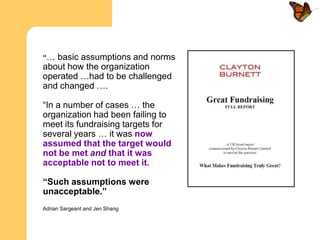
“… basic assumptions and norms
about how the organization
operated …had to be challenged
and changed ….

“In a number of cases … the
organization had been failing to
meet its fundraising targets for
several years … it was now
assumed that the target would
not be met and that it was
acceptable not to meet it.

“Such assumptions were
unacceptable.”
Adrian Sargeant and Jen Shang
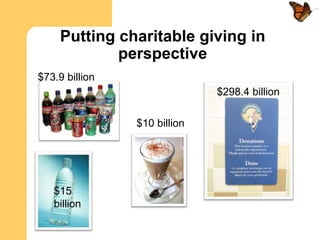
Putting charitable giving in
             perspective
$73.9 billion
                              $298.4 billion

                $10 billion


   $15
   billion
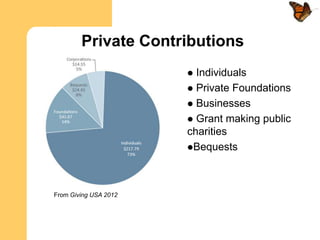
Private Contributions
                        Individuals
                        Private Foundations
                        Businesses
                        Grant making public
                       charities
                       Bequests


From Giving USA 2012
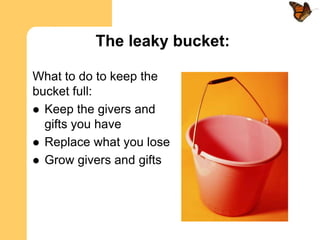
The leaky bucket:

What to do to keep the
bucket full:
 Keep the givers and
  gifts you have
 Replace what you lose
 Grow givers and gifts
What is a whole organization
     fund development audit?

Comprehensive assessment
of your organization and your
fundraising program with a goal
of strategic improvement.
From “Great Fundraising”


“In our view, what makes a fundraising leader truly
great is how they go about answering [this] question:


“How might all these existing systems be
transformed systematically such that great
fundraising may be created?”
How do I do it?
Prepare yourself
Think strategically
Intent focused
Systems perspective
Intelligent opportunism
Thinking in time
Hypothesis driven
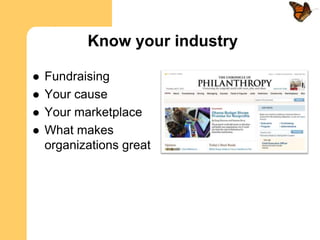
Know your industry

   Fundraising
   Your cause
   Your marketplace
   What makes
    organizations great
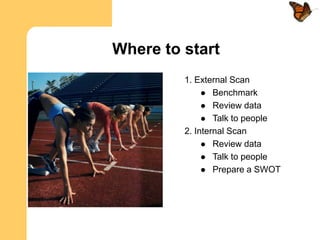
Where to start
         1. External Scan
               Benchmark
               Review data
               Talk to people
         2. Internal Scan
               Review data
               Talk to people
               Prepare a SWOT
Benchmarking
Fundraising Profile of Peer
Organizations
 Ask
 Compare 990s
 Compare Annual
  Reports
 Review the field
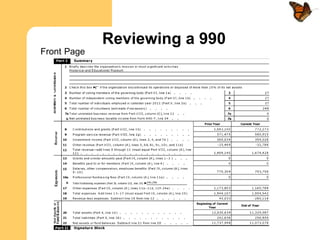
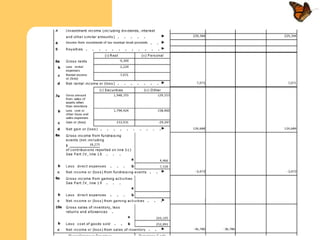
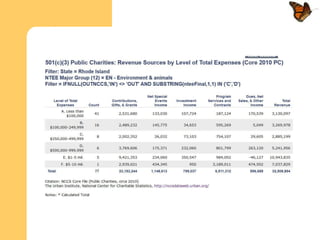
Reviewing a 990
Front Page
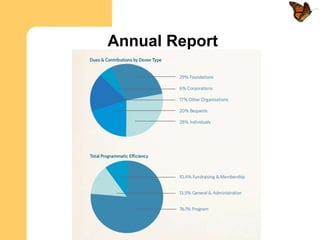
Annual Report
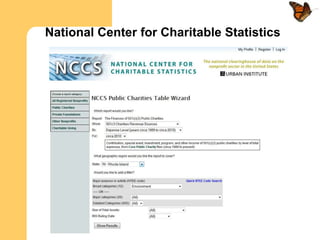
National Center for Charitable Statistics
Get an outside perspective
People to interview
   Donors
   Prospects
   Peer organizations
   Trendsetters
   Institutional funders
   Clients
   Board members
   Program staff
   _________________
Know your market
   Giving universe
   Wealth/scarcity of institutional
    funders
   “Competition”
   _____________________
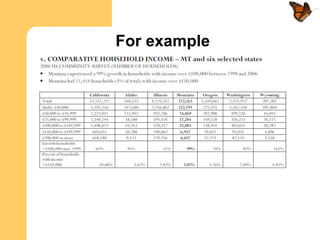
For example
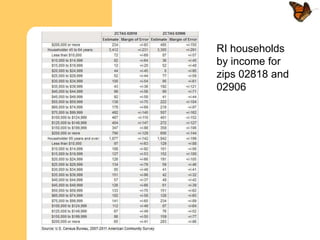
RI households
by income for
zips 02818 and
02906
Know thyself
       Trend data
          Donor longevity
          Long term value of a donor (by
           solicitation source)
          Donor profile
          Donor acquisition and attrition
            –   New and returning donors
            –   Donors who have dropped out and not
                returned
            –   New donors
          Increases or decreases in giving
          Income by solicitation sources
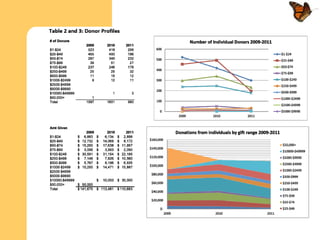
          Giver counts by gift range
          Donation totals by gift range
          Average gift trends
          Geography or other demographics
          Other ______________________
What else to analyze
   Mission & Program
   Case for Support
   Culture of Philanthropy & Leadership
   Constituents
   Fundraising Program
   Stewardship Program
   Brand Identity & Communications
   Fund Development Capacity & Infrastructure
   Legal & Regulatory
Pull it all together into an analysis
   Executive Summary
   Mission
   Profile of Fund Development
   Summary giving Profile
   Comparison with Peers
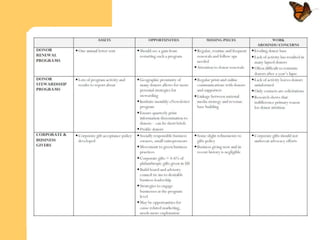
   Assets- Opportunities- Missing Pieces- Work
    Arounds/Concerns by SWOT element
   Detailed data
   Findings from external research
The audit only matters if it guides
         your fundraising plan

   Develop opportunities
   Strengthen weaknesses
   Mothball or abandon
    unpromising directions
   Do more research
   Lobby for needed
    investments
Questions?
Thank you
   Sign up for our free
    monthly eNews & our
    blog www.ceffect.com

   Check out our free
    online toolbox at
    www.ceffect.com

   Call me at 401-331-
    2272

   Gayle@ceffect.com

How to do a fund development audit c effect

  • 1.
    How to doa Fund Development Audit Analyzing your organization through your fundraiser eyes Gayle L. Gifford, ACFRE
  • 2.
    Topics  Audit overview  Components  Data collection  Analysis  What’s next?
  • 3.
    Workshop rules:  This is a taste, not the whole meal  Ask  Share
  • 5.
    When to doan audit?
  • 6.
    “… basic assumptionsand norms about how the organization operated …had to be challenged and changed …. “In a number of cases … the organization had been failing to meet its fundraising targets for several years … it was now assumed that the target would not be met and that it was acceptable not to meet it. “Such assumptions were unacceptable.” Adrian Sargeant and Jen Shang
  • 7.
    Putting charitable givingin perspective $73.9 billion $298.4 billion $10 billion $15 billion
  • 9.
    Private Contributions  Individuals  Private Foundations  Businesses  Grant making public charities Bequests From Giving USA 2012
  • 10.
    The leaky bucket: Whatto do to keep the bucket full:  Keep the givers and gifts you have  Replace what you lose  Grow givers and gifts
  • 11.
    What is awhole organization fund development audit? Comprehensive assessment of your organization and your fundraising program with a goal of strategic improvement.
  • 12.
    From “Great Fundraising” “Inour view, what makes a fundraising leader truly great is how they go about answering [this] question: “How might all these existing systems be transformed systematically such that great fundraising may be created?”
  • 13.
    How do Ido it?
  • 14.
  • 15.
    Think strategically Intent focused Systemsperspective Intelligent opportunism Thinking in time Hypothesis driven
  • 16.
    Know your industry  Fundraising  Your cause  Your marketplace  What makes organizations great
  • 17.
    Where to start 1. External Scan  Benchmark  Review data  Talk to people 2. Internal Scan  Review data  Talk to people  Prepare a SWOT
  • 18.
    Benchmarking Fundraising Profile ofPeer Organizations  Ask  Compare 990s  Compare Annual Reports  Review the field
  • 19.
  • 23.
  • 24.
    National Center forCharitable Statistics
  • 27.
    Get an outsideperspective People to interview  Donors  Prospects  Peer organizations  Trendsetters  Institutional funders  Clients  Board members  Program staff  _________________
  • 28.
    Know your market  Giving universe  Wealth/scarcity of institutional funders  “Competition”  _____________________
  • 29.
  • 30.
    RI households by incomefor zips 02818 and 02906
  • 31.
    Know thyself Trend data  Donor longevity  Long term value of a donor (by solicitation source)  Donor profile  Donor acquisition and attrition – New and returning donors – Donors who have dropped out and not returned – New donors  Increases or decreases in giving  Income by solicitation sources  Giver counts by gift range  Donation totals by gift range  Average gift trends  Geography or other demographics  Other ______________________
  • 33.
    What else toanalyze  Mission & Program  Case for Support  Culture of Philanthropy & Leadership  Constituents  Fundraising Program  Stewardship Program  Brand Identity & Communications  Fund Development Capacity & Infrastructure  Legal & Regulatory
  • 35.
    Pull it alltogether into an analysis  Executive Summary  Mission  Profile of Fund Development  Summary giving Profile  Comparison with Peers  Assets- Opportunities- Missing Pieces- Work Arounds/Concerns by SWOT element  Detailed data  Findings from external research
  • 36.
    The audit onlymatters if it guides your fundraising plan  Develop opportunities  Strengthen weaknesses  Mothball or abandon unpromising directions  Do more research  Lobby for needed investments
  • 37.
  • 38.
    Thank you  Sign up for our free monthly eNews & our blog www.ceffect.com  Check out our free online toolbox at www.ceffect.com  Call me at 401-331- 2272  Gayle@ceffect.com

Editor's Notes

  • #5 How many of you have audited your fundraising program in the last three years? Did you do it yourself or with consultation?
  • #6 Opportunities to do an audit include: Coming into a new positionLaunching a new program (e.g. major gifts, endowment, etc)Preparing for a campaignNeed a fresh lookFeeling stuck
  • #7 To the “stuckness question” This new study lookedat a number of UK orgs that had doubled, tripled even quadrupled their fundraising. Worth reading. It’s not about technique, but about the leadership and organization development conditions that enabled success. I hear too often from organizations that have been suffering with little growth or success in their fundraising and have developed a mindset that they can’t do better.
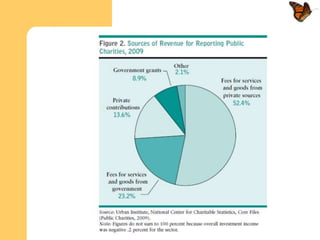
  • #9 This looks at the overall breakdown of nonprofit revenues. For smaller organizations, the mix is different, with Private contributions providing a greater share of the pie.
  • #11 The leaky bucket of giving --
  • #13 Again from AdrianSargeant’s analysis – what is a system? Major focus on Systems perspective: natural systems, designed physical systems (buildings), designed abstract systems (mathematics), human activity systems (organizations, teams)What systems affect the effectiveness of your fundraising program?
  • #16 See Five Elements of Strategic Thinking http://www.ceffect.com/blog/strategic-thinking/five-elements-of-thinking-strategically/
  • #17 What do you read – where do you go for information? Chronicle of Philanthropy, Stanford Social Innovation Review, Research, Professional Associations, Daily newspaper, NPR – fabulous,Organization development books – Reframing orgs, Leadership, Stewardship, Governance, Performance Measurement – I use Twitter to crowdfind important research
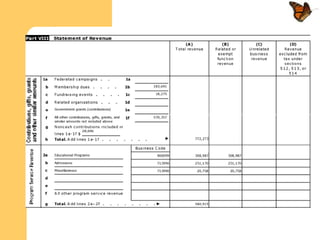
  • #21 Part of the Statement of RevenueA major challenge in comparing is that not every organization classifies their income the same.
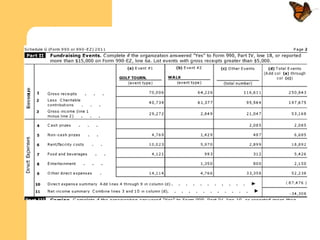
  • #22 Note the fundraising events – another schedule that you can look at.
  • #23 Other things you can find are endowment funds, expenses functionally broken down, sometimes salaries. Etc.
  • #24 Because the 990 doesn’t differentiate types of contributions, you will have to look elsewhere. If you are lucky, the annual report of the organization will break their income out separately. You can request this, or some organizations post their annual reports and even their audited financial statements online. The idea is to collect a sample – both with like type of organizations, but other organizations that you think have a similar profile – maybe the same size fundraising department. Or organizations you aspire to be.
  • #25 To compare yourself more broadly, can look at NCCS database, taken from Business Master File of IRS
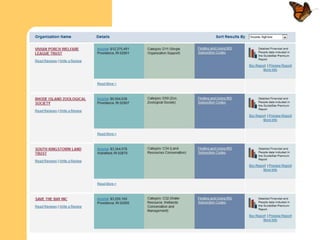
  • #26 These reports can help you figure out where you fit in the local landscape. You can see who the other organizations are by going to Guidestar and searching the list
  • #27 In Guidestar advanced search, can also ask for state, size of organization, keyword, type of organization. Be careful of mistakes.Have no idea why the Vivian Porch Welfare League Trust is showing up. 2012 990 says address is in IL? Bank of America even in IL.
  • #28 Why would you want to interview these segments of stakeholders? Be bold. Step out of your comfort zone if you can. You want to test some of the things I mentioned previously: How strong is your reputation – what are people saying about you? What are you known for? What is the impression of your programs? What are the trends/best practices in your program field – are you in alignment with them? How well know are you? What support is there in your organization for your fundraising activities? What do your donors consider the strong points of your programs? What is donor reaction to the various aspects of your fund development program? How strong is your donor communications program? Are you engaging donors at the level they would like to be engaged. What opportunities exist: e.g. funding needs, shifting interests?
  • #29 Just how many people are there in your community? By age (most givers are older, right!) By household income – match to numbers, match to townsSource of data: US Census Bureau
  • #31 Census is your friend. This is just a snapshot of two age groups.
  • #33 Graph the data to see what it looks like. Go as far back as you have good data. Be careful of intervening events – you have to interpret this data yourself. Don’t assume, dig deep.
  • #34 A SWOT analysis used in any kind of planning – it stands for strengths, weaknesses, opportunities, threats. But be serious about this. I haven’t met an organization that hasn’t said “great staff” Is this really true? A good read for you is “Good to Great” and “Good to Great and the Social Sectors” by Jim Collins. In his research he identified 5 aspects of greatness: Discipline peopled (right people in right seat, level 5 leadership), disciplined thought (confront brutual facts, hedgehog), Disciplined Action (culture of discipline, flywheel), Built to Last (clock building, preserve the core) These principles can help you in your analysis of these items – how well do you stack up?
  • #35 I look at my SWOT somewhat differently – assets, opportunities, missing pieces and work arounds/concerns. You could call it AMOC. Do this for every segment of your data. Again, you are telling yourself a story here. This is just a snapshot of 3 of many categories.