An effective digital marketing plan requires continuous optimization and adaptation. By following these steps, businesses can create a strong online presence and drive long-term success.
How to Createan Effective Digital Marketing
Plan
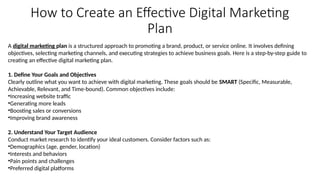
A digital marketing plan is a structured approach to promoting a brand, product, or service online. It involves defining
objectives, selecting marketing channels, and executing strategies to achieve business goals. Here is a step-by-step guide to
creating an effective digital marketing plan.
1. Define Your Goals and Objectives
Clearly outline what you want to achieve with digital marketing. These goals should be SMART (Specific, Measurable,
Achievable, Relevant, and Time-bound). Common objectives include:
•Increasing website traffic
•Generating more leads
•Boosting sales or conversions
•Improving brand awareness
2. Understand Your Target Audience
Conduct market research to identify your ideal customers. Consider factors such as:
•Demographics (age, gender, location)
•Interests and behaviors
•Pain points and challenges
•Preferred digital platforms
3.
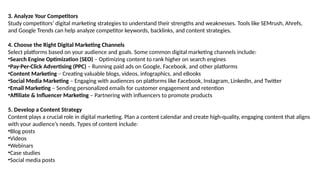
3. Analyze YourCompetitors
Study competitors’ digital marketing strategies to understand their strengths and weaknesses. Tools like SEMrush, Ahrefs,
and Google Trends can help analyze competitor keywords, backlinks, and content strategies.
4. Choose the Right Digital Marketing Channels
Select platforms based on your audience and goals. Some common digital marketing channels include:
•Search Engine Optimization (SEO) – Optimizing content to rank higher on search engines
•Pay-Per-Click Advertising (PPC) – Running paid ads on Google, Facebook, and other platforms
•Content Marketing – Creating valuable blogs, videos, infographics, and eBooks
•Social Media Marketing – Engaging with audiences on platforms like Facebook, Instagram, LinkedIn, and Twitter
•Email Marketing – Sending personalized emails for customer engagement and retention
•Affiliate & Influencer Marketing – Partnering with influencers to promote products
5. Develop a Content Strategy
Content plays a crucial role in digital marketing. Plan a content calendar and create high-quality, engaging content that aligns
with your audience’s needs. Types of content include:
•Blog posts
•Videos
•Webinars
•Case studies
•Social media posts
4.
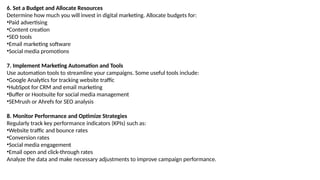
6. Set aBudget and Allocate Resources
Determine how much you will invest in digital marketing. Allocate budgets for:
•Paid advertising
•Content creation
•SEO tools
•Email marketing software
•Social media promotions
7. Implement Marketing Automation and Tools
Use automation tools to streamline your campaigns. Some useful tools include:
•Google Analytics for tracking website traffic
•HubSpot for CRM and email marketing
•Buffer or Hootsuite for social media management
•SEMrush or Ahrefs for SEO analysis
8. Monitor Performance and Optimize Strategies
Regularly track key performance indicators (KPIs) such as:
•Website traffic and bounce rates
•Conversion rates
•Social media engagement
•Email open and click-through rates
Analyze the data and make necessary adjustments to improve campaign performance.
5.
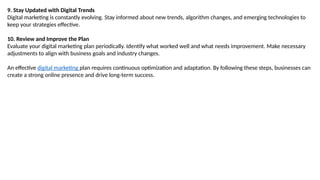
9. Stay Updatedwith Digital Trends
Digital marketing is constantly evolving. Stay informed about new trends, algorithm changes, and emerging technologies to
keep your strategies effective.
10. Review and Improve the Plan
Evaluate your digital marketing plan periodically. Identify what worked well and what needs improvement. Make necessary
adjustments to align with business goals and industry changes.
An effective digital marketing plan requires continuous optimization and adaptation. By following these steps, businesses can
create a strong online presence and drive long-term success.