
















Highlights from
Google I/O 2016 and
Performance Summit
June 2016
@sree_raman
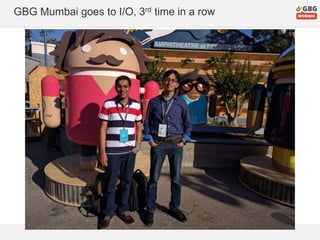
GBG Mumbai goes to I/O, 3rd time in a row
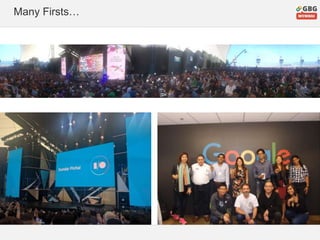
Many Firsts…
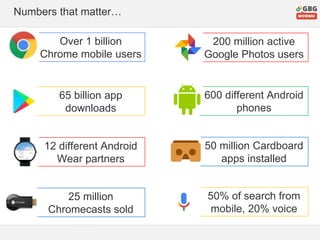
Numbers that matter…
Over 1 billion
Chrome mobile users
200 million active
Google Photos users
65 billion app
downloads
600 different Android
phones
12 different Android
Wear partners
50 million Cardboard
apps installed
25 million
Chromecasts sold
50% of search from
mobile, 20% voice
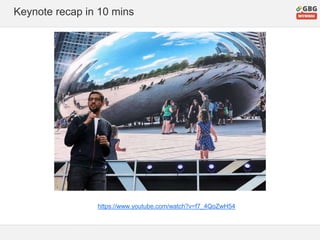
Keynote recap in 10 mins
https://www.youtube.com/watch?v=f7_4QoZwH54
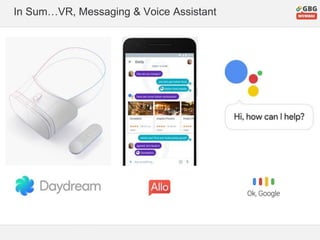
In Sum…VR, Messaging & Voice Assistant
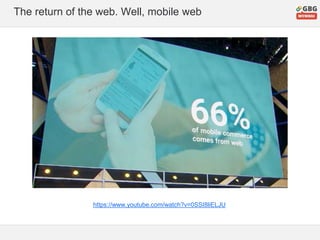
The return of the web. Well, mobile web
https://www.youtube.com/watch?v=0SSI8liELJU
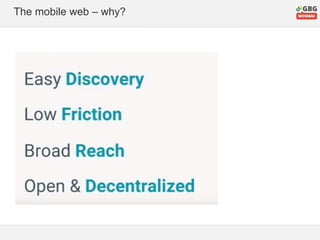
The mobile web – why?
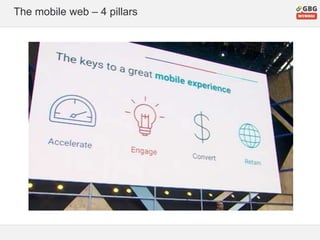
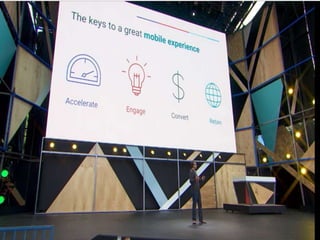
The mobile web – 4 pillars
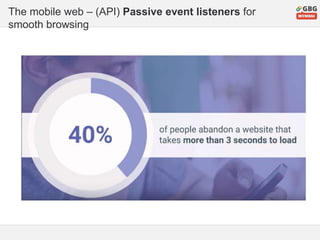
The mobile web – (API) Passive event listeners for
smooth browsing
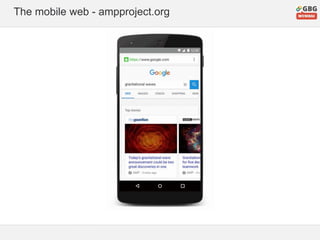
The mobile web - ampproject.org
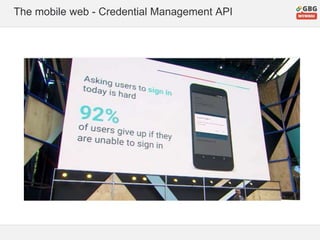
The mobile web - Credential Management API
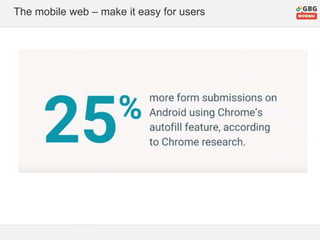
The mobile web – make it easy for users
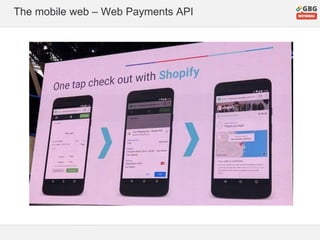
The mobile web – Web Payments API
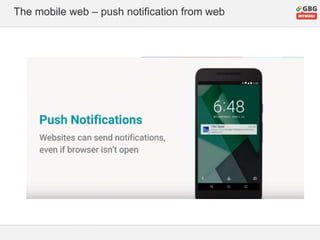
The mobile web – push notification from web
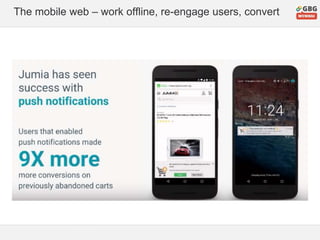
The mobile web – work offline, re-engage users, convert
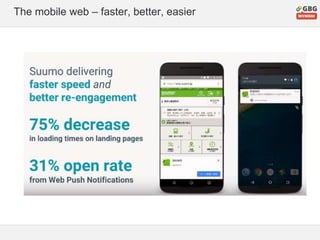
The mobile web – faster, better, easier
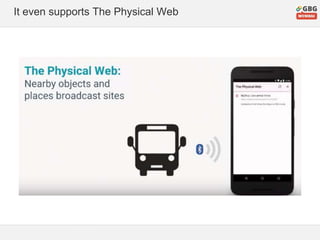
It even supports The Physical Web
Some more cools things
we saw
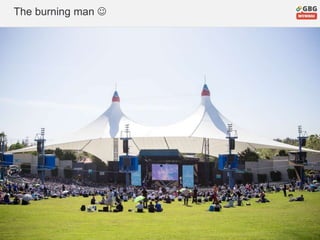
The burning man 
Self driving car
Project Loon
GMOJI
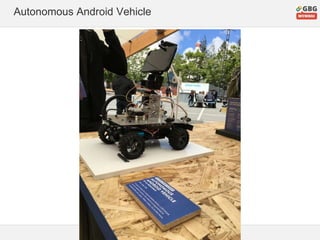
Autonomous Android Vehicle
Android Auto
There’s more at…
google.com/io
youtube.com/user/GoogleDevelopers
My views published on ET: bit.ly/ioarticle
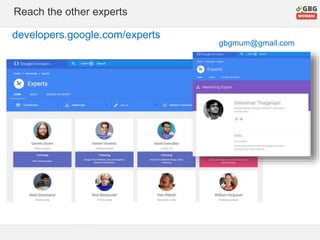
Reach the other experts
developers.google.com/experts
gbgmum@gmail.com
How will Search Change?
Manan Shah,
Digital Marketing Professional
@mananshah_15
“It’s is not just enough to give users links, we need to help them get
things done in the real world”
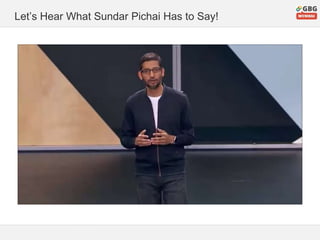
Let’s Hear What Sundar Pichai Has to Say!
Search 3.0 – Assistive Search
The evolution of search is to be more assistive. It started with Conversational
search – voice search to what we see if assistive search. Google’s expertise
in extracting information from content across the web and from partners plus
its machine learning smarts to understand what people are asking. How do
they do this? Voice recognition, machine translation, natural language
understanding as well as semantics coming together.
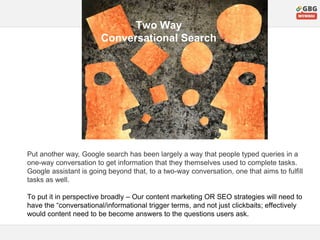
Two Way
Conversational Search
Put another way, Google search has been largely a way that people typed queries in a
one-way conversation to get information that they themselves used to complete tasks.
Google assistant is going beyond that, to a two-way conversation, one that aims to fulfill
tasks as well.
To put it in perspective broadly – Our content marketing OR SEO strategies will need to
have the “conversational/informational trigger terms, and not just clickbaits; effectively
would content need to be become answers to the questions users ask.
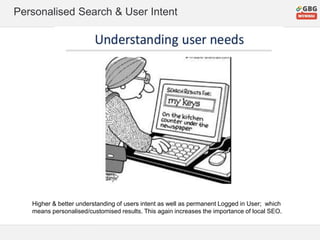
Personalised Search & User Intent
Higher & better understanding of users intent as well as permanent Logged in User; which
means personalised/customised results. This again increases the importance of local SEO.
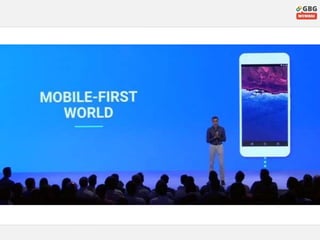
Mobile Responsive is Past!
It’s Mobile First World Now!
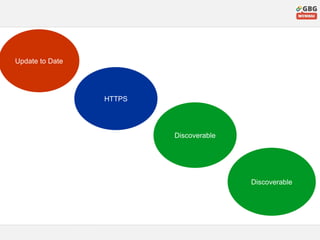
Progressive Web Apps (PWA)
“A mobile site that has the functionality of an app”
“They become apps progressively”
Features of PWAs
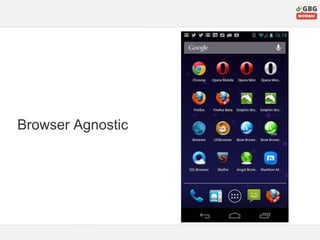
Browser Agnostic
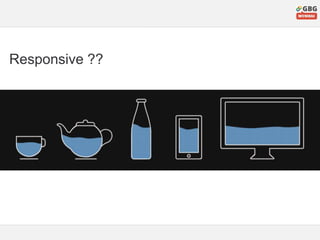
Responsive ??
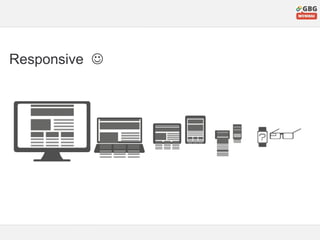
Responsive 
Update to Date
HTTPS
Discoverable
Discoverable
Google Performance Summit
https://www.youtube.com/watch?v=JW1LS94wLJw
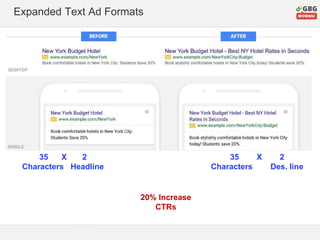
Expanded Text Ad Formats
35 X 2
Characters Headline
35 X 2
Characters Des. line
20% Increase
CTRs
Individual Bid Adjustment for Devices.
-100 to +900 % Bid Adjustments
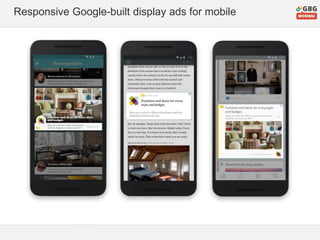
Responsive Google-built display ads for mobile
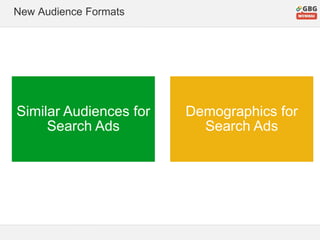
New Audience Formats
Similar Audiences for
Search Ads
Demographics for
Search Ads
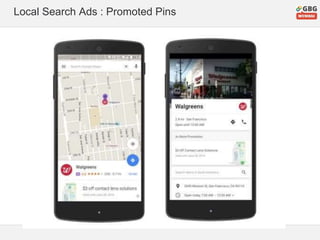
Local Search Ads : Promoted Pins
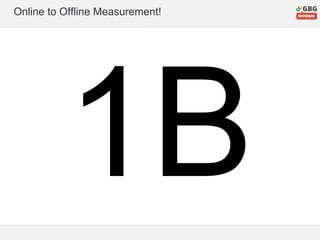
Online to Offline Measurement!
Few More things 
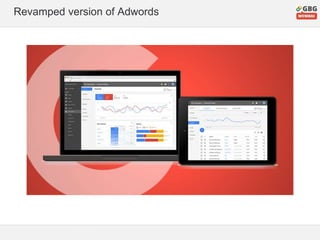
Revamped version of Adwords
Thank You!
Gbgmumbai.org
twitter.com/gbgmumbai

Highlights from Google IO 2016

Editor's Notes

  • #5 Chrome 4bn in 4 years. 24billion selfies
  • #17 10 billion push notifications everyday
  • #42 Work for every user on all browsers – Standalone or Inapp Browsers seemslessly
  • #43 Work for every user on all browsers – Standalone or Inapp Browsers seemslessly
  • #44 You web apps/ or say websites need to be like water; adaptable to any screens or form factors
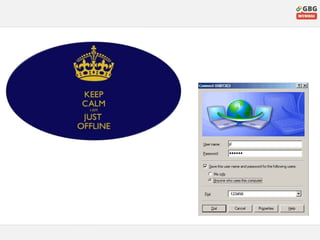
  • #45 Work offline or on low quality network connections
  • #53 Advertisers will be able to adjust bid multipliers from -100% to +900% for mobile, desktop as well as tablet, individually. Previously the bid adjustments could be done only for mobile, against desktop & tablet combined, within the range of -100% to +300%. Advertisers will now be able to set the base-level bid using the device of their choice, and have 3 separate device strategies instead of 2. This contributes to ‘mobile first’ strategy, as it will be possible to run proper mobile-only campaigns for the first time since introduction of Enhanced Campaigns, without having to artificially downweight desktop & tablet bid.
  • #54 Google announced responsive ads for display that automatically resize and adjust to the look and feel of the content to tap into publishers’ native ad inventory.  The ads are built dynamically by Google. Advertisers provide headlines, a description, an image and a URL The ads “unlock new native inventory” in apps and mobile websites in the GDN. Whereas those sites may have been relying on another network for native ad serving, Google is saying it can now fill that inventory demand, too. Google also announced that it is expanding the potential reach of GDN remarketing campaigns “by giving you access to cross-exchange inventory, which includes more websites and apps around the world.” while the network already claims to reach 90% of all internet users, Google is expanding the reach & inventory of the Google Display Network further, with the addition of 30 more networks.
  • #55 Over the years, Google has expanded remarketing and demographic capabilities to better target searchers first on the Display Network, and then more recently on the Search Network. Remarketing Lists for Search Ads (RLSAs) have been around for a few years, allowing advertisers to layer remarketing audiences on to their Search campaigns. A new feature called Similar Audiences for Search will give advertisers the capability to create new audiences based off existing ones. If this feature sounds familiar, it is. Advertisers are also allowed to create similar audiences on the Display Network.   The second format is called Demographics for Search Ads (DFSAs). Currently in beta, this feature lets advertisers set bid modifiers on the Search Network for both age and gender. For example, if your primary audience is 25 – 34-year-olds, it would make sense to bid higher for this age group. Here’s how that adjustment will look in the interface. Settings bids by age and gender allow that much more granularity in your account management. Furthermore, it better helps signify user search intent, showing users more personalized ads based upon demographics.
  • #56 Included in Google’s emphasis on mobile is the ability for searchers to easily find local businesses. Google states that nearly one-third of all mobile searches are related to location. In addition, the industry is abuzz about more searches using “near me” terminology. For those businesses using location extensions, ads have the potential to be more visible on Google.com and Google Maps. Google is also utilizing new ad formats, including promoted pins (not to be confused with Pinterest’s version) and special offers. The goal is to have businesses further stand out whether it is directly on the map or giving users extra incentive to come into the store.
  • #57 Google is improving the accuracy for footfall measurement by utilising Bluetooth Beacons. This is a big step for advertisers that want to connect their online and offline data strategy, as AdWords will be able to record data such as how long someone stays in a store, where they came from, and even their physical position within the store. Google has measured 1 billion+ store visits from AdWords ads globally