Dr. Rakesh Prasad Sah
Assistant Professor,
Microbiology
HERPESVIRUSES
Introduction + General Properties
• Large family of DNA viruses  ds in animals including
human beings.
• Latin word “herpin”  “to creep”  referring to  latent,
re-occuring infections
• possess a unique property of:
– Establishing latent or persistent/lytic infections in their
hosts
– Undergo periodic reactivation.
– immunocompromised
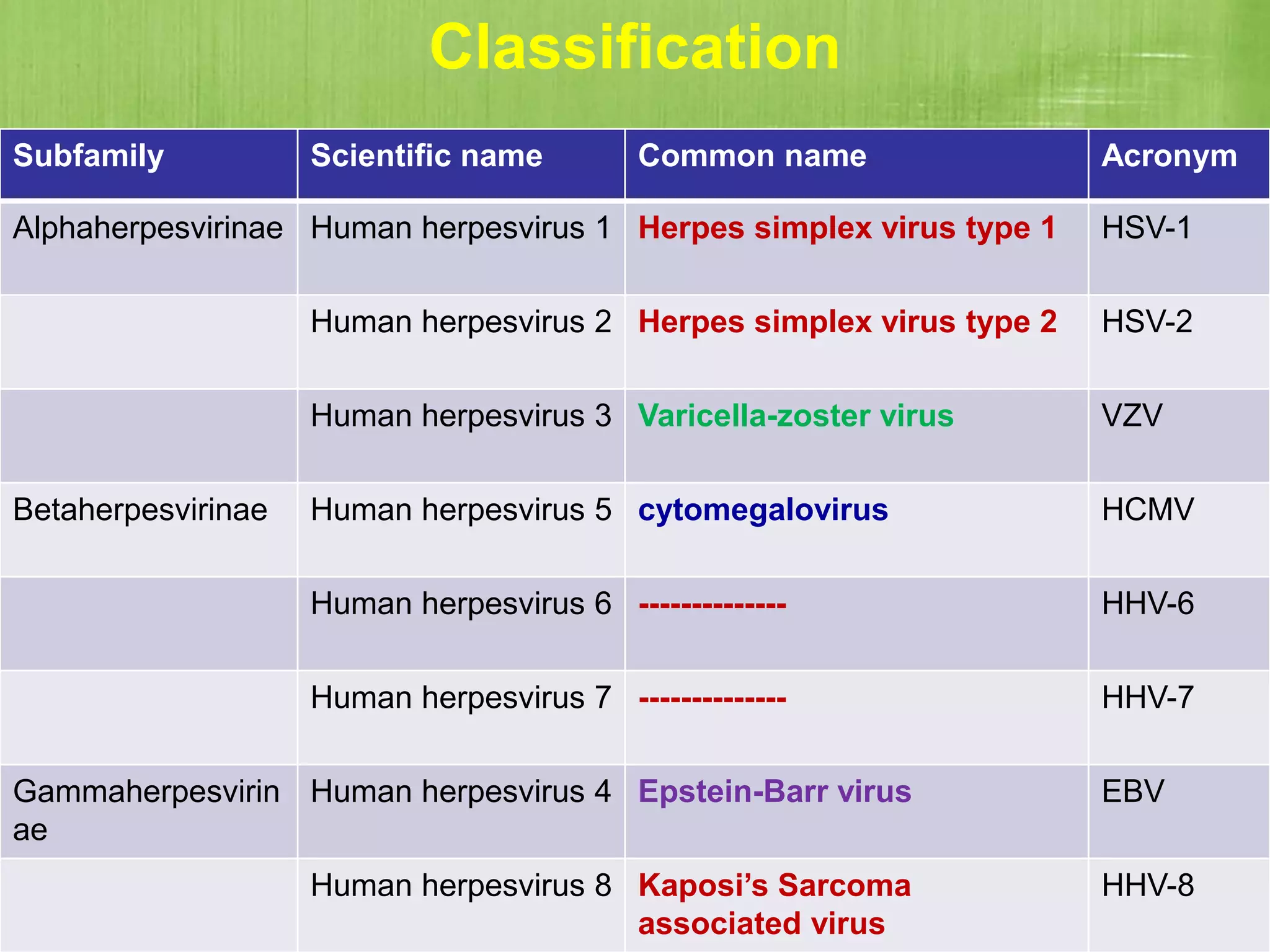
Classification
Subfamily Scientific name Common name Acronym
Alphaherpesvirinae Human herpesvirus 1 Herpes simplex virus type 1 HSV-1
Human herpesvirus 2 Herpes simplex virus type 2 HSV-2
Human herpesvirus 3 Varicella-zoster virus VZV
Betaherpesvirinae Human herpesvirus 5 cytomegalovirus HCMV
Human herpesvirus 6 -------------- HHV-6
Human herpesvirus 7 -------------- HHV-7
Gammaherpesvirin
ae
Human herpesvirus 4 Epstein-Barr virus EBV
Human herpesvirus 8 Kaposi’s Sarcoma
associated virus
HHV-8
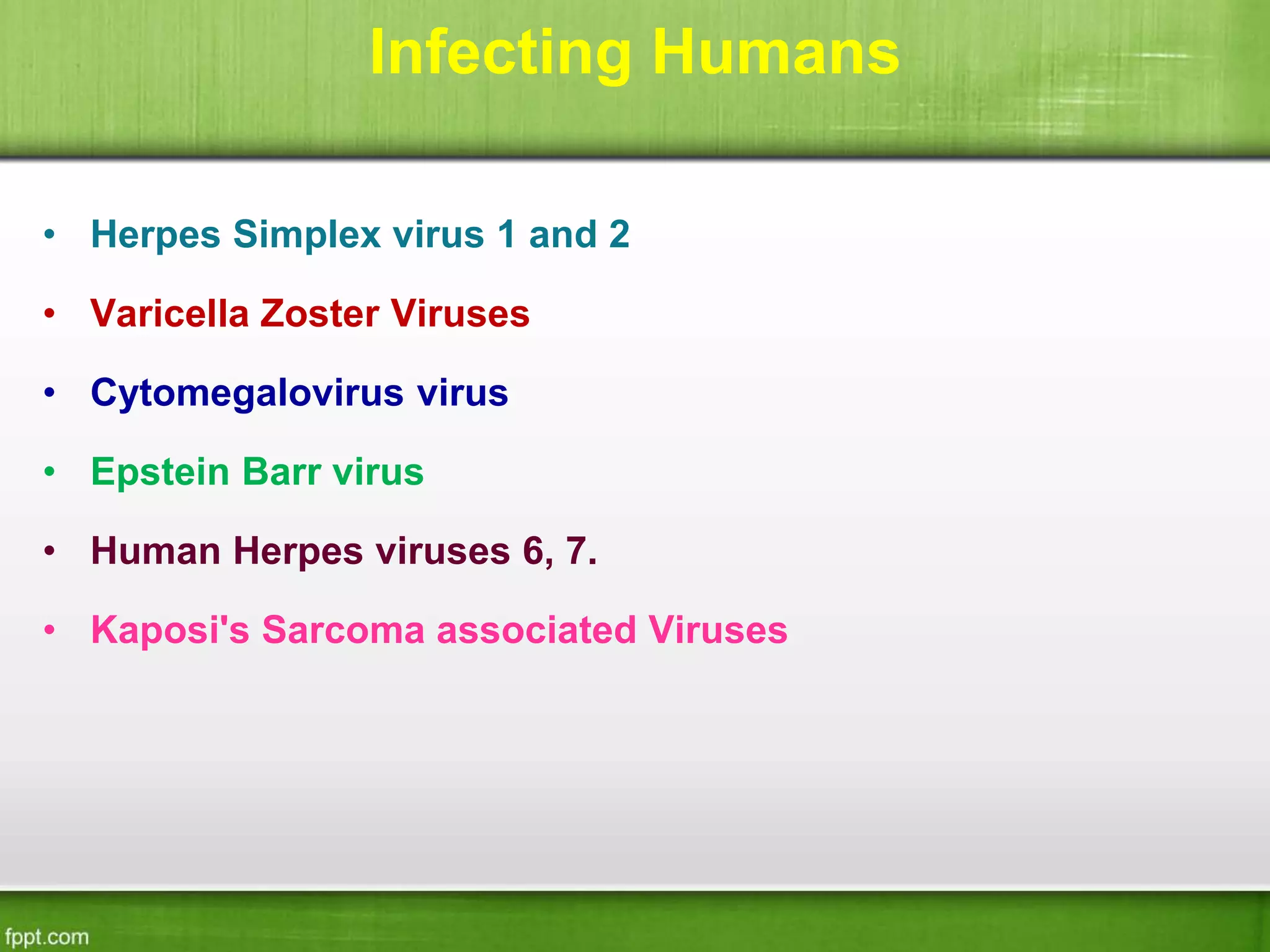
Infecting Humans
• Herpes Simplex virus 1 and 2
• Varicella Zoster Viruses
• Cytomegalovirus virus
• Epstein Barr virus
• Human Herpes viruses 6, 7.
• Kaposi's Sarcoma associated Viruses
Morphology
• 100-200nm in diameter, spherical
in shape  with icosahedral capsid
 composed of 162 capsomeres.
• Is double stranded DNA virus 
surrounded by lipid envelope 
containing glycoprotein
peplomers.
• Enveloped - lipoprotein in nature
• Lipid part is derived from the
nuclear membrane.
• Protein part- Virus coded
glycoprotein spikes, about 8 nm
long are inserted into the lipid part.
• Between capsid and envelope 
“Tegument”  multiply in nuclei of
infected cells  produce Cowdry
type A intranuclear inclusion
bodies..
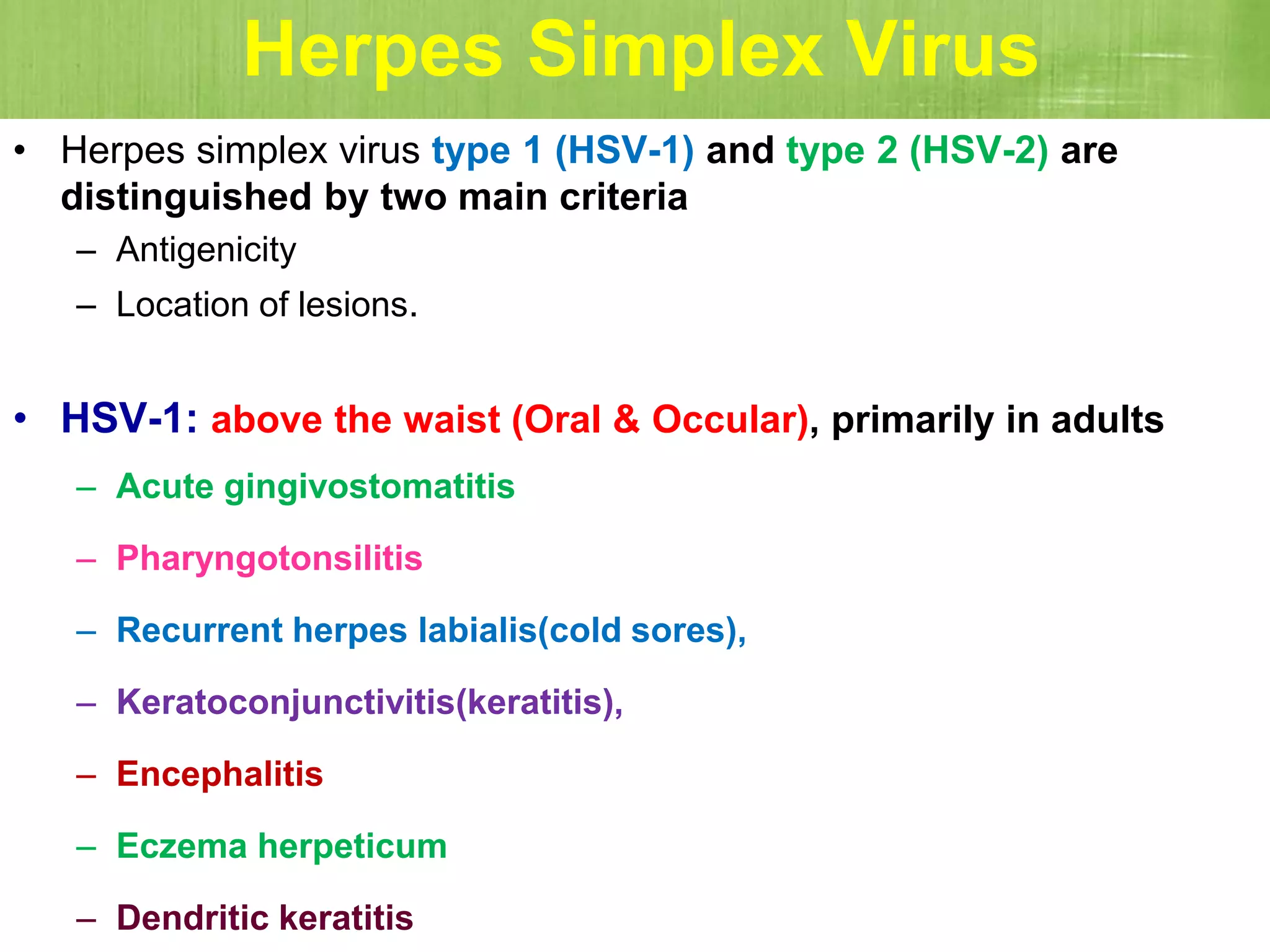
Herpes Simplex Virus
• Herpes simplex virus type 1 (HSV-1) and type 2 (HSV-2) are
distinguished by two main criteria
– Antigenicity
– Location of lesions.
• HSV-1: above the waist (Oral & Occular), primarily in adults
– Acute gingivostomatitis
– Pharyngotonsilitis
– Recurrent herpes labialis(cold sores),
– Keratoconjunctivitis(keratitis),
– Encephalitis
– Eczema herpeticum
– Dendritic keratitis
• HSV-2: below the waist (Genital infections)
– Genital Herpes (Penis, urthra, cervix, vulva, vagina)
– Neonatal herpes  vertical transmission from mother to newborn.
– Aseptic meningitis
• Humans are the natural hosts of both.
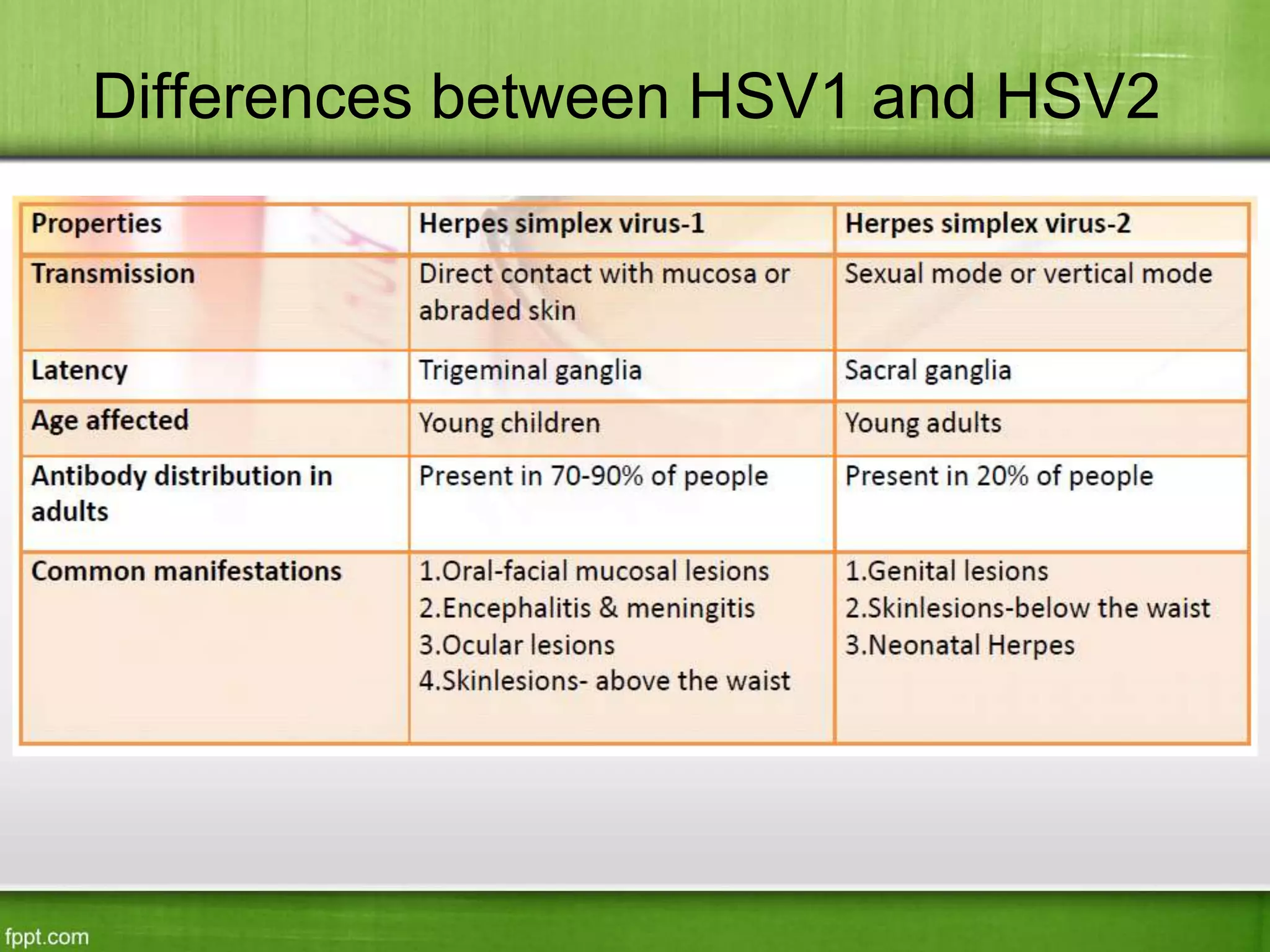
Differences between HSV1 and HSV2
Transmission
• Occurs  abraded skin or mucosa from any site but more
commonly by:
– HSV 1: transmitted primarily in saliva or direct skin contact.
– HSV 2: transmitted by sexual contact or rarely by vertical mode (from
mother to foetus)
• Oral (Kissing)–genital sexual activity (genito-oral sex):
HSV-1 infections of the genitals and HSV-2 lesions in the
oral cavity.
• HSV-2 infections has markedly increase comparatively.
Pathogenesis
Entry by skin or mucous
membrane
Multiplies locally
Vesicle formation
Virus spreds to draining
lymph nodes
lymphadenitis
Ulcerate  heal with
residual scarring
Settles within neuron of
ganglia; Trigeminal (HSV-1)
and sacral (HSV-2)
Travels to sensory root
ganglia
Herpesvirus DNA integrated
 into host cell genome.
Reactivation
• Cold
•Fever
•Pneumonia
•Surgery
•Stress
Latency
Pathogenesis
Entry by skin or mucous
membrane
Multiplies locally
Vesicle formation
Virus spreds to draining
lymph nodes
lymphadenitis
Ulcerate  heal with
residual scarring
Settles within neuron of
ganglia; Trigeminal (HSV-1)
and sacral (HSV-2)
Travels to sensory root
ganglia
Herpesvirus DNA integrated
 into host cell genome.
Reactivation
• Cold
•Fever
•Pneumonia
•Surgery
•Stress
Latency
Clinical features
• Cutaneous infection
• Mucosal
• Opthalmic
• Nervous system
• Visceral
• Genital
• Neonatal
• Infections in immunocompromised
Cutaneous infection
• Infects through abraded skin and causes
various cutaneous lesions
– Face
– Buttocks: In infants as napkin rash
• Febrile blisters (herpes febrilis)
– Fever due to other cause  provocate HSV to cause
recurrent blisters.
• Herpetic whitlow : Lesions +nt on fingers of
Doctors , Dentists & Nurses
• Herpes gladiatorum : lesions +nt on body of
Wrestlers /rugby
• Eczema herpeticum:
• Caused by HSV-1 in patients with chronic eczema
Mucosal lesions
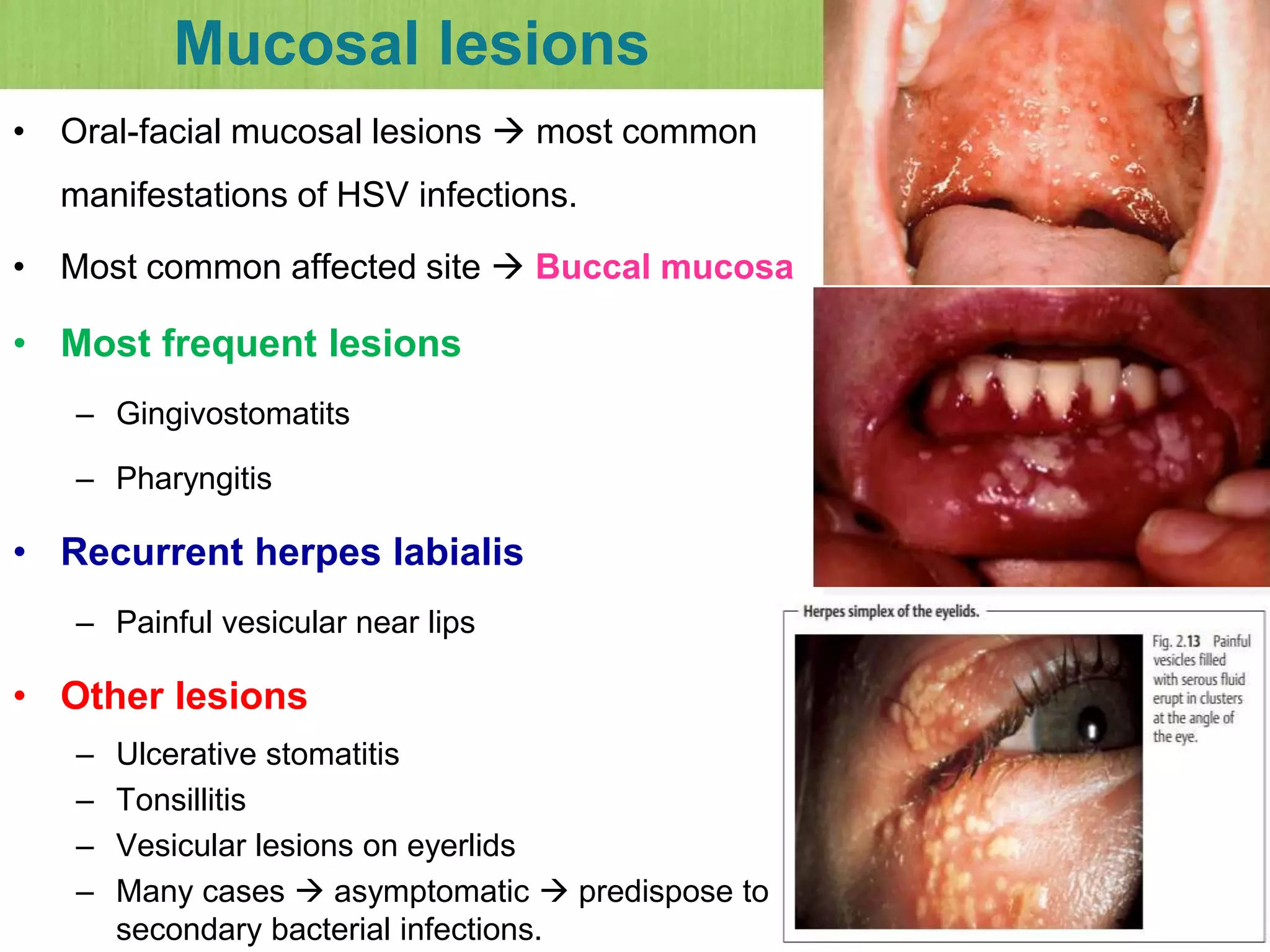
• Oral-facial mucosal lesions  most common
manifestations of HSV infections.
• Most common affected site  Buccal mucosa
• Most frequent lesions
– Gingivostomatits
– Pharyngitis
• Recurrent herpes labialis
– Painful vesicular near lips
• Other lesions
– Ulcerative stomatitis
– Tonsillitis
– Vesicular lesions on eyerlids
– Many cases  asymptomatic  predispose to
secondary bacterial infections.
Other infective Syndromes of HSV
• Opthalmic lesions
• CNS lesions
• Visceral
• Genital
• Congenital
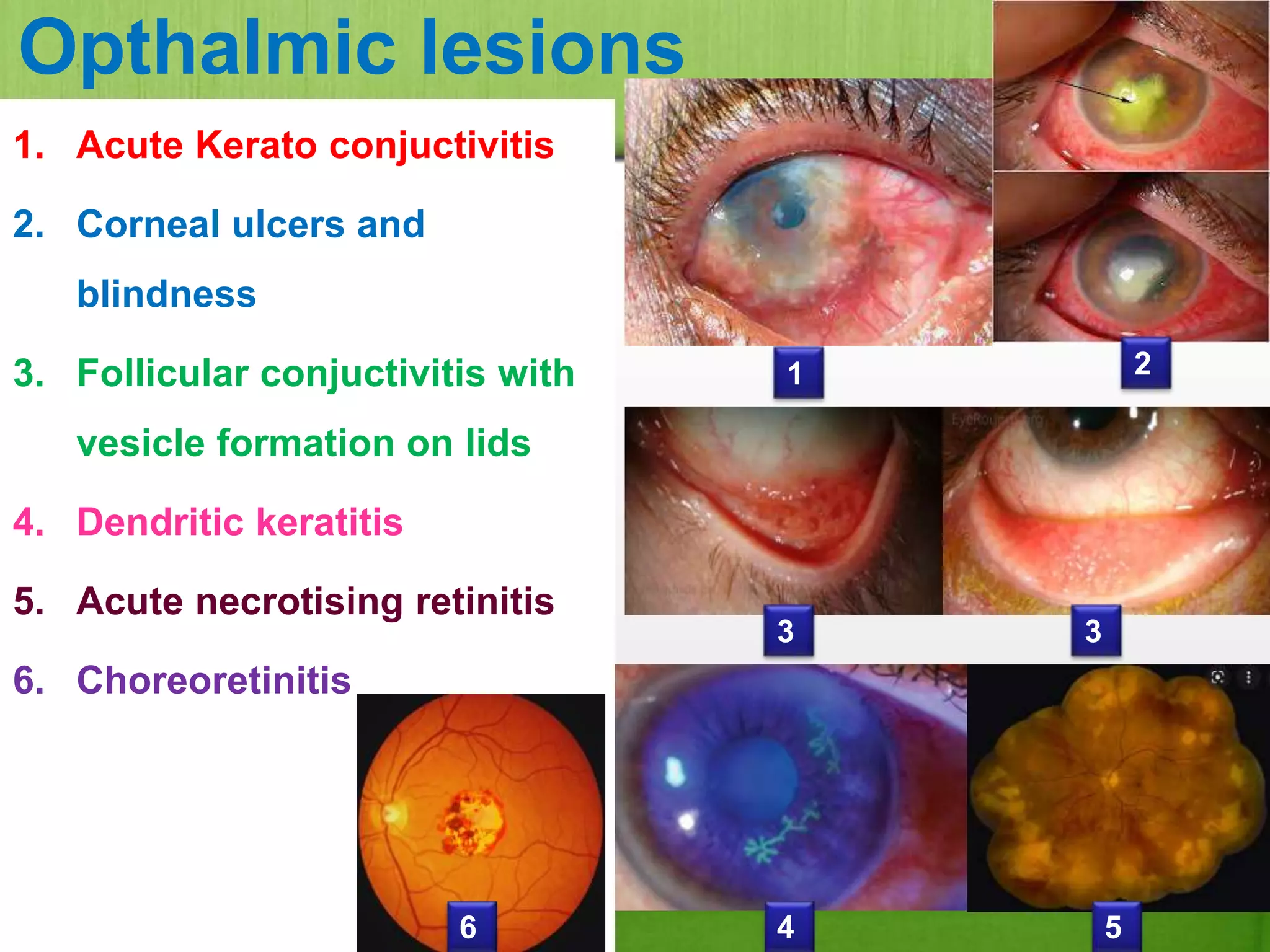
Opthalmic lesions
1. Acute Kerato conjuctivitis
2. Corneal ulcers and
blindness
3. Follicular conjuctivitis with
vesicle formation on lids
4. Dendritic keratitis
5. Acute necrotising retinitis
6. Choreoretinitis
5
4
3
3
2
1
6
Nervous system
• HSV encephalitis [rare]
• HSV meningitis
• Transverse myelitis [rare]
• Sacral autonomic dysfunction
• Guillian Barre syndrome [rare]
• Bell’s palsy [rare]
Visceral
• HSV esophagitis
• Tracheobronchitis & Pneumonitis
• Hepatitis [uncommon]
• Disseminated HSV infection
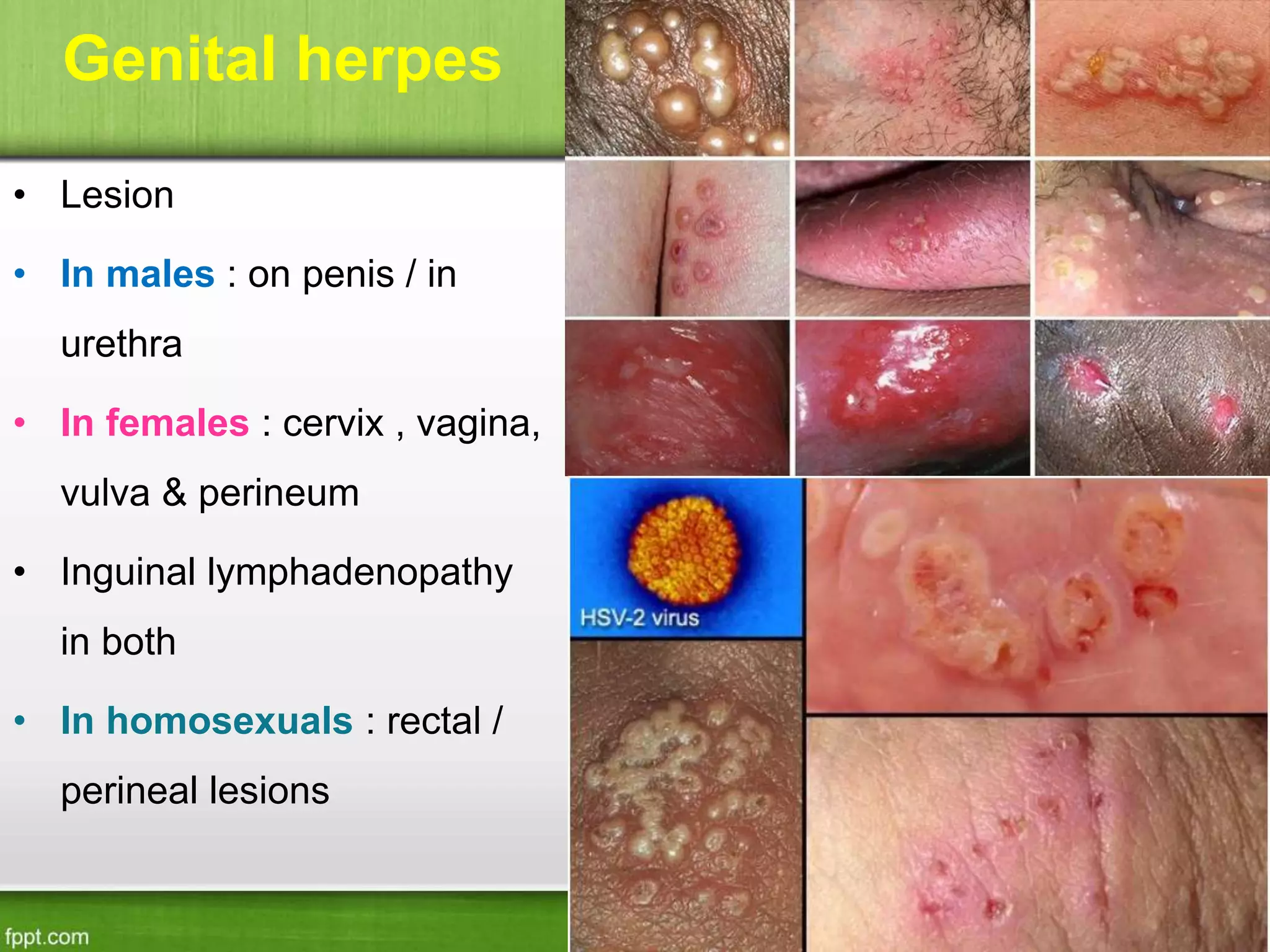
Genital herpes
• Lesion
• In males : on penis / in
urethra
• In females : cervix , vagina,
vulva & perineum
• Inguinal lymphadenopathy
in both
• In homosexuals : rectal /
perineal lesions
Congenital/Neonatal Herpes
• Neonatal herpes : rare
• Lesions confined to eyes , mouth &
skin / Disseminated disease
• Clinical features- Babies are almost
always symptomatic and presenting
•One of the three forms Local lesions involving skin, eye and mouth
•Encephalitis
•Disseminated disease involving multiple organs,including the CNS-Neonate has
the highest frequency of visceral infections.
LAB DIAGNOSIS
• Microscopy
• Ag / DNA detection
• Virus isolation
• Serology
Specimens
• Vesicle Fluid
• Skin Swab
• Saliva
• Corneal Scrapings
• Brain Biopsy
• CSF
Microscopy
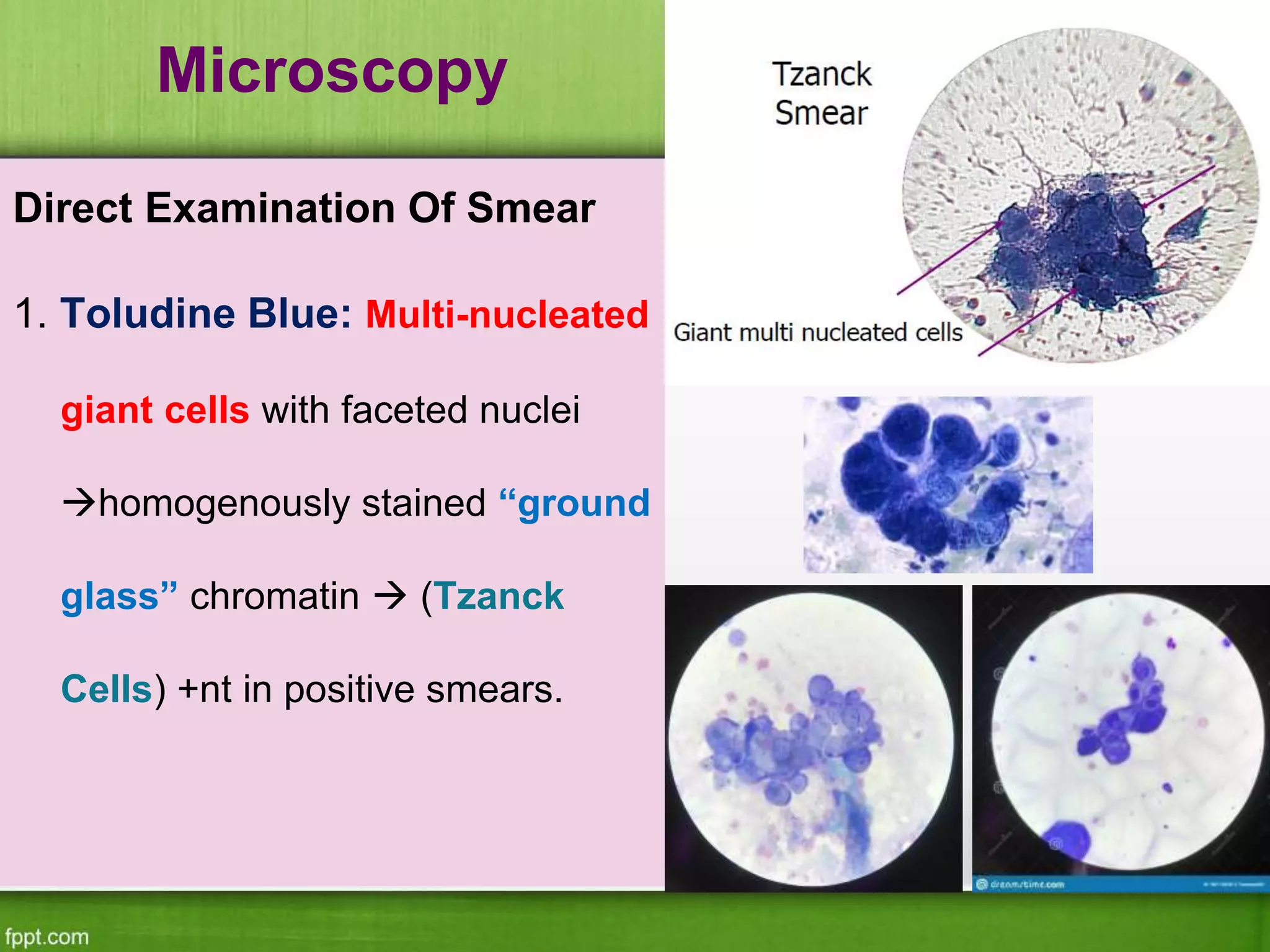
Direct Examination Of Smear
1. Toludine Blue: Multi-nucleated
giant cells with faceted nuclei
homogenously stained “ground
glass” chromatin  (Tzanck
Cells) +nt in positive smears.
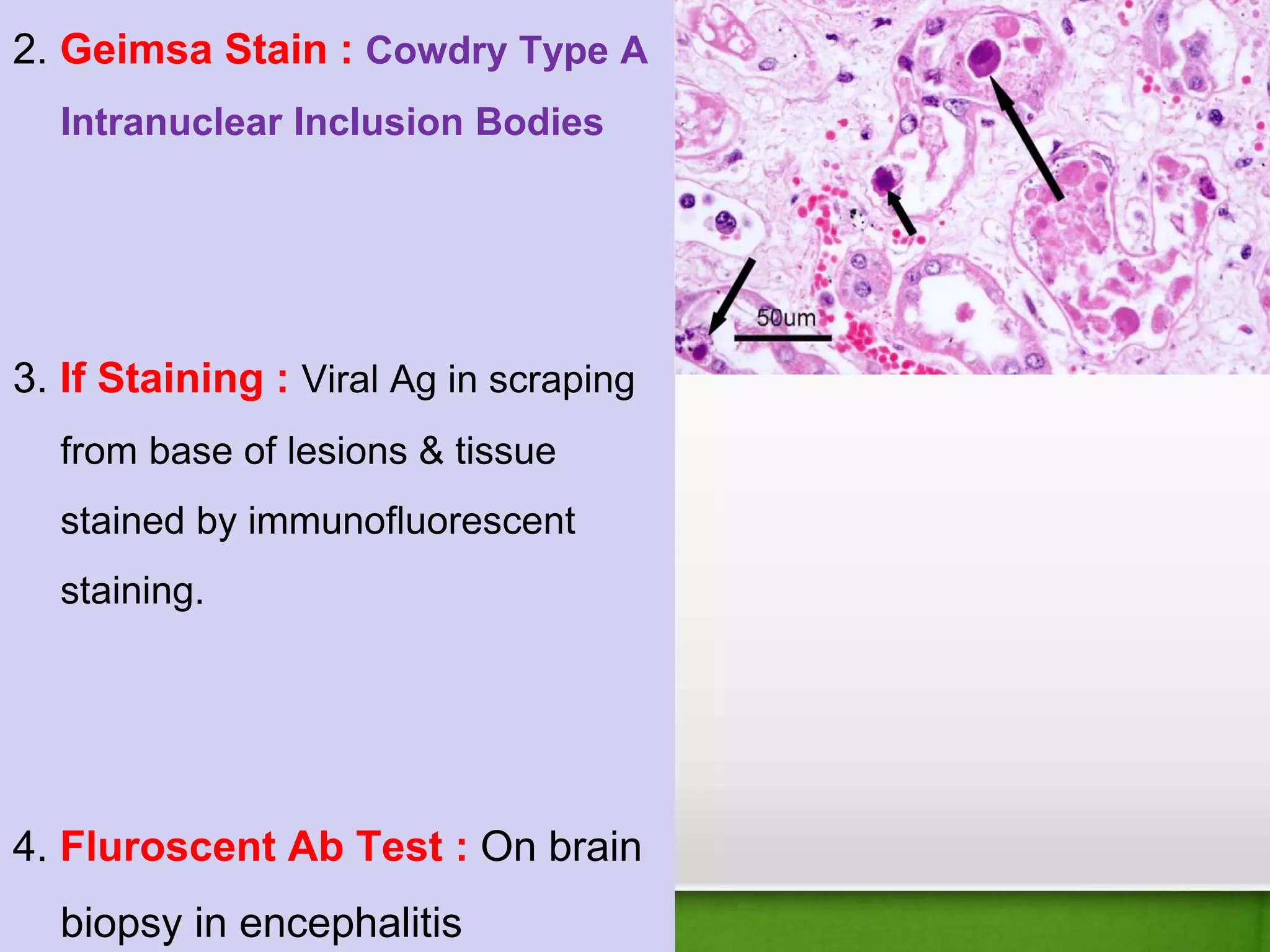
2. Geimsa Stain : Cowdry Type A
Intranuclear Inclusion Bodies
3. If Staining : Viral Ag in scraping
from base of lesions & tissue
stained by immunofluorescent
staining.
4. Fluroscent Ab Test : On brain
biopsy in encephalitis
Virus isolation
• Tissue culture: human diploid fibroblasts, Hep-2 cells, Vero cells
and Chorioallantoic membrane.
• CPE : Swollen, rounded cells (1-5 days) observed for 2 wks
• Some HSV 2 strains – syncytium formation (fusion of infected cells)
• Confirmed by IF staining of infected cell culture or by neutralization
test.
Serology
• Useful in primary infection
• IgM Ab
• Rise in titre
• CFT, Neutralization , IF, ELISA , RIA
• Other PCR – HSV DNA in CSF
Chemotherapy
• Idoxuridine used topically in eye and skin
• infections – first successful antiviral
• agent.
• • Acyclovir : treatment of choice
• –shortens the duration of the lesions
• –reduces the extent of shedding of the virus
• • Other Drugs – Valaciclovir, Famiciclovir,
• • Orally effective
• Valacyclovirand famciclovir: genital herpes and in the
suppression of recurrences.
• • Foscarnet.
Prevention
• Avoiding contact with the vesicular lesion
or ulcer.
• Abstain from oral sex.
• Use condom to prevent genital herpes.
• Cesarean section is recommended for
women who are at term and who have genital
lesions or positive viral cultures.
• Can be treated with antiviral drugs.
• Can be prevented by immunization.
Varicella Zoster Virus (VZV)
• VZV produces vesicular eruptions (rashes) on skin and mucous membranes
in the form of 
– Varicella (Chicken Pox)  primary infection of non-immune person
– Herpes Zoster (Shingles)  reactivation of virus  +nt in the latent stage
• Virus is reactivated when the fall in immunity levels is unable to contain it
• Culture – human fibroblast , human amnion , HeLa cells
• CPE: Similar to HSV but slow & less marked
Contact with
either
Zoster
Chicken Pox
Chicken Pox
not
Zoster
or
• Chickenpox causes morbidity and mortality which is more in:
– Adolescents
– Adults
– Immunocompromised
• Can be treated with antiviral drugs.
• Can be prevented by immunization.
Varicella (chicken pox)
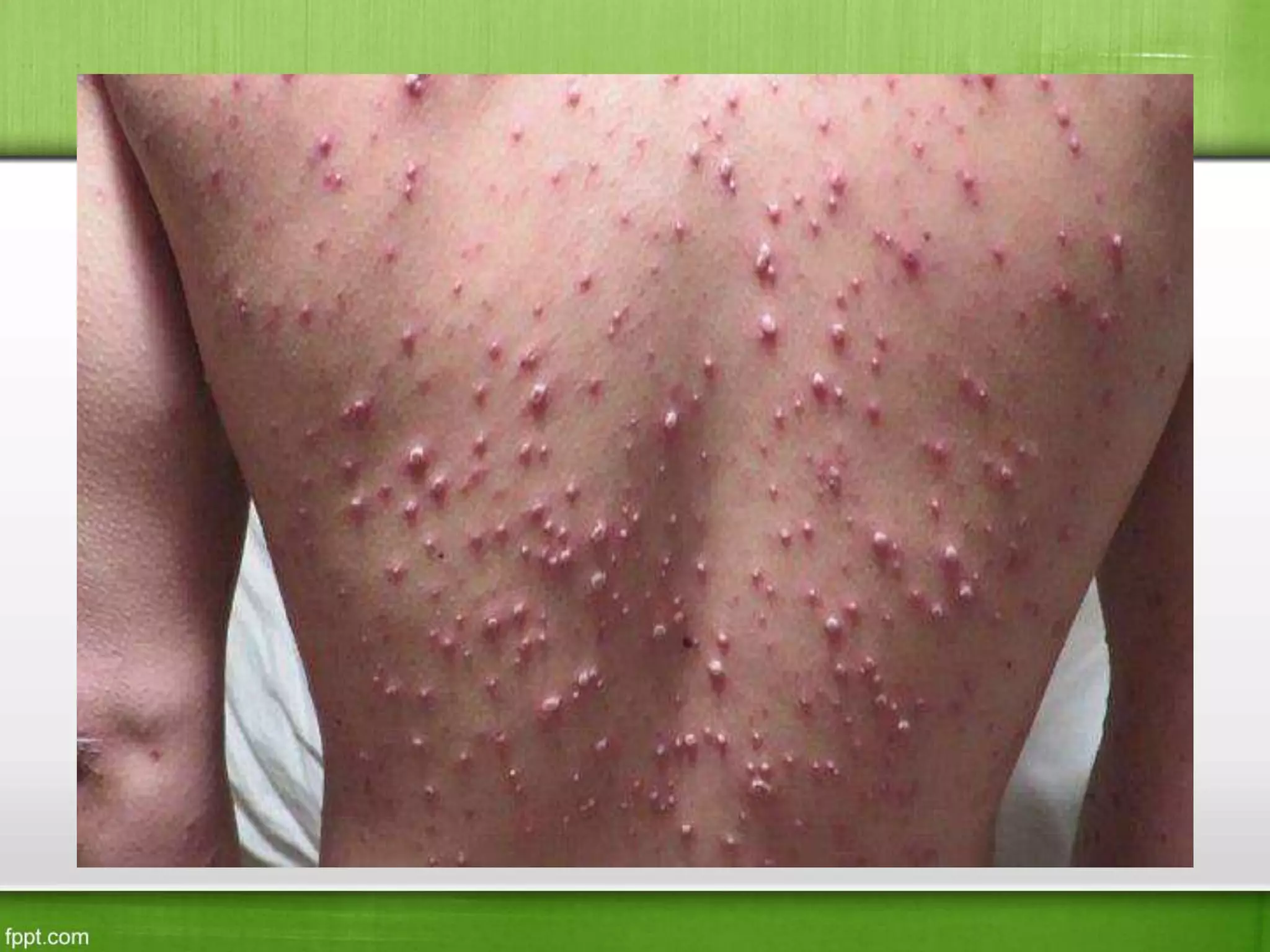
• Characterized by  generalized diffuse bilateral vesicular rashes
 following primary infection  usually affecting children
• Highly infectious disease characterized by vesicular rash  mostly
on trunk.
• Can occur at any age
• Infections occurring in childhood are milder
• Commonest childhood exanthemata
• Infections occurring in adulthood are more serious
• The source is a chicken pox or herpes zoster patient
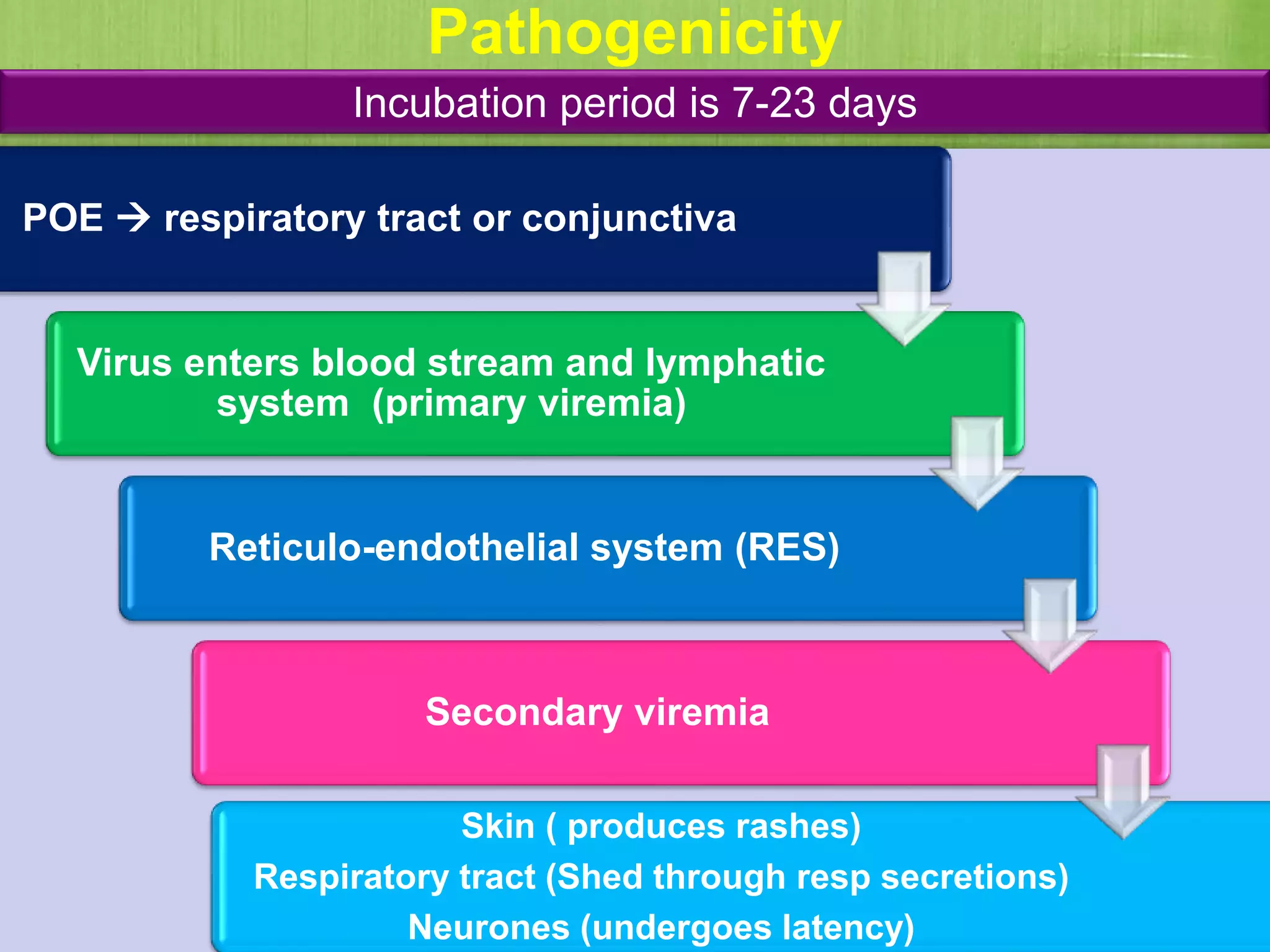
Pathogenicity
POE  respiratory tract or conjunctiva
Virus enters blood stream and lymphatic
system (primary viremia)
Reticulo-endothelial system (RES)
Secondary viremia
Skin ( produces rashes)
Respiratory tract (Shed through resp secretions)
Neurones (undergoes latency)
Incubation period is 7-23 days
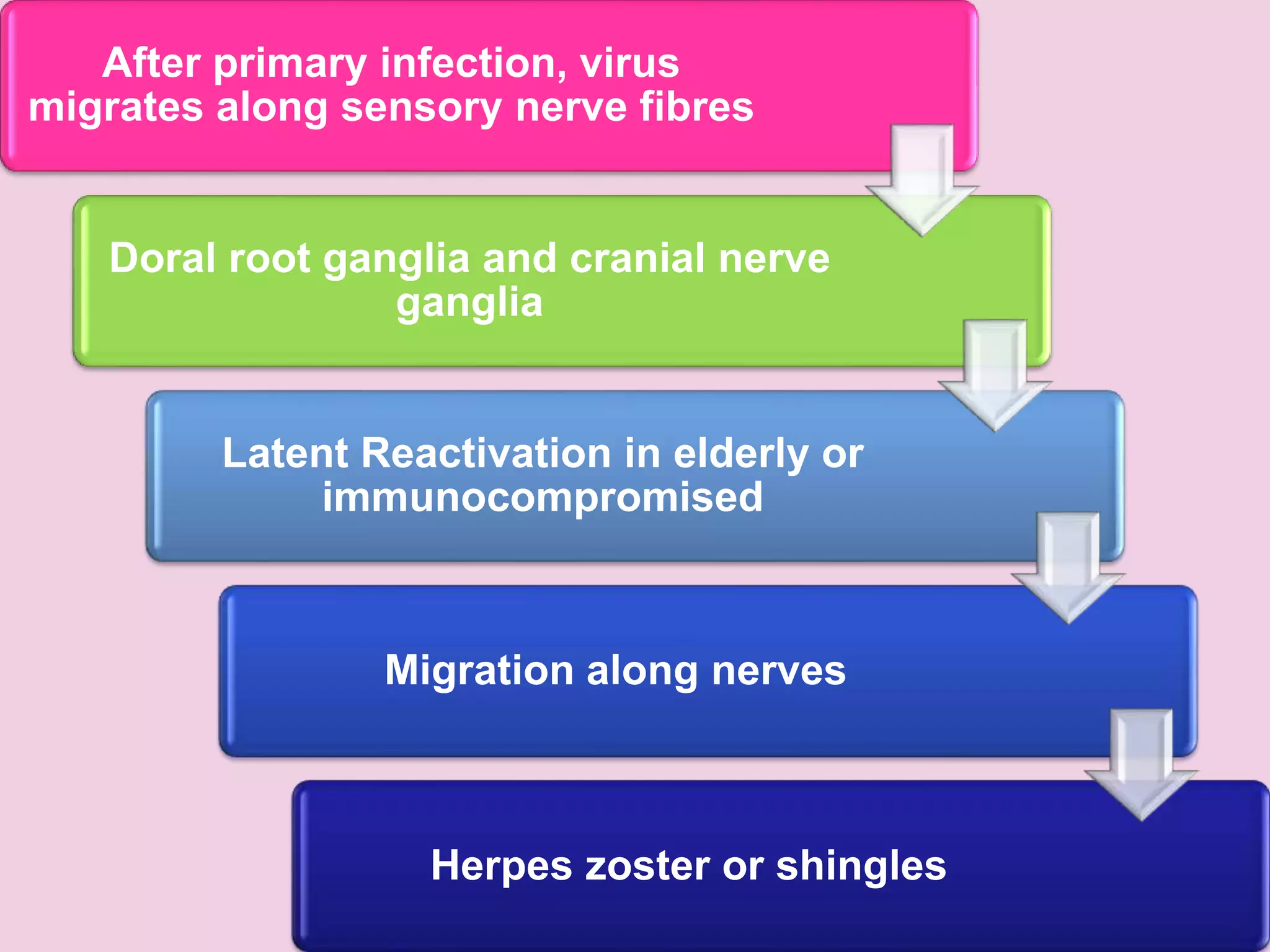
After primary infection, virus
migrates along sensory nerve fibres
Doral root ganglia and cranial nerve
ganglia
Latent Reactivation in elderly or
immunocompromised
Migration along nerves
Herpes zoster or shingles
Clinical Manifestations of Chickenpox
Rashes
• Initially, buccal lesions may appear, which may go unnoticed
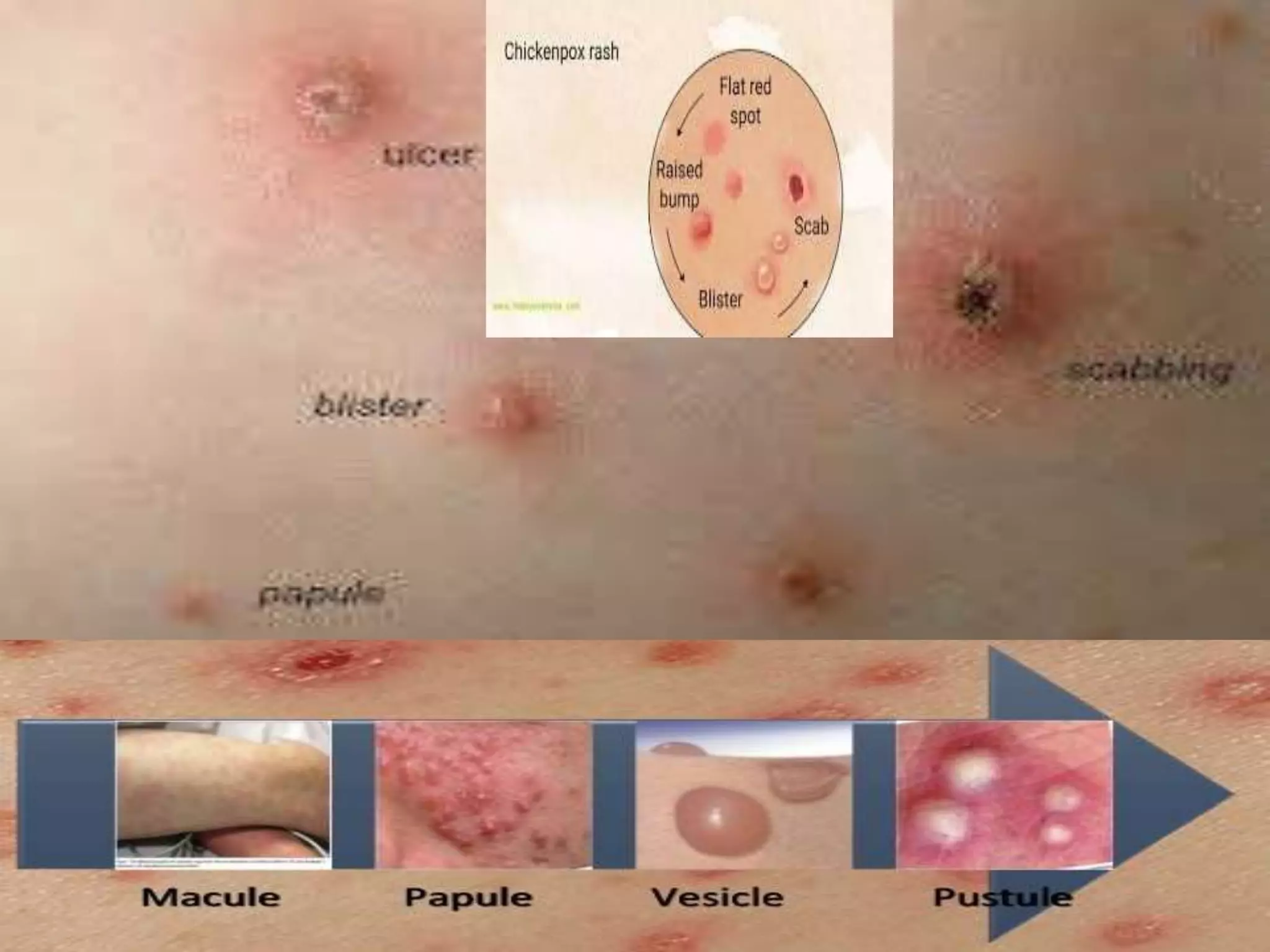
• The rash in varicella evolutes rapidly (over 48 hours) through the
stages of maculepapulevesiclepustulescab
• The rash appears in crops  therefore, lesions of varying age can
be seen in the same patient
• The rash first appears on trunk, and spreads centrifugally
• Fever appears with each crop of rashes.
Infectivity
• Infectivity is maximum is early stages of disease, when the virus is
present in large numbers in the upper respiratory tract.
• The buccal lesions and vesicular fluid is rich in virus, and is infectious
• The person is considered to be infectious during two days before the
onset and till five days after the onset of lesions.
• Scabs have very low infectivity
Varicella (Chickenpox) in adults
• It causes a more serious illness in adults
• The rash is more severe
• The rash may become hemorrhagic,
and bullous lesions can appear
• Lesions can become secondarily infected
• Fatal pneumonia can develop
• Other systemic manifestations like
myocarditis, nephritis, meningitis and
encephalitis can occur
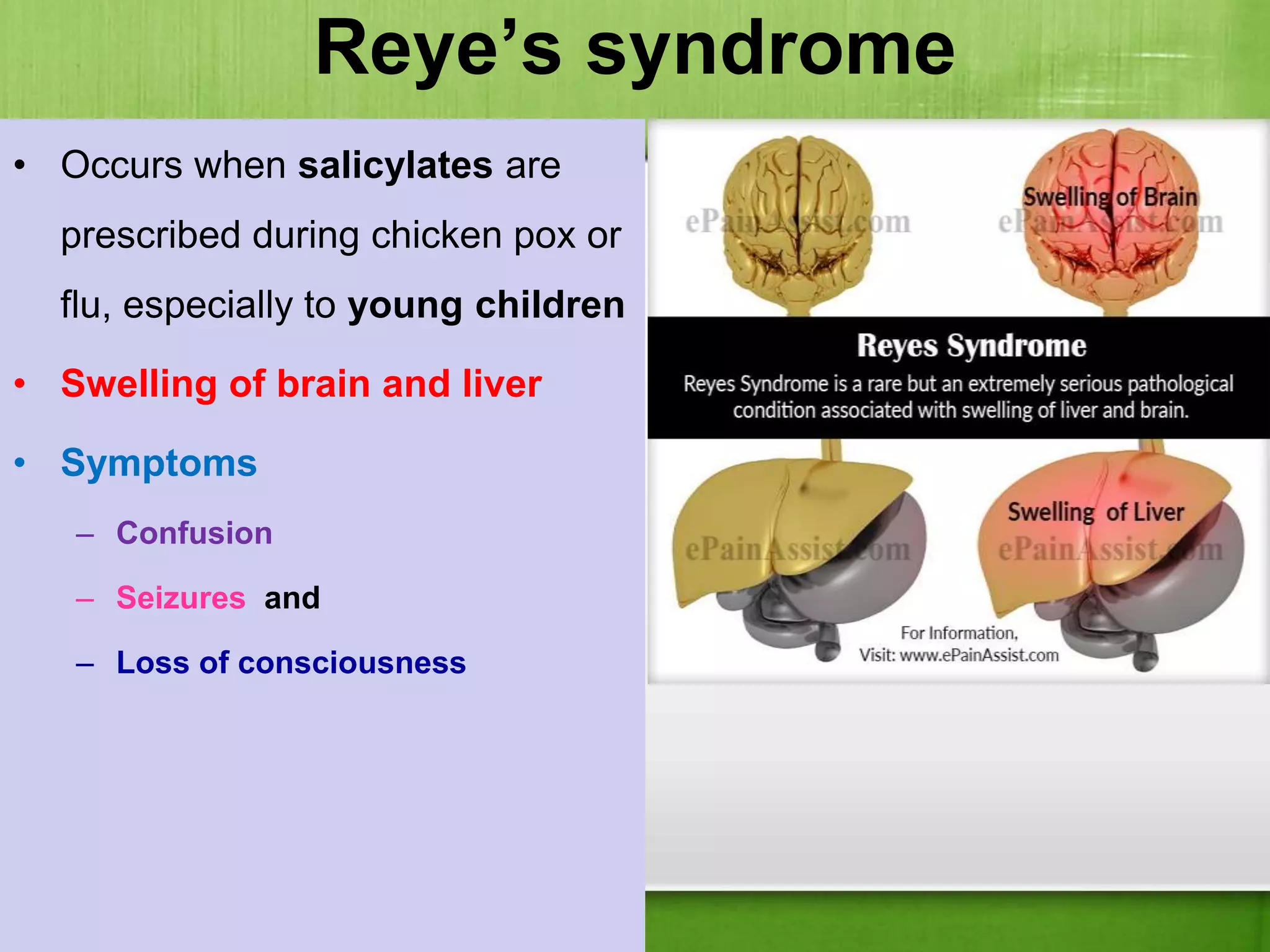
Reye’s syndrome
• Occurs when salicylates are
prescribed during chicken pox or
flu, especially to young children
• Swelling of brain and liver
• Symptoms
– Confusion
– Seizures and
– Loss of consciousness
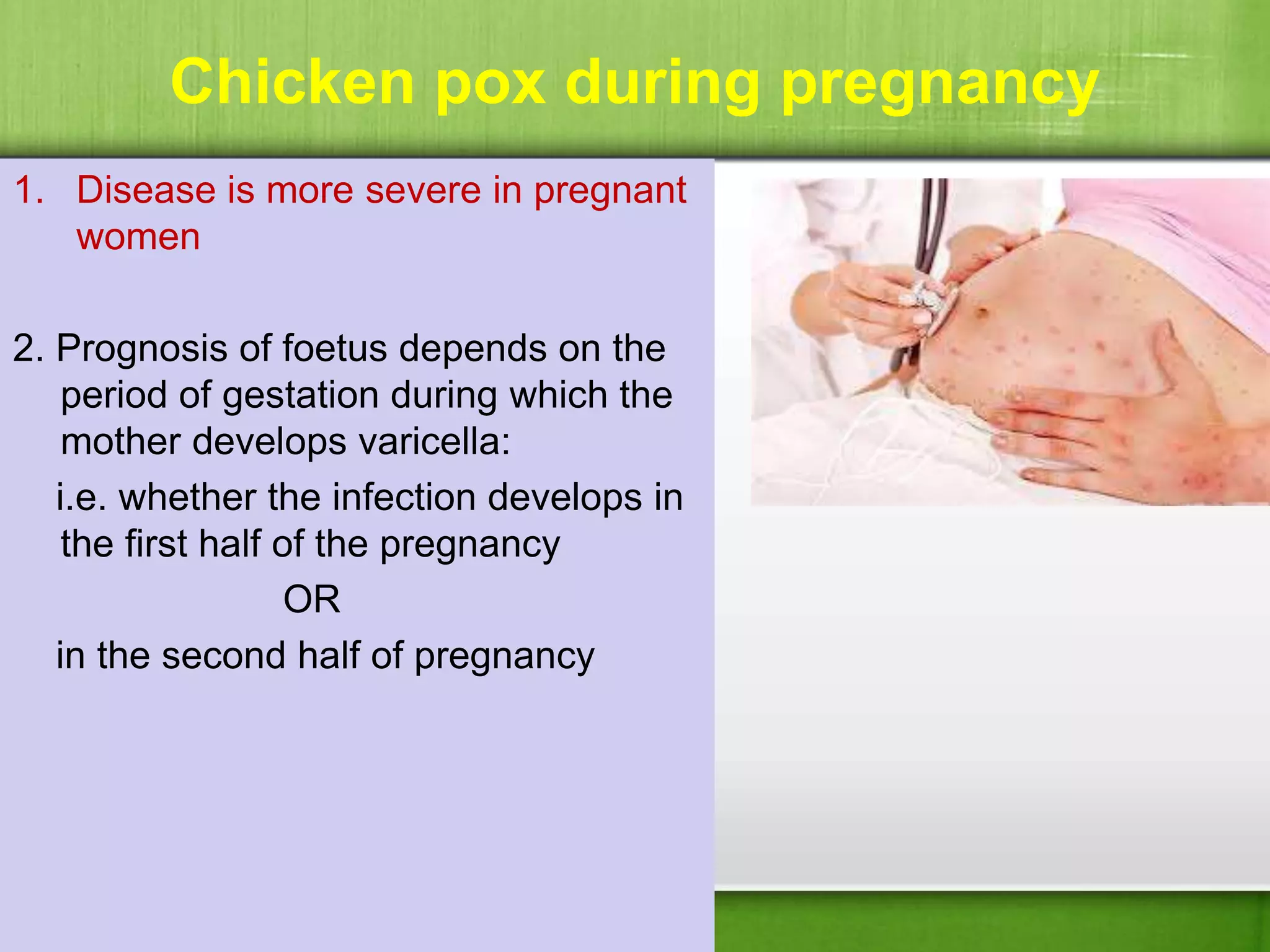
Chicken pox during pregnancy
1. Disease is more severe in pregnant
women
2. Prognosis of foetus depends on the
period of gestation during which the
mother develops varicella:
i.e. whether the infection develops in
the first half of the pregnancy
OR
in the second half of pregnancy
Maternal varicella in first half of pregnancy
• Foetal infection is usually
asymptomatic
• Some develop foetal varicella
syndrome, which manifests as:
– Cicatrising skin lesions (heal by
scar formation)
– Hypoplasia of limbs
– Chorioretinitis
– CNS lesions
• Some carry latent varicella
infection
Chorioretinitis
Hypoplasia of limbs
Maternal varicella in second half of pregnancy
• If mother’s rash began more than week before delivery
mother develops antibodies, which usually pass on to the
foetus foetus usually escapes infection.
• If mother’s rash began within a week before delivery  only the
virus passes transplacentally and not the antibodies neonatal
varicella develops in the newborn
Maternal varicella in second half of pregnancy
Mother
Antibodies
Passes to Foetus
Within week of
delivery
Viruses passes
transplacentally
not Abs
Began >1 week
before delivery
Escape from
infection
Neonatal
Varicella
Varicella rashes
in Pregnant
mother
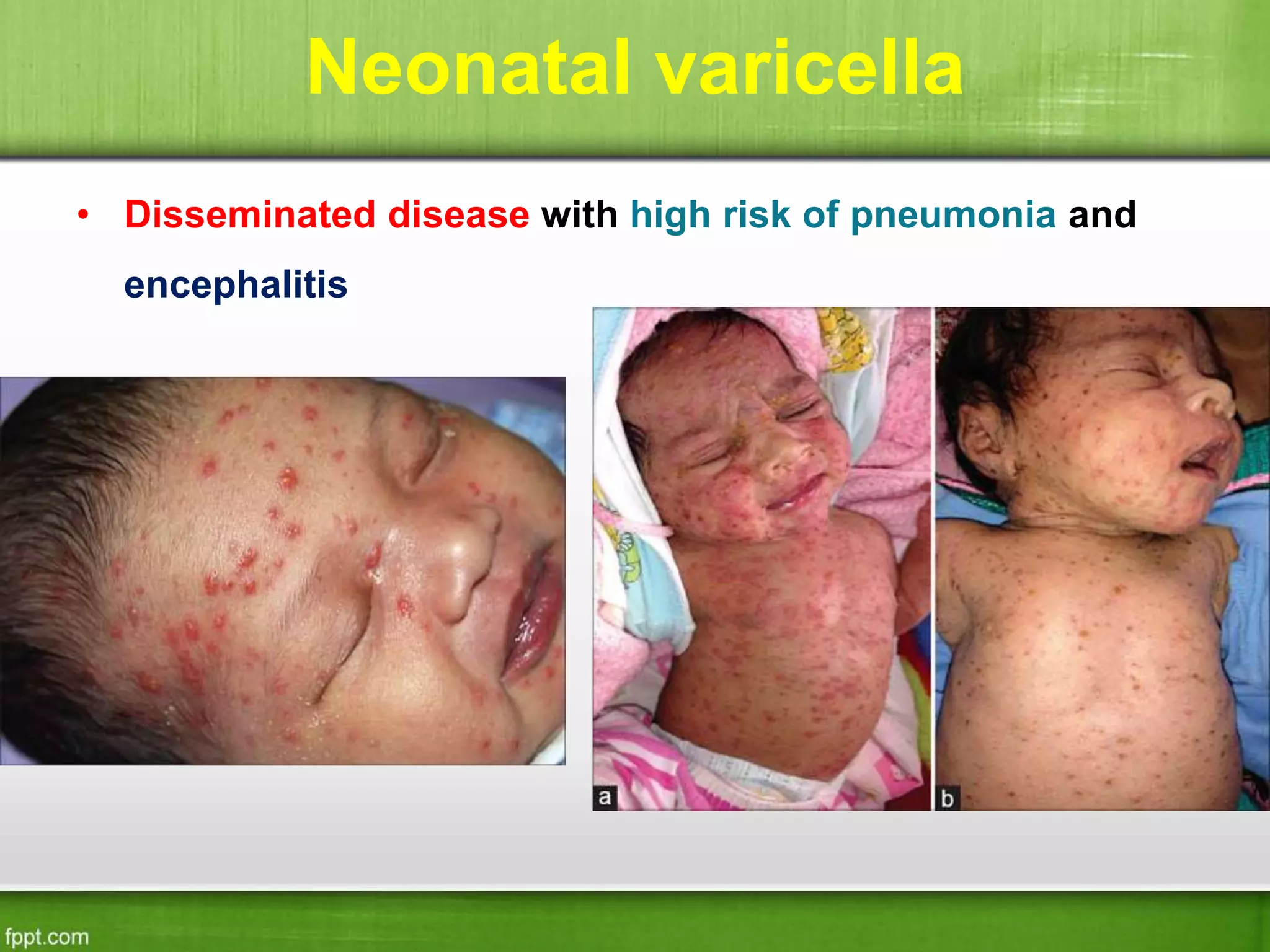
Neonatal varicella
• Disseminated disease with high risk of pneumonia and
encephalitis
Herpes zoster (shingles)
Herpein = Creep
Zoster = girdle
• Chickenpox is  ds of childhood
• Zooster  ds of old age >60yrs (occurs in people  had
chickenpox several years earlier).
• Virus remain latent in the sensory ganglia.
• Virus usually held in check by the residual immunity.
• Reactivation by some precipitating stimulus.
• Reactivation is associated with inflammation of the nerve
 neuritic pain  very severe.
Pathogenesis
Typically a disease of late
adulthood
Due to reactivation of latent VZV in
the ganglia
VZV replicates & migrates along
sensory nerve
rash on the dermatome supplied
by that nerve
Pain due to inflammation of the
nerve
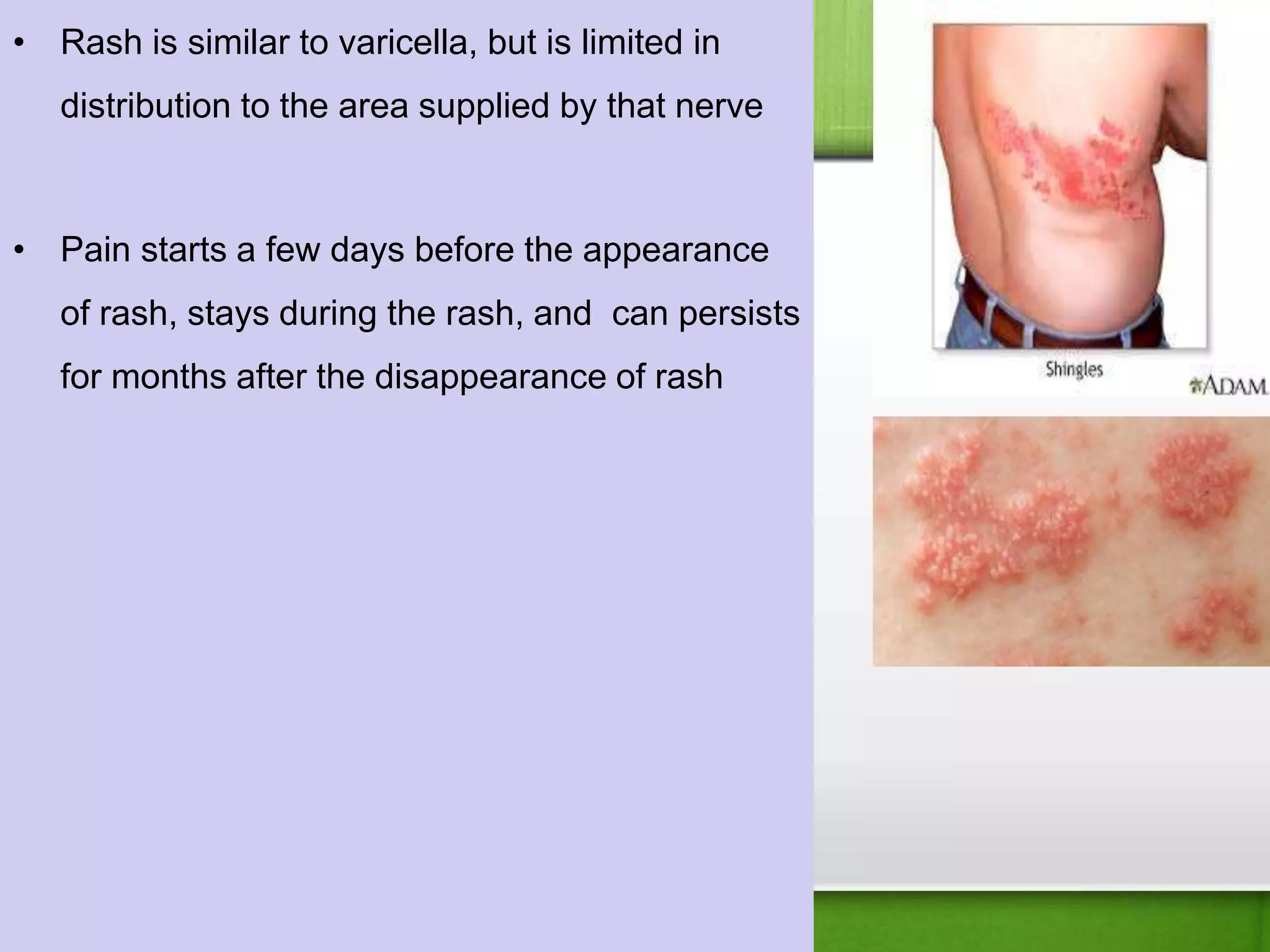
• Rash is similar to varicella, but is limited in
distribution to the area supplied by that nerve
• Pain starts a few days before the appearance
of rash, stays during the rash, and can persists
for months after the disappearance of rash
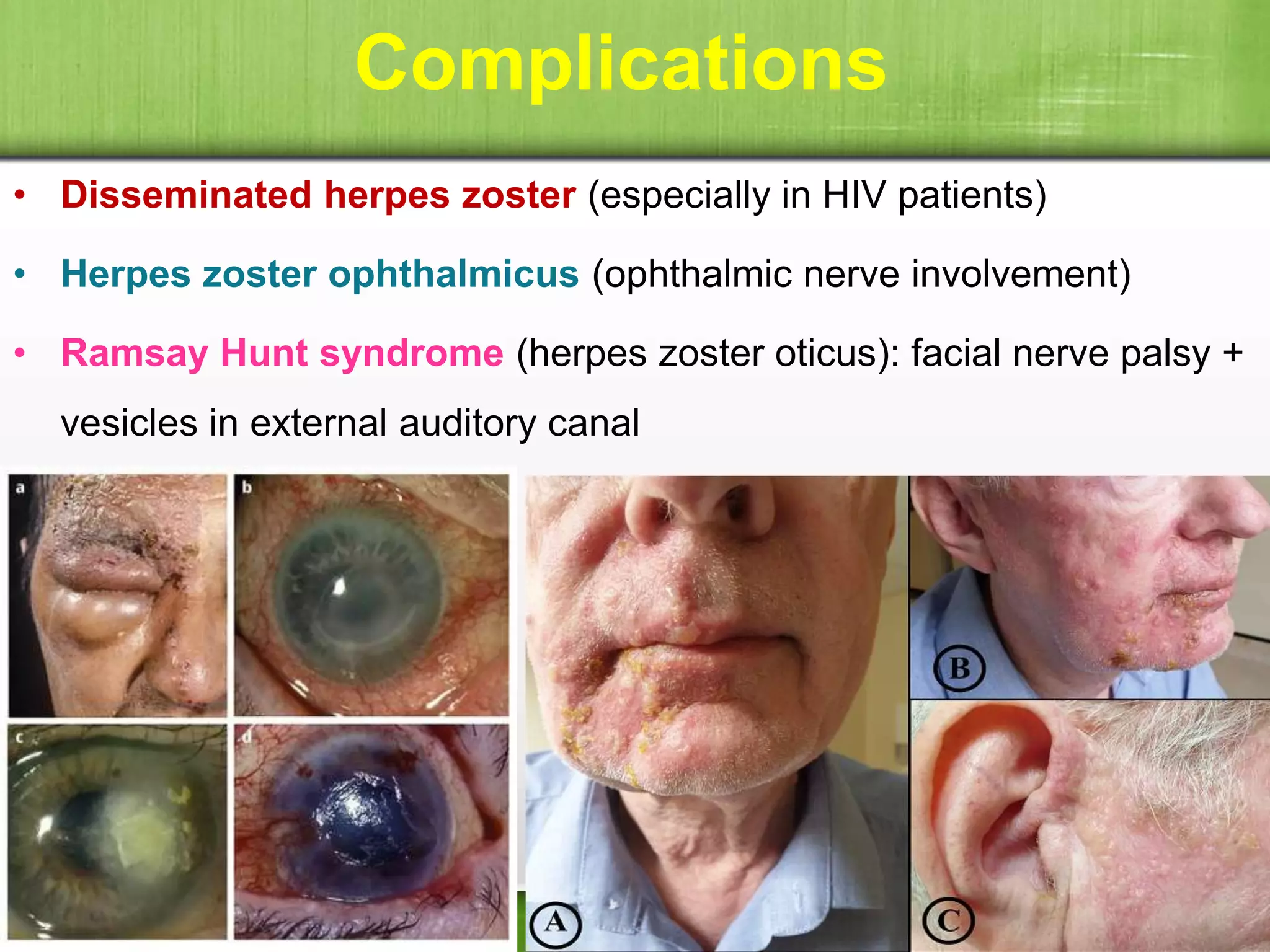
Complications
• Disseminated herpes zoster (especially in HIV patients)
• Herpes zoster ophthalmicus (ophthalmic nerve involvement)
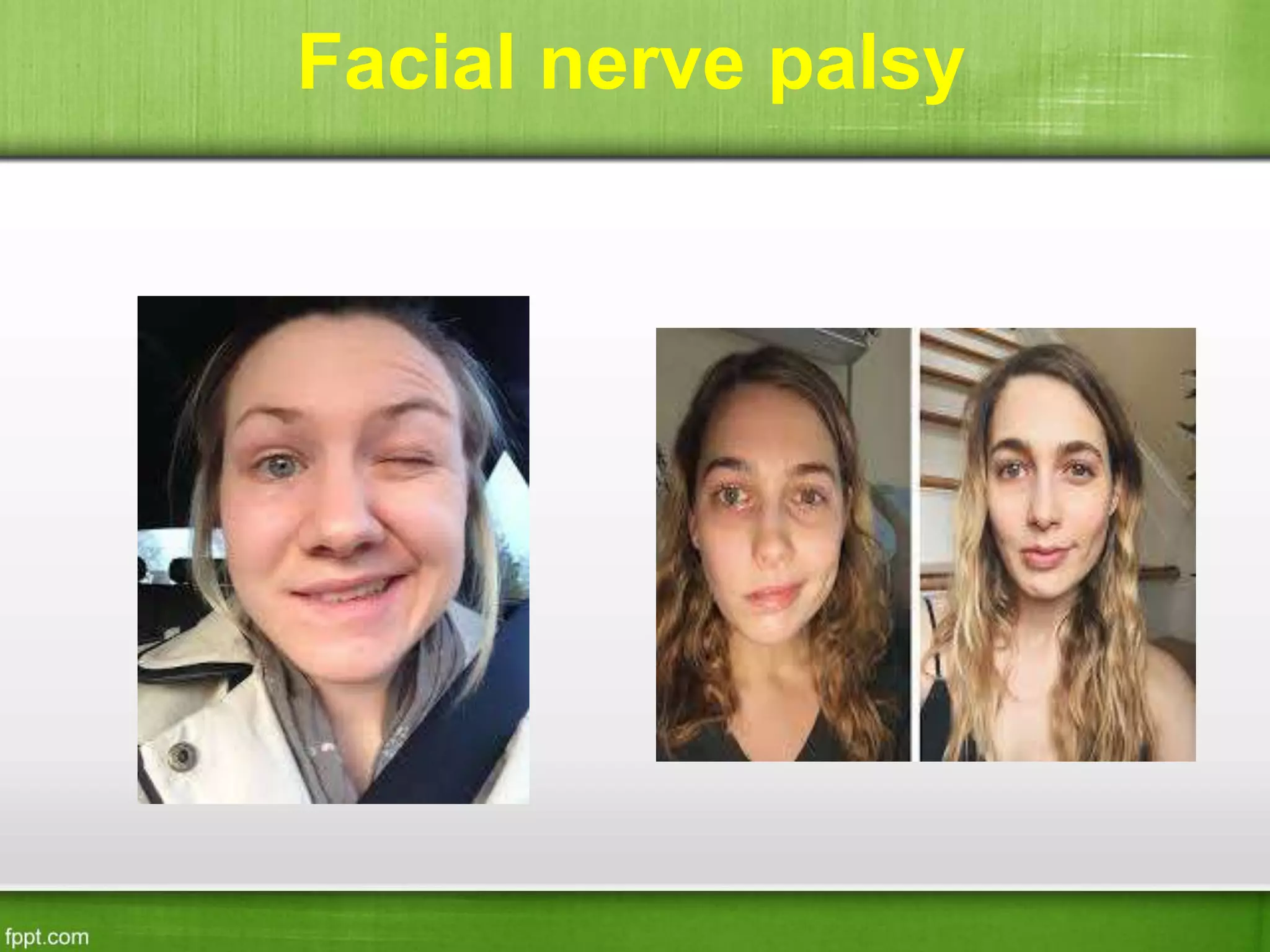
• Ramsay Hunt syndrome (herpes zoster oticus): facial nerve palsy +
vesicles in external auditory canal
Herpes zoster ophthalmicus
Facial nerve palsy
Laboratory diagnosis
• Specimens
– Vesicular lesions
– Scabs
– Maculopapular lesions
• Cytopathology
– Giemsa staining (scrapings from ulcer base)
Tzanck smear  multinucleated gaint cells.
• Virus isolation
– Various cell line  produces CPE  diffuse rounding and
ballooning of infected cells
• VSZ-specific methods
– Specific Ag detection by direct immunofluoroscence
staining.
– Specific IgM and IgG Ab detection by ELISA.
– PCR  detecting VZV-specific genes.
Laboratory diagnosis
• Tzanck smear from the base
of vesicles shows multi-
nucleated giant cells and
type A intranuclear inclusion
bodies
• Electron microscopy
• Immunofluorescence
microscopy
• Virus isolation
• ELISA
• PCR
Treatment
• Specific treatment is given only in
the immunodeficient, elderly or
those with disseminated disease
• Acyclovir, famciclovir and
valacyclovir
Prophylaxis
• Active: Live attenuated vaccine is
available
• Passive: Varicella Zoster
Immunoglobulin (VZIg) is usually
given to newborns of infected
mothers
Human herpes 6 (HHV-6)
– Infects T cells by binding to CD46
receptor
– Has two variants 6A and 6B.
– Transmission  infected oral
secretions
– Sixth disease  also called as
exanthem subitum or roseola
infantum  characterized by high
grade fever and skin rashes.
– In older age  HHV-6  associated
with mononucleosis-like syndrome.
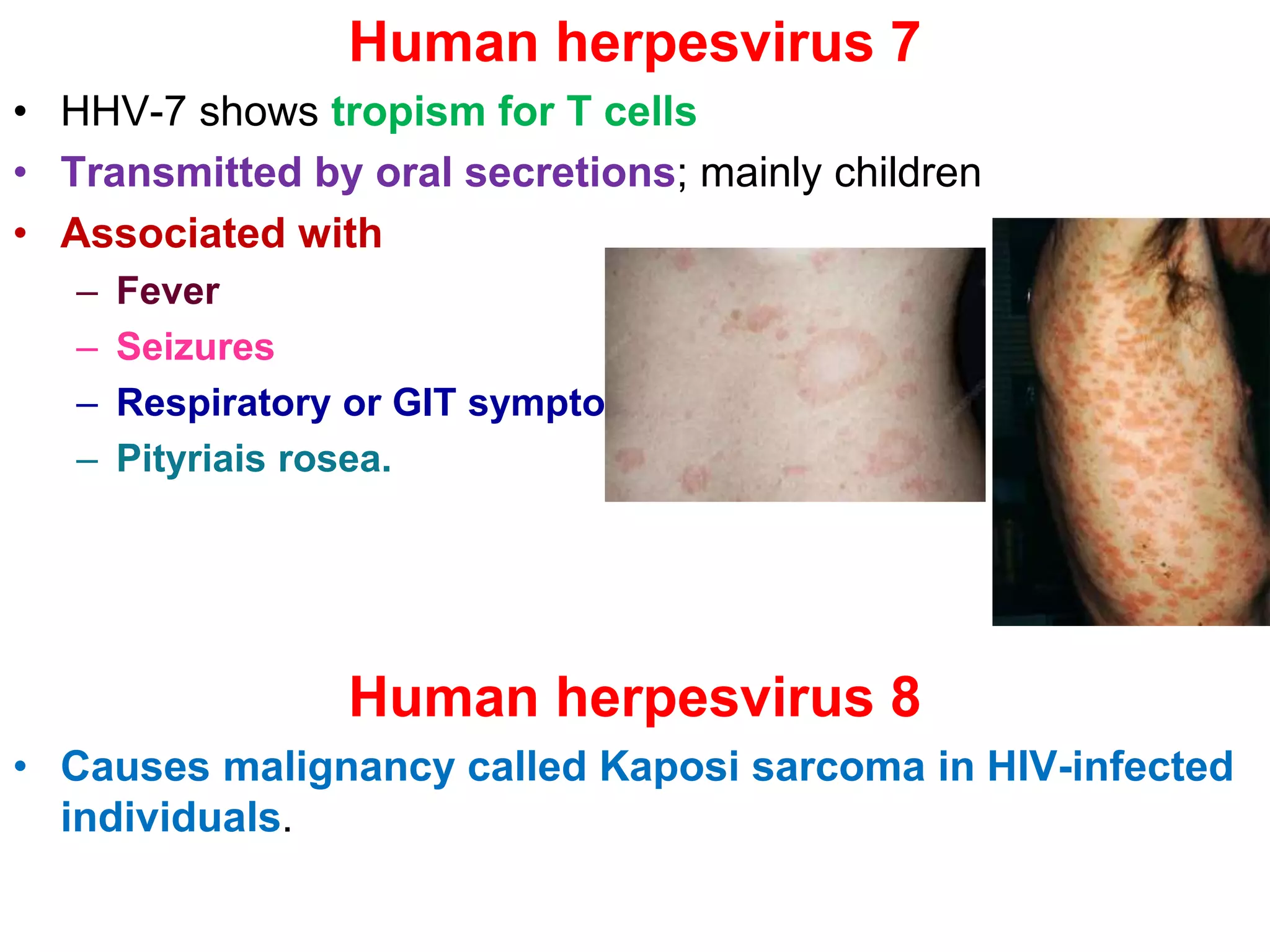
Human herpesvirus 7
• HHV-7 shows tropism for T cells
• Transmitted by oral secretions; mainly children
• Associated with
– Fever
– Seizures
– Respiratory or GIT symptoms
– Pityriais rosea.
Human herpesvirus 8
• Causes malignancy called Kaposi sarcoma in HIV-infected
individuals.
• Thank You
Herpes Virus and Varicella

Herpes Virus and Varicella

  • 1.
    Dr. Rakesh PrasadSah Assistant Professor, Microbiology HERPESVIRUSES
  • 2.
    Introduction + GeneralProperties • Large family of DNA viruses  ds in animals including human beings. • Latin word “herpin”  “to creep”  referring to  latent, re-occuring infections • possess a unique property of: – Establishing latent or persistent/lytic infections in their hosts – Undergo periodic reactivation. – immunocompromised
  • 3.
    Classification Subfamily Scientific nameCommon name Acronym Alphaherpesvirinae Human herpesvirus 1 Herpes simplex virus type 1 HSV-1 Human herpesvirus 2 Herpes simplex virus type 2 HSV-2 Human herpesvirus 3 Varicella-zoster virus VZV Betaherpesvirinae Human herpesvirus 5 cytomegalovirus HCMV Human herpesvirus 6 -------------- HHV-6 Human herpesvirus 7 -------------- HHV-7 Gammaherpesvirin ae Human herpesvirus 4 Epstein-Barr virus EBV Human herpesvirus 8 Kaposi’s Sarcoma associated virus HHV-8
  • 4.
    Infecting Humans • HerpesSimplex virus 1 and 2 • Varicella Zoster Viruses • Cytomegalovirus virus • Epstein Barr virus • Human Herpes viruses 6, 7. • Kaposi's Sarcoma associated Viruses
  • 5.
    Morphology • 100-200nm indiameter, spherical in shape  with icosahedral capsid  composed of 162 capsomeres. • Is double stranded DNA virus  surrounded by lipid envelope  containing glycoprotein peplomers.
  • 6.
    • Enveloped -lipoprotein in nature • Lipid part is derived from the nuclear membrane. • Protein part- Virus coded glycoprotein spikes, about 8 nm long are inserted into the lipid part. • Between capsid and envelope  “Tegument”  multiply in nuclei of infected cells  produce Cowdry type A intranuclear inclusion bodies..
  • 7.
    Herpes Simplex Virus •Herpes simplex virus type 1 (HSV-1) and type 2 (HSV-2) are distinguished by two main criteria – Antigenicity – Location of lesions. • HSV-1: above the waist (Oral & Occular), primarily in adults – Acute gingivostomatitis – Pharyngotonsilitis – Recurrent herpes labialis(cold sores), – Keratoconjunctivitis(keratitis), – Encephalitis – Eczema herpeticum – Dendritic keratitis
  • 8.
    • HSV-2: belowthe waist (Genital infections) – Genital Herpes (Penis, urthra, cervix, vulva, vagina) – Neonatal herpes  vertical transmission from mother to newborn. – Aseptic meningitis • Humans are the natural hosts of both.
  • 9.
  • 10.
  • 11.
    Transmission • Occurs abraded skin or mucosa from any site but more commonly by: – HSV 1: transmitted primarily in saliva or direct skin contact. – HSV 2: transmitted by sexual contact or rarely by vertical mode (from mother to foetus) • Oral (Kissing)–genital sexual activity (genito-oral sex): HSV-1 infections of the genitals and HSV-2 lesions in the oral cavity. • HSV-2 infections has markedly increase comparatively.
  • 12.
    Pathogenesis Entry by skinor mucous membrane Multiplies locally Vesicle formation Virus spreds to draining lymph nodes lymphadenitis Ulcerate  heal with residual scarring Settles within neuron of ganglia; Trigeminal (HSV-1) and sacral (HSV-2) Travels to sensory root ganglia Herpesvirus DNA integrated  into host cell genome. Reactivation • Cold •Fever •Pneumonia •Surgery •Stress Latency
  • 13.
    Pathogenesis Entry by skinor mucous membrane Multiplies locally Vesicle formation Virus spreds to draining lymph nodes lymphadenitis Ulcerate  heal with residual scarring Settles within neuron of ganglia; Trigeminal (HSV-1) and sacral (HSV-2) Travels to sensory root ganglia Herpesvirus DNA integrated  into host cell genome. Reactivation • Cold •Fever •Pneumonia •Surgery •Stress Latency
  • 14.
    Clinical features • Cutaneousinfection • Mucosal • Opthalmic • Nervous system • Visceral • Genital • Neonatal • Infections in immunocompromised
  • 15.
    Cutaneous infection • Infectsthrough abraded skin and causes various cutaneous lesions – Face – Buttocks: In infants as napkin rash • Febrile blisters (herpes febrilis) – Fever due to other cause  provocate HSV to cause recurrent blisters. • Herpetic whitlow : Lesions +nt on fingers of Doctors , Dentists & Nurses • Herpes gladiatorum : lesions +nt on body of Wrestlers /rugby • Eczema herpeticum: • Caused by HSV-1 in patients with chronic eczema
  • 16.
    Mucosal lesions • Oral-facialmucosal lesions  most common manifestations of HSV infections. • Most common affected site  Buccal mucosa • Most frequent lesions – Gingivostomatits – Pharyngitis • Recurrent herpes labialis – Painful vesicular near lips • Other lesions – Ulcerative stomatitis – Tonsillitis – Vesicular lesions on eyerlids – Many cases  asymptomatic  predispose to secondary bacterial infections.
  • 17.
    Other infective Syndromesof HSV • Opthalmic lesions • CNS lesions • Visceral • Genital • Congenital
  • 18.
    Opthalmic lesions 1. AcuteKerato conjuctivitis 2. Corneal ulcers and blindness 3. Follicular conjuctivitis with vesicle formation on lids 4. Dendritic keratitis 5. Acute necrotising retinitis 6. Choreoretinitis 5 4 3 3 2 1 6
  • 19.
    Nervous system • HSVencephalitis [rare] • HSV meningitis • Transverse myelitis [rare] • Sacral autonomic dysfunction • Guillian Barre syndrome [rare] • Bell’s palsy [rare]
  • 20.
    Visceral • HSV esophagitis •Tracheobronchitis & Pneumonitis • Hepatitis [uncommon] • Disseminated HSV infection
  • 21.
    Genital herpes • Lesion •In males : on penis / in urethra • In females : cervix , vagina, vulva & perineum • Inguinal lymphadenopathy in both • In homosexuals : rectal / perineal lesions
  • 22.
    Congenital/Neonatal Herpes • Neonatalherpes : rare • Lesions confined to eyes , mouth & skin / Disseminated disease • Clinical features- Babies are almost always symptomatic and presenting •One of the three forms Local lesions involving skin, eye and mouth •Encephalitis •Disseminated disease involving multiple organs,including the CNS-Neonate has the highest frequency of visceral infections.
  • 23.
    LAB DIAGNOSIS • Microscopy •Ag / DNA detection • Virus isolation • Serology Specimens • Vesicle Fluid • Skin Swab • Saliva • Corneal Scrapings • Brain Biopsy • CSF
  • 24.
    Microscopy Direct Examination OfSmear 1. Toludine Blue: Multi-nucleated giant cells with faceted nuclei homogenously stained “ground glass” chromatin  (Tzanck Cells) +nt in positive smears.
  • 25.
    2. Geimsa Stain: Cowdry Type A Intranuclear Inclusion Bodies 3. If Staining : Viral Ag in scraping from base of lesions & tissue stained by immunofluorescent staining. 4. Fluroscent Ab Test : On brain biopsy in encephalitis
  • 26.
    Virus isolation • Tissueculture: human diploid fibroblasts, Hep-2 cells, Vero cells and Chorioallantoic membrane. • CPE : Swollen, rounded cells (1-5 days) observed for 2 wks • Some HSV 2 strains – syncytium formation (fusion of infected cells) • Confirmed by IF staining of infected cell culture or by neutralization test.
  • 27.
    Serology • Useful inprimary infection • IgM Ab • Rise in titre • CFT, Neutralization , IF, ELISA , RIA • Other PCR – HSV DNA in CSF
  • 28.
    Chemotherapy • Idoxuridine usedtopically in eye and skin • infections – first successful antiviral • agent. • • Acyclovir : treatment of choice • –shortens the duration of the lesions • –reduces the extent of shedding of the virus • • Other Drugs – Valaciclovir, Famiciclovir, • • Orally effective • Valacyclovirand famciclovir: genital herpes and in the suppression of recurrences. • • Foscarnet.
  • 29.
    Prevention • Avoiding contactwith the vesicular lesion or ulcer. • Abstain from oral sex. • Use condom to prevent genital herpes. • Cesarean section is recommended for women who are at term and who have genital lesions or positive viral cultures. • Can be treated with antiviral drugs. • Can be prevented by immunization.
  • 30.
    Varicella Zoster Virus(VZV) • VZV produces vesicular eruptions (rashes) on skin and mucous membranes in the form of  – Varicella (Chicken Pox)  primary infection of non-immune person – Herpes Zoster (Shingles)  reactivation of virus  +nt in the latent stage • Virus is reactivated when the fall in immunity levels is unable to contain it • Culture – human fibroblast , human amnion , HeLa cells • CPE: Similar to HSV but slow & less marked Contact with either Zoster Chicken Pox Chicken Pox not Zoster or
  • 31.
    • Chickenpox causesmorbidity and mortality which is more in: – Adolescents – Adults – Immunocompromised • Can be treated with antiviral drugs. • Can be prevented by immunization.
  • 32.
    Varicella (chicken pox) •Characterized by  generalized diffuse bilateral vesicular rashes  following primary infection  usually affecting children • Highly infectious disease characterized by vesicular rash  mostly on trunk. • Can occur at any age • Infections occurring in childhood are milder • Commonest childhood exanthemata • Infections occurring in adulthood are more serious • The source is a chicken pox or herpes zoster patient
  • 33.
    Pathogenicity POE  respiratorytract or conjunctiva Virus enters blood stream and lymphatic system (primary viremia) Reticulo-endothelial system (RES) Secondary viremia Skin ( produces rashes) Respiratory tract (Shed through resp secretions) Neurones (undergoes latency) Incubation period is 7-23 days
  • 34.
    After primary infection,virus migrates along sensory nerve fibres Doral root ganglia and cranial nerve ganglia Latent Reactivation in elderly or immunocompromised Migration along nerves Herpes zoster or shingles
  • 35.
    Clinical Manifestations ofChickenpox Rashes • Initially, buccal lesions may appear, which may go unnoticed • The rash in varicella evolutes rapidly (over 48 hours) through the stages of maculepapulevesiclepustulescab • The rash appears in crops  therefore, lesions of varying age can be seen in the same patient • The rash first appears on trunk, and spreads centrifugally • Fever appears with each crop of rashes.
  • 38.
    Infectivity • Infectivity ismaximum is early stages of disease, when the virus is present in large numbers in the upper respiratory tract. • The buccal lesions and vesicular fluid is rich in virus, and is infectious • The person is considered to be infectious during two days before the onset and till five days after the onset of lesions. • Scabs have very low infectivity
  • 39.
    Varicella (Chickenpox) inadults • It causes a more serious illness in adults • The rash is more severe • The rash may become hemorrhagic, and bullous lesions can appear • Lesions can become secondarily infected • Fatal pneumonia can develop • Other systemic manifestations like myocarditis, nephritis, meningitis and encephalitis can occur
  • 40.
    Reye’s syndrome • Occurswhen salicylates are prescribed during chicken pox or flu, especially to young children • Swelling of brain and liver • Symptoms – Confusion – Seizures and – Loss of consciousness
  • 41.
    Chicken pox duringpregnancy 1. Disease is more severe in pregnant women 2. Prognosis of foetus depends on the period of gestation during which the mother develops varicella: i.e. whether the infection develops in the first half of the pregnancy OR in the second half of pregnancy
  • 42.
    Maternal varicella infirst half of pregnancy • Foetal infection is usually asymptomatic • Some develop foetal varicella syndrome, which manifests as: – Cicatrising skin lesions (heal by scar formation) – Hypoplasia of limbs – Chorioretinitis – CNS lesions • Some carry latent varicella infection Chorioretinitis Hypoplasia of limbs
  • 43.
    Maternal varicella insecond half of pregnancy • If mother’s rash began more than week before delivery mother develops antibodies, which usually pass on to the foetus foetus usually escapes infection. • If mother’s rash began within a week before delivery  only the virus passes transplacentally and not the antibodies neonatal varicella develops in the newborn
  • 44.
    Maternal varicella insecond half of pregnancy Mother Antibodies Passes to Foetus Within week of delivery Viruses passes transplacentally not Abs Began >1 week before delivery Escape from infection Neonatal Varicella Varicella rashes in Pregnant mother
  • 45.
    Neonatal varicella • Disseminateddisease with high risk of pneumonia and encephalitis
  • 46.
    Herpes zoster (shingles) Herpein= Creep Zoster = girdle
  • 47.
    • Chickenpox is ds of childhood • Zooster  ds of old age >60yrs (occurs in people  had chickenpox several years earlier). • Virus remain latent in the sensory ganglia. • Virus usually held in check by the residual immunity. • Reactivation by some precipitating stimulus. • Reactivation is associated with inflammation of the nerve  neuritic pain  very severe.
  • 48.
    Pathogenesis Typically a diseaseof late adulthood Due to reactivation of latent VZV in the ganglia VZV replicates & migrates along sensory nerve rash on the dermatome supplied by that nerve Pain due to inflammation of the nerve
  • 49.
    • Rash issimilar to varicella, but is limited in distribution to the area supplied by that nerve • Pain starts a few days before the appearance of rash, stays during the rash, and can persists for months after the disappearance of rash
  • 50.
    Complications • Disseminated herpeszoster (especially in HIV patients) • Herpes zoster ophthalmicus (ophthalmic nerve involvement) • Ramsay Hunt syndrome (herpes zoster oticus): facial nerve palsy + vesicles in external auditory canal
  • 51.
  • 52.
  • 53.
    Laboratory diagnosis • Specimens –Vesicular lesions – Scabs – Maculopapular lesions • Cytopathology – Giemsa staining (scrapings from ulcer base) Tzanck smear  multinucleated gaint cells. • Virus isolation – Various cell line  produces CPE  diffuse rounding and ballooning of infected cells
  • 54.
    • VSZ-specific methods –Specific Ag detection by direct immunofluoroscence staining. – Specific IgM and IgG Ab detection by ELISA. – PCR  detecting VZV-specific genes.
  • 55.
    Laboratory diagnosis • Tzancksmear from the base of vesicles shows multi- nucleated giant cells and type A intranuclear inclusion bodies • Electron microscopy • Immunofluorescence microscopy • Virus isolation • ELISA • PCR
  • 56.
    Treatment • Specific treatmentis given only in the immunodeficient, elderly or those with disseminated disease • Acyclovir, famciclovir and valacyclovir
  • 57.
    Prophylaxis • Active: Liveattenuated vaccine is available • Passive: Varicella Zoster Immunoglobulin (VZIg) is usually given to newborns of infected mothers
  • 58.
    Human herpes 6(HHV-6) – Infects T cells by binding to CD46 receptor – Has two variants 6A and 6B. – Transmission  infected oral secretions – Sixth disease  also called as exanthem subitum or roseola infantum  characterized by high grade fever and skin rashes. – In older age  HHV-6  associated with mononucleosis-like syndrome.
  • 59.
    Human herpesvirus 7 •HHV-7 shows tropism for T cells • Transmitted by oral secretions; mainly children • Associated with – Fever – Seizures – Respiratory or GIT symptoms – Pityriais rosea. Human herpesvirus 8 • Causes malignancy called Kaposi sarcoma in HIV-infected individuals.
  • 60.