Hepatitis
Hepatitis is an inflammation of the liver that can be
caused by viruses, drugs, and chemicals, including
alcohol. Clinically, several types of viral hepatitis are
recognized
• Hepatitis A (infectious hepatitis)
Is caused by the hepatitis A virus (HAV) and is spread
via fecal contamination of objects such as
food, clothing, toys, and eating utensils (fecal–oral
route). It is generally a mild disease of children and
young adults characterized by
loss of appetite, malaise, nausea, diarrhea, fever, and
chills. Eventually, jaundice appears. This type of
hepatitis does not cause lasting liver damage. Most
people recover in 4 to 6 weeks. A vaccine is
available.
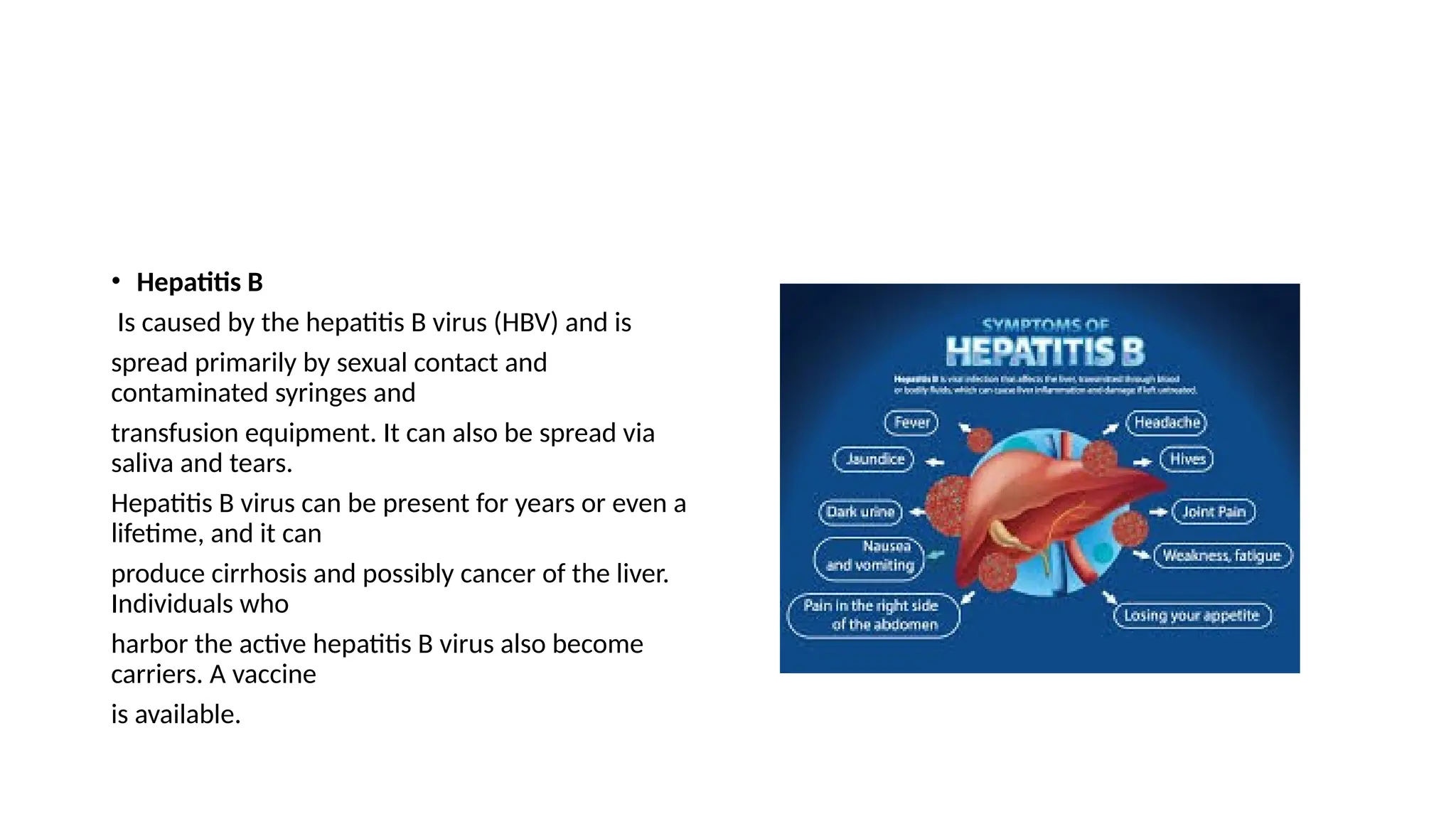
• Hepatitis B
Is caused by the hepatitis B virus (HBV) and is
spread primarily by sexual contact and
contaminated syringes and
transfusion equipment. It can also be spread via
saliva and tears.
Hepatitis B virus can be present for years or even a
lifetime, and it can
produce cirrhosis and possibly cancer of the liver.
Individuals who
harbor the active hepatitis B virus also become
carriers. A vaccine
is available.
• Hepatitis C, caused by the hepatitis C virus (HCV), is clinically
similar to hepatitis B. Hepatitis C can cause cirrhosis and possibly
liver cancer.
• Hepatitis D
Is caused by the hepatitis D virus (HDV). It is transmitted like hepatitis B, and in fact a
person must have been co-infected
with hepatitis B before contracting hepatitis D. Hepatitis D results in
severe liver damage and has a higher fatality rate than infection with
hepatitis B virus alone. HBV vaccine is protective
• Hepatitis E
Is caused by the hepatitis E virus and is spread like
hepatitis A. Although it does not cause chronic liver disease, hepatitis
E virus has a very high mortality rate among pregnant women
• The progression of hepatitis C begins with an acute infection, which
may clear up on its own or develop into a chronic infection. In the
chronic phase, the liver becomes inflamed, leading to the death of
liver cells and scarring of liver tissue. This scarring can eventually
cause cirrhosis, a condition where the liver is severely damaged and
unable to function properly. End-stage hepatitis C occurs when the
liver is severely damaged and can no longer function, leading to
symptoms such as fatigue, nausea, loss of appetite, abdominal
swelling, and jaundice. The progression of hepatitis C can also
increase the risk of liver cancer, particularly in those who consume
excess alcohol.
• Hepatitis B, on the other hand, progresses through four phases:
immune-tolerant, HBeAg-positive immune-active, inactive chronic,
and HBeAg-negative immune reactivation. The immune-tolerant
phase is characterized by rapid HBV replication but low inflammation,
while the HBeAg-positive immune-active phase is marked by
significant liver damage and inflammation. The inactive chronic
phase is characterized by low or undetectable HBV DNA and minimal
liver inflammation, while the HBeAg-negative immune reactivation
phase is marked by elevated HBV DNA and moderate to severe liver
inflammation
Hepatitis is classified into acute and chronic forms based on the
duration of inflammation and liver damage
Acute hepatitis
Is a short term condition characterized by active hepatocellular damage
and necrosis usually caused by viral infection, autoimmune disease or
adverse drug reaction.
It typically revolves within 6 months
Differential diagnosis
• Gastroenteritis
• Pancreatitis
• Malaria, leptospirosis,
yellowfever
• Hemorrhagic fevers e.g Marburg
and ebola
Investigation of hepatitis
• Complete blood count
• RDT for malaria parasites
• Liver function tests
• Viral antigens and antibodies
Management of acute hepatitis
• Supportive management
• Rest and hydration
• Diet high in carbohydrates and
vegetable proteins, avoid animal
proteins e.g meat
• Avoid any drug that may
aggravate symptoms such as
sedatives and hepatoxic drugs
• Ensure effective infection control
measures e.g institute barrier
nursing, personal hygiene.
• Patient isolation is not necessary
unless there is high suspicion of
viral hemorrhagic fevers.
Prevention
• Hygiene and sanitation
• Immunization against hepatitis B(all children, health workers,
household contacts of people with Hep B, sex workers and other
populations at risk)
• Safe transfusion practices
• Infection control in health facilities
• Screening of pregnant women
• Safe sexual practices
Chronic hepatitis
Is defined as a persistent and progressive inflammation and injury of hepatocytes
lasting longer than 6 months. The hepatitis B, C and D can give chronic infection
with chronic low level inflammation of the liver and progressive damage which
may progress to liver cirrhosis.
Clinical features of chronic Hep B
Can be symptomatic or asymptomatic
• Weakness and malaise
• Nausea, loss of appetite and vomiting
• Pain or tenderness over the right upper abdomen
• Jaundice,dark urine, severe pruritus
• Enlarged liver
• Complications; liver cirrhosis, hepatocarcinoma
Management
General principles
• Screen for HIV , if positive refer to HIV clinic for ART (since coinfection
is a risk factor for disease progression and some ARVs are against Hep
B virus)
• If HIV is negative, refer to regional hospital for specialist management
• Periodic monitoring and following up of the patient
• Periodic screening for hepatocarcinoma with alfa fetoprotein and
abdominal ultra sound once a year
• Incase of HIV co infection, use tenofovir based combination.

hepatitis.pptx.....LLLLLLLLLLLLLLLLLLLLL

  • 1.
    Hepatitis Hepatitis is aninflammation of the liver that can be caused by viruses, drugs, and chemicals, including alcohol. Clinically, several types of viral hepatitis are recognized • Hepatitis A (infectious hepatitis) Is caused by the hepatitis A virus (HAV) and is spread via fecal contamination of objects such as food, clothing, toys, and eating utensils (fecal–oral route). It is generally a mild disease of children and young adults characterized by loss of appetite, malaise, nausea, diarrhea, fever, and chills. Eventually, jaundice appears. This type of hepatitis does not cause lasting liver damage. Most people recover in 4 to 6 weeks. A vaccine is available.
  • 2.
    • Hepatitis B Iscaused by the hepatitis B virus (HBV) and is spread primarily by sexual contact and contaminated syringes and transfusion equipment. It can also be spread via saliva and tears. Hepatitis B virus can be present for years or even a lifetime, and it can produce cirrhosis and possibly cancer of the liver. Individuals who harbor the active hepatitis B virus also become carriers. A vaccine is available.
  • 3.
    • Hepatitis C,caused by the hepatitis C virus (HCV), is clinically similar to hepatitis B. Hepatitis C can cause cirrhosis and possibly liver cancer.
  • 4.
    • Hepatitis D Iscaused by the hepatitis D virus (HDV). It is transmitted like hepatitis B, and in fact a person must have been co-infected with hepatitis B before contracting hepatitis D. Hepatitis D results in severe liver damage and has a higher fatality rate than infection with hepatitis B virus alone. HBV vaccine is protective • Hepatitis E Is caused by the hepatitis E virus and is spread like hepatitis A. Although it does not cause chronic liver disease, hepatitis E virus has a very high mortality rate among pregnant women
  • 5.
    • The progressionof hepatitis C begins with an acute infection, which may clear up on its own or develop into a chronic infection. In the chronic phase, the liver becomes inflamed, leading to the death of liver cells and scarring of liver tissue. This scarring can eventually cause cirrhosis, a condition where the liver is severely damaged and unable to function properly. End-stage hepatitis C occurs when the liver is severely damaged and can no longer function, leading to symptoms such as fatigue, nausea, loss of appetite, abdominal swelling, and jaundice. The progression of hepatitis C can also increase the risk of liver cancer, particularly in those who consume excess alcohol. • Hepatitis B, on the other hand, progresses through four phases: immune-tolerant, HBeAg-positive immune-active, inactive chronic, and HBeAg-negative immune reactivation. The immune-tolerant phase is characterized by rapid HBV replication but low inflammation, while the HBeAg-positive immune-active phase is marked by significant liver damage and inflammation. The inactive chronic phase is characterized by low or undetectable HBV DNA and minimal liver inflammation, while the HBeAg-negative immune reactivation phase is marked by elevated HBV DNA and moderate to severe liver inflammation
  • 6.
    Hepatitis is classifiedinto acute and chronic forms based on the duration of inflammation and liver damage Acute hepatitis Is a short term condition characterized by active hepatocellular damage and necrosis usually caused by viral infection, autoimmune disease or adverse drug reaction. It typically revolves within 6 months
  • 7.
    Differential diagnosis • Gastroenteritis •Pancreatitis • Malaria, leptospirosis, yellowfever • Hemorrhagic fevers e.g Marburg and ebola Investigation of hepatitis • Complete blood count • RDT for malaria parasites • Liver function tests • Viral antigens and antibodies
  • 8.
    Management of acutehepatitis • Supportive management • Rest and hydration • Diet high in carbohydrates and vegetable proteins, avoid animal proteins e.g meat • Avoid any drug that may aggravate symptoms such as sedatives and hepatoxic drugs • Ensure effective infection control measures e.g institute barrier nursing, personal hygiene. • Patient isolation is not necessary unless there is high suspicion of viral hemorrhagic fevers.
  • 9.
    Prevention • Hygiene andsanitation • Immunization against hepatitis B(all children, health workers, household contacts of people with Hep B, sex workers and other populations at risk) • Safe transfusion practices • Infection control in health facilities • Screening of pregnant women • Safe sexual practices
  • 10.
    Chronic hepatitis Is definedas a persistent and progressive inflammation and injury of hepatocytes lasting longer than 6 months. The hepatitis B, C and D can give chronic infection with chronic low level inflammation of the liver and progressive damage which may progress to liver cirrhosis. Clinical features of chronic Hep B Can be symptomatic or asymptomatic • Weakness and malaise • Nausea, loss of appetite and vomiting • Pain or tenderness over the right upper abdomen • Jaundice,dark urine, severe pruritus • Enlarged liver • Complications; liver cirrhosis, hepatocarcinoma
  • 11.
    Management General principles • Screenfor HIV , if positive refer to HIV clinic for ART (since coinfection is a risk factor for disease progression and some ARVs are against Hep B virus) • If HIV is negative, refer to regional hospital for specialist management • Periodic monitoring and following up of the patient • Periodic screening for hepatocarcinoma with alfa fetoprotein and abdominal ultra sound once a year • Incase of HIV co infection, use tenofovir based combination.