Guidelines on Massive
blood transfusion
Lecture-6
By Dr-C
Major hemorrhage
 It is defined in many ways. Here we have taken the definition by
www.transfusionguidelines.org/
 Loss of more than one blood volume within 24 hours (around 70 mL/kg, >5
liters in a 70 kg adult)
 50% of total blood volume lost in less than 3 hours
 Bleeding in excess of 150 mL/minute.
 clinically a major hemorrhage is-bleeding that cause the systolic blood
pressure to be lowered below 90mmHg causing the pulse rate more than
110bpm.
definitions
 Some of literature says a major hemorrhage is-
 1)>40% or equal blood loss
 2)4 liters in 24 hours
 3)2 liters in 3 hours
 4)>150ml/min
(NHS UK)
 30-40% blood loss needs blood transfusion
 Take blood for grouping and cross matching.
 If the patient needs immediate transfusion issue group O blood.
 Females less than 50 years of age should receive group O Rh negative blood.
 When the grouping and cross matching done relevant type of blood can be
given
 Most of the hospitals have a protocol dedicated to massive blood loss and
blood transfusion. Most of the time called as MASSIVE TRANSFUSION
PROTOCOL.
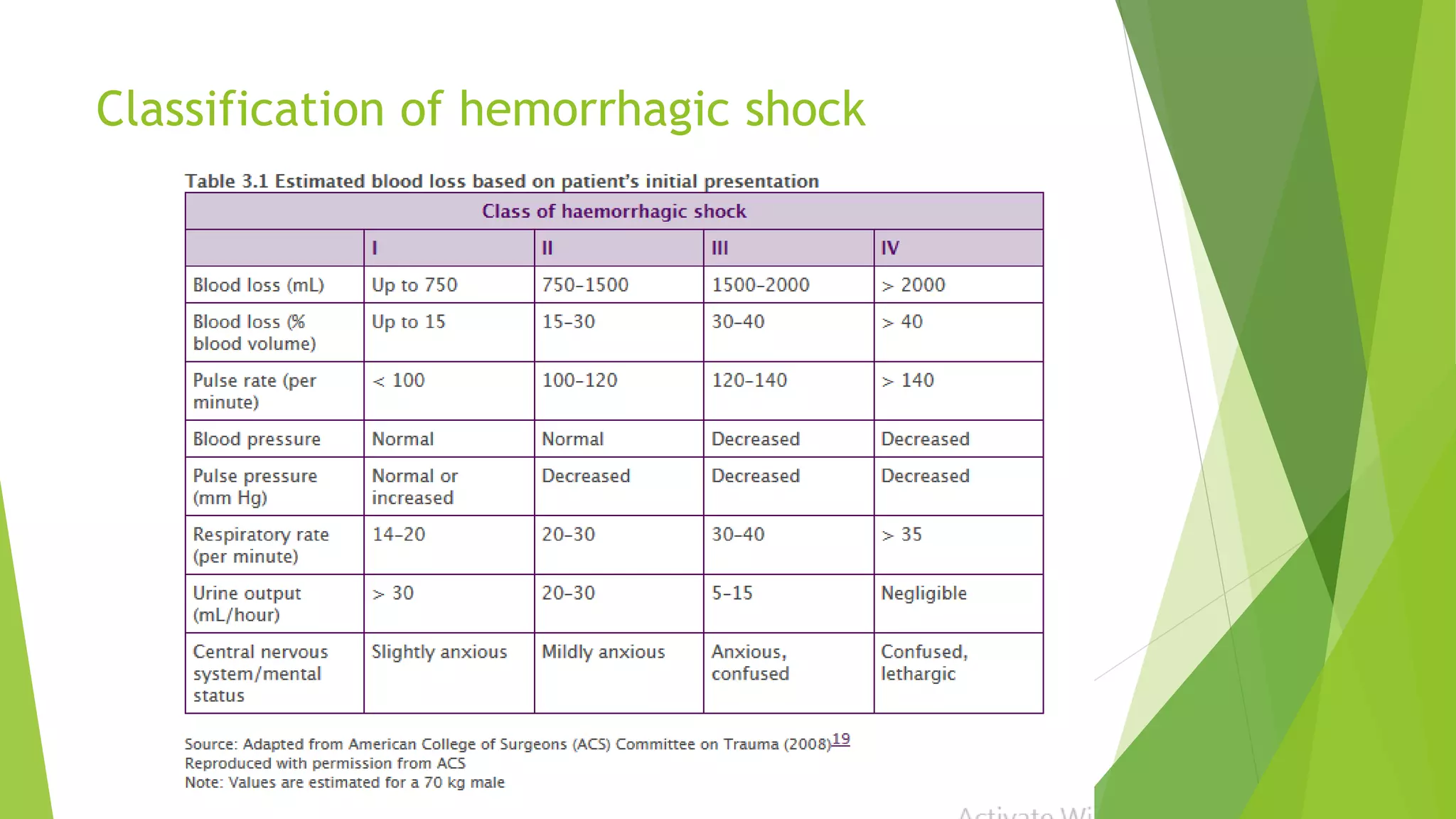
Classification of hemorrhagic shock
 In above mentioned classification class 3 and 4 need blood transfusion
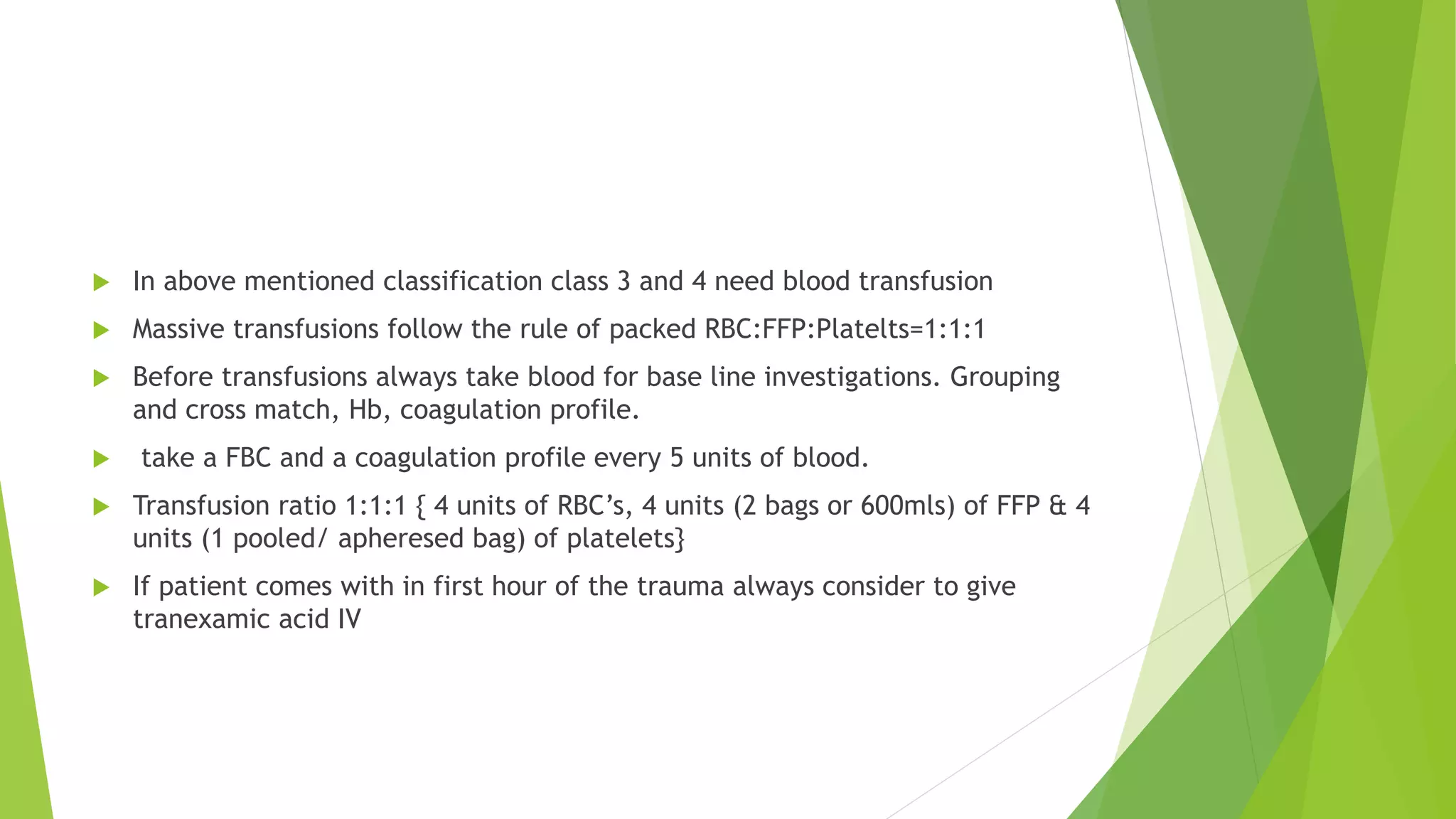
 Massive transfusions follow the rule of packed RBC:FFP:Platelts=1:1:1
 Before transfusions always take blood for base line investigations. Grouping
and cross match, Hb, coagulation profile.
 take a FBC and a coagulation profile every 5 units of blood.
 Transfusion ratio 1:1:1 { 4 units of RBC’s, 4 units (2 bags or 600mls) of FFP & 4
units (1 pooled/ apheresed bag) of platelets}
 If patient comes with in first hour of the trauma always consider to give
tranexamic acid IV
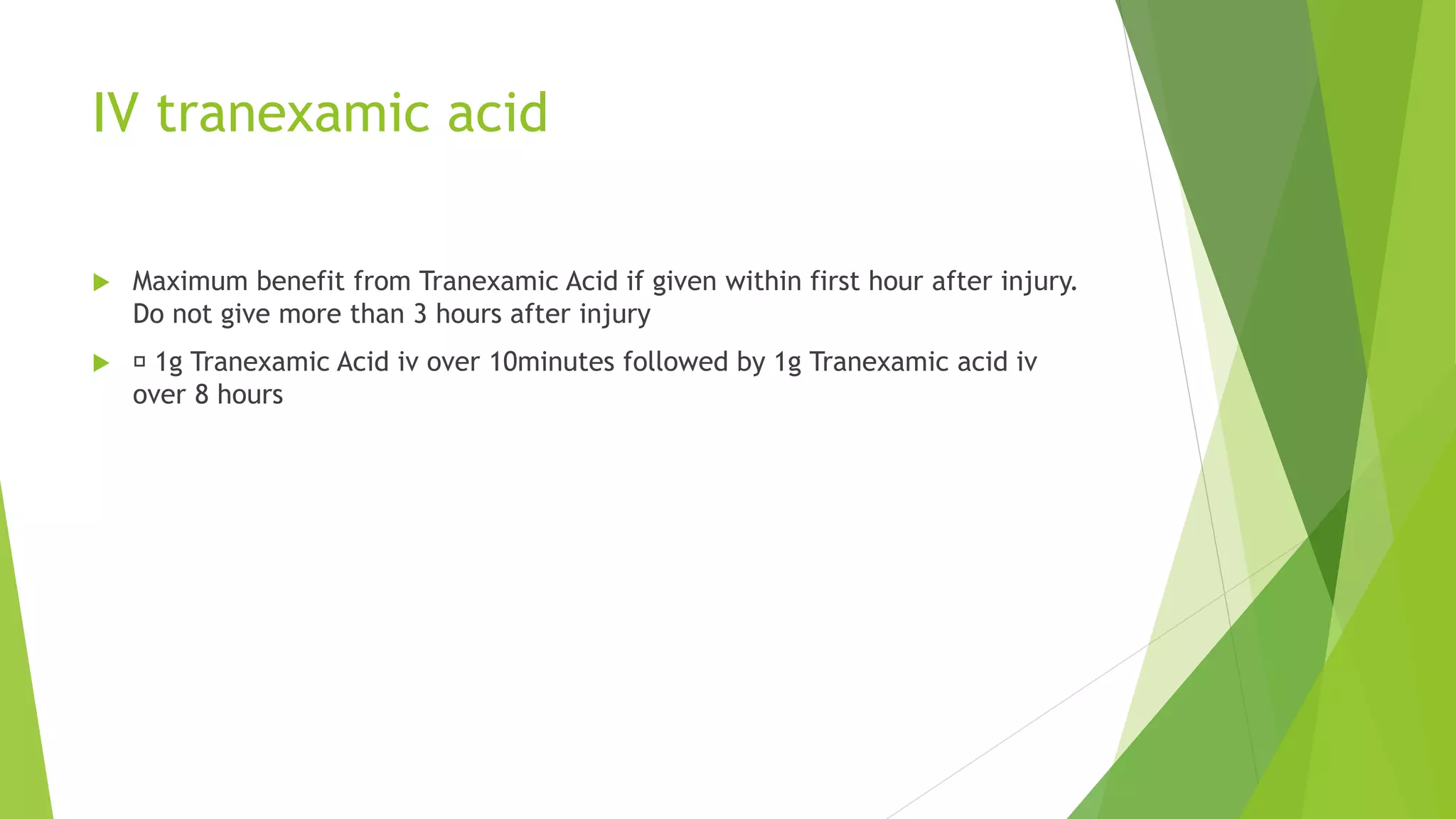
IV tranexamic acid
 Maximum benefit from Tranexamic Acid if given within first hour after injury.
Do not give more than 3 hours after injury
 1g Tranexamic Acid iv over 10minutes followed by 1g Tranexamic acid iv
over 8 hours
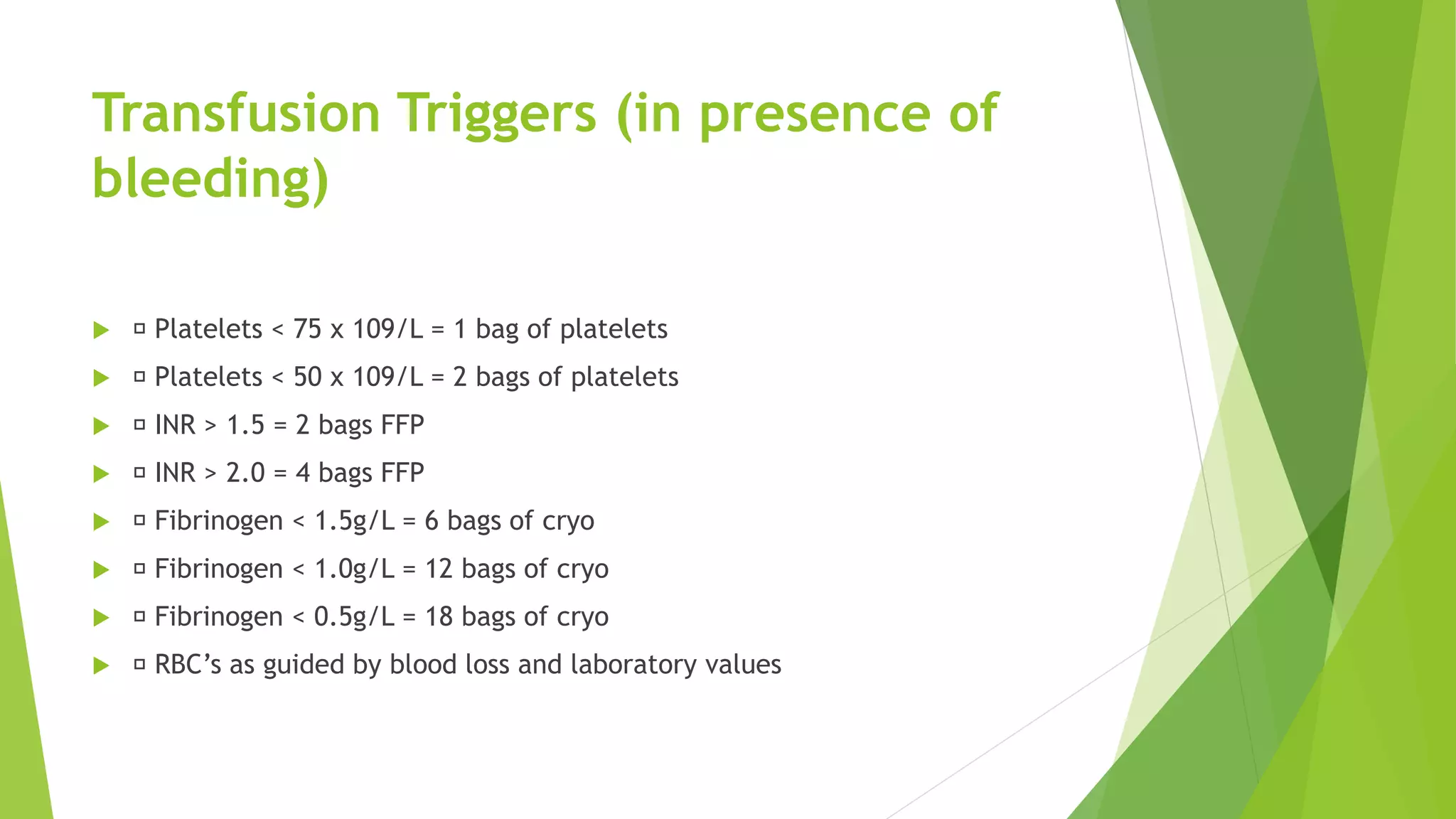
Transfusion Triggers (in presence of
bleeding)
 Platelets < 75 x 109/L = 1 bag of platelets
 Platelets < 50 x 109/L = 2 bags of platelets
 INR > 1.5 = 2 bags FFP
 INR > 2.0 = 4 bags FFP
 Fibrinogen < 1.5g/L = 6 bags of cryo
 Fibrinogen < 1.0g/L = 12 bags of cryo
 Fibrinogen < 0.5g/L = 18 bags of cryo
 RBC’s as guided by blood loss and laboratory values
 Resuscitation with cristaloids is recomeneded buy don’t give more than the
needs. Aggressive fluid resuscitation isn’t recommended in major trauma now.
 As cross matching takes time till the negative O blood can be transfused.
 Hypocalcaemia and hyperkalaemia can occur especially with hypothermia and
acidosis. Treat them
 Always call on call surgical unit and arrange measures to control bleeding
surgically.
Further reading
 The royal Melbourne hospital- massive transfusion guidelines
 Norflock and Norwich hospital guidelines on massive transfusion NHS UK
 https://www.blood.gov.au/pubs/pbm/module1/transfusion.html

Guidelines on massive blood transfusion(lecture-6)

  • 1.
    Guidelines on Massive bloodtransfusion Lecture-6 By Dr-C
  • 2.
    Major hemorrhage  Itis defined in many ways. Here we have taken the definition by www.transfusionguidelines.org/  Loss of more than one blood volume within 24 hours (around 70 mL/kg, >5 liters in a 70 kg adult)  50% of total blood volume lost in less than 3 hours  Bleeding in excess of 150 mL/minute.  clinically a major hemorrhage is-bleeding that cause the systolic blood pressure to be lowered below 90mmHg causing the pulse rate more than 110bpm.
  • 3.
    definitions  Some ofliterature says a major hemorrhage is-  1)>40% or equal blood loss  2)4 liters in 24 hours  3)2 liters in 3 hours  4)>150ml/min (NHS UK)
  • 4.
     30-40% bloodloss needs blood transfusion  Take blood for grouping and cross matching.  If the patient needs immediate transfusion issue group O blood.  Females less than 50 years of age should receive group O Rh negative blood.  When the grouping and cross matching done relevant type of blood can be given  Most of the hospitals have a protocol dedicated to massive blood loss and blood transfusion. Most of the time called as MASSIVE TRANSFUSION PROTOCOL.
  • 5.
  • 6.
     In abovementioned classification class 3 and 4 need blood transfusion  Massive transfusions follow the rule of packed RBC:FFP:Platelts=1:1:1  Before transfusions always take blood for base line investigations. Grouping and cross match, Hb, coagulation profile.  take a FBC and a coagulation profile every 5 units of blood.  Transfusion ratio 1:1:1 { 4 units of RBC’s, 4 units (2 bags or 600mls) of FFP & 4 units (1 pooled/ apheresed bag) of platelets}  If patient comes with in first hour of the trauma always consider to give tranexamic acid IV
  • 7.
    IV tranexamic acid Maximum benefit from Tranexamic Acid if given within first hour after injury. Do not give more than 3 hours after injury  1g Tranexamic Acid iv over 10minutes followed by 1g Tranexamic acid iv over 8 hours
  • 8.
    Transfusion Triggers (inpresence of bleeding)  Platelets < 75 x 109/L = 1 bag of platelets  Platelets < 50 x 109/L = 2 bags of platelets  INR > 1.5 = 2 bags FFP  INR > 2.0 = 4 bags FFP  Fibrinogen < 1.5g/L = 6 bags of cryo  Fibrinogen < 1.0g/L = 12 bags of cryo  Fibrinogen < 0.5g/L = 18 bags of cryo  RBC’s as guided by blood loss and laboratory values
  • 9.
     Resuscitation withcristaloids is recomeneded buy don’t give more than the needs. Aggressive fluid resuscitation isn’t recommended in major trauma now.  As cross matching takes time till the negative O blood can be transfused.  Hypocalcaemia and hyperkalaemia can occur especially with hypothermia and acidosis. Treat them  Always call on call surgical unit and arrange measures to control bleeding surgically.
  • 10.
    Further reading  Theroyal Melbourne hospital- massive transfusion guidelines  Norflock and Norwich hospital guidelines on massive transfusion NHS UK  https://www.blood.gov.au/pubs/pbm/module1/transfusion.html