GROUP III 
1. Nur Imamah 
2. Devin Yusfa IS 
3. Riran Puji Lestari 
4. Primadina Cahyati 
5. Ida Lestari
OPENING CP 
 Good morning my teacher 
 good morning my friends 
 How are you today 
 I am pretty well 
 Let’s smile together let’s enjoy the class 
 I hope everything is gonna be OK
READING?? 
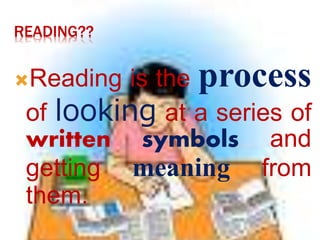
Reading is the process 
of looking at a series of 
written symbols and 
getting meaning from 
them.
THE PRINCIPLES OF TEACHING 
READING 
The word approach 
The whole language 
approach
BACK 
 used in introducing vocabulary. If the students 
learn the meaning of a word and how to say it 
before they see the written word especially when 
the sound and spelling are different is meaningful. 
 It can by done by look and say or trough word 
recognition such as matching words and pictures , 
finding the object of the word written on cards, 
rearanging jumbled letters, completing missing 
letters in words, drawing pictures next to words, 
putting words in puzzles, etc.
BACK 
Children read words in connection 
to other words. They example 
students read sentences with 
pictures that show the meaning or 
read a story that they already 
familiar with. If the students find 
an unfamiliar word, they can 
guess the meaning by using
BENEFIT OF TEACHING READING 
 Thrive in school 
 Expands children’s knowledge ( Vocabulary, 
spelling, and writing) 
 RT gives good models of writing 
 Good reading text stimulates discussions and 
imaginations 
 RA expouses children to grammar, phrases, and 
vocabulary (improving speaking skills) 
 RA heps children understand the relationship 
between printed words and their sounds and 
meaning 
 Can expand their vocabulary by guessing the 
meaninngs of unfamiliar words based on the
TIPS FOR TEACHING READING 
 Set a regular reading time with the students 
 Supplying interesting book to read at home 
and school 
 Encourage parents to have a family reading 
time 
 Motivate to read different kinds of text such 
as games directions, road signs, menus, etc 
 Take students to the library 
 Help to solve reading problem quickly 
 Show anthusiasm and give genuine praise 
for students’ reading
READING ACTIVITIES 
 Extensive Reading 
 Intensive Reading 
 Predicting 
 Jumbled letters, words, sentences, and paragraph 
 Following instruction 
 Comprehension questions 
 Gapfill sentences 
 Cloze paragraph 
 Retelling 
 Introducing new books 
 Book reviews
SAMPEL READING LESSON 
 Topic: Reading a story 
 Materials: Copy of the “ Little Red Riding 
Hood and the picture cut handout, cut out 
so that each student has a copy of it. 
 Adjectives: 
 - Predict the events in the story 
 - Apply new learning in an independent task
LITTLE RED RIDING HOOD 
 There were once a little girl who lived in a 
village near the forest. She wore a red 
riding cloak. Everyone called her a little 
red riding hood. Once morning, little red 
riding hood wanted to visit her 
grandmother and asked her mother if she 
could go “ That’s a good idea” mother 
said. She made a nice picnic basket to 
take to her grandmother
CLOSING CP 
 Good bye teacher 
 Good bye my friends 
 It’s time to go home 
 See you next time teacher 
 See you next time my friends 
 See you next time my wonderful class 
 THANK YOU :*

Group 2 EYL reading

  • 1.
    GROUP III 1.Nur Imamah 2. Devin Yusfa IS 3. Riran Puji Lestari 4. Primadina Cahyati 5. Ida Lestari
  • 2.
    OPENING CP Good morning my teacher  good morning my friends  How are you today  I am pretty well  Let’s smile together let’s enjoy the class  I hope everything is gonna be OK
  • 3.
    READING?? Reading isthe process of looking at a series of written symbols and getting meaning from them.
  • 4.
    THE PRINCIPLES OFTEACHING READING The word approach The whole language approach
  • 5.
    BACK  usedin introducing vocabulary. If the students learn the meaning of a word and how to say it before they see the written word especially when the sound and spelling are different is meaningful.  It can by done by look and say or trough word recognition such as matching words and pictures , finding the object of the word written on cards, rearanging jumbled letters, completing missing letters in words, drawing pictures next to words, putting words in puzzles, etc.
  • 6.
    BACK Children readwords in connection to other words. They example students read sentences with pictures that show the meaning or read a story that they already familiar with. If the students find an unfamiliar word, they can guess the meaning by using
  • 7.
    BENEFIT OF TEACHINGREADING  Thrive in school  Expands children’s knowledge ( Vocabulary, spelling, and writing)  RT gives good models of writing  Good reading text stimulates discussions and imaginations  RA expouses children to grammar, phrases, and vocabulary (improving speaking skills)  RA heps children understand the relationship between printed words and their sounds and meaning  Can expand their vocabulary by guessing the meaninngs of unfamiliar words based on the
  • 8.
    TIPS FOR TEACHINGREADING  Set a regular reading time with the students  Supplying interesting book to read at home and school  Encourage parents to have a family reading time  Motivate to read different kinds of text such as games directions, road signs, menus, etc  Take students to the library  Help to solve reading problem quickly  Show anthusiasm and give genuine praise for students’ reading
  • 9.
    READING ACTIVITIES Extensive Reading  Intensive Reading  Predicting  Jumbled letters, words, sentences, and paragraph  Following instruction  Comprehension questions  Gapfill sentences  Cloze paragraph  Retelling  Introducing new books  Book reviews
  • 10.
    SAMPEL READING LESSON  Topic: Reading a story  Materials: Copy of the “ Little Red Riding Hood and the picture cut handout, cut out so that each student has a copy of it.  Adjectives:  - Predict the events in the story  - Apply new learning in an independent task
  • 11.
    LITTLE RED RIDINGHOOD  There were once a little girl who lived in a village near the forest. She wore a red riding cloak. Everyone called her a little red riding hood. Once morning, little red riding hood wanted to visit her grandmother and asked her mother if she could go “ That’s a good idea” mother said. She made a nice picnic basket to take to her grandmother
  • 12.
    CLOSING CP Good bye teacher  Good bye my friends  It’s time to go home  See you next time teacher  See you next time my friends  See you next time my wonderful class  THANK YOU :*