I.C.T. INTEGRATION IN SCHOOLSGroup 1Project presentation
Issues relating to integration of I.C.T. in the classroomThere is limited access to internet (mainly wireless)The wiring of schools are not adequate (low voltage)The required physical space is inadequateThe incompetence and unwillingness of teachers
Issues relating to integration of I.C.T. in the classroomNo internet access at a number of students’ homes.Insufficient I.T. TechniciansSchool policies and rules which prohibit the use of cell phones and electronics by students during school / class time.
Ways of addressing issuesInternet systems must be upgraded; wireless hubs need to be installed.      Fundraisers- the funding will be realized via donations, P.T.A., School Boards, Alumni & Division fundingUpgrade electrical system via Division funding.Construction of more classes, shuffling of present classes to make wisest use of space.Training workshops for stakeholders both internal and external.
Ways of addressing issuesEstablish homework centre at schools which will be supervised by parents/teachers/prefects (probably 2-3 hours per day), to enable students to access the internet for home work assignments.Have the division assign full time I.T. technician at every school.Make adjustments to school rules and policies that govern the use of cell phones and electronics.
Advantages of I.C.T. in the classroomIt will equip students with the technological skills required for effective participation in the 21st century It will provide active collaboration among stakeholders (mainly student, teacher, parent)It will motivate students to enjoy their learning experience; to desire knowledge in an environment with which they are familiar.
Advantages of I.C.T. in the classroomIt will establish a reliable, central depository of school knowledge.It will adequately cater to multiple intelligences in the teaching / learning process. It will provide the opportunity for gaining the class experience outside the walls of the physical classroom.
OBJECTIVESTo produce students and teachers who possess the technological skills necessary to function in the 21st centuryTo make learning and teaching an exciting experience for both student and teacherTo create an environment that permits every child to learn and achieve at his/her highest potential
OBJECTIVESTo assist students in becoming actively engaged in their own learningTo improve the performance of students (academic and behavioral)To increase the occasions of interaction among stakeholders
AssessmentObservation and testing (pencil/paper, practical and so on) in the use of productivity and web toolsObservation; Questioning via online questionnaire, etc.Testing (pen/paper and projects/oral presentation; individual and group)
AssessmentObservation of students on taskTesting both internally (quizzes, home work assignments) and externally (N.C.S.E. and    C.S.E.C.)Observation (group work, statistics) and Questioning
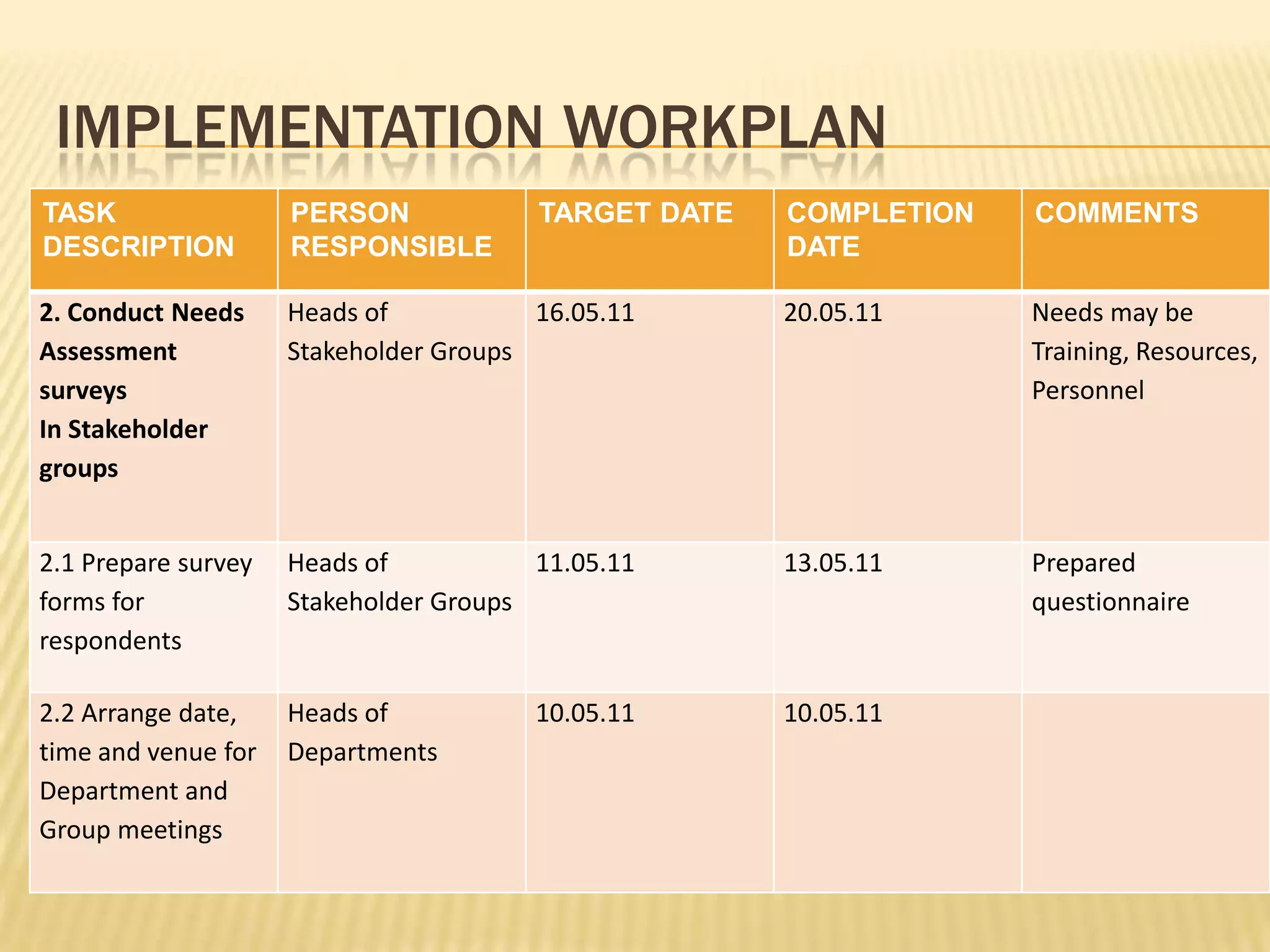
Implementation StrategiesDo an intervention planConduct meetings with management teams or boards. Include representatives from each stakeholder sectThe representative from each stakeholder faction will do a needs’ assessment about their stance on I.C.T.
Implementation StrategiesDetermine training needs of each factionTrained personnel (Principals, Vice-Principals, H.O.D.s, I.T. teachers) will be used to facilitate the new thrust. They will be responsible for training and monitoring the progress of their colleaguesAcquire resources
Implementation StrategiesInstallation and TestingImplementationEvaluation: clinical supervision will assist in this area, as well as review of lesson plans done by teachersReview: to be done at the end of every term; to meet with H.O.D.s ever so often
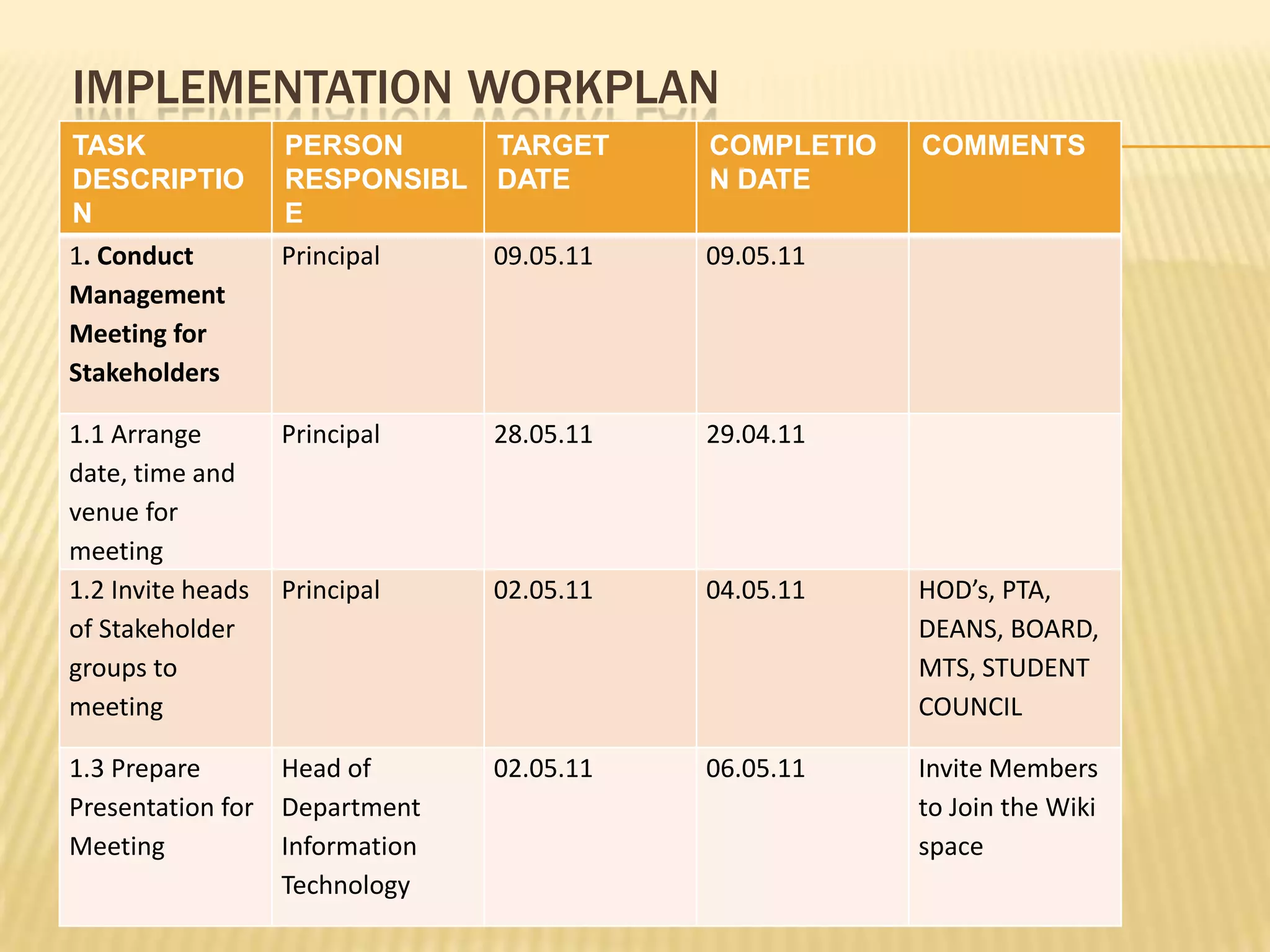
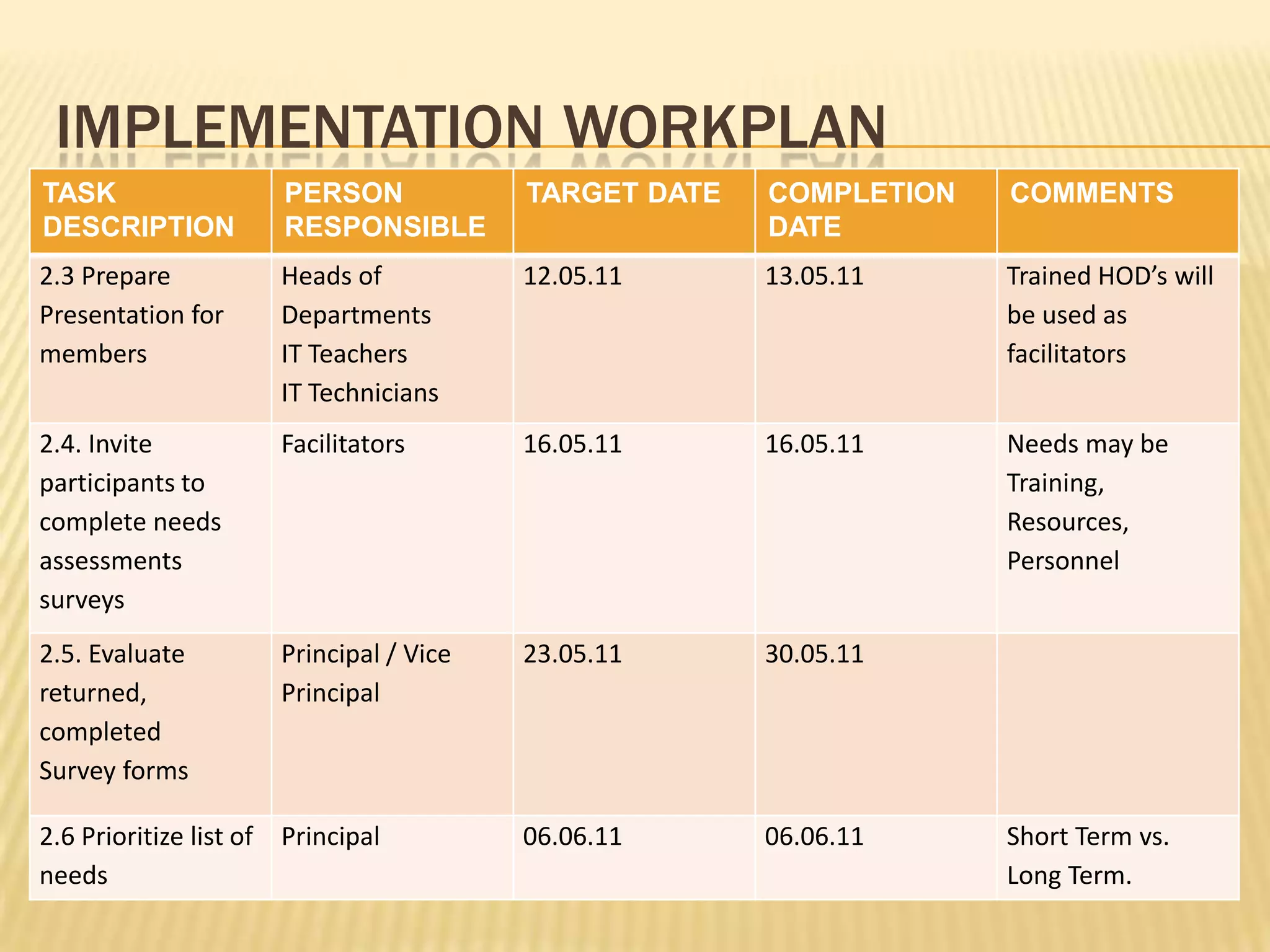
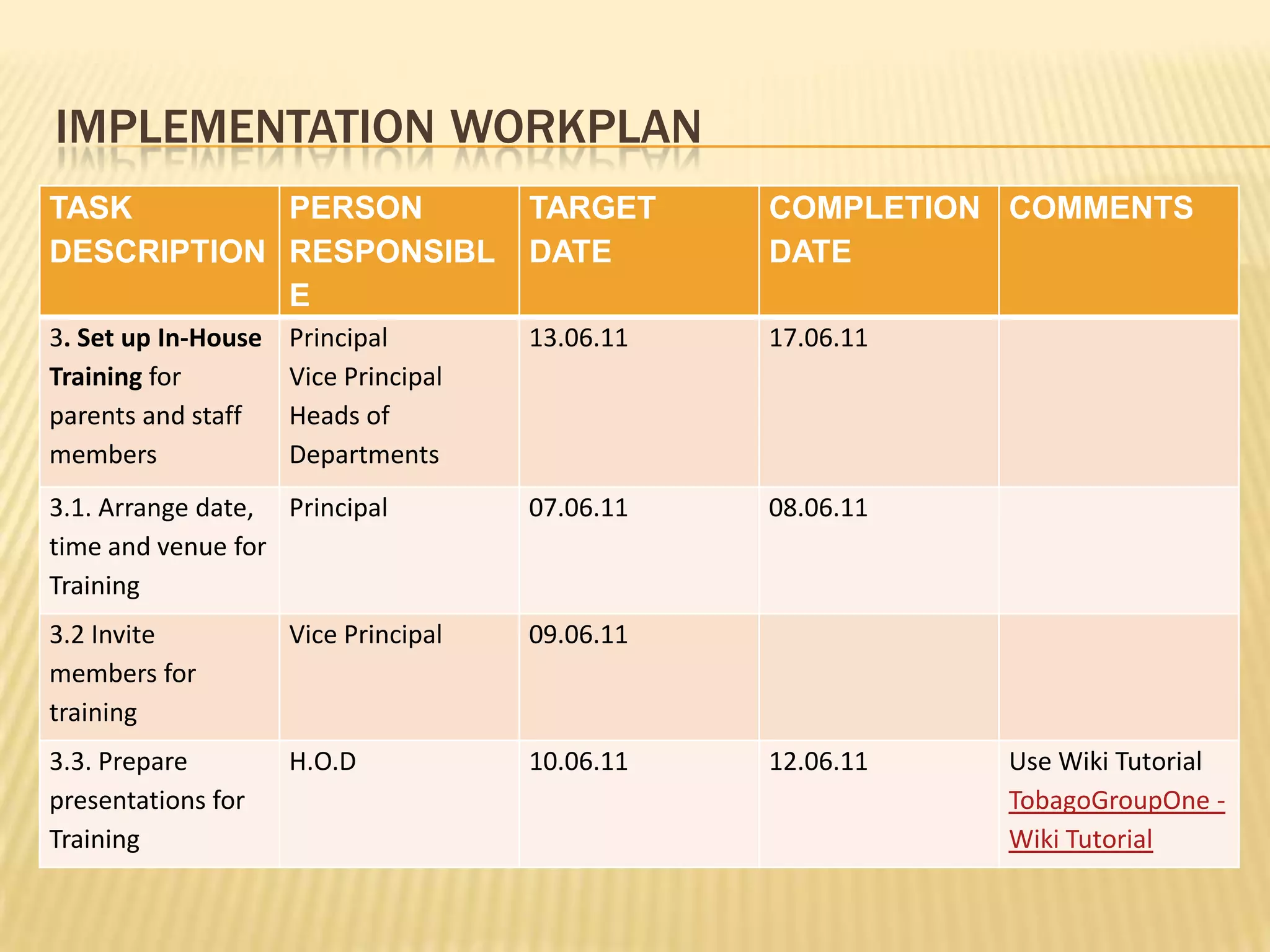
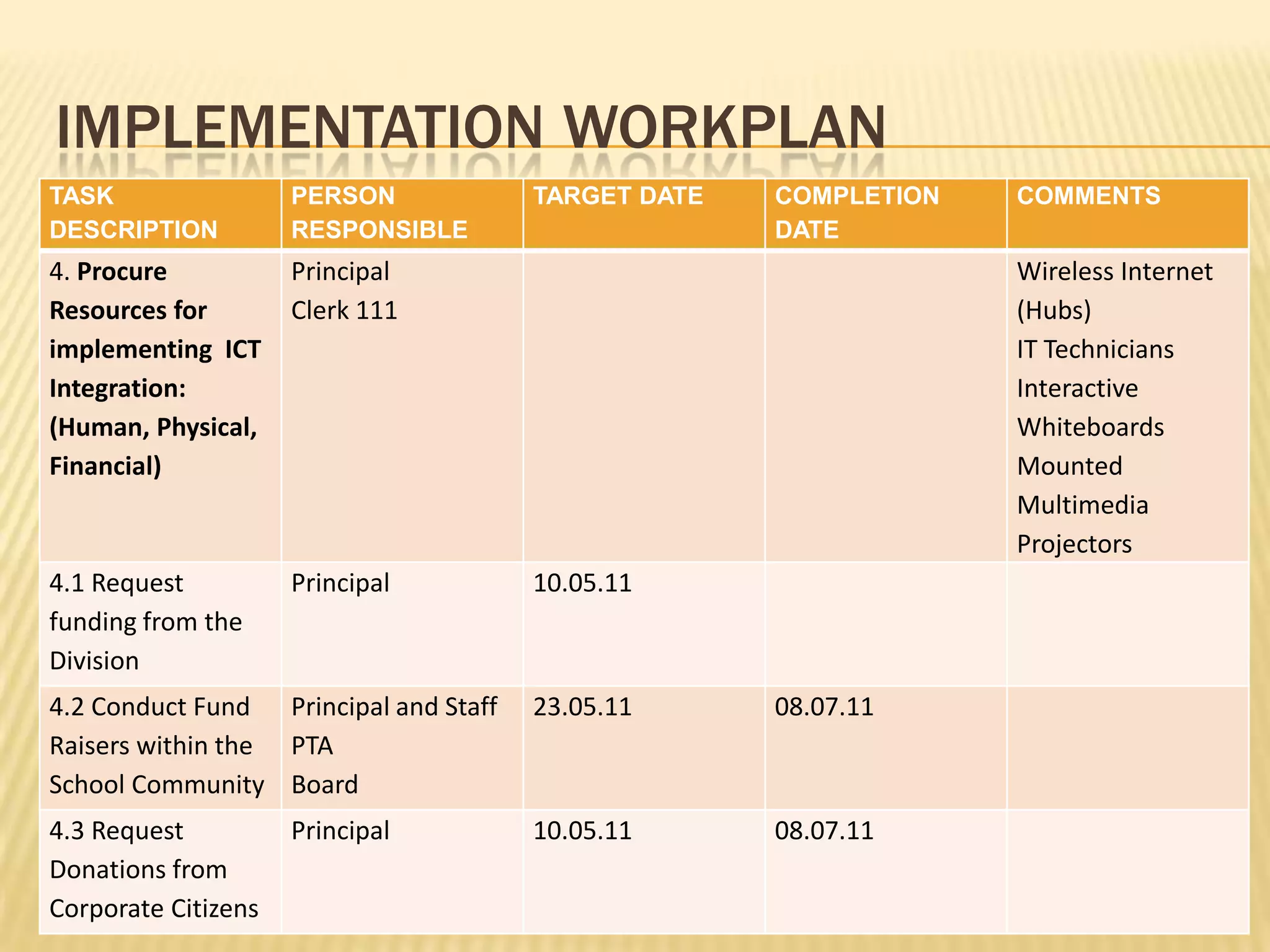
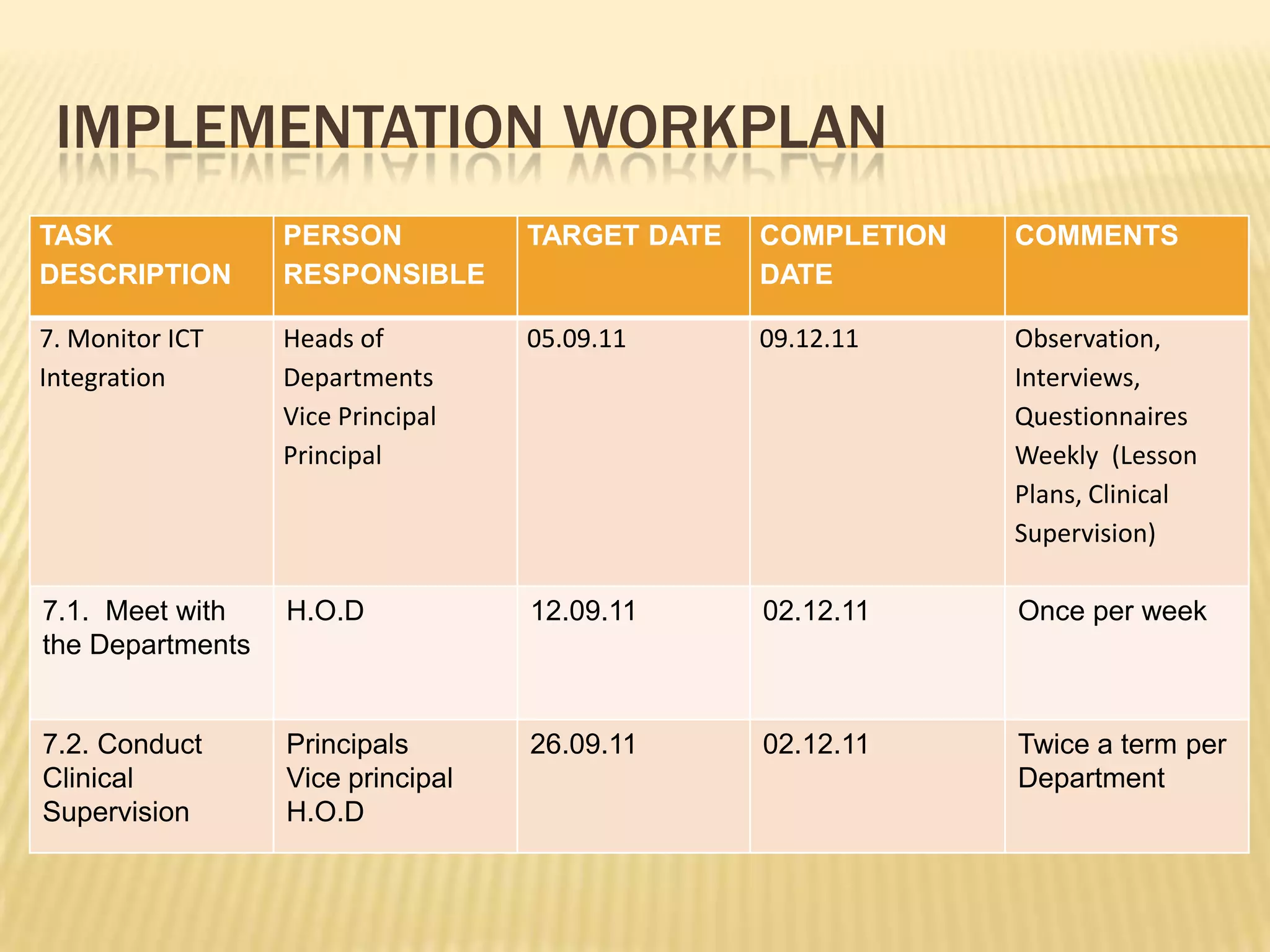
IMPLEMENTATIONWORKPLAN
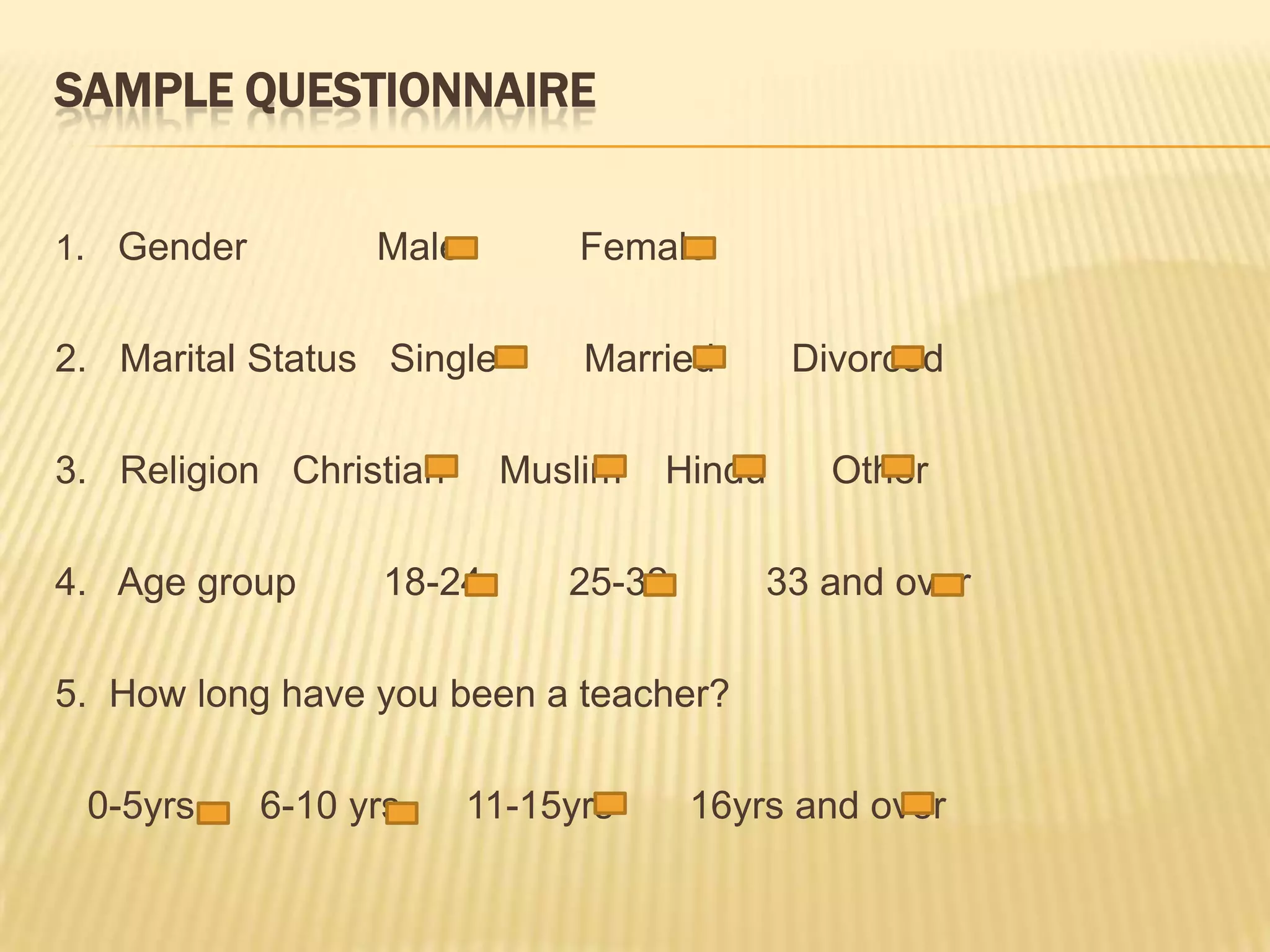
SampleQuestionnaire1.   Gender            Male           Female 2.   Marital Status   Single        Married       Divorced 3.   Religion   Christian     Muslim    Hindu      Other 4.   Age group        18-24        25-32         33 and over 5.  How long have you been a teacher?       0-5yrs      6-10 yrs  11-15yrs       16yrs and over
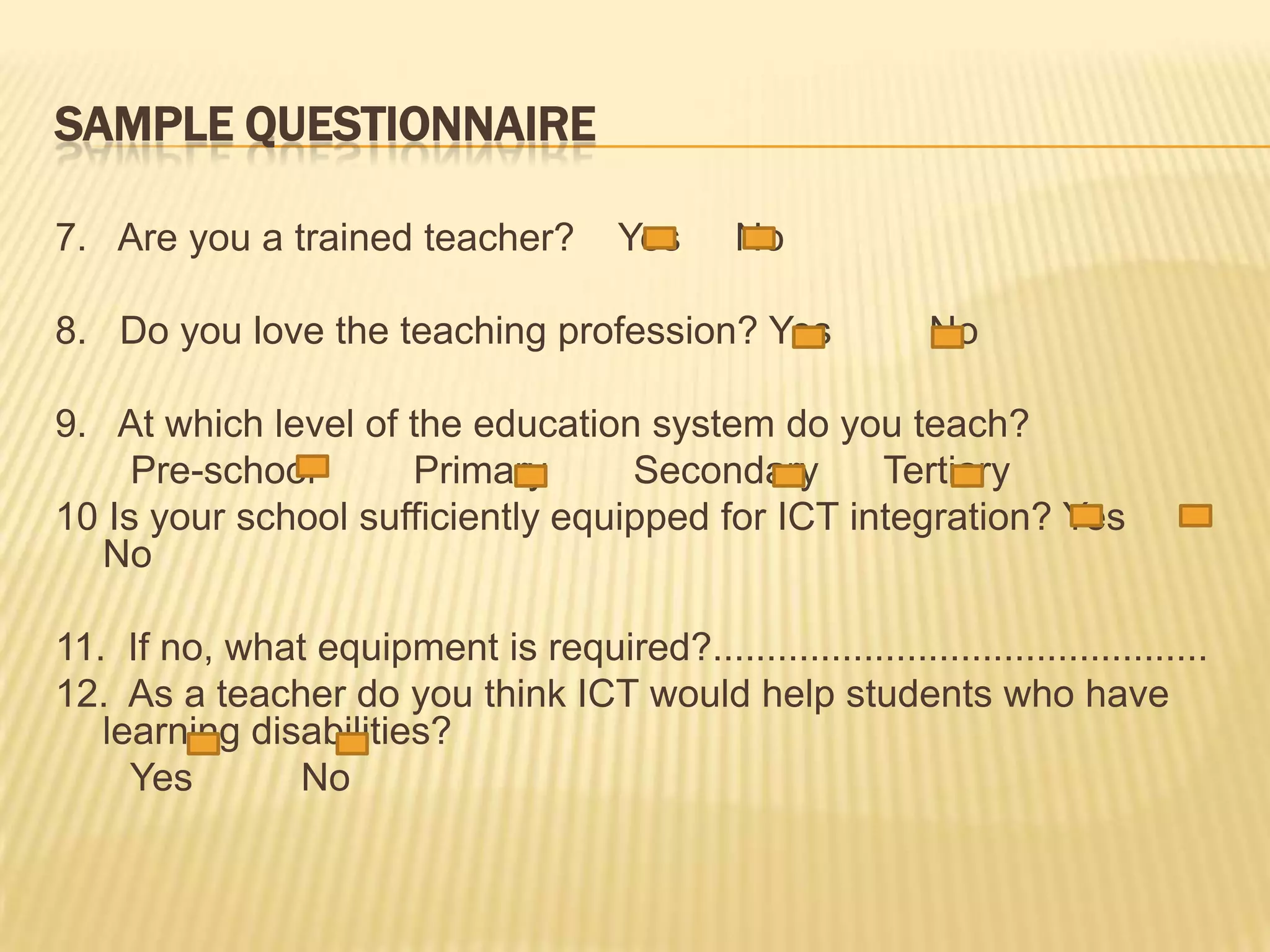
SampleQuestionnaire7.   Are you a trained teacher?    Yes     No  8.   Do you love the teaching profession? Yes         No 9.   At which level of the education system do you teach?       Pre-school        Primary        Secondary      Tertiary 10 Is your school sufficiently equipped for ICT integration?Yes      No 11.  If no, what equipment is required?..............................................12.  As a teacher do you think ICT would help students who have learning disabilities?       Yes          No
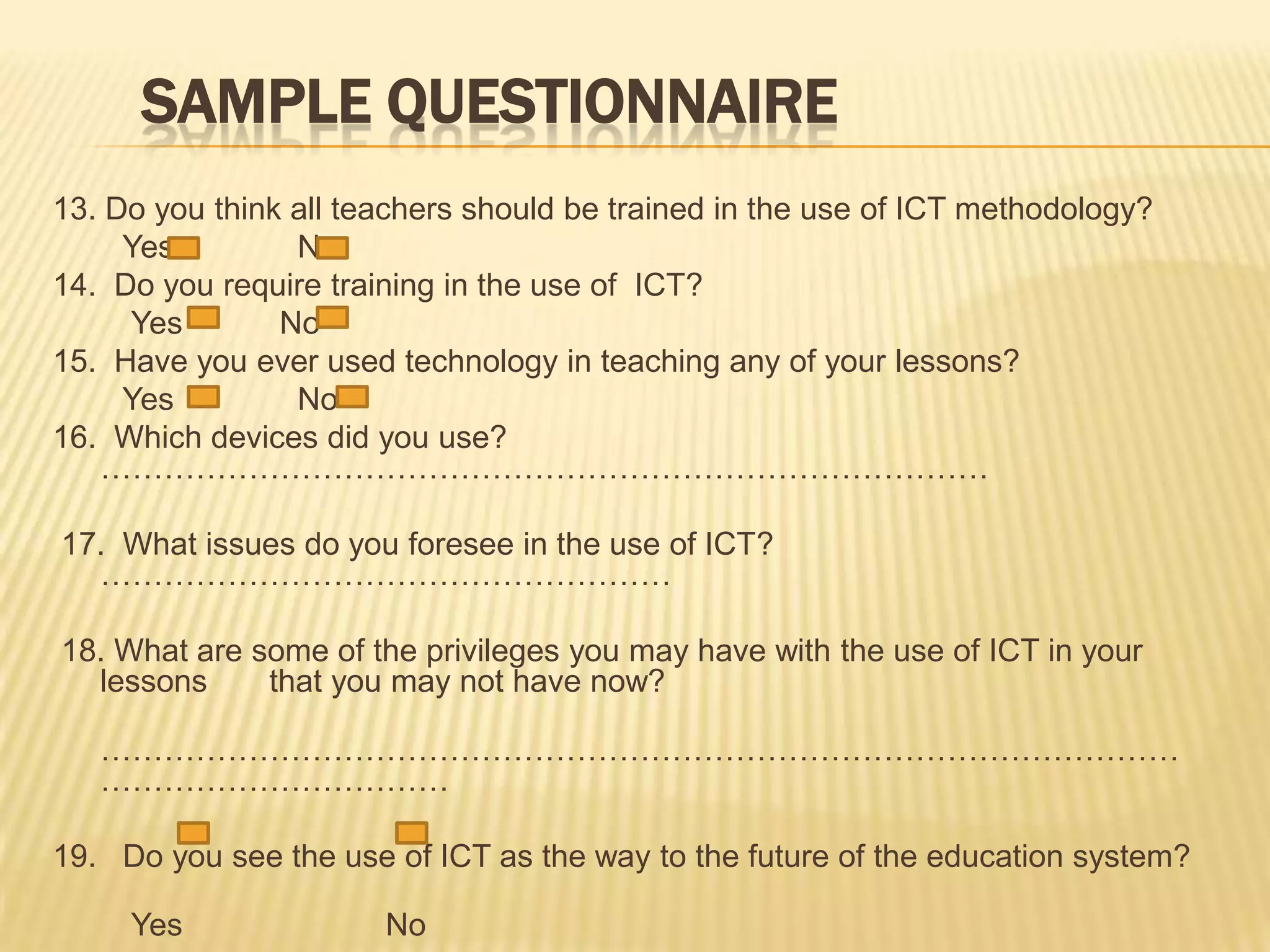
SampleQuestionnaire13. Do you think all teachers should be trained in the use of ICT methodology?        Yes             No14.  Do you require training in the use of  ICT?         Yes           No15.  Have you ever used technology in teaching any of your lessons?        Yes              No16.  Which devices did you use? ………………………………………………………………………… 17.  What issues do you foresee in the use of ICT? ………………………………………………18. What are some of the privileges you may have with the use of ICT in your lessons       that you may not have now?       ………………………………………………………………………………………………………………………19.   Do you see the use of ICT as the way to the future of the education system?         Yes                      No
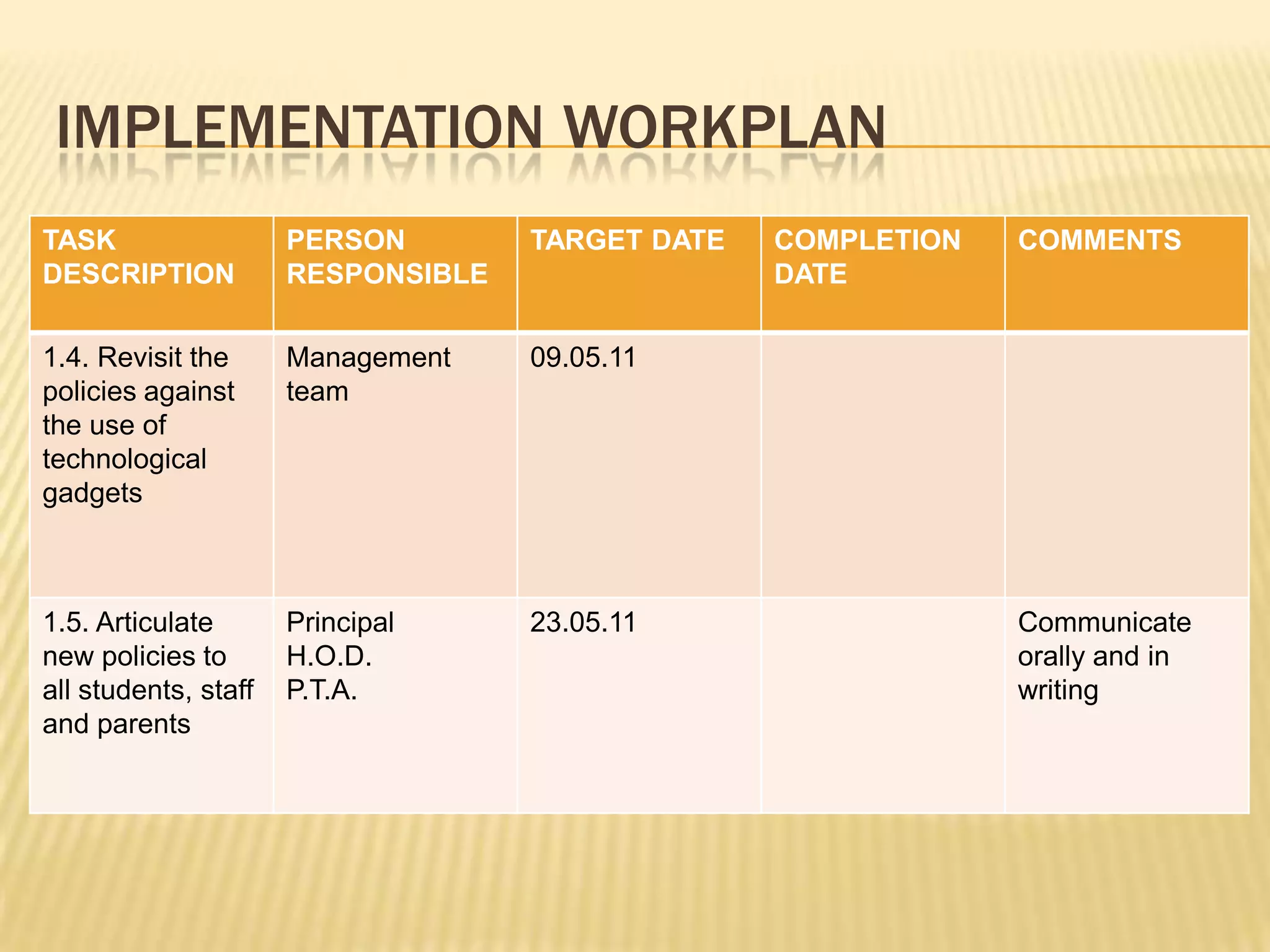
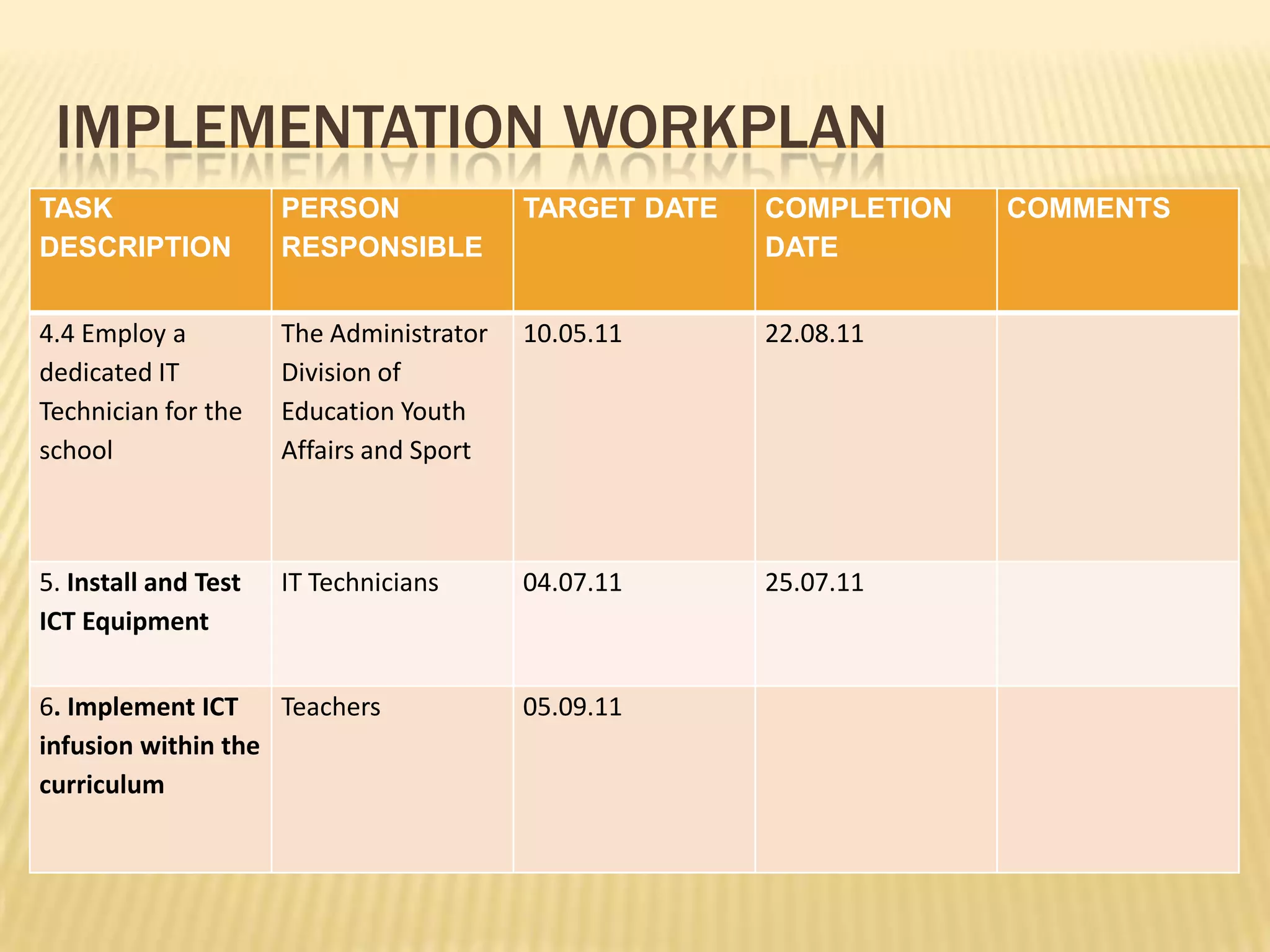
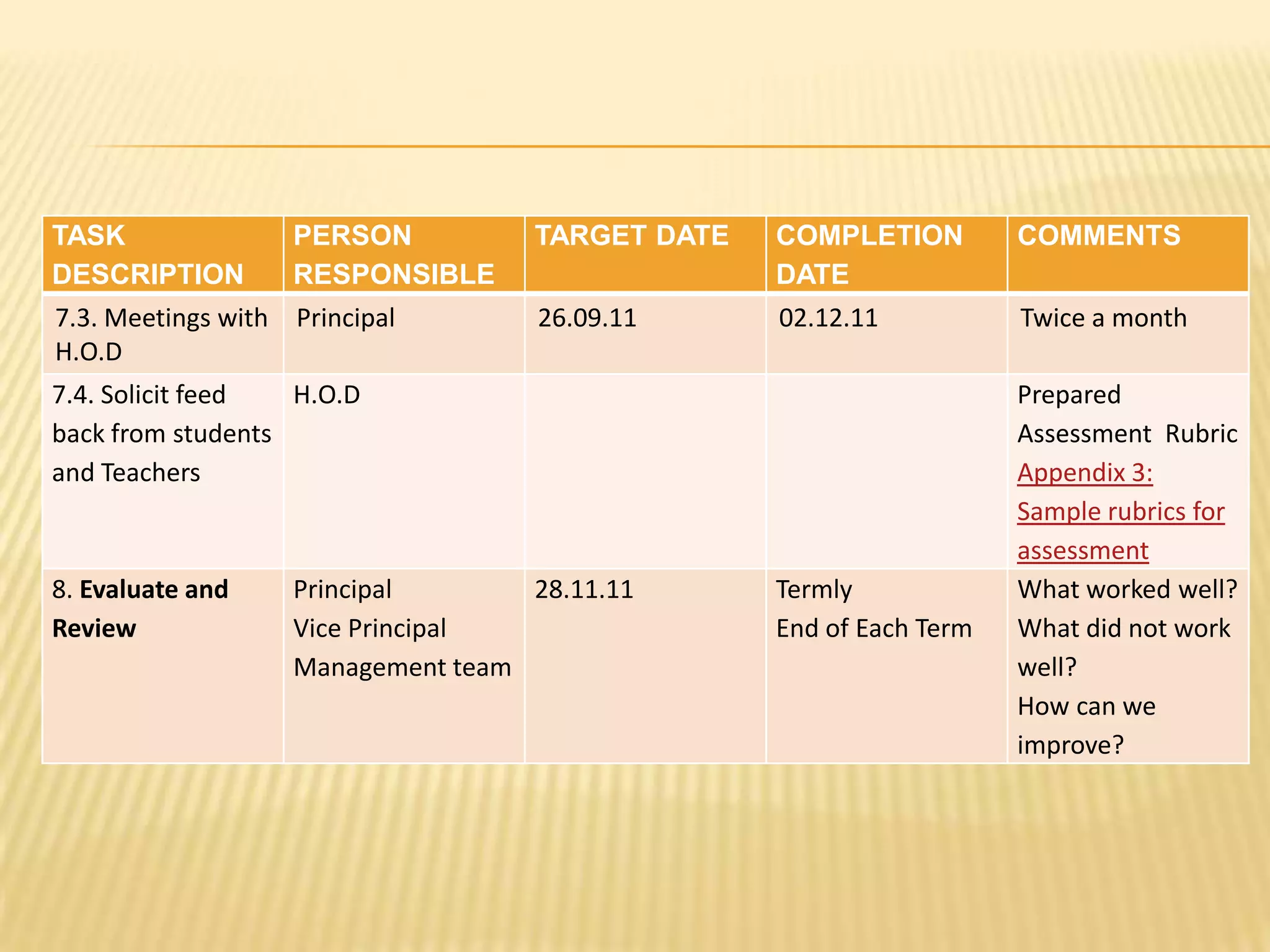
IMPLEMENTATIONWORKPLAN
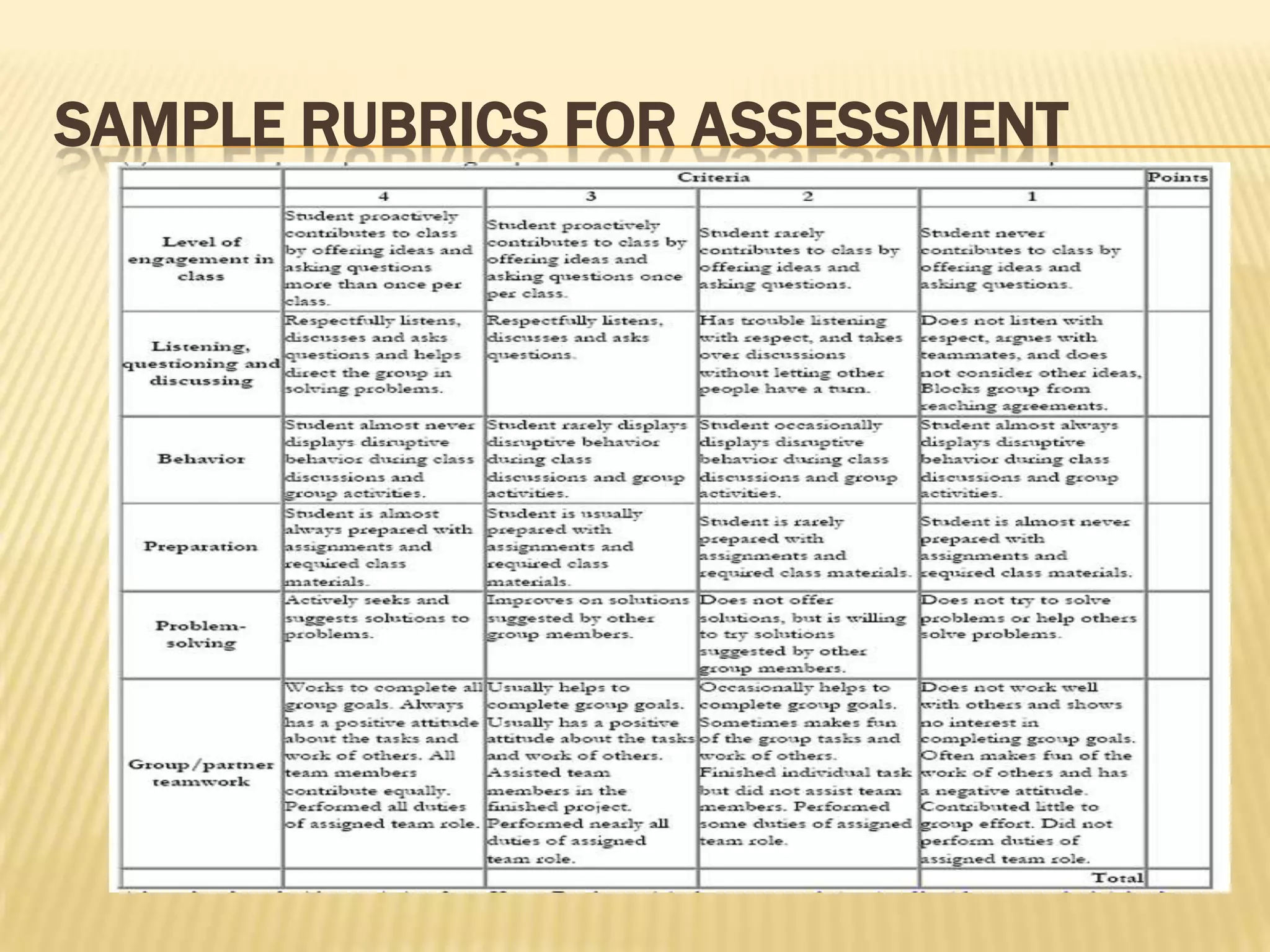
Sample rubrics for assessment
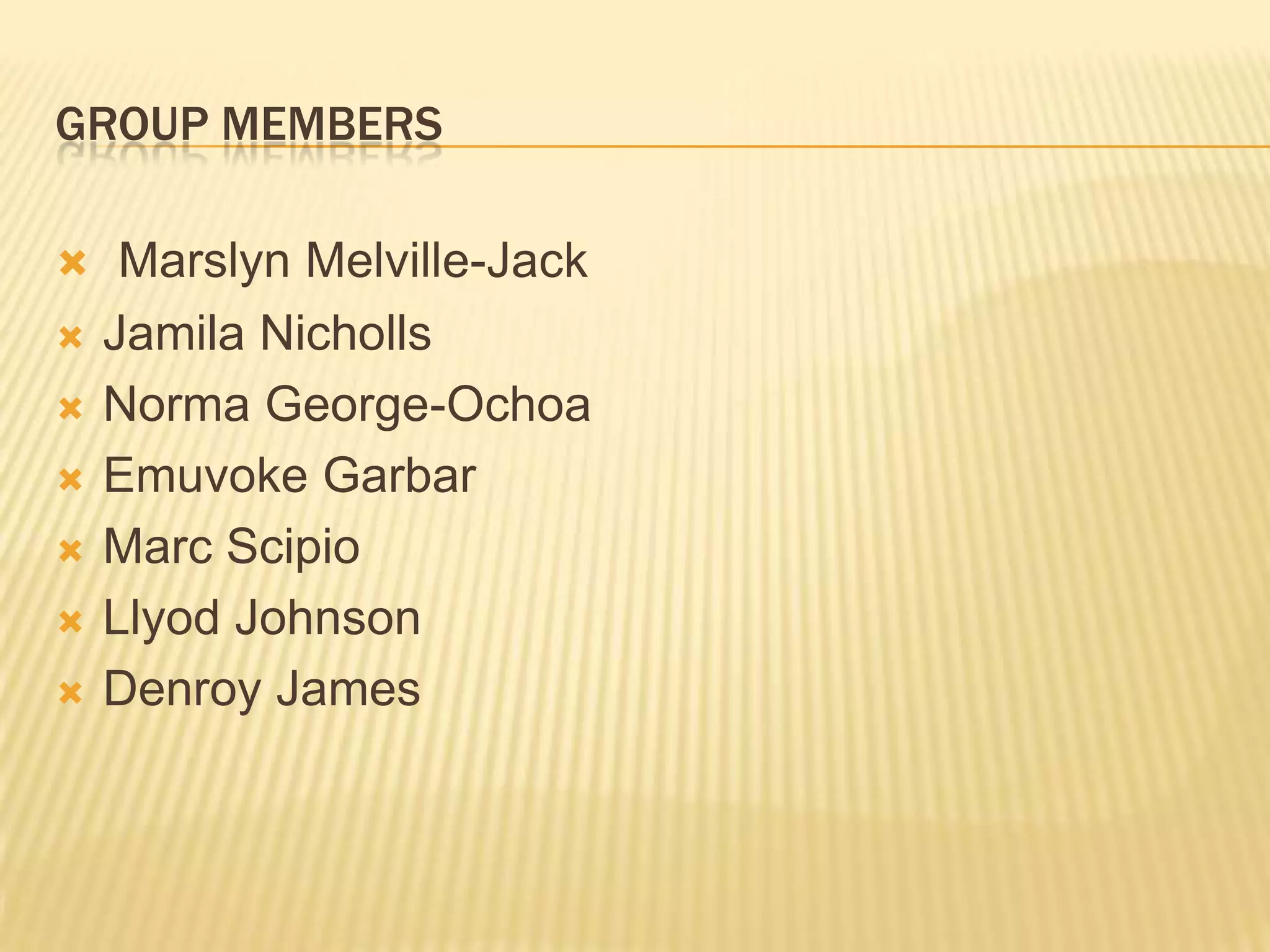
GROUP MembersMarslyn Melville-JackJamila NichollsNorma George-Ochoa  EmuvokeGarbarMarc Scipio Llyod JohnsonDenroy James
THE END

Group 1 ict project

  • 1.
    I.C.T. INTEGRATION INSCHOOLSGroup 1Project presentation
  • 2.
    Issues relating tointegration of I.C.T. in the classroomThere is limited access to internet (mainly wireless)The wiring of schools are not adequate (low voltage)The required physical space is inadequateThe incompetence and unwillingness of teachers
  • 3.
    Issues relating tointegration of I.C.T. in the classroomNo internet access at a number of students’ homes.Insufficient I.T. TechniciansSchool policies and rules which prohibit the use of cell phones and electronics by students during school / class time.
  • 4.
    Ways of addressingissuesInternet systems must be upgraded; wireless hubs need to be installed. Fundraisers- the funding will be realized via donations, P.T.A., School Boards, Alumni & Division fundingUpgrade electrical system via Division funding.Construction of more classes, shuffling of present classes to make wisest use of space.Training workshops for stakeholders both internal and external.
  • 5.
    Ways of addressingissuesEstablish homework centre at schools which will be supervised by parents/teachers/prefects (probably 2-3 hours per day), to enable students to access the internet for home work assignments.Have the division assign full time I.T. technician at every school.Make adjustments to school rules and policies that govern the use of cell phones and electronics.
  • 6.
    Advantages of I.C.T.in the classroomIt will equip students with the technological skills required for effective participation in the 21st century It will provide active collaboration among stakeholders (mainly student, teacher, parent)It will motivate students to enjoy their learning experience; to desire knowledge in an environment with which they are familiar.
  • 7.
    Advantages of I.C.T.in the classroomIt will establish a reliable, central depository of school knowledge.It will adequately cater to multiple intelligences in the teaching / learning process. It will provide the opportunity for gaining the class experience outside the walls of the physical classroom.
  • 8.
    OBJECTIVESTo produce studentsand teachers who possess the technological skills necessary to function in the 21st centuryTo make learning and teaching an exciting experience for both student and teacherTo create an environment that permits every child to learn and achieve at his/her highest potential
  • 9.
    OBJECTIVESTo assist studentsin becoming actively engaged in their own learningTo improve the performance of students (academic and behavioral)To increase the occasions of interaction among stakeholders
  • 10.
    AssessmentObservation and testing(pencil/paper, practical and so on) in the use of productivity and web toolsObservation; Questioning via online questionnaire, etc.Testing (pen/paper and projects/oral presentation; individual and group)
  • 11.
    AssessmentObservation of studentson taskTesting both internally (quizzes, home work assignments) and externally (N.C.S.E. and C.S.E.C.)Observation (group work, statistics) and Questioning
  • 12.
    Implementation StrategiesDo anintervention planConduct meetings with management teams or boards. Include representatives from each stakeholder sectThe representative from each stakeholder faction will do a needs’ assessment about their stance on I.C.T.
  • 13.
    Implementation StrategiesDetermine trainingneeds of each factionTrained personnel (Principals, Vice-Principals, H.O.D.s, I.T. teachers) will be used to facilitate the new thrust. They will be responsible for training and monitoring the progress of their colleaguesAcquire resources
  • 14.
    Implementation StrategiesInstallation andTestingImplementationEvaluation: clinical supervision will assist in this area, as well as review of lesson plans done by teachersReview: to be done at the end of every term; to meet with H.O.D.s ever so often
  • 15.
  • 16.
  • 17.
  • 18.
    SampleQuestionnaire1. Gender Male Female 2. Marital Status Single Married Divorced 3. Religion Christian Muslim Hindu Other 4. Age group 18-24 25-32 33 and over 5. How long have you been a teacher?   0-5yrs 6-10 yrs 11-15yrs 16yrs and over
  • 19.
    SampleQuestionnaire7. Are you a trained teacher? Yes No  8. Do you love the teaching profession? Yes No 9. At which level of the education system do you teach? Pre-school Primary Secondary Tertiary 10 Is your school sufficiently equipped for ICT integration?Yes No 11. If no, what equipment is required?..............................................12. As a teacher do you think ICT would help students who have learning disabilities? Yes No
  • 20.
    SampleQuestionnaire13. Do youthink all teachers should be trained in the use of ICT methodology? Yes No14. Do you require training in the use of ICT? Yes No15. Have you ever used technology in teaching any of your lessons? Yes No16. Which devices did you use? ………………………………………………………………………… 17. What issues do you foresee in the use of ICT? ………………………………………………18. What are some of the privileges you may have with the use of ICT in your lessons that you may not have now? ………………………………………………………………………………………………………………………19. Do you see the use of ICT as the way to the future of the education system? Yes No
  • 21.
  • 22.
  • 23.
  • 24.
  • 25.
  • 27.
  • 28.
    GROUP MembersMarslyn Melville-JackJamilaNichollsNorma George-Ochoa EmuvokeGarbarMarc Scipio Llyod JohnsonDenroy James
  • 29.