CLASS: IX
INFORMATION TECHNOLOGY
Green skills are those skills needed to adapt processes, services and
products to climate change and the environmental regulations and
requirements related to it. They include the knowledge, abilities, values and
attitudes needed to live in, develop and support a sustainable and resource-
efficient society. These skills are required in areas such as such as Renewable
energy, Wastewater treatment, Climate resilient cities, Green construction,
Solid waste management etc.
What is Green Skills?
What is environment ?
The environment can be defined as a sum total of all the living and
non-living elements and their effects which influence human life.
While all living or biotic elements are animals, plants, forests, fisheries,
and birds, etc. The non-living or abiotic elements include water, land,
sunlight, rocks, and air, etc.
STRUCTURE OF ENVIRONMENT
Structure of
environment
Physical or
Abiotic
Environment
Solid
[The lithosphere ]
Liquid
[The hydrosphere
(water
component)
Gas
[The atmosphere]
Biotic
Environment
Flora
Fauna
Biotic environment
It consist of all living things in an ecosystem. Among all biotic elements, Flora
and Fauna are the most fascinating ones
The term flora in Latin means “Goddess of the
Flower.”
Fauna represents the animal life
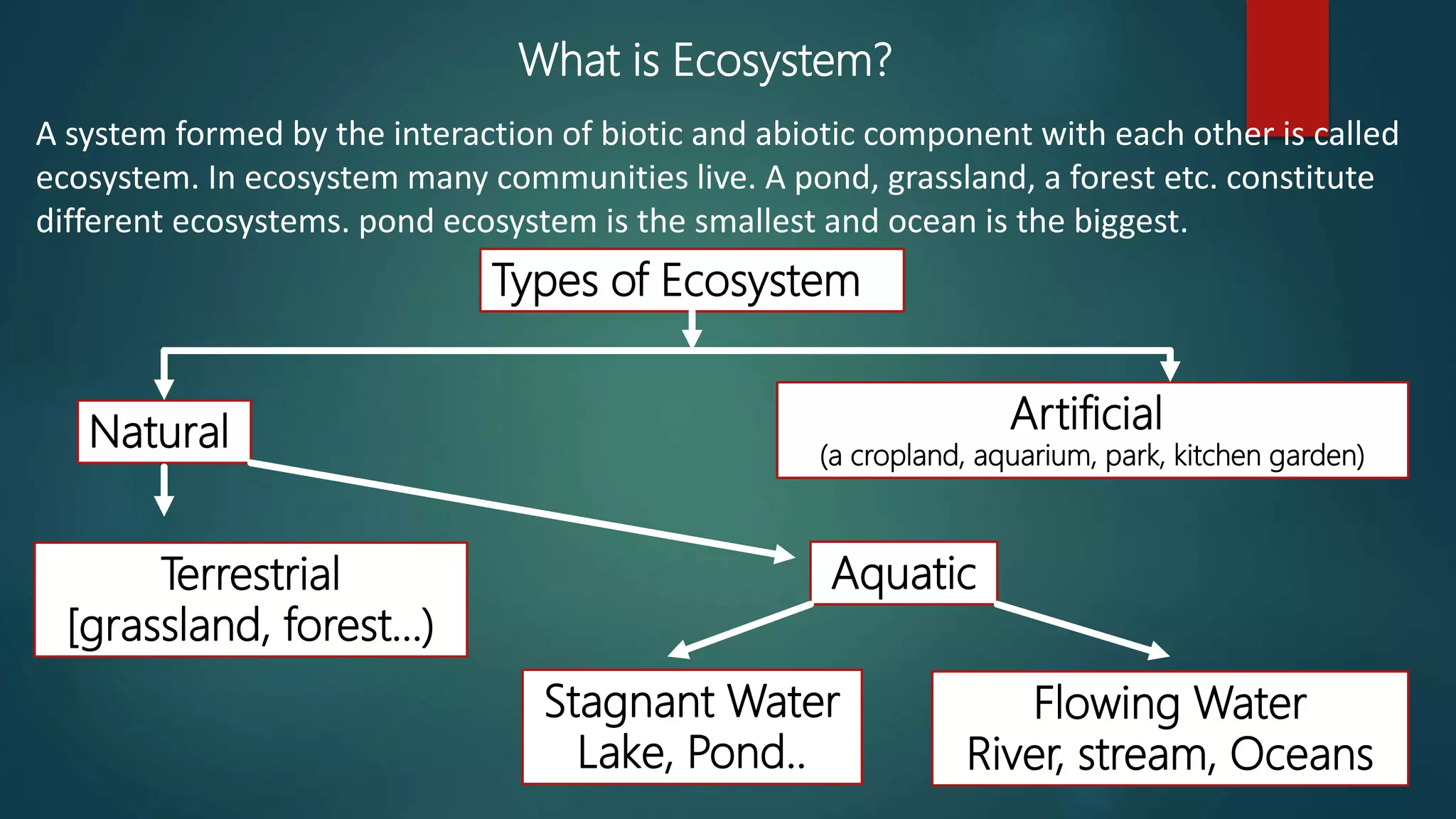
What is Ecosystem?
A system formed by the interaction of biotic and abiotic component with each other is called
ecosystem. In ecosystem many communities live. A pond, grassland, a forest etc. constitute
different ecosystems. pond ecosystem is the smallest and ocean is the biggest.
Types of Ecosystem
Natural Artificial
(a cropland, aquarium, park, kitchen garden)
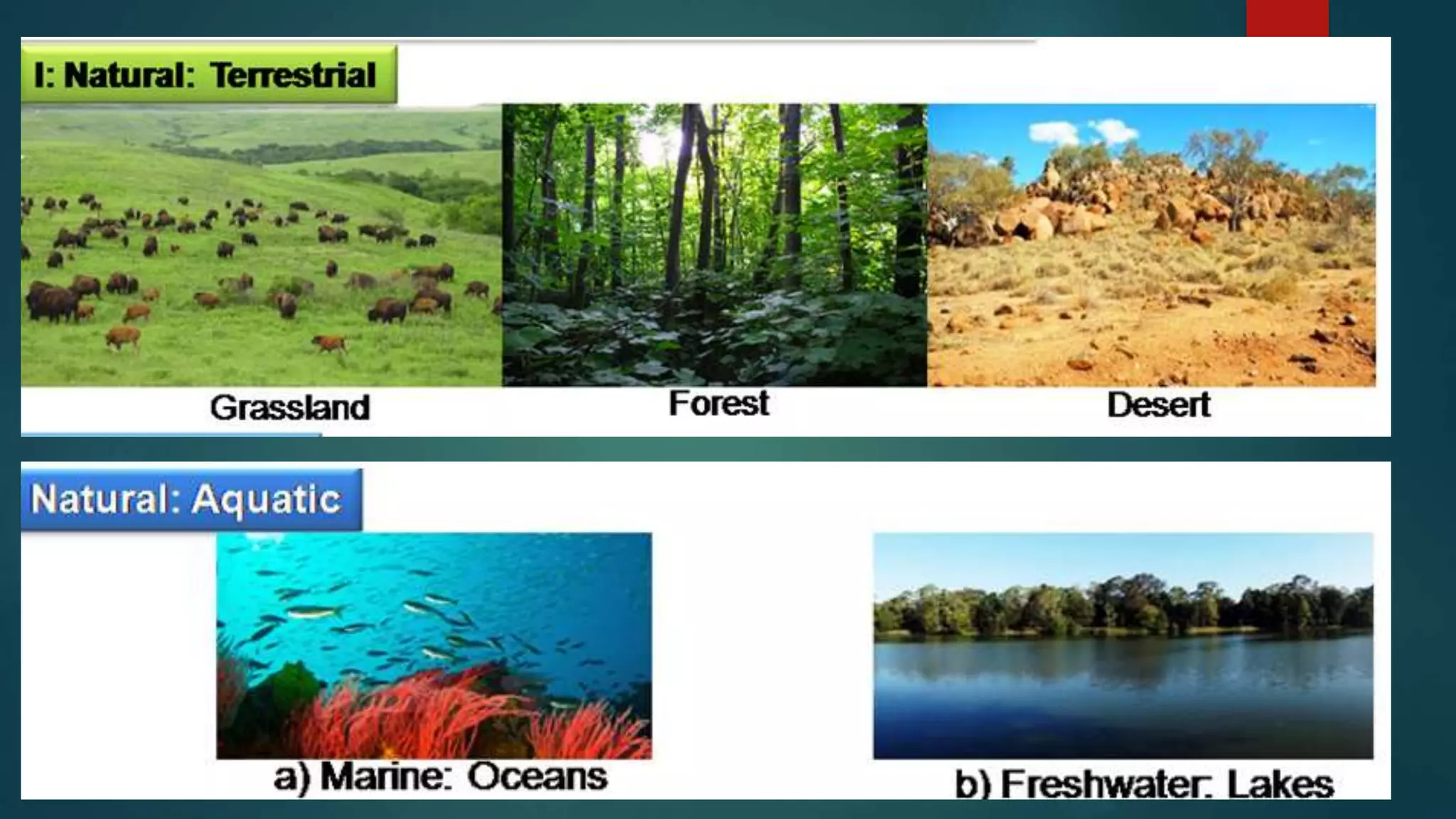
Terrestrial
[grassland, forest…)
Aquatic
Stagnant Water
Lake, Pond..
Flowing Water
River, stream, Oceans
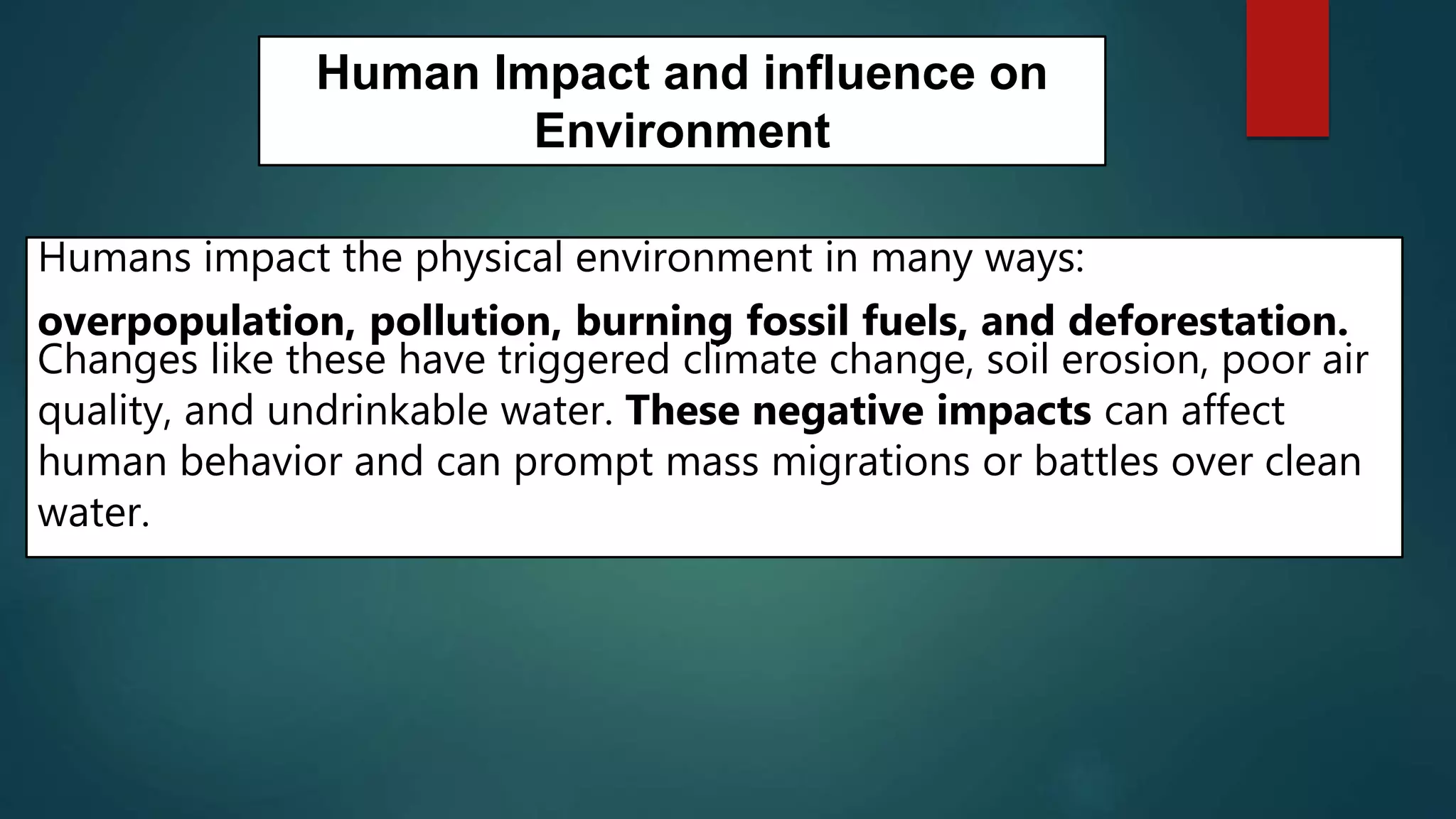
Human Impact and influence on
Environment
Humans impact the physical environment in many ways:
overpopulation, pollution, burning fossil fuels, and deforestation.
Changes like these have triggered climate change, soil erosion, poor air
quality, and undrinkable water. These negative impacts can affect
human behavior and can prompt mass migrations or battles over clean
water.
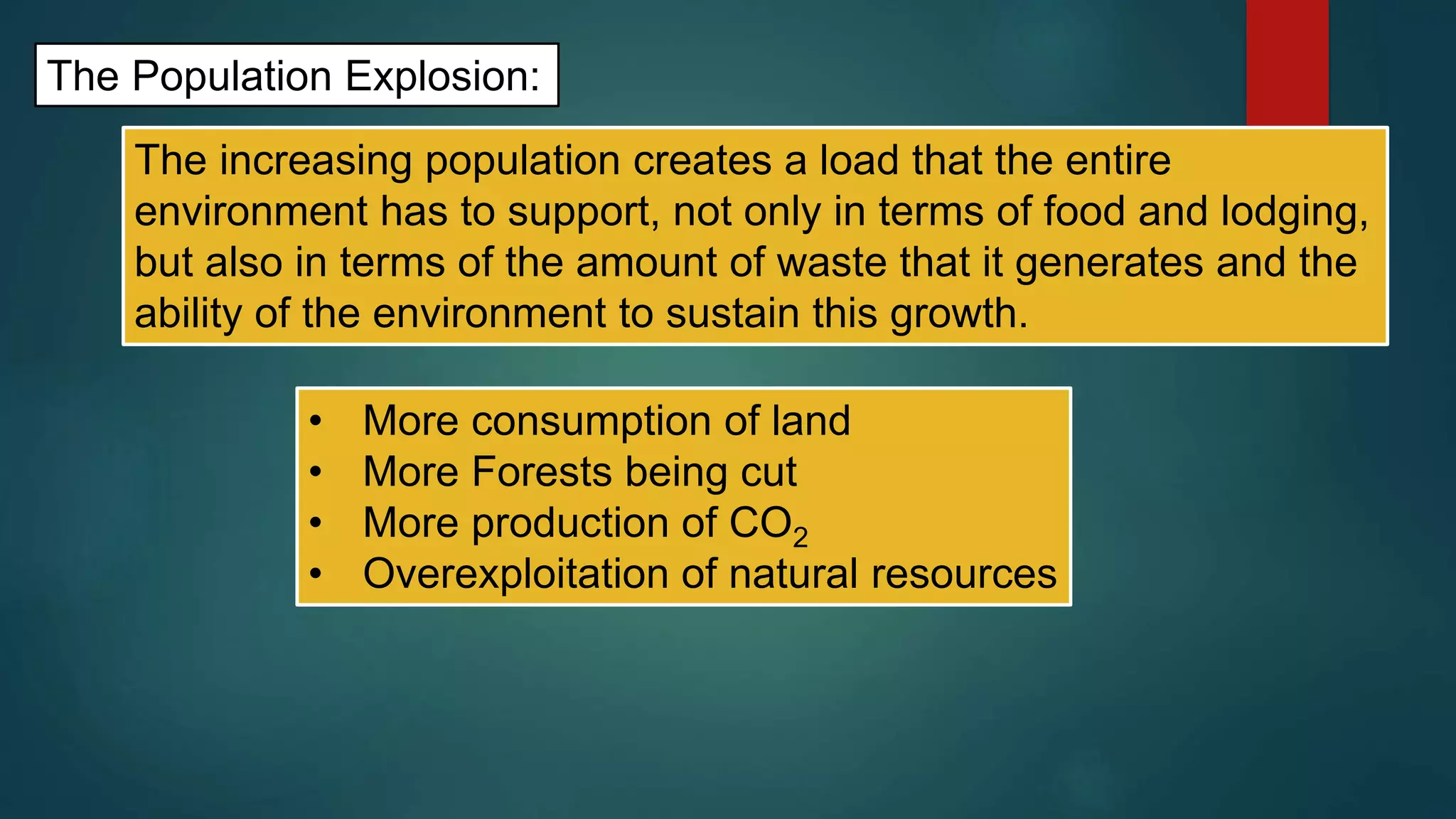
The Population Explosion:
The increasing population creates a load that the entire
environment has to support, not only in terms of food and lodging,
but also in terms of the amount of waste that it generates and the
ability of the environment to sustain this growth.
• More consumption of land
• More Forests being cut
• More production of CO2
• Overexploitation of natural resources
Pollution
Pollution is the introduction of contaminants into the natural
environment that cause adverse change. The term "pollution" refers
to any substance that negatively impacts the environment or
organisms that live within the affected environment. The five major
types of pollution include: air pollution, water pollution, soil
pollution, light pollution, and noise pollution.
Global Warming
It refers to the increase of earths average temperature all across
the globe. The rising average temperature of Earth's climate
system, called global warming

GREEN SKILLS[PART-1]

  • 1.
  • 2.
    Green skills arethose skills needed to adapt processes, services and products to climate change and the environmental regulations and requirements related to it. They include the knowledge, abilities, values and attitudes needed to live in, develop and support a sustainable and resource- efficient society. These skills are required in areas such as such as Renewable energy, Wastewater treatment, Climate resilient cities, Green construction, Solid waste management etc. What is Green Skills?
  • 3.
    What is environment? The environment can be defined as a sum total of all the living and non-living elements and their effects which influence human life. While all living or biotic elements are animals, plants, forests, fisheries, and birds, etc. The non-living or abiotic elements include water, land, sunlight, rocks, and air, etc.
  • 4.
    STRUCTURE OF ENVIRONMENT Structureof environment Physical or Abiotic Environment Solid [The lithosphere ] Liquid [The hydrosphere (water component) Gas [The atmosphere] Biotic Environment Flora Fauna
  • 6.
    Biotic environment It consistof all living things in an ecosystem. Among all biotic elements, Flora and Fauna are the most fascinating ones The term flora in Latin means “Goddess of the Flower.” Fauna represents the animal life
  • 7.
    What is Ecosystem? Asystem formed by the interaction of biotic and abiotic component with each other is called ecosystem. In ecosystem many communities live. A pond, grassland, a forest etc. constitute different ecosystems. pond ecosystem is the smallest and ocean is the biggest. Types of Ecosystem Natural Artificial (a cropland, aquarium, park, kitchen garden) Terrestrial [grassland, forest…) Aquatic Stagnant Water Lake, Pond.. Flowing Water River, stream, Oceans
  • 10.
    Human Impact andinfluence on Environment Humans impact the physical environment in many ways: overpopulation, pollution, burning fossil fuels, and deforestation. Changes like these have triggered climate change, soil erosion, poor air quality, and undrinkable water. These negative impacts can affect human behavior and can prompt mass migrations or battles over clean water.
  • 11.
    The Population Explosion: Theincreasing population creates a load that the entire environment has to support, not only in terms of food and lodging, but also in terms of the amount of waste that it generates and the ability of the environment to sustain this growth. • More consumption of land • More Forests being cut • More production of CO2 • Overexploitation of natural resources
  • 12.
    Pollution Pollution is theintroduction of contaminants into the natural environment that cause adverse change. The term "pollution" refers to any substance that negatively impacts the environment or organisms that live within the affected environment. The five major types of pollution include: air pollution, water pollution, soil pollution, light pollution, and noise pollution.
  • 13.
    Global Warming It refersto the increase of earths average temperature all across the globe. The rising average temperature of Earth's climate system, called global warming