Green and on-the-go:
Actioning environmental
prosperity through tech
REMOTE WORKING
is it...
GREEN MEAN?
or
WE INVESTIGATE...
The good
news is:
compared to the bulky
desktop PCs of yesteryear,
today’s average computing
device uses far fewer
materials.
But how can we measure the environmental
impact of each individual device?
ANSWER:
by looking at its
carbon footprint
i.e. how much carbon dioxide (CO2) is
released during its manufacture and
subsequent lifecycle.
THE FIGURES ARE STARTLING
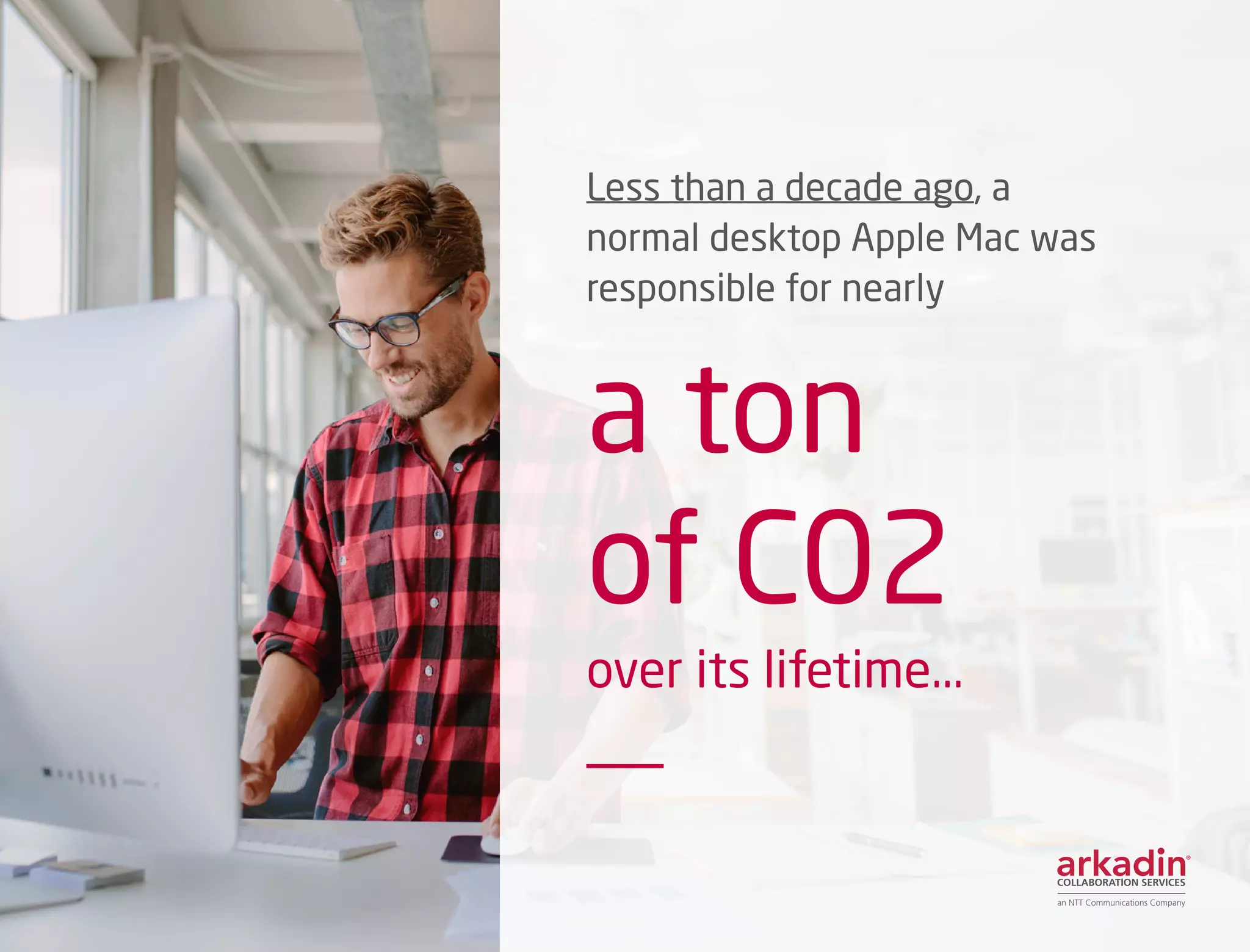
Less than a decade ago, a
normal desktop Apple Mac was
responsible for nearly
a ton
of C02
over its lifetime...
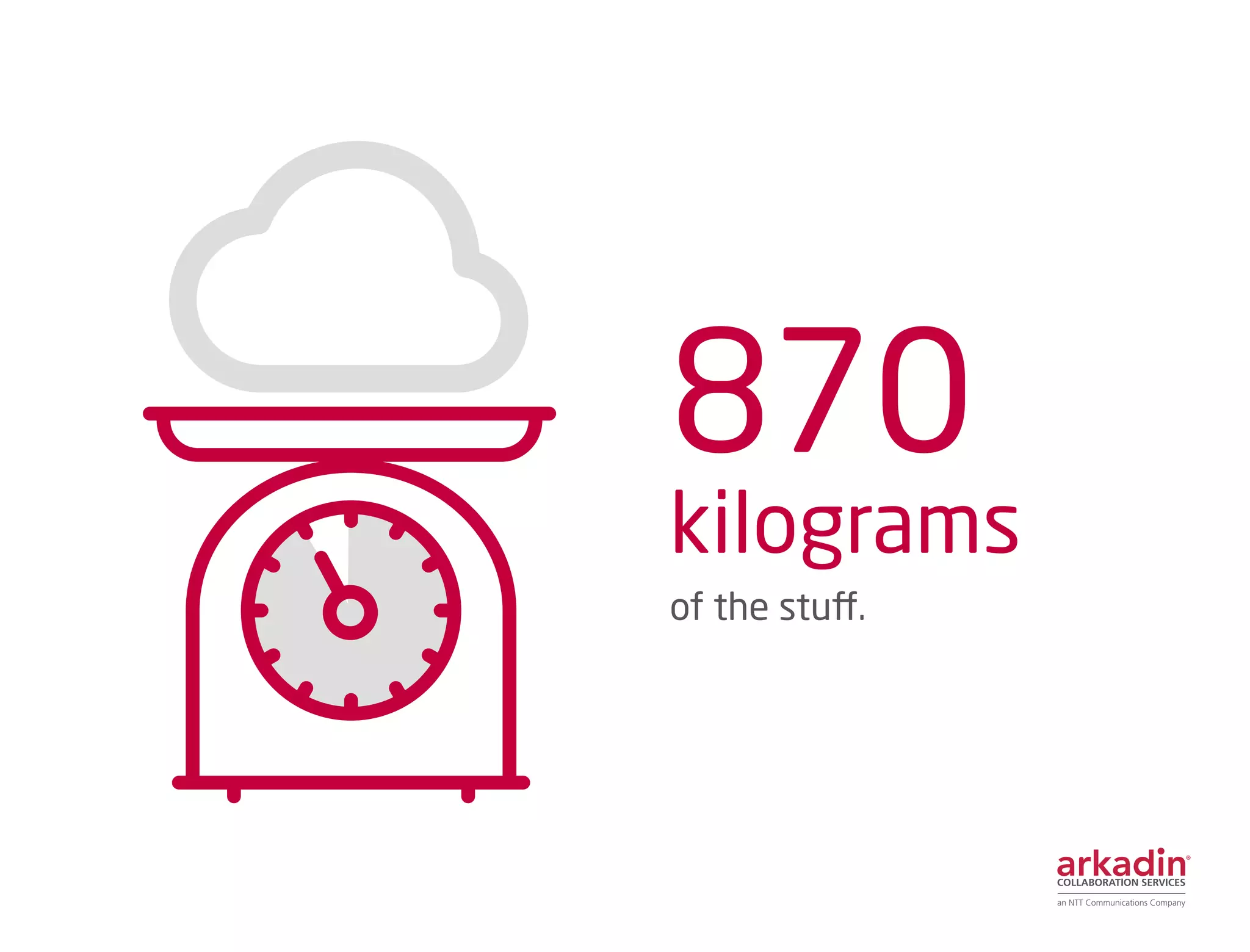
870
kilograms
of the stuff.
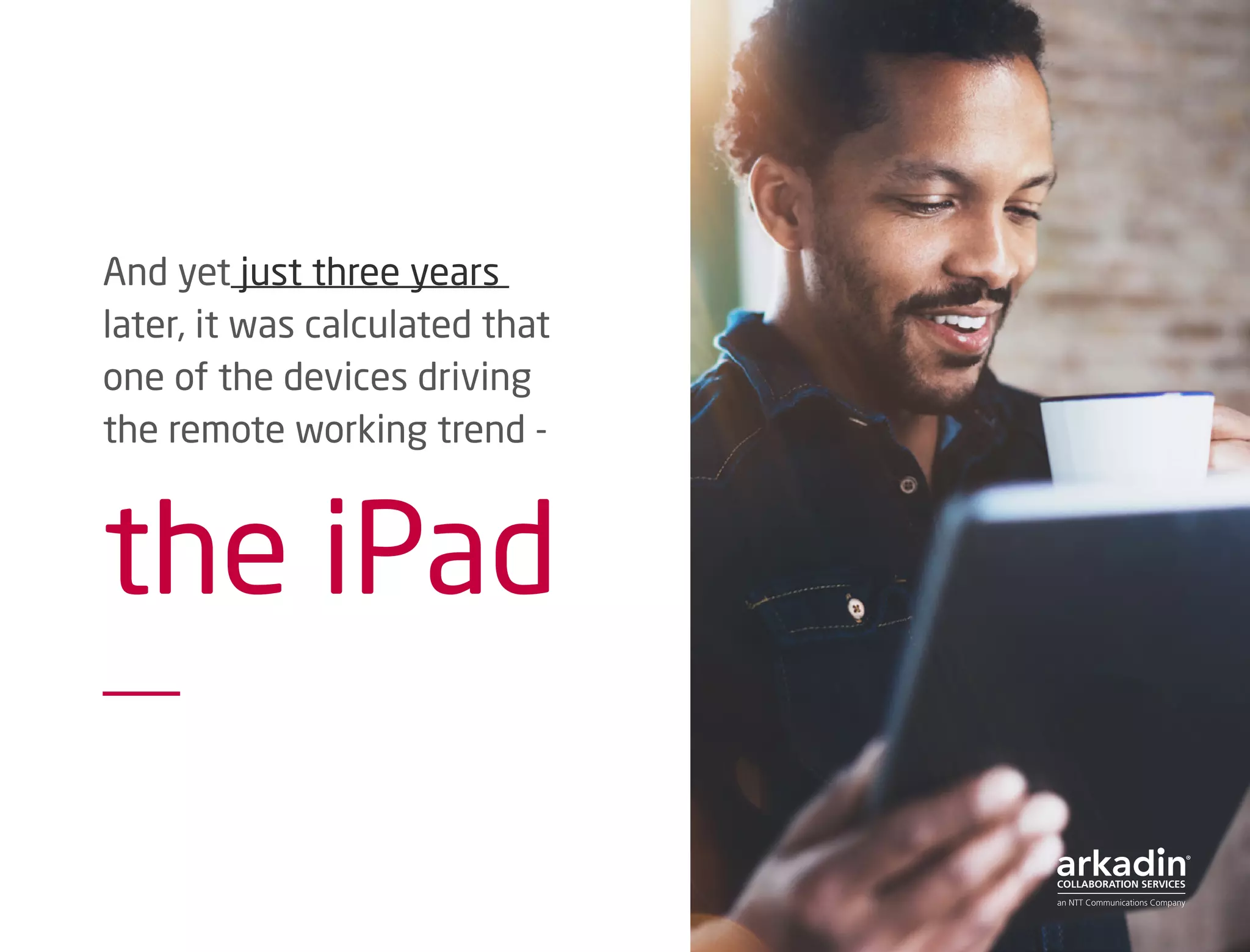
And yet just three years
later, it was calculated that
one of the devices driving

the remote working trend -
the iPad
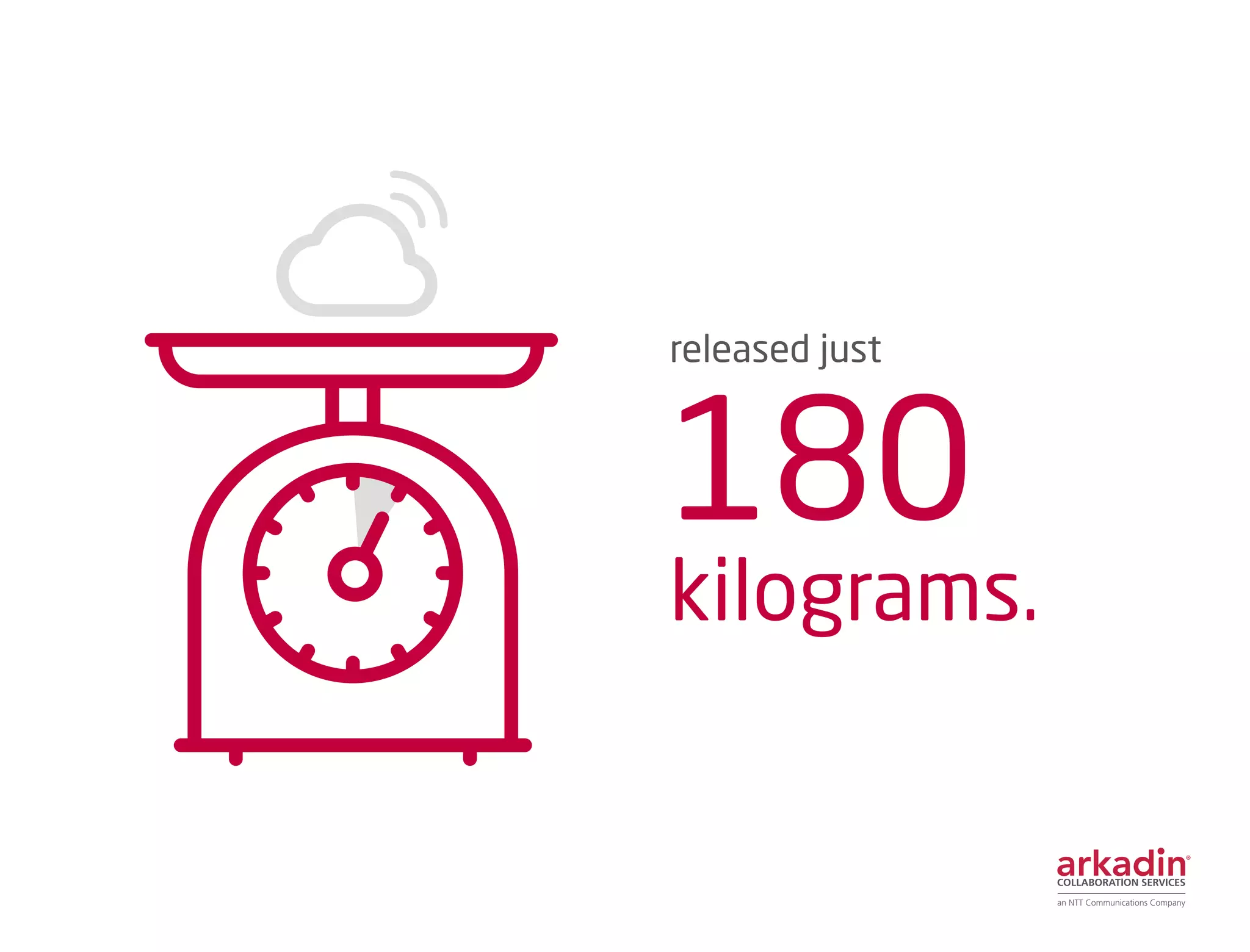
released just
180
kilograms.
And with devices getting ever thinner, it’s a
safe bet to say that this trend is only going to
continue for the better.
GREEN SCORE
+3
Unfortunately it’s not
all good news.
Devices may
be getting
greener...
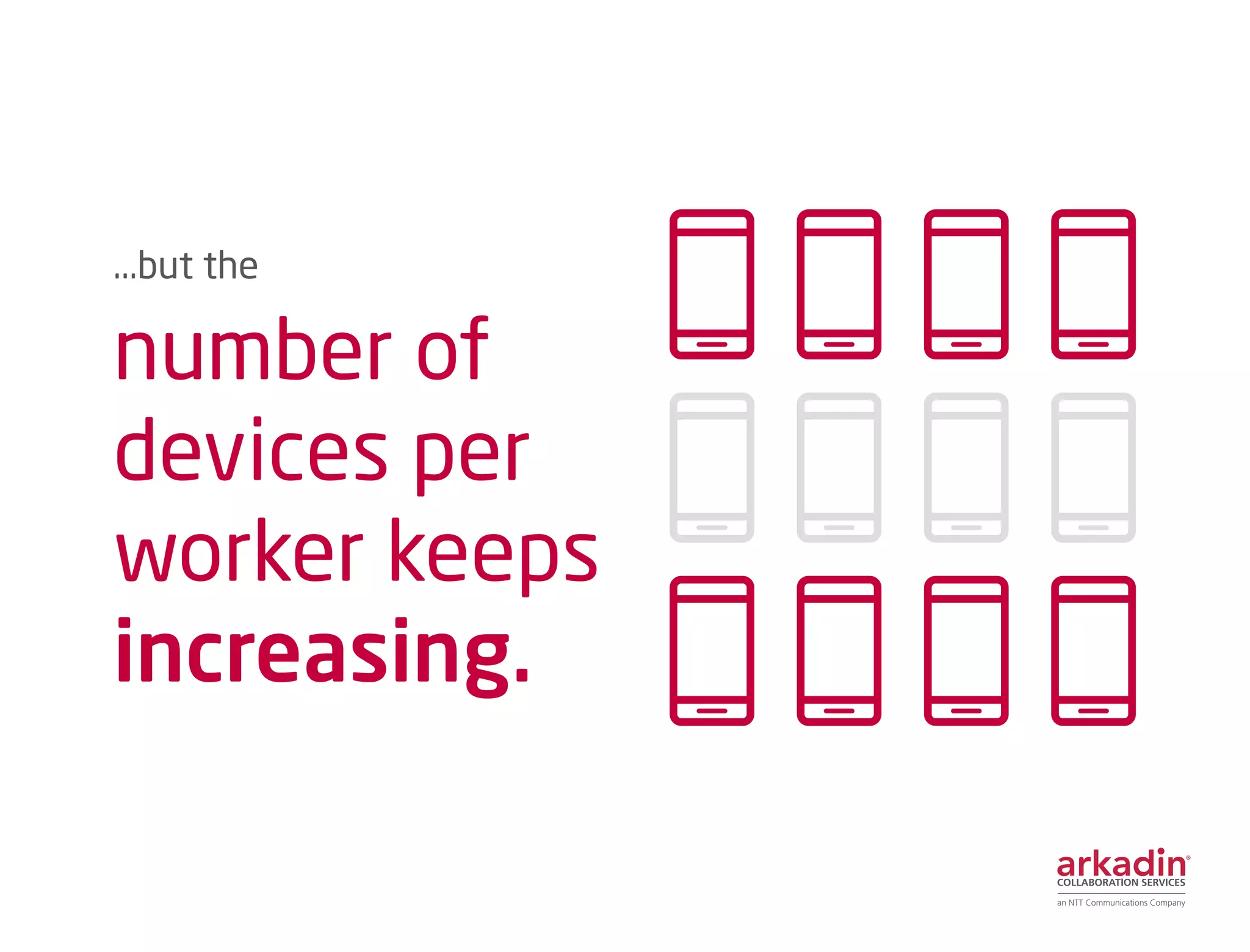
...but the
number of
devices per
worker keeps
increasing.
Experts predict that the
average person will own
over four devices by 2020.
LOOK AROUND YOUR
OWN HOME AND OFFICE:
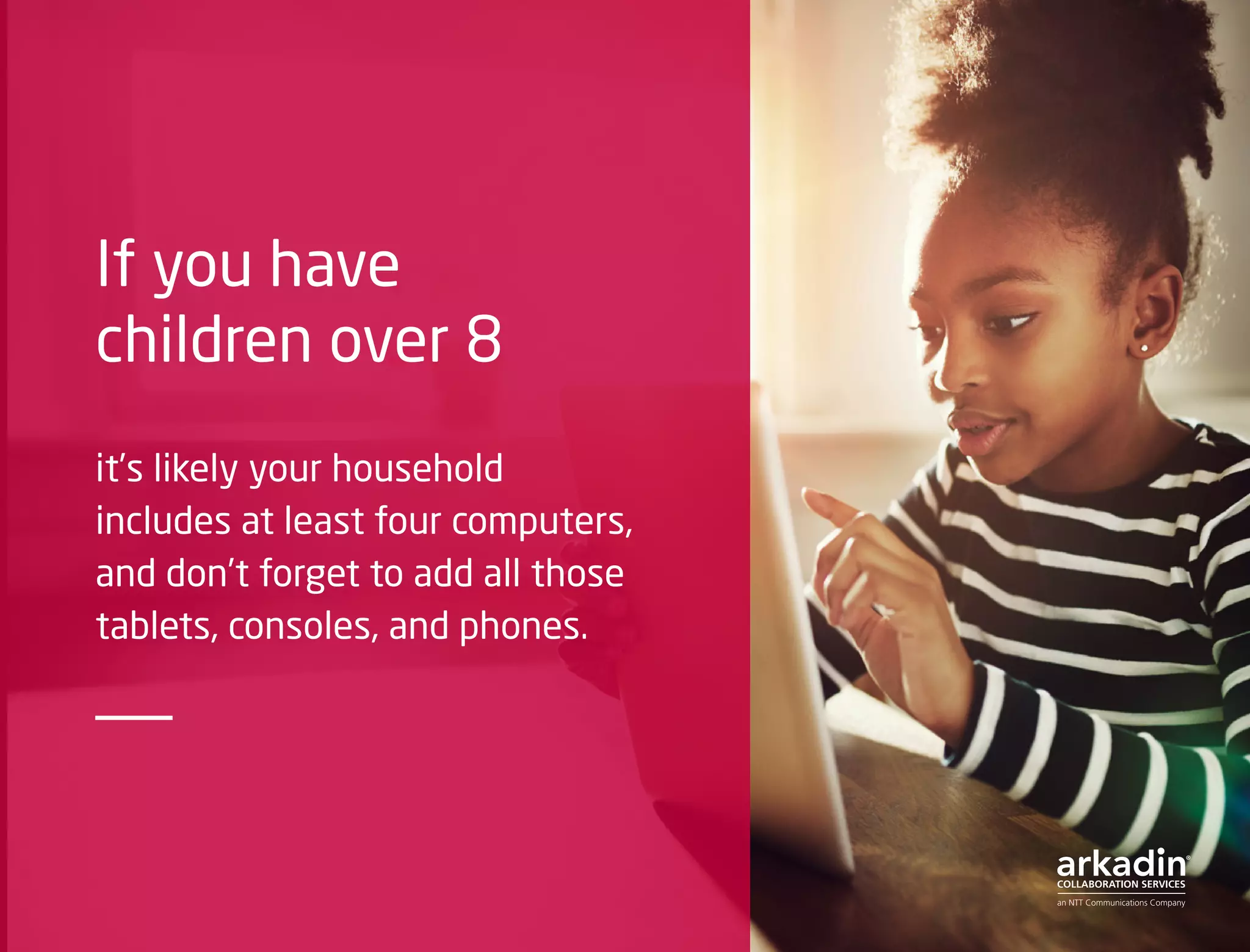
If you have
children over 8
it’s likely your household
includes at least four computers,
and don’t forget to add all those
tablets, consoles, and phones.
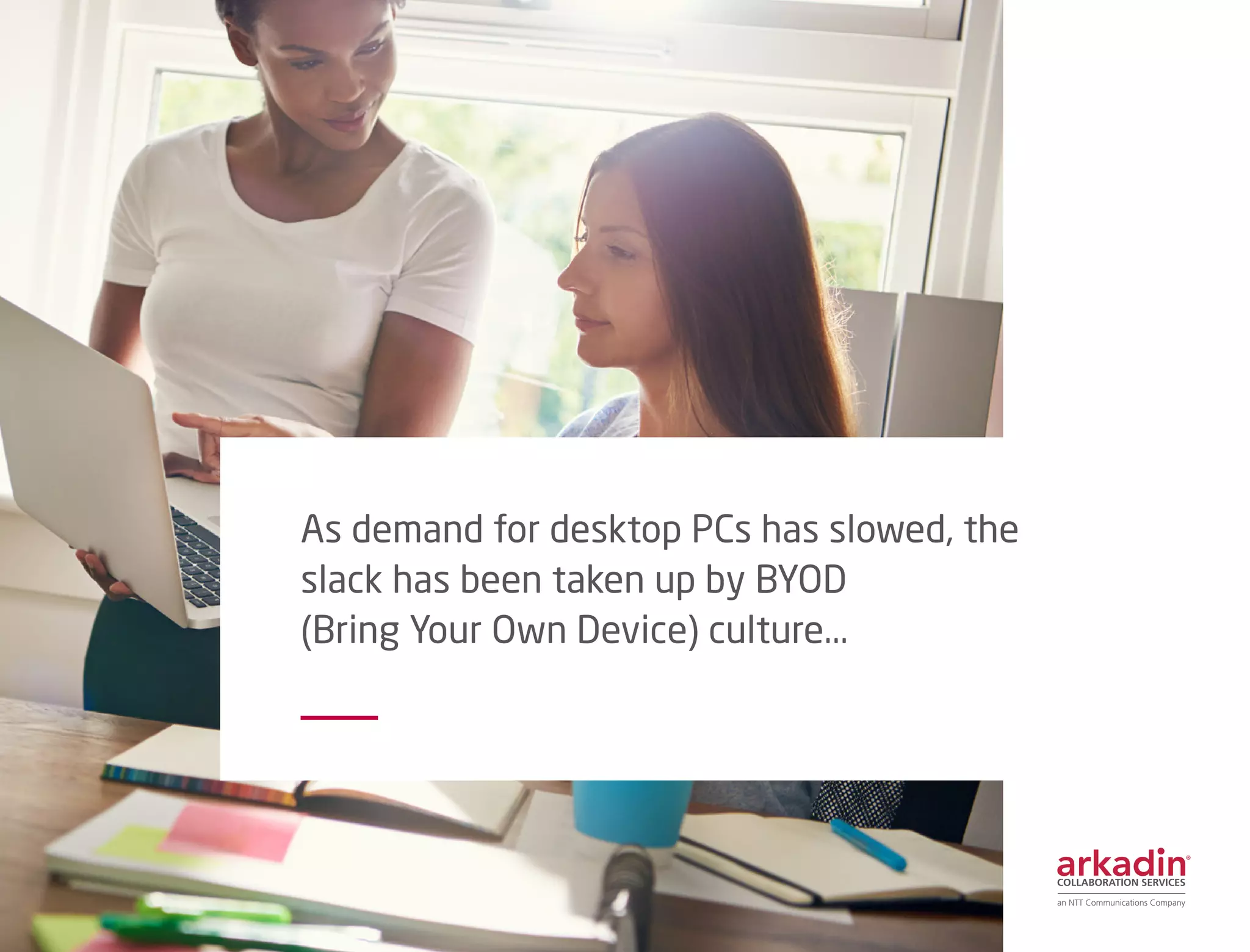
As demand for desktop PCs has slowed, the
slack has been taken up by BYOD
(Bring Your Own Device) culture...
where mobile devices tend to be
owned by the
worker rather than
the company.
Gartner
has long predicted companies
will one day stop issuing
company-owned hardware and
require BYOD.
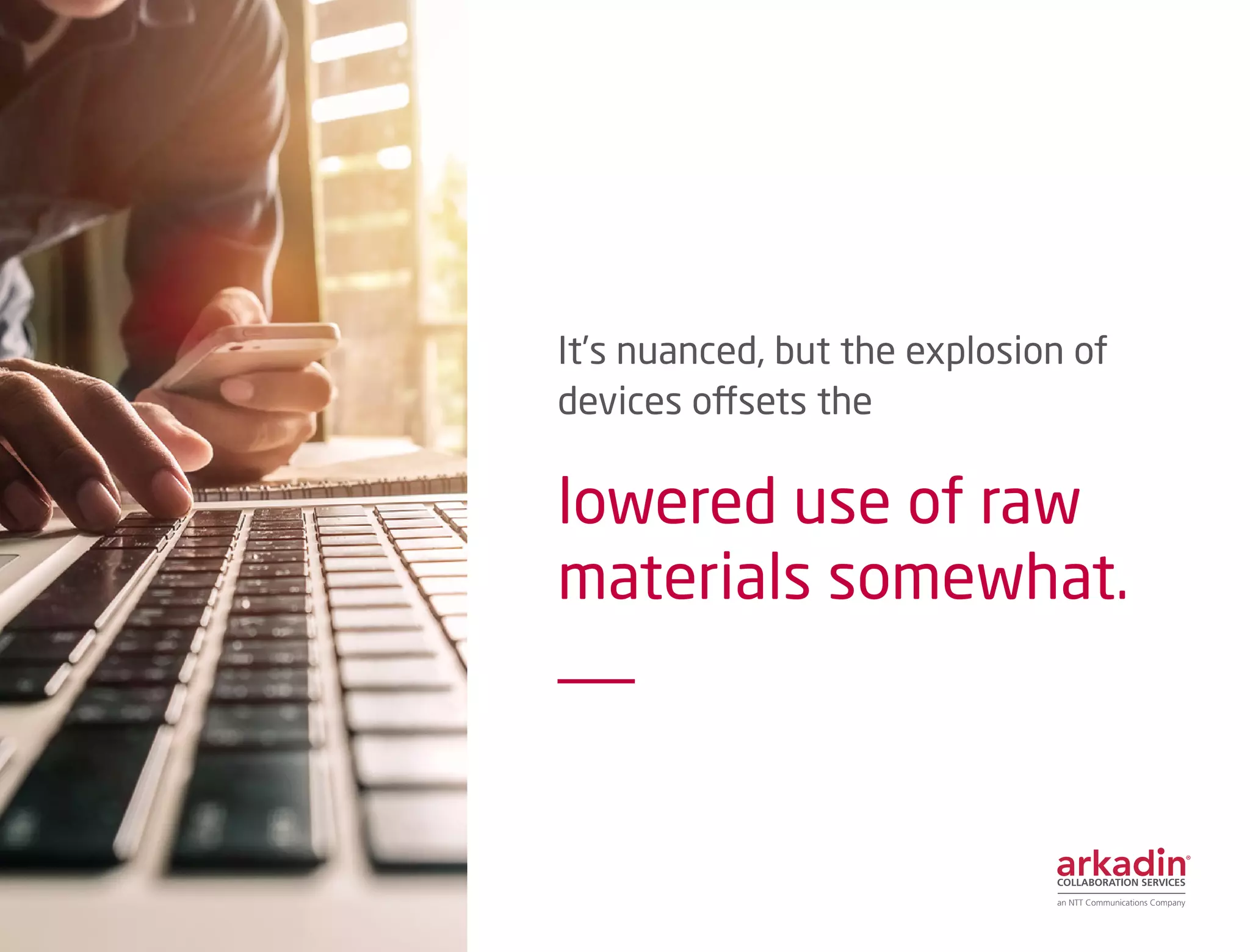
It’s nuanced, but the explosion of
devices offsets the
lowered use of raw
materials somewhat.
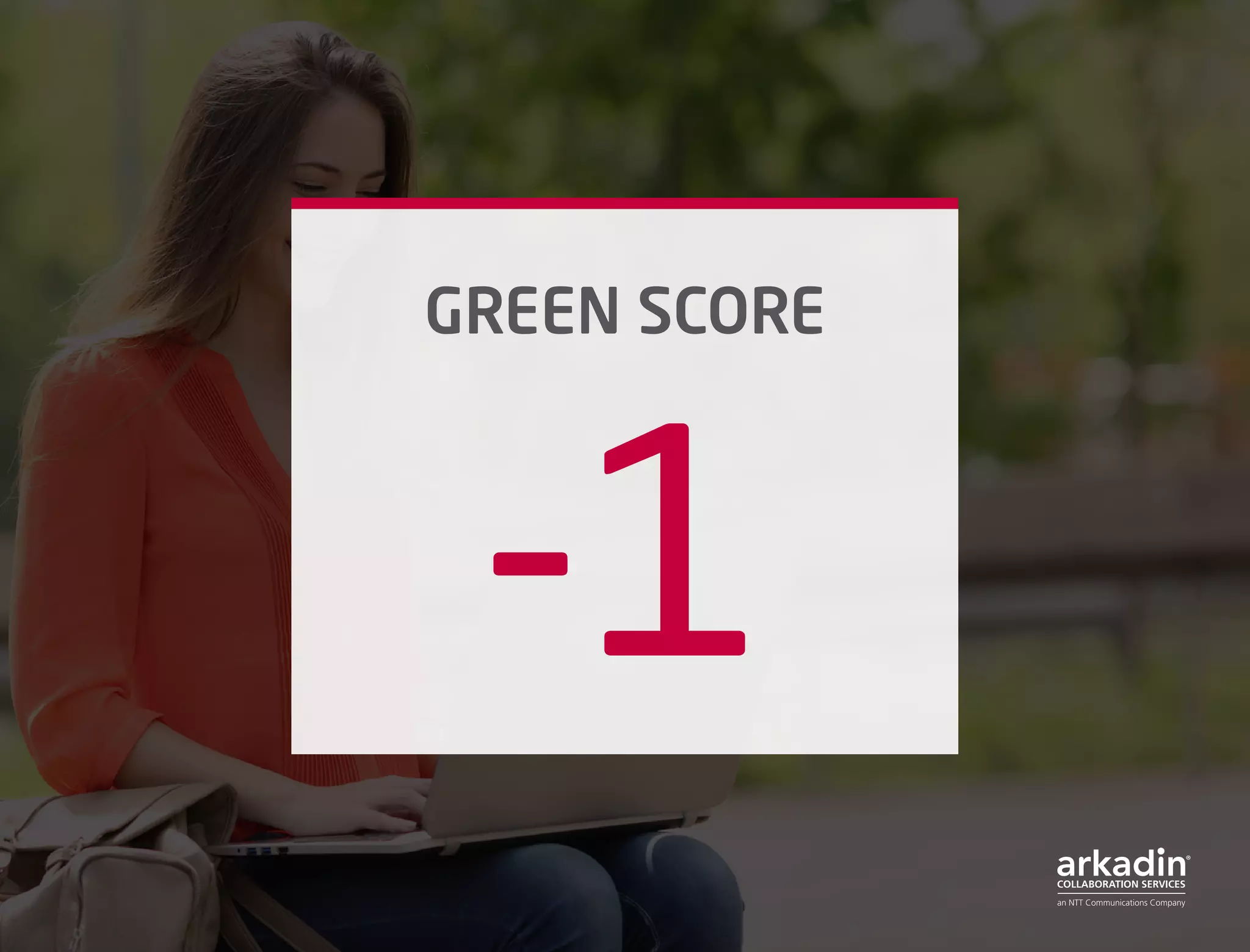
GREEN SCORE
-1
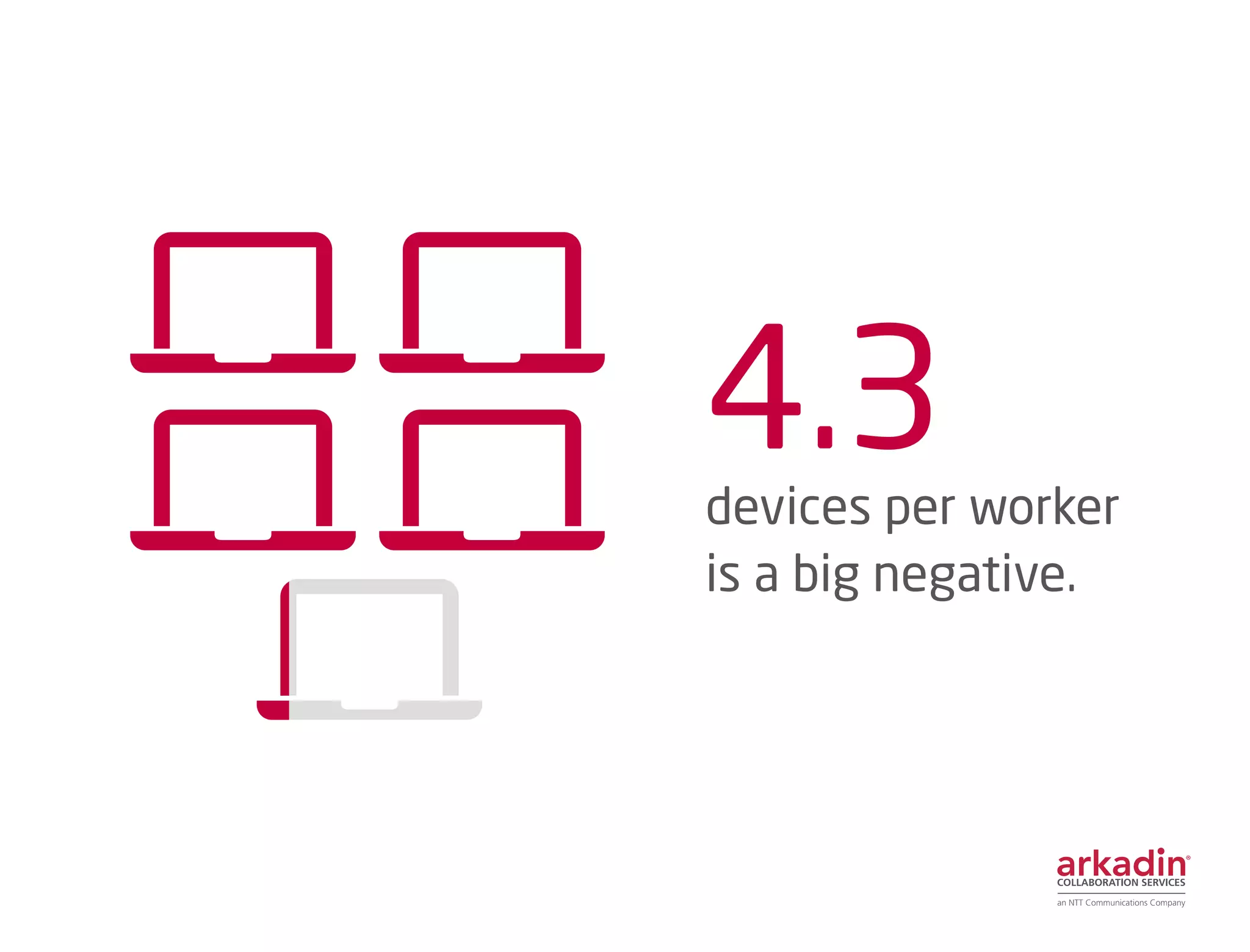
4.3devices per worker
is a big negative.
But what about the watts?
Balancing this increase in
devices is a welcome factor:
they’re
using less
power.
The key metric
here is PpW
(performance
per watt)
– the fewer electrons it takes
your device to function, the
less energy your device will
use overall, meaning...
IT WILL PRODUCE
FEWER EMISSIONS.
Want to hear
some good, no,
make that...
great news?
PpW (performance
per watt)
has improved
exponentially
– since the first computers, it’s
increased over a trillion times!
Energy costs money, so large users of computing
power (like Google) use PpW as a cost-saving
measure when building their data centres.
(Remember that during
your next document
share!)
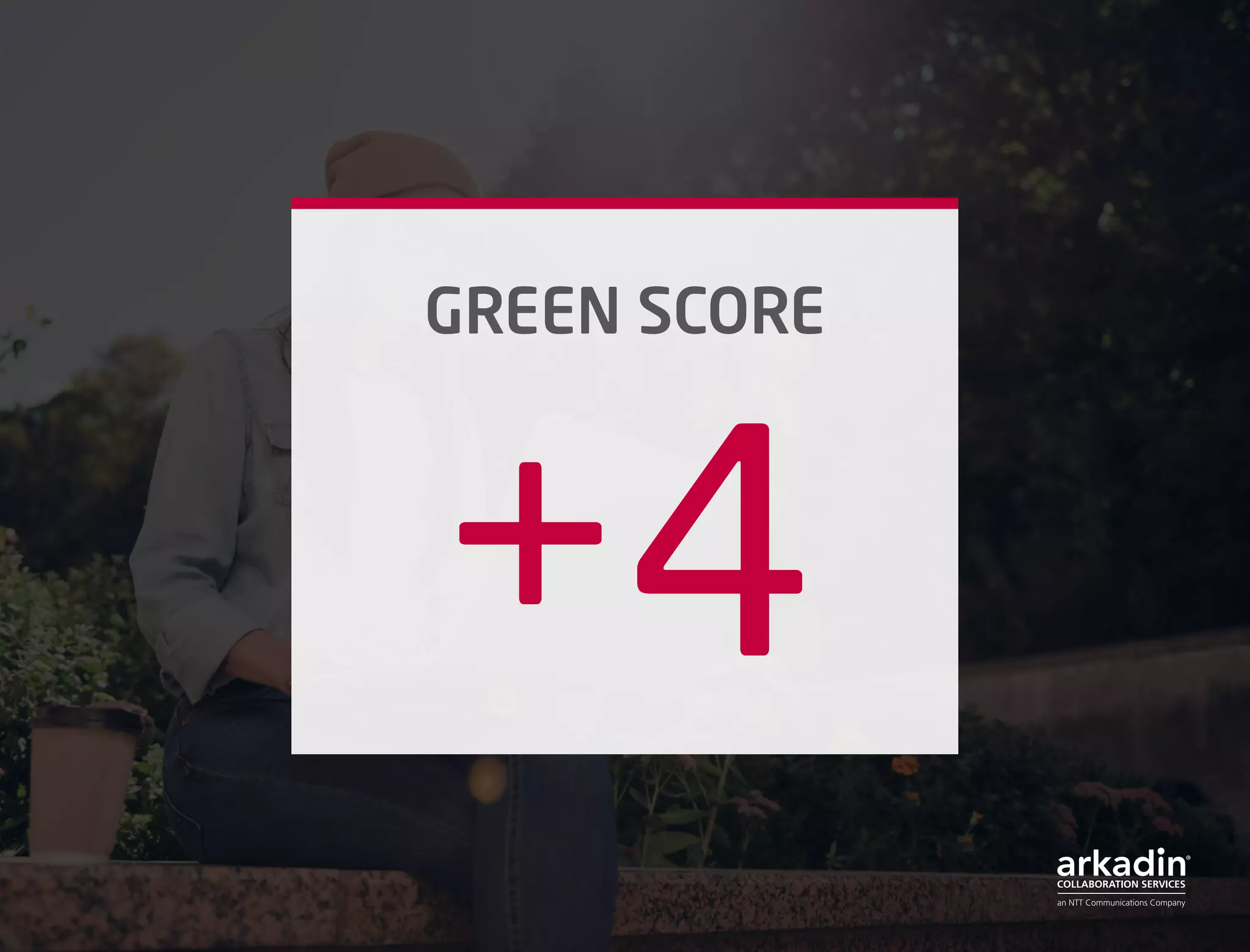
GREEN SCORE
+4
Better performance per
watt means better performance for
our planet.
The daily commute is becoming
a historical oddity
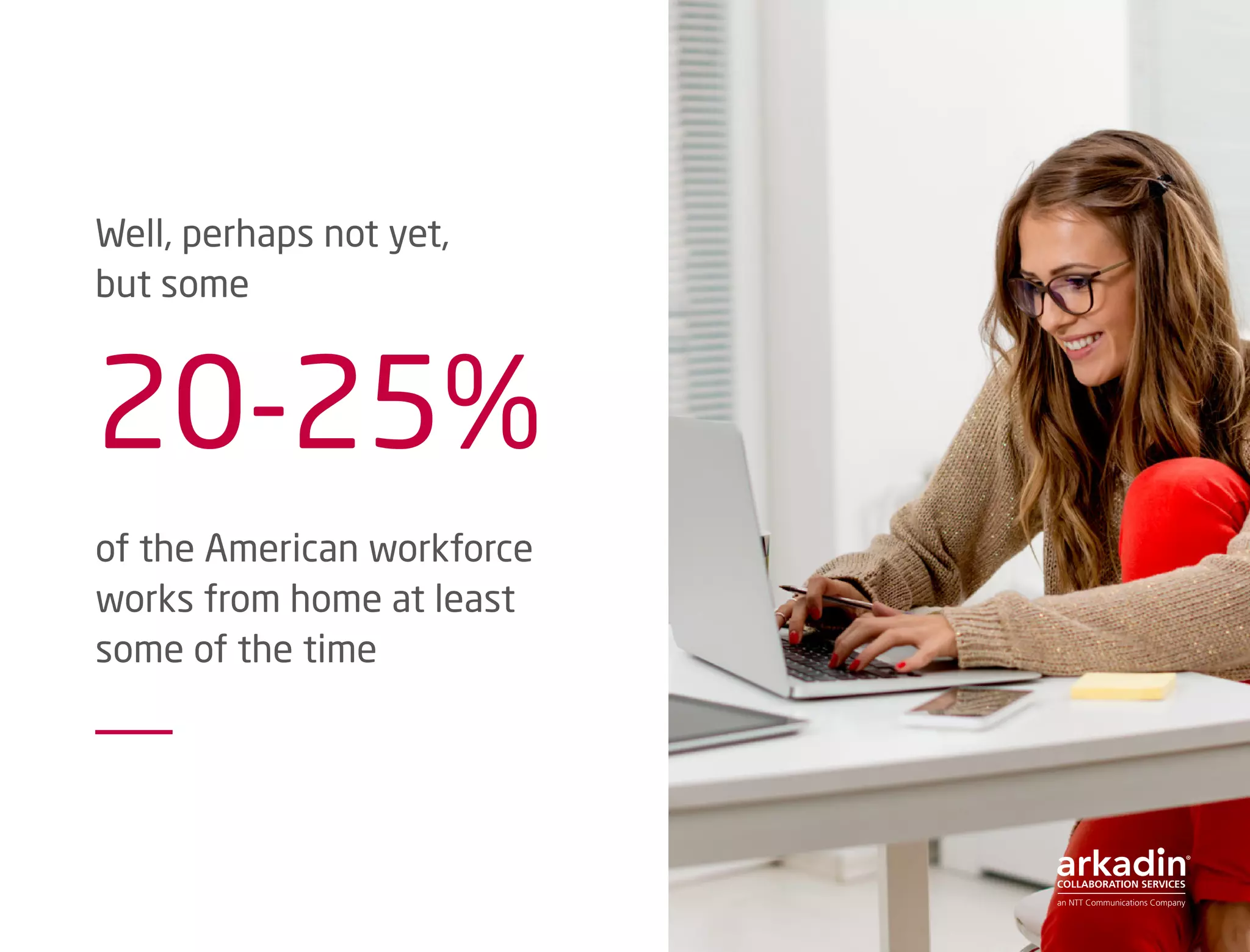
Well, perhaps not yet,
but some
20-25%
of the American workforce
works from home at least
some of the time
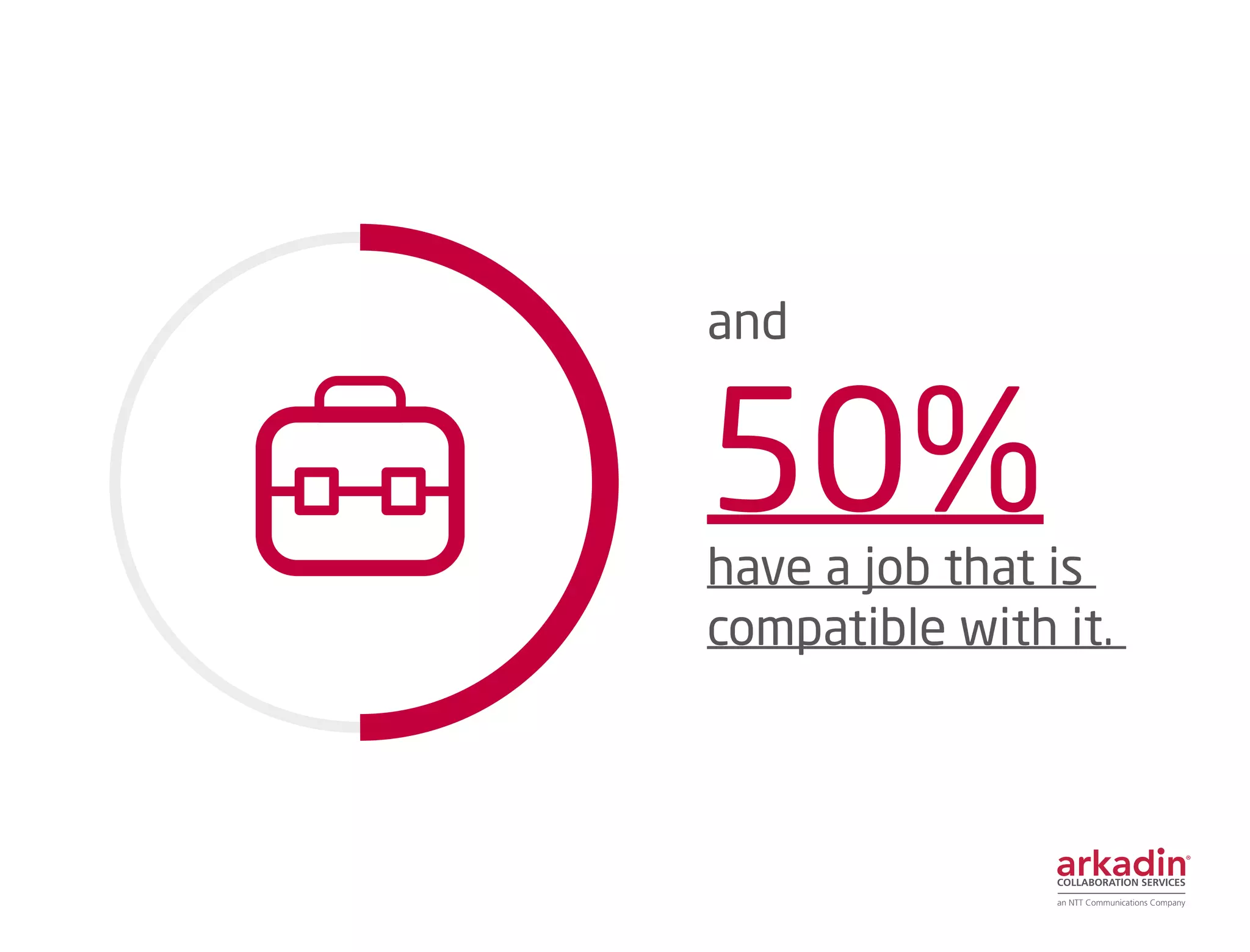
and
50%have a job that is
compatible with it.
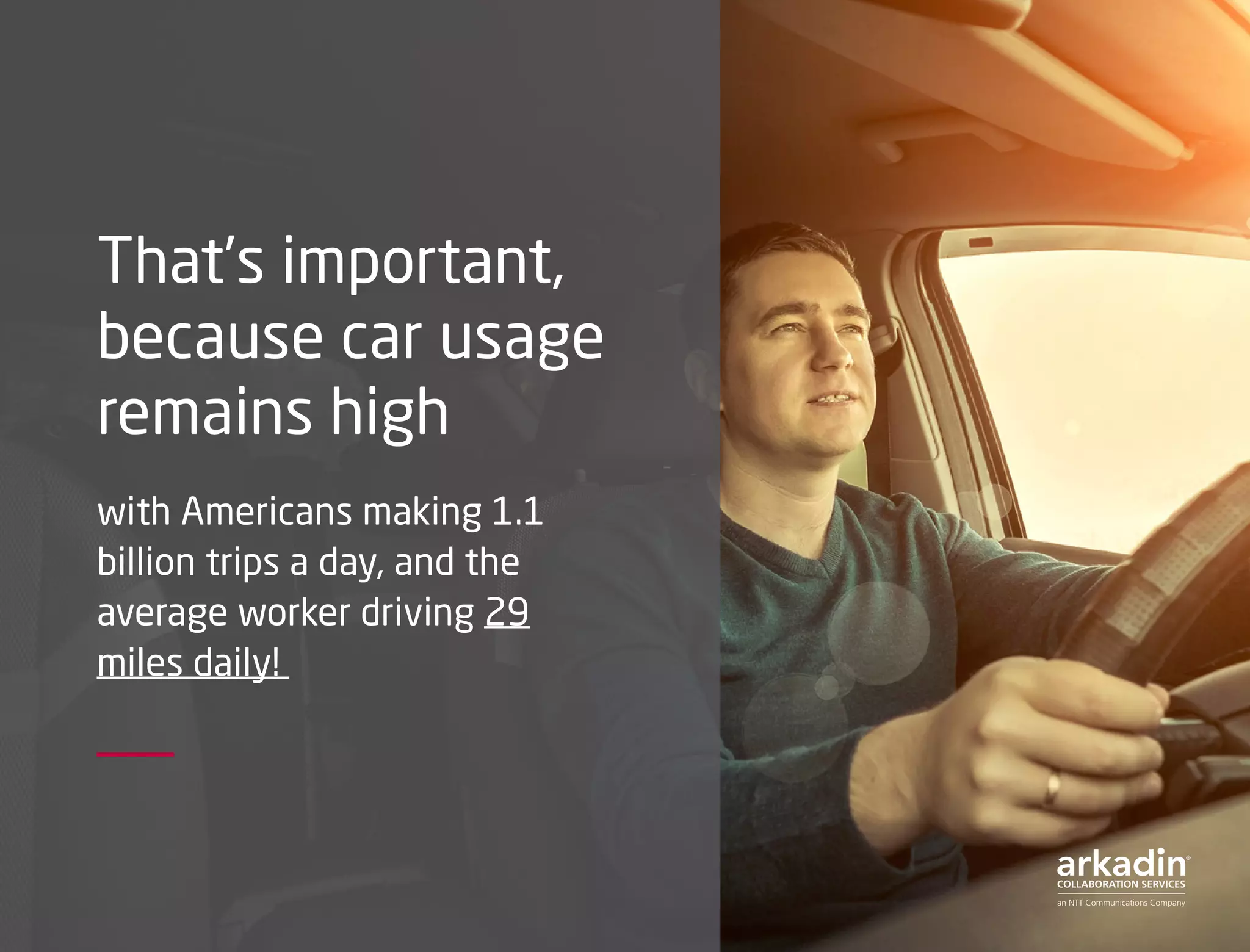
That’s important,
because car usage
remains high
with Americans making 1.1
billion trips a day, and the
average worker driving 29
miles daily!
This is where flexible work arrangements
really start to pay off.
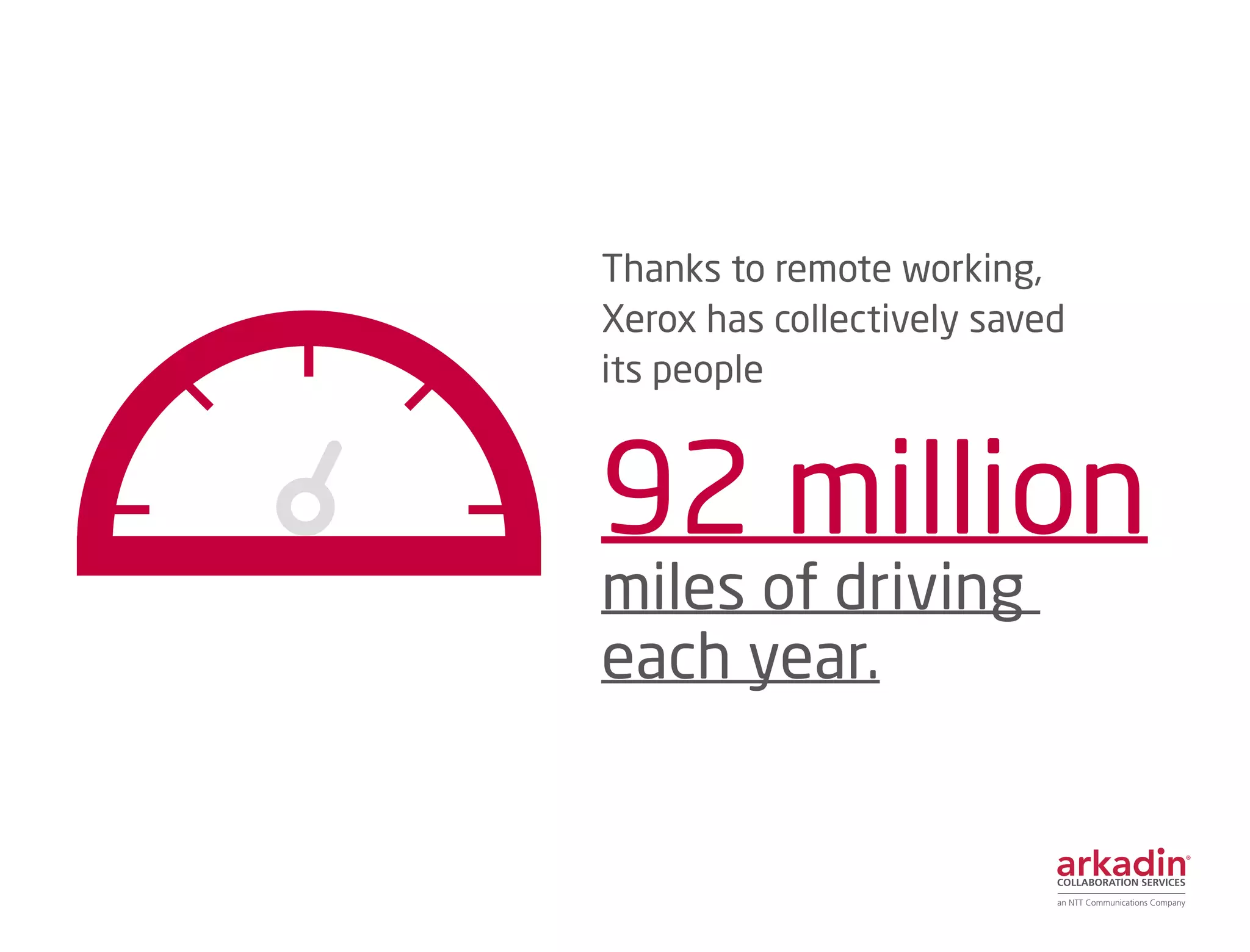
Thanks to remote working,
Xerox has collectively saved
its people
92 million
miles of driving
each year.
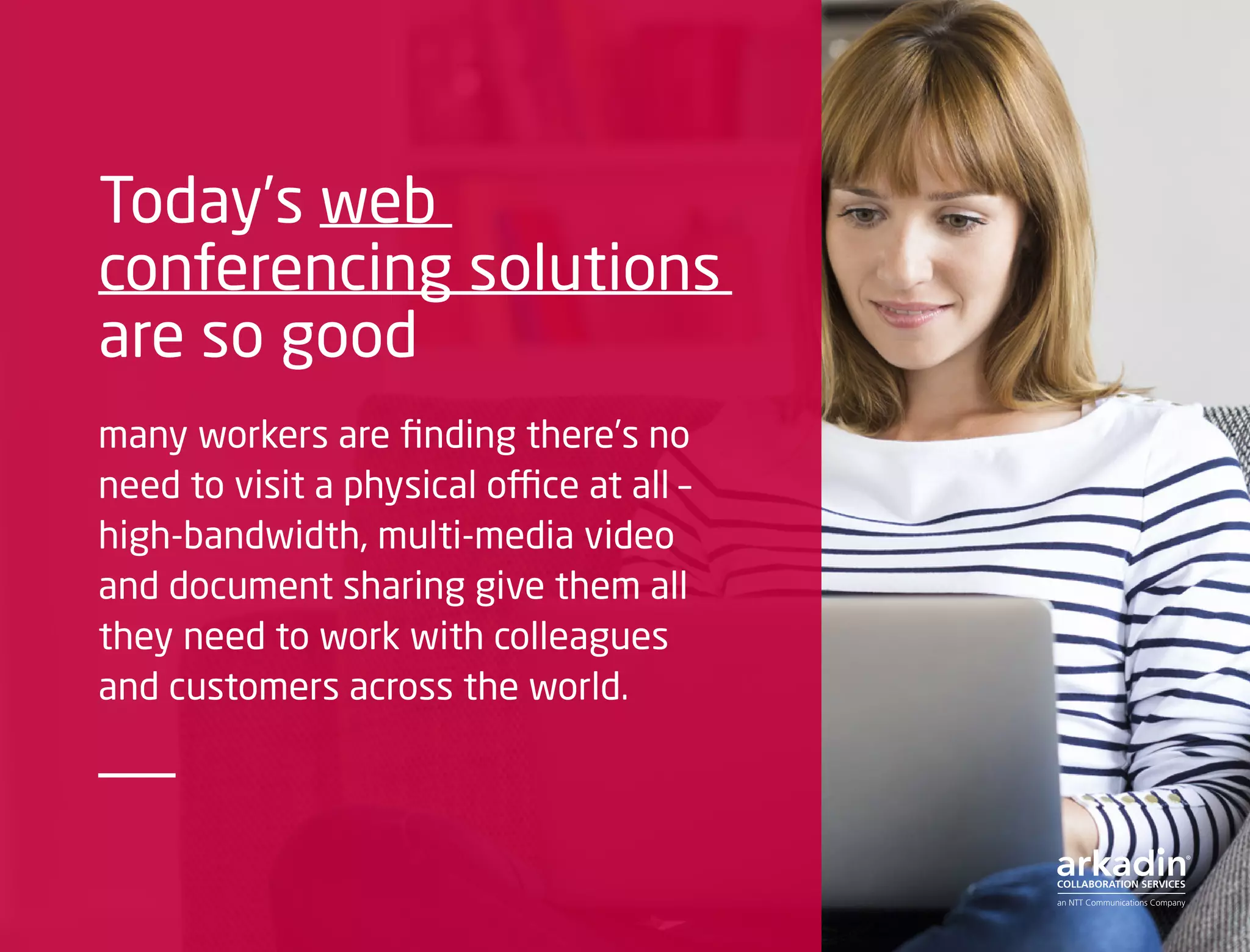
Today’s web
conferencing solutions
are so good
many workers are finding there’s no
need to visit a physical office at all –
high-bandwidth, multi-media video
and document sharing give them all
they need to work with colleagues
and customers across the world.
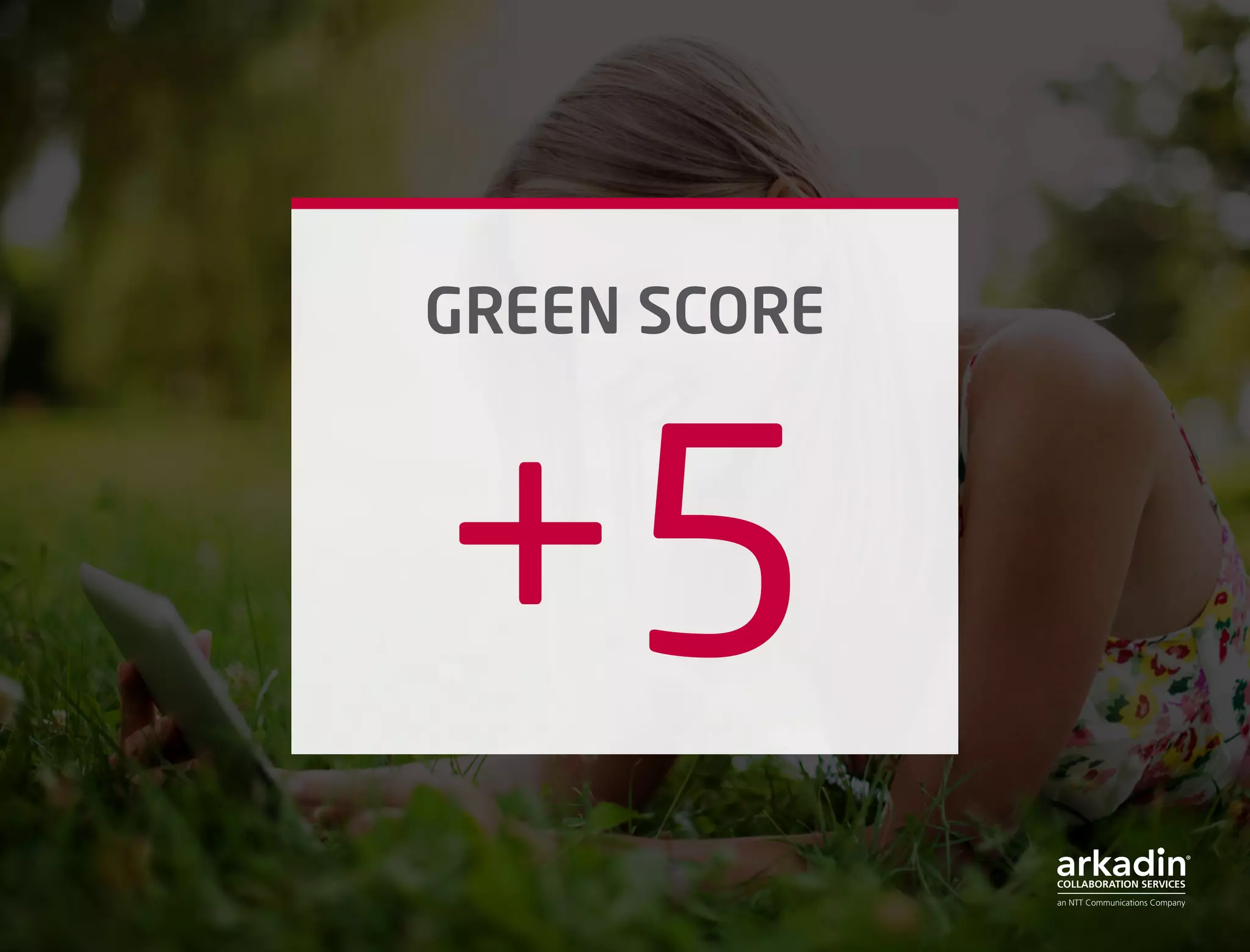
GREEN SCORE
+5
A lower global mileage means a
cleaner
planet.
The key conclusive finding:
companies are starting to build their
budgets around these trends.
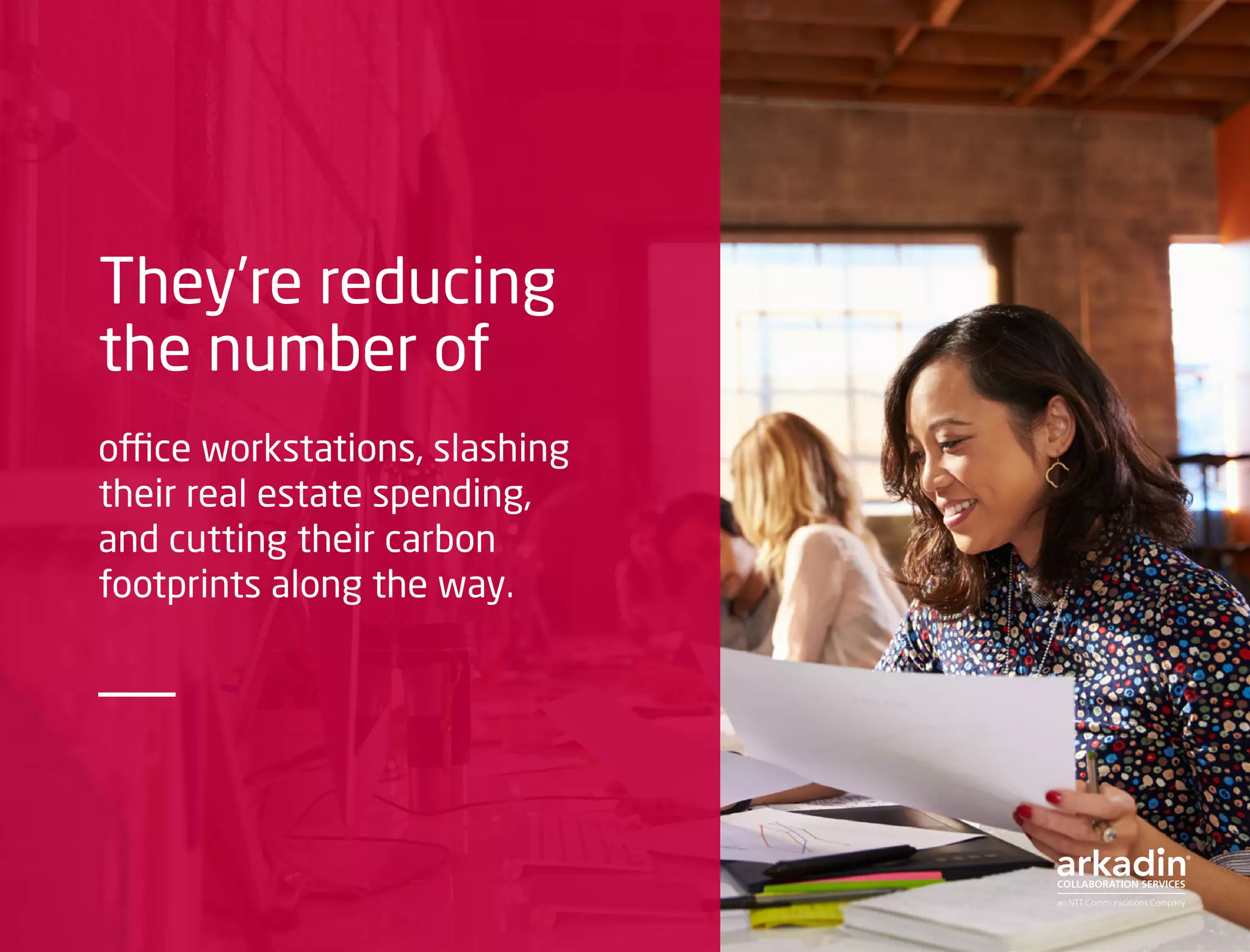
They’re reducing
the number of
office workstations, slashing
their real estate spending,
and cutting their carbon
footprints along the way.
Why not try trading your
team’s driving miles for
virtual
conferences?
Or swapping your office
equipment with
cloud
solutions?
Or encouraging employees
to bring their
own
device,
rather than those from
your inventory?
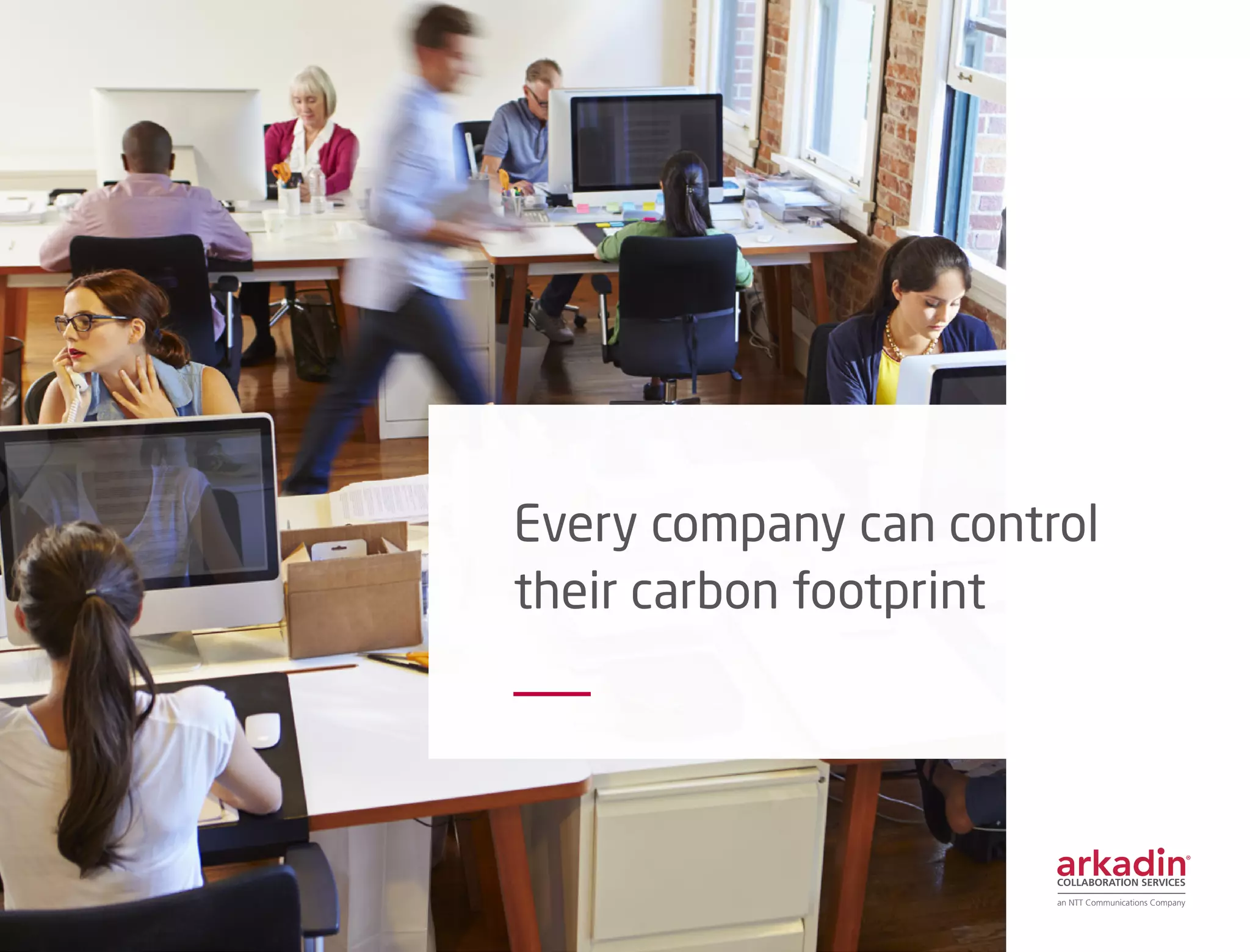
Every company can control
their carbon footprint
THE POWER LIES
IN BEING PROACTIVE.
Takeaways
Driven by the mobile revolution, today’s computing
devices are getting greener
Remote and flexible working arrangements are
becoming mainstream
The average energy used per computing device is
going down
Businesses that embrace remote working are
seeing lower costs and lower emissions
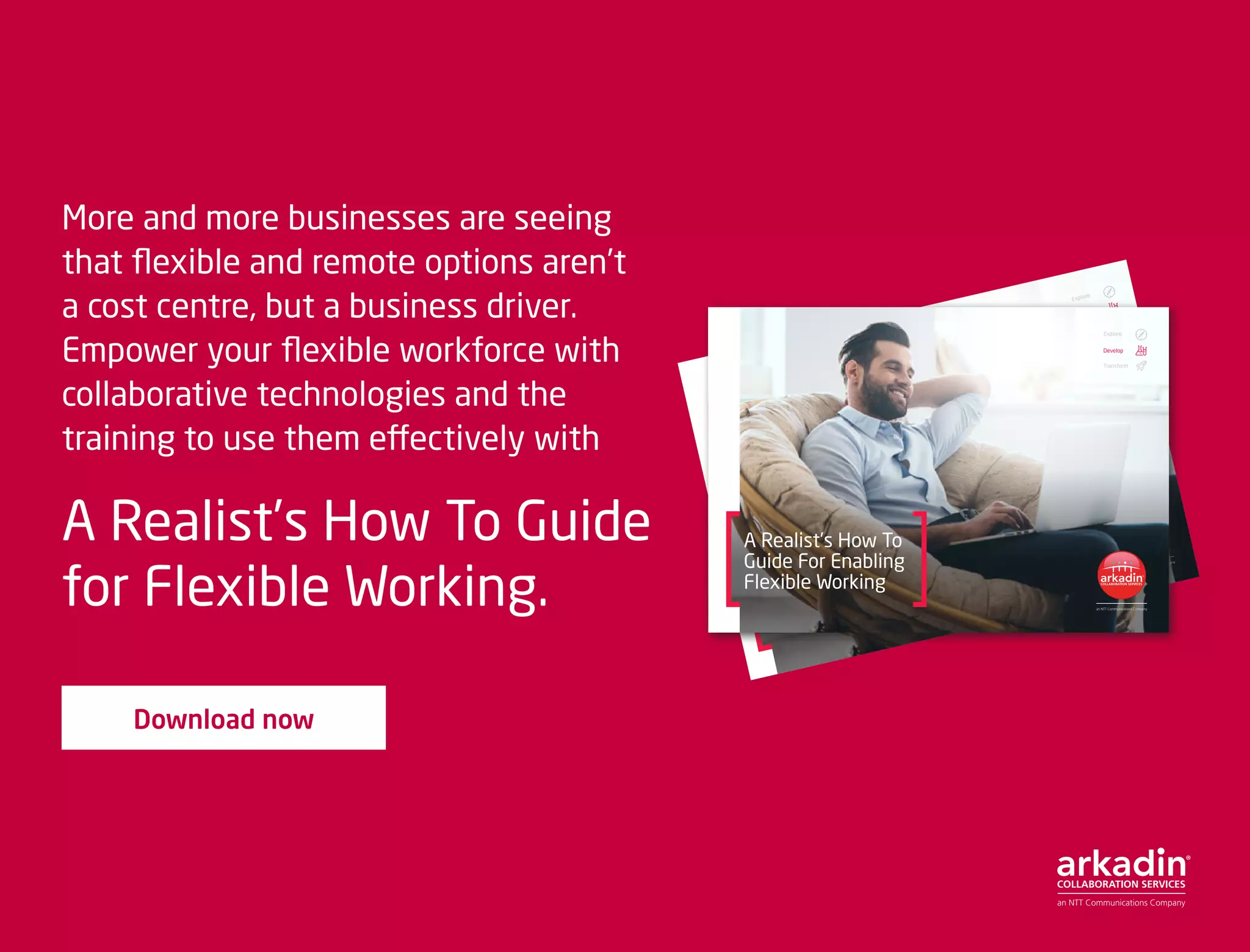
More and more businesses are seeing
that flexible and remote options aren’t
a cost centre, but a business driver.
Empower your flexible workforce with
collaborative technologies and the
training to use them effectively with
A Realist’s How To Guide
for Flexible Working.
Download now
A Realist’s How To
Guide For Enabling
Flexible Working
Explore
Develop
Transform
A Realist’s How To
Guide For Enabling
Flexible Working
Explore
Develop
Transform

Green and on-the-go: Actioning environmental prosperity through tech