Grantsmanship 101 Andrea Snyder Grants Collection Enoch Pratt Free Library (410)396-5320 [email_address]
Objectives World of Philanthropy What you need to have in place before you seek a grant Identifying funding partners Approaching the foundation/funder Writing the proposal Submitting the proposal: Wrap-up
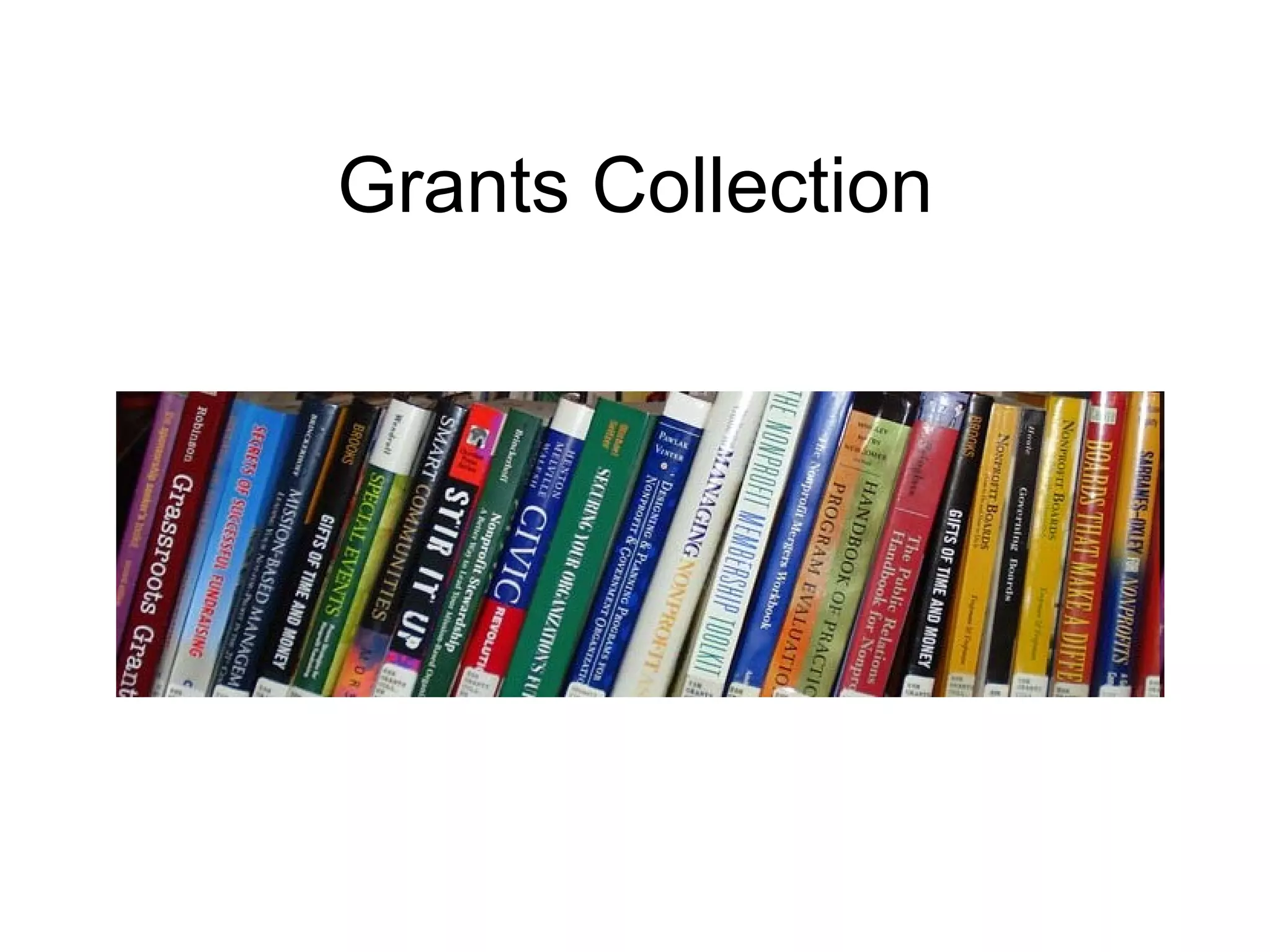
Grants Collection
Introductions
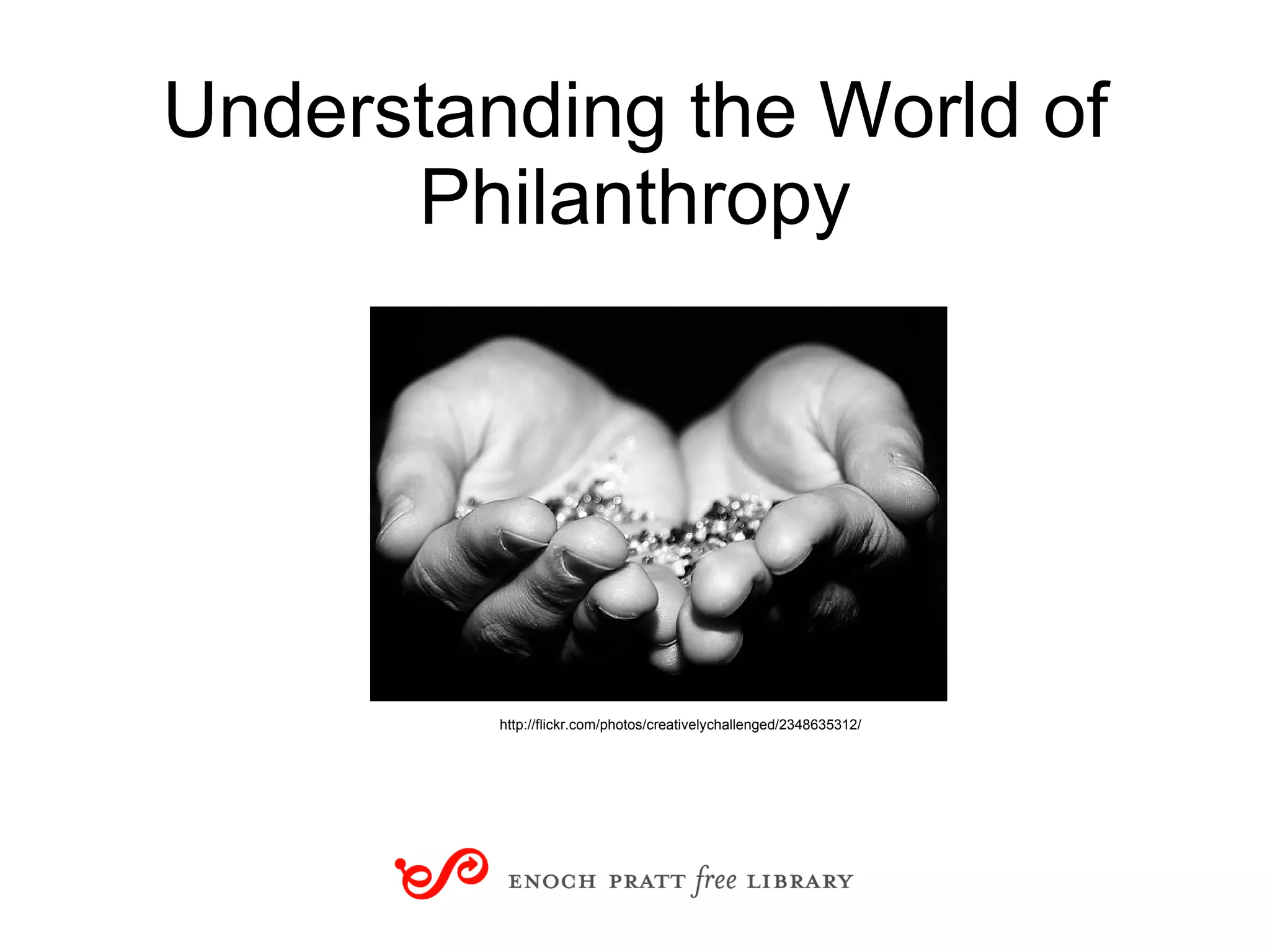
Understanding the World of Philanthropy http://flickr.com/photos/creativelychallenged/2348635312/
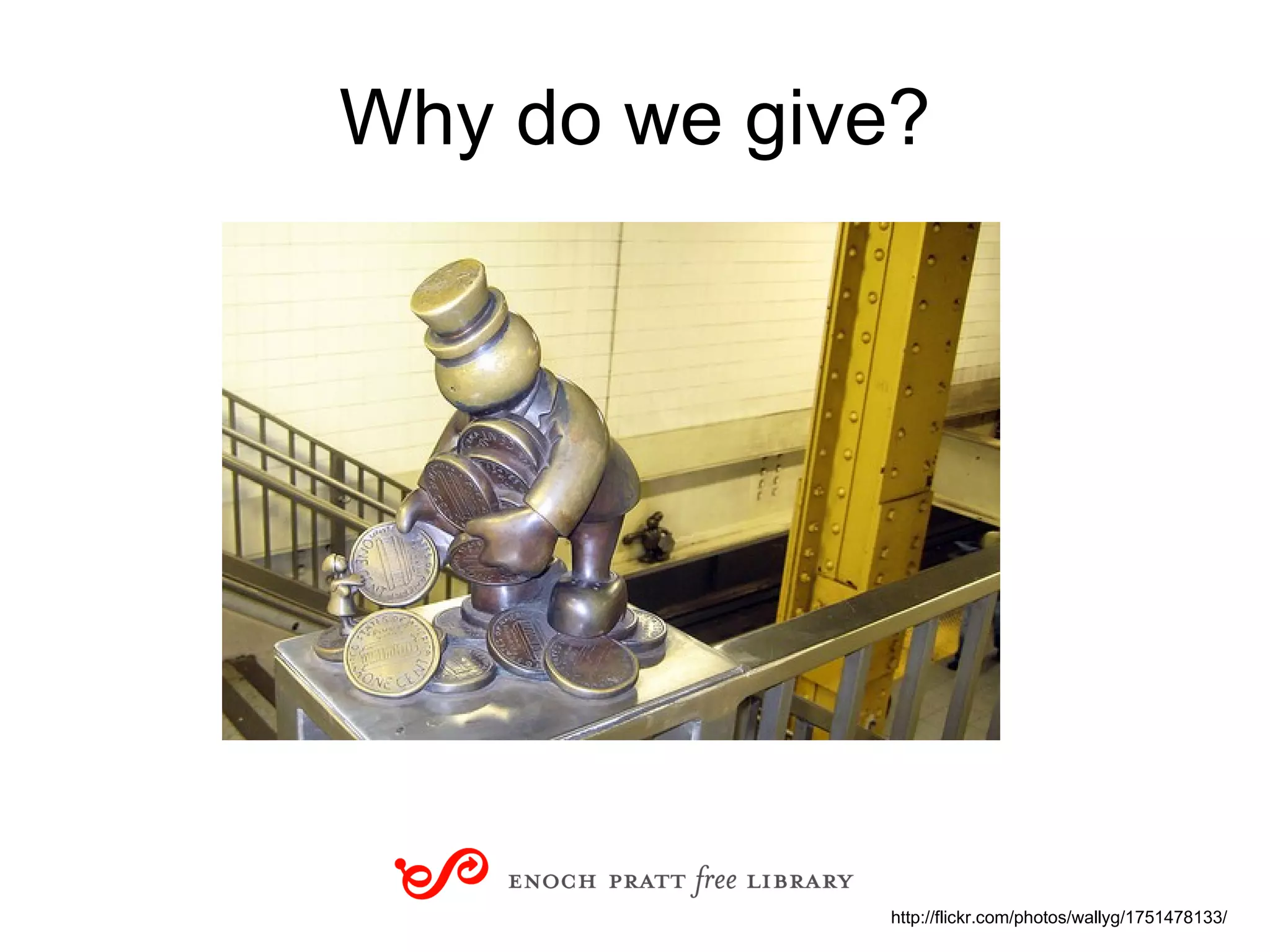
Why do we give? http://flickr.com/photos/wallyg/1751478133/
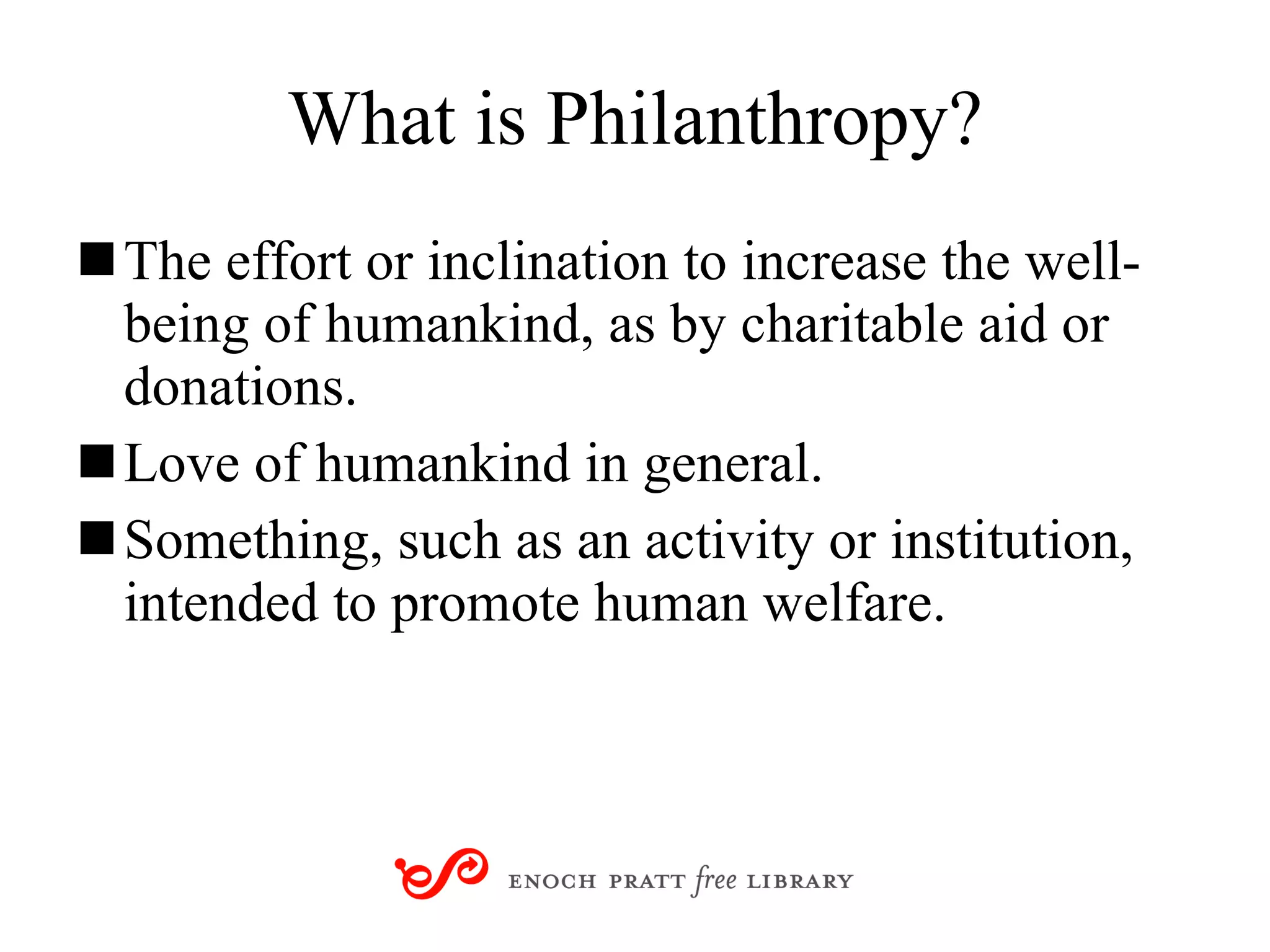
What is Philanthropy? The effort or inclination to increase the well-being of humankind, as by charitable aid or donations. Love of humankind in general. Something, such as an activity or institution, intended to promote human welfare.
 
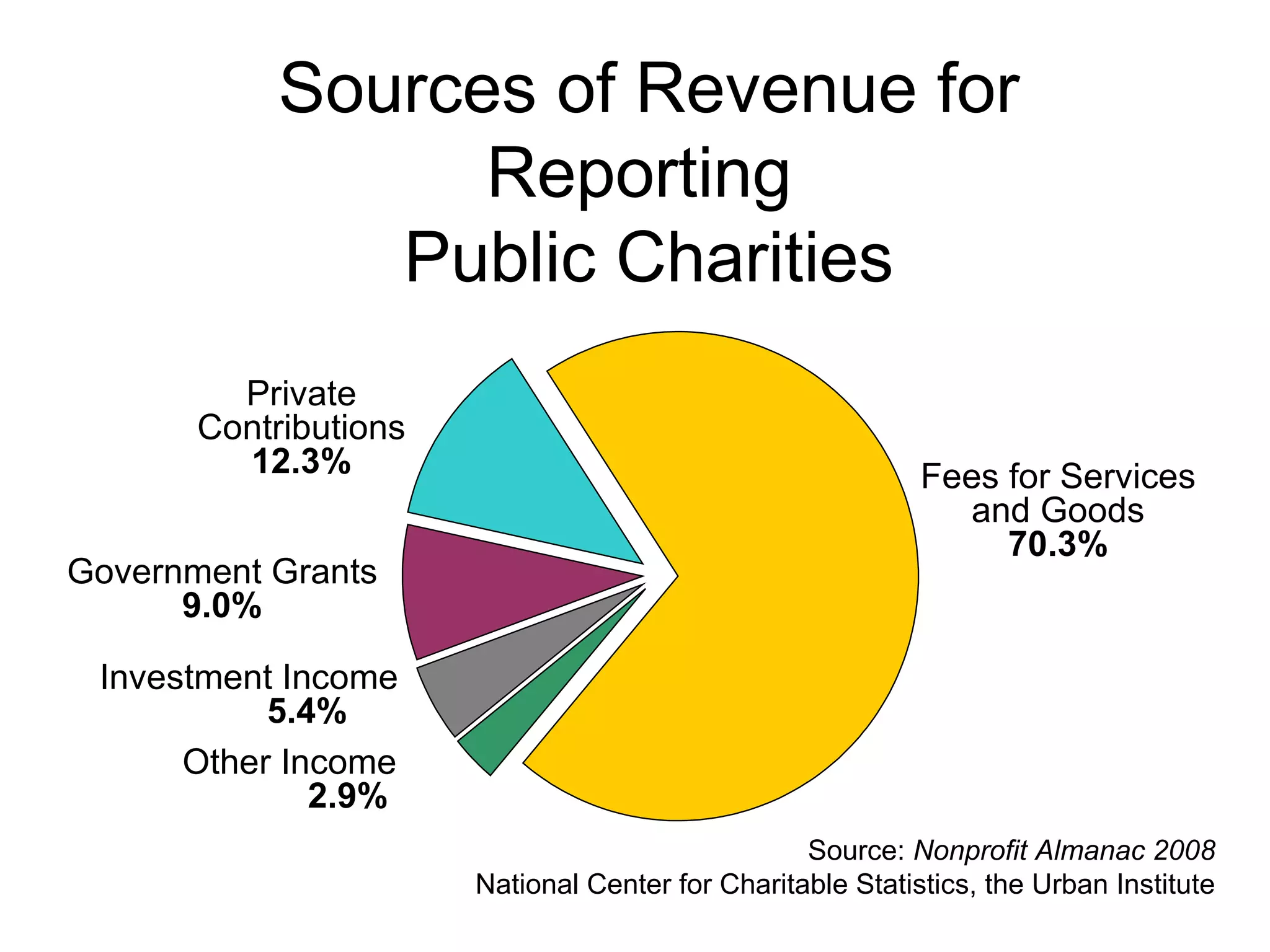
Source:  Nonprofit Almanac 2008 National Center for Charitable Statistics, the Urban Institute Other Income   2.9% Fees for Services and Goods 70.3% Private Contributions 12.3% Sources of Revenue for Reporting  Public Charities Government Grants 9.0% Investment Income   5.4%
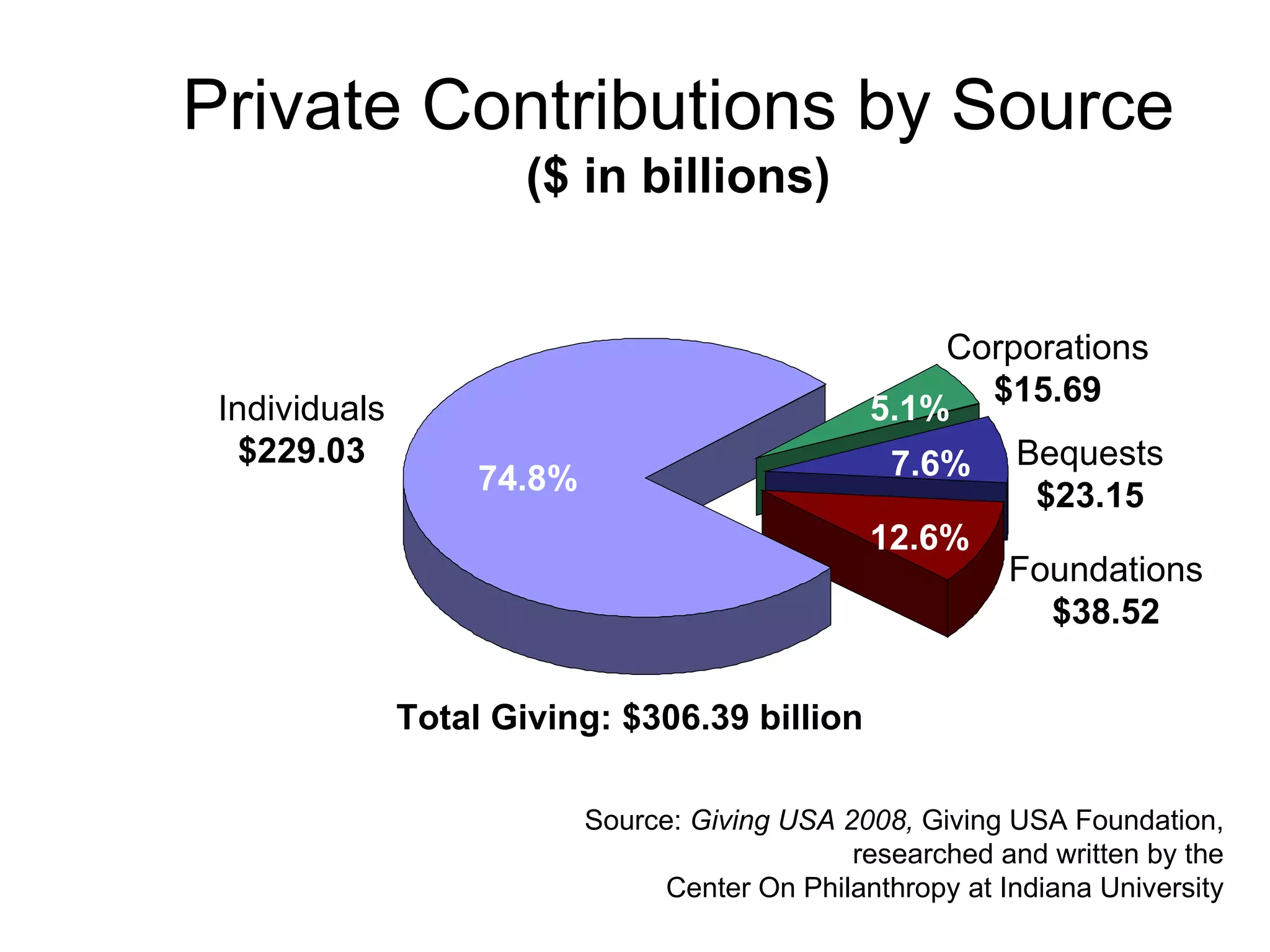
Individuals $229.03 Corporations $15.69 Foundations $38.52 Bequests $23.15 Total Giving: $306.39 billion 74.8% 5.1% 12.6% 7.6% Private Contributions by Source ($ in billions) Source:  Giving USA 2008,  Giving USA Foundation, researched and written by the Center On Philanthropy at Indiana University
Economic Crisis Info Foundation Center: http://foundationcenter.org/focus/economy/ Maryland Info: http://mdnonprofithelp.ning.com/ National Council of Nonprofits: http://www.councilofnonprofits.org
Questions
Before You Seek a Grant
What You Need To Have In Place 501(c)(3) status Active board Effective bylaws Strong mission statement
What Funders Look For Relevant, high-quality programs that meet a real need in the community  Board commitment Staff capacity A strong organizational and financial infrastructure
What You Will Need About Your Organization List of board members Biographies and resumes of key people IRS 501(c)(3) letter of determination Organizational budget for current year Last 2 audited financial statements By-laws History of organization, including news clippings, anecdotal stories
What You Will Need to Know About Your Community Community Demographics Community Needs Partners Competitors Press clippings, anecdotes Published reports, newsletters, and other materials of local nonprofits Any other community files
Questions
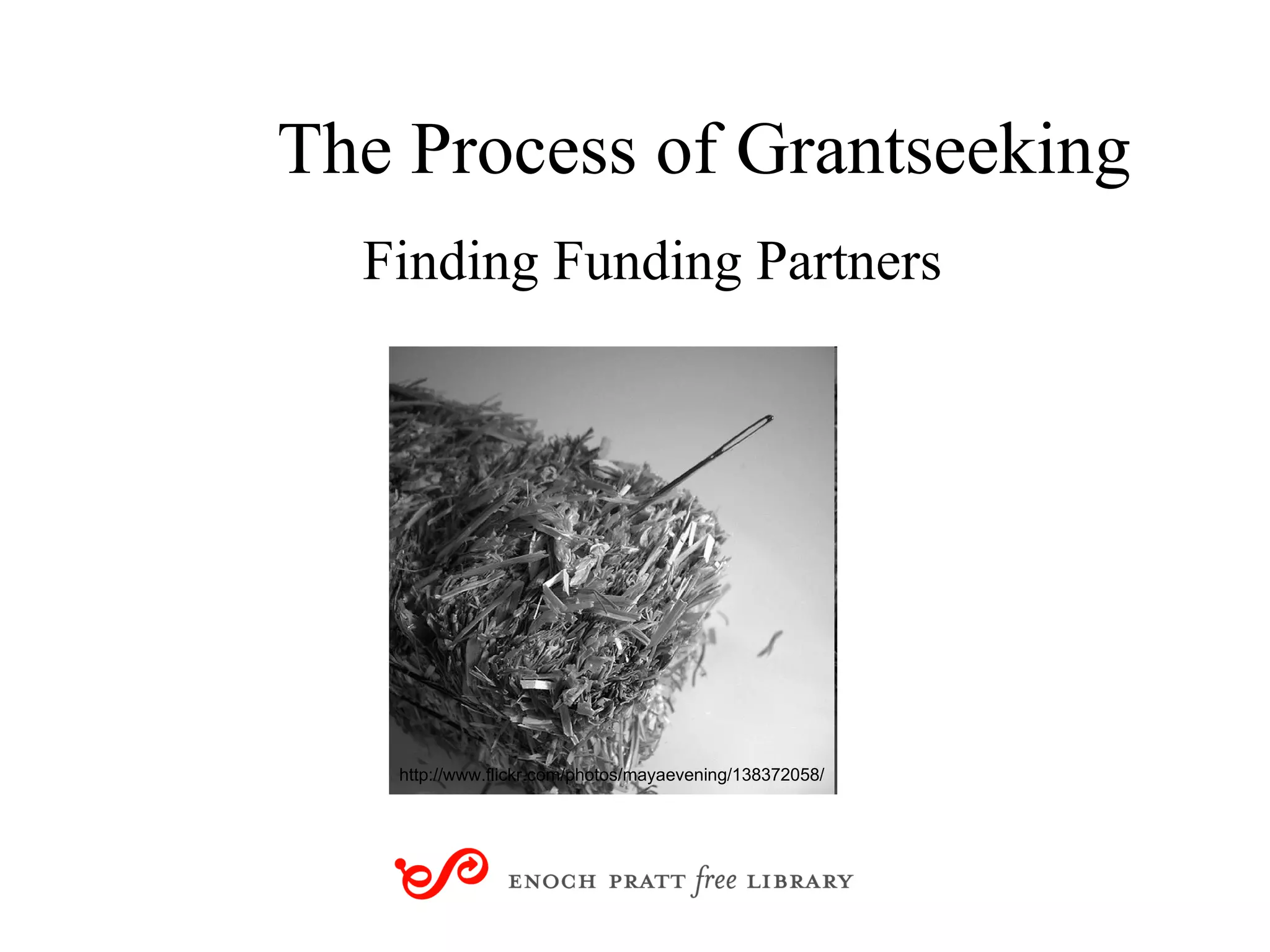
The Process of Grantseeking Finding Funding Partners http://www.flickr.com/photos/mayaevening/138372058/
Questions  to Ask Why do I need funding and  what kind do I need? How much do I need? When do I need the funds?
Finding   Funding Partners Look for the match! Who funds in my area of interest? Who funds in my geographic region? Who will provide the type of support  I need? Who has funded organizations like mine? Who has given amounts in the range I need?
Questions
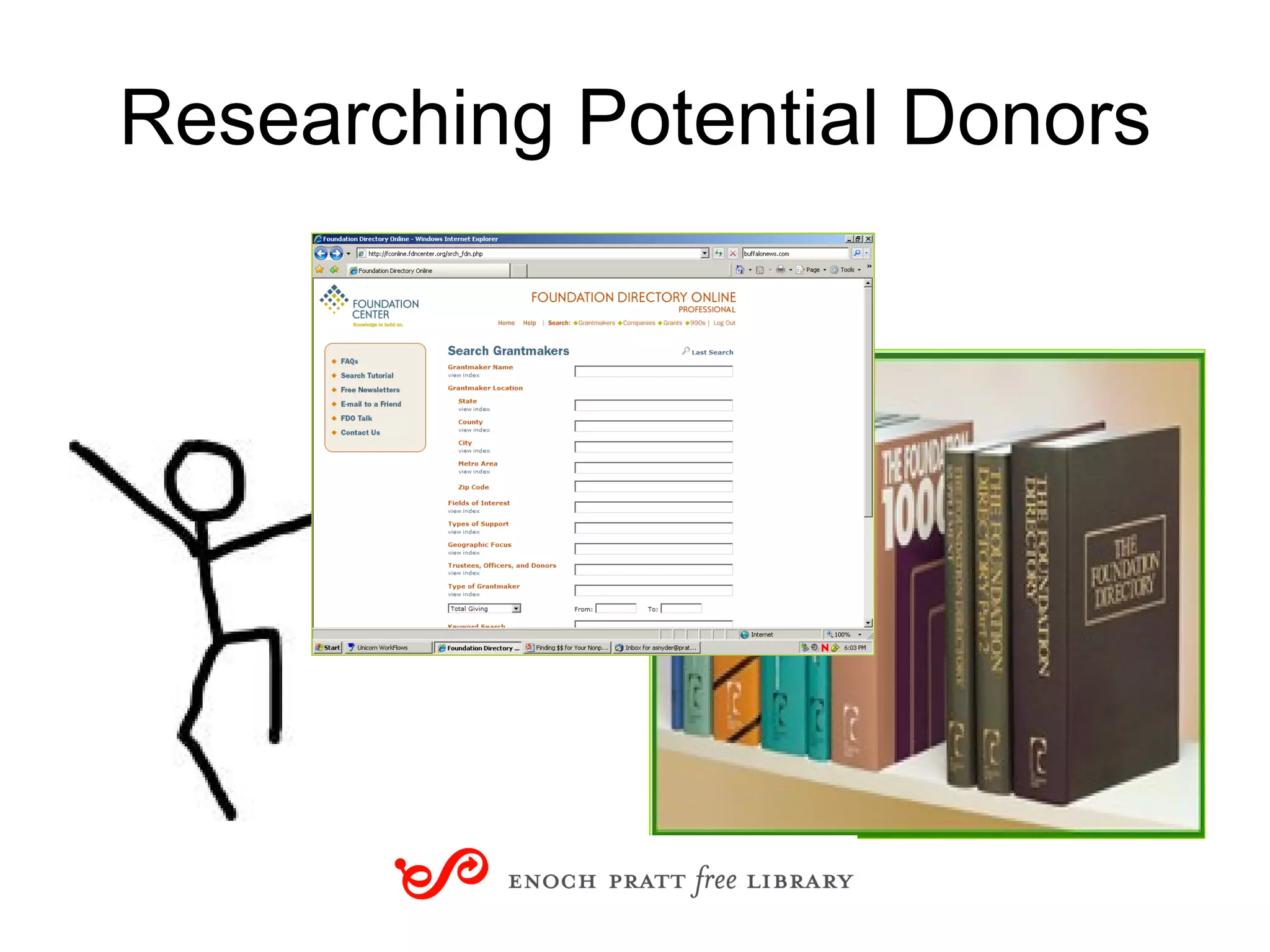
Researching Potential Donors
Government http://flickr.com/photos/strike1/2433164427/
Research Sources Federal (U.S.) government www.grants.gov   Recovery.gov State (Maryland) government Governor’s Grants Office Maryland Red Book Recovery.maryland.gov
Questions http://flickr.com/photos/lwr/12364944/
Business http://flickr.com/photos/pbo31/2403049863
Why do businesses’ give? http://flickr.com/photos/jalex_photo/397581862/
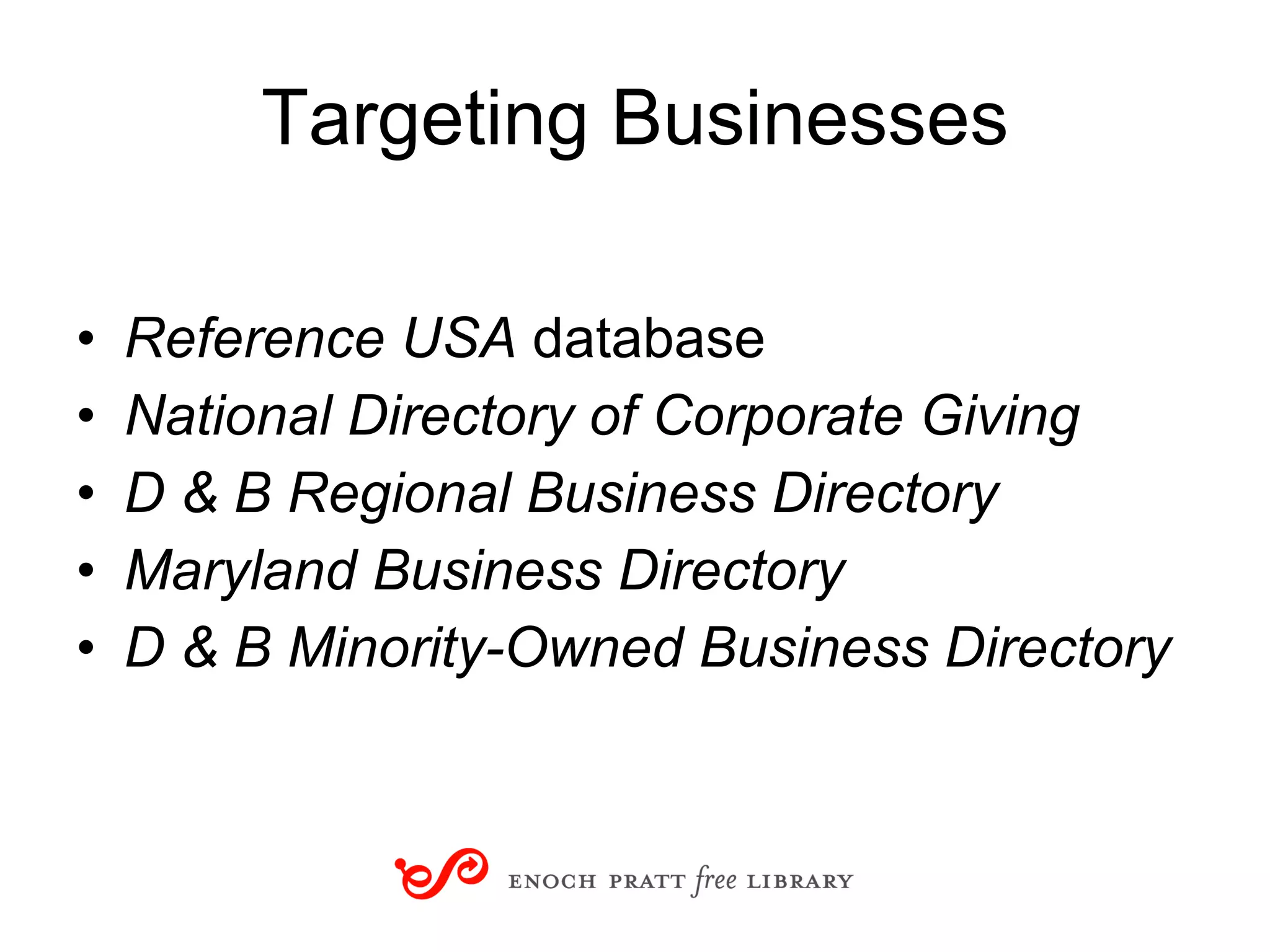
Targeting Businesses Reference USA  database National Directory of Corporate Giving D & B Regional Business Directory Maryland Business Directory D & B Minority-Owned Business Directory
Research Sources Hoovers http://www.hoovers.com/free/ Websites of Corporate Grantmakers http://fdncenter.org/funders/grantmaker/gws_corp/corp1.html Internet Prospector http://www.internet-prospector.org/company.html
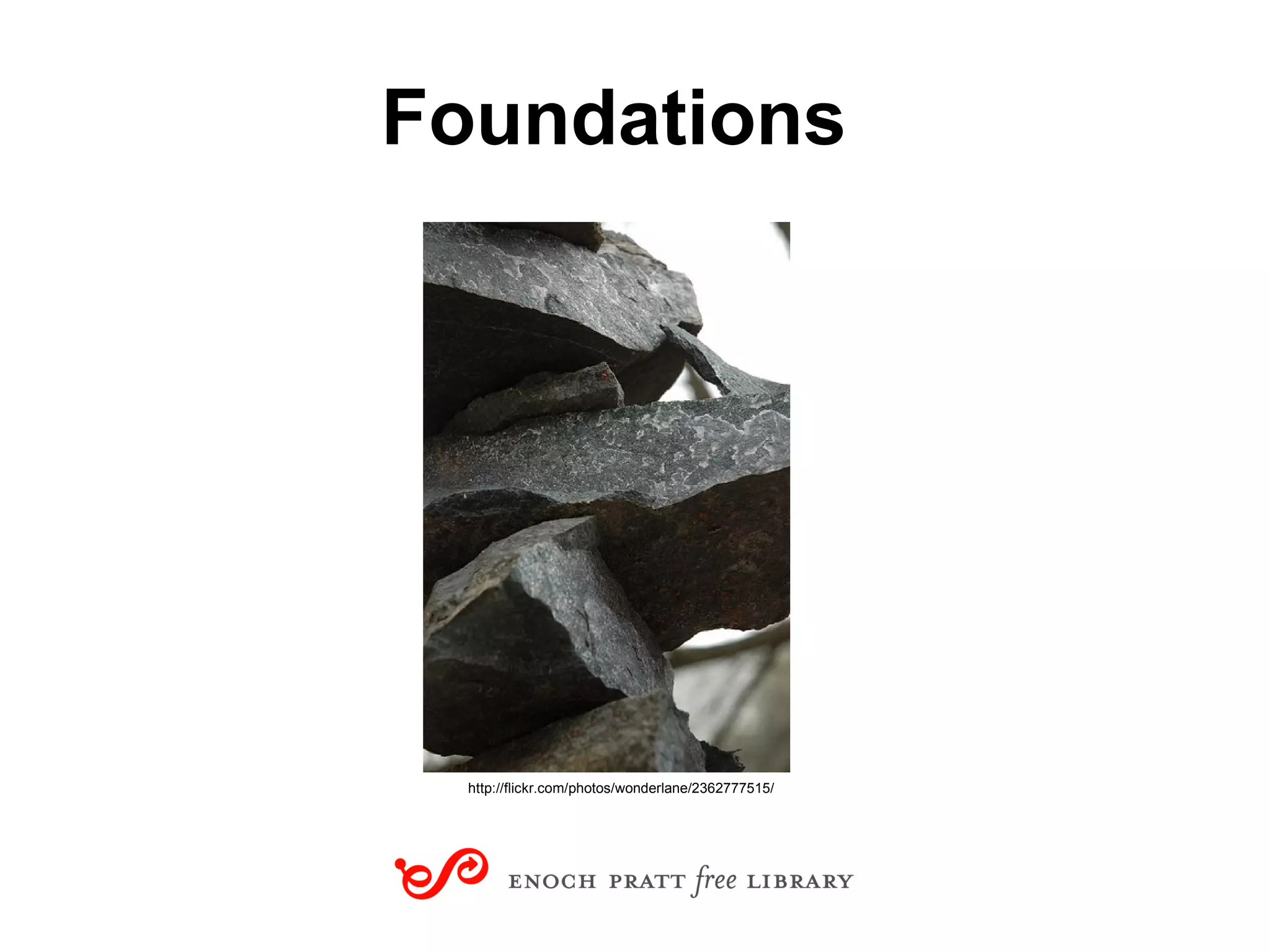
Foundations http://flickr.com/photos/wonderlane/2362777515/
What Is a Private Foundation? Nongovernmental, nonprofit organization Has its own funds or endowment Managed by its own trustees or directors Established to aid educational, social, religious, scientific, or other charitable activities through the making of grants Part 2: The World of Grantmakers
Types of Private Foundations Independent Company-sponsored Operating ~ 5% payout requirement ~ Must disclose total giving and grants through Form 990-PF Part 2: The World of Grantmakers
Other Types of Grantmakers Direct Corporate Giving Programs Research through sponsoring companies   Grantmaking Public Charities Disclose activities through Form 990 Includes: Community foundations Population or issue-oriented funds Company-sponsored Part 2: The World of Grantmakers
Resources for Researching Grantmakers Print Directories Foundation Directory Online Online Resources
Resources on Specific Funders Grantmaker Web sites Grantmaker documents Annual reports Newsletters Guidelines/brochures IRS filings (Form 990-PF) News articles
RECAP What is a grant? Credible Nonprofit Finding the Match Finding funders
RECAP
Approaching the Foundation
Which Foundations Will You Approach? Prepare Your Prospect List There are no shortcuts! Do your homework to find a match Prioritize your prospects and funding needs
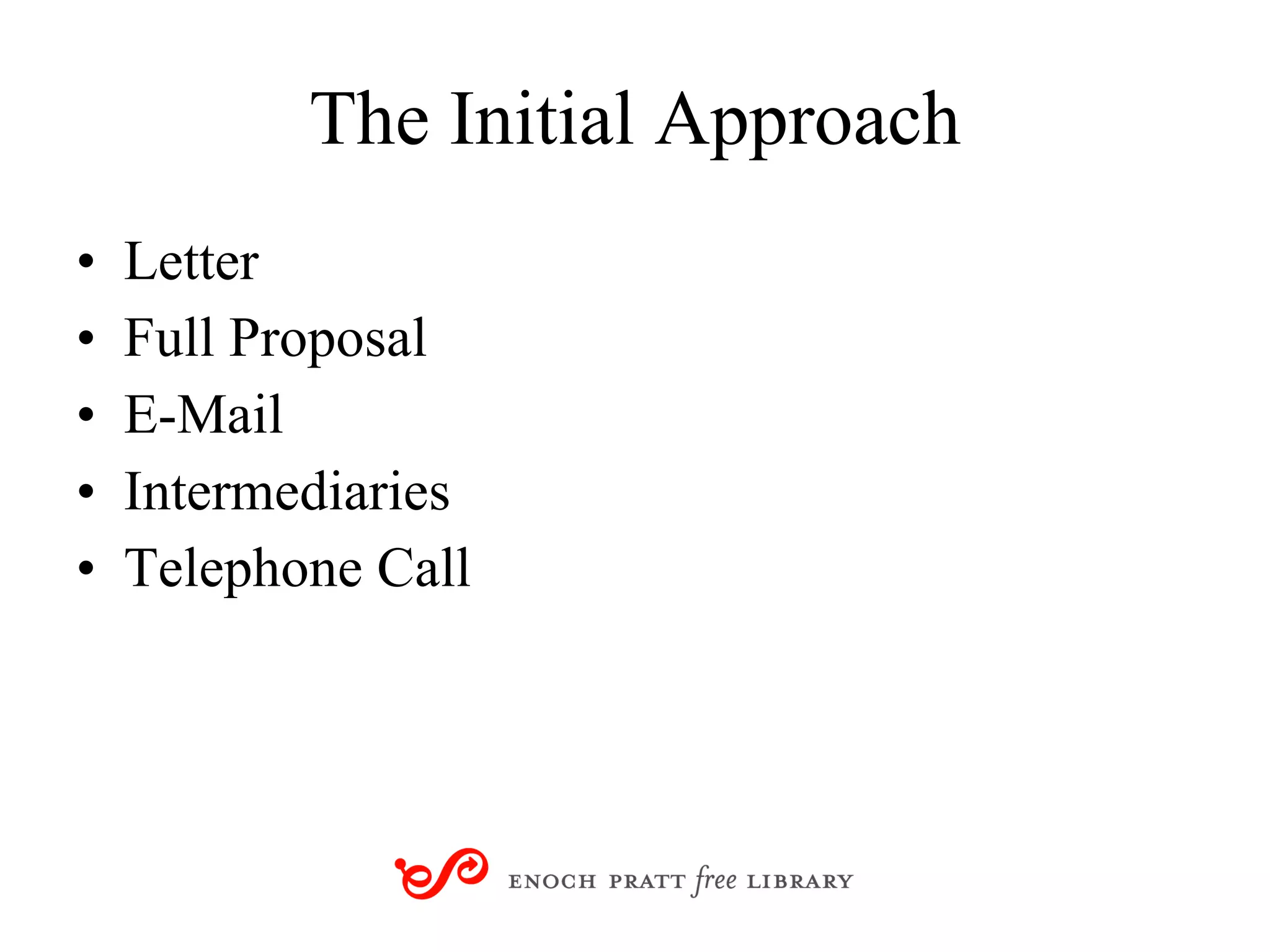
The Initial Approach Letter Full Proposal E-Mail Intermediaries Telephone Call
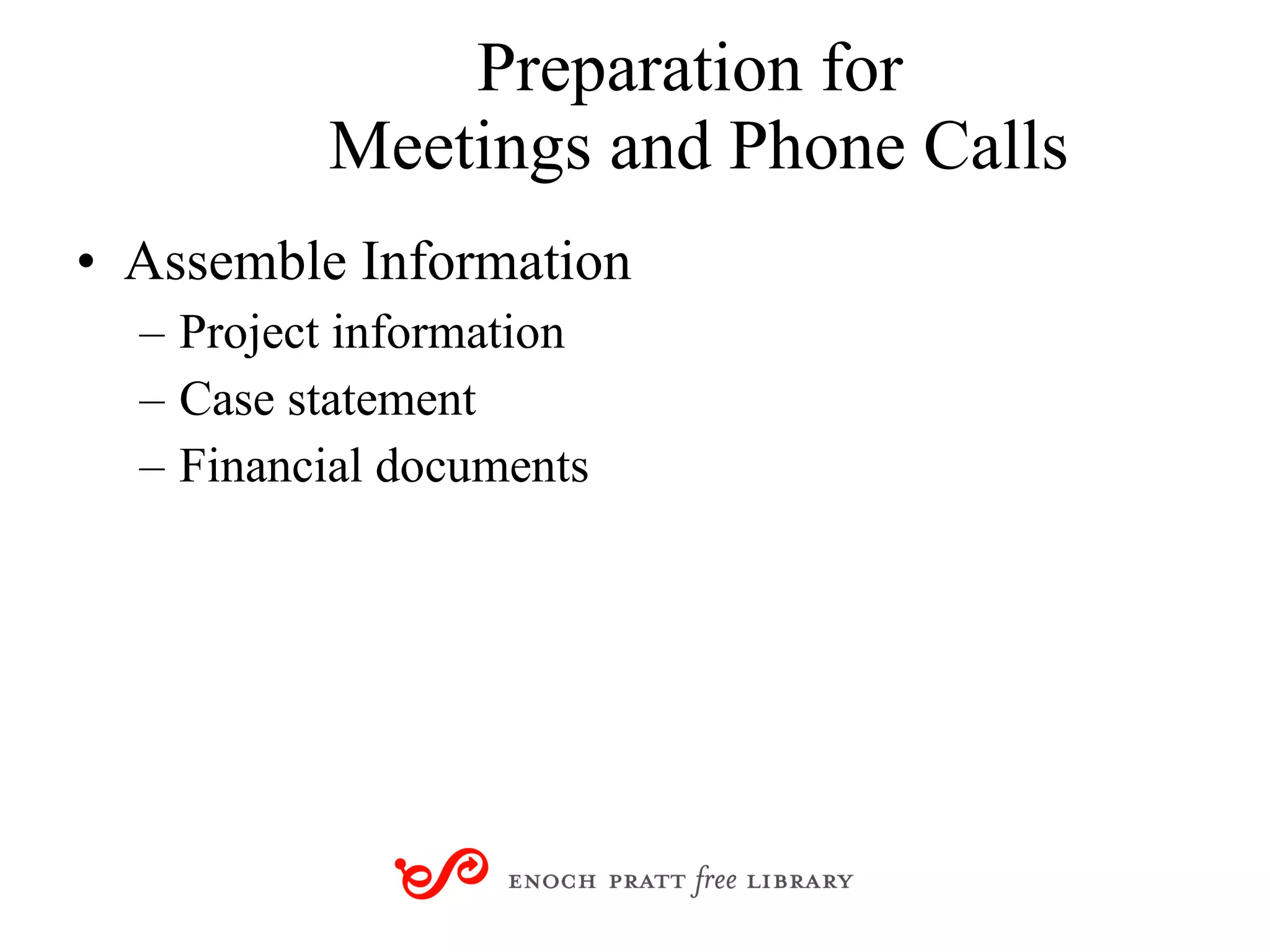
Preparation for  Meetings and Phone Calls Assemble Information Project information Case statement Financial documents
Preparation for  Meetings and Phone Calls Prepare Talking Points Organization information Project description Outcomes  Who will benefit Leadership Involved Resources Needed Costs
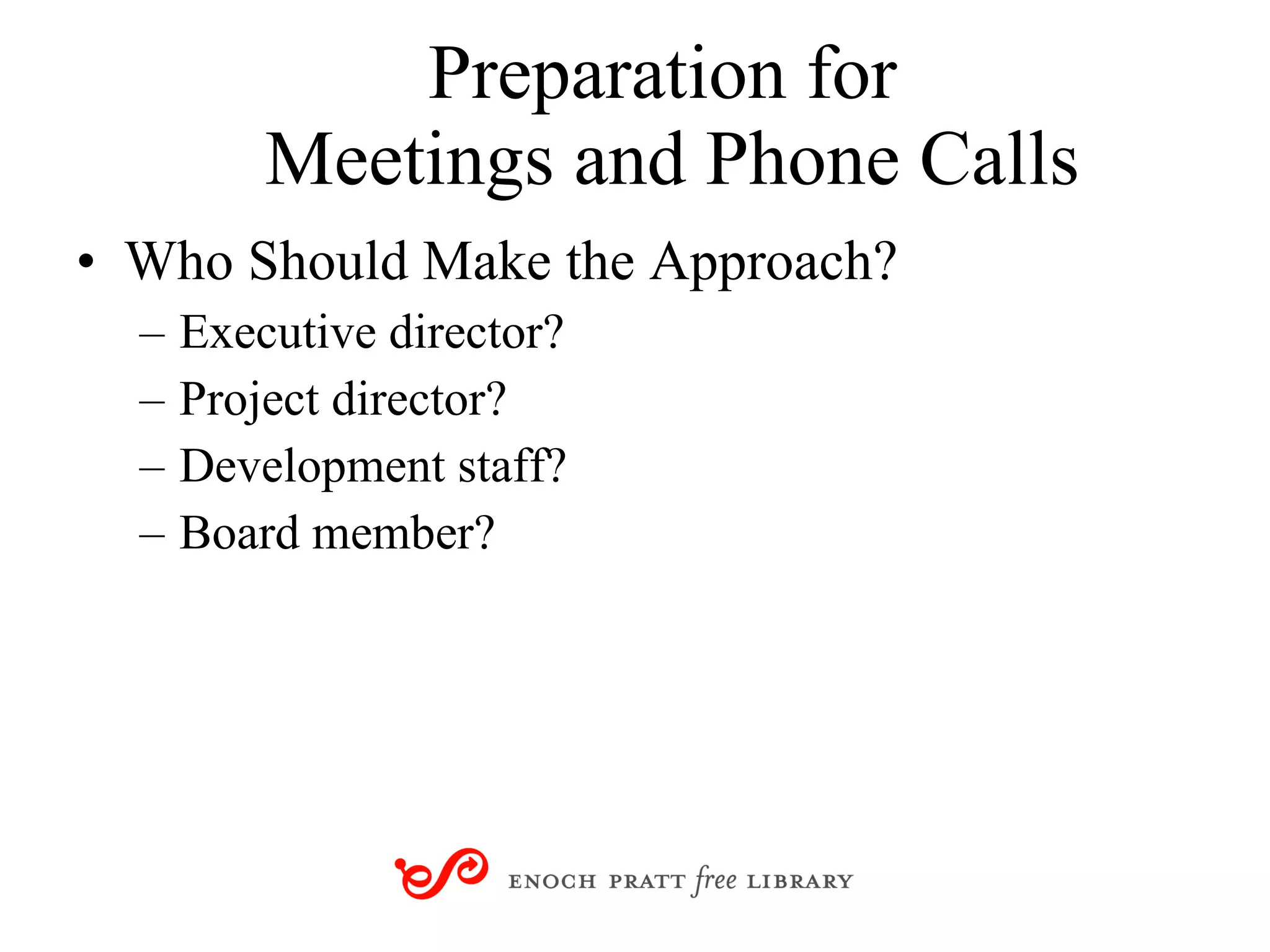
Preparation for  Meetings and Phone Calls Who Should Make the Approach? Executive director? Project director? Development staff? Board member?
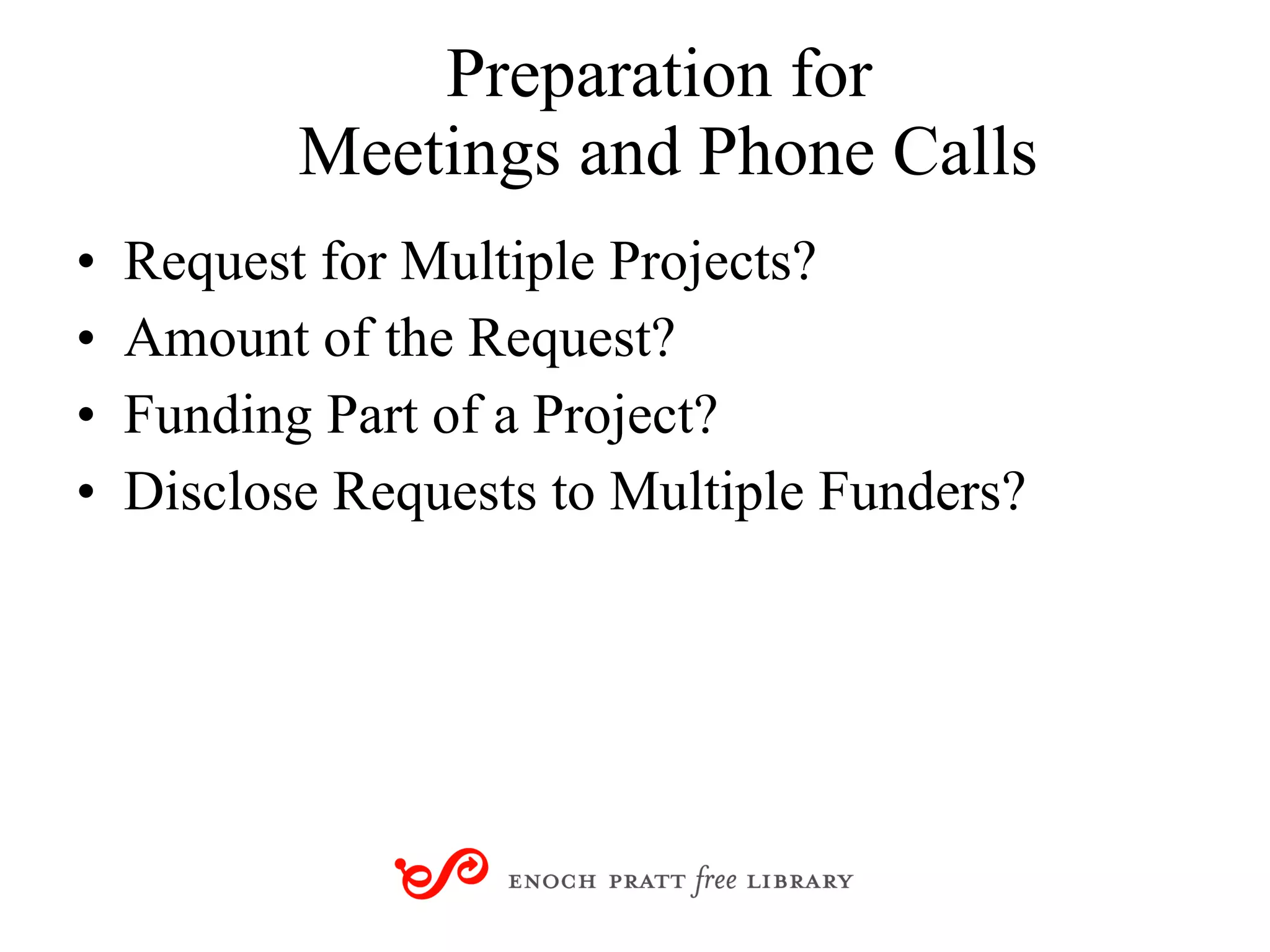
Preparation for  Meetings and Phone Calls Request for Multiple Projects? Amount of the Request? Funding Part of a Project? Disclose Requests to Multiple Funders?
Introductory Phone Call Goals To introduce your organization and project To make the connection to the foundation’s philanthropic interests To secure a meeting, if possible
Plan the Meeting How Much Time is Allotted? Who Should Attend? Where Should the Meeting be Held? What Should You Bring?
Conduct the Meeting Goals To build the funder’s knowledge of your organization and project  To strengthen the funder’s confidence in the competence of your organization’s leadership Listen!
Tips for the Meeting Beware Mission Drift!
After the Meeting Write Up Meeting Notes Send Thank You Letter
The Follow-Up Phone Call Review the File Prior to the Call Ask All the Key Questions  Respect the Grantmaker’s Time
The Site Visit Goals To demonstrate the strength of your program To demonstrate the effectiveness of your operations To enable the funder to become acquainted with your leaders
The Site Visit (cont’d) Prepare the Agenda Determine Who Will Participate Showcase Your Project Follow Up with a Thank You Letter
ProposalWriting Basics
Writing the proposal Submitting the proposal: What happens next?
Information Gathering Project concept and its place in your    organization Project timetable Outcomes Budget needs
Writing the Proposal Before you begin to write Writing tips Contents of a proposal Packaging
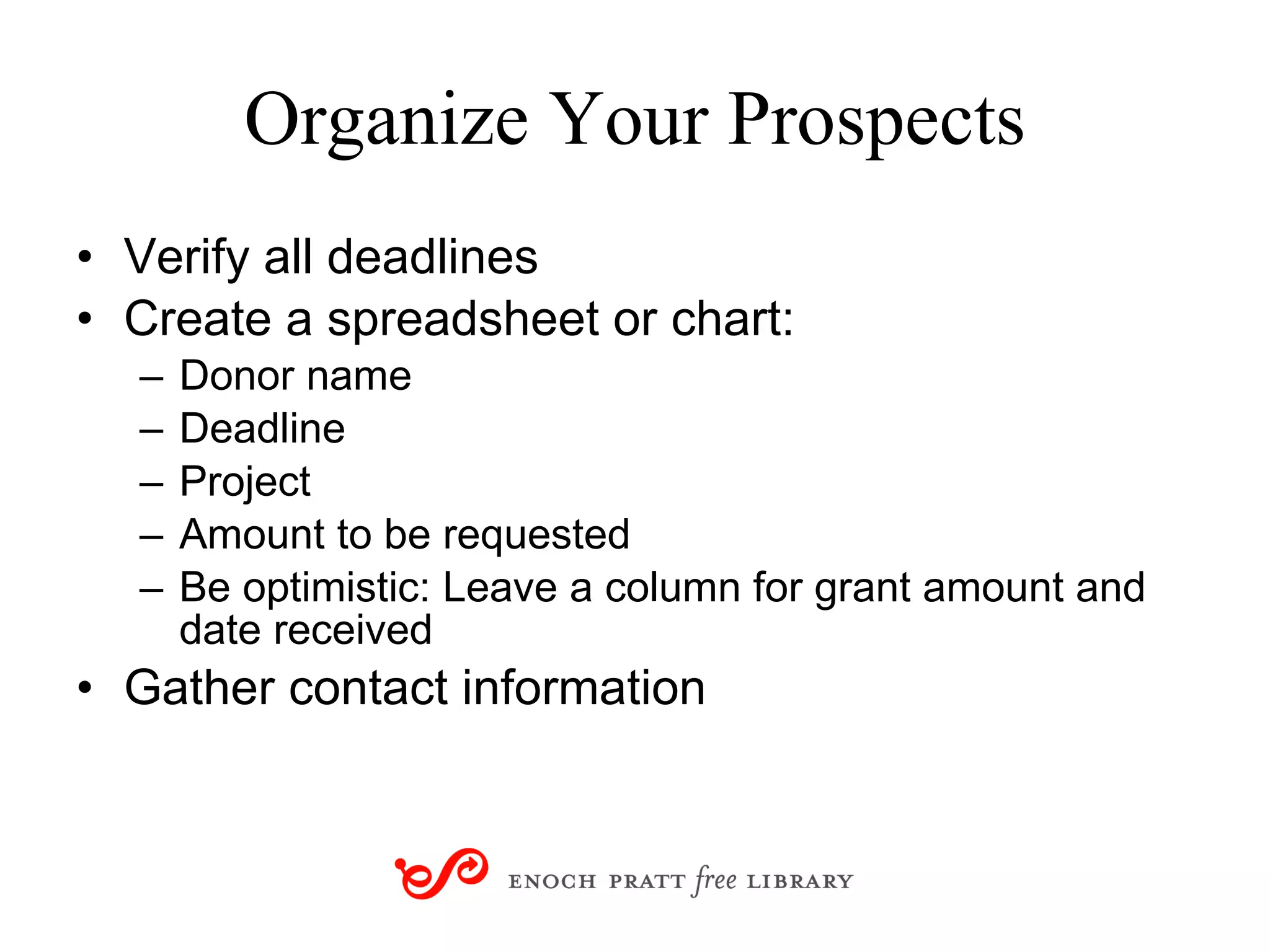
Organize Your Prospects Verify all deadlines Create a spreadsheet or chart: Donor name Deadline Project Amount to be requested Be optimistic: Leave a column for grant amount and date received Gather contact information
Remember: What is the purpose  of a proposal? To convince the funder there is a challenge in the community your organization has a program in place to meet the challenge your organization has the  ability  to successfully implement the solution
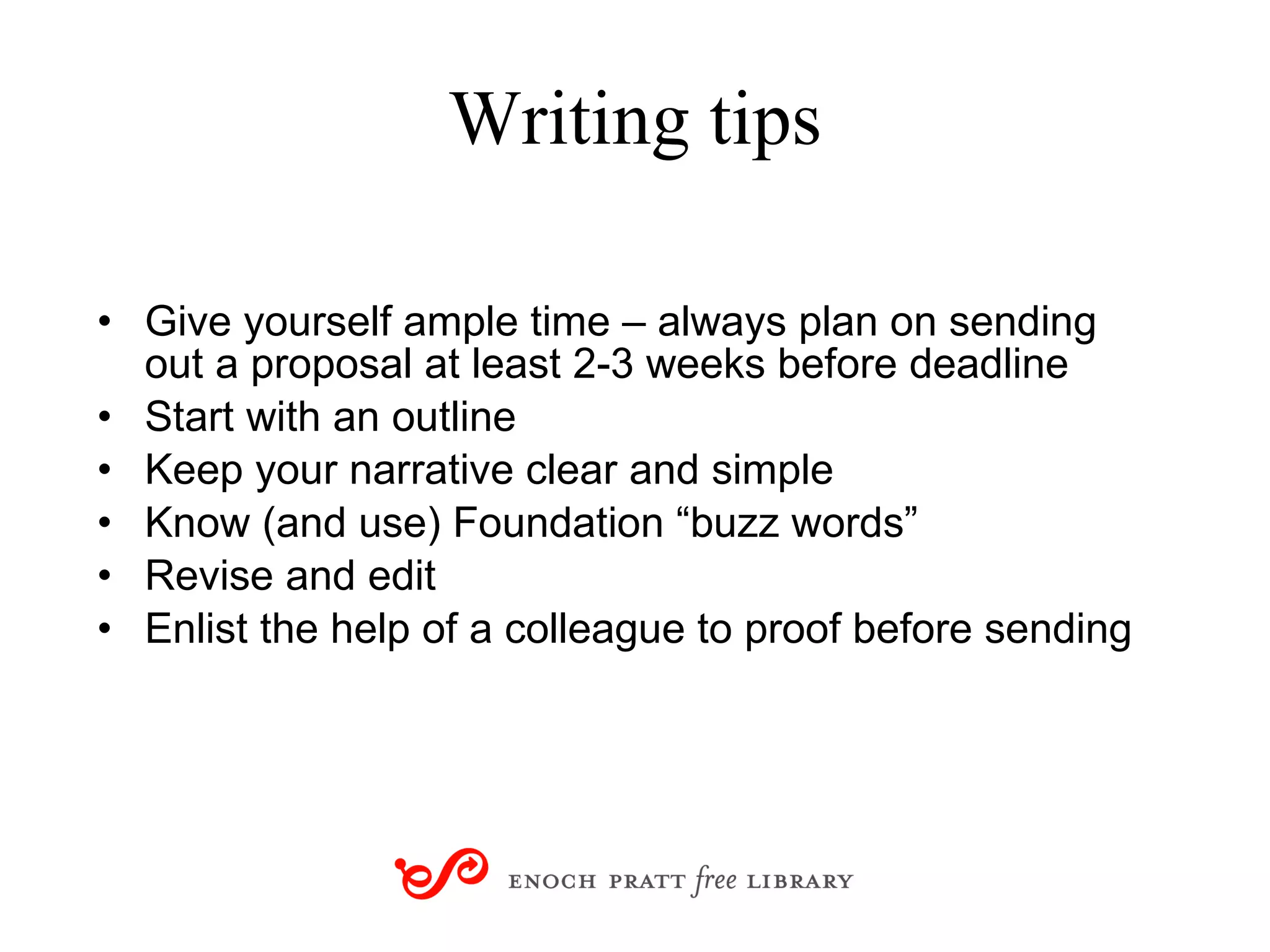
Writing tips Give yourself ample time – always plan on sending out a proposal at least 2-3 weeks before deadline Start with an outline Keep your narrative clear and simple  Know (and use) Foundation “buzz words” Revise and edit Enlist the help of a colleague to proof before sending
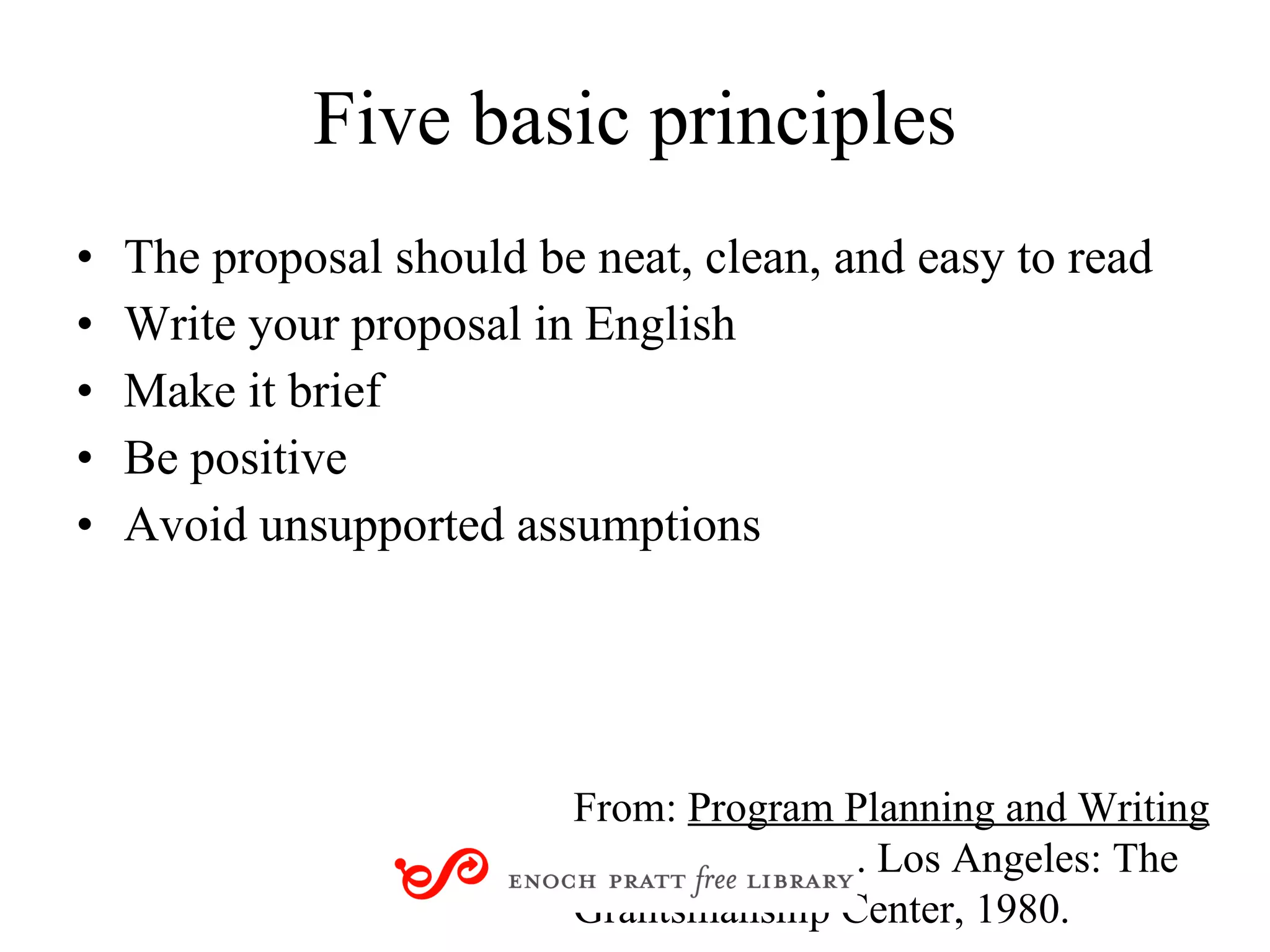
Five basic principles The proposal should be neat, clean, and easy to read Write your proposal in English Make it brief Be positive Avoid unsupported assumptions From:  Program Planning and Writing  by Norton Kiritz. Los Angeles: The Grantsmanship Center, 1980.
Questions
Proposal contents Title page and table of contents Executive summary  Organization information  Statement of need   Project description  Conclusion  Budget  Appendix and supporting materials
Executive summary Include The problem The solution Funding requirements Your organization’s expertise
Organization Information Mission and history Programs and expertise Board and key staff
Statement of need Include Problems and issues that the  project addresses Supporting facts Whether the project can be replicated, or has already been implemented  Whether you will collaborate with other groups Repeat the ask
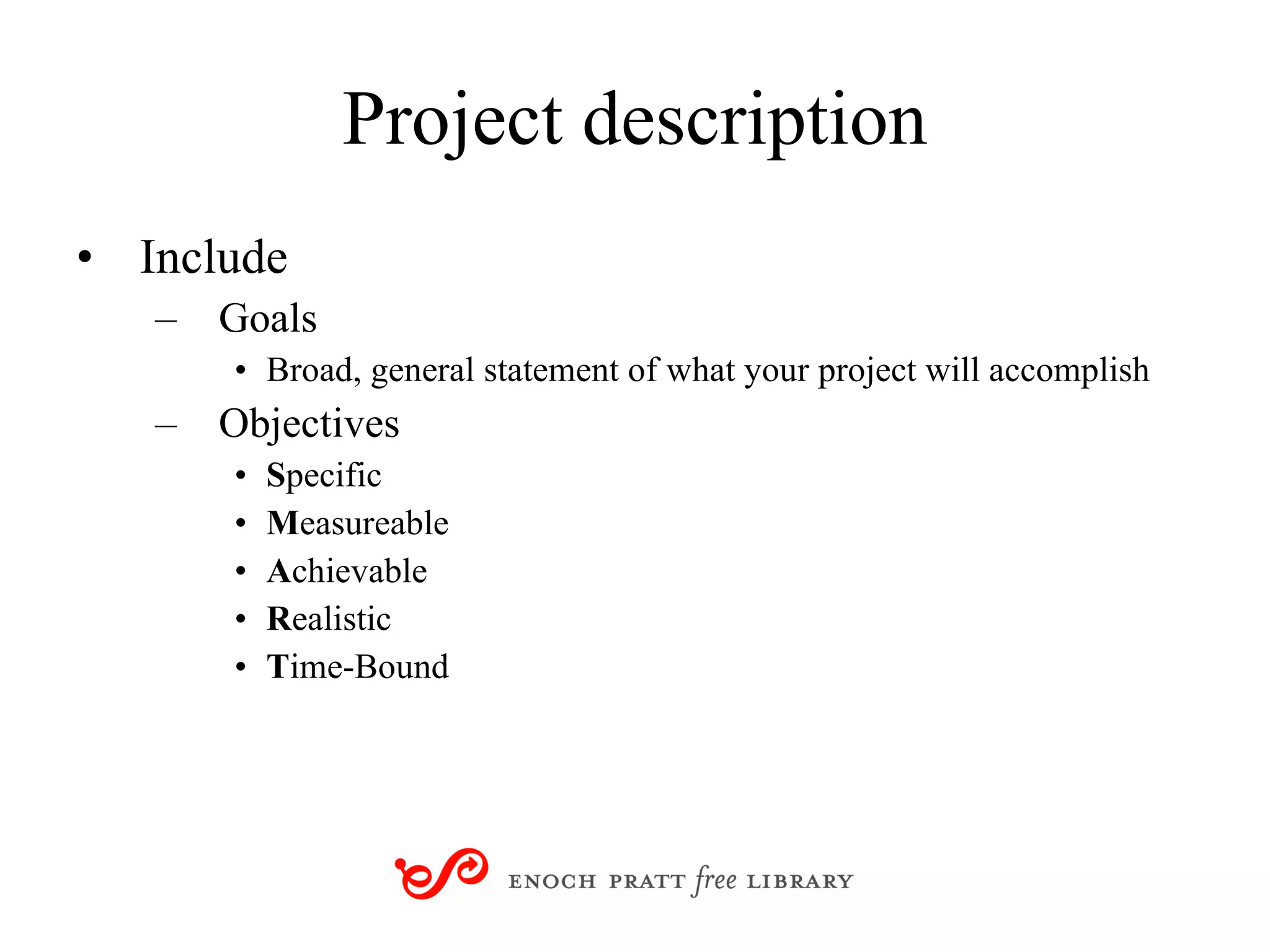
Project description Include Goals Broad, general statement of what your project will accomplish Objectives S pecific M easureable A chievable R ealistic T ime-Bound
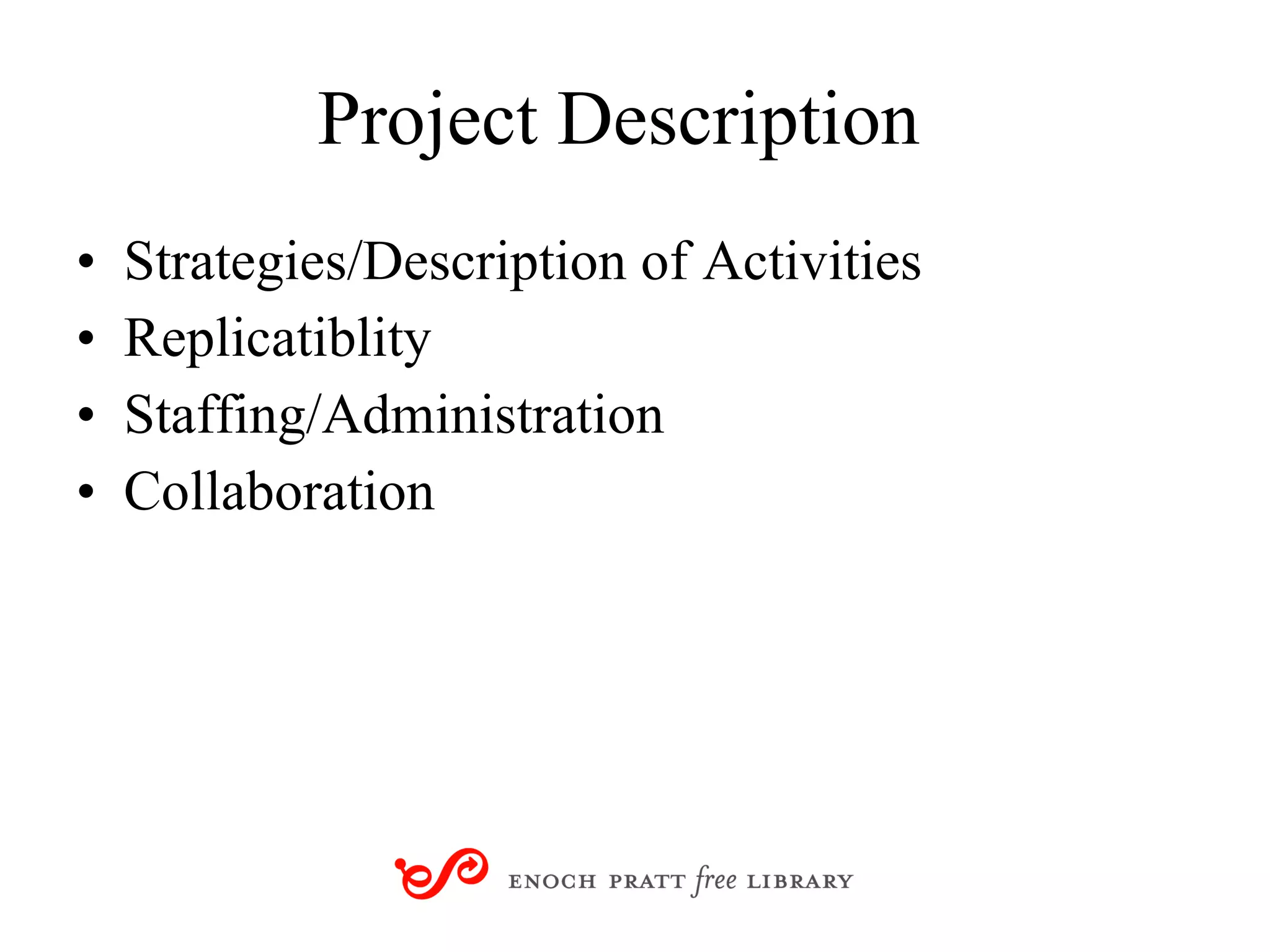
Project Description Strategies/Description of Activities Replicatiblity Staffing/Administration Collaboration
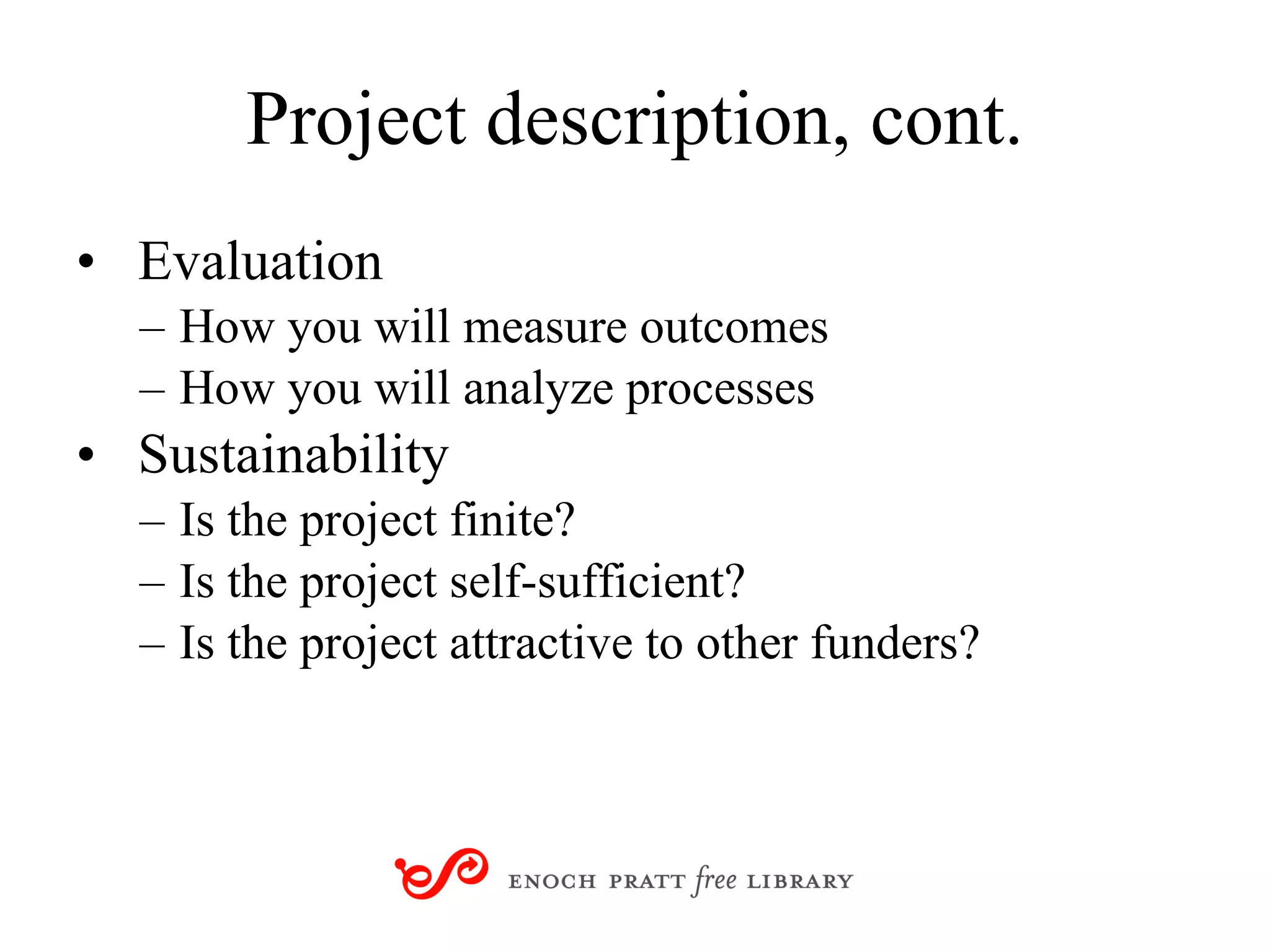
Project description, cont. Evaluation How you will measure outcomes How you will analyze processes Sustainability Is the project finite? Is the project self-sufficient? Is the project attractive to other funders?
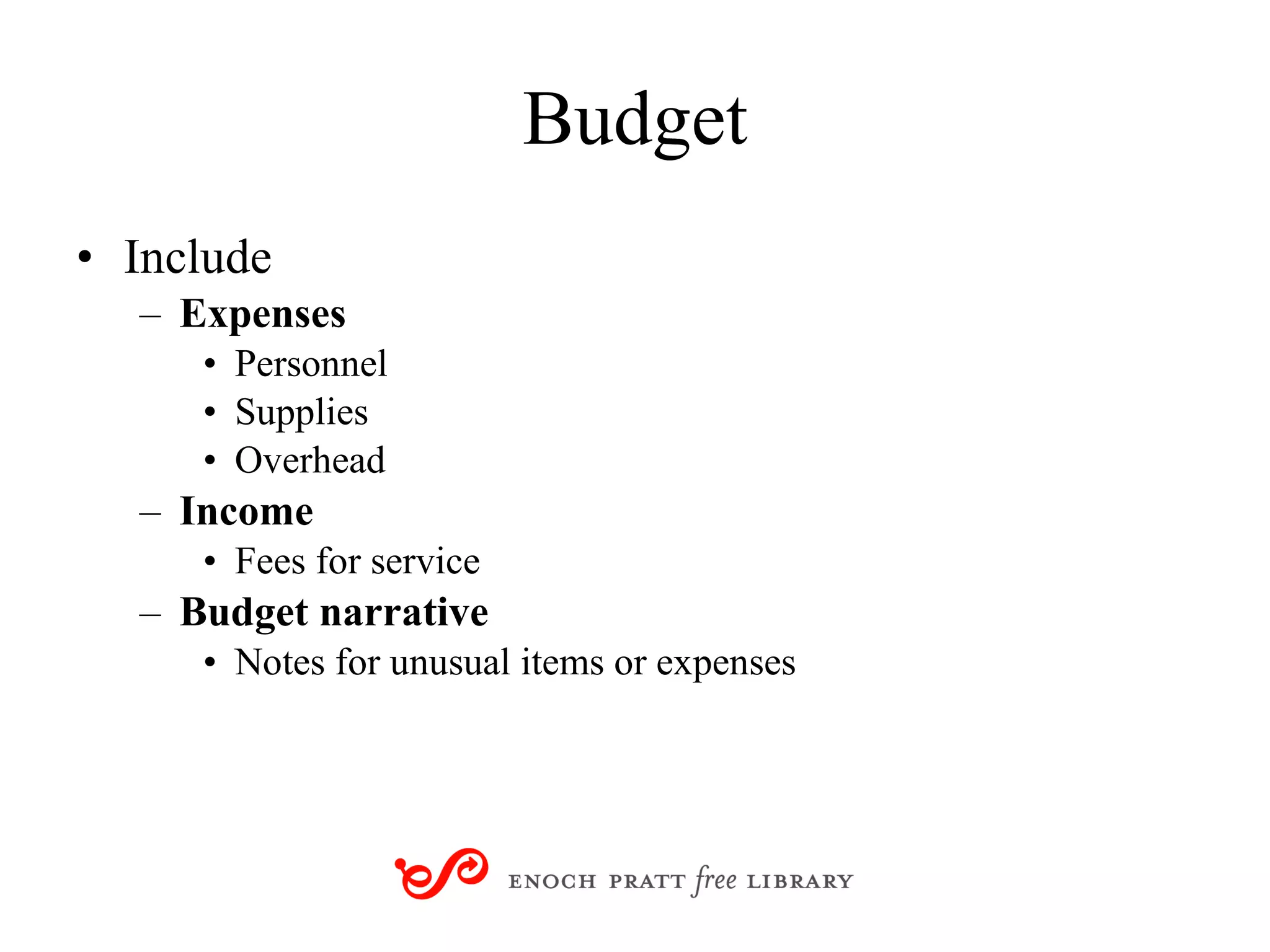
Budget Include Expenses Personnel Supplies Overhead Income Fees for service Budget narrative Notes for unusual items or expenses
Conclusion Summarize: What you will accomplish Who will benefit Why it’s important Repeat the Ask Thank the funder!
Appendix and supporting materials List of Board members and key staff IRS 501 (c) 3 letter of determination Financial documents Other, relevant documents that help make  your case
Questions
Packaging your proposal Cover letter Brief summary of the request  Request for funding Proposal Package contents Offer to meet and/or answer questions
Packaging Your Proposal cont’d Include a title page and table of contents Neatness  does   count Follow funder’s guidelines
Proposal Submission Follow the funders guidelines Initial contact Telephone call? Letter of Inquiry? Full proposal? Common Grant Application? Funder’s own application form?
Always follow  the funder’s guidelines
Questions
Submitting Your Proposal What’s NEXT? After the proposal The results
What’s Next? The best time to start thinking about your next request to a funder is right after you put your proposal in the mail!
Think about: How can I update my files so I have all the information I need next time? Are there other funders who might be good prospects for this project? What would make the process simpler in the future?
Follow up with Foundations Cultivating relationships after you submit the proposal Telephone conversations and appointments Board contact Keep them informed
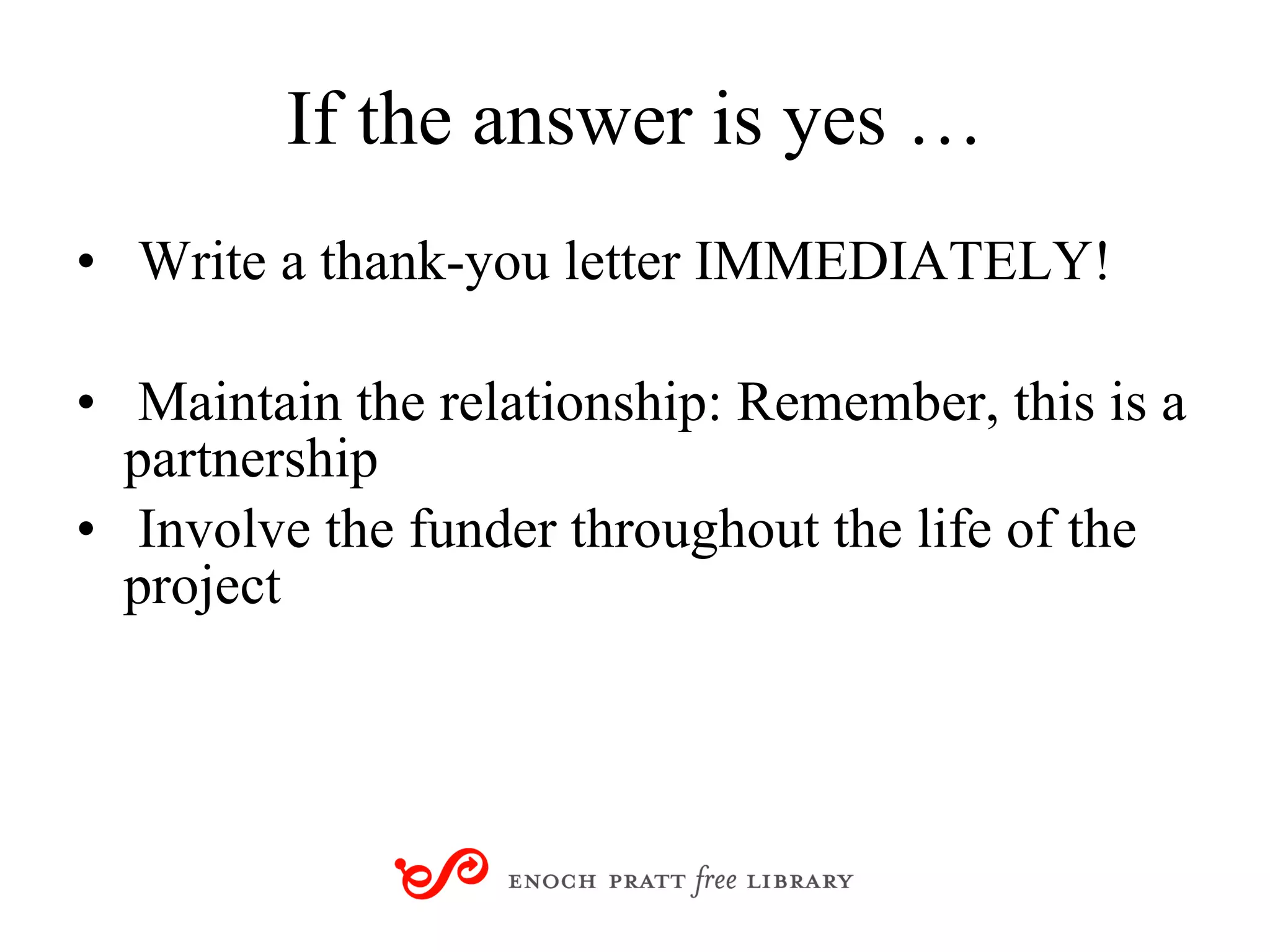
If the answer is yes … Write a thank-you letter IMMEDIATELY! Maintain the relationship: Remember, this is a partnership Involve the funder throughout the life of the project
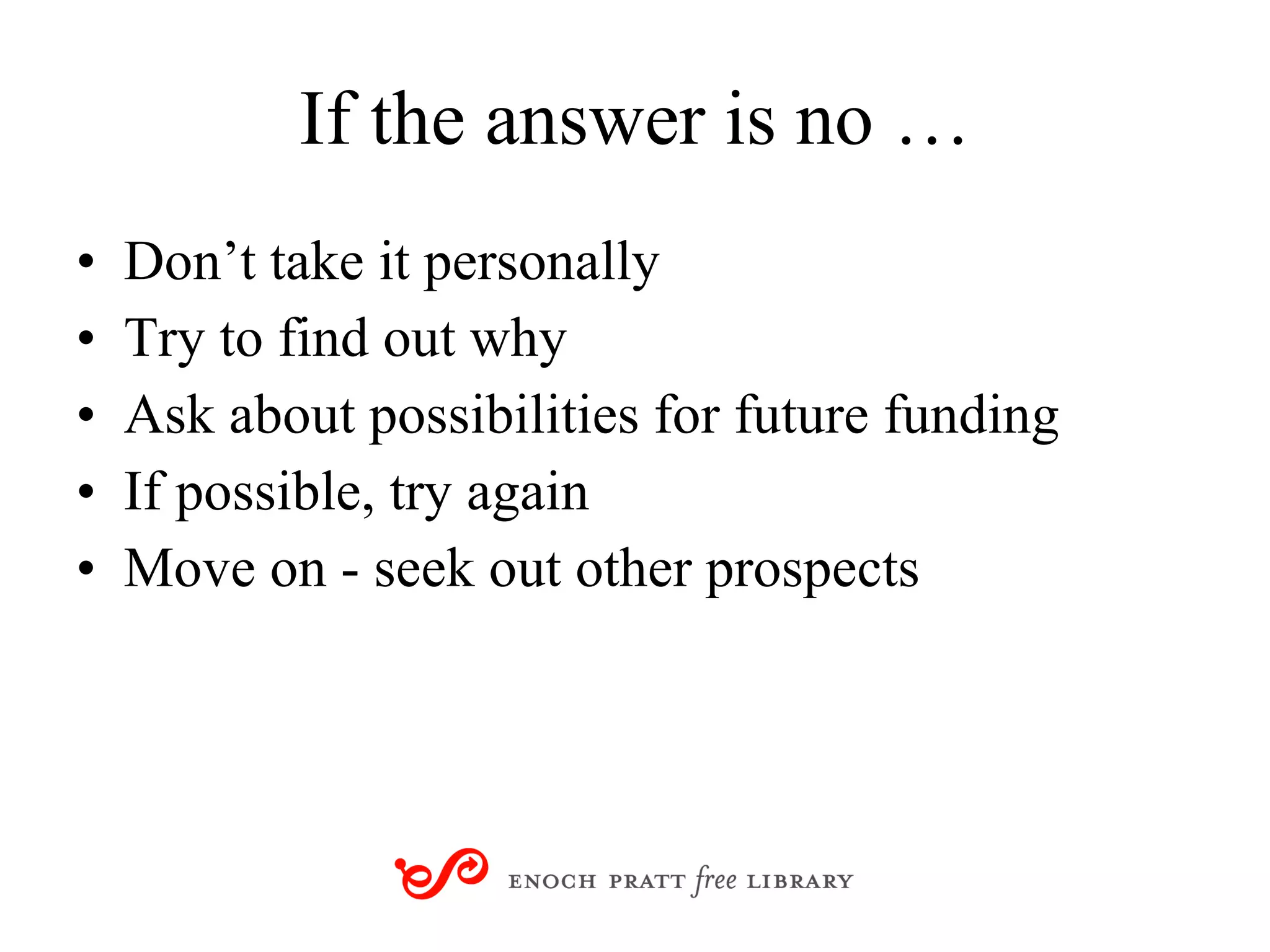
If the answer is no … Don’t take it personally Try to find out why Ask about possibilities for future funding If possible, try again Move on - seek out other prospects
Questions
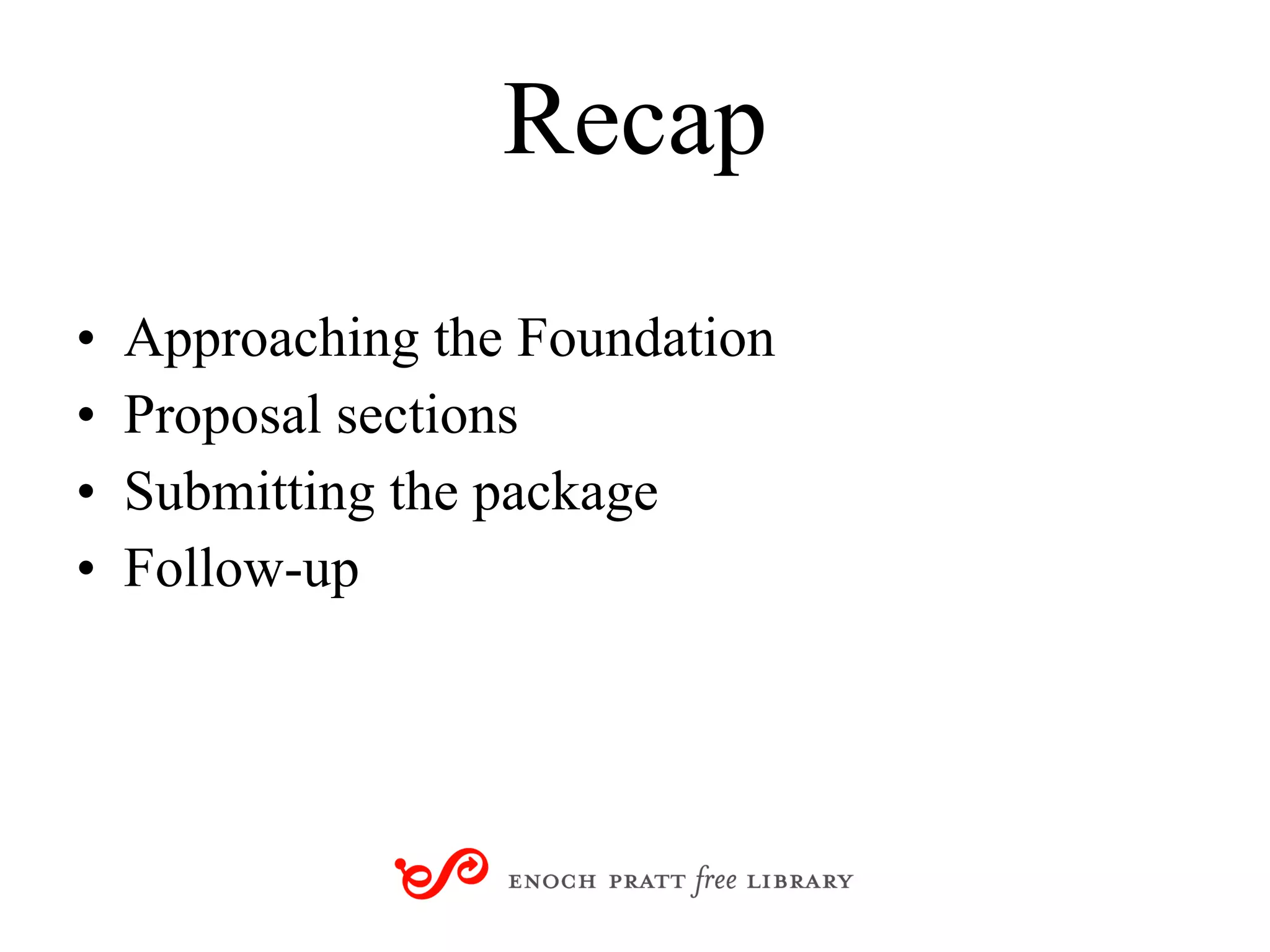
Recap Approaching the Foundation Proposal sections Submitting the package Follow-up
Where else can I go? Foundation Center www.fdncenter.org Maryland Nonprofits www.marylandnonprofits.org Grants Collection http://www.prattlibrary.org/locations/grants/index.aspx
Please Fill Out the Evaluation! THANKS 
Andrea Snyder Grants Collection Enoch Pratt Free Library/State Library Resource Center (410)396-5320 [email_address]

Grantsmanship 101

  • 1.
    Grantsmanship 101 AndreaSnyder Grants Collection Enoch Pratt Free Library (410)396-5320 [email_address]
  • 2.
    Objectives World ofPhilanthropy What you need to have in place before you seek a grant Identifying funding partners Approaching the foundation/funder Writing the proposal Submitting the proposal: Wrap-up
  • 3.
  • 4.
  • 5.
    Understanding the Worldof Philanthropy http://flickr.com/photos/creativelychallenged/2348635312/
  • 6.
    Why do wegive? http://flickr.com/photos/wallyg/1751478133/
  • 7.
    What is Philanthropy?The effort or inclination to increase the well-being of humankind, as by charitable aid or donations. Love of humankind in general. Something, such as an activity or institution, intended to promote human welfare.
  • 8.
  • 9.
    Source: NonprofitAlmanac 2008 National Center for Charitable Statistics, the Urban Institute Other Income 2.9% Fees for Services and Goods 70.3% Private Contributions 12.3% Sources of Revenue for Reporting Public Charities Government Grants 9.0% Investment Income 5.4%
  • 10.
    Individuals $229.03 Corporations$15.69 Foundations $38.52 Bequests $23.15 Total Giving: $306.39 billion 74.8% 5.1% 12.6% 7.6% Private Contributions by Source ($ in billions) Source: Giving USA 2008, Giving USA Foundation, researched and written by the Center On Philanthropy at Indiana University
  • 11.
    Economic Crisis InfoFoundation Center: http://foundationcenter.org/focus/economy/ Maryland Info: http://mdnonprofithelp.ning.com/ National Council of Nonprofits: http://www.councilofnonprofits.org
  • 12.
  • 13.
  • 14.
    What You NeedTo Have In Place 501(c)(3) status Active board Effective bylaws Strong mission statement
  • 15.
    What Funders LookFor Relevant, high-quality programs that meet a real need in the community Board commitment Staff capacity A strong organizational and financial infrastructure
  • 16.
    What You WillNeed About Your Organization List of board members Biographies and resumes of key people IRS 501(c)(3) letter of determination Organizational budget for current year Last 2 audited financial statements By-laws History of organization, including news clippings, anecdotal stories
  • 17.
    What You WillNeed to Know About Your Community Community Demographics Community Needs Partners Competitors Press clippings, anecdotes Published reports, newsletters, and other materials of local nonprofits Any other community files
  • 18.
  • 19.
    The Process ofGrantseeking Finding Funding Partners http://www.flickr.com/photos/mayaevening/138372058/
  • 20.
    Questions toAsk Why do I need funding and what kind do I need? How much do I need? When do I need the funds?
  • 21.
    Finding Funding Partners Look for the match! Who funds in my area of interest? Who funds in my geographic region? Who will provide the type of support I need? Who has funded organizations like mine? Who has given amounts in the range I need?
  • 22.
  • 23.
  • 24.
  • 25.
    Research Sources Federal(U.S.) government www.grants.gov Recovery.gov State (Maryland) government Governor’s Grants Office Maryland Red Book Recovery.maryland.gov
  • 26.
  • 27.
  • 28.
    Why do businesses’give? http://flickr.com/photos/jalex_photo/397581862/
  • 29.
    Targeting Businesses ReferenceUSA database National Directory of Corporate Giving D & B Regional Business Directory Maryland Business Directory D & B Minority-Owned Business Directory
  • 30.
    Research Sources Hoovershttp://www.hoovers.com/free/ Websites of Corporate Grantmakers http://fdncenter.org/funders/grantmaker/gws_corp/corp1.html Internet Prospector http://www.internet-prospector.org/company.html
  • 31.
  • 32.
    What Is aPrivate Foundation? Nongovernmental, nonprofit organization Has its own funds or endowment Managed by its own trustees or directors Established to aid educational, social, religious, scientific, or other charitable activities through the making of grants Part 2: The World of Grantmakers
  • 33.
    Types of PrivateFoundations Independent Company-sponsored Operating ~ 5% payout requirement ~ Must disclose total giving and grants through Form 990-PF Part 2: The World of Grantmakers
  • 34.
    Other Types ofGrantmakers Direct Corporate Giving Programs Research through sponsoring companies Grantmaking Public Charities Disclose activities through Form 990 Includes: Community foundations Population or issue-oriented funds Company-sponsored Part 2: The World of Grantmakers
  • 35.
    Resources for ResearchingGrantmakers Print Directories Foundation Directory Online Online Resources
  • 36.
    Resources on SpecificFunders Grantmaker Web sites Grantmaker documents Annual reports Newsletters Guidelines/brochures IRS filings (Form 990-PF) News articles
  • 37.
    RECAP What isa grant? Credible Nonprofit Finding the Match Finding funders
  • 38.
  • 39.
  • 40.
    Which Foundations WillYou Approach? Prepare Your Prospect List There are no shortcuts! Do your homework to find a match Prioritize your prospects and funding needs
  • 41.
    The Initial ApproachLetter Full Proposal E-Mail Intermediaries Telephone Call
  • 42.
    Preparation for Meetings and Phone Calls Assemble Information Project information Case statement Financial documents
  • 43.
    Preparation for Meetings and Phone Calls Prepare Talking Points Organization information Project description Outcomes Who will benefit Leadership Involved Resources Needed Costs
  • 44.
    Preparation for Meetings and Phone Calls Who Should Make the Approach? Executive director? Project director? Development staff? Board member?
  • 45.
    Preparation for Meetings and Phone Calls Request for Multiple Projects? Amount of the Request? Funding Part of a Project? Disclose Requests to Multiple Funders?
  • 46.
    Introductory Phone CallGoals To introduce your organization and project To make the connection to the foundation’s philanthropic interests To secure a meeting, if possible
  • 47.
    Plan the MeetingHow Much Time is Allotted? Who Should Attend? Where Should the Meeting be Held? What Should You Bring?
  • 48.
    Conduct the MeetingGoals To build the funder’s knowledge of your organization and project To strengthen the funder’s confidence in the competence of your organization’s leadership Listen!
  • 49.
    Tips for theMeeting Beware Mission Drift!
  • 50.
    After the MeetingWrite Up Meeting Notes Send Thank You Letter
  • 51.
    The Follow-Up PhoneCall Review the File Prior to the Call Ask All the Key Questions Respect the Grantmaker’s Time
  • 52.
    The Site VisitGoals To demonstrate the strength of your program To demonstrate the effectiveness of your operations To enable the funder to become acquainted with your leaders
  • 53.
    The Site Visit(cont’d) Prepare the Agenda Determine Who Will Participate Showcase Your Project Follow Up with a Thank You Letter
  • 54.
  • 55.
    Writing the proposalSubmitting the proposal: What happens next?
  • 56.
    Information Gathering Projectconcept and its place in your organization Project timetable Outcomes Budget needs
  • 57.
    Writing the ProposalBefore you begin to write Writing tips Contents of a proposal Packaging
  • 58.
    Organize Your ProspectsVerify all deadlines Create a spreadsheet or chart: Donor name Deadline Project Amount to be requested Be optimistic: Leave a column for grant amount and date received Gather contact information
  • 59.
    Remember: What isthe purpose of a proposal? To convince the funder there is a challenge in the community your organization has a program in place to meet the challenge your organization has the ability to successfully implement the solution
  • 60.
    Writing tips Giveyourself ample time – always plan on sending out a proposal at least 2-3 weeks before deadline Start with an outline Keep your narrative clear and simple Know (and use) Foundation “buzz words” Revise and edit Enlist the help of a colleague to proof before sending
  • 61.
    Five basic principlesThe proposal should be neat, clean, and easy to read Write your proposal in English Make it brief Be positive Avoid unsupported assumptions From: Program Planning and Writing by Norton Kiritz. Los Angeles: The Grantsmanship Center, 1980.
  • 62.
  • 63.
    Proposal contents Titlepage and table of contents Executive summary Organization information Statement of need Project description Conclusion Budget Appendix and supporting materials
  • 64.
    Executive summary IncludeThe problem The solution Funding requirements Your organization’s expertise
  • 65.
    Organization Information Missionand history Programs and expertise Board and key staff
  • 66.
    Statement of needInclude Problems and issues that the project addresses Supporting facts Whether the project can be replicated, or has already been implemented Whether you will collaborate with other groups Repeat the ask
  • 67.
    Project description IncludeGoals Broad, general statement of what your project will accomplish Objectives S pecific M easureable A chievable R ealistic T ime-Bound
  • 68.
    Project Description Strategies/Descriptionof Activities Replicatiblity Staffing/Administration Collaboration
  • 69.
    Project description, cont.Evaluation How you will measure outcomes How you will analyze processes Sustainability Is the project finite? Is the project self-sufficient? Is the project attractive to other funders?
  • 70.
    Budget Include ExpensesPersonnel Supplies Overhead Income Fees for service Budget narrative Notes for unusual items or expenses
  • 71.
    Conclusion Summarize: Whatyou will accomplish Who will benefit Why it’s important Repeat the Ask Thank the funder!
  • 72.
    Appendix and supportingmaterials List of Board members and key staff IRS 501 (c) 3 letter of determination Financial documents Other, relevant documents that help make your case
  • 73.
  • 74.
    Packaging your proposalCover letter Brief summary of the request Request for funding Proposal Package contents Offer to meet and/or answer questions
  • 75.
    Packaging Your Proposalcont’d Include a title page and table of contents Neatness does count Follow funder’s guidelines
  • 76.
    Proposal Submission Followthe funders guidelines Initial contact Telephone call? Letter of Inquiry? Full proposal? Common Grant Application? Funder’s own application form?
  • 77.
    Always follow the funder’s guidelines
  • 78.
  • 79.
    Submitting Your ProposalWhat’s NEXT? After the proposal The results
  • 80.
    What’s Next? Thebest time to start thinking about your next request to a funder is right after you put your proposal in the mail!
  • 81.
    Think about: Howcan I update my files so I have all the information I need next time? Are there other funders who might be good prospects for this project? What would make the process simpler in the future?
  • 82.
    Follow up withFoundations Cultivating relationships after you submit the proposal Telephone conversations and appointments Board contact Keep them informed
  • 83.
    If the answeris yes … Write a thank-you letter IMMEDIATELY! Maintain the relationship: Remember, this is a partnership Involve the funder throughout the life of the project
  • 84.
    If the answeris no … Don’t take it personally Try to find out why Ask about possibilities for future funding If possible, try again Move on - seek out other prospects
  • 85.
  • 86.
    Recap Approaching theFoundation Proposal sections Submitting the package Follow-up
  • 87.
    Where else canI go? Foundation Center www.fdncenter.org Maryland Nonprofits www.marylandnonprofits.org Grants Collection http://www.prattlibrary.org/locations/grants/index.aspx
  • 88.
    Please Fill Outthe Evaluation! THANKS 
  • 89.
    Andrea Snyder GrantsCollection Enoch Pratt Free Library/State Library Resource Center (410)396-5320 [email_address]