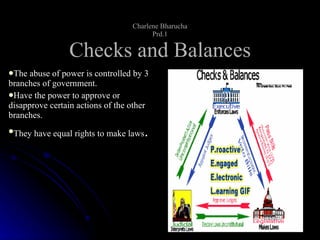
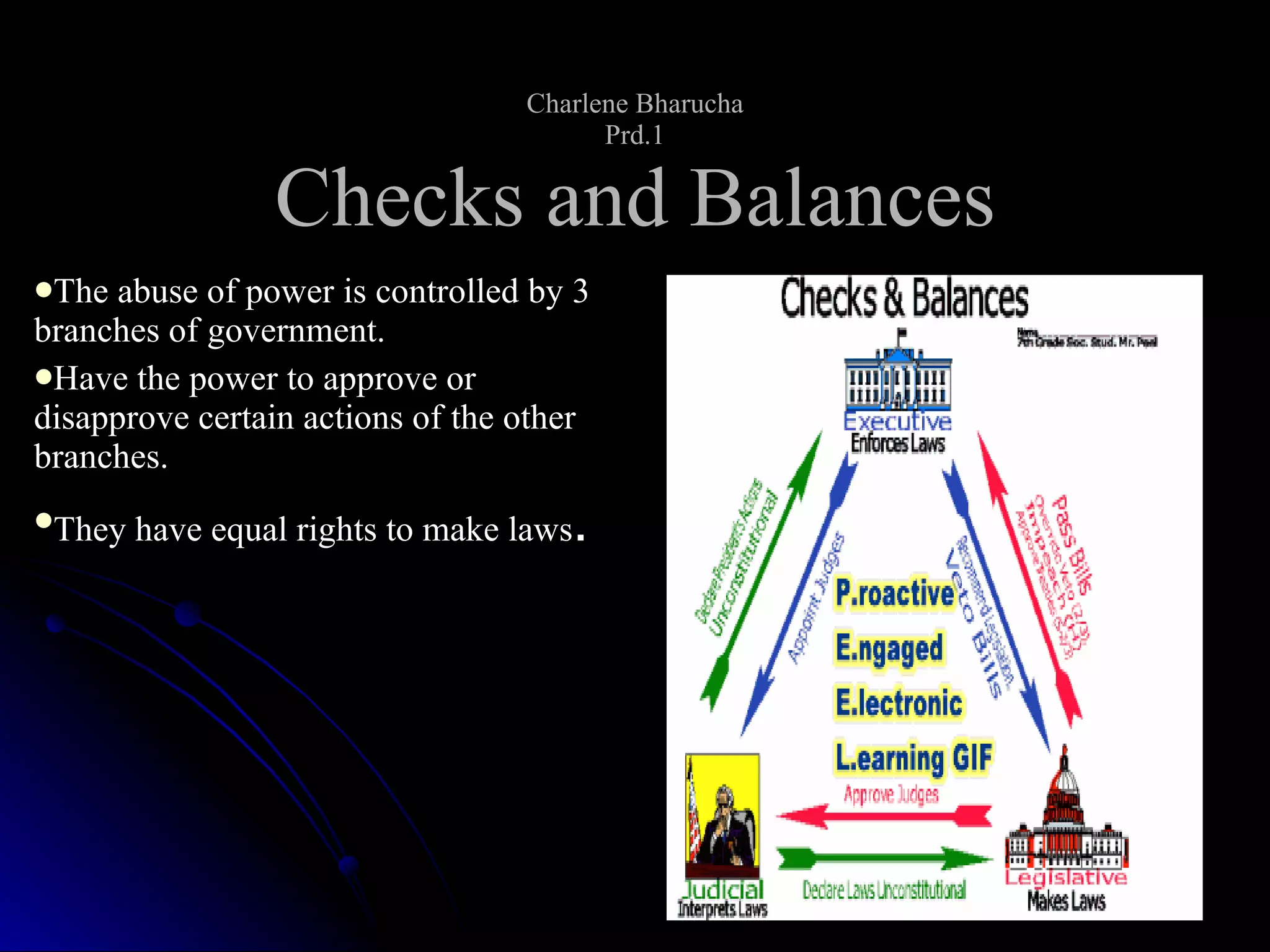
Charlene Bharucha Prd.1 Checks and Balances The abuse of power is controlled by 3 branches of government. Have the power to approve or disapprove certain actions of the other branches. They have equal rights to make laws .
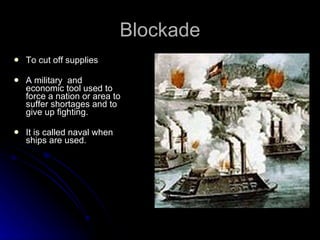
Blockade To cut off supplies A military  and economic tool used to force a nation or area to suffer shortages and to give up fighting. It is called naval when ships are used.
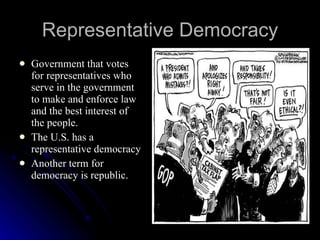
Representative Democracy Government that votes for representatives who serve in the government to make and enforce law and the best interest of the people. The U.S. has a representative democracy Another term for democracy is republic.
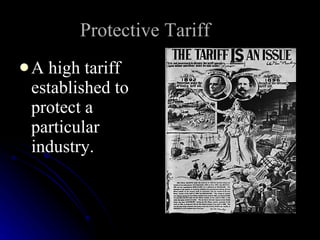
Protective Tariff A high tariff established to protect a particular industry.
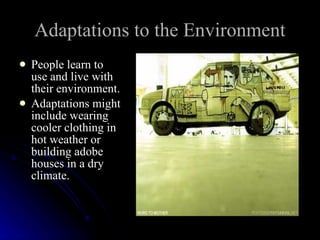
Adaptations to the Environment People learn to use and live with their environment. Adaptations might include wearing cooler clothing in hot weather or building adobe houses in a dry climate.
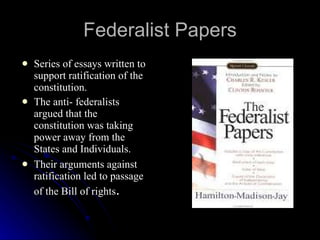
Federalist Papers Series of essays written to support ratification of the constitution. The anti- federalists argued that the constitution was taking power away from the States and Individuals. Their arguments against ratification led to passage of the Bill of rights .
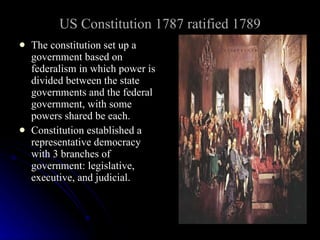
US Constitution 1787 ratified 1789 The constitution set up a government based on federalism in which power is divided between the state governments and the federal  government, with some powers shared be each. Constitution established a representative democracy with 3 branches of government: legislative, executive, and judicial.
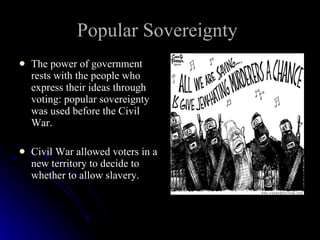
Popular Sovereignty   The power of government rests with the people who express their ideas through voting: popular sovereignty was used before the Civil War. Civil War allowed voters in a new territory to decide to whether to allow slavery.
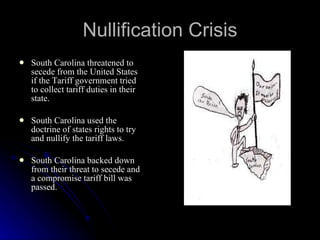
Nullification Crisis South Carolina threatened to secede from the United States if the Tariff government tried to collect tariff duties in their state. South Carolina used the doctrine of states rights to try and nullify the tariff laws. South Carolina backed down from their threat to secede and a compromise tariff bill was passed.
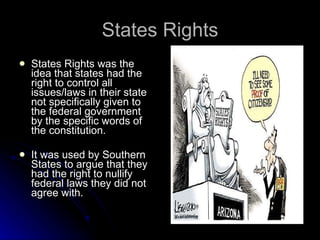
States Rights States Rights was the idea that states had the right to control all issues/laws in their state not specifically given to the federal government by the specific words of the constitution. It was used by Southern States to argue that they had the right to nullify federal laws they did not agree with.

Google docs

  • 1.
    Charlene Bharucha Prd.1Checks and Balances The abuse of power is controlled by 3 branches of government. Have the power to approve or disapprove certain actions of the other branches. They have equal rights to make laws .
  • 2.
    Blockade To cutoff supplies A military and economic tool used to force a nation or area to suffer shortages and to give up fighting. It is called naval when ships are used.
  • 3.
    Representative Democracy Governmentthat votes for representatives who serve in the government to make and enforce law and the best interest of the people. The U.S. has a representative democracy Another term for democracy is republic.
  • 4.
    Protective Tariff Ahigh tariff established to protect a particular industry.
  • 5.
    Adaptations to theEnvironment People learn to use and live with their environment. Adaptations might include wearing cooler clothing in hot weather or building adobe houses in a dry climate.
  • 6.
    Federalist Papers Seriesof essays written to support ratification of the constitution. The anti- federalists argued that the constitution was taking power away from the States and Individuals. Their arguments against ratification led to passage of the Bill of rights .
  • 7.
    US Constitution 1787ratified 1789 The constitution set up a government based on federalism in which power is divided between the state governments and the federal government, with some powers shared be each. Constitution established a representative democracy with 3 branches of government: legislative, executive, and judicial.
  • 8.
    Popular Sovereignty The power of government rests with the people who express their ideas through voting: popular sovereignty was used before the Civil War. Civil War allowed voters in a new territory to decide to whether to allow slavery.
  • 9.
    Nullification Crisis SouthCarolina threatened to secede from the United States if the Tariff government tried to collect tariff duties in their state. South Carolina used the doctrine of states rights to try and nullify the tariff laws. South Carolina backed down from their threat to secede and a compromise tariff bill was passed.
  • 10.
    States Rights StatesRights was the idea that states had the right to control all issues/laws in their state not specifically given to the federal government by the specific words of the constitution. It was used by Southern States to argue that they had the right to nullify federal laws they did not agree with.