



Global Insolvency 
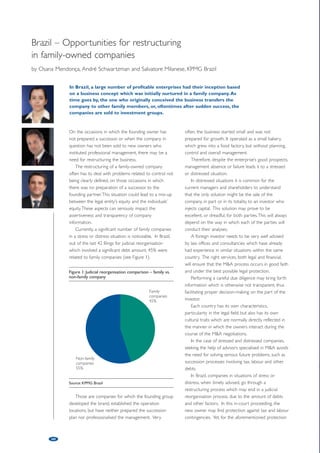
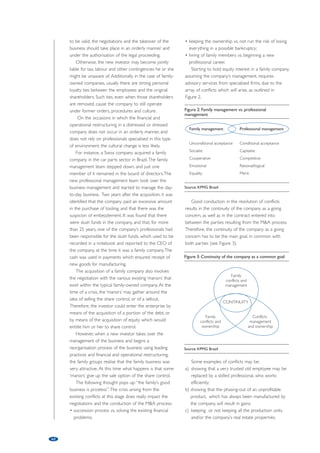
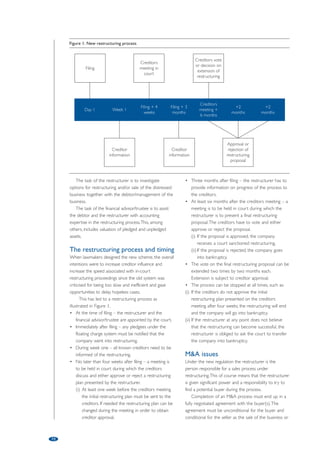
& Restructuring 
Review 
2012/13
Global Insolvency 
& Restructuring 
Review 
2012/13 
Edited by Lisa Paul
Editor: Lisa Paul 
Advertising & Co-publishing Sales Managers: Grant Lee and Roger Harper 
Directory Research Manager: Sophia Telfer 
Advertising Administrator: Karolina Lubecka 
Distribution Manager: Lisa Huxley 
Marketing Manager: Els Despriet 
Publisher: Adrian Hornbrook 
Editorial Office: 11 North Hill, Colchester, Essex CO11DZ, UK 
Tel: +44 1206 579591, Fax: +44 1206 560121 
Website: www.euromoney-yearbooks.com 
To order any Euromoney product, call the Euromoney Hotline +44 (0) 20 7779 8999 or 
in the US +1 212 224 3570 or via email at hotline@euromoneyplc.com 
Origination by: Trait Design Limited, Tiptree, Essex, UK 
Printed by:Wyndeham Grange Limited, Brighton, W. Sussex, UK 
Although every effort has been made to ensure the accuracy of the information contained in this book 
the publishers can accept no liability for inaccuracies that may appear. 
All rights reserved. No part of this publication may be reproduced in any material form by any means whether graphic, 
electronic, mechanical or means including photocopying, or information storage and retrieval systems without the 
written permission of the publisher and where necessary any relevant other copyright owner. This publication – in 
whole or in part – may not be used to prepare or compile other directories or mailing lists, without written permission 
from the publisher. The use of cuttings taken from this directory in connection with the solicitation of insertions or 
advertisements in other publications is expressly prohibited. Measures have been adopted during the preparation of this 
publication which will assist the publisher to protect its copyright. Any unauthorised use of this data will result in 
immediate proceedings. 
© Copyright rests with the publishers, Euromoney Trading Ltd, England. ISBN 978 178137 011 7
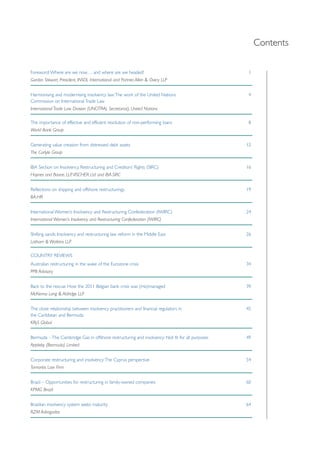
Contents 
Foreword: Where are we now… and where are we headed? 1 
Gordon Stewart, President, INSOL International and Partner, Allen & Overy LLP 
Harmonising and modernising insolvency law: The work of the United Nations 4 
Commission on International Trade Law 
International Trade Law Division (UNCITRAL Secretariat), United Nations 
The importance of effective and efficient resolution of non-performing loans 8 
World Bank Group 
Generating value creation from distressed debt assets 12 
The Carlyle Group 
IBA Section on Insolvency, Restructuring and Creditors’ Rights (SIRC) 16 
Haynes and Boone, LLP, VISCHER Ltd and IBA-SIRC 
Reflections on shipping and offshore restructurings 19 
BA-HR 
International Women’s Insolvency and Restructuring Confederation (IWIRC) 24 
International Women’s Insolvency and Restructuring Confederation (IWIRC) 
Shifting sands: Insolvency and restructuring law reform in the Middle East 26 
Latham & Watkins LLP 
COUNTRY REVIEWS 
Australian restructuring in the wake of the Eurozone crisis 34 
PPB Advisory 
Back to the rescue: How the 2011 Belgian bank crisis was (mis)managed 39 
McKenna Long & Aldridge LLP 
The close relationship between insolvency practitioners and financial regulators in 45 
the Caribbean and Bermuda 
KRyS Global 
Bermuda – The Cambridge Gas in offshore restructuring and insolvency: Not fit for all purposes 49 
Appleby (Bermuda) Limited 
Corporate restructuring and insolvency: The Cyprus perspective 54 
Tornaritis Law Firm 
Brazil – Opportunities for restructuring in family-owned companies 60 
KPMG Brazil 
Brazilian insolvency system seeks maturity 64 
RZM Advogados
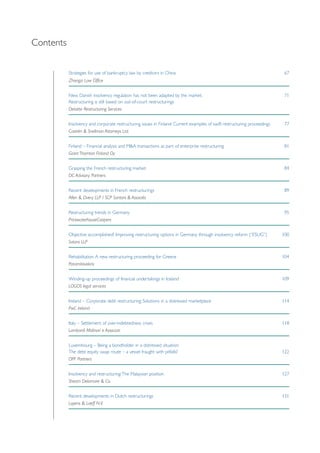
Contents 
Strategies for use of bankruptcy law by creditors in China 67 
Zhongzi Law Office 
New Danish insolvency regulation has not been adapted by the market. 71 
Restructuring is still based on out-of-court restructurings 
Deloitte Restructuring Services 
Insolvency and corporate restructuring issues in Finland: Current examples of swift restructuring proceedings 77 
Castrén & Snellman Attorneys Ltd. 
Finland – Financial analysis and M&A transactions as part of enterprise restructuring 81 
Grant Thornton Finland Oy 
Grasping the French restructuring market 84 
DC Advisory Partners 
Recent developments in French restructurings 89 
Allen & Overy LLP / SCP Santoni & Associés 
Restructuring trends in Germany 95 
PricewaterhouseCoopers 
Objective accomplished? Improving restructuring options in Germany through insolvency reform (“ESUG”) 100 
Salans LLP 
Rehabilitation: A new restructuring proceeding for Greece 104 
Potamitisvekris 
Winding-up proceedings of financial undertakings in Iceland 109 
LOGOS legal services 
Ireland – Corporate debt restructuring: Solutions in a distressed marketplace 114 
PwC Ireland 
Italy – Settlement of over-indebtedness crises 118 
Lombardi Molinari e Associati 
Luxembourg – Being a bondholder in a distressed situation: 
The debt equity swap route – a vessel fraught with pitfalls? 122 
OPF Partners 
Insolvency and restructuring: The Malaysian position 127 
Shearn Delamore & Co. 
Recent developments in Dutch restructurings 131 
Loyens & Loeff N.V.
Restructuring in Portugal – the time has come! 137 
KPMG Portugal 
Russia: Emerging playground for a savvy distressed investor 142 
Alvarez and Marsal 
Review of developments in insolvency law in Singapore for 2011 147 
Drew & Napier LLC 
Business recovery, restructuring and performance improvement in South Africa 152 
PricewaterhouseCoopers 
Business rescue in South Africa 157 
Bowman Gilfillan 
Spain: Key new legislation introduced by the Insolvency Reform Law 162 
Garrigues 
Share pledges and enforcement in Sweden: The battle between the pledgor and the pledgee 167 
Setterwalls Advokatbyrå 
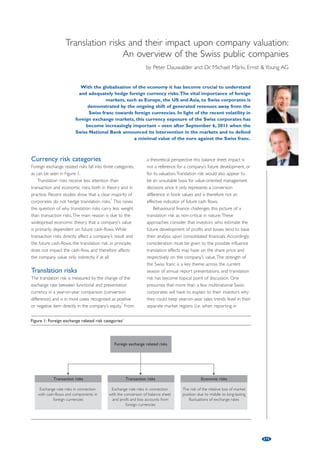
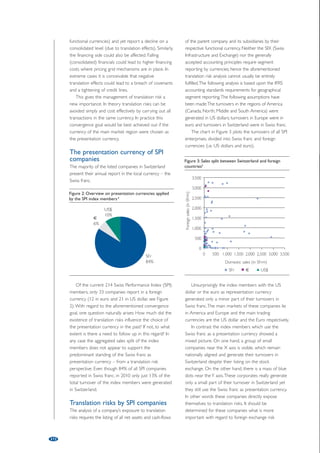
Translation risks and their impact upon company valuation: An overview of the Swiss public companies 171 
Ernst & Young AG 
Pitfalls for a foreign entity in distress that maintains assets or an operation in Switzerland 175 
Homburger AG 
Corporate restructuring in Thailand 180 
Hunton & Williams (Thailand) Limited 
Recent developments in Ukrainian distressed debt disposal strategies 185 
Vasil Kisil & Partners 
Directory 191 
Contributors 258 
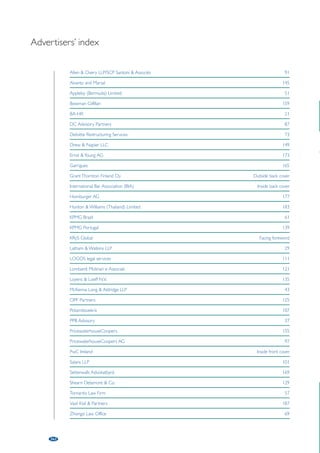
Advertisers index 262 
Contents
Corporate Recovery & Insolvency 
Fraud Investigation & Forensic Accounting 
Litigation Support 
Business Valuations 
Regulatory Compliance 
Money Laundering Investigations 
Business Advisory Services 
. 
g fo 
or
%    (/ 
  %'%')  '%+'. 
        
$$) ) $ 
$ $(%+$. 0'# 
        
 -'$ $ ) 
 !$%, '% 
         
$ 
% 
 
') 
 
 )+ (%*$  
 -')( 
 )+ + 
 +  (%*)%$(  )%%#-   '%(( 
%''  ((*(  $)   '(%	%' 
  '%')%+'..   
$(%+$..  % 
 
 $((+(%'.   '+()   %+ 
+'    '%((%$(,%,%'!    ' 
       
  %(!$)  )#  %  '%((%$ 
    
       
%'$(%*$)$ 
'%#%00( $ %%*'  *'()%$( 
%*$)$)( ,.'( 	')0 
 
%$. *$'$ ( 
-#$'( $ 	')0 $) 
()( 
        
'%+ 
$ *( 
'%#   
'* 
 
'%* 
%'%*$(( , ' %##)) 
 +$ )%$ $ ) 
) 
            
TM 
%*'	$)( $0) 
    
Global 
Complex Issues. Resolved. 
Cayman Islands 
   
 
Setting a path for success. 
)% $ 
%$ +* %%' %*' 	$)( 
www.KRyS-Global.com 
). )% '%+ % 
+ 
%((%$( ,) 
 
(  )# % 
-)% 
KR 
) % ' $ %*' $*()' 
.'.. +'$ '(*)( $ + 
$ 
Issues 
 
omplex ')( '$ 
($( 
#( 
Bermuda
1 
Foreword: 
Where are we now… 
and where are we headed? 
by Gordon Stewart, President, INSOL International and Partner, Allen  Overy LLP 
Opacity 
Never in my professional career have we (in the UK, in Europe, globally…) been in such a time of flux nor faced such 
a period of uncertainty. Economic challenges as great as have been faced in a generation (or three) confront us. 
Outcomes are unclear. Yet an opaque time such as this presents opportunities. It can provide the impetus and 
motivation – the incentive – for change. 
Global trade – globalisation – is a fact. Cross-border activity has never been so great. This involves the movement 
of goods and services and also of ideas, from one legal jurisdiction to another. The law must not only keep up with 
these developments but it must facilitate them or it will fail those it seeks to serve.1 In both my part-time job as 
President of INSOL International and my full-time job as head of Allen  Overy’s Global Restructuring Group, I see 
change and the opportunity for change in the domestic insolvency and restructuring laws of jurisdictions in both 
emerging markets and the developed world. I also see the tantalising prospect of mankind’s great achievement – what 
sets us apart from the rest of the animal kingdom – that of our capacity for co-operation to mutual benefit, being 
seen in the fields of cross-border insolvency recognition and, more dramatically, bank resolution. 
Emerging markets and capacity building 
There are three inter-linked areas in which emerging markets need to build capacity. They need good laws. A good 
terminal liquidation law, an efficient, modern rescue statute, together with a developing rescue culture. And a humane 
personal bankruptcy law entitling individuals and sole traders to have a second chance, hence fostering, or at a 
minimum not unduly penalising, entrepreneurial activity. Related to these fundamental laws are good laws of credit,2 
which encourage inward flows of capital and investment, and corporate governance laws to strike a balance between 
not unduly threatening directors whose companies are going through a period of financial difficulty yet checking any 
tendency on their part to be reckless and trade on at the expense of their creditors. 
Now, new laws create rights and, with them, expectations. Expectations that the country’s courts and judges 
will enforce those rights speedily, with efficiency and certainty. So a good route to justice is a must. If a mature and 
successful court system seems a long way in the distance for some jurisdictions then there are short-term fixes 
available, pending the ideal medium-term solution. 
Perhaps for example outsourcing is a way forward: witness the widespread adoption of English law – and 
employment of retired judges from England and other common law countries – by the DIFC in Dubai.3 Other 
countries are being helped to build on an existing ADR platform.4 Countries with a shared culture are looking to 
pool their resources to create a multi-jurisdiction court of high quality.5 
And, finally, the creation of usable insolvency laws will stimulate a demand for insolvency professionals to act as 
receivers, administrators, supervisors, examiners, trustees and liquidators. They are discharging significant 
responsibilities and also handling other people’s money. If they are to obtain respect for their work, they need to 
be trained to a proper level, to keep up to date and to meet high ethical standards. This requires a system of 
qualifications and continuing education, of supervision and regulation. 
But for those countries who sigh in despair at the thought of how much is involved in setting all this up, there is 
greater hope than ever before. INSOL International, which often works closely with the World Bank, as one of its 
main activities offers guidance on the range of ‘best in class’ options available for adoption from what has been 
seen to work in the developed world.6 Ideas are crossing borders too. 
New rescue laws 
Countries in emerging markets need laws that encourage business rescue to enable value preservation and to save 
employment. And the laws need to work. Countries must be prepared to amend their laws in the light of 
experience. Too many jurisdictions have rescue laws on their statute books which just gather dust. It would be 
invidious to name them here. But on a brighter note, I will just reflect briefly on two countries at opposite ends of 
the scale perhaps who have, or are about to, introduce change in their rescue laws.
2 
South Africa has not enjoyed a culture of business rescue. Corporate financial difficulty has all too often led to 
liquidation and break up, with the consequent loss of value to stakeholders. But South Africa has a new rescue law 
and a new profession of business rescue practitioners. The law is only starting to bed down and anecdotal 
evidence suggests many examples of misuse and of it being resorted to too late. But that is to be expected with a 
new law and, with guidance from South Africa’s substantial body of talented professionals and from its courts, it will 
begin to pay dividends – with or without further legislative intervention. 
Germany, on the other hand, is a developed economy with often-used rescue/insolvency laws. But as financial 
structures have become more complicated and creditor constituencies have splintered, these laws have been 
unable to deliver the deal that the majority of the in-the-money creditors wish to see implemented. So there has 
been a steady flow of companies which change their centre of main interests to England where schemes of 
arrangement, voluntary arrangements and administrations7 are able to implement the desired restructurings.8 
Germany has reacted to this by passing a new law, updating its existing laws, with a view to address the perceived 
failings of, and gaps in, the old law. It came into force on March 1, 2012. 
Too big to avoid a euphemism… 
The demise of Lehman, and the potential collapse of a number of major deposit-taking institutions, shocked many in 
the worlds of politics, finance, law and accountancy – quite apart from banking. The size of the challenge of rescuing 
the saveable bit of a bank in the time between markets closing in the West on a Friday evening and Tokyo opening 
on a Monday morning appalled many. But the FSB, the IMF, the Basel Committee, the EU, the Independent 
Commission on Banking (in the UK) among others, have been coming to grips with the many-headed hydra that is 
bank insolvency. Or to give it its more comforting euphemism, bank resolution. 
Living wills, bail-ins, SIFIs, resolution colleges, crisis management groups, bridge banks, are just some of the 
concepts and acronyms in the mix. The desideratum is for all material economies to have domestic ‘strong arm’ 
laws of a decent standard, for all relevant officials in these countries to have up-to-date blueprints of the major 
financial institutions (including a weekend crisis rescue plan), for those officials to have compared notes on who will 
do what should such a fateful weekend come to pass AND for all those countries to have introduced laws 
enabling cross-border co-operation to facilitate a global rescue of each major institution. 
You may think that this is, to put it mildly, a tall order. Or, in the demotic, a big ask. But as President Kennedy 
said of going to the moon: ‘Hard things make us better’. 
Plain vanilla cross-border recognition 
The crafting of the UNCITRAL Model Law on cross-border insolvency was a great achievement. Its adoption by, to 
date, some 20 countries (including the US and the UK) is a good thing. The failure by the rest of the world to adopt 
it is a bitter disappointment. The intra-EU recognition laws are useful as are similar arrangements of other regional 
groupings (North America, Scandinavia, etc). But the general failure of so many countries to provide even basic 
recognition of insolvency procedures of ‘foreign’ countries on an efficient – or, even, any – basis is to our collective 
discredit. Many of these countries are developed countries with mature economies fully aware of cross-border activity 
and its continuing growth. Something must be done. 
Islamic finance 
Islamic or Shari’a-compliant finance provided by major financial institutions – in recent times – is really only some 
30 to 40 years old.9 Accordingly, consideration of the implications and detail of its position in the world of cross-border 
rescue is still only in its comparative infancy. Much needs to be done, and quickly. Islamic finance has the 
fundamental difference – when compared to Western methods – of not being based on the concept of credit 
(of debtor and creditor) but of being based on the idea of ‘trade’. The provider of finance and the recipient are 
engaged in a joint venture based on trade.10 Title transfer rather than a charge securing a loan is the principal ‘security’. 
The World Bank has a task force looking at the whole area and this is to be applauded. Finance of an Islamic 
nature is increasing year on year and the quicker we all grapple with the nuances of differing methods of finance in 
the field of business rescue the less chance there is of misunderstandings leading to failed restructuring attempts. 
Notes: 
1 Some commentators consider that the rise of Britain in the 18th and 19th centuries is owed in part to the 
flexibility of its laws to adapt to changing circumstance and to enable rather than hinder innovators and 
entrepreneurs in their activities. 
2 Or of Islamic trade-based financial activity – see below.
3 
3 DIFC: Dubai International Finance Centre. One recent DIFC law – Decree 57 – is an interesting mix of English and 
US law. 
4 The work of the World Bank in Montenegro falls into this category. 
5 Note the initiatives of the OHADA French-speaking countries of north-west Africa. 
6 Mauritius to its great credit has just introduced a whole new set of ethical rules and guidance for its insolvency 
practitioners. 
7 Often of the ‘pre-pack’ type. 
8 Germany, it should be said, is not the only continental European country whose companies have felt the need to 
migrate their CoMIs to England. 
9 Observation of an Islamic law professor at a recent conference in the Middle East. 
10 Using these terms in a non-technical sense.
Harmonising and modernising insolvency law: The work of the 
United Nations Commission on International Trade Law 
by Jenny Clift, Senior Legal Officer, (Secretariat of UNCITRAL), Office of Legal Affairs, United Nations1 
Recognising that disparities in the national laws governing international trade 
created potential obstacles to the flow of trade, in 1966 the General 
Assembly established the United Nations Commission on International Trade 
Law to serve as the vehicle by which the United Nations could play a more 
active role in reducing or removing these obstacles through modernisation 
and harmonisation of law. 
In the early 1990s, when the Commission turned its 
attention to insolvency for the first time, the prevailing 
wisdom was that insolvency law was among the areas 
of law least amenable to international harmonisation or 
cooperation. During a discussion of the growing 
significance of cross-border insolvency issues at a 1992 
UNCITRAL Congress, it was suggested by one 
commentator that: “… it is not practical to think of 
harmonising the bankruptcy laws of … different 
jurisdictions: in the evolution of international law we are 
simply too far away from any time when we could 
expect countries to have similar bankruptcy laws in an 
effort to stimulate international trade.”2 
For that reason, attention focused at first on 
providing an interface between national insolvency 
laws to facilitate the conduct of cross-border 
insolvency proceedings and encourage cooperation 
and coordination between the various stakeholders. 
The UNCITRAL Model Law on Cross-Border 
Insolvency was completed in 1997.3 
Following the events of the late 1990s, the efficacy 
of national insolvency laws and practices became a 
recurring theme in a number of international forums 
and it was increasingly recognised that there was a 
serious and urgent need to strengthen national 
insolvency regimes, not only as a means of preventing 
or limiting financial crisis, but also of managing crisis 
through rapid and orderly workouts from excessive 
indebtedness. New impetus was given to the 
desirability of pursuing, if not substantive 
harmonisation, the development and adoption of 
global standards and norms that could inform and 
shape insolvency law reform. In response, UNCITRAL 
prepared the Legislative Guide on Insolvency Law, 
which was completed in 2004. The Guide sought not 
only to articulate the broader policy settings that 
should underpin modern insolvency laws, but also to 
identify the goals and core content of such laws. The 
successful completion of these two texts suggested 
that much had changed since 1992 and that countries 
could now be expected to view insolvency law as a 
subject for reform through modernisation and 
harmonisation. 
The Legislative Guide focused largely on corporate 
debtors. Whilst acknowledging that the business of 
corporations, both domestically and internationally, is 
increasingly conducted through corporate or 
enterprise groups and that particular difficulties arise 
when two or more members of such groups become 
insolvent, time constraints limited the possibility of 
including in the Guide more than a brief introduction 
on the insolvency of groups. 
Despite their ubiquity, both internationally and 
domestically, very little legislation refers specifically to 
enterprise groups or recognises the “enterprise 
group” as a legal concept, except in limited ways for 
very specific purposes, such as fiscal and accounting 
purposes. Very few, if any, states have a comprehensive 
regime for the treatment of groups in insolvency, with 
the result that each group member must be 
administered separately. For groups that involve a 
large number of members, separate administration 
can result in fragmented, uncoordinated treatment 
that pays little regard to the integrated nature of the 
business when the group was financially healthy. The 
international character of a group (and the majority of 
groups do operate cross-border), simply adds to the 
complexity. The onset of insolvency turns a cohesive 
international business into a set of potentially 
disconnected segments in different countries, subject 
to different insolvency laws, each embodying the 
particular State’s choice of social, economic and 
financial policies, with different priorities and different 
sets of creditors claiming different assets under 
different rules. 
To specifically address the insolvency treatment of 
groups, the Legislative Guide was supplemented in 
2010 with part three, which offers some solutions for 
both domestic and international group insolvencies. 
However, facilitating the cross-border treatment of 
group insolvencies remains a challenge. While part 
three offers solutions for groups that focus on 
4
information of judges, insolvency practitioners and 
others who may encounter or seek to use these 
agreements in practice. 
In response to requests to further expand the 
information available on cross-border insolvency, in 
particular on the use and interpretation of the Model 
Law, in 2011 the Commission adopted a guide for 
judges (The UNCITRAL Model Law on Cross-Border 
Insolvency: the judicial perspective). This text examines 
key elements of the Model Law in the light of the 
body of jurisprudence that has developed in the 
almost 15 years since its completion and describes 
how the process of recognition of foreign proceedings 
works in practice. To ensure that it remains up to date 
and relevant, the text will be periodically revised to 
reflect new developments in interpretation of the 
Model Law. 
Serving as a key source of information on the 
policy settings of the Model Law, the Guide to 
Enactment of the Model Law is often cited by judges 
as a tool for its interpretation. To provide additional 
information and clarify a number of the concepts used 
by the Model Law, the Guide to Enactment is 
currently being revised. 
Central to the revisions is the concept of “centre 
of main interests”, which is common to both the 
Model Law and the EU Regulation on insolvency 
proceedings (albeit for slightly different purposes), but 
not defined in either text. In the Model Law, centre of 
main interests determines the effects of recognition of 
a foreign proceeding in terms of relief granted to 
assist that proceeding. Under the EU Regulation, 
centre of main interests determines the proper place 
for the commencement of insolvency proceedings and 
the law that will be applicable to those proceedings, 
with the decision on centre of main interests being 
made at the time of the commencement of the 
relevant proceeding. Under the Model Law, a request 
for recognition of a foreign proceeding may be made 
at any time after the commencement of that 
proceeding; in some cases it has been made several 
years later. Accordingly, the court considering an 
application for recognition under the Model Law must 
determine ex-post whether the foreign proceeding 
for which recognition is sought is taking place in a 
forum that is the debtor’s centre of main interests or 
was when the proceeding commenced. The two 
possibilities indicate the different approaches taken by 
the courts, thus raising an issue for further 
consideration. 
The interpretation of “centre of main interests” has 
been the subject of much judicial, academic and 
professional consideration and comment, often with 
differing views being expressed on the direction the 
jurisprudence seems to be taking. The purpose of 
5 
cooperation and coordination by expanding the 
principles of chapter IV of the Model Law, the 
question of whether (and if so, how) a more 
comprehensive regime might be developed remains. 
One suggestion has been to adapt the concept of 
“centre of main interests” as it applies to an individual 
debtor to apply to an enterprise group so that all 
proceedings with respect to group members could be 
commenced in, and administered from, a single centre 
through one court and subject to a single governing 
law. Other suggestions have been to identify a 
coordination centre for the group, which might be 
determined by reference to the location of the parent 
of the group or to permit group members to apply 
for insolvency in the State in which proceedings have 
commenced with respect to the insolvent parent of 
the group. These options were considered by the 
UNCITRAL working group on insolvency and 
ultimately found to be unworkable. 
Part three of the Guide notes that the significant 
and difficult issues raised by these suggestions “relate 
to the very nature of multinational enterprise groups 
and how they operate – how to define what 
constitutes an enterprise group for insolvency 
purposes and identify the factors that might be 
appropriate to determining where the group centre is 
located, assuming that there is only one centre for 
each group – as well as to questions of jurisdiction 
over the constituent members of the group, eligibility 
to commence insolvency proceedings and applicable 
law. Others relate to the challenge of reaching broad 
international agreement on these issues in order to 
achieve a consistently, widely applied and, possibly, 
binding solution that will deliver certainty and 
predictability to the cross-border insolvency of 
enterprise groups.”4 
Various means have been developed to facilitate 
cooperation in cross-border cases; while the Model 
Law provides the requisite legislative framework, it 
merely lists various possible forms of cooperation 
without providing further guidance as to how 
cooperation might be implemented. Faced with the 
daily necessity of dealing with insolvency cases and 
attempting to coordinate their administration in the 
absence of widespread adoption of facilitating national 
or international laws, the international insolvency 
community has developed various tools, including 
cross-border insolvency agreements (or protocols). 
These are designed to avoid potential procedural 
conflicts arising in cross-border cases and facilitate the 
resolution of issues that do arise by promoting 
cooperation between stakeholders. In 2009, 
UNCITRAL adopted the Practice Guide on Cross- 
Border Insolvency Cooperation, which compiles 
practice with respect to these agreements for the
6 
revising the Guide to Enactment is not to develop a 
definition of COMI, but rather to provide more 
information and direction on how the concept might 
be interpreted. 
Achieving uniformity of interpretation as 
encouraged by article 8 of the Model Law seems a 
desirable goal, at least with respect to the application 
of the Model Law; to the extent possible, it also seems 
desirable as between the Model Law and the EU 
Regulation. To that end, the Working Group has 
identified a number of factors that have been used by 
courts in determining whether rebuttal of the 
presumption in favour of the debtor’s COMI being the 
location of its registered office has been achieved. 
Various views have been expressed as to whether that 
list can be reduced to a few key factors, such as the 
location from which the debtor is managed and its 
physical operations conducted and whether a 
reasonable or ordinary third parties can discern or 
perceive where the debtor is conducting these 
functions, or whether a range of factors that have 
been found to be relevant in different fact situations 
should be discussed. 
As a related step, more definition is also being 
provided in respect of the pre-conditions for 
recognition under the Model Law, in particular what 
constitutes a “foreign proceeding” for the purposes of 
article 2 (a). Again, this has been the subject of some 
consideration by courts, in some cases involving 
representatives from different proceedings seeking to 
be recognised as coming from the centre of the 
debtor’s main interests. 
Article 2 (a) includes a number of elements, each 
of which has been the subject of interpretation: (i) a 
collective judicial or administrative proceeding, (ii) 
pursuant to a law relating to insolvency, (iii) in which 
the assets and affairs of the debtor are subject to 
control or supervision by a foreign court, and (iv) for 
the purpose of reorganisation or liquidation [emphasis 
added]. Key issues have included whether a law 
providing for solvent liquidation is a law relating to 
insolvency; whether a receivership is a collective 
proceeding or meets the purpose test in (iv); whether 
control or supervision by an insolvency representative 
is sufficient for (iii); whether a proceeding which does 
not deal with certain classes of claim, such as those of 
secured creditors, would be collective; whether 
financial adjustment agreements or similar contractual 
arrangements meet the requirements of article 2 (a). 
These issues will be further considered at the 
upcoming meeting of the Working Group in New York 
(April 30-May 4, 2012). 
A second topic currently being considered is the 
obligations of directors of a company in the period 
approaching insolvency. While international work has 
produced results with respect to the obligations that 
apply to directors of a solvent company (e.g. the 
OECD Principles of Corporate Governance) and to 
directors when formal insolvency proceedings have 
commenced (e.g. UNCITRAL Legislative Guide on 
Insolvency Law), significant divergences of approach 
remain with respect to the obligations of directors in 
the period described as the twilight zone or the 
vicinity of insolvency. 
A business facing an actual or imminent inability to 
meet its obligations as they fall due needs robust 
management, as often there are difficult decisions and 
judgements to be made and it is essential that early 
action be taken. Financial decline typically occurs more 
rapidly than many parties would believe and as the 
financial position of an enterprise worsens, the 
options available for achieving a viable solution also 
rapidly diminish. Competent directors should 
understand the company’s financial situation and 
possess all reasonably available information necessary 
to enable them to take appropriate steps to address 
that financial distress and avoid further decline. In 
addition to providing a predictable legal process for 
addressing the financial difficulties of troubled debtors 
and the necessary framework for the efficient 
reorganisation or orderly liquidation of those debtors, 
it has been suggested that effective insolvency laws, of 
the kind promoted by the UNCITRAL Legislative 
Guide, should also permit an examination to be made 
of the circumstances giving rise to insolvency of an 
enterprise and in particular the conduct of directors 
of that enterprise. 
This issue has been the subject of debate for some 
time, both in the context of developing national 
approaches and exploring the possibilities of devising 
a harmonised rule, principally for regional application. 
The focus of UNCITRAL’s work in this area is the 
obligations that could be set out in an insolvency law 
for enforcement retroactively once formal insolvency 
proceedings commence. A draft text for 
consideration at the next meeting of the Working 
Group has been prepared. It addresses the parties 
who would owe such obligations, when the 
obligations would arise, the nature of the obligations 
and their enforcement, including who may enforce 
such obligations, remedies and potential means of 
funding enforcement proceedings. 
Since the adoption of the Model Law in 1997, 
UNCITRAL has worked to develop an increasingly 
comprehensive body of texts on insolvency and cross-border 
insolvency law that focuses on providing an 
effective enabling legislative framework for the 
conduct of insolvency proceedings, both domestic and 
cross-border, and on responding to current issues and 
needs through guides and information for use by
http://www.uncitral.org/uncitral/en/uncitral_texts/inso 
lvency.html 
4 UNCITRAL Legislative Guide on Insolvency Law, 
part three, chapter III, para. 6. 
Author: 
Jenny Clift, Senior Legal Officer 
International Trade Law Division 
(UNCITRAL Secretariat) 
Office of Legal Affairs 
Vienna International Centre 
Wagramerstr. 5 
A-1220 Vienna, Austria 
Tel: +43 1 26060 4065 
Fax: +43 1 26060 5813 
Email: jenny.clift@uncitral.org 
Website: www.uncitral.org 
7 
judges, insolvency professionals and other stakeholders. 
An assessment of whether (and what) more is needed 
to address the concerns arising from the most recent 
financial crisis may determine the shape of UNCITRAL’s 
insolvency activities in the coming years. 
Notes: 
1 The views expressed in this article are those of the 
author and do not necessarily reflect those of the 
United Nations. 
2 Uniform Commercial Law in the Twenty-first Century: 
Proceedings of the Congress of the United Nations 
Commission on International Trade Law, New York, 
May 18-22, 1992 (United Nations, 1995) at 158 
(Intervention by Prof. Carl Felsenfeld, Fordham 
University, New York). 
3 All UNCITRAL insolvency texts are available from
The importance of effective and efficient 
resolution of non-performing loans 
by Patrick Schaefer and Mahesh Uttamchandani, World Bank Group 
As Philip Wood, noted international financial law scholar and insolvency 
practitioner, affirms in his text, The Law and Practice of International Finance, 
insolvency law plays a fundamental role in credit-based economies as, when 
businesses become insolvent and loans are unable to be repaid, the cost of 
credit increases (or is withdrawn altogether) and overall economic activity 
suffers.1 Laws and regulations which govern insolvency play a central role in 
promoting a healthy and dynamic climate for business by assuring 
that credit and assets are efficiently allocated and reallocated. While a 
business may generally consider the particulars of the insolvency framework 
only upon the arrival of financial distress, the laws and their degree of 
efficiency establish the ex ante conditions for a properly functioning credit 
and business environment. Such considerations are of fundamental 
importance for maturing credit-based and market economies in developing 
countries; strengthening insolvency frameworks can help to facilitate 
investment therein. 
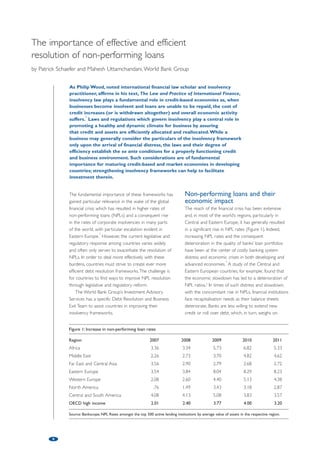
The fundamental importance of these frameworks has 
gained particular relevance in the wake of the global 
financial crisis which has resulted in higher rates of 
non-performing loans (NPLs) and a consequent rise 
in the rates of corporate insolvencies in many parts 
of the world, with particular escalation evident in 
Eastern Europe.2 However, the current legislative and 
regulatory response among countries varies widely 
and often only serves to exacerbate the resolution of 
NPLs. In order to deal more effectively with these 
burdens, countries must strive to create ever more 
efficient debt resolution frameworks. The challenge is 
for countries to find ways to improve NPL resolution 
through legislative and regulatory reform. 
The World Bank Group’s Investment Advisory 
Services has a specific Debt Resolution and Business 
Exit Team to assist countries in improving their 
insolvency frameworks. 
Non-performing loans and their 
economic impact 
The reach of the financial crisis has been extensive 
and, in most of the world’s regions, particularly in 
Central and Eastern Europe, it has generally resulted 
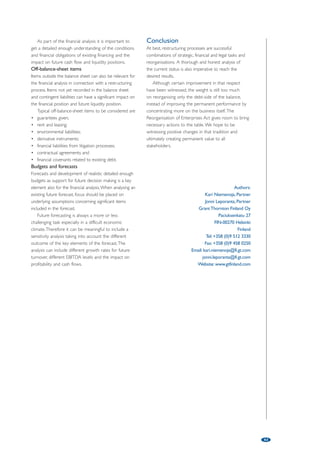
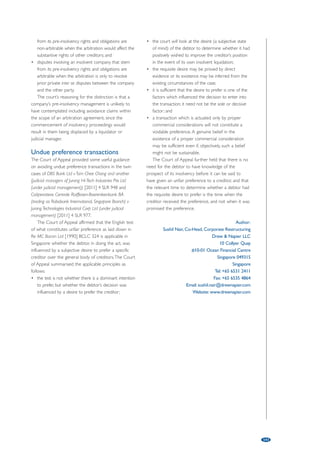
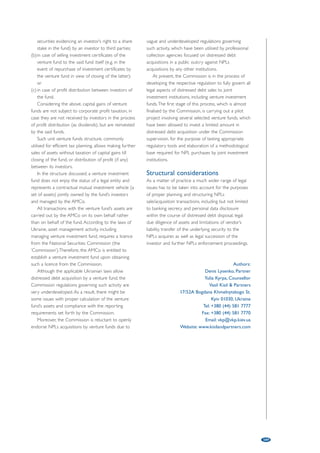
in a significant rise in NPL rates (Figure 1). Indeed, 
increasing NPL rates and the consequent 
deterioration in the quality of banks’ loan portfolios 
have been at the center of costly banking system 
distress and economic crises in both developing and 
advanced economies.3 A study of the Central and 
Eastern European countries, for example, found that 
the economic slowdown has led to a deterioration of 
NPL ratios.4 In times of such distress and slowdown, 
with the concomitant rise in NPLs, financial institutions 
face recapitalisation needs as their balance sheets 
deteriorate. Banks are less willing to extend new 
credit or roll over debt, which, in turn, weighs on 
8 
Figure 1: Increase in non-performing loan rates 
Region 2007 2008 2009 2010 2011 
Africa 3.36 3.34 5.73 6.82 5.33 
Middle East 2.26 2.73 3.70 4.82 4.62 
Far East and Central Asia 3.56 2.90 2.79 2.68 2.72 
Eastern Europe 3.54 3.84 8.04 8.29 8.23 
Western Europe 2.08 2.60 4.40 5.13 4.38 
North America .76 1.49 3.43 3.18 2.87 
Central and South America 4.08 4.13 5.08 3.83 3.57 
OECD high income 2.01 2.40 3.77 4.00 3.20 
Source: Bankscope; NPL Rates amongst the top 500 active lending institutions by average value of assets in the respective region.
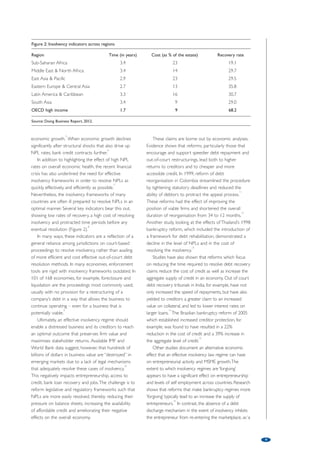
Region Time (in years) Cost (as % of the estate) Recovery rate 
Sub-Saharan Africa 3.4 23 19.1 
Middle East  North Africa 3.4 14 29.7 
East Asia  Pacific 2.9 23 29.5 
Eastern Europe  Central Asia 2.7 13 35.8 
Latin America  Caribbean 3.3 16 30.7 
South Asia 3.4 9 29.0 
OECD high income 1.7 9 68.2 
These claims are borne out by economic analyses. 
Evidence shows that reforms, particularly those that 
encourage and support speedier debt repayment and 
out-of-court restructurings, lead both to higher 
returns to creditors and to cheaper and more 
accessible credit. In 1999, reform of debt 
reorganisation in Colombia streamlined the procedure 
by tightening statutory deadlines and reduced the 
ability of debtors to protract the appeal process.11 
These reforms had the effect of improving the 
position of viable firms and shortened the overall 
duration of reorganisation from 34 to 12 months.12 
Another study, looking at the effects of Thailand’s 1998 
bankruptcy reform, which included the introduction of 
a framework for debt rehabilitation, demonstrated a 
decline in the level of NPLs and in the cost of 
resolving the insolvency.13 
Studies have also shown that reforms which focus 
on reducing the time required to resolve debt recovery 
claims reduce the cost of credit as well as increase the 
aggregate supply of credit in an economy. Out of court 
debt recovery tribunals in India, for example, have not 
only increased the speed of repayments, but have also 
yielded to creditors a greater claim to an increased 
value on collateral, and led to lower interest rates on 
larger loans.14 The Brazilian bankruptcy reform of 2005 
which established increased creditor protection, for 
example, was found to have resulted in a 22% 
reduction in the cost of credit and a 39% increase in 
the aggregate level of credit.15 
Other studies document an alternative economic 
effect that an effective insolvency law regime can have 
on entrepreneurial activity and MSME growth. The 
extent to which insolvency regimes are ‘forgiving’ 
appears to have a significant effect on entrepreneurship 
and levels of self employment across countries. Research 
shows that reforms that make bankruptcy regimes more 
‘forgiving’ typically lead to an increase the supply of 
entrepreneurs.16 In contrast, the absence of a debt 
discharge mechanism in the event of insolvency inhibits 
the entrepreneur from re-entering the marketplace, as ‘a 
9 
Figure 2: Insolvency indicators across regions 
Source: Doing Business Report, 2012. 
economic growth.5 When economic growth declines 
significantly after structural shocks that also drive up 
NPL rates, bank credit contracts further.6 
In addition to highlighting the effect of high NPL 
rates on overall economic health, the recent financial 
crisis has also underlined the need for effective 
insolvency frameworks in order to resolve NPLs as 
quickly, effectively, and efficiently as possible.7 
Nevertheless, the insolvency frameworks of many 
countries are often ill prepared to resolve NPLs in an 
optimal manner. Several key indicators bear this out, 
showing low rates of recovery, a high cost of resolving 
insolvency and protracted time periods before any 
eventual resolution (Figure 2).8 
In many ways, these indicators are a reflection of a 
general reliance among jurisdictions on court-based 
proceedings to resolve insolvency, rather than availing 
of more efficient and cost effective out-of-court debt 
resolution methods. In many economies, enforcement 
tools are rigid with insolvency frameworks outdated. In 
101 of 168 economies, for example, foreclosure and 
liquidation are the proceedings most commonly used, 
usually with no provision for a restructuring of a 
company’s debt in a way that allows the business to 
continue operating – even for a business that is 
potentially viable.9 
Ultimately, an effective insolvency regime should 
enable a distressed business and its creditors to reach 
an optimal outcome that preserves firm value and 
maximises stakeholder returns. Available IMF and 
World Bank data suggest, however, that hundreds of 
billions of dollars in business value are “destroyed” in 
emerging markets due to a lack of legal mechanisms 
that adequately resolve these cases of insolvency.10 
This negatively impacts entrepreneurship, access to 
credit, bank loan recovery and jobs. The challenge is to 
reform legislative and regulatory frameworks such that 
NPLs are more easily resolved, thereby reducing their 
pressure on balance sheets, increasing the availability 
of affordable credit and ameliorating their negative 
effects on the overall economy.
10 
broad fresh start policy encourages individuals to take 
risks in starting a new business venture’.17 This is 
reflected in legislative movements in certain countries to 
relax their insolvency regimes.18 
The work of the World Bank 
Group’s Debt Resolution and 
Business Exit Team 
The World Bank Group (WBG) has a strong track 
record of promoting and helping to implement 
insolvency reforms in a wide range of jurisdictions. One 
of the principal ways in which the World Bank Group 
targets its assistance more precisely in the reform of 
insolvency frameworks is through its Debt Resolution 
and Business Exit Team, which forms part of the 
Investment Climate Advisory Services Department in 
the World Bank Group. The overall goal of the Team, in 
line with the benefits demonstrated in the reform 
studies cited above, is to improve the credit 
environment by creating more efficient regimes for 
banks and businesses to recover debts. By working to 
reduce dependency on the courts for debt resolution, 
these efforts help failed businesses to “exit” the market 
efficiently and return assets to creditors as soon as 
possible, thereby increasing returns to banks and 
lowering rates of NPLs. This work also enables viable 
but financially distressed businesses to restructure and 
avoid the value-destructive effects of insolvency that 
they otherwise would have endured. 
To this end, the Debt Resolution and Business Exit 
Team delivers both technical assistance and expertise 
to client governments via regional teams located in 
both the IFC and World Bank. Such technical 
assistance includes legislative review and reform, advice 
on improving institutional frameworks and capacity 
building and training of relevant stakeholders. In recent 
years, several of the Team’s projects have sought to 
foster out of court debt resolution with the aim of 
reducing NPL rates in countries such as Bangladesh, 
Montenegro, Romania, and Lebanon. 
The Debt Resolution and Business Exit Team also 
helps to produce publications as well as organise and 
facilitate regional conferences for knowledge sharing, 
staff training, and the promotion of further dialogue 
between public and private sector stakeholders.19 
In 2011, the Team led such a conference in Tunis, 
Tunisia. The event centred on insolvency frameworks 
in the Middle-East and North Africa Region as well as 
from Sub-Saharan Africa and was attended by staff 
and clients from the region. Judges, public officials and 
experts were able to share not only their experiences 
and questions about how recent reforms 
implemented amongst neighbouring countries actually 
functioned, but also their particular successes and 
challenges as well. 
Another more recent conference in Vienna, 
Austria, organised with the collaboration of the 
Austrian Government, the IFC’s Investment Climate 
Global Practice, and the World Bank Financial Sector 
Reform Advisory Centre, brought together public 
officials, international experts and financial sector 
representatives over the course of two days to discuss 
and transfer knowledge with respect to strengthening 
debt resolution systems in the Eastern European and 
Central Asian region. Because of the depth of the 
effects of the financial crisis in this region, the 
conference addressed a range of issues relevant to 
debt resolution in the region, such as out of court 
workouts, tax barriers, asset management companies, 
secured transactions and consumer protection, which 
encouraged a wide ranging dialogue from which 
participants could implement solutions to the current 
obstacles that hinder debt resolution. 
The Debt Resolution and Business Exit Team also 
coordinates internally with regional IFC and World 
Bank teams through the Distressed Asset Resolution 
and Insolvency Thematic Group (DARIT) whose main 
objective is to create opportunities to increase the 
impact of IBRD, IFC and IMF interventions in the area 
of distressed asset resolution and insolvency reform. It 
offers an ongoing forum for its members to provide 
updates on ongoing activities, to facilitate knowledge 
and information sharing, to share lessons learned and 
to help identify opportunities for collaboration. 
Even so, the combined efforts of the World Bank 
Group and the IFC’s Debt Resolution and Business 
Exit Team in reforming insolvency legislation and 
practices still face a variety of challenges, as the data 
from Figures 1 and 2 demonstrate. The need for 
further intervention, whether through direct technical 
assistance or through fostering the sharing of 
knowledge and experiences amongst stakeholders, to 
create more efficient insolvency frameworks and 
healthier economies is patently clear. While working 
across regions and jurisdictions to resolve these 
important issues remains challenging, the Debt 
Resolution and Business Exit Team is in a strong 
position to structure its interventions to account for 
the unique political structures, legal cultures and 
economic and social frameworks of each country. 
Notes: 
1 Wood, Philip J., Law and Practice of International 
Finance, Sweet  Maxwell, p. 45, para. 4-01. 
2 Groendahl, Boris, East Europe Insolvencies Increase 
on Credit Crunch: Creditreform, February 08, 2012, 
http://www.businessweek.com/news/2012-02- 
08/east-europe-insolvencies-increase-on-credit-crunch- 
creditreform.html 
3 Nkusu, Mwanza, Nonperforming Loans and
16 Armour, John and Douglas Cumming, “Bankruptcy 
Law and Entrepreneurship.” Law Working Paper 
N°.105/2008. 
17 Hallinan, Charles “The ‘Fresh Start’ Policy in 
Consumer Bankruptcy: A Historical Inventory and an 
Interpretive Theory.” 21 U. RICH. L. REV. 49, 64. 
18 Uttamchandani, Mahesh and Antonia Menezes, “The 
Freedom to Fail: Why Small Business Insolvency 
Regimes are Critical for Emerging Markets.” 
International Corporate Rescue 7(4). 
19 See, e.g., Uttamchandani, Mahesh, Leora Klapper, and 
Elena Cirmizi, The Challenges of Bankruptcy Reform, 
World Bank, October 2010, Number 5448, available 
at http://elibrary.worldbank.org/content/ 
workingpaper/10.1596/1813-9450-5448, and 
Uttamchandani, Mahesh, and Antonia Menezes, The 
Freedom to Fail: Why Small Business Insolvency 
Regimes are Critical for Emerging Markets, 
International Corporate Rescue, Vol. 7, no. 4, 2010. 
The authors wish to gratefully acknowledge the invaluable 
assistance of Ian Dalton in the preparation of this article. 
Authors: 
Patrick Charles Schaefer, Private Sector 
Development Specialist 
Debt Resolution  Business Exit 
Investment Climate 
Tel: +1 202 458 7533 
Fax: +1 202 522 3262 
Email: PSchaefer@ifc.org 
Mahesh Uttamchandani, Global Product Leader 
Debt Resolution  Business Exit 
Investment Climate 
Tel: +1 202 458 5827 
Fax: +1 202 522 3262 
Email: muttamchandani@worldbank.org 
World Bank Group 
2121 Pennsylvania Avenue NW 
Washington DC 20433 
US 
Website: www.wbginvestmentclimate.org 
11 
Macrofinancial Vulnerabilities in Advanced 
Economies, WP/11/161, IMF Working Paper Strategy, 
Policy, and Review Department. 
4 Festic, Mejra and Alenka Kavkler, Sebastijan Repina, 
Journal of Banking  Finance Volume 35, Issue 2, 
February 2011, Pages 310–322. 
5 De Bock, Reinout and Alexander Demyanets 
Monetary and Capital Markets Bank Asset Quality in 
Emerging Markets: Determinants and Spillovers, 
WP/12/71 IMF Working Paper 1 March 2012 
6 De Bock, Reinout and Alexander Demyanets, 
Monetary and Capital Markets Bank Asset Quality in 
Emerging Markets: Determinants and Spillovers, 
WP/12/71 IMF Working Paper 1 March 2012p. 5 
7 Viewpoint, Klapper, Leora, p. 2 
8 Doing Business, 2012, available at 
http://www.doingbusiness.org/data/exploretopics/res 
olving-insolvency. 
9 Doing Business, 2012, available at 
http://www.doingbusiness.org/data/exploretopics/res 
olving-insolvency. 
10 IMF, International Financial Statistics and Global NPL 
Database and World Bank Group, Doing Business, 
2012, available at http://www.doingbusiness.org/data/ 
exploretopics/resolving-insolvency. 
11 Giné, Xavier and Inessa Love, “Do reorganization 
Costs Matter for Efficiency? Evidence for a 
Bankruptcy Reform in Colombia.” Policy Research 
Working Paper 3970, World Bank, Washington, D.C. 
2008. 
12 Giné, Xavier and Inessa Love, “Do reorganization 
Costs Matter for Efficiency? Evidence for a 
Bankruptcy Reform in Colombia.” Policy Research 
Working Paper 3970, World Bank, Washington, D.C. 
2008. 
13 Foley, Firtz, Going Bust in Bangkok: Lessons from the 
Bankruptcy Law Reform in Thailand, Harvard 
Business School. Cambridge 2009, available at 
http://www.people.hbs.edu/ffoley/ThaiBankruptcy.pdf 
14 Visaria, Surata, “Legal Reform and Loan Repayment: 
The Micoreconomic Impact of Debt Recovery 
Tribunals in India.” American Economic Journal: 
Applied Economics 1 (3): 59-81. 2009. 
15 Funchal, Bruno, “The Effects of the 2005 Bankruptcy 
Reform in Brazil.” Economics Letters 101 (1): 84-86.
Generating value creation from 
distressed debt assets 
by Brett Wyard and Raymond Whiteman, Carlyle Strategic Partners (CSP) 
The specialism of distressed-debt investing is likely to provide increasing 
opportunities in the years ahead. Brett Wyard and Raymond Whiteman of 
Carlyle Strategic Partners (“CSP”), the division within The Carlyle Group 
that focuses on making alpha-driven debt and equity investments in 
companies that are experiencing financial duress, outline the fundamentals, 
the principles, and some examples of the value this asset class can generate. 
A funding gap 
The great liquidity drought of 2007-08 exposed long-term 
weaknesses within many well-known companies. 
Even well-managed businesses with good management 
teams found themselves in situations that felt 
unimaginable just a few months prior to the crisis. Yet 
the level of bankruptcies and restructurings actually fell 
below that of the worst predictions in most 
industrialised countries, meaning that the distressed 
debt sector – despite tremendous market dislocation – 
sourced fewer than expected restructuring and debt 
for equity opportunities than many had been expecting. 
The recent injection of US$1.3 trillion by the European 
Central Bank into the financial system has prevented, or 
perhaps postponed, another market dislocation but has 
not changed the end game. 
Europe’s nascent recovery is being threatened by a 
deepening and potentially-intractable sovereign debt 
crisis. This means that the economic challenges, within 
both consumer and industrial sectors, are far from 
over. Indeed, a potentially-painful second phase is now 
underway, one that may provide distressed debt 
investors with far more “alpha” oriented restructuring 
and turnaround opportunities than those “beta” 
oriented debt trading opportunities of 2007-09. 
Of course, many businesses have taken steps to 
strengthen their balance sheets – not least because 
they remain acutely aware of the restricted liquidity 
available from their traditional sources of funding, 
including their house banks. Nonetheless, corporate 
leverage remains a deep concern – not least due to a 
wall of approaching debt maturities due between now 
and 2015 with a major funding gap upon us. 
This is a serious position, which more agile 
companies have addressed by refinancing their debt 
ahead of schedule – taking advantage of ‘windows of 
opportunity’ during lulls in volatility. However, this has 
been more challenging for SMEs to achieve and many 
have yet to act. 
Unlike larger borrowers that have broader sources 
of funding through the public and institutional capital 
markets – SMEs have remained largely dependent on 
the private debt markets. Yet banks are withdrawing 
lending capacity at an unprecedented rate – 
responding to regulatory pressures such as increased 
capital requirements under Basel III, political pressures 
that require bailed-out banks to focus on their home 
market, or simply the post-crisis desire to strengthen 
their loan books. Additionally, Collateralised Loan 
Obligations (CLOs) – a major pre-crisis source of 
liquidity and buyer of syndicated bank loans – are all 
coming out of their investment periods and new 
issuance is a fraction of pre-2008 levels. 
Distressed debt opportunities 
All of the above suggests a growth in opportunities for 
US and Europe’s distressed debt investors – an 
assertion that may draw some scepticism from market 
watchers who noticed that the boom in distressed 
debt investments of 2007-09 failed to produce an 
extended period of high defaults. Certainly, what could 
now be viewed as Phase I of the crisis (2007-09) 
created tremendous market dislocation without the 
corresponding levels of defaults and restructurings 
many had anticipated – including debt for equity swaps 
or control opportunities around failed LBOs. 
Yet Phase II, which is already underway, will likely 
change that. Due to the formidable combination of 
renewed recession, heightened regulation and the 
onus on banks to write down assets, it seems clear 
distressed opportunities will grow. 
Factors supporting this growth include: 
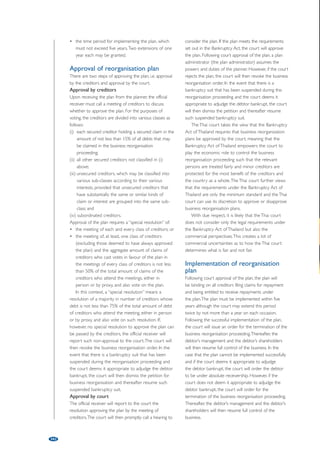
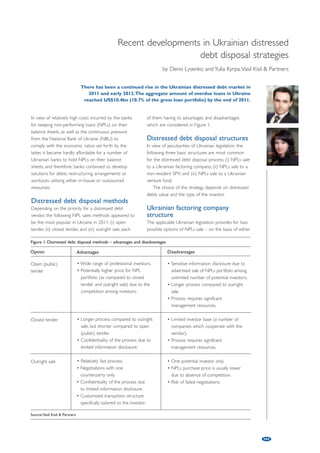
• a debt maturity wall on both sides of the Atlantic – 
much of which may possibly fail to be refinanced; 
• lower-rated new issuance has reached an all-time 
high (back to 2007 levels as a percentage of new 
issuance) – usually a two to three-year precursor 
to a period of higher defaults; 
• ratings declines, which will lead to higher levels of 
forced selling by financial institutions; 
• sluggish (or negative) economic growth, which will 
harm corporate profitability and force over- 
12
Carlyle formed in 2005 from the assets of bankrupt 
predecessor UniBoring – gaining majority control in 
both cases, CSP rapidly achieved strong results from 
both companies, as well as from smaller minority-stake 
investments. 
CSP also invested in Texas group Permian Tank  
Manufacturing, a manufacturer of steel and fibreglass 
storage tanks. In 2009, CSP added Florida’s largest 
bank, BankUnited, as well as another automotive 
company, components manufacturer Metaldyne. 
European acquisition 
In September 2011, CSP made its first control 
acquisition in Europe – a UK manufacturer called 
Brintons Carpets; a family-owned business since 1783, 
the company has a strong reputation as the producer 
of premium Axminster. The White House, 10 Downing 
Street and venues such as the newly-restored 
Renaissance Hotel at London’s St Pancras station have 
Brintons carpets. In late 2010, the new Delhi airport 
terminal provided the company with the world’s biggest 
single order of woven carpet (size of 24 football fields). 
Brintons is likely to be one of a stream of non-US 
investments for CSP. 
CSP does not regard its North American and 
European operations as separate silos – demonstrated 
by one recent investment in a US company that was 
purchased from a European financial institution, buying 
strong US fundamentals on European technicals. 
The review process 
CSP follows a rigorous investment process, which begins 
with a detailed risk assessment – of both the company 
and its operating environment. In Northern Europe, CSP 
seeks opportunities primarily in countries which have 
restructuring creditor schemes of arrangement (most 
similar to US bankruptcy and other creditor-friendly 
environments). This means the UK, Ireland, Germany and 
the Netherlands meet their criteria. 
That does not preclude investments where the 
insolvency regimes are less investor-friendly: such as in 
France, which has laws aimed at protecting employees 
and existing equity holders that can make 
restructuring more challenging. It does however mean 
that in these countries there are additional hurdles to 
jump – ones perhaps requiring a greater risk premium 
to make the deal attractive. In Greece, which lacks 
both restructuring precedents and suffers limited 
transparency – as well as in Portugal, Spain and Italy – 
the required risk premium may be even larger. CSP 
also looks to bypass restructuring risks in how they 
may structure their investments in these jurisdictions. 
To give CSP greater leeway for reviving a 
company’s fortunes, CSP aims to acquire a distressed 
company at a significant discount. To reflect the higher 
13 
indebted or insolvent businesses to restructure; and 
• the inability of PIK toggle loans, “covenant lite” and 
ongoing credit amendment (or “amend to 
pretend”) activity to do more than merely delay 
the inevitable. 
An attractive private equity asset 
class 
Certainly, distressed investing is an expanding asset class 
for private equity investors, especially with respect to 
companies in the middle market space which have less 
access to refinancing capacity than their larger 
counterparts. 
From a regional perspective given Europe’s 
economic pressures are more severe and its banking 
sector is weaker than the US, it is certainly a region 
for growth in distressed debt activity. North America, 
however, will also continue to offer significant 
opportunities. Also, while past activity has centred on 
specific sectors, the poor economic growth prospects, 
in particular in Europe, for 2012 and beyond should 
produce a more diverse spectrum of opportunities. 
While the basic remit of private equity is to galvanise 
the performance of underperforming businesses, 
distressed specialists can focus on more material rescue 
missions. Their aim in many cases is to restructure and 
turn around troubled businesses that can be made 
fundamentally sound, with a focus on restoring value and 
providing these companies with a future. 
This can be far different from the asset stripping or 
“vulture” portrayal that is usually attributed to this 
specialised type of investment. 
Careful selection 
The policy of seeking opportunities in industries only 
where investors can both find and add value rules out 
certain sectors subject to secular change, or where the 
business model is obsolete. For example the print 
industry has often presented too many challenges, as 
turnaround potential is also dependent on the 
progressive direction of the market. Indeed, initial 
considerations for a distressed investment opportunity 
must be pragmatic – focused as much on the 
preservation of investment capital at risk as on the 
potential profit. 
Distressed investors need to seek out companies 
that, while financially distressed, remain operationally 
sound. So operational control – or at least an exertion 
of influence to secure this outcome – often needs to 
be a cornerstone policy for investment. 
CSP investments 
Stellex Aerostructures – a specialist producer of 
titanium and aluminium aerostructure components – 
and Diversified Machine, an auto parts supplier that
14 
costs prevailing in some countries, CSP would look for 
a greater discount to the enterprise value. The 
judgement made by CSP is one purely predicated on 
a calculation regarding its expectations of risk, 
opportunity and return. 
Other investment criteria 
A crucial decision for CSP is deciding which types of 
company can best provide us with the fundamental 
drivers of value. Thus far, our investment focus has 
been on industries where The Carlyle Group has deep 
industry experience through its +250 portfolio 
companies in the aerospace, automotive, consumer, 
defence, energy, healthcare, industrial, media, power, 
retail, technology, telecommunications and 
transportation sectors. And while several of CSP 
peers are often termed mega name investors, our 
guiding strategy is based on smaller average 
investment sizes – for example US$100m in the case 
of Metaldyne and US$55m for Brintons. 
Another major consideration is exit strategy, which 
CSP considers before any acquisition or investment is 
made. While a private equity buy-out typically involves 
a commitment of four to 10 years, distressed investing 
generally tends to be for shorter periods. Two to four 
years is more usual; although this strategy may need 
reassessing should a prolonged period of global 
economic austerity lie ahead. Certainly, some 
assurance is vital from the outset that the company 
can be sold-on once restored to financial health. 
Hands-on approach 
CSP’s approach to the companies where it does have 
control is very-much “hands-on”. In certain cases this 
involves selecting new management teams, appointing 
new boards of directors or members of our team 
serving as directors of reorganised companies at 
varying degrees of equity ownership. That said, CSP 
brings no prejudices to any of its investments. CSP’s 
aim is not to replace existing management but to 
understand where the company is weak and then 
seek to strengthen it. This can, just as often, result in 
support of the existing management team, though one 
perhaps needing additional operational and 
management support. 
Distressed investing is by nature a handicapping 
game; essentially one in which to secure control the 
company’s debt is typically bought ahead of an 
anticipated default. However, on occasions the 
company may avoid such an outcome – in which 
case we trade out of the debt at a par plus accrued 
or near par plus accrued basis. That said, the 
handicapping game is one where CSP has consistently 
demonstrated success, as illustrated in the case 
studies below. 
Brintons: a UK case study 
Brintons Carpets came onto CSP’s radar in May 2011. 
CSP acquired it in the following September: a four-month 
process that is typical for distressed investing. 
Thanks to its premium products, the company thrived 
during the pre-credit crunch era and had made a 
substantial capacity-increasing investment in China. But 
the financial downturn had led to a negative impact 
on its core customer base of hotels, while also denting 
demand from the leisure and housing sectors. 
CSP was invited to join a distressed sale process 
initiated by the board of directors. CSP bought from a 
UK commercial bank its bilateral debt facility into 
Brintons at a discount-to-face value. And to maintain 
the company’s operations, CSP provided a significant 
capital injection. Shortly afterwards, CSP bought the 
majority of Brintons’ assets through a “pre-pack” 
administration process, giving it control of the business. 
CSP’s action plan 
Media reports of the Brintons deal were generally 
negative, focusing on resulting job losses and the 
transfer of the company’s pension fund liabilities to 
the Pension Protection Fund. Less attention was given 
to the fact CSP injected new money into the business 
and promptly devised a plan to improve profitability, 
which would enable Brintons to compete more 
effectively for major commercial contracts in the Asia- 
Pacific region and the US. 
CSP always looks for growth potential in its 
acquisitions. In the case of Brintons, this potential lies 
in full utilisation and the future-potential of the 
company’s innovative high-definition carpet weave 
technology. Brintons has developed the world’s most 
efficient looms, enabling shorter runs and the delivery 
of more complex designs. While a luxury carpet 
typically incorporates between eight to ten colours, 
this new technology makes the production of 24- 
colour carpets feasible with significantly improved 
change-over times: a process we consider a potential 
“game-changer” in luxury carpet manufacturing. 
CSP’s most immediate priority is to reduce the 
company’s overheads by updating its operations. CSP’s 
hands-on approach mentioned earlier – which initially 
came as a surprise to Brintons’ management – means 
the investment team regularly visits the Kidderminster 
head office and has become deeply involved in every 
part of the company’s sales, supply chain management 
and operations. Certainly, the changes being initiated 
should bring more favourable, if less dramatic, 
headlines, as the benefits emerge. 
Success stories 
Brintons is just one story from a successful portfolio of 
investments since CSP’s inception. For example, success
once strengthened, can stand the test of the economic 
cycle and changing consumer and industrial needs. 
Such a policy occasionally results in partnering with 
competitors that also may buy a portion of the target 
distressed company’s debt. Such partnership may 
occur intentionally or by default, and CSP is certainly 
an advocate of the partnership model. In most cases 
motivations are aligned, and strategic expertise can be 
complementary – making the opportunity to pool 
resources to achieve greater value for investors a 
welcome one. In many cases, distressed investing can 
be a collegiate business with plenty of opportunities, 
so in many cases it makes good business sense to 
cooperate. 
CSP can also partner with other groups within 
Carlyle as and when appropriate. Indeed, our parent’s 
global reach and diverse industry resources is of 
particular value when seeking to maximise the 
opportunities that we now see opening up in Europe 
and elsewhere. 
Authors: 
Brett Wyard, Managing Director and Co-Head 
Raymond Whiteman, Managing Director and Co-Head 
Carlyle Strategic Partners 
The Carlyle Group 
1001 Pennsylvania Avenue, NW 
Washington, DC 20004-2505 
US 
Tel: +1 202 347 2626 
Fax: +1 202 347 1818 
Email: brett.wyard@carlyle.com 
raymond.whiteman@carlyle.com 
Website: www.carlyle.com 
15 
in reviving Diversified Machine’s fortunes was recognised 
at the end of 2011, when Carlyle won the inaugural 
Teddy Forstmann Memorial Private Equity Value-Creation 
Award (awarded by the New York Times). 
Diversified Machine’s turnaround story deserves 
merit. CSP created jobs at Diversified – increasing the 
workforce from around 525 employees to more than 
2,200. Diversified has also completed several strategic 
acquisitions to boost its growth and financial prospects. 
CSP’s first major investment, in Stellex 
Aerostructures, lasted just two years. Stellex was sold 
at a premium to GKN in September 2006 and this 
achievement was recognised when Carlyle received 
the Turnaround Buyout of the Year award from Buyouts 
Magazine and the Middle Market Turnaround of the Year 
from The Turnaround Management Association. 
There is no alchemy and no one factor that can 
predict success. Some assume CSP looks for strongly 
underlying businesses with weak management or 
leadership who has over-leveraged the company. 
This may be one route to successful acquisition. But 
there are also many companies that have strong 
management teams who CSP is keen to partner with 
during its ownership. For instance, CSP’s 2009 
acquisition of Metaldyne was an investment in what 
CSP believed to be a well-managed business – with an 
excellent management team – that was, nonetheless, 
suffering short-term problems arising from the motor 
manufacturing industry downturn and also a need to 
restructure its balance sheet. Revenue and earnings 
significantly recovered in 2010 and again in 2011. 
Strategic cooperation 
Looking ahead, CSP’s investment strategy will continue to 
be based on investing in businesses which it believes can 
steer or be steered through temporary challenges and,
IBA Section on Insolvency, Restructuring 
and Creditors’ Rights (SIRC) 
by Judith Elkin, Haynes and Boone, LLP and Co-Chair IBA-SIRC, and 
David Jenny, VISCHER Ltd and Co-Chair IBA-SIRC 
The global financial crisis has demonstrated that legal systems must develop 
the necessary tools to weather uncertain times. Insolvency laws are among 
the most important of these tools. Recent events show that insolvency laws 
must be able to address financial difficulties of both the private and public 
sector. Nations, local governments and financial institutions are no longer 
exempt from large-scale financial distress. Additionally, as nations, continents 
and their economies become more intertwined, insolvency laws must be able 
to adapt to the complications of cross-border transactions and business 
entities. SIRC continues in 2012 to analyse and discuss these issues at its 
conferences and in its publications. Additionally, by participating actively in 
UNCITRAL and World Bank working groups, SIRC continues to shape policy 
and legislative solutions to insolvency and restructuring issues globally. 
SIRC provides a forum for the examination and 
improvement of laws and systems to manage financial 
distress and cope with the insolvency and 
restructuring of troubled enterprises in a global 
economy. Through our members, who are high profile 
insolvency practitioners in their own jurisdictions, we 
monitor, gather and report on international 
developments in cross-border insolvency matters. 
SIRC serves in a NGO capacity at world bodies, such 
as UNCITRAL and the World Bank, organisations 
tasked with policy-making initiatives in the insolvency 
and restructuring area, and provides input into 
domestic insolvency law reform initiatives around the 
globe. Through our relationships with the judiciary, 
SIRC provides a bridge between insolvency 
practitioners and judges in common and civil law 
systems, fostering not just understanding but 
cooperation where appropriate. 
SIRC’s Subcommittees are instrumental in achieving 
its objectives. The current SIRC Subcommittees and 
their co-chairs are: 
• Enforcement of Creditors’ Rights (Chris Donoho of 
HoganLovells and Anja Droege of BMH Avocats); 
• Reorganisation and Workouts (Justin Fogarty of 
Heenan Blaikie and Michelle Barclay of Jorge 
Avendano Forsyth  Arbe Abogados); 
• Insolvency Legislation and Legislative Reform and 
Harmonisation (Robert Van Galen of NautaDutilh 
and Gregor Baer from San Francisco); 
• Reorganisation of Regulated Industries (John 
Sandrelli of Fraser Milner Casgrain and Nuno 
Libano Monteiro of P L M J Law Firm). 
Upcoming conferences 
During 2012, SIRC will organise or participate in 
conferences taking place in Helsinki, Sao Paolo, Dublin 
and Warsaw: 
18th Annual Global and Restructuring 
Conference, Helsinki, Finland, May 20-22, 2012 
The theme of SIRC’s 2012 annual conference is “Sink 
or Swim: Can We Survive Floating in a Sea of Red Ink.” 
While it will be difficult to surpass the substance and 
glamour of our 2011 spring conference in Paris, we 
are going to try. Our programme will explore several 
areas that have generated significant global newspaper 
coverage recently, as well as areas that have been the 
subject of a number of controversial recent judicial 
rulings. Intellectual property rights are governed by a 
host of laws outside the bankruptcy and insolvency 
arena, but are often a very valuable asset of insolvent 
companies. The sale of intellectual property in the 
massive cross-border Nortel cases generated billions 
of dollars. When a patent owner goes into an 
insolvency proceeding, the rights of licensees whose 
own economic viability may depend on those licensed 
rights, can be seriously impacted. Our first panel will 
explore these rights and recent conflicting court 
decisions in various jurisdictions. A second timely 
panel will explore the recent legislation in Europe and 
the US governing the solvency of financial institutions 
and how the insolvency of a financial institution is 
handled. A third programme will deal with the 
recent spate of insolvencies in the global shipping 
industry. And finally, with Lehman, MF Global and 
Madoff still garnering press coverage, our last 
panel will explore how assets are traced and 
recovered, including sometimes from the creditors 
themselves, in proceedings involving global companies 
which have become insolvent through market changes 
and/or fraud. 
16
rules and standards around which consensus might be 
forged for the benefit of the insolvent entities, their 
employees and their creditors. 
Lastly, the Reorganisation of Regulated Industries 
Subcommittee, following up on its successful panel in 
Dubai on sovereign debt defaults and insolvencies, will 
be presenting a programme entitled “Can you Foreclose 
on a Country?” The panel will present a practical guide 
to the restructuring of sovereign entities and how 
creditors, such as public bondholders, can best protect 
their interests. In light of recent events in Europe and 
the US over potential sovereign debt defaults, political 
compromises, and the use of US Chapter 9, this 
programme should not be missed. 
Central Eastern European Regional Conference 
on Opportunities and Challenges that Growing 
Businesses Face in Selected EU Member States – 
Perspectives for the Future, Warsaw, Poland, 
November 21-23, 2012 
SIRC is pleased to be participating in a conference in 
Warsaw, Poland sponsored by the European Regional 
Forum, on the challenges and rewards of doing 
business in Central and Eastern Europe. Accession to 
the EU has played an important role in shaping the 
legal and business environments in new EU member 
states, offering both opportunities and requiring 
changes to operations of growing businesses in these 
countries. The programme, which will include one day 
of specialised workshops on various topics that 
attendees can choose to attend, as well as two days of 
seminar-style presentations, will explore what challenges 
and opportunities will prevail in the future with regard 
to growing business operations in the new EU member 
states. Programmes will discuss whether there is a risk 
of facing a so-called “post accession drift,” as opposed 
to the continuation of the vigorous and positive 
activities that took place during the period just after 
accession. The conference will provide an opportunity 
to discuss the experiences and projections of some of 
the new EU member states. SIRC will be presenting 
programming on insolvency issues in Central and 
Eastern European jurisdictions. Other topics to be 
presented include tax, antitrust, employment law, 
corporate governance and MA. 
Other interesting projects 
Aside from programmes, SIRC is also working on other 
interesting projects. 
SIRC's 2012 Annual Scholarship Competition 
The IBA Scholarship Programme allows each Section 
within the IBA Legal Practices Division to award a 
scholarship to allow a young lawyer to attend the 
Annual Conference. SIRC will be able to fund one 
scholar to attend the IBA Annual Conference in Dublin. 
The Scholarship will cover a contribution towards travel 
17 
South American Regional Conference on 
Distressed MA and Restructuring, Sao Paolo, 
Brazil, August 2012 
In 2011, SIRC sponsored its inaugural regional 
conference on distressed MA and restructuring in 
Buenos Aires, Argentina. The conference was a joint 
effort between SIRC and the Latin American Regional 
Forum. The programme, which dealt with cross-border 
restructurings, both formal and informal, distressed 
MA strategies, the insolvency of regulated industries 
and the recognition of foreign proceedings, all with a 
particular focus on Latin America, was extremely 
successful. Thus, plans are underway to present a 
similarly Latin America-focused programme in August 
2012 in Sao Paolo. 
SIRC programmes at IBA Annual Conference, 
Dublin, Ireland, September 30 – October 5, 2012 
Planning is well underway for SIRC’s programmes at the 
IBA Annual Meeting in Dublin. Our committee chairs 
and their counterparts in the Employment and 
Industrial Relations Law Committee and in the Litigation 
Section are in the process of developing strong and 
interesting programmes focusing on international 
insolvency issues of global significance. These 
programmes will not only be timely, but cutting edge in 
terms of structure and format. 
The Enforcement of Creditors’ Rights Subcommittee 
is developing a programme entitled “When the Music 
Stops” discussing new developments in the liability of 
directors and officers in and after insolvency 
proceedings. There are significant differences in liability in 
various jurisdictions, and the confluence of these 
conflicting laws and conflicting duties are heightened in 
cases involving multi-national corporate groups involved 
in cross-border insolvency proceedings. 
The Reorganisation and Workouts Subcommittee is 
working with the Employment and Industrial Relations 
Law Committee on a fascinating and politically sensitive 
topic entitled “Blood, Sweat and Tears – Money vs Sweat 
Equity.” The rights of current and former employees are 
of global economic and political importance. The 
programme will discuss the competing rights of 
creditors and pension holder of insolvent entities, as 
well as the situation where the pension obligations 
themselves may be the cause of the company’s 
financial distress. 
The Insolvency Legislation and Legislative Reform 
and Harmonisation Subcommittee are working on a 
programme on the restructuring of corporate groups 
entitled “Bridge Over Troubled Waters.” Through the use 
of a hypothetical multi-national corporate group 
insolvency, the programme will examine the success to 
date of UNCITRAL’s ground-breaking enterprise 
group legislative guide annex, and provide guidance for 
greater future cooperation through legal instruments,
18 
and accommodation expenses, a waived registration 
fee, two years free membership in the IBA, LPD, PPID 
and one Committee from the awarding Section, as well 
as the waiver of a registration fee to either the next 
IBA Annual Conference or one of the Section’s 
conferences to be held the following year. 
SIRC’s 2012 scholarship topic deals with finding the 
right balance between the rights of creditors and 
pension holders of insolvent entities. Each submitter 
should describe the balance struck in his or her 
jurisdiction between these competing interests and 
analyse critically (i) whether the interests of (future) 
pension holders are overprotected so that non-privileged 
creditors of insolvent entities are not 
treated fairly; (ii) whether pension holders’ interests 
are not sufficiently protected and are junior to the 
rights of creditors; or (iii) whether the law and policy 
of his or her jurisdiction is a sound compromise. 
Submissions are due by Monday April 9, 2012. 
IBA guide on cash pooling 
SIRC, through the Herculean efforts of editor Marcel 
Willems (Kennedy Van der Laan), is well into the 
process of finalising its practical guide on cash pooling in 
many significant global jurisdictions. Pooling cash within a 
corporate group or among a number of related 
companies is commonplace and enables the best use of 
the funds available at as low a cost as possible, thus 
strengthening the financial position and leverage of the 
companies involved. One result of the current 
economic low tide, however, is that there are some 
specific caveats to observe. Not only are regulatory 
constraints tightening by the day, but the risk of 
insolvency and the resulting competing claims to pooled 
cash is becoming an increasingly pressing issue. 
SIRC’s guide will be written by leading practitioners 
from a wide range of countries who will provide 
detailed analysis on the provisions in their respective 
jurisdictions regarding cash pooling and insolvency. Each 
chapter follows the same template for ease of 
reference and topics featured include specific legal 
requirements from various perspectives, the liability of 
company directors, the potential for veil 
piercing/substantive consolidation, banking requirements, 
regulatory requirements and implicated tax issues. 
The SIRC journal: Insolvency and 
Restructuring International (IRI) 
The IRI is an informative substantive journal covering 
international insolvency and comparative law issues and 
key developments of concern to the global insolvency, 
distressed finance and turn-around communities in the 
insolvency fields. As IRI moves into its sixth year, the 
publication is accepting advertising in 2012, and with a 
wide global distribution, provides an opportunity for 
professionals to reach out to the insolvency community 
in an efficient way. Persons interested in advertising 
should contact Andrew Webster-Dunn 
(Andrew.webster-dunn@int-bar.org) at the IBA office. 
IRI is available on a subscription basis to non-IBA 
members, expanding the range and reach of the 
journal. Non-IBA members may arrange for a 
subscription by contacting Katherine Brewer 
(katherine.brewer@int-bar.org) at the IBA office. The 
success of the journal is due in large measure to the 
imagination and dedication of its Co-Editors, Karen 
O'Flynn (Clayton Utz) and Jennifer Stam (Gowlings), 
and to the hard work of the IBA publications 
department. IRI encourages contributions from all 
sources. Persons who would like to submit articles for 
consideration, or with ideas for topics upon and article 
can be written should contact our Co-Editors. 
The SIRC website – a place to visit 
Please see: http://www.ibanet.org/LPD/SIRC/Inslvncy_ 
Rstrcrng_Crdtrs_Rights/Default.aspx. The website is 
being coordinated by SIRC Website Officer Tomás 
Miguel Araya (M.  M. Bomchil) and Graham McPhie 
(Moon Beever). 
Readers who are not yet members of the IBA 
and/or SIRC to join the IBA by going to 
www.ibanet.org/join_the_iba/join_the iba.aspx, and 
select “Insolvency, Restructuring and Credi-tors’ Rights” 
as your free committee or, if you are already a member 
of the IBA, add the SIRC membership by adjusting your 
profile in the “My IBA” section of the website. 
Authors: 
Judith Elkin 
Co-Chair IBA-SIRC 
Haynes and Boone, LLP 
30 Rockefeller Plaza, 26th Floor 
New York, NY 10112 
US 
Tel: +1 212 659 4968 
Fax: +1 212 884 8228 
Email: judith.elkin@haynesboone.com 
Website: www.haynesboone.com 
David Jenny 
Co-Chair IBA-SIRC 
VISCHER Ltd 
Aeschenvorstadt 4 
P.O.Box 526 
4010 Basel 
Switzerland 
Tel: +41 58 211 33 49 
Fax: +41 58 211 33 10 
Email: djenny@vischer.com 
Website: www.vischer.com
Reflections on shipping and 
offshore restructurings 
by Richard Sjøqvist, Bugge, Arentz-Hansen  Rasmussen 
19 
Traces of early debt composition procedures can be found in the Bible, 
Roman law and has probably achieved a level of maturity through the US 
Chapter 11 procedures (for those able to afford it). Many jurisdictions 
developed their modern bankruptcy legislation from the mid-1850s until the 
deep depression in the mid-1930s with subsequent sporadic amendments. 
Although certain jurisdictions have sought to improve their restructuring 
legislation, the results do not truly reflect the globalisation of the economic 
environment. Each jurisdiction deals with restructuring based on its cultural 
heritage which probably is very difficult to analyse in a legal context, with 
common law countries having a creditor friendly approach, while civil law 
countries still favour a protection of a larger group of stakeholders, leaving 
the Scandinavian jurisdictions somewhere in between. When dealing with 
shipping and offshore restructuring, these facts often explain the complexity 
in the task at hand as shipping and offshore companies are by their nature 
involved in a multitude of jurisdictions, having great flexibility in moving 
Until the mid-1960s shipping companies (offshore 
companies did not exist) used to be fairly small, with a 
relatively simple debt structure. During the last 50 
years much has changed in the way the shipping 
industry has developed – from single ship companies 
to international multi-billion conglomerates. The 
shipping and offshore industries have become 
enormously capital intensive since the early 1970s. The 
financing arrangements have also developed and 
would, as before, quite often contain loan to value 
covenants, but as companies grow, the covenants 
would be more corporate style such as leverage ratio 
and value adjusted equity ratio covenants. The 
covenants would enable the lenders to re-negotiate 
the loan agreement or, more unpleasantly, advance 
their legal rights at stages where not only values drop 
but also when income is depleting. 
Upon breach of covenants a usual pattern folds 
out: creditors will advance their legal rights, for then 
recognising that to insist upon a payment, as long as 
the debtor has insufficient funds, would not be 
possible. Even if such debtor would be able to channel 
funds to a particularly unpleasant creditor, the 
payment might not only be voidable but the creditor 
might also be accused of defrauding creditors with the 
criminal consequences this might have. Consequently, 
and usually somewhere along the road, the legal 
niceties will be forgotten, and pragmatic commercial 
considerations prevail. 
Commercial pragmatism 
Turning to commercial pragmatism, shipyards when 
assets from one jurisdiction to another. 
faced with difficulties, will ask for a price increase in 
respect of a contract, when ship and rig owners face 
difficulties they run to the lenders and to shipyards 
(if they have something under construction), and 
when charterers face problems they turn to their 
suppliers and customers. The striking similarity will 
always be that debtors turn to the largest 
stakeholders in order to (i) have the most effect out 
of the negotiations, (ii) keep a closed shop in respect 
of the challenges, and (iii) achieve quick results. 
Confronted with economic catastrophe, the 
debtors will have to understand whether (a) the 
creditors actually are willing to talk, or (b) whether 
an organised sale of all or a substantial part of the 
assets might be just as good a solution. Creditors will 
have to understand whether (a) the shipowner is 
seeking to favour its own position over the position 
of creditors, or (b) the shipowner is providing 
transparent and intelligent information in a timely 
fashion respecting the basic principles of international 
restructuring as spelt out through the INSOL 
principles: (i) provide time for diligence; (ii) standstill 
(i.e. no enforcement and freezing of positions); (iii) 
appropriate organisation of restructuring; (iv) 
exchange relevant information for evaluation; (v) 
proposals for resolving the financial difficulties of the 
debtor and, so far as practicable, arrangements 
between relevant creditors relating to any standstill 
should reflect applicable law and the relative 
positions of relevant creditors; (vi) confidentiality; 
and (vii) new money obtains some sort of priority 
status.
20 
The foundation 
Obviously, any restructuring discussions will have to 
include work such as evaluation of insolvency or 
enforcement options including jurisdictional planning. 
An analysis will usually contain the following elements: 
• Do the security documents and set-off rules work? 
• Will courts respect the priority of liens? 
• Will the process be sufficiently expedited? 
• Will the court fees and liquidator fees be 
reasonable? 
• Can creditors enforce the security and against 
whom? 
• Does forum change in order to get a better 
protection? 
• Are any pre-emptive actions required? 
• How to deal with the liquidity management. 
• Can assets be disposed of, or taken over by the 
bankruptcy estate? 
A good restructuring will, however, not be possible 
without a proper commercial understanding. To this 
effect, if in-house expertise is not sufficient, creditors 
or debtors are well advised to engage a commercial 
advisor. Many debtors will claim to have sufficient 
expertise, but it would not be unfair to say that 
creditors might not really agree or share the same 
opinion. Creditors will definitely need to possess or 
hire competence which enables the creditors to test 
the commercial viability of the business, and there is 
probably a difference on this point if only banks are 
involved (or a club of banks) who will have a fairly 
easy dialogue among themselves as opposed to large 
syndicates and bond arrangements, who will probably 
need the assistance of a commercial moderator. 
Disputes on the appointment of advisors and their 
remuneration are common, but often resolved. The 
important point being that the remuneration should 
be aligned with the interests of the party such advisor 
is representing. 
Organising the work 
The restructuring principles are always based on the 
principle of equality, however I would probably go along 
with the allegorical inspiration of George Orwell: 
“creditors should be treated equally, but some creditors 
more equally than others”. This means that there is an 
acknowledgement that creditors are not necessarily 
equal. The normal technique is to distinguish between 
(i) financial creditors, secured and unsecured; (ii) related 
creditors (such as managers); (iii) other creditors such 
as charterers, owners and other material suppliers and 
customers; and (iv) truly trade creditors. When all 
parties are involved, it would seldom be possible 
without some sort of bankruptcy protection as trade 
creditors usually just stop their supply with the liquidity 
crisis and this will entail the whole business. 
During the organisational phase, the main aim of 
the restructuring would thus be to identify the 
categories one wishes to establish in order to initiate 
discussions. We normally recommend discussing the 
classification with the largest stakeholders with an aim 
to get their support, making it difficult for others to 
object. This has a particular impact on board 
members’ duties to not give preferential treatment to 
creditors, and therefore, the stakeholders approached 
would probably be asked to let some other creditors 
be paid off on a going-concern basis in order to keep 
a certain control over the negotiations. 
One of the biggest problems is acquiring a 
common understanding of the creditor positions. 
Distinguishing fully secured creditors from unsecured 
creditors is not always easy. A fully secured creditor 
will always take the position that any problems will 
have to be resolved by parties who have something at 
stake. Managing the expectation of the creditors and 
shareholders in this context is a martial art not to 
be underestimated – and as old as any other 
profession: fear mongering by threatening to go for 
bankruptcy or initiate insolvency proceedings in order 
to achieve a result. One piece advice is hereby given – 
do not threaten, but do promise if you actually mean 
to do it. 
The level of playing field has to be clearly set out. In 
some of the worst default cases which did not end up 
in a restructuring, the approach of a rig owner was to 
give priority to shareholder rights rather than creditor 
rights – the result? Full elimination of shareholder rights 
by bankruptcy. I am fairly confident that some 
shareholder rights would have been maintained if the 
rig owner had respected some of the basic 
restructuring principles set out herein. 
The plan 
It is usually during a forbearance period (or standstill 
period) that parties reach agreement in principle with 
their creditors (usually after they have used up all 
available funds). During the standstill period the need 
for working capital will materialise depending as to 
whom is involved in the restructuring. If the 
restructuring is public, the need will be immediate, if the 
restructuring is kept confidential, there might be some 
flexibility. The normal pattern during the standstill 
period is for the involved creditors to agree that those 
not involved shall be settled, such as trade creditors. 
Sometimes a consensual deal is not possible, in which 
event disclosure to such creditors who will not be paid 
would be essential in order to give them the 
opportunity to voice their opposition. This will create a 
“terror balance” and the gamble will be whether a non-consenting 
creditor who will not be paid, will actually 
start enforcing its creditor rights or not.
T: +47 22 83 02 70 | F: +47 22 83 07 95 | E: post@bahr.no | www.bahr.no 
03/12/0045 
A REAL 
DIFFERENCE 

!
!	#


#
!#
!

!
22 
Another important consideration is whether the 
plan should seek some public approbation in order to 
protect the parties against any liability and get the 
scheme protected. If the matter is sufficiently large and 
substantial, many debtors have taken the benefit of US 
Chapter 11 proceedings to at least obtain some relief 
and release for their conduct. The solution is not 
always easy, as filing a foreign company for Chapter 11 
in the US not always exonorates the board of 
directors for their duties in the jurisdiction of 
incorporation. 
The interim period 
It is usual that any plan results in an interim period 
which gives the debtors a reasonable chance to survive 
in one way or another and it is in the creditor’s interest 
that the debtors are able to work normally without 
consulting the creditors every day. The period might 
be for a couple of years or more. It is better for 
everyone involved that the owner concentrates on 
commercial matters. The plan will have to set out how 
the running of business may continue in order to 
recover. 
Usually a payment schedule is fixed, based upon 
the owner’s liquidity budget for the period, but with a 
qualification that a default will occur only if their 
payments are lower than a certain percentage of the 
budget, say 80%. Another solution is to link the 
payments to the vessels’ earnings, on a cash sweep 
basis; by definition there is little or no danger of 
default. 
The reconstruction period 
After an initial period the creditors would usually like to 
see a restoration to normality. This might be the 
‘reconstruction period’. The reconstruction period is 
usually only decided upon at the end of the interim 
period, and will very often be linked to the market 
conditions at that time to make a realistic repayment 
schedule, or just simply agree on a final maturity date 
which might be one to two years after the interim 
period. At this stage the debtor has to return to normal 
functioning. If the debtor fails to meet the requirements 
of the repayment schedule, either by earnings, or by 
refinancing, they will be in default. 
Distribution of available funds 
One of the most difficult decisions involves the 
distribution of the available funds. There are several 
possible systems or combinations of systems. As a 
starting point, trade creditors usually have to be paid in 
full. Without total agreement on this point it would be 
extremely difficult to operate a shipping company. The 
distribution of the remaining funds is based upon the 
premise that the trade debt is fully covered. 
One system of distributing surplus cash is to 
simulate a bankruptcy and see how much each 
creditor stands to lose. The income is then distributed 
pro rata to each creditor’s uncovered debt. This 
method is very seldom used to dispose of cash from 
the operation of vessels, but can be used when funds 
come from the sale of assets. 
Another system is to distribute available cash 
pro rata to the gross debt without making any 
deduction for the securities the different creditors 
may have. This system has only been used when the 
figures turn out to be much the same as those 
calculated using other systems. 
The cash sweep system is probably one of the 
most commonly used mechanisms. The basis is that the 
creditor is paid what their unit is earning, the 
philosophy being that the creditor is entitled to 
withdraw the ship, and if they withdraw it, others may 
operate it on the market and the creditor then has 
access to the total earnings of the vessel. If there are 
several mortgage holders in one vessel, the cash 
sweep will be combined with the ranking of creditors 
on the unit. 
The ranking principle has several branches: for 
example, that all available funds from one vessel are 
applied first to pay interest on the first priority, then 
capital instalments on the first priority, thereafter 
moving to the second priority. Another example 
would be to serve interest on all mortgages and then 
principle on the first lien. The latter is usually applied 
in situations where creditors have nothing to lose by 
bankrupting the company and the senior creditors 
would like to avoid this situation occurring. 
A third version is to fix the market value of the 
unit and regard the debt to the extent of the market 
value as senior debt, to be serviced fully, reasoning 
that the creditor may sell the vessel at its market 
price and at least recoup that money: they should not 
be in a worse position by accepting a restructuring of 
the owner’s total indebtedness. The debt above the 
market value is called junior debt and will be serviced 
only if there are more funds available. Non-service of 
the senior debt, but not of the junior debt, may be 
defined as a default. 
The ranking principle may be applied unit by unit 
linked to the individual vessel’s earnings. It can also be 
applied to the whole group by fixing the market value, 
and consequently the senior debt, on the total fleet; 
the income of the total fleet is then applied to the 
senior and junior debt so that good units support 
those with a lower earning capacity. 
In some companies it may be difficult to define 
exactly what the earnings of one unit are. In the 
offshore business the value of the software can be 
considerable, and the unit alone cannot take the
board representation or at least a creditor committee 
with the ability to restrict the operation. This type of 
suggestion fades during the negotiations as no one 
creditor is prepared to take on the burden and most 
creditors are reluctant to take part in active ownership 
of a company. No major changes will thus be made in 
ownership structure or operation, except perhaps in 
creating profit sharing expectation at some level. 
Creditor agreements and bankrutpcy 
Creditors’ agreements are very complex and it is 
unfortunate that no bankruptcy regime has been able 
to develop a truly satisfactory system under which 
properly negotiated agreements earn the approval of 
the court. Most debtors will at some time during the 
negotiations question whether they should actually just 
file for bankruptcy proceedings, even if this will be the 
worst outcome for all parties, as the legislation does 
not protect creditor agreements in an appropriate 
manner. Normally they continue to operate with the 
understanding of the creditors not getting paid as a 
bankruptcy would jeopardise everything for them. 
Author: 
Richard Sjøqvist, Partner 
Bugge, Arentz-Hansen  Rasmussen 
Stranden 1 A (6th floor) 
N-0250 Oslo, Norway 
Tel: +47 (22) 83 02 70 
Fax: +47 (22) 83 07 95 
Website: www.bahr.no 
23 
premium for the full earning of the vessel. In such 
cases, we can find the cash sweep will have to be 
shared with unsecured creditors. The creditor in one 
vessel is for example receiving 90% of the vessel’s 
earnings, while 10% is allocated to a creditors’ fund for 
equal distribution. The reasoning behind this is that this 
10% more or less should be considered the software 
value, which belongs to all creditors and which cannot 
be utilised by one creditor withdrawing his vessel. 
The parties often agree to make deductions from 
the vessel’s earnings to be used as an incentive to the 
management organisation to secure its full support or 
to organise some other incentive plan. Experience 
shows that to repay old debt is not sufficient incentive 
for any organisation, which needs something more 
tangible and motivating than working only for the 
creditors. 
Another sum will often be set aside to make some 
payment to the unsecured creditors who are not 
trade creditors, such as third priority mortgage 
holders or financing institutions which have 
unrecovered debt from a previous sale of a vessel. To 
encourage such creditors not to put a company into 
bankruptcy, it is often necessary to let them have a 
percentage of the earnings of the group to give them 
something more than the zero result they would 
obtain in a bankruptcy. 
Lengthy discussions in negotiations will occur on 
the structure of the owning company and creditors’ 
control. Creditors in the standstill phase of the 
discussions are inclined to suggest a transfer of 
ownership to companies nominated by them with
A global organisation, a local 
network 
Among a global membership of more than 1,000 
attorneys, bankers, corporate-turnaround professionals, 
financial advisors and other restructuring practitioners, 
members develop a powerful network of contacts, 
resources, mentors and friends. 
IWIRC’s international board creates programmes to 
foster national and cross-border relationships and 
education. Through events and interactive tools, IWIRC 
offers seminars, intellectual capital, career resources, 
leadership opportunities and guidance for personal 
and professional development. In addition, IWIRC is 
proud to be a designated non-governmental 
organisation (NGO) and active participant in Working 
Group V (Insolvency) of the United Nation’s 
Commission on International Trade Law (UNCITRAL). 
UNCITRAL proposes model laws and develops policy 
relating to cross-border insolvency proceedings, 
enhancing understanding, cooperation and efficiencies 
on a global basis. IWIRC’s NGO participation in 
UNCITRAL’s Working Group V (Insolvency) is 
alongside international financial organisations such as 
the International Monetary Fund and the World Bank, 
intergovernmental organisations, and other invited 
NGOs including the International Bar Association, 
INSOL and the International Insolvency Institute (III). 
Representatives of UN member states and the other 
groups include attorneys, judges, government officials, 
business executives, and professors from widely diverse 
cultural and political backgrounds. 
IWIRC’s global conferences are scheduled in 
conjunction with other major restructuring 
conferences, leveraging business development 
opportunities and travel budgets. Programming 
focuses on substantive insolvency issues as well as 
issues relating to its commitment to the advancement 
of women. Recent programmes have included “Ethical 
Dilemmas in Turnarounds and Restructurings” and 
“A Conversation with Trailblazing Women In the 
Insolvency Profession.” The 2012 IWIRC’s Annual 
Spring Conference and Founders’ Awards will be held 
in Washington, DC on April 18-19, 2012. IWIRC’s 
innovative programme will focus on the rewards of 
community service. On June 20-22, 2012, in Paris, 
France, IWIRC will sponsor the Opening Reception of 
III’s 12th Annual Conference and will present a panel 
on the differing rights and role of unsecured creditors 
in global insolvency cases. IWIRC’s Fall Conference will 
be held in conjunction with the National Conference 
of Bankruptcy Judges in San Diego, California on 
October 23-24, 2012. 
IWIRC, through its over 30 networks worldwide, 
offers opportunities for its members to actively 
participate both at a local level, as well as be 
welcomed at events in other locations. Local networks 
organise professional, educational and social activities 
within their communities and regions which are 
structured to meet the specific needs and interests of 
network members. These conferences are ideal for 
meeting other professionals in a welcoming 
environment. Some of the recent local programmes 
have included topics such as “Build a Career Without 
Boundaries: The Truth About How to Succeed” and 
“Be Retained, Not Detained: The Ethics of Retention 
Issues in Bankruptcy.” Pure networking events are also 
regularly hosted. Practitioners new to the business, or 
a region, can plug into professional communities 
quickly with IWIRC. Successful professional services 
practitioners understand that building a healthy 
referral base requires creating and nurturing healthy 
relationships with referral sources (other service 
professionals) and clients. 
Expertise and achievement 
As the premier advocacy group for women in 
restructuring, IWIRC recognises the value in recruiting 
and promoting women throughout their careers. 
Members are invited to speak, publish and present their 
intellectual capital at meetings, via the website, 
International Women’s Insolvency and 
Restructuring Confederation (IWIRC) 
by Tinamarie Feil, IWIRC Director-at-Large and BMC Group, Inc. 
The International Women’s Insolvency and Restructuring Confederation 
(IWIRC) is a non-profit organisation dedicated to helping restructuring 
professionals advance their careers, develop leadership skills and enjoy the 
benefits of being part of a global networking community. For almost 20 years, 
IWIRC has been engaged as an international organisation connecting women 
worldwide and offering its members education, mentoring and opportunities 
for leadership involvement at both the global and local level. 
24
turnaround manager, academic or other restructuring 
industry professional. She is actively engaged or recently 
retired from the restructuring industry – and from 
anywhere in the world. IWIRC membership is not a 
requirement to make a nomination, nor to be 
honoured. Importantly, achievements do not have to be 
in nationally or internationally renowned cases or result 
in landmark decisions, simply exceptional. IWIRC 
welcomes all entries. 
Leadership opportunities 
IWIRC offers its members the opportunity for 
leadership. Both local networks and the international 
organisation offer “fast track” leadership opportunities 
for those seeking to take their careers to the next level. 
Website and contact 
IWIRC networks are located in Asia, Australia, Europe, 
and North America. We welcome the development 
of new networks in these or new regions. Visit 
www.IWIRC.com for more information. 
Author: 
Tinamarie Feil 
IWIRC Director-at-Large 
BMC Group, Inc. 
875 Third Avenue, Suite 501 
New York, NY 10022 
US 
Tel +1 212 310 5922 
Email: tfeil@bmcgroup.com 
Website: bmcgroup.com 
25 
newsletters, through mail and e-mail and other channels 
of communication. Professional public profiles are 
located in the IWIRC online directory and in the 
Speakers Bureau, a resource to find panelists and 
experts among the IWIRC membership. 
Although IWIRC, as an organisation, concentrates 
on the insolvency and restructuring fields, the IWIRC 
Speakers Bureau is not so limited. Members of the 
Speakers Bureau have an array of talents that easily 
extend to other areas, including litigation, asset sales 
and acquisitions, alternative dispute resolution, finance 
and forensic accounting, professional development, 
mentoring, rainmaking and balancing a career, family 
and self. 
In recognition of members and networks which 
have made exceptional contributions to the 
organisation and their clients and profession overall, the 
IWIRC Board of Directors established its Founders’ 
Awards. Categories are The Melnik Award for 
Exceptional IWIRC Member, The Fetner Award for 
Outstanding International Contribution and The Ryan 
Award for Outstanding IWIRC Network. In 2011, 
IWIRC also established the Rising Star Award to 
recognise the achievements of women who have 
been in practice for less than eight years but have 
demonstrated exceptional skills and dedication to their 
profession, firms and communities. In addition, each year, 
IWIRC honours a woman for her recent contributions 
to or lifetime achievements as part of the insolvency 
and restructuring industry with the Woman of the Year 
in Restructuring (“WOYR” – pronounced like 
“warrior”) award. She may be an attorney, judge, banker,
Shifting sands: Insolvency and restructuring 
law reform in the Middle East 
by Christopher Hall, Anthony Pallett, Christian Adams and Adam Goldberg, Latham  Watkins LLP 
The global nature of the financial crisis, liquidity constraints, declining asset 
values, general market uncertainty and the realisation that insolvency 
systems in the Middle East have not developed at the same pace as the 
business environment have placed insolvency and restructuring law reform 
firmly in the sights of the region’s policy makers. This article addresses the 
availability of liquidity, the stress testing of existing insolvency systems, the 
increased focus on regional reform initiatives, the United Arab Emirates’ 
proposed new Federal Bankruptcy Law and the key challenges to the 
successful implementation of any new legal and regulatory framework in 
the Middle East. 
Liquidity crunch 
The consequences of the 2008 global financial crisis 
and, more recently, “The Arab Awakening” have disrupted 
economic activity in almost every country in the Middle 
East, one of the most significant repercussions being the 
drying up of market liquidity and the resultant adverse 
impact on the ability of regional borrowers to meet 
their short and medium-term debt obligations. Figure 1 
highlights the significant reduction in the growth of bank 
lending across the GCC since 2007. The average annual 
growth in bank lending between 2004 and 2008 was 
29%, reaching a high of 38% in 2007. This rate fell to 1% 
in 2009 and 6% in 2010; however, growth increased to 
roughly 7% in 2011 and is forecast at approximately 
8.6% for 2012. 
The reduction in the availability of external finance, 
together with declining asset values, falling profitability, 
political and economic unrest and maturing short and 
medium-term debt obligations has pushed an 
increasing number of businesses into a position of 
financial uncertainty. 
Stress testing existing insolvency 
systems 
The significant increase in the number of businesses 
approaching the “zone of insolvency” has sharpened the 
focus on the options available to financially distressed 
or insolvent companies under existing bankruptcy 
regimes – the common theme across the Middle East 
has been one of limited use and understanding of 
formal insolvency procedures. For example, while the 
Federal laws of the United Arab Emirates (the “UAE”) 
provide a formal framework for the reorganisation, 
liquidation and bankruptcy of insolvent companies and 
individuals, the regime applicable to companies 
remains largely untested, as the market has not yet 
26 
Figure 1: The growth of bank lending in the GCC 2003-12 
800,000 
600,000 
500,000 
400,000 
300,000 
200,000 
0 
Oman 
Qatar 
2003 2004 2005 2006 2007 2008 2009 2010 2011e 2012f 
Source: Reuters Knowledge 
45.00% 
40.00% 
35.00% 
30.00% 
25.00% 
20.00% 
15.00% 
10.00% 
5.00% 
0.00% 
100,000 
US$m 
700,000 
Bahrain 
Kuwait 
Saudi Arabia UAE 
Total annual growth
transparent, predictable insolvency system based upon 
international standards recognised by global investors. 
Dubai World case study 
Dubai World is an international conglomerate 
encompassing over 200 subsidiaries operating in, 
amongst others, the real estate development, private 
equity, retail, hospitality and shipping sectors. In 
November 2009, Dubai World announced its intention 
to seek a “standstill” on its debt repayment obligations, 
amounting to approximately US$24bn spread amongst 
95 international financial institutions. Nakheel, then a 
subsidiary of Dubai World, is a real estate 
development company that owed approximately 
US$23.7bn to a wide variety of creditors, including 
international financial institutions, public holders of 
Sukuk certificates and trade creditors. 
The global financial crisis hit Dubai in Q4 2008, 
resulting in a crash in the Dubai property market that 
saw a 47% decrease in the valuation of real estate in 
the 12-month period from Q4 2008 to Q4 2009, and 
prompting the November 2009 “standstill” 
announcement. By the summer of 2011, both Dubai 
World and Nakheel had successfully restructured their 
debts on an out-of-court basis, in each case, with the 
consent of 100% of financial creditors, and in 
Nakheel’s case over 90% of trade creditors. The key 
factor that enabled the Government of Dubai to 
execute one of the most complex and large-scale 
corporate restructurings in recent history was the 
creation of a bespoke insolvency system based upon 
international standards recognised by Dubai World’s 
international creditors. 
Decree 57: Levelling the playing 
field for negotiations 
Dubai World is a corporation established pursuant to 
a decree issued by the Ruler of Dubai, and 
consequently has a unique legal status. Due to its 
status as a decree corporation, Dubai World was 
unable to seek to restructure its debts under the 
existing Federal regime applicable to ordinary 
companies incorporated in the UAE. As a result, when 
Dubai World announced its debt repayment 
“standstill” in November 2009, there was great 
uncertainty as to how a restructuring of Dubai 
World’s debts could be implemented. The 
Government of Dubai responded by enacting “Decree 
No. 57 of 2009 Establishing a Tribunal to Decide 
Disputes Related to the Settlement of the Financial 
Position of Dubai World and its Subsidiaries” (“Decree 
57”), which created a modern legal framework 
designed to enable Dubai World and its subsidiaries 
to restructure their debts through a judicially-supervised 
process. 
27 
seen a major corporate entity commence insolvency 
proceedings under the Federal framework. Given the 
uncertainty surrounding the application of the region’s 
existing legal frameworks, financially troubled 
corporate entities and their creditors have sought, and 
will likely continue to seek, consensual out-of-court 
reorganisations before turning to formal legal 
mechanisms. 
World Bank statistics indicate that an average 
bankruptcy procedure in the MENA region takes 3.5 
years to complete, costs 14.1% of the value of the 
business and delivers an average recovery rate of 29.9 
cents on the dollar. This does not compare favourably 
to the OECD averages (1.7 years, 8.4% and 68.6 
cents), and pales by comparison to international best 
practice as seen in Japan (0.6 years, 4% and 92.5 
cents).1 The statistics for the UAE (5.1 years, 30.0% 
and 10.2 cents) reflect the fact that the UAE’s 
insolvency framework has not developed at the same 
pace as the country’s development as an economic 
and commercial hub. Recent history has witnessed 
unprecedented economic growth and business 
expansion in the UAE; particularly in Dubai, where 
local businesses have evolved into global corporations 
with multiple sources of finance and diverse 
investments. Whilst there has been an evolution in the 
business landscape, certain aspects of the applicable 
legal and regulatory regime have stagnated and no 
longer reflect modern business needs. 
The increased focus on reform 
initiatives 
During previous financial crises in Russia, East Asia and 
Argentina, attention turned to the importance of 
insolvency systems that support the resolution of 
financial distress,2 in particular, the accessibility of the 
relevant laws and the efficiency of the institutions 
implementing such laws. Recent events in the Middle 
East have resulted in a similar trend, as policy makers 
begin to acknowledge weaknesses in the existing legal 
frameworks and the need for reform to preserve 
businesses as going concerns, strengthen creditors’ 
rights, improve the overall investment climate and 
strengthen market resilience.3 There is also a growing 
acceptance that law reform by itself is not sufficient; 
while it is essential to have a robust legal framework 
in place, true reform requires a holistic approach, 
addressing the capacity and efficiency of local courts, 
the training of judiciary and the development of a 
body of experienced insolvency professionals, all of 
which are essential elements of effective insolvency 
systems (see further discussion below). 
The recent restructurings of Dubai World and its 
then subsidiary Nakheel in the UAE provide high-profile 
examples of the value of establishing a
28 
The regime established by Decree 57 was based 
on international best practice and a hybrid of English 
law procedures and substantive restructuring tools 
proven to maximise value in Chapter 11 of the US 
Bankruptcy Code. In practice, however, although it 
provided formal legal procedures through which to 
implement a restructuring, the major contribution of 
Decree 57 to the extraordinary result achieved in 
Dubai was the provision of a “Plan B” against which to 
negotiate an out-of-court restructuring. 
Perhaps most importantly, Decree 57 enables a 
company to implement a restructuring without the 
consent of all parties. A restructuring may be 
approved based on consent of a majority of creditors 
and equity holders in each class (i.e. binding minority 
objectors), or provided that specific legal standards are 
met, without the consent of all classes based on the 
consent of a majority of creditors in one impaired 
class (a procedure known as “cram down”). Because 
of this “cram down” mechanism, no creditor or class 
of creditors, including secured creditors, could be 
certain of its ability to unilaterally block a restructuring 
that had the support of other creditors. In this 
manner, by depriving individual creditors and classes of 
creditors of the ability to block the restructuring at 
their discretion, Decree 57 created a level playing field 
for negotiations in which no party could seek to 
extract “hold up value” for its consent. Having such an 
option provided Dubai World with leverage to reject 
unrealistic demands and preserve the greatest value 
available for all constituencies; as a result, all 
stakeholders were incentivised to work together 
towards a negotiated solution that reflected the 
commercial realities of the situation. While Decree 57 
does not apply beyond Dubai World and its 
subsidiaries, and its formal procedures were never 
actually utilised, the region’s policy makers may wish 
to consider the effect of “the shadow of the law” 
in motivating creditors to take a seat at the 
negotiating table. 
Of course, not all distressed companies will have 
the benefit of a new law created to govern their 
restructuring, and companies in the Middle East in 
particular regularly face challenges arising from legal 
regimes that are perceived to be opaque, 
unpredictable and ultimately ineffective as a means to 
implement a commercial restructuring on a going-concern 
basis. Reform efforts are underway in the 
UAE, and elsewhere, that may provide companies with 
generally-applicable and more standardised options to 
bind dissenting parties to a restructuring, as discussed 
below. In the meantime, companies in the Middle East 
must work to overcome these challenges through 
creative planning among management and legal and 
financial advisors based on an analysis of the particular 
situation, the needs of the business, the terms of 
existing agreements and legal procedures that may be 
available outside of the company’s home jurisdiction. 
UAE bankruptcy law reform 
As noted above, the international markets generally do 
not perceive the procedures set out in the existing 
UAE legal framework to be sufficient to provide 
companies with an opportunity to restructure and 
reorganise as a going concern through an efficient, 
transparent and open process. In early 2012, following 
the successful restructurings of Dubai World and 
Nakheel, the UAE distributed a draft new Federal 
insolvency and bankruptcy law that seeks to create new 
alternatives for companies in the UAE to implement a 
restructuring without the consent of all creditors. The 
draft law aims to facilitate corporate rehabilitation by 
introducing transparency and predictability via 
internationally recognised best practices. Some of the 
key features of the draft law are: 
• An ability to implement a restructuring based on 
consent of majority of creditors without consent 
of all individual creditors. 
• A broad moratorium or stay on action by 
creditors, including secured creditors. 
• The opportunity for a debtor to obtain new 
financing with priority in payment and security over 
existing debts, including secured debts, subject to a 
court finding the interests of existing secured 
parties are adequately protected, based on 
“debtor-in-possession” or “DIP” financing under the 
United States Bankruptcy Code. 
• The option for a debtor to terminate leases and 
contracts, akin to the “assumption or rejection” of 
contracts under the United States Bankruptcy 
Code. 
The draft law is currently undergoing a thorough 
consultation process and will likely undergo further 
refinement before being presented to the UAE’s 
Council of Ministers for Cabinet approval and 
eventual promulgation as Federal law. Based on the 
concepts already integrated in the draft law, its 
enactment will represent a dramatic step in the 
development of insolvency and restructuring practice 
in the Middle East and a leading example of the 
reform efforts ongoing across the region. 
The need for a holistic approach to 
insolvency law reform 
The success of any new insolvency regime will depend 
on a number of factors, not just the drafting of the 
relevant laws. In particular, it should be noted that “the 
principles of reform must be considered in the 
context of the unique political structure, legal culture, 
and economic and social framework of each country.
30 
Considering the political, economic, social and judicial 
differences between countries, a “one-size fits all” is 
neither wise nor workable in this area of law”.4 Some 
of the key issues to be addressed in parallel with the 
reform of insolvency laws are set out below: 
Challenging cultural stigma and criminal 
implications 
Businesses in all countries face negative perceptions or 
stigmas when they are forced to restructure, especially 
when a formal bankruptcy proceeding is commenced 
to facilitate such efforts. In some countries, such as the 
US, and to a lesser extent in the UK, this stigma has 
been eroded, as well-known companies have gone 
through the bankruptcy process, continuing to operate 
during their bankruptcy and then reorganising and 
becoming profitable companies once again. Companies, 
creditors, investors and other interested parties in the 
Middle East, tend to have a strong negative bias against 
bankruptcy, which can have a profound effect on 
planning a successful debt restructuring. 
A procedure that authorises a company to 
restructure specific financial debts without the consent 
of all creditors and without the requirement that they 
“file for bankruptcy” or engage in a drawn-out court 
process could be an invaluable tool for companies in 
the Middle East to restructure debts while avoiding a 
perception of “criminal”, “fraudulent” or “dishonest” 
behaviour and preserving the goodwill of their 
customers and the public. Whilst there is scope for 
effective insolvency systems to punish those guilty of 
behaving fraudulently, recklessly or dishonestly, there is 
also scope for cases of genuine business failure to be 
treated in a fair and respectful manner. 
Building institutional and professional capacity 
Court systems play a central role in any effective 
insolvency regime. It has been widely observed that 
the current court systems in most regional 
jurisdictions would find it challenging to oversee 
complex bankruptcy and reorganisation proceedings, 
both in terms of the infrastructure of the courts and 
judicial capacity. The Emirate of Dubai has taken steps 
to enhance its institutional capacity through, initially, the 
establishment of the Dubai International Financial 
Centre (“DIFC”) Courts, and more recently the 
creation of a special tribunal for the restructuring of 
Dubai World pursuant to Dubai Decree 57. In 
practice, the effectiveness of the reforms efforts will 
be dependent on the ability of the courts and 
judiciary to effectively implement the laws in a certain, 
transparent and consistent manner. In many respects, 
institutional capacity building with a special focus on 
the role of the judiciary, the insolvency professionals 
and the state agencies represents a greater challenge 
that reforming the law itself. The region’s policy makers 
might consider creating specialised bankruptcy courts 
with access to the expertise needed to decide the 
complex financial issues so often associated with 
bankruptcy cases – The World Bank’s Doing Business 
Report confirms that recovery rates are much higher 
in jurisdictions that operate specialised courts. 
Similarly, the role of insolvency professionals ought 
to be considered; insolvency professionals (sometimes 
referred to as trustees, nominees, administrators, 
liquidators etc.) play an important role in an 
insolvency system; however, it is essential to the 
efficiency and credibility of any process that such 
individuals have the necessary skills and experience to 
discharge their duties to the requisite standard. No 
jurisdiction, other than the DIFC, requires insolvency 
professionals to have received insolvency-specific 
training, and many jurisdictions do not regulate 
insolvency professionals at all. 
Revision of laws relating to the creation and 
enforcement of asset security 
The presence of an effective and transparent security 
regime is a key factor in determining the terms on 
which banks, financial institutions and other investors 
are willing to deploy capital in any given jurisdiction – 
even more so in times of financial uncertainty and low 
liquidity. Generally speaking, taking effective and 
comprehensive security in the Middle East is not a 
straightforward process - the registration, priority and 
enforcement of security interests is particularly 
challenging. 
The region’s policy makers might consider specific 
reform of the applicable laws, in particular: (i) the 
types of security interest (i.e. mortgages and fixed 
charges) available should be clearly distinguishable; (ii) 
the introduction of the “floating charge” as a means of 
security over groups of assets that may fluctuate with 
time (such as cash in a trading bank account, stock or 
inventory) should be considered; (iii) the priority 
afforded to each type of security should be 
unambiguous and identifiable; and (iv) while we 
appreciate that there are specialist registers for 
certain classes of asset (specifically real estate, ships 
and aircraft), the introduction of a mandatory central 
register of all security interests against companies 
would create more certainty for lenders and would 
likely have the overall effect of reducing the cost of 
borrowing. 
Restructuring of Shari’ah compliant financings 
Restructurings involving Shari’ah compliant financings 
raise a series of endemic issues that have not yet been 
specifically integrated into the region’s insolvency laws 
or received common treatment by courts that have 
had occasion to consider them. In particular, there are 
significant questions as to: (i) whether Shari’ah 
compliant financings should be classified and receive 
treatment as a claim for debt (as opposed to equity,
2 “Resolution of Corporate Distress in East Asia” – 
World Bank Group, Journal of Empirical Finance, 10: 
199 – 216. 
3 “The Challenges of Bankruptcy Reform” – World Bank 
Policy Research Working Paper 5448. 
4 “Corporate Rescue: An Overview of Recent 
Developments from Selected Countries” – Gromek 
Broc K., Parry R., 2006. 
Authors: 
Christopher Hall, Partner 
(Head of Regional Finance Practice) 
Tel: +971 4 704 6333 
Email: christopher.hall@lw.com 
Anthony Pallett, Partner 
Tel: +971 4 704 6402 
Email: athony.pallett@lw.com 
Christian Adams, Associate 
Tel: +971 4 704 6420 
Email: christian.adams@lw.com 
Adam Goldberg, Associate 
Tel: +1 212 906 1828 
Email: adam.goldberg@lw.com 
Latham  Watkins LLP 
Dubai International Financial Centre 
Precinct Building 1, Level 3 
P.O. Box 506698, Dubai 
United Arab Emirates 
Telephone: +971 4 704 6300 
Fax: +971 4 704 6499 
Website: www.lw.com 
31 
which typically may not recover value unless claims are 
paid in full), or a type of class that is senior to equity 
but not considered debt in recognition of the intended 
characteristics of Shari’ah compliant financing; (ii) 
whether Shari’ah investors are entitled to vote directly 
in an insolvency proceeding, or whether they must vote 
through a trustee and have only one vote; and (iii) 
whether contracts with a debtor that form part of a 
Shari’ah financing may be subject to assumption or 
rejection. These and other questions should be 
considered as part of the reform process given the 
significance of Shari’ah financing in the region. 
Conclusion 
The fallout from the global financial crisis has proven 
that the Middle East is not immune from economic 
hardship and has highlighted the importance of effective 
insolvency systems in mitigating the financial impact of 
such crises. Insolvency systems in the Middle East are 
generally outdated and unworkable; there is a pressing 
need to address the cultural stigma and criminal 
implications associated with bankruptcy, to distinguish 
between debtors capable of being rehabilitated and 
those in need of efficient liquidation, to modernise laws 
in line with the evolving business landscape, and to 
improve the function and efficiency of courts and 
insolvency professionals. Through the evolution of the 
DIFC Courts, Decree 57 and its draft Federal 
bankruptcy law, the UAE’s policy makers have set an 
example for the rest of the Middle East and laid down 
the beginnings of a roadmap for regional reform. 
Notes: 
1 Statistics obtained from The World Bank / IFC 
report: Doing Business 2010.
Country 
Reviews
Local banks – challenging times 
ahead 
Australia is a relatively young economy that lacks the 
capital base to take advantage of its endowments. 
Consequently, one of the pressing issues facing 
Australian businesses (and their lenders) is the heavy 
reliance on foreign-sourced debt to plug a significant 
capital shortage. The Australian Bureau of Statistics’ 
September 2011 quarter statistics indicated net 
foreign debt liability was A$741bn – and on an 
increasing trend. 
Given the Eurozone crisis, the jockeying for 
position in debt capital markets is starting to cause 
problems for Australian debt issuers. The market is 
taking a somewhat apathetic approach to Australian 
debt, a counter-intuitive strategy given the relative high 
ratings for these debt issuers. 
For Australia’s bankers that rank as some of the 
safest globally, their position is no different. Case in 
point was the pulling of a covered bond issue in 
Europe during November 2011 by the 
Commonwealth Bank of Australia (CBA) because 
costs were blowing out. 
In an attempt to bolster funding, lenders are again 
looking domestically. In January, both the CBA and 
Westpac Banking Corporation raised funds, but at a 
significant cost (175 bps and 165 bps over the swap 
rate respectively). 
These two debt issues highlight the dark storm 
clouds already over our shores. For smaller financiers 
with poorer credit ratings, the position will be far 
worse. With pricing for these financiers above these 
levels, debt issues will be too prohibitive, leaving 
them with little choice but to continue their heavy 
reliance on retail deposits, which already come at a 
significant cost. 
It is also questionable whether domestic raisings 
are a sustainable solution to the capital shortages of 
Australian corporates (and their lenders). There is 
unlikely to be sufficient capacity in the domestic bond 
market to enable continued on-shore debt issues and 
so our lenders will inevitably need to tap foreign 
markets. 
When we throw into the mix the high-cost of 
domestic debt, the strong Australian dollar, Basel II and 
III capital adequacy requirements and the pressure for 
lenders to meet analyst growth expectations, a perfect 
storm is developing. In order to weather this storm, 
we expect to see deleveraging accelerate and for 
lenders looking to improve collateralisation rates, loan 
portfolios put on the market in 2012. 
Not all distressed debt is equal 
Due to tight debt capital markets, we expect our 
lenders will be looking to secure quicker and/or 
alternative exit strategies to recover capital from 
distressed lends. For instance, we have already seen 
Australian lenders returning to the secondary debt 
market after a long hiatus. 
However, whilst distressed debt sales have released 
much needed capital, pricing has started to ease off. 
When combined with a shortage of new lending 
Australian restructuring in the 
wake of the Eurozone crisis 
by Marcus Ayres, PPB Advisory 
Australia’s sound economic position in the pre-Lehman era is a result of strong 
economic growth, largely generated from our significant mineral reserves and 
strong demand from neighbouring fast-growth emerging economies. 
Even in the post-Lehman era, when most of the industrialised world 
struggled to right their economies, Australia survived relatively unscathed; 
whether through good management, sheer luck, or a combination of the two. 
In fact, Australia’s real GDP has surpassed pre-Lehman levels, unemployment 
has fallen and business and consumer confidence has remained stable. This is 
in stark contrast to many developed economies that are still seeking to 
stabilise GDP. 
However, with the International Monetary Fund recently releasing a 
downward revision of about 75 points in growth targets for most major 
countries in 2012,1 it is becoming clear that the Australian economy will start 
hitting troubled times. In particular, the Eurozone crisis is now exposing our 
structural foibles, with the significant shortage of capital at the top of the list. 
As a result, economic growth for Australia will come under immense pressure, 
which we consider will result in a marked increase in distress during 2012. 
34
regions, but we are now seeing hedge funds inject 
significant capital into distressed deals in a more 
meaningful, consistent way. Major Australian 
corporations such as Centro, Nine Entertainment Co 
and Redcape Property Fund have experienced 
significant hedge fund investment in recent times. 
With the lack of capital at the traditional end of 
the spectrum, hedge funds may use this market 
opportunity to acquire more distressed debt and 
capture a longer-term foothold in Australia. This in 
itself raises new issues for lenders and practitioners. 
Whereas traditional lenders took on a more vanilla 
view in workout scenarios, the hedge funds are keen 
to explore alternative ways to maximise returns, often 
in ways that the traditional lenders would be unwilling 
to do. For instance: 
• Funds are looking to acquire distressed assets ‘off 
market’. There is therefore an opportunity for 
traditional lenders to achieve a discrete exit 
without the cost and exposure of a formal 
appointment. We consider this will prove critical 
for dealing with certain asset classes such as 
distressed agricultural assets. 
• Funds have been more willing to look at 
alternatives such as debt for equity swaps, 
something traditional lenders have been keen to 
avoid for the most part (and will likely remain so). 
However, debt for equity may present the best 
‘value recovery’ pathway if asset pricing 
deteriorates. 
• We will likely see a need for more pre-pack 
administrations that are in vogue in various other 
regions, but still underutilised by many practitioners 
in Australia. The benefit of these ‘pre-packs’ is that 
they often offer an expeditious exit route to a 
lender, consequently avoiding lengthy and often 
value-eroding administration periods. 
There is one major difference setting Australia 
apart from most jurisdictions which may have an 
impact on alternative sources of capital - our insolvent 
trading laws. 
Australia’s insolvent trading laws are quite tough, 
especially when compared to other financial centres 
such as the UK or US. In broad terms, Australian 
legislation places the onus on the directors to avoid 
trading a business whilst insolvent at all times, with 
strict civil and criminal repercussions if there is a 
breach. These laws create an added tension to large 
and/or complex informal restructuring assignments 
where the appointment of an insolvency practitioner 
(in a formal capacity) is best avoided. 
In the context of hedge fund involvement in 
distressed deals, these laws add an interesting 
dimension. In Australia, it is more difficult for the funds 
to deploy their usual arsenal to the asset once they 
35 
opportunities, it is unclear whether we will see 
Australian lenders continue to trade as actively in the 
market as they have in the past few years. To that end, 
we expect lenders will need to be more judicious in 
dealing with their distressed lends, perhaps tolerating a 
tie-up of capital whilst other alternatives are explored 
for some deals, and pursuing quick exits at a higher 
than expected haircut for others. 
Nevertheless, one thing is certain; the growing cost 
of capital must be passed on to borrowers whilst the 
market adjusts. We expect this to fall largely onto 
mid-cap and retail borrowers given most institutional 
deals appear to have worked through their problems 
(at least for the moment). In turn, a combination of a 
faltering economy and rising borrowing costs will put 
pressure on these businesses. This may cause them to 
trip on covenants in the immediate future. As a result, 
we believe there will be a purge of mid-cap businesses 
entering the distressed arena throughout 2012. 
Flight of foreign capital from Australia 
Many syndicated deals in Australia have enjoyed the 
participation of foreign banks, in particular European 
lenders. However, with the tightening of debt markets 
in Europe, and a growing demand for European 
lenders to repatriate funds, we have seen a f light of 
foreign capital out of both distressed and commercially 
viable deals. 
The f light of foreign capital creates significant 
problems for Australian business, primarily because the 
ability to plug the gap left behind by exiting banks is 
very hard in the current environment. Local lenders 
are generally unwilling to increase exposure on old 
deals, and are in fact rationalising exposure to certain 
industries. Furthermore, US and Asian lenders are not 
expected to step into the breach, at least for the 
foreseeable future. 
This dynamic creates a very real opportunity for a 
new lender(s) to penetrate the Australian market. In 
particular, we think there is a real possibility that 
Chinese banks will look to enter the Australian market 
in a meaningful way, considering: 
• our geographic proximity; 
• the increasing trend of Chinese investment in 
Australian assets; and 
• significant capital resources in China. 
The impact Chinese lenders will have on the 
restructuring market is an unknown, but it is likely the 
workout approach will be different if management of 
distress by these lenders is consistent with that 
deployed in South-East Asia. 
Are hedge funds the capital solution? 
The flow of hedge fund capital into Australia is a 
relatively new phenomenon compared to other
36 
get involved. It may therefore be the case that whilst 
hedge fund penetration into the Australian market will 
continue, it will not be at as high a run rate as with 
other countries given the funds may feel somewhat 
limited in their ability to generate returns. 
Time to revisit our legislation? 
Albeit the federal treasury proposed reforms to 
insolvent trading legislation in early 2010, there 
appears little short-term likelihood of any 
amendments to legislation. However, this issue reflects 
an interesting conundrum for our legislative body that 
pervades the issue of Australia’s attractiveness to 
capital on a whole. If insolvent trading laws were to be 
relaxed, would there be an additional flow of capital 
into the country? 
A more lenient insolvent trading legislative 
framework would provide additional flexibility during a 
restructure. Perhaps one practical alternative may be 
to allow an insolvency practitioner to enter a 
distressed company to guide it to safe harbours 
behind the scenes without the fear of being construed 
a director and liable for insolvent trading (so long as 
that practitioner can show the decisions made were in 
the best interests of creditors as a whole). Were this 
slight legislative change adopted, workouts of larger 
corporations may be more successful on the basis 
that skilled practitioners would be involved earlier. 
An added benefit might be a greater willingness of 
capital providers to invest in distressed deals on the 
basis that they have greater control over the process 
(by inserting a known quantity behind the scenes) 
whilst avoiding the ramifications of a formal 
appointment. 
An additional hindrance to restructuring in 
Australia, and a significant consideration for lenders 
seeking to inject funds into distressed entities that are 
contract focussed, is the upholding of ‘ipso facto’ 
clauses (provisions in contracts permitting termination 
of the agreement by one party in the event of the 
insolvency of the other). Unlike the US where these 
clauses are unenforceable, they are enforceable in 
Australia. Consequently, success in a formal 
restructuring in Australia is heavily (if not entirely) 
reliant on the co-operation of major suppliers and 
customers during the restructuring process. 
Unfortunately, despite a great deal of discussion locally 
regarding this issue, it is unlikely legislative change will 
occur in this space for some time. 
Recalibration of asset pricing 
Australian asset prices have generally not recalibrated 
in line with the rest of the world, largely because the 
economy has enjoyed strong economic growth. 
However, one ramification of the capital shortage is a 
potential downward recalibration of asset prices. 
With a potentially greater emphasis on expeditious 
exiting by our lenders, lower recoveries on asset 
prices are likely. This will trickle into the market 
resulting in loan-to-value ratio covenant tripping. 
Consequently, the downward cycle could perpetuate 
as otherwise good lends will be forced to move to 
‘bad bank’. Consequently, lenders will need to set 
aside even more capital to meet adequacy 
requirements. Borrowers will then feel the added 
strain as lenders pass these extra costs on. 
A second issue relating to asset prices is the 
impact of unemployment, which has generally 
remained low throughout the post-Lehman era. Signs 
are beginning to emerge that unemployment may 
increase in our market. If these signs prove true, we 
are likely to see a downward impact on residential 
property values. Declining residential property values 
will affect consumer demand, again leading to further 
unemployment in a self-perpetuating cycle. 
Industries facing challenges in 2012 
Albeit the mining sector will likely tread water in a 
softening environment (although we expect mining 
services to come under pressure), other industries, 
particularly on the eastern seaboard, will not fare as 
well. This will further exacerbate the oft-referred 
two-speed economy our Government and central 
bankers are trying to manage. 
We have already seen trouble in the retail sector 
for some time now, and expect that the environment 
will only get tougher. In particular, we would expect 
consumer spending to continue weakening as the 
European crisis remains unresolved, particularly when 
combined with further uncertainty in our market and 
the recent job losses in the manufacturing and finance 
sectors. Retailers are also facing greater pressure from 
overseas internet shopping sites, which have low 
overheads and provide an attractive alternative given 
the high Australian dollar. 
We anticipate that the Australian dollar is also 
likely to be a major cause for reduced demand in the 
tourism and hospitality sectors as outbound tourism is 
becoming more affordable for Australians, whilst 
inbound tourism is becoming more expensive for 
foreigners. 
The high Australian dollar is also going to make 
this a tough year for our exporters, particularly in 
manufacturing. For instance, even though we have 
seen significant government support in the 
automotive sector, the high Australian dollar simply 
prices our product out of the market, the impact of 
which is already leading to job cuts in the industry. 
Agriculture will also continue to find it tough. 
Holding aside weather anomalies associated with the
Corporate Advisory Restructuring and Turnarounds Forensics and Investigations Insolvency Services
38 
La Nina weather pattern, the high cost of production 
combined with logistical challenges will continue to 
put pressure on the industry. Competition in the 
sector is also increasing internationally as investment 
ramps up in developing countries. As a result, Australia 
is quickly losing its competitive advantage. 
Finally, we also expect to see significant challenges 
for the energy sector (both non-renewable and 
renewable sub sectors) which have been destabilised 
largely because of legislative changes. 
Conclusion 
Following the global financial crisis and post-Lehman 
era, Australia’s economic story has remained 
steadfastly positive, less volatile and remarkably 
resilient to global economic shocks. This ‘lucky country’ 
has found itself in the right place at the right time, 
ideally positioned to weather storms brewing in its 
major trading partner economies. 
However, great as that is, it is becoming clear that 
Australia is not immune or permanently sheltered 
from the financial crisis taking hold in other parts of 
the globe. 
An overarching priority for Australia’s financial 
institutions and companies is being able to access 
liquid, cost-efficient capital flows. When combined with 
the changing flow of capital into Australia because of 
global deleveraging and competition for credit, our 
healthy banking sector will likely face challenges, which 
will be exacerbated by stricter banking regulations and 
uncertainty in local consumer demand. 
These challenges require an adjustment that will 
affect certain sectors of the economy. We also expect 
to see Australia’s insolvency and restructuring market 
change in a very real and possibly permanent way in 
the near future. 
Note: 
1 IMF World Economic Outlook Update, January 24, 
2012, http://www.imf.org. 
Author: 
Marcus Ayres, Partner 
PPB Advisory 
Level 46, MLC Centre 
19 Martin Place 
Sydney NSW 2000 
Australia 
Tel: +61 2 8116 3000 (general) 
Tel: +61 2 8116 3295 (direct) 
Fax: +61 2 8116 3111 (direct) 
Email: mayres@ppbadvisory.com 
Website: www.ppbadvisory.com
Back to the rescue: How the 2011 Belgian 
bank crisis was (mis)managed1 
by Nora Wouters and Hendrik Bossaert, McKenna Long  Aldridge LLP 
39 
Until the beginning of the 1990s, regular banking activities were limited to 
receiving deposits or other repayable funds from the public and to granting 
credit.2 For Belgian financial institutions such as Dexia, Fortis and KBC, this 
was a profit generating undertaking because Belgian citizens are known as 
great savers. The Second Bank Directive made it possible for credit 
institutions from EU Member States to undertake their activities in other 
EU Member States without the requirement to obtain a banking licence from 
the host Member State3: thus the European passport was born. This increased 
competition between credit institutions, particularly in Belgium where there 
was an enormous amount of deposits waiting for interesting offers. In order 
to survive in such a harmonised competitive European financial market, at 
the beginning of the millennium Belgian banks formed the view that they had 
to grow in size and territory and expand to investment banking in order to 
remain profitable. Fortis was the result of the merger of AG and Amev, ASLK, 
the Generale Bank and finally ABN AMRO. Dexia (the result of a merger 
between Gemeentekrediet and Crédit Local de France), acquired, among 
others, the American bond insurance company FSA and Turkish Denizbank. 
KBC is the result of a national merger, which saw potential in Eastern 
European acquisitions. In the good times these acquisitions were financed 
from the available excess capital of banks, which was also used for the 
marketing of and investment in complex financial instruments such as 
CDOs, which (at the fall of 2008) appeared to be one of the reasons for the 
The first bail-out round in 2008-09 resulted in a split 
of Fortis into Belgian, Dutch and Luxembourg 
undertakings, whereby the banking activities of the 
Belgian undertaking became 75% owned by BNP Paris 
and 25% by the Belgian government. Dexia and KBC 
were able to survive the 2008 banking crisis thanks to 
a mixture of capital contributions and state 
guarantees.4 At that time, it was already clear that 
many of the measures taken would not be sustainable 
in the long term. 
The bigger picture: Basel III and EU 
Capital Adequacy Rules 
Under the Basel III rules, which will be phased in at 
different stages, with 2019 as the end date, banks will 
have to hold top quality capital equal to 7% of their 
assets adjusted for risk. Basel III sets out 14 criteria 
which have to be met by own funds instruments, 
ensuring that these funds can be used in cases of stress. 
In addition, Basel III asks banks to be ready with 
sufficient cash in cases of stressed market conditions. 
A leverage ratio will be an additional method of 
supervision. The biggest banks will be hit with additional 
surcharges of up to 2.5%. In 2012, banks in the 
European Economic Area (EEA) will also have to hit a 
temporary 9% ratio after discounting their risky 
sovereign debt holdings. 
financial crisis. 
In 2011, the European Commission (EC) released a 
new legislative package consisting of a proposed 
directive5 and a proposed regulation.6 The proposed 
regulation sets out harmonised prudential rules which 
institutions throughout the EEA must respect, ensuring 
a uniform application of Basel III in all EEA Member 
States, focusing on capital adequacy requirements, the 
necessity of liquidity buffers, reduced leverage through 
the introduction of a leverage ratio and counterparty 
credit risk. Furthermore, the proposed directive 
focuses on enhanced governance, enhanced 
supervision, and the possibility of supervisors to apply 
sanctions and initiatives whereby the overreliance by 
credit institutions on external credit ratings is 
decreased. 
The individual case studies 
1) Dexia 
Despite the €6.4bn capital increase and €150bn of 
state guarantees in 2008, the reform plan which Dexia 
filed at the EC in November 2008 did not impress 
Competition Commissioner Neelie Kroes because the 
financial market still did not have enough confidence in 
Dexia due to its huge debts.7 A major problem was 
that Dexia Crédit Local, the French branch of Dexia,
40 
had established a system whereby local governments 
were financed with deposits which only came from 
Belgian deposits. The Belgian-French lobby machine 
finally managed to convince Commissioner Kroes that 
an accelerated write-off of these debts was not 
necessary. The result was that Dexia’s legacy (including 
an enormous portion of obligations of several PIIGS8 
countries and interest-rate swaps) would remain in 
Dexia, accompanied by a sufficient amount of capital 
and strict monitoring. This resulted in a deadly 
combination: the French concern regarding local 
government financing remained, but the Belgian branch 
was further abused and the dividends payable to 
historical shareholders of Dexia and the bonus policy 
were kept in force. 
The interest-rate swaps would become the trigger 
to the second bail-out. Dexia had boosted its 
profitability by relying on cheaper short-term financing 
in the wholesale market. It reinforced the effect by 
purchasing long-maturity bonds using short-term 
borrowings. One could easily conclude that the bank 
was a “hedge fund of rates”: it played on the spread 
between long-term and short-term interest rates to 
generate returns. However, if the German long-term 
interest rate decreased, the interest-rate swaps lost 
their value. As a result, Dexia was forced to add cash 
as collateral. It appears that Dexia did not take any 
insurance to cover this risk. In the summer of 2011, 
when the debt crisis returned to the financial spotlight, 
this risk became heightened because investors 
invested heavily in German debt paper, resulting in an 
historical decrease of the German long-term interest 
rate. As a result, by the end of September, Dexia 
suddenly had to deposit up to €46bn, which had to 
be borrowed on the interbank market which became 
more and more difficult because of the euro crisis. 
Dexia Holding was already working internally on a 
reorganisation plan during the summer of 2011, 
whereby the major shareholdings would be sold 
gradually and the revenues would be used to increase 
the capital structure of Dexia Holding, as a buffer for 
accrued losses which may occur when selling or 
writing off the legacy. On October 3, 2011 Moody’s 
released a communication stating that the credibility 
perspectives of Dexia Holding would be decreased. 
The Belgian government, which was at that time still 
officially in the throes of resignation, decided that the 
only reasonable option would be to nationalise Dexia 
Bank Belgium out of Dexia Holding, and therefore 
offered the French government, as co-main 
shareholder of Dexia Holding, €4bn,9 who undertook 
to pay the social liabilities related to Dexia Holding 
and kept 60.5% (€54bn, to be increased with interest 
and accompanying elements) of the state guarantees 
with respect to loans offered by Dexia Holding. 
Therefore, the Belgian and French governments still 
remained responsible for Dexia Holding10 (becoming a 
so called “bad bank”), which would collect the sale 
revenues of its subsidiaries. 
The EC raised concerns that the guarantees 
granted by the Belgian, French and Luxembourg 
government might infringe state aid regulations. 
However, on December 21, 2011 the EC authorised, 
under the EU state aid rules, a temporary guarantee 
on the refinancing of Dexia considering that, given the 
systemic importance of Dexia SA, the guarantee 
mechanism would be necessary in order to preserve 
the financial stability of Belgium, France and 
Luxembourg.11 In addition, three Belgian organisations 
filed a cancellation request at the Belgian 
Administrative Court (Raad van State/Conseil d’Etat) 
against the Royal Decree dated October 18, 2011 on 
granting a state guarantee with respect to specific 
loans of Dexia NV and Dexia Crédit Local SA, 
approving the abovementioned state guarantee, 
claiming that the state guarantee which might be 
enforced represented 15% of the Belgian GDP while 
the French guarantee only represented 2% of its GDP. 
Furthermore, the organisations claimed that it was a 
threat to the nation that such a guarantee could be 
enforced solely by the Minister of Finance. 
Besides the Belgian and French governments, there 
were three other main shareholders of Dexia 
Holding: i.e. the Communal Holding, Arco and Ethias. 
The Communal Holding consisted of almost all 
Belgian communes, provinces and regions as its 
shareholders. The sole main asset of the Communal 
Holding was a participation of 14.1% of the Dexia 
shares and instead of a diversification of its 
shareholding, the Communal Holding began to act as a 
hedge fund regarding its participation in Dexia 
Holding. Furthermore, in 2008 the Communal Holding 
participated in the capital increase of Dexia through a 
loan, whereby the new shares were used as security. 
However, given the fact that Dexia’s share price was 
seriously decreased, a new state guarantee became 
necessary in September 2009. As a result, it became 
clear that it had run into serious financial difficulties 
when a second bail-out was required in October 
2011. This resulted very quickly in a logical decision 
by Communal Holding to go into liquidation on 
December 7, 2011, in order to avoid bankruptcy. 
Arco, which is a cooperative company of the 
Christian Democratic party’s labour movement, ACW, 
had a participation of 13.8% in Dexia. Approximately 
750,000 Arco shareholders had an average 
participation of €1,850. Because of Dexia’s situation, 
three Arco cooperative companies had no other 
choice than to go into liquidation. However, it 
appeared that the contribution of Arco shareholders
Dexia BIL (90% to Precision Capital, a Qatar 
investment group). Other divisions of Dexia Holding, 
such as its French division Dexia Crédit Local (which 
may be nationalised by the French national government) 
and Dexia Asset Management are still to be sold. 
2) Fortis 
After the 2008 bail-out, the banking activities of Fortis 
Belgium became 75% owned by the French financial 
group BNP Paribas and 25% by the Belgian 
government. Similar to the Dexia case, BNP Paribas had 
already used several billion euros deposited at BNP 
Paribas Fortis Belgium by Belgian citizens to rectify its 
own liquidity situation in France, which was more 
problematic because of the BNP Paribas exposure to 
Greek bonds. This cash mobilisation towards BNP 
Paribas has not been compensated by matching 
transfers to its Belgian subsidiary, BNP Paribas Fortis 
Belgium. This could present a problem because (1) it 
could become increasingly difficult for the Belgian bank 
division to grant credit; and (2) in a scenario where 
BNP Paribas would have to be dismantled, BNP Paribas 
Fortis Belgium would lose part of its deposits in BNP 
Paribas. One might raise the question as to whether all 
of these cash mobilisations are done at arm’s length. 
Fortis Insurance, having a division in Belgium and 
The Netherlands, was renamed as ‘Ageas’. Together, 
BNP Paribas (11.8%), Ageas (44.7%) and the Belgian 
government (43.5%) have a participation in Royal Park 
Investments, the “bad bank” of the former Fortis 
Holding which was largely dismantled in 2008. The 
dismantling of Fortis Holding has led to several judicial 
claims during the last few years, in which Ageas (as 
successor of Fortis Holding) was involved. Ageas won 
a case against the Belgian-Luxembourg fund manager 
TreeTop concerning “Floating Rate Equity-linked Hybrid 
Securities” which Fortis Holding sold as perpetual 
bonds in order to strengthen its capital position within 
the group. TreeTop claimed that certain contractual 
clauses were invalid and that the securities should be 
declared null and void, resulting in the possible 
reimbursement at the nominal value of the securities, 
which was much higher than the actual market value. 
In a worst-case scenario, this would have cost Ageas 
up to €1.25bn, but in February 2011 the Brussels 
Commercial Court rejected TreeTop’s claim. 
Furthermore, a group of former Fortis Holding 
shareholders began proceedings against the Belgian 
government, claiming that the dismantling of Fortis 
Holding was unlawful. The Brussels Commercial Court 
ruled in February 2011 that Ageas and not the former 
shareholders were allowed to claim compensation. 
3) KBC 
In order to save KBC from bankruptcy, the Belgian 
Federal and Flemish governments each made a non-dilutive 
core capital contribution of €3.5bn. In addition, 
41 
would be protected by a guarantee offered by the 
Belgian government, which would cost approximately 
€1bn. Arco states that this state guarantee is granted 
by law12 on the condition that a case-specific Royal 
Decree is approved. 
The Royal Decree dated November 7, 2011 on 
granting a guarantee of the capital of recognised 
cooperative companies provided a state guarantee for 
three Arco cooperative companies. Critics argued that 
this royal decree is an infraction of the principle of 
equal treatment because the Arco shareholders are 
granted a protection which does not apply to other 
shareholders. The Flemish Federation of Investment 
Clubs and Investors filed a writ against the Belgian 
government in order to suspend and cancel the Arco 
guarantee. 
Finally, the insurance company Ethias held 88 
million or 5% of the Dexia shares. Under BGAAP, 
these shares were accounted for in Ethias’ books at 
nominal value (different to ISFRS) and far above the 
real value of these shares in the light of Dexia’s 
financial difficulties. Because of the state aid Ethias 
received during the 2008 financial crisis, it must sell its 
Dexia shares by 2012 at the actual market value 
which would have resulted in serious losses and 
eventually the withdrawal of its insurance licence. 
Ethias complied with the EC’s requirement by passing 
this participation on to its parent company, Ethias 
Finance. In order to take over this participation which 
was originally booked at €280m, Ethias Finance had to 
undertake a bond issue, subscribed for approximately 
€180m by the federal and regional governments. As a 
result, the Belgian taxpayer again paid for the losses 
suffered by shareholders on the Dexia downsize. 
It is unlikely that the nationalisation process 
undertaken by the Belgian government will be 
successful. Dexia Bank Belgium, which is as from 
March 1, 2012 renamed as Belfius, could still run into 
difficulties given the fact that (1) the exact amount of 
Dexia’s holding state guarantees is currently unclear 
because it also refers to interests and accompanying 
elements; and (2) Belfius still has a substantial amount 
to be reimbursed by Dexia Holding. In the meantime 
the Belgian government would receive a remuneration 
from Belfius for the state guarantees they provided, 
but this is also a reason for rating offices to 
downgrade the Belgian rating. Furthermore, the 
presentation of the 2011 financial results (€11.6bn 
losses) showed that those remunerations are very 
unlikely to happen. In addition, Dexia Holding might 
need to be recapitalised. A key element in 
determining the success of the Dexia transformation 
will be the revenues from the sale of Dexia Holding 
subsidiaries. Some of these subsidiaries have already 
been sold, such as Dexia’s Luxembourg subsidiary
42 
an asset relief measure (a type of state guarantee) on a 
portfolio containing Collateralised Debt Obligations 
(CDOs) was granted by the Belgian Federal authorities, 
covering 15 CDO portfolios with an aggregate notional 
amount of €20bn. Given the fact that KBC received 
three substantial aid measures due to the financial crisis, 
the EC ruled that it would have to undergo in-depth 
restructuring in November 2009. The EC approved the 
strategic plan submitted by the Belgian authorities, 
which included a refocus on its key bancassurance 
business on its core markets (Belgium, Czech Republic, 
Hungary, Slovakia, Bulgaria), a reduction of its risk-weighted 
assets and a decrease of its risk profile. 
As a result, KBC needed to divest or run-down a 
significant number of businesses, including some in 
Central and Eastern Europe, particularly those that 
were not fully in line with its core bancassurance 
business model on its core markets. Furthermore, it 
would divest a banking business (Centea) and an 
insurance business (Fidea) in Belgium which would 
stimulate competition in this core market. The 
reorganisation plan also included the repayment 
modalities of the two capital injections to the Belgian 
and Flemish authorities.13 
The reorganisation plan meant that not only would 
KBC have to reduce its size in Belgium, it would also, 
as a result, have to make cutbacks of its expansion 
which it had predominantly reached in Eastern 
Europe. The dream of becoming a large European 
player had suddenly come to an end by the sale of 
Centea (to Landbouwkrediet, which consequently 
became one of the bigger mid-sized Belgian financial 
institutions), Fidea (to the American investment group 
JC Flowers  Co) and its private banking division, KBL 
epb located in Luxembourg, to Precision Capital. The 
sale of the Eastern European subsidiaries is currently 
more difficult, but on February 28, 2012 KBC 
announced that Banco Santander would take over 
Kredyt Bank, allowing KBC to gradually leave the Polish 
banking market. The divestment projects of Absolut 
Bank (Russia) and KBC Banka (Serbia) has yet to be 
started. The positive outlook resulted in KBC’s share 
price increase in December 2011. 
However, although at first glance it seems that KBC 
has come out in a better position when compared 
with the three major Belgian financial institutions 
(contrary to Fortis and Dexia it has not been 
nationalised and seriously dismantled), critics fear 
that the worst is yet to come for KBC and eventually 
it will have to undergo a similar bail-out as for Dexia 
and Fortis. 
Conclusion: Back to the future 
It is clear that the banking crisis has severely hit the 
three major Belgian financial institutions at a time of full 
expansion. One could argue that Dexia, Fortis and KBC 
are now back in the same position that they were at 
the millennium: a strong national presence backed by 
significant Belgian deposits. But as a result of the crisis, 
they are also carrying both known (owed to 
national/regional governments) and undetermined 
(CDOs and other toxic products) debts. The debts and 
the reorganisation measures taken to solve them could, 
for some of these credit institutions, lead to a credit 
shortage vis-à-vis their customers, but also to financial 
problems at national state level because defaults under 
the governmental guarantees and loans granted to the 
financial institutions could still occur. Such uncertainty 
on the repayment of state guarantees and loans could 
trigger downgrades by rating offices, emphasising the 
financial instability and create a waterfall impacting on 
the rating of the country. Furthermore, the EC’s 
legislative proposals, which are intended to strengthen 
the financial institutions internally in the long term and 
implement the Basel III guidelines, will also in the short 
term force the financial institutions in the EEA to 
strengthen their financial status, which could bring them 
into even greater financial difficulties. 
Notes: 
1 This article has been written mainly on the basis of 
facts as were presented in the financial press and 
press releases of the relevant credit institutions. 
2 General definition of a credit institution as defined 
by Article 1 of the First Council Directive 
77/780/EEC of December 12, 1977 on the 
coordination of the laws, regulations and 
administrative provisions relating to the taking up 
and pursuit of the business of credit institutions 
(OJ L 322, 17.12.1977, p. 30–37) (“the First Bank 
Directive”). 
3 Second Council Directive 89/646/EEC of December 
15, 1989 on the coordination of laws, regulations 
and administrative provisions relating to the taking 
up and pursuit of the business of credit institutions 
and amending Directive 77/780/EEC (OJ L 386, 
30.12.1989, p. 1–13) (“the Second Bank Directive”). 
4 See “The European banking crisis of 2008/09 – the 
problems yet to come” by Hendrik Bossaert and 
Nora Wouters, Euromoney Global Insolvency  
Restructuring Yearbook 2010/2011. 
5 Proposal for a Directive of the European parliament 
and of the Council on the access to the activity of 
credit institutions and the prudential supervision of 
credit institutions and investment firms and 
amending Directive 2002/87/EC of the European 
Parliament and of the Council on the 
supplementary supervision of credit institutions, 
insurance undertakings and investment firms in a 
financial conglomerate.
mckennalong.com 
For further information 
please contact: 
Nora Wouters 
McKenna Long  Aldridge idge LLP 
Avenue de Tervueren 2 
B-1040 Brussels 
Belgium 
Email: nwouters@mckennalong 
Tel: +32 2 278 12 11 
mckennalong.com 
Global Experience 
McKenna Long  Aldridge LLP (MLA) is an 
international national law firm fir 
with 475 attorneys neys and 
firm provides ovides business 
areas eas of corporate, finance, litigation, 
onmental, energy, climate change, gover 
, government 
care, intellectual proper 
operty and 
property public policy advisors. The fir 
solutions in the ar 
environmental, energy 
contracts, health car 
technology, inter 
regulatory affairs, and r 
, international law, , public policy and 
fairs, real estate. 
ennalong.The MLA Brussels office of 
opened in 1990 and featur 
a diverse group of lawyers fr 
of whom are leaders in impor 
and provide counsel to clients on a wide-range of EU 
regulatory and business law matters. 
fice features 
oup from multiple countries, all 
e important legal practice ar 
ovide y om tant areas 
Nora Wouters 
W 
outers 
Ms. Wouters outers has a wealth of experience in assisting international inter 
national banks, companies and 
private equity clients in complex financing activities and corporate r 
restructurings estructurings throughout 
thr 
Europe, ope, securitization structures, structur 
es, collateral arrangements and public or private issues of 
financial instruments. She is appointed liquidator in Belgian companies and frequently fr 
acts 
as advisor to foreign eign restructuring r 
and recovery y specialists. 
Ms. Wouters outers advises national governments, gover 
nments, clearing houses, banks, investment funds, 
brokerage okerage houses, and investment companies on all aspects of financial services regulation. 
r 
Ms. Wouters W 
outers is a speaker at various confer 
conferences ences on corporate r 
restructurings estructurings and has also 
written related articles. ticles. Furthermore, Fur 
per the request equest of the DG for internal inter 
policies of the 
European opean Parliament, Ms. Wouters W 
co-authored ed the note titled “ 
Harmonization Harmoniza 
of Insolvency 
Law at EU Level.” 
ALBANY l ATLANTA l BRUSSELS 
l DENVER l LOS ANGELES l NEW YORK 
K l PHILADELPHIA l SAN DIEGO l SAN 
FRANCISCO l WASHINGTON, DC 
nal monization
44 
6 Proposal for a Regulation of the European 
Parliament and of the Council on prudential 
requirements for credit institutions and investment 
firms. 
7 Press release available at: http://europa.eu/rapid/press 
ReleasesAction.do?reference=IP/09/399. 
8 PIIGS is an acronym for Portugal, Italy, Ireland, 
Greece and Spain. 
9 Instructions have been given to the Federal 
Participation and Investment Company by the Royal 
decree dated October 10, 2011. 
10 Article 2 of the Royal Decree dated October 18, 
2011 on granting a state guarantee with respect 
to specific loans of Dexia NV and Dexia Crédit 
Local SA. 
11 Full press release: 
http://europa.eu/rapid/pressReleasesAction.do?refere 
nce=IP/11/1592type=HTML 
12 Law dated February 22, 1998 on the organic statute 
of the Belgian National bank. 
13 Commission Decision on the State Aid n° C 
18/2009 (ex N 360/2009) implemented by Belgium 
for KBC. 
Authors: 
Nora Wouters, Partner 
Tel: +32 2 278 1215 
Fax: +32 2 278 1200 
Email: nwouters@mckennalong.com 
Hendrik Bossaert, Associate 
Tel: +32 2 278 1260 
Fax: +32 2 278 1200 
Email: hbossaert@mckennalong.com 
McKenna Long  Aldridge LLP 
2 Avenue de Tervueren 
1040 Brussels, Belgium 
Website: www.mckennalong.com
The close relationship between insolvency practitioners and 
financial regulators in the Caribbean and Bermuda 
by Scott Andersen  Tim Le Cornu, KRyS Global 
45 
Historically, in the Caribbean and Bermuda offshore financial centres, there 
has been a close relationship between those who provide insolvency and 
related services (Insolvency Practitioners) and those who regulate the 
financial services industry (the ‘Regulators’). Regulators may seek the 
assistance of Insolvency Practitioners in limited roles in investigating certain 
transactions or in much greater roles as examiners, controllers or liquidators 
While such a relationship may on the face of it seem 
unusual, the reasons that such a relationship exists 
arises from the specialised skills and experience that 
Insolvency Practitioners possess in the Caribbean and 
Bermuda. In many of the insolvency assignments that 
occur offshore, Insolvency Practitioners have to use 
diverse skills ranging from forensic accounting, fraud 
investigation, and asset identification and procurement. 
These same skills are those that can assist Regulators in 
investigating regulated entities for potential breaches of 
the laws and regulations or where the Regulators need 
to exercise their enforcement powers. 
This article will focus on those situations where, 
based on our experiences in the Caribbean and 
Bermuda, Insolvency Practitioners have been brought 
in by the Regulators to assist them in the conduct of 
their duties and responsibilities in the monitoring and 
enforcement of the regulated financial services sector. 
Off-site regulatory investigations 
Regulators, in monitoring the regulated financial services 
sector, conduct off-site investigations of regulated 
entities. As the word implies, ‘off-site’ inspections involve 
work done on information outside the premises of the 
regulated entity (usually conducted in the offices of the 
Regulators) using information and documents received 
by the Regulators. This may include financial records, 
correspondence or in unusual circumstances, computer 
records. These may come from the regulated entity or 
via the gateways of regulator to regulator assistance. 
In certain circumstances the Regulators may receive 
information from the criminal authorities (via the 
gateways available with them), clients or other parties. 
In those circumstances where the Regulators 
require particular skills or capabilities not readily 
available within their staffing, skills or resources, or 
where they require the added comfort that an 
independent investigator may provide (particularly if 
there is a risk of judicial review), they may seek the 
assistance of an Insolvency Practitioner to conduct the 
of regulated entities. 
investigation or analysis. In these circumstances, the 
Regulator will retain the Insolvency Practitioner to 
provide certain agreed upon procedures or analysis, 
and provide either a formal report or financial analysis. 
These will then be utilised by the Regulator along with 
its own work and analysis, to determine what further 
action may or may not be required. 
Examples of off-site investigations in which the firm 
has been involved include a review of certain 
transactions of a regulated entity involving allegations 
into inappropriate payments and activities; and a 
forensic review of the data on the hard drive of a 
computer presented to the Regulator by an employee 
of a financial institution. 
On-site regulatory investigations 
In addition to monitoring the regulated financial 
services sector off-site, the Regulators conduct frequent 
on-site inspections of regulated entities. Those on-site 
inspections occur at the premises of the regulated 
entity and can either be focused (that is, limited to 
certain functions or processes) or full inspections. An 
example of a focused inspection is one that reviews the 
anti-money laundering policies and procedures. Another 
example may be a review of corporate governance. 
Similar to off-site inspections, the Regulators may 
require certain specialised skills or capabilities not 
readily available within their staffing contingent or 
resources. Where the retention of external expertise 
is deemed appropriate, the Regulator will retain the 
Insolvency Practitioner to act as an agent of the 
Regulator for the purposes of the specific area where 
the assistance is required. In this role the Insolvency 
Practitioner will conduct his work and report his 
findings and recommendations to the Regulators in 
the agent role. It is possible that the Insolvency 
Practitioner will also provide input on the report 
issued by the Regulator to the regulated entity. The 
Insolvency Practitioner will normally not provide any 
independent report or analysis, and once the report is
46 
issued, will not have any further role in relation to 
monitoring and supervision of the licensee. 
Situations where this firm has been involved 
include review of anti-money laundering policies and 
procedures; analysis of complex derivative and 
securities transactions; and an investigation into certain 
shareholders transactions. 
Examination of the regulated entity 
Most Regulators have the powers to appoint an 
examiner to examine the affairs or business of a 
licensee for the purposes of satisfying the Regulator that 
the laws have been or are being complied with, and 
that the licensee is in a sound financial position and is 
carrying on its business in a satisfactory manner. The 
examiner is required to provide a report to the 
Regulator as to his findings. The fees of the examiner 
can be borne by the licensee or the Regulator. 
When Regulators exercise this power, it is usually 
because the scope and extent of the examination is 
more comprehensive than that which may arise in an 
on-site inspection, and also the Regulator intends on 
relying on the independent examination in order to 
assess what action is required. In conducting his work, 
the examiner will need certain investigative and forensic 
skills and resources to determine whether the licensee is 
in sound financial position and carrying out its business 
in a satisfactory manner. These are skills and experience 
which Insolvency Practitioners will have in the offshore 
world and it is often the case that Regulators will 
appoint Insolvency Practitioners for this role. 
One of the issues that can arise is access to 
information. It is thus important that the Regulator is 
satisfied that the licensee will allow the examiner 
access to the information he or she requires to 
conduct the work that is necessary to comply with 
the scope of the examination. To the extent such 
access is not available, it is often difficult for the 
examiner to conduct his or her work or to provide a 
substantive report. Gaining access can particularly be 
an issue when there are allegations of fraud or 
misconduct, and/or where the books and records are 
held outside the jurisdiction and there may be a 
dispute as to who owns the documents or how 
access can be gained. In these circumstances, an 
examination may not be productive or beneficial 
and the Regulator will need to assess whether some 
other alternative course of action is appropriate and 
should be taken. 
Appointment of a controller or 
administrator 
There may be circumstances where the Regulator has 
to take more draconian and stronger action in regards 
to a regulated entity. The Regulator will consider such 
action normally where it has completed its own 
investigation, which may or may not include any of the 
processes mentioned above, and it feels it necessary to 
take certain enforcement action to protect the 
interests of stakeholders, particularly if there is a fear 
that the licensees’ assets may be at risk of dissipation. 
In certain offshore jurisdictions this is referred to as 
appointing an administrator; in others it is referred to 
as a controller. Their role and purpose, however, is 
much the same. 
In the Cayman Islands, the Regulator has the 
power to appoint an independent party, to assume 
control of a regulated company’s business and 
operations when the licensee has contravened laws 
and regulations. Between 2008 and 2010 the Cayman 
Regulator appointed a controller on five separate 
occasions. 
The decision to appoint a controller (or 
administrator) is not something that the Regulators 
take lightly and without due consideration. Such action 
will only be exercised where no lesser action is 
appropriate and it is necessary for the Regulators to 
protect stakeholders and reduce financial crimes by 
seeking to stop licensees and unauthorised persons 
carrying on insolvent or unlawful business, and to 
protect the assets of a company. The factors that the 
Regulator will consider prior to exercising this action 
is the seriousness of any breach of regulations and 
steps required to correct the breach; the extent of 
any loss, risk of loss or other adverse effect on 
stakeholders; the extent to which the stakeholder’s 
assets appear to be at risk; the financial resources of 
the licensee; management’s present and historical 
attitude to resolving problems; and the availability and 
effectiveness of alternative solutions. The Regulator has 
to balance the adverse impact that the appointment 
of a controller may have on the business of the 
regulated entity compared to the interests of the 
creditors and other stakeholders in the entity and the 
reputation of the jurisdiction as a whole. 
Insolvency Practitioners are usually the preferred 
persons for the controllership role as they have the 
industry specific skills and experience needed to 
effectively discharge the duties and obligations 
conferred upon them as a controller. Such 
appointment is done through formal appointment, the 
Regulator instructs the appointee of the statutory 
powers the regulator is exercising to effect the 
appointment; the powers conferred upon the 
controller; and the basis on which it is seeking their 
appointment. 
The powers conferred on the controller will 
enable him or her to assume control of the affairs of 
the entity, conduct the necessary investigation into the 
regulated entity’s financial affairs and consider whether
the entity; replacing its promoter or officers; 
appointing an advisor or inspector to the entity; 
reorganising the entity; continuing the controllership; 
or making an application to the court for liquidation 
of the entity. Due to the importance of the 
recommendations to the Regulator and the impact 
they may have on the regulated entity, a controller 
must perform its investigation and analysis diligently to 
ensure that the suggested course of action is 
appropriate, measured and justified. 
The Regulator will consider the recommendations 
contained in the report and decide what, if any, 
further action it might take, mindful of its objectives in 
overseeing the conduct of entities within the 
regulated financial services sector. 
Appointment of a liquidator 
If the Regulator determines that the extent of the 
deficiencies and/or breaches in the law are so serious 
that it is impractical or impossible for the regulated 
entity to rectify them or where the ability of the 
regulated entity to continue as a going concern is 
seriously in doubt, the Regulators may decide that 
winding up the entity is the appropriate course of 
action. In this circumstance, the controller’s role will 
terminate on the appointment of the liquidator so that 
the winding up can be done without a separate and 
distinct duty to the Regulator. Usually the professional 
appointed as liquidator is the same as that appointed as 
controller, but that is not necessarily the case. 
In certain jurisdictions the liquidator must be a 
licensed or authoried insolvency practitioner from the 
local jurisdiction. In other jurisdictions foreign 
insolvency practitioners may be appointed or may act 
jointly with a local insolvency practitioner. In our 
experience offshore Regulators will often look to have 
at least one of the persons put forward as liquidator 
to conduct the winding up of the regulated entity and 
investigation of the entity’s affairs locally residing in the 
jurisdiction. Because a regulated entity may still have 
regulatory obligations even after the appointment of a 
liquidator, or simply because there may be information 
or lessons that can be learned and will assist the 
Regulator in the conduct of monitoring and 
enforcement of the regulated financial services sector, 
the Regulator may request that the liquidator provide 
it with reports or updates during the course of the 
liquidation. 
Conclusion 
Insolvency Practitioners and Regulators in the 
Caribbean and Bermuda offshore financial centres have 
always had a close relationship in the supervision and 
enforcement of the laws and regulations particularly in 
circumstances where there are allegations or concerns 
47 
the said entity has been acting in a manner that is in 
the best interests of its creditors, investors and/or 
other stakeholders. In order for these powers to be 
reinforced and to assist the controller generally to 
discharge its duties, the Regulator may require the 
controller to apply to the court seeking orders that 
they have all the powers of a person appointed as a 
receiver or manager pursuant to the bankruptcy law. 
Obtaining such powers will assist the controller in 
collecting the records and assets, particularly when 
they might be domiciled outside of the jurisdiction and 
the controller needs to apply to the Court for 
directions on any matter. 
As mentioned above, the appointment of a 
controller is a serious action for the Regulator to take. 
In effect, the controller will assume the powers of the 
directors of the regulated entity. The directors remain 
on the board and continue with their duties and 
responsibilities to the creditors, investors and 
stakeholders, but cannot use the powers usually 
available to them. 
In order to discharge the mandate of his 
appointment, a controller will immediately take steps 
to take possession or make copies of the books, 
records and other documents pertaining to the affairs 
of the entity to enable analysis of the financial position. 
In conjunction with this, he will also take steps to 
assume control of, and collect in, all the property or 
assets to which the regulated entity is entitled; and 
interview any person who may assist in the 
investigation into the company’s affairs. 
Because of the seriousness of the enforcement 
action, and the possibility that the regulatory issues or 
concerns can be rectified or hived off and the 
regulated entity could continue to operate, controllers 
will maintain an active and open dialogue with the 
Regulator, keeping them informed of the progress of 
their investigation, preliminary findings and any other 
matters which they believe should be brought to the 
attention of the Regulator. The Regulator will invariably 
receive enquiries from stakeholders seeking 
information pertaining to the status of the entity, 
therefore the active and open dialogue between the 
Controller and the Regulator will assist the Regulator 
to assess the situation and take appropriate action in 
the circumstances, particularly where it is possible to 
address the concerns to permit the entity to continue 
to operate and/or conduct regulated business. 
The terms of the appointment require the 
controller to file a preliminary report with the 
Regulator, usually within a short period of time, setting 
out his findings and recommendations. In assessing his 
recommendations, a controller has a number of 
options, which include, but are not limited to: returning 
the control of the entity to its directors; de-registering
48 
of fraud or mismanagement. Insolvency Practitioners 
have specific expertise and experience in the areas of 
fraud investigation, forensic accounting and asset 
recovery which are important in the conduct of 
investigations of regulated entities and the provision of 
recommendations arising from such investigations and 
enquiries. Insolvency Practitioners can assist Regulators 
on off-site and on-site inspections in the provision of 
resources, investigatory and analytical skills in the areas 
of financial analysis, and understanding of anti-money 
laundering regulations. Further, Insolvency Practitioners 
can conduct more comprehensive investigations into 
regulated entities in roles as examiners, controllers or 
administrators by using the powers bestowed upon 
them and the resources and expertise available to them 
to gain access to and conducting analysis of the 
regulated entity’s books and records and assets. Should 
these or any other actions determine that a regulated 
entity’s future is in serious doubt, either due to the 
extent of the deficiencies and/or breaches in the law or 
the ability of the regulated entity to continue as a going 
concern, then winding up of the entity and the 
appointment of an Insolvency Practitioner to that role 
may be appropriate. 
Authors: 
Scott Andersen, Senior Analyst 
Email: scott.andersen@krys-global.com 
Tim Le Cornu, Director 
Email: timothy.lecornu@krys-global.com 
KRyS Global 
Governors Square, Building 6, 2nd Floor 
23 Lime Tree Bay Avenue 
PO Box 31237, Grand Cayman, KY1-1205 
Cayman Islands 
Tel: +1 345 947 4700 
Fax: +1 345 946 6728 
Email: admin@krys-global.com 
Website: www.krys-global.com
Bermuda – The Cambridge Gas in offshore restructuring 
and insolvency: Not fit for all purposes 
by Martin Ouwehand, Appleby (Bermuda) Limited 
49 
It is very difficult for those practising in the field of cross-border insolvency 
and restructuring not to notice the significant moves towards international 
comity by various jurisdictions around the world. This is to a substantial 
degree influenced by the enactment of statutory frameworks for 
co-operation such as section 426 of the English Insolvency Act 1986 or the 
UNCITRAL Model law on Cross-Border Insolvency adopted by the UK and 
the US. Despite these statutory routes to co-operation, the use of a court’s 
inherent jurisdiction has remained important, particularly for offshore 
jurisdictions such as Bermuda which has no similar statutory basis for 
recognising another jurisdiction’s insolvency representatives or restructuring 
regimes. The courts in offshore jurisdictions, by the very nature of the 
international business in those jurisdictions, are asked very regularly to deal 
with cross-border issues including the extent to which they should grant 
remedies for the benefit of foreign appointed insolvency representatives or 
make orders implementing in their own jurisdiction the court approved 
restructuring which has taken place in a foreign jurisdiction. 
The Supreme Court of Bermuda has embraced the 
developing law in this respect, for the most part 
derived from the decision of the Privy Council in 
Cambridge Gas Transportation Corpn v Official 
Committee of Unsecured Creditors of Navigator Holdings 
plc [2007] 1 AC 508 (“Cambridge Gas”). Cambridge 
Gas marked a watershed in the approach of the 
English-based common law to international comity in 
cross-border insolvency; that is, that under the 
common law there should be a single insolvency 
proceeding, be it domestic or foreign, and that 
therefore a foreign insolvency representative must be 
extended recognition and assistance by the court. The 
purpose of recognising and assisting the foreign 
representative is to permit this to happen without the 
trouble of having to commence a parallel domestic 
insolvency proceeding. 
On the facts of Cambridge Gas this meant that a 
plan implemented under Chapter 11 of the US 
Bankruptcy Code in respect of an Isle of Man 
company could be given effect by a Manx court, at 
the request of a New York court, because the 
company and its creditors could have entered into a 
compromise and arrangement under Manx law which 
would have achieved the same result as that under 
the Chapter 11 plan. 
The controversy arises when it comes to how far 
the court can go under its inherent jurisdiction in 
providing assistance. It is worth bearing in mind that 
on the facts of Cambridge Gas, in reality, there was no 
directly equivalent mechanism for achieving in a Manx 
Scheme of Arrangement what had been achieved 
under the Chapter 11 Plan because of the need for 
the consent of certain shareholders who would have 
had to be treated, and voted as, a separate class and 
whose wishes could not have been crammed down 
by the wishes of creditors. Yet the effect of the court’s 
order was to treat the two mechanisms as being 
equivalent. 
The Bermuda Court has in this same vein been 
increasingly willing to apply the principles in Cambridge 
Gas liberally; for example, in Re Founding Partners Global 
Fund Ltd (No2) [2011] SC (Bda) 19 Com, the Bermuda 
Court expressed the view that its powers under 
Cambridge Gas were wider than applying domestic 
insolvency law and could extend to empowering 
foreign liquidators (appointed in the Cayman Islands in 
that case) “to assert in Bermuda whatever claims are 
available under Caymanian law, provided that (a) the 
foreign substantive law to be applied is broadly similar to 
local insolvency law, and (b) the specific relief which is 
sought is available under local law.”1 
In the context of a restructuring, in In the Matter of 
Contel Corporation Limited [2011] Bda LR 12, the 
Bermuda court was asked on an ex parte application 
to recognise, in accordance with Cambridge Gas, a 
scheme of arrangement confirmed by a foreign court. 
The company concerned was listed on the Singapore 
Stock Exchange. It was incorporated in Bermuda but 
no parallel scheme was sought in Bermuda. The court 
approved the scheme relying on the “extremely wide” 
jurisdiction referred to in Cambridge Gas. The court 
appeared to be influenced by the fact that the 
requisite majority for approval of the scheme would
50 
have been the same as that for a scheme under 
Bermuda law and that there was an “extraordinarily 
high level of creditor participation”. The court also 
noted that there appeared to be no indication that 
the absence of a parallel scheme in Bermuda was 
“a deliberate attempt to avoid any consequences of 
Bermuda law”. Further, the court took into account 
that the scheme involved a “simple debt for equity 
swap”, was one often approved by the Bermuda court 
in cross-border schemes of arrangement, and that 
there was no question under Bermuda law that 
creditors can agree this type of compromise. 
Contel has not been considered in any subsequent 
cases; however, it would be wrong to consider it as 
authority for the proposition that the Bermuda court 
will routinely approve schemes of arrangement made 
in other jurisdictions. Had there been an issue as to 
whether the creditors would have voted differently in 
a Bermuda scheme, or that there was some feature of 
the compromise or arrangement which meant it may 
not have been approved by the court if it were a 
Bermuda scheme, then there would be a convincing 
basis for the court refusing to approve it. 
For this and other reasons, those seeking to 
restructure an insolvent debtor incorporated in an 
offshore jurisdiction such as Bermuda, or with liabilities 
governed by Bermuda law, should not simply assume 
that they can dispense with the need for parallel 
proceedings in that jurisdiction. As a matter of English 
law (which would almost certainly be followed by the 
courts in Bermuda and similar British territories), 
whether a contractual obligation is discharged under a 
foreign bankruptcy law depends on the law governing 
that contractual obligation.2 Similarly, a discharge from 
a liability in tort would be valid only if it was 
discharged under the law governing the tort. As a 
consequence, a Bermudian law governed contract is 
not discharged as a result of a discharge in foreign 
insolvency proceedings, even though the discharge 
took place in that party’s country of domicile. 
The authority for this principle was laid down in a 
case in 1890 but does not appear to have been 
considered by the Bermuda courts.3 It was recently 
considered and upheld in the English case of Global 
Distressed Alpha Fund 1 Ltd Partnership v PT Backrie 
Investindo [2011] EWHC 256 (Comm). The case was 
heard by a High Court judge who regarded himself as 
bound to follow Gibbs, a Court of Appeal decision. 
The case concerned a company incorporated in 
Indonesia which had provided a guarantee governed 
by English law to which the claimant, Global, was 
entitled. A debt reorganisation plan in respect of the 
company under Indonesian law was approved by 
creditors and confirmed by the Indonesian court. 
Global could not, therefore, enforce its guarantee in 
Indonesia and so it commenced proceedings in 
England. It argued that, in accordance with the 
principle of Gibbs, the guarantee could only be 
discharged under English law and that the Indonesian 
plan was not effective to do so. The court accepted 
that the Gibbs principle was open to criticism in light 
of Cambridge Gas however followed it and held that 
the guarantee had not been discharged. The wider 
consequence is that a parallel restructuring process 
would have had to be implemented in similar 
circumstances in England in order to discharge an 
English law governed liability. 
Given its liberal approach to Cambridge Gas, it 
would be interesting to see whether the Bermudian 
Court would be willing to follow Gibbs. However if 
the court regards Gibbs as good law, then it is possible 
that this could affect the exercise of the court’s 
discretion as to the nature of the order giving 
assistance to a foreign restructuring. 
Conceptually, the order recognising the Plan in 
Cambridge Gas can at the very least be regarded as 
serving the practical purpose of recognising a transfer 
in the property of those shares at the place of 
incorporation where the shares in the Manx company 
are registered. The company in Contel was a Bermuda 
incorporated company and presumably the order 
must have been directed to a similar aim, that is, to 
recognise that the creditors bound by the scheme 
had swapped their debt for equity and thereby 
become shareholders. It is not clear from the 
judgment in Contel whether the order approving the 
Singapore scheme in that case was intended to have 
some additional effect. 
No doubt the debts of the company which were 
governed by Singapore law would be discharged by 
the approval of the scheme in Singapore. This would 
prevent such creditors proceeding against assets of 
the company in that and any other jurisdiction which 
follows the rule in Gibbs. However, where the 
governing law of the company’s debts is a different 
jurisdiction, there may be a question as to whether 
the company’s liabilities were properly discharged. 
Such creditors may sue in their own courts to 
enforce their claims against a company despite the 
scheme of arrangement. It would be a mistake to 
assume therefore that the order had the same effect 
for all purposes as if a parallel scheme had been 
implemented in Bermuda; for example, a creditor 
from the US, with a debt governed by US law, and 
not within the jurisdiction of the Singapore court, 
could conceivably enforce its debt in Bermuda, 
perhaps by appointing a liquidator over the company. 
It could conceivably enforce its claim against assets 
outside of Singapore and Bermuda. 
As Lawrence Collins J (as he then was) said in the
Navigating offshore o 
ptions can be 
tricky. Guiding clients 
their unique business 
takes skilled lawyers 
perspective and comp 
jurisdictional strength 
professionals providin 
solutions. Appleby. 
applebyglobal.com 
s, while keeping 
goals in mind, 
with an unbiased 
plete knowledge of 
hs. Experienced 
ng tailored 
pp yg 
THE RIGHT PEOPLE. THE RIGHT PLACES. 
P 
S 
LACES. 
OLUTIONS. 
THE RIGHT SOLUTIONS. 
Bermuda 
British Virgin Islands 
s 
Cayman Islands 
Guernsey 
Hong Kong 
Isle of Man 
Jersey 
London 
Mauritius 
Seychelles 
Zurich 
Offshore Legal, Fiduci 
 Administration Ser 
ciary 
vices
52 
English case of In re Drax Holdings Ltd [2004] 1 WLR 
1049: “In the case of a creditor’s scheme, an important 
aspect of the international effectiveness of a scheme 
involving the alteration of contractual rights may be that it 
should be made, not only by the court in the country of 
incorporation, but also (as here) by the courts of the country 
whose law governs the contractual obligations. Otherwise 
dissentient creditors may disregard the scheme and enforce 
their claims against assets (including security for the debt) in 
countries outside the country of incorporation.” 
A jurisdiction outside of Bermuda and Singapore 
may not necessarily take the Bermuda court’s approval 
as having the same effect as if there had been a 
Bermuda scheme; i.e. a discharge of liabilities governed 
by the company’s place of incorporation. Much of this 
could depend on the analysis under the governing law 
as to what can amount to a discharge of such liability. 
The Bermuda court recognised as much in its decision 
in Re Loral Space  Communications Ltd [2007] Bda LR 
26 where Kawaley J (as he then was) said that the 
court in the place of incorporation had jurisdiction to 
assist a US court by giving effect to a Chapter 11 Plan 
in general terms but that “this should not be taken as 
suggesting that it may not be desirable in other cases for 
schemes of arrangement to be formally implemented 
under Bermuda law to either (a) meet the contingency 
that certain creditors may not be bound by the US Plan 
or (b) to deal in appropriate detail with unique Bermuda 
law issues which cannot appropriately be dealt with 
under the Plan.”4 
Similarly, when it comes to the question of whether 
a liquidator ought to be appointed in Bermuda over a 
Bermudian incorporated company, great caution ought 
to be exercised in assuming that this can be dispensed 
in favour of simply an application to the Bermuda 
court to recognise a foreign insolvency representative 
of the company; for instance, under Bermuda law as in 
many other jurisdictions, the fact of incorporation of a 
company in Bermuda means that, without a Bermuda 
liquidation and dissolution of such company, a creditor 
or shareholder may re-open the affairs of the 
company, long after a foreign liquidation and 
dissolution of such a company. 
That aside, the traditional view of most common 
law-based jurisdictions is that the place of 
incorporation of a company governs the entitlement 
of an office-holder to collect that company’s assets. It 
goes without saying that an order of recognition by a 
Bermuda court will not necessarily have any effect 
under the law of a third jurisdiction in which assets of 
the company are located. In jurisdictions which have 
enacted the UNCITRAL Model Law, the question of 
the extent of the powers to be afforded to 
representatives appointed in foreign insolvency 
proceedings is resolved by reference to the location of 
the insolvent debtor’s Centre of Main Interest (or 
“COMI”). The US has enacted the Model Law in 
Chapter 15 of the US Bankruptcy Code. Under 
Article 17 of the Model Law, the foreign proceeding 
may be recognised as (i) a “foreign main proceeding” 
if it is pending in the country where the debtor has 
its COMI or, alternatively (ii) a “foreign non-main 
proceeding” if it is pending in a country where the 
debtor just has an “establishment”. There is a 
presumption that the place of a debtor company’s 
registered office (i.e., its place of incorporation) is its 
COMI and this confers certain statutory advantages. 
This is an important reason to commence insolvency 
proceedings in the place of incorporation, even if in 
parallel with other proceedings. 
There are indications that this will be rewarded 
where that jurisdiction is an offshore one such as 
Bermuda. For example in the US case of Millennium 
Global Emerging Credit Master Fund (SDNY 11-13171, 
Gropper J, August 26, 2011) the court recognised the 
Bermuda appointed liquidators as being appointed in 
the COMI and emphasised the need to ensure that 
offshore representatives generally could have access to 
the US judicial system. The court said that there ought 
not to be, in effect, a presumption against recognition 
of offshore foreign representatives and that an offshore 
jurisdiction (in this case, that of Bermuda) should be 
granted comity by US courts because of its 
sophisticated, fair and impartial legal system. 
For all of these reasons, those planning strategy in 
cross-border insolvency or restructuring are well 
advised to consider carefully the steps which ought to 
be taken in a debtor’s place of incorporation, at least 
in jurisdictions such as Bermuda. The decision will be 
driven often by the desire for efficiency and 
understandably so. Much will depend upon the 
particular circumstances of the debtor, however 
efficiency must be balanced against the other equally 
key imperatives of certainty and finality. Indeed, in 
the right cases, and if there are well coordinated 
parallel proceedings, there will be no need for any 
such trade-off. 
Appleby is a leading offshore provider of legal services 
and act on a wide range of significant and high-profile 
cases involving insolvency, commercial litigation, trusts 
disputes, funds disputes and insurance usually having a 
multi-jurisdictional component. Our litigation team is 
skilled in all types of commercial resolution and 
advocacy and is regularly instructed by the leading US 
and UK law firms, financial institutions, insurance 
companies as well as high net worth individuals. A key 
part of our practice relates to insolvencies and 
restructuring, be they domestic, international, contentious 
or non-contentious.
Author: 
Martin Ouwehand, Senior Associate 
Tel: +1 441 298 3591 
Email: mouwehand@applebyglobal.com 
Appleby (Bermuda) Limited 
Canon’s Court 
22 Victoria Street 
PO Box HM 1179 
Hamilton, HM EX 
Bermuda 
Tel: +1 441 295 2244 
Website: www.applebyglobal.com 
53 
Notes: 
1 See paragraph 59 of the Judgment. There is support 
for this approach in the recent English High Court 
case of Schmitt v Deichmann [2012] EWHC 62 
where a German administrator could rely upon 
English statutory provisions which did not apply to 
the foreign jurisdiction and had no direct equivalent 
in the foreign jurisdiction. 
2 Lawrence Collins (ed.) Dicey, Morris  Collins, The 
Conflict of Laws (14th edition), Rule 200. 
3 Gibbs  Sons v Societe Industrielle et Commerciale des 
Metaux (1890) LR 25 QBD 399 (CA). 
4 See paragraph 18 of the report.
The main players in a corporate restructuring or 
insolvency case are the shareholders, the directors, the 
trade and financial creditors, the employees and 
government authorities. All the above share conflicting 
interests, which combined with the complexity of 
corporate restructuring and insolvency mechanisms and 
the economic crisis, make the attempts to handle a 
corporate restructuring process and bring it to a 
positive final result extremely difficult and complex. 
During the process of a corporate restructuring or 
insolvency all parties involved seek to secure as much 
of their interest as possible. The shareholders struggle 
to avoid loss of their entire investment or even 
assuming further liability; the creditors line up and 
request full recovery of their credit; directors try to 
avoid being held responsible through their acts for any 
loss incurred; and the employees wish for the 
company to retain their employment or at least 
compensate in full as per statutory provisions. 
The work required by a good corporate 
restructuring and insolvency practitioner is to find the 
way to bring all these conflicting interests in line and 
persuade all involved to follow his plan in an effort to 
restructure or liquidate a company in the most 
effective manner, thus securing as much of the 
interests of all involved as possible. 
Procedures available under Cyprus 
Law for corporate restructuring and 
insolvency 
Under Cyprus Law the following procedures are 
available: 
• Winding up by the court (compulsory liquidation). 
• Members’ voluntary liquidation. 
• Creditors’ voluntary liquidation. 
• Receivership. 
• Company arrangements and reconstructions. 
Winding up by the court 
Winding up by the court (compulsory liquidation) 
according to article 213 of the Companies Act Cap.113 
(hereinafter referred to as ‘the Act’) may be initiated by 
petition presented either by the company or by any 
creditor or creditors (including any contingent or 
prospective creditor or winding up creditors), 
contributory or contributories, or by all or any of the 
above parties, together or separately, provided that 
specific provisions of Article 213(1) apply. 
Such compulsory liquidation may be initiated 
under the Act when, a company takes a decision by a 
special resolution in a general meeting that the 
company should be wound up by the court; where a 
company has not started its operations within a year 
of its incorporation; where the company’s operations 
were postponed for a whole year; in the event of 
public company not filing its statutory report with the 
registrar of companies; when a company fails to call 
for a statutory meeting; when the company is 
incapable to pay off its debts; or when the court is of 
the opinion that it is just and equitable that the 
company be wound up. 
The provisions of Article 212 of the act as with 
the definition of when a company is considered 
unable to pay off its debts are: 
(i) if a creditor, by assignment or otherwise, to whom 
the company is indebted in a sum exceeding 
£500.00 then due has served on the company, by 
leaving at the registered office of the company, a 
demand requiring the company to pay the sum so 
due and the company has for three weeks 
thereafter neglected to pay the sum or to secure 
or compound for it to the reasonable satisfaction 
of the creditor; 
(ii) if execution or another process issued on a 
judgment decree or order of any court in favour 
of a creditor of the company is returned 
unsatisfied in whole or in part; or 
(iii) If it is proved to the satisfaction of the court that 
the company is unable to pay its debts, and, in 
determining whether a company is unable to pay 
its debts, the court shall take into account that 
Article 214 of the Act provides for the powers 
of the court on hearing a petition. 
Corporate restructuring and insolvency: 
the Cyprus perspective 
by Criton Tornaritis, Tornaritis Law Firm 
This article aims to provide a brief introduction to the Cyprus Law of 
restructuring and insolvency. During the last few years the global economy 
has experienced one of the most severe credit crises and economic slumps. It 
is at such times that the law of restructuring and insolvency becomes of 
significant importance and its statutory provisions are thoroughly used and at 
the same time scrutinised. 
54
commencement of the winding up shall, unless the 
court otherwise orders, be void (Art. 216). 
Additionally any attachment, sequestration, distress 
or execution put in force against the estate or effects 
of the company after the commencement of the 
winding up shall be void to all intents (Art. 217). 
The winding up of a company by the court shall be 
deemed to commence at the time of the presentation 
of the petition for the winding up except where, 
before the presentation of a petition for the winding 
up of a company by the court, a resolution has been 
passed by the company for voluntary winding up. In 
this case, the winding up of the company shall be 
deemed to have commenced at the time of the 
passing of the resolution, and unless the Court, on 
proof of fraud or mistake thinks fit otherwise to direct, 
all proceedings taken in a voluntary winding up shall be 
deemed to have been validly taken (Art. 218). 
On the making of a winding-up-order, a copy of 
the order must be forwarded by the company to the 
registrar of companies who shall make a note relating 
to the company in his books (Art. 219). 
When a winding up order has been made or a 
provisional liquidator has been appointed, no action or 
proceeding shall be commenced against the company 
except by leave of the court and subject to such 
terms as the court may impose (Art. 220). 
An order for winding up a company shall operate 
in favour of all the creditors and contributories of the 
company as if made on the joint petition of a creditor 
and a contributory (Art. 221). 
The role of the official receiver and registrar of 
companies in the winding up procedure is defined 
under sections 222 and 223 of the Act where it is 
stated that “the term official receiver” means the 
official receiver and registrar of companies and 
includes any other person appointed for the purpose 
by the Council of Ministers. 
Further, the Act provides that the official receiver 
may apply to the court and request the appointment 
of any person to act as official receiver in a winding 
up case under the directions of the official receiver 
and registrar. 
Where the court has made a winding-up order or 
appointed a provisional liquidator, there shall, unless 
the court thinks fit to order otherwise and so orders, 
be made out and submitted to the official receiver a 
statement of affairs of the company in the prescribed 
form, verified by affidavit. This should show the 
particulars of its assets, debts and liabilities; the names, 
residences and occupations of its creditors; the 
securities held by them respectively; the dates when 
the securities were respectively given; and such other 
information as may be prescribed or as the official 
receiver may require. 
55 
On hearing a winding-up petition the court may 
dismiss it, or adjourn the hearing conditionally or 
unconditionally, or make any interim order, or any 
other order that it thinks fit. However, the court shall 
not refuse to make a winding up order on the 
grounds that the assets of the company have been 
charged or mortgaged to an amount equal or in 
excess of those assets, or that the company has no 
assets. 
Where the petition is presented by members of 
the company as contributories on the grounds that it 
is just and equitable that the company should be 
wound up, the court shall make a winding up order if 
it is of opinion that: 
(i) the petitioners are entitled to relief either by 
winding up the company or by some other 
means; and 
(ii) in the absence of any other remedy it would be 
just and equitable that the company should be 
wound up. 
However, the court may decide against the winding 
up order if it is also of the opinion that some other 
remedy is available to the petitioners and that they 
are acting unreasonably in seeking to have the 
company wound up instead of pursuing that other 
remedy. 
Where the petition is presented on the ground of 
default in delivering the statutory report to the registrar 
or in holding the statutory meeting, the court may: 
(i) instead of making a winding up order, direct that 
the statutory report shall be delivered or that a 
meeting shall be held; and 
(ii) order the costs to be paid by any persons who, 
in the opinion of the court, are responsible for 
the default. 
The Act further provides that at any time after the 
presentation of a winding-up petition, and before a 
winding-up order has been made, the company, or any 
creditor or contributory may: 
(i) where any action or proceeding against the 
company is pending in any District Court or the 
Supreme Court, apply to the court in which the 
action or proceeding is pending for a stay of 
proceedings herein; and 
(ii) where any other action or proceeding is pending 
against the company, apply to the court having 
jurisdiction to wind up the company to restrain 
further proceedings and the court to which 
application is so made may, as the case may be, 
stay or restrain the proceedings accordingly on 
such terms as it thinks fit (Art. 215). 
In a winding up by the court, any disposition of the 
property of the company, including things in action, 
and any transfer of shares, or alteration in the status of 
the members of the company made after the
56 
The statement of affairs shall be submitted and 
verified by one or more of the persons who are the 
directors at the relevant date and by the person who 
is at that date the secretary of the company. The 
official receiver retains the right to apply to court and 
seek an order requesting other persons connected 
with the company to submit and verify the statement. 
The statement shall be submitted within 14 days 
from the relevant date, or within such extended time 
as the official receiver or the court may for special 
reasons appoint (Art. 224). 
As soon as practicable after receipt of the 
statement, or in a case where the court orders that 
no statement shall be submitted, the official receiver 
shall submit a preliminary report to the court 
outlining: 
(i) the amount of capital issued, subscribed and paid 
up, and the estimated amount of assets and 
liabilities; 
(ii) if the company has failed, the cause of the failure; 
and 
(iii) whether, in his opinion, further inquiry is desirable 
as to any matter relating to the promotion, 
formation or failure of the company or the 
conduct of the business thereof (Art.225). 
According to the Act, the court may appoint a 
liquidation or liquidators for the purpose of 
conducting the proceeding in winding up a company. 
A provisional liquidator may be appointed at any 
time after the presentation of a winding up petition by 
the court, which will have the power to limit and 
restrict his powers by the order appointing him (Art. 
226, 227). 
The official receiver, by virtue of his office, is 
appointed as provisional liquidator and shall continue 
to act as such until he or another person becomes 
liquidator and is capable of acting as such. 
The official receiver summons separate meetings of 
the creditors and contributories of the company for 
the purpose of determining whether or not an 
application is to be made to the court for appointing 
a liquidator in the place of the official receiver. 
Where a person other than the official receiver is 
appointed liquidator, that person shall not be capable 
of acting as liquidator until he has notified his 
appointment to the registrar of companies and given 
security in the prescribed manner to the satisfaction 
of the court. The liquidator shall give the official 
receiver such information and such access to and 
facilities for inspecting the books and documents of 
the company and generally such aid as may be 
requisite for enabling that officer to perform his duties 
under this law (Art. 229). 
The powers of the liquidator in a winding up by 
the court are described in Art. 233 of the Act With 
the sanction either of the court or of the committee 
of inspection to: 
(i) bring or defend any action or other legal 
proceeding in the name and on behalf of the 
company; 
(ii) carry on the business of the company so far as 
may be necessary for the beneficial winding up 
thereof; 
(iii) appoint an advocate to assist him in the 
performance of his duties; 
(iv) pay any claims of creditors in full; 
(v) make any compromise or arrangement with 
creditors or persons claiming to be creditors or 
having or alleging themselves to have any claim, 
present or future, certain or contingent, 
ascertained or sounding only in damages against 
the company, whereby the company may be 
rendered liable; and 
(vi) compromise all calls and liabilities to calls, debts 
and liabilities capable of resulting in debts, and all 
claims, present or future, certain or contingent, 
ascertained or sounding only in damages, subsisting 
or supposed to subsist between the company and 
a contributory or alleged contributory or other 
debtor or person apprehending liability to the 
company, and all questions in any way relating to 
or affecting the assets or the winding up of the 
company, on such terms as may be agreed, and 
take any security for the discharge of any such call, 
debt, liability or claim and give a complete 
discharge in respect thereof. 
The liquidator in a winding up by the court shall 
have the power to: 
(i) sell the real and personal property in action of the 
company by public auction or private contract, 
with power to transfer the whole thereof to any 
person or company or to sell the same in parcels; 
(ii) do all acts and to execute, in the name and on 
behalf of the company, all deeds, receipts and 
other documents, and for that purpose to use, 
when necessary the company’s seal; 
(iii) prove, rank and claim in the bankruptcy, insolvency 
or sequestration of any contributory for any 
balance against his estate, and to receive dividends 
in the bankruptcy, insolvency or sequestration in 
respect of that balance, as a separate debt due 
from the bankrupt or insolvent, and ratably with 
the other separate creditors; 
(iv) draw, accept, make and indorse any bill of 
exchange or promissory note in the name and on 
behalf of the company, with the same effect with 
respect to the liability of the company as if the bill 
or note had been drawn, accepted, made or 
indorsed by or on behalf of the company in the 
course of its business;
58 
(v raise on the security of the assets of the 
company any money requisite; 
(vi) take out in his official name letters of 
administration to any deceased contributory, and 
to do in his official name any other act necessary 
for obtaining payment of any money due from a 
contributory or his estate which cannot be 
conveniently done in the name of the company, 
and in all such cases the money due shall, for the 
purpose of enabling the liquidator to take out the 
letters of administration or recover the money, be 
deemed to be due to the liquidator himself; 
(vii) appoint an agent to do any business which the 
liquidator is unable to do himself; and 
(viii) do all such other things as may be necessary for 
winding up the affairs of the company and 
distributing its assets. 
The Act provides a liquidator, in the case of a 
winding up by the court, extensive powers to 
investigating into the affairs of the company, and 
especially the conduct of persons involved in the 
company affairs. 
When affairs of the company have been completely 
wound up, the court, if the liquidator makes an 
application in that regard, shall make an order that the 
company be dissolved from the date of the order, and 
the company shall be dissolved accordingly. 
A copy of the order shall, within 14 days from the 
date thereof, be forwarded by the liquidator to the 
registrar of companies who shall make in his books a 
note of the dissolution of the Company (Art. 260). 
Voluntary winding up 
According to the Act (Section 261) a company may be 
wound up voluntarily in the following circumstances: 
(i) when the period, if any, fixed for the duration of 
the company by the articles expires, or the event, 
if any, occurs, on the occurrence of which the 
articles provide that the company is to be 
dissolved, and the company in a general meeting 
has passed a resolution requiring the company to 
be wound up voluntarily; 
(ii) if the company resolves by special resolution that 
the company be wound up voluntarily; or 
(iii) if the company resolves by extraordinary 
resolution to the effect that it cannot, by reason 
of its liabilities, continue its business, and that it is 
advisable to wind up. 
When such a resolution for voluntary winding up 
has been passed, then the company shall, within 14 
days after the passing of the resolution, give notice of 
the resolution by advertisement in the official gazette. 
The commencement of the voluntary winding up is 
deemed to be at the time of the passing of the 
resolution for voluntary winding up. 
In the case of a voluntary winding up, the company 
shall, from the commencement of the winding up, cease 
to carry on its business, except so far as may be 
required for the beneficial winding up thereof, provided 
that the corporate state and corporate powers of the 
company shall, not withstanding anything to the contrary 
in its articles, continue until it is dissolved (Art. 264). 
Any transfer of shares, not being a transfer made 
to or with the sanction of the liquidator, and any 
alteration in the status of the members of the 
company, made after the commencement of a 
voluntary winding up shall be void (Art.265). 
Where a voluntary winding up is proposed, the 
company directors make a statutory declaration to 
the effect that they have made a full inquiry into the 
affairs of the company and that to this effect they 
have formed the opinion that the company will be 
able to pay its debts in full within such period not 
exceeding 12 months from the commencement of 
the winding up as may be specified in the declaration. 
The declaration takes full effect for the purposes of 
the Act only if: 
(i) it is made within five weeks immediately 
preceding the date of the passing of the 
resolution for winding up the company and is 
delivered to the registrar of companies for 
registration before that date; and 
(ii) it embodies a statement of the company’s assets 
and liabilities as at the latest practicable date 
before the making of the declaration. 
Members’ voluntary winding up 
A members’ voluntary winding up is applied in cases 
where an existing solvent company is no longer 
required by the members as it has fulfilled its purpose. 
This procedure will facilitate distributing any assets 
among the members and repaying any liabilities thereof. 
This procedure is used often during group 
reorganisations. 
A company in general meeting shall appoint one 
or more liquidators for the purpose of winding up the 
affairs and distributing the assets of the company. 
Upon such appointment all the powers of the 
directors shall cease except so far as the company in 
general meeting or the liquidator sanctions the 
continuance thereof (Art. 268). 
In the event that after the commencement of the 
voluntary winding up the liquidator is at any time of 
the opinion that the company will not be able to pay 
its debts in full within the period specified in the 
declaration under Article 266, he shall immediately call 
a creditors meeting and lay before such meeting a 
statement of the assets and liabilities of the company 
(Art.271). 
The liquidator has the obligation to call such 
general meeting at the end of each year, and lay 
before the meeting an account of his acts and dealings
procedures described above, remains in existence. 
Usually the document (agreement) signed between 
the company debtor and the creditor creating the 
charge includes all powers to the extent thereof and 
the degree of supervision of the receiver. 
Company arrangements and reconstructions 
According to Article 198 of the Act where a 
compromise or arrangement is proposed between a 
company and its creditors or any class of them, or 
between the company and its members, the court may 
on the application of the company, a creditor, a 
member, or – in the case of a company being wound 
up – the liquidator, order a meeting of the creditors, or 
the members to be summoned in such manner as the 
court directs. 
If the majority in number represented by three-quarters 
in value of the creditors or members 
present and voting at the meeting agree to any 
compromise or arrangement, such compromise or 
arrangement shall be binding or all the creditors or 
members (Art. 198). 
Such order shall have no effect until an office copy 
of the order has been delivered to the registrar of 
companies for registration. 
Such procedure is frequently used to facilitate the 
financial restructuring of the company to effect 
mergers and reorganisation of group of companies, 
thus taking advantage of favourable tax treatment of 
reorganisation. 
Upon approval of a reorganisation and 
restructuring scheme by the court, the whole process 
may be completed within weeks, thus offering a 
flexible and swift process. 
Conclusion 
The Cyprus Companies Act covering all aspects of 
restructuring and insolvency law in Cyprus is a perfect 
translation of the corresponding UK Law provisions 
dating back to the 1950s. 
In today’s economic circumstances it is more than 
certain that many provisions will be challenged and 
many issues litigated in the Cyprus court which in its 
turn will move the institutions involved to seek and 
prepare a more modern insolvency legal framework 
assisting the rescue of corporate debtors and helping 
enterprises overcome obstacles. 
Author: 
Criton Tornaritis, Senior Partner 
Tornaritis Law Firm 
16 Stasikratous Street, 6th Floor 
1065, Nicosia, Cyprus 
Tel: +357 (22) 456 056 
Fax: +357 (22) 664 056 
Email: office@tornaritislaw.com 
Website: www.tornaritislaw.com 
59 
and of the conduct of the winding up during the 
preceding year (Art.272). 
As soon as the affairs of the company are fully 
wound up the liquidator shall make an account of the 
winding up, showing how it has been conducted and 
the property of the company has been disposed of. 
The liquidator shall call a general meeting and lay such 
account before it, giving any explanation thereof. 
Thereafter, the liquidator sends a copy of the 
account to the registrar of companies and shall also 
make a return of the holding of the meeting and of its 
date. The registrar on receiving the account and the 
return mentioned above shall immediately register 
them and on the expiration of three months from the 
registration of the return the company shall be 
deemed to be dissolved (Art. 273). 
Creditors voluntary winding up 
This procedure is used to facilitate the distribution of all 
available assets of an insolvent company to its creditors 
and thereafter the company ceases to exist by 
dissolution. 
According to Article 276 the company shall cause 
a meeting of the creditors to be summoned for the 
day on which the meeting at which the resolution for 
voluntary winding up is to be proposed. 
The directors for the company shall lay before the 
meeting a full statement of the position of the 
company’s affairs together with a list of the creditors 
and the estimated amount of their claims, and appoint 
one of them to preside at the said meeting. 
A meeting of the company members is also 
convened with the purpose of passing the winding up 
resolution and appointing a liquidator. 
As soon as the affairs of the company are fully 
wound up the liquidator shall make up an account of 
the winding up, showing how the winding up has been 
conducted and the property of the company has been 
disposed of, and thereupon shall call a general meeting 
of the company and a meeting of the creditors for the 
purpose of laying the account before them and giving 
any explanation thereof (Art. 283). 
The procedure then followed in the case of a 
members’ voluntary liquidation is that of informing the 
registrar of companies and registering the decision in 
the companies file. 
Receivership 
After a charge over the assets of a company has been 
placed by a creditor, such creditor may appoint a 
receiver with the purpose of facilitating the sale of the 
company’s assets, subject to the charge and discharge of 
debt out of the proceeds of the sale. 
As soon as the receiver realises the charged asset 
and provider account to his appointer and the 
company, he is discharged. The company debtor, 
however, in contradiction to the winding up
Brazil – Opportunities for restructuring 
in family-owned companies 
by Osana Mendonça, André Schwartzman and Salvatore Milanese, KPMG Brazil 
In Brazil, a large number of profitable enterprises had their inception based 
on a business concept which was initially nurtured in a family company. As 
time goes by, the one who originally conceived the business transfers the 
company to other family members, or, oftentimes after sudden success, the 
companies are sold to investment groups. 
On the occasions in which the founding owner has 
not prepared a successor, or when the company in 
question has not been sold to new owners who 
instituted professional management, there may be a 
need for restructuring the business. 
The restructuring of a family-owned company 
often has to deal with problems related to control not 
being clearly defined, on those occasions in which 
there was no preparation of a successor to the 
founding partner. This situation could lead to a mix-up 
between the legal entity’s equity and the individuals’ 
equity. These aspects can seriously impact the 
assertiveness and transparency of company 
information. 
Currently, a significant number of family companies 
in a stress or distress situation is noticeable. In Brazil, 
out of the last 42 filings for judicial reorganisation 
which involved a significant debt amount, 45% were 
related to family companies (see Figure 1). 
Those are companies for which the founding group 
developed the brand, established the operation 
locations, but have neither prepared the succession 
plan nor professionalised the management. Very 
often, the business started small and was not 
prepared for growth. It operated as a small bakery, 
which grew into a food factory, but without planning, 
control and overall management. 
Therefore, despite the enterprise’s good prospects, 
management absence or failure leads it to a stressed 
or distressed situation. 
In distressed situations it is common for the 
current managers and shareholders to understand 
that the only solution might be the sale of the 
company, in part or in its totality, to an investor who 
injects capital. This solution may prove to be 
excellent, or dreadful, for both parties. This will always 
depend on the way in which each of the parties will 
conduct their analyses. 
A foreign investor needs to be very well advised 
by law offices and consultancies which have already 
had experience in similar situations within the same 
country. The right services, both legal and financial, 
will ensure that the MA process occurs in good faith 
and under the best possible legal protection. 
Performing a careful due diligence may bring forth 
information which is otherwise not transparent, thus 
facilitating proper decision-making on the part of the 
investor. 
Each country has its own characteristics, 
particularity in the legal field, but also has its own 
cultural traits which are normally directly reflected in 
the manner in which the owners interact during the 
course of the MA negotiations. 
In the case of stressed and distressed companies, 
seeking the help of advisors specialised in MA avoids 
the need for solving serious future problems, such as 
succession processes involving tax, labour and other 
debts. 
In Brazil, companies in situations of stress or 
distress, when timely advised, go through a 
restructuring process which may end in a judicial 
reorganisation process, due to the amount of debts 
and other factors. In this in-court proceeding, the 
new owner may find protection against tax and labour 
contingencies. Yet, for the aforementioned protection 
60 
Figure 1: Judicial reorganisation comparison – family vs. 
non-family company 
Source: KPMG Brazil 
Family 
companies 
45% 
Non-family 
companies 
55%
62 
• keeping the ownership vs. not run the risk of losing 
everything in a possible bankruptcy; 
• hiring of family members vs. beginning a new 
professional career. 
Starting to hold equity interest in a family company, 
assuming the company’s management, requires 
advisory services from specialised firms, due to the 
array of conflicts which will arise, as outlined in 
Figure 2. 
Family management Professional management 
Unconditional acceptance 
Socialist 
Cooperative 
Emotional 
Equality 
Good conduction in the resolution of conflicts 
results in the continuity of the company as a going 
concern, as well as in the contract entered into 
between the parties resulting from the MA process. 
Therefore, the continuity of the company as a going 
concern has to be the main goal, in common with 
both parties (see Figure 3). 
Some examples of conflicts may be: 
a) showing that a very trusted old employee may be 
replaced by a skilled professional, who works 
efficiently; 
b) showing that the phasing-out of an unprofitable 
product, which has always been manufactured by 
the company, will result in gains; 
c) keeping or not keeping all the production units, 
and/or the company’s real estate properties; 
to be valid, the negotiations and the takeover of the 
business should take place in an orderly manner and 
under the authorisation of the legal proceeding. 
Otherwise, the new investor may become jointly 
liable for tax, labour and other contingencies he or she 
might be unaware of. Additionally in the case of family-owned 
companies, usually there are strong personal 
loyalty ties between the employees and the original 
shareholders. Such ties, even when those shareholders 
are removed, cause the company to still operate 
under former orders, procedures and culture. 
On the occasions in which the financial and 
operational restructuring in a distressed or stressed 
company does not occur in an orderly manner, and 
does not rely on professionals specialised in this type 
of environment, the cultural change is less likely. 
For instance, a Swiss company acquired a family 
company in the car parts sector in Brazil. The family 
management team stepped down, and just one 
member of it remained in the board of directors. The 
new professional management team took over the 
business management and started to manage the day-to- 
day business. Two years after the acquisition, it was 
identified that the company paid an excessive amount 
in the purchase of tooling, and that there was the 
suspicion of embezzlement. It was found that there 
were slush funds in the company, and that, for more 
than 25 years, one of the company’s professionals had 
been responsible for the slush funds, which used to be 
recorded in a notebook and reported to the CEO of 
the company, at the time it was a family company. The 
cash was used in payments which ensured receipt of 
new goods for manufacturing. 
The acquisition of a family company also involves 
the negotiation with the various existing ‘manors’ that 
exist within the typical family-owned company. At the 
time of a crisis, the ‘manors’ may gather around the 
idea of selling the share control, or of a sellout. 
Therefore, the investor could enter the enterprise by 
means of the acquisition of a portion of the debt, or 
by means of the acquisition of equity which would 
entitle him or her to share control. 
However, when a new investor takes over the 
management of the business and begins a 
reorganisation process of the business using leading 
practices and financial and operational restructuring, 
the family groups realise that the family business was 
very attractive. At this time what happens is that some 
‘manors’ give up the sale option of the share control. 
The following thought pops up: “the family’s good 
business is priceless”. The crisis arising from the 
existing conflicts at this stage does really impact the 
negotiations and the conduction of the MA process: 
• succession process vs. solving the existing financial 
problems; 
Figure 2: Family management vs. professional 
management 
Source: KPMG Brazil 
Conditional acceptance 
Capitalist 
Competitive 
Rational/logical 
Merit 
Figure 3: Continuity of the company as a common goal 
Source: KPMG Brazil 
CONTINUITY 
Conflicts 
management 
and ownership 
Family 
conflicts and 
ownership 
Family 
conflicts and 
management
to the stress and distress, once it recovers from the 
aforementioned conflicts it will have a solid base to 
grow! 
Authors: 
Osana Mendonça, Director 
Transactions  Restructuring 
Tel: +55 (11) 3245 8338 
Email: omendonca@kpmg.com.br 
André Schwartzman, Partner 
Restructuring Services 
Tel: +55 (11) 3245 8258 
Email: aschwartzman@kpmg.com.br 
Salvatore Milanese, Partner 
Restructuring Services 
Tel: +55 (11) 3245 8312 
Email: smilanese@kpmg.com.br 
KPMG Brazil 
Av. Nove de Julho, 5109 - 7º Andar 
01407-905 - São Paulo, SP, Brazil 
Fax: +55 (11) 3245 8310 
Website: www.kpmg.com.br 
63 
d) performing the segregation between the company’s 
real estate/properties and the ones which belong 
just to the family; and 
e) keeping or not keeping employees who are family 
members, and payment of salary to the latter. 
With few exceptions, cultural matters, equity mix-up 
and a succession process lacking preparation and 
professional management are the major points which 
prejudice management in a family company. On the 
occasions in which the succession process was not 
prepared, a dispute for power, which in a family-owned 
company is conducted in a passionate manner, 
arises, not taking into consideration the win-win or 
win-lose outcome. What is noticeable is that the ones 
involved in the fight for power aim at the opponent’s 
loss, not reflecting, in a rational manner, whether this 
search will result in serious problems to the company, 
and, therefore, their own equity interest in the 
business company. 
The good management of these matters which 
normally occurs during the course of the company’s 
restructuring, when performed with focus and 
knowledge, will result in a strengthened company, 
which may enjoy sustainable growth in the future. 
What is the reason for this statement? The reason is 
that, if the company has survived all conflicts which led
To better illustrate just how far behind Brazilian 
legislation was on an international level in 2005, the 
United States edited its first specific laws on 
reorganisation in the early 1930s, later grouped 
systematically in the Chandler Act, enacted in 1938; 
France has had in place legislation aimed at the 
rehabilitation of companies in difficulty since 1985, Law 
No. 85-98; Germany and Portugal edited new 
bankruptcy laws to also contain mechanisms for judicial 
recovery of business in crisis in the first half of the 
1990s, respectively in 1994 and 1993; and neighbouring 
Argentina modernised its bankruptcy laws to allow the 
raising of firms in difficulty with Law No. 24,552 of 
1995, a decade in advance of Brazil. 
So many years of waiting in frustration with an 
extremely inefficient bankruptcy system hyped 
expectations about the new Judicial Recovery and 
Bankruptcy Act, No. 11101 of 2005 (LRF). Despite the 
relevant number of critics on several aspects of the 
new law, the consensus has always been that LRF 
represented an enormous improvement over the 
previous bankruptcy system and that the important 
task of correcting inaccuracies and filling gaps in the 
application on concrete cases would be up to 
professionals, lawyers, judges and financial advisors, 
among others. 
The practical application for LRF soon arrived. Only 
three years after its entry into force, by virtue of the 
global financial crisis triggered in 2008, there began a 
great movement of applications for bankruptcy in 
Brazil. Many of these applications were of expressive 
values, especially from exporters of agricultural 
commodities highly indebted in foreign currency as a 
result of structured transactions with domestic and 
foreign financial agents. 
What was observed in this first major test of the 
LRF, however, was a dialectical movement, with the 
predominance of inexperienced professionals trying to 
make the new system of insolvency the antithesis of 
the previous inefficient system. That is, if earlier the 
recovery of the a company in difficulty through the 
judicial system was practically impossible, after the 
entry into force of the new legislation a 
disproportionate and excessive concern prevailed 
among the operators of the new law to avoid 
breaking a company into crisis by the approval of 
recovery plans at any cost. 
The relevant principle that a non-viable enterprise 
should not be kept in operation but go to liquidation 
was forgotten. The operators of the new law lost sight 
of the view that an efficient liquidation of a non-viable 
enterprise is the best alternative to avoid a generation 
of even greater losses, not only because liquidation 
provides a better return to creditors and society 
when the bad player is removed from the market, but 
also because the maintenance of economic activity 
benefits workers, business partners and consumers. 
In an expressive number of cases, under the 
justification of avoiding the liquidation of a company in 
crisis, the judiciary allowed, for example, the early sale 
of a debtor’s property given as collateral for 
immediate use as working capital, in clear violation of 
the rights of creditors and without any concern for 
the viability of the effective reorganisation of the 
enterprise in crisis. 
Many other decisions contrary to the law and to 
the principles of the insolvency and credit rights 
system were made to support the recurring argument 
that liquidation should be avoided at any cost, 
sometimes causing imbalance in the complex 
relationship of interest that permeate the bankruptcy 
procedure established by the LRF. Because they felt 
confident that bankruptcy would be avoided at any 
cost, the business controllers of companies in crisis 
were refractory to the reorganisation proposals 
where they would lose control of the company, and 
were even against the adoption of more stringent 
corporate governance rules, obviously damaging the 
efficiency of the reorganisation process. 
It is fair to recognise that, in a few cases, creditors 
Brazilian insolvency system 
seeks maturity 
by Bruno Gutierres, Ramos, Zuanon e Manassero Advogados 
By the year 2005, the bankruptcy system in Brazil, established by Decree-Law 
No. 7661 of 1945, still remained in force. Inspired by an outdated concept of 
enterprise, the bankruptcy legislation that prevailed in Brazil for 60 years was 
long ago obsolete and incompatible with economic order, particularly going 
against instruments and mechanisms that could allow the reorganisation of 
companies facing difficulty and also the preservation of economic activity in 
the bankruptcy process. 
64
from a judicial recovery process who had approved a 
plan of reorganisation, due to improper predictions, 
such as, lengthening of the period for repaying the 
debt to 18 years with a three-year grace period, 
unequal treatment among creditors of the same class, 
and also because the company showed clear signs of 
non-viability. 
Hopefully precedents and decisions like these will 
get notoriety and will become increasingly frequent, 
especially if confirmed by the Superior Court of 
Justice (STJ), responsible for the final interpretation of 
federal law, settling controversial issues between the 
State Courts of Justice and Federal Regional Courts, 
and ensuring the application of federal law. 
Although it is understandable that after 60 years of 
waiting for legislation that allows the effective 
recovery of viable enterprises initially there would be 
some exaggeration and inaccuracy in the application 
of new concepts, we believe it is already and 
sufficiently clear that the price paid for this 
disproportionate response to the previous model is 
very high. 
A safe and efficient insolvency system is 
indispensable for the stability of the trade and financial 
system of a country, it encourages investment and the 
financing of productive activity, thus generating 
sustainable economic growth, and encouraging 
responsible corporate behaviour. We believe that the 
Superior Court of Justice is aware of this reality and 
will fulfill its role in the final interpretation of the LRF, 
which will provide relevant progress in the Brazilian 
bankruptcy system. 
Author: 
Bruno Gutierres, Partner 
Ramos, Zuanon e Manassero Advogados 
Rua São Tomé, 86 - cj. 111 
São Paulo - SP - 04551-080 
Brazil 
Tel: +55 (11) 3055 2008 
Fax: +55 (11) 3848 9449 
Website: www.rzmadvogados.com.br 
65 
that are well advised and represented by specialised 
law firms have succeeded in the enforcement of credit 
rights and collaterals against companies that had 
unacceptable judicial recovery plans. However, in 
general, we can say that the outcome of the judicial 
recovery processes in Brazil could be much better and 
needs to evolve. 
Consequently, just two years after the approval of a 
large number of recovery plans since the global 
economic crisis started in 2008, it is already clear that 
most of the judicially reorganised enterprises are 
unable to overcome their difficult situation. Even after 
the big haircuts, debt rescheduling and collateral losses 
imposed to the creditors, they preserved their 
inefficiencies, lost credibility and seriously threaten to 
fail, thus multiplying the losses to all stakeholders. 
However, although so far the outcome of the 
implementation of the LRF, in general, has been 
disappointing, a few recent decisions and 
interpretations, especially from the Court of Appeals 
of the State of São Paulo, show a trend of 
development and maturation of the Judiciary. 
On March 14, 2011, the chamber reserved to 
bankruptcy and judicial recovery of the Court of 
Appeals of the State of São Paulo edited its first book 
of precedents which, although without binding power, 
serve as strong guidance for the implementation of 
LRF within São Paulo State. Among the precedents 
edited, there are two that are noteworthy: number 61, 
which provides, “In bankruptcy, the removal or 
replacement of warranty will only be permitted upon 
express approval of the holder”; and number 62, 
which says, “In Recovery court, it is inadmissible to 
release latches with a pledge of bank receivables and, 
therefore, the amount received in payment guarantees 
should remain in an escrow account during the 
suspension period provided for in § 4 of Art. 6 of 
that Act.” 
On February 28, 2012, the same specialised 
chamber of the Court of Appeals of the State of São 
Paulo, in the judgment of the interlocutory appeal 
number 0136362-29.2011.8.26.0000, annulled the 
determination of the general meeting of creditors
DARE TO BE DIFFERENT 
In the climate where everyone is fighting to be recognised, are you getting 
lost in the crowd? Why not decide to change that today? Reprints can help to 
make your company stand head and shoulders above the rest. 
Customised to suit your needs, article reprints are high-impact, cost-effective 
and proven to be a powerful marketing tool. 
ORDER YOUR REPRINTS TODAY!! 
For pricing and details to suit your business 
requirements please contact Peter Townshend 
T: +44 (0) 1206 579591 
E: peter2@euromoney-yearbooks.co.uk
Strategies for use of bankruptcy 
law by creditors in China 
by Fanghua Duan, Zhongzi Law Office 
67 
The Enterprise Bankruptcy Law of the People's Republic of China (EBL) 
enacted on June 1, 2007, introduced a comprehensive bankruptcy regime to 
protect lawful rights and interests of creditors when the debtor falls into 
financial crisis. As the first judicial interpretation of EBL, Provisions (I) of the 
Supreme People's Court on Several Issues concerning the Application of EBL 
which came into effect on September 26, 2011, aims at enhancing the 
application of the EBL as well as providing creditors with a more effective and 
efficient mechanism to commence bankruptcy proceedings. This article 
focuses on practical strategies for creditors to realise their rights and 
interests under EBL and newly-adopted Provisions (I) of SPC in China. 
To employ bankruptcy avoidance 
law in a bankruptcy proceeding 
Overview of bankruptcy avoidance law under 
the EBL 
By following general modern bankruptcy laws, the EBL 
has established a bankruptcy avoidance mechanism 
which covers three kinds of avoidable pre-bankruptcy 
transactions: avoidable fraudulent transfers and 
obligations, invalid fraudulent transfers and obligations, 
and preferences. 
• Avoidable fraudulent transfers and obligations. 
A bankruptcy trustee is entitled to request 
the court to avoid the following actions taken 
within one year before the court accepts the 
bankruptcy petition in respect of the debtor’s 
property: (1) to transfer the property of the 
debtor without consideration; (2) to conduct 
transactions at a obviously unreasonable price; 
(3) to provide property guaranty to unsecured 
debts; (4) to pay off debts undue; and (5) to 
abandon claims. 
• Invalid fraudulent transfers and obligations. 
If a debtor hinders or transfer its property with 
actual intent to defraud any entity to which the 
debtor was or became indebted, or if a debtor 
initiatively fabricates debts or passively 
acknowledges unreal debts, all of the debtor’s 
foresaid actions will be invalid, and the bankruptcy 
trustee may recover the property thereof obtained 
regardless when such transfer or obligation is 
incurred. 
• Preferences. A bankruptcy trustee is entitled to 
avoid any repayment made while the debtor was 
insolvent to a creditor within six months before 
the court accepts the bankruptcy petition, except 
that such specific repayment benefited the 
property of the debtor. 
Strategies for use of bankruptcy avoidance law 
under the EBL 
On the one hand, a creditor may bear the risk that 
the property it obtained from the debtor may be 
recovered by the bankruptcy trustee after the debtor 
enters into a bankruptcy proceeding; on the other 
hand, a creditor is entitled to request the bankruptcy 
trustee to recover the property from other creditors 
which involves avoidable or invalid fraudulent transfers 
and obligations, or preferences. 
Who can file? According to the EBL, only a 
bankruptcy trustee is able to file bankruptcy avoidance 
litigations. Creditors are not allowed to file such a suit. 
If a bankruptcy trustee fails to perform his duties to 
file such a suit, creditors are entitled to request the 
court to change the bankruptcy trustee thereof. 
What court to file with? The bankruptcy trustee 
should file the bankruptcy avoidance litigation with the 
court which accepts the bankruptcy petition. China 
has a four-tier court system: trial People’s Court of 
each county, Intermediate People’s Court of each 
region(including several counties), High People’s Court 
of each province, and Supreme People’s Court of 
China. A bankruptcy petition shall be filed with and 
accepted by the trial or the Intermediate People’s 
Court where the debtor is domiciled. 
When should the filing occur? As for avoidable 
fraudulent transfers and obligations, and preferences, a 
two-year statute of limitation applies. A bankruptcy 
trustee must file a bankruptcy avoidance litigation 
within two years after the termination date of the 
bankruptcy proceeding. According to the EBL, in 
case of no assets to distribute, or upon conclusion 
of assets distribution, the bankruptcy trustee shall 
report to the court and request the court to 
terminate the procedures for bankruptcy. The court 
shall make a decision on whether to conclude the
68 
procedure within 15 days of reception of such 
request. 
To maximise creditors’ interests in a 
corporate reorganisation 
Overview of the reorganisation mechanism 
under the EBL 
Under the EBL, aside from that a debtor may file an 
involuntary petition for reorganisation, a creditor or the 
debtor’s shareholder(s) whose capital contributions 
comprise more than one-tenth of the registered capital 
of the debtor are also eligible to commence an 
involuntary reorganisation proceeding. The court 
designates a trustee for each case when deciding to 
accept the case. The trustee would take over the 
debtor, examine all claims filed by creditors and conduct 
all other duties under the law. The debtor or trustee 
should provide a reorganisation plan within six months 
from the date on which the court makes an order to 
accept the petition. 
For the purpose of enabling a vote on the 
reorganisation plan, all claims would be classified into 
four classes: the claims that enjoy a security interest on 
the particular property; the claims of salaries, medical 
treatment, injury or disability allowance and pensions; 
basic old age insurance and medical insurance owed 
by the debtor to its employees; and tax claims, and 
other unsecured claims. 
If the plan involves adjustment to the rights or 
interests of the stockholders, a class of stockholders 
should also be established. The court would convene a 
creditors’ meeting within 30 days of receipt of the 
plan to take a vote on it. If more than one-half of the 
creditors in the same voting class, who hold at least 
two-thirds in the total amount of claims of the said 
class, present at the meeting and accept the plan, such 
a class would be considered to have accepted the 
plan. When each class accepts the plan, the plan would 
be confirmed by the court. When one or more classes 
fail to accept the plan, the debtor or the trustee may 
approach and negotiate with these class(es). The class 
may vote again to accept the plan based on the 
negotiated results, provided such results do not impair 
any other classes’ interests. If the class still fails to 
accept the plan after negotiation, the court would 
confirm the plan provided it satisfies all relevant 
requirements.1 The confirmed reorganisation plan 
binds the debtor, all creditors, as well as, all 
stockholders. All debts should be discharged as long 
as they are paid off under the confirmed plan. 
Strategies to maximise creditors’ interests in a 
corporate reorganisation 
To file for reorganisation instead of bankruptcy 
liquidation against the debtor. According to the EBL, 
both a creditor and a debtor may directly file for 
reorganisation. Once a creditor files for bankruptcy 
liquidation against a debtor, the creditor will be 
prohibited from applying to transfer such liquidation 
proceeding into reorganisation, while the debtor or its 
shareholder(s) whose capital contributions comprise 
more than one-tenth of the registered capital of the 
debtor may, after the court accepts such liquidation 
application and before it declares the debtor bankrupt, 
apply to transfer liquidation into reorganisation. 
Therefore, a creditor may choose to directly file for 
reorganisation against the debtor once it deems it 
reasonably feasible for the debtor to succeed in 
reorganisation. 
To sit on the Creditors’ Committee. According to the 
EBL, the Creditors’ Meeting may decide to establish 
the Creditors’ Committee. Members of the Creditors’ 
Committee shall be recognised by the court with a 
written decision. The Committee excises the functions 
and powers to supervise management and disposition 
of the debtor’s property by the bankruptcy trustee or 
the debtor itself, to supervise the distribution of 
bankruptcy property; to propose to convene the 
Creditors’ Meeting to make decisions and take a vote 
on significant issues concerning creditors’ interests and 
rights, and to negotiate with the debtor, the equity 
interests holders of the debtor, and the investors who 
will become the new equity interest holders of the 
reorganised corporate, to set down the repayment 
ratio in the reorganisation plan. To sum up, the 
Creditors’ Committee plays a significant role in a 
corporate reorganisation. 
A creditor will have more control on protecting its 
own rights once it becomes the member or the 
Chairman of the Committee. However, under the EBL, 
all expenses incurred in the performance of the duties 
of the Creditors’ Committee shall be born by 
Committee members themselves rather than being 
included into administrative expenses. This may 
intensify the incentive for creditors to free ride. 
To decide a debtor’s going-concern value by means of 
competing bids. Under the EBL, once the court 
accepts the reorganisation petition, a trustee should 
be assigned concurrently to the case to take over the 
debtor. After the confirmation of the plan, the new 
equity owners pay the price set in the plan and take 
over the debtor from the trustee. The reorganised 
debtor thereof becomes a new entity. The price which 
the new owners have paid is the realised value of the 
insolvent debtor and would be used to pay off all 
creditors according to the statutory priority order. 
Who and how to decide such a price? How can 
creditors bargain for a higher price, consequently a 
higher repayment ratio? Under the EBL, for the 
purpose to cram down a plan, the “best interests of 
creditors test” must be satisfied, which means all
70 
unsecured creditors should be given no less than they 
would receive under a liquidation scenario. Such 
hypothetical liquidation only calls for appraising the 
liquidation value, instead of the going concern value of 
the debtor. Since some assets can have value only 
when the company remains in operation, valuing 
assets under the liquidation scenario tends to end up 
in a substantially lower amount than under ongoing 
business circumstances. Therefore, the threshold to 
satisfy the “best interests of creditors test” would be 
consequently compelled to be generally low. Since the 
EBL neither adopts the “absolute priority rule” nor 
provides creditors with the authority to file an 
alternative plan, creditors are not equipped with a 
powerful leverage to bargain for their payment. 
Fortunately, both the court and the bankruptcy 
trustee prefer exposing an insolvent debtor to a 
market to determine its value. To hold a competing 
bid has been widely used in those successful 
reorganisation cases since 2007. Creditors may 
request the bankruptcy trustee to choose the bidder 
who pays the highest price as the new owner of 
the reorganised debtor, unless the thin-market effect 
holds back the bid. 
To file bankruptcy petition against a 
debtor failing to pay the debt 
Insufficiencies of bankruptcy filing system under 
the EBL 
An efficient and effective filing system is vital for 
creditors to strategically make use of bankruptcy laws. 
However, the EBL contemplates an “acceptance” of the 
bankruptcy petition in every case including both the 
debtor’s voluntary petition and the creditor’s 
involuntary petition. Such acceptance generally occurs 
subjecting to the general criteria, equitable insolvency 
(generally not paying debts when they come due) and 
bankruptcy insolvency. Apparently, as for a voluntary 
petition, the debtor is able to provide financial 
documents as evidence that the debtor meets the 
criteria. Generally a creditor has no access to its 
debtor’s financial information. Since the EBL fails to 
illuminate a different burden of proof for an involuntary 
petition, a creditor will never be certain that its 
application against the debtor will result in the court’s 
“acceptance”. Thus, a creditor’s ability to threaten a 
bankruptcy filing or to use involuntary bankruptcy in a 
strategic way is undoubtedly restricted. After Provisions 
(I) of SPC, however, involuntary bankruptcy petition 
would never be the same. 
Involuntary bankruptcy filing under Provisions 
(I) of SPC 
Who can file? A creditor holding an unpaid due claim 
against the debtor. There are no limitations on the 
value of such a claim. 
What is the burden of proof for a creditor to file? 
According to Provisions (I) of SPC,2 for the purpose of 
commencing an involuntary bankruptcy proceeding, a 
creditor only needs to meet a burden of proof of all 
the following: (1) the debt relationship has been legally 
established; (2) the time limit for repayment of the debt 
has expired; and (3) the debtor has not fully repaid the 
debt. The creditor is not required to provide the court 
with any information about the debtor’s financial 
situation or the reason of the debtor’s failure to repay. 
Will the court accept or reject a creditor’s 
application? After receiving a creditor’s bankruptcy 
application, the court should notify the debtor within 
seven days. Where the debtor fails to raise an 
objection to the creditor’s application within the 
statutory time limit or the objection raised by the 
debtor is incorrect, the court shall decide to accept 
the bankruptcy application according to law. The 
following objections may be deemed correct by the 
court: (1) the liability is contingent; (2) there is a bona 
fide dispute as to liability or amount, or the time limit 
for repayment; (3) the debtor has fully repaid the 
debt. Therefore, when facing with an involuntary 
bankruptcy petition by a judgment creditor, a debtor 
will be forced either to pay off the debt or enter into 
the bankruptcy proceeding. 
Notes: 
1 Enterprises Bankruptcy Law, Art. 87. 
2 Provisions (I) of SPC, Art.2. 
Author: 
Fanghua Duan, Attorney at law, Partner 
Zhongzi Law Office 
6th Floor, New Era Building 
PingAnLiWest Avenue 26 
Xicheng District 
Beijing100034 
China 
Tel: +86 10 66256417 
Fax: +86 10 66091616 
Email: duanfanghua@zhongzi.com.cn 
Website: www.zhongzi.com.cn
New Danish insolvency regulation has not been adapted by the 
market. Restructuring is still based on out-of-court restructurings 
by Jens Boëtius Andersen, Deloitte Restructuring Services 
71 
On April 1, 2011 changes to the Danish insolvency regulation became 
effective. The intention of the new rules was to reduce the number of 
bankruptcies and increase the number of restructurings. Now almost a year 
later a preliminary status of the new rules can be made. There is no evidence 
that the rules have been a success with respect to reducing the number of 
bankruptcies and furthermore the rules have only been applied to a very 
limited extent. 
This article includes an overview of the new rules and a discussion of how 
restructurings are handled in Denmark. Furthermore the article includes a 
current overview of the economic climate in Denmark and how this may 
impact the need for restructurings throughout the coming years. 
At the brink of 2012 it is my view that we can expect the coming year to 
become busy with respect to restructuring of distressed Danish businesses. 
New Danish insolvency regulation 
On April 1, 2011 changes to the Danish insolvency 
regulation became effective. The intention of the new 
rules was to create a modern in-court instrument to 
reduce the number of bankruptcies and increase the 
number of restructurings. 
Now a year later a preliminary status of the new 
rules can be made: There is no evidence that the rules 
have been a success with respect to reducing the 
number of bankruptcies and, furthermore, the scheme 
under the new rules has only been applied in about 
200 cases. 
The new regulation in short 
The new regulation has invented a new legislative 
concept/scheme: restructuring (in Danish 
“Rekonstruktion”). Along with the invention of 
restructuring, the former rules relating to suspension of 
payments and compulsory settlement have been 
removed since they form the basis of the restructuring. 
A restructuring under Danish rules must contain 
either: 
• a compulsory settlement; 
• a sale of the business; or 
• a combination of the above. 
The restructuring has to be court approved. If it is 
not possible to approve a restructuring, or the 
restructuring ends for other reasons, the entity will 
automatically be transferred into bankruptcy by order 
of the court. This is of course exempt in the very rare 
instances in which the entity becomes solvent during 
the process. 
Below I have included an overview of certain 
issues related to the new restructuring rules: 
• Filing of restructuring 
• The restructuring team 
• The restructuring process and timing 
• MA issues 
• Floating charge and restructuring 
• Change of management 
• Commercial contracts 
Filing of restructuring 
Restructuring can be filed by the debtor and, as a new 
thing in Danish legislation, creditors can also file for 
restructuring. 
The fact that creditors can now file for 
restructuring underlines the ambition of giving the 
creditors improved and increased influence in the 
restructuring process. 
Filing of restructuring starts the process and sets 
out a reference date, which is an important date with 
respect to any later claw-back actions. 
When filing it is a demand that the filing includes a 
proposal of the restructuring team, in which the 
proposed team members have declared their 
willingness to undertake the responsibilities and their 
independence of the debtor. 
The restructuring team 
The restructuring team is mandatorily defined as 
including one or more restructurers (in Danish 
“Rekonstruktør”) and one financial advisor/trustee (in 
Danish “Regnskabskyndig tillidsmand”). The restructurer 
is often a lawyer and the financial advisor/trustee is 
often an accountant. 
The restructuring team is proposed in the filing 
and is formally appointed by the court.
72 
• Three months after filing – the restructurer has to 
provide information on progress of the process to 
the creditors. 
• At least six months after the creditors meeting – a 
meeting is to be held in court during which the 
restructurer is to present a final restructuring 
proposal. The creditors have to vote and either 
approve or reject the proposal. 
(i) If the proposal is approved, the company 
receives a court sanctioned restructuring. 
(ii) If the proposal is rejected, the company goes 
into bankruptcy. 
• The vote on the final restructuring proposal can be 
extended two times by two months each. 
Extension is subject to creditor approval. 
• The process can be stopped at all times, such as: 
(i) If the creditors do not approve the initial 
restructuring plan presented on the creditors 
meeting after four weeks, the restructuring will end 
and the company will go into bankruptcy. 
(ii) If the restructurer at any point does not believe 
that the restructuring can become successful, the 
restructurer is obliged to ask the court to transfer 
the company into bankruptcy. 
MA issues 
Under the new regulation the restructurer is the 
person responsible for a sales process under 
restructuring. This of course means that the restructurer 
is given significant power and a responsibility to try to 
find a potential buyer during the process. 
Completion of an MA process must end up in a 
fully negotiated agreement with the buyer(s). The 
agreement must be unconditional for the buyer and 
conditional for the seller as the sale of the business or 
Figure 1: New restructuring process 
Filing 
Creditors 
meeting in 
court 
The task of the restructurer is to investigate 
options for restructuring and/or sale of the distressed 
business together with the debtor/management of the 
business. 
The task of the financial advisor/trustee is to assist 
the debtor and the restructurer with accounting 
expertise in the restructuring process. This, among 
others, includes valuation of pledged and unpledged 
assets. 
The restructuring process and timing 
When lawmakers designed the new scheme, the overall 
intentions were to increase creditor influence and 
increase the speed associated with in-court 
restructuring proceedings since the old system was 
criticised for being too slow and inefficient and gave 
opportunities to delay hopeless cases. 
This has led to a restructuring process as 
illustrated in Figure 1. 
• At the time of filing – the restructurer and the 
financial advisor/trustee are appointed by the court. 
• Immediately after filing – any pledgees under the 
floating charge system must be notified that the 
company went into restructuring. 
• During week one – all known creditors need to be 
informed of the restructuring. 
• No later than four weeks after filing – a meeting is 
to be held in court during which the creditors 
discuss and either approve or reject a restructuring 
plan presented by the restructurer. 
(i) At least one week before the creditors meeting 
the initial restructuring plan must be sent to the 
creditors. If needed the restructuring plan can be 
changed during the meeting in order to obtain 
creditor approval. 
Creditors vote 
or decision on 
extension of 
restructuring 
Creditor 
information 
Creditor 
information 
Approval or 
rejection of 
restructuring 
proposal 
Day 1 Week 1 
Filing + 4 
weeks 
+2 
months 
+2 
months 
Filing + 3 
months 
Creditors 
meeting + 
6 months
First Aid. 
We provide investigation, restructuring and turnaround 
advice to underperforming and financially distressed 
businesses. We help management to regain control, manage 
crisis, maximise return to creditors and limit exposure to risk. 
Contacts: Claus Hansen (Tel +45 40 15 08 67. Email clhansen@deloitte.dk) 
and Jens Boëtius Andersen (Tel +45 20 82 04 33. Email jensandersen@deloitte.dk) 
Weidekampsgade 6, DK-2300 Copenhagen S, Tel. +45 36 10 20 30 
Member of Deloitte Touche Tohmatsu
74 
a part of it under the new regulation is regarded as a 
restructuring proposal that a majority of the creditors 
need to accept during a vote. After acceptance from 
the creditors the transaction is still subject to 
verification by the court. 
The regulation has set out a few rules related 
to selling a business or part of it when the company 
is in restructuring. This among others includes the 
fact that a sale must be approved by the creditors 
by vote. As a basis for such a vote the restructurer 
is entitled to ensure that creditors are informed of 
the following: 
• the sales price; 
• an overview of assets, liabilities and mutually 
binding agreements included in the transaction; 
• the identity of the buyer. 
The rules do not include any restrictions or 
guidance on how the sales process must be designed 
and carried out. 
The restructurer of course has to find a balance 
between getting the highest price possible and 
ensuring that the transaction will actually be 
completed within the timeframe accepted. 
Floating charge and restructuring 
In order to better understand the context of the new 
restructuring rules, the Danish rules related to floating 
charge should be taken into consideration. 
Floating charge was introduced to Danish law in 
2005 in order to establish new means for businesses 
to finance growth. The rules have been popular and 
banks have been very efficient in applying the tool for 
improving their securities. Floating charge can include 
the value of inventories, receivables from customers, 
equipment, certain vehicles, goodwill and certain other 
specified assets. 
The downside of the floating charge instrument is 
that in the event of insolvency the amount of free 
assets available for restructuring efforts is often quite 
limited and the pledgee has a high degree of control 
over the situation. 
In the event of insolvency the pledgee is liable of 
a security of DKr50,000 (equals €6,700) to the 
receivership. 
It is obvious that the interests of the lenders 
and the borrowers are not necessarily equal and 
Danish law does not include any rules or duties 
related to lenders-liability principles. This combined 
with the lack of free assets often prevents efficient 
restructuring processes (in court as well as out 
of court). 
Change of management 
The new rules include the opportunity of changing 
management, if management does not cooperate 
loyally or jeopardise the creditors’ rights during the 
process. 
Change of management can be forced if creditors 
who represent at least 25% of the registered debt 
request to the court that the restructurer should take 
over the management of the business. Change of 
management has to be decided by the court. 
Commercial contracts 
Distressed companies often explore that business 
critical commercial contracts are terminated by the 
contract partners due to default in the form of 
delayed payment by the distressed company. Under 
the new rules it has become possible for the entity, if it 
is in restructuring, to continue such terminated 
agreements again. 
It is further included in the new rules that contract 
partners are not able to terminate an agreement 
merely due to the fact that the company goes into 
restructuring. However the contract partners can ask 
the company in restructuring if they wish to enter 
into the agreement. If the distressed company enters 
into the agreement monetary claims following the 
agreement become privileged for the time after the 
reference date. 
Furthermore it is not subject to approval from the 
contract partner if a business contract included in a 
business transfer agreement is part of a court 
sanctioned restructuring. 
The above items have been included in Danish law 
in order to support the ambition of saving more 
businesses and jobs and in order to encourage 
businesses to file for restructuring “early”. 
Of course these tools are in breach with basic 
principles of regular Danish contract law and are only 
possible under certain conditions. One of the primary 
conditions is that the contract may not be terminated 
earlier than four weeks before the company in 
restructuring wishes to continue it (and before the 
reference date). It is also a condition that the contract 
partner has not acted as a consequence of the 
termination. 
Experience from using the new 
regulation so far 
At the end of February 2012 there had been about 
200 cases under the new regulation, this included 
limited companies as well as physical persons. 
A review of the cases shows that most of the 
cases are minor in size and only a few of the cases 
have so far ended in court sanctioned restructurings. 
Some cases are still in progress and a large number of 
the cases have stopped and entered into bankruptcy. 
The number of cases indicates that a lot of 
distressed companies are handled out of court and
figures from its most significant business partner 
Germany. This means that the Danish economy has 
balanced at the edge of low growth and recession 
during 2011. 
Denmark is not part of the euro zone, but 
Denmark has chosen that the Danish currency is 
linked to the euro, which means that the development 
of the Danish kroner is closely linked to the euro 
development. Accordingly Denmark has to some 
extent been affected by the euro zone crisis from the 
difficulties in the Southern countries of the EU. 
In spite of positive trends, such as the number of 
transactions via the Danish payment card “Dankort” 
which showed an all time high during December 
2011, consumer spending has decreased during 2011 
and the outlook measured as consumer confidence is 
quite pessimistic. 
The relatively low consumer confidence is among 
others related to the fear of unemployment. 
Unemployment rates have of course risen during the 
years of crisis, but it is still at a low level compared to 
other European countries. 
The housing market as well as the professional real 
estate market peaked during the good years around 
2006 and 2007 and have been characterised by 
decreasing prices and a low number of transactions 
ever since. 
However Denmark has also proved to be a safe 
harbour to investors since Denmark has kept its AAA 
ratings. This has led to a descending and very low level 
of interest rates and a strong Danish currency. 
Danish government has tried to act on the low 
level of growth by keeping public spending at a high 
level, which is expected to lead to a significant budget 
deficit during 2012. 
At an overall level Danish banks have been under 
pressure since 2008. A majority of banks had at that 
time created a funding gap. The Danish government 
75 
the size of the distressed companies further indicate 
that larger and more complex cases are also handled 
out of court. 
Critics of the rules state that: 
• the rules are too rigid and complex; 
• the rules do not efficiently handle the relationship 
between the distressed company and the floating 
charge pledge; and 
• the risk of ending in unnecessary bankruptcy is 
too high. 
This view so far seems to have overcome the 
positive elements of the new rules. 
In conclusion, Denmark has had, and still has, a 
tradition of restructuring businesses out of court, 
where it is possible to negotiate individually designed 
agreements between debtors and creditors. 
At Deloitte it is our view that as a consequence of 
the new rules we will discover a larger share of out-of- 
court restructurings and also that the new rules will 
lead to more bankruptcies and not less. 
The economic climate in Denmark, 
March 2012 
Denmark as an open economy was severely hit by the 
global economic and financial crisis during 2008 and 
2009, whereas 2010 and 2011 to some extent were 
better off. Now at the brink of 2012 it seems as if the 
Danish economy may be facing either low growth or 
even a recession. 
Denmark has however kept a good and stable 
position out of the euro zone with high ratings and a 
strong currency, which has led to a very low interest 
level due to a large inflow from foreign investors. 
Overview of the Danish economic 
climate 
Denmark has an open economy and is to some extent 
as volatile as the development in macroeconomic 
Figure 2: Bankruptcies in Denmark – January 1979-2011 
7,000 
6,000 
5,000 
4,000 
3,000 
2,000 
Source: Statistics Denmark 
6,461 
5,468 
1,000 
0 
1979 
1983 
1987 
1991 
1995 
1999 
2003 
2007 
2011 
No. of bankruptcies
76 
and the banks have since then created a total of five 
“bank aid packages” in order to secure funding and 
liquidity, but also in order to ensure that any distressed 
banks are handled under acceptable terms in order to 
mitigate losses. Even though we have witnessed about 
10 bankruptcies among Danish banks, there are still 
about 115 independent banks in the country. 
Most of the 115 banks are small and regional or 
local and less than 20 of them have a working capital 
above DKr10bn (about €1.3bn). It should be noted 
that only a few banks have direct, but limited, 
exposure towards Greece. 
During the last couple of years there were times 
during which it could be difficult for businesses as well 
as consumers to obtain financing. However it seems as 
if this, to some extent, has become less difficult during 
2011 and the start of 2012. 
The number of Danish bankruptcies peaked in 
2010 at 6,461, and even though it showed a 
decreasing level during 2011, 5,468 bankruptcies is still 
a high level for Denmark. The development during 
January and February 2012 showed that the number 
of bankruptcies is still at a high level. 
Outlook for 2012 
In conclusion, it is my view that Denmark has been 
affected by the crisis and it is uncertain how long it will 
last. A number of factors will impact the ability to regain 
from the crisis, some relating to the overall euro zone 
development and others to internal Danish matters. 
Public spending has been kept at a high level to 
support the economy, but private spending has 
decreased. The ability of regaining private spending is 
closely related to the opportunities of obtaining 
funding from the banks. As mentioned above the 
banks have been supported by five bank aid packages 
and we see signs that the industry is recovering. 
The banks have been accused of decreased 
willingness to lend to businesses. We do not have a 
view on this, but we have noticed a number of trends 
in the behaviour from Danish lenders. 
When we were hit by the crisis during the years of 
2008 and 2009 we experienced that the best 
businesses to cope with the crises were those who 
had the best and most suitable and professional 
governance structure. Since then banks have tried to 
persuade and convince their customers to improve this 
element of their businesses. At Deloitte we expect 
that this element will become increasingly important 
for all businesses, no matter of the size, if they wish to 
maintain a good relationship with their banks. 
Today banks set out higher demands towards their 
customers in terms of coherence between business 
plans, budgets, risks, sensitivities and contingency plans. 
Accordingly we expect that Danish banks, to a higher 
degree than, what has historically been the case, will 
demand that customers’ document business plans, 
increase their ability and willingness to adapt to 
market fluctuations and set out new standards for 
professional governance. 
Danish banks are still under pressure from volatile 
international markets, a large amount of loans to, 
among others, distressed farmers and real estate 
investors with high loan to value ratios. We further 
expect that Danish retailing and constructing 
companies will experience increasing difficulties during 
2012. It is characteristic for these industries that 
lenders have floating charge or similar, which enables 
them to gain control of most of the business cycle. 
We expect that Danish lenders to a higher degree 
than historically will use this power to influence the 
conduct of daily business and encourage restructuring 
measures. 
At Deloitte it is our view that a relatively high 
number of Danish businesses are distressed or nearly 
distressed at this time. It is further our view that a 
number of lenders have been reluctant to aggressively 
pursue these distressed businesses. We expect that a 
larger portion of the distressed businesses will be 
“handled” by the lenders during 2012 and foresee 
higher activity in the market for giving advice to banks 
and distressed businesses. 
Author: 
Jens Boëtius Andersen 
Deloitte Restructuring Services 
Weidekampsgade 6 
P.O. Box 1600 
0900 Copenhagen C 
Denmark 
Tel: +45 20 82 04 33 
Email: jensandersen@deloitte.dk 
Website: www.deloitte.dk
Insolvency and corporate restructuring issues in Finland: 
Current examples of swift restructuring proceedings 
by Pekka Jaatinen and Marian Johansson, Castrén  Snellman Attorneys Ltd 
77 
In this article we present two recent insolvency cases from Finland that 
highlight the current trends in insolvency proceedings. In the first case, 
restructuring proceedings were carried out swiftly, following the provisions 
for the summary approval of the restructuring programme. The other case is 
an example of restructuring proceedings carried out in connection with the 
bankruptcy of a group’s parent company, with the shares of the subsidiary 
companies sold at the same time. The summary approval procedure was also 
followed in this second case. We also discuss summary approval as part of 
pre-pack restructuring. Finally, we present trends in the number of 
Restructuring proceedings with the aim of rehabilitating a debtor’s viable 
business are governed by the Restructuring of Enterprises Act (25.1.1993/47). 
The Act came into force during the economic recession that struck Finland in 
the early 1990s, and it was extensively revised in 2007, mainly based on the 
experiences gained from applying the Act to date. Section 92, regulating the 
summary approval of the restructuring programme, was added to the Act 
Average processing time of 
restructuring proceedings 
The average processing time of a restructuring matter in 
Finland in 2010 was 11 months, starting from the filing 
of the application and ending with the approval of the 
restructuring programme by the court. However, in 
45% of cases, processing lasted for over a year. The 
figures for processing times for 2011 have not yet been 
published, but there have probably been no major 
changes to this trend. 
The district court is obligated to handle a 
restructuring promptly due to the nature of the matter, 
and thus the problem of prolonged proceedings is not 
caused by long processing times in the courts. However, 
the legal regulations concerning procedural 
requirements have led to a situation where restructuring 
programmes are often approved approximately a year, 
or even longer, after the filing of the application. The 
timetable of restructuring proceedings is also to a large 
degree dependant on the swift actions of the 
administrator, as the administrator plays a large role in 
determining the timetable of the proceedings. Thus, we 
wish to give an example of a restructuring programme 
that was approved only six months after the application 
for restructuring was submitted to the court. 
Case example of the summary 
approval of a restructuring 
programme 
The restructuring we handled concerned a Finnish 
chain of sport and leisure stores with over 20 stores 
restructuring proceedings in Finland. 
in 2007. 
situated all over Finland. The company was facing a 
difficult financial situation during and following the 
recent global economic crisis, with falling sales of sport 
and leisure products in Finland. The application for 
restructuring proceedings was filed with the district 
court in the beginning of July 2011. Attorney Pekka 
Jaatinen, one of the writers of this article, was 
appointed as administrator for the restructuring 
proceedings. The restructuring proceedings were 
carried out with the help of a team of several lawyers, 
including experts in insolvency, finance and 
employment law. 
The financial report prepared by the administrator 
is the first major step in the proceedings. The report 
on the debtor’s assets, liabilities and other 
undertakings and on the circumstances affecting the 
financial position of the debtor as well as on the 
expected development of that position was delivered 
to all creditors at the end of September 2011. After 
drafting the report, we had gained a comprehensive 
perspective on the prerequisites of a successful 
restructuring programme. The drafting of the 
restructuring programme took about two months, 
as the first draft restructuring programme was 
submitted to the district court and to the creditors in 
mid-November. 
The amount of secured debts, which will be paid in 
full, was about €5m. The company’s unsecured 
restructuring debts were just short of €20m. It was 
proposed that unsecured debts be cut by 80%, and 
the remaining 20% would be paid during the next
78 
10 years. The programme provided for the company’s 
right to premature payment of restructuring debts. 
According to the restructuring programme, the 
company is entitled to have the restructuring 
programme prematurely ended by effecting all 
remaining payments, pursuant to the restructuring 
programme, to the creditors as lump-sum payments, 
along with additional, percentage based payments on 
all original claims. This provision was important for 
securing wide acceptance of the programme. 
The draft restructuring programme was amended 
based on initial comments received from creditors, 
before the programme was submitted to the creditors 
for final approval. The final version of the programme 
was sent for approval to all creditors in early 
December. The creditors reserved a period of 
approximately two weeks for considering whether to 
approve or reject the programme, as they were asked 
to submit their statements before Christmas 2011. 
Summary approval procedure of a 
restructuring programme 
In order to speed up restructuring proceedings for 
reasons of procedural economy, the administrator filed 
for summary approval of the draft restructuring 
programme in accordance with section 92 of the 
Finnish Restructuring of Enterprises Act. Under section 
92 of the Act, the draft restructuring programme can 
be approved as the restructuring programme without 
the need to comply with the provisions of sections 
72 and 74-76 of the Act, if written acceptance is 
received from all known creditors whose claims total 
at least 80% of the overall total claims of the 
creditors, and from each creditor whose claim is at 
least 5% of the overall total claims of the creditors. 
A written statement from the debtor is also required. 
The draft restructuring programme shall, however, not 
be approved, unless the creditors who object to it are 
treated lawfully, or if the draft programme otherwise 
departs from the provisions of the Act concerning the 
status of creditors, or if there is a barrier to approval 
referred to in the Act. 
When following the conventional procedure 
concerning the restructuring programme, the court 
provides the parties to the matter with a set time 
period in which to submit written statements 
concerning the draft programme. Normally, creditors 
also have the right to submit objections to the claims 
of other creditors referred to in the draft. The 
administrator then needs to serve these objections on 
the debtor and on the creditors whose rights are 
affected by the objections in question. After the 
parties have had the opportunity to state their views 
on the draft restructuring programme and the court 
has made a decision on the consideration of unclear 
restructuring debts, the administrator is given the 
opportunity to rectify, review or supplement the draft 
programme within a set period, normally several 
weeks in length. After the court has received the final 
draft, it makes a decision on how the creditors are to 
be divided into voting groups, and which groups have 
the right to vote. The court then exhorts the 
creditors with the right to vote, and the creditors 
state to the court in writing within a set period 
whether they accept or reject the draft. 
To summarise, the summary approval of the 
programme is carried out without giving written 
statements on the draft (section 72 of the Act), 
contesting the claims (section 74 of the Act), handling 
objections (section 75 of the Act) or voting on the 
draft (section 76 of the Act). Consequently, using 
summary approval speeds up the procedure by 
several months. 
Though summary approval means that creditors 
are prevented from presenting claims against other 
creditors’ claims, they are however allowed to 
request the rectification of errors included in their 
claims, and to further specify their claims. After the 
creditors have had the opportunity to evaluate the 
draft programme and give their approval or reject it, 
the court is presented with an account of how and 
when the creditors who have not accepted the draft 
have been informed of it and been given the 
opportunity to comment on it, as well as with the 
written statements of the creditors objecting to the 
draft. Thus, the court ensures that the administrator 
has complied with the rights of the objecting 
creditors, and that everybody has had the chance to 
review the draft. 
In the case at hand, we held discussions with the 
main creditors of the company beforehand. Based on 
the initial discussions between the administrator team 
and all the relevant creditors, it appeared likely that 
the necessary consents for summary approval of the 
programme would be obtained. In this case, the 
programme was accepted by creditors whose 
receivables amounted to more than 80% of all the 
restructuring debts, and thus the necessary approvals 
were received. The restructuring programme was 
approved by the court in mid-January, only six months 
from the commencement of proceedings. Before 
approval of the restructuring programme, an 
agreement was made with the main financier bank for 
the future financing of the company. The company is 
now implementing the approved programme. 
The support the company received from its 
creditors shows that the company’s creditors have 
confidence in the future of the company. The swift 
restructuring was possible thanks to seamless 
cooperation between the administrator, the company
79 
due to swift cooperation between the bankruptcy 
administrator, the restructuring administrators of the 
subsidiaries and the main creditors of the companies. 
Summary approval as part of 
pre-pack restructurings 
Pre-pack restructuring, an alternative way of carrying 
out swift restructuring which includes the summary 
approval of the programme, can be discussed here only 
in brief. The pre-pack discussed here is however, 
different from the pre-pack restructuring commonly 
used in the United States and the United Kingdom. 
Pre-pack here refers to the restructuring programme 
being already pre-drafted before filing for restructuring. 
In this way, restructuring is pending in the court only for 
a very short period of time, minimising the feelings of 
uncertainty experienced by the debtor company’s 
business partners. 
Pre-packed restructuring requires that the draft 
restructuring programme is as close to the final form as 
possible before filing for restructuring. The programme is 
usually drafted in cooperation with a legal restructuring 
expert, financial adviser, the company and all the major 
creditors, not just with the secured creditors. Before 
filing for restructuring, it is important to ensure that the 
necessary approvals required for summary approval 
pursuant to section 92 of the Act can be obtained. 
A successful pre-pack also requires that the filing is 
done jointly with at least two creditors whose total 
claims represent at least one fifth of the debtor’s 
known debts and who are not related to the debtor, 
or that these creditors declare their support for the 
debtor’s application. In these circumstances, the aim is 
to avoid the time-consuming public announcements 
and notices concerning the initiation of restructuring. 
In practice, it is possible for the restructuring 
programme to be approved right after, or even at the 
same time as the court initiates the restructuring 
proceedings. In cases where the programme cannot 
be submitted at the same time, it is generally 
submitted quickly after, pending some brief 
modifications. In all respects, the approval procedure 
for the programme follows the requirements set forth 
in Section 92 of the Act. 
Trends in the number of 
restructuring proceedings 
The number of restructuring proceedings filed with 
courts in Finland in 2011 decreased slightly in 
comparison to 2010. In 2011, there were approximately 
500 applications for restructuring proceedings filed with 
the courts. It is important to note that not all of the 
applications led to the initiation of restructuring 
proceedings, and not all initiated proceedings led to an 
approved restructuring programme. 
and its main creditors. In addition to saving time, it is 
noteworthy that the summary approval procedure 
also leads to savings of costs compared to the 
conventional procedure. 
Rapid restructuring of a group 
combined with the parent 
company’s bankruptcy and the 
purchase of shares 
Another recent case example of the summary approval 
of a restructuring programme concerns a group of 
companies in the wind power industry. The parent 
company was declared bankrupt at the same time as its 
two subsidiaries filed for restructuring in June 2011. 
In this case, the parent company’s bankruptcy 
estate initiated a process to find a buyer for the shares 
of its subsidiaries. The bankruptcy estate hired 
investment bankers to look for buyers, while the 
financier of the group continued to finance the 
companies in restructuring, in order to enable them to 
continue their business operations, and thus to 
preserve the value of the shares. It is worth noting 
that financing given to a company during restructuring 
proceedings has seniority in case bankruptcy is filed 
for before the restructuring proceedings have ended. 
The bid for the shares had to cover at least the 
amount of the new senior debt mentioned above, that 
part of the restructuring debt covered by the 
collateral, as well as an adjusted portion of unsecured 
restructuring debts. Hence the bidders in practice 
competed on the adjustment percentage. After careful 
inquiries and bidding, the parent company’s bankruptcy 
estate found a buyer for the shares of its subsidiaries. 
The shares were sold to a foreign industrial group 
whose bid allowed for the maximal repayment of 
unsecured debts. Accordingly, the percentage 
deducted from unsecured debts was determined by 
the purchase price. The approval of the court for the 
restructuring programme was set as a precondition 
for the sale. 
The draft restructuring programme was submitted 
to the court and to the creditors in November 2011, 
after the signing of the share purchase agreement. 
At this point, some aspects connected with 
competition law also needed to be handled. The 
restructuring programme was approved in December 
in accordance with the provisions on summary 
approval presented above. After closing the SPA, the 
new senior debt, the secured debts and the unsecured 
debts were paid as lump-sum payments. The payment 
to unsecured debts paid in February 2012 was over 
25% of the original debt. Additional payments for 
unsecured debts are still contingent. 
The summary approval of the restructuring 
programme only six months after filing was possible
80 
When compared with the numbers for 2008 and 
before, there is a marked shift in the number of 
restructuring proceedings. When the Act came into 
force in February 1993, there were over 500 
restructuring proceedings during that year. After that, 
the number of restructuring proceedings remained 
significantly lower until 2008. The recent global 
economic crisis can be seen much more clearly in the 
number of restructuring proceedings than in the 
number of bankruptcy proceedings. Between 2009 
and 2011, the number of restructuring proceedings 
has once more peaked at around 500 applications per 
year. However, we must also note that the number of 
restructuring proceedings per year is considerably 
smaller than the number of bankruptcies. 
The number of bankruptcies in Finland in 2011 has 
increased slightly from 2010. However, there has been 
only a very minor increase. During 2011, a total of 
2,944 bankruptcy proceedings were initiated. 
Statistics are not yet available for the first months 
of 2011. However, we expect that the number of 
restructuring proceedings and bankruptcies in 2012 
will be approximately the same as in 2011. 
Authors: 
Pekka Jaatinen, Senior Partner 
Marian Johansson, Associate 
Castrén  Snellman Attorneys Ltd 
PO Box 233 
FI-00131 Helsinki 
Finland 
Tel: +358 (0)20 7765 765 
Fax: +358 (0)20 7761 001 
Email: marian.johansson@castren.fi 
pekka.jaatinen@castren.fi 
Website: www.castren.fi
Finland – Financial analysis and MA transactions 
as part of enterprise restructuring 
by Kari Niemenoja and Jonni Leporanta, Grant Thornton Finland Oy 
81 
Following economical downturn since 2009, the number of business 
restructuring proceedings according to the Restructuring of Enterprises Act 
has increased. After certain legislative renewals in 2007, more focus has been 
put on operational and business improvement instead of plain haircutting of 
debts. However, due to a number of reasons, improvement of financial and 
operational performance is still an underweighted aspect in the proceedings. 
In particular, structural elements and transactions are lacking. 
The underlying ratio of the Restructuring of Enterprises 
Act is primarily to enable companies to vitalise and 
improve their distressed businesses and only secondly 
to cut debts, as part of the restructuring toolkit. The 
Restructuring of Enterprises Act provides a relatively 
wide spectrum of tools: 
• reorganisation of the company’s business, changing 
the legal form of the company, changes in Articles of 
Association, etc.; 
• liquidation of funds or assets; 
• reorganising or downsizing personnel; 
• reorganising funding; 
• cutting debts; and 
• changing maturities or interests of debts 
The Restructuring of Enterprises Act does not rule 
out sales of business or even acquisitions of new 
businesses. However, in practice the acquisition of new 
businesses takes place quite seldom, if at all. The 
majority of transactions have related to real estate 
divestments i.e. restructuring of real estate assets by 
sale-and-lease arrangements, etc; mainly in order to 
streamline balance sheets and cost structures. 
In practice, only a handful of restructuring 
proceedings have included buy-side MA transactions. 
Underlying reasons 
The creation of permanent performance improvement 
requires, amongst others: 
• systematic, professional analysis of current status; 
• deep analysis of (real) underlying reasons behind 
underperforming; and 
• thorough strategic analysis and reasoned decisions 
thereof. 
In our view, a significant number of proceedings 
have not included sufficient analyses, although positive 
examples also exist. This observation is partly 
witnessed by a relatively high number of failed 
restructurings; a significant portion of proceedings end 
up at bankruptcy before the termination of the 
process. 
In a fast changing business environment, enterprises 
need to take reasoned and well-analysed actions to 
maintain their competitiveness. Businesses under the 
formal Business Reorganisation Act proceedings do 
not vary and are not immune to the same. 
On the contrary, distressed businesses, if any, need 
thorough and honest analysis about real reasons. 
Although often and easily stated, the underlying 
reasons are seldom single or one-off events by nature. 
More often, there are several longer-lasting factors, 
which simultaneously have caused the difficulties. 
As an example, reasons may relate to some (or 
several) of the following issues: 
• weaknesses at management level; 
• weaknesses at RD activities, wrong selections etc.; 
• poor allocation of resources; 
• weaknesses in reading and reacting to changes 
within business environment; 
• poor analysis of megatrends, technical innovations, 
actions by competitors; 
• underestimated or unidentified risks and/or 
oversized risk taking; 
• lost of competitiveness; and 
• insufficient tools to control the business or 
weaknesses to read the results. 
MA transactions as part of 
restructurings 
In certain cases, the vitalisation of business and its 
competitiveness requires rapid structural reorganisation. 
The company might have lost its competitiveness due 
to consolidation amongst its competitors – leading to 
structural incapability to address such progress. Often 
the company has failed to follow increasingly 
accelerating technical evolution – especially in such an 
environment where competitors accelerate their 
evolution by acquisition of new innovations and 
techniques. 
Therefore, in some cases well reasoned and 
analysed acquisitions might be a viable tool to speed
82 
up the revitalisation of the business and to return its 
competitiveness. 
The same is true for the sale of businesses or parts 
of it; formal restructuring proceedings should be a 
stopping point to analyse and consider whether some 
parts of the business are no longer core components 
or whether the business has permanently lost its 
competitiveness. 
If that proves to be the conclusion, it is a 
considerable option to maximise the value by selling 
the business (or parts of it) before the slow death of 
the business. 
Financial analysis 
As mentioned above an in-depth professional and 
thorough analysis and assessment of the current 
distressed financial situation and underlying reasons is 
needed in order to achieve a successful restructuring. In 
order to find the right medicine you first have to make 
a sufficient diagnosis of the current situation. 
In practice, common reasons for even fairly healthy 
businesses facing a distressed economic situation and 
related liquidity problems is often that the model of 
driving the business during an upturn is no longer 
applicable during a recession. A few examples of 
factors related to this are: 
• low margin – high volume or capital intensive 
product or service models; 
• the traditional way of financing net working capital; 
• level of fixed costs too high during downturn; 
• timing of cash in and outflows becomes more critical 
during recession; and 
• dependence on “squeezing” customer or supplier 
contracts. 
In connection with a corporate acquisition the aim 
of a financial due diligence process is to provide 
objective information related to possibilities and risks 
regarding the acquisition from an independent third 
party and then utilise this information further in the 
MA process. In a similar manner, diligence and 
related analysis could be used valuably in 
restructurings including familiar elements but naturally 
with a slightly different scope. Common areas to be 
included in the analysis would then be: 
• historical trading and current profitability; 
• historical working capital and cash flow analysis; 
• analysis of financing structure and net debt position; 
• current profitability and future forecasts; and 
• off-balance-sheet items. 
Historical trading 
The historical trading makes a basis for future 
predictions and decision making and therefore it is 
important to understand in detail the different elements 
included such as customers, products and existing cost 
base. Also from a restructuring programme perspective 
one of the key elements in analysing historical trading is 
to understand the normalised historical earnings 
adjusted for non-recurring or one-off items. 
Working capital 
Working capital is an area that can possibly release cash 
for the business, on a short-term basis without or 
before entering into a larger restructuring programme. 
This is why focus on working capital reduction often 
deserves a lot of attention when finding ways to 
improve the liquidity situation for a distressed business. 
When analysing the trade working capital (debtors, 
stock and accounts payable) and related financing 
issues in order to find solutions for improvement, areas 
of interest often are existing payment terms for 
customers and suppliers, inventory turnover, DSO 
ratios and seasonal fluctuations in working capital. 
Cash flow 
Understanding cash flow is a vital part of financial analysis 
for a distressed business. Many restructurings have failed 
because liquidity runs out before the correct 
restructuring actions start to have an effect on the 
business. Also a business reporting profitable earnings 
can face liquidity problems if e.g. all cash is tied up as 
working capital or operative cash flow is not enough to 
cover the repayment of interest bearing debt according 
to existing payment plans. The cash flow analysis is thus 
tightly connected to the working capital analysis since the 
operative cash flow is basically the operating result 
adjusted for non cash items plus or minus change in 
working capital for the period measured. 
Another important part of analysing cash flow and 
making future liquidity predictions based upon these is 
seasonality analysis and describing normalised cash 
flow that has been adjusted for non-recurring items. 
Factors to consider when producing the cash flow 
analysis include: 
• cash in and out flows from existing receivables and 
payables; 
• cash in and out flows from future sales and purchases; 
• recurring monthly payments related to ordinary 
costs of the business such as rent, leasing, salary 
related and other operative costs from the current 
cost base; 
• capex and maintenance costs; and 
• amortisation of interest bearing debt and payments 
of interest. 
Financing structure and interest bearing debt 
“Over leveraged” businesses facing threatening 
insolvency because of the significant amount of interest 
bearing liabilities compared to the assets can seek to 
find solutions other than just cutting the existing debt. If 
it is possible to convert existing debt to equity financing 
this naturally strengthens the equity position and 
liquidity previously tied up for repayment and interest 
payments are released.
Conclusion 
At best, restructuring processes are successful 
combinations of strategic, financial and legal tasks and 
reorganisations. A thorough and honest analysis of 
the current status is also imperative to reach the 
desired results. 
Although certain improvement in that respect 
have been witnessed, the weight is still too much 
on reorganising only the debt-side of the balance, 
instead of improving the permanent performance by 
concentrating more on the business itself. The 
Reorganisation of Enterprises Act gives room to bring 
necessary actions to the table. We hope to be 
witnessing positive changes in that tradition and 
ultimately creating permanent value to all 
stakeholders. 
Authors: 
Kari Niemenoja, Partner 
Jonni Leporanta, Partner 
Grant Thornton Finland Oy 
Paciuksenkatu 27 
FIN-00270 Helsinki 
Finland 
Tel: +358 (0)9 512 3330 
Fax: +358 (0)9 458 0250 
Email: kari.niemenoja@fi.gt.com 
jonni.leporanta@fi.gt.com 
Website: www.gtfinland.com 
83 
As part of the financial analysis it is important to 
get a detailed enough understanding of the conditions 
and financial obligations of existing financing and the 
impact on future cash flow and liquidity positions. 
Off-balance-sheet items 
Items outside the balance sheet can also be relevant for 
the financial analysis in connection with a restructuring 
process. Items not yet recorded in the balance sheet 
and contingent liabilities can have a significant impact on 
the financial position and future liquidity position. 
Typical off-balance-sheet items to be considered are 
• guarantees given; 
• rent and leasing; 
• environmental liabilities; 
• derivative instruments; 
• financial liabilities from litigation processes; 
• contractual agreements; and 
• financial covenants related to existing debt. 
Budgets and forecasts 
Forecasts and development of realistic detailed enough 
budgets as support for future decision making is a key 
element also for the financial analysis. When analysing an 
existing future forecast, focus should be placed on 
underlying assumptions concerning significant items 
included in the forecast. 
Future forecasting is always a more or less 
challenging task especially in a difficult economic 
climate. Therefore it can be meaningful to include a 
sensitivity analysis taking into account the different 
outcome of the key elements of the forecast. The 
analysis can include different growth rates for future 
turnover, different EBITDA levels and the impact on 
profitability and cash flows.
Grasping the French 
restructuring market 
by Nadine Veldung and Laurence de Rosamel, DC Advisory Partners 
With French restructuring being a young market, foreign investors often ask why 
they should be investing in France and whether they should apply a premium to 
other European countries in their investment expectations to account for the 
local specificities, especially with regards to French politics and the legal 
framework. Yet nowhere else in Europe are there as many state-governed 
institutions and pre-insolvency proceedings to support troubled companies, 
whether by accompanying management in negotiations or by providing financial 
means in the interest of all supportive stakeholders. French restructuring 
processes may appear more difficult and complex but they can also unlock 
significant value for the patient investor. 
Compared to its English or American counterparts, 
the French restructuring market is fairly young, despite 
having tremendously evolved over the past 10 years 
through the emergence of a number of professionals 
(financial advisors, lawyers, auditors, firms specialised in 
operational restructuring, cost managers, etc.), the 
creation of new legal tools inspired by Anglo-Saxon 
law (safeguard, trusts, etc.) and the accumulation of 
case law and experience. 
One objective: French business and 
employment preservation 
In French restructurings, there is a genuine concern 
over the preservation of employment and business 
activity in the long term. There is an apprehension 
within the French society of losing its know-how and 
its SMEs, as the general public is aware that growth 
comes from innovation and entrepreneurship. 
Furthermore, a significant number of opinion leaders 
believe that the workers should not be sacrificed to 
preserve “capitalist” interest although also recognising 
that businesses are not supposed to be non-profit. 
These views are deeply rooted in French mentality 
and are the reasons that explain general concern in 
France and why the public – and hence the press – is 
so interested in French restructurings. 
So this is how the politics start, it is always 
important to understand who the elected politicians 
in the company’s region are, what the relative size of 
the company within the local economy is, how many 
people the company employs and whether the 
business know-how is unique on a national scale. The 
historical implication of the State in the handling of 
restructuring situations and the political will to ensure 
that no one is left behind have led to the creation by 
the French State of numerous institutions to ensure 
that the necessary means are deployed to assist 
French champions. These include accompanying bodies 
with the CIRI/CODEFI and the Médiation du Crédit, 
and financing institutions with Oséo, the FCDE and 
the FMEA. Finally, there is the Mandataire ad-hoc/ 
Conciliator who is usually an administrator, and who 
can be called into the business ahead of any 
insolvency procedure. France is often praised by its 
European peers for the way it provides for managers 
in need, through State services manned by civil 
servants coming out of the best administrative schools 
in the country. 
The CIRI and the Médiation du Crédit only get 
involved upon the request of management who are 
facing difficulties, usually before any insolvency 
procedure is launched, and are acting on a strictly 
confidential basis. Involving the CIRI and the Médiation 
du Crédit bears no cost to the company. These 
institutions as well as the Mandataire ad-hoc help 
facilitate negotiations with the aim to reach a 
consensual agreement and avoid an insolvency 
procedure. They are also the eyes and ears of the 
Court, giving credibility to any negotiation occurring 
before the situation is brought before a judge. 
A proposal documented by the CIRI, and/or the 
Médiation du Crédit and/or the Mandataire ad-hoc in 
pre-insolvency shall stand better in Court. In examining 
a restructuring plan, the judge will take employment 
preservation into account and will try to assess 
whether all possible options have been considered with 
best efforts. 
Creditors’ interests can be defended 
The French Safeguard was created in 2005 as a 
French version of the American Chapter 11. It is a 
fairly recent proceeding which has provided much 
relief over the past few years but still requires further 
improvement. Management is the only party which 
can place the company under Safeguard and call on 
the Court to appreciate the financial difficulties of the 
84
Governing bodies Mission statement Eligibility 
- Support companies with financing issues 
- Ensure compliance of financial institutions 
commitments made under the French plan to 
support the French economy 
- Detect and advise troubled businesses 
- Act as a mediator with other stakeholders 
- Conduct audit 
- Develop a new Business Plan and ensure its financing 
- Contact third parties to provide new money 
- Conduct negotiations to find a restructuring plan 
- Implement a rescheduling of public claims 
- Exceptionally lend money 
- Provide crisis communication advice 
- Special Mediator appointed by the President of the 
Commercial Court exclusively on the request of the 
management of the Company 
- Duties are set out by the Court, generally 
including negotiations with creditors 
- Lasts three months but can be renewed several times 
- Confidential and informal 
- Conciliator appointed by the Court at the request 
of the debtor 
- Aim to promote an amicable agreement between 
the debtor and its main creditors and contracting 
partners in order to put an end to the business’s 
difficulties 
- Support and fund innovative SMEs 
- Provide technical assistance 
- Finance investments and working capital requirements 
- Guarantee bank loans and equity contributions 
- Finance the recovery and development of SMEs 
with strong potential 
- Stabilise corporate governance and facilitate 
relations with banking partners 
- Invest between €2m and €15m over 5 to 7 years 
- Support the French Automotive sector 
- Support consolidation and innovative projects 
within the sector 
- Funds size: €650m 
- Maximum ticket: €60m for Tier 1 and €5m for Tier 2 
- Develop a business (organic growth or build-up) 
- Support a transformation of a company 
- Strengthen the shareholding of a company 
- Inject equity or buyback shares 
- Can in special cases provide new money for 
development capex after a financial restructuring 
Companies which can no longer access bank 
financing (refusal from banks) 
Companies with financial difficulties with more 
than 400 employees 
(CODEFI - Comité Départemental d'Examen 
des Problèmes de Financement des entreprises 
handles situations with less than 400 employes) 
Companies with strong potential identified by 
the Médiation du Crédit (with a turnover 
between €20m and €200m) 
Tier 1 - Large automotive OEM 
Tier 2 - Small automotive OEM 
the judge’s prerogative to rule in favour of a 
ten-year term-out should the safeguard plan presented 
by the company prove unsatisfactory to the Court. 
These two specificities combined are effectively 
lightening the burden of the out-of-the-money 
shareholder who has little to lose in a Safeguard 
proceeding (if the impact of the procedure on the 
course of business is limited): he cannot be ousted if 
he does not want to and, as a stakeholder, can stall 
the negotiation proceedings, thus providing means for 
a court-ruled arbitrary term-out. In any case, the 
standard term-out does not cover new money 
injections which are often needed. These can only be 
addressed in consensual discussions amongst the 
stakeholders and potentially new money investors. 
As a matter of fact, recent cases have shown that 
85 
Figure 1: A wide range of state-governed initiatives 
Funded by FSI, banks and 
insurance companies 
Funded by FSI, PSA-Citröen 
and Renault 
Interministerial 
Committee for Industrial 
Restructuring (CIRI) 
company and the necessity of the proceeding. Under 
Safeguard, creditors can regroup in committees which 
require a two-thirds voting majority hence allowing for 
a cram-down of dissenting lenders. 
However, the French Safeguard does not provide 
any shareholder cram-down mechanism even when 
the equity value is clearly out of the money, which 
makes any non-consensual deal difficult and costly to 
implement. Shareholder cram-down is however 
possible in Redressement Judiciaire, but with very 
negative impact on the business (negative image 
conveyed to clients, suppliers, employees, etc.) and 
ultimately on creditors and with a possibility of losing 
the business to a third party which can table a 
competitive bid to the Court. Another creditor 
discomfort regarding the French Safeguard comes with 
Companies with financial difficulties which 
must not be in cessation of payment 
Out-of-Court voluntary restructuring 
Companies which encounter an actual, or a 
foreseeable legal, economic or financial difficulty, 
and who have not been in a state of cessation 
of payments for more than 45 days 
Innovative SMEs in all sectors excluding 
property management and financial activities 
250 employees at most, with sales not 
exceeding €50m and/or total balance sheet 
not exceeding €43m 
Company with a strong competitive position, 
and whose skills, expertise or technology are 
important for the French industry 
Ministry of the Economy 
and Finance 
French Treasury 
Appointed by the Court 
Funded by the French 
State (directly and 
through the CDC) 
and banks 
Funded by the French 
State (directly and 
through the CDC) 
Funding institutions Pre-insolvency professionals Accompanying bodies 
Médiateur du Crédit 
Mandataire ad-hoc 
Conciliator
86 
In €m Novasep In €m 
119 289 
Equitised 
debt 
(97.7%) 
30 
150 
500 
450 
400 
350 
300 
250 
200 
150 
100 
50 
creditors could take the keys in a consensual deal 
including new money (Novasep and its US 
bondholders, CPI and its European banks, etc.). If 
creditors, whether French or foreign, can navigate 
through the politics, get the necessary advice from 
local professionals, are ready to support the 
development of the business – potentially with new 
money provided or not by a third party – are 
constructive during the negotiations which may be 
held under the supervision of the CIRI and/or the 
Mandataire ad-hoc and/or the Médiation du Crédit, all 
the right dynamics are there to work towards a 
successful consensual deal. 
Management is key in any legal 
proceeding 
Any investor will agree that management is key, as 
they are the ones who run the business and who 
ensure that debt is being serviced and that equity 
value is being created. In distress cases however, 
management’s credibility can sometimes be impacted 
vis-à-vis the company’s financial stakeholders. Yet, in the 
eyes of the French courts, management remains the 
reference in terms of vision for the business and 
fiduciary duties to the company and its employees, 
and its voice will in most cases be heard and bear a 
heavy weight. Securing management support for a 
restructuring solution is even more key when the 
French legal framework does not really provide for an 
equity cram-down, and as management and 
shareholders’ agendas become less and less aligned 
when the viability and future of the business is more 
62 
30 
and more at risk. 
CPI 
Equitised 
debt 
(majority 
ownership) 
40 
123 
However, management must remain independent 
as required by its fiduciary duties to the company, but 
beyond this, financial stakeholders have much at risk 
should they try to influence the decision process of 
the company. This is called ‘gestion de fait’ – de facto 
management – under French law and can lead to legal 
actions against the overly hands-on stakeholder whose 
liability may be extended beyond the amounts 
invested – whether in cash to fund liabilities and/or 
the responsibility to reassign laid-off employees. 
Having management on board in a French 
450 
400 
350 
300 
250 
200 
150 
100 
50 
restructuring also facilitates the dialogue with 
employees, especially when a restructuring solution 
has to be presented to the works council for a 
consult. The issue here is not so much to secure its 
blessing – which is not required – but to ensure, via 
management, that the works council issues its opinion 
in a reasonable timeframe to avoid delaying the 
implementation of the restructuring solution. 
France can be an attractive 
geography for distressed investors 
In the absence of a legal shareholder cram-down 
mechanism outside of the Redressement Judiciaire, 
restructuring processes can take longer in France and 
sometimes be more complex. Nevertheless, bold and 
patient distress investors are able to unlock value in the 
medium to long term. In fact, beyond the additional 
complexity, this specificity gives a very important role to 
the new money provider while shifting negotiation 
leverage away from the fulcrum credit. 
Figure 2: Examples of French creditor-led restructurings 
Pre-restructuring Post-restructuring 
Senior debt New money (RCF) 
Second-lien Reinstated senior debt 
Mezzanine Subordinated convertible notes (ORA) 
Equitised debt 
21 
32 
Pre-restructuring Post-restructuring 
Other financial debt Reinstated HY bonds 
HY bonds (euros) New money (preference shares) 
HY bonds (dollars) Equitised debt 
0 
0 
328 
30
88 
Since the beginning of the 2008 crisis, France seems 
to have suffered less than some of its European peers 
with fewer heavy restructurings. Covenant resets and 
now Amend-to-Extends are numerous with a huge 
potential need for liquidity to refinance debt issued in 
2006-07, when France was one of the most active 
bank debt markets in Europe. As we expect more 
situations to come to market in the short to medium-term, 
with amortisations and maturities drawing near, 
there will clearly be a need for restructuring experts to 
provide advice and/or financial means. Considering that 
many foreign banks have exited the French market 
and/or have reduced their leverage finance activities 
abroad and with French banks also being nowadays in 
a much more difficult position than they used to be, 
the French restructuring market shall also be driven by 
alternative liquidity. 
Authors: 
Nadine Veldung, Managing Director 
Tel: +33 1 42 12 49 52 
Fax: +33 1 42 12 49 49 
nadine.veldung@dcadvisorypartners.com 
Laurence de Rosamel, Manager 
Tel: +33 1 42 12 49 53 
Fax: +33 1 42 12 49 49 
laurence.derosamel@dcadvisorypartners.com 
DC Advisory Partners 
36 rue de Naples 
75008 Paris 
France 
Tel: +33 1 42 12 49 00 
Website: www.dcadvisorypartners.com
Recent developments in 
French restructurings 
by Rod Cork and Marc Santoni, Allen  Overy LLP / SCP Santoni  Associés 
89 
2011 has been a year which has seen a number of legislative amendments 
which widen the practical application of sauvegarde proceedings and some 
key decisions issued by the French Supreme Court. 
Accelerated financial safeguard 
A new accelerated sauvegarde procedure (sauvegarde 
financière accelérée) (AFS) came into force on March 1, 
2011. AFS is aimed at providing fast-track safeguard 
proceedings a view to providing greater flexibility in 
respect of companies which continue to be 
economically operational and to preserve value for 
stakeholders. AFS is a fast-track form of safeguard 
proceeding for financial restructurings (unlike standard 
safeguard proceedings, trade creditors are not included 
in an AFS) which covers financial institutions (and 
assimilated entities) and bondholders. Trade creditors 
can continue to receive payment of their debt claims, 
pre and post opening of AFS. 
AFS can only be initiated by a solvent company 
that is facing legal, economic or financial difficulties, 
actual or anticipated, which it will not be able to 
overcome. A company is solvent if it can pay its debts 
as they fall due for payment with its available assets 
and having regard to any grace periods granted by its 
creditors. 
AFS is available to a company for which 
conciliation proceedings (procedure de conciliation) 
have been opened, which satisfy certain criteria 
mentioned below and which can justify having a draft 
restructuring plan that ensures the viability of the 
company and is likely to receive sufficiently large 
support from its financial creditors in order to have 
the plan adopted within one month (extendable for 
one month) from the opening of AFS. 
AFS criteria 
The criteria fixed initially to open AFS was that the 
company must employ more than 150 salaried 
employees or have a turnover of more than €20m on 
the date of its request to open AFS. 
These criteria have effectively meant that AFS was 
not available for holding companies or non-operational 
single purpose vehicles often used in 
leveraged finance and property transactions in France. 
An attempt to rectify the position was made in 
May 2011 by the ‘Warsmann’ law, but certain 
procedural aspects of the Warsmann law were 
declared unconstitutional by the French Constitutional 
Court. Accordingly, new legislation was introduced to 
deal with this issue and has come into force on 
March 3, 2012. 
Recent legislation widens the scope of eligibility for 
AFS to include holding companies or controlled group 
subsidiaries, whether consolidated or not, which hold 
financial debt. The new criteria will be fixed by decree 
by reference to the amount of debt on the balance 
sheet of a company and is expected to be between 
€10m to €20m. 
Creditor AFS claims and information 
The filing of a proof of claim by a creditor upon the 
opening of the AFS is a simplified procedure to that for 
traditional safeguard proceedings. The debtor company 
must draw up a list of creditors which have 
participated in the conciliation proceedings and their 
claims will be certified by its statutory auditors or 
accountants and filed with the court registrar. Recent 
legislation provides that the mandataire judiciaire will be 
obliged to notify the creditors appearing on this list of 
the details of their claims by registered letter and not, 
as was previously the case, by any means. The intention 
is to better protect the creditors. 
Bondholders 
Recent legislation now provides that subordination 
agreements among bondholders and other creditors 
entered into prior to the opening of safeguard or 
rehabilitation proceedings will be taken into account in 
any draft safeguard or rehabilitation plan, bringing the 
bondholders’ position into line with the relevant 
provisions affecting other financial creditors. 
The legislation also provides that bondholders will 
not vote on any draft safeguard or rehabilitation plan 
if the draft plan does not amend the payment 
modalities for them; or if it provides for the payment 
in cash of their bonds as soon as the court approves 
of the safeguard or rehabilitation plan; or as from the 
admission of the bondholders proofs of claim. 
Publicity 
Recent legislation has amended the provisions relating 
the discharge from the companies register of the 
obligatory legal inscription relating to a safeguard plan 
or rehabilitation plan. The legislation provides for an 
automatic discharge from the companies register at the 
expiry of a period of three or five years from the date
90 
on which the safeguard plan or rehabilitation plan was 
approved by the court. 
Coeur Defense 
Conditions to open safeguard proceedings 
In the long-running, Coeur Defense case, the French 
Supreme Court has given guidance on when 
sauvegarde proceedings can be opened. 
In its decision of March 8, 2011, overturning the 
judgment of the Paris Court of Appeal, the French 
Supreme Court decision considered that: 
• even if the safeguard procedure is aimed at 
facilitating the reorganisation of the company in 
particular to permit the continuation of its business, 
the opening of safeguard proceedings was not 
subordinated to the existence of an actual difficulty 
which affected its business; 
• absent fraud, the opening of safeguard proceedings 
could not be refused on the ground that the 
debtor company would seek to avoid its 
contractual obligations once the debtor company 
could establish difficulties which it was not in a 
position to overcome; and 
• the opening of safeguard proceedings could not be 
refused on the grounds that its shareholders would 
not otherwise be in a position to avoid losing the 
control of the debtor company. 
When the matter was referred back to the Court 
of Appeal of Versailles, it confirmed the decision of the 
Paris Commercial Court of October 7, 2009 and 
concluded that on the facts at the date of the opening 
of the safeguard Hold was encountering difficulties 
which it could not overcome (and which could have led 
to its insolvency - this was at the time, but is no longer 
a condition to the opening of safeguard proceedings). 
Centre of main interests 
In the Coeur Defense case, the Court of Appeal of 
Versailles had to consider whether the Paris 
Commercial Court did have jurisdiction to open 
safeguard proceedings against Dame Luxembourg, 
Hold's parent company, having regard to Article 3 of 
the EC Insolvency Regulation 1346/2000 (the EC 
Insolvency Regulation) on insolvency procedures. The 
issue was whether the centre of main interest (COMI) 
of Dame Luxembourg was situated in Luxembourg or 
France or (possibly) the UK on the date of the opening 
of the safeguard proceedings. The Paris Commercial 
Court had concluded on the facts that Dames 
Luxembourg's COMI was France. 
Article 3 of the EC Regulation provides that the 
courts of the Member State in which a debtor 
company has its COMI have jurisdiction to open main 
insolvency proceedings. Article 13 of the Regulation 
provides that the COMI of a debtor company should 
correspond to the place where it conducts the 
administration of its interests on a regular basis and 
which is verifiable by third parties. There is a 
rebuttable presumption that the COMI of a debtor 
company is the place of its registered office, but this 
may be rebutted on the facts by reference to criteria 
that are both objective and ascertainable by third 
parties. 
In its decision of January 19, 2012 confirming the 
jurisdiction of the Paris Commercial Court, the Court 
of Appeal of Versailles found that this presumption was 
in fact rebutted. The Court of Appeal of Versailles found 
that there was a series of facts and elements which 
were objective and verifiable by a third party and which 
demonstrated that Dames Luxembourg's COMI was 
Paris France and not Luxembourg (or the UK). 
Among the facts taken into account by the court 
to support COMI in France were: 
• Dame Luxembourg's sole assets were the holding 
of 100% of the share capital of Hold, a French 
company whose main asset was the property at 
Coeur Defense in France; 
• Dame Luxembourg had taken the decision to 
increase the share capital of Hold in Paris; 
• Dame Luxembourg had acquired a participation in 
SCI Karalis (later Hold) in Paris; 
• the most important legal document entered into 
by Dame Luxembourg vis-à-vis third parties and 
which was verifiable by third parties was share 
pledge given by Dame Luxembourg over all of its 
assets, the shares in Hold, to secure the loan facility 
made available to Hold to acquire and refinance 
the acquisition of Coeur Defense; 
• as regards all acts and contractual relationships 
concluded in Paris, Dame Luxembourg was 
represented by a director of Hold; and 
• the legal documents were entered into by Dame 
Luxembourg in Paris, governed by French law and 
the subject to the jurisdiction of the French courts. 
Among the facts which the court did not take into 
account were: 
• the fact that Dame Luxembourg's share capital 
was owned by a Luxembourg parent company, 
itself partially owned by a Luxembourg company 
having a common management; 
• the existence of a loan granted by its Luxembourg 
parent company; 
• the managers of Dame Luxembourg were 
domiciled in Luxembourg, London and New York 
at the time of filing for safeguard; 
• the implication from London of a shareholder in 
the transactions entered into by Dame 
Luxembourg; and 
• the use of the English language in the contractual 
documents to which Dame Luxembourg was a 
party.
Allen  Overy LLP 
Ov 
y offers a wide rang 
range 
e of services Gold Award 
national and domestic restructurings 
expertise in corporate and banking la 
Overy and leading French law insolv 
Santoni  
Associés 
have a strateg 
ement and work together on restr 
ency related work in France. This ar 
to internat 
a dual exper 
Allen  Ov 
practice arrangement 
insolvency 
covers all t 
corporate and fund 
post-insolv 
ucturings, with 
porate laws. 
insolvency 
strategic 
restructuring and 
his arrangement 
nd work-outs, 
types of debt restructurings and w 
porate buy-outs, refinancings 
insolvency related procedures and distressed 
debt trades 
The arrang 
between Allen 
over many 
related matters 
to pool their 
and internat 
both public 
in France. 
rangement is the fruit of a close collaborat 
collaboration 
Associés 
nsolvency 
two firms 
domestic 
ions covering 
 Overy and Santoni  
years on restructuring and insolv 
in France. It enables the 
expertise and resources on domest 
national cross-border transactions co 
and private companies, LBOs 
structured 
uctured transactions. 
Post insolvency 
related 
procedures 
refinancings, pre- and 
Advisory work 
to private equity 
on insolvency 
related matters 
and 
Advisory work to 
investment funds 
on insolvency 
related elated matters 
relat 
Distressed 
debt trades 
Pre insolvency 
related proc 
procedures 
cedures 
Turnarounds and 
restructurings 
elated Restructuring 
and Insolvency 
Litigation 
procedures 
related to these 
transactions 
d 
Allen  Overy Over 
LLP/ 
Santoni  Associés 
Associé 
Restructuring and Insolvency 
Team of 
the Year 
ophées Droit et de la Finance 2010, Décideurs 
oit k Carine Chassol – Adrian Mellor - J 
lor Julien Roux 
el +33 (0)1 40 06 54 00 – Fax +33 (0)1 40 06 54 54 
Allen  Overy LLP 
ue Hoche 
52 avenue 
CS 90005 
75379 Paris F 
www.alleno 
ax aris Cedex 08 – France 
.allenovery.com 
Marc Santoni – Bérangèr 
Tel 0 
Bérangère Rivals – Lionel l Lamour 
el +33 (0)1 44 05 11 11 – Fax +33 (0)1 44 05 14 41 
Santoni  Associés 
ue d'Eylau 75116 
rance 
.scp-santoni.com 
ax Rod Cork 
i cturing f Restruc 
Trophées du Dr 
CONTACTS 
CONTACT 
ACTS 
Allen  Overy Ov 
LLP 
Rod Cork – Car 
Tel 0 
Ov 
Santoni  Associés 
15 avenue 
Paris – France 
www.s 
ère Bérang 
Partner 
Adrian Mellor 
Marc Santoni 
Partner 
Lionel Lamour 
Bérangère 
Rivals 
Partner 
Carine Chassol 
essed 
Julien Roux 
Pr 
e ounds Turnar 
Distr 
estructurings 
Partner 
Partner 
Partner 
Partner 
  ! 
 
   
CS1011040_ADD-3858 
                              
                      
!    ! 	   $ 
     #
 
© Allen  Ov 
Overy LLP 2012
! 
    ! 	 $  
	   ! 
 
www 
www.allenovery.com
92 
Technicolor 
As part of the safeguard plan approved by the 
Nanterre Commercial Court on February 17, 2010, the 
holders of certain deeply subordinated instruments 
(TSS) saw their voting rights reduced and their rights to 
receive the payment of interest in the future cancelled 
in exchange for a small but immediate cash payment of 
the nominal amount of the TSS. The TSS holders 
brought an action to have the bondholders meeting 
which had voted on the safeguard plan declared null 
and void, to re-open the safeguard proceedings and for 
their exclusion from the safeguard plan. 
On November 18, 2010, the Versailles Commercial 
Court rejected their application and confirmed the 
safeguard plan. On February 22, 2012, the French 
Supreme Court confirmed the decision of the Versailles 
Court of Appeal. Although the French Supreme Court 
noted certain irregularities as regards the TSS holders 
voting rights during the bondholders meeting, it also 
noted that these irregularities had no influence on the 
outcome of the vote at that meeting and accordingly 
the Versailles Court of Appeal had been right not to 
annul the bondholders' meeting. The French Supreme 
Court also considered that the TSS holders rights were 
sufficiently protected by the safeguard plan. 
Petroplus 
Recent legislation was introduced within the political 
context of closures of plants and sites in France 
belonging to subsidiaries of foreign groups in France, 
having regard to the prevailing economic and social 
climate marked by increasing de-industrialisation and an 
inability for such subsidiaries to meet their continuing 
environmental obligations, of which the Petroplus 
matter is an illustration. 
The legislation enables the French courts to grant 
conservatory measures over assets of directors and 
shadow directors where an action has been brought 
against them in tort alleging that they have, as a result 
of their fault, contributed to the insolvency of a 
company which is subject to safeguard proceedings, 
rehabilitation proceedings or judicial liquidation 
proceedings. The works council or personnel delegates 
will be informed of any conservatory measures 
granted by the court. 
In judicial liquidation proceedings, the court may 
also authorise the judicial transfer of certain assets 
which are the subject of conservatory measures. The 
assets concerned are those whose conservation or 
detention generate cost and expenses or which would 
be the subject of deterioration. The judge (juge 
commissaire) may authorise the use of such amounts 
to pay unpaid costs and expenses in the 
administration or liquidation if the debtor has 
insufficient funds available. 
Conservatory measures may also be ordered by 
the court where an action has been brought for co-mingling 
(confusion des patrimoine) of assets and/or 
liabilities between companies or where an action has 
been brought alleging that the company is in fact 
fictitious (fictivité). 
Belvedere 
There have been a number of developments in the 
Belvédère case. 
In its decision of September 13, 2011, the French 
Supreme Court recognised, in France, the effect of a 
trust and parallel debt mechanism under a note 
indenture governed by New York law, without 
requalification. This decision meant that the note 
trustee was entitled to file proofs of claim in French 
safeguard proceedings on behalf of all the 
noteholders. 
A further development in the Belvédère case came 
on March 8, 2012 when the Nimes Court of Appeal 
overruled decisions of the Nimes Commercial Court 
made in summer 2011. By way of background the 
Nimes Commercial Court had extended safeguard 
proceeding which had been opened against SAS 
Moncigale (a subsidiary of Belvédère) to Belvédère 
itself on the grounds of co-mingling (‘confusion des 
patrimonies’). The Nimes Commercial Court later 
converted these safeguard proceedings into 
rehabilitation proceedings (administration judiciaire), 
after having noted that both companies were 
insolvent. 
On March 8, 2012, the Nimes Court of Appeal 
overruled the decisions of the Nimes Commercial 
Court and cancelled the opening of safeguard 
proceedings against SA Belvedere. The Nimes Court 
of Appeal considered that co-mingling could not be 
inferred either because of Belvédère's ownership of 
the share capital SAS Marie Brizard and Roger 
Internationale, which owned of SAS Moncigale, or by 
commonality of management among these companies. 
The court also noted that the following facts were 
not sufficient to constitute an abnormal financial 
relationship which characterises co-mingling: 
• transactions as part of a group policy between 
group members to redistribute financial 
instruments cover; 
• a new group distribution policy resulting in SAS 
Moncigale concentrating its business activity on 
production; and 
• the participation of SAS Moncigale at trade fairs 
for the promotion of business lines/marks under 
which its products were distributed even though 
these marks did not belong to it and in the 
absence of any financial contribution from another 
group member towards this participation
confers exclusive jurisdiction to open main 
proceedings on the courts where the debtor's COMI 
is located, to allow laws of substantive consolidation 
for co-mingling to permit another company to be 
joined to insolvency proceedings without considering 
where that company's COMI was located would 
circumvent the jurisdictional rules of the EC 
Insolvency Regulation. This would create conflicting 
claims to jurisdiction between courts of different 
Member States that the EC Insolvency Regulation was 
specifically intended to prevent. 
Kartogroup 
In refusing to invoke Article 26, the French Supreme 
Court took the view that, as long as there is an ability 
for a creditor to be heard in relation to the decision to 
open the insolvency proceedings in question at some 
point in time during the course of the insolvency 
proceedings, then this was sufficient for a party’s 
fundamental right to be heard not to have been 
infringed. 
In September 2008, the Italian court opened 
concordato preventive proceedings in respect of 
Kartogroup S.r.l a company incorporated under Italian 
law with its registered office in Italy and two of its 
French subsidiaries on the grounds that that the 
COMI of all three companies was in Italy. Accordingly, 
the Italian proceedings were main proceedings for the 
purpose of the EC Insolvency Regulation. 
Following the opening of the Italian proceedings, 
French creditors of the French subsidiaries took 
conservatory measures over the French subsidiaries' 
assets in France. The French subsidiaries applied to the 
French courts for the cancellation of the interim liens 
on the grounds that Italian insolvency law prohibited 
any creditor to take such measures after the opening 
of a concordato preventive and on the ground that 
pursuant to Articles 16 and 17 of the EC Insolvency 
Regulation, the effects of the Italian proceedings were 
automatically recognised in France. 
The French court of first instance and the French 
Court of Appeal ordered the cancellation of the 
interim liens. A French creditor appealed to the 
French Supreme Court on the basis that pursuant to 
Article 26 of the EC Insolvency Regulation, the Italian 
proceedings should not be recognised in France. 
Article 26 of the EC Insolvency Regulation provides 
that any Member State may refuse to recognise 
insolvency proceedings opened in another Member 
State where the effects of such recognition would be 
manifestly contrary to that Member State's public 
policy, in particular its fundamental principles or 
constitutional rights and liberties. 
The creditor argued that the procedural rights of 
creditors were not guaranteed in the Italian 
93 
Mediasucre 
Judicial liquidation had been opened in France in 
respect of Mediasucre a French registered company. The 
French liquidator applied to join an Italian registered 
company, Rastelli, to the proceedings under the French 
laws of consolidation for co-mingling. The French court 
at first instance found that it lacked jurisdiction as 
Rastelli's registered office was in Italy and Rastelli did 
not have an establishment in France. 
Following appeal, the French Court of Appeal held 
that it had jurisdiction to join Rastelli to the main 
insolvency proceedings on the basis that the effect of 
the consolidation for co-mingling was not to open 
separate insolvency proceedings in respect of Rastelli, 
but only to join Rastelli to the insolvency proceedings. 
Rastelli appealed and this led to a reference to the 
ECJ by the French Supreme Court. 
In its decision of December 15, 2011, the ECJ 
held that: 
• where a court of a member state which has 
opened main insolvency proceedings in respect of 
a company can, under a rule of its national law, join 
to those proceedings a second company whose 
registered office is in another member state, it can 
do so only when that second company has its 
COMI in the first member state. Therefore, the EC 
Insolvency Regulation has the effect of restricting 
the operation of substantive consolidation laws; 
• the mere finding that the property of two 
companies has been intermingled (the existence of 
intermingled accounts and abnormal financial 
relations) is not sufficient to establish that the 
COMI of the company which is to be joined to the 
proceedings is in the member state where the first 
company has been placed into insolvency 
proceeding, because this would not necessarily be 
ascertainable by third parties. 
In order to reverse the COMI registered office 
presumption, it would therefore be necessary to 
assess the relevant facts for the purposes of 
establishing, in a manner ascertainable by third parties, 
where the actual centre of management and 
supervision of the company concerned is situated. 
The ECJ reached this decision on the grounds that, 
while under French law joining a separate legal entity 
to the existing insolvency proceedings did not institute 
new insolvency proceedings, in reality this had the 
same effect as opening insolvency proceedings in 
respect of the separate legal entity. A decision which 
produced the same effects as the opening of 
insolvency proceedings could only be taken by the 
courts of the Member State that have jurisdiction to 
open such proceedings and this was governed by the 
EC Insolvency Regulation. 
Since Article3(1) of the EC Insolvency Regulation
94 
proceedings because a concordato preventivo does not 
allow creditors a right of appeal against the court 
judgment opening the proceedings, but only a right of 
appeal against the court judgement confirming the 
composition agreement. Therefore the Italian 
proceedings should not be recognised in France 
because they were manifestly contrary to French 
public policy and French procedural public order. 
The French Supreme Court rejected the appeal on 
the grounds that a right of judicial recourse under 
Italian law did exist which allowed the French creditor 
to contest the jurisdiction of the Italian courts to open 
main proceedings in respect of the French subsidiaries. 
The French Supreme Court would appear to have 
taken the view that, so long as there is an ability for a 
creditor to be heard in relation to the decision to 
open the insolvency proceedings in question at some 
point in time during the course of the insolvency 
proceedings, then this was sufficient for the 
fundamental right of a party to be heard not to have 
been infringed. 
Reform of EC regulation 1346/2000 
In March 2011 the legal affairs commission organised a 
hearing on the harmonisation of European Insolvency 
proceedings. The commission published its report and 
recommendations on October 17, 2001 and on 
November 15, 2011 the commission's report was 
adopted by the European Parliament in full session. 
Among the recommendations were: 
• harmonisation by way of European Directive of the 
conditions for the opening of insolvency 
proceedings, for example, the ability of opening 
insolvency proceedings against assets of an entity 
which has no legal personality, such as, a European 
economic interest group ; 
• modification of the EC Regulation, for example, in 
order to integrate proceedings in which the debtor 
retains management of the business, and to include 
a definition of COMI having regard to case load 
criteria ; and 
• introduction of insolvency regulations relating to 
groups of companies, for example, introduction of 
proceedings where the group has its registered 
office and suspension of proceedings in other 
Member States. 
Authors: 
Rod Cork, Partner 
Allen  Overy LLP 
52 Avenue Hoche 
75008 Paris 
France 
Tel: +33 1 40 06 54 00 
Fax: +33 1 40 06 54 70 
Email: rod.cork@allenovery.com 
Website: www.allenovery.com 
Marc Santoni, Partner 
SCP Santoni  Associés 
15 Avenue d’Eylau 
75116 Paris 
France 
Tel: +33 1 44 05 11 11 
Fax: +33 1 44 05 14 41 
Email: msantoni@scp-santoni.com 
Website: www.scp-santoni.com
Restructuring trends 
in Germany 
by Joachim Englert and Leo Smith, PricewaterhouseCoopers AG 
95 
Over the course of the recent global economic crisis, the German economy 
has demonstrated a strength and resilience which continues to underpin 
much of Western Europe. This is partly due to the relatively high 
manufacturing base at the core of the country’s industry (still probably 25% 
of total German GDP, while for example the UK and US are now well below 
20%), but strength may also be attributed to the impact of some of the 
economic stimuli utilised by the German government, including: 
• the “cash for clunkers” cash scrappage scheme for older cars to encourage 
the purchase of new cars and the continued stimulation of the country’s 
• certain other public-funded programmes to support growth and innovation 
like solar subsidies offered to manufacturers of photovoltaic technology 
(promoting both manufacturing and an overall trend in Germany towards 
greener power generation). Germany has established itself as one of the 
world’s leaders in adopting solar technology and now owns between one 
• short-term working support, where companies have been able to retain 
staff, but on a more flexible basis, reducing fixed costs of participating 
companies and providing greater flexibility to deal with financial 
challenges faced in the recent difficult operating environment. 
The last measure in particular has provided the German economy with a 
boost, particularly as the green shoots of economic recovery have emerged. 
A direct result of this stimulus is that unemployment has remained low 
throughout the crisis. This almost certainly resulted in private consumption 
remaining at a fairly high (at least for German standards) level, and enabled 
companies to retain skill levels in their workforce. This, in turn, has allowed 
them to respond more quickly to the more recent uptick in activity and 
commensurate increases in demand. As a result, the German economy has 
been at an advantage compared to other Western European counterparts. 
Going forward, the German economy is expected 
to continue to be significantly influenced by 
developments in global capital markets. With exports 
still being a major contributor to the overall success of 
the German economy, lower growth expectations in 
Western Europe or even China will have negative 
effects on German companies. As such it should not 
be expected that these unusual positive trends in 
German economic activity will be something to 
continue forever. 
Trends in financial restructuring 
Driven by the overall economic situation, restructuring 
work has thrived over the last few years. Companies 
of all industries and sizes have been worked through, 
with most of the headlines being created by large 
insolvency filings, including: Arcandor (Karstadt), 
Manroland, Honsel and also more recently, cases like 
Schlecker and Pfleiderer. Restructuring advisors have 
also been kept busy working through troubled 
large automotive industry; 
third and half of the world’s photovoltaic cells; and 
Mittelstand companies, at the core of the German 
economy. Lately, the solar industry has returned to the 
public eye as it encounters the changes from new 
subsidy regulations, with companies like Conergy and 
Solon making the headlines. 
The majority of the attention in the restructuring 
community however has been focused on the cases 
with a private equity background. Over the course of 
the last three years, the restructuring market has 
worked through several significant leveraged cases, 
with Monier, Stabilius and Bavaria Yachtbau reflecting 
only the beginning of this wave of cases. The 
trademark of these cases has been an underlying 
positive operational performance, but with a debt 
level on the balance sheet preventing a prosperous 
future. Therefore, restructuring advisors have needed 
to establish some innovative solutions to deal with 
problematic levels of debt in the post-Lehman era in 
order to successfully restructure what is, underneath 
the debt pile, an otherwise viable proposition.
96 
Solutions such as: 
• debt forgiveness (despite possible taxation 
impacts); 
• debt pull-ups; 
• debt to hybrid swaps; and 
• internalisation of debt (with PPLs established as a 
new instrument for external investors, mainly 
senior and mezzanine lenders) have all been used 
successfully to establish a mechanism which, 
depending on the circumstances, allows lenders to 
recover value in an investment. Despite these 
innovative solutions, however, German lenders 
continue to hesitate to take an equity position in 
their investments. Instead, they have tried to gain 
control of restructuring processes by installing 
trustees (so called “double trust” given that the 
trustee is not only working for the party handing 
over the security but also for the secured lenders; 
examples include cases like Novem, Gienanth and 
even Opel) and trying to capture upside potential 
by agreeing on promising notes. 
With a significant level of older leveraged deals still 
out there, the prospect of ongoing restructuring of 
these cases in particular seems inevitable as the 
“debt maturity wall” approaches – despite being 
smoothed due to bond issues and amend-to-extend 
transactions used to push maturities out into the 
future. Adding to this refinancing problem are the 
companies of the Mittelstand, which were probably 
quite happy to pick up a piece of the “standard 
mezzanine programme” pie a few years back, only to 
find now that it is very difficult to get new investors 
bringing money to the table at par. Even the newly 
opened market for the so called “Mittelstands Bonds” 
does not seem liquid enough to solve each and every 
case, especially given the fact there are already 
indications of trouble ahead in this newly established 
segment of the capital market. 
Insolvency law – long awaited 
changes towards the right direction 
An article like this one would be incomplete without a 
comment on the latest changes to the insolvency laws 
in Germany. Much has been said already regarding the 
impact of these changes which have been effective 
since the beginning of March 2012. From a business 
perspective, the ability of the lender to influence the 
appointment of the (temporary) insolvency 
administrator is significant and moves the regime more 
into line with the creditor friendly approach of the UK’s 
system. Creditors will certainly also use this influence to 
get a more business oriented and going concern 
oriented administrator appointed rather the “man next 
on the court’s list”. It is hoped that this will improve the 
reliability and predictability of insolvency proceedings. 
Under the new regime, lenders will have the 
opportunity to form a preliminary creditors’ committee 
and thereby enhance their influence on a proceeding. 
On the other hand, the strengthening of the debtor 
in possession concept and the newly established 
“Schutzschirm” regime will act to move the law closer 
to a debtor-friendly US concept. The “Schutzschirm” 
regime, a kind of pre-insolvency proceeding which 
provides an automatic stay before an administrator has 
been appointed, will act to protect both the interests 
of debtors and creditors at the critical time of distress 
before an insolvency appointment is made. In theory, 
both concepts should allow for more a successful 
implementation of “pre-packed plans”. 
The new insolvency law now also allows for a 
more classical US Chapter 11 style debt for equity 
swap to take place in an insolvency proceeding, 
allowing a cram down of the equity holders of a 
company and allowing for a conversion of creditor 
claims to shares in the company. This was previously 
unavailable as a restructuring tool in the German 
insolvency regime, a notable omission in comparison 
with other jurisdictions. With the availability of these 
tools, the German insolvency law has been brought 
up to date to accommodate many of the 
restructuring tools and procedures which have 
emerged throughout Europe over the last few years. 
Overall, the new law is, on paper, a significant step 
forward in providing a more attractive, proactive and 
useful tool in restructuring. For restructuring 
professionals, the new law provides the likelihood of 
ongoing involvement in cases which reach insolvency, 
where previously the advisors in place would have 
been replaced by an entirely new (and unfamiliar) 
team by the incumbent insolvency administrator. 
However, it remains to be seen whether the new law 
will deliver on its early promise in practice. Early cases 
clearly indicate that the new rules are being well 
accepted with Dura Tufting and Drescher being dealt 
with under a DIP regime and with administrators for 
Draftext and ADA Systemhaus being “selected” by the 
lenders. However, there remain several flaws to 
insolvency as a restructuring tool in Germany, even 
under the new regime. It remains to be seen whether 
these flaws will prevent the new law from delivering 
the promised benefits. 
In another round of changes to the German 
insolvency law one might hope that, for example, a 
concept of a “group insolvency” such as the 
“substantive consolidation” concept which exists under 
the US Chapter 11 regime and a restructuring tool like 
a “Scheme of Arrangement”, as we know under English 
law, will be implemented. Overall, only experience with 
real life cases will show if the changes to the law will 
help to remove the ongoing stigma of insolvency in
www.pwc.de/sanierung-und-restrukturierung 
Turning 
advice 
into action 
It’s the people at PwC, our team of advisers and experts, who make 


restructurings, we possess invaluable industry experience combined
value in restructuring cases please contact: 
Derik Evertz 
phone: +49 69 9585-5548 
derik.evertz@de.pwc.com 
Joachim Englert 
phone: +49 69 9585-5767 
joachim.englert@de.pwc.com 
Patrick Ziechmann 
phone: +49 211 981-7518 
patrick.ziechmann@de.pwc.com 
Thomas Steinberger 
phone: +49 89 5790-6443 
thomas.steinberger@de.pwc.com 
© 2012 PricewaterhouseCoopers Aktiengesellschaft Wirtschaftsprüfungsgesellschaft. All rights reserved. 
-)
.%%'#%)'%#(
##$%
'  '%''$%,(  ')!!%/%!#%)'%#(
##$%'%'# !' 
!!%/%!#)$%'  ''*
98 
Germany, where the association of a company/brand 
with insolvency can have devastating consequences on 
the company’s ability to continue to trade. 
Finally, the future of the over indebtedness test as a 
ground to file for insolvency has not yet been decided. 
Omitted at the end of 2013, the decision is pending 
as to whether the old test will be reinstated, the 
omission extended or the test is cancelled completely. 
Discussions are ongoing; however it appears clear that 
temporary solutions are not very helpful in trying to 
solve restructuring cases. A possible future change in 
the definition of grounds to file for insolvency has 
proven to be quite unhelpful where a looming over 
indebtedness could exist. One can only hope that 
either way, a final solution is found soon; many 
restructuring experts certainly wish that the issue of 
whether over indebtedness as a ground to file for 
insolvency will soon be put to rest. 
“Bankruptcy tourism” is out; 
“scheme of arrangement” is in? 
Over the last few years, there has been an increasing 
usage of the scheme of arrangement as a tool for 
restructuring a company’s creditors, even for 
companies based outside of the UK. For example, in 
many European companies the banking syndicate 
includes significant lending from London branches of 
the major lenders, the resultant use of English law to 
govern the lending facilities can then be sufficient for a 
scheme of arrangement to be a relevant tool in 
restructuring the creditors of the company. 
This can be an attractive proposition as the 
scheme of arrangement is not a formal insolvency 
proceeding but a successful scheme is still sanctioned 
by the court and therefore legally binding. In addition, 
due to the requirements on voting rights/proportions, 
it is possible to circumvent the wishes of a minority of 
a class of creditors where they have taken an 
opposing view on the restructuring. This is also 
especially relevant in light of the latest court decisions 
in Germany, where efforts to cram down bondholders 
using the new German “Schuldverschreibungsgesetz” 
have been blocked. 
As a result of these and other benefits, several 
German companies have chosen the scheme as a 
restructuring tool including: 
• Schefenacker – where a scheme was used to cram 
down the bond debt; 
• Primacom – where a scheme involved a cram 
down of the senior debt; and 
• other notable cases such as Telecolumbus and 
Rodenstock. 
In summary, as long as laws or current practices 
prevent certain elements which the scheme of 
arrangement is able to provide, it will remain an 
attractive option to companies and their advisors who 
are looking for a restructuring solution. 
Enforcement – not such a bad thing 
after all? 
A tool which has become increasingly popular in recent 
times has been the use of formal security enforcement 
– mainly on shareholdings. Here the secondary debt 
markets allow specialists to acquire enough of a 
company’s debt to dominate the voting rights. As the 
company struggles and triggers proceedings under its 
facility documents (such as the breaching of a banking 
covenant), the specialist investor is able to enforce the 
security of the company’s debt package and generate a 
restructuring which allows them to take an ownership 
position in the company by credit bid. Typically this tool 
has been used where an underlying company is sound, 
but struggling in comparison to the scale of its debt 
package. The enforcement allows a restructuring of the 
company’s debt position, removing the burden and 
allowing the underlying company to flourish. 
Previously the use of this tool has been rare, 
however recent cases such as Primacom (where 
enforcement was enacted similar to that described 
above) and Walter Services (where the threat of 
enforcement alone was enough to force a 
shareholder agreement to the restructuring) have 

highlighted the increasing propensity of this method 
as a restructuring tool. 
As several specialists in this area have emerged and 
successfully used this as a tool for restructuring and 
gaining an equity position in the “cleaned up” company, 
the restructuring industry will watch with interest to 
see how the tool works out for the secondary investor 
in the long run. 
Where do we go from here? 
Overall, we expect secondary trading and distressed 
MA to pick up. Distressed MA cases might come 
from trustees (so called doppelnützige Treuhand), which 
are still a very common instrument used by lenders to 
“restructure” a company. Deal flow should also be 
expected to come from “zombie” companies left behind 
by the first wave of restructurings. More regular activity 
in the secondary debt markets is expected to continue 
to increase after a period of stagnation following the 
global financial crisis. In cases such as Klöckner 
Pentaplast, Monier, Bavaria Yachtbau and Stabilus, 
significant trading of the debt positions has occurred 
suggesting that the distressed investors are regaining 
their appetites and looking to acquire further assets. 
The key question which remains unanswered 
relates to the strategy of the German lenders in 
restructuring. Will they adapt their approach to take 
into account the changes and developments
Authors: 
Dr. Joachim Englert, Partner 
Tel: +49 (69) 9585 5767 
Fax: +49 (69) 9585 948291 
Email: joachim.englert@de.pwc.com 
Leo Smith, Senior Manager 
Tel: +49 (69) 9585 1302 
Fax: +49 (69) 9585 967510 
Email: leo.alastair.smith@de.pwc.com 
PricewaterhouseCoopers AG 
Wirtschaftsprüfungsgesellschaft 
Friedrich-Ebert-Anlage 35-37 
60327 Frankfurt am Main 
Germany 
Website: www.pwc.de 
99 
mentioned above, or will they retain a more classical 
conservative approach? Only time will tell, however 
the forthcoming “maturity wall” and potential lack of 
liquidity for refinancing of many companies will act as a 
catalyst in crystallising the strategy of German lenders. 
PwC firms help organisations and individuals create the 
value they are looking for. We are a network of firms in 
158 countries with close to 169,000 people who are 
committed to delivering quality in assurance, tax and 
advisory services. 
With some 8,900 employees and a turnover of 
around €1.45bn, PricewaterhouseCoopers AG 
Wirtschaftsprüfungsgesellschaft is one of the leading 
auditing and consultancy firms in Germany. Experts at 
28 locations work on behalf of national and international 
clients of every size.
Objective accomplished? Improving restructuring options 
in Germany through insolvency reform (“ESUG”) 
by Andreas Ziegenhagen, Salans LLP 
The improvement of German insolvency law as far as corporate 
restructurings are concerned has been demanded for a long time now. At 
long last, on October 27, 2011, the German Parliament finally passed the 
revised draft of the “Act for the Further Facilitation of the Restructuring of 
Corporations (abbreviated as “ESUG” in German). This act comprises in 
particular the following changes that have come into effect on March 1, 2012. 
The new Act is intended to strengthen creditors’ rights, to expand the scope 
of insolvency plan proceedings and also introduces a new protective shield 
proceeding within self-administration (i.e. as a debtor-in-possession). 
Preliminary creditors’ committee 
and selection of insolvency 
administrator 
Until now, it has often been criticised that in Germany 
creditors do not have any say or participatory rights 
concerning the selection of the insolvency administrator, 
a process which was regarded as being non-transparent. 
The new insolvency regime will provide for 
a stronger influence of creditors on the choice of a 
competent insolvency administrator. From now on, 
courts must regularly appoint a preliminary creditors’ 
committee upon receipt of a petition to commence 
insolvency proceedings, insofar as the debtor fulfills the 
minimum specifications required for a medium-sized 
corporation pursuant to § 267 sec. 1, 2 of the German 
Commercial Code (HGB). 
As a response to strong criticism that the minimum 
thresholds contained in the original draft of the 
German Federal Government were too low, the 
respective balance-sheet totals, turnovers and 
numbers of employees were increased to €4,840,000 
on balance sheet total, to €9,680,000 turnover and to 
a minimum of 50 employees on average per year. 
A creditors’ committee will only be appointed if at 
least two of these three prerequisites are met. 
However, under certain circumstances a preliminary 
creditors’ committee can also be appointed in the 
case of smaller corporations, particularly if the petition 
of the debtor or a creditor already contains an 
appointment of certain persons as potential members 
of the creditors’ committee and if their declarations of 
consent are submitted simultaneously. 
The preliminary creditors’ committee consists of 
creditors having a right of segregation, large and small 
creditors and at least one representative of the 
employees. However, persons who become creditors 
only upon commencement of proceedings can also be 
members. In contrast to the opened insolvency 
proceeding, where third parties (i.e. non-creditors) 
can be members of the creditors’ committee, such 
third parties cannot become members of the 
preliminary creditors’ committee. The preliminary 
creditors’ committee has the right to be directly 
involved in the selection of an insolvency 
administrator. In case all members of the preliminary 
creditors’ committee agree on a certain insolvency 
administrator, the court that has to appoint the 
insolvency administrator may only reject the creditors’ 
committee’s proposal if the suggested person is 
unqualified for such a role. In this context, it is 
important to investigate above all else the professional 
independence as well as the professional competence 
of the nominated person. 
Under ESUG, the fact that a proposed insolvency 
administrator was nominated by the debtor or by a 
creditor or has given any general advice to the debtor 
beforehand regarding the course of insolvency 
proceedings does not in itself put the professional 
independence of that person at risk. This, however 
must be thoroughly examined when assisting in the 
preparation of a “prepack” insolvency plan. In addition, 
in case the court has already appointed an 
administrator prior to the appointment and hearing of 
the preliminary creditors’ committee on the basis of 
the urgency of the insolvency proceedings, the 
preliminary creditors’ committee can, at its first 
meeting, elect another person as administrator by 
unanimous decision. 
Requirements to debtor’s 
application for insolvency 
proceedings 
The lack of information from which the creditors 
suffered before ESUG became law has been eliminated 
to some considerable degree by changes in the 
requirements that a debtor’s petition to commence 
100
Facing challenges, 
8* %*#+,,+.01*%0%!/ 
Contact 
* .!/%!#!*$#!* 
1.+,!*! 7!+.#*%/0%+* 
!/0.101.%*#*/+(2!*5 
6%!#!*$#!*/(*/+)
333/(*/+)
-
!
1/%*!//!/! 3%0$ %/0.!//! /%010%+*/*!! !4,!.%!*!  2%/+./3$+ 
*)0$%* 1/0.5/!0+.!4,!.%!*!3%0$.!/0.101.%*#* .!+.#*%/0%+* 
!4,!.0%/! 
(*/)!!0/0$!/!.!-1%.!)!*0/3%0$.+//+. !.(!#(!4,!.0/0!) 
+
		(35!./1.0!)/!4,!.0%/!!*+),//!/*1* !./0* %*#+ 
3% !.*#!+%* 1/0.%!/*  %0%+*0++1..!/0.101.%*#!4,!.0/3!/0 
 %/0.!//! /%010%+*/,.+!0/3%0$(!#(/,!%(%/0/.+)+0$!..!(!2*0 
,.0%!/ 
1.(%!*0/*!! 0+/0%/50$!$%#$!/0-1(%05/0* . /%*0$!%.).'!0/7 
0$!.!+.!0$!5!4,!00$!/)!.+)1/$!/!!4,!00%+*/ !0!.)%*!0$! 
-1(%05++1./!.2%!/
78* %*#+,,+.01*%0%!/
102 
insolvency proceedings has to fulfil. Simultaneously, these 
new obligations of the debtor to furnish more 
information are supposed to help the court in the 
appointment of a preliminary creditors’ committee as 
early as possible. Thus, the filing debtor has to add to its 
application a list of its creditors, regularly classifying the 
creditors into distinct classes or groups. Thus, the 
debtor’s application has to include details concerning 
the amount of the debtor’s payment obligations, its 
balance-sheet totals, its turnover exposure and the 
average number of its employees. The debtor is 
required to affirm completeness and correctness of this 
information. 
Insolvency plan and debt-to-equity-swap 
Now, under ESUG, it is finally possible, using the 
insolvency plan procedure, to affect the rights of the 
debtor’s current shareholders and to convert creditors’ 
claims into shares. Before ESUG, such a debt-to-equity-swap 
was only possible if the involved creditors gave 
their consent, making it virtually impossible to force a 
creditor to participate in a debt-to-equity-swap. 
Additionally, now under ESUG, an insolvency plan 
procedure is possible even in case of a lack of funds. 
Furthermore, measures such as, in particular, a capital 
reduction and increase, the provision of assets in kind 
(Leistung von Sacheinlagen), the exclusion of 
subscription rights, or the payment of compensation 
to retiring shareholders are possible by virtue of an 
insolvency plan. Potential “change-of–control” 
termination rights are not effective when a debt-to-equity- 
swap has taken place pursuant to an insolvency 
plan. In addition, there are new limitations in force 
now curbing the rights to object and file an appeal 
against an insolvency plan, which is intended to 
prevent a creditor from blocking the insolvency plan 
and is supposed to tighten the proceedings to speed 
up the legally binding determination of the plan. Court 
driven approval proceedings shall now ensure that a 
confirmed insolvency plan can be executed 
notwithstanding a pending appeal. 
Debtor in possession 
Upon an application for a debtor-in-possession 
proceeding (Eigenverwaltung, self administration), 
separate insolvency commencement proceedings with a 
preliminary trustee/custodian (Sachwalter) have now 
been implemented in to German insolvency law via 
ESUG. Whilst in the past a court regularly ordered 
certain measures protecting the debtor’s remaining 
assets from disposal during the period of the 
preliminary opening proceedings, the competent court 
shall now refrain from ordering such measures during 
the new commencement proceedings, i.e. the court 
shall not prohibit disposals by the debtor (allgemeines 
Verfügungsverbot) and shall not make such disposals 
subject to the approval by a preliminary insolvency 
administrator. 
Furthermore, the German legislator has provided 
more flexibility in a restructuring situation by offering 
the possibility for a subsequent debtor in possession 
proceeding upon application of the creditors’ 
assembly, if the debtor agrees. Any influence of 
shareholders or existing controlling bodies 
(supervisory board, advisory board) on the 
management will be limited during the debtor in 
possession period since the trustee/custodian 
(Sachwalter) as well as the creditors’ committee is 
required to control the debtor’s management on 
behalf of the creditors. 
The new protective shield 
proceedings 
In the newly implemented protective shield proceeding 
(Schutzschirmverfahren), which is based on and works 
similarly to the regular debtor-in-possession proceeding, 
the debtor has a chance to work out a restructuring 
plan under survey of a custodian (Sachwalter) within 
three months or less. This new protective shield 
proceeding will only be available if at the time of filing 
the motion for a protective shield proceeding, the 
debtor is not illiquid and the intended restructuring is 
not futile. These requirements need to be verified by a 
certificate of a tax advisor, auditor or lawyer, each 
experienced in insolvency law, or a person with 
equivalent qualifications. 
The underlying debtor in possession proceeding 
has to be cancelled before the end of the three-month 
period within which the plan has to be 
proposed, if the intended restructuring becomes 
impossible, or the preliminary creditors’ committee 
applies for its cancellation by majority decision 
(according to heads) or if no committee has been 
appointed, a creditor entitled to segregation or an 
unsecured insolvency creditor applies for its 
cancellation and circumstances are shown credibly 
that the debtor in possession proceeding will 
presumably lead to disadvantages for the creditors. 
The highly criticised provision originally included in 
the draft Act, pursuant to which a protective shield 
proceeding was to be cancelled if the debtor 
becomes illiquid after filing of the application, was 
taken out shortly before the vote in parliament and 
has not become law. Additionally, pursuant to the 
revised Act, the court is now able to order, upon 
application of the debtor, that preferential debt can be 
created during the protective shield proceedings. All in 
all the aim is to ensure that the debtor’s business can 
be continued as a going concern under the protective
indebtedness should apply beyond December 31, 2013 
in order to avoid such over-indebtedness to become 
part of an over-indebtedness status as per balance 
sheet. Moreover, the tax conditions, in particular 
regarding the use of losses, should be made more 
restructuring-friendly. 
Author: 
Andreas Ziegenhagen, Managing Partner 
European Head of Restructuring, Reorganisation 
and Insolvency Practice Group 
Salans LLP 
Markgrafenstraße 33 
10117 Berlin 
Germany 
Tel: +49 30 26473 207 
Fax: +49 30 26473 133 
Email: aziegenhagen@salans.com 
Website: www.salans.com 
103 
shield proceeding and at the same time to promote 
incentives to debtors to file a petition for the 
commencement of insolvency proceedings at an early 
stage. The protective shield proceeding can be in 
particular ideal for financial restructurings in order to 
force minority creditors that are obstructive or unable 
to act (e.g. securitised mezzanine programmes, etc.) to 
restructure by virtue of an insolvency plan. 
Result 
In conclusion it can be said that the Act offers 
additional restructuring options for parties involved in 
insolvency proceedings. However, there is still a lot of 
room for improvement when it comes to the 
framework conditions for restructurings under German 
insolvency law. The insolvency plan should, for example, 
have the option to contemplate and affect third parties, 
regarding creditors’ claims vis-à-vis subsidiaries, in order 
to allow the restructuring of a whole corporate group. 
In addition, the current statutory definition of over-
Bankruptcy reorganisation has hardly been used 
at all since it came into effect. By contrast, conciliation 
has been used very extensively but, in the vast 
number of cases, it has been used by debtors not to 
negotiate with their creditors towards a speedy 
resolution of their liquidity problems, but as a way to 
gain time and keep creditors at a safe distance. In 
practice, the proceeding has revolved around the 
provisional standstill order which has become 
disassociated from negotiations and has become an 
end in itself. 
This has been happening while Greece has been 
sliding into a major recession and a debt crisis of 
global proportions. Perhaps for that reason, Parliament 
decided to get rid of conciliation in favour of a new 
proceeding, rehabilitation, that is far more flexible than 
conciliation, includes a cram-down feature, allows 
pre-packs as well as a quick liquidation proceeding 
styled “special liquidation”. 
While the new statute, which came into force 
on September 15, 2011, in many ways is an 
improvement over conciliation, the process of 
restructuring that it sets up or enables is still likely 
to get bogged down in court proceedings and 
require more time than the life expectancy of most 
troubled debtors. In addition, the Greek economy has 
been in well publicised turmoil, local banks are drained 
of cash, local consumption has contracted while even 
exports have become challenging because of the 
difficulties that local entities encounter in obtaining 
trade finance. The current extraordinary circumstances 
require extraordinary measures. By that measure, 
the new provisions seem very modest indeed. At least 
for the short term, it would seem that debtors relying 
on the newly available set of tools and solutions are 
more likely to fail than be reinvigorated. 
Key features of rehabilitation 
Qualifying debtors 
Rehabilitation can be accessed by debtors that are 
either in a state of cessation of payments or such 
cessation is imminent. Enterprises that have ceased 
payments may still apply to enter pre-bankruptcy 
procedure provided that they also file a bankruptcy 
petition at the same time; thereafter the debtor’s 
petition as well as any bankruptcy petitions put 
forward by creditors are suspended during the 
progress of rehabilitation and dismissed upon its 
ratification. 
Recovery options 
The revised rehabilitation proceeding provides for 
several ways to deal with a troubled debtor. A 
restructuring agreement that involves a qualifying 
debtor and is reached without any court involvement 
can then be submitted for ratification. Upon 
submission, the court may also provide a standstill 
order protecting the debtor from enforcement 
actions until the application hearing. The agreement in 
many cases will involve the sale of assets of parts of 
the business and has already received the moniker 
“pre-pack”. 
Another option is for a qualifying debtor to submit 
itself to the rehabilitation proceeding. This in turn 
creates several options. The debtor may seek the 
appointment of a mediator to push the discussions 
with its creditors forward, or it may seek to handle 
the discussions without the assistance of a court 
appointed expert. Creditors can be addressed as a 
committee or on an individual basis. 
The two alternatives noted above were the only 
rehabilitation options that the committee drafting the 
law revision had proposed. At the time when the bill 
was brought to Parliament, a last minute addition was 
Rehabilitation: A new restructuring 
proceeding for Greece1 
by Stathis Potamitis, Potamitisvekris 
Greece got its first Bankruptcy Code in 2007. The Code was welcomed by 
many as a step towards a more debtor-friendly approach to insolvency with 
priority afforded to restructuring over liquidation. The new Code introduced 
a version of the French conciliation proceeding (involving a mediator and 
leading, in successful cases, to a voluntary restructuring agreement) and a 
reorganisation option as part of bankruptcy. Negotiations towards a 
conciliation agreement could obtain provisional protection under a 
moratorium order. Conciliation agreements could be filed for ratification and 
ratified agreements automatically provide debtors with immunity from 
individual enforcement actions by all other creditors for a period of four 
years and protection from collective actions for one year. 
104
apparent. It appears that the real function of this stage 
is to provide a peg for the issuance of preliminary 
injunctions, protecting the negotiating debtor from 
creditors’ enforcement actions. 
In our view, that need could also be served by 
providing competent courts with the authority to 
provide a debtor with a standstill order for up to 
several months’ duration upon its application and 
declaration that it qualifies for rehabilitation protection 
and intends to commence negotiations with its 
creditors (those requirements not being themselves 
an issue for the court to decide). While one may 
expect that facilitating the availability of such 
provisional relief may foster abuse (see also the 
following section), if the time frame is sufficiently short 
and there are sufficient debtor constraints introduced 
as a result of the grant of such order (e.g. restricting 
the debtor to actions in the ordinary course of 
business and prohibiting any disposal of core assets or 
grant of new security for existing debts), the provision 
may facilitate restructuring without exposing creditors 
and other stakeholders to significant risks of 
dissipation of assets or other similar prejudice. 
Skipping the hearing for the opening of the 
proceeding may be considered to deprive interested 
parties from court access on a matter of substantial 
interest. This is doubtful. The crucial questions that the 
court is required to address at that stage (viability and 
impact on creditors) cannot properly be dealt with on 
the basis of the information then available to the 
court. Therefore, the benefit in terms of due process 
may be illusory while the cost in terms of time and 
use of the very limited judicial resources may be very 
substantial, indeed. 
Provisional orders 
The application to open the proceeding may be, and 
in fact always is, accompanied by an application to 
the same court for the provisional standstill order. 
The scope of the order is up to the judge but it usually 
prevents all enforcement actions against the debtor. 
The injunction applies to claims that arose until the 
application date but in special cases may range over 
subsequent claims as well. The judge can also provide 
other relief for the protection of the debtor’s property 
for the benefit of its creditors. Issuance of the order will 
automatically prohibit the debtor from disposing of its 
real property and equipment. The judge also has been 
granted the discretion, where there are serious business 
or social reasons, to extend the standstill order to 
cover guarantors or other co-obligors of the debtor. 
These provisional orders lie at the core of court 
practice since the introduction of, first, conciliation 
and, then, rehabilitation. Debtors who are on the 
verge of insolvency (and frequently beyond) have 
latched onto this provisional protection as a last 
105 
introduced as a third rehabilitation option, styled 
“special liquidation”. As the name suggests, this option 
concerns liquidation of assets on an expedited basis 
and is intended to preserve going-concern value for 
the debtor’s business to the maximum extent possible. 
Unlike the first two options, it does not flow out of a 
negotiated settlement and does not involve the 
debtor’s consent. In addition, unlike the first two 
options, “special liquidation” does not leave the debtor 
in possession; on the contrary, a court-appointed 
liquidator takes over all aspects of the debtor’s 
management. “Special liquidation” is only available for 
large and medium enterprises (there are minimum 
quantitative criteria based on value of assets and 
operating revenues) and, among other conditions, it 
requires a showing that there is expressed interest 
(but not necessarily a binding commitment) to 
purchase the debtor’s assets and confirmation that the 
interested party has the capability to finance such an 
acquisition. Certain other aspects of the proceeding 
make it well suited to the needs of creditors which 
are financial institutions. 
As can be seen even from the very rough outline 
above, the new rehabilitation process ranges from 
consensual restructuring to a liquidation proceeding 
that is quite similar to bankruptcy (but lacks a number 
of its weaknesses, and is likely to replace the normal 
bankruptcy proceeding for the larger debtors that may 
constitute a viable business if relieved of their debt 
and where the creditors are primarily financial 
institutions). Because of the significant differences 
between the negotiated recovery and special 
liquidation, in the remainder of this note rehabilitation 
refers only to the two options that involve 
negotiations (i.e. excluding “special liquidation”). 
The opening of proceedings 
A debtor deciding to submit itself to the rehabilitation 
proceeding (i.e. commence negotiations with its 
creditors), must file an application to court that gives 
information on the debtor and attached current 
financial statements. In addition, the application must be 
accompanied by an expert report including a list of the 
debtor’s assets and creditors, making special mention of 
its secured creditors. The expert is also required to 
opine on the financial situation of the debtor, market 
conditions, the viability of the enterprise and whether 
the restructuring of the debtor shall adversely affect the 
satisfaction of the debtors collectively. For legal persons, 
the statute specifies that the expert must be either a 
banking institution or an auditor (individual or firm). 
This stage of the overall rehabilitation proceeding 
presents various practical difficulties; for instance, the 
problems involved in providing any expert comfort on 
a debtor’s viability or impact of its restructuring on the 
creditors prior to a workout agreement, are all too
106 
minute opportunity to gain some leverage over their 
creditors. In the past, prior to the most recent 
amendment of September 2011, debtors protected by 
the standstill order had proceeded to dispose of a 
substantial part of their assets and also to favour 
certain creditors (more crucial to business 
maintenance or where default created greater legal 
risks for managers) over the rest. There have been 
literally thousands of conciliation and rehabilitation 
applications that in their vast majority never 
developed into restructuring negotiations. 
This perceived abuse of process led Parliament to 
consider various amendments to the proceeding. It 
was suggested that the qualification criteria were too 
loose (the conciliation statute spoke of severe financial 
difficulties as the standard of qualification). Accordingly, 
the new requirement has been elevated to actual or 
threatened (“looming”) cessation of payments. This 
seems inappropriate as it makes recovery available 
only to debtors that may be too distressed to benefit 
from a restructuring agreement. Another change is the 
prohibition of the sale of real property and equipment 
(regrettably, a vague term) by those under the 
provisional order. 
These changes miss the main cause of statutory 
malfunction, which is the excruciatingly slow pace of 
the Greek judicial process. An application for the 
opening of proceedings may take up to four months, 
which the decision to open may take an additional 30 
to 60 days. The statutory four-month negotiation 
period may be extended by a new application, which 
will take at least one month to be heard and may also 
take an equal period for the decision itself. In effect, 
the four plus one month standstill period which the 
statute seems to provide on first reading is more likely 
to last more than twice that. A whole year of 
moratorium at the cost of an application seems a 
terrific bargain especially for those that are less likely 
to benefit from a restructuring. However, if the period 
of actual protection were to be shortened to an 
actual four months and additional constraints were to 
be imposed, as suggested in the previous section, both 
the frequency and the impact of abuse would 
probably be reduced. 
Content of the agreement 
The agreement may provide for any address to the 
causes of the debtor’s financial and operational 
difficulties, including without limitation: 
i. changes to the terms of debtor liabilities, such as 
extension of time, events of default, interest rate, 
replacement of interest payment by the right to 
participate in enterprise profits, conversion of debts 
into bonds, whether or not convertible into issuer 
equity, or the subordination of current creditors in 
favour of new creditors; 
ii. debt-for-equity swap, in combination or not with a 
reduction of the debtor’s share capital; 
iii. agreements between creditors and equity holders 
as to creditor priority, management matters, 
agreements as to the transfer of stock such as 
rights of first refusal; 
iv. write-offs or write-downs of claims; 
v. partial disposition of debtor assets; 
vi. the appointment of a third party to operate the 
debtor’s business (including a lease of the business 
facilities and assets); 
vii. the transfer of the business in whole or in parts to 
a third party (including a company to which 
creditors have contributed their claims); 
viii. the suspension of individual enforcement actions 
against the debtor for a certain period after the 
agreement’s ratification (for up to six months); and 
ix. the appointment of a person to supervise the 
implementation of the terms of the ratified 
agreement, and the designation of its powers and 
authority in that capacity. 
The agreement must be accompanied by a 
business plan which forms a part of the overall 
agreement. 
Ratification of the agreement 
The filing must include an expert opinion (issued by a 
bank or an auditor), certifying that the agreement has 
been signed by the requisite majority of creditors, that 
it renders the debtor viable and takes it out of 
cessation of payments, does not adversely affect the 
collective satisfaction of creditors, treats creditors of the 
same rank equally or whether any divergence from 
such equal treatment is necessary for serious business 
or social reason. 
It should be noted that Greek law, especially since 
the onset of the current crisis, has given certain types 
of creditors significant preference over all others. In 
particular, employees and pension funds are entitled 
to have their claims satisfied in priority to all other 
creditors, including secured creditors. In practice, an 
agreement which anticipates a significant reduction in 
the amount of employee and pension fund claims may 
have great difficulty in receiving ratification. 
Consequences of ratification 
An agreement rendering the debtor viable, treating all 
creditors of the same type equally and not putting any 
non-consenting creditor in a worse position that it 
would have been in a bankruptcy liquidation of the 
debtor, shall be ratified and as such will bind on all 
creditors, whether consenting or not. 
The ratification of the restructuring agreement has 
no impact on third-party securities, whether personal 
or in rem. The same applies to co-obligors; their 
liabilities are not affected by any reduction or other 
alteration of the liabilities of the debtor.
108 
One consequence of the ratification that has 
quickly become very controversial is that it releases 
the debtor’s manager from criminal liability for the 
non-payment of post-dated cheques or delay in 
payment of certain liabilities (taxes and social security 
contributions). Because of rampant evasion of taxes 
(especially VAT) and social security contributions and 
concerns over likely failures to pay salaries in a timely 
manner, Greek law sees such failures as criminal 
violations that burden management in person. During 
the discussion of the recovery statute, it was 
considered that such liability should no longer attach 
to management after the ratification of a restructuring 
plan. When, on that basis, managers in a number of 
cases recently sought to rely on that subsequent 
exoneration to avoid prosecution altogether, it was 
felt that the release from liability at the time of 
ratification was overly generous and contrary to the 
principle of equality before the law. 
The “special liquidation” as an additional 
procedure 
As previously noted, the “special liquidation” proceeding 
applies exclusively to medium and large enterprises, and 
can be commenced without debtor participation. In 
order for the creditors to seek to place a debtor under 
“special liquidation” it must satisfy at least two of the 
three following criteria: the value of its balance-sheet 
assets must be at least equal to €2.5m, its net turnover 
must be at least €5m and it must have employed 
in average during the relevant financial year at least 
50 persons. 
An application must be accompanied by a 
declaration of a bank or an investment services firm 
that there is a solvent investor interested in acquiring 
the debtor’s asset as a whole, that there is a qualified 
person willing to accept appointment as “special 
liquidator” and that the cost of the “special liquidation” 
can be covered by funds that are made available for 
that purpose. The “special liquidator” is then required 
to inventory the assets of the enterprise and conduct 
a public auction of the whole of those assets or of 
parts of them that constitute operating divisions of 
such whole. The statute sets out the process in detail 
and requires that the “special liquidation” be 
completed and the assets sold off within 12 months 
(which, however, the court can extend for an 
additional six months). 
Note: 
1 I have had the opportunity to cover much of the 
same ground in several recent articles; an article I 
co-authored with Dr. Alexandros Rokas, which has 
been submitted for publication in the Journal of 
Business Law, an article co-authored with Mr. 
Theodoros Athanassopoulos to be published by 
INSOL World, and, on the more specialsed matter 
of the uses of restructuring tools in privatisation of 
state-owned enterprises, “A New Approach to 
Privatisation: An Unexplored Option for Greece in 
Privatising Troubled State-Owned Enterprises”, 
published in International Corporate Rescue by 
Chase Cambria Publishing, jointly with Steven T. 
Kargman. I would like to thank Alexandros, 
Theodoros and Steven for their guidance and 
insight; naturally none of them is responsible for any 
mistakes in this article. 
Author: 
Stathis Potamitis, Managing Partner 
Potamitisvekris 
9 Neofytou Vamva str. 
10674 Athens 
Greece 
Tel: +30 210 33 80 001 
Fax: +30 210 33 80 020 
Email: stathis.potamitis@potamitisvekris.com 
Website: www.potamitisvekris.com
Winding-up proceedings of financial 
undertakings in Iceland 
by Heidar Asberg Atlason and Gunnar Thor Thorarinsson, LOGOS legal services 
109 
In the autumn of 2008, the Icelandic financial system faced severe difficulties 
which culminated in the country’s three largest banks, Kaupthing Bank 
(Kaupthing), Glitnir Bank (Glitnir) and Landsbanki Islands (Landsbanki) 
(together referred to as the Banks), being taken over by the Icelandic 
Financial Supervisory Authority (FME) in October 2008. This was following 
the enactment of Act No 125/2008 on the Authority for Treasury 
Disbursements due to Unusual Financial Market Circumstances etc. (the 
The legal framework for the Banks and other financial institutions in 
Iceland is set out in Act No 161/2002 on Financial Undertakings (AFU), which 
implements certain EU legislation in accordance with Iceland’s obligations 
under the Agreement on the European Economic Area (EEA). The winding-up 
of the Banks is governed by the AFU and Act No 21/1991 on Bankruptcy 
As the collapse of the country’s entire financial system was unprecedented, 
Icelandic law was in many ways inadequate to deal with bankruptcies on such 
a scale. This has required the legislator to react to various issues, some of 
which required an urgent response. For instance, the AFU has been amended 
several times since October 2008. The most extensive amendment, Act No 
44/2009, covers financial reorganisation, winding-up and merger of financial 
undertakings. Directive 2001/24/EC, on the reorganisation and winding-up of 
credit institutions (the Directive), has been implemented into the AFU as a 
part of the obligations of Iceland under its EEA obligations. 
This chapter will provide a brief overview of the winding-up proceedings of 
the Banks and the possibility of concluding the winding-up through composition. 
Winding-up proceedings 
In 2009 creditors of the Banks were invited to submit 
proof of their claims within an announced claims filing 
period. Contrary to bankruptcy legislation in various 
other jurisdictions, claims that are not filed before a 
fixed deadline are cancelled according to the BA. 
The affairs of the Banks are administered by 
Winding-up Boards (WUBs) which control the 
winding-up proceedings, i.e. handling the Banks’ assets 
with the aim of maximising their value, resolving claims 
against the banks, making distributions and, possibly, 
proposing composition with creditors. 
The WUBs shall endeavour to obtain as high a value 
as possible for the Banks’ assets, for instance, by waiting 
if necessary for outstanding claims to mature rather 
than realising them at an earlier date. This includes the 
possibility of holding on to and supporting a significant 
asset rather than selling it. To this end, a WUB may 
disregard a resolution passed by a Creditors’ Meeting 
that it considers contrary to this objective. 
The creditors of the Banks receive regular updates 
on the winding-up in Creditors’ Meetings. Soon after 
the Banks were taken over by the FME in October 
Emergency Act) by the Icelandic Parliament. 
etc. (BA). 
2008, Informal Creditor Committees (the ICCs) were 
established for each of the three Banks. Although the 
ICCs have no official standing, they meet regularly and 
consult with the WUBs. 
If the assets of a financial institution do not suffice 
for full payment, the winding-up may be completed in 
one of two ways, either with the approval by creditors 
of a composition agreement or with the Bank being 
put into insolvent liquidation. One of the primary aims 
of recent amendments to the AFU is to simplify this 
process and increase the likelihood of the winding-up 
to be completed with a composition agreement 
instead of the Banks being put into liquidation, which 
could lead to a significant deterioration of the value of 
the assets of the Banks. 
The assets of the Banks 
The assets of the Banks consist of loan portfolios and 
equity in various undertakings, both in Iceland and 
abroad. Whilst it is anticipated that the majority of the 
assets of Landsbanki will be consumed to settle claims 
of its priority creditors, it appears evident from official 
information presented by Kaupthing and Glitnir that
110 
their creditors stand to receive noteworthy 
distributions. As a result, the WUBs of Kaupthing and 
Glitnir have publicly announced that they aim to 
conclude the winding-up by proposing a composition 
agreement with creditors. 
Composition 
A prerequisite for a composition according to the 
BA and the AFU is that secured claims and priority 
claims have been settled or at least sufficient reserves 
made to meet such claims. Any remaining balance 
can be subject to a composition agreement between 
creditors holding general claims (Composition Claims). 
A composition agreement for the Banks would 
be based on the BA and the AFU and entails 
creditors accepting a partial (de minimis) payment 
against their Composition Claims. 
There are various hurdles and challenges to 
overcome in order to achieve composition, not least 
due to the vast number of creditors and the fact that 
the legislation did not anticipate the collapse of the 
nation’s banking system in its entirety. 
Composition proposal 
According to the BA and the AFU, the WUB shall 
present a composition proposal, stipulating to what 
extent it intends to offer payment of the Composition 
Claims and in what form. A deviation from the 
principle that all creditors stand to receive equal 
distributions is the possibility of deciding the payment 
of de minimis claims in full. 
A composition proposal, approved in a meeting 
(Composition Meeting) by a requisite number of votes 

of creditors (see Voting below) and confirmed by the 
courts, constitutes a legally binding agreement 
between the Banks and its general creditors in respect 
of the settlement of all of its unsecured claims. 
Composition entitlements 
Whilst a composition agreement can take different 
forms depending on the circumstances each time, the 
composition planning for the Banks is likely to be 
more complex than in regular composition 
agreements. Composition agreements for the Banks 
may comprise of cash payments (including de minimis 
payments) and issue of new shares in the Banks and 
loan notes (presumably both senior notes as well as 
convertibles). In essence, the aim would be to convey 
all the economic interest (after the settlement of the 
claims of secured and priority creditors) and full 
control over the Banks to its general creditors. 
Control 
The transfer of economic interest and control to the 
creditors of the Banks would eliminate agency issues 
(i.e. the lack of sufficient link between economic 
interest and control) inherent in the winding-up by 
allowing the creditors, in their capacity as 
shareholders, to implement a governance structure of 
their own choice. It would enhance operational 
flexibility and the ability to restructure the business. 
However, the role of the WUBs post-composition 
is unclear as the AFU can be seen to anticipate that 
the WUBs will assert some authority while disputes 
are still on-going and composition entitlements have 
not been distributed in relation to disputed claims 
until these have been settled. Unless the role and 
scope of any authority of the WUBs post-composition 
is clearly defined in relation to the composition of the 
Banks, either through legislation or in the composition 
agreements, this could potentially cause tension 
between the board elected by the then shareholders 
on the one hand and the WUBs on the other hand. 
Voting 
Creditors holding Composition Claims are eligible to 
vote in relation to a composition agreement, both in 
person and by proxy, unless specific exemptions apply. 
The voting needs to fulfil two approval thresholds: 
1. a value threshold – 60% or, if higher, the same 
percentage of votes as the proportion of claims to 
be written off according to the composition 
agreement, where the denominator comprises the 
total amount of claims held by eligible votes; and 
2. a headcount threshold – 70% of the creditors 
actually casting their votes, which gives small claims 
a significant influence. It is possible to significantly 
reduce the number of headcount votes with 
payment of de minimis claims. 
More than one Composition Claim held by the 
same creditor will only count as one for headcount 
purposes. This may also apply in respect of claims held 
by a trustee, although this could potentially be subject 
to dispute. Further, headcount cannot be increased by 
transfer of claims and it could be argued that transfers 
might decrease the headcount. 
Late claims 
Although the BA is clear regarding the preclusive 
effect of failure to submit proof of claim before the 
deadline, the interaction between the BA and the 
AFU in relation to the effect of failure of creditors to 
submit claims in winding-up is complex and unclear. It 
is expected that the position of late claims in 
composition will be clarified in a judgment from the 
Icelandic Supreme Court in the first half of 2012 in 
the case of ALMC hf. (formerly Straumur Investment 
Bank) v Stapi Pension Fund. 
Capital controls 
Following the collapse of the Icelandic banking system 
in the autumn of 2008, foreign exchange transactions 
have been subject to capital controls, which have now 
been incorporated into Act No 87/1992 on Foreign 
Exchange, as amended with Act No 127/2011 and 
Act No 17/2012 from March 13, 2012 (the “currency
Efstaleiti 5 
103 Reykjavík 
Iceland 
5 400 300 
5 400 301 
42 New Broad Street 
London EC2M 1 JD 
England 
+44 (0) 207 920 3020 
+44 (0) 207 920 3099 
Lautrupsgade 7, 4th floor 
2100 Copenhagen 
Denmark 
+ 45 70 229 224 
+ 45 70 274 279 
logos@logos. is 
www. logos. is 
LEGAL SERVICES 
SINCE 1907 
A Living Legacy 
LOGOS provides companies and institutions with legal advice based 
upon the firm’s legacy of practice since 1907. While our founder, 
Mr. Sveinn Björnsson, went on to become the first president of Iceland, 
his practice kept growing. LOGOS has become a leading Icelandic law 
firm with successful international outposts. 
LOGOS specializes primarily in corporate and commercial law providing 
services for both the international business community and local corporate 
clients requiring international legal assistance. 
Our teams in Reykjavík, London and Copenhagen use well defined internal 
procedures to offer excellent and efficient legal advice.
112 
rules”). The Banks will require an exemption by the 
Central Bank of Iceland from the currency rules in 
relation to the proposed composition agreements, i.e. 
to make any proposed payments of cash and/or any 
instruments, as well as facilitating its continued 
operations and support to its assets post composition. 
Timeline 
The preparation for the composition of the Banks 
consists of various work streams, both legal and 
commercial. The BA and the AFU stipulate a certain 
sequence of events and time limits to pass between 
those events. The launch of the composition proposal 
marks the official start of the process which is finalised 
with the announcement of the conclusion of the 
composition proposal. The formal composition 
procedure can last from eight weeks but up to more 
than 20 weeks, depending on procedural challenges, 
etc. However, the timeline is primarily dictated by 
practical and commercial issues. The WUBs are in 
control of the preparation although they will ensure 
the requisite support of the main creditors’ 
constituencies, such as the ICCs, before presenting a 
composition proposal. 
Trading with claims 
As a general rule under Icelandic law, claims against 
the Banks are freely transferable. However, the Banks 
have adopted a specific procedure to recognise the 
transfer of claims. The WUBs have published their 
conditions for transfers, such as that both buyer and 
seller shall notify of the transfer, a transfer request 
form is completed, and a fee paid. When transfers 
have been completed in accordance with the 
procedure stipulated by the Banks, the WUBs will 
update their lists of claims to reflect the new 
ownership of claims. 
If claims are transferred without regard to the 
procedures set by the Banks, the transfers are not 
registered with the WUBs and any dividends, voting 
rights or other entitlements of the holder is granted 
to the registered holder of the claim, who would then 
supposedly be under a contractual duty to pass those 
on to its counterparty, but without any rights or 
recourse to the relevant Bank. 
It is likely that the WUBs will suspend trading with 
claims, i.e. stop acknowledging transfers in advance of 
the Composition Meeting, just as they have done 
before ordinary Creditor Meetings. 
Litigation 
The vast magnitude of the collapse of the Banks and 
the financial interests involved has put Icelandic 
legislation under intense scrutiny and instigated 
litigation both in Iceland and abroad. 
In Iceland, one of the most important questions 
which has been addressed by the courts is the 
legitimacy of the Emergency Act, which, amongst 
other things, altered the order of priorities and placed 
depositors (including UK and Dutch “Icesave” 
depositors as well as wholesale depositors, such as 
several UK and Dutch local authorities) in a 
preferential status over general creditors. The Icelandic 
Supreme Court confirmed that the legislation was 
justified inter alia with reference to the unprecedented 
economic problems that Iceland faced and the need 
to maintain trust in that deposits would be safe and 
thus prevent the total collapse of the country’s 
financial system. 
The granting of preference status has led to 
disputes in relation to the scope and definition of 
deposits. The Icelandic Supreme Court has ruled that 
an advisory opinion should be sought from the EFTA 
Court to clarify the definition of money market 
deposits. In a separate case an advisory opinion is also 
being sought from the EFTA Court in relation to 
specific instances of an alleged inconsistency between 
the Directive and the AFU. European directives and 
other secondary legislation of the EEA are not directly 
applicable in Icelandic law; and nor are advisory 
opinions of the EFTA Court binding upon Icelandic 
courts. However, there is a legal requirement that 
Icelandic law and rules be, as applicable, interpreted in 
accordance with the EEA Agreement and its 
secondary legislation. 
Further, extensive litigation has been concluded 
and is pending on various procedural matters. 
Outside of Iceland, questions have been raised in 
relation to the applicability of the Icelandic winding-up 
proceedings in other jurisdictions and whether the 
Directive has been properly implemented into 
Icelandic law. Notable cases include a judgment by the 
French Court of Cassation from February 14, 2012, 
which revisited a ruling by the Paris Court of Appeals 
in relation to the legitimacy of the winding-up of 
Landsbanki. The Court of Cassation stayed the case 
pending a ruling of the European Court of Justice 
regarding questions in relation to whether specific 
provisions of the AFU and Act No 44/2009 complied 
with the Directive. Further, in a decision of the English 
High Court of Justice of England and Wales from 
March 16, 2011, in relation to Kaupthing, claimants 
were not prohibited from pursuing their claims in the 
English courts on the basis that, at the time the 
proceedings were issued, Kaupthing was not in a 
Directive-compliant reorganisation measure and there 
was no other reason to stay the proceedings. This 
decision was followed by the decision of the English 
High Court from October 18, 2011, which cast doubt 
on, although ultimately could not go against, the 
decision from March 16, 2011 that Kaupthing was not
creditors and/or composition of individual Banks is of 
great importance to the creditors and investors. At 
the same time, the significance for the Icelandic 
economy and population cannot be underestimated. 
Authors: 
Heidar Asberg Atlason, Partner 
Email: heidar@logos.is 
Gunnar Thor Thorarinsson, Senior Associate 
Email: gunnar.thorarinsson@logoslegalservices.com 
LOGOS legal services 
Efstaleiti 5 
103 Reykjavík 
Iceland 
Tel: +354 5 400 300 
Fax: +354 5 400 301 
Email: logos@logos.is 
42 New Broad Street 
London EC2M 1JD 
UK 
Tel: +44 207 920 3020 
Fax: +44 207 920 3099 
Email: logos@logoslegalservices.com 
Lautrupsgade 7, 4th floor 
2100 Copenhagen 
Denmark 
Tel: +45 70 229 224 
Fax: +45 70 274 279 
Email: logos@logoslaw.dk 
113 
in reorganisation compliant to the Directive. Other 
cases have dealt with specific questions in relation to 
conflicts of law issues in the context of set-off etc. 
Concluding remarks 
The winding-up proceedings of the Banks have raised 
various broad issues in relation to cross-border 
insolvencies and winding-up of financial institutions, as 
well as narrower matters, such as settlement of 
complicated financial instruments. Various impediments 
on the AFU and BA have been identified through 
litigation which has resulted in amendments to these 
statutes. Some of the issues are not only relevant to 
Iceland but are of direct relevance in foreign 
jurisdictions. 
The Banks are important institutions in Iceland, 
despite being in winding-up. Among their single largest 
assets are the principal commercial Icelandic banks, 
Islandsbanki (95% owned by Glitnir), Arion Bank 
(87% owned by Kaupthing) and Landsbanki (18% 
owned by “old” Landsbanki). Through their ownership 
in the new commercial Icelandic banks, the Banks are 
significant stakeholders in most aspects of the Icelandic 
economy. Finally, it is expected that the creditors of 
the Banks will receive part of their dividends in 
Icelandic króna (ISK), which they will be prevented 
from converting into foreign currencies due to the 
capital controls described above. 
In light of the significant financial interests vested in 
the Banks and the resurrection of the Icelandic 
financial system, the conclusion of the winding-up 
proceedings of the Banks through distributions to
Ireland – Corporate debt restructuring: Solutions 
in a distressed marketplace 
by Billy O'Riordan and Declan McDonald, PwC Ireland 
While a liquidity squeeze, an absence of buyer confidence and uncertainty 
generally have resulted in depressed market conditions over recent years, 
there are now some signs of increasing interest from foreign investors in 
distressed Irish trading businesses. Against this backdrop, the major Irish 
banks are providing significant capital and allocating internal resources to 
managing and restructuring their corporate loan books. Banks, and 
borrowers, are conscious of the need to formally restructure their debts in 
order to build, equip and sustain viable businesses for future growth. This 
article explores a number of the formal insolvency procedures available to 
both banks and corporate entities in restructuring corporate debt. 
The two main formal insolvency procedures available 
to companies in restructuring their debts are 
receivership and examinership. While the basic 
remedies available through both procedures remain 
unchanged, variations of each procedure are emerging 
in an Irish context, with the principal benefit being the 
preservation of value for stakeholders, whether they 
are investors, creditors or employees. 
Both insolvency procedures are governed by the 
Companies Acts 1963 to 2009, the Rules of the 
Superior Court and case law. 
Pre-pack receivership 
A pre-pack process is one which has been used 
increasingly in the UK but has not achieved the same 
level of notoriety in Ireland to date. 
A receiver is typically appointed by a debenture 
holder and will take possession of the company assets 
subject to the debenture holder’s charge. Often, the 
debenture will provide for the receiver to manage the 
company’s business prior to its sale. A pre-packaged 
receivership is a sale of all or part of the business and 
assets of an insolvent company which is negotiated 
before enforcement, and concluded shortly after the 
receiver is appointed. A buyer is identified before 
appointment, valuations are agreed and a contract 
drafted to enable the assets to be sold shortly after 
the appointment of the receiver. 
Prior to the appointment of a receiver, a number 
of activities are undertaken to prepare for the 
immediate sale of the business upon appointment, 
including sourcing potential purchasers, seeking offers, 
undertaking due diligence and negotiating the terms 
of the sales contract. The contract is not completed 
until the receiver is appointed. 
The key goal of any pre-pack receivership is the 
preservation of goodwill. In sectors where customer 
confidence is fragile, trading during a traditional 
receivership, with all the associated uncertainty, has 
the potential to undermine the business, as both 
customers and suppliers become reluctant to maintain 
commercial relationships. When a pre-pack 
receivership works well, the goodwill of the business 
tends to remain relatively undamaged. 
Advocates of pre-packs claim they avoid 
protracted insolvency periods and protect 
employment within companies that are viable but are 
carrying historic debt they cannot afford. Pre-pack 
administrations have become relatively commonplace 
in the UK, where the professional bodies in 2009 
issued formal guidance to insolvency practitioners 
(Statement of Insolvency Practice number 16 (‘SIP 
16’)) to improve the transparency of the process and 
provide creditors with greater access to information. 
A pre-pack receivership is, however, likely to give 
rise to a number of issues: 
(i) there is a perceived lack of transparency to the 
process; 
(ii) unsecured creditors remain unrepresented 
through the process; 
(iii) the process is exposed to the threat of an 
examinership application; and 
(iv) there will be a stigma if the existing owner or 
management team is buying the business. 
The receiver has specific statutory duties under 
section 316A of the 1963 Companies Act, which 
states that: 
(i) the receiver must achieve the best price 
reasonably obtainable at the time of sale; and 
(ii) the receiver must not sell by private contract a 
non-cash asset of a company to a person who is, 
or who, within three years prior to the date of 
appointment of the receiver, has been, an officer of 
the company unless the Receiver has given 14 
114
and the continuation of the business. In this case a 
special €10m supplier fund was set up as part of the 
sales agreement to pay certain unsecured trade 
creditors. The success of this pre-pack last year may 
pave the way for further pre-pack receiverships in 
Ireland in the future. 
Sale of debt 
The option may also exist for the bank, as the secured 
creditor, to sell its debt to an investor prior to the 
appointment of a receiver, thereby removing the 
secured creditor’s requirement to fund the 
receivership period. The investor will subsequently 
appoint a receiver to implement the sale of the 
business. 
Accelerated examinership 
The 1990 Companies Act introduced the concept of 
examinership to enable insolvent companies to 
explore all opportunities for their survival in an 
inclusive process. Under this legislation, when an 
examiner is appointed, the company is placed under 
the protection of the High Court for a maximum 
period of 100 days while the examiner seeks to 
formulate a scheme of arrangement with the 
company’s creditors. 
A petition for examinership must be supported 
by a report of an independent accountant. The 
independent accountant’s report contains extensive 
details regarding the affairs of the particular company 
and a statement of opinion, supported by sufficient 
evidence, as to whether the company and the whole 
or part of its undertaking would have a reasonable 
prospect of survival as a going concern and a 
statement of the conditions necessary for such 
survival. The report of the independent accountant is 
critical in any examinership petition and in recent 
cases the courts have scrutinised the contents of 
these reports. 
An examinership has many advantages, including: 
(i) the transparency of the process; 
(ii) the statutory protection afforded to secured 
creditors in the process; 
(iii) the automatic stay on collection efforts by other 
creditors; and 
(iv) the binding effect of a scheme of arrangement on 
all creditors, once sanctioned by the court. 
The number of examinerships in Ireland has 
decreased significantly since 2008 to just 16 
examinerships in 2011. This reflects the scepticism of 
the courts and the reluctance by companies to apply 
for protection in light of the higher bar for acceptance 
and perhaps most critically the lack of available 
investment funding, which is often key to the success 
of the examinership process. Examinership is not an 
115 
days’ notice of his intention to do so to all 
creditors of the company who are known to him 
or who have been intimated to him. 
These statutory duties are the main reasons why 
pre-pack receiverships have not generally been arranged 
under Irish law. It is imperative that the receiver obtains 
expert legal and valuation advice to comply with his 
statutory duty to “obtain the best price reasonably 
obtainable”. In a share receivership, the receiver can 
circumvent the second statutory duty regarding sale of a 
non-cash assets to a related party since the definition of 
a non-cash asset states that “For the purposes of this 
section, a non-cash asset is of the requisite value if at the 
time the arrangement in question is entered into its 
value is not less than €1,269.74, but subject to that, 
exceeds €63,486.90 or 10% of the amount of the 
company’s relevant assets.” Typically shares in an insolvent 
company are likely to have a value less than the requisite 
€1,269.74 value as stated in the definition as laid out in 
the Companies Acts. 
Breach of a receiver’s statutory duties may result in 
the receiver being held personally liable for any loss 
incurred. While SIP 16 does not apply in Ireland, it is 
arguable that its provisions may act as guidelines for 
receivers pursuing a pre-pack process in Ireland. These 
guidelines can mitigate the risks in a pre-pack 
receivership by ensuring that: 
(i) independent valuations of all assets are performed 
by third-party professionals; 
(ii) alternative exit and/or sale options are considered 
prior to concluding a sale; 
(iii) efforts are taken by the Receiver and company 
management to consult with creditors; and 
(iv) the connection between the insolvent company 
and the investor/purchaser is clearly understood 
and assessed. 
Each pre-pack receivership requires the 
identification of an appropriate investor, negotiation 
and agreement of terms of sale and accelerated due 
diligence to implement a transaction. In an ideal 
scenario this process will be supported by both the 
secured creditor(s) and the management of the 
company, who are likely to have a key role in the 
future of the company after sale of the assets. The key 
issues to be considered prior to the closure of any 
sale include determining the status and obligations of 
onerous contracts, dealing with critical creditors and 
the Transfer of Undertakings (Protection of Employee) 
Regulations. Recent cases in the Irish context highlight 
the importance of securing the support of company 
management prior to the appointment of the receiver. 
One of the few pre-packs in Ireland was the sale of 
the Superquinn supermarket chain by the receiver in a 
pre-pack deal. This pre-pack proved to be very 
effective and ensured the preservation of 2,800 jobs
116 
appropriate relief in many situations, and it is possible 
that the process is not very popular due to its 
technical, legal and potentially costly nature. As a 
corporate restructuring option however, an 
accelerated form of the examinership process may 
emerge as a mechanism to restructure debt and 
attract equity investment. 
With the benefit of detailed planning, the period of 
High Court protection can be significantly reduced. 
Heads of terms must be agreed with an investor and 
a proposed scheme of arrangement must be 
formulated prior to petitioning the High Court for 
protection. Detailed planning through this process may 
reduce the length of the examinership process 
significantly, with the possibility of the High Court 
hearing and the scheme of arrangement taking effect 
within weeks, as opposed to three months. 
In any examinership the role of the company's 
bank(s) needs to be carefully considered. In some 
cases, the bank(s) will actively support an 
examinership as being the best way for the company 
to move forward. However, an examinership can also 
work to the significant disadvantage of the secured 
creditor because it will (a) have a very limited role in 
the process of restructuring the company’s finances; 
(b) be prevented from taking action to collect the 
debt and enforcing its security during the protection 
period; and (c) be exposed to all expenses of the 
examiner having ‘super-priority’ over the claims of 
secured creditors. 
Banks are likely to take a commercial and 
pragmatic view as to whether they should support an 
examinership process. Prior to 2008, the actual market 
value of the assets securing a bank's debt had 
generally not fallen below the book value of the 
debt, so there was little need for banks to agree to 
write off any portion of their debt. However, given the 
dramatic decline in property values in Ireland, it is 
likely that, in future examinerships, banks will be forced 
to accept write downs of their debts to the actual 
market value of the security held. Such write downs 
will of course merely reflect commercial reality. While 
the bank(s) may be obliged to write off a portion of 
the debt due from the company, any personal 
guarantees held in respect of the debt so written 
off, will remain in place, and may be called upon by 
the bank. 
In 2011 in the High Court decision of the 
McInerney Group, the High Court ruled for the first 
time that proposals for a scheme of arrangement, 
entailing payment to a secured creditor of a written 
down sum in full satisfaction of its debt, could be 
approved. The written down value of the debt must 
reflect or be in excess of what the Court considers to 
be the market value of the security held. The main 
criterion for assessing whether the scheme is unfairly 
prejudicial to the interests of the secured creditor is 
whether the secured creditor would do better in the 
alternative (i.e. receivership) or any other method 
by which its security could be realised. In the 
McSweeney Dispensers Limited case at the end 
of 2011, an indicative proposal by the existing 
principal shareholder was lodged to support the 
petition to appoint an examiner. However an 
objection to the petition was lodged by the secured 
creditor in this instance on the basis that the existing 
shareholder is seeking to retain control of the 
company through the examinership process. In his 
judgement, Justice Clarke emphasised that it is the 
duty of the examiner to properly and fully advertise 
for potential investment, that the examiner is 
expected to pursue all realistic lines of potential 
investment and not just those which may come from 
the existing shareholders and that it is the duty of 
the examiner to unearth other investors willing to put 
up greater funding. 
Ultimately, an accelerated form of examinership 
can only be achieved where the secured creditor(s) is 
supportive of the process. 
Other options 
In the event that new investment for a company 
cannot be secured, the company’s bankers may be 
agreeable to some form of debt to equity conversion, 
whereby the bank converts part of its debt into 
equity in the company. This has been to date a 
relatively rare phenomenon in Ireland. Some lenders 
are now taking a medium-to-long term approach with 
cash-generating indebted businesses and are engaging 
in debt-for-equity swaps as a way of dealing with 
non-performing loans, rather than engaging in a forced 
sale of business assets. 
Debt-for-equity swaps can offer a lifeline to 
struggling businesses, free up cash-flow, protect 
employment and allow companies to grow. From a 
company’s perspective, such balance-sheet 
restructurings can have a significantly positive impact 
by enabling it to continue to trade and compete 
more effectively with a reduced debt burden. 
Furthermore, while the insolvency measures discussed 
above will realise only partial value for certain 
creditors, a debt-for-equity swap has the potential to 
create long-term appreciation in value for all 
stakeholders. 
It will be interesting to monitor future trends in 
this area of corporate restructuring, as debt-for-equity 
swaps also have the potential to present a number of 
difficult issues for banks. The time and resources which 
must be invested in a formal procedure-based debt-for- 
equity restructuring can be considerable, and in
the process. This should facilitate the selection of an 
appropriate restructuring process and maximise value 
for all stakeholders. 
Authors: 
Billy O’Riordan, Partner 
Corporate Recovery and Insolvency 
Email: billy.oriordan@ie.pwc.com 
Declan McDonald, Director 
Corporate Restructuring and Insolvency 
Email: declan.mcdonald@ie.pwc.com 
PwC Ireland 
One Spencer Dock, North Wall Quay 
Dublin 1, Ireland 
Tel: +353 (1) 792 6092 
Fax: +353 (1) 792 6200 
Website: www.pwc.com/ie 
117 
practice it may be difficult to align the competing aims 
of the company and the secured creditor. The degree 
of board involvement required by the secured creditor 
and ongoing shareholder oversight are other factors 
to be considered by the secured creditor in appraising 
any debt-for-equity restructuring. 
Summary 
Given the fact that each individual restructuring 
process will have direct consequences for multiple 
stakeholders (shareholders, directors, employees, banks 
and other creditors), it is important for both the 
secured creditor(s) and the directors of an insolvent 
company to source restructuring advice from 
experienced legal, accounting and corporate finance 
professionals in order to assess all available options. 
All parties need to adopt a proactive approach to 
the corporate debt restructuring process and all 
strategic options will need to be evaluated early in
Italy – Settlement of over-indebtedness 
crises 
by Prof. PierDanilo Beltrami, Ph.D., Lombardi Molinari e Associati Law Firm 
Growing debt among private individuals and households as a result of 
increasingly resorting to consumer credit has brought about the need for the 
development of an appropriate legal tool to allow them to obtain some form 
of debt discharge in an over-indebtedness crisis, i.e. in case the debtor is 
objectively no longer capable to meet his/her credit commitments. 
By Law Decree No 212 of December 22, 2011, subsequently enacted as 
Law No 3 of January 27, 2012, effective as from February 29, 2012, the Italian 
legislator, in acknowledging that need, introduced the possibility in the legal 
system to decide civil insolvency in such a way as to allow a debtor not 
eligible for standard insolvency procedures to overcome his/her debt crisis 
through a procedure having characteristics similar to those of debt 
restructuring arrangements under Article 182-bis of Royal Decree No 267 of 
March 16, 1942 (the “Bankruptcy Act”). In other words, following the entry 
into effect of the new provisions, individuals precluded from having access to 
statutory insolvency procedures have been allowed to submit a proposal to 
their creditors for an agreement based on a plan assuring contractual 
performance and due payment. 
Not unlike the case with the insolvency procedures 
under the Bankruptcy Act, a debtor wishing to use the 
new procedure for the settlement of an over-indebtedness 
crisis must meet two requirements – a 
subjective one and an objective one. 
About the first requirement, Article 7(2)(a) of Law 
No 3 of January 27, 2012 requires that the debtor be 
not eligible for any insolvency procedures currently in 
force. This is patently a negative definition, which 
embraces a number of different classes of debtors, 
such as natural persons, private individuals and any 
business entities not exceeding the size limits set forth 
in Article 1 of the Bankruptcy Act at the time of filing 
a proposal for agreement. Others who are allowed to 
access to the procedure are individuals engaging in 
intellectual professions, whose economic activity is 
characterised by the use of an organised whole of 
assets and legal relationships. Further, Article 7(2)(b) 
of Law No 3 of January 27, 2012 requires, in order to 
discourage opportunistic behaviour, that access to the 
procedure be precluded to debtors who resorted to 
it at any time in the past three years. 
The objective requirement is that the debtor must 
be in a state of over-indebtedness. Over-indebtedness 
is a notion similar to insolvency, in the sense that, 
pursuant to Article 2 of Law No 3 of January 27, 
2012, the debtor’s situation is one of “persisting 
unbalance between his/her credit commitments and 
his/her assets readily liquidatable to meet them, and 
the debtor’s definitive inability to fulfil his/her debt 
obligations when they fall due.” 
The procedure is opened by the debtor filing a 
proposal for a debt restructuring agreement which is 
intended, unlike a proposal for debt restructuring 
arrangements under Article 182-bis of the Bankruptcy 
Act, to be accepted by some of the creditors only at 
a later time. Pursuant to Article 7 of Law No 3 of 
January 27, 2012, the proposal for agreement must be 
based on a feasible plan allowing the debtor to fulfil 
both the obligations arising from the debt 
restructuring agreement and those undertaken to any 
creditors unwilling to enter into the agreement. 
The Italian legislators have also stressed that, in the 
same way as in insolvency proceedings governed by 
the Bankruptcy Act, the plan may provide for any 
available forms of satisfaction of creditors and debt 
restructuring, including assignment of future income 
and, most likely, the division of creditors into classes, 
provided that any dissenting or outsider creditors 
must be paid to the fullest extent of their claims. 
As for this class of dissenting and outsider 
creditors, it should be noted that Article 8(4) of Law 
No 3 of January 27, 2012 entitles the debtor to 
propose a payment moratorium for up to one year, 
provided that: (i) the plan appears to be adequate to 
ensure payment upon the expiry of the moratorium 
period; (ii) the plan is made the responsibility of a 
judge-appointed liquidator to be nominated by the 
crisis settlement panel; and (iii) the moratorium does 
not apply to any payments due to holders of 
unpledgeable claims. 
The legislator has also specifically provided that, 
118
individual enforcement actions can be initiated or 
pursued, no writs of attachment issued nor any 
preferential rights acquired against or in the debtor’s 
assets for a term not exceeding 120 days. It is fair to 
presume that, at this stage in the proceedings, the 
judge is not required to assess the feasibility of the 
plan, and that he has no discretion to grant or deny 
such term of asset protection. 
In the same way as in a case of prior composition 
with creditors under Article 160 ff. of the Bankruptcy 
Act, Article 11 of Law No 3 of January 27, 2012 
requires that the creditors’ consent to the debtor’s 
proposal be acknowledged by the crisis settlement 
panel, even though a creditor’s notice of consent in 
the latter case is not treated as a vote, but merely as 
acceptance of a contractual proposal. In other words, 
any creditors willing to accept the debtor’s proposal 
must deliver a duly executed acceptance notice in 
writing to the crisis settlement panel. 
For the proposal to be formally authorised, 
acceptance must be notified by at least 70% of all 
creditors. In the legislators’ silence, it is reasonable to 
presume that the proposal may or should be so 
formulated as to divide the creditors into classes with 
a view to encouraging acceptance. 
As the provisions under scrutiny do not specify any 
time limit by which an agreement with creditors must 
have been reached, it will be the judge’s responsibility 
to state a term in the order fixing the date of hearing 
pursuant to Article 10 of Law No 3 of January 27, 
2012, lest the procedure should be left without a final 
date of completion. Obviously, the debtor’s assets will 
no longer be afforded legal protection after the expiry 
of the 120-day period provided for in Article 10. 
Once an agreement is timely reached between the 
debtor and his/her creditors, it will be the crisis 
settlement panel’s duty, pursuant to Article 11 of Law 
No 3 of January 27, 2012, to transmit to each creditor 
a report on the acceptance notices received and the 
attainment of a statutory quorum, along with the text 
of the final agreement. After receiving such a report, 
dissenting creditors, if any, will have 10 days to raise 
additional objections and, once such term has elapsed, 
the crisis settlement panel will transmit the report to 
the judge, specifying any objections received and finally 
certifying the feasibility of the proposed plan. 
At this stage, the judge will be responsible for 
establishing: (i) the attainment of the requisite quorum 
of consents; (ii) the grounds for objections; and (iii) 
the suitability of the plan to ensure full satisfaction of 
any outsider creditors’ claims. Thereupon, the judge 
will decide whether to grant or deny formal approval 
of the project. Either decision may be appealed to the 
District Court of competent jurisdiction, it being 
understood that the judge delegated to the 
119 
where the debtor’s assets or income are inadequate 
to warrant the feasibility of the plan, the proposal 
instrument must be executed by one or more third 
parties accepting to contribute sufficient revenues or 
assets, whether as collateral or otherwise, to secure 
proper performance of the agreement. 
As for how an over-indebtedness settlement 
procedure is instigated, it should be pointed out that, 
much as Article 9 of Law No 3 of January 27, 2012 
generally indicates the filing of the relevant proposal, a 
reasonable proposition is that the procedure should 
be initiated by a formal application being filed with the 
District Court of the debtor’s place of residence or 
business. 
The debtor must supplement the proposal with a 
document showing: (i) all creditors and the amounts 
due to each of them; (ii) the debtor’s own assets; (iii) 
any acts of disposition entered into in the last five 
years, complete with the debtor’s tax returns for the 
last three years; (iv) a plan feasibility certificate; and (v) 
a list of the necessary living expenses for the debtor 
and his/her dependents, following an indication of the 
current composition of his/her household as formally 
certified by the family register. If the debtor is engaging 
in business activities, then he/she must file his/her 
accounting records for the past three years, together 
with a declaration of conformity with the originals. 
Especially noteworthy among the documents to be 
so produced is the list of the acts of disposition 
entered into by the debtor in the previous five years. 
This requirement was probably introduced to curb 
misuse of the procedure by ostensibly pauper debtors. 
It may, however, turn out to be needlessly 
burdensome, especially when considering that the 
unspecific reference to acts of disposition entered into 
in the last five years covers all and any acts of 
disposition involving all of the debtors’ assets, whether 
real estate or personal property. 
As noted above, the debtor has the duty to file an 
appropriate certificate issued by the crisis settlement 
panel, a body of professionals who, as indicated below, 
has a major role to play in the procedure, particularly 
because they are responsible for testing the feasibility 
of the proposed plan, and for certifying that the 
agreement is capable to secure proper payment to 
outsider creditors. 
Once the debtor’s application has been filed, the 
judge will, pursuant to Article 10 of Law No 3 of 
January 27, 2012, satisfy himself that the requisite 
formalities have been performed, issue a decree fixing 
a hearing to be held before him, and order that both 
the debtor’s proposal and such decree be notified by 
the crisis settlement panel. Thereupon, unless 
fraudulent projects or actions are contrived to the 
creditors’ detriment, the judge will order that no
120 
procedure may not be a member of the appeal board 
hearing the case. 
In the implementation phase following formal 
approval of the plan, the crisis settlement panel will 
have the duty, pursuant to Article 13 of Law No 3 of 
January 27, 2012, to decide any issues as may arise in 
performing the agreement, to supervise compliance 
with the contractual provisions, and to notify the 
creditors of any breaches as may be detected. In 
order to ensure proper performance of the 
agreement, the legislators thought it appropriate to 
threaten voidance of any payments or disposals of 
assets made in breach of the agreement or the plan, 
probably also with a view to discouraging both the 
debtor and any other party to the agreement from 
perpetrating, or assisting in the perpetration of, a 
breach of either the plan or the agreement. 
Supervising proper performance of the agreement 
is not the only task assigned to the crisis settlement 
panel, which is a body of professionals meeting certain 
requirements. 
As these professionals are given roles that are 
performed by different persons in other insolvency 
procedures, they have a pivotal role to play not only in 
the course of the procedure, but already at the time 
the plan and the proposal to the creditors are being 
prepared, since the debtor will necessarily have to 
turn to them for assistance. 
As mentioned above, in addition to discharging 
advisory functions, the panel is responsible for securing 
and protecting third-party interests, since it is required 
to attest the feasibility of the plan and to certify the 
accuracy of the information contained in the proposal. 
The panel has also the duty both to collect the 
creditors’ notices of acceptance and to acknowledge 
any objections to the plan. Furthermore, it is required, 
on behalf of the debtor, to provide for any statutory 
notices and public statements as the judge may order, 
and, after the agreement is formally authorised, it will 
endeavour to resolve any difficulties as may arise at 
the enforcement stage by ensuring proper contractual 
performance by the debtor and notifying the creditors 
of any irregularities as may be detected. 
It is appropriate to stress that the efficacy of the 
agreement is primarily subordinated to the alternative 
actions for voidance and termination of contract 
provided for by Article 14 of Law No 3 of January 27, 
2012. Specifically, the agreement may be declared null 
and void by the District Court of competent 
jurisdiction at the request of any creditor where the 
debtor’s liabilities have fraudulently been inflated or 
deflated, a major proportion of his/her assets 
removed or dissimulated, or non-existing assets 
fraudulently simulated. Termination is admissible where 
the obligations arising from the agreement are not 
performed, any promised security interests are not set 
up, or the agreement can hardly be performed for 
reasons outside the debtor’s control. Another ground 
for termination has been introduced by Article 14 of 
Law No 3 of January 27, 2012, pursuant to which the 
agreement is deemed automatically terminated where 
the debtor fails to make any payments due to public 
administrations or to any providers of mandatory 
pension or welfare benefits within 90 days of the 
relevant due dates. 
By providing for the statutory settlement of over-indebtedness 
crises, Law No 3 of January 27, 2012 is 
undoubtedly commendable for setting up a procedure 
for the discharge of a person ineligible for bankruptcy 
proceedings that involves the whole of that person’s 
creditors even when only some of them participate in 
the agreement. 
However, to what extent the procedure under 
scrutiny will be welcomed is still to be seen, especially 
because of the apparent lack of real incentives for the 
creditors to enter into the proposed agreement – 
contrary to what occurs in the case of the debt 
restructuring arrangements provided for by Article 
182-bis of the Bankruptcy Act. For it is fair to predict 
that the procedure so newly introduced may turn less 
successful than hoped for, since the benefits arising to 
the creditors from consenting to the debtor’s 
proposal might prove inadequate to disincline the 
creditors from seeking individual enforcement actions 
against the debtor’s present and future assets. 
Author: 
Prof. PierDanilo Beltrami, Ph.D., Partner 
Lombardi Molinari e Associati Law Firm 
Via Andegari 4/A 
20121 Milan 
Italy 
Tel: +39 02 89622 1 
Fax: +39 02 89622333 
Email: info@lmlaw.it 
Website: www.lmlaw.it
Lombardi Molinari e Associati has more than eighty lawyers. 
The Firm assists its clients in important litigation and arbitration cases in 
corporate, commercial and general civil law matters and is active in advising 
and assisting industrial and insurance companies, financial institutions and 
private equity funds in non-contentious matters, in innovative and complex 
deals such as mergers and acquisitions, joint ventures, tender offers, structured 
finance, banking transactions and real estate, both within Italy and 
increasingly at an international level. The Firm has significant experience in 
bankruptcy issues and business reorganisations, having assisted various 
Italian groups in restructuring their activity.
Luxembourg – Being a bondholder in a distressed situation: 
The debt equity swap route – a vessel fraught with pitfalls? 
by Christel Dumont and Martine Gerber-Lemaire, OPF Partners 
According to Thomson Reuters’ Distressed Debt  Bankruptcy Restructuring 
Q1 Round-up issued in April 2012, EMEA distressed debt restructuring deal 
volume amounted to €11.45bn in the first quarter of 2012, marking a 57.3% 
decrease in activity compared to the first quarter of 2011. Financials was the 
leading sector with approximately 53% of total completed EMEA distressed 
debt restructuring deal volume. 
Nevertheless, European debtors are now forced to find 
a more substantive cure for their capital structures than 
the ‘extend and pretend’ stopgaps that have been so 
prevalent in the market in the past two years. The 
deleveraging is present everywhere and the sole 
question is how deep will it be. 
Creditors, therefore, are now ready to accept to 
replace part or all of their debt in exchange for equity 
(‘debt equity swap’). It could be seen as the last 
antidote to avoid death! 
Although bondholders are usually unsecured and 
must deal with the company and its senior lenders, 
they are commonly and actively involved in the 
discussions and negotiations of restructuring 
transactions. Given that bonds are considered 
company debts, whereas shares, although company 
liabilities, are equity and represent ownership in the 
company, bondholders cannot be considered as 
‘normal’ company creditors as their debt is part of a 
collective debt and is represented by a negotiable 
instrument. Bondholders are linked to the fate of their 
debtor, usually for a long period of time, and if the 
company faces financial difficulties, it is unlikely that 
they will be reimbursed for the interests or even for 
the principal in the worst case scenario. 
However, in distressed situations, bondholders, 
despite being unsecured, are not totally left without 
any means and their rights are quite well protected 
under Luxembourg law. The current wording of articles 
79 to 98 of the law of August 10, 1915 on commercial 
companies, as amended (the ‘Law’) dealing with bond 
issuance has been designed to organise and protect 
the bondholders’ body. Obviously, as the interests of 
bondholders and shareholders differ, the Law granted a 
wider protection to bondholders, and both the 
company that issued the bonds (the ‘Issuer’) and the 
general meeting of bondholders are allowed to 
appoint, during the term of the loan, a representative 
(the ‘Representative’) with specific powers. In case of 
multi bond issuance, each bondholders’ body may be 
represented by a Representative. 
The crucial role of the 
Representative 
The Law provides that either at the time of the bond 
issuance by the Issuer or, at any time during the term of 
the loan’s note, one or several Representatives may be 
appointed by the general meeting of bondholders. 
The Law further provides for some exceptions 
with respect to the appointment of the 
Representative, i.e. neither the Issuer, nor (i) the 
companies holding one-tenth or more of the capital 
of the Issuer or in which the Issuer has a holding of 
one-tenth or more; (ii) the companies guaranteeing all 
or part of the obligations of the Issuer; or (iii) the 
members of the board of directors, of the 
management board (directoire), of the supervisory 
board, statutory auditors, external auditors, and 
representatives of the aforementioned companies can 
be appointed to this role. 
These exceptions reinforce the independent status 
and the powers granted to the Representative. 
The Law has clearly stated the powers of the 
Representative in case the Issuer appoints it at the 
time of the bond issuance, in order to protect the 
bondholders and maintain a certain balance between 
the rights and duties of the bondholders meeting and 
those of the Representative. In this context, the Issuer 
can neither limit these powers, nor extend them while 
appointing the Representative at the time of the 
bond issuance. 
The main missions of the Representative will be to 
implement the resolutions adopted by the general 
meeting of bondholders, to accept on behalf of the 
bondholders the collateral intended to secure the 
Issuer’s debt, and to take conservatory measures to 
protect the bondholders’ rights. 
More importantly, the Representative may be a 
party to legal proceedings as plaintiff or defendant 
acting in the name and in the interest of all the 
bondholders, without it being necessary for the latter 
to be joined to the proceedings. In this context, once 
a Representative is appointed, bondholders are 
122
appointed by the bondholders meeting, the Issuer is 
obliged by the Law to pay its fees and to reimburse 
its expenses. This shall also guarantee its independency 
towards minority bondholders. 
Powers of the bondholders meeting 
The Law implemented dual powers between the 
Representative and the bondholders meeting (two 
separate organs), equivalent in certain aspects to the 
ones of a sole manager and the shareholders meeting 
in a private limited liability company. 
Actually, the rules applicable to the conducting of 
the meetings are similar to the ones applicable to 
shareholders meetings and are determined by the 
articles of association of the Issuer, the terms and 
conditions of the bond issuance and the provisions of 
article 67 of the Law. 
The Law provides that the meeting may appoint or 
remove the Representative and particularly resolve 
on the conservatory measures to be taken in the 
common interest, modify or waive the specific 
collateral granted to bondholders, but also amend the 
conditions of the issuance. 
Notably, the general meeting of bondholders can 
postpone one or more interest payment dates, agree to 
a reduction of the interest rate or change the conditions 
of payment thereof, extend the amortisation period, 
suspend the same and consent to changes in the 
conditions thereof, agree to the substitution of bonds by 
shares of the Issuer, and agree to the substitution of 
bonds by shares or bonds of other companies. 
However, the Law provides that decisions 
concerning the amendments to the interest rate, the 
postponement of the interest payment date, the 
extension of the amortisation period and the 
substitution of bonds by shares of the Issuer or by 
bonds or shares of other companies, may only be 
taken if the capital of the Issuer has been fully called. 
Finally, where the substitution of shares for bonds 
implies a share capital increase of the company, it may 
only be executed if the capital increase is resolved 
upon by the general meeting of shareholders no later 
than three months after the decision of the meeting 
of bondholders. 
With regards to the securities, the Law provides 
that the meeting can, in the interest of the 
bondholders, amend or wave the specific collateral 
granted to the bondholders. The Law has reserved 
this power to the meeting of bondholders and not to 
the Representative. This provision was adopted in 
order to secure the rights of the bondholders 
towards the Issuer and the Representative, who will 
only have the power to accept new collateral, but will 
be powerless with regards to existing collateral at the 
time of its appointment. 
123 
deprived from exercising their rights individually and 
individual actions that have already commenced shall 
terminate unless the Representative continues such 
actions within six months after its appointment. 
In a distressed situation, an Issuer, facing an action 
of a bondholder, may be tempted to convene a 
general meeting of bondholders to have a 
Representative appointed in order to block such 
action. In practice, this can be a huge miscalculation for 
the Issuer, as the bondholders may agree to appoint a 
‘friendly’ Representative who will continue the action, if 
such action can be useful to all bondholders. In such 
situation, the Issuer will still have to face the action and 
deal with a more organised group of bondholders and 
a Representative. 
When a Representative is appointed by the general 
meeting of bondholders or after a period of six 
months if it has been appointed by the Issuer at the 
time of the bond issuance, its powers are freely 
determined by the general meeting of bondholders, 
that can either restrict or extend such powers in order 
to enhance the protection of the bondholders’ rights. 
In pre-insolvency situations, the role of the 
Representative is even more essential. As a matter of 
fact, it shall represent the bondholders in any 
bankruptcy, suspension of payments, composition with 
creditors to prevent bankruptcy, controlled 
management and all similar procedures, and shall 
declare all the claims in the name and in the interest 
of the bondholders and prove their existence and 
amount by all legal means. 
The above clearly highlights that the choice of the 
Representative is the key stone. The general meeting 
of bondholders may appoint one of the bondholders 
as Representative, however, a third party, specialised in 
distressed situations and restructuring, with a good 
knowledge of the market in which the Issuer is active, 
may generally be privileged; especially in order to 
avoid any conflict of interest between bondholders. 
Finally, it is also worthwhile to mention that the 
general meeting of bondholders may dismiss the 
Representative. The Representative may also be 
removed for just cause by the judge presiding over the 
chamber of the district court dealing with commercial 
matters, at the application of the company or of any 
bondholder. This seems like a useful crash barrier in 
order to protect the rights of the bondholders. In a 
case concerning a company’s request to remove the 
Representative, a court decision dated February 29, 
2012 ruled that as bondholders may have diverging 
interests from the interests of the company, the 
Representative should be obliged to act independently 
and without any conflict of interest and the existence 
of a just cause or not should be assessed carefully. 
Despite the fact that the Representative is
124 
To summarise the roles of each organ: all measures 
that could affect the financial rights of the bondholders 
are resolved upon by the bondholders meetings, 
whereas the Representative executes its decisions or 
is only allowed to take conservative measures. 
Active role of bondholders in debt 
restructuring 
In practice, the Representative lacks adequate power to 
check the Issuer’s moves, as it only has the right to 
attend the shareholders meetings, to read the minutes 
of debates and to view the shareholders’ register, 
whereas it is denied a direct access to the most 
important account books. These limitations reduce the 
Representative’s capacity to perceive the company’s 
financial distress and, consequently, to propose a 
preventive debt renegotiation, which must be approved 
by the majority of bondholders. 
Nevertheless, the bondholders frequently use the 
sword of Damocles of suing for bankruptcy in order 
to bring the Issuer to the negotiating table. 
Therefore, bondholders, amongst other stakeholders 
such as shareholders, senior lenders and creditors, are 
usually deeply involved in debt restructuring 
negotiations. As a matter of fact, in the negotiations 
debt equity swaps are commonly chosen as a potential 
solution. Consequently, although bondholders will 
partially lose their investment (sometimes a substantial 
part of this investment), they will receive equity 
instead of entirely losing their investment should the 
Issuer go bankrupt. 
In practice, such debt equity swap operations are 
not so easily carried out and the fact that the various 
stakeholders in the negotiations have divergent 
interests clearly does not help to find a solution. 
Debt equity swaps imply that all stakeholders 
should agree on the valuation of the Issuer, assess the 
amount of debt to be converted into equity, agree on 
the terms of this conversion and the type of equity to 
be issued, quantify the allocation of new equity 
between converting bondholders or other creditors 
and chose a proper mechanism to convert it, while 
taking into account tax and regulatory aspects. In any 
case, a report from an independent auditor is 
necessary to allow such conversion and thus 
guarantee the stakeholders’ protection. 
Meanwhile, the consent of existing shareholders will 
usually be required with regards to the issuance of new 
shares as they will face a risk of dilution which might 
lead them to consider carefully and reluctantly a debt 
equity swap. In case of a capital increase through 
authorised capital and in view of ‘converting bonds into 
shares’, Luxembourg legal authors have controversial 
points of view regarding the fact whether it could be 
done only by the board of directors or not. 
For listed companies, regulatory requirements will 
have to be met, as well as disclosure requirements. 
Relevant thresholds might be reached while 
implementing the debt equity swap and clearance on 
regulatory obligations may be required (such as 
takeover bid, concerted actions, etc.). 
Needless to say, this kind of restructuring is time 
consuming, costly, difficult to implement and in half of 
the cases it only reaches a deadlock. 
However, the advantage of this solution consists in 
simultaneously reducing the Issuer’s debt (and interest 
payments) and increasing its equity, which may boost 
its credibility and confidence to seek new financing in 
order to continue its operations. 
Evidence has proven that the stumbling block of 
this solution has often been the lack of coordination 
between the bondholders, which may reduce its 
efficiency due to the high amount of expected 
negotiation costs further to breach of covenants. 
Lenders from the banking sectors are usually more 
organised as from the beginning (acting through facility 
agents) and therefore costs of negotiations are usually 
lower and the use of covenants is more efficient. 
Facing the worst: do the 
bondholders have any rights in case 
of bankruptcy? 
It is deemed crucial that in case of bankruptcy or of 
any similar proceedings, the general meeting of 
bondholders shall still have the right to appoint a 
Representative, as it has the power to represent the 
bondholders in the insolvency proceedings and to 
lodge their claims. The bondholders have more weight 
and powers by being represented as a bondholders’ 
body by their Representative rather than by acting 
individually. 
This seems to be a straight forward route as the 
provisions of the Law in this respect are crystal clear. 
Cross-border insolvency and 
recognition of a Luxembourg 
Representative 
In practice, the Issuer is rarely declared bankrupt or 
placed under another insolvency proceeding in 
Luxembourg. In fact, in Luxembourg there is no real 
efficient in-court restructuring tool. The procedures of 
suspension of payments (sursis de paiement) and 
composition with creditors (concordat préventif de 
faillite), which are used to remedy the situation of the 
debtor, seem to have fallen into disuse. In the past 
10 years there have been no reported cases of 
suspension of payments or composition with creditors 
and only one or two controlled management 
proceedings (gestion contrôlée) are opened every year. 
Under such circumstances, the Issuer commonly
An experienced pilot 
for unfamiliar waters 
LUXEMBOURG 
Established in 1999, we are today one of Luxembourg’s largest independent 
business law firms. 
We have brought together a creative and ambitious team of almost 70 professionals 
to create a firm at the cutting edge of Luxembourg’s business laws and practices. 
Our team is chosen by high profile clients worldwide for our ability to react, to 
innovate and to plan new ways to help meet their goals. Working in partnership 
with clients, our ultimate objective is to provide the legal advice and assistance 
which will make a positive difference to their business. 
We believe a successful career comes from working as a team of open and 
motivated colleagues who dedicate time to supporting and helping one another. 
Contributions, ideas, initiatives and knowledge sharing are embraced and valued 
at all levels. The opportunities we offer are endless and from day one, you will have 
the support and training to develop your practical knowledge and expertise. 
Since our inception, the culture of our firm has always been a key priority. Team 
spirit, well being, entrepreneurial culture, respect and commitment to development 
of people  their talents are core values that underpin everything we do. 
If you would be interested in joining us, we would be delighted to hear from you. In 
return, we offer boundless opportunities for both personal and professional growth 
through a rewarding and challenging career environment. 
Contact us 
on recruitment@opf-partners.com. 
in Luxembourg on +(352) 46 83 83 
291 route d’Arlon, B.P. 603 L-2016 Luxembourg 
or London on +44 (0) 20 7330 1111 
10 Dominion Street, London EC2M 2EF 
www.opf-partners.com 
CORPORATE MA | PRIVATE EQUITY | TAX | INVESTMENT FUNDS | BANKING  FINANCE | REAL ESTATE | RESTRUCTURING  INSOLVENCY | LITIGATION
126 
uses the provisions of the EU Regulation 1346/2000, 
and, in order to benefit from a friendlier location for 
restructuring, states that its Centre Of Main Interests is 
not located in Luxembourg. Should the latter occur, it 
might be more difficult to have the provisions of the 
Law enforced. Local courts or insolvency practitioners 
might be reluctant to accept claims lodged by the 
Representative and not by the bondholders individually. 
In conclusion 
Despite the fact that bondholders are legally protected 
and well organised under Luxembourg law, compared 
to other types of lenders, they quite often fail to 
achieve a successful restructuring, as most of the time 
the bondholders individually have divergent interests 
from the bondholders’ body. Nevertheless, Luxembourg 
with its large amount of euro bonds continues to be a 
welcoming and secure country for bondholders. 
Authors: 
Christel Dumont 
Partner, Restructuring  Insolvency/Real Estate 
Email: cdumont@opf-partners.com 
Martine Gerber-Lemaire 
Partner, Restructuring  Insolvency Practice Head 
Real Estate/Corporate 
Email: mgerber@opf-partners.com 
OPF Partners 
291, Route d’Arlon 
BP 603 
L-2016 Luxembourg 
Tel: +352 46 83 83 
Fax: +352 46 84 84 
Website: www.opf-partners.com
Insolvency and restructuring: 
The Malaysian position 
by Jeyanthini Kannaperan, Shearn Delamore  Co. 
127 
In Malaysia, we continue to have separate legislation dealing with personal 
insolvency and corporate insolvency and this article serves to focus on the 
latter. In this respect, although statutes govern liquidation and other aspects 
of corporate insolvency, the common law continues to be an important 
source and guide. The applicable statutory framework in a corporate 
insolvency is found within the Companies Act 1965 and the Companies 
Winding-up Rules 19721 [both of which have been subject to amendment and 
review from time to time] and with the Bankruptcy Act 1965 and the 
Bankruptcy Rules 1969 applying in so far as the rights of secured/unsecured 
Compulsory and voluntary 
winding-up 
As a useful starting point,2 the Act allows for a 
company to be wound up voluntarily or by the court. 
The most common ground upon which a company is 
sought to be wound up, whether by court or 
voluntarily by its members or creditors is that the 
company is unable to pay its debts. This results in a 
slew of issues from the impact of winding-up on the 
corporate identity and powers of the company to the 
collection of assets and discharge of liabilities and the 
distribution of surplus assets. The focus of the article is 
on the reconciliation of the pari passu principle with 
the rights of creditors to set-off. 
Proof of debts 
This procedure by which creditors establish their 
entitlement in the liquidation process is in essence the 
same whether the liquidation is voluntarily or 
compulsory. The key factor remains that the claim or 
liability for which the proof is lodged must be one that 
is legally enforceable and must exist at the time the 
company went into liquidation although the provision in 
the Act3 provides only for all debts, present or future, 
certain or contingent, ascertained or sounding only in 
damages to be proved. 
Priority of distribution of assets 
The Act4 provides for an order of priority in payment 
of monies available from realisation of assets, whether in 
compulsory or voluntary winding-up. However, a 
secured creditor enjoys an advantage and can realise its 
charge to recoup the monies outstanding by the 
creditor without having to wait for payment with other 
unsecured creditors5 although a secured creditor is 
barred from claiming interest after the date of winding-up 
if the secured creditor fails to realise the asset within 
creditors and on proofs of debts. 
six months from the date of winding-up. In the event of 
a surplus, a secured creditor is required to account to 
the liquidator for the same and, should there be a 
shortfall, a secured creditor can lodge a proof for the 
unsatisfied balance. 
The pari passu principle 
The rule of distribution that all liabilities belonging to a 
higher category must be discharged before payment of 
liabilities belonging to lower categories, with creditors in 
each class having to be paid equally, remains.6 However 
there are significant exceptions to this rule including 
where devices have been introduced to remove assets 
from a company’s ownership (whether by reservation 
of title or trust devices) or where a creditor is able to 
establish a right of set-off.7 
Set-off and mutual debts 
Sime Diamond Leasing (M) Sdn Bhd v JB Precision 
Moulding Industries Sdn Bhd 
Some years ago, the apex court8 in a contest between 
a lessor who had leased out equipment to a company 
and its liquidator held that the lessor was entitled to 
retain deposits placed by the company as prepaid 
rentals and security deposits at the start of the leasing 
arrangement. Pursuant to the terms of the agreement 
the lessor did, upon a winding-up petition being 
presented, serve a notice to terminate the lease and 
retook possession of the equipment and did demand 
payment of the balance amounts outstanding by the 
company after setting-off deposits. Upon the company 
being wound-up, the liquidator demanded refund of the 
deposits claiming that the lessee was neither a 
preferential nor secured creditor and that the deposits 
which represented the assets of the company must be 
released to the liquidator. 
The High Court and Court of Appeal had agreed
128 
with the liquidator that upon presentation of the 
petition, the claim in respect of the deposits had been 
reduced to a right of proof and that any other 
method of claiming the deposits would be barred by 
the pari passu principle of distribution and to give the 
lessor the right of set-off would, in effect, give it an 
undue preference over the general body of creditors 
and was a breach of the Act.9 
On appeal, the Federal Court summarised that 
there were two main issues that arose for decision, 
namely, whether the set-off pursuant to the agreement 
was a voidable preference under Sections 223 and 
293 of the Act and Section 53(1) of the Bankruptcy 
Act and whether the set-off pursuant to the 
agreement was authorised by Section 41 of the 
Bankruptcy Act. In deciding on the two issues the 
Federal Court: 
• held that the relevant date for the purposes of 
triggering undue preference restrictions was not the 
date on which the set-off was effected but the date 
of the agreement and when the lessor had received 
the deposits. The Court found that there was no 
evidence at this stage that the company was 
insolvent or unable to pay its debts or that the 
intention of the parties was to confer a preferential 
priority or advantage over other creditors; 
• recognised that “the legislature in providing for 
insolvency set-off gives legitimacy to a system of 
accounting whereby the party successfully asserting 
the set off enjoys a preference over the general 
body of creditors in a manner similar to that 
enjoyed by a secured creditor”; 
• emphasised that Section 41 of the Bankruptcy Act 
is mandatory and cannot be excluded by 
Agreement between the parties, “upon the advent 
of bankruptcy or liquidation, the rights of 
contractual set off are displaced by statutory 
provisions relating to set off on insolvency”; 
• held that in order to qualify as a statutory set-off 
under Section 41 of the Bankruptcy Act the 
circumstances must show the existence of mutual 
credits, mutual debits or other mutual dealings10 
and that the debt existed at the commencement 
of the winding up. In this respect, the prerequisite 
of mutual dealings requires that the cross-demands 
must be between the same parties, and be held in 
the same capacity or right. 
AIMB Marketing Sdn Bhd v Malaysian Trustees Bhd11 
In this more recent decision, the Court of Appeal had 
reason to consider Section 41 of the Bankruptcy Act 
against the backdrop of a supermarket which had 
executed a debenture in favour of a lender bank and 
which had also been supplied goods on consignment by 
various suppliers. The supermarket was compulsorily 
wound-up and in the course of liquidation, the 
liquidators recovered a sum of monies (the stake 
monies) which the receiver and manager appointed by 
the debenture holder claimed as assets captured by the 
debenture whilst the suppliers claimed that since the 
supermarket had not paid for the goods supplied on 
consignment, the sales proceeds within the stake 
monies were subject to a trust in favour of the 
suppliers. Additionally, the supermarket had a credit 
balance (the account monies) in the account of 
another bank who asserted a set-off against the monies 
by reason of the loss of 20 credit authorisation 
terminals supplied to the supermarket whilst the 
receiver and manager also asserted a claimed to these 
account monies. 
The Court of Appeal: 
• in following a Singapore authority12 on similar facts, 
held that in the absence of an express term in the 
consignment agreement creating a trust, the 
suppliers should have required the maintenance of 
a separate account by the supermarket for sale 
proceeds of the consigned goods. The Court took 
the position that the freedom provided to the 
supermarket to mix the sale proceeds with other 
monies of the supermarket was incompatible with 
a fiduciary relationship; 
• accepted that the High Court Judge was correct 
to reject HSBC’s claim for a set-off under Section 
41 of the Bankruptcy Act because the account 
monies were subject to the debenture and 
because no mutual credit, mutual debit or mutual 
dealing within the principles recognised in Sime 
Diamond Leasing (M) Sdn Bhd v JB Precision 
Moulding Industries Sdn Bhd had been shown. 
• concluded13 that the High Court Judge that was 
correct in holding that the receiver and manager 
was entitled to both the stake monies and account 
monies and directed the liquidator and HSBC to 
pay the said monies to the receiver and manager.14 
The conclusions reached by the Court of Appeal in so 
far as the account monies are surprising given that 
HSBC was not party to the appeal and as full 
arguments were not taken to support the finding 
that the charge credit in favour of the debenture 
holder prevents a statutory set-off and that no mutual 
credit, debit or dealing within Section 41 existed 
because there was no evidence of the loss sought to 
be set-off. 
Conclusion 
There continues to be room for further amendment 
and change to the statutory regime in Malaysia on 
insolvency law. Given the robust speed with which 
other legislation has been passed in the last few years it 
would be safe to assume that change in the insolvency 
provisions will be sooner rather than later.15
ADVOCATES  SOLICITORS · NOTARY PUBLIC · REGISTERED TRADEMARK AGENTS · PATENT AGENTS · INDUSTRIAL DESIGN AGENTS 
The 
Firm 

-.'$-# $) F=B7 #,) 	'(*, ; *97 *) * .# *'-. '3  ,(- $) 
Malaysia, has evolved over the last ten decades into one of the largest, providing 
*(+,#)-$2,)*-,2$-9$.#*2,=='35,-)?B=-1++*,.-.7 
.#  ,( #- .# ,-*1,- .* ,1) ) () *(+'4 +,*%.-7 .,)-/*)- 
) (0,-9 #$- $)'1- *:*,$)/) ) ()$) *(+'4 ,*--:*,, 
.,)-/*)-3$.#*,$))$).,)/*)''3 ,(-9# ,($-,*)$-- 
'$)'3 ,($)'5-$5()5(%*,''+1'$/*)-)$,.*,$-9 
.#-4.)-$2'*''').3*,'$)-)3*,-3$.#(*-.*.#$).,)/*)' 
'3 ,(-9 
:*,+*,.;*((,$' 
:*,+*,.,.,$'	+,.(). 
:*(+//*)3;)/.,1-. 
:	$-+1.-*'1/*) 
:
(+'*5().;($)$-.,/23 
:
),57.1,'-*1,- 
 Green Technology 
:
)2$,*)().' 
:$))$',2$- 
:(($,/*) 
:),-.,1.1,;,*%.- 
:).''.1',*+,.5 
:,-*)'	.,*./*) 
:'
-.. 
:1'.*,5*(+'$);
)*,(). 
:4;2)1 
:'*((1)$/*)-;#)*'*5 
Managing Partner: Mr. Robert Lazar 
1'1(+1,
! 
7th Floor 
$-(
(6#:3*)
$) 
No. 1 Leboh Ampang 
50100 Kuala Lumpur 
Malaysia 
Tel: +603 2027 2727 
48GC=@?=DEBC?B 
Email: info@shearndelamore.com 
)),)#! 
6th Floor 
Wisma Penang Garden 
42, Jalan Sultan Ahmad Shah 
10050 Penang 
Tel: +604 226 7062 
48GC=A??DBCC 

($'8-#,)+*9%,$)9(5 
,/
,*1+- 
www.shearndelamore.com
130 
Notes: 
1 The Act and Rules do in the main echo principles 
that stem from earlier English and Australian 
legislation and case law from both jurisdictions 
continue to be received as persuasive authority, 
subject to the guidelines in the Civil Law Act 1956 
2 Section 211 Companies Act 1965. 
3 Section 291(1) Companies Act 1965. 
4 Section 292 Companies Act 1965. 
5 Section 8(2) and 8(2)A of the Bankruptcy Act 
1969. The Court of Appeal in United Overseas Bank 
(Malaysia) Bhd v Andrew Lee Siew Ling (2011) 6 
AMR 51 accepted that this bar to further interest 
would only apply as against the company in 
liquidation and that such interest can still be 
claimed against guarantors and securities provided 
by third parties if the contracts entered into with 
these persons allowed for such interest to be paid. 
6 Section 264 Companies Act 1965. 
7 Section 41(1) of the Bankruptcy Act 1969 – where 
there have been mutual credits, debts or dealings 
between an insolvent company an account shall be 
taken of what is due from each party and only the 
balance of the amount shall be paid/claimed. 
8 1998 4 MLJ 469 – dicta of Edgar Joseph FCJ. 
9 Section 293 of the Companies Act 1965 and 
Section 53 of the Bankruptcy Act 1969 – the 
stipulated transactions, including transfer of 
property and payments made by a company 
unable to pay its debts to a creditor within six 
months prior to the commencement of winding-up 
shall be void. 
10 “Dealings” – the Court accepted an Australian 
authority on the point [Gye v Mclntyre] and that 
dealings is used in a non-technical sense and is a 
term of wide scope but must relate to commercial 
transactions. 
11 2011 5 MLJ 210. 
12 The Singapore Court of Appeal in Hincklay 
Singapore Trading Pte Ltd v Sogo Department Store 
(S) Pte Ltd 2001 4 SLR 154. 
13 An application for leave to appeal to the Federal 
Court was unsuccessful and the decision stands. 
14 The documents placed before the High Court 
confirmed that the supermarket acknowledged 
that the terminals were lost/removed. 
15 The Deputy Prime Minister Tan Sri Muhyiddin 
Yassin did in March 2012 state that the Companies 
Commission of Malaysia (SSM) will introduce a 
more comprehensive Companies Act and that this 
move is among initiatives to be taken by SSM to 
create a more competitive and conducive business 
environment in the country. 
Author: 
Jeyanthini Kannaperan, Partner 
Shearn Delamore  Co. 
7th Floor, Wisma Hamzah-Kwong Hing 
No 1 Leboh Ampang 
50100 Kuala Lumpur 
Malaysia 
Tel: +603 20272849 
Fax: +603 20342763 
Email: jeyanthini@shearndelamore.com 
Website: www.shearndelamore.com
Recent developments in 
Dutch restructurings 
by H.F. van Druten, V.R. Vroom and A.C.P. Bobeldijk, Loyens  Loeff 
131 
The Netherlands has traditionally been a very open economy. In part due to 
its competitive tax climate, many international transactions have been 
structured via (holding) companies in the Netherlands. In recent years, the 
ways in which these companies have restructured their financial position have 
become more varied. An important part of any restructuring in the Dutch 
market will always be linked to the Dutch law security rights that have been 
put in place. There have been an increasing number of enforcement sales in 
the Netherlands, although case law on the matter is still scarce. Some of the 
larger restructurings concerning a Dutch (holding) entity in an international 
group, have been implemented in part via proceedings (both in and outside 
insolvency) in jurisdictions such as the UK, the US and France. This article 
provides an overview of the different types of restructurings that have 
recently been seen in the Dutch market. We will also describe the tax aspects 
International aspects 
Larger restructurings typically involve group companies 
in different jurisdictions. Depending on the 
circumstances, an enforcement sale of the shares in the 
holding company may not always resolve the issues 
faced by lenders or companies. Especially in cases 
where different groups of lenders (such as mezzanine 
or subordinated lenders) have granted loans directly to 
companies at a lower level in the group other aspects 
will need to be dealt with in the restructuring. We 
would expect that a reduction of debt levels within the 
group is a key element to any restructuring, so 
depending on the structure of the financing other 
methods will need to be used by the lenders in 
addition to a mere enforcement of a share pledge. 
In a number of cases where Dutch holding 
companies were acting as the main borrower under 
the finance documents, the restructuring was partly 
implemented by way of certain legal proceedings in 
non-Dutch jurisdictions. We will hereinafter not 
describe these non-Dutch processes, but we will 
touch upon how these proceedings may play a role in 
a Dutch restructuring. 
US Chapter 11 
In one notable Dutch restructuring concerning a Dutch 
holding company of an aluminium group (Almatis), US 
Chapter 11 proceedings were opened in respect of 
such Dutch holding company. One of the advantages of 
a US Chapter 11 proceeding over a restructuring 
implemented via the Netherlands is that secured 
creditors can be crammed down in a Chapter 11. 
Dutch legislation does not provide for a possibility to 
cram down secured or preferred creditors. To the 
extent enforcement of security rights does not lead to 
attached to these types of restructuring. 
a situation in which all opposing secured creditors are 
forced out of the structure, a Chapter 11 can be a 
useful tool for the controlling senior lenders. 
However, a US Chapter 11 can also be used by a 
Dutch borrower to stave off actions from its secured 
creditors due to the fact that an automatic stay 
applies to all actions of creditors, including secured 
creditors. Dutch law on the other hand only provides 
for very limited possibilities to stall actions from 
secured creditors. In a case involving a Dutch shipping 
group (the Marco Polo group of companies), Dutch 
entities were made subject to Chapter 11, whereby 
the aim was to be able to restructure their business 
and invoke protection against their secured lenders. 
The companies required protection against their 
secured creditors in order to be able to restructure 
their business, which protection Dutch law could not 
offer. The opening of Chapter 11 proceedings was 
possible in spite of the fact that the companies at 
hand did not have a material business in the US. 
Opposition from the secured lenders to this move by 
the Dutch companies was rejected by the court in 
the US. 
An important proviso that needs to be made in 
respect of the use of a US Chapter 11 is that Dutch 
law does not recognise a US insolvency proceeding. 
As was shown in the Marco Polo case, this limitation 
does not (always) have to prevent a successful 
restructuring via a Chapter 11. 
UK scheme of arrangement 
In addition to US Chapter 11 proceedings, there has 
also been increasing attention to the possibilities to 
effect a restructuring via certain options under English 
law. In particular, a so-called scheme of arrangement
132 
sanctioned by the English courts may provide 
opportunities for international restructurings. The 
English courts have assumed jurisdiction over non-UK 
companies in a number of cases, whereby these 
companies and their creditors were subject to finance 
documentation governed by English law. It is however 
still an open issue to what extent an English scheme of 
arrangement can be recognised and enforced in the 
Netherlands (or, for that matter, other European 
jurisdictions). Such a scheme does not fall under the 
scope of the European Insolvency Regulation, but it has 
been argued that recognition may be possible under 
the European Enforcement Regulation or under the 
Rome Convention on the choice of laws. Alternatively, 
parties may possibly rely on the rules of Dutch private 
international law in order to get the English scheme of 
arrangement recognised. 
Dutch law features 
Enforcement of security rights remains a key feature of 
many restructurings in the Netherlands. In addition to 
this, an alternative approach entails the implementation 
of a so called STAK structure, which we will both 
describe hereinafter. 
Enforcement of security rights 
There are three ways in which the enforcement of a 
Dutch law security right can take place. Secured assets 
can be enforced by way of (i) a public sale; (ii) a private 
sale with court approval; or (iii) a private sale by 
agreement between the pledgee and the pledgor(s). 
These enforcement options apply irrespective of the 
type of asset at stake, except that enforcement of a 
right of mortgage over real estate can only take place 
by way of a public or a court approved sale. 
In practice shares are usually the most “logical” type 
of asset to sell off, since this will most easily maintain 
the going concern of the business and thus create a 
prospect of the highest enforcement proceeds. Since 
shares in a private limited liability company are 
mandatorily subject to transfer restrictions and in view 
of the fact that there is accordingly no market for this 
type of shares, a private enforcement sale is the most 
likely enforcement method. Both a court approved 
private sale and a private sale with the approval of the 
pledgor are seen in the Dutch market. 
Private sale with court approval 
A request for a court approved sale will have to be 
filed with the competent court by the pledgee. At the 
court hearing, to be held on a date set by the court, 
interested parties will be heard on the request for a 
private sale. Interested parties can include mezzanine 
lenders, other secured creditors or a person who has 
levied an attachment on the shares. 
The court will in practice only grant approval for a 
private sale if (i) the pledgee has already found a 
buyer for the shares (although it should in theory be 
possible to request approval for a private sale where 
a specific purchaser is not yet known); (ii) the 
purchase price is a fair one; and (iii) it can be 
established that the potential buyer is creditworthy. 
Valuation of the pledged assets is key in an 
enforcement scenario. Dutch law does not provide for 
rules or regulations with regard to the method of 
valuation and case law on the matter is still scarce. 
Decisive is that the court will have to be convinced 
that the price offered is a fair price for the shares and 
that (accordingly) no better price can be obtained 
through a public sale. In order to ascertain whether 
the price offered by way of the request is fair, the 
court may hear competitive bidders. The fairness of 
the price can be substantiated by independent 
valuations and/or fairness opinions provided to the 
court and a marketing exercise is also common. 
Private sale by agreement 
Once the debtor is in default (verzuim), the pledgee can 
agree with the pledgor to privately sell the pledged 
shares without the requirement for court approval. Any 
party with a restricted right (beperkt recht) or a party 
that has levied an attachment (beslag) on the shares – 
if any – has to consent to this method of private sale. 
A pledgor considering whether to grant approval 
to a private sale should be convinced of the fact that 
the highest enforcement proceeds are obtained 
through a private sale. Especially where it is 
ascertainable at what level of debt the value of the 
pledged shares breaks, a private sale with consent of 
the pledgor is a quick and easy method to enforce a 
(share) pledge. However, in case there are hostile 
lenders opposing the enforcement sale and in cases 
where there is debate or uncertainty on the valuation, 
a pledgor will likely be hesitant to grant its approval to 
a transaction for fear of being held liable. In such case, 
the court approved sale route seems the only 
practical option for implementing the restructuring. 
STAK structure 
One of the difficulties for secured lenders in the 
current market is that it is not always possible to find a 
purchaser willing to make a bid on the secured assets. 
Where the financing provided to borrowers has been 
used to acquire a large real estate portfolio, it may be 
preferable in a restructuring to sell the properties on 
an individual basis (or in small numbers) instead of on a 
portfolio basis, since there are not always buyers in the 
market that are able or willing to acquire a large 
portfolio. These potential purchasers will likely have to 
raise debt financing in order to make a credible bid 
(unless the secured lenders are willing to “roll over” 
their loans) and clearly the debt market has not been 
very open in recent years. 
This has led to more creative approaches to
Security right 
P 
S 
If the lender enforces its security right and 
consequently sells the shares, the fiscal unity will be 
terminated. The tax consequences of a termination of 
the fiscal unity for the tax loss position, the underlying 
intra-group debt positions, the future waiver of the 
debts and conversion of debt will be analysed 
successively. These tax consequences will not be 
influenced by the fact whether the enforcement of 
the security rights will be made by way of a sale to a 
third party or by way of an acquisition of the shares 
by the lender. 
Tax loss position 
In general, taxable losses of a fiscal unity will be 
attributed to the parent company. Upon 
deconsolidation of the subsidiary from the fiscal unity, 
any losses incurred during the lifespan of the fiscal unity 
will in principle remain with the parent company 
regardless to which company these losses were 
attributable. Pre-inclusion losses of the subsidiary that 
are incurred before this subsidiary become part of the 
fiscal unity will be attributed to the subsidiary which 
incurred these losses. There is an important exception 
to this general rule. At the joint request of the parent 
company and the subsidiary, fiscal unity losses can also 
be given to the subsidiary to be excluded from the 
fiscal unity, insofar these losses are attributable to this 
subsidiary. Given the requirement that such an 
attribution of losses is only possible at the joint request 
of the parent company and the subsidiary, the 
subsidiary can only avail itself of this possibility if the 
financial restructuring will take place in consultation 
with the shareholders. 
It was unclear for a long while at what point in 
time the amount of losses to be allocated to the 
subsidiary should be determined. The Dutch Supreme 
Court recently ruled that the amount of taxable 
losses to be allocated to the subsidiary should be 
determined at the moment of deconsolidation of the 
subsidiary from the fiscal unity. Consequently, any 
133 
restructuring, whereby control is taken away from the 
shareholder/sponsor without a full market sale of the 
assets taking place. Such a structure can be achieved by 
transferring the shares in the holding company to a 
Dutch foundation (which is a separate legal entity with 
full legal personality). This effectively leads to a split in 
legal and beneficial ownership to the shares. Depositary 
receipt in respect of the shares, representing the 
economic rights attached to the shares, is thereby 
issued to the shareholders. At the same time, control 
over the structure is acquired by the secured lenders 
and the sales process can thereafter take place in an 
orderly way so that a fire sale is avoided. A STAK 
structure is typically implemented with the cooperation 
of the shareholders, since the shareholders will have to 
transfer the shares to the foundation in return for the 
depositary receipts. 
Tax aspects 
As explained in the previous paragraph, the 
enforcement of a security right remains a key feature 
in many restructurings in the Netherlands. The tax 
aspects of such enforcement and the tax aspects of 
the alternative STAK structure will be described 
hereinafter. The tax implications of restructurings that 
are implemented by way of legal proceedings in non- 
Dutch jurisdictions (e.g. US Chapter 11 proceedings 
or UK scheme of arrangements) are dependent on 
the specific circumstances of each case. We will not 
describe the tax aspects of these non-Dutch 
processes in this article. However, as a general remark 
we would expect that such proceedings will lead to a 
reduction of debt levels within a group. We will touch 
base on the tax consequence of a reduction of debt 
by way of a waiver or a conversion (in combination 
with a termination of a fiscal unity) in the section 
‘enforcement of a security right’ below. 
Enforcement of a security right 
The enforcement of a security right by a lender, which 
leads to a sale of shares, can have several tax 
consequences. In this respect, it will make a difference 
whether this enforcement sale will take place with or 
without approval of the shareholders. It is important to 
distinguish the related tax consequences in advance as 
these tax consequences will contribute to the decision 
whether the restructuring with or without the consent 
of the shareholders is preferred. For purposes of this 
article it is assumed that the company (on which shares 
the lender has a security right) will be part of a fiscal 
unity for corporate income tax purposes as a subsidiary. 
In most cases (part of) the financing will be attracted at 
the level of the parent company, i.e. the takeover 
holding company. This simplified structure can be seen 
in Figure 1. 
Figure 1: Enforcement of a security right 
Shareholders 
Loan 
Lender 
Fiscal unity 
P = Parent S = Subsidiary fiscal
134 
taxable events at the level of the parent company 
after deconsolidation of the subsidiary do not 
influence the amount of the loss to be attributed to 
the subsidiary of the fiscal unity. 
Intra-group debt positions 
During the lifespan of the fiscal unity, intra-group 
receivables and loans are eliminated in the tax 
consolidation and are therefore disregarded for tax 
purposes. Intra-group receivables and loans revive upon 
termination of a fiscal unity. Debts on fiscal unity entities 
should then be set at nominal value. The corresponding 
receivable should in principle be valued at business 
value, which in most cases equals the fair market value. 
The existence of intra-group receivables in itself does 
not trigger a taxable moment in case of termination of 
the fiscal unity. However, if the subsidiary has a debt to 
the parent company and this debt will be waived in a 
later stage, this may have negative tax consequences 
(see below). 
For the sake of completeness, we would like to 
note that there is a provision which states that if the 
deconsolidation takes place within the sight of a 
‘liquidation’, external debts of the deconsolidated 
company (so debts to other entities than the entities 
that are part of the fiscal unity) should be revalued at 
the immediate moment prior to the deconsolidation 
to the business value of the debt (assuming that this 
amount is lower than the nominal value). With this 
provision, the legislator aimed at situations in which 
the company got bankrupt after deconsolidation. In 
our view, this provision can not be applicable if a 
company does not get bankrupt or a bankruptcy will 
end due to a creditor’s compromise. 
Taking into account the history and the wording of 
this provision, the application of this provision could 
be open for discussions with the tax authorities. The 
potential lower valuation of the debt and the 
corresponding taxable profit of this lower valuation 
will be triggered before termination of the fiscal unity. 
To the extent that this taxable profit exceeds the 
amount of taxable losses and, consequently, leads to 
taxes to be paid, this tax is due by the parent 
company of the fiscal unity and not by the 
deconsolidated subsidiary. However, the subsidiary is 
jointly and severally liable to all tax liabilities that have 
arisen during the period that this subsidiary was part 
of the fiscal unity. Therefore, this subsidiary can be held 
liable for the incurred tax liability if the parent 
company is not able to pay off this liability. 
Waiver of debts 
As described above, intra-group receivables and loans 
are disregarded for tax purposes during the lifespan of 
the fiscal unity. Therefore, a waiver of intra-group loans 
during the existence of the fiscal unity has no tax 
consequences. The analysis is different if the waiver of 
intra-group debts takes place after termination of the 
fiscal unity. A waiver does in principle result in a taxable 
profit at the level of the debtor. Based on a statutory 
provision, the profit as a result of the waiver is exempt 
to the extent it exceeds the sum of the existing losses. 
In other words, in case of a waiver the debtor does not 
have to pay any taxes but has to give up its taxable 
losses (with a maximum of the amount of the waiver). 
However, if the debtor was part of a fiscal unity in 
the six years prevailing to the waiver, not only the 
taxable losses of the debtor should be taken into 
account but also the losses that the debtor incurred 
during the period that it was part of the fiscal unity. 
Assuming that no losses were attributed to the 
debtor upon termination of the fiscal unity (as these 
losses were offset against profits of other fiscal unity 
entities and/or because the parent company did not 
agree to attribute losses to the subsidiary), the waiver 
can nevertheless lead to a taxable profit at the level 
of the debtor. 
Conversion 
A conversion of a debt into equity does not result in a 
profit at the level of the debtor. Therefore, no 
corporate income tax (nor any other tax) will be due 
upon conversion. If the debt that will be converted into 
equity is owed by the parent company of the fiscal 
unity, the conversion will not result in a termination of 
the fiscal unity. However, if the debt is owed by the 
subsidiary, the creditor will acquire shares in the 
subsidiary as a consequence of the conversion. If the 
parent company will not continue to own at least 95% 
of the shares in the subsidiary as a result of the 
conversion (one of the requirements for a fiscal unity), 
the fiscal unity will be terminated. In that case, the 
abovementioned points of attention should be 
considered again. 
STAK structure 
As explained above, the so-called STAK structure can 
be used as an alternative approach in restructurings. A 
STAK is only subject to Dutch corporate income tax if 
and to the extent it carries out a business. The mere 
holding of the shares by a STAK is generally not 
considered a business. Hence, the STAK should not be 
subject to corporate income tax. Also, for corporate 
income tax purposes not the STAK but the holders of 
the depositary receipts in respect of the shares will be 
considered the owners of the shares. Although a STAK 
is the legal owner of the shares, the ownership for 
Dutch tax purposes lies with the holders of the 
depositary receipts. From a Dutch tax point of view, a 
STAK is considered a nominee. 
Please note that the acquisition of shares in a 
company may be subject to real estate transfer tax if 
the assets of the company mainly consist of (Dutch)
Share* the 
expertise... 
www.loyensloeff.com 
:C09=  :011 4= ,9 49/0;09/09 1?77=0@4.0 7,A F8 =;0.4,74=0/ 49 ;:@4/492 
,B ,9/ 702,7 ,/@4.0 : 090;4=0= F9,9.4,7 :2,94=,4:9= ,9/ 2:@09809=	 
!? :;:,0 #0=?.?492  9=:7@09.C %0,8 ;:@4/0= ,==4=,9.0 49 9,4:9,7 
,9/ 8?745?4=/4.4:9,7 0=?.?492= ,9/ 49=:7@09.C =4?,4:9=	 0.,?=0 A0 ,. 
02?7,7C:9-03,71:1-:3709/0=,9/-::A0=A0,01?77C,A,0:130/411009 
4900==3,,0,=,60	%30=0923:1:?0,8740=494=,-474C:.:8-490=:74/ 
,.,/084. ,9/-:,/;,.4.,7=6477=	:03,9:9.0A03,@02:90:1130-0,09 
,.60B;7:49290A2:?9/=	 
(:7/A4/0 :C09=  :011 3,= ,-:? 

 08;7:C00= 49.7?/492 8:0 3,9 

 
,B,9/702,70B;0=	%30.:77,-:,4:9-0A00930=0@,4:?==;0.4,74==A:6=: 
C:? ,/@,9,20 ,= 4==?0= ,0 ,.670/ 1:8 /411009 ,9270= .0,492 =C902C ,9/ 
49.0,=49201F.409.C	Share the expertise. 
Contact 
Amsterdam 
Hendrik van Druten (corporate) 
%
309/46	@,9	/?097:C09=7:011	.:8 
'49.09'::8.:;:,0 
%
@49.09	@::87:C09=7:011	.:8 
* $%# E #  E #$$$ E  !'  E )!# E #!%%# E # E #D! 
  E # #% E  ' E !  !  E ! !  E  ( *!# E #$ E $ !# E %!*! E +#
136 
real estate. The interposition of a STAK will in principle 
also be subject to real estate transfer tax. However, 
provided that certain conditions are met, real estate 
transfer tax can be avoided. Those conditions are 
aimed to ensure that the depositary receipts can be 
equated with the underlying shares. 
Given the tax treatment of the STAK as described 
above, using a STAK in restructurings should in 
principle not have adverse tax consequences. However, 
an interposition of a STAK between a parent company 
and a subsidiary that are part of a fiscal unity could 
lead to a termination of the fiscal unity. For the sake of 
completeness, we would like to note that such 
interposition of a STAK does not necessarily lead to a 
termination of a fiscal unity if voting rights are 
exercised by the STAK as legal owner further to 
instructions by the shareholders. However, a STAK is 
often used in international restructurings to separate 
the economic rights and the voting rights and will thus 
in practice lead to a termination of a fiscal unity. 
Conclusion 
It is recommended to consider the tax consequences 
of the enforcement of a security right in advance if a 
company is part of a fiscal unity. The consequence of a 
termination of a fiscal unity without the approval of the 
shareholders is that the taxable losses of a company 
which are incurred during the lifespan of the fiscal unity 
can not be used any more by the deconsolidated 
company. A waiver of debts to the amount of the losses 
is not exempt and can therefore result in a tax liability. 
This undesirable effect can under certain circumstances 
be prevented by an efficient tax structure. If this is not 
possible, a restructuring in consultation with the 
shareholders might be preferred. A STAK structure is 
commonly used to separate the legal and beneficial 
ownership of the shares. The interposition of a STAK 
could in principle be achieved without adverse tax 
consequences. If the shares in a company that is part of 
a fiscal unity will be transferred to a STAK, such a 
transfer could lead to a termination of the fiscal unity. 
Authors: 
H.F. van Druten, Partner 
Tel: +31 (20) 578 5925 
Fax: +31 (20) 578 5843 
Email: hendrik.van.druten@loyensloeff.com 
V.R. Vroom, Lawyer 
Tel: +31 (20) 578 5984 
Fax: +31 (20) 578 5843 
Email: vincent.vroom@loyensloeff.com 
A.C.P. Bobeldijk, Partner 
Tel: +31 (20) 578 5415 
Fax: +31 (20) 578 5160 
Email: arco.bobeldijk@loyensloeff.com 
Loyens  Loeff 
Fred. Roeskestraat 100 
1076 ED Amsterdam 
The Netherlands 
Website: www.loyensloeff.com
Restructuring in Portugal 
– the time has come! 
by José Luís Silva, KPMG Portugal 
137 
The global financial crisis caused a massive increase in financial restructuring 
activity around the world in the recent past. Nevertheless, in Portugal, and 
despite the fact that the Eurozone crisis changed the global picture 
dramatically, there was not a significant behavioural change in the way to 
Without any doubt there was a significant wave of financial restructurings 
in the last two years, with much rescheduling on the debt service plans, 
waiting for the underlying growth of the (global) economy to take place, and 
supporting the turnaround of those businesses. Unfortunately, growth is not 
yet taking off and, to the contrary, further market contraction impacting on 
consumer spend is expected, as well as a long-lasting contraction in business-to- 
business transactions, MA activity and sovereign balance of trade; this can 
determine the absence of exogenous conditions for companies to materialise 
In fact, the crisis effect seems to be different from any 
previous experiences. Portugal is facing a severe 
adjustment plan agreed with the IMF/EU, which is 
intended to deliver a significant reduction on the 
government deficit to 5.9% of GDP in 2011, 4.5% in 
2012 and 3.0% in 2013. The adjustment plan to deliver 
is tremendous and includes (non-exhaustive): 
Structural measures: 
• Accelerate the privatisation programme. 
• Avoid engaging in any new PPP before the 
completion of the review of the existing PPPs. 
• Reduce operational costs by the end of 2011 and 
apply tighter debt ceilings to SOEs from 2012 
onwards. 
• Reduce management positions and administrative 
units by at least 15% in the central administration. 
• Reduce the number of municipality offices by at 
least 20% per year in 2012 and 2013. 
• Reorganise local government administration. 
• Limit staff admissions in public administration to 
approach the restructuring of distressed businesses. 
achieve annual decreases in 2012-14 of 1% per year 
in the staff of central administration and 2% in local 
and regional administrations. 
• Banks’ regulation imposing core Tier 1 capital ratio of 
9% by end-2011 and 10% at the latest by end-2012 
and maintain it thereafter. 
2012 revenues and expenses measures: 
• Improve the central administration by eliminating 
redundancies, increasing efficiency, reducing and 
eliminating services that do not represent a cost-effective 
use of public money. 
• Reduce costs in the area of education, by 
rationalising the school network. 
• Ensure that the aggregate public-sector wage bill as 
turnaround strategies. 
a share of GDP decreases in 2012 and 2013 
(limit staff admissions, freeze wages and reduce 
costs of health benefits schemes for government 
employees). 
• Control costs in health sector. 
• Reduce pensions above €1,500. 
• Reform unemployment insurance. 
• Reduce transfers to local and regional authorities. 
• Reduction of corporate tax deductions and special 
regimes. 
• Reduction of personal income tax benefits and 
deductions. 
• Apply personal income taxes to all types of cash 
social transfers and ensure convergence of 
personal income tax deductions applied to 
pensions and labour. 
• Changes in property taxation to raise revenue by 
reducing substantially the temporary exemptions 
for owner-occupied dwellings. 
• Raise VAT revenues. 
Labour market and education measures: 
• Reducing the maximum duration of unemployment 
insurance benefits to no more than 18 months and 
capping unemployment benefits at 2.5 times the 
social support index. 
• Reducing the necessary contributory period to 
access unemployment insurance from 15 to 12 
months. 
• Reform the severance payments for new hires and 
align severance payment entitlements for current 
employees in line with the reform for new hires. 
• Reform proposal aimed at introducing adjustments 
to the cases for fair individual dismissals 
contemplated in the Labour Code.
138 
Housing market measures: 
• Amend the New Urban Lease Act Law 6/2006 to 
ensure balanced rights and obligations of landlords 
and tenants, considering the socially vulnerable. 
• Property taxation amendments with a view to level 
incentives for renting versus acquiring housing. 
Despite the significant economic contraction in the 
short/medium term, resulting from the above 
measures, the effects of the current economic and 
financial crisis are being felt far beyond the country 
level, and all turbulence within Eurozone borders is 
making the future more uncertain. What happens in 
Spain, Italy and (to a certain extent) Greece will 
definitely be key to determine when the economic 
downturn may come to an end and what will be the 
monetary scenario going forward. 
On top of the Eurozone environment, the US 
economy is still passing through turbulent times, while 
China’s macroeconomic growth has slowed down as 
external trade has fallen due to the impact of the 
euro crisis and American debt crisis and even the fact 
that China overtook Germany as the world’s largest 
exporter in 2010, does not bring enough confidence 
to accept China as the World’s growth engine in the 
next decade. 
With this background, balance-sheet restructuring 
will not (solely) be enough to guarantee the survival 
of distressed businesses/companies. Contemplating 
another three to five years of low or no growth 
should lead to a radically different approach. Lenders 
cannot simply accept wishful thinking business plans 
without any adherence to expected difficult times. 
Regardless of the euro meltdown scenarios that 
we can possibly imagine, it will not be possible to 
sustain the economic turnaround without a 
completely new way of doing things, which will be 
dependent on the capacity to enforce key 
transformational measures. 
Portugal is being supported in its adjustment plan 
by the IMF/EU and, likewise, other companies will 
need economic/financial adjustment plans to be 
negotiated and closely monitored. This will lead to 
insolvency playing a much bigger role and turnaround 
plans to be much more all-encompassing than the 
“excel business plans” we have seen in the past. 
A new insolvency law is expected to be in force in 
the next few weeks (expected to be in force when 
this article is being read), which arguably will 
significantly facilitate the restructuring scenarios on 
distressed situations. Existing insolvency law (Decree 
Law nr. 53/2004, amended by Decree Law nrs. 
200/2004; 76-A/2006; 282/2007; 116/2008; and 
185/2009) experience is that, in most cases, the end is 
the liquidation proceedings, whilst the new Law 
intends to bolster companies’ viability scenarios. 
Expected major improvements of this new 
Insolvency Law are related to: 
• a decrease of the notice period to request 
insolvency and for creditors to claim for their 
credits; 
• the possibility of accelerating the sale of assets 
based on insolvency administrator’s judgment; 
• strengthening the power of the insolvency judge 
to take decisions based on its assessment of the 
circumstances; 
• additional protection for creditors intervening on 
pre-insolvency restructuring agreements; 
• several processes simplification and procedures 
softening; and 
• last but not the least, the possibility of having legal 
enforceability for extra-court restructuring 
agreements, provided such agreements are signed 
between the debtor and a qualified majority of the 
creditors of the company. 
Let us wait and see the merits of the new legal 
environment, but please do not expect too much 
from this new Law. Lenders, companies, shareholders, 
management, workers, tax authorities, courts, etc. will 
still be the same! 
It will be critical going forward to really make a 
difference, that the several company’s stakeholders 
(typically the lenders, workers, tax authorities and 
shareholders) can identify clearly the reasons behind 
the underperformance and objectively discuss the 
conditions for an effective turnaround, which will 
probably rely significantly on all parties accepting to 
lose something, investing more, and bearing some 
(extra) risks. This is only possible with a strong 
management and leadership driving the turnaround 
exercise and a close monitoring of the action plan 
agreed between different creditors/stakeholders. 
With the recent reinforced trend for restructuring 
funds set up in Portugal, a real opportunity for “real 
restructuring exercises” is taking place. Although it has 
been set up on the basis of banks’ distressed assets, 
derecognised or not (depending on the nature and 
scope of the transaction) from the banks’ balance 
sheets, those restructuring funds are aimed to bring a 
completely new approach, with a 
professional/customised and informed approach to 
the restructuring initiatives. 
While this is not an exhaustive list, we could 
mention a few examples of what we consider key to 
maximise the potential success of any restructuring 
exercises under the current economic environment in 
Portugal for a significant majority of the businesses 
under pressure, as follows: 
Increasing the top line 
Maximising the installed capacity and/or reducing waste 
on existing capacity, focusing on new markets (e.g.
Are you closer 
than you think? 
Right now your company is on track, isn’t it? But 
what happens if one of your clients goes down? 
What if a major supplier can no longer supply? All 
too likely just now. That’s why you should talk to 
KPMG’s professionals, because early planning 
can make all the difference. 
We know how to read the danger signals, 
and what action to take in good time. In 
fact, some challenges can disappear just 
by having us on board. And by working 
things through together, you won’t be 
derailed by the unexpected. So you 
could emerge from these hazardous 
times stronger than ever. Talking to 
KPMG could mean not just surviving 
the downturn, but thriving on it. 
For more information, 
please contact: 
José Luís Silva 
Head of Restructuring 
KPMG in Portugal 
jlsilva@kpmg.com 
kpmg.pt 
© 2012 KPMG II - Consultores de Negócios, S.A., a Portuguese company and a member firm of the KPMG network of independent member 
firms affiliated with KPMG International Cooperative (“KPMG International”), a Swiss entity. All rights reserved. The KPMG name, logo and 
“cutting through complexity” are registered trademarks of KPMG International Cooperative (“KPMG International”).
140 
exports) or market segments (e.g. green/health growing 
niches), increasing the value added of company’s 
products/services, and using new sales channels (e.g. 
Internet), are some of the alternatives to be carefully 
analysed. This assessment will be key to determining 
the potential for turnaround, but it should not be a 
theoretical exercise only. Growth perspectives are to be 
deeply challenged and supported by specific analysis of 
the customers and products alongside with market 
studies, as well as proper understanding of the sales 
process (including logistics) and comprehensive 
incentive sales plans. 
Another option to address growth is the 
opportunity for consolidation that is increasingly on 
the table as competition struggle/collapse, which 
should not be seen as a cost-saving only opportunity, 
but must have a commercial rationale as well, with 
identifiable opportunities for complementary product 
mix, markets or clients. 
In summary, it will be key to identifying specific 
actions to increase the top line, even with the 
expected economic downturn, bearing in mind that 
through consolidation or organic growth (volume or 
price), it will be almost impossible to qualify for a 
successful turnaround, if no specific growth areas are 
identified. 
Cost optimisation 
After having this as a top priority in the last few 
months, with some cost savings already delivered this 
will represent a real challenge for the majority of the 
businesses, but not an impossible mission. It will require 
a very detailed and systematic exercise of revisiting the 
full operating model of the company, as if a greenfield 
operation is being setup. 
A typical mistake is to find savings by analysing 
historical cost structures and determine saving targets. 
This may help to find some efficiency, but will not be 
transformational for the company. 
The “blank paper” exercise is not an easy exercise, 
and will probably end up with a significant mismatch 
on the number and qualification requirements of your 
personnel structure, as well as other significant 
surprises on the unnecessary costs being borne by the 
business. Significant required changes are anticipated 
to increase productivity. On the staff side, the most 
sensible one, it will be the time for open and honest 
communication. Undoubtedly, labour laws are key for 
this analysis and may represent a key constraint, but 
not running the exercise will not create the business 
case to challenge unions, workers associations or 
individuals. 
The exercise should not be a back-office/ 
administrative tasks’ optimisation exercise only, 
since all production/operation should be challenged, 
but on those areas the expectation is that huge 
savings are possible, regardless of whether the 
company is already operating on a shared services 
group basis. 
Cash and working capital optimisation 
This is one of the tremendous potential areas for 
improvement on most Portuguese companies. 
Reducing working capital and restricting cash payments 
during difficult periods cannot be called ‘cash and 
working capital management’. 
Before being able to set up a proper cash 
management strategy, the company needs to answer 
questions as follows: 
• Is there a cash forecasting (short/medium and 
long-term) procedure in place? Although not many 
‘yes’ answers are expected, the accuracy of such 
forecasting exercises needs to be assessed. 
• Who is responsible for the inputs and for 
monitoring deviations? The ones in-charge of 
inflows or outflows should be involved and hold 
accountable. 
• Are your creditors (including banks) familiar with 
your outflows forecast and happy with its reliability 
and robustness? 
• Have your procurement terms (cost, payment 
period, service level) been optimised recently? 
• Do you have the inventory required by the 
business or the one you could not sell? 
• How much do you know about your clients 
payment strategy/procedures and cash constrains? 
Can you find alternative mechanisms to increase 
certainty of inflow forecasts? 
• Do you manage your cash or you simply look into 
what is available? 
Cash and working capital management can be 
subject to improvement initiatives if key drivers are 
properly identified and measured over time, and given 
the poor (or lack off) existing cash management 
practices amongst Portuguese companies, significant 
benefits can be anticipated from specific action in 
this area. 
Proper and enthusiastic management 
Leadership is missing! If the business is facing a 
downturn it is probably because it is facing a lack of 
proper management and/or leadership, unless the crisis 
is all across the sector. Even in this scenario, the 
companies that will successfully and firstly complete the 
turnaround will be the ones having a robust, proactive 
and enthusiastic management that is able to lead a 
quite demanding restructuring exercise. 
Engaging a Chief Restructuring Officer is strongly 
recommendable, not only because the type of issues, 
challenges and decisions require a specific expertise 
that typical management does not have, but because 
the day-to-day business requires full concentration 
and commitment from the management, which is
with all sensitivities and possible ‘stress tests’, allowing 
for contingency scenarios being discussed and agreed 
upfront. 
Conclusion 
We are living through unpredictable times. In Europe, 
politicians and central banks are struggling to resolve 
debt crisis, and this is undermining the economic 
stability of the continent, pushing economies like 
Portugal to its limits. Even on an optimistic scenario, the 
challenge for Portugal is to deal with medium-term 
residual/no growth, and Portuguese companies will be 
facing tougher competition and margin decreases, lack 
of liquidity, and discovering that some management 
concepts forged in previous years are outdated. 
Restructuring will be the key initiative in the coming 
years, but bearing in mind that survivors will be those 
that are able to ask different questions about 
themselves and reinvent their business models, as there 
will be no second chances or time for experiments. In 
terms of restructuring the time has come! 
Author: 
José Luís Silva, Head of Restructuring 
KPMG Portugal 
Edifício Monumental Av. Praia da Vitória, 71 - A, 11º 
1069-006 Lisbon 
Portugal 
Tel: +351 210 110 000 
Fax: +351 210 110 121 
Email: ptkpmg@kpmg.com 
Website: www.kpmg.pt 
141 
even more evident in periods of crisis. This function 
may also help in identifying and assessing existing 
management competencies, which will also be critical 
to implement any viability plan. 
CAPEX budget 
Turnaround plans can be expensive. It does not make 
sense to discuss a medium to long-term turnaround 
plan if no investment capacity is anticipated. 
There are few ways to reduce the cashflow 
requirements, namely (but not limited to) mergers 
and/or divestment/sale of non-core assets/businesses, 
but in many cases additional financing will need to be 
engaged with the turnaround exercise. As referred to 
above there is some good news on this matter, as the 
new Insolvency Law in Portugal will allow new capital 
being invested on restructuring of distressed 
businesses to get protection over other creditors on 
an insolvency scenario, which may represent a key 
incentive to investors. 
Adequate financial structure 
As we know, Portuguese banks have been pushed by 
the IMF/EU bailout conditions to significantly reduce its 
leverage ratio, as well as to increase Tier 1 Capital, thus 
refinancing during 2012 will be a substantial challenge to 
many companies that leveraged for decades on very 
short-term working capital facilities (automatically 
renewed). 
Between the lenders and the company, clarity and 
confidence will be key to ensuring that the company 
keeps trading and getting the necessary funding for its 
operations, but also for the lenders to understand 
money flow requirements and protect their 
investments. 
The best way to achieve this target is to have a 
robust business plan discussed between the parties,
Russia: Emerging playground for 
a savvy distressed investor 
by Alexei Evgenev, Maxim Frangulov and Elena Tsaturova, Alvarez  Marsal CIS LLP 
For an international player, Russia continues to be a relatively exotic place to 
invest. The tested legal environment, investor protections, business 
transparency and predictable political landscape in the North American and 
Western European economies, not withstanding their multiple challenges, 
offer the level of comfort and risk control which often outweighs the 
potential of higher returns in the land of opportunity called Russia. But for 
those willing to learn and take the risk with distressed assets, a change may 
be on the cards. 
Over the last three years, it was restructuring, both 
financial and operational, where Alvarez  Marsal, as a 
restructuring and turnaround specialist firm, have seen 
the nascent rise of the use of traditional techniques 
which are so familiar and proven effective in the West. 
It is the tendency to employ true and real 
restructurings based on the objective view of the 
business cash generation potential and value, complete 
with operational turnaround, balance sheet 
recapitalisation, increased business transparency and 
sophistication of lenders that creates investment 
opportunities for both financial and strategic players. 
Russia is on the way to evolutionally adhere to this 
globally accepted restructuring approach. 
Macroeconomic outlook 
Russia is steadily recovering from the economic 
downturn in 2008–09. The GDP growth rate is 
estimated to be 3.7%-3.8% in 2012 and will not be 
materially different going forward should the crude oil 
prices stay at the forecasted levels. 
Near term, the Russian economy will continue to 
heavily rely on the oil and gas revenues, although 
there is a hope that a concerted effort will be put to 
diversify the Russian economy to grow the share of 
non-OG industries. Until the reliance on oil and gas 
diminishes, the ruble exchange rate is likely to 
continue to fluctuate with the oil price rather than 
follow the traditional purchasing power parity rule. 
Managing inflation remains a priority of the Central 
Bank of Russia – inflation rates are projected to drop 
by just over 5% already in 2012. These inflation targets 
may sound stretchy but the record low inflation rate 
at 6.1% achieved in 2011 demonstrates the opposite. 
Russia remains underestimated compared to other 
emerging market countries. Based on Troika’s analytical 
research, Russian stocks are cheap with forecasted P/E 
multiple for 2012 of just 5.5 times compared to an 
average 8.5 times for emerging market countries. 
With the economy of the size of Italy or Spain, but 
with one-third of GDP per capita of these countries, 
Russia still has a significant growth potential in the 
near future while currently offering a more stable 
economic environment compared to the peripheral 
Western European countries. 
Currently in Russia there is strong political demand 
and promise to make Russia a more investor/business-friendly 
place, with more transparent business 
practices, legal protection of investor and business 
rights, and a fight against corruption. Besides, Russia’s 
membership in the WTO will accelerate internal 
demand for modernisation and change by bringing 
new foreign entrants to the Russian market and 
stimulating local competition. 
142 
Figure 1: Russian economic key data 
2010 2011 2012E 2013E 2014E 
GDP* 104.0 104.1 103.7 104.0 104.6 
Urals* 78.2 108.0 100.0 97.0 101.0 
GDP World Bank 104.0 104.0 103.8 103.5 103.5 
Urals World Bank 78.2 108.7 99.0 95.5 92.7 
CPI* 106.8 106.1 105.1 105.9 105.2 
Note: *Russian Ministry of Economy, moderately optimistic scenario
Jan 10 
Mar 10 
May 10 
Jul 10 
Sep 10 
Nov 10 
Jan 11 
Mar 11 
May 11 
Jul 11 
Sep 11 
Nov 11 
31 
30 
29 
28 
27 
develop internal restructuring procedures and nurture 
internal workout specialists. By the end of 2011 NPLs 
originated in 2008 have been resolved by the major 
banks in one way or another. 
The 2008 crisis did not create a secondary market 
for corporate NPL portfolios. A typical large or mid-sized 
distressed debtor was a private Russian 
company with no clear legal structure or IFRS 
reporting which, in turn, hampered lender’s attempts 
to put a fair price on the asset. Smaller banks held 
troubled corporate portfolios, small and non-diversified 
(usually secured by overvalued real estate), 
not interesting for potential buyers. 
Currently, the key impediment to the 
development of the traditional restructuring market in 
Russia remains a combination of lenders’ limited 
capacity and willingness to discount/write-off 
“underwater” loans and often unreasonable and 
unsubstantiated valuation expectations of the owners. 
This combination, in many cases, results in the parties 
defaulting to the “do nothing” option, crossing their 
fingers and praying for the best. Again, it is not a 
sustainable solution, and constituencies will have to 
deal with the problem sooner or later. We see that 
the change is in the wings. The lender’s learning curve 
of the restructuring process is getting steeper. It is 
encouraging to see that the Western restructuring and 
turnaround techniques have started to be tested and 
successfully incorporated by the Russian 
constituencies. Sberbank, in particular, is leading the 
change, more frequently forces the issue with the 
debtors, rallying support for the proper process and 
result in situations with multiple lenders. The range 
covers major tools, such as: 
• Consolidating lender position and bargaining power 
through syndication: GAZ, KTZ. 
• Crisis and interim management: Mosmart. 
• Discounting and sale to a strategic partner: Izhavto. 
143 
Figure 2: Oil and gas revenues 
140 
120 
100 
80 
60 
40 
20 
0 
Restructuring market outset 
In 2008 Russia faced a deep, prolonged economy-wide 
crisis. As in prior years borrowing for growth and 
acquisitions proliferated against the backdrop of the 
booming economy and skyrocketing real estate values, 
all accompanied by lax lending standards and financial 
markets happily providing liquidity and capital, many 
companies entered the crisis overleveraged and 
suddenly unable to service the debt (various estimates 
put volume of non-performing loans (NPLs) at as high 
as 40% of the banks’ corporate portfolios). It was 
natural that Russian constituencies, both on the creditor 
and debtor sides, had virtually no experience and no 
professionals to deal with the distress spread wide 
across the industries, sectors and businesses. 
In 2008 approximately half of corporate lending in 
Russia was concentrated with the largest state-owned 
banks namely Sberbank (commercial), VTB 
(commercial) and Rosselkhozbank (Russian agricultural 
bank). VEB as a State policy-driven lending institution 
became affected by bad corporate loans and was 
obliged by the State to refinance Russian corporations 
overleveraged by foreign debts. These financial 
institutions were relatively unprepared to handle the 
volume of distressed situations in their corporate 
portfolios. Workout on such a scale was a new 
challenge, and the banks were pressed to learn fast 
how to deal with the massive flow of bad debts. They 
have chosen a number of routes, including old, good 
“pretend and extend” quasi-restructurings, transfer of 
non-performing loans (NPLs) to the newly established 
affiliates dedicated to troubled loan management and, 
on rare occasions, leveraging single external 
turnaround professionals usually based on the 
personal liaisons with individuals. 
Most of these measures did not offer a sustainable 
long-term solution, but bought the banks’ valuable 
time (and compliance with capital requirements) to 
26 
Urals price, US$/barrel 
R/US$ 
32
144 
Another constituency to be noted is the State 
whose interests are expressed by the state-owned 
banks and governmental agents and the restructuring 
process related to the companies owned by the 
State/affected by the interests of the State is guided by 
the political rather than the market logic. 
The only constituency parked on the sidelines of 
the restructuring process are unsecured bondholders. 
This is a large group, often international financial 
institutions, which bought (literally) into the stories of 
Russian issuers in the years before the crisis. This 
article is not the place to judge the stories, but it is 
clear that the downside protection of the bond 
holders has been poor. Forget about covenant-lite. The 
indenture documents look more like NINJA credit 
agreements at the height of the subprime lending 
bubble. So, at least for now, Russian unsecured bond 
issues are not a factor in restructurings. 
Corporate lending and liquidity 
trends 
In the near future Russian corporate lending 
(particularly for medium and large businesses) will 
continue to be highly concentrated with the largest four 
state-owned banks named above. These banks, 
Sberbank and VTB in particular, are expected to 
aggressively grow their corporate portfolios. The growth 
is likely to come by taking the market share from 
international banks and smaller commercial banks. Some 
of the smaller international banks are heading for the 
exit due to the pressures facing their parent banks, and 
smaller Russian commercial banks will be consolidating 
to address the new tightening capital requirements. 
The liquidity accessibility will not be “like it is 2007.” 
The foreign capital, either through Russian operations 
of the international financial institutions or through the 
international capital markets, is shut down or highly 
speculative (=super expensive) in nature. Commercial 
banks have limited ability to lend as they continue to 
clean up their corporate portfolios and watch the 
capital ratios. Sberbank and VTB have gained valuable 
workout experience from the crisis, put internal risk 
management processes in place and are becoming 
more selective in their lending practices. 
Restructuring play: Pros and cons 
With the slow economic recovery and the refinancing 
wall of the “pretend and extend” restructurings looming 
in 2012–13, a large pool of distressed assets is likely to 
come to the market. There will be options related not 
just to specific distressed assets, but to the whole 
industries. 
While “new economy”, i.e. enterprises created and 
grown in the last 10–15 years, primarily consumer 
goods companies, are in good shape operationally, the 
“old economy” businesses, especially in industrial 
products sector are outdated, require technology 
upgrade, investments in fixed assets and in adequate 
ERP systems. In return, these undervalued assets can 
open the door to the Russian market and create an 
interesting play in industry consolidation for strategic 
investors. 
Attractive, high (real or potential) growth 
industries (e.g. retail) remain fragmented and could 
also provide industry consolidation benefits for both 
financial and strategic investors. 
Additionally, there are optimistic (from a 
restructuring point of view) signs of the owner desire 
for a sustainable restructuring stemming from the 
fatigue of the never-ending fight to stabilise the 
business in the face of leverage and lender demands. 
The timing remains the key though, as need for 
refinancing drives the price of the assets down and 
once this burden is overridden, the price tag will go up 
again. Besides, there are internal (e.g. profitability, cash 
generation) and external (e.g. joining WTO) pressures 
that force the issue of the operational improvements 
to realise value, improve competitiveness, get access to 
capital markets. These pressures are not simply 
leverage and creditor driven, it is a necessity 
recognised by the business owners as well. 
Distressed investor concerns 
One of the major challenges to plan and execute 
changes and improvements in the distressed businesses 
is an availability of the experienced management pool. 
Expat option has not proven to be very efficient and 
effective in the Russian environment, and a local 
professional, western-style management has come into 
existence just less than 15 years ago. Turnaround 
executives, with experience and successful track record 
of stabilising distressed businesses and driving 
operational change, are few and far between. The 
market of outsourced restructuring and turnaround 
professionals is still in its formation with no unified 
methodology and solutions standards set there yet. 
Another typical area of concern for a distressed 
investor is proper management reporting and financial 
controls. Russian accounting standards, despite 
considerable efforts applied for convergence with 
IRFS, remain primarily tax-reporting driven, and usually 
give limited visibility of the state of the business. But 
the lack of management reporting is common in 
distressed companies. No news here: adequate 
reporting and financial controls are hard to come by 
at companies in trouble anywhere in the world, no 
matter how developed a country is and how many 
MBAs it produces. The good news is that all the tools 
and techniques (cash disbursement controls and cash 
planning, like a rolling 13-week cash flow forecast,
» 1,700 professionals worldwide 
» Nearly 40 global locations 
» Ranked among the top crisis 
managers by The Deal 
» Turnaround Management (TMA) 
Awards and Recognition: 
2011 - Chemtura 
2010 - Rossignol 
2009 - Interstate Bakeries 
2007 - Sourcelink and Treofan 
2006 - Ihr Platz 
2005 - Spiegel 
2004 - Americo / U-Haul 
2003 - Warnaco Group 
» Ranked Among the “Best 
Firms to Work For” by Consulting 
magazine and Vault 
LEADERSHIP 
PROBLEM SOLVING 
VALUE CREATION 
Whether serving as trusted business 
advisors or in interim management roles, 
Alvarez  Marsal delivers results when 
you need them most. 
Interim and Crisis Management 
Turnaround and Restructuring 
Operational and Financial Performance Improvement 
Business Advisory Services 
Specialized Industry Expertise 
www.alvarezandmarsal.com 
Your 
Next 
Move 
Matters 
.alvarezandmars
146 
working capital management, meaningful monthly 
budgets and operational and financial reports), an 
experienced distress investor is used to seeing and 
using, can be successfully implemented and work in 
Russia. We know, we have done it. In fact, in Russia 
where the business owners are traditionally focused 
on cash and cash management, it is sometimes a lesser 
stress on the organisation to introduce proper 
treasury controls than in Western companies. 
While the insolvency law application is notoriously 
inefficient, resulting in eclectic restructuring “bed 
partners” and strange consensual deals, well-tested 
collateral enforcement tools and methods allow loan-to- 
own conversions of assets and businesses. Of 
course, the process is usually complicated by the 
convoluted legal structures, the legacy of frenzy deal-making 
activities and tax optimisation actions. Still, the 
complexity and the associated risks are manageable. 
Conclusion 
Russia is in the beginning of its journey to become a 
distressed investor playground, but the foundation is 
being laid today. For an early entry investor, the 
opportunity to earn the returns commensurate or in 
excess of the risks is here, the banks are learning to 
play by the rules, and experienced professionals are 
ready to guide you through the intricacies of the 
Russian environment and assist in execution. 
Authors: 
Alexei Evgenev, Managing Director 
Maxim Frangulov, Managing Director 
Elena Tsaturova, Senior Director 
Alvarez  Marsal CIS LLP 
Sadovnicheskaya Street 14/2 
Moscow 
Russia 115035 
Tel: +7 495 988 7745 
Email: aevgenev@alvarezandmarsal.com 
mfrangulov@alvarezandmarsal.com 
etsaturova@ alvarezandmarsal.com 
Website: www.alvarezandmarsal.com
Review of developments in insolvency 
law in Singapore for 2011 
by Sushil Nair, Drew  Napier LLC 
147 
The period in review has seen a slight dip in Singapore’s economic 
performance. 2011 saw Singapore’s economy grow by a mere 5%, in contrast 
to the 14.8% growth figure recorded in 2010. The relatively small growth 
percentage for 2011 is largely due to weak performances across several 
sectors in the fourth quarter. Against the subdued global situation and 
structural weaknesses in some of Singapore’s major trading partners, 
economic activity in Singapore is likely to remain restrained in 2012, with 
GDP growth predicted to slow to 1%-3%, the weak manufacturing sector 
Despite the global financial and economic stresses, Singapore’s financial 
markets continued to function in an orderly manner. Domestic interest rates 
remained low in 2011, due in part to the policies of the US Federal Reserve. 
This has allowed businesses to gain greater access to credit, thereby boosting 
liquidity in the corporate sector and leading to an increase in corporate 
earnings. That said, corporate borrowing remained on the cautious side, as the 
deterioration of the global economy induced worry of the ability to service 
debt in the event of an economic downturn. Fund-raising activity in the capital 
markets grew, with increases in corporate debt issuances and the amounts 
raised by initial public listings. However, domestic financial markets are not 
immune to contagion shocks if the advanced economies suffer setbacks. 
For the year 2011, the number of insolvency law cases was relatively low. 
However, a number of interesting insolvency issues were brought before the 
Statutory demands under Section 
254(2)(a) Companies Act 
Under Section 254(2)(a) of the Companies Act, a 
company is presumed insolvent when a statutory 
demand is made against the company for a sum 
exceeding S$10,000 and the company fails to pay the 
sum within three weeks. This presumption is what is 
usually relied upon for the filing of an application to 
wind up a company. 
The High Court in United Fiber System Ltd v China 
National Machinery  Equipment Import  Export Corp 
[2011] 2 SLR 1021 clarified that a bona fide action 
brought to dispute a debt has the effect of suspending 
the running of time for payment for the purposes of 
Section 254(2)(a) of the Companies Act until the 
dispute is resolved, since the non-payment of a 
disputed debt cannot logically give rise to a 
presumption of insolvency. In that case, since the 
company had brought its claim against the creditor 
promptly after the issuance of the statutory demand, 
the 21 days for payment was held to only start to run 
from the date of the judgment that was eventually 
obtained against the company. 
The High Court in Pacific King Shipping Pte Ltd and 
another v Glory Wealth Shipping Pte Ltd [2010] 4 SLR 
buffered by a resilient services sector. 
Singapore courts. 
413 determined that a creditor is not precluded from 
issuing a statutory demand under Section 254(2)(a) of 
the Companies Act based on a debt that is founded 
on an arbitral award. The High Court noted that there 
was no authority cited for the proposition that a party 
holding a foreign arbitration award is obliged to 
enforce the award only by way of enforcement 
proceedings under the International Arbitration Act 
and is thereby precluded from issuing a statutory 
demand based on a foreign arbitration award. 
Resisting a winding up application 
In Denmark Skibstekniske Konsulenter A/S I Likvidation 
(formerly known as Knud E Hansen A/S) v Ultrapolis 3000 
Investments Ltd (formerly known as Ultrapolis 3000 
Theme Park Investments Ltd) [2011] 4 SLR 997, the High 
Court decided, as a preliminary issue, that the standard 
of proof that a debtor company had to meet in order 
to resist a winding-up application was no more than 
that for resisting a summary judgment application, i.e. 
the debtor company need only raise triable issues. This 
standard of proof applied equally to all ‘cross claim’ and 
‘disputed debt’ cases, regardless of whether the defence 
was mounted before or after the winding-up 
application was filed.
148 
Effect of a winding-up order 
In Kong Swee Eng v Rolles Rudolf Jurgen Augus [2011] 1 
SLR 873, the plaintiff and the defendant entered into a 
sale-and-purchase agreement whereby the defendant 
contracted to sell shares in Golden Oriental Pte Ltd 
(‘Golden Oriental’) to the plaintiff. The plaintiff paid a 
deposit of S$500,000 for the shares. Thereafter, a 
winding-up petition was filed against Golden Oriental 
by a company controlled by the plaintiff. In the suit, the 
plaintiff claimed that she had been released from her 
contractual obligation to complete the sale-and-purchase 
agreement and was thus entitled to a refund 
of her deposit. The plaintiff argued, inter alia, that the 
agreement had been frustrated by the winding up of 
Golden Oriental, as the shares no longer existed as a 
result of the winding-up order. The court, referring to 
Australian and New Zealand authorities, held that the 
winding up of a company does not frustrate a contract 
for the sale and purchase of its shares. 
Stay of proceedings and automatic 
discontinuance under Rules of 
Court 
Order 21 Rule 2(6) of the Rules of Court (Cap 322, R 
5, 2006 Rev Ed) states that a cause or matter is 
deemed automatically discontinued if no step is taken in 
the proceedings for a year. In the High Court case of 
LaserResearch (S) Pte Ltd v Internech Systems Pte Ltd 
[2011] 1 SLR 382, the court determined that whenever 
an action is automatically stayed by operation of Section 
299(2) of the Companies Act, which provides that after 
the commencement of a winding up no proceeding can 
be commenced or proceeded with without leave of 
Court, the action is excluded and is not subject to the 
one-year period prescribed by Order 21 rule 2(6) of 
the Rules of Court. 
The court cautioned, however, that this does not 
mean that the creditor whose action is stayed by 
operation of Section 299(2) of the Companies Act 
can take an indefinite amount of time to decide 
whether it wants to proceed by litigation in court. If 
the creditor of a company in liquidation comes before 
the court after an unreasonably long time to seek a lift 
of the stay pursuant to Section 299(2) of the 
Companies Act, the court would have justifiable 
reason to refuse unless otherwise persuaded. 
Schemes of arrangement 
The Royal Bank of Scotland NV (formerly known as ABN 
Amro Bank NV) and others v TT International Ltd and 
another appeal [2012] SGCA 9 was a landmark 
decision in which the Court of Appeal recognised the 
importance of schemes of arrangement and clarified 
several issues in the law on schemes of arrangement. 
Under section 210 of the Companies Act, a proposal 
can be made to a company’s creditors, at a meeting 
called with the Court’s approval, to compromise their 
claims. If that proposal is accepted by 75% in value and 
a majority in number of each class of creditors 
attending the meeting, that entire class of creditors is 
bound by the proposal. 
In the case, TT International Limited (‘TT’) applied 
for and received approval from the court, pursuant to 
Section 210(1) of the Companies Act, to summon a 
meeting of its creditors to propose a scheme. The 
scheme meeting was duly held and votes were cast. 
84.81% in number of the scheme creditors attending 
in person or by proxy, representing 75.06% of the 
value of debts owing to the scheme creditors, voted 
in favour of the scheme. This barely exceeded the 
statutory threshold of 75% of value required for the 
approval of a scheme. A group of opposing creditors, 
dissatisfied with the result of the voting, wrote to TT 
seeking copies of the proofs of debt lodged by certain 
scheme creditors and other information regarding the 
other scheme creditors’ claims. The High Court 
approved the scheme and the opposing creditors 
appealed against the decision of the High Court. The 
Court of Appeal allowed the appeal and set aside the 
sanction of the scheme, ordering further meetings to 
be called for the scheme to be put to a revote. In 
reaching its decision, the Court of Appeal addressed 
several issues in the law on schemes of arrangement: 
• first, the Court of Appeal clarified and explained in 
detail the procedure relating to passing a scheme 
of arrangement under Section 210 of the 
Companies Act; 
• second, the court addressed the issue of a scheme 
manager’s duties, and held that a proposed scheme 
manager’s duties to administer the approved 
scheme take on a fiduciary nature upon his 
appointment as the scheme manager; 
• third, the court addressed the issue of whether 
scheme creditors are entitled to examine the proofs 
of debt submitted by other scheme creditors in 
respect of a proposed scheme. The court held that 
scheme creditors are entitled to examine the proofs 
of debt only if the information in the proofs of debt 
is relevant to the creditor’s voting rights, and the 
creditor produces prima facie evidence of 
impropriety in the admission or rejection of such 
proofs of debt. If the scheme manager rejects a 
scheme creditor’s request for the disclosure of other 
scheme creditors’ proofs of debt, the requesting 
scheme creditor may apply to court for an order 
that the proofs and supporting documentation be 
disclosed. The court will then weigh the rights of the 
applicant creditors against the collective interests of 
the other creditors and the company; 
• fourth, the court addressed the issue of when a
150 
scheme creditor should be notified of the 
chairman’s decisions to admit or reject its own and 
other creditors’ proofs of debt. The court held that 
it was sufficient if, before the scheme meeting took 
place, all the scheme creditors were presented 
with the full list of scheme creditors entitled to 
vote and the corresponding quanta of their claims 
that were admitted for the purpose of voting; 
• fifth, the court held that a scheme creditor could 
appeal the chairman’s decisions to admit or reject 
its own and other creditors’ proofs of debt. 
However, the court would only override the 
professional judgment of the chairman if the 
chairman’s judgment was affected by bad faith, a 
mistake as to the facts, an erroneous approach to 
the law or an error of principle; 
• sixth, the court addressed the issue of when scheme 
creditors should be classified differently for voting 
purposes in a scheme of arrangement. The Court 
held that the applicable test in Singapore is that 
based on the dissimilarity principle. The principle 
states that if a creditor’s position will improve or 
decline to such a different extent vis-à-vis other 
creditors simply because of the terms of the scheme 
(and not because of its own unique circumstances) 
assessed against the most likely scenario in the 
absence of scheme approval (e.g. insolvent 
liquidation), then it should be placed in a different 
voting class from the other creditors; and 
• seventh, the court held that related party creditors 
should have their votes discounted in light of their 
special interests to support a proposed scheme, by 
virtue of their relationship to the company. The 
court also held that generally, the votes of wholly 
owned subsidiaries should be discounted to zero. 
However, as an exception to the general rule, 
wholly owned subsidiaries may instead be classed 
differently. 
Pursuant to the Court of Appeal’s directions, a 
further meeting was held. At the meeting, a majority in 
number representing 76.34% in value of the scheme 
creditors in the general class of unsecured creditors 
voted for the scheme, and all of the scheme creditors 
in the other class of creditors also voted in favour of 
the scheme. Accordingly, the Court of Appeal 
sanctioned the scheme, subject to certain alterations 
made pursuant to its powers under Section 210(4) of 
the Companies Act. 
Definition of ‘creditor’ in the 
context of schemes of arrangement 
In SAAG Oilfield Engineering (S) Pte Ltd (formerly known 
as Derrick Services Singapore Pte Ltd) v Shaik Abu Bakar 
bin Abdul Sukol and another and another appeal [2012] 
SGCA 7, the Court of Appeal affirmed that, in 
interpreting the term ‘creditors’ (which is undefined in 
the Companies Act) in the context of Section 210 of 
the Companies Act, a wide approach should be taken. 
This was an approval of the approach taken by the 
Assistant Registrar in Pacrim Investments Pte Ltd v Tan 
Mui Keow Claire and another [2010] SGHC 134, which 
was the first and only other time that this issue had 
been raised before the local courts. 
The Court of Appeal held that it should be 
presumed, in the absence of contrary evidence, that 
Parliament, in enacting Section 210 of the Companies 
Act using wording identical to that of the various 
equivalent English provisions, intended the word 
‘creditors’ in Section 210 to be given the meaning 
which had by then been regarded as settled in 
England. Thus, following Re Midland Coal, Coke and Iron 
Company [1895] 1 Ch 267, the court held that the 
word ‘creditor’ should be used in the widest sense 
and would include a creditor whose debt has not yet 
become payable and a contingent creditor, whether or 
not his claim is provable and even if he has yet to 
make a claim or is unknown, provided that the facts 
that may give rise to his claim already exist. 
The court further held that tort claimants with 
unliquidated claims fell within this wide definition of 
‘creditor’. The court observed that tort claimants may 
form a substantial class of a company’s creditors, and 
to exclude such claimants from the ambit of the term 
‘creditors’ would render Section 210 of the 
Companies Act pointless. To address the issue that 
there is no machinery to quantify such unliquidated 
claims, the court held that such claimants should be 
permitted to vote for the amounts for which they 
estimate that the company is liable to them, provided 
such amounts appear reasonable. If there is an 
obvious error, the chairman of the scheme meeting 
may correct the figure and admit it for the corrected 
amount, or may reject the claim altogether. 
Arbitrability of ‘claw-back claims’ 
In Larsen Oil and Gas Pte Ltd v Petroprod Ltd (in official 
liquidation in the Cayman Islands and in compulsory 
liquidation in Singapore) [2011] 3 SLR 414 the Court of 
Appeal considered whether ‘claw-back’ claims, or claims 
to avoid undervalue or undue preference transactions, 
were arbitrable. The Court of Appeal drew a distinction 
between private remedial claims and claims that could 
only be made by a liquidator or judicial manager of an 
insolvent company, and astutely laid down three key 
principles: 
• disputes involving an insolvent company that arise 
only upon the onset of the insolvency regime, such 
as disputes concerning transaction avoidance and 
wrongful trading, are non-arbitrable; 
• disputes involving an insolvent company that stem
• the court will look at the desire (a subjective state 
of mind) of the debtor to determine whether it had 
positively wished to improve the creditor’s position 
in the event of its own insolvent liquidation; 
• the requisite desire may be proved by direct 
evidence or its existence may be inferred from the 
existing circumstances of the case; 
• it is sufficient that the desire to prefer is one of the 
factors which influenced the decision to enter into 
the transaction; it need not be the sole or decisive 
factor; and 
• a transaction which is actuated only by proper 
commercial considerations will not constitute a 
voidable preference. A genuine belief in the 
existence of a proper commercial consideration 
may be sufficient even if, objectively, such a belief 
might not be sustainable. 
The Court of Appeal further held that there is no 
need for the debtor to have knowledge of the 
prospect of its insolvency before it can be said to 
have given an unfair preference to a creditor, and that 
the relevant time to determine whether a debtor had 
the requisite desire to prefer is the time when the 
creditor received the preference, and not when it was 
promised the preference. 
Author: 
Sushil Nair, Co-Head, Corporate Restructuring 
Drew  Napier LLC 
10 Collyer Quay 
#10-01 Ocean Financial Centre 
Singapore 049315 
Singapore 
Tel: +65 6531 2411 
Fax: +65 6535 4864 
Email: sushil.nair@drewnapier.com 
Website: www.drewnapier.com 
151 
from its pre-insolvency rights and obligations are 
non-arbitrable when the arbitration would affect the 
substantive rights of other creditors; and 
• disputes involving an insolvent company that stem 
from its pre-insolvency rights and obligations are 
arbitrable when the arbitration is only to resolve 
prior private inter se disputes between the company 
and the other party. 
The court’s reasoning for the distinction is that a 
company’s pre-insolvency management is unlikely to 
have contemplated including avoidance claims within 
the scope of an arbitration agreement, since the 
commencement of insolvency proceedings would 
result in them being displaced by a liquidator or 
judicial manager. 
Undue preference transactions 
The Court of Appeal provided some useful guidance 
on avoiding undue preference transactions in the twin 
cases of DBS Bank Ltd v Tam Chee Chong and another 
(judicial managers of Jurong Hi-Tech Industries Pte Ltd 
(under judicial management)) [2011] 4 SLR 948 and 
Coöperatieve Centrale Raiffeisen-Boerenleenbank BA 
(trading as Rabobank International, Singapore Branch) v 
Jurong Technologies Industrial Corp Ltd (under judicial 
management) [2011] 4 SLR 977. 
The Court of Appeal affirmed that the English test 
of what constitutes unfair preference as laid down in 
Re MC Bacon Ltd [1990] BCLC 324 is applicable in 
Singapore: whether the debtor, in doing the act, was 
influenced by a subjective desire to prefer a specific 
creditor over the general body of creditors. The Court 
of Appeal summarised the applicable principles as 
follows: 
• the test is not whether there is a dominant intention 
to prefer, but whether the debtor’s decision was 
influenced by a desire to prefer the creditor;
Business recovery, restructuring and performance 
improvement in South Africa 
by Simon Venables and Stefan Smyth, PricewaterhouseCoopers 
Business recovery, restructuring and performance improvement have both 
had a higher profile in South Africa over the course of the last two to three 
years for a number of reasons ranging from the economic downturn to 
increased competition from globalisation, the introduction of new legislation 
(Consumer Protection Act, Companies Act and Protection of Personal 
Information Act) and due to increased investment opportunities in South 
Africa for new entrants wanting to use South Africa as a portal for access to 
Africa as a key emerging market. Accordingly ‘stressed’ and ‘distressed’ 
businesses have tended to be recovery focused whereas ‘healthy’ businesses 
have sought out performance improvement to ensure they are able to 
enhance or preserve their competitive position and profitability. 
CEOs in South Africa are on the whole reporting confidence about their 
revenue growth opportunities but many attribute their readiness to take 
advantage of recovering markets as being due to being “better prepared to 
deal with an economy defined by volatility in global markets, weak demand in 
developed markets and uncertainty in emerging markets”. It is interesting to 
note that the recession has done its fair share to develop leaner businesses as 
well as having done damage to less ‘agile’ or ‘ fit’ companies. There also 
continue to be a raft of issues that are somewhat unique to South Africa (in 
their influence on commerce) that have and continue to be dominant issues 
for in all stages of the business cycle – such areas include skills shortages 
where this criticality in the eyes of our CEOs is at such a level that it is seen 
as one of the leading challenges for industry and government to resolve. 
Recovery versus improvement 
Whilst there are numerous labels and categorisations 
possible, often there are two common ways to consider 
the interaction between business recovery and 
performance improvement – the first is to presume that 
a business in distress is rescued or recovered (by means 
of a few ‘life saving’ interventions) and is then handed 
over for turnaround and performance improvement 
(rehabilitation) and then is nursed back to its growth 
trajectory. The second is to assume that business 
recovery is only for sick businesses and performance 
improvement is only for healthy businesses. The paradox 
is that both can be true or not and that in reality it is 
the situation facing any given business that is unique and 
which will dictate the extent to which either or both 
forms of interventions will assist or not. 
It is, however, true to say that in the context of 
South Africa and the current economic climate locally 
that the two have recently become more polarised 
and often represent practices best designed for either 
sick or healthy businesses. However, in order to 
discuss both subjects effectively and efficiently in this 
article we have found it more useful to discuss key 
issues, methodologies and interventions that are 
common to both or exist in either specialism and 
most importantly to report on how they are being 
applied in practice. 
The notion of ‘recovery’ is also a subjective 
assessment. Company boards and shareholders may 
have differing views on whether a closure or sale of a 
non-core/non-performing asset constitutes a recovery. 
The reality is that any intervention that allows a 
company to survive and thrive in part by closing or 
selling other assets is a recovery nonetheless if the 
prospect of changing nothing would have resulted in 
failure of the whole enterprise. 
Update on restructuring in 
South Africa 
The South African restructuring market is quite similar 
to that in Western Europe and North America and in 
many senses is becoming even more so with the 
introduction in May 2011 of Chapter 6 Business 
Rescue proceedings. This draws on international 
restructuring legislation including UK Administration 
and US Chapter 11 yet is more similar to Canadian 
CCAA or Australian rescue provisions given that it is 
neither of these is creditor nor debtor in possession 
based. 
In under a year in it has made significant inroads 
152
Strategy 
With levels of competition such as they are, budget 
driven strategies will not be sufficient for the survival 
and growth of a business. The environment in which 
the company trades comprises of its internal, external 
positioning plus the context in which it exists – 
effectively the DNA of this specific business in the 
context of its industry. Recovery situations demand 
that strategy is reaffirmed or redefined, matching a 
company's strengths to opportunities and addressing 
its weaknesses against the threats that it may face. 
As critical is the need to determine an 
implementation programme and a monitoring/tracking 
process to ensure that, on a milestone basis that 
timely progress is achieved and lasting change is 
effected across the organisation. From a South African 
perspective, particularly the changing legal landscape is 
a crucial consideration, given the recent promulgation 
of both a new Companies Act and a Consumer 
Protection Act plus a Protection of Personal 
Information law – those adopting a strategic and 
proactive approach will not only thrive but will be 
able to increase business value exponentially versus 
those still in ‘wait and see’ mode. Given also labour 
law, government imperatives on job creation and 
acute skills shortages, those with a strategic vision 
regarding labour in the context of their industry will 
be able to drive their own destiny versus competitors 
who will be passengers in a changing South African 
labour landscape. 
Asset disposal 
As markets and businesses evolve, many shareholders 
and boards find that adjustments need to be made to 
the footprint of the organisation. Often this can 
involve selling all or part of a business that no longer 
performs to its potential or no longer fits the strategic 
vision (including revised vision as above). Such 
disposals are commonplace, and a sign of strong 
management and active ownership. 
Non-core assets develop in many contexts and are 
common in many organisations and can consist of 
non-performing loan portfolios, branch networks, or 
entire subsidiaries of financial institutions or real estate 
portfolios in corporate groups, or parts of 
conglomerate businesses that have evolved over time 
and now need to be rationalised and reconsidered. 
There are a number of potential pitfalls and 
typically independent reviews can assist in determining 
what is core and what should be sold. This aids 
companies and their shareholders to challenge their 
business plans and generate focus. Having determined 
what should be changed, time and energy has to be 
applied to planning the separation even before any 
disposal action is contemplated. For corporates, this 
153 
into challenging preconceptions that Chapter 6 would 
be a pre-liquidation status that risked substantial 
abuse and misuse. This is broadly thanks to a 
combination of factors including the quality of early 
judgments that are being passed down by the Courts, 
regulation and oversight by the newly formed 
Companies and Intellectual Property Commission 
(CIPC) and the resolve of restructuring professionals 
and organisations who have lobbied and joined forces 
to ensure that the ‘bar is raised’ to a suitably high 
standard. 
Most interestingly the largest themes and issues to 
arise so far have centred around the challenge of 
raising Post Commencement Finance (“PCF”) and 
also in determining valuations at various stages of the 
process (they range from fair and reasonable to 
estimations of liquidation value). PCF is challenging 
firstly in that traditional levels of Bank security 
requirements in South Africa often leave little room 
for secured PCF without substantial negotiation which 
often slows the much needed injection of liquidity 
and also due to an absence of a secondary debt 
market which has yet to emerge to refinance ailing 
businesses during the rescue process. The latter is not 
expected to be anything other than time driven 
where the maturity of the market will absorb the 
opportunity to create higher levels of interest and 
returns related to the risk of rescue capital. It may 
however be hampered if the release of security held 
by pre rescue funders and investors is not seen to be 
highly negotiable and common practice to be 
relinquished (in part). The subject of valuations is a 
highly involved process and is complicated by being 
linked to voting rights within the rescue process. The 
result is that value can be highly contentious given its 
ability to determine “cram down provisions” and also 
proposed compromises of creditors’ claims. 
Whilst Chapter 6 has brought a formal and judicial 
approach to recovery techniques under the 
protection of a Court Moratorium against creditors’ 
claims that never existed before, it does in many 
instances merely require the use of business recovery 
techniques that have been used for many years in 
informal and consensual restructuring and include 
inter alia the following: 
1. Fundamental changes to strategy/turnaround plans. 
2. Non core asset disposal. 
3. Optimised exits/managed wind downs. 
4. Refinancing and recapitalisation. 
5. Cost reduction vs growth strategies. 
In the following sections we deal with each topic 
in a little more detail and explore how such 
interventions have evolved to assist in the 
turnaround, recovery and improvement in 
performance of companies in South Africa.
154 
can involve a range of HR, legal and other work 
stream procedures to clean up and segregate the go-forward 
operations from those which need to be 
rationalised or sold. Proper planning and execution 
can make a vast difference between just shedding the 
non core asset and realising a successful carve out and 
realisation of the company and/or shareholders 
financial, operational and strategic objectives. Disposing 
or shutting down non-core elements involves 
valuation, market sounding and positioning, as well as 
seeking out interested parties for whom the assets 
offer value. 
Optimised sale or wind down 
In some instances the ability to carve out or dispose 
of the asset in its current guise is not an option or 
presents an unacceptable discount over its potential 
future value. Invariably in such circumstances an 
assessment of the options will assist in informing the 
most effective solution. If a straight forward disposal 
does not yield positive returns or results in a limited 
or no market then options such as an optimised sale 
or wind down can be evaluated. 
Optimised sales relate to situations where a partial 
turnaround or improvement can be effected in the 
asset or company and based on cost benefit analysis 
yields better returns. In such instances common 
business recovery techniques such as forecast reviews 
with sensitivity analyses will allow a buyer to see the 
potential for the business to recover and be viable in 
the long term. Examples of this are mining assets in 
‘care and maintenance’ where the general view of the 
asset is that it is potentially tainted as not viable – 
investing in a partial turnaround may allow the mine 
to come out of care and maintenance and achieve a 
run rate of performance that may persuade buyers 
that management or mining practices were the cause 
of financial distress and the ensuing care and 
maintenance rather than issues around the lack of 
accessible mining reserves, life of mine or marginality 
of returns. 
From a South African context the junior mining 
sector can often fall foul over lack of scale or sufficient 
skills or capital to attain the true viability that the 
mining asset and reserves are really capable of by 
significantly altering and improving business 
performance. Analytics and determination of key 
causes (rather than symptoms) of distress will assist in 
the evaluation of the necessary interventions to effect 
in order to change the proposition of the distressed 
asset to a viable investment opportunity. 
Fixing the capital structure 
The objective of any financial restructuring is to effect 
substantial and lasting change in a company’s financial 
structure, or ownership or control designed to 
increase the value of the firm. Situations include 
stress-induced financial restructuring, recapitalisations, 
debt-equity swaps and post commencement finance. 
Such matters require the redesign of debt, equity and 
mezzanine instruments in order to resolve particular 
problems that cannot be solved by conventional 
methods. 
Causes are wide and varied ranging from 
unsustainable debt levels incurred in leveraged 
buyouts through to loss of headroom and 
conventional debt service capacity due to suppressed 
levels of trading. Again South Africa has some unique 
attributes in this regard particularly in the arena of 
Black Economic Empowerment (“BEE”). The Broad- 
Based Black Economic Empowerment Act of 2003 
defines black people as a generic term that includes 
Africans, Coloureds and Indians. According to the 
Act, broad-based black economic empowerment – 
with an emphasis on broad-based – refers to the 
economic empowerment of all black people including 
women, workers, youth, people with disabilities and 
people living in rural areas. The socioeconomic 
strategies envisaged include increasing black 
ownership and management of businesses, facilitating 
community and worker ownership of “enterprises and 
productive assets”, skills development, issues around 
equal representation in the workplace, preferential 
procurement, and investment in businesses that are 
owned by black people. In many historic transactions 
the buy-in of a BEE partner was often vendor 
financed and was potentially excessively reliant on 
strong cash flows for dividends. Where such cash 
flows have failed to materialise the result is deals can 
either be unwound or refinanced. 
Working capital can be a silent killer in times of 
recession but is often neglected for a variety of 
reasons. Firstly, the level of analysis, time and skill 
required to completely understand the intricacies of 
all aspects of the working capital cycle can often be 
lacking within the company despite a detailed working 
understanding of the matter and secondly banking 
facilities designed to alleviate working capital peak 
pressures such as debtors finance (or factoring) can 
also make it exceptionally difficult in a live 
environment with fluctuating trading to isolate the 
true working capital requirement let alone determine 
the cause of pressure which can range from 
worsening debtors collections and defaults, liquidation 
of inventory to generate cash through to ‘rolling’ of 
creditors. Cash and liquidity can be unlocked through 
working capital optimisation programmes which 
extend from negotiation of customer terms through 
to supplier procurement strategies. Often companies 
who have survived the worst of a downturn, fail to
www.pwc.co.za/deals 
Advising 
you in 
changing 
times 
Almost a year into the era of the new Companies Act for South African businesses, the 
early signs are that the challenges are every bit as complicated as were envisioned. 
Changes to Solvency  Liquidity tests, the introduction of new Business Rescue 
proceedings (Chapter 6) and altered provisions for Fundamental Transactions means 
that more than ever, the need for independent specialist advice from experienced 
professionals currently practicing in these areas is critical. 
As one of the largest integrated Deal and Restructuring advisers on the continent, 
receiving several Deal Makers awards this year including MA Accountants (Deal 
Value) – 2nd and Corporate Finance Sponsors (Transaction Value) – 2nd and having 
been the restructuring adviser on the largest successful Chapter 6 Business Rescue 
matter to date, we are ideally placed to assist. 
Contact our experts for further advice: 
Simon Venables 
Director 
+27 (11) 797 5660 
simon.venables@za.pwc.com 
Stefan Smyth 
Associate Director 
+27 (11) 797 4184 
stefan.smyth@za.pwc.com 
(		!#!$ !)*#$#
!+!
!#!!%#$#)*!!# 
!#!$ !$#
!!+!!#!$ !#!##!+! 
 !###'###
156 
recover even with potential excess demand for their 
services and products due to an inability to raise the 
required investment in working capital to harness the 
opportunity and suffer ongoing losses from under 
trading against often rigid, fixed cost bases. 
Shrink to grow 
Compared to other interventions this can be the 
hardest to evaluate the likely outcome of. The battle 
being that there are a myriad of moving parts attached 
to such strategies. Whilst shedding low profit contracts 
seems advantageous for gross profit one has to be 
clinical in determining whether variable costs are truly 
variable on an account by account basis and as to 
whether fixed costs might lose a valuable contribution 
by low margin accounts and economies of scale can be 
lost. That said it is also painfully true that by expanding 
a bad (low-return) business means just having more of 
a problem, and a measured step backward is often the 
best way forward. Invariably in order to make such 
decisions a great deal of analysis is required – 
companies that undertake such reviews on a serious 
and professional level will often reap a return on this 
investment and undergo a (re)discovery of their 
business, its true drivers of success, identify their worst 
vulnerabilities and will equip themselves with a real 
time modelling process that informs decision making at 
the highest level. Whilst not for the faint hearted, 
properly planned and executed recovery strategies 
have a range of highly successful public available to 
them to show what the prize can be. 
Authors: 
Simon Venables, Director 
Southern African Deals Leader 
Stefan Smyth, Associate Director 
National Leader Business Recovery Services 
PricewaterhouseCoopers 
2 Eglin Road 
Sunninghill 
Johannesburg 2157 
South Africa 
Tel: +27 11 797 4000 
Fax: +27 11 797 5800 
Email: simon.venables@za.pwc.com 
stefan.smyth@za.pwc.com 
Website: www.pwc.co.za/en/deals/index.jhtml
Business rescue in 
South Africa 
by James McKinnell and Claire van Zuylen, Bowman Gilfillan 
157 
Africa, and in particular South Africa, has been relatively sheltered from the 
effects of the global economic crisis. While not unscathed, the type of 
economic meltdowns that we are seeing in the Eurozone economies are not 
yet threatening South Africa. Certainly, South African banks are generally 
quite tightly regulated and more conservatively capitalised than banks in 
other jurisdictions. Moreover, local exchange control restrictions, introduced 
in the Apartheid era and designed to prevent the flight of capital out of the 
Republic of South Africa, prevented the South African investment market 
from material exposure to many of the toxic asset based securities that 
Nonetheless, the exposure of South Africa’s relatively 
‘open’ economy to the global economy has affected 
South African companies and investments. In turn, this 
has affected creditors, including a number of foreign 
creditors who invested in or lent to South African 
companies at a time when South Africa offered more 
growth and return than some of the more traditional 
first world economies. 
For many years, South Africa has been classed as 
brought American and English banks to their knees. 
a ‘creditor friendly’ insolvency and bankruptcy 
jurisdiction, certainly for secured creditors. While the 
processes are rightly criticised for being slow by, for 
example, American standards, the system gives a 
predictable result for secured creditors and is 
supported by an independent judiciary. South Africa 
did not have a ‘business rescue’ culture similar to some 
other jurisdictions and until recently the only form of 
business rescue was judicial management, which is 
generally regarded as ineffective in practice and was 
therefore not widely utilised. Restructurings took place 
either by means of a scheme of arrangement (similar 
to the English scheme of arrangement), or by way of 
informal out-of-court restructurings which required 
the support of all the creditors. 
This changed when the 1973 South African 
Companies Act was completely overhauled and 
replaced by the new Companies Act of 2008 (‘the 
Companies Act’), which came into effect on May 1, 
2011. The Companies Act was introduced to 
modernise South African company law and bring it in 
line with best practice internationally, especially in 
relation to public companies. The Companies Act also 
sought to simplify administrative red tape and other 
procedures. One of the more revolutionary changes 
In the Companies Act, was the replacement of Judicial 
Management by a new regime of ‘business rescue’, in 
line with international trends, and in line with the 
mechanisms contained in Chapter 11 of the United 
States Bankruptcy Code, and on the administration 
process in English law. 
Overview of business rescue 
Business rescue is intended to be a quick, cost effective 
and substantially commercial mechanism that is largely 
extra-judicial, so as to limit disruptions to the company’s 
business and reputation. The procedure is intended to 
last three months from commencement to the 
substantial implementation of the business rescue plan 
approved of by the creditors. 
Business rescue can be commenced by an ordinary 
directors’ resolution and statement which confirms 
that the company is ‘financially distressed’ and can be 
rescued. The definition of ‘financial distress’ is wide and 
encompasses not only an inability to pay debts when 
due (cashflow insolvency), but also balance sheet 
insolvency. The resolution is registered at the 
Companies Commission, at which point the business 
rescue commences. There is no prior external scrutiny 
by a court to establish if the company is indeed 
‘financially distressed’ or if it is a candidate for rescue. 
The board can pass the resolution with no notice to 
shareholders, creditors, financiers or employees until 
after the business rescue is in effect. While this makes 
the system cheap and accessible to struggling 
companies, there is potential for abuse. 
Business rescue (or ‘Rescue’) can also be initiated 
by ‘interested parties’ (shareholders, creditors, 
employees and recognised trade unions) by means of 
an application to court, which can also make an order 
for business rescue while hearing another application 
against the company, such as a liquidation application 
or an application to perfect security. 
A moratorium on all claims ensues immediately as 
a resolution for business rescue is filed or when a
158 
court application by an interested party is issued, or 
when the court makes an order during other 
proceedings. 
An interesting provision under the new Rescue 
chapter is that if the board has “reasonable grounds to 
believe” that the company is ‘financially distressed’ but 
decides not to adopt a resolution for Business Rescue, 
it must deliver a written notice to all affected persons 
(creditors, financiers, unions, employees) setting out 
the reasons why the company is ‘financially distressed’ 
and why the board did not pass such a resolution. 
This is a naive provision, as such a notice will surely be 
an event of default under the company’s financing 
arrangements, triggering a tightening of creditors’ and 
suppliers’ terms or even foreclosure. However, a failure 
to send the notice puts directors in the firing line of 
potential personal liability and criminal sanction. 
Lenders or investors with board representation should 
note this section. 
The board stays in office during business rescue. If 
the board initiated the rescue via resolution then it 
appoints a business rescue practitioner (BRP) who is 
required to be ‘independent’. The BRP is an officer of 
the court and owes fiduciary duties to the company – 
not to creditors as is the case with liquidators and 
judicial managers. If the Rescue is initiated by a court 
order, a meeting of creditors is held to appoint the 
BRP. Importantly, the appointment and work of the 
BRP is not overseen by the Master of the High Court. 
The BRP also does not have to put up a bond of 
security for the value of the company’s assets unless 
ordered to by a court – despite having managerial 
control over the company. A creditor can apply to 
court to either set aside the Rescue, or to remove the 
BRP, or to order him/her to put up a bond of security. 
Although most of the intended Rescue process is 
susceptible to judicial oversight, the delays in matters 
being heard (generally several months) is impeding the 
efficient progress of many Rescues in practice. This 
delay is also being used by parties who are opposed 
to the Rescue who (cynically) bring court applications 
to frustrate the process. The Companies Act does 
empower Judges President to appoint specific judges 
(similar to insolvency divisions in other jurisdictions) to 
specialise in and expedite business rescue matters. 
However none have yet been appointed and this 
would be a most welcome development. 
The BRP consults with all ‘interested parties’ and 
then prepares a business rescue plan (the ‘Plan’). The 
Plan must follow a broad set of guidelines in that it 
must show the company’s current financial position, 
the proposed Plan, and then the assumptions and 
guidelines on which it is based. Practitioners are given 
a great deal of leeway as to how the Plan is structured 
so as to re-organise the debts of companies as well as 
even to suspend or release the company from its 
liabilities. The Plan may contain a term-out of debts or 
a ‘haircut’ of some of the capital claims. The Plan may 
also provide for changes to the company’s equity, for 
example a new issue of shares (as part of a debt – 
equity swap in order to reduce liability in the 
company). The Plan must emphasise the benefits likely 
to accrue to creditors should the Plan be adopted, 
versus the dividends that creditors are likely to 
receive if the company were to be liquidated. 
Once the Plan is approved by the requisite 
majority of parties (see below), the BRP then 
implements the Plan. Once the Plan is ‘substantially 
implemented’ (which is determined by the BRP), the 
business rescue is discharged. 
If the Plan is not approved, then the business 
rescue is either discharged or the company put into 
liquidation. 
Voting 
The Rescue chapter draws a distinction between 
ordinary creditors, and ‘independent creditors’. 
‘Independent creditors’ are those who are not related 
to the company, a director or the BRP. Employees are 
classed as ‘independent creditors’. Creditors who are 
not independent would be for example, shareholders 
of the company voting a shareholder loan claim. The 
purpose behind the distinction is to avoid votes being 
unduly influenced by ‘insiders’ to the company whose 
interests are not necessarily aligned with those of 
creditors. 
Most local and foreign creditors are familiar with 
schemes of arrangement where each class of creditor 
(preferent, secured and concurrent) votes separately 
and approvals must be obtained at each meeting. By 
contrast, the meeting to approve the plan in business 
rescue is a single meeting attended by all three classes 
of creditors – so a single creditor with an unsecured 
claim of say R10m has the same voting power as a 
secured creditor with a secured claim of R10m. 
Secured creditors are used to having separate 
meetings in terms of which a proposal cannot fly 
unless the class of secured creditors agree. Here, a 
large number of unsecured creditors could 
theoretically outvote secured creditors. 
A creditor’s voting interest is calculated based on 
the face value of its claim – regardless of whether the 
claim is secured or unsecured. Thus even if a 
concurrent claim would not give rise to a dividend in 
liquidation, the voting power of the creditor is based 
on the face value of the claim. Claims that are 
contractually subordinated vote at ‘liquidation value’ 
which in most cases, will be close to zero. 
In the ordinary course of Rescue proceedings 
“a decision supported by the holders of a simple
160 
majority of the independent creditors voting interests 
voted on a matter, is the decision of the meeting on 
that matter”. When a Plan is voted on, the Plan must 
be approved of by creditors as follows: 75% of 
creditors’ voting interests, and 50% of independent 
creditors’ voting interests. If rights of holders of 
securities are affected by the Plan, a separate meeting 
of shareholders must be convened, and 75% of the 
shareholders attending must approve the Plan. Thus no 
Plan can be approved involving variations to share 
rights without shareholder consent. 
Deadlock on Plan – ‘buy out’ right 
The Rescue chapter contains a significant deadlock 
breaking mechanism: if a Plan is voted down, a 
dissenting creditor can be bought out by an affected 
party (i.e. another creditor or a shareholder or an 
employee) at ‘liquidation value’, which in a regulated 
industry could be significantly less than the market value 
of the claim. Thus creditors have an incentive to vote in 
favour of a plan that proposes to give them less than 
what they feel they are entitled to, against the threat 
that if they vote against the Plan, they risk their claim 
being bought out at its liquidation value. 
What is a creditor – bond issues 
The word ‘creditor’ is not defined in the business rescue 
chapter, or in the Companies Act or Insolvency Act. At 
common law however, a creditor is accepted to be any 
person who has a right to sue in his own name for a 
sum of money or goods. This gives rise to an issue of 
interest in the context of bond issues. Depending on 
the drafting of the indenture, the claims of the 
noteholders may be held by the Global Depository, 
who holds the same as principal against the issuer 
company and not as agent or trustee of the 
noteholders. Thus noteholders who attempt to prove 
claims in the business rescue may find their claims are 
rejected. There is a fairly simple solution to this – most 
indentures provide a mechanism for the ‘definitisation’ 
of the notes, which gives the noteholders a direct claim 
against the issuer company, and reducing the claim of 
the Global Depository proportionately. This point has 
not yet been tested in a South African court. 
Group companies 
It is important to note that the Rescue chapter does 
not take into account the financial reality of a group of 
companies becoming ‘financially distressed’ and there is 
no mechanism for a ‘group’ business rescue. The 
implication is that each constituent entity in a group has 
to be placed into business rescue on its own merits 
(this is not difficult in most cases as the group 
companies cross-guarantee each other) and each entity 
has to appoint a BRP. Where there are group loans 
involved, and the potential for a conflict of interest 
between the companies, different BRPs must be 
appointed for each. Separate Plans for each company 
must also be prepared. This can substantially increase 
the cost and complexity in the Rescue of a group. 
Cherry picking 
One of the more important aspects of the Rescue 
regime is the so-called ‘cherry-picking’ provisions, which 
may prove controversial in practice. These permit the 
BRP to: 
• “entirely, partially or conditionally suspend, for the 
duration of the business rescue proceedings, any 
obligation of the company” that arose under an 
agreement which the company is a party to and 
which would have fallen due during the rescue. 
The BRP may exercise this power without the need 
to seek court or creditor approval; or 
• “entirely, partially or conditionally cancel” any 
obligation of the company that arose before 
Business Rescue. However, this requires court 
authorisation. There is little guidance as to what 
considerations a court must take into account 
when weighing up the rights of the counterparty 
and the needs of the company, save that the 
obligation must be cancelled on terms that are 
‘just and reasonable’. For example, if a company is 
locked into a lease with high escalations in 
comparison to market rentals, and such rentals are 
preventing the company from trading profitably, a 
court may well order that the lease be cancelled. 
This affects the privity of contract as contracts 
could be cancelled for the reason that they are 
commercially onerous in practice, not that they are 
impeachable under Insolvency law (for example, a 
sale at no value or a voidable preference). 
If a contract has been suspended or cancelled, the 
other party is limited only to a claim for damages. This 
may well be a hollow solution – the damages claim of 
such party is unsecured and will also be subject to the 
moratorium on creditors’ claims. 
The ‘cherry-picking’ clause does not apply to 
employment contracts or to ISDA master contracts 
or exchange contracts to the extent that they already 
enjoy protection under SA Insolvency law. 
Assets subject to security cannot be sold by the 
practitioner without the secured creditor’s consent. 
Post business rescue lending 
One of the chief reasons that Chapter 11 bankruptcy 
has shown the measure of success that it has in the US 
is the availability of post-bankruptcy commencement 
financing – the so-called DIP financing. Most 
restructurings are doomed to failure without some 
form of post Rescue funding. A failure of judicial
provisions and making key decisions swiftly, and 
creditors and particularly banks in supporting the 
process will result in successful Rescues and the 
development of a welcome alternative to the failure 
and liquidation of companies. 
Authors: 
James McKinnell, Partner 
Insolvency, Bankruptcy and Restructuring 
Bowman Gilfillan 
SA Reserve Bank Building 
60 St George’s Mall, Cape Town 
PO Box 248, Cape Town, 8000 
South Africa 
Tel: +27 (21) 480 7800 
Fax: +27 (21) 480 3269 
Email: j.mckinnell@bowman.co.za 
Claire van Zuylen, Partner 
Bowman Gilfillan 
165 West Street, Sandton, Johannesburg 
PO Box 785812, Sandton, 2146 
South Africa 
Tel: +27 (11) 669 9000 
Fax: +27 (11) 669 9001 
Email: c.vanzuylen@bowman.co.za 
Website: www.bowman.co.za 
161 
management, the predecessor of business rescue, was 
the reluctance of South African courts to advance 
funding or overdraft facilities to a company in judicial 
management. Many of the assets of a company in 
distress are often financed – and if there were equity in 
those assets, the company would have utilised this to 
avoid financial difficulty. In an attempt to encourage 
post-commencement lending, the Rescue chapter 
permits a post-commencement financier to take 
security over unsecured assets or over already secured 
assets if there is equity. the provisions provide that the 
amounts owing to a post-commencement financier are, 
if the business rescue fails and the company goes into 
liquidation, preferent to the unsecured claims of 
creditors. However, financiers, looking to exploit a new 
market, should be mindful that any post 
commencement unpaid salaries owed to employees are 
claims that are preferent to post commencement 
financing – even if the post commencement financier 
has taken post commencement security. 
Conclusion 
Although the Business Rescue regime provides a 
needed and long awaited mechanism for the rescue of 
companies in South Africa, it is largely proving to be 
effective in situations where there is a high level of 
co-operation between key stakeholders. Hopefully 
resolve on the part of courts in interpreting the new
Spain: Key new legislation introduced by 
the Insolvency Reform Law 
by Antonio Fernández, Borja García-Alaman, Adrian Thery and Juan Verdugo, Garrigues 
Distressed companies in Spain have tended to shy away from formal 
insolvency mechanisms, leaving them to the very last minute, when it was 
already too late. This was very clearly the case when the nineteenth century 
bankruptcy law and the “suspension of payments” law providing standstill 
protection from the 1920s, were in force. The introduction of more stringent 
provisions on directors’ liability towards the end of the 20th century did 
nothing to reverse this inaction. 
Then, in 2004, the new Spanish Insolvency Law came into force, the fruit of 
hard grafting in parliament. Aware of the importance of their task, groups of 
all political persuasions created a new insolvency framework from scratch, 
aimed squarely at modernising the treatment of insolvency in Spain. So 
intent were the lawmakers on giving insolvency proceedings the importance 
they deserve that they decided to create a new type of court – the 
Commercial Courts – tasked first and foremost with conducting insolvency 
proceedings (which, therefore, remained predominantly judicial in nature). 
Introduction to the 2011 reform of 
the Spanish insolvency law 
The Insolvency Law involved a significant change in 
mindset towards insolvency, as it was no longer defined 
as an equity imbalance and came to be seen as the 
inability to meet payments from a financial or cash flow 
standpoint (liquidity test). The new legislation also 
ushered in a varied range of effective restructuring 
measures to induce distressed businesses to petition for 
insolvency or “concurso de acreedores” (the Spanish 
name for the court proceeding opened by a judge 
once it has been established that the company in 
question is technically insolvent), and even allowed 
businesses to take advantage of the protection offered 
by this mechanism in cases of “imminent insolvency”, 
that is, where technical insolvency does not yet exist 
but is likely to arise imminently, which enables 
companies to anticipate the problems ahead thereby 
making it easier for them to find a solution. 
The chief restructuring measures that the 
Insolvency Law introduced in the Spanish legal system 
were: allowing the judge in the insolvency proceeding 
(rather than an administrative authority with political 
bias) to decide on the collective employment 
measures that the company may need to carry out; 
allowing the judge in the insolvency proceeding to 
order the termination or maintenance of specific 
contracts to which the company is a party, purely on 
the basis of the “interests of the insolvency 
proceeding”, in other words, regardless of the 
existence or otherwise of material contractual 
breaches; allowing creditors arrangements to be 
proposed containing an array of measures to 
restructure the debtor’s liabilities; and, allowing a stay 
on the foreclosure of security interest to try and 
preserve the business until a solution has been 
achieved in the insolvency proceeding. 
Despite the enticing protection offered to 
businesses by the Insolvency Law, between 2004 and 
2007 the number of insolvency proceedings stayed at 
a moderate level (around 1,000 proceedings per 
year), on a par with the former bankruptcy and 
suspension of payments proceedings. There was a 
yawning gap between the number of insolvency 
proceedings in Spain and similar proceedings in other 
EU countries (Spanish ratio of insolvency per 10,000 
companies: 3/10,000; European average: 67/10,000). It 
was not that insolvency did not arise for companies in 
Spain, but rather that these companies were not using 
the formal mechanisms to the same extent as in other 
countries, probably prompted by a combination of 
two factors: the average size of companies in Spain 
being smaller and the stigma traditionally attached to 
formal insolvency mechanisms. 
Since the start of the downturn in 2007, however, 
the number of insolvency proceedings has rocketed 
from 1,147 in 2007 to 6,755 in 2011, a six-fold 
increase in four years. 
Due to the gravity of the downturn, in March 
2009, just five years after the Insolvency Law came 
into force, the lawmakers introduced a series of 
technical improvements aimed mainly at encouraging 
refinancing arrangements, which were being used on a 
widespread basis. 
162
1,147 
3,398 
2007 2008 2009 2010 2011 
In the financial downturn, the number of 
companies petitioning for insolvency has shot up and 
many of these companies never reach the terminal 
stage. This is an improvement on the two-option 
system hitherto in existence and has opened up a 
third option not used very often before: even though 
the company may be liquidated, its business does not 
disappear with it and survives by being transferred to 
a third party (along the same lines as les plans de 
cession ou reprise in France). 
At present, the Commercial Courts in Spain are 
going to such great lengths to protect the survival of 
the debtor’s business where the debtor is to be 
liquidated that you could be forgiven for wondering 
whether the fundamental aim of insolvency 
proceedings (to pay creditors, according to the 
Preamble to the Insolvency Law) has been overtaken 
by the aim of preserving the business. Whether this is 
true or not, both goals can usually coexist since 
preserving the business means maximising its value 
and minimising its employee liabilities, which therefore 
also improves the creditors’ chances of recovery of 
their claims. 
163 
Figure 1: Evolution of the concurso proceedings 
8000 
7000 
6000 
5000 
4000 
3000 
2000 
1000 
0 
On the back of the first reform in 2009, however, it 
also became clear that the intensity and characteristics 
of the downturn made it necessary to carry out a 
much deeper reform of the Insolvency Law to adjust 
to the new playing field. 
A Committee of Experts was then set up with 
members drawn from all the circles involved. The 
outcome of their work, once it had been sifted 
through the trommel of both Houses of the Spanish 
Parliament, was the Insolvency Law reform enshrined 
in Law 38/2011, of October 10, 2011, which came 
into force on January 1, 2012. 
The 2011 Insolvency Law reform is a very far-reaching 
and ambitious amendment, and has made 
changes to almost half of the original Law’s articles, 
which illustrates how comprehensive it is. 
We are not going to embark here and now on a 
detailed examination of all of the issues dealt with in 
the reform. What we would like to do is describe the 
new legislation introduced by the 2011 reform around 
two main trends that we think the lawmakers have 
tried to address: a clear move towards preinsolvency 
mechanisms and preservation of the business. This will 
give the reader an idea of the future direction of 
restructuring and insolvency in Spain and the new 
tools that will be available. 
Measures to preserve the business 
Before the 2007 downturn, when most of the 
companies petitioning for insolvency were already 
terminal and breathing their last, the majority ended up 
in liquidation (90%), whereas only a small number 
managed to turn themselves around and restructure 
using an arrangement with creditors (10%). 
Generally speaking, liquidation led to the 
disappearance of the business which meant that 
companies only had two options: continue in business 
by means of an arrangement or be liquidated and say 
goodbye to the business. 
6,197 5,962 
6,755 
Figure 2: Solutions reached in insolvency proceedings 
90% 
10% 
Liquidation 
Arrangement
164 
That said, the most innovative steps in the reform 
to encourage continuity of the business are: 
(i) Measures to expedite proceedings and shorten the 
time limits for achieving a solution in the insolvency 
proceeding, either by securing advance approval of 
an arrangement with creditors or bringing forward 
the opening of the liquidation phase, which speeds 
up the transfer of the business to a third party. If, in 
either case, the company includes a proposal for an 
arrangement or a liquidation plan in its petition for 
insolvency (which will allow the proceeding to be 
conducted as an “abridged” proceeding, resulting in 
shorter time limits), a solution may be achieved in 
the insolvency proceeding between two and three 
months rather than taking at least six months as 
happened before the reform. 
(ii) A new measure allows companies to include in their 
petition for insolvency a proposal for the transfer of 
the business to a third party, which straddles the 
definitions of ordinary liquidations in Spain and 
section 363 USC sales in the US. 
Besides allowing all or part of the company or 
its production units to be sold in a shorter 
timeframe, its principal advantage lies in the fact 
that the purchaser has a court ruling that clears 
the assets and determines that the buyer will not 
acquire any of the seller’s debts. 
And the Insolvency Law reform does not stop 
there; where the petition for insolvency includes an 
initial liquidation plan, it also allows the court to 
order the termination of specific contracts when 
the company is transferred to a buyer and, more 
interestingly, the possible maintenance of the 
remaining contracts. 
The insolvent company can therefore transfer 
assets to the buyer and maintain specific contracts 
which are in the interests of the transferred 
business. 
Not only does this mean that the buyer can 
place the other parties to the seller’s agreements 
under obligation to continue performing the 
agreements in force on the transfer date, it also 
makes it possible for the claims held by the parties 
to those agreements, insofar as they are in force, to 
be paid in full as post-petition claims, which 
encourages these parties to support the 
transaction and paves the way for survival of the 
business. Any pre-petition claims not associated 
with agreements entered into by the buyer rank 
lower and are subject to the rules of the insolvency 
proceeding. 
In short, as a result of the reform, restructurings 
can now focus on the business, rather than the 
company, which makes it easier for the business 
not to disappear and to be transferred to a third 
party. The ranking of creditors no longer depends 
only on their characteristics before the insolvency 
order, as was previously the case and now their 
future strategic interest also plays a part. By adding 
these measures, the Spanish Insolvency Law has 
fostered the US concepts of critical vendor and 
section 363 sales, referred to above. 
(iii)Another way to help the business survive is to 
make it easier to obtain financing, either before the 
insolvency proceeding (50% of the new pre-insolvency 
financing will be classified as a post-petition 
claim in the event of an insolvency 
proceeding and the remaining 50% will have general 
preferred status) or after the insolvency order 
(financing provided by, or after, an arrangement with 
creditors will be classified as a post-petition claim if 
the arrangement is not fulfilled and the company is 
subsequently liquidated). 
Similarly, although not a conventional financing 
method, the Insolvency Law paves the way for 
buying and selling prepetition claims (and, 
therefore, for professional trading in liabilities and 
for the associated loan to own strategies) by 
removing the voting ban that these sales previously 
entailed, provided that the buyer is an “entity 
subject to financial supervision” or, in other words, 
is not suspected of being a fiduciary of the debtor. 
(iv)With the same goal to secure the survival of the 
business, the reform gives very important new 
powers to the receiver, including to petition for 
liquidation if the debtor’s business stops operating, 
to take control of the voting rights of the debtor’s 
subsidiaries and to dispose of or encumber the 
debtor’s assets without court authorisation in the 
event of urgency and necessity. Indeed, the 
commitment to the principle of preserving the 
business combined with the insolvency manager’s 
enhanced powers is already resulting, in practice, in 
the appearance and authorisation of real debtor in 
possession (DIP) financing in Spain, with the 
traditional US roll-ups in favour of financing banks. 
As a counterweight to the increased powers, 
additions have been made to the provisions on 
insolvency managers’ liability – membership of 
professional associations is of paramount 
importance for individuals, and managers are 
required to have civil liability insurance to cover 
any damages arising from their decisions. 
The lawmakers’ aim with all of the above is to 
expedite decision-making for important but not 
essential decisions, by taking them away from the 
courts, which are no longer necessarily regarded as 
decision makers on all matters. Furthermore, the 
lawmakers no longer require the courts to 
oversee all agreement processes in full, which it a
166 
clear move towards taking insolvency proceedings 
out of the judicial sphere and towards encouraging 
the preinsolvency mechanisms, discussed below. 
Taking insolvency proceedings out of 
the judicial sphere and decisive 
move towards pre-insolvency 
mechanisms 
Insolvency proceedings in Spain have traditionally been 
regarded with a lack of trust in private solutions: the 
seriousness of the situation was associated with an 
overriding need for court mediation between the 
affected parties, who were seen therefore as unable to 
resolve the situation (or were presumed likely to lay 
down the law in favour of their own interests). It is 
possible that the lawmakers’ own perception of 
insolvency was at the root of the stigma attached to it 
among the Spanish business community. 
In the 2011 reform, true pre-insolvency 
mechanisms made their first appearance in Spain: in 
what are known as Acuerdos de Refinanciación or 
Refinancing Agreements. 
The reason why the lawmakers stopped blindly 
relying on entirely judicial proceedings to remedy 
insolvencies from start to finish seems to be a 
realisation that the involvement of the courts is, by 
definition, not a particularly efficient way of resolving 
situations which simply require a Refinancing 
Arrangement. Indeed, the introduction of Refinancing 
Agreements in the reform bill was a result of the public 
discussions which arose from the case of La Seda de 
Barcelona, in which a Spanish company, due to the lack 
of pre-insolvency mechanisms in Spain, had to apply to 
the English courts for a scheme of arrangement (relying 
on the fact that it had submitted to the law and courts 
of England in its syndicated financing agreement), thanks 
to which it was successfully able to cram down and 
restructure its banking liabilities. 
Differences aside, the Refinancing Agreements 
introduced by the reform are a kind of Spanish take 
on schemes of arrangement in the UK and other 
English speaking countries. 
The terms of Refinancing Agreements can be 
imposed on dissenting financial creditors (and only on 
financial creditors) provided that the following 
conditions are fulfilled: (i) it must be supported by 
60% of the total liabilities; (ii) it must also be 
supported by 75% of the financial liabilities; (iii) an 
independent expert appointed by the Commercial 
Registry must have prepared a report on its viability; 
and (iv) it must be recorded in a public deed. 
If the above requirements are met, the Refinancing 
Agreement must be approved by the Commercial 
Court in a fast-track procedure, that is, within around 
one or two months and there is no possibility of 
appeal. The dissenting creditors can only contest the 
court’s approval of the Refinancing Agreement on the 
ground that the 75% majority has not been reached 
and/or that the terms and conditions of the 
agreement entail a “disproportionate sacrifice” (which 
would be a kind of equivalent to the concept of unfair 
prejudice, on the basis of which it is also possible to 
contest schemes of arrangement in the UK). 
There are basically two limitations on Refinancing 
Agreements: firstly, they cannot, in principle, impose 
conditions over and above deferral for three years 
(i.e. they cannot impose release conditions or the 
conversion claims into equity); secondly, they cannot 
be imposed on secured creditors or, in the jargon, 
secured creditors cannot be crammed down. These 
limitations are in turn subject to two important 
clarifications: the Commercial Court with jurisdiction 
to approve the Refinancing Agreement may, in very 
exceptional circumstances, stay enforcement of the 
collateral of dissenting financial creditors for up to 
three years, and even if these creditors foreclose their 
collateral within the term of the Refinancing 
Agreement, any part of their claim over and above 
the value of the foreclosed collateral would be subject 
to the Refinancing Agreement concerned (as it would 
be an unsecured claim). 
Despite their limitations, Refinancing Agreements 
will undoubtedly encourage refinancing even if only by 
dissuading creditors from dissenting. Furthermore, they 
mark a commendable step forward by lawmakers, 
both unprecedented and significant, towards securing 
private solutions to insolvencies in Spain. 
We hope that the above has helped provide 
readers with an overview of the trends and latest 
new legislation on restructuring and insolvency in 
Spain. The reformed Insolvency Law works like a 
constitution by laying down a series of almost 
universal principles in the area of insolvency, but many 
issues have neither been regulated nor ruled on by 
the courts, leaving them open to the defying challenge 
of being explored. 
Authors: 
Antonio Fernández 
Head of the Restructuring  Insolvency 
Department 
Borja García-Alaman, Partner 
Adrian Thery, Partner 
Juan Verdugo, Senior Associate, Garrigues 
Hermosilla, 3 
28001 Madrid, Spain 
Tel: +34 91 514 52 00 
Fax: +34 91 399 24 08 
Email: antonio.fernandez.rodriguez@garrigues.com 
Website: www.garrigues.com
Share pledges and enforcement in Sweden: The battle 
between the pledgor and the pledgee 
by Odd Swarting and Ellinor Rettig, Setterwalls 
167 
For a number of reasons share pledges have become ever more popular and 
required by lenders in international and domestic lending. The share pledge 
allows the pledgee a better position of control and very often an easier way 
to enforce a security than, for example, a business mortgage. 
In the wake of the financial defaults following the 
financial crises in Europe, and the often rather 
aggressive enforcement by creditors of share pledges, 
several questions have been raised around how 
pledgors’ and other creditors’ interests are protected by 
compulsory law in the sale process and when 
determining the value of the shares through valuation. 
The Swedish law on enforcement of pledges over 
moveable property, such as shares, is to some extent 
vague in this respect and lacks guiding case law, which 
often leads to problems of interpretation and 
disagreements between parties. 
In light of the above, and a recent Swedish case 
(the ‘Carnegie case’) involving the valuation of 
redeemed shares in a financial institution, we will 
present our view on the Swedish law on share 
pledges and enforcement as we see it. 
Share pledge under Swedish law 
A share pledge is created through a pledge agreement 
between the pledgor (the debtor) and the pledgee 
(the creditor). A key issue in Sweden is the perfection 
of such a pledge. A share pledge may be noted in the 
share register of the pledgor. However, in order to 
perfect the pledge, the physical share certificate also has 
to be handed over to, and be in the possession of the 
pledgee. Under Swedish law, the passing of physical 
possession is the general rule for the perfection of 
pledges of moveable property. If the collateral is in the 
possession of a third party, the pledge will be perfected 
by notifying such third party. The principal test for the 
perfection of a security interest is the debtor’s 
relinquishing of control over the pledged property. 
Enforcement of share pledges 
Swedish law is to some extent vague with regard to 
enforcement of pledges over moveable property. There 
is limited direct case law guidance on how to establish a 
proper enforcement process, and this area of law has 
been a subject of debate in doctrine, particularly in 
recent years. 
It is normally agreed in the pledge agreement that 
the pledgee may enforce the pledge in the manner he 
or she finds appropriate or that the agreement 
describes in detail how to proceed in the event of 
default. If no such agreement has been reached, the 
pledgee must institute proceedings against the debtor 
in court and then make a request to the Enforcement 
Service Authority for enforcement. Alternatively, the 
pledgee may invoke a (somewhat) antiquated 
provision (Chapter 10 Section 2 of the Swedish 
Commercial Code) to the effect that the pledge is to 
be valued and offered for sale in accordance with 
extremely impractical rules. The provision mentioned 
is, however, not mandatory and is therefore routinely 
opted out of in the parties’ pledge agreement. 
It should be noted, however, that even if the 
pledgee may, according to the pledge agreement, 
determine how enforcement shall be conducted, the 
pledgee always has a fiduciary duty towards the 
pledgor and ultimately its other creditors. The extent 
of the duty is determined by the nature of the pledge, 
but in general none of the parties may act in such a 
way that the other party’s position deteriorates. 
For instance, the pledgee must maintain the 
pledged property in such a way that it is not at risk. 
In doctrine it has also been stated that the pledgee 
may be obliged to take measures if there is a threat 
that the pledged property may be at risk. 
Furthermore, as a general rule the pledgee is 
probably obliged to notify the pledgor in advance that 
there is an intention to enforce the share pledge 
agreement if the debt is not paid in time, irrespective 
of how enforcement will be carried out. The pledgee 
should also normally inform the pledgor of what 
actions he or she may take to protect his or her right, 
such as the possibility to redeem the pledge and pay 
the pledgee’s costs. There is no reasonable notice 
period stipulated in Swedish law, and this has to be 
determined on a case by case basis. Furthermore, if 
the shares are to be sold to a third party through 
auction or otherwise, potential buyers should be given 
a certain time to acquire sufficient knowledge about 
the asset in question, as this is a prerequisite for 
establishing a fair market value. In our opinion this is a 
fiduciary duty of the pledgee.
168 
In addition to the above, a pledge agreement may 
not contravene article 37 of the Swedish Contracts 
Act, according to which a provision whereby the full 
value of a pledge or other security interest may be 
forfeited by the pledgee will be treated as null and 
void. The pledgor may not, according to the act, 
commit in advance to forfeit the potential ‘overvalue’ 
that may exist in the pledged asset after deducting the 
secured claim. 
Under Swedish law share pledges may be enforced 
in different ways if so agreed, and the pledgee will 
generally have the possibility to acquire the shares by 
way of setoff (credit bid). If the value of the shares is 
higher than the secured debt then the ‘overvalue’ 
should be passed on to the pledgor or other potential 
second ranking creditors. The enforcement of the 
shares is very often not part of a ‘public’ auction 
process and the value is instead established through 
valuation. The agreement often stipulates who shall 
conduct the valuation, but seldom how it shall be 
conducted. Problems related to the enforcement and 
the valuation may to some extent be avoided by 
careful drafting of the pledge agreement, but even 
then certain fiduciary duties arise out of general legal 
principles, regardless of the wording of the agreement. 
Some particularly interesting guiding principles with 
regard to enforcement and valuation of shares may be 
found in the Swedish Bankruptcy Act. In a bankruptcy 
(insolvent liquidation) a creditor with a pledge over 
moveable property normally has to give notice to the 
trustee of the bankruptcy estate and offer the trustee 
to redeem the property. However, a creditor with 
pledge in financial instruments (e.g shares) may 
arrange for the pledged property to be sold or 
acquired by setoff immediately without notice, 
provided that it is conducted in a “commercially 
reasonable manner”, according to the Bankruptcy Act, 
Chapter 8 article 10. Previously, the provision stated 
that the sale should be conducted in accordance with 
the current stock exchange or market price, but the 
wording was altered as a result of an EC Directive on 
financial collateral arrangements. In our opinion the 
provision requires the enforcement and valuation to 
be conducted in a manner that achieves a reasonable 
and fair market value. 
The Carnegie case 
In a recent Swedish case known as the ‘Carnegie case’, 
issues concerning the valuation of enforced shares were 
examined. Although the case involved shares of a 
regulated financial institution which were pledged to, 
and later redeemed by, the Swedish Government in 
accordance with a specific piece of legislation, in our 
opinion it supports the general principle that the fair 
market value should be found in a valuation. 
During the financial crisis in the autumn of 2008, 
the Swedish Government took a number of measures 
to stabilise the Swedish market, such as adopting a 
new law on state aid to credit institutions (the 
‘Support Act’). The aim of the law is that severe 
problems in banks and other lending institutions are 
managed in an effective way to prevent a crisis in the 
financial system. 
The law also permits the state under certain 
circumstances to redeem the shares of an institution 
which is subject to support. Disputes concerning 
agreements for support under the Support Act are to 
be reviewed by a Review Board. Upon enforcement 
under the Support Act, the redemption price for the 
shares shall be determined to match the price which 
could be expected in a sale under normal conditions. 
Shortly after the Support Act entered into force, 
Carnegie Investment Bank (CIB) received a support 
loan from the Swedish Central Bank. The National 
Debt Office (NDO) took over the loan and CIB’s 
parent company (‘the Parent’) pledged all of the 
shares in CIB as security for the loan. Under the 
pledge agreement NDO had the right to enforce the 
pledge if CIB’s licence to conduct banking activities 
was revoked by the Swedish Financial Supervisory 
Authority (SFSA). 
On November 10, 2008 CIB’s banking licence was 
revoked with immediate effect. The NDO enforced 
the share pledge over CIB with reference to the 
pledge agreement. Due to the takeover CIB regained 
its licence. 
The share pledge agreement stipulated that if 
NDO enforced the share pledge other than by public 
auction, the shares should be valued with regard to 
the circumstances at the time of the takeover, and 
according to the principles set out in the Support Act. 
The preparatory works of the Support Act state 
regarding the redemption of shares that rules and 
practices which have been developed for the 
redemption of minority shares should be indicative. 
It should be the case that for companies the 
redemption price of the shares should be determined 
so that it corresponds to the price for the shares that 
could be expected in a sale under normal conditions. 
The starting point should be that the outcome for the 
shareholder should be the same as in a voluntary sale 
of the shares. 
After the enforcement, the shares of CIB were 
valued by PwC. The valuation was based on the fact 
that CIB had lost its licence at the time of the 
takeover, and the NDO notified the Parent that the 
secured obligations exceeded the value of the 
pledged shares, for which reason there was no 
overvalue to report to the Parent. The Parent 
requested a review of the valuation, stating that the
170 
value should be determined on the basis that CIB 
had a licence to conduct banking activities at the 
valuation date. 
It shall be noted that the issue of the disputed 
valuation in this case does not refer to shares which 
the Swedish state enforced under the rules in the 
Support Act, but rather a share pledge that was 
enforced under a share pledge agreement. 
The Review Board’s decision 
The Parent requested that the Review Board determine 
the value of CIB at the time of the takeover and that 
the Review Board determine whether the NDO was 
obliged to make payment to the Parent. 
The NDO argued that the valuation should be 
based on a liquidation perspective, while the Parent 
stated that it was unreasonable to base the valuation 
on the short time that CIB did not have a licence, and 
that the valuation should be based on the principle of 
going concern. 
The Review Board's decision of October 3, 2011 
essentially started from PwC’s valuation, but accorded 
the shares a somewhat higher value. In summary, the 
Review Board did not find that the NDO was to 
make payment to the Parent. 
The Review Board essentially found that the value 
of the shares, according to the pledge agreement, 
should be based on conditions at the time of the 
takeover relating to the highest price that an informed 
and financially strong buyer would, as of this time, be 
willing to pay for the shares. 
The Review Board considered it irrelevant to the 
valuation that it related to a time when CIB’s licence 
was revoked or still existed, as the essential factor was 
that CIB had been conducting its business in such a 
way that there was a risk of revocation of the licence. 
A company which on November 10, 2008 was 
interested in buying the shares in CIB had to take into 
account that certain business activities would need to 
be wound up as a result of the revocation decision or, 
to avoid the revocation decision, the costs needed for 
changes to the bank’s organisation and capital situation 
which were acceptable for the SFSA. 
Summary 
A share pledge offers the pledgee a possibility to 
enforce the security in an effective and controlled way. 
The way the enforcement procedure is structured and 
related issues such as valuation are critical, however, and 
the Swedish law in this respect is not precise and is 
therefore subject to arguments around interpretation. 
Scattered provisions in different laws such as the 
provision in article 37 in the Swedish Contracts Act, 
which prohibits agreements that state that the pledge 
shall be forfeited in the event of default, protect the 
pledgor and its creditors. 
The underlying principle seems to be that the fair 
market value of the pledged assets has to be 
established at the time of enforcement. 
In the recent Carnegie case the ruling body stated 
that the valuation should be made from what an 
informed and financially strong buyer would be willing 
to pay for the shares. 
The same conclusion could also be drawn from 
the provisions in the Bankruptcy Act, which state that 
in a bankruptcy situation pledged shares may be sold 
immediately without the consent of the bankruptcy 
trustee, provided that this is done in a commercially 
reasonable manner. In our opinion this wording implies 
that a sale or valuation should be conducted in such a 
way that the fair market value at the time of 
enforcement is obtained. 
Authors: 
Odd Swarting, Partner 
Tel: +46 (8) 5988 9046 
Email: odd.swarting@setterwalls.se 
Ellinor Rettig, Senior Associate 
Tel: +46 (8) 5988 9106 
Email: ellinor.rettig@setterwalls.se 
Setterwalls 
Arsenalsgatan 6 
P.O. Box 1050 
SE101 39 Stockholm 
Sweden 
Tel: +46 (8) 5988 9000 
Fax: +46 (8) 5988 9090 
Website: www.setterwalls.se
Translation risks and their impact upon company valuation: 
An overview of the Swiss public companies 
by Peter Dauwalder and Dr. Michael Märki, Ernst  Young AG 
171 
With the globalisation of the economy it has become crucial to understand 
and adequately hedge foreign currency risks. The vital importance of foreign 
markets, such as Europe, the US and Asia, to Swiss corporates is 
demonstrated by the ongoing shift of generated revenues away from the 
Swiss franc towards foreign currencies. In light of the recent volatility in 
foreign exchange markets, this currency exposure of the Swiss corporates has 
become increasingly important – even after September 6, 2011 when the 
Swiss National Bank announced its intervention in the markets and to defend 
a minimal value of the euro against the Swiss franc. 
Currency risk categories 
Foreign exchange related risks fall into three categories, 
as can be seen in Figure 1. 
Translation risks receive less attention than 
transaction and economic risks, both in theory and in 
practice. Recent studies show that a clear majority of 
corporates do not hedge translation risks.2 This raises 
the question of why translation risks carry less weight 
than transaction risks. The main reason is due to the 
widespread economic theory that a company’s value 
is primarily dependent on future cash-flows. While 
transaction risks directly affect a company’s result and 
the future cash-flows, the translation risk, in principle, 
does not impact the cash-flow, and therefore affects 
the company value only indirectly, if at all. 
Translation risks 
The translation risk is measured by the change of the 
exchange rate between functional and presentation 
currency in a year-on-year comparison (conversion 
difference) and is in most cases recognised as positive 
or negative item directly in the company’s equity.3 From 
a theoretical perspective this balance sheet impact is 
not a reference for a company’s future development, or 
for its valuation. Translation risk would also appear to 
be an unsuitable basis for value-oriented management 
decisions since it only represents a conversion 
difference in book values and is therefore not an 
effective indicator of future cash flows. 
Behavioural finance challenges this picture of a 
translation risk as non-critical in nature. These 
approaches consider that investors who estimate the 
future development of profits and losses tend to base 
their analysis upon consolidated financials. Accordingly 
consideration must be given to the possible influence 
translation effects may have on the share price and 
respectively on the company’s value. The strength of 
the Swiss franc is a key theme across the current 
season of annual report presentations, and translation 
risk has become topical point of discussion. One 
presumes that more than a few multinational Swiss 
corporates will have to explain to their investors why 
they could keep year-on-year sales trends level in their 
separate market regions (i.e. when reporting in 
Figure 1: Foreign exchange related risk categories1 
Transaction risks 
Exchange rate risks in connection 
with cash-flows and components in 
foreign currencies 
Transaction risks 
Exchange rate risks in connection 
with the conversion of balance sheet 
and profit and loss accounts from 
foreign currencies 
Economic risks 
The risk of the relative loss of market 
position due to middle to long-lasting 
fluctuations of exchange rates 
Foreign exchange related risks
172 
functional currencies) and yet report a decline on a 
consolidated level (due to translation effects). Similarly, 
the financing side could also be affected. Falling 
(consolidated) financials could lead to higher financing 
costs where pricing grid mechanisms are in place. In 
extreme cases it is conceivable that negative 
translation effects could lead to a breach of covenants 
and a tightening of credit lines. 
This gives the management of translation risk a 
new importance. In theory translation risks can be 
avoided simply and cost effectively by carrying out all 
transactions in the same currency. In practice this 
convergence goal would be best achieved out if the 
currency of the main market region were chosen as 
the presentation currency. 
The presentation currency of SPI 
companies 
The majority of the listed companies in Switzerland 
present their annual report in the local currency – the 
Swiss franc. 
Of the current 214 Swiss Performance Index (SPI) 
members, only 33 companies report in a foreign 
currency (12 in euro and 21 in US dollar, see Figure 
2). With regard to the aforementioned convergence 
goal, one question naturally arises: How much did the 
existence of translation risks influence the choice of 
the presentation currency in the past? If not, to what 
extent is there a need to follow up in this regard? In 
any case the aggregated sales split of the index 
members does not appear to support the 
predominant standing of the Swiss franc as 
presentation currency – from a translation risk 
perspective. Even though 84% of all SPI companies 
reported in Swiss franc, in 2010 only just 13% of the 
total turnover of the index members were generated 
in Switzerland. 
Translation risks by SPI companies 
The analysis of a company’s exposure to translation 
risks requires the listing of all net assets and cash-flows 
of the parent company and its subsidiaries by their 
respective functional currency. Neither the SIX (Swiss 
Infrastructure and Exchange) nor the generally 
accepted accounting principles require segment 
reporting by currencies; hence the aforementioned 
translation risk analysis cannot usually be entirely 
fulfilled. The following analysis is based upon the IFRS 
accounting standards requirements for geographical 
segment reporting. The following assumptions have 
been made: The turnovers in the regions of America 
(Canada, North, Middle and South America) were 
generated in US dollars; turnovers in Europe were in 
euro and turnovers in Switzerland were in Swiss franc. 
The chart in Figure 3 plots the turnovers of all SPI 
enterprises, divided into Swiss franc and foreign 
currencies (i.e. US dollars and euro). 
Figure 3: Sales split between Switzerland and foreign 
countries5 
3,500 
0 
0 500 1,000 1,500 2,000 2,500 3,000 3,500 
Domestic sales (in SFrm) 
3,000 
2,500 
2,000 
1,500 
1,000 
500 
SFr € US$ 
Unsurprisingly the index members with the US 
Foreign sales (in SFrm) 
dollar or the euro as representation currency 
generated only a minor part of their turnovers in 
Swiss franc. The main markets of these companies lie 
in America and Europe and the main trading 
currencies are the US dollar and the Euro respectively. 
In contrast the index members which use the 
Swiss franc as a presentation currency showed a 
mixed picture. On one hand, a group of small 
companies near the X axis is visible, which remain 
nationally aligned and generate their turnovers in 
Switzerland despite their listing on the stock 
exchange. On the other hand, there is a mass of blue 
dots near the Y axis. These corporates really generate 
only a small part of their turnover in Switzerland yet 
they still use the Swiss franc as presentation currency. 
In other words these companies directly expose 
themselves to translation risks. It should be 
determined for these companies what is more 
important with regard to foreign exchange risk 
Figure 2: Overview on presentation currencies applied 
by the SPI index members 4 
US$ 
10% 
€ 
6% 
SFr 
84%
“Who can help 
crisis-proof my company?” 
Entrepreneur’s Agenda |


		!
!
!		

	!
!
!
!
! !
!
!	!
174 
management – a change of the presentation currency 
combined with a vast reduction in translation risks or 
the continuity in presenting the financial statements in 
Swiss franc. 
References: 
• Seethaler, P., Hass, S., Brunner, M., 2007. 
Praxishandbuch Treasury-Management: Leitfaden für 
die Praxis des Finanzmanagements. Gabler Verlag. 
• Bonini, S., Dallocchio, M., Raimbourg, P., Salvi, A., 2011. 
Do Firms Hedge Translation Risk? Working Paper 
2011. Download by SSRN: 
http://ssrn.com/abstract=1063781. 
Notes: 
1 Seethaler, Hass und Brunner (2007), S. 345. 
2 Bonini, Dallocchio, Raimbourg und Salvi (2011). 
3 This procedure corresponds to the Current Rate 
Method and is used if the functional currency 
corresponds to the presentation currency of the 
holding company. If the functional currency is not 
identical to the presentation currency of the holding, 
the financials in a foreign currency are converted by 
using the Temporal Method. The conversion 
differences, contrary to Current Rate Method, are 
recognised in the profit and loss statement (see also 
IAS 21). 
4 Data rely on Bloomberg. 
5 Several growth companies generate only marginal 
turnovers despite their stock market listing. For this 
reason, such enterprises are positioned near the 
crossing of both axes in the scatter plot. For a 
better display, the scale of maximum SFr3.5bn was 
chosen. This reduces the total number of analysed 
SPI companies from 132 to 107. 
Authors: 
Peter Dauwalder, Partner 
Transaction Advisory Services 
Email: peter.dauwalder@ch.ey.com 
Dr. Michael Märki, Senior Manager 
Transaction Advisory Services 
Email: michael.maerki@ch.ey.com 
Ernst  Young AG (Switzerland) 
Maagplatz 1 
Postfach 
CH-8010 Zürich 
Switzerland 
Tel: +41 58 286 34 23 
Fax: +41 58 286 30 04 
Website: www.ey.com/ch
Pitfalls for a foreign entity in distress that maintains 
assets or an operation in Switzerland 
by Ueli Huber and Simon Lang, Homburger 
175 
If a foreign administrator comes to Switzerland to lay his hands on assets 
situated here, his powers are fairly limited. He will need to apply to the 
competent court to obtain recognition of the foreign insolvency adjudication. 
Comparably, if these assets are part of a Swiss registered branch office, such a 
branch office is subject to separate Swiss bankruptcy proceedings. A foreign 
administrator will therefore not be in a position to repatriate branch assets if 
a branch bankruptcy has already been commenced. 
Limited powers of a foreign 
administrator to act in Switzerland 
If a foreign entity becomes subject to an insolvency 
proceeding, but maintains assets abroad, the question 
arises how these assets can be pulled into the foreign 
estate. Switzerland is not a member of the EU and 
therefore does not apply the relevant regulation on 
insolvency proceedings. And it has not enacted the 
Uncitral model law. But it provides for a proceeding by 
which a foreign insolvency adjudication can be 
recognised in Switzerland if assets are situated here, 
provided the prerequisites are met. Following 
recognition, assets in Switzerland will be available to a 
limited range of creditors (including secured creditors 
for security situated in Switzerland) in a limited 
bankruptcy proceeding, a so-called mini-bankruptcy. 
After these creditors have been fully satisfied or in the 
absence of such creditors, the assets (or the counter 
value following their sale) can be made available to 
the administrator of the foreign estate, provided that 
Swiss creditors will be treated equally in the foreign 
proceeding. 
The purpose of the recognition process and the 
mini-bankruptcy over assets situated in Switzerland 
taking place is obvious. Swiss law wants to make 
sure that certain privileged creditors (which mostly 
are not big creditors, but smaller ones, such as 
employees) are not hassled by participating in foreign 
proceedings and that Swiss creditors who will have to 
participate in foreign proceedings will meet a level 
playing-field. 
The prerequisites for recognition of a foreign 
insolvency adjudication contain an element that often 
proves to become a stumbling block for the 
recognition procedure: reciprocity. Reciprocity requires 
that Switzerland will only recognise a foreign 
insolvency adjudication if the country where the 
adjudication originates from would also recognise 
Swiss insolvency adjudications. There are still a number 
of countries which do not recognise foreign insolvency 
adjudications generally and therefore an insolvency 
adjudication originating from such a country will not 
be recognisable in Switzerland. 
Given globalisation, this is a very unsatisfactory 
outcome for the foreign administrator, as the assets 
situated in Switzerland will remain available to 
individual creditors of the foreign entity that can make 
the race to the Swiss courthouse for an attachment, 
but due to a lack of recognisability of the foreign 
insolvency adjudication will not be available to the 
estate as a whole. 
It comes as no surprise that, given the problems a 
foreign administrator may face regarding recognition, 
the Swiss Federal Supreme Court has had to deal 
with a number of cases recently where a foreign 
administrator tried to circumvent the hurdles of 
recognition and to get hold of the relevant assets 
using a different method. 
Up until 2003 a foreign administrator was 
occasionally successful in repatriating funds to 
countries which could not get their insolvency 
adjudications recognised in Switzerland, but that 
practice has largely been stopped in recent years. 
Before distilling general findings resulting from that 
court practice, let us have a look at some of the 
typical situations the Swiss courts have faced: 
• A foreign administrator obtained a judgment 
abroad against a Swiss-based solvent debtor on 
facts showing fraudulent conveyance. The 
administrator tried to enforce that judgment 
against the Swiss debtor in Switzerland. The foreign 
administrator was denied standing lacking 
recognition of the foreign insolvency adjudication 
(which unfortunately was not an option due to 
lack of reciprocity). 
• Similarly, a foreign administrator sued a Swiss-based 
solvent debtor for payment under a settlement the 
administrator and the debtor had reached. The 
settlement concerned a fraudulent transfer matter. 
With respect to fraudulent conveyance matters
176 
one has to note that Swiss international insolvency 
law explicitly provides that the right to sue is with 
the Swiss administrator handling the mini-bankruptcy 
and that only if the Swiss administrator and the 
creditors admitted to the mini-bankruptcy waive the 
right to sue, such right will pass to the foreign 
administrator. So the denial should not have come as 
a surprise. 
Further cases involved the following situations: 
• A foreign administrator sued a Swiss solvent 
debtor in a lawsuit in Switzerland for a claim the 
estate argued to have. In that case, reciprocity was 
not an issue, but the foreign administrator hoped 
to be able to take a shortcut, having the foreign 
insolvency adjudication recognised as part of the 
lawsuit. That did not work, however, because the 
recognition of the foreign adjudication would not 
have had the same effects as a proper recognition; 
it would not have led to a mini-bankruptcy and 
therefore would have deprived certain creditors 
of their privileges. 
• In several cases, a foreign administrator filed a claim 
to be registered in the claims schedule of an 
equally insolvent debtor of the foreign estate. The 
claim was refused because the foreign 
administrator had not had the foreign proceeding 
recognised in Switzerland. 
The rationale behind these decisions, which all 
denied the foreign administrator access to the 
estate's assets in Switzerland, has been more or less 
the same: Within the perimeters of the proceedings 
provided for by Swiss international insolvency law, 
Switzerland permits the recognition of foreign 
insolvency adjudications and, provided a limited 
range of creditors with privileges have been 
satisfied, also the repatriation of excess funds to the 
foreign estate. 
To grant a foreign administrator powers broader 
than to demand recognition of the foreign insolvency 
adjudication would permit these rules to be 
undermined, which in turn would deprive creditors of 
protection granted to them by Swiss international 
insolvency law. 
These cases therefore make it quite clear that, as 
long as the foreign insolvency adjudication has not 
been recognised here, the possibility of the foreign 
administrator attracting the estate’s assets in 
Switzerland into the estate are virtually non-existent. 
It remains to be added that the Federal Supreme 
Court has made a fairly important statement in its 
most recent decision, where the foreign administrator 
argued that the claim was not a bankruptcy related 
claim and therefore his standing should not be 
measured against the standards of Swiss international 
insolvency law. 
The court did not hear that argument. It clearly 
stated that Swiss international insolvency law would 
apply if the foreign administrator's act or action had 
for its purpose to repatriate funds of the estate 
situated in Switzerland. The nature, legal basis, etc. of 
such act or action are not relevant. 
There have been many cases arguing that, if 
recognition is not possible due to lack of reciprocity, 
the foreign administrator should otherwise be given 
access to these assets. While the courts recognise that 
reciprocity may pose an issue and runs against the 
equal treatment of all creditors of an estate, they 
note two things: (i) on the one hand, this is not a 
problem originating in Swiss law, but in foreign law 
which does not recognise Swiss or, more often, 
foreign adjudications generally, i.e. does not respect 
creditor equality; and (ii) on the other hand, any 
circumvention of the recognition proceedings would 
deprive certain creditors of the protection granted to 
them by Swiss law. 
The Federal Supreme Courts also held in a very 
recent case that Swiss statutory law is so clear on this 
aspect that the courts are not in a position to ignore 
the requirement of reciprocity. Foreign administrators 
will in the future, therefore, have to have their foreign 
insolvency adjudications recognised in order to attract 
assets of the estate situated in Switzerland and, 
unfortunately, they will continue to be frustrated with 
such efforts if the originating country does not grant 
reciprocity. 
Finally, Switzerland has enacted new rules on the 
recognition of insolvency adjudications concerning 
foreign banks.While the prerequisites (including 
reciprocity) remain the same, the rules applying on 
banks will permit the supervisory agency Finma (who 
is running the process rather than a court or 
bankruptcy administrator) to transfer assets to the 
foreign administrator without a mini-bankruptcy being 
conducted. It is far too early, though, to evaluate what 
effect these rules will have, as it appears that they 
have not been applied in practice as yet. 
Insolvency of a branch office in 
Switzerland and other forms of debt 
enforcement against assets of a 
foreign debtor 
Two fundamental principles set the guidelines for debt 
enforcement procedures against Swiss assets of a 
foreign entity: 
(i) Firstly, Swiss debt collection authorities do not 
generally have jurisdiction over assets located in 
Switzerland belonging to a foreign entity; the 
exception to this rule is if the foreign debtor either 
maintains an informal (unregistered) establishment 
in Switzerland or a formal branch office (i.e. an
The leading edge 
in business law 
-+ 2/%#/'0+(-/4'00 20',#00*49/+',!#'10 
#01 *'0+#,1',
-+ 2/%#/03'0#, 
/#./#0#,1#4'00,',1#/,1'-,*!-/.-/1#!*'#,10 
,','3'2*#,1/#./#,#2/0-,)#60.#!10-$ 
 20',#00*4#-8#/-2/!*'#,10#5.#/1*#%*3'!# 
02..-/11#+', 20',#00,#%-1'1'-,0/#./#0#,1 
1#+',!-2/1,./-1#!11#'/',1#/#010',!'3'*, 
+','01/1'3#./-!##',%0
!
working groups, integrating the skills and experience 
of more than 100 lawyers and tax experts focusing on
!
#-+ 2/%#/#01/2!12/',%7,0-*3#,!6-/)',%/-2.-8#/0 
!-+./##,0'3#/,%#-$*#%*0#/3'!#0',1#/+0-$
!
!
dings for the concerned enterprises and represen 
ting creditors in such proceedings
— representation of parties in proceedings concer
dings and coordination between foreign and dome
-,1!10 
Ueli Huber
#,#')12/#, /#!#/
#-/%#%#*'
Daniel Haeberli
-+ 2/%#/ 
Prime Tower 
/01/00#7
2/'! 
-5	
7
2/'! 
T +41 43 222 10 00 
F +41 43 222 15 00
178 
establishment that is registered in a commercial 
register in Switzerland). 
(ii) Secondly, foreign adjudications of bankruptcy do 
not per se have any effect in Switzerland. However, 
as described above, Switzerland provides for a 
mechanism to obtain recognition of foreign 
bankruptcy adjudications. 
As a result, debt enforcement against the assets 
based in Switzerland of a legal entity domiciled outside 
of Switzerland is, in general, possible in the following 
three ways: 
• if the foreign entity has an establishment in 
Switzerland, by way of debt collection against the 
Swiss establishment, resulting in the seizure and 
foreclosure of such assets; 
• if the foreign entity has a branch office in 
Switzerland, by way of debt collection against the 
branch office resulting in a branch bankruptcy; 
and/or 
• by way of recognition of foreign bankruptcy 
adjudications in Switzerland resulting in a mini-bankruptcy 
procedure limited to the assets of the 
foreign debtor located in Switzerland (for details 
on the prerequisites for such a recognition and 
the subsequent mini-bankruptcy procedure, see 
Part I: Limited Powers of a Foreign Administrator to 
Act in Switzerland above). 
It is important to note that neither the Swiss 
Federal Act on Debt Collection and Bankruptcy 
(Bankruptcy Act) nor the Swiss Federal Act on Private 
International Law (PILA) contain provisions which 
would allow the application of the COMI-principle 
known in the EU. 
Debt collection against a branch office 
Under certain conditions a foreign company can 
register its establishment in Switzerland as a branch 
office. With the registration of the establishment in the 
commercial register, such an establishment becomes 
a branch office. 
A creditor with a claim against a branch office can 
initiate debt collection proceedings against the branch 
office in Switzerland. In such a proceeding, the foreign 
debtor company owning the branch office is the 
named debtor. Service of documents can, however, be 
made directly to the branch office. 
In contrast to debt collection proceedings against 
an unregistered establishment, debt collection 
proceedings against a branch office can result in the 
insolvency of the branch office if the debt pursued 
remains unpaid. 
Compared to a fully-fledged bankruptcy of an 
entity domiciled in Switzerland, the effects of a branch 
bankruptcy are limited in several respects: 
• Only creditors (Swiss or foreign) who have claims 
relating to the business of the branch office will be 
admitted to file claims in the branch bankruptcy. 
• The branch bankruptcy encompasses the assets of 
the foreign debtor company belonging to the 
branch office. Pursuant to a minority view in 
doctrine a branch bankruptcy also includes other 
assets of the foreign debtor company situated in 
Switzerland. While this question has not yet been 
decided by the courts, we believe that it is not 
correct to include assets unrelated to the business 
of the branch office in a branch bankruptcy, mainly 
because creditors of the foreign debtor company 
not owning a debt pertaining to the branch office 
will not be permitted to participate in the branch 
bankruptcy. Excluding assets unrelated to the 
business of the branch office mirrors that 
limitation. 
In comparison to the mini-bankruptcy described 
above the scope of the branch bankruptcy, is thus 
narrower, both in terms of assets and liabilities. 
Competition of branch insolvency and 
recognition of a foreign bankruptcy 
adjudication 
In light of the two different procedures for debt 
enforcement against the assets of a foreign debtor 
both leading to a bankruptcy like winding down, the 
question if and how parallel branch bankruptcy and 
mini-bankruptcy proceedings have to be coordinated 
is key. 
According to the PILA, debt collection proceedings 
against a branch office are “permitted” until the claims 
schedule for creditors in the mini-bankruptcy has 
become final and enforceable. The law is silent on 
the question what “permitted” means and what its 
effects on a parallel branch bankruptcy are once the 
mini-bankruptcy has reached that stage. 
The general view is that at the latest when the 
branch bankruptcy has been declared, it can no longer 
be undone. Once the branch bankruptcy has been 
opened, the assets of the branch office will remain 
separated and will be liquidated in the branch 
bankruptcy. If the claims schedule in the competing 
mini-bankruptcy would become final and enforceable 
at an earlier stage of the debt collection proceedings 
against a branch office, the latter would be collapsed 
into the mini-bankruptcy. 
A mini-bankruptcy would also encompass assets 
of a branch office. However, if debt collection 
proceeding against a branch office were commenced 
and, as a result, a branch bankruptcy adjudicated after 
a parallel mini-bankruptcy proceeding has been 
initiated but before the claims schedule in the 
mini-bankruptcy has become final and enforceable, the 
assets pertaining to the business of the branch office 
would have to be separated from the estate of the 
mini-bankruptcy.
Authors: 
Ueli Huber, Partner 
Simon Lang, Associate 
Homburger AG 
Hardstrasse 201 
8005 Zurich, Switzerland 
Tel: +41 43 222 1000 
Fax: +41 43 222 1505 
Email: ueli.huber@homburger.ch 
simon.lang@homburger.ch 
Website: www.homburger.ch 
179 
The fact that the range of creditors permitted to 
participate in a branch bankruptcy or in a mini-bankruptcy 
are not identical justify the fact that Swiss 
law permits two estates to be run in parallel. At the 
same time, this argument also explains why assets not 
pertaining to the business of a branch office should be 
excluded in a branch bankruptcy. To include such 
assets would be to the detriment of the creditors 
permitted to participate in a later mini-bankruptcy, as 
the estate of that proceeding would be left without 
any assets.
As for debtors, they seem to prefer to go whichever 
way will be to their benefit as long as the creditors are 
supportive. Debtors’ greatest desire is to turn their 
business around and one of the difficult tasks is how to 
secure their credit lines from the financial creditor while 
their balance sheets are negative. The present policy of 
each financial institution is that if a debtor files for 
business reorganisation, its credit lines will be ceased, 
which results in the debtor being put into more 
trouble. 
In Thailand, the garment business should be the 
most impacted. In addition to its tough economic 
conditions, a huge garment factory usually employs 
more than 1,000 workers. Economic impact will 
therefore be not only on the company but also on a 
large number of workers. Laying off a great quantity of 
workers is a difficult and risky job that employers 
would want to avoid. 
To keep the failing garment business alive, the debt 
restructuring may be unavoidable, but financial 
institutions are cautious in lending money to the 
garment business because it is regarded as a sunset 
business. 
To restructure the operations, the companies may 
need new money either from a financial institution or 
an investor. Companies that have no clean assets to 
secure a loan will find it difficult to obtain any loan 
from a financial institution. Seeking a new investor may 
be an alternative, if the business is of interest to the 
new investor and a company’s outstanding debt is at a 
manageable level. 
Filing of reorganisation petition 
A petition for an order to reorganise business may be 
filed with the court by the debtor; by one or more of 
the creditors who are owed, in aggregate, at least 
Bt10,000,000; or by certain government agencies. 
To file the petition for business reorganisation, 
certain requirements need to be met, including: (i) the 
debtor must be insolvent; (ii) the debtor is indebted 
to one or more creditors for a definite amount of not 
less than Bt10,000,000, irrespective of whether such 
debt is due immediately or in the future; and (iii) 
there are reasonable grounds and prospects to 
reorganise the business of the debtor. 
Contents of petition 
The petition for business reorganisation must include 
details of the following matters: 
• the insolvency of the debtor; 
• a list and addresses of one creditor or more to 
whom the debtor is indebted for an amount, in 
aggregate, of no less than Bt10,000,000; 
• reasonable grounds and prospects to rehabilitate 
the business of the debtor; and 
• the name and qualification of the planner, including 
his letter of consent. 
Hearing of petition and automatic 
stay 
After the court has ordered the acceptance of the 
petition, the court is required to proceed with the 
hearing of the petition on an urgent basis but an 
advertisement of the hearing must be published not 
less than twice in at least one widely distributed 
newspaper at intervals of not more than seven days 
and a copy of the petition must be given to, among 
others, known creditors and the registrar of the debtor 
(if any) at least seven days prior to the hearing date. 
The hearing is to be conducted on a continual basis 
without postponement unless there is an event of force 
majeure. Following acceptance of the petition by the 
court, the debtor is protected from certain specified 
actions that may adversely affect its business, including 
(the Automatic Stay): 
• commencement of civil or arbitration proceedings 
in respect of debt or obligation that arises before 
the date on which the court approves the business 
Corporate restructuring 
in Thailand 
by Surasak Vajasit and Pakpoom Suntornvipat, Hunton  Williams 
In Thailand, the current situation on debt restructuring is different from 1997, 
when Thailand experienced its worst economic crisis. Nowadays, financial 
creditors, which are usually major creditors, seem to be uninterested in debt 
restructuring through the business reorganisation proceeding under Chapter 
3/1 of the Bankruptcy Act; the proceeding is time consuming and while it is 
underway, there are uncertainties. Each financial creditor is likely to prefer 
out-of-court debt restructuring, which, of course, may not be easy if the 
debtor is in default to several creditors simultaneously. 
180
to file its claim for repayment of debts with the official 
receiver within one month of the announcement of the 
planner’s appointment in the Government Gazette. Any 
creditor who is eligible for filing such claim and fails to 
do so within such one-month period will lose the right 
to receive payment regardless of whether the business 
reorganisation plan succeeds, unless (i) the business 
reorganisation plan specifies otherwise; or (ii) the court 
revokes the business reorganisation order. 
Business reorganisation plan 
The plan for business reorganisation of the debtor will 
be prepared by the planner and be submitted to the 
official receiver (with copies for the debtor and each of 
the creditors who is eligible to vote) within three 
months of the announcement of the planner’s 
appointment in the Government Gazette. Two 
extensions of one month each may be granted by the 
court. 
At a minimum, the plan must contain the following: 
• the reasons for reorganising the business of the 
debtor; 
• details concerning the assets, liabilities and other 
binding obligations of the debtor at the time the 
court issues an order to reorganise the business of 
the debtor; 
• principles and method for the business 
reorganisation: 
(i) steps in reorganising the business; 
(ii) payment of debts, extension of time for 
payment of debt, reduction of the debt and 
classification of creditors; 
(iii) reducing and increasing capital; 
(iv) creating debts and raising funds, including 
sources of funds and any conditions pertaining 
to such debt and funds; 
(v) managing and acquiring benefits from the assets 
of the debtor; and 
(vi) conditions regarding payment of dividends and 
other benefits. 
• redemption of security in the case where there are 
secured creditors and liabilities of guarantors; 
• ways to solve the problems if there is a temporary 
lack of liquidity while the plan is being 
implemented; 
• action to be taken in cases in which a claim or 
debt is assigned or transferred; 
• the name, qualifications and letter of consent of 
the plan administrator and their compensation; 
• the appointment of the plan administrator and his 
release from this position; 
• disclaiming assets of the debtor or rights under 
contracts made by the debtor where the terms 
are more onerous than the benefits to be derived 
therefrom by the debtor; and 
181 
reorganisation plan; 
• commencement of bankruptcy proceedings; 
• enforcement of judgments; 
• revocation of existing licences by regulatory 
authorities and orders by such authorities to cease 
business operations; 
• enforcement of security by secured creditors 
without court approval; 
• seizure and sale of the debtor’s assets; and 
• suspension of electricity, water and other utility 
services without court approval (unless there are 
defaults on two successive payments). 
The Automatic Stay remains in place to protect the 
debtor until the earlier to occur of the date on which: 
(i) the period of time for implementation of the 
business reorganisation plan expires; (ii) the business 
reorganisation plan is successfully implemented; (iii) 
the court dismisses the petition; (iv) the court revokes 
the business reorganisation order; (v) the court 
terminates the business reorganisation proceeding; or 
(vi) the court orders the debtor to be under absolute 
receivership, as the case may be. 
Business reorganisation order 
After the petition for business reorganisation is 
accepted, the court hearing will in principle be 
conducted on an urgent basis. Following the court 
hearing, the court may then issue an order for (i) 
dismissing the petition; (ii) business reorganisation; or 
(iii) business reorganisation with appointment of the 
planner. If the court issues an order for business 
reorganisation and appoints the planner nominated by 
the petitioner, the planner will assume temporary 
control over the management of the debtor’s business 
at the date on which such order has been made. 
Appointment of planner 
Unless an alternative person is proposed by the debtor 
or by other creditors or the person proposed is not 
qualified to act as the planner, the court will appoint the 
planner nominated by the petitioner and announce 
such appointment in the Government Gazette. If the 
nominated person is not qualified or another person is 
nominated by the debtor or by other creditors, a 
meeting of creditors will be held at which a resolution 
will be passed to appoint the planner. The planner is 
responsible for the preparation of the business 
reorganisation plan and assumes all powers and duties 
of management and shareholders (other than the right 
to receive dividends) of the debtor. 
Filing of claims 
Following the appointment of the planner, every 
creditor whose claim had occurred before the court 
order for business reorganisation was issued is required
182 
• the time period for implementing the plan, which 
must not exceed five years. Two extensions of one 
year each may be granted. 
Approval of reorganisation plan 
There are two steps of approving the plan, i.e. approval 
by the creditors and approval by the court. 
Approval by creditors 
Upon receiving the plan from the planner, the official 
receiver must call a meeting of creditors to discuss 
whether to approve the plan. For the purposes of 
voting, the creditors are divided into various classes as 
follows: 
(i) each secured creditor holding a secured claim in the 
amount of not less than 15% of all debts that may 
be claimed in the business reorganisation 
proceeding; 
(ii) all other secured creditors not classified in (i) 
above; 
(iii) unsecured creditors, which may be classified into 
various sub-classes according to their various 
interests, provided that unsecured creditors that 
have substantially the same or similar kinds of 
claim or interest are grouped into the same sub-class; 
and 
(iv) subordinated creditors. 
Approval of the plan requires a “special resolution” of: 
• the meeting of each and every class of creditors; or 
• the meeting of, at least, one class of creditors 
(excluding those deemed to have always approved 
the plan) and the aggregate amount of claims of 
creditors who cast votes in favour of the plan in 
the meetings of every class of creditors is not less 
than 50% of the total amount of claims of the 
creditors who attend the meetings, either in 
person or by proxy, and also vote on the plan. 
In this context, a “special resolution” means a 
resolution of a majority in number of creditors whose 
debt is not less than 75% of the total amount of debt 
of creditors who attend the meeting, either in person 
or by proxy, and also vote on such resolution. If, 
however, no special resolution to approve the plan can 
be passed by the creditors, the official receiver will 
report such non-approval to the court. The court will 
then revoke the business reorganisation order. In the 
event that there is a bankruptcy suit that has been 
suspended during the reorganisation proceeding and 
the court deems it appropriate to adjudge the debtor 
bankrupt, the court will then dismiss the petition for 
business reorganisation and thereafter resume such 
suspended bankruptcy suit. 
Approval by court 
The official receiver will report to the court the 
resolution approving the plan by the meeting of 
creditors. The court will then promptly call a hearing to 
consider the plan. If the plan meets the requirements 
set out in the Bankruptcy Act, the court will approve 
the plan. Following court approval of the plan, a plan 
administrator (the plan administrator) assumes the 
powers and duties of the planner. However, if the court 
rejects the plan, the court will then revoke the business 
reorganisation order. In the event that there is a 
bankruptcy suit that has been suspended during this 
reorganisation proceeding and the court deems it 
appropriate to adjudge the debtor bankrupt, the court 
will then dismiss the petition and thereafter resume 
such suspended bankruptcy suit. 
The Thai court takes the view that the Bankruptcy 
Act of Thailand requires that business reorganization 
plans be approved by the court, meaning that the 
Bankruptcy Act of Thailand empowers the court to 
play the economic role to control the business 
reorganisation proceeding such that the relevant 
persons are treated fairly and minor creditors are 
protected for the most benefit of the creditors and 
the country as a whole. The Thai court further views 
that the requirements under the Bankruptcy Act of 
Thailand are only the minimum standard and the Thai 
court can use its discretion to approve or disapprove 
business reorganisation plans. 
With due respect, it is likely that the Thai court 
does not consider only the legal requirements under 
the Bankruptcy Act of Thailand but also the 
commercial perspectives. This creates a lot of 
commercial uncertainties as to how the Thai court 
determines what is fair and not fair. 
Implementation of reorganisation 
plan 
Following court approval of the plan, the plan will 
be binding on all creditors filing claims for repayment 
and being entitled to receive repayments under 
the plan. The plan must be implemented within five 
years although the court may extend this period 
twice by not more than a year on each occasion. 
Following the successful implementation of the plan, 
the court will issue an order for the termination of the 
business reorganisation proceeding. Thereafter, the 
debtor’s management and the debtor’s shareholders 
will then resume full control of the business. In the 
case that the plan cannot be implemented successfully 
and if the court deems it appropriate to adjudge 
the debtor bankrupt, the court will order the debtor 
to be under absolute receivership. However, if the 
court does not deem it appropriate to adjudge the 
debtor bankrupt, the court will order for the 
termination of the business reorganisation proceeding. 
Thereafter, the debtor’s management and the debtor’s 
shareholders will then resume full control of the 
business.
Hunton  Williams is 
pleased to be selected 
“2011 Thai - Business 
Law Firm of the Year” 
by Global Law Experts 
Driven by a focus on delivering quality 
representation with an emphasis on client 
service, we provide broad industry knowledge 
and experience covering nearly every discipline 
of corporate law. 
Hunton  Williams (Thailand) Limited 
34th Floor, Q.House Lumpini Building 
1 South Sathorn Road 
Thungmahamek, Sathorn 
Bangkok 10120 
Thailand 
www.hunton.com 
©2012 Hunton  Williams (Thailand) Limited 
Atlanta  Austin  Bangkok  Beijing  Brussels  Charlotte  Dallas  Houston  London  Los Angeles  McLean 
Miami  New York  Norfolk  Raleigh  Richmond  San Francisco  Tokyo  Washington
184 
Ongoing restrictions on business 
operations 
Throughout the period when the debtor is under the 
business reorganisation proceeding, the debtor is 
subject to the following restrictions that may potentially 
affect its business operations: 
• Throughout the period of Automatic Stay, the 
debtor shall not dispose of, distribute, transfer, rent 
out, pay debt, create debt or do any act that creates 
encumbrances over its assets except where such act 
is essential for the debtor to carry on its ordinary 
course of business, unless otherwise ordered by the 
court. 
• Under the business reorganisation proceeding, all 
power and duties of management and shareholders 
(other than the right to receive dividends) of the 
debtor are taken over by the planner (during the 
period of formulating the plan) and the plan 
administrator (during the period of implementing 
the plan). 
• During the period when the plan is being 
implemented, the debtor is required to strictly 
comply with the plan. The plan may provide for any 
restriction that may potentially affect the business 
operations of the debtor, in which case the debtor 
must fully comply. 
Authors: 
Surasak Vajasit, Partner 
Pakpoom Suntornvipat, Associate 
Hunton  Williams 
34th Floor Q.House Lumpini Building 
1/3401-3402 South Sathorn Road 
Bangkok 10120 
Thailand 
Tel: +66 2 645 88 00 
Fax: +66 2 645 88 80 
Email: surasak@hunton.com 
pakpoom@hunton.com 
Website: www.hunton.com
Recent developments in Ukrainian distressed 
debt disposal strategies 
by Denis Lysenko and Yulia Kyrpa, Vasil Kisil  Partners 
185 
There has been a continued rise in the Ukrainian distressed debt market in 
2011 and early 2012. The aggregate amount of overdue loans in Ukraine 
reached US$10.4bn (10.7% of the gross loan portfolio) by the end of 2011. 
In view of relatively high costs incurred by the banks 
for keeping non-performing loans (NPLs) on their 
balance sheets, as well as the continuous pressure 
from the National Bank of Ukraine (NBU) to 
comply with the economic ratios set forth by the 
latter, it became hardly affordable for a number of 
Ukrainian banks to hold NPLs on their balance 
sheets, and therefore, banks continued to develop 
solutions for debts restructuring arrangements or 
workouts utilising either in-house or outsourced 
resources. 
Distressed debt disposal methods 
Depending on the priority for a distressed debt 
vendor, the following NPL sales methods appeared to 
be the most popular in Ukraine in 2011: (i) open 
tender, (ii) closed tender, and (iii) outright sale, each 
Figure 1: Distressed debt disposal methods – advantages and disadvantages 
Option Advantages Disadvantages 
Source: Vasil Kisil  Partners 
of them having its advantages and disadvantages 
which are considered in Figure 1. 
Distressed debt disposal structures 
In view of peculiarities of Ukrainian legislation, the 
following three basic structures are most common 
for the distressed debt disposal process: (i) NPLs sale 
to a Ukrainian factoring company; (ii) NPLs sale to a 
non-resident SPV; and (iii) NPLs sale to a Ukrainian 
venture fund. 
The choice of the strategy depends on distressed 
debts value and the type of the investor. 
Ukrainian factoring company 
structure 
The applicable Ukrainian legislation provides for two 
possible options of NPLs sale – on the basis of either 
Open (public) 
tender 
Closed tender 
Outright sale 
• Wide range of professional investors. 
• Potentially higher price for NPL 
portfolio (as compared to closed 
tender and outright sale) due to the 
competition among investors. 
• Longer process compared to outright 
sale, but shorter compared to open 
(public) tender. 
• Confidentiality of the process due to 
limited information disclosure. 
• Relatively fast process. 
• Negotiations with one 
counterparty only. 
• Confidentiality of the process due 
to limited information disclosure. 
• Customised transaction structure 
specifically tailored to the investor. 
• Sensitive information disclosure due to 
advertised sale of NPLs portfolio among 
unlimited number of potential investors. 
• Longer process compared to outright 
sale. 
• Process requires significant 
management resources. 
• Limited investor base (a number of 
companies which cooperate with the 
vendor). 
• Process requires significant 
management resources. 
• One potential investor only. 
• NPLs purchase price is usually lower 
due to absence of competition. 
• Risk of failed negotiations.
186 
factoring company – to sidestep the requirement of 
obtaining a general NBU licence for the performance 
of FX transaction by the factoring company. 
Functions of the vendor, as a servicer of proceeds, 
can be performed on the basis of the respective 
agency (commission) agreement entered into with a 
factoring company. According to the said agency 
(commission) agreement, the NPL vendor is entitled 
to act on its own behalf but in favour of the factoring 
company, being the NPLs acquirer, as the NBU 
regulations allow conversion of funds obtained from 
the debtors in foreign currency into UAH on the 
basis of the said agency (commission) agreement. 
In accordance with the FSA regulations, financial 
institutions are obliged to create provisions under the 
NPLs acquired considering the price paid by the 
factoring company for the NPLs acquisition, interest 
and other payments due accrued from the date of 
the NPLs acquisition. 
The main guidelines for creation of provisions by 
factoring companies, prescribed by the FSA are the 
following: 
(a) provisions are to be created in UAH only, hence, 
under foreign currency denominated NPLs the 
calculation is to be made on the basis of the 
available NBU exchange rate; and 
(b)provisions are to be created on a monthly basis 
regardless of the factoring company’s financial 
results. 
Since factoring companies are obliged to create 
provisions regardless of their financial results, 
factoring (in case of NPLs sale at a discounted value) 
or an assignment agreement (in case of NPLs sale at 
their par value). Brief characteristics of the elements 
of a factoring transaction are provided in Figure 2. 
Until recently it has been a common practice in 
Ukraine to establish debt collection agencies focused 
on distressed debt acquisitions in the form of 
factoring companies, enjoying a status of financial 
institution governed by the Commission for 
Regulation of Financial Services Market (FSA). 
To obtain a status of a factoring company the 
following requirements are to be observed: 
(a) equity capital of a factoring company must 
constitute no less than UAH3m; 
(b)established system of accounting and reporting, 
meeting legislative requirements, has to be in 
place; 
(c) chief executive officer and chief accountant have 
to meet eligibility criteria set forth by the FSA; 
(d)appropriate owned or leased premises, 
communication facilities, hardware and software 
suitable for rendering financial services must be 
available; and 
(e)competent staff for rendering financial services 
must be employed by the factoring company. 
In case distressed debts to be sold to the factoring 
company are denominated in any other currency than 
Ukrainian hryvnias (UAH) it would be advisable to 
keep the NPLs vendor as a servicer for collection of 
proceeds under the loan agreements, their 
subsequent conversion into UAH and transfer to the 
Figure 2: Elements of a factoring transaction 
1. 
2. 
3. 
4. 
Loan claims value 
Acquirer of loan claims 
Consent of the debtor/ 
restrictions envisaged by the 
loan agreement 
Further (secondary) 
assignment 
Source: Vasil Kisil  Partners 
Discounted value of the loan to be paid by the assignee (the 
factor). 
Alternatively a commission for the services rendered by the 
assignee (the factor) to be paid by the assignor (i.e. so-called 
‘hidden discount’). 
The assignee (the factor) has to be established as a bank, or a 
non-banking financial institution, registered by the FSA. 
No consent of the debtor is required. 
Restrictions for an assignment stipulated by loan agreements 
(if any) are not applicable to the given case, therefore, factoring 
could be made even in case of the said contractual restrictions. 
Can be performed through further factoring agreement only.
188 
additional equity financing may be required for this 
purpose at some point of their activity. 
According to the FSA regulations, factoring 
companies are obliged to keep non loss-making 
activity, as well as to keep equity capital in an amount 
of no less than UAH3m in the course of their activity. 
Hence, as a result of NPL acquisition and creation of 
provisions, factoring companies may incur losses 
during the first and next years of their activity, 
potentially resulting in their negative equity. To deal 
with potential issues that may be raised by the FSA in 
this respect it would be advisable to prepare a 
profitable long-term financial plan for the factoring 
company prior to registration of the factoring 
company as a financial institution by the FSA. 
It should also be noted that according to the Civil 
Code of Ukraine, in case net asset value of the 
factoring company (if established in the form of an 
LLC) at the end of the second or third financial year 
is lower than the amount of its registered capital, such 
factoring company would be obliged to reduce its 
registered capital. In case the factoring company’s net 
asset value at the end of the second or third financial 
year is lower than the minimum amount of the 
registered capital provided for by the law, such 
company will be subject to liquidation. 
Though the recent amendments to the Civil Code 
of Ukraine cancelled the minimum amount of the 
registered capital for LLCs, there is still a risk of filing 
a claim by tax authorities aimed at the company’s 
liquidation in case of its negative net worth. As a 
matter of practice, Ukrainian tax authorities have not 
been active in filing such claims so far, and, therefore, 
the risk of liquidation of the factoring company under 
a court decision could be treated as rather remote. 
In the worst case scenario (i.e. in case court 
proceedings aimed at liquidation of the factoring 
company, having negative net worth, are commenced 
by the Ukrainian tax authorities), such company 
would be entitled to make further sale of NPLs and 
the underlying security to another legal entity prior to 
its liquidation. 
In addition, it should be noted that the FSA has 
recently issued a regulation prohibiting factoring 
companies to acquire loans borrowed by private 
individuals, limiting distressed debt portfolios to be 
sold to factoring companies to corporate and private 
entrepreneur loans only. Further to the said 
regulations, several factoring companies have been 
already instructed by the FSA to stop acquiring 
private person loans. 
From the Ukrainian tax perspective, the Ukrainian 
factoring company structure has the following 
disadvantages: 
(a) the Ukrainian factoring company is subject to all 
applicable taxes, including corporate profit tax; 
(b)the difference between the purchase price paid by 
the factoring company for acquiring each separate 
distressed debt and the proceeds collected under 
such debt is subject to taxation. Unfortunately, tax 
legislation provides for restrictions on netting 
losses and gains under different loans. 
Consequently, if factoring companies incur losses 
under certain loans, it is impossible by law to 
deduct such losses against gains obtained under 
other loans or against taxable profit under other 
transactions carried out by the factoring company. 
Non-resident SPV structure 
The structure of NPLs sale to a non-resident SPV 
would be less complicated from a regulatory 
perspective compared to Ukrainian factoring 
company structure, as the requirements with regard 
to non-loss making activity or positive net worth do 
not apply to a non-resident SPV. 
Another obvious advantage of this structure is 
that a non-resident SPV can be established in tax 
favourable jurisdictions much faster and cheaper than 
a factoring company in Ukraine. 
However, according to the NBU regulations in 
force, NPLs may be sold to a non-resident provided 
that the change of the creditor under each separate 
loan agreement (i.e. substitution of NPLs vendor by 
the non-resident SPV as the NPL acquirer) is duly 
registered with the NBU prior to effectuating the 
NPLs sale transaction. Such registration may be done 
solely based on the debtor’s application and 
therefore entails direct involvement of the borrowers 
into the NPLs sale process, which might be a 
potential deal-breaker if the borrowers are not 
cooperative with the vendor. Moreover, non-resident 
investors may face serious difficulties within the 
course of distressed debts enforcement due to 
complicated provisions of Ukrainian legislation 
governing legal succession, as well as peculiarities of 
the Ukrainian court process. 
Therefore, in practical terms, non-resident SPV 
structure is workable in a very limited number of 
cases. 
Ukrainian venture investment fund 
structure 
For tax purposes it might be advisable to sell a 
distressed debt portfolio to a Ukrainian venture 
investment fund, managed by an asset management 
company (the ‘AMCo’), as the Ukrainian tax regime 
provides for certain tax exemptions for such funds - 
namely, capital gains of a unit venture investment fund 
are subject to taxation in the following cases only: 
(a) in case of selling investment certificates (i.e.
vague and underdeveloped regulations governing 
such activity, which have been utilised by professional 
collection agencies focused on distressed debt 
acquisitions in a public outcry against NPLs 
acquisitions by any other institutions. 
At present, the Commission is in the process of 
developing the respective regulation to fully govern all 
legal aspects of distressed debt sales to joint 
investment institutions, including venture investment 
funds. The first stage of this process, which is almost 
finalised by the Commission, is carrying out a pilot 
project involving several selected venture funds, which 
have been allowed to invest a limited amount in 
distressed debt acquisition under the Commission 
supervision, for the purpose of testing appropriate 
regulatory tools and elaboration of a methodological 
base required for NPL purchases by joint investment 
institutions. 
Structural considerations 
As a matter of practice a much wider range of legal 
issues has to be taken into account for the purposes 
of proper planning and structuring NPLs 
sale/acquisition transactions, including but not limited 
to banking secrecy and personal data disclosure 
within the course of distressed debt disposal, legal 
due diligence of assets and limitations of vendor’s 
liability, transfer of the underlying security to the 
NPLs acquirer, as well as legal succession of the 
investor and further NPLs enforcement proceedings. 
Authors: 
Denis Lysenko, Partner 
Yulia Kyrpa, Counsellor 
Vasil Kisil  Partners 
17/52A Bogdana Khmelnytskogo St. 
Kyiv 01030, Ukraine 
Tel: +380 (44) 581 7777 
Fax: +380 (44) 581 7770 
Email: vkp@vkp.kiev.ua 
Website: www.kisilandpartners.com 
189 
securities evidencing an investor’s right to a share 
stake in the fund) by an investor to third parties; 
(b)in case of selling investment certificates of the 
venture fund to the said fund itself (e.g. in the 
event of repurchase of investment certificates by 
the venture fund in view of closing of the latter); 
or 
(c) in case of profit distribution between investors of 
the fund. 
Considering the above, capital gains of venture 
funds are not subject to corporate profit taxation, in 
case they are not received by investors in the process 
of profit distribution (as dividends), but are reinvested 
by the said funds. 
Such unit venture funds structure, commonly 
utilised for efficient tax planning, allows making further 
sales of assets without taxation of capital gains till 
closing of the fund, or distribution of profit (if any) 
between its investors. 
In the structure discussed, a venture investment 
fund does not enjoy the status of a legal entity and 
represents a contractual mutual investment vehicle (a 
set of assets) jointly owned by the fund’s investors 
and managed by the AMCo. 
All transactions with the venture fund’s assets are 
carried out by the AMCo on its own behalf rather 
than on behalf of the fund. According to the laws of 
Ukraine, asset management activity, including 
managing venture investment fund, requires a licence 
from the National Securities Commission (the 
‘Commission’).Therefore, the AMCo is entitled to 
establish a venture investment fund upon obtaining 
such a licence from the Commission. 
Although the applicable Ukrainian laws allow 
distressed debt acquisition by a venture fund, the 
Commission regulations governing such activity are 
very underdeveloped. As a result, there might be 
some issues with proper calculation of the venture 
fund’s assets and compliance with the reporting 
requirements set forth by the Commission. 
Moreover, the Commission is reluctant to openly 
endorse NPLs acquisitions by venture funds due to
Directory
ALBANIA 
Wolf Theiss SH.P.K 
Eurocol Center, 4th Floor, 
Murat Toptani Street, AL-Tirana, Albania. 
Tel: +355 (4) 2274 521 
Fax: +355 (4) 2274 521 
Email: tirana@wolftheiss.com 
Website: www.wolftheiss.com 
Director 
Sokol Nako 
Activities: Advising international clients in 
all phases of restructuring projects, including 
advising and representing banks and material 
vendors in insolvency proceedings. 
ANGOLA 
KPMG Angola 
Edifício Moncada Prestige, Rua do Assalto ao 
Quartel de Moncada, Nº 15, 2º Andar, 
Luanda, Angola. 
Tel: +244 (227) 280 101 
Fax: +244 (227) 280 119 
Website: www.kpmg.co.ao 
Head of Restructuring 
José Luís Silva 
ARGENTINA 
Allende  Brea, S.H. 
Maipu 1300, piso 10°, Buenos Aires 
C1006ACT, Argentina. 
Tel: +54 (11) 4318 9900 
Fax: +54 (11) 4318 9999 
Email: db@allendebrea.com.ar 
Website: www.allendebrea.com 
Partners 
Dr. Diego Botana 
Dr. David Gurfinkel 
Activities: Participated in the most relevant 
cases in the global insolvency and 
restructuring arena in the last two years. 
Deloitte 
25 de Mayo 596, piso 20°, Buenos Aires 
C1002ABL, Argentina. 
Website: www.deloitte.com 
Head of Restructuring Services LATCO 
Eduardo De Bonis 
Tel: +54 (11) 5129 2003 
Email: edebonis@deloitte.com 
Partner 
Luis Dubiski 
Tel: +54 (11) 5129 2003 
Email: ldubiski@deloitte.com 
Activities: Deloitte advises stakeholders in 
underperforming or distressed businesses 
including creditors and directors. Services 
include insolvency appointments, financial 
restructuring, turnaround and business 
reviews. 
Estudio Alegria, Buey Fernández, 
Fissore y Montemerlo 
Avenida Santa Fe 1621, piso 6°, Buenos Aires 
C1060ABC, Argentina. 
Tel: +54 (11) 4812 5500/4811 6060 
Fax: +54 (11) 4812 6245 
Email: info@estudioabffm.com.ar 
Website: www.estudioabffm.com.ar 
Founding Partner 
Hector Alegria 
Tel: +54 (11) 4812 5500 ext. 62 
Email: halegria@estudioabffm.com.ar 
Partner 
Pablo Buey Fernandez 
Tel: +54 (11) 4812 5500 ext. 65 
Email: pbf@estudioabffm.com.ar 
Activities: Bankruptcy law, debt 
restructurings, recapitalisations, 
reorganisations, pre-packaged plans (acuerdo 
preventivos extrajudiciales), MA 
transactions; represents borrowers and 
issuers in lending, debt securities and other 
types of financing transactions. 
Martelli Abogados 
Sarmiento 1230, piso 9°, Buenos Aires 
C1041AAZ, Argentina. 
Tel: +54 (11) 4132 4132 
Fax: +54 (11) 4132 4101 
Email: info@martelliabogados.com 
Partners 
Pablo de Rosso 
Hugo Martelli 
Activities: Comprehensive legal services, 
including those needed in insolvency 
situations. 
Standard  Poor’s 
Torre Alem Plaza, Avenida Leandro N Alem 
855, 3rd Floor, Buenos Aires CIOOIAAD, 
Argentina. 
Tel: +54 (11) 4891 2100 
Fax: +54 (11) 4891 2102 
ARUBA 
AIB BANK N.V. 
Wilhelminastraat 36, PO Box 1011, 
Oranjestad, Aruba. 
Tel: +297 582 7327 
Fax: +297 582 7461 
Email: info@aib-bank.com 
Website: www.aib-bank.com 
Managing Director 
F.W. Giel 
Assistant Managing Director 
H.M. Koolman 
Activities: Providers of investment banking 
services: medium and long term loans, equity 
participation, fund management and financial 
advisory services, among others. 
AUSTRALIA 
Allens Arthur Robinson 
Level 28, Deutsche Bank Place, 
Corner of Hunter and Phillip Streets, 
Sydney NSW 2000, Australia. 
Tel: +61 (2) 9230 4000 
Fax: +61 (2) 9230 5333 
Email: contactus@aar.com.au 
Website: www.aar.com.au 
Partners 
John Warde 
Tel: +61 (2) 9230 4892 
Email: john.warde@aar.com.au 
Michael Quinlan 
Tel: +61 (2) 9230 4411 
Email: michael.quinlan@aar.com.au 
Activities: Its corporate insolvency and 
restructuring practice advises on: corporate 
reconstruction; workouts; receiverships; 
liquidations; voluntary administrations; credit 
recovery; and enforcement. 
Allens Arthur Robinson 
Riverside Centre, 123 Eagle Street, 
Brisbane QLD 4000, Australia. 
Tel: +61 (7) 3334 3000 
Fax: +61 (7) 3334 3444 
Email: contactus@aar.com.au 
Website: www.aar.com.au 
Partners 
Michael IIott 
Tel: +61 (7) 3334 3234 
Email: michael.ilott@aar.com.au 
Geoff Rankin 
Tel: +61 (7) 3334 3253 
Email: geoff.rankin@aar.com.au 
Alf Pappalardo 
Tel: +61 (7) 3334 3269 
Email: alf.pappalardo@aar.com.au 
Activities: Its corporate insolvency and 
restructuring practice advises on: corporate 
reconstruction; workouts; receiverships; 
liquidations; voluntary administrations; credit 
recovery; and enforcement. 
Allens Arthur Robinson 
Level 27, 530 Collins Street, 
Melbourne VIC 3000, Australia. 
Tel: +61 (3) 9614 1011 
Fax: +61 (3) 9614 4661 
Email: contactus@aar.com.au 
Website: www.aar.com.au 
Partners 
Clint Hinchen 
Tel: +61 (3) 9613 8924 
Email: clint.hinchen@aar.com.au 
Tania Cini 
Tel: +61 (3) 9613 8574 
Email: tania.cini@aar.com.au 
Matthew White 
Tel: +61 (3) 9613 8561 
Email: matthew.white@aar.com.au 
Activities: Its corporate insolvency and 
restructuring practice advises on: corporate 
reconstruction; workouts; receiverships; 
liquidations; voluntary administrations; credit 
recovery; and enforcement. 
Allens Arthur Robinson 
Level 37, QV.1, 250 St Georges Terrace, 
Perth WA 6000, Australia. 
Tel: +61 (8) 9488 3700 
Fax: +61 (8) 9488 3701 
Email: contactus@aar.com.au 
Website: www.aar.com.au 
Partner 
Philip Blaxill 
Tel: +61 (9) 9488 3739 
Email: philip.blaxill@aar.com.au 
Activities: Its corporate insolvency and 
restructuring practice advises on: corporate 
reconstruction; workouts; receiverships; 
liquidations; voluntary administrations; credit 
recovery; and enforcement. 
Arnold Bloch Leibler 
Level 24, Chifley Tower, 2 Chifley Square, 
Sydney NSW 2000, Australia. 
Tel: +61 (2) 9226 7100 
Fax: +61 (2) 9226 7120 
Email: info@abl.com.au 
Website: www.abl.com.au 
Partner 
Paul Rubenstein 
Tel: +61 (2) 9226 7222 
Email: prubenstein@abl.com.au 
Activities: Arnold Bloch Leibler regularly 
acts in Australia’s largest and most complex 
reconstruction and insolvency matters, 
covering numerous industries, and cross 
border insolvencies. 
Arnold Bloch Leibler 
Level 21, 333 Collins Street, 
Melbourne VIC 3000, Australia. 
Tel: +61 (3) 9229 9999 
Fax: +61 (3) 9229 9900 
Email: info@abl.com.au 
Website: www.abl.com.au 
Partner 
Leon Zwier 
Tel: +61 (3) 9229 9646 
Email: lzwier@abl.com.au 
Activities: Arnold Bloch Leibler regularly 
acts in Australia’s largest and most complex 
reconstruction and insolvency matters, 
covering numerous industries, and cross 
border insolvencies. 
192
Blake Dawson 
Level 38, Riverside Centre,123 Eagle Street, 
Brisbane QLD 4000, Australia. 
Tel: +61 (7) 3259 7000 
Fax: +61 (7) 3259 7111 
Website: www.blakedawson.com 
National Practice Head, Restructuring  
Insolvency 
James Marshall 
Tel: +61 (2) 9258 6508 
Email: james.marshall@blakedawson.com 
Partner, Restructuring  Insolvency 
Ray Mainsbridge 
Tel: +61 (2) 9258 6049 
Email: ray.mainsbridge@blakedawson.com 
Activities: Corporate reconstruction and 
insolvency law which includes advising both 
lenders and debtors on formal and informal 
schemes of arrangement, and administrators 
of insolvent companies and creditors on the 
enforcement of securities and other rights. 
Blake Dawson 
Level 32, Exchange Plaza, 2 The Esplanade, 
Perth WA 6000, Australia. 
Tel: +61 (8) 9366 8000 
Fax: +61 (8) 9366 8111 
Website: www.blakedawson.com 
National Practice Head, Restructuring  
Insolvency 
James Marshall 
Tel: +61 (2) 9258 6508 
Email: james.marshall@blakedawson.com 
Partner, Restructuring  Insolvency 
Ray Mainsbridge 
Tel: +61 (2) 9258 6049 
Email: ray.mainsbridge@blakedawson.com 
Activities: Corporate reconstruction and 
insolvency law which includes advising both 
lenders and debtors on formal and informal 
schemes of arrangement, and administrators 
of insolvent companies and creditors on the 
enforcement of securities and other rights. 
Blake Dawson 
Level 36, Grosvenor Place, 225 George 
Street, Sydney NSW 2000, Australia. 
Tel: +61 (2) 9258 6000 
Fax: +61 (2) 9258 6999 
Website: www.blakedawson.com 
National Practice Head, Restructuring  
Insolvency 
James Marshall 
Tel: +61 (2) 9258 6508 
Email: james.marshall@blakedawson.com 
Partner, Restructuring  Insolvency 
Ray Mainsbridge 
Tel: +61 (2) 9258 6049 
Email: ray.mainsbridge@blakedawson.com 
Activities: Corporate reconstruction and 
insolvency law which includes advising both 
lenders and debtors on formal and informal 
schemes of arrangement, and administrators 
of insolvent companies and creditors on the 
enforcement of securities and other rights. 
Blake Dawson 
Level 26, 181 William Street, 
Melbourne VIC 3000, Australia. 
Tel: +61 (3) 9679 3000 
Fax: +61 (3) 9679 3111 
Website: www.blakedawson.com 
National Practice Head, Restructuring  
Insolvency 
James Marshall 
Tel: +61 (2) 9258 6508 
Email: james.marshall@blakedawson.com 
Partner, Restructuring  Insolvency 
Ross McClymont 
Tel: +61 (3) 9679 3025 
Email: ross.mcclymont@blakedawson.com 
Activities: Corporate reconstruction and 
insolvency law which includes advising both 
lenders and debtors on formal and informal 
schemes of arrangement, and administrators 
of insolvent companies and creditors on the 
enforcement of securities and other rights. 
Blake Dawson 
Level 11, 12 Moore Street, 
Canberra ACT 2601, Australia. 
Tel: +61 (2) 6234 4000 
Fax: +61 (2) 6234 4111 
Website: www.blakedawson.com 
National Practice Head, Restructuring  
Insolvency 
James Marshall 
Tel: +61 (2) 9258 6508 
Email: james.marshall@blakedawson.com 
Partner, Restructuring  Insolvency 
Ray Mainsbridge 
Tel: +61 (2) 9258 6049 
Email: ray.mainsbridge@blakedawson.com 
Activities: Corporate reconstruction and 
insolvency law which includes advising both 
lenders and debtors on formal and informal 
schemes of arrangement, and administrators 
of insolvent companies and creditors on the 
enforcement of securities and other rights. 
Blake Dawson 
Level 4, 151 Pirie Street, Adelaide SA 5000, 
Australia. 
Tel: +61 (8) 8112 1000 
Fax: +61 (8) 8112 1099 
Website: www.blakedawson.com 
National Practice Head, Restructuring  
Insolvency 
James Marshall 
Tel: +61 (2) 9258 6508 
Email: james.marshall@blakedawson.com 
Partner, Restructuring  Insolvency 
Ray Mainsbridge 
Tel: +61 (2) 9258 6049 
Email: ray.mainsbridge@blakedawson.com 
Activities: Corporate reconstruction and 
insolvency law which includes advising both 
lenders and debtors on formal and informal 
schemes of arrangement, and administrators 
of insolvent companies and creditors on the 
enforcement of securities and other rights. 
Deloitte 
Grosvenor Place, 225 George Street, 
Sydney NSW 1217, Australia. 
Website: www.deloitte.com 
Head of Restructuring Services 
David McCarthy 
Tel: +61 (2) 9322 7086 
Email: damccarthy@deloitte.com.au 
Activities: Deloitte advises stakeholders in 
underperforming or distressed businesses 
including creditors and directors. Services 
include insolvency appointments, financial 
restructuring, turnaround and business 
reviews. 
DibbsBarker 
Level 23, Central Plaza Two, 66 Eagle Street, 
Brisbane QLD 4000, Australia. 
Tel: +61 (7) 3100 5000 
Fax: +61 (7) 3100 5001 
Email: enquiry@dibbsbarker.com 
Website: www.dibbsbarker.com 
Partner 
Scott Guthrie 
Activities: Services include administrations, 
bankruptcies, corporate voluntary 
arrangements, company searches and status 
enquiries, court proceedings, credit 
management consultancy, debt collection, 
enforcement of security, liquidations, 
receiverships, statutory demands and 
insolvency petitions. 
DibbsBarker 
Level 6, Canberra House, 40 Marcus Clarke 
Street, Canberra ACT 2600, Australia. 
Tel: +61 (2) 6201 7222 
Fax: +61 (2) 6257 4011 
Email: canberra@dibbsbarker.com 
Website: www.dibbsbarker.com 
Partner 
John Hill 
Activities: Services include administrations, 
bankruptcies, corporate voluntary 
arrangements, company searches and status 
enquiries, court proceedings, credit 
management consultancy, debt collection, 
enforcement of security, liquidations, 
receiverships, statutory demands and 
insolvency petitions. 
DibbsBarker 
Level 8, Angel Place, 123 Pitt Street, 
Sydney NSW 2000, Australia. 
Tel: +61 (2) 8233 9500 
Fax: +61 (2) 8233 9555 
Email: enquiry@dibbsbarker.com 
Website: www.dibbsbarker.com 
Partner 
Wendy Jacobs 
Tel: +61 (2) 8233 9533 
Email: wendy.jacobs@dibbsbarker.com 
Activities: Services include administrations, 
bankruptcies, corporate voluntary 
arrangements, company searches and status 
enquiries, court proceedings, credit 
management consultancy, debt collection, 
enforcement of security, liquidations, 
receiverships, statutory demands and 
insolvency petitions. 
Ferrier Hodgson 
Level 13, Grosvenor Place, 225 George 
Street, Sydney NSW 2000, Australia. 
Tel: +61 (2) 9286 9999 
Fax: +61 (2) 9286 9888 
Website: www.ferrierhodgson.com 
Partner 
Steven Sherman 
Email: steven.sherman@fh.com.au 
Activities: Independent professional services 
group specialising in corporate advisory, 
corporate recovery and forensic services. 
Offices in all major Australian capital cities 
and Asia. 
Gadens Lawyers 
Level 12, 77 Castlereagh Street, 
Sydney NSW 2000, Australia. 
Tel: +61 (2) 9931 4999 
Fax: +61 (2) 9931 4888 
Email: info@nsw.gadens.com.au 
Website: www.gadens.com.au 
Contacts 
Campbell Hudson 
Tel: +61 (2) 9931 4957 
Email: chudson@nsw.gadens.com.au 
Justin Bates 
Tel: +61 (2) 9931 4763 
Email: jbates@nsw.gadens.com.au 
Activities: Gadens Lawyers regularly advises 
insolvency practitioners and financiers on a 
range of issues including informal workouts, 
administration, appointments and 
re-documentation. 
193
Gadens Lawyers 
Level 1, 19 Gouger Street, Adelaide SA 5000, 
Australia. 
Tel: +61 (8) 8233 0600 
Fax: +61 (8) 8233 0699 
Email: info@sa.gadens.com.au 
Website: www.gadens.com.au 
Contacts 
Wendy Jones 
Tel: +61 (8) 8233 0645 
Email: wjones@sa.gadens.com.au 
James Marsh 
Tel: +61 (8) 8233 0662 
Email: jmarsh@sa.gadens.com.au 
Karen Thomas 
Tel: +61 (8) 8233 0639 
Email: kthomas@sa.gadens.com.au 
Activities: Gadens Lawyers regularly advises 
insolvency practitioners and financiers on a 
range of issues including informal workouts, 
administration, appointments and 
re-documentation. 
Gadens Lawyers 
Level 25, Bourke Place, 600 Bourke Street, 
Melbourne VIC 3000, Australia. 
Tel: +61 (3) 9252 2555 
Fax: +61 (3) 9252 2500 
Email: info@vic.gadens.com.au 
Website: www.gadens.com.au 
Contacts 
David Reichenberg 
Tel: +61 (3) 9252 2581 
Email: dreichenberg@vic.gadens.com.au 
Rob Hinton 
Tel: +61 (3) 9252 2531 
Email: rhinton@vic.gadens.com.au 
Howard Chait 
Tel: +61 (3) 9252 2596 
Email: hchait@vic.gadens.com.au 
Activities: Gadens Lawyers regularly advises 
insolvency practitioners and financiers on a 
range of issues including informal workouts, 
administration, appointments and 
re-documentation. 
Gadens Lawyers 
Level 7, 150 St Georges Terrace, 
Perth WA 6000, Australia. 
Tel: +61 (8) 9323 0999 
Fax: +61 (8) 9323 0900 
Email: info@wa.gadens.com.au 
Website: www.gadens.com.au 
Contacts 
Lee Christensen 
Email: lchristensen@wa.gadens.com.au 
James Scovell 
Email: jscovell@wagadens.com.au 
Activities: Gadens Lawyers regularly advises 
insolvency practitioners and financiers on a 
range of issues including informal workouts, 
administration, appointments and 
re-documentation. 
Gadens Lawyers 
Level 25, 240 Queen Street, 
Brisbane QLD 4000, Australia. 
Tel: +61 (7) 3231 1666 
Fax: +61 (7) 3229 5850 
Email: info@qld.gadens.com.au 
Website: www.gadens.com.au 
Partner 
Dan Pennicott 
Tel: +61 (7) 3114 0102 
Email: dpennicott@qld.gadens.com.au 
Contact 
Matthew Broderick 
Tel: +61 (7) 3114 0106 
Email: mbroderick@qld.gadens.com.au 
Activities: Gadens Lawyers regularly advises 
insolvency practitioners and financiers on a 
range of issues including informal workouts, 
administration, appointments and 
re-documentation. 
Grant Thornton 
Level 2, 215 Spring Street, 
Melbourne VIC 3000, Australia. 
Tel: +61 (3) 8663 6000 
Fax: +61 (3) 8663 6333 
Email: greg.keith@au.gt.com 
Website: www.grantthornton.com.au 
Partners 
Greg Keith 
Andrew Hewitt 
Nick Mellos 
Matt Byrnes 
Activities: Specialising in both corporate 
and personal insolvency, Grant Thornton 
Melbourne can assist with formal 
appointments or workout scenarios. 
Henry Davis York 
44 Martin Place, Sydney NSW 2000, Australia. 
Tel: +61 (2) 9947 6000 
Fax: +61 (2) 9947 6999 
Email: hdy@hdy.com.au 
Website: www.hdy.com.au 
Managing Partner 
Sharon Cook 
Tel: +61 (2) 9947 6513 
Email: sharon_cook@hdy.com.au 
Partner 
Roger Dobson 
Tel: +61 (2) 9947 6382 
Email: roger_dobson@hdy.com.au 
Activities: Henry Davis York, has a leading 
advisory role in Australia’s major insolvency 
and restructuring deals. 
Henry Davis York 
Level 19, 324 Queen Street, 
Brisbane QLD 4000, Australia. 
Tel:+ 61 (7) 3087 5000 
Fax: + 61 (7) 3087 5099 
Website: www.hdy.com.au 
Partner 
John Evans 
Tel: +61 (7) 3087 5001 
Email: john_evans@hdy.com.au 
Contact 
Leonard McCarthy 
Tel: +61 (7) 2199 3087 5002 
Email: leonard_mccarthy@hdy.com.au 
Activities: Specialists in restructuring, 
insolvency and banking disputes for the 
Queensland market. 
Johnson Winter  Slattery 
Level 10, 211 Victoria Square, 
Adelaide SA 5000, Australia. 
Tel: +61 (8) 8239 7111 
Fax: +61 (8) 8239 7100 
Website: www.jws.com.au 
Partner 
David Proudman 
Email: david.proudman@jws.com.au 
Activities: An insolvency practice 
specialising in workouts, recovery and 
reconstructions and acting for secured and 
significant unsecured creditors and insolvency 
practitioners. 
Johnson Winter  Slattery 
Level 25, 20 Bond Street, Sydney NSW 2000, 
Australia. 
Tel: +61 (2) 8274 9555 
Fax: +61 (2) 8274 9500 
Website: www.jws.com.au 
Partners 
David Proudman 
Tel: +61 (8) 8239 7118 
Email: david.proudman@jws.com.au 
Chris Connor 
Tel: +61 (3) 8611 1309 
Email: chris.conor@jws.com.au 
Activities: An insolvency practice 
specialising in workouts, recovery and 
reconstructions and acting for secured and 
significant unsecured creditors and insolvency 
practitioners. 
King  Wood Mallesons - Brisbane 
Level 30, Waterfront Place, 1 Eagle Street, 
Brisbane QLD 4000, Australia. 
Tel: +61 (7) 3244 8000 
Fax: +61 (7) 3244 8999 
Email: bris@au.kwm.com 
Partner Contact 
Philip Pan 
Tel: +61 (7) 3244 8081 
Email: philip.pan@au.kwm.com 
Communications Manager 
Elle Quinn 
Tel: +61 (2) 9296 3730 
Email: elle.quinn@au.kwm.com 
Activities: Multi-disciplinary legal team 
advises on all aspects of insolvency, 
reconstruction and workouts. 
King  Wood Mallesons - 
Canberra 
Level 5, NICTA Building B, 7 London Circuit, 
Canberra ACT 2600, Australia. 
Tel: +61 (2) 6217 6000 
Fax: +61 (2) 6217 6999 
Email: can@au.kwm.com 
Partner Contact 
John Topfer 
Tel: +61 (2) 6217 6078 
Email: john.topfer@au.kwm.com 
Communications Manager 
Elle Quinn 
Tel: +61 (2) 9296 3730 
Email: elle.quinn@au.kwm.com 
Activities: Multi-disciplinary legal team 
advises on all aspects of insolvency, 
reconstruction and workouts. 
King  Wood Mallesons - 
Melbourne 
Level 50, Bourke Place, 600 Bourke Street, 
Melbourne VIC 3000, Australia. 
Tel: +61 (3) 9643 4000 
Fax: +61 (3) 9643 5999 
Email: mel@au.kwm.com 
Partner Contact 
Tony Troiani 
Tel: +61 (3) 9643 4286 
Email: tony.troiani@au.kwm.com 
Communications Manager 
Elle Quinn 
Tel: +61 (2) 9296 3730 
Email: elle.quinn@au.kwm.com 
Activities: Multi-disciplinary legal team 
advises on all aspects of insolvency, 
reconstruction and workouts. 
King  Wood Mallesons - Perth 
Level 10, Central Park, 152 St Georges 
Terrace, Perth WA 6000, Australia. 
Tel: +61 (8) 9269 7000 
Fax: +61 (8) 9269 7999 
Email: per@au.kwm.com 
Partner Contact 
John Naughton 
Tel: +61 (8) 9269 7100 
Email: john.naughton@au.kwm.com 
Communications Manager 
Elle Quinn 
Tel: +61 (2) 9296 3730 
Email: elle.quinn@au.kwm.com 
Activities: Multi-disciplinary legal team 
advises on all aspects of insolvency, 
reconstruction and workouts. 
King  Wood Mallesons - Sydney 
Level 61, Governor Phillip Tower, 
1 Farrer Place, Sydney NSW 2000, Australia. 
Tel: +61 (2) 9296 2000 
Fax: +61 (2) 9296 3999 
Email: syd@au.kwm.com 
Website: www.kwm.com 
Partner Contacts 
Linda Johnson 
Tel: +61 (2) 9296 2202 
Email: linda.johnson@au.kwm.com 
194
Beau Deleuil 
Tel: +61 (4) 0886 7043 
Email: beau.deleuil@au.kwm.com 
Communications Manager 
Elle Quinn 
Tel: +61 (2) 9296 3730 
Email: elle.quinn@au.kwm.com 
Activities: Multi-disciplinary legal team 
advises on all aspects of insolvency, 
reconstruction and workouts. 
KordaMentha 
Level 4, 70 Pirie Street, Adelaide SA 5000, 
Australia. 
Tel: +61 (8) 8212 6322 
Fax: +61 (8) 8212 2215 
Email: info@kordamentha.com 
Website: www.kordamentha.com 
Partners 
Stephen Duncan 
Chris Powell 
Peter Lanthois 
KordaMentha 
Level 5, Chifley Tower, 2 Chifley Square, 
Sydney NSW 2000, Australia. 
Tel: +61 (2) 8257 3000 
Fax: +61 (2) 8257 3099 
Email: info@kordamentha.com 
Website: www.kordamentha.com 
Partners 
David Merryweather 
David Winterbottom 
Martin Madden 
Richard Bennison 
Janna Robertson 
Scott Kershaw 
Paul Mirams 
Nigel Carson 
John Temple-Cole 
Andrew Ross 
KordaMentha 
Level 24, 333 Collins Street, 
Melbourne VIC 3000, Australia. 
Tel: +61 (3) 8623 3333 
Fax: +61 (3) 8623 3399 
Email: info@kordamentha.com 
Website: www.kordamentha.com 
Principals 
Mark Korda 
Mark Mentha 
Partners 
Craig Shepard 
Berrick Wilson 
Leanne Chesser 
Haydn Law 
Andrew Malarkey 
Owain Stone 
Tony O’Callaghan 
Bryan Webster 
Activities: Independent, tier one 
professional services firm, specialising in 
corporate recovery, corporate advisory, 
forensic accounting and real estate services. 
KordaMentha 
Level 1, 150 Walker Street, Townsville, 
QLD 4810, Australia. 
Tel: +61 (7) 4724 5455 
Fax: +61 (7) 4724 5405 
Email: tsv.receprion@kordamentha.com 
Website: www.kordamentha.com 
Partners 
Bill Buckby 
Gavin Nolan 
Tony Miskiewicz 
KordaMentha 
Level 9, Corporate Centre One, 2 Corporate 
Court, Bundall, Gold Coast, QLD 4217, 
Australia. 
Tel: +61 (7) 5574 1322 
Fax: +61 (7) 5574 1433 
Email: gc.reception@kordamentha.com 
Website: www.kordamentha.com 
Partner 
Damian Bender 
KordaMentha 
Level 11, 37 St Georges Terrace, 
Perth WA 6000, Australia. 
Tel: +61 (8) 9220 9333 
Fax: +61 (8) 9220 9399 
Email: info@kordamentha.com 
Website: www.kordamentha.com 
Partner 
Cliff Rocke 
KordaMentha 
22 Market Street, Brisbane QLD 4000, 
Australia. 
Tel: +61 (7) 3225 4900 
Fax: +61 (7) 3225 4999 
Email bne.reception@kordamentha.com 
Website: www.kordamentha.com 
Partners 
John Park 
Ginette Muller 
Damian Bender 
Robert Hutson 
John Shanahan 
Kelly Trenfield 
Joanne Dunn 
Norton Rose Australia 
Level 18, Grosvenor Place, 225 George 
Street, Sydney NSW 2000, Australia; Mailing 
Address: GPO Box 3872 Sydney NSW 2001, 
Australia. 
Tel: +61 (2) 9330 8000 
Fax: +61 (2) 9330 8111 
Website: www.nortonrose.com 
Partners 
John Holmes 
Email: john.holmes@nortonrose.com 
Chris McLeod 
Email: chris.mcleod@nortonrose.com 
Steven Palmer 
Email: steven.palmer@nortonrose.com 
David Porter 
Email: david.porter@nortonrose.com 
Mitchell Mathas 
Email: mitchell.mathas@nortonrose.com 
Peter Schmidt 
Email: peter.schmidt@nortonrose.com 
Damien Butler 
Email: damien.butler@nortonrose.com 
Andrew Bruce 
Email: andrew.bruce@nortonrose.com 
David Goldman 
Email: david.goldman@nortonrose.com 
Activities: Specialising in cross-border 
insolvency and restructurings. Extensive 
experience in the areas of financial 
institutions, energy, infrastructure and 
commodities, transport and technology. 
PPB Advisory 
Level 21, 181 William St, Melbourne, 
VIC 3000, Australia. 
Tel: +61 (3) 9269 4000 
Fax: +61 (3) 9269 4099 
Website: www.ppbadvisory.com 
CEO 
Stephen Purcell 
Partner 
Ian Carson 
Email: icarson@ppbadvisory.com 
Activities: PPB Advisory is a leading 
professional advisory firm specialising in 
corporate advisory, restructuring and 
turnarounds, forensics, and insolvency 
services. The firm employs over 300 people, 
including 35 partners, across Australia and 
New Zealand. 
PPB Advisory 
Level 3, 167 Eagle Street, Brisbane, 
QLD 4000, Australia. 
Tel: +61 (7) 3222 6800 
Fax: +61 (7) 3222 6899 
Website: www.ppbadvisory.com 
CEO 
Stephen Purcell 
Partner 
Grant Sparks 
Email: gsparks@ppbadvisory.com 
Activities: PPB Advisory is a leading 
professional advisory firm specialising in 
corporate advisory, restructuring and 
turnarounds, forensics, and insolvency 
services. The firm employs over 300 people, 
including 35 partners, across Australia and 
New Zealand. 
PPB Advisory 
Level 46, MLC Centre, 19 Martin Place, 
Sydney NSW 2000, Australia. 
Tel: +61 (2) 8116 3000 
Fax: +61 (2) 8116 3111 
Website: www.ppbadvisory.com 
CEO 
Stephen Purcell 
Tel: +61 (2) 8116 3000 
Email: spurcell@ppbadvisory.com 
Director of Strategy  Client Services 
Ben Pollack 
Tel: +61 (2) 8116 3141 
Email: bpollack@ppbadvisory.com 
Activities: PPB Advisory is a leading 
professional advisory firm specialising in 
corporate advisory, restructuring and 
turnarounds, forensics, and insolvency 
services. The firm employs over 300 people, 
including 35 partners, across Australia and 
New Zealand. 
PPB Advisory 
Level 21, 140 St Georges Terrace, 
Perth WA 6000, Australia. 
Tel: +61 (8) 9216 7600 
Fax: +61 (8) 9216 7699 
Website: www.ppbadvisory.com 
CEO 
Stephen Purcell 
Partner 
Simon Theobald 
Email: stheobald@ppbadvisory.com 
Activities: PPB Advisory is a leading 
professional advisory firm specialising in 
corporate advisory, restructuring and 
turnarounds, forensics, and insolvency 
services. The firm employs over 300 people, 
including 35 partners, across Australia and 
New Zealand. 
Sellers Muldoon Benton Pty Ltd 
Level 3, 90 William Street, 
Melbourne VIC 3000, Australia. 
Tel: +61 (3) 9600 2100 
Fax: +61 (3) 9600 2400 
Email: clientservice@smbvic.com.au 
Website: www.smbvic.com.au 
Partners 
Ken Sellers 
Email: ksellers@briferrier.com.au 
Mathew Muldoon 
Email: mmuldoon@briferrier.com.au 
Activities: Bankruptcy and insolvency firm. 
Skadden, Arps, Slate, Meagher  
Flom 
Level 13, 131 Macquarie Street, 
Sydney NSW 2000, Australia. 
Tel: +61 (2) 9253 6000 
Fax: +61 (2) 9253 6044 
Website: www.skadden.com 
Partner 
Adrian J.S. Deitz 
Activities: Worldwide practice serving 
corporations and their principal creditors 
and investors by providing value-added legal 
solutions in bankruptcy and restructuring 
situations. 
Standard  Poor’s 
Level 27, 259 George Street, 
Sydney NSW 2000, Australia. 
Tel: +61 (2) 9255 9888 
Fax: +61 (2) 9255 9880 
195
Standard  Poor’s 
Level 45, 120 Collins Street, 
Melbourne VIC 3000, Australia. 
Tel: +61 (3) 9631 2000 
Fax: +61 (3) 9650 8106 
Taylor Woodings 
Level 15, 50 Pitt Street, Sydney NSW 2000, 
Australia. 
Tel: +61 (2) 8247 8000 
Fax: +61 (2) 8247 8099 
Email: info@twcs.com.au 
Website: www.taylorwoodings.com.au 
Partners 
Quentin Olde 
Matt Adams 
Activities: Chartered accounting and 
corporate services firm specialising in 
corporate insolvency and advisory 
assignments, with offices in Sydney, Perth, 
Melbourne and Brisbane. 
Taylor Woodings 
Level 6, 30 The Esplanade, Perth WA 6000, 
Australia. 
Tel: +61 (8) 9321 8533 
Fax: +61 (8) 9321 8544 
Email: info@twcs.com.au 
Website: www.taylorwoodings.com.au 
Partners 
Michael Ryan 
Ian Francis 
Mark Englebert 
Activities: Chartered accounting and 
corporate services firm specialising in 
corporate insolvency and advisory 
assignments, with offices in Sydney, Perth, 
Melbourne and Brisbane. 
Taylor Woodings 
Level 19, 307 Queen Street, 
Brisbane QLD 4000, Australia. 
Tel: +61 (7) 3041 2900 
Fax: +61 (7) 3041 2999 
Email: info@twcs.com.au 
Website: www.taylorwoodings.com.au 
Partners 
Stefan Dopking 
Michael Ryan 
Activities: Chartered accounting and 
corporate services firm specialising in 
corporate insolvency and advisory 
assignments, with offices in Sydney, Perth, 
Melbourne and Brisbane. 
Taylor Woodings 
Level 15, 600 Bourke Street, 
Melbourne VIC 3000, Australia. 
Tel: +61 (3) 9604 0600 
Fax: +61 (3) 9604 0699 
Email: info@twcs.com.au 
Website: www.taylorwoodings.com.au 
Partners 
Ross Blakeley 
Andrew Schwarz 
Activities: Chartered accounting and 
corporate services firm specialising in 
corporate insolvency and advisory 
assignments, with offices in Sydney, Perth, 
Melbourne and Brisbane. 
AUSTRIA 
Deloitte 
Renngasse 1/Freyung, A-1010 Vienna, Austria. 
Website: www.deloitte.com 
Head of Restructuring Services 
Albert Hannack 
Tel: +43 (1) 53700 2900 
Email: ahannak@deloitte.at 
Activities: Deloitte advises stakeholders in 
underperforming or distressed businesses 
including creditors and directors. Services 
include insolvency appointments, financial 
restructuring, turnaround and business reviews. 
Dorda Brugger Jordis 
Dr. Karl Lueger-Ring 10, A-1010 Vienna, Austria. 
Tel: +43 (1) 53347 9542/9528 
Fax: +43 (1) 53347 955042 
Website: www.dbj.at 
Partners 
Andreas Zahradnik 
Email: andreas.zahradnik@dbj.at 
Tibor Varga 
Email: tibor.varga@dbj.at 
Activities: Advises international and 
domestic clients in all matters regarding 
insolvency law, loan restructuring and 
enforcement. 
Graf  Pitkowitz, Rechtsanwälte 
GmbH, Attorneys at Law 
Stadiongasse 2, A-1010 Vienna, Austria. 
Tel: +43 (1) 40117 0 
Fax: +43 (1) 40117 40 
Email: office@gpp.at 
Website: www.gpp.at 
Head, Insolvency  Restructuring 
Dr. Alexander Isola, MCJ 
Tel: +43 (3) 16833 7770 
Email: isola@gpp.at 
Activities: Insolvency law, banking, 
accountant’s liability, loan collateralisation, 
commercial law, corporate restructuring and 
corporate law. 
Hauser Partners Rechtsanwälte 
GmbH Attorneys at Law P.C. 
Seilerstatte 18-20, A-1010 Vienna, Austria. 
Tel: +43 (1) 512 2900-14 
Fax: +43 (1) 512 2900 30 
Email: hauser@hauserpartners.com 
Website: www.hauserpartners.com 
Managing Partner 
Wulf Gordian Hauser 
Contact 
Mag. Peter Blaschke 
Activities: Using bankruptcy as a tool to 
make take-overs possible. 
Preslmayr Attorneys at Law 
Dr Karl Lueger-Ring 12, A-1010 Vienna, 
Austria. 
Tel: +43 (1) 533 1695 
Fax: +43 (1) 535 5686 
Email: office@preslmayr.at 
Website: www.preslmayr.at 
Partners 
Dr. Florian Gehmacher 
Dr. Matthias Schmidt 
Activities: Insolvency, restructuring and 
counselling to main creditors and court-appointed 
administrators in major insolvency 
proceedings. 
Roland Berger Strategy 
Consultants GmbH 
Freyung 3/2/10, A-1010 Vienna, Austria. 
Tel: +43 (1) 53602 0 
Fax: +43 (1) 53602 600 
Website: www.rolandberger.com 
Partner 
Rupert Petry 
Tel: +43 (1) 53602 100 
Email: rupert_petry@at.rolandberger.com 
Activities: Roland Berger Strategy 
Consultants is a leading global strategy 
consultancy. Within their restructuring 
practice they focus on complex operational 
and financial restructurings/distressed MA 
as well as insolvency support. 
Saxinger Chalupsky  Partners 
Edisonstraße 1, A-4600 Wels, Austria 
Tel: +43 (7242) 65290 
Fax: +43 (7242) 65290 333 
Website: www.scwp.com 
Contact 
Dr. Ernst Chalupsky 
Email: e.chalupsky@scwp.at 
Schulyok Unger  Partner 
Rechtsanwälte OG 
Mariahilfer Straße 50, A-1070 Wien, Austria. 
Tel: +43 (1) 523 6200 
Fax: +43 (1) 526 7274 
Website: www.sup.at 
Partners 
Dr. Arno Maschke 
Email: maschke@sup.at 
Dr. Georg Unger 
Email: unger@sup.at 
Activities: Corporate restructuring, extra-judicial 
settlements and handling of 
bankruptcy proceedings. 
Skadden, Arps, Slate, Meagher  
Flom (Europe) LLP 
Schwarzenbergplatz 6, A-1030 Vienna, Austria. 
Tel: +43 (1) 7107 7300 
Fax: +43 (1) 7107 7303 
Website: www.skadden.com 
Contact 
Rainer K. Wachter 
Activities: Worldwide practice serving 
corporations and their principal creditors 
and investors by providing value-added legal 
solutions in bankruptcy and restructuring 
situations. 
Ullmann - Geiler und Partners 
Maria Theresien Strasse 17-19, 
A-6020 Innsbruck, Austria. 
Tel: +43 (512) 58276 0 
Fax: +43 (512) 58276 06 
Email: office@ullmann-geiler.at 
Website: www.ullmann-geiler.at 
Contact 
Dr. Stefan Geiler 
Wolf Theiss Rechtsanwälte 
Schubertring 6, A-1010 Vienna, Austria. 
Tel: +43 (1) 51510 
Fax: +43 (1) 51510 25 
Email: wien@wolftheiss.com 
Website: www.wolftheiss.com 
Directors 
Bettina Knötzl 
Eva Spiegel 
Activities: Advising international clients in 
all phases of restructuring projects, including 
advising and representing banks and material 
vendors in insolvency proceedings. 
BAHAMAS 
Deloitte 
Dehands House, 2nd Terrace West, Collins 
Avenue, PO Box N-7120, Nassau, Bahamas. 
Tel: +1 (242) 302 4800 
Fax: +1 (242) 322 3101 
Website: www.deloitte.com.bs 
Head of Restructuring Services 
Anthony S. Kikivarakis 
Tel: +1 (242) 302 4804 
Email: akikivarakis@deloitte.com 
Senior Manager 
Tiphaney C. Russell 
Email: tirussell@deloitte.com 
Activities: Deloitte advises stakeholders in 
underperforming or distressed businesses 
including creditors and directors. Services 
include insolvency appointments, financial 
restructuring, turnaround and business 
reviews. 
Ernst  Young Ltd 
PO Box N-3231, Nassau, Bahamas. 
Tel: +1 (242) 502 6000 
Fax: +1 (242) 502 6090 
Email: ernst.young@bs.ey.com 
Website: www.ey.com/bs 
196
Senior Manager, Restructuring: 
Daniel Woodhouse 
Tel: +1 (242) 502 6046 
Email: daniel.woodhouse@bs.ey.com 
Activities: Provides restructuring advice, act 
as office-holders in relation to financially 
distressed, litigation support, shareholder 
disputes and voluntary liquidation situations. 
KRyS Global 
Caves Professional Centre, Caves Village, 
Blake Road and West Bay Street, 
PO Box SP-64064 Nassau, Bahamas. 
Tel: +1 (242) 327 1447 
Fax: +1 (242) 327 3288 
Email: admin@krys-global.com 
Website: www.krys-global.com 
Managing Director 
Edmund Rahming 
Email: edmund.rahming@krys-global.com 
Activities: KRyS Global has over 40 
professionals who specialise in providing 
corporate recovery, fraud investigation and 
forensic accounting, money laundering 
investigations, business advisory services, 
consulting and regulatory compliance 
services. 
PricewaterhouseCoopers 
Bahamas 
Providence House, East Hill Street, 
PO Box N-3910, Nassau, Bahamas. 
Tel: +1 (242) 302 5300 
Fax: +1 (242) 302 5350 
Email: pwcbs@bs.pwc.com 
Website: www.pwc.com 
Partner/Co-BRS Partner 
Clifford A. Johnson 
Tel: +1 (242) 302 5307 
Email: clifford.a.johnson@bs.pwc.com 
Partner/Co-BRS Partner 
Kevin D. Seymour 
Tel: +1 (242) 352 8471 
Email: kevin.d.seymour@bs.pwc.com 
Activities: The Bahamas firm’s Business 
Recovery Services (‘BRS’) department 
provides receivership and liquidation 
services, both voluntary and involuntary, and 
is innovative in exploring recovery options. 
BAHRAIN 
Roland Berger Strategy 
Consultants Middle East W.L.L. 
Almoayyed Tower, 21st Floor, 
PO Box 18259, Manama, Bahrain. 
Tel: +973 (17) 567 950 
Website: www.rolandberger.com 
Partners 
Michael Wette 
Tel: +973 (17) 567 951 
Email: michael_wette@ch.rolandberger.com 
Dr. Tobias Plate 
Tel. +973 (17) 567 976 
Email: tobias_plate@ch.rolandberger.com 
Activities: Roland Berger Strategy 
Consultants is a leading global strategy 
consultancy. Within their restructuring 
practice they focus on complex operational 
and financial restructurings/distressed MA 
as well as insolvency support. 
SNR Denton 
Bahrain Financial Harbour, West Tower, 
15th Floor Office 1501 - 1504, Building 1459, 
Road 4626, Block 346, PO Box 5852, 
Manama, Kingdom of Bahrain. 
Tel: +973 (1) 710 2595 
Fax: +973 (7) 709 0222 
Website: www.snrdenton.com 
Partner 
Leigh Hall 
Tel: +974 4459 8962/+965 2246 1840 
Mobile: +974 3021 1567 
Email: leigh.hall@snrdenton.com 
BELGIUM 
Deloitte 
Berkenlaan 8B, B-1831 Diegem, Belgium. 
Tel: +32 (2) 600 6000 
Fax: +32 (2) 600 6001 
Website: www.deloitte.com 
Head of Restructuring Services 
Hilde Wittemans 
Tel: +32 (2) 600 6230 
Email: hwittemans@deloitte.com 
Activities: Deloitte advises stakeholders in 
underperforming or distressed businesses 
including creditors and directors. Services 
include insolvency appointments, financial 
restructuring, turnaround and business 
reviews. 
Garrigues 
Avenue D’Auderghem, 22-28, 
B-1040 Brussels, Belgium. 
Tel: +32 (2) 545 3700 
Fax: +32 (2) 545 3799 
Website: www.garrigues.com 
Head of Brussels Office 
José Luis Buendía 
Tel: +32 (2) 545 3700 
Email: jose.luis.buendia@garrigues.com 
Activities: Their team of leading lawyers has 
decades of experience in turn-around, 
corporate recovery, refinancing and all types 
of insolvencies, including cross-border 
insolvency. It comprises experts with a 
background in law or economics, who work 
together in contentious and non-contentious 
insolvency, affecting debtors, banks or 
creditors for troubled companies. 
Hogan Lovells International LLP 
Avenue Louise 523, B-1050 Brussels, Belgium. 
Tel: +32 (2) 505 0911 
Fax: +32 (2) 505 0996 
Email: firstname.lastname@hoganlovells.com 
Website: www.hoganlovells.com 
Liedekerke Wolters Waelbroeck 
Kirkpatrick 
Boulevard de l’Empereur 3, B-1000 Brussels, 
Belgium. 
Tel: +32 (2) 551 1515 
Fax: +32 (2) 551 1414 
Website: www.liedekerke.com 
Managing Partner 
Jan Vincent Lindemans 
Tel: +32 (2) 551 1518 
Email: jv.lindemans@liedekerke.com 
Senior Partner 
Philippe Malherbe 
Tel: +32 (2) 551 1630 
Email: p.malherbe@liedekerke.com 
Activities: Advice and litigation on 
insolvency, threatened insolvency, credit and 
debt restructurings, rights of creditors, 
bankruptcy and judicial composition. 
McKenna Long  Aldridge LLP 
Avenue de Tervueren 2, B-1040 Brussels, 
Belgium. 
Tel: +32 (2) 278 1211 
Fax: +32 (2) 278 1200 
Website: www.mckennalong.com 
Partner 
Nora Wouters 
Tel: +32 (2) 278 1215 
Email: nwouters@mckennalong.com 
Activities: Specialises in cross-border 
corporate and finance transactions, and 
advises on the restructuring of international 
transactions, corporate reorganisations and 
mergers and acquisitions of regulated and 
non-regulated companies. 
Roland Berger Strategy 
Consultants S.A./N.V. 
Vorstlaan 100, Boulevard du Souverain, 
B-1170 Brussels, Belgium. 
Tel: +32 (2) 661 0314 
Fax: +32 (2) 661 0311 
Website: www.rolandberger.com 
Partner 
Eric Baart 
Tel: +32 (2) 661 0325 
Email: eric_baart@be.rolandberger.com 
Activities: Roland Berger Strategy 
Consultants is a leading global strategy 
consultancy. Within their restructuring 
practice they focus on complex operational 
and financial restructurings/distressed MA 
as well as insolvency support. 
SJ Berwin LLP 
Square de Meeûs 1, B-1000 Brussels, Belgium. 
Tel: +32 (2) 511 5340 
Fax: +32 (2) 511 5917 
Email: brussels@sjberwin.com 
Skadden, Arps, Slate, Meagher  
Flom LLP  Affiliates 
523 avenue Louise, Box 30, B-1050 Brussels, 
Belgium. 
Tel: +32 (2) 639 0300 
Fax: +32 (2) 639 0339 
Website: www.skadden.com 
Contact 
Frederic Depoortere 
Activities: Worldwide practice serving 
corporations and their principal creditors 
and investors by providing value-added legal 
solutions in bankruptcy and restructuring 
situations. 
SNR Denton LLP 
Avenue Louise 65, bte 11, B-1050 Brussels, 
Belgium. 
Website: www.snrdenton.com 
Taylor Wessing 
Trône House, 4 Rue du Trône, 
B-1000 Brussels, Belgium. 
Tel: +32 (2) 289 6060 
Fax: +32 (2) 289 6070 
Partner 
Bart De Moor 
Tel: +32 (2) 289 6042 
Email: b.demoor@taylorwessing.com 
Activities: Bankruptcy, liquidation, 
administration and litigation. 
White  Case LLP, Avocats- 
Advocaten 
62 rue de la Loi Wetstraat 62, 
B-1040 Brussels, Belgium. 
Tel: +32 (2) 219 1620 
Fax: +32 (2) 219 1626 
Website: www.whitecase.com 
Partner 
Thierry Bosly 
Tel: +32 (2) 239 2509 
Email: tbosly@whitecase.com 
Activities: White  Case is a global law firm 
with over 2000 lawyers in 26 countries. Their 
financial restructuring and insolvency group is 
a worldwide practice consisting of over 160 
restructuring and insolvency lawyers. They 
are a globally recognised leader in complex 
cross-border insolvencies and workouts, and 
they represent clients in all aspects of 
restructurings, workouts and insolvencies, 
including both transactional and litigation 
matters. Recent representations include many 
of the world’s largest restructuring cases and 
out-of-court workouts. 
197
BERMUDA 
Appleby (Bermuda) Limited 
Canon’s Court, 22 Victoria Street, PO Box 
HM 1179, Hamilton HM EX, Bermuda. 
Tel: +1 (441) 295 2244 
Fax: +1 (441) 292 8666 
Contact 
Kiernan Bell 
Email: kbell@applebyglobal.com 
Activities: Handle major insolvency and 
restructuring matters, liquidation of all types, 
and advising on creditors’ rights and schemes 
of arrangements. 
Attride-Stirling  Woloniecki 
Crawford House, 50 Cedar Avenue, 
Hamilton, Bermuda. 
Tel: +1 (441) 295 6500 
Fax: +1 (441) 295 6566 
Email: info@aswlaw.com 
Website: www.aswlaw.com 
Head of Insolvency  Corporate Rescue 
Kehinde A.L. George 
Senior Partner 
Rod S. Attride-Stirling 
Activities: Attorneys to various parties 
(including liquidators and creditors) in 
numerous major cross-border insolvencies 
and restructurings. 
Ernst  Young Ltd 
3 Bermudiana Road, 
Hamilton, HM11, Bermuda. 
Tel: +1 (441) 295 7000 
Fax: +1 (441) 295 5193 
Email: ernst.young@bm.ey.com 
Website: www.ey.com/bm 
Partner: 
Wanda Mello 
Tel: +1 (441) 294 5376 
Email: wanda.mello@bm.ey.com 
Senior Manager, Restructuring: 
Richard Hazel 
Tel: +1 (441) 294 5639 
Email: richard.hazel@bm.ey.com 
Activities: Provides restructuring advice, act 
as office-holders in relation to financially 
distressed, litigation support, shareholder 
disputes and voluntary liquidation situations. 
KRyS Global 
Chancery Hall, 1st Floor, 
52 Reid Street, Hamilton HM 12, 
PO Box 671, HM CX, Bermuda. 
Tel: +1 (441) 292 0818 
Fax: +1 (441) 292 0826 
Email: admin@krys-global.com 
Website: www.krys-global.com 
Managing Director 
Patrick McPhee 
Email: patrick.mcphee@krys-global.com 
Activities: KRyS Global has over 40 
professionals who specialise in providing 
corporate recovery, fraud investigation and 
forensic accounting, money laundering 
investigations, business advisory services, 
consulting and regulatory compliance 
services. 
BOSNIA  
HERZEGOVINA 
Wolf Theiss 
Zmaja od Bosne 7, BiH-71 000 Sarajevo, 
Bosnia  Herzegovina. 
Tel: +387 (33) 853 444 
Fax: +387 (33) 853 425 
Email: sarajevo@wolftheiss.com 
Website: www.wolftheiss.com 
Director 
Miroslav Stojanovic 
Activities: Advising international clients in 
all phases of restructuring projects, including 
advising and representing banks and material 
vendors in insolvency proceedings. 
BRAZIL 
Chadbourne  Parke 
Av. Pres. Juscelino Kubitschek, 1726, 16°andar, 
São Paulo, SP 04543-000, Brazil. 
Tel: +55 (11) 3372 0000 
Fax: +55 (11) 3372 0009 
Managing Partner 
Charles Johnson 
Email: cjohnson@chadbourne.com 
Deloitte 
Rua Alexandre Dumas 1981, 
São Paulo 04717-906, Brazil. 
Website: www.deloitte.com 
Head of Restructuring Services 
Luiz Vasco 
Tel: +55 (11) 5186 1777 
Email: luisvasco@deloitte.com 
Activities: Deloitte advises stakeholders in 
underperforming or distressed businesses 
including creditors and directors. Services 
include insolvency appointments, financial 
restructuring, turnaround and business 
reviews. 
Felsberg, Pedretti, Mannrich e 
Aidar, Advogados e Consultores 
Legais 
Avenida Almirante Barroso No. 52, 22° andar 
Centro, Rio de Janeiro 20031-000 RJ, Brazil. 
Tel: +55 (21) 2156 7500 
Fax: +55 (21) 2220 3182 
Email: mail@felsberg.com.br 
Website: www.felsberg.com.br 
Managing Partner 
Thomas Benes Felsberg 
Partners 
Maria da Graça de Brito Vianna Pedretti 
Nelson Mannrich 
Carlos Miguel Castex Aidar 
Guilherme Fiorini Filho 
Cláudia Haidamus Perri 
Ricardo Wanderley Mano Sanches 
Roberto Wilson Renault Pinto 
Antonio Ivo Aidar 
Paulo Sigaud Cardozo 
David Leinig Meiler 
Joel Luís Thomaz Bastos 
Neil Montgomery 
Thiago Vallandro Flores 
Sergio Silva do Amaral 
Ernani Guimarás 
Paulo F. Bekin 
Ivan Campos 
Claudia Maniaci Salim 
Antonio Amendola 
Marcelo Cosac 
Activities: Full-service law firm with 
significant experience in complex business 
transactions, such as privatisations, project 
finance transactions, corporate 
restructurings, and mergers and acquisitions, 
and a tradition of service. 
Felsberg, Pedretti, Mannrich e 
Aidar, Advogados e Consultores 
Legais 
SCN, Qd.5, BIA, Sala 1217, Torre Norte, 
Brasilia, DF, Brazil. 
Tel: +55 (61) 3033 3390 
Fax: +55 (61) 3033 2855 
Email: mail@felsberg.com.br 
Website: www.felsberg.com.br 
Managing Partner 
Thomas Benes Felsberg 
Partners 
Maria da Graça de Brito Vianna Pedretti 
Nelson Mannrich 
Carlos Miguel Castex Aidar 
Guilherme Fiorini Filho 
Cláudia Haidamus Perri 
Ricardo Wanderley Mano Sanches 
Roberto Wilson Renault Pinto 
Antonio Ivo Aidar 
Paulo Sigaud Cardozo 
David Leinig Meiler 
Joel Luís Thomaz Bastos 
Neil Montgomery 
Thiago Vallandro Flores 
Sergio Silva do Amaral 
Ernani Guimarás 
Paulo F. Bekin 
Ivan Campos 
Claudia Maniaci Salim 
Antonio Amendola 
Marcelo Cosac 
Activities: Full-service law firm with 
significant experience in complex business 
transactions, such as privatisations, project 
finance transactions, corporate 
restructurings, and mergers and acquisitions, 
and a tradition of service. 
Felsberg, Pedretti, Mannrich e 
Aidar, Advogados e Consultores 
Legais 
Avenida Paulista No. 1294, 2nd Floor, 
erqueira César, São Paulo 01310-915 SP, 
Brazil. 
Tel: +55 (11) 3141 9100 
Fax: +55 (11) 3141 9150 
Email: mail@felsberg.com.br 
Website: www.felsberg.com.br 
Managing Partner 
Thomas Benes Felsberg 
Partners 
Maria da Graça de Brito Vianna Pedretti 
Nelson Mannrich 
Carlos Miguel Castex Aidar 
Guilherme Fiorini Filho 
Cláudia Haidamus Perri 
Ricardo Wanderley Mano Sanches 
Roberto Wilson Renault Pinto 
Antonio Ivo Aidar 
Paulo Sigaud Cardozo 
David Leinig Meiler 
Joel Luís Thomaz Bastos 
Neil Montgomery 
Thiago Vallandro Flores 
Sergio Silva do Amaral 
Ernani Guimarás 
Paulo F. Bekin 
Ivan Campos 
Claudia Maniaci Salim 
Antonio Amendola 
Marcelo Cosac 
Activities: Full-service law firm with 
significant experience in complex business 
transactions, such as privatisations, project 
finance transactions, corporate 
restructurings, and mergers and acquisitions, 
and a tradition of service. 
Felsberg, Pedretti, Mannrich e 
Aidar, Advogados e Consultores 
Legais 
Av. José de Souza Campos, 900 Sl. 65 Cond. 
Trade Tower, 13092-110 Campinas, Brazil. 
Tel: +55 (19) 3512 5600 
Fax: +55 (19) 3512 5605 
Email: mail@felsberg.com.br 
Website: www.felsberg.com.br 
Managing Partner 
Thomas Benes Felsberg 
Partners 
Maria da Graça de Brito Vianna Pedretti 
Nelson Mannrich 
Carlos Miguel Castex Aidar 
Guilherme Fiorini Filho 
Cláudia Haidamus Perri 
Ricardo Wanderley Mano Sanches 
Roberto Wilson Renault Pinto 
198
Antonio Ivo Aidar 
Paulo Sigaud Cardozo 
David Leinig Meiler 
Joel Luís Thomaz Bastos 
Neil Montgomery 
Thiago Vallandro Flores 
Sergio Silva do Amaral 
Ernani Guimarás 
Paulo F. Bekin 
Ivan Campos 
Claudia Maniaci Salim 
Antonio Amendola 
Marcelo Cosac 
Activities: Full-service law firm with 
significant experience in complex business 
transactions, such as privatisations, project 
finance transactions, corporate 
restructurings, and mergers and acquisitions, 
and a tradition of service. 
Gibson, Dunn  Crutcher LLP 
Rua Funchal, 418, 35°andar, São Paulo, 
SP 04551-060, Brazil. 
Tel: +55 (11) 3521 7160 
Fax: +55 (11) 3521 7070 
Website: www.gibsondunn.com 
Co-Chairs, Business Restructuring  
Reorganisation Practice Group 
Craig H. Millet 
Michael A. Rosenthal 
David M. Feldman 
Activities: Represent debtors’ in bankruptcy 
cases and out-of-court restructurings, 
creditors’ committees and individual 
creditors, bondholders, lenders, potential 
acquirers, insurers and trustees. 
KPMG Restructuring and 
Administration Services LTDA 
Av. Nove de Julho, 5109 7°andar, 
01407-905 São Paulo, SP, Brazil. 
Fax: +55 (11) 3245 8310 
Partner 
Salvatore Milanese 
Tel: +55 (11) 3245 8312 
Email: smilanese@kpmg.com.br 
Directors 
Andre Schwartzman 
Tel: +55 (11) 3245 8258 
Osana Mendonça 
Tel: +55 (11) 3245 8338 
Mattos Fillho, Veiga Filho, Marrey 
Jr. e Quiroga Advogados 
Alameda Joaquim Eugênio de Lima, 447, 
São Paulo, CEP 01403-001, Brazil. 
Tel: +55 (11) 3147 7600 
Fax: +55 (11) 3147 7770 
Email: mattosfilho@mattosfilho.com.br 
Website: www.mattosfilho.com.br 
Partner 
Eduardo Secchi Munhoz 
Tel: +55 (11) 3147 7758 
Email: emunhoz@mattosfilho.com.br 
Senior Associate 
Raphael Nehin Corrêa 
Tel: +55 (11) 3147 2861 
Email: raphael@mattosfilho.com.br 
Activities: Representation of creditors and 
debtors in debt restructuring, reorganisation 
and liquidation proceedings, and of investors 
in the acquisition of assets and/or equity in 
insolvency proceedings. 
PricewaterhouseCoopers 
Corporate Finance  Recovery 
Ltda 
Avenida Francisco Matarazzo, 1400. Torre 
Torino, São Paulo CEP 05001-903, SP, Brazil. 
Tel: +55 (11) 3674 2000 
Fax: +55 (11) 3674 2022 
Website: www.pwc.com.br 
Partners 
Antonio Toro 
Tel: +55 (11) 3674 3666 
Email: antonio.toro@br.pwc.com 
Rogerio Gollo 
Tel: +55 (11) 3674 2333 
Email: rogerio.gollo@br.pwc.com 
Activities: Financial advisor services on 
financial restructurings, and non-performing 
credits portfolio trading in Brazil. 
Roland Berger Strategy 
Consultants Ltda. 
Av. Presidente Juscelino Kubitschek 510, 
São Paulo, SP 04543-906, Brazil. 
Tel: +55 (11) 3046 7111 
Fax: +55 (11) 3046 7222 
Website: www.rolandberger.com 
Partner 
Thomas Kunze 
Email: thomas_kunze@br.rolandberger.com 
Activities: Roland Berger Strategy 
Consultants is a leading global strategy 
consultancy. Within their restructuring 
practice they focus on complex operational 
and financial restructurings/distressed MA 
as well as insolvency support. 
RZM Advogados 
Rua São Tomé, 86, Conjunto 111, Vila 
Olimpia, São Paulo 04551-080, Brazil. 
Tel: +55 (11) 3055 2008 
Fax: +55 (11) 3848 9449 
Email: rzmadvogados@rzmadvogados.com.br 
Website: www.rzmadvogados.com.br 
Partners 
Fábio Pascual Zuanon 
Email: zuanon@rzmadvogados.com.br 
Bruno Gutierres 
Email: gutierres@rzmadvogados.com 
Activities: Represents prominent financial 
institutions as creditor, on relevant debt 
restructuring transactions and insolvency and 
credit recovery proceedings. 
Skadden, Arps, Slate, Meagher  
Flom LLP  Affiliates 
Avenida Brigadeiro Faria Lima, 3311-7° andar, 
04538-133, São Paulo, SP, Brazil. 
Tel: +55 (11) 3708 1820 
Fax: +55 (11) 3708 1845 
Website: www.skadden.com 
Partner 
Richard S. Aldrich, Jr 
Activities: Worldwide practice serving 
corporations and their principal creditors 
and investors by providing value-added legal 
solutions in bankruptcy and restructuring 
situations. 
Squire Sanders Ltda 
Praia de Botafogo, 501 - 1° andar - parte - 
Torre Pão de Açucar, Centro Empresarial 
Mourisco, Rio de Janeiro - Cep: 22.250-040, 
Brazil. 
Tel: +55 (21) 2586 6261 
Fax: +55 (21) 2586 6001 
Website: www.squiresanders.com 
Restructuring  Insolvency Global 
Practice Group Leader 
Stephen D. Lerner 
Local Restructuring  Insolvency Contact 
Timothy J. Smith 
Activities: The restructuring  insolvency 
group has over 100 restructuring and 
insolvency lawyers who represent financial 
institutions, distressed companies, insolvency 
practitioners, creditors’ committees, 
investors, and strategic and financial buyers of 
troubled companies. 
Standard  Poor’s 
Av. Brigadeiro Faria Lima, 201, 18th Floor, 
Pinheiros, São Paulo CEP 05426-100, Brazil. 
Tel: +55 (11) 3039 9702 
Fax: +55 (11) 3039 9701 
White  Case LLP 
Av. Brig. Faria Lima, 2.277 4th Floor, 
São Paulo, SP 01452-0000, Brazil. 
Tel: +55 (11) 3147 5600 
Fax: +55 (11) 3147 5611 
Website: www.whitecase.com 
Partners 
Donald E. Baker 
Tel: +55 (11) 3147 5601 
Email: dbaker@whitecase.com 
Fernando de la Hoz 
Tel: +55 (11) 3147 5608 
Email: fdelahoz@whitecase.com 
Activities: White  Case is a global law firm 
with over 2000 lawyers in 26 countries. Their 
financial restructuring and insolvency group is 
a worldwide practice consisting of over 160 
restructuring and insolvency lawyers. They 
are a globally recognised leader in complex 
cross-border insolvencies and workouts, and 
they represent clients in all aspects of 
restructurings, workouts and insolvencies, 
including both transactional and litigation 
matters. Recent representations include many 
of the world’s largest restructuring cases and 
out-of-court workouts. 
BRITISH VIRGIN 
ISLANDS 
Appleby 
Jayla Place, Wickhams Cay 1, PO Box 3190, 
Road Town, Tortola, British Virgin Islands. 
Tel: +1 (284) 494 4742 
Fax: +1 (284) 494 7279 
Email: info@applebyglobal.com 
Contact 
Eliot Simpson 
Activities: Handle major insolvency and 
restructuring matters, liquidation of all types, 
and advising on creditors’ rights and schemes 
of arrangements. 
Deloitte 
James Frett Building, Wickham’s Cay 1, 
Road Town, Tortola, British Virgin Islands. 
Website: www.deloitte.com 
Head of Restructuring Services 
Kerry Graziola 
Tel: +1 (284) 494 2868 ext. 2010 
Email: kgraziola@deloitte.com 
Activities: Deloitte advises stakeholders in 
underperforming or distressed businesses 
including creditors and directors. Services 
include insolvency appointments, financial 
restructuring, turnaround and business 
reviews. 
Ernst  Young Ltd 
3rd Floor, Jayla Place, Wickhams Cay 1, 
Road Town, VG-1110, British Virgin Islands. 
Tel: +1 (284) 852 5450 
Email: ernst.young@vg.ey.com 
Website: www.ey.com/vg 
Senior Manager, Restructuring: Scott Clout 
Tel: +1 (284) 852 5457 
Email: scott.clout@vg.ey.com 
Activities: Provides restructuring advice, act 
as office-holders in relation to financially 
distressed, litigation support, shareholder 
disputes and voluntary liquidation situations. 
KRyS Global 
Commerce House, 2nd Floor, 
181 Main Street, Road Town, PO Box 930, 
Tortola VG-1110, British Virgin Islands. 
Tel: +1 (284) 494 1768 
Fax: +1 (284) 494 7169 
Email: admin@krys-global.com 
Website: www.krys-global.com 
199
Chief Executive Officer 
Kenneth Krys 
Tel: +1 (345) 815 8401/ +1 (284) 852 1763 
Email: kenneth.krys@krys-global.com 
Managing Director 
John Greenwood 
Tel: +1 (284) 852 1750 
Email: john.greenwood@krys-global.com 
Activities: KRyS Global has over 40 
professionals who specialise in providing 
corporate recovery, fraud investigation and 
forensic accounting, money laundering 
investigations, business advisory services, 
consulting and regulatory compliance 
services. 
Walkers 
171 Main Street, PO Box 72, Road Town, 
Tortola VG-1110, British Virgin Islands. 
Tel: +1 (284) 494 2204 
Fax: +1 (284) 494 5535 
Email: info@walkersglobal.com 
Website: www.walkersglobal.com 
Partners 
Jack Husbands 
Sandie Corbett 
Activities: Highly regarded and integrated 
global team delivering informed legal support 
across the spectrum of restructuring 
transactions, whether contentious or out-of-court. 
BULGARIA 
Studio Legale Sutti 
94 “Hristo Botev” Boulevard, BG-1202 Sofia, 
Bulgaria. 
Tel: +359 (2) 831 9586 
Fax: +359 (2) 831 9584 
Email: maildesk@sutti.com 
Website: www.sutti.com 
Resident Partner 
Tzvetelina Dimitrova 
Activities: International corporate recovery, 
advising multi-national reorganisations, 
corporate restructuring, creditors’ rights and 
compliance issues. 
Wolf Theiss 
Rainbow Centre, 29 Atanas Dukov Street, 
Sofia BG-1407, Bulgaria. 
Tel: +359 (2) 861 3700 
Fax: +359 (2) 807 0321 
Email: sofia@wolftheiss.com 
Website: www.wolftheiss.com 
Director 
Richard Clegg 
Activities: Advising international clients in 
all phases of restructuring projects, including 
advising and representing banks and material 
vendors in insolvency proceedings. 
CANADA 
Alexander Holburn Beaudin  
Lang LLP 
2700-700 West Georgia Street, Vancouver, 
BC V7Y 1B8, Canada. 
Tel: +1 (604) 484 1700 
Fax: +1 (604) 484 9700 
Email: info@ahbl.ca 
Website: www.ahbl.ca 
Associate Counsel 
Sharon Urquhart 
Tel: +1 (604) 484 1757 
Email: surquhart@ahbl.com 
Managing Partner 
David Garner 
Tel: +1 (604) 484 1708 
Email: dgarner@ahbl.ca 
Activities: Represent the interests of their 
clients in all aspects of the insolvency and 
restructuring process. 
Cassels Brock  Blackwell LLP 
2100 Scotia Plaza, 40 King Street West, 
Toronto, Ontario M5H 3C2, Canada. 
Tel: +1 (416) 869 5300 
Fax: +1 (416) 360 8877 
Website: www.casselsbrock.com 
Partners 
Alison Manzer 
Tel: +1 (416) 869 5469 
Fax: +1 (416) 350 6938 
Email: amanzer@casselsbrock.com 
Deborah Grieve 
Tel: +1 (416) 860 5219 
Fax: +1 (416) 350 6923 
Email: dgrieve@casselsbrock.com 
Activities: Highly regarded and 
internationally recognised legal advisers on all 
aspects of complex corporate 
reorganisations and restructurings, creditors’ 
remedies and commercial litigation. 
Davis LLP 
1501, McGill College, Suite 1400, Montreal, 
Québec H3A 3M8, Canada. 
Tel: +1 (514) 392 1991 
Fax: +1 (514) 392 1999 
Website: www.davis.ca 
Partner 
Hubert Sibre 
Tel: +1 (514) 392 8447 
Email: hsibre@davis.ca 
Activities: Lexpert 2010 “Litigator to 
Watch” Lexpert 2009 “Rising Star”. 2008 
Arista Young Professional of the Year. 
Frequent speaker in Canada and United 
States. 
Deloitte 
Siege social de Quebec 1, Place Ville-Marie, 
Bureau 3000, Montreal H3B 4T9, Canada. 
Website: www.deloitte.com 
Head of Restructuring Services 
Pierre Laporte 
Tel: +1 (514) 393 7372 
Email: pilaporte@deloitte.ca 
Activities: Deloitte advises stakeholders in 
underperforming or distressed businesses 
including creditors and directors. Services 
include insolvency appointments, financial 
restructuring, turnaround and business 
reviews. 
Fasken Martineau DuMoulin LLP 
The Stock Exchange Tower, PO Box 242, 
Suite 3700, 800 Victoria Square, Montreal, 
Québec H4Z 1E9, Canada. 
Tel: +1 (514) 397 7400 
Toll Free: +1 800 361 6266 
Fax: +1 (514) 397 7600 
Email: montreal@fasken.com 
Firm-wide Managing Partner 
David Corbett 
Tel: +1 (416) 868 3504 
Email: dcorbett@fasken.com 
Partner, Chair, Global Insolvency  
Restructuring Group 
John Grieve (Vancouver) 
Tel: +1 (604) 631 4772 
Email: jgrieve@fasken.com 
Partner 
Alain Riendeau (Montreal) 
Tel: +1 (514) 397 7678 
Email: ariendeau@fasken.com 
Activities: Canadian and English insolvency 
and restructuring lawyers representing 
domestic and international businesses, 
institutional, secured and distressed debt 
lenders, creditors, directors, insolvency 
professionals and others. 
Fasken Martineau DuMoulin LLP 
3400 First Canadian Centre, 350-7th Avenue 
SW, Calgary, Alberta, T2P 3N9, Canada. 
Tel: +1 (403) 261 5350 
Toll Free: +1 (877) 336 5350 
Fax: +1 (403) 261 5351 
Email: calgary@fasken.com 
Website: www.fasken.com 
Firm-wide Managing Partner 
David Corbett 
Tel: +1 (416) 868 3504 
Email: dcorbett@fasken.com 
Partner, Chair, Global Insolvency  
Restructuring Group 
John Grieve (Vancouver) 
Tel: +1 (604) 631 4772 
Email: jgrieve@fasken.com 
Partner 
Frank Dearlove (Calgary) 
Tel: +1 (403) 261 6163 
Email: fdearlove@fasken.com 
Activities: Canadian and English insolvency 
and restructuring lawyers representing 
domestic and international businesses, 
institutional, secured and distressed debt 
lenders, creditors, directors, insolvency 
professionals and others. 
Fasken Martineau DuMoulin LLP 
Suite 800, 140 Grande Allée Est, 
Québec City, Québec G1R 5M8, Canada. 
Tel: +1 (418) 640 2000 
Toll Free: +1 800 463 2827 
Fax: +1 (418) 647 2455 
Email: quebec@fasken.com 
Website: www.fasken.com 
Firm-wide Managing Partner 
David Corbett 
Tel: +1 (416) 868 3504 
Email: dcorbett@fasken.com 
Partner, Chair, Global Insolvency  
Restructuring Group 
John Grieve (Vancouver) 
Tel: +1 (604) 631 4772 
Email: jgrieve@fasken.com 
Activities: Canadian and English insolvency 
and restructuring lawyers representing 
domestic and international businesses, 
institutional, secured and distressed debt 
lenders, creditors, directors, insolvency 
professionals and others. 
Fasken Martineau DuMoulin LLP 
333 Bay Street, Suite 2400, 
Bay Adelaide Centre, Box 20, Toronto, 
ON M5H 2T6, Canada. 
Tel: +1 (416) 366 8381 
Toll Free: +1 800 268 8424 
Fax: +1 (416) 364 7813 
Email: toronto@fasken.com 
Firm-wide Managing Partner 
David Corbett 
Tel: +1 (416) 868 3504 
Email: dcorbett@fasken.com 
Partner, Chair, Global Insolvency  
Restructuring Group 
John Grieve (Vancouver) 
Tel: +1 (604) 631 4772 
Email: jgrieve@fasken.com 
Partner 
Edmond Lamek (Toronto) 
Tel: +1 (416) 865 4506 
Email: elamek@fasken.com 
Activities: Canadian and English insolvency 
and restructuring lawyers representing 
domestic and international businesses, 
institutional, secured and distressed debt 
lenders, creditors, directors, insolvency 
professionals and others. 
Fasken Martineau DuMoulin LLP 
2900-550 Burrard Street, Vancouver, 
BC, V6C O43, Canada. 
Tel: +1 (604) 631 3131 
Fax: +1 (604) 631 3232 
Email: vancouver@fasken.com 
Website: www.fasken.com 
Firm-wide Managing Partner 
David Corbett 
Tel: +1 (416) 868 3504 
Email: dcorbett@fasken.com 
200
Partner, Chair, Global Insolvency  
Restructuring Group 
John Grieve (Vancouver) 
Tel: +1 (604) 631 4772 
Email: jgrieve@fasken.com 
Activities: Canadian and English insolvency 
and restructuring lawyers representing 
domestic and international businesses, 
institutional, secured and distressed debt 
lenders, creditors, directors, insolvency 
professionals and others. 
Fishman Flanz Meland Paquin, 
SENCRL/LLP 
Suite 4100, 1250 René-Lévesque Boulevard 
West, Montreal, Québec H3B 4W8, Canada. 
Tel: +1 (514) 932 4100 
Fax: +1 (514) 932 4170 
Email: afishman@ffmp.ca 
Website: www.ffmp.ca 
Senior Partner 
Avram Fishman 
Contact 
Mark Meland 
Activities: Active in virtually all major 
Canadian restructurings and trans-border 
restructurings, reorganisations and 
bankruptcies. Represents financial institutions, 
major stakeholders and debtors. 
Fraser Milner Casgrain LLP 
1 Place Ville Marie, Suite 3900, Montréal, 
Québec H3B 4M7, Canada. 
Tel: +1 (514) 878 8800 
Fax: +1 (514) 866 2241 
Website: www.fmc-law.com 
Partners 
Roger P. Simard (Montréal) 
Tel: +1 (514) 878 5834 
Email: roger.simard@fmc-law.com 
R. Shayne Kukulowicz (Toronto) 
David W. Mann (Calagary) 
Alex L. MacFarlane (Toronto) 
John R. Sandrelli (Vancouver) 
Ray C. Rutman (Edmonton) 
Philip Rimer (Ottawa) 
Activities: FMC’s 48 
insolvency/restructuring lawyers offer fully 
integrated, Canada-wide representation and 
experience with most major Canadian 
insolvencies as well as cross-border issues. 
Fraser Milner Casgrain LLP 
2900 Manulife Place, 10180-101 Street, 
Edmonton, Alberta T5J 3V5, Canada. 
Tel: +1 (780) 423 7100 
Fax: +1 (780) 423 7276 
Website: www.fmc-law.com 
Partners 
Ray C. Rutman (Edmonton) 
Tel: +1 (780) 423 7312 
Email: ray.rutman@fmc-law.com 
R. Shayne Kukulowicz (Toronto) 
David W. Mann (Calgary) 
Alex L. MacFarlane (Toronto) 
John R. Sandrelli (Vancouver) 
Philip Rimer (Ottawa) 
Roger P. Simard (Montréal) 
Activities: FMC’s 48 insolvency/ 
restructuring lawyers offer fully integrated, 
Canada-wide representation and experience 
with most major Canadian insolvencies as 
well as cross-border issues. 
Fraser Milner Casgrain LLP 
20th Floor, 250 West Howe Street, 
Vancouver, BC V6C 3R8, Canada. 
Tel: +1 (604) 687 4460 
Fax: +1 (604) 683 5214 
Website: www.fmc-law.com 
Partners 
John R. Sandrelli (Vancouver) 
Tel: +1 (604) 443 7132 
Email: john.sandrelli@fmc-law.com 
R. Shayne Kukulowicz (Toronto) 
David W. Mann (Calgary) 
Alex L. MacFarlane (Toronto) 
Ray C. Rutman (Edmonton) 
Philip Rimer (Ottawa) 
Roger P. Simard (Montréal) 
Activities: FMC’s 48 
insolvency/restructuring lawyers offer fully 
integrated, Canada-wide representation and 
experience with most major Canadian 
insolvencies as well as cross-border issues. 
Fraser Milner Casgrain LLP 
Suite 400, 77 King Street West, 
Toronto-Dominion Centre, Toronto, 
Ontario M5X 0A1, Canada. 
Tel: +1 (416) 863 4511 
Fax: +1 (416) 863 4592 
Partners 
Alex L. MacFarlane (Toronto) 
Tel: +1 (416) 863 4582 
Email: alex.macfarlane@fmc-law.com 
R. Shayne Kukulowicz (Toronto) 
David. W. Mann (Calgary) 
John R. Sandrelli (Vancouver) 
Ray C. Rutman (Edmonton) 
Philip Rimer (Ottawa) 
Roger P. Simard (Montréal) 
Activities: FMC’s 48 
insolvency/restructuring lawyers offer fully 
integrated, Canada-wide representation and 
experience with most major Canadian 
insolvencies as well as cross-border issues. 
Fraser Milner Casgrain LLP 
99 Bank Street, Suite 1420, Ottawa, 
Ontario K1P 1HA, Canada. 
Tel: +1 (613) 783 9600 
Fax: +1 (613) 783 9690 
Website: www.fmc-law.com 
Partners 
Philip Rimer (Ottawa) 
Tel: +1 (613) 783 9634 
Email: philip.rimer@fmc-law.com 
R. Shayne Kukulowicz (Toronto) 
David W. Mann (Calgary) 
Alex L. MacFarlane (Toronto) 
John R. Sandrelli (Vancouver) 
Ray C. Rutman (Edmonton) 
Roger P. Simard (Montréal) 
Activities: FMC’s 48 
insolvency/restructuring lawyers offer fully 
integrated, Canada-wide representation and 
experience with most major Canadian 
insolvencies as well as cross-border issues. 
Fraser Milner Casgrain LLP 
15th Floor, Bankers Court, 850-2nd Street 
S.W., Calgary, Alberta T2P 0R8, Canada. 
Tel: +1 (403) 268 7000 
Fax: +1 (403) 268 3100 
Website: www.fmc-law.com 
Partners 
David W. Mann (Calgary) 
Tel: +1 (403) 268 7097 
Email: david.mann@fmc-law.com 
R. Shayne Kukulowicz (Toronto) 
Alex L. MacFarlane (Toronto) 
John R. Sandrelli (Vancouver) 
Ray C. Rutman (Edmonton) 
Philip Rimer (Ottawa) 
Roger P. Simard (Montréal) 
Activities: FMC’s 48 
insolvency/restructuring lawyers offer fully 
integrated, Canada-wide representation and 
experience with most major Canadian 
insolvencies as well as cross-border issues. 
Goodmans LLP 
Suite 3400, 333 Bay Street, Toronto, 
Ontario M5H 2S7, Canada. 
Tel: +1 (416) 979 2211 
Fax: +1 (416) 979 1234 
Email: info@goodmans.ca 
Website: www.goodmans.ca 
Partner 
Jay Carfagnini 
Activities: Expertise in restructuring, 
financing and corporate issues. Clients 
include private and public corporations, 
Canadian and US financial institutions and 
international and national corporations. 
Grant Thornton Alger Inc. 
Suite 900, 833 - 4th Avenue SW, Calgary, 
AB T2P 3T5, Canada. 
Tel: +1 (403) 310 8888 
Fax: +1 (403) 260 2571 
Email: calgary@ca.gt.com 
Website: www.gt.alger.ca 
Partner 
Bruce Alger 
Tel: +1 (403) 296 2970 
Email: bruce.alger@ca.gt.com 
Activities: Grant Thornton Alger Inc. 
specialises in corporate recovery and 
personal bankruptcy. 
McMillan LLP 
Suite 4400, 181 Bay Street, Toronto, 
Ontario M5J 2T3, Canada. 
Tel: +1 (416) 865 7000 
Fax: +1 (416) 865 7048 
Email: info@mcmillan.ca 
Website: www.mcmillan.ca 
Chief Executive Officer 
Andrew Kent 
Tel: +1 (416) 865 7160 
Email: andrew.kent@mcmillan.ca 
Partner 
Max Mendelsohn 
Tel: +1 (514) 987 5042 
Email: max.mendelsohn@mcmillan.ca 
Chief Operating Officer 
Mickey Yaksich 
Tel: +1 (416) 865 7097 
Email: mickey.yaksich@mcmillan.ca 
Activities: Leading Canadian business law 
firm, committed to advancing its clients’ 
interests through exemplary client service 
and thoughtful, pragmatic advice. Values-driven, 
the firm takes a dynamic and 
sophisticated approach to provide practical 
and creative solutions. 
McMillan LLP 
Suite 2700, 1000 Sherbrooke Street West, 
Montréal, Québec H3A 3G4, Canada. 
Tel: +1 (514) 987 5000 
Fax: +1 (514) 987 1213 
Email: info@mcmillan.ca 
Website: www.mcmillan.ca 
Chief Executive Officer  Managing 
Partner 
Andrew Kent 
Tel: +1 (416) 865 7160 
Email: andrew.kent@mcmillan.ca 
Partner 
Max Mendelsohn 
Tel: +1 (514) 987 5042 
Email: max.mendelsohn@mcmillan.ca 
Chief Operating Officer 
Mickey Yaksich 
Tel: +1 (416) 865 7097 
Email: mickey.yaksich@mcmillan.ca, 
Activities: Leading Canadian business law 
firm, committed to advancing its clients’ 
interests through exemplary client service 
and thoughtful, pragmatic advice. Values-driven, 
the firm takes a dynamic and 
sophisticated approach to provide practical 
and creative solutions. 
Norton Rose Canada 
Suite 2500, 1 Place Ville Marie, Montreal, 
Quebec H3B 1RI, Canada. 
Tel: +1 (514) 847 4747 
Fax: +1 (514) 286 5474 
Website: www.nortonrose.com 
Co-Chairs of the Group 
Tony Reyes 
Tel: +1 (416) 216 4825 
Email: tony.reyes@nortonrose.com 
201
Sylvain Rigaud 
Tel: +1 (514) 847 4702 
Email: sylvain.rigaud@nortonrose.com 
Activities: Involved in most of Canada’s 
largest and most complex restructurings and 
insolvencies in the past decade. 
Norton Rose Canada 
Suite 3800, PO Box 84, Royal Bank Plaza, 
South Tower, 200 Bay Street, Toronto, 
ON M5J 2Z4 Canada. 
Tel: +1 (416) 216 4000 
Fax: +1 (416) 216 3930 
Website: www.nortonrose.com 
Co-Chairs of the Group 
Tony Reyes 
Tel: +1 (416) 216 4825 
Email: tony.reyes@nortonrose.com 
Sylvain Rigaud 
Tel: +1 (514) 847 4702 
Email: sylvain.rigaud@nortonrose.com 
Activities: Cross-border restructurings 
primarily with the US and the UK, acting for 
both debtors and creditors. 
Skadden, Arps, Slate, Meagher  
Flom LLP  Affiliates 
222 Bay Street, Suite 1750, PO Box 258, 
Toronto, Ontario M5K 1J5, Canada. 
Tel: +1 (416) 777 4700 
Fax: +1 (416) 777 4747 
Website: www.skadden.com 
Partner 
Christopher W. Morgan 
Activities: Worldwide practice serving 
corporations and their principal creditors 
and investors by providing value-added legal 
solutions in bankruptcy and restructuring 
situations. 
Standard  Poor’s 
130 King Street West, Suite 1100, 
Toronto ON M5X 1E5, Canada. 
Tel: +1 (416) 507 2500 
Fax: +1 (416) 507 2507 
ThorntonGroutFinnigan LLP 
Suite 3200, 100 Wellington Street West, 
Toronto ON M5K 1K7, Canada. 
Tel: +1 (416) 304 1616 
Fax: +1 (416) 304 1313 
Website: www.tgf.ca 
Partners 
Robert Thornton 
Tel: +1 (416) 304 0560 
Email: rthornton@tgf.ca 
D.J. Miller 
Tel: +1 (416) 304 0559 
Email: djmiller@tgf.ca 
Activities: A speciality boutique law firm 
with an international and national practice in 
restructuring and insolvency. Its reputation 
and expertise is reflected in its high profile 
retainers. 
CAYMAN 
ISLANDS 
Appleby (Cayman) Ltd. 
Clifton House, 75 Fort Street, PO Box 190, 
Grand Cayman KY1-1104, Cayman Islands. 
Tel: +1 (345) 949 4900 
Fax: +1 (345) 949 4901 
Email: cayman@applebyglobal.com 
Website: www.applebyglobal.com 
Group Head - Litigation  Insolvency, 
Partner 
Andrew Bolton 
Tel: +1 (345) 814 2011 
Email: abolton@applebyglobal.com 
Activities: Handle major insolvency and 
restructuring matters, liquidation of all types, 
and advising on creditors’ rights and schemes 
of arrangements. 
Campbells 
PO Box 884, George Town, Grand Cayman, 
KYI-1103, Cayman Islands. 
Tel: +1 (345) 949 2648 
Fax: +1 (345) 949 8613 
Email: rmcdonough@campbells.com.ky 
Website: www.campbells.com 
Partners 
J. Ross McDonough 
Alistair Walters 
Activities: Advised local and international 
insolvency professionals in many major multi-jurisdictional 
insolvency and restructuring 
matters. 
Deloitte 
One Capital Place, George Town, 
Grand Cayman, Lomas, Cayman Islands. 
Website: www.deloitte.com 
Head of Restructuring Services 
Stuart Sybersma 
Tel: +1 (345) 814 3337 
Email: ssybersma@deloitte.com 
Activities: Deloitte advises stakeholders in 
underperforming or distressed businesses 
including creditors and directors. Services 
include insolvency appointments, financial 
restructuring, turnaround and business 
reviews. 
Ernst  Young Ltd 
62 Forum Lane, Camana Bay, Box 510, 
Grand Cayman KY1-1106, Cayman Islands. 
Tel: +1 (345) 949 8444 
Fax: +1 (345) 949 8529 
Email: ernst.young@ky.ey.com 
Website: www.ey.com/ky 
Executive Director, Restructuring: 
Rob McMahon 
Tel: +1 (345) 814 9008 
Email: rob.mcmahon@ky.ey.com 
Senior Manager, Restructuring: 
Claire Loebell 
Tel: +1 (345) 814 8922 
Email: claire.loebell@ky.ey.com 
Activities: Provides restructuring advice, act 
as office-holders in relation to financially 
distressed, litigation support, shareholder 
disputes and voluntary liquidation situations. 
KRyS Global 
Governor’s Square, Building 6, 2nd Floor, 
23 Lime Tree Bay Avenue, PO Box 31237, 
Grand Cayman KY1-1205, Cayman Islands. 
Tel: +1 (345) 947 4700 
Fax: +1 (345) 946 6728 
Email: admin@krys-global.com 
Website: www.krys-global.com 
CEO 
Keneth Krys 
Tel: +1 (345) 815 8401/ +1 (284) 852 1763 
Email: kenneth.krys@krys-global.com 
Managing Director 
Margot MacInnis 
Email: margot.macinnis@krys-global.com 
Activities: KRyS Global has over 40 
professionals who specialise in providing 
corporate recovery, fraud investigation and 
forensic accounting, money laundering 
investigations, business advisory services, 
consulting and regulatory compliance 
services. 
Turner  Roulstone 
Strathvale House, 90 North Church Street, 
George Town, Grand Cayman; 
Mailing Address: PO Box 2636, 
Grand Cayman KY1-1102, Cayman Islands. 
Tel: +1 (345) 943 5555 
Fax: +1 (345) 943 9999 
Email: info@tandr.ky 
Website: www.tandr.ky 
Managing Partner 
Alan Turner 
Tel: +1 (345) 814 0700 
Email: alan.turner@tandr.ky 
Partner 
Andrea Dunsby 
Tel: +1 (345) 814 0713 
Email: andrea.dunsby@tandr.ky 
Activities: Advising liquidators or 
stakeholders in most of the major 
insolvencies and restructurings with Cayman 
Islands aspects since opening in 2003. 
Walkers 
Walker House, 87 Mary Street, George Town, 
Grand Cayman, KY1-9001 Cayman Islands. 
Tel: +1 (345) 949 0100 
Fax: +1 (345) 949 7886 
Email: info@walkersglobal.com 
Website: www.walkersglobal.com 
Partners 
Guy Locke 
Neil Lupton 
Colette Wilkins 
Activities: Highly regarded and integrated 
global team delivering informed legal support 
across the spectrum of restructuring 
transactions, whether contentious or out-of-court. 
CHANNEL 
ISLANDS 
Appleby 
13-14 Esplanade, St. Helier, Jersey JE1 1BD, 
Channel Islands. 
Tel: +44 (1534) 888 777 
Fax: +44 (1534) 888 778 
Email: info@applebyglobal.com 
Website: www.applebyglobal.com 
Contact 
Fraser Robertson 
Email: frobertson@applebyglobal.com 
Activities: Handle major insolvency and 
restructuring matters, liquidation of all types, 
and advising on creditors’ rights and schemes 
of arrangements. 
Appleby 
1st Floor, Lefebvre Place, Lefebvre Street, 
St Peter Port, Guernsey GY1 2JP, 
Channel Islands. 
Tel: +44 (1481) 755 625 
Fax: +44 (1481) 728 992 
Contact 
Jeremy Le Tissier 
Email: jletissier@applebyglobal.com 
Activities: Handle major insolvency and 
restructuring matters, liquidation of all types, 
and advising on creditors’ rights and schemes 
of arrangements. 
Bedell Cristin 
PO Box 75, 26 New Street, St. Helier, 
JE4 8PP Jersey, Channel Islands. 
Tel: +44 (1534) 814 814 
Fax: +44 (1534) 814 815 
Email: anthony.dessain@bedellgroup.com 
Website: www.bedellgroup.com 
Senior Partner 
Anthony Dessain 
Contacts 
Robert Gardner 
Edward Drummond 
Activities: Providing legal advice and 
remedies relating to bankruptcy and pursuing 
assets involving companies, trusts and 
individuals including reconstruction and 
assistance where appropriate and cross-border 
activities. 
PKF (UK) LLP 
Sarnia House, PO Box 296, Le Truchot, 
St Peter Port, GY1 4NA Guernsey, 
Channel Islands. 
Tel: +44 (1481) 727 927 
Fax: +44 (1481) 710 511 
Email: admin@pkfguernsey.com 
Website: www.pkfguernsey.com 
202
Partner 
Tim Cumming 
Tel: +44 (1481) 727 927 
Email: tim.cumming@pkfguernsey.com 
Activities: Advisers on all forms of 
insolvency and restructuring. 
PricewaterhouseCoopers 
Twenty Two Colomberie, St. Helier, 
JE1 4XA Jersey, Channel Islands. 
Tel: +44 (1534) 838 200 
Fax: +44 (1534) 838 201 
Website: www.pwc.com/jg 
Partner 
Mark James 
Tel: +44 (1534) 838 304 
Email: mark.james@je.pwc.com 
Manager 
Owen Woolgar 
Tel: +44 (1534) 838 363 
Email: owen.woolgar@je.pwc.com 
PricewaterhouseCoopers CI LLP 
Royal Bank Place, PO Box 321, 
1 Glategny Esplanade, GY1 4ND Guernsey, 
Channel Islands. 
Tel: +44 (1481) 752 000 
Fax: +44 (1481) 752 001 
Website: www.pwc.com/jg 
Partner 
Nick Vermeulen 
Tel: +44 (1481) 752 089 
Email: nick.vermeulen@gg.pwc.com 
Manager 
Natalie Boes 
Tel: +44 (1481) 752 073 
Email: natalie.boes@gg.pwc.com 
Activities: PricewaterhouseCoopers CI LLP 
provides advice on corporate restructuring, 
solvent winding ups as well as formal 
liquidator and administrator appointments. 
Walkers 
PO Box 72, Walker House, 28-34 Hill Street, 
St. Helier, JE4 8PN Jersey, Channel Islands. 
Tel: +44 (1534) 700 700 
Fax: +44 (1534) 700 800 
Email: info@walkersglobal.com 
Website: www.walkersglobal.com 
Partner 
David Steenson 
Activities: Highly regarded and integrated 
global team delivering informed legal support 
across the spectrum of restructuring 
transactions, whether contentious or out-of-court. 
PEOPLE’S 
REPUBLIC OF 
CHINA 
American Appraisal China Limited 
Room 502, Office Tower A, Beijing Fortune 
Plaza, No. 7 Dongsanhuan Zhong Road, 
Chaoyang District, Beijing 100020, People’s 
Republic of China. 
Tel: +86 (10) 6539 1334/6530 9088 
Fax: +86 (10) 6539 1336 
Email: asianmailbox@american-appraisal.com 
Website: www.american-appraisal.com.cn 
Vice President, Beijing Office 
Kevin Leung 
Activities: Provide independent valuation of 
entire businesses, real estate, 
machinery/equipment and intangible assets 
with global compliance capability. 
American Appraisal China Limited 
Room 319, C-1 High Tech Industrial Park, 
Shenzhen 51805, People’s Republic of China. 
Tel: +86 (755) 2655 1630 
Fax: +86 (755) 2655 1712 
Email: asianmailbox@american-appraisal.com 
Website: www.american-appraisal.com.cn 
Manager, Industrial Valuation Group 
Tommy Wang 
Activities: Provide independent valuation of 
entire businesses, real estate, 
machinery/equipment and intangible assets 
with global compliance capability. 
American Appraisal China Limited 
Unit 3602, Bund Center, 
222 Yan An Road East, Shanghai 200002, 
People’s Republic of China. 
Tel: +86 (21) 6335 0130/0132 
Fax: +86 (21) 6335 0125 
Email: asianmailbox@american-appraisal.com 
Website: www.american-appraisal.com.cn 
Manager, Business Development 
Neville Lam 
Activities: Provide independent valuation of 
entire businesses, real estate, 
machinery/equipment and intangible assets 
with global compliance capability. 
American Appraisal China Limited 
Room 2303, 23/F, Citic Plaza, 
233 TianHeBei Road, Guangzhou 510620, 
People’s Republic of China. 
Tel: +86 (20) 3891 2300/2303/2223 0274 
Fax: +86 (20) 3891 2878 
Email: asianmailbox@american-appraisal.com 
Website: www.american-appraisal.com.cn 
Business Development Manager 
Joe Zhou 
Activities: Provide independent valuation of 
entire businesses, real estate, 
machinery/equipment and intangible assets 
with global compliance capability. 
Bingham McCutchen LLP 
China World Tower 3, 1 Jianguomenwai 
Avenue, 50th Floor, Beijing 100004, 
People’s Republic of China. 
Tel: +86 (10) 6535 2888 
Fax: +86 (10) 6535 2899 
Email: info@bingham.com 
Website: www.bingham.com 
Co-Managing Partners 
Brian Beglin 
Tel: +86 (10) 6535 2808 
Email: brian.beglin@bingham.com 
Xiaowei Ye 
Tel: +86 (10) 6535 2818 
Email: xiaowei.ye@bingham.com 
Activities: Provides extensive experience in 
cross border insolvency, financial 
restructuring and special situations 
investments to financial institutions, including 
hedge, private equity and other investment 
fund managers, and capital markets 
participants throughout the Asia-Pacific 
region. 
Blake Dawson 
Suite 3408-10, CITIC Square, 
1168 Nanjing Road West, Shanghai 200041, 
People’s Republic of China. 
Tel: +86 (21) 5100 1796 
Fax: +86 (21) 5292 5161 
Website: www.blakedawson.com 
National Practice Head, Restructuring  
Insolvency 
James Marshall 
Tel: +61 (2) 9258 6508 
Email: james.marshall@blakedawson.com 
Partner, Restructuring  Insolvency 
Ray Mainsbridge 
Tel: +61 (2) 9258 6049 
Email: ray.mainsbridge@blakedawson.com 
Activities: Corporate reconstruction and 
insolvency law which includes advising both 
lenders and debtors on formal and informal 
schemes of arrangement, and administrators 
of insolvent companies and creditors on the 
enforcement of securities and other rights. 
Cadwalader, Wickersham  Taft 
LLP 
2301 China Central Place Tower 2, NO. 
79 Jianguo Road, Beijing 100025, China. 
Tel: +86 (10) 6599 7200 
Fax: +86 (10) 6599 7300 
Email: cwtinfo@cwt.com 
Website: www.cadwalader.com 
Partners  Co-Chairmen of Financial 
Restructuring Dept. 
Deryck A. Palmer 
Email: deryck.palmer@cwt.com 
John J. Rapisardi 
Email: john.rapisardi@cwt.com 
Activities: Representation of secured and 
unsecured lenders, bondholders, creditors’ 
committees, borrowers, asset purchasers and 
others in restructuring transactions and 
reorganisation cases. 
Chadbourne  Parke LLP 
Room 902, Tower A Beijing Fortune Centre 7 
Dongsanhuan Zhonglu, Chaoyang District, 
Beijing 100020, People’s Republic of China. 
Tel: +86 (10) 6530 8846 
Fax: +86 (10) 6530 8849 
Website: www.chadbourne.com 
Managing Partner 
Chris Flood 
Email: cflood@chadbourne.com 
Activities: Chadbourne  Parke LLP offers a 
full range of services in cross-border 
bankruptcies and financial restructurings, 
business restructurings and insolvencies. 
Clifford Chance LLP 
40th Floor, Bund Centre, 
222 Yan An East Road, Shanghai 200002, 
People’s Republic of China. 
Tel: +86 (21) 2320 7288 
Fax: +86 (21) 2320 7256 
Website: www.cliffordchance.com 
Partner 
Scott Bache 
Tel: +852 2826 2413 
Email: scott.bache@cliffordchance.com 
Activities: The global restructuring and 
insolvency group advises lenders, other 
creditors, debtors, shareholders and investors 
in complex financial restructurings and cross-border 
insolvencies. 
Clifford Chance LLP 
3326 China World Tower 1, 
No. 1 Jianguomenwai Dajie, Beijing 100004, 
People’s Republic of China. 
Tel: +86 (10) 6505 9018 
Fax: +86 (10) 6505 9028 
Website: www.cliffordchance.com 
Partner 
Scott Bache 
Tel: +852 2826 2413 
Email: scott.bache@cliffordchance.com 
Activities: The global restructuring and 
insolvency group advises lenders, other 
creditors, debtors, shareholders and investors 
in complex financial restructurings and cross-border 
insolvencies. 
Duan  Duan Law Firm 
17th Floor, No. 88, Zun Yi Nan Road, 
Shanghai 200335, People’s Republic of China. 
Tel: +86 (21) 6219 1103 
Fax: +86 (21) 6275 2273 
Email: gaojun@duanduan.com 
Website: www.duanduan.com 
Managing Partner 
Duan Qihua (Charles Duan) 
203
Partner 
Gao Jun (Gary Gao) 
Activities: Duan  Duan may help you find 
the gateway to China, legally, efficiently, with 
its professional services. 
Duan  Duan Law Firm Beijing 
Office, China 
Suites 3506, Beijing Fortune Plaza, 
7 Dong San Huan Mid Road, Beijing 100020, 
People’s Republic of China. 
Tel: +86 (10) 6533 0663 
Fax: +86 (10) 6533 0660 
Email: oscarchen@duanduan.com 
Website: www.duanduan.com 
Partner 
Chen Ruojian (Oscar Chen) 
Felsberg, Pedretti, Mannrich e 
Aidar, Advogados e Consultores 
Legais 
5/F Standard Chartered Tower, 201 Century 
Avenue Lujiazui, Pudong Shanghai 200120, 
People’s Republic of China. 
Tel: +86 (21) 6182 6801 
Fax: +86 (21) 6182 6777 
Email: mail@felsberg.com.br 
Website: www.felsberg.com.br 
Managing Partner 
Thomas Benes Felsberg 
Partners 
Maria da Graça de Brito Vianna Pedretti 
Nelson Mannrich 
Carlos Miguel Castex Aidar 
Guilherme Fiorini Filho 
Cláudia Haidamus Perri 
Ricardo Wanderley Mano Sanches 
Roberto Wilson Renault Pinto 
Antonio Ivo Aidar 
Paulo Sigaud Cardozo 
David Leinig Meiler 
Joel Luís Thomaz Bastos 
Neil Montgomery 
Thiago Vallandro Flores 
Sergio Silva do Amaral 
Ernani Guimarás 
Paulo F. Bekin 
Ivan Campos 
Claudia Maniaci Salim 
Antonio Amendola 
Marcelo Cosac 
Activities: Full-service law firm with 
significant experience in complex business 
transactions, such as privatisations, project 
finance transactions, corporate 
restructurings, and mergers and acquisitions, 
and a tradition of service. 
Garrigues 
3205 West Gate Mall, 1038 Nanjing Xi Lu, 
Shanghai 200041, People’s Republic of China. 
Tel: +86 (21) 5228 1122 
Fax: +86 (21) 6272 6125 
Website: www.garrigues.com 
Head of Shanghai Office 
Francisco Soler Caballero 
Email: 
francisco.soler.caballero@garrigues.com 
Activities: Their team of leading lawyers has 
decades of experience in turn-around, 
corporate recovery, refinancing and all types 
of insolvencies, including cross-border 
insolvency. It comprises experts with a 
background in law or economics, who work 
together in contentious and non-contentious 
insolvency, affecting debtors, banks or 
creditors for troubled companies. 
Hogan Lovells International LLP 
11th Floor, Shanghai Kerry Centre, 
1515 Nanjing West Road, Shanghai 200040, 
People’s Republic of China. 
Tel: +86 (21) 6138 1688 
Fax: +86 (21) 6279 2695 
Email: firstname.lastname@hoganlovells.com 
Website: www.hoganlovells.com 
Hogan Lovells International LLP 
31st Floor, Tower 3, China Central Place, 77 
Jianguo Road, Chaoyang District, Beijing 
10025, People’s Republic of China. 
Tel: +86 (10) 6582 9488 
Fax: +86 (10) 6582 9499 
Email: firstname.lastname@hoganlovells.com 
Website: www.hoganlovells.com 
Nixon Peabody LLP 
Plaza 66, 63rd Floor, Suite 6302, 
1266 Nan Jing West Road, Shanghai 200040, 
People’s Republic of China. 
Tel: +86 (21) 6137 5500 
Fax: +86 (21) 6137 5588 
Website: www.nixonpeabody.com 
Managing Partner: 
David K. Cheng 
Email: dcheng@nixonpeabody.com 
O’Melveny  Myers LLP 
Plaza 66, 1266 Nanjing Road West, Shanghai 
200040, People’s Republic of China. 
Tel: +86 (21) 2307 7000 
Fax: +86 (21) 2307 7300 
Email: omminfo@omm.com 
Website: www.omm.com 
Partner 
Kurt J. Berney 
Activities: Offering major insolvency and 
restructuring capabilities. Clients include 
funds, major banks, insurance companies and 
other financial concerns, and entertainment 
firms. 
Roland Berger Strategy 
Consultants (Shanghai) Ltd. 
23rd Floor Shanghai Kerry Center, 
1515 Nanjing West Road, Shanghai 200040, 
People’s Republic of China. 
Tel: +86 (21) 5298 66770 
Fax: +86 (21) 5298 6660 
Website: www.rolandberger.com 
Partner 
Qi Wu 
Email: qi_wu@cn.rolandberger.com 
Activities: Roland Berger Strategy 
Consultants is a leading global strategy 
consultancy. Within their restructuring 
practice they focus on complex operational 
and financial restructurings/distressed MA 
as well as insolvency support. 
Skadden, Arps, Slate, Meagher  
Flom LLP 
30/F, China World Office 2, No. 1, 
Jian Guo Men Wai Avenue, Beijing 100004, 
People’s Republic of China. 
Tel: +86 (10) 6535 5500 
Fax: +86 (10) 6535 5577 
Website: www.skadden.com 
Partner 
Peter X. Huang 
Activities: Worldwide practice serving 
corporations and their principal creditors 
and investors by providing value-added legal 
solutions in bankruptcy and restructuring 
situations. 
Skadden, Arps, Slate, Meagher  
Flom LLP 
Plaza 66, Tower 1, 36th Floor, 
1266 Nanjing West Road, Shanghai 200040, 
People’s Republic of China. 
Tel: +86 (21) 6193 8200 
Fax: +86 (21) 6193 8299 
Partners 
Gregory G. H. Miao 
Ed Sheremeta 
Activities: Worldwide practice serving 
corporations and their principal creditors 
and investors by providing value-added legal 
solutions in bankruptcy and restructuring 
situations. 
Squire Sanders (US) LLP 
Suite 1207, 12th Floor, Shanghai Kerry 
Centre, 1515 Nanjing Road West, 
Shanghai 200040, People’s Republic of China. 
Tel: +86 (21) 6103 6300 
Fax: +86 (21) 6103 6363 
Website: www.squiresanders.com 
Restructuring  Insolvency Global 
Practice Group Leader 
Stephen D. Lerner 
Local Restructuring  Insolvency 
Contacts 
Daniel F. Roules 
Weiheng Jia 
Ryan Chen 
Doris Chen 
Activities: The restructuring  insolvency 
group has over 100 restructuring and 
insolvency lawyers who represent financial 
institutions, distressed companies, insolvency 
practitioners, creditors’ committees, 
investors, and strategic and financial buyers of 
troubled companies. 
Squire Sanders (US) LLP 
25th Floor, North Tower, Suite 2501, 
Beijing Kerry Centre, 1 Guanghua Road, 
Chaoyang District, Beijing 100020, 
People’s Republic of China. 
Tel: +86 (10) 8529 6998 
Fax: +86 (10) 8529 8088 
Website: www.squiresanders.com 
Restructuring  Insolvency Global 
Practice Group Leader 
Stephen D. Lerner 
Local Restructuring  Insolvency Contact 
Sungbo Shim 
Activities: The restructuring  insolvency 
group has over 100 restructuring and 
insolvency lawyers who represent financial 
institutions, distressed companies, insolvency 
practitioners, creditors’ committees, 
investors, and strategic and financial buyers of 
troubled companies. 
Standard  Poor’s 
16/F Tower D, Beijing CITC, Suite 1601, A6 
Jianguo Menwai Avenue, Chaoyang District, 
Beijing 100022, People’s Republic of China. 
Tel: +86 (10) 6569 2909 
Fax: +86 (10) 6569 2910 
White  Case LLP 
19th Floor, Tower 1 of China Central Place, 
81 Jianguo Lu, Chaoyang District, Beijing 
100025, People’s Republic of China. 
Tel: +86 (10) 5912 9600 
Fax: +86 (10) 5969 5760 
Website: www.whitecase.com 
Partners 
Xiaoming Li 
Tel: +86 (10) 5912 9601 
Email: xli@whitecase.com 
Steve Payne 
Tel: +86 (10) 5912 9602 
Email: spayne@whitecase.com 
Baldwin Cheng 
Tel: +86 (10) 5912 9682 
Email: bcheng@whitecase.com 
Activities: White  Case is a global law firm 
with over 2000 lawyers in 26 countries. Their 
financial restructuring and insolvency group is 
a worldwide practice consisting of over 160 
restructuring and insolvency lawyers. They 
are a globally recognised leader in complex 
cross-border insolvencies and workouts, and 
they represent clients in all aspects of 
restructurings, workouts and insolvencies, 
including both transactional and litigation 
matters. Recent representations include many 
of the world’s largest restructuring cases and 
out-of-court workouts. 
204
White  Case LLP 
CITIC Square, 39th Floor, 
1168 West Nanjing Road, Shanghai 200041, 
People’s Republic of China. 
Tel: +86 (21) 6132 5900 
Fax: +86 (21) 6323 9252 
Website: whitecase.com 
Partner 
John Leary 
Tel: +86 (21) 6132 5910 
Email: jleary@whitecase.com 
Activities: White  Case is a global law firm 
with over 2000 lawyers in 26 countries. Their 
financial restructuring and insolvency group is 
a worldwide practice consisting of over 160 
restructuring and insolvency lawyers. They 
are a globally recognised leader in complex 
cross-border insolvencies and workouts, and 
they represent clients in all aspects of 
restructurings, workouts and insolvencies, 
including both transactional and litigation 
matters. Recent representations include many 
of the world’s largest restructuring cases and 
out-of-court workouts. 
WongPartnership LLP Beijing 
Representative Office 
Unit 3111 China World Office 2, 1 
Jianguomenwai Avenue, Chaoyang District, 
Beijing 100004, People’s Republic of China. 
Tel: +86 (10) 6505 6900 
Fax: +86 (10) 6505 6902 
Email: contactus@wongpartnership.com 
Website: www.wongpartnership.com.n 
Senior Partner 
Alvin Yeo 
Senior Counsel, Partners 
Chan Hock Keng 
Chou Sean Yu 
Manoj Pillay Sandrasegara 
Mark Choy 
Activities: The practice specialises in 
advising corporates and financial institutions 
on a full range of debt restructuring and 
liability management issues. 
WongPartnership LLP Shanghai 
Representative Office 
Unit 5006, Raffles City Office Tower, 268 
Xizang Road Central, Shanghai 200001, 
People’s Republic of China. 
Tel: +86 (21) 6340 3131 
Fax: +86 (21) 6340 3315 
Email: contactus@wongpartnership.com 
Website: www.wongpartnership.com 
Senior Partner 
Alvin Yeo 
Senior Counsel, Partners 
Chan Hock Keng 
Chou Sean Yu 
Manoj Pillay Sandrasegara 
Mark Choy 
Activities: The practice specialises in 
advising corporates and financial institutions 
on a full range of debt restructuring and 
liability management issues. 
Zhongzi Law Office 
6th Floor, New Era Building, PingAnLi West 
Avenue 26, Xicheng District, Beijing 100034, 
People’s Republic of China. 
Tel: +86 (10) 6625 6456 
Fax: +86 (10) 6609 1616 
Email: mail@zhongzi.com.cn 
Website: www.zhongzi.com.cn 
Partner, Attorney at Law 
Fanghua Duan 
Tel: +86 (10) 6625 6417 
Email: duanfanghua@zhongzi.com.cn 
Activities: Representing domestic and 
international creditors in bankruptcy 
proceedings, and seeking recognition and 
eforcement of foreign bankruptcy orders in 
China. 
CROATIA 
Bogdanovic, Dolicki  Partners, 
Attorneys at Law 
Miramarska 24, HR-10000 Zagreb, Croatia. 
Tel: +385 (1) 600 5656 
Fax: +385 (1) 600 5657 
Email: odbd@odbd.hr 
Partners, Attorneys at Law 
Tin Dolicki 
Tel: +385 (1) 600 5646 
Email: tin.dolicki@odbd.hr 
Edita Matic 
Tel: +385 (1) 600 5628 
Email: edita.matic@odbd.hr 
Activities: The firm has been involved in 
many privatisation processes of the major 
state-owned companies. 
Roland Berger Strategy 
Consultants d.o.o. 
Trg bana Jelacica 5, HR-10000 Zagreb, 
Croatia. 
Tel: +385 (1) 4804 801 
Fax: +385 (1) 4804 880 
Website: www.rolandberger.com 
Partner 
Vladimir Preveden 
Tel. +385 (1) 4804 840 
Email: 
vladimir_preveden@at.rolandberger.com 
Activities: Roland Berger Strategy 
Consultants is a leading global strategy 
consultancy. Within their restructuring 
practice they focus on complex operational 
and financial restructurings/distressed MA 
as well as insolvency support. 
Studio Legale Sutti 
Radnicka cesta 80/VI., HR-10000 Zagreb, 
Croatia. 
Tel: +385 (1) 481 8972 
Fax: +385 (1) 481 8979 
Email: maildesk@sutti.com 
Website: www.sutti.com 
Resident Partner 
Vladimir Mamic 
Activities: International corporate recovery, 
advising multi-national reorganisations, 
corporate restructuring, creditors’ rights and 
compliance issues. 
Wolf Theiss - Zagreb Branch 
Eurotower, 19th Floor, Ivana Lucica 2a, 
HR-10000 Zagreb, Croatia. 
Tel: +385 (1) 492 5400 
Fax: +385 (1) 492 5450 
Email: zagreb@wolftheiss.com 
Website: www.wolftheiss.com 
Director 
Ronald Given 
Email: ronald.given@wolftheiss.com 
Activities: Advising international clients in 
all phases of restructuring projects, including 
advising and representing banks and material 
vendors in insolvency proceedings. 
CYPRUS 
PricewaterhouseCoopers Ltd 
Julia House, 3 Themistocles Dervis Street, 
CY-1066 Nicosia, Cyprus. 
Tel: +357 (22) 555 000 
Fax: +357 (22) 555 027 
Website: www.pwc.com.cy 
Contacts 
Constantinos Constantinou 
Email: 
constantinos.constantinou@cy.pwc.com 
Nicolas C. Nicolaou 
Email: nicolas.c.nicolaou@cy.pwc.com 
Activities: Extensive practical experience 
supporting troubled corporates and their 
stakeholders. 
Tornaritis Law Firm 
16 Stasikratous Street, 6th Floor, Nicosia, 
Cyprus. 
Tel: +357 (22) 456 056 
Fax: +357 (22) 664 056 
Email: office@tornaritislaw.com 
Website: www.tornaritislaw.com 
Partners 
Criton Tornaritis 
Tel: +357 (22) 456 056 ext. 12 
Email: criton@tornaritislaw.com 
Alexandros Alexandrou 
Tel: +357 (22) 456 056 ext. 14 
Email: alexandros@tornaritislaw.com 
Activities: Tornaritis law firm has the 
resources to draw on to undertake 
international cross border assignments in 
Cyprus, Greece, the Balkans and the United 
Kingdom. Has offices and professionals based 
in each country to offer the following 
services; Disposals and acquisitions, 
corporate restructuring, administrations, 
liquidations, company voluntary 
arrangements, deed of arrangements, debt 
counselling, compromising and negotiation, 
debt recovery, asset racing and expert 
witness reporting. 
CZECH 
REPUBLIC 
Achour  Hájek 
Letenská 526/2, CZ-118 00 Prague 1, 
Czech Republic. 
Tel: +420 (2) 7000 6111 
Fax: +420 (2) 7000 6122 
Email: office@achourhajek.com 
Website: www.achourhajek.com 
Partners 
Daniel Hajek 
Email: daniel.hajek@achourhajek.com 
Gabriel Achour 
Email: gabriel.achour@achourhajek.com 
Activities: Achour  Hájek is a Czech law 
firm that delivers high-end legal advice in all 
major practice areas. 
Clifford Chance 
Jungmannova Plaza, Jungmannova 24, 
CZ-110 00 Prague 1, Czech Republic. 
Tel: +420 (2) 2255 5222 
Fax: +420 (2) 2255 5000 
Website: www.cliffordchance.com 
Partner 
Vlad Petrus 
Email: vlad.petrus@cliffordchance.com 
Activities: The global restructuring and 
insolvency group advises lenders, other 
creditors, debtors, shareholders and investors 
in complex financial restructurings and cross-border 
insolvencies. 
Contar Ltd 
Slepa I 97127, CZ-142 00 Prague 4, 
Czech Republic. 
Tel: +420 (2) 4447 0678/1280 
Fax: +420 (2) 4447 2639 
Email: david@contar.cz 
Contact 
Ivan David 
Deloitte 
Karolinská 654/2, Prague, Czech Republic. 
Website: www.deloitte.com 
Head of Restructuring Services 
Garret Byme 
Tel: +420 (2) 4604 2339 
Email: gbyme@deloittece.com 
205
Activities: Deloitte advises stakeholders in 
underperforming or distressed businesses 
including creditors and directors. Services 
include insolvency appointments, financial 
restructuring, turnaround and business 
reviews. 
Glatzová  Co., v.o.s. 
Betlémsky` Palác, Husova 5, 
CZ-110 00 Prague 1, Czech Republic. 
Tel: +420 (2) 2440 1440 
Fax: +420 (2) 2424 8701 
Email: office@glatzova.com 
Website: www.glatzova.com 
Partner, Head of Practice Group 
Dr. Martin Dancisin 
Email: martin.dancisin@glatzova.com 
Partner 
Dr. Dana Schweigelová 
Email: dana.schweigelova@glatzova.com 
Activities: Restructuring and refinancing of 
major global groups, representation of 
creditors and restructuring of insolvent 
Czech entities. 
Hogan Lovells (Prague) LLP 
Slovansky` dum, Na Príkope 859/22, 
CZ-110 00 Prague 1, Czech Republic. 
Tel: +420 (2) 2141 1700 
Fax: +420 (2) 2421 0004 
Email: enquiry@hoganlovells.com 
Website: www.hoganlovells.com 
Partner 
Miroslav Dubovsky 
Activities: Experts advising on business 
restructuring and insolvency, including 
corporate restructuring, formal insolvencies 
and creditor representation. 
NH Partners, advokatni kancelar, 
s.r.o. 
Vaclavske namesti 832/19, 
CZ-110 00 Prague 1, Czech Republic. 
Tel: +420 (2) 7000 5410 
Fax: +420 (2) 7000 5254 
Email: info@nhpartners.cz 
Website: www.nhpartners.cz 
Partners 
Mgr. Lukás Nyvlt 
Email: lukas.nyvlt@nhpartners.cz 
JUDr. Jakub Hájek 
Email: jakub.hajek@nhpartners.cz 
Activities: Advising clients on both Czech 
and cross-border insolvency aspects of 
business transactions. 
Noerr 
Na Porící 1079/3a, CZ-110 00 Prague 1, 
Czech Republic. 
Tel: +420 (2) 3311 2111 
Fax: +420 (2) 3311 2112 
Email: info@noerr.com 
Website: www.noerr.com 
Contact 
Silvia Sparfeld, M.A. 
Email: silvia.sparfeld@noerr.com 
Activities: Advising shareholders, 
companies, creditors and investors regarding 
insolvency/restructuring proceedings. Trustee 
for secured creditors. Advice to insolvency 
administrators. 
PricewaterhouseCoopers Ceska 
republika, s.r.o. 
Katerinska 40/466, CZ-120 00 Prague 2, 
Czech Republic. 
Tel: +420 (251) 151 111 
Fax: +420 (251) 156 111 
Website: www.pwc.com 
Partner 
Petr Smutny 
Tel: +420 (251) 151 215 
Email: petr.smutny@cz.pwc.com 
Senior Manager 
Radim Base 
Tel: +420 (251) 152 420 
Email: radim.base@cz.pwc.com 
Activities: Their turnaround and 
restructuring practice provides advisory to 
stakeholders (both lenders and debtors) in 
underperforming, distressed or insolvent 
businesses. Their services encompass 
independent business reviews, operational and 
financial restructuring, business regeneration, 
corporate simplification, ongoing support to 
insolvent companies and optimised exits 
including distressed MA. Their team of 
professionals has been an advisor in the vast 
majority of the most relevant cases in the 
area of insolvency and restructuring. 
PricewaterhouseCoopers are a leading 
practice in the Czech Republic in this area 
and have direct experience with both formal 
and informal insolvency arrangements, as well 
as cross-border and COMI insolvencies. 
Roland Berger Strategy 
Consultants GmbH 
Na Porící 24, CZ-110 00 Prague 1, 
Czech Republic. 
Tel: +420 (2) 1021 9511 
Fax +420 (2) 1021 9510 
Website: www.rolandberger.com 
Partner 
Constantin Kinsky 
Tel: +420 (2) 1021 9550 
Email: constantin_kinsky@ 
cz.rolandberger.com 
Principal 
Roland Zsilinsky 
Tel: +420 (2) 1021 9524 
Email: roland_zsilinsky@cz.rolandberger.com 
Activities: Roland Berger Strategy 
Consultants is a leading global strategy 
consultancy. Within their restructuring 
practice they focus on complex operational 
and financial restructurings/distressed MA 
as well as insolvency support. 
Squire Sanders, v.o.s., advokátní 
kancelár˘ 
Václavské námes˘tí 57/813, 
CZ-110 00 Prague 1, Czech Republic. 
Tel: +420 221 662 111 
Fax: +420 221 662 222 
Website: www.squiresanders.com 
Restructuring  Insolvency Global 
Practice Group Leader 
Stephen D. Lerner 
Local Restructuring  Insolvency 
Contacts 
Jeffrey A. McGehee 
Marketa Lukesova 
Karel Sturm 
Activities: The restructuring  insolvency 
group has over 100 restructuring and 
insolvency lawyers who represent financial 
institutions, distressed companies, insolvency 
practitioners, creditors’ committees, 
investors, and strategic and financial buyers of 
troubled companies. 
White  Case, Advokátní kancelár 
Na Príkope 8, CZ-110 00 Prague 1, 
Czech Republic. 
Tel: +420 (2) 5577 1111 
Fax: +420 (2) 5577 1122 
Website: www.whitecase.com 
Partners 
David Plch 
Tel: +420 (2) 5577 1298 
Email: dplch@whitecase.com 
Jonathan Weinberg 
Tel: +420 (2) 5577 1262 
Email: jweinberg@whitecase.com 
Petr Kuhn 
Tel: +420 (2) 5577 1236 
Email: pkuhn@whitecase.com 
Ivo Bárta 
Tel: +420 (2) 5577 1234 
Email: ibarta@whitecase.com 
Jiri Tomola 
Tel: +420 (2) 5577 1258 
Email: jtomola@whitecase.com 
Activities: White  Case is a global law firm 
with over 2000 lawyers in 26 countries. Their 
financial restructuring and insolvency group is 
a worldwide practice consisting of over 160 
restructuring and insolvency lawyers. They 
are a globally recognised leader in complex 
cross-border insolvencies and workouts, and 
they represent clients in all aspects of 
restructurings, workouts and insolvencies, 
including both transactional and litigation 
matters. Recent representations include many 
of the world’s largest restructuring cases and 
out-of-court workouts. 
Wolf Theiss advokati s.r.o. 
Pobrezni 12, CZ-186 00 Prague 8, 
Czech Republic. 
Tel: +420 (2) 3476 5111 
Fax: +420 (2) 3476 5110 
Email: praha@wolftheiss.com 
Website: www.wolftheiss.com 
Director 
Paul Sestak 
Activities: Advising international clients in 
all phases of restructuring projects, including 
advising and representing banks and material 
vendors in insolvency proceedings. 
DENMARK 
Bech-Bruun 
Langelinie Allé 43, DK-2100 Copenhagen 0, 
Denmark. 
Tel: +45 7227 0000 
Fax: +45 7227 0027 
Website: www.bechbruun.com 
Contacts 
Ole Borch 
Troels Tuxen 
Activities: Through its partners leading 
membership in IBA, Insol and American 
College of Bankruptcy, Bech-Bruun is very 
active within the global insolvency and 
restructuring arena. 
Bruun  Hjejle 
Nørregade 21, DK-1165 Copenhagen K, 
Denmark. 
Tel: +45 3334 5000 
Fax: +45 3334 5050 
Website: www.bruunhjejle.com 
Co-Leaders, Partners 
Claus Høeg Madsen 
Email: chm@bruunhjejle.dk 
Lars Skanvig 
Email: lsk@bruunhjejle.dk 
Senior Associates 
Henrik Selchau Poulsen 
Soeren Kopp 
Activities: Acts as trustee in bankruptcy 
estates and offers legal assistance in 
connection with restructuring. 
Deloitte 
Weidekampsgade 6, PO Box 1600, 
DK-0900 Copenhagen C, Denmark. 
Tel: +45 3610 2030 
Fax: +45 3610 2040 
Website: www.deloitte.dk 
Partner 
Claus Hansen 
Tel: +45 4015 0867 
Email: clhansen@deloitte.dk 
Restructuring Services 
Jens Boëtius Andersen 
Tel: +45 2082 0433 
Email: jensandersen@deloitte.dk 
LOGOS advokatanpartsselskab 
Lautrupsgade 7, 4th Floor, 
DK-2100 Copenhagen, Denmark. 
Tel: +45 (70) 229 224 
Fax: +45 (70) 274 279 
Email: logos@logoslaw.dk 
Website: www.logos.is 
206
Partner 
Peter Mollerup 
Email: peter@logoslaw.dk 
PricewaterhouseCoopers 
Strandvejen 44, DK-2900 Hellerup, Denmark. 
Tel: +45 3945 3945 
Website: www.pwc.dk 
Partner 
Bent Jørgensen 
Tel: +45 2960 9204 
Email: bej@pwc.dk 
Activities: Business Recovery Services 
provides a full range of turnaround, 
restructuring and recovery services, including 
3 party reviews, refinancing, cash-flow 
management etc. 
Ronne  Lundgren Law Firm 
Tuborg Havnevej 19, DK-2900 Hellerup, 
Copenhagen, Denmark. 
Tel: +45 3525 2535 
Fax: +45 3525 2536 
Email: info@rl.dk 
Website: www.ronnelundgren.com 
Partners 
Poul Jagd Mogensen 
Tel: +45 3525 2935 
Email: pjm@rl.dk 
Jesper Lundgren 
Tel: +45 3525 2901 
Email: jl@rl.dk 
Activities: All types of insolvency and 
reorganisation work including court 
appointed trustee work, suspension of 
payment, voluntary creditors’ arrangements. 
DOMINICAN 
REPUBLIC 
Squire Sanders, Peña Prieto 
Gamundi 
Av. Pedro Henríquez Ureña No. 157, Santo 
Domingo, Dominican Republic. 
Tel: +1 (809) 742 4900 
Fax: +1 (809) 472 4999 
Website: www.squiresanders.com 
Restructuring  Insolvency Global 
Practice Group Leader 
Stephen D. Lerner 
Local Restructuring  Insolvency 
Contacts 
Pedro O. Gamundi 
Awilda M. Alcantara Bourdier 
Activities: The restructuring  insolvency 
group has over 100 restructuring and 
insolvency lawyers who represent financial 
institutions, distressed companies, insolvency 
practitioners, creditors’ committees, 
investors, and strategic and financial buyers of 
troubled companies. 
EGYPT 
Kosheri, Rashed and Riad Law 
Firm 
16A Maamal El. Sokkar Street, Garden City, 
Cario 11451, Egypt. 
Tel: +20 (2) 2795 4795 
Fax: +20 (2) 2795 8521 
Email: mailbox@krr-law.net 
Website: www.krr-law.com 
Managing Partner 
Dr. Tarek F. Riad 
Email: tarek.riad@krr-law.com 
Senior Partner 
Dr. Ahmed S. El. Kosheri 
Email: ahmed.elkosheri@krr-law.com 
Activities: Restructured numerous 
companies in the past in Egypt. 
SNR Denton LLP 
9 Shagaret El Dor Street, Zamalek; Mailing 
Address: PO Box 35, Agouza, Cairo, Egypt. 
Tel: +20 (2) 2735 0574 
Fax: +20 (2) 2736 7717 
Website: www.snrdenton.com 
Partner 
J. Michael Lacey 
ESTONIA 
Attorney at Law Borenius 
Pärnu mnt 15, Kawe Plaza, EE-10141 Tallinn, 
Estonia. 
Tel: +372 (6) 651 888 
Fax: +372 (6) 651 899 
Email: borenius@borenius.ee 
Website: www.borenius.ee 
Managing Partner 
Marti Hääl 
Partner 
Jaanus Mody 
Activities: Advises mainly corporate clients 
on all aspects of law, including insolvency and 
business restructuring, to ensure a reliable 
legal platform for developing new business 
opportunities. 
Raidla Lejins  Norcous 
Roosikrantsi 2, EE-10119 Tallinn, Estonia. 
Tel: +372 (6) 407 170 
Fax: +372 (6) 407 171 
Email: rln@rln.ee 
Website: www.rln.ee 
Partner, Attorney at Law 
Raino Paron 
Email: raino.paron@rln.ee 
Marketing  Communications Manager 
Kadri Lindpere 
Email: kadri.lindpere@rln.ee 
Activities: Corporate restructuring and 
insolvency. One of the largest full-service 
business law firms in Estonia with regional 
coverage across Northern Europe (RR 
Alliance). 
FINLAND 
Attorneys at law Borenius Ltd 
Yrjönkatu 13 A, FIN-00120 Helsinki, Finland. 
Tel: +358 (9) 615 333 
Fax: +358 (9) 615 334 99 
Email: info@borenius.com 
Website: www.borenius.com 
Director 
Jyrki Tähtinen 
Email: jyrki.tahtinen@borenius.com 
Partner 
Mika Salonen 
Email: mika.salonen@borenius.com 
Activities: Attorneys at law Borenius is a 
full service law firm with a strong track 
record on workouts, bankruptcies and court 
driven restructurings. 
Castrén  Snellman, Attorneys 
Ltd. 
Eteläesplanadi 14, PO Box 233, 
FIN-00131 Helsinki, Finland. 
Tel: +358 (20) 776 5765 
Fax: +358 (20) 776 5001 
Email: communications@castren.fi 
Website: www.castren.fi 
Senior Partner 
Pekka Jaatinen 
Tel: +358 (20) 776 5401 
Email: pekka.jaatinen@castren.fi 
Partner 
Pauliina Tenhunen 
Tel: +358 (20) 776 5406 
Email: pauliina.tenhunen@castren.fi 
Activities: Castrén  Snellman has been 
involved in Finland’s largest and most 
complex bankruptcy and restructuring 
proceedings that have included challenging 
international aspects. 
Grant Thornton 
Paciuksenkatu 27, FIN-00271 Helsinki, 
Finland. 
Tel: +358 (9) 512 3330 
Fax: +358 (9) 458 0250 
Email: firstname.surname@fi.gt.com 
Website: www.gtfinland.com 
Partners 
Kari Niemenoja 
Tel: +358 (9) 5123 3316 
Email: kari.niemenoja@fi.gt.com 
Jonni Leporanta 
Tel: +358 (9) 5123 3386 
Email: jonni.leporanta@fi.gt.com 
Activities: Financial restructuring and 
reorganisation advisory services, mergers  
acquisitions, transaction services. 
Lindfors  Co Attorneys at Law 
Ltd 
Kluuvikatu 3, FIN-00100 Helsinki, Finland. 
Tel: +358 (20) 762 2511 
Fax: +358 (20) 762 2519 
Email: firstname.lastname@lindforsco.com 
Partner 
Patrik Lindfors 
Activities: Regularly advising international 
clients in matters relating to Finnish 
insolvency and restructuring proceedings, 
including directors’ liability issues. 
PricewaterhouseCoopers Oy 
PO Box 1015 (Itämerentori 2), 
FIN-00101 Helsinki, Finland. 
Tel: +358 (9) 22800 
Fax: +358 (9) 657120 
Email: firstname.lastname@fi.pwc.com 
Website: www.pwc.com 
Partner 
Klaus Keravuori 
Tel: +358 (9) 2280 1928 
Email: klaus.keravuori@fi.pwc.com 
Partner 
Harri Valkonen 
Tel: +385 (9) 2280 1968 
Email: harri.valkonen@fi.pwc.com 
Activities: Provides a wide-range of 
professional services within troubled 
businesses, business turnarounds, company 
restructurings, and optimised exits with a 
clear view of rebuilding value to 
stakeholders. 
Roschier, Attorneys Ltd. 
Keskuskatu 7 A, FIN-00100 Helsinki, Finland. 
Tel: +358 (20) 506 6000 
Fax: +358 (20) 506 6100 
Website: www.roschier.com 
Partner 
Gunnar Westerlund 
Contact 
Jyrki Prusila 
Activities: Regularly advises international 
and domestic clients in insolvency matters, 
including assets realisation and MA 
restructuring, and creditors committee work. 
Waselius  Wist 
Eteläesplanadi 24 A, FIN-00130 Helsinki, 
Finland. 
Tel: +358 (9) 668 9520 
Fax: +358 (9) 668 95222 
Email: ww@ww.fi 
Website: www.ww.fi 
Senior Partner 
Jan Waselius 
Tel: +358 (9) 668 95234 
Email: jan.waselius@ww.fi 
207
Partner 
Lauri Peltola 
Tel: +358 (9) 668 95281 
Email: lauri.peltola@ww.fi 
Activities: Waselius  Wist advises on 
refinancing, restructuring and recapitalisation 
of companies, distress asset disposals, 
enforcement of security arrangements and 
formal corporate reorganisation proceedings. 
White  Case, LLP 
Eleläranta 14, FIN-00130 Helsinki, Finland. 
Tel: + 358 (9) 228 64319 
Fax: + 358 (9) 228 64228 
Website: www.whitecase.com 
Partners 
Risto Ojantakanen 
Email: rojantakanen@whitecase.com 
Tanja Törnkvist 
Tel: +358 (9) 228 64351 
Email: ttornkvist@whitecase.com 
Activities: White  Case is a global law firm 
with over 2000 lawyers in 26 countries. Their 
financial restructuring and insolvency group is 
a worldwide practice consisting of over 160 
restructuring and insolvency lawyers. They 
are a globally recognised leader in complex 
cross-border insolvencies and workouts, and 
they represent clients in all aspects of 
restructurings, workouts and insolvencies, 
including both transactional and litigation 
matters. Recent representations include many 
of the world’s largest restructuring cases and 
out-of-court workouts. 
FRANCE 
AFIC 
23 rue de I’Arcade, F-75008 Paris, France. 
Tel: +33 (1) 47 20 99 09 
Fax: +33 (1) 47 20 97 48 
Email: info@afic.asso.fr 
Website: www.afic.asso.fr 
Managing Director 
Paul Perpére 
Marketing Director 
Emilie Tuz 
Tel: +33 (1) 47 20 69 67 
Email: e.tuz@afic.asso.fr 
Activities: Encourage the development of all 
activities related to private equity investment, 
from providing seed money and venture 
capital to funding large-scale LBO’s including 
development capital, turnarounds and funds 
of funds. 
Allen  Overy LLP 
52 Avenue Hoche, CS 90005, 
F-75379 Paris Cedex 08, France. 
Tel: +33 (1) 40 06 54 00 
Fax: +33 (1) 40 06 54 54 
Partner 
Rod Cork 
Activities: Allen  Overy and French law 
insolvency practice Santoni  Associés have a 
strategic arrangement and work together on 
restructuring and insolvency related work in 
France. This arrangement covers all types of 
debt restructurings and workouts, corporate 
and fund buy-outs, refinancings, pre- and 
post-insolvency related procedures and 
distressed debt trades in France. 
Butler Capital Partners 
30 cours Albert 1 er, F-75008 Paris, France. 
Tel: +33 (1) 45 61 55 80 
Fax: +33 (1) 45 61 97 94 
Email: contact@butlercapitalpartners.com 
Managing Partner 
Walter Butler 
CFO 
Karin Jacquenart-Pernod 
Activities: Private equity firm investing in 
turnarounds in Europe. 
Credit Agricole CIB 
9 Quai du President Paul Doumer, 
F-92920 Paris La Defense Cedex, France. 
Tel: +33 (1) 41 89 00 00 
Fax: +33 (1) 41 89 46 26 
Website: www.ca-cib.com 
CEO 
Jean Yves Hocher 
Head of Distressed Assets 
Julian Harris 
Tel: +33 (1) 41 89 03 27 
Email: julian.harris@ca-cib.com 
Activities: Credit Agricole CIB is an 
investor in all categories of distressed assets. 
DC Advisory Partners 
36 rue de Naples, F-75008 Paris, France. 
Tel: +33 (1) 42 12 49 00 
Website: www.dcadvisorypartners.com 
Secrétaire Général 
Frédéric Boucher 
Tel: +33 (1) 42 12 49 62 
Email: 
frederic.boucher@dcadvisorypartners.com 
Managing Director 
Nadine Veldung 
Tel: +33 (1) 42 12 49 67 
Email: 
nadine.veldung@dcadvisorypartners.com 
de Drée Avocats 
3 rue de Monttessuy, F-75007 Paris, France. 
Tel: +33 (1) 47 05 71 67 
Fax: +33 (9) 70 62 16 85 
Email: pdedree@dedree-avocats.fr 
Avocat 
Paul de Drée 
Activities: Representation of creditors, 
debtors, potential purchasers and directors 
of companies in distress in France and in 
cross-border matters. 
Debevoise  Plimpton LLP 
21 avenue George V, F-75008 Paris, France. 
Tel: +33 (1) 40 73 12 12 
Fax: +33 (1) 47 20 50 82 
Website: www.debevoise.com 
Partner 
Pierre Clermontel 
Of Counsel 
Eryl Besse 
International Counsel 
Antoine d’Ornano 
Activities: Represent European and US 
borrowers, bondholders and other lenders in 
a broad variety of complex international 
restructurings and insolvencies. 
Deloitte 
185 avenue Charles de Gaulle, 
F-92524 Neuilly sur Seine, Cedex, France. 
Website: www.deloitte.com 
Head of Restructuring Services 
Vincent Batlle 
Tel: +33 (1) 55 61 23 87 
Email: vbatlle@deloitte.fr 
Activities: Deloitte advises stakeholders in 
underperforming or distressed businesses 
including creditors and directors. Services 
include insolvency appointments, financial 
restructuring, turnaround and business 
reviews. 
EXAFI 
79 avenue de Villiers, F-75017 Paris, France. 
Tel: +33 (1) 56 79 19 19 
Fax: +33 (1) 56 79 19 10 
Email: thierry.duval@exafi.com 
Website: www.exafi.com 
Managers, Chartered Accountants, Legal 
Auditors 
Thierry Duval 
Carine Guyetant 
Activities: Chartered accountants 
specialised in advice for restructuring 
insolvent companies. Financial analyst for 
insolvency courts, trustees, attorneys and 
lawyers. Forensic accounting. 
Fasken Martineau DuMoulin LLP 
32 avenue de l’Opéra, F-75002 Paris, France. 
Tel: +33 (1) 44 94 96 98 
Fax: +33 (1) 44 94 96 99 
Firm-wide Managing Partner 
David Corbett 
Tel: +1 (416) 868 3504 
Email: dcorbett@fasken.com 
Partner, Chair, Global Insolvency  
Restructuring Group 
John Grieve (Vancouver) 
Tel: +1 (604) 631 4772 
Email: jgrieve@fasken.com 
Partner 
Sylvain Beaumont (Paris) 
Tel: +33 (1) 44 94 96 98 
Email: sbeaumont@fasken.com 
Activities: Canadian and English insolvency 
and restructuring lawyers representing 
domestic and international businesses, 
institutional, secured and distressed debt 
lenders, creditors, directors, insolvency 
professionals and others. 
Financiere D’Antin 
19 rue d’Antin, F-75002 Paris, France. 
Tel: +33 (1) 42 66 65 65 
Fax: +33 (1) 97 21 13 730 
Email: aline@finantin.com 
President: 
Aline Corbin-Pajolec 
Email: aline@finantin.com 
Activities: MA adviser, either companies 
under insolvency laws or in bonis. 
Gibson, Dunn  Crutcher LLP 
166 rue du faubourg Saint-Honoré, 
F-75008 Paris, France. 
Tel: +33 (1) 56 43 13 00 
Fax: +33 (1) 56 43 13 33 
Website: www.gibsondunn.com 
Co-Chairs, Business Restructuring  
Reorganisation Practice Group 
Craig H. Millet 
Michael A. Rosenthal 
David M. Feldman 
Activities: Represent debtors’ in bankruptcy 
cases and out-of-court restructurings, 
creditors’ committees and individual 
creditors, bondholders, lenders, potential 
acquirers, insurers and trustees. 
Gordon Brothers International 
LLC 
68 rue du Faubourg Saint Honoré, 
F-75008 Paris, France. 
Tel: +33 (1) 53 43 64 63 
Fax: +33 (1) 53 43 63 00 
Email: jscribe@gordonbrothers.de 
Business Development Director 
Jérôme Scribe 
Hoche Societe Avocats 
106 Rue La Boétie, F-75008 Paris, France. 
Tel: +33 (1) 53 93 22 00 
Fax: +33 (1) 53 93 21 00 
Website: www.hocheavocats.com 
Partners 
Catherine Ottaway 
Email: ottaway@hocheavocats.com 
Jean-Luc Blein 
Email: blein@hocheavocats.com 
Activities: Commercial and Business (MA, 
private equity), tax, labour law, IP/IT, 
commercial litigation, arbitration, ADR. 
208
Hogan Lovells (Paris) LLP 
6 Avenue Kléber, F-75116 Paris, France. 
Tel: +33 (1) 53 67 47 47 
Fax: +33 (1) 53 67 47 48 
Email: enquiry@hoganlovells.com 
Website: www.hoganlovells.com 
Partners 
Richard Jadot 
Richel Quéfé 
Activities: Experts advising on business 
restructuring and insolvency, including 
corporate restructuring, formal insolvencies 
and creditor representation. 
JeantetAssociés AARPI 
87 Avenue Kléber, F-75116 Paris, France. 
Tel: +33 (1) 45 05 80 08 
Fax: +33 (1) 47 04 20 41 
Email: info@jeantet.fr 
Website: www.jeantet.fr 
Managing Partners 
Philippe Portier 
Email: pportier@jeantet.fr 
Yvon Dréano 
Email: ydreano@jeantet.fr 
Communication  Marketing 
Cecile Staub 
Activities: Handles all legal issues arising in 
connection with bankruptcy proceedings, 
including international bankruptcy, plans for 
transfers, restructurings, continuation and 
recovery procedures. 
Kramer Levin Naftalis  Frankel 
LLP 
47 Avenue Hoche, F-75008 Paris, France. 
Tel: +33 (1) 44 09 46 00 
Fax: +33 (1) 44 09 46 01 
Email: amarquardt@kramerlevin.com 
Website: www.kramerlevin.com 
Contact 
Alexander Marquardt 
Activities: Advising and representing 
investors, lenders and borrowers, private 
equity providers and ‘vulture funds’, defending 
lenders’ and controlling shareholders’ liability 
suits. 
Latham  Watkins 
53 Quai d’Orsay, F-75007 Paris, France. 
Tel: +33 (1) 40 62 20 00 
Fax: +33 (1) 40 62 20 62 
Website: www.lw.com 
Partner 
Hervé Diogo Amengual 
Contacts 
John Houghton 
Tel: +44 (20) 7670 1000 
Jan Baker 
Tel: +1 (212) 906 1200 
Mitchell Seider 
Tel: +1 (212) 906 1200 
Peter Gilhuly 
Tel: +1 (213) 485 1234 
Activities: Global law firm with more than 
2000 lawyers in 31 offices worldwide, 
including over 500 lawyers throughout 
Europe. Offers a full range of services in 
insolvency, workouts and restructurings and 
is acknowledged as a leading bankruptcy 
lender law firm. 
Morgan Lewis  Bockius 
68 rue du Faubourg Saint-Honoré, 
F-75008 Paris, France. 
Tel: +33 (1) 53 30 44 46 
Fax: +33 (1) 53 30 43 01 
Email: rmontfort@morganlewis.com 
Partners 
Roland P. Montfort 
Jean Leygonie 
Activities: Cross-border aspects, claims 
filing, corporate, out-of-court settlements, 
safeguard problems, securities, distressed 
MA, managers’ liability, with all the 
necessary support practices. 
Nixon Peabody International LLP 
32, rue de Monceau, F-75008 Paris, France. 
Tel: +33 (1) 70 72 36 00 
Fax: +33 (1) 70 72 36 01 
Website: www.nixonpeabody.com 
Managing Partner: 
Douglas S. Glucroft 
Email: dglucroft@nixonpeabody.com 
PricewaterhouseCoopers 
Corporate Finance 
63 rue de Villiers, F-92208 Neuilly-sur-Seine, 
France. 
Tel: +33 (1) 56 57 58 59 
Fax: +33 (1) 56 57 85 51 
Website: www.pwc.com 
Partners 
JMC “Chuck” Evans 
Tel: +33 (1) 56 57 85 23 
Email: chuck.mc.evans@fr.pwc.com 
Olivier Marion 
Tel: +33 (1) 56 57 86 85 
Email: olivier.marion@fr.pwc.com 
Activities: 20 dedicated multi-lingual work-out 
and insolvency professionals. Financial 
and operational diagnostics, restructuring 
advice, distressed MA and optimised exit 
services. 
Roland Berger Strategy 
Consultants 
11, rue de Prony, F-75017 Paris, France. 
Tel: +33 (1) 53 67 03 20 
Fax: +33 (1) 53 67 03 75 
Website: www.rolandberger.com 
Partner 
Emmanuel Bonnaud 
Tel. +33 (1) 53 67 09 83 
Email: 
emmanuel_bonnaud@fr.rolandberger.com 
Senior Manager 
Georges de Thieulloy 
Tel: +33 (1) 53 67 09 00 
Email: 
georges_dethieulloy@fr.rolandberger.com 
Activities: Roland Berger Strategy 
Consultants is a leading global strategy 
consultancy. Within their restructuring 
practice they focus on complex operational 
and financial restructurings/distressed MA 
as well as insolvency support. 
Schultze  Braun GmbH 
Rechtsanwaltsgesellschaft 
3, quai Kléber, Tour Sébastopol, 
F-67000 Strasbourg, France. 
Tel: +33 (3) 88 23 70 53 
Fax +33 (3) 88 23 71 21 
Website: www.schubra.fr 
Attorney at Law in Germany and France, 
Certified Specialist in International Law 
(France) 
Patrick Ehret 
Attorney at Law in Germany and France 
Ellen Delzant 
Activities: Corporate recovery  
insolvency; cross-border insolvency, 
corporate finance; international law; litigation 
(commercial); distressed MA, European 
community law, insolvency  bankruptcy. 
Shearman  Sterling LLP 
114, avenue des Champs-Elysées, 
F-75008 Paris, France. 
Tel: +33 (1) 53 89 70 00 
Fax: +33 (1) 53 89 70 70 
Website: www.shearman.com 
Partner 
Pierre-Nicolas Ferrand 
Email: pferrand@shearman.com 
Activities: Acts for debtors and creditors in 
bankruptcy and pre-bankruptcy matters, 
including workouts and complex 
restructuring transactions for both domestic 
and international clients. 
Simmons  Simmons LLP Paris 
5 Boulevard de la Madeleine, 
F-75001 Paris, France. 
Tel: +33 (1) 53 29 16 29 
Fax: +33 (1) 53 29 16 30 
Website: www.simmons-simmons.com 
Of Counsel 
Jean-Yves Marquet 
Tel: +33 (1) 53 29 16 03 
Email: jean-yves.marquet@simmons-simmons. 
com 
Avocat à la Cour 
Christian Pascoet 
Tel: +33 (1) 53 29 16 07 
Email: 
christian.pascoet@simmons-simmons.com 
Activities: Ongoing advice to creditors 
(financial institutions, debtors, equity funds 
and others) in national  cross-border 
insolvencies  corporate crises. 
SJ Berwin LLP 
64 avenue Kléber, F-75116 Paris, France. 
Tel: +33 (1) 44 34 63 46 
Fax: +33 (1) 44 34 63 47 
Email: paris@sjberwin.com 
Partner, Restructuring  Insolvency 
Nicholas Theys 
Skadden, Arps, Slate, Meagher  
Flom LLP  Affiliates 
68 rue du Faubourg Saint-Honoré, 
F-75008 Paris, France. 
Tel: +33 (1) 55 27 11 00 
Fax: +33 (1) 55 27 21 99 
Website: www.skadden.com 
Partner 
Pierre Servan-Schreiber 
Activities: Worldwide practice serving 
corporations and their principal creditors 
and investors by providing value-added legal 
solutions in bankruptcy and restructuring 
situations. 
SNR Denton LLP 
112 Avenue Kleber, F-75116 Paris, France. 
Tel: +33 (1) 53 05 16 00 
Fax: +33 (1) 53 05 97 27 
Website: www.snrdenton.com 
Chief Administrative Officer - Paris 
Fruman Jacobson 
Tel: +33 (1) 53 05 16 94 
Squire Sanders 
4 Avenue Velasquez, F-75008 Paris, France. 
Tel: +33 (1) 5383 7400 
Fax: +33 (1) 5383 7401 
Website: www.squiresanders.com 
Restructuring  Insolvency Global 
Practice Group Leader 
Stephen D. Lerner 
Local Restructuring  Insolvency 
Contacts 
Antoine Adeline 
Alexandre Le Ninivin 
Christopher Wilde 
Marie-Aimee Peyron 
Marine Verger 
Activities: The restructuring  insolvency 
group has over 100 restructuring and 
insolvency lawyers who represent financial 
institutions, distressed companies, insolvency 
practitioners, creditors’ committees, 
investors, and strategic and financial buyers of 
troubled companies. 
Standard  Poor’s 
40 rue de Courcelles, F-75008, France. 
Tel: +33 (1) 44 20 66 50 
Fax: +33 (1) 44 20 66 51 
209
Taj - Member of Deloitte Touche 
Tohmatsu Limited 
181 Avenue Charles de Gaulle, 
F-92524 Neuilly-sur-Seine, Cedex, France. 
Tel: +33 (1) 40 88 22 50 
Fax: +33 (1) 40 88 22 17 
Email: frcontacttaj@taj.fr 
Website: www.taj.fr 
Partner 
Stéphanie Chatelon 
Tel: +33 (1) 55 61 65 22 
Email: schatelon@taj.fr 
Marketing  Communications Director 
Pascale Ponroy 
Tel: +33 (1) 40 88 85 72 
Email: pponroy@taj.fr 
Activities: Provide recovery services for 
companies in financial distress, assists 
managers and acquirers with decision-making 
when companies come into financial or 
economical difficulties. 
Vatier et Associes 
12 rue d’Astorg, F-75008 Paris, France. 
Tel: +33 (1) 53 43 15 55 
Fax: +33 (1) 53 43 15 78 
Email: contact@vatier-associes.com 
Contact 
Ludovic Gayral 
Weil, Gotshal and Manges LLP 
2, rue de la Baume, F-75008 Paris, France. 
Tel: +33 (1) 44 21 97 97 
Fax: +33 (1) 42 89 57 90 
Website: www.weil.com 
Partners 
Philippe Druon 
Jean-Dominique Daudier de Cassini 
Activities: International law firm with focus 
on restructuring matters. Ranked in Band 1 in 
France by chambers for its restructuring 
practice. 
White  Case LLP Avocats au 
Barreau de Paris 
Toque Générale: J002, 19, Place Vendôme, 
F-75001 Paris, France. 
Tel: +33 (1) 55 04 15 15 
Fax: +33 (1) 55 04 15 16 
Website: www.whitecase.com 
Partners 
Philippe Metais 
Tel: +33 (1) 55 04 15 82 
Email: pmetais@whitecase.com 
Francois Leloup 
Tel: +33 (1) 55 04 15 17 
Email:fleloup@whitecase.com 
Vincent Morin 
Tel: +33 (1) 55 04 15 60 
Email:vmorin@whitecase.com 
Gilles Peigney 
Tel: +33 (1) 55 04 15 65 
Email: gpeigney@whitecase.com 
Raphael Richard 
Tel: +33 (1) 55 04 15 38 
Email: rrichard@whitecase.com 
Counsel 
Alexandre Jaurett 
Tel: +33 (1) 55 04 58 28 
Email: ajaurett@whitecase.com 
Activities: White  Case is a global law firm 
with over 2000 lawyers in 26 countries. Their 
financial restructuring and insolvency group is 
a worldwide practice consisting of over 160 
restructuring and insolvency lawyers. They 
are a globally recognised leader in complex 
cross-border insolvencies and workouts, and 
they represent clients in all aspects of 
restructurings, workouts and insolvencies, 
including both transactional and litigation 
matters. Recent representations include many 
of the world’s largest restructuring cases and 
out-of-court workouts. 
Willkie Farr  Gallagher LLP 
21-23 rue de la Ville l’Evêque, 
F-75008 Paris, France. 
Tel: +33 (1) 53 43 45 00 
Fax: +33 (1) 40 06 96 06 
Website: www.willkie.com 
Partners 
Alexandra Bigot 
Email: abigot@willkie.com 
Maurice Lantourne 
Email: mlantourne@willkie.com 
Activities: Advice given to companies facing 
difficulties under amicable/judicial 
proceedings, especially distressed LBOs. 
Acquisition/sale of under-performing 
companies/assets for trade buyers or 
distressed funds. Cross-border operations 
with various offices in Europe and in the US. 
GERMANY 
Altium Capital AG 
Possart Straße 13, D-81679 Munich, 
Germany. 
Tel: +49 (89) 41312 0 
Fax: +49 (89) 41312 513 
Email: info@altiumcapital.de 
Website: www.altiumcapital.com 
Director 
Dr. Georg Schultze 
Activities: European investment banking 
group operating through a network of 14 
owned and affiliated offices. Provides a full 
range of investment banking services, 
including restructuring advisory services. 
Bayerische Landesbank 
Brienner Strasse 20, D-80333 Munich, 
Germany. 
Tel: +49 (89) 2171 01 
Fax: +49 (89) 2171 23578 
Email: kontakt@bayernlb.de 
Website: www.bayernlb.de 
Managing Director 
Christian Seide 
Tel: +49 (89) 2171 22201 
Email: christian.seide@bayernlb.de 
Director 
Thomas Fehrenback 
Tel: +49 (89) 2171 22684 
Email: thomas.fehrenback@bayer 
BGP Blersch Goetsch Partner 
Rechtsanwälte Steuerberater 
Taunusstrasse 7 A, D-65183 Wiesbaden, 
Germany; Mailing Address: PO Box 1840, 
D-65008 Wiesbaden, Germany. 
Tel: +49 (611) 1808 9200 
Fax: +49 (611) 1808 9289 
Email: mail@bgp-partner.de 
Website: www.bgp-partner.de 
Partners 
Dr. Jürgen Blersch 
Hans W. Goetsch 
Activities: Specialises in insolvency 
proceedings including advice and 
representation of creditors; restructuring and 
redevelopment; corporate law and tax law. 
Bingham McCutchen LLP 
OpernTurm, D-60306 Frankfurt/Main, 
Germany. 
Tel: +49 (69) 677766 0 
Fax: +49 (69) 677766 100 
Email: info@bingham.com 
Website: www.bingham.com 
Partner 
Jan D. Bayer 
Activities: Represent bondholder and 
noteholder committees in bond, CMBS and 
sovereign debt restructurings and advise 
lenders and investors in single-credit 
restructurings and workouts. 
Brinkmann  Partner 
Sechslingspforte 2, D-22087 Hamburg, 
Germany. 
Tel: +49 (40) 226677 
Fax: +49 (40) 22667 888 
Email: b.brinkmann@brinkmann-partner.de 
Website: www.brinkmann-partner.de 
Lawyer 
Dr. Tobias Brinkmann 
Lawyer, Tax Consultant 
Dr. Christoph Morgen 
Activities: With 33 German office locations, 
Brinkmann  Partner specialise in insolvency 
administration and restructuring with a 
strong corporate and tax law practice. 
Clifford Chance 
Mainzer Landstrasse 46, 
D-60325 Frankfurt am Main, Germany. 
Tel: +49 (69) 7199 01 
Fax: +49 (69) 7199 4000 
Website: www.cliffordchance.com 
Partners 
Heinz-Günter Gondert 
Tel: +49 (69) 7199 1711 
Email: 
heinz-guenter.gondert@cliffordchance.com 
Michael Weller 
Tel: +49 (69) 7199 3230 
Email: michael.weller@cliffordchance.com 
Stefan Sax 
Tel: +49 (69) 7199 1549 
Email: stefan.sax@cliffordchance.com 
Activities: The global restructuring and 
insolvency group advises lenders, other 
creditors, debtors, shareholders and investors 
in complex financial restructurings and cross-border 
insolvencies. 
Corporate Restructuring 
Association Germany (BRSI 
Bundesvereinigung 
Restrukturierung, Sanierung und 
Interim Management e.V) 
Willibaldstrasse 31, D-80689 Munich, 
Germany. 
Tel: +49 (89) 59 99 96 96 
Fax: +49 (89) 59 99 96 97 
Email: mail@brsi.de 
Website: www.brsi.de 
Chairman of the Board 
Eugen M. Angster 
Email: angster@brsi.de 
Deputy Chairman of the Board 
Dr. Werner Pöhlmann 
Email: poehlmann@brsi.de 
Activities: An open, interdisciplinary and 
neutral platform, dedicated to facilitate the 
communication between all parties involved 
in company reorganisation and turnaround, 
with over 500 active members. 
Debevoise  Plimpton LLP 
Taubenstrasse 7-9, 
D-60313 Frankfurt am Main, Germany. 
Tel: +49 (69) 2097 5000 
Fax: +49 (69) 2097 5555 
Website: www.debevoise.com 
Partner 
Thomas Schürrle 
Activities: Represent European borrowers, 
and European and US lenders in international 
restructurings and insolvencies. 
Deloitte 
Schwannstr. 6, D-40476 Düsseldorf, Germany. 
Website: www.deloitte.com 
Head of Restructuring Services 
Jochen Wentzler 
Tel: +49 (211) 8772 2381 
Email: jwentzler@deloitte.de 
Activities: Deloitte advises stakeholders in 
underperforming or distressed businesses 
including creditors and directors. Services 
include insolvency appointments, financial 
restructuring, turnaround and business reviews. 
210
Deutsche Bank AG 
Zur Hubermühle 19, D-65520 Bad Camberg, 
Germany. 
Tel: +49 (64) 3490 2457 
Email: mo@easytools.de 
Attorney 
Manfred Obermüller 
Activities: Insolvency law. 
Dr. Beck  Partner GbR 
Eichendorffstr. 1, D-90491 Nürnberg, 
Germany. 
Tel: +49 (911) 951285 0 
Fax: +49 (911) 951285 10 
Email: advo@ra-dr-beck.de 
Website: www.ra-dr-beck.de 
Managing Partner 
Dr. Siegfried Beck 
Contact 
Joachim Exner 
Activities: Focus on insolvency proceedings 
and on all legal issues concerning 
restructuring or insolvency. 
Dr. Hemmerling 
Simrockallee 2, D-53173 Bonn, Germany. 
Tel: +49 (228) 30898 0 
Fax: +49 (228) 30898 22 
Email: bonn@kanzlei-hemmerling.de 
Website: www.kanzlei-hemmerling.de 
Contact 
Barbara Brenner 
Activities: Creditors’ rights, secured 
transactions, conflict of laws. 
Dr. Pannen Rechtsanwälte 
Neuer Wall 25, D-20354 Hamburg, Germany 
Tel: +49 (40) 320 8570 
Fax: +49 (40) 320857 140 
Email: info@drpannen.de 
Website: www.drpannen.de 
CEO 
Dr. Klaus Pannen 
Activities: Represent troubled companies, 
creditors’ committees, lenders and investors 
in complex restructuring matters, with a 
recognised expertise in cross-border 
insolvencies. 
DSM DI Stefano Moyse, Avocats à 
la Cour, Rechtsanwälte 
Niedenau 13-19, D-60325 Frankfurt am Main, 
Germany. 
Tel: +49 (69) 719190 0 
Fax: +49 (69) 719190 219 
Email: contact@dsmlegal.com 
Website: www.dsmlegal.com 
Partner 
Mario Di Stefano 
Email: mdistefano@dmslegal.com 
Activities: Corporate structuring, real 
estate, litigation, banking  finance. 
European Resolution Capital 
Partners Ltd 
Rothenbaumchassee 197, 
D-20149 Hamburg, Germany. 
Tel: +49 (40) 180 390 240 
Email: anja.hahn@eurescap.com 
Felsberg, Pedretti, Mannrich e 
Aidar, Advogados e Consultores 
Legais 
Kaiserswerther Str. 199, D-40474, 
Düsseldorf, Germany. 
Tel: +49 (211) 687 857 78 
Fax: +49 (211) 687 857 79 
Email: mail@felsberg.com.br 
Website: www.felsberg.com.br 
Managing Partner 
Thomas Benes Felsberg 
Partners 
Maria da Graça de Brito Vianna Pedretti 
Nelson Mannrich 
Carlos Miguel Castex Aidar 
Guilherme Fiorini Filho 
Cláudia Haidamus Perri 
Ricardo Wanderley Mano Sanches 
Roberto Wilson Renault Pinto 
Antonio Ivo Aidar 
Paulo Sigaud Cardozo 
David Leinig Meiler 
Joel Luís Thomaz Bastos 
Neil Montgomery 
Thiago Vallandro Flores 
Sergio Silva do Amaral 
Ernani Guimarás 
Paulo F. Bekin 
Ivan Campos 
Claudia Maniaci Salim 
Antonio Amendola 
Marcelo Cosac 
Activities: Full-service law firm with 
significant experience in complex business 
transactions, such as privatisations, project 
finance transactions, corporate 
restructurings, and mergers and acquisitions, 
and a tradition of service. 
Gibson, Dunn  Crutcher LLP 
Widenmayerstrasse 10, 
D-80538 Munich, Germany. 
Tel: +49 (89) 189 330 
Fax: +49 (89) 189 333 33 
Website: www.gibsondunn.com 
Co-Chairs, Business Restructuring  
Reorganisation Practice Group 
Craig H. Millet 
Michael A. Rosenthal 
David M. Feldman 
Activities: Represent debtors’ in bankruptcy 
cases and out-of-court restructurings, 
creditors’ committees and individual 
creditors, bondholders, lenders, potential 
acquirers, insurers and trustees. 
Goetzpartners Corporate Finance 
Prinzregentenstrasse 56, D-80538 Munich, 
Germany. 
Tel: +49 (89) 290 725 0 
Fax: +49 (89) 290 725 200 
Email: info@goetzpartners.com 
Website: www.goetzpartners.com 
Managing Director 
Dr. Gernot Wunderle 
Activities: Provides MA and corporate 
finance services as well as turnaround 
consulting in the restructuring area. 
Gordon Brothers International 
LLC 
Neue Rothofstrasse 19, 
D-60313 Frankfurt, Germany. 
Website: www.gordonbrotherseurope.com 
Contacts 
Martin Herrmann 
Tel: +49 (69) 9203 96381 
Email: 
m.herrmann@gordonbrotherseurope.com 
Marco Moser 
Tel: +49 (69) 9203 96382 
Email: m.moser@gordonbrotherseurope.com 
Gordon Brothers International 
LLC 
Neumarkt Galerie, Richmodstrasse 6, 
D-50667 Köln, Germany. 
Tel: +49 (221) 9204 2402 
Fax: +49 (221) 9204 2350 
Email: jscribe@gordonbrotherseurope.com 
Website: www.gordonbrotherseurope.com 
Business Development Director 
Jérôme Scribe 
Activities: Due diligence, disposition, 
clearance, investment  financing for retail 
assets. 
Görg Partnerschaft von 
Rechtsanwälten 
Sachsenring 81, D-50677 Cologne, Germany. 
Tel: +49 (221) 33660 0 
Fax: +49 (221) 33660 80 
Email: cologne@goerg.de 
Website: www.goerg.de 
Senior Partner 
Dr. Klaus Hubert Görg 
Partner 
Hans Gerd H. Jauch 
Activities: A full service law firm with five 
offices in Germany advising debtors/creditors 
in restructuring/insolvencies nationally and 
internationally. 
Grant Thornton GmbH 
Wirtschaftsprüfungsgesellschaft 
Domstraße 15, D-20095 Hamburg, Germany. 
Tel: +49 (40) 415 22 140 
Fax: +49 (40) 415 22 112 
Email: hamburg@grantthornton.de 
Website: www.grantthornton.de 
Managing Partner 
Dr. Kai Bartels 
Tel: +49 (40) 415 22 495 
Email: k.bartels@ham.grantthornton.de 
Partner 
Dr. Joachim Dannenbaum 
Tel: +49 (40) 415 22 841 
Email: j.dannenbaum@ham.grantthornton.de 
Activities: Preparation of independent 
business reviews (IBR), restructuring opinions 
(IDW S 6), interim management, distressed 
MA, asset valuation, advising on reporting 
systems. 
Grub Brugger  Partner 
Reinsburgstraße 27, D-70178 Stuttgart, 
Germany. 
Tel: +49 (711) 96689 0 
Fax: +49 (711) 9668 919 
Email: stuttgart@grub-brugger.de 
Website: www.grub-brugger.de 
Lawyers 
Dr. Volker Grub 
Dr. Wolfgang Bilgery 
Dr. Philipp Grub 
Martin Mucha 
Activities: Specialised in insolvencies, 
particularly in the administration of 
insolvencies, sale and purchase of companies, 
reorganisation of companies as well as legal 
advice regarding all questions relating to the 
insolvency law. 
HERMANN Rechtsanwälte 
Wirtschaftsprüfer Steuerberater 
Bleichstrasse 2-4, D-60313 Frankfurt am 
Main, Germany. 
Tel: +49 (69) 913092 0 
Fax: +49 (69) 913092 30 
Email: frankfurt@hermann-law.com 
Website: www.hermann-law.com 
Contacts 
Ottmar Hermann 
Rainer M. Bähr 
Daniel F. Fritz 
Activities: Regular activities as court 
appointed administrators or advisors in 
various cross-border insolvency and 
restructuring cases, including insolvent groups 
of companies ( e.g. Woolworth Germany, 
Wilhelm Karmann GmbH). 
Hogan Lovells International LLP 
Karl-Scharnagl-Ring 5, D-80539 Munich, 
Germany. 
Tel: +49 (89) 29012 0 
Fax: +49 (89) 29012 222 
Email: enquiry@hoganlovells.com 
Website: www.hoganlovells.com 
Partners 
Detlef Hass 
Heiko Tschauner 
Christian Herweg 
211
Activities: Experts advising on business 
restructuring and insolvency, including 
corporate restructuring, formal insolvencies 
and creditor representation. 
Hogan Lovells International LLP 
Alstertor 21, D-20095 Hamburg, Germany. 
Tel: +49 (40) 419 93 0 
Fax: +49 (40) 419 93 200 
Email: firstname.lastname@hoganlovells.com 
Website: www.hoganlovells.com 
Hogan Lovells International LLP 
Untermainanlage 1, D-60329 Frankfurt am 
Main, Germany. 
Tel: +49 (69) 96236 0 
Fax: +49 (69) 9623 6100 
Email: enquiry@hoganlovells.com 
Website: www.hoganlovells.com 
Partner 
Katlen Blöcker 
Activities: Experts advising on business 
restructuring and insolvency, including 
corporate restructuring, formal insolvencies 
and creditor representation. 
Hogan Lovells International LLP 
Kennedydamm 17, D-40476 Düsseldorf, 
Germany. 
Tel: +49 (211) 1368 0 
Fax: +49 (211) 1368 100 
Email: firstname.lastname@hoganlovells.com 
Website: www.hoganlovells.com 
ifb Institute for Financial 
Consulting GmbH 
Im Alten Garten 5, D-63322 Roedermark, 
Germany. 
Tel: +49 6074 62370 
Fax: +49 6074 62372 
Email: info@ifb-consult.com 
Contact 
Prof. Dr. Giersberg 
Activities: Restructuring, pre-insolvency 
consulting, interim management, financing. 
Interim International GmbH-turnaround 
management, 
management for special situations 
Willibaldstrasse 31, D-80689 Munich, 
Germany. 
Tel: +49 (89) 54 45 96 0 
Fax: +49 (89) 54 45 96 66 
Website: www.interiminternational.de 
Director 
Eugen Angster 
Email: angster@interiminternational.de 
Activities: Turnaround management and 
strategies, interim management, operative and 
financial restructuring in leadership positions. 
Interim International Human 
Resources GmbH  Co. KG 
Willibaldstrasse 31, D-80689 Munich, 
Germany. 
Tel: +49 (89) 54 45 96 0 
Fax: +49 (89) 54 45 96 66 
Website: www.iin-flex.de 
Director 
Filip Pejic 
Email: pejic@iin-flex.de 
Activities: Executive search, human 
resources consulting, expert search, interim 
search, consulting boutique specialised in 
providing and identifying personnel for 
turnaround and restructuring cases. 
IsoPart GmbH 
Hammer Dorfstrasse 39, D-40221 
Düsseldorf, Germany. 
Tel: +49 (211) 239229 0 
Fax: +49 (211) 239229 11 
Email: isopart@isopart.com 
Website: www.isopart.com 
Contacts 
Oliver Oechsle 
Stefan Feinendegen 
Activities: Seasoned hands-on turnaround 
professionals for insolvency situations with 
complex strategic and financial challenges. No 
legal/tax consulting. Funding available. 
Latham  Watkins LLP 
Reuterweg 20, D-60323 Frankfurt am Main, 
Germany. 
Tel: +49 (69) 6062 6000 
Fax: +49 (69) 6062 6060 
Website: www.lw.com 
Partners 
Philipp von Randow 
Volker Schaefer 
Contacts 
John Houghton 
Tel: +44 (20) 7670 1000 
Jan Baker 
Tel: +1 (212) 906 1200 
Mitchell Seider 
Tel: +1 (212) 906 1200 
Peter Gilhuly 
Tel: +1 (213) 485 1234 
Activities: Global law firm with more than 
2000 lawyers in 31 offices worldwide, 
including over 500 lawyers throughout 
Europe. Offers a full range of services in 
insolvency, workouts and restructurings and 
is acknowledged as a leading bankruptcy 
lender law firm. 
Latham  Watkins LLP 
Warburgstraße 50, D-20354 Hamburg, 
Germany. 
Tel: +49 (40) 4140 30 
Fax: +49 (40) 4140 3130 
Website: www.lw.com 
Partners 
Frank Grell 
Nikolaus Lorenz 
Contacts 
John Houghton 
Tel: +44 (20) 7710 1000 
Jan Baker 
Tel: +1 (212) 906 1200 
Mitchell Seider 
Tel: +1 (212) 906 1200 
Peter Gilhuly 
Tel: +1 (213) 485 1234 
Activities: Global law firm with more than 
2000 lawyers in 31 offices worldwide, 
including over 500 lawyers throughout 
Europe. Offers a full range of services in 
insolvency, workouts and restructurings and 
is acknowledged as a leading bankruptcy 
lender law firm. 
McDermott Will  Emery 
Rechtsanwälte Steuerberater LLP 
Nymphenburger Straße 3, D-80335 Munich, 
Germany. 
Tel: +49 (89) 12712 0 
Fax: +49 (89) 1271 2111 
Email: info-munich@mwe.com 
Website: www.mwe.com 
Partner 
Dr. Uwe Goetker 
Head of Office 
Dr. Dirk Pohl 
Activities: Providing advice in international 
corporate and restructuring matters. 
McDermott Will  Emery 
Rechtsanwälte Steuerberater LLP 
Stadttor 1, D-40219 Düsseldorf, Germany. 
Tel: +49 (211) 30211 0 
Fax: +49 (211) 3021 1555 
Email: info-duesseldorf@mwe.com 
Website: www.mwe.com 
Partner 
Dr. Uwe Goetker 
Head of Office 
Konstantin Günther 
Activities: Providing advice in international 
corporate and restructuring matters. 
Mueller-Heydenreich Beutler  
Kollegen 
Schwanthalerstrasse 32, D-80336 Munich, 
Germany. 
Tel: +49 (89) 54511 0 
Fax: +49 (89) 5451 1444 
Email: info@mhbk.de 
Website: www.mhbk.de 
Contacts 
Axel Bierbach 
Oliver Scharte 
Activities: Sales and liquidations of various 
international companies and subsidiaries of 
German based insolvent companies. 
Noerr 
Börsenstraße 1, D-60313 Frankfurt am Main, 
Germany. 
Tel: +49 (69) 971 4770 
Fax: +49 (69) 9714 77100 
Email: info@noerr.com 
Website: www.noerr.com 
Contacts 
Dr. Thomas Hoffmann 
Email: thomas.hoffmann@noerr.com 
Eckhard Martin, LL.M. 
Email: eckhard.martin@noerr.com 
Activities: Advising shareholders, 
companies, creditors and investors regarding 
German and cross-border 
insolvency/restructuring proceedings. Trustee 
for secured creditors. Advice to insolvency 
administrators. 
Noerr 
Paul-Schwarze-Straße 2, D-01097 Dresden, 
Germany. 
Tel: +49 (351) 816 600 
Fax: +49 (351) 816 6081 
Email: info@noerr.com 
Website: www.noerr.com 
Contact 
Jens Gehlich 
Email: jens.gehlich@noerr.com 
Activities: Advising shareholders, 
companies, creditors and investors regarding 
German and cross-border 
insolvency/restructuring proceedings. Trustee 
for secured creditors. Advice to insolvency 
administrators. 
Noerr 
Brienner Straße 28, D-80333 Munich, 
Germany. 
Tel: +49 (89) 28628 0 
Fax: +49 (89) 280110 
Email: info@noerr.com 
Website: www.noerr.com 
Contact 
Dr. Christoph Schotte 
Email: christoph.schotte@noerr.com 
Activities: Advising shareholders, 
companies, creditors and investors regarding 
German and cross-border 
insolvency/restructuring proceedings. Trustee 
for secured creditors. Advice to insolvency 
administrators. 
Noerr 
Speditionstraße 1, D-40221 Düsseldorf, 
Germany. 
Tel: +49 (211) 499 860 
Fax: +49 (211) 4998 6100 
Email: info@noerr.com 
Website: www.noerr.com 
Contact 
Dr. Stefan Blum 
Email: stefan.blum@noerr.com 
Activities: Advising shareholders, companies, 
creditors and investors regarding German and 
cross-border insolvency/ restructuring 
proceedings. Trustee for secured creditors. 
Advice to insolvency administrators. 
212
Noerr 
Charlottenstraße 57, D-10117 Berlin, 
Germany. 
Tel: +49 (30) 20 94 2000 
Fax: +49 (30) 20 94 2094 
Email: info@noerr.com 
Website: www.noerr.com 
Contact 
Prof. Dr. Christian Pleister 
Email: christian.pleister@noerr.com 
Activities: Advising shareholders, 
companies, creditors and investors regarding 
German and cross-border 
insolvency/restructuring proceedings. Trustee 
for secured creditors. Advice to insolvency 
administrators. 
PricewaterhouseCoopers AG 
WPG 
Friedrich-Ebert-Anlage 35-37, D-60327 
Frankfurt am Main, Germany. 
Tel: +49 (69) 9585 2532 
Fax: +49 (69) 9585 949816 
Email: derik.evertz@de.pwc.com 
Website: www.pwc.com 
Leader, Germany, Business Recovery 
Services 
Dr. Derik Evertz 
Activities: Specialist in multi-jurisdictional 
business of financial restructuring and use of 
different bankruptcy protection laws. 
RAe Dr Heckelmann  Koerbitz 
Promenadeplatz 9, D-80333 Munich, 
Germany. 
Tel: +49 (89) 2421 6730 
Fax: +49 (89) 2421 6745 
Email: info@hkm-law.de 
Website: www.hkm-law.de 
Lawyer 
Alfred Koerbitz 
Tel: +49 (89) 2421 6737 
Email: koerbitz@hkm-law.de 
Activities: Trustee and administrator. 
Roland Berger Strategy 
Consultants GmbH 
Alt Moabit 101b, D-10559 Berlin, Germany. 
Tel: +49 (30) 39927 50 
Fax: +49 (30) 39927 3303 
Website: www.rolandberger.com 
Partners 
Bernd Brunke 
Tel: +49 (30) 39927 3527 
Email: bernd_brunke@de.rolandberger.com 
Timo Kamp 
Tel: +49 (30) 39927 3493 
Email: timo_kamp@de.rolandberger.com 
Uwe Johnen 
Tel: +49 (30) 39927 3520 
Email: uwe_johnen@de.rolandberger.com 
Activities: Roland Berger Strategy 
Consultants is a leading global strategy 
consultancy. Within their restructuring 
practice they focus on complex operational 
and financial restructurings/distressed MA 
as well as insolvency support. 
Roland Berger Strategy 
Consultants GmbH 
Karl-Arnold-Platz 1, D-40474 Düsseldorf, 
Germany. 
Tel: +49 (211) 4389 0 
Fax: +49 (211) 4389 2140 
Website: www.rolandberger.com 
Partners 
Max Falckenberg 
Tel: +49 (211) 4389 2301 
Email: 
max_falckenberg@de.rolandberger.com 
Nils von Kuhlwein 
Tel: +49 (211) 4389 2122 
Email: 
nils_von_kuhlwein@de.rolandberger.com 
Activities: Roland Berger Strategy 
Consultants is a leading global strategy 
consultancy. Within their restructuring 
practice they focus on complex operational 
and financial restructurings/distressed MA 
as well as insolvency support. 
Roland Berger Strategy 
Consultants GmbH 
OpernTurm, Bockenheimer Landstraße 2-8, 
60306 Frankfurt, Germany. 
Tel: +49 (69) 299 2460 
Fax: +49 (69) 299 246502 
Website: www.rolandberger.com 
Partners 
Timo Kamp 
Email: timo_kamp@de.rolandberger.com 
Jochen Schönfelder 
Email: 
jochen_schoenfelder@de.rolandberger.com 
Activities: Roland Berger Strategy 
Consultants is a leading global strategy 
consultancy. Within their restructuring 
practice they focus on complex operational 
and financial restructurings/distressed MA 
as well as insolvency support. 
Roland Berger Strategy 
Consultants GmbH 
Hanseatic Trade Center, Am Sandtorkai 41, 
D-20457 Hamburg, Germany. 
Tel: +49 (40) 3763140 
Fax: +49 (40) 37631 4102 
Website: www.rolandberger.com 
Partners 
Max Falckenberg 
Email: 
max_falckenberg@de.rolandberger.com 
Jan-Hendrik Többe 
Tel: +49 (40) 37631 4306 
Email: 
jan-hendrik_toebbe@de.rolandberger.com 
Activities: Roland Berger Strategy 
Consultants is a leading global strategy 
consultancy. Within their restructuring 
practice they focus on complex operational 
and financial restructurings/distressed MA 
as well as insolvency support. 
Roland Berger Strategy 
Consultants GmbH 
Highlight Towers, Mies-van-der-Rohe-Str. 6, 
D-80807 Munich, Germany. 
Tel: +49 (89) 9230 0 
Fax: +49 (89) 9230 8202 
Website: www.rolandberger.com 
Partner 
Uwe Johnen, Tel. +49 (89) 9230 8182 
Email: uwe_johnen@de.rolandberger.com 
Activities: Roland Berger Strategy 
Consultants is a leading global strategy 
consultancy. Within their restructuring 
practice they focus on complex operational 
and financial restructurings/distressed MA 
as well as insolvency support. 
RSW Runkel Schneider Weber 
Friedrich-Ebert-Straße 146, 
D-42117 Wuppertal, Germany. 
Tel: +49 (202) 302071 
Fax: +49 (202) 314708 
Email: wuppertal@rsw-anwaelte.de 
Website: www.rsw-anwaelte.de 
Contacts 
Norbert Weber 
Activities: German insolvency pratitioner. 
Member of INSOL Europe. Provides legal 
advice concerning business rescue, recovery 
and renewal in Germany and cross-border 
joint ventures.Subscribing member of R3. 
Salans LLP 
Markgrafenstraße 33, D-10117 Berlin, 
Germany. 
Tel: +49 (30) 26473 0 
Fax: +49 (30) 26473 133 
Website: www.salans.com 
Managing Partner 
Andreas Ziegenhagen 
Tel: +49 (30) 26473 207 
Email: aziegenhagen@salans.com 
Partner 
Dr. Dietmar Schulz 
Tel: +49 (69) 45001 2380 
Email: dschulz@salans.com 
Activities: Salans has an extensive and 
diverse restructuring practice that handles all 
facets of international restructuring projects 
of all sizes. 
Schultze  Braun GmbH 
Rechtsanwaltsgesellschaft 
Wirtschaftsprüfungsgesellschaft 
Eisenbahnstrafle 19-23, D-77855 Achern, 
Germany. 
Tel: +49 (0) 78 41/708-0 
Fax: +49 (0) 78 41/708-301 
Email: mail@schubra.de 
Website: www.schubra.eu 
Attorney at Law in Germany, 
Certified Specialist in Insolvency Law, 
Chartered Accountant: 
Dr. Eberhard Braun 
Tel: +49 (0) 78 41/708-211 
Head of International Business Recovery, 
Cross-Border Restructuring  Insolvencies: 
Dr. Annerose Tashiro, Atty 
Tel: +49 (0) 78 41/708-235 
Activities: Corporate recovery  
insolvency; cross-border insolvency, 
corporate finance; international law; litigation 
(commercial); distressed MA, European 
community law, insolvency  bankruptcy. 
Simmons  Simmons LLP 
MesseTurm, Friedrich-Ebert-Anlage 49, 
D-60308 Frankfurt am Main, Germany. 
Tel: +49 (69) 907454-32 
Fax: +49 (69) 90745 454 
Email: regina.rath@simmons-simmons.com 
Website: www.simmons-simmons.com 
Counsel 
Regina Rath 
Partner 
Dr. Hans-Hermann Aldenhoff 
Activities: Advising creditors, in particular 
financial institutions, as well as debtors, 
shareholders and investors in national and 
cross-border insolvencies and corporate 
crises; insolvency litigation. 
SJ Berwin LLP 
Kurfürstendamm 63, D-10707 Berlin, 
Germany. 
Tel: +49 (30) 8871 7150 
Fax: +49 (30) 8871 7166 
Email: berlin@sjberwin.com 
SJ Berwin LLP 
Karolinen Karree, Karlstraße 12, 
D-80333 Munich, Germany. 
Tel: +49 (89) 89081 0 
Fax: +49 (89) 89081 100 
Email: munich@sjberwin.com 
SJ Berwin LLP 
Atrium am Opernplatz, Bockeheimer Anlage 
46, D-60322 Frankfurt am Main, Germany. 
Tel: +49 (69) 5050 3250 0 
Fax: +49 (69) 5050 32499 
Email: frankfurt@sjberwin.com 
Skadden, Arps, Slate, Meagher  
Flom LLP  Affiliates 
An der Welle 3, D-60322 Frankfurt am Main, 
Germany. 
Tel: +49 (69) 74220 0 
Fax: +49 (69) 7422 0300 
Website: www.skadden.com 
Partner 
Hilary S. Foulkes 
213
Activities: Worldwide practice serving 
corporations and their principal creditors 
and investors by providing value-added legal 
solutions in bankruptcy and restructuring 
situations. 
Skadden, Arps, Slate, Meagher  
Flom LLP  Affiliates 
Karl-Scharnagl-Ring 7, D-80539 Munich, 
Germany. 
Tel: +49 (89) 2444 950 
Fax: +49 (89) 2444 95300 
Website: www.skadden.com 
Partner 
Walter R. Henle 
Activities: Worldwide practice serving 
corporations and their principal creditors 
and investors by providing value-added legal 
solutions in bankruptcy and restructuring 
situations. 
Squire Sanders (UK) LLP 
Unter den Linden 14, D-10117 Berlin, 
Germany. 
Tel: +49 (30) 7261 68 000 
Fax: +49 (30) 7261 68 01 
Website: www.squiresanders.com 
Restructuring  Insolvency Global 
Practice Group Leader 
Stephen D. Lerner 
Local Restructuring  Insolvency 
Contacts 
Dr. Frank H. Walter-von Gierke 
Markus Schmucker 
Siemer Kruempelmann 
Activities: The restructuring  insolvency 
group has over 100 restructuring and 
insolvency lawyers who represent financial 
institutions, distressed companies, insolvency 
practitioners, creditors’ committees, 
investors, and strategic and financial buyers of 
troubled companies. 
Squire Sanders (US) LLP 
Rechtsanwälte, Steuerberater Taunusanlage 
17, D-60325 Frankfurt am Main, Germany. 
Tel: +49 (69) 17392 400 
Fax: +49 (69) 17392 401 
Website: www.squiresanders.com 
Restructuring  Insolvency Global 
Practice Group Leader 
Stephen D. Lerner 
Local Restructuring  Insolvency 
Contacts 
Andreas Fillmann 
Andreas Lehmann 
Jöerg Uhlmann 
Activities: The restructuring  insolvency 
group has over 100 restructuring and 
insolvency lawyers who represent financial 
institutions, distressed companies, insolvency 
practitioners, creditors’ committees, 
investors, and strategic and financial buyers of 
troubled companies. 
Standard  Poor’s 
Main Tower, Neue Mainzer Strasse 52, 
D-60311 Frankfurt, Germany. 
Tel: +49 (69) 3399 90 
Fax: +49 (69) 3399 9119 
Thierhoff Müller  Partner 
Dittrichring 18-20, D-04109 Leipzig, 
Germany. 
Tel: +49 (341) 1493 0 
Fax: +49 (341) 1493 111 
Email: michael.thierhoff@tmpartner.de 
Website: www.tmpartner.de 
Partner, CA 
Michael Thierhoff 
Partner, Lawyer 
Renate Müller 
Activities: Reorganisations and turnaround, 
workouts, comprehensive advice in 
insolvency proceedings, insolvency law, 
liquidations, court appointed administrators 
and bond restructurings. 
Thierhoff Müller  Partner 
Taunusanlage 17, D-60325 Frankfurt am Main, 
Germany. 
Tel: +49 (69) 979953 0 
Fax: +49 (69) 979953 99 
Email: gerret.hoeher@tmpartner.de 
Website: www.tmpartner.de 
Partner, Lawyer 
Gerret Höher 
Activities: Reorganisations and turnaround, 
workouts, comprehensive advice in 
insolvency proceedings, insolvency law, 
liquidations, court appointed administrators 
and bond restructurings. 
Weil, Gotshal  Manges LLP 
Taunusanlage 1 (Skyper), D-60329 Frankfurt 
am Main, Germany. 
Tel: +49 (69) 2165 9600 
Fax: +49 (69) 2165 9699 
Email: weil.frankfurt@weil.com 
Website: www.weil.com 
Managing Partner 
Gerhard Schmidt 
Marketing Manager 
Martina Boehmfeldt 
Activities: Their global restructuring 
practice encompasses cross-border 
restructurings, distressed MA transactions 
and chapter 11 reorganisations for domestic 
and international clients of all industries. 
Wellensiek Partner Rechtsanwälte 
Blumenstrasse 17, D-69115 Heidelberg, 
Germany. 
Tel: +49 (6221) 9118 0 
Fax: +49 (6221) 9118 77 
Email: info@wellensiek.de 
Website: www.wellensiek.de 
Rechtsanwalt - Steuerberater - CPA (USA) 
Dr. Christof Schiller 
Tel: +49 (6221) 9118 86 
Email: christof.schiller@wellensiek.de 
Rechtsanwalt 
Dr. Werner Schreiber 
Tel: +49 (6221) 9118 832 
Email: werner.schreiber@wellensiek.de 
Activities: Insolvency administration, cross-border 
insolvencies, evaluation of NPL 
portfolios, workout of NPL portfolios, 
distressed MA, out-of-court restructuring, 
officers liability. 
White  Case LLP 
Graf-Adolf-Platz 15, D-40213 Düsseldorf, 
Germany. 
Tel: +49 (211) 491 950 
Fax: +49 (211) 491 95100 
Website: www.whitecase.com 
Partner 
Dr. Biner Bähr 
Tel: +49 (0) 211 540680 164 
Email: bbaehr@whitecase.com 
George J. Degenhardt 
Tel: +49 (0) 211 49195 278 
Email: jdegenhardt@whitecase.com 
Dr. Jan-Philipp Hoos 
Tel: +49 (0) 211 540680 188 
Email: jhoos@whitecase.com 
Andreas Kleinschmidt 
Tel: +49 (211) 540680 186 
Email: akleinschmidt@whitecase.com 
Activities: White  Case is a global law firm 
with over 2000 lawyers in 26 countries. Their 
financial restructuring and insolvency group is 
a worldwide practice consisting of over 160 
restructuring and insolvency lawyers. They 
are a globally recognised leader in complex 
cross-border insolvencies and workouts, and 
they represent clients in all aspects of 
restructurings, workouts and insolvencies, 
including both transactional and litigation 
matters. Recent representations include many 
of the world’s largest restructuring cases and 
out-of-court workouts. 
White  Case LLP 
Maximilianstrasse 35, D-80539 Munich, 
Germany. 
Tel: +49 (89) 20604 3500 
Fax: +49 (89) 20604 3510 
Website: www.whitecase.com 
Partners 
Dr. Carlos Mack 
Email: cmack@whitecase.com 
Leïla Röder 
Tel: +49 (89) 206043 770 
Email: lroeder@whitecase.com 
Activities: White  Case is a global law firm 
with over 2000 lawyers in 26 countries. Their 
financial restructuring and insolvency group is 
a worldwide practice consisting of over 160 
restructuring and insolvency lawyers. They 
are a globally recognised leader in complex 
cross-border insolvencies and workouts, and 
they represent clients in all aspects of 
restructurings, workouts and insolvencies, 
including both transactional and litigation 
matters. Recent representations include many 
of the world’s largest restructuring cases and 
out-of-court workouts. 
White  Case LLP 
Bockenheimer Landstrasse 20, 
D-60323 Frankfurt am Main, Germany. 
Tel: +49 (69) 29994 0 
Fax: +49 (69) 29994 1444 
Website: www.whitecase.com 
Partners 
Dr. Dennis Heuer 
Tel: +49 (69) 29994 1576 
Email: dheuer@whitecase.com 
Dr. Tom Oliver Schorling 
Tel: +49 (69) 29994 1525 
Email: tschorling@whitecase.com 
Julia Müller 
Tel: +49 (69) 29994 1337 
Email: jmueller@whitecase.com 
Activities: White  Case is a global law firm 
with over 2000 lawyers in 26 countries. Their 
financial restructuring and insolvency group is 
a worldwide practice consisting of over 160 
restructuring and insolvency lawyers. They 
are a globally recognised leader in complex 
cross-border insolvencies and workouts, and 
they represent clients in all aspects of 
restructurings, workouts and insolvencies, 
including both transactional and litigation 
matters. Recent representations include many 
of the world’s largest restructuring cases and 
out-of-court workouts. 
White  Case LLP 
Kurfürstendamm 32, D-10719 Berlin, 
Germany. 
Tel: +49 (30) 8809 110 
Fax: +49 (30) 8809 11297 
Website: www.whitecase.com 
Partners 
Dr. Christoph Schulte-Kaubrügger 
Tel: +49 (30) 8809 13523 
Email: cschulte-kaubruegger@whitecase.com 
Dr. Philipp Hackländer 
Tel: +49 (30) 8809 13323 
Email: phacklaender@whitecase.com 
Dr. Markus Wischemeyer 
Tel: +49 (231) 58960 159 
Email: mwischemeyer@whitecase.com 
Activities: White  Case is a global law firm 
with over 2000 lawyers in 26 countries. Their 
financial restructuring and insolvency group is 
a worldwide practice consisting of over 160 
restructuring and insolvency lawyers. They 
are a globally recognised leader in complex 
cross-border insolvencies and workouts, and 
they represent clients in all aspects of 
restructurings, workouts and insolvencies, 
including both transactional and litigation 
matters. Recent representations include many 
of the world’s largest restructuring cases and 
out-of-court workouts. 
214
White  Case LLP 
Jungfernstieg 51 (Prien-Haus), 
D-20354 Hamburg, Germany. 
Tel: +49 (40) 35005 0 
Fax: +49 (40) 3500 5111 
Website: www.whitecase.com 
Partners 
Dr. Sven-Holger Undritz 
Tel: +49 (49) 35005 191 
Email: shundritz@whitecase.com 
Bettina Schmudde 
Tel: +49 (40) 808136 182 
Email: bschmudde@whitecase.com 
Sylvia Fiebig 
Tel: +49 (40) 808136 329 
Email: sfiebig@whitecase.com 
Dr. Ellen Meyer-Sommer 
Tel: +49 (40) 808136 357 
Email: emeyer-sommer@whitecase.com 
Stephanie Pidun 
Tel: +49 (40) 808136 198 
Email: spidun@whitecase.com 
Counsel 
Dr. Henning Mordhorst 
Tel: +49 (40) 880 913 750 
Email: hmordhorst@whitecase.com 
Activities: White  Case is a global law firm 
with over 2000 lawyers in 26 countries. Their 
financial restructuring and insolvency group is 
a worldwide practice consisting of over 160 
restructuring and insolvency lawyers. They 
are a globally recognised leader in complex 
cross-border insolvencies and workouts, and 
they represent clients in all aspects of 
restructurings, workouts and insolvencies, 
including both transactional and litigation 
matters. Recent representations include many 
of the world’s largest restructuring cases and 
out-of-court workouts. 
GHANA 
Hesse  Hesse 
PO Box 0514, Osu-Accra, Ghana. 
Tel: +233 (21) 778215 
Fax: +233 (21) 761197 
Email: info@hesselawfirm.com 
Website: www.hesselawfirm.com 
Managing Partner 
David A. Hesse 
Senior Associate 
Emmanuel E. Annan 
Activities: Providing legal advice to 
corporate bodies going through insolvency 
and assisting creditors of such insolvent 
bodies. 
PricewaterhouseCoopers (Ghana) 
Limited 
No. 12 Airport City, Una Home, 3rd Floor, 
PO Box CT 42, Cantonments, Accra Ghana. 
Tel: +233 (21) 761 500 
Fax: +233 (21) 761 544 
Email: pwc.ghana@gh.pwc.com 
Website: pwc.com/gh 
Country Senior Partner 
Felix Addo 
Tel: +233 (302) 761 614 
Email: felix.addo@gh.pwc.com 
Partner 
Wyczynsky Ashiagbor 
Tel: +233 (302) 761 465 
Email: vish.ashiagbor@gh.pwc.com 
Activities: PwC advises various stakeholders 
in underperforming or distressed businesses 
across Africa. Services include insolvency 
appointments (receiverships and liquidation), 
independent business reviews, restructuring 
and business turnaround. 
GIBRALTAR 
PricewaterhouseCoopers Limited 
10th Floor, International Commercial Centre, 
Casemates Square, Gibraltar. 
Tel: +350 2007 3520 
Fax: +352 2004 8267 
Email: pwc.gib@gi.pwc.com 
Website: www.pwc.gi 
Partner 
Edgar C. Lavarello 
Email: edgar.c.lavarello@gi.pwc.com 
Senior Manager 
Charles A. Bottaro 
Email: charles.a.bottaro@gi.pwc.com 
Activities: Members’ voluntary liquidations, 
creditors’ insolvent liquidations, compulsory 
(court appointment) liquidations, 
receiverships, personal insolvency and general 
restructuring work. 
GREECE 
Bazinas Law Firm 
11 Alopekis Street, GR-106 75 Athens, 
Greece. 
Tel: +30 (210) 725 4800 
Fax: +30 (210) 725 4835 
Email: info@bazinas.com 
Website: www.bazinas.com 
Senior Partner 
George B. Bazinas 
Email: gbazinas@bazinas.com 
Activities: Domestic and cross-border 
insolvency and recognition; complex domestic 
and international litigation; company and 
commercial law; banking and finance; securities 
litigation; economic and corporate crime. 
Deloitte 
3a Fragkoklissias  Granikou str., 
GR-151 25 Athens, Greece. 
Website: www.deloitte.com 
Head of Restructuring Services 
Dimitris Koutsopoulos 
Tel: +30 (210) 678 1200 
Email: dkoutsopoulos@deloitte.gr 
Activities: Deloitte advises stakeholders in 
underperforming or distressed businesses 
including creditors and directors. Services 
include insolvency appointments, financial 
restructuring, turnaround and business 
reviews. 
Moratis Passas 
15 Voukourestiou Street, GR-106 71 Athens, 
Greece. 
Tel: +30 (210) 361 8797 
Fax: +30 (210) 363 6516 
Email: office@morpas.gr 
Managing Partner 
D.S. Passas 
Senior Partner 
G.J. Moratis 
Activities: Advising creditors as well as 
debtors. Enforcement on insolvent debtors 
assets. Particular specialisation in shipping 
insolvencies. 
Potamitisvekris 
9 Neofytou Vamva Street, GR-106 74 Athens, 
Greece. 
Tel: +30 (210) 338 0000 
Fax: +30 (210) 338 0020 
Email: info@potamitisvekris.com 
Website: www.potamitisvekris.com 
Partners 
Stathis Potamitis 
Tel: +30 (210) 338 0001 
Email: stathis.potamitis@potamitisvekris.com 
George Bersis 
Tel: +30 (210) 338 0003 
Email: george.bersis@potamitisvekris.com 
Activities: Potamitisvekris has taken a 
leadership role in promoting restructuring in 
the greek market, making use of revamps and 
legal proceedings. 
HONG KONG 
Allen  Overy 
9th Floor, Three Exchange Square, 
Central, Hong Kong. 
Tel: +852 2974 7000 
Fax: +852 2974 6999 
Website: www.allenovery.com 
Partners 
David Kidd 
Tel: +852 2974 7183 
Vicki Liu 
Tel: +852 2974 7027 
Activities: Head of Asian restructuring 
practice. Acts for banks, funds and borrowers 
in all aspects of distressed debt and other 
assets. 
American Appraisal China Limited 
1506, Dah Sing Financial Centre, 
108 Gloucester Road, Wanchai, Hong Kong. 
Tel: +852 2511 5200 
Fax: +852 2511 9626 
Email: asianmailbox@american-appraisal.com 
Website: www.american-appraisal.com.hk 
President  Managing Director 
Patrick Wu 
Principal, Business Development 
William Poon 
Activities: Provide independent valuation of 
entire businesses, real estate, 
machinery/equipment and intangible assets 
with global compliance capability. 
Appleby 
2206-19 Jardine House, 1 Connaught Place, 
Central, Hong Kong. 
Tel: +852 2523 8123 
Fax: +852 2524 5548 
Email: hkinfo@applebyglobal.com 
Managing Partner 
Frances Woo 
Email: fwoo@applebyglobal.com 
Activities: Handle major insolvency and 
restructuring matters, liquidation of all types, 
and advising on creditors’ rights and schemes 
of arrangements. 
Asia Debt Management HK Ltd 
1008 ICBC Tower, 3 Garden Road, Central, 
Hong Kong. 
Tel: +852 2536 4567 
Website: www.admcap.com 
General Counsel 
Alexander Shaik 
Email: as@admcap.com 
Activities: Their funds invest in companies 
experiencing financial and operational 
problems including banktrupcy, liquidation, 
receivership and court protection default of 
various payment obligations. 
Bingham McCutchen LLP 
Suites 4901-4904, One Exchange Square, 
8 Connaught Place, Central Hong Kong, 
Hong Kong. 
Tel: +852 3182 1700 
Fax: +852 3182 1799 
Email: info@bingham.com 
Website: www.bingham.com 
Partners 
F. Mark Fucci 
Naomi Moore 
Activities: Provides extensive experience in 
cross border insolvency, financial restructuring 
and special situations investments to financial 
institutions, including hedge, private equity 
and other investment fund managers, and 
capital markets participants throughout the 
Asia-Pacific region. 
215
BMC Group 
22/F Nexxus Building, 41 Connaught Road 
Central, Central, Hong Kong. 
Tel: +852 8009 30643 
Website: www.bmcgroup.com 
Activities: Restructuring, class action, 
litigation, MA, and investor communications. 
Superior technology, expertise and greatest 
cost efficiencies in data and claims 
management. 
Clifford Chance 
28th Floor, Jardine House, 
One Connaught Place, Hong Kong. 
Tel: +852 2825 8888 
Fax: +852 2825 8800 
Website: www.cliffordchance.com 
Restructuring  Insolvency, Partners 
Scott Bache 
Tel: +852 2826 2413 
Email: scott.bache@cliffordchance.com 
Nicholas Dunstone 
Tel: +852 2825 8909 
Email: nicholas.dunstone@cliffordchance.com 
Partner 
Donna Wacker 
Tel: +852 2826 3478 
Email: donna.wacker@cliffordchance.com 
Activities: The global restructuring and 
insolvency group advises lenders, other 
creditors, debtors, shareholders and investors 
in complex financial restructurings and cross-border 
insolvencies. 
Deacons 
5th Floor, Alexandra House, 18 Chater Road, 
Central, Hong Kong. 
Tel: +852 2825 9211 
Fax: +852 2810 0431 
Email: hongkong@deacons.com.hk 
Website: www.deacons.com.hk 
Head of Finance  Insolvency 
Department 
Simon Deane 
Tel: +852 2825 9209 
Email: simon.deane@deacons.com.hk 
Partner, Finance  Insolvency 
Department 
Philip Gilligan 
Tel: +852 2825 9716 
Email: philip.gilligan@deacons.com.hk 
Activities: Advises on all aspects of 
insolvency, restructuring and rescue to a 
wide range of clients, including leading banks 
and accountancy firms. 
Deloitte 
32/F One Pacific Place, 88 Queensway, 
Hong Kong. 
Tel: +852 2852 1600 
Fax: +852 2541 1911 
Website: www.deloitte.com 
Head of Restructuring Services 
Joseph Lo 
Tel: +852 2852 1647 
Email: derlai@deloitte.com.hk 
Activities: Deloitte advises stakeholders in 
underperforming or distressed businesses 
including creditors and directors. Services 
include insolvency appointments, financial 
restructuring, turnaround and business 
reviews. 
Duan  Duan Law Firm Hong 
Kong Office, China 
Suites 3416-3418, Jardine House, 
1 Connaught Place, Central, Hong Kong. 
Tel: +852 2973 0668 
Fax: +852 2525 0183 
Email: jasonju@duanduan.com 
Website: www.duanduan.com 
Attorney-at-law 
Ju Xiaolin (Jason Ju) 
Ferrier Hodgson Limited 
14/F Hong Kong Club Building, 
3A Chater Road, Central, Hong Kong. 
Tel: +852 2820 5600 
Fax: +852 2521 7632 
Email: fh@fh.com.hk 
Website: www.fh.com.hk 
Executive Directors 
Rod Sutton 
Activities: Provider of restructure and 
turnaround, financial advisory, forensics and 
corporate recovery services in the Asia 
Pacific region. 
Hogan Lovells 
11/F, One Pacific Place, 88 Queensway, 
Hong Kong. 
Tel: +852 2219 0888 
Fax: +852 2219 0222 
Email: enquiry@hoganlovells.com 
Website: www.hoganlovells.com 
Partners 
Neil McDonald 
Allan Leung 
Activities: Experts advising on business 
restructuring and insolvency, including 
corporate restructuring, formal insolvencies 
and creditor representation. 
Latham  Watkins LLP 
41st Floor, One Exchange Square, 
8 Connaught Place, Central, Hong Kong. 
Tel: +852 2522 7886 
Fax: +852 2522 7006 
Website: www.lw.com 
Partner 
Joe Bevash 
Contacts 
John Houghton 
Tel: +44 (20) 7670 1000 
Jan Baker 
Tel: +1 (212) 906 1200 
Mitchell Seider 
Tel: +1 (212) 906 1200 
Peter Gilhuly 
Tel: +1 (213) 485 1234 
Activities: Global law firm with more than 
2000 lawyers in 31 offices worldwide, 
including over 500 lawyers throughout 
Europe. Offers a full range of services in 
insolvency, workouts and restructurings and 
is acknowledged as a leading bankruptcy 
lender law firm. 
Lynchpin Bondholder 
Management 
56-58 Wellington Street, Wellington Plaza 
402,Central, Hong Kong. 
Website: www.lynchpinbm.com 
Managing Director 
Elizabeth Wilson 
Tel: +850 2526 5404 
Email: ewilson@lynchpinbm.com 
Vice President 
Ken Abela 
Tel: +850 2526 5406 
Email: kabela@lynchpinbm.com 
Activities: Bankholder identification; tender, 
consent and exchange agent, tabulation agent, 
fiscal agent, settlement services. 
Mayer Brown JSM 
16-19 Floors, Prince’s Building, 
10 Chater Road, Central, Hong Kong. 
Tel: +852 2843 2211 
Fax: +852 2845 9121 
Email: hongkong@mayerbrownjsm.com 
Website: www.mayerbrownjsm.com 
Partners 
Steven Miller 
Tel: +66 (2) 108 8565 
Email: steven.miller@mayerbrownjsm.com 
John Marsden 
Tel: +852 2843 2584 
Email: john.marsden@mayerbrownjsm.com 
Activities: The highly-regarded team across 
our Asian offices has acted in the most 
complex restructuring and insolvency cases 
in the region. 
Minter Ellison 
15th Floor, Hutchison House, 
10 Harcourt Road, Central, Hong Kong. 
Tel: +852 2841 6888 
Fax: +852 2810 0235 
Website: www.minterellison.com 
Head of Insolvency  Restructuring 
Practice 
Anthony Hill 
Email: anthony.hill@minterellison.com 
Activities: Total legal advisory service for 
Hong Kong and Asia-Pacific multi-jurisdictional 
insolvencies and restructures, 
including security enforcement and asset 
tracing. 
Nixon Peabody LLP 
50th Floor, Bank of China Tower, 
1 Garden Road, Central, Hong Kong. 
Tel: +852 9307 3900 
Fax: +852 2521 0220 
Website: www.nixonpeabody.com 
Contact: 
David Cheng 
Email: dcheng@nixonpeabody.com 
O’Melveny  Myers LLP 
AIA Central, 1 Connaught Road Central, 
Hong Kong. 
Tel: +852 3512 2300 
Fax: +852 2522 1760 
Email: omminfo@omm.com 
Website: www.omm.com 
Partner 
Yi Zhang 
Activities: Offering major insolvency and 
restructuring capabilities. Clients include 
funds, major banks, insurance companies and 
other financial concerns, and entertainment 
firms. 
PricewaterhouseCoopers Hong 
Kong/China 
22nd Floor, Prince’s Building, 
10 Chater Road, Central, Hong Kong. 
Tel: +852 2289 8888 
Fax: +852 2869 6311 
Website: 
www.pwchk.com/home/eng/brs-index.html 
Partners 
Ted Osborn 
Tel: +852 2289 2299 
Email: t.osborn@hk.pwc.com 
Victor Jong 
Tel: +86 (21) 2323 3650 
Email: victor.yk.jong@cn.pwc.com 
Anthony Boswell 
Tel: +852 2289 2455 
Email: anthony.boswell@hk.pwc.com 
Activities: Over 70 specialists in China 
involved in business reviews, distressed MA, 
NPL advisory and formal insolvency and 
receivership appointments. 
Roland Berger Strategy 
Consultants Hong Kong Ltd. 
19/F, Two International Finance Centre, 
8 Finance Street, Hong Kong. 
Tel: +852 2251 8823 
Fax: +852 2251 1818 
Website: www.rolandberger.com 
Partner 
Qi Wu 
Tel: +86 (10) 844000 88608 
Email: qi_wu@cn.rolandberger.com 
Activities: Roland Berger Strategy 
Consultants is a leading global strategy 
consultancy. Within their restructuring 
practice they focus on complex operational 
and financial restructurings/distressed MA 
as well as insolvency support. 
216
Simmons  Simmons 
13th Floor, One Pacific Place, 88 Queensway, 
Hong Kong. 
Tel: +852 2868 1131 
Fax: +852 2810 5040 
Email: 
richard.mckeown@simmons-simmons.com 
Website: www.simmons-simmons.com 
Partners 
Richard McKeown 
Robert Lewington 
Activities: All aspects of rescues, 
reconstructions, receiverships, administration, 
liquidations and international insolvencies. 
SJ Berwin LLP 
3205 Lippo Centre, Tower Two, 
89 Queensway, Hong Kong. 
Tel: +852 2186 3000 
Fax: +852 2186 3088 
Email: east.asia@sjberwin.com 
Skadden, Arps, Slate, Meagher  
Flom 
42/F, Edinburgh Tower, The Landmark, 
15 Queen’s Road Central, Hong Kong. 
Tel: +852 3740 4700 
Fax: +852 3740 4727 
Website: www.skadden.com 
Partners 
Alan G. Schiffman 
Edward Lam 
Jonathan B. Stone 
Alec P. Tracy 
Activities: Worldwide practice serving 
corporations and their principal creditors 
and investors by providing value-added legal 
solutions in bankruptcy and restructuring 
situations. 
SNR Denton HK LLP in 
association with Brandt Chan  
Partners 
Suite 3201, Jardine House, 
1 Connaught Place, Central, Hong Kong. 
Tel: +852 2523 1819 
Fax: +852 2868 0069 
Website: www.snrdenton.com 
Standard  Poor’s 
Suite 3003, The Landmark, Edinburgh Tower, 
15 Queens Road Central, Hong Kong. 
Tel: +852 2533 3500 
Fax: +852 2533 3566 
Tanner De Witt 
1806 Tower Two, Lippo Centre, 
89 Queensway, Hong Kong. 
Tel: +852 2573 5000 
Fax: +852 2802 3553 
Email: general@tannerdewitt.com 
Website: www.tannerdewitt.com 
Partners 
Ian De Witt 
Email: iandewitt@tannerdewitt.com 
Robin Darton 
Email: robindarton@tannerdewitt.com 
Activities: Tanner De Witt acts for 
insolvency practitioners, creditors, directors, 
shareholders, companies and individuals 
facing cash flow difficulties. 
Walkers 
15th Floor, Alexandra House, 
18 Chater Road, Central, Hong Kong. 
Tel: +852 2284 4566 
Fax: +852 2284 4560 
Email: info@walkersglobal.com 
Website: www.walkersglobal.com 
Partner 
Fraser Hern 
Activities: Highly regarded and integrated 
global team delivering informed legal support 
across the spectrum of restructuring 
transactions, whether contentious or out-of-court. 
White  Case 
9th Floor Central Tower, 28 Queen’s Road 
Central, Hong Kong. 
Tel: +852 2822 8700 
Fax: +852 2845 9070 
Website: www.whitecase.com 
Partners 
John Hartley 
Tel: +852 2822 0409 
Email: jhartley@whitecase.com 
John Shum 
Tel: +852 2822 8748 
Email: jshum@whitecase.com 
Anna-Marie Slot 
Tel: +852 2822 8752 
Email: aslot@whitecase.com 
Activities: White  Case is a global law firm 
with over 2000 lawyers in 26 countries. Their 
financial restructuring and insolvency group is 
a worldwide practice consisting of over 160 
restructuring and insolvency lawyers. They 
are a globally recognised leader in complex 
cross-border insolvencies and workouts, and 
they represent clients in all aspects of 
restructurings, workouts and insolvencies, 
including both transactional and litigation 
matters. Recent representations include many 
of the world’s largest restructuring cases and 
out-of-court workouts. 
HUNGARY 
Chamber of Hungarian Auditors 
Szinyei M. u. 8, H-1063 Budapest, Hungary. 
Tel: +36 (1) 473 4500 
Fax: +36 (1) 473 4510 
Email: mkvk@mkvk.hu 
Website: www.mkvk.hu 
President 
Dr. Janos Lukacs 
Tel: +36 (1) 473 4500 
Email: mkvk@mkvk.hu 
Contact 
Bernadett Molnár 
Tel: +36 (1) 473 4521 
Email: international@mkvk.hu 
Activities: Self-governed public body of 
auditors. National organisation with 5514 
members. Gives opinion on acts, develops 
rules, regulations, professional training, 
auditors’ education, exchange of information, 
maintains register, member of international 
organisations (FEE, IFAC). 
Deloitte 
Dozsa Gyorgy ut 84/C, Budapest, Hungary. 
Website: www.deloitte.com 
Head of Restructuring Services 
Brad Quayle 
Tel: +36 (1) 428 6867 
Email: brquayle@deloittece.com 
Activities: Deloitte advises stakeholders in 
underperforming or distressed businesses 
including creditors and directors. Services 
include insolvency appointments, financial 
restructuring, turnaround and business 
reviews. 
Faludi Wolf Theiss 
Kálvin tér 12-13, Kálvin Center, 4th floor, 
H-1085 Budapest, Hungary. 
Tel: +36 (1) 4848 800 
Fax: +36 (1) 4848 825 
Email: budapest@wolftheiss.com 
Website: www.wolftheiss.com 
Director 
Zoltán Faludi 
Email: zoltan.faludi@wolftheiss.com 
Activities: Advising international clients in 
all phases of restructuring projects, including 
advising and representing banks and material 
vendors in insolvency proceedings. 
Noerr 
Fö utca 14-18, H-1011 Budapest, Hungary. 
Tel: +36 (1) 1224 0900 
Fax: +36 (1) 1224 0495 
Email: info@noerr.com 
Website: www.noerr.com 
Contact 
Dr. Zoltán Nádasdy 
Email: zoltan.nadasdy@noerr.com 
Activities: Advising shareholders, 
companies, creditors and investors regarding 
insolvency/restructuring proceedings. Trustee 
for secured creditors. Advice to insolvency 
administrators. 
Oppenheim 
Oppenheim Law Office, Karolyi Mihaly u. 12, 
H-1053 Budapest, Hungary. 
Tel: +36 (1) 486 2200 
Fax: +36 (1) 486 2201 
Email: office@oppenheim.hu 
Website: www.oppenheim.hu 
Patners 
Dr. Mihaly Barcza 
Tel: +36 (1) 486 2271 
Email: mihaly.barcza@oppenheim.hu 
Dr. József Bulcsú Fenyvesi 
Tel: +36 (1) 486 2275 
Email: jozsef.fenyvesi@oppenheim.hu 
Activities: A group of dynamic and 
innovative lawyers providing advice on all 
areas of Hungarian business law. 
PricewaterhouseCoopers 
Wesselényi utca 16, Budapest, 
H-1077 Hungary. 
Tel: +36 (1) 461 9100 
Fax: +36 (1) 461 9101 
Email: info@hu.pwc.com 
Website: www.pwc.hu 
CEO 
George Johnstone 
Tel: +36 (1) 461 9696 
Email: george.johnstone@hu.pwc.com 
Partner, Advisory 
Miklós Fekete 
Tel: +36 (1) 461 9242 
Email: miklos.fekete@hu.pwc.com 
Activities: Assist clients to successfully 
develop and perform outstanding 
restructurings. The business recovery 
Services include – amongst others – 
development and management the full-scope 
restructuring process from independant 
business reviews through distressed MA, 
strategic advisory, and turnaround 
management. 
Radnóczy  Mészáros Nörr 
Stiefenhofer Lutz 
Fö utca 14-18, H-1011 Budapest, Hungary. 
Tel: +36 (6) 1224 0900 
Fax: +36 (6) 1224 0495 
Email: info@noerr.com 
Website: www.noerr.com 
Office Manager 
Dr. Alexander Birnstiel 
Email: alexander.birnstiel@noerr.com 
Activities: Advising shareholders, 
companies, creditors and investors regarding 
insolvency/restructuring proceedings. Trustee 
for secured creditors. Advice to insolvency 
administrators. 
Réczicza White  Case LLP 
Andrássy ut 11, H-1061 Budapest, Hungary. 
Tel: +36 (1) 488 5200 
Fax: +36 (1) 488 5299 
Website: www.whitecase.com 
Partners 
Istvan Reczicza 
Email: ireczicza@whitecase.com 
Gergely Horváth 
Tel: +36 (1) 488 5258 
Email: ghorvath@whitecase.com 
217
Activities: White  Case is a global law firm 
with over 2000 lawyers in 26 countries. Their 
financial restructuring and insolvency group is 
a worldwide practice consisting of over 160 
restructuring and insolvency lawyers. They 
are a globally recognised leader in complex 
cross-border insolvencies and workouts, and 
they represent clients in all aspects of 
restructurings, workouts and insolvencies, 
including both transactional and litigation 
matters. Recent representations include many 
of the world’s largest restructuring cases and 
out-of-court workouts. 
Roland Berger Strategy 
Consultants Kft. 
Sas utca 10-12, H-1051 Budapest, Hungary. 
Tel: +36 (1) 301 7070 
Fax: +36 (1) 353 2434 
Website: www.rolandberger.hu 
Prinicipal 
Frigyes Schannen 
Tel: +36 (1) 301 7077 
Email: 
frigyes_schannen@hu.rolandberger.com 
Activities: Roland Berger Strategy 
Consultants is a leading global strategy 
consultancy. Within their restructuring 
practice they focus on complex operational 
and financial restructurings/distressed MA 
as well as insolvency support. 
Squire Sanders (US) LLP 
Roosevelt Irodaház Széchenyi István tér 7-8, 
Budapest H-1051, Hungary. 
Tel: +36 (1) 428 7111 
Fax: +36 (1) 428 7100 
Website: www.squiresanders.com 
Restructuring  Insolvency Global 
Practice Group Leader 
Stephen D. Lerner 
Local Restructuring  Insolvency 
Contacts 
Csaba Vari 
Artur Tamasi 
Nora Szigeti 
Activities: The restructuring  insolvency 
group has over 100 restructuring and 
insolvency lawyers who represent financial 
institutions, distressed companies, insolvency 
practitioners, creditors’ committees, 
investors, and strategic and financial buyers of 
troubled companies. 
Szecskay Attorneys at Law 
Kossuth tér 16-17, H-1055 Budapest, 
Hungary. 
Tel: +36 (1) 472 3000 
Fax: +36 (1) 472 3001 
Email: info@szecskay.com 
Website: www.szecskay.com 
Managing Partner 
Dr. András Szecskay 
Attorneys at Law 
Dr. Judit Budai 
Dr. Hedi Bozsonyik 
Activities: Advised several companies in 
their merger, de-merger and winding up, as 
well as companies and creditors in 
connection with liquidation proceedings. 
Weil, Gotshal  Manges 
Szabadság tér 7, Bank Center, 8th Floor, 
H-1054 Budapest, Hungary. 
Tel: +36 (1) 301 8900 
Fax: +36 (1) 301 8901 
Website: www.weil.com 
Managing Partner 
David Dederick 
Email: david.dederick@weil.com 
Partner, Head of Banking  Finance 
Capital Markets Practices 
Konrád Siegler 
Email: konrad.siegler@weil.com 
Activities: Advise on all aspects of 
bankruptcy and restructuring matters, 
including creditor and debtor 
representations, distressed transactions and 
litigation matters. 
ICELAND 
LOGOS Legal Services 
Efstaleiti 5, IS-103 Reykjavik, Iceland. 
Tel: +354 5 400 300 
Fax: +354 5 400 301 
Email: logos@logos.is 
Website: www.logos.is 
Managing Partner 
Gunnar Sturluson 
INDIA 
Deloitte 
Maker Tower ‘E’ Wing, 4th Floor, 
Cuffe Parade, Mumbai, 400 005 India. 
Website: www.deloitte.com 
Head of Restructuring Services 
Deepak Netto 
Tel: +91 (22) 6622 0506 
Email: dnetto@deloitte.com 
Activities: Deloitte advises stakeholders in 
underperforming or distressed businesses 
including creditors and directors. Services 
include insolvency appointments, financial 
restructuring, turnaround and business 
reviews. 
Standard  Poor’s 
CRISIL House, Cts Number 15 D, Central 
Avenue, 8th Floor, Hiranandani Business Park, 
Powai Mumbai 400076, India. 
Tel: +91 (22) 3342 3000 
Fax: +91 (22) 3342 8088 
Standard  Poor’s 
W. 101 Sunrise Chambers, 22 Ulsoor Road, 
Bangalore 560 042, India. 
Tel: +91 (80) 2558 0899 
Fax: +91 (80) 2559 4801 
Syndicate Bank 
International Division, Maker Tower-F, 
2nd Floor, Cuffe Parade, Colaba, 
Mumbai 400005, India. 
Tel: +91 (22) 2215 4648 
Fax: +91 (22) 2218 1622 
Email: idmumbai@syndicatebank.co.in 
Website: www.syndicatebank.co.in 
General Manager 
P. M. Vasantharajan 
Tel: +91 (22) 2218 1276 
Email: pmvasantharajan@syndicatebank.co.in 
Deputy General Manager 
V. Ganesan 
Tel: +91 (22) 2215 1480 
Email: vganesan@syndicatebank.co.in 
Activities: Commercial banking activities 
such as trade finance, treasury operations, 
dealing in cross currency, derivatives and 
securities. 
INDONESIA 
Blake Dawson, in association with 
Oentoeng, Suria  Partners 
Level 37, Equity Tower, Sudirman Central 
Business District, Jalan Jenderal Sudirman Kav. 
52-53, Jakarta Selatan 12190, Indonesia. 
Tel: +62 (21) 2996 9200 
Fax: +62 (21) 2903 5360 
Website: www.blakedawson.com 
National Practice Head, Restructuring  
Insolvency 
James Marshall 
Tel: +61 (2) 9258 6508 
Email: james.marshall@blakedawson.com 
Partner, Restructuring  Insolvency 
Ray Mainsbridge 
Tel: +61 (2) 9258 6049 
Email: ray.mainsbridge@blakedawson.com 
Activities: Corporate reconstruction and 
insolvency law which includes advising both 
lenders and debtors on formal and informal 
schemes of arrangement, and administrators 
of insolvent companies and creditors on the 
enforcement of securities and other rights. 
Deloitte 
The Plaza Office Tower, 32nd Floor, Jl. M. H. 
Thamrin Kav 28-30, Jakarta 10350, Indonesia. 
Website: www.deloitte.com 
Head of Restructuring Services 
Claudia Lauw Lie Hoeng 
Tel: +62 (21) 299 23100 ext. 33999 
Email: clauw@deloitte.com 
Activities: Deloitte advises stakeholders in 
underperforming or distressed businesses 
including creditors and directors. Services 
include insolvency appointments, financial 
restructuring, turnaround and business 
reviews. 
PT Ferrier Hodgson 
World Trade Center, Jalan Jenderal Sudirman 
Kav. 29-31, Jakarta 12920, Indonesia. 
Tel: +62 (21) 521 1658 
Fax: +62 (21) 521 1659 
Email: fh-indonesia@ferrierhodgson.co.id 
Website: www.ferrierhodgson.com 
Director 
Robert Jolly 
Activities: Providers of restructure and 
turnaround, corporate advisory, capital rising, 
financial due diligence and forensic 
accounting services in Asia Pacific. 
IRELAND 
AL Goodbody 
International Financial Services Centre, 
North Wall Quay, Dublin 1, Ireland. 
Tel: +353 (1) 649 2000 
Fax: +353 (1) 649 2649 
Website: www.algoodbody.com 
Partners 
David Baxter 
Email: dbaxter@algoodbody.com 
Mark Traynor 
Email: mtraynor@algoodbody.com 
Activities: An experienced corporate 
recovery and insolvency team with a wide-ranging 
client base from domestic and 
international financial institutions to 
insolvency practitioners. 
Arthur Cox 
Earlsfort Centre, Earlsfort Terrace, 
Dublin 2, Ireland. 
Tel: +353 (1) 618 0000 
Fax: +353 (1) 618 0618 
Email: mail@arthurcox.com 
Website: www.arthurcox.com 
Partner and Head of Corporate Recovery 
 Insolvency Group 
William Day 
Tel: +353 (1) 618 0509 
Email: william.day@arthurcox.com 
Partner 
Brendan Cooney 
Tel: +353 (1) 618 0576 
Activities: Leading Irish insolvency practice 
advising on liquidations, examinerships, 
receiverships, restructurings. Arthur Cox acts 
for insolvency practitioners, banks, NAMA 
debtors, currently advising EIRCOM. 
218
Baker Tilly Ryan Glennon 
Trinity House, Charleston Road, 
Ranelagh, Dublin 6, Ireland. 
Tel: +353 (1) 496 5388 
Email: info@bakertillyrg.ie 
Website: www.bakertillyrg.ie 
Managing Partner 
John Glennon 
Tel: +353 (1) 499 5221 
Email: jglennon@bakertilyrg.ie 
Consulting Partner 
George Maloney 
Tel: +353 (1) 499 5208 
Email: gmaloney@bakertillyrg.ie 
Activities: Providers of corporate financial, 
insolvency and corporate restructuring 
services and acts as corporate advisors to 
clients in both public and private sectors. 
Deloitte 
30 Earlsfort Terrace, Dublin 2, Ireland. 
Website: www.deloitte.com 
Head of Restructuring Services 
David Carson 
Tel: +353 (1) 417 2513 
Email: dcarson@deloitte.ie 
Activities: Deloitte advises stakeholders in 
underperforming or distressed businesses 
including creditors and directors. Services 
include insolvency appointments, financial 
restructuring, turnaround and business 
reviews. 
Eugene F. Collins Solicitors 
Temple Chambers, 3 Burlington Road, 
Dublin 4, Ireland. 
Tel: +353 (1) 202 6400 
Fax: +353 (1) 667 5200 
Email: dsmith@efc.ie 
Website: www.efc.ie 
Head of Corporate Recovery 
Doug Smith 
Partner, Corporate Recovery 
Barry O’Neill 
Activities: Bankruptcy, company 
restructuring and schemes of arrangement, 
court liquidation, creditor’s meetings, 
examinerships and protection order, 
receiverships, voluntary liquidations. 
Eversheds 
One Earlsfort Centre, Earlsfort Terrace, 
Dublin 2, Ireland. 
Tel: +353 (1) 664 4200 
Fax: +353 (1) 664 4300 
Email: info@eversheds.ie 
Website: www.eversheds.ie 
Partner, Insolvency  Restructuring 
Norman Fitzgerald 
Tel: +353 (1) 664 4239 
Email: normanfitzgerald@eversheds.ie 
Partner 
Neil O’Mahony 
Tel: +353 (1) 664 4292 
Email: neilomahony@eversheds.ie 
Contact 
Ray Lambe 
Tel: +353 (1) 664 4263 
Email: raymondlambe@eversheds.ie 
Activities: Act for accounting professionals, 
banks, equity investors, creditors and 
businesses in restructuring and insolvency 
processes including liquidations, receiverships 
and examinerships. 
Friel Stafford 
44 Fitzwilliam Place, Dublin 2, Ireland. 
Tel: +353 (1) 661 4066 
Fax: +353 (1) 661 4145 
Email: jim.stafford@frielstafford.ie 
Website: www.frielstafford.ie 
Managing Partner 
Jim Stafford 
Contact 
Tom Murray 
Email: tom.murray@frielstafford.ie 
Activities: Provides expert advice and 
services to overseas practitioners 
undertaking restructuring work in Ireland. 
Grant Thornton 
24-26 Quay, Dublin 2, Ireland. 
Tel: +353 (1) 6805 805 
Fax: +353 (1) 6805 806 
Email: info@grantthornton.ie 
Website: www.grantthornton.ie 
Managing Director 
Paul Raleigh 
Head of Specialist Advisory Services 
Paul McCann 
Email: paul.mccann@grantthornton.ie 
Activities: A leading provider of insolvency 
and corporate recovery solutions, with one 
of the largest dedicated Recovery  
Reorganisation teams in Ireland. 
Holohan Solicitors 
Suite 319, The Capel Building, 
St. Mary’s Abbey, Dublin 7, Ireland. 
Tel: +353 (1) 872 7120 
Fax: +353 (1) 430 0911 
Website: www.holohanlaw.com 
Principal 
Bill Holohan 
Email: bill@billholohan.ie 
Partner 
John Lane 
Email: john@billholohan.ie 
Senior Associates 
Amy Shine 
Email: amy@billholohan.ie 
Niamh Muldoon 
Email: niamh@billholohan.ie 
Activities: Niche firm providing legal 
services by way of assistance/ representation. 
Co-Authors “Bankruptcy Law  Practice in 
Ireland”  “Insolvency Law”‘. 
Holohan Solicitors 
Water-View House, 16 Sundays Well Road, 
Cork, Ireland. 
Tel: +353 (1) 430 0374 
Fax: +353 (1) 430 0911 
Website: www.holohanlaw.com 
Principal 
Bill Holohan 
Email: bill@billholohan.ie 
Partner 
John Lane 
Email: john@billholohan.ie 
Senior Associates 
Amy Shine 
Email: amy@billholohan.ie 
Niamh Muldoon 
Email: niamh@billholohan.ie 
Activities: Niche firm providing legal 
services by way of assistance/representation. 
Co-Authors “Bankruptcy Law  Practice in 
Ireland”  “Insolvency Law”. 
Kavanagh Fennell 
Simmonscourt House, Simmonscourt Road, 
Ballsbridge, Dublin 4, Ireland. 
Tel: +353 (1) 206 0800 
Fax: +353 (1) 206 0801 
Email: info@kavanaghfennell.ie 
Website: www.kavanaghfennell.ie 
Senior Partner 
Tom Kavanagh 
Partners 
Ken Fennell 
David Van Dessel 
Activities: Corporate recovery, insolvency 
and business advisory services. 
Mason Hayes+Curran 
South Bank House, Barrow Street, 
Dublin 4, Ireland. 
Tel: +353 (1) 614 5000 
Fax: +353 (1) 614 5001 
Website: www.mhc.ie 
Partners 
Maurice Phelan 
Declan Black 
Tel: +353 (1) 614 5017 
Email: dblack@mhc.ie 
Senior Associate 
Judith Riordan 
Tel: +353 (1) 614 5201 
Email: jriordan@mhc.ie 
Activities: Irish law firm with wide 
experience of advising foreign and Irish 
clients on all aspects of Irish insolvency law. 
Matheson Ormsby Prentice, 
Solicitors 
70 Sir John Rogerson’s Quay, 
Dublin 2, Ireland. 
Tel: +353 (1) 232 2000 
Fax: +353 (1) 232 3333 
Email: mop@mop.ie 
Website: www.mop.ie 
Mananging Partner 
Liam Quirke 
Email: liam.quirke@mop.ie 
Partners 
Roderic Ensor 
Email: rod.ensor@mop.ie 
Tony O’Grady 
Activities: Advises its national and 
international clients on corporate 
restructuring and insolvency issues and has 
extensive cross-border insolvency 
experience. Acting for NAMA in relation to 
the examinership of the McInerney Group, 
various banks in relation to a number of 
receiverships and examinerships including 
Pierse Construction and Linen Supply. Also 
advised Deloitte, PWC, KPMG and Ernst  
Young in various liquidations and 
receiverships. 
McCann FitzGerald 
Riverside One, Sir John Rogerson’s Quay, 
Dublin 2, Ireland. 
Tel: +353 (1) 829 0000 
Fax: +353 (1) 829 0010 
Email: inquiries@mccannfitzgerald.ie 
Website: www.mccannfitzgerald.ie 
Head of Restructuring 
Jane Marshall 
Tel: +353 (1) 607 1309 
Email: jane.marshall@mccannfitzgerald.ie 
Partner 
Michael Murphy 
Tel: +353 (1) 611 9142 
Email: michael.murphy@mccannfitzgerald.ie 
Activities: Specialise in insolvency issues, 
restructuring and corporate rescue, advising 
companies with overseas interests, receivers, 
liquidators, examiners, creditors and financial 
institutions. 
PricewaterhouseCoopers 
One Spencer Dock, North Wall Quay, 
Dublin 1, Ireland. 
Tel: +353 (1) 792 6000 
Website: www.pwc.com.ie 
Partner 
Billy O’Riordan 
Tel: +353 (1) 792 8592 
Email: billy.oriordan@ie.pwc.com 
Director 
Declan McDonald 
Tel: +353 (1) 792 6092 
Email: declan.mcdonald@ie.pwc.com 
Activities: Leading practice providing 
corporate recovery and insolvency services. 
Extensive experience in all aspects of 
business restructuring and distressed 
corporates. 
219
WhitneyMoore, Solicitors 
Wilton Park House, Wilton Place, 
Dublin 2, Ireland. 
Tel: +353 (1) 611 0000 
Fax: +353 (1) 611 0090 
Email: ecomms@whitneymoore.ie 
Website: www.whitneymoore.ie 
Managing Partner 
Stephen Walker 
Email: stephen.walker@whitneymoore.ie 
Head of Insolvency 
Frank O’Reilly 
Email: frank.oreilly@whitneymoore.ie 
Activities: Acting for liquidators, receivers, 
examiners, banks and creditors in insolvency, 
security and related matters. 
ISLE OF MAN 
Appleby (Isle of Man) LLC. 
33-37 Athol Street, Douglas, 
IM1 1LB, Isle of Man. 
Tel +44 (1624) 647 647 
Fax +44 (1624) 620 992 
Email: iom@applebyglobal.com 
Contact 
Sean Dowling 
Email: sdowling@applebyglobal.com 
Activities: Handle major insolvency and 
restructuring matters, liquidation of all types, 
and advising on creditors’ rights and schemes 
of arrangements. 
PKF (UK) LLP 
PO Box 16, Analyst House, 20-26 Peel Rd, 
Douglas, IM99 1AP, Isle of Man. 
Tel: +44 (1624) 652 000 
Fax: +44 (1624) 652 001 
Email: mail@pkfiom.com 
Website: www.pkfiom.com 
Partner 
Paul Seaward 
Tel: +44 (1624) 673 811 
Email: paul.seaward@pkfiom.com 
Activities: Advisers on all forms of 
insolvency and restructuring. 
ISRAEL 
Caspi  Co 
33 Yavetz Street, Tel Aviv 65258, Israel. 
Tel: +972 (3) 796 1220 
Fax: +972 (3) 796 1320 
Email: office@caspilaw.com 
Website: www.caspilaw.com 
Partner 
Norman Menachem Feder 
Email: nmf@caspilaw.com 
Herzog Fox  Neeman 
Asia House, 4 Weizmann Street, 
Tel Aviv 64239, Israel. 
Tel: +972 (3) 692 2020 
Fax: +972 (3) 696 6464 
Email: hfn@hfn.co.il 
Website: www.hfn.co.il 
Senior Partners 
Ehud Sol 
Amir Seraya 
Contact 
Asher Dovev 
Activities: The bankruptcy, insolvency and 
reorganisation department provides advice to 
a broad spectrum of businesses and 
industries on a full range of corporate 
restructuring issues and insolvency 
proceedings. 
Standard  Poor’s 
12 Abba Hillel Silver Street, Ramat Gat, 
Tel Aviv 52506, Israel. 
Tel: +972 (3) 753 9701 
Fax: +972 (3) 753 9710 
Yaacov Salomon, Lipschütz  Co 
64 Hameginim Avenue, Haifa 33264, Israel. 
Tel: +972 (4) 814 0500 
Fax: +972 (4) 855 7038 
Email: david-goldenblatt@ysl-law.com 
Website: www.ysl-law.com 
Partners 
David Goldenblatt 
Jacov Rivanovitch 
Contact 
Moshe Lipschütz 
Activities: Handles all insolvency matters 
for Israel’s second largest bank and many 
other insolvency and restructuring matters. 
Yaacov Salomon, Lipschütz  Co. 
7 Abba Hillel Silver Street, 
PO Box 3424 Ramat-Gan 52522, Israel. 
Tel: +972 (3) 575 7712 
Fax: +972 (3) 575 7725 
Email: office-tel-aviv@ysl-law.com 
Partner 
Raanan Rawitz 
Email: raananr@ysl-law.com 
Contact 
Hanoch Morgenstern 
Email: hanochm@ysl-law.com 
Activities: Handles all insolvency matters 
for Israel’s second largest bank and many 
other insolvency and restructuring matters. 
ITALY 
Bonelli Erede Pappalardo Studio 
Legale 
Via Barozzi 1, I-20122 Milan, Italy. 
Tel: +39 (02) 771 131 
Fax: +39 (02) 7711 3260 
Website: www.beplex.com 
Partners 
Andrea De Tomas 
Email: andrea.detomas@beplex.com 
Giovanni Domenichini 
Tel: +39 (010) 846 2322 
Email: giovanni.domenichini@beplex.com 
Activities: Restructuring of distressed 
companies, advising creditors or debtors on 
insolvency proceedings and on a wide range 
of in court and out of court restructurings. 
Clifford Chance Studio Legale 
Associato 
Via Sistina, 4, I-00187 Rome, Italy. 
Tel: +39 (06) 422 911 
Fax: +39 (06) 42291 200 
Website: www.cliffordchance.com 
Counsel 
Carlo Giampaolino 
Email: carlo.giampaolino@cliffordchance.it 
Activities: The global restructuring and 
insolvency group advises lenders, other 
creditors, debtors, shareholders and investors 
in complex financial restructurings and cross-border 
insolvencies. 
Deloitte 
Via Tortona 25, I-20144 Milan, Italy. 
Website: www.deloitte.com 
Head of Restructuring Services 
Massimo Capuani 
Tel: +39 (02) 8332 5015 
Email: mcapuani@deloitte.it 
Activities: Deloitte advises stakeholders in 
underperforming or distressed businesses 
including creditors and directors. Services 
include insolvency appointments, financial 
restructuring, turnaround and business 
reviews. 
Eidos Partners 
Via S. Spirito 14, I-20121 Milan, Italy. 
Tel: +39 (02) 8597 9211 
Fax: +39 (02) 8597 9222 
Email: info@eidospartners.com 
Website: www.eidospartners.com 
Contacts 
Simone Dragone 
Marco Clerici 
Activities: Italian advisory firm, leader in 
advising companies and creditors on Europe’s 
most complex transactions. 
Goffredo Caverni 
Via del Castello No. 5, Pugnano I-56017 San 
Giuliano Terme, Pisa, Italy. 
Tel: +39 (050) 533 076 
Fax: +39 (050) 533 384 
Email: goffredocaverni@alice.it 
Contacts 
Goffredo Caverni 
Nicole Chauvet 
Activities: Bankruptcy officer and chartered 
accountant. 
Hogan Lovells Studio Legale 
Via Santa Maria alla Porta 2, 
I-20123 Milan, Italy. 
Tel: +39 (02) 720 2521 
Fax: +39 (02) 7202 5252 
Email: enquiry@hoganlovells.com 
Website: www.hoganlovells.com 
Partner 
Antonio Di Pasquale 
Activities: Experts advising on business 
restructuring and insolvency, including 
corporate restructuring, formal insolvencies 
and creditor representation. 
Hogan Lovells Studio Legale 
Piazza Venezia 11, I-00187 Rome, Italy. 
Tel: +39 (06) 675 8231 
Fax: +39 (06) 6758 2323 
Email: firstname.lastname@hoganlovells.com 
Website: www.hoganlovells.com 
KPMG Advisory S.p.A. 
Via Vittor Pisani, 27, I-20124 Milan, Italy. 
Tel: +39 (02) 6763 2682 
Fax: +39 (02) 6764 3864 
Partner 
Federico Bonanni 
Tel: +39 (34) 8308 0714 
Email: fbonanni@kpmg.it 
Activities: Leading financial and industrial 
advisor for banks and corporates in the 
restructuring process. 
Latham  Watkins LLP 
Corso Matteotti 22, I-20121 Milan, Italy. 
Tel: +39 (02) 3046 2000 
Fax: +39 (02) 3046 2001 
Website: www.lw.com 
Partners 
Andrea Novarese 
Maria Cristina Storchi 
Riccardo Agostinelli 
Contacts 
John Houghton 
Tel: +44 (20) 7710 1000 
Mitchell Seider 
Tel: +1 (212) 906 1200 
Jan Baker 
Tel: +1 (212) 906 1200 
Peter Gilhuly 
Tel: +1 (213) 485 1234 
Activities: Global law firm with more than 
2000 lawyers in 31 offices worldwide, 
including over 500 lawyers throughout 
Europe. Offers a full range of services in 
insolvency, workouts and restructurings and 
is acknowledged as a leading bankruptcy 
lender law firm. 
220

Global Insolvency & Restructuring Review 2012/13

  • 1.
    Global Insolvency &Restructuring Review 2012/13
  • 3.
    Global Insolvency &Restructuring Review 2012/13 Edited by Lisa Paul
  • 4.
    Editor: Lisa Paul Advertising & Co-publishing Sales Managers: Grant Lee and Roger Harper Directory Research Manager: Sophia Telfer Advertising Administrator: Karolina Lubecka Distribution Manager: Lisa Huxley Marketing Manager: Els Despriet Publisher: Adrian Hornbrook Editorial Office: 11 North Hill, Colchester, Essex CO11DZ, UK Tel: +44 1206 579591, Fax: +44 1206 560121 Website: www.euromoney-yearbooks.com To order any Euromoney product, call the Euromoney Hotline +44 (0) 20 7779 8999 or in the US +1 212 224 3570 or via email at hotline@euromoneyplc.com Origination by: Trait Design Limited, Tiptree, Essex, UK Printed by:Wyndeham Grange Limited, Brighton, W. Sussex, UK Although every effort has been made to ensure the accuracy of the information contained in this book the publishers can accept no liability for inaccuracies that may appear. All rights reserved. No part of this publication may be reproduced in any material form by any means whether graphic, electronic, mechanical or means including photocopying, or information storage and retrieval systems without the written permission of the publisher and where necessary any relevant other copyright owner. This publication – in whole or in part – may not be used to prepare or compile other directories or mailing lists, without written permission from the publisher. The use of cuttings taken from this directory in connection with the solicitation of insertions or advertisements in other publications is expressly prohibited. Measures have been adopted during the preparation of this publication which will assist the publisher to protect its copyright. Any unauthorised use of this data will result in immediate proceedings. © Copyright rests with the publishers, Euromoney Trading Ltd, England. ISBN 978 178137 011 7
  • 5.
    Contents Foreword: Whereare we now… and where are we headed? 1 Gordon Stewart, President, INSOL International and Partner, Allen & Overy LLP Harmonising and modernising insolvency law: The work of the United Nations 4 Commission on International Trade Law International Trade Law Division (UNCITRAL Secretariat), United Nations The importance of effective and efficient resolution of non-performing loans 8 World Bank Group Generating value creation from distressed debt assets 12 The Carlyle Group IBA Section on Insolvency, Restructuring and Creditors’ Rights (SIRC) 16 Haynes and Boone, LLP, VISCHER Ltd and IBA-SIRC Reflections on shipping and offshore restructurings 19 BA-HR International Women’s Insolvency and Restructuring Confederation (IWIRC) 24 International Women’s Insolvency and Restructuring Confederation (IWIRC) Shifting sands: Insolvency and restructuring law reform in the Middle East 26 Latham & Watkins LLP COUNTRY REVIEWS Australian restructuring in the wake of the Eurozone crisis 34 PPB Advisory Back to the rescue: How the 2011 Belgian bank crisis was (mis)managed 39 McKenna Long & Aldridge LLP The close relationship between insolvency practitioners and financial regulators in 45 the Caribbean and Bermuda KRyS Global Bermuda – The Cambridge Gas in offshore restructuring and insolvency: Not fit for all purposes 49 Appleby (Bermuda) Limited Corporate restructuring and insolvency: The Cyprus perspective 54 Tornaritis Law Firm Brazil – Opportunities for restructuring in family-owned companies 60 KPMG Brazil Brazilian insolvency system seeks maturity 64 RZM Advogados
  • 6.
    Contents Strategies foruse of bankruptcy law by creditors in China 67 Zhongzi Law Office New Danish insolvency regulation has not been adapted by the market. 71 Restructuring is still based on out-of-court restructurings Deloitte Restructuring Services Insolvency and corporate restructuring issues in Finland: Current examples of swift restructuring proceedings 77 Castrén & Snellman Attorneys Ltd. Finland – Financial analysis and M&A transactions as part of enterprise restructuring 81 Grant Thornton Finland Oy Grasping the French restructuring market 84 DC Advisory Partners Recent developments in French restructurings 89 Allen & Overy LLP / SCP Santoni & Associés Restructuring trends in Germany 95 PricewaterhouseCoopers Objective accomplished? Improving restructuring options in Germany through insolvency reform (“ESUG”) 100 Salans LLP Rehabilitation: A new restructuring proceeding for Greece 104 Potamitisvekris Winding-up proceedings of financial undertakings in Iceland 109 LOGOS legal services Ireland – Corporate debt restructuring: Solutions in a distressed marketplace 114 PwC Ireland Italy – Settlement of over-indebtedness crises 118 Lombardi Molinari e Associati Luxembourg – Being a bondholder in a distressed situation: The debt equity swap route – a vessel fraught with pitfalls? 122 OPF Partners Insolvency and restructuring: The Malaysian position 127 Shearn Delamore & Co. Recent developments in Dutch restructurings 131 Loyens & Loeff N.V.
  • 7.
    Restructuring in Portugal– the time has come! 137 KPMG Portugal Russia: Emerging playground for a savvy distressed investor 142 Alvarez and Marsal Review of developments in insolvency law in Singapore for 2011 147 Drew & Napier LLC Business recovery, restructuring and performance improvement in South Africa 152 PricewaterhouseCoopers Business rescue in South Africa 157 Bowman Gilfillan Spain: Key new legislation introduced by the Insolvency Reform Law 162 Garrigues Share pledges and enforcement in Sweden: The battle between the pledgor and the pledgee 167 Setterwalls Advokatbyrå Translation risks and their impact upon company valuation: An overview of the Swiss public companies 171 Ernst & Young AG Pitfalls for a foreign entity in distress that maintains assets or an operation in Switzerland 175 Homburger AG Corporate restructuring in Thailand 180 Hunton & Williams (Thailand) Limited Recent developments in Ukrainian distressed debt disposal strategies 185 Vasil Kisil & Partners Directory 191 Contributors 258 Advertisers index 262 Contents
  • 8.
    Corporate Recovery &Insolvency Fraud Investigation & Forensic Accounting Litigation Support Business Valuations Regulatory Compliance Money Laundering Investigations Business Advisory Services . g fo or
  • 9.
    % (/ %'%') '%+'. $$) ) $ $ $(%+$. 0'# -'$ $ ) !$%, '% $ % ') )+ (%*$ -')( )+ + + (%*)%$( )%%#- '%(( %'' ((*( $) '(% %' '%')%+'.. $(%+$.. % $((+(%'. '+() %+ +' '%((%$(,%,%'! ' %(!$) )# % '%((%$ %'$(%*$)$ '%#%00( $ %%*' *'()%$( %*$)$)( ,.'( ')0 %$. *$'$ ( -#$'( $ ')0 $) ()( '%+ $ *( '%# '* '%* %'%*$(( , ' %##)) +$ )%$ $ ) ) TM %*' $)( $0) Global Complex Issues. Resolved. Cayman Islands Setting a path for success. )% $ %$ +* %%' %*' $)( www.KRyS-Global.com ). )% '%+ % + %((%$( ,) ( )# % -)% KR ) % ' $ %*' $*()' .'.. +'$ '(*)( $ + $ Issues omplex ')( '$ ($( #( Bermuda
  • 10.
    1 Foreword: Whereare we now… and where are we headed? by Gordon Stewart, President, INSOL International and Partner, Allen Overy LLP Opacity Never in my professional career have we (in the UK, in Europe, globally…) been in such a time of flux nor faced such a period of uncertainty. Economic challenges as great as have been faced in a generation (or three) confront us. Outcomes are unclear. Yet an opaque time such as this presents opportunities. It can provide the impetus and motivation – the incentive – for change. Global trade – globalisation – is a fact. Cross-border activity has never been so great. This involves the movement of goods and services and also of ideas, from one legal jurisdiction to another. The law must not only keep up with these developments but it must facilitate them or it will fail those it seeks to serve.1 In both my part-time job as President of INSOL International and my full-time job as head of Allen Overy’s Global Restructuring Group, I see change and the opportunity for change in the domestic insolvency and restructuring laws of jurisdictions in both emerging markets and the developed world. I also see the tantalising prospect of mankind’s great achievement – what sets us apart from the rest of the animal kingdom – that of our capacity for co-operation to mutual benefit, being seen in the fields of cross-border insolvency recognition and, more dramatically, bank resolution. Emerging markets and capacity building There are three inter-linked areas in which emerging markets need to build capacity. They need good laws. A good terminal liquidation law, an efficient, modern rescue statute, together with a developing rescue culture. And a humane personal bankruptcy law entitling individuals and sole traders to have a second chance, hence fostering, or at a minimum not unduly penalising, entrepreneurial activity. Related to these fundamental laws are good laws of credit,2 which encourage inward flows of capital and investment, and corporate governance laws to strike a balance between not unduly threatening directors whose companies are going through a period of financial difficulty yet checking any tendency on their part to be reckless and trade on at the expense of their creditors. Now, new laws create rights and, with them, expectations. Expectations that the country’s courts and judges will enforce those rights speedily, with efficiency and certainty. So a good route to justice is a must. If a mature and successful court system seems a long way in the distance for some jurisdictions then there are short-term fixes available, pending the ideal medium-term solution. Perhaps for example outsourcing is a way forward: witness the widespread adoption of English law – and employment of retired judges from England and other common law countries – by the DIFC in Dubai.3 Other countries are being helped to build on an existing ADR platform.4 Countries with a shared culture are looking to pool their resources to create a multi-jurisdiction court of high quality.5 And, finally, the creation of usable insolvency laws will stimulate a demand for insolvency professionals to act as receivers, administrators, supervisors, examiners, trustees and liquidators. They are discharging significant responsibilities and also handling other people’s money. If they are to obtain respect for their work, they need to be trained to a proper level, to keep up to date and to meet high ethical standards. This requires a system of qualifications and continuing education, of supervision and regulation. But for those countries who sigh in despair at the thought of how much is involved in setting all this up, there is greater hope than ever before. INSOL International, which often works closely with the World Bank, as one of its main activities offers guidance on the range of ‘best in class’ options available for adoption from what has been seen to work in the developed world.6 Ideas are crossing borders too. New rescue laws Countries in emerging markets need laws that encourage business rescue to enable value preservation and to save employment. And the laws need to work. Countries must be prepared to amend their laws in the light of experience. Too many jurisdictions have rescue laws on their statute books which just gather dust. It would be invidious to name them here. But on a brighter note, I will just reflect briefly on two countries at opposite ends of the scale perhaps who have, or are about to, introduce change in their rescue laws.
  • 11.
    2 South Africahas not enjoyed a culture of business rescue. Corporate financial difficulty has all too often led to liquidation and break up, with the consequent loss of value to stakeholders. But South Africa has a new rescue law and a new profession of business rescue practitioners. The law is only starting to bed down and anecdotal evidence suggests many examples of misuse and of it being resorted to too late. But that is to be expected with a new law and, with guidance from South Africa’s substantial body of talented professionals and from its courts, it will begin to pay dividends – with or without further legislative intervention. Germany, on the other hand, is a developed economy with often-used rescue/insolvency laws. But as financial structures have become more complicated and creditor constituencies have splintered, these laws have been unable to deliver the deal that the majority of the in-the-money creditors wish to see implemented. So there has been a steady flow of companies which change their centre of main interests to England where schemes of arrangement, voluntary arrangements and administrations7 are able to implement the desired restructurings.8 Germany has reacted to this by passing a new law, updating its existing laws, with a view to address the perceived failings of, and gaps in, the old law. It came into force on March 1, 2012. Too big to avoid a euphemism… The demise of Lehman, and the potential collapse of a number of major deposit-taking institutions, shocked many in the worlds of politics, finance, law and accountancy – quite apart from banking. The size of the challenge of rescuing the saveable bit of a bank in the time between markets closing in the West on a Friday evening and Tokyo opening on a Monday morning appalled many. But the FSB, the IMF, the Basel Committee, the EU, the Independent Commission on Banking (in the UK) among others, have been coming to grips with the many-headed hydra that is bank insolvency. Or to give it its more comforting euphemism, bank resolution. Living wills, bail-ins, SIFIs, resolution colleges, crisis management groups, bridge banks, are just some of the concepts and acronyms in the mix. The desideratum is for all material economies to have domestic ‘strong arm’ laws of a decent standard, for all relevant officials in these countries to have up-to-date blueprints of the major financial institutions (including a weekend crisis rescue plan), for those officials to have compared notes on who will do what should such a fateful weekend come to pass AND for all those countries to have introduced laws enabling cross-border co-operation to facilitate a global rescue of each major institution. You may think that this is, to put it mildly, a tall order. Or, in the demotic, a big ask. But as President Kennedy said of going to the moon: ‘Hard things make us better’. Plain vanilla cross-border recognition The crafting of the UNCITRAL Model Law on cross-border insolvency was a great achievement. Its adoption by, to date, some 20 countries (including the US and the UK) is a good thing. The failure by the rest of the world to adopt it is a bitter disappointment. The intra-EU recognition laws are useful as are similar arrangements of other regional groupings (North America, Scandinavia, etc). But the general failure of so many countries to provide even basic recognition of insolvency procedures of ‘foreign’ countries on an efficient – or, even, any – basis is to our collective discredit. Many of these countries are developed countries with mature economies fully aware of cross-border activity and its continuing growth. Something must be done. Islamic finance Islamic or Shari’a-compliant finance provided by major financial institutions – in recent times – is really only some 30 to 40 years old.9 Accordingly, consideration of the implications and detail of its position in the world of cross-border rescue is still only in its comparative infancy. Much needs to be done, and quickly. Islamic finance has the fundamental difference – when compared to Western methods – of not being based on the concept of credit (of debtor and creditor) but of being based on the idea of ‘trade’. The provider of finance and the recipient are engaged in a joint venture based on trade.10 Title transfer rather than a charge securing a loan is the principal ‘security’. The World Bank has a task force looking at the whole area and this is to be applauded. Finance of an Islamic nature is increasing year on year and the quicker we all grapple with the nuances of differing methods of finance in the field of business rescue the less chance there is of misunderstandings leading to failed restructuring attempts. Notes: 1 Some commentators consider that the rise of Britain in the 18th and 19th centuries is owed in part to the flexibility of its laws to adapt to changing circumstance and to enable rather than hinder innovators and entrepreneurs in their activities. 2 Or of Islamic trade-based financial activity – see below.
  • 12.
    3 3 DIFC:Dubai International Finance Centre. One recent DIFC law – Decree 57 – is an interesting mix of English and US law. 4 The work of the World Bank in Montenegro falls into this category. 5 Note the initiatives of the OHADA French-speaking countries of north-west Africa. 6 Mauritius to its great credit has just introduced a whole new set of ethical rules and guidance for its insolvency practitioners. 7 Often of the ‘pre-pack’ type. 8 Germany, it should be said, is not the only continental European country whose companies have felt the need to migrate their CoMIs to England. 9 Observation of an Islamic law professor at a recent conference in the Middle East. 10 Using these terms in a non-technical sense.
  • 13.
    Harmonising and modernisinginsolvency law: The work of the United Nations Commission on International Trade Law by Jenny Clift, Senior Legal Officer, (Secretariat of UNCITRAL), Office of Legal Affairs, United Nations1 Recognising that disparities in the national laws governing international trade created potential obstacles to the flow of trade, in 1966 the General Assembly established the United Nations Commission on International Trade Law to serve as the vehicle by which the United Nations could play a more active role in reducing or removing these obstacles through modernisation and harmonisation of law. In the early 1990s, when the Commission turned its attention to insolvency for the first time, the prevailing wisdom was that insolvency law was among the areas of law least amenable to international harmonisation or cooperation. During a discussion of the growing significance of cross-border insolvency issues at a 1992 UNCITRAL Congress, it was suggested by one commentator that: “… it is not practical to think of harmonising the bankruptcy laws of … different jurisdictions: in the evolution of international law we are simply too far away from any time when we could expect countries to have similar bankruptcy laws in an effort to stimulate international trade.”2 For that reason, attention focused at first on providing an interface between national insolvency laws to facilitate the conduct of cross-border insolvency proceedings and encourage cooperation and coordination between the various stakeholders. The UNCITRAL Model Law on Cross-Border Insolvency was completed in 1997.3 Following the events of the late 1990s, the efficacy of national insolvency laws and practices became a recurring theme in a number of international forums and it was increasingly recognised that there was a serious and urgent need to strengthen national insolvency regimes, not only as a means of preventing or limiting financial crisis, but also of managing crisis through rapid and orderly workouts from excessive indebtedness. New impetus was given to the desirability of pursuing, if not substantive harmonisation, the development and adoption of global standards and norms that could inform and shape insolvency law reform. In response, UNCITRAL prepared the Legislative Guide on Insolvency Law, which was completed in 2004. The Guide sought not only to articulate the broader policy settings that should underpin modern insolvency laws, but also to identify the goals and core content of such laws. The successful completion of these two texts suggested that much had changed since 1992 and that countries could now be expected to view insolvency law as a subject for reform through modernisation and harmonisation. The Legislative Guide focused largely on corporate debtors. Whilst acknowledging that the business of corporations, both domestically and internationally, is increasingly conducted through corporate or enterprise groups and that particular difficulties arise when two or more members of such groups become insolvent, time constraints limited the possibility of including in the Guide more than a brief introduction on the insolvency of groups. Despite their ubiquity, both internationally and domestically, very little legislation refers specifically to enterprise groups or recognises the “enterprise group” as a legal concept, except in limited ways for very specific purposes, such as fiscal and accounting purposes. Very few, if any, states have a comprehensive regime for the treatment of groups in insolvency, with the result that each group member must be administered separately. For groups that involve a large number of members, separate administration can result in fragmented, uncoordinated treatment that pays little regard to the integrated nature of the business when the group was financially healthy. The international character of a group (and the majority of groups do operate cross-border), simply adds to the complexity. The onset of insolvency turns a cohesive international business into a set of potentially disconnected segments in different countries, subject to different insolvency laws, each embodying the particular State’s choice of social, economic and financial policies, with different priorities and different sets of creditors claiming different assets under different rules. To specifically address the insolvency treatment of groups, the Legislative Guide was supplemented in 2010 with part three, which offers some solutions for both domestic and international group insolvencies. However, facilitating the cross-border treatment of group insolvencies remains a challenge. While part three offers solutions for groups that focus on 4
  • 14.
    information of judges,insolvency practitioners and others who may encounter or seek to use these agreements in practice. In response to requests to further expand the information available on cross-border insolvency, in particular on the use and interpretation of the Model Law, in 2011 the Commission adopted a guide for judges (The UNCITRAL Model Law on Cross-Border Insolvency: the judicial perspective). This text examines key elements of the Model Law in the light of the body of jurisprudence that has developed in the almost 15 years since its completion and describes how the process of recognition of foreign proceedings works in practice. To ensure that it remains up to date and relevant, the text will be periodically revised to reflect new developments in interpretation of the Model Law. Serving as a key source of information on the policy settings of the Model Law, the Guide to Enactment of the Model Law is often cited by judges as a tool for its interpretation. To provide additional information and clarify a number of the concepts used by the Model Law, the Guide to Enactment is currently being revised. Central to the revisions is the concept of “centre of main interests”, which is common to both the Model Law and the EU Regulation on insolvency proceedings (albeit for slightly different purposes), but not defined in either text. In the Model Law, centre of main interests determines the effects of recognition of a foreign proceeding in terms of relief granted to assist that proceeding. Under the EU Regulation, centre of main interests determines the proper place for the commencement of insolvency proceedings and the law that will be applicable to those proceedings, with the decision on centre of main interests being made at the time of the commencement of the relevant proceeding. Under the Model Law, a request for recognition of a foreign proceeding may be made at any time after the commencement of that proceeding; in some cases it has been made several years later. Accordingly, the court considering an application for recognition under the Model Law must determine ex-post whether the foreign proceeding for which recognition is sought is taking place in a forum that is the debtor’s centre of main interests or was when the proceeding commenced. The two possibilities indicate the different approaches taken by the courts, thus raising an issue for further consideration. The interpretation of “centre of main interests” has been the subject of much judicial, academic and professional consideration and comment, often with differing views being expressed on the direction the jurisprudence seems to be taking. The purpose of 5 cooperation and coordination by expanding the principles of chapter IV of the Model Law, the question of whether (and if so, how) a more comprehensive regime might be developed remains. One suggestion has been to adapt the concept of “centre of main interests” as it applies to an individual debtor to apply to an enterprise group so that all proceedings with respect to group members could be commenced in, and administered from, a single centre through one court and subject to a single governing law. Other suggestions have been to identify a coordination centre for the group, which might be determined by reference to the location of the parent of the group or to permit group members to apply for insolvency in the State in which proceedings have commenced with respect to the insolvent parent of the group. These options were considered by the UNCITRAL working group on insolvency and ultimately found to be unworkable. Part three of the Guide notes that the significant and difficult issues raised by these suggestions “relate to the very nature of multinational enterprise groups and how they operate – how to define what constitutes an enterprise group for insolvency purposes and identify the factors that might be appropriate to determining where the group centre is located, assuming that there is only one centre for each group – as well as to questions of jurisdiction over the constituent members of the group, eligibility to commence insolvency proceedings and applicable law. Others relate to the challenge of reaching broad international agreement on these issues in order to achieve a consistently, widely applied and, possibly, binding solution that will deliver certainty and predictability to the cross-border insolvency of enterprise groups.”4 Various means have been developed to facilitate cooperation in cross-border cases; while the Model Law provides the requisite legislative framework, it merely lists various possible forms of cooperation without providing further guidance as to how cooperation might be implemented. Faced with the daily necessity of dealing with insolvency cases and attempting to coordinate their administration in the absence of widespread adoption of facilitating national or international laws, the international insolvency community has developed various tools, including cross-border insolvency agreements (or protocols). These are designed to avoid potential procedural conflicts arising in cross-border cases and facilitate the resolution of issues that do arise by promoting cooperation between stakeholders. In 2009, UNCITRAL adopted the Practice Guide on Cross- Border Insolvency Cooperation, which compiles practice with respect to these agreements for the
  • 15.
    6 revising theGuide to Enactment is not to develop a definition of COMI, but rather to provide more information and direction on how the concept might be interpreted. Achieving uniformity of interpretation as encouraged by article 8 of the Model Law seems a desirable goal, at least with respect to the application of the Model Law; to the extent possible, it also seems desirable as between the Model Law and the EU Regulation. To that end, the Working Group has identified a number of factors that have been used by courts in determining whether rebuttal of the presumption in favour of the debtor’s COMI being the location of its registered office has been achieved. Various views have been expressed as to whether that list can be reduced to a few key factors, such as the location from which the debtor is managed and its physical operations conducted and whether a reasonable or ordinary third parties can discern or perceive where the debtor is conducting these functions, or whether a range of factors that have been found to be relevant in different fact situations should be discussed. As a related step, more definition is also being provided in respect of the pre-conditions for recognition under the Model Law, in particular what constitutes a “foreign proceeding” for the purposes of article 2 (a). Again, this has been the subject of some consideration by courts, in some cases involving representatives from different proceedings seeking to be recognised as coming from the centre of the debtor’s main interests. Article 2 (a) includes a number of elements, each of which has been the subject of interpretation: (i) a collective judicial or administrative proceeding, (ii) pursuant to a law relating to insolvency, (iii) in which the assets and affairs of the debtor are subject to control or supervision by a foreign court, and (iv) for the purpose of reorganisation or liquidation [emphasis added]. Key issues have included whether a law providing for solvent liquidation is a law relating to insolvency; whether a receivership is a collective proceeding or meets the purpose test in (iv); whether control or supervision by an insolvency representative is sufficient for (iii); whether a proceeding which does not deal with certain classes of claim, such as those of secured creditors, would be collective; whether financial adjustment agreements or similar contractual arrangements meet the requirements of article 2 (a). These issues will be further considered at the upcoming meeting of the Working Group in New York (April 30-May 4, 2012). A second topic currently being considered is the obligations of directors of a company in the period approaching insolvency. While international work has produced results with respect to the obligations that apply to directors of a solvent company (e.g. the OECD Principles of Corporate Governance) and to directors when formal insolvency proceedings have commenced (e.g. UNCITRAL Legislative Guide on Insolvency Law), significant divergences of approach remain with respect to the obligations of directors in the period described as the twilight zone or the vicinity of insolvency. A business facing an actual or imminent inability to meet its obligations as they fall due needs robust management, as often there are difficult decisions and judgements to be made and it is essential that early action be taken. Financial decline typically occurs more rapidly than many parties would believe and as the financial position of an enterprise worsens, the options available for achieving a viable solution also rapidly diminish. Competent directors should understand the company’s financial situation and possess all reasonably available information necessary to enable them to take appropriate steps to address that financial distress and avoid further decline. In addition to providing a predictable legal process for addressing the financial difficulties of troubled debtors and the necessary framework for the efficient reorganisation or orderly liquidation of those debtors, it has been suggested that effective insolvency laws, of the kind promoted by the UNCITRAL Legislative Guide, should also permit an examination to be made of the circumstances giving rise to insolvency of an enterprise and in particular the conduct of directors of that enterprise. This issue has been the subject of debate for some time, both in the context of developing national approaches and exploring the possibilities of devising a harmonised rule, principally for regional application. The focus of UNCITRAL’s work in this area is the obligations that could be set out in an insolvency law for enforcement retroactively once formal insolvency proceedings commence. A draft text for consideration at the next meeting of the Working Group has been prepared. It addresses the parties who would owe such obligations, when the obligations would arise, the nature of the obligations and their enforcement, including who may enforce such obligations, remedies and potential means of funding enforcement proceedings. Since the adoption of the Model Law in 1997, UNCITRAL has worked to develop an increasingly comprehensive body of texts on insolvency and cross-border insolvency law that focuses on providing an effective enabling legislative framework for the conduct of insolvency proceedings, both domestic and cross-border, and on responding to current issues and needs through guides and information for use by
  • 16.
    http://www.uncitral.org/uncitral/en/uncitral_texts/inso lvency.html 4UNCITRAL Legislative Guide on Insolvency Law, part three, chapter III, para. 6. Author: Jenny Clift, Senior Legal Officer International Trade Law Division (UNCITRAL Secretariat) Office of Legal Affairs Vienna International Centre Wagramerstr. 5 A-1220 Vienna, Austria Tel: +43 1 26060 4065 Fax: +43 1 26060 5813 Email: jenny.clift@uncitral.org Website: www.uncitral.org 7 judges, insolvency professionals and other stakeholders. An assessment of whether (and what) more is needed to address the concerns arising from the most recent financial crisis may determine the shape of UNCITRAL’s insolvency activities in the coming years. Notes: 1 The views expressed in this article are those of the author and do not necessarily reflect those of the United Nations. 2 Uniform Commercial Law in the Twenty-first Century: Proceedings of the Congress of the United Nations Commission on International Trade Law, New York, May 18-22, 1992 (United Nations, 1995) at 158 (Intervention by Prof. Carl Felsenfeld, Fordham University, New York). 3 All UNCITRAL insolvency texts are available from
  • 17.
    The importance ofeffective and efficient resolution of non-performing loans by Patrick Schaefer and Mahesh Uttamchandani, World Bank Group As Philip Wood, noted international financial law scholar and insolvency practitioner, affirms in his text, The Law and Practice of International Finance, insolvency law plays a fundamental role in credit-based economies as, when businesses become insolvent and loans are unable to be repaid, the cost of credit increases (or is withdrawn altogether) and overall economic activity suffers.1 Laws and regulations which govern insolvency play a central role in promoting a healthy and dynamic climate for business by assuring that credit and assets are efficiently allocated and reallocated. While a business may generally consider the particulars of the insolvency framework only upon the arrival of financial distress, the laws and their degree of efficiency establish the ex ante conditions for a properly functioning credit and business environment. Such considerations are of fundamental importance for maturing credit-based and market economies in developing countries; strengthening insolvency frameworks can help to facilitate investment therein. The fundamental importance of these frameworks has gained particular relevance in the wake of the global financial crisis which has resulted in higher rates of non-performing loans (NPLs) and a consequent rise in the rates of corporate insolvencies in many parts of the world, with particular escalation evident in Eastern Europe.2 However, the current legislative and regulatory response among countries varies widely and often only serves to exacerbate the resolution of NPLs. In order to deal more effectively with these burdens, countries must strive to create ever more efficient debt resolution frameworks. The challenge is for countries to find ways to improve NPL resolution through legislative and regulatory reform. The World Bank Group’s Investment Advisory Services has a specific Debt Resolution and Business Exit Team to assist countries in improving their insolvency frameworks. Non-performing loans and their economic impact The reach of the financial crisis has been extensive and, in most of the world’s regions, particularly in Central and Eastern Europe, it has generally resulted in a significant rise in NPL rates (Figure 1). Indeed, increasing NPL rates and the consequent deterioration in the quality of banks’ loan portfolios have been at the center of costly banking system distress and economic crises in both developing and advanced economies.3 A study of the Central and Eastern European countries, for example, found that the economic slowdown has led to a deterioration of NPL ratios.4 In times of such distress and slowdown, with the concomitant rise in NPLs, financial institutions face recapitalisation needs as their balance sheets deteriorate. Banks are less willing to extend new credit or roll over debt, which, in turn, weighs on 8 Figure 1: Increase in non-performing loan rates Region 2007 2008 2009 2010 2011 Africa 3.36 3.34 5.73 6.82 5.33 Middle East 2.26 2.73 3.70 4.82 4.62 Far East and Central Asia 3.56 2.90 2.79 2.68 2.72 Eastern Europe 3.54 3.84 8.04 8.29 8.23 Western Europe 2.08 2.60 4.40 5.13 4.38 North America .76 1.49 3.43 3.18 2.87 Central and South America 4.08 4.13 5.08 3.83 3.57 OECD high income 2.01 2.40 3.77 4.00 3.20 Source: Bankscope; NPL Rates amongst the top 500 active lending institutions by average value of assets in the respective region.
  • 18.
    Region Time (inyears) Cost (as % of the estate) Recovery rate Sub-Saharan Africa 3.4 23 19.1 Middle East North Africa 3.4 14 29.7 East Asia Pacific 2.9 23 29.5 Eastern Europe Central Asia 2.7 13 35.8 Latin America Caribbean 3.3 16 30.7 South Asia 3.4 9 29.0 OECD high income 1.7 9 68.2 These claims are borne out by economic analyses. Evidence shows that reforms, particularly those that encourage and support speedier debt repayment and out-of-court restructurings, lead both to higher returns to creditors and to cheaper and more accessible credit. In 1999, reform of debt reorganisation in Colombia streamlined the procedure by tightening statutory deadlines and reduced the ability of debtors to protract the appeal process.11 These reforms had the effect of improving the position of viable firms and shortened the overall duration of reorganisation from 34 to 12 months.12 Another study, looking at the effects of Thailand’s 1998 bankruptcy reform, which included the introduction of a framework for debt rehabilitation, demonstrated a decline in the level of NPLs and in the cost of resolving the insolvency.13 Studies have also shown that reforms which focus on reducing the time required to resolve debt recovery claims reduce the cost of credit as well as increase the aggregate supply of credit in an economy. Out of court debt recovery tribunals in India, for example, have not only increased the speed of repayments, but have also yielded to creditors a greater claim to an increased value on collateral, and led to lower interest rates on larger loans.14 The Brazilian bankruptcy reform of 2005 which established increased creditor protection, for example, was found to have resulted in a 22% reduction in the cost of credit and a 39% increase in the aggregate level of credit.15 Other studies document an alternative economic effect that an effective insolvency law regime can have on entrepreneurial activity and MSME growth. The extent to which insolvency regimes are ‘forgiving’ appears to have a significant effect on entrepreneurship and levels of self employment across countries. Research shows that reforms that make bankruptcy regimes more ‘forgiving’ typically lead to an increase the supply of entrepreneurs.16 In contrast, the absence of a debt discharge mechanism in the event of insolvency inhibits the entrepreneur from re-entering the marketplace, as ‘a 9 Figure 2: Insolvency indicators across regions Source: Doing Business Report, 2012. economic growth.5 When economic growth declines significantly after structural shocks that also drive up NPL rates, bank credit contracts further.6 In addition to highlighting the effect of high NPL rates on overall economic health, the recent financial crisis has also underlined the need for effective insolvency frameworks in order to resolve NPLs as quickly, effectively, and efficiently as possible.7 Nevertheless, the insolvency frameworks of many countries are often ill prepared to resolve NPLs in an optimal manner. Several key indicators bear this out, showing low rates of recovery, a high cost of resolving insolvency and protracted time periods before any eventual resolution (Figure 2).8 In many ways, these indicators are a reflection of a general reliance among jurisdictions on court-based proceedings to resolve insolvency, rather than availing of more efficient and cost effective out-of-court debt resolution methods. In many economies, enforcement tools are rigid with insolvency frameworks outdated. In 101 of 168 economies, for example, foreclosure and liquidation are the proceedings most commonly used, usually with no provision for a restructuring of a company’s debt in a way that allows the business to continue operating – even for a business that is potentially viable.9 Ultimately, an effective insolvency regime should enable a distressed business and its creditors to reach an optimal outcome that preserves firm value and maximises stakeholder returns. Available IMF and World Bank data suggest, however, that hundreds of billions of dollars in business value are “destroyed” in emerging markets due to a lack of legal mechanisms that adequately resolve these cases of insolvency.10 This negatively impacts entrepreneurship, access to credit, bank loan recovery and jobs. The challenge is to reform legislative and regulatory frameworks such that NPLs are more easily resolved, thereby reducing their pressure on balance sheets, increasing the availability of affordable credit and ameliorating their negative effects on the overall economy.
  • 19.
    10 broad freshstart policy encourages individuals to take risks in starting a new business venture’.17 This is reflected in legislative movements in certain countries to relax their insolvency regimes.18 The work of the World Bank Group’s Debt Resolution and Business Exit Team The World Bank Group (WBG) has a strong track record of promoting and helping to implement insolvency reforms in a wide range of jurisdictions. One of the principal ways in which the World Bank Group targets its assistance more precisely in the reform of insolvency frameworks is through its Debt Resolution and Business Exit Team, which forms part of the Investment Climate Advisory Services Department in the World Bank Group. The overall goal of the Team, in line with the benefits demonstrated in the reform studies cited above, is to improve the credit environment by creating more efficient regimes for banks and businesses to recover debts. By working to reduce dependency on the courts for debt resolution, these efforts help failed businesses to “exit” the market efficiently and return assets to creditors as soon as possible, thereby increasing returns to banks and lowering rates of NPLs. This work also enables viable but financially distressed businesses to restructure and avoid the value-destructive effects of insolvency that they otherwise would have endured. To this end, the Debt Resolution and Business Exit Team delivers both technical assistance and expertise to client governments via regional teams located in both the IFC and World Bank. Such technical assistance includes legislative review and reform, advice on improving institutional frameworks and capacity building and training of relevant stakeholders. In recent years, several of the Team’s projects have sought to foster out of court debt resolution with the aim of reducing NPL rates in countries such as Bangladesh, Montenegro, Romania, and Lebanon. The Debt Resolution and Business Exit Team also helps to produce publications as well as organise and facilitate regional conferences for knowledge sharing, staff training, and the promotion of further dialogue between public and private sector stakeholders.19 In 2011, the Team led such a conference in Tunis, Tunisia. The event centred on insolvency frameworks in the Middle-East and North Africa Region as well as from Sub-Saharan Africa and was attended by staff and clients from the region. Judges, public officials and experts were able to share not only their experiences and questions about how recent reforms implemented amongst neighbouring countries actually functioned, but also their particular successes and challenges as well. Another more recent conference in Vienna, Austria, organised with the collaboration of the Austrian Government, the IFC’s Investment Climate Global Practice, and the World Bank Financial Sector Reform Advisory Centre, brought together public officials, international experts and financial sector representatives over the course of two days to discuss and transfer knowledge with respect to strengthening debt resolution systems in the Eastern European and Central Asian region. Because of the depth of the effects of the financial crisis in this region, the conference addressed a range of issues relevant to debt resolution in the region, such as out of court workouts, tax barriers, asset management companies, secured transactions and consumer protection, which encouraged a wide ranging dialogue from which participants could implement solutions to the current obstacles that hinder debt resolution. The Debt Resolution and Business Exit Team also coordinates internally with regional IFC and World Bank teams through the Distressed Asset Resolution and Insolvency Thematic Group (DARIT) whose main objective is to create opportunities to increase the impact of IBRD, IFC and IMF interventions in the area of distressed asset resolution and insolvency reform. It offers an ongoing forum for its members to provide updates on ongoing activities, to facilitate knowledge and information sharing, to share lessons learned and to help identify opportunities for collaboration. Even so, the combined efforts of the World Bank Group and the IFC’s Debt Resolution and Business Exit Team in reforming insolvency legislation and practices still face a variety of challenges, as the data from Figures 1 and 2 demonstrate. The need for further intervention, whether through direct technical assistance or through fostering the sharing of knowledge and experiences amongst stakeholders, to create more efficient insolvency frameworks and healthier economies is patently clear. While working across regions and jurisdictions to resolve these important issues remains challenging, the Debt Resolution and Business Exit Team is in a strong position to structure its interventions to account for the unique political structures, legal cultures and economic and social frameworks of each country. Notes: 1 Wood, Philip J., Law and Practice of International Finance, Sweet Maxwell, p. 45, para. 4-01. 2 Groendahl, Boris, East Europe Insolvencies Increase on Credit Crunch: Creditreform, February 08, 2012, http://www.businessweek.com/news/2012-02- 08/east-europe-insolvencies-increase-on-credit-crunch- creditreform.html 3 Nkusu, Mwanza, Nonperforming Loans and
  • 20.
    16 Armour, Johnand Douglas Cumming, “Bankruptcy Law and Entrepreneurship.” Law Working Paper N°.105/2008. 17 Hallinan, Charles “The ‘Fresh Start’ Policy in Consumer Bankruptcy: A Historical Inventory and an Interpretive Theory.” 21 U. RICH. L. REV. 49, 64. 18 Uttamchandani, Mahesh and Antonia Menezes, “The Freedom to Fail: Why Small Business Insolvency Regimes are Critical for Emerging Markets.” International Corporate Rescue 7(4). 19 See, e.g., Uttamchandani, Mahesh, Leora Klapper, and Elena Cirmizi, The Challenges of Bankruptcy Reform, World Bank, October 2010, Number 5448, available at http://elibrary.worldbank.org/content/ workingpaper/10.1596/1813-9450-5448, and Uttamchandani, Mahesh, and Antonia Menezes, The Freedom to Fail: Why Small Business Insolvency Regimes are Critical for Emerging Markets, International Corporate Rescue, Vol. 7, no. 4, 2010. The authors wish to gratefully acknowledge the invaluable assistance of Ian Dalton in the preparation of this article. Authors: Patrick Charles Schaefer, Private Sector Development Specialist Debt Resolution Business Exit Investment Climate Tel: +1 202 458 7533 Fax: +1 202 522 3262 Email: PSchaefer@ifc.org Mahesh Uttamchandani, Global Product Leader Debt Resolution Business Exit Investment Climate Tel: +1 202 458 5827 Fax: +1 202 522 3262 Email: muttamchandani@worldbank.org World Bank Group 2121 Pennsylvania Avenue NW Washington DC 20433 US Website: www.wbginvestmentclimate.org 11 Macrofinancial Vulnerabilities in Advanced Economies, WP/11/161, IMF Working Paper Strategy, Policy, and Review Department. 4 Festic, Mejra and Alenka Kavkler, Sebastijan Repina, Journal of Banking Finance Volume 35, Issue 2, February 2011, Pages 310–322. 5 De Bock, Reinout and Alexander Demyanets Monetary and Capital Markets Bank Asset Quality in Emerging Markets: Determinants and Spillovers, WP/12/71 IMF Working Paper 1 March 2012 6 De Bock, Reinout and Alexander Demyanets, Monetary and Capital Markets Bank Asset Quality in Emerging Markets: Determinants and Spillovers, WP/12/71 IMF Working Paper 1 March 2012p. 5 7 Viewpoint, Klapper, Leora, p. 2 8 Doing Business, 2012, available at http://www.doingbusiness.org/data/exploretopics/res olving-insolvency. 9 Doing Business, 2012, available at http://www.doingbusiness.org/data/exploretopics/res olving-insolvency. 10 IMF, International Financial Statistics and Global NPL Database and World Bank Group, Doing Business, 2012, available at http://www.doingbusiness.org/data/ exploretopics/resolving-insolvency. 11 Giné, Xavier and Inessa Love, “Do reorganization Costs Matter for Efficiency? Evidence for a Bankruptcy Reform in Colombia.” Policy Research Working Paper 3970, World Bank, Washington, D.C. 2008. 12 Giné, Xavier and Inessa Love, “Do reorganization Costs Matter for Efficiency? Evidence for a Bankruptcy Reform in Colombia.” Policy Research Working Paper 3970, World Bank, Washington, D.C. 2008. 13 Foley, Firtz, Going Bust in Bangkok: Lessons from the Bankruptcy Law Reform in Thailand, Harvard Business School. Cambridge 2009, available at http://www.people.hbs.edu/ffoley/ThaiBankruptcy.pdf 14 Visaria, Surata, “Legal Reform and Loan Repayment: The Micoreconomic Impact of Debt Recovery Tribunals in India.” American Economic Journal: Applied Economics 1 (3): 59-81. 2009. 15 Funchal, Bruno, “The Effects of the 2005 Bankruptcy Reform in Brazil.” Economics Letters 101 (1): 84-86.
  • 21.
    Generating value creationfrom distressed debt assets by Brett Wyard and Raymond Whiteman, Carlyle Strategic Partners (CSP) The specialism of distressed-debt investing is likely to provide increasing opportunities in the years ahead. Brett Wyard and Raymond Whiteman of Carlyle Strategic Partners (“CSP”), the division within The Carlyle Group that focuses on making alpha-driven debt and equity investments in companies that are experiencing financial duress, outline the fundamentals, the principles, and some examples of the value this asset class can generate. A funding gap The great liquidity drought of 2007-08 exposed long-term weaknesses within many well-known companies. Even well-managed businesses with good management teams found themselves in situations that felt unimaginable just a few months prior to the crisis. Yet the level of bankruptcies and restructurings actually fell below that of the worst predictions in most industrialised countries, meaning that the distressed debt sector – despite tremendous market dislocation – sourced fewer than expected restructuring and debt for equity opportunities than many had been expecting. The recent injection of US$1.3 trillion by the European Central Bank into the financial system has prevented, or perhaps postponed, another market dislocation but has not changed the end game. Europe’s nascent recovery is being threatened by a deepening and potentially-intractable sovereign debt crisis. This means that the economic challenges, within both consumer and industrial sectors, are far from over. Indeed, a potentially-painful second phase is now underway, one that may provide distressed debt investors with far more “alpha” oriented restructuring and turnaround opportunities than those “beta” oriented debt trading opportunities of 2007-09. Of course, many businesses have taken steps to strengthen their balance sheets – not least because they remain acutely aware of the restricted liquidity available from their traditional sources of funding, including their house banks. Nonetheless, corporate leverage remains a deep concern – not least due to a wall of approaching debt maturities due between now and 2015 with a major funding gap upon us. This is a serious position, which more agile companies have addressed by refinancing their debt ahead of schedule – taking advantage of ‘windows of opportunity’ during lulls in volatility. However, this has been more challenging for SMEs to achieve and many have yet to act. Unlike larger borrowers that have broader sources of funding through the public and institutional capital markets – SMEs have remained largely dependent on the private debt markets. Yet banks are withdrawing lending capacity at an unprecedented rate – responding to regulatory pressures such as increased capital requirements under Basel III, political pressures that require bailed-out banks to focus on their home market, or simply the post-crisis desire to strengthen their loan books. Additionally, Collateralised Loan Obligations (CLOs) – a major pre-crisis source of liquidity and buyer of syndicated bank loans – are all coming out of their investment periods and new issuance is a fraction of pre-2008 levels. Distressed debt opportunities All of the above suggests a growth in opportunities for US and Europe’s distressed debt investors – an assertion that may draw some scepticism from market watchers who noticed that the boom in distressed debt investments of 2007-09 failed to produce an extended period of high defaults. Certainly, what could now be viewed as Phase I of the crisis (2007-09) created tremendous market dislocation without the corresponding levels of defaults and restructurings many had anticipated – including debt for equity swaps or control opportunities around failed LBOs. Yet Phase II, which is already underway, will likely change that. Due to the formidable combination of renewed recession, heightened regulation and the onus on banks to write down assets, it seems clear distressed opportunities will grow. Factors supporting this growth include: • a debt maturity wall on both sides of the Atlantic – much of which may possibly fail to be refinanced; • lower-rated new issuance has reached an all-time high (back to 2007 levels as a percentage of new issuance) – usually a two to three-year precursor to a period of higher defaults; • ratings declines, which will lead to higher levels of forced selling by financial institutions; • sluggish (or negative) economic growth, which will harm corporate profitability and force over- 12
  • 22.
    Carlyle formed in2005 from the assets of bankrupt predecessor UniBoring – gaining majority control in both cases, CSP rapidly achieved strong results from both companies, as well as from smaller minority-stake investments. CSP also invested in Texas group Permian Tank Manufacturing, a manufacturer of steel and fibreglass storage tanks. In 2009, CSP added Florida’s largest bank, BankUnited, as well as another automotive company, components manufacturer Metaldyne. European acquisition In September 2011, CSP made its first control acquisition in Europe – a UK manufacturer called Brintons Carpets; a family-owned business since 1783, the company has a strong reputation as the producer of premium Axminster. The White House, 10 Downing Street and venues such as the newly-restored Renaissance Hotel at London’s St Pancras station have Brintons carpets. In late 2010, the new Delhi airport terminal provided the company with the world’s biggest single order of woven carpet (size of 24 football fields). Brintons is likely to be one of a stream of non-US investments for CSP. CSP does not regard its North American and European operations as separate silos – demonstrated by one recent investment in a US company that was purchased from a European financial institution, buying strong US fundamentals on European technicals. The review process CSP follows a rigorous investment process, which begins with a detailed risk assessment – of both the company and its operating environment. In Northern Europe, CSP seeks opportunities primarily in countries which have restructuring creditor schemes of arrangement (most similar to US bankruptcy and other creditor-friendly environments). This means the UK, Ireland, Germany and the Netherlands meet their criteria. That does not preclude investments where the insolvency regimes are less investor-friendly: such as in France, which has laws aimed at protecting employees and existing equity holders that can make restructuring more challenging. It does however mean that in these countries there are additional hurdles to jump – ones perhaps requiring a greater risk premium to make the deal attractive. In Greece, which lacks both restructuring precedents and suffers limited transparency – as well as in Portugal, Spain and Italy – the required risk premium may be even larger. CSP also looks to bypass restructuring risks in how they may structure their investments in these jurisdictions. To give CSP greater leeway for reviving a company’s fortunes, CSP aims to acquire a distressed company at a significant discount. To reflect the higher 13 indebted or insolvent businesses to restructure; and • the inability of PIK toggle loans, “covenant lite” and ongoing credit amendment (or “amend to pretend”) activity to do more than merely delay the inevitable. An attractive private equity asset class Certainly, distressed investing is an expanding asset class for private equity investors, especially with respect to companies in the middle market space which have less access to refinancing capacity than their larger counterparts. From a regional perspective given Europe’s economic pressures are more severe and its banking sector is weaker than the US, it is certainly a region for growth in distressed debt activity. North America, however, will also continue to offer significant opportunities. Also, while past activity has centred on specific sectors, the poor economic growth prospects, in particular in Europe, for 2012 and beyond should produce a more diverse spectrum of opportunities. While the basic remit of private equity is to galvanise the performance of underperforming businesses, distressed specialists can focus on more material rescue missions. Their aim in many cases is to restructure and turn around troubled businesses that can be made fundamentally sound, with a focus on restoring value and providing these companies with a future. This can be far different from the asset stripping or “vulture” portrayal that is usually attributed to this specialised type of investment. Careful selection The policy of seeking opportunities in industries only where investors can both find and add value rules out certain sectors subject to secular change, or where the business model is obsolete. For example the print industry has often presented too many challenges, as turnaround potential is also dependent on the progressive direction of the market. Indeed, initial considerations for a distressed investment opportunity must be pragmatic – focused as much on the preservation of investment capital at risk as on the potential profit. Distressed investors need to seek out companies that, while financially distressed, remain operationally sound. So operational control – or at least an exertion of influence to secure this outcome – often needs to be a cornerstone policy for investment. CSP investments Stellex Aerostructures – a specialist producer of titanium and aluminium aerostructure components – and Diversified Machine, an auto parts supplier that
  • 23.
    14 costs prevailingin some countries, CSP would look for a greater discount to the enterprise value. The judgement made by CSP is one purely predicated on a calculation regarding its expectations of risk, opportunity and return. Other investment criteria A crucial decision for CSP is deciding which types of company can best provide us with the fundamental drivers of value. Thus far, our investment focus has been on industries where The Carlyle Group has deep industry experience through its +250 portfolio companies in the aerospace, automotive, consumer, defence, energy, healthcare, industrial, media, power, retail, technology, telecommunications and transportation sectors. And while several of CSP peers are often termed mega name investors, our guiding strategy is based on smaller average investment sizes – for example US$100m in the case of Metaldyne and US$55m for Brintons. Another major consideration is exit strategy, which CSP considers before any acquisition or investment is made. While a private equity buy-out typically involves a commitment of four to 10 years, distressed investing generally tends to be for shorter periods. Two to four years is more usual; although this strategy may need reassessing should a prolonged period of global economic austerity lie ahead. Certainly, some assurance is vital from the outset that the company can be sold-on once restored to financial health. Hands-on approach CSP’s approach to the companies where it does have control is very-much “hands-on”. In certain cases this involves selecting new management teams, appointing new boards of directors or members of our team serving as directors of reorganised companies at varying degrees of equity ownership. That said, CSP brings no prejudices to any of its investments. CSP’s aim is not to replace existing management but to understand where the company is weak and then seek to strengthen it. This can, just as often, result in support of the existing management team, though one perhaps needing additional operational and management support. Distressed investing is by nature a handicapping game; essentially one in which to secure control the company’s debt is typically bought ahead of an anticipated default. However, on occasions the company may avoid such an outcome – in which case we trade out of the debt at a par plus accrued or near par plus accrued basis. That said, the handicapping game is one where CSP has consistently demonstrated success, as illustrated in the case studies below. Brintons: a UK case study Brintons Carpets came onto CSP’s radar in May 2011. CSP acquired it in the following September: a four-month process that is typical for distressed investing. Thanks to its premium products, the company thrived during the pre-credit crunch era and had made a substantial capacity-increasing investment in China. But the financial downturn had led to a negative impact on its core customer base of hotels, while also denting demand from the leisure and housing sectors. CSP was invited to join a distressed sale process initiated by the board of directors. CSP bought from a UK commercial bank its bilateral debt facility into Brintons at a discount-to-face value. And to maintain the company’s operations, CSP provided a significant capital injection. Shortly afterwards, CSP bought the majority of Brintons’ assets through a “pre-pack” administration process, giving it control of the business. CSP’s action plan Media reports of the Brintons deal were generally negative, focusing on resulting job losses and the transfer of the company’s pension fund liabilities to the Pension Protection Fund. Less attention was given to the fact CSP injected new money into the business and promptly devised a plan to improve profitability, which would enable Brintons to compete more effectively for major commercial contracts in the Asia- Pacific region and the US. CSP always looks for growth potential in its acquisitions. In the case of Brintons, this potential lies in full utilisation and the future-potential of the company’s innovative high-definition carpet weave technology. Brintons has developed the world’s most efficient looms, enabling shorter runs and the delivery of more complex designs. While a luxury carpet typically incorporates between eight to ten colours, this new technology makes the production of 24- colour carpets feasible with significantly improved change-over times: a process we consider a potential “game-changer” in luxury carpet manufacturing. CSP’s most immediate priority is to reduce the company’s overheads by updating its operations. CSP’s hands-on approach mentioned earlier – which initially came as a surprise to Brintons’ management – means the investment team regularly visits the Kidderminster head office and has become deeply involved in every part of the company’s sales, supply chain management and operations. Certainly, the changes being initiated should bring more favourable, if less dramatic, headlines, as the benefits emerge. Success stories Brintons is just one story from a successful portfolio of investments since CSP’s inception. For example, success
  • 24.
    once strengthened, canstand the test of the economic cycle and changing consumer and industrial needs. Such a policy occasionally results in partnering with competitors that also may buy a portion of the target distressed company’s debt. Such partnership may occur intentionally or by default, and CSP is certainly an advocate of the partnership model. In most cases motivations are aligned, and strategic expertise can be complementary – making the opportunity to pool resources to achieve greater value for investors a welcome one. In many cases, distressed investing can be a collegiate business with plenty of opportunities, so in many cases it makes good business sense to cooperate. CSP can also partner with other groups within Carlyle as and when appropriate. Indeed, our parent’s global reach and diverse industry resources is of particular value when seeking to maximise the opportunities that we now see opening up in Europe and elsewhere. Authors: Brett Wyard, Managing Director and Co-Head Raymond Whiteman, Managing Director and Co-Head Carlyle Strategic Partners The Carlyle Group 1001 Pennsylvania Avenue, NW Washington, DC 20004-2505 US Tel: +1 202 347 2626 Fax: +1 202 347 1818 Email: brett.wyard@carlyle.com raymond.whiteman@carlyle.com Website: www.carlyle.com 15 in reviving Diversified Machine’s fortunes was recognised at the end of 2011, when Carlyle won the inaugural Teddy Forstmann Memorial Private Equity Value-Creation Award (awarded by the New York Times). Diversified Machine’s turnaround story deserves merit. CSP created jobs at Diversified – increasing the workforce from around 525 employees to more than 2,200. Diversified has also completed several strategic acquisitions to boost its growth and financial prospects. CSP’s first major investment, in Stellex Aerostructures, lasted just two years. Stellex was sold at a premium to GKN in September 2006 and this achievement was recognised when Carlyle received the Turnaround Buyout of the Year award from Buyouts Magazine and the Middle Market Turnaround of the Year from The Turnaround Management Association. There is no alchemy and no one factor that can predict success. Some assume CSP looks for strongly underlying businesses with weak management or leadership who has over-leveraged the company. This may be one route to successful acquisition. But there are also many companies that have strong management teams who CSP is keen to partner with during its ownership. For instance, CSP’s 2009 acquisition of Metaldyne was an investment in what CSP believed to be a well-managed business – with an excellent management team – that was, nonetheless, suffering short-term problems arising from the motor manufacturing industry downturn and also a need to restructure its balance sheet. Revenue and earnings significantly recovered in 2010 and again in 2011. Strategic cooperation Looking ahead, CSP’s investment strategy will continue to be based on investing in businesses which it believes can steer or be steered through temporary challenges and,
  • 25.
    IBA Section onInsolvency, Restructuring and Creditors’ Rights (SIRC) by Judith Elkin, Haynes and Boone, LLP and Co-Chair IBA-SIRC, and David Jenny, VISCHER Ltd and Co-Chair IBA-SIRC The global financial crisis has demonstrated that legal systems must develop the necessary tools to weather uncertain times. Insolvency laws are among the most important of these tools. Recent events show that insolvency laws must be able to address financial difficulties of both the private and public sector. Nations, local governments and financial institutions are no longer exempt from large-scale financial distress. Additionally, as nations, continents and their economies become more intertwined, insolvency laws must be able to adapt to the complications of cross-border transactions and business entities. SIRC continues in 2012 to analyse and discuss these issues at its conferences and in its publications. Additionally, by participating actively in UNCITRAL and World Bank working groups, SIRC continues to shape policy and legislative solutions to insolvency and restructuring issues globally. SIRC provides a forum for the examination and improvement of laws and systems to manage financial distress and cope with the insolvency and restructuring of troubled enterprises in a global economy. Through our members, who are high profile insolvency practitioners in their own jurisdictions, we monitor, gather and report on international developments in cross-border insolvency matters. SIRC serves in a NGO capacity at world bodies, such as UNCITRAL and the World Bank, organisations tasked with policy-making initiatives in the insolvency and restructuring area, and provides input into domestic insolvency law reform initiatives around the globe. Through our relationships with the judiciary, SIRC provides a bridge between insolvency practitioners and judges in common and civil law systems, fostering not just understanding but cooperation where appropriate. SIRC’s Subcommittees are instrumental in achieving its objectives. The current SIRC Subcommittees and their co-chairs are: • Enforcement of Creditors’ Rights (Chris Donoho of HoganLovells and Anja Droege of BMH Avocats); • Reorganisation and Workouts (Justin Fogarty of Heenan Blaikie and Michelle Barclay of Jorge Avendano Forsyth Arbe Abogados); • Insolvency Legislation and Legislative Reform and Harmonisation (Robert Van Galen of NautaDutilh and Gregor Baer from San Francisco); • Reorganisation of Regulated Industries (John Sandrelli of Fraser Milner Casgrain and Nuno Libano Monteiro of P L M J Law Firm). Upcoming conferences During 2012, SIRC will organise or participate in conferences taking place in Helsinki, Sao Paolo, Dublin and Warsaw: 18th Annual Global and Restructuring Conference, Helsinki, Finland, May 20-22, 2012 The theme of SIRC’s 2012 annual conference is “Sink or Swim: Can We Survive Floating in a Sea of Red Ink.” While it will be difficult to surpass the substance and glamour of our 2011 spring conference in Paris, we are going to try. Our programme will explore several areas that have generated significant global newspaper coverage recently, as well as areas that have been the subject of a number of controversial recent judicial rulings. Intellectual property rights are governed by a host of laws outside the bankruptcy and insolvency arena, but are often a very valuable asset of insolvent companies. The sale of intellectual property in the massive cross-border Nortel cases generated billions of dollars. When a patent owner goes into an insolvency proceeding, the rights of licensees whose own economic viability may depend on those licensed rights, can be seriously impacted. Our first panel will explore these rights and recent conflicting court decisions in various jurisdictions. A second timely panel will explore the recent legislation in Europe and the US governing the solvency of financial institutions and how the insolvency of a financial institution is handled. A third programme will deal with the recent spate of insolvencies in the global shipping industry. And finally, with Lehman, MF Global and Madoff still garnering press coverage, our last panel will explore how assets are traced and recovered, including sometimes from the creditors themselves, in proceedings involving global companies which have become insolvent through market changes and/or fraud. 16
  • 26.
    rules and standardsaround which consensus might be forged for the benefit of the insolvent entities, their employees and their creditors. Lastly, the Reorganisation of Regulated Industries Subcommittee, following up on its successful panel in Dubai on sovereign debt defaults and insolvencies, will be presenting a programme entitled “Can you Foreclose on a Country?” The panel will present a practical guide to the restructuring of sovereign entities and how creditors, such as public bondholders, can best protect their interests. In light of recent events in Europe and the US over potential sovereign debt defaults, political compromises, and the use of US Chapter 9, this programme should not be missed. Central Eastern European Regional Conference on Opportunities and Challenges that Growing Businesses Face in Selected EU Member States – Perspectives for the Future, Warsaw, Poland, November 21-23, 2012 SIRC is pleased to be participating in a conference in Warsaw, Poland sponsored by the European Regional Forum, on the challenges and rewards of doing business in Central and Eastern Europe. Accession to the EU has played an important role in shaping the legal and business environments in new EU member states, offering both opportunities and requiring changes to operations of growing businesses in these countries. The programme, which will include one day of specialised workshops on various topics that attendees can choose to attend, as well as two days of seminar-style presentations, will explore what challenges and opportunities will prevail in the future with regard to growing business operations in the new EU member states. Programmes will discuss whether there is a risk of facing a so-called “post accession drift,” as opposed to the continuation of the vigorous and positive activities that took place during the period just after accession. The conference will provide an opportunity to discuss the experiences and projections of some of the new EU member states. SIRC will be presenting programming on insolvency issues in Central and Eastern European jurisdictions. Other topics to be presented include tax, antitrust, employment law, corporate governance and MA. Other interesting projects Aside from programmes, SIRC is also working on other interesting projects. SIRC's 2012 Annual Scholarship Competition The IBA Scholarship Programme allows each Section within the IBA Legal Practices Division to award a scholarship to allow a young lawyer to attend the Annual Conference. SIRC will be able to fund one scholar to attend the IBA Annual Conference in Dublin. The Scholarship will cover a contribution towards travel 17 South American Regional Conference on Distressed MA and Restructuring, Sao Paolo, Brazil, August 2012 In 2011, SIRC sponsored its inaugural regional conference on distressed MA and restructuring in Buenos Aires, Argentina. The conference was a joint effort between SIRC and the Latin American Regional Forum. The programme, which dealt with cross-border restructurings, both formal and informal, distressed MA strategies, the insolvency of regulated industries and the recognition of foreign proceedings, all with a particular focus on Latin America, was extremely successful. Thus, plans are underway to present a similarly Latin America-focused programme in August 2012 in Sao Paolo. SIRC programmes at IBA Annual Conference, Dublin, Ireland, September 30 – October 5, 2012 Planning is well underway for SIRC’s programmes at the IBA Annual Meeting in Dublin. Our committee chairs and their counterparts in the Employment and Industrial Relations Law Committee and in the Litigation Section are in the process of developing strong and interesting programmes focusing on international insolvency issues of global significance. These programmes will not only be timely, but cutting edge in terms of structure and format. The Enforcement of Creditors’ Rights Subcommittee is developing a programme entitled “When the Music Stops” discussing new developments in the liability of directors and officers in and after insolvency proceedings. There are significant differences in liability in various jurisdictions, and the confluence of these conflicting laws and conflicting duties are heightened in cases involving multi-national corporate groups involved in cross-border insolvency proceedings. The Reorganisation and Workouts Subcommittee is working with the Employment and Industrial Relations Law Committee on a fascinating and politically sensitive topic entitled “Blood, Sweat and Tears – Money vs Sweat Equity.” The rights of current and former employees are of global economic and political importance. The programme will discuss the competing rights of creditors and pension holder of insolvent entities, as well as the situation where the pension obligations themselves may be the cause of the company’s financial distress. The Insolvency Legislation and Legislative Reform and Harmonisation Subcommittee are working on a programme on the restructuring of corporate groups entitled “Bridge Over Troubled Waters.” Through the use of a hypothetical multi-national corporate group insolvency, the programme will examine the success to date of UNCITRAL’s ground-breaking enterprise group legislative guide annex, and provide guidance for greater future cooperation through legal instruments,
  • 27.
    18 and accommodationexpenses, a waived registration fee, two years free membership in the IBA, LPD, PPID and one Committee from the awarding Section, as well as the waiver of a registration fee to either the next IBA Annual Conference or one of the Section’s conferences to be held the following year. SIRC’s 2012 scholarship topic deals with finding the right balance between the rights of creditors and pension holders of insolvent entities. Each submitter should describe the balance struck in his or her jurisdiction between these competing interests and analyse critically (i) whether the interests of (future) pension holders are overprotected so that non-privileged creditors of insolvent entities are not treated fairly; (ii) whether pension holders’ interests are not sufficiently protected and are junior to the rights of creditors; or (iii) whether the law and policy of his or her jurisdiction is a sound compromise. Submissions are due by Monday April 9, 2012. IBA guide on cash pooling SIRC, through the Herculean efforts of editor Marcel Willems (Kennedy Van der Laan), is well into the process of finalising its practical guide on cash pooling in many significant global jurisdictions. Pooling cash within a corporate group or among a number of related companies is commonplace and enables the best use of the funds available at as low a cost as possible, thus strengthening the financial position and leverage of the companies involved. One result of the current economic low tide, however, is that there are some specific caveats to observe. Not only are regulatory constraints tightening by the day, but the risk of insolvency and the resulting competing claims to pooled cash is becoming an increasingly pressing issue. SIRC’s guide will be written by leading practitioners from a wide range of countries who will provide detailed analysis on the provisions in their respective jurisdictions regarding cash pooling and insolvency. Each chapter follows the same template for ease of reference and topics featured include specific legal requirements from various perspectives, the liability of company directors, the potential for veil piercing/substantive consolidation, banking requirements, regulatory requirements and implicated tax issues. The SIRC journal: Insolvency and Restructuring International (IRI) The IRI is an informative substantive journal covering international insolvency and comparative law issues and key developments of concern to the global insolvency, distressed finance and turn-around communities in the insolvency fields. As IRI moves into its sixth year, the publication is accepting advertising in 2012, and with a wide global distribution, provides an opportunity for professionals to reach out to the insolvency community in an efficient way. Persons interested in advertising should contact Andrew Webster-Dunn (Andrew.webster-dunn@int-bar.org) at the IBA office. IRI is available on a subscription basis to non-IBA members, expanding the range and reach of the journal. Non-IBA members may arrange for a subscription by contacting Katherine Brewer (katherine.brewer@int-bar.org) at the IBA office. The success of the journal is due in large measure to the imagination and dedication of its Co-Editors, Karen O'Flynn (Clayton Utz) and Jennifer Stam (Gowlings), and to the hard work of the IBA publications department. IRI encourages contributions from all sources. Persons who would like to submit articles for consideration, or with ideas for topics upon and article can be written should contact our Co-Editors. The SIRC website – a place to visit Please see: http://www.ibanet.org/LPD/SIRC/Inslvncy_ Rstrcrng_Crdtrs_Rights/Default.aspx. The website is being coordinated by SIRC Website Officer Tomás Miguel Araya (M. M. Bomchil) and Graham McPhie (Moon Beever). Readers who are not yet members of the IBA and/or SIRC to join the IBA by going to www.ibanet.org/join_the_iba/join_the iba.aspx, and select “Insolvency, Restructuring and Credi-tors’ Rights” as your free committee or, if you are already a member of the IBA, add the SIRC membership by adjusting your profile in the “My IBA” section of the website. Authors: Judith Elkin Co-Chair IBA-SIRC Haynes and Boone, LLP 30 Rockefeller Plaza, 26th Floor New York, NY 10112 US Tel: +1 212 659 4968 Fax: +1 212 884 8228 Email: judith.elkin@haynesboone.com Website: www.haynesboone.com David Jenny Co-Chair IBA-SIRC VISCHER Ltd Aeschenvorstadt 4 P.O.Box 526 4010 Basel Switzerland Tel: +41 58 211 33 49 Fax: +41 58 211 33 10 Email: djenny@vischer.com Website: www.vischer.com
  • 28.
    Reflections on shippingand offshore restructurings by Richard Sjøqvist, Bugge, Arentz-Hansen Rasmussen 19 Traces of early debt composition procedures can be found in the Bible, Roman law and has probably achieved a level of maturity through the US Chapter 11 procedures (for those able to afford it). Many jurisdictions developed their modern bankruptcy legislation from the mid-1850s until the deep depression in the mid-1930s with subsequent sporadic amendments. Although certain jurisdictions have sought to improve their restructuring legislation, the results do not truly reflect the globalisation of the economic environment. Each jurisdiction deals with restructuring based on its cultural heritage which probably is very difficult to analyse in a legal context, with common law countries having a creditor friendly approach, while civil law countries still favour a protection of a larger group of stakeholders, leaving the Scandinavian jurisdictions somewhere in between. When dealing with shipping and offshore restructuring, these facts often explain the complexity in the task at hand as shipping and offshore companies are by their nature involved in a multitude of jurisdictions, having great flexibility in moving Until the mid-1960s shipping companies (offshore companies did not exist) used to be fairly small, with a relatively simple debt structure. During the last 50 years much has changed in the way the shipping industry has developed – from single ship companies to international multi-billion conglomerates. The shipping and offshore industries have become enormously capital intensive since the early 1970s. The financing arrangements have also developed and would, as before, quite often contain loan to value covenants, but as companies grow, the covenants would be more corporate style such as leverage ratio and value adjusted equity ratio covenants. The covenants would enable the lenders to re-negotiate the loan agreement or, more unpleasantly, advance their legal rights at stages where not only values drop but also when income is depleting. Upon breach of covenants a usual pattern folds out: creditors will advance their legal rights, for then recognising that to insist upon a payment, as long as the debtor has insufficient funds, would not be possible. Even if such debtor would be able to channel funds to a particularly unpleasant creditor, the payment might not only be voidable but the creditor might also be accused of defrauding creditors with the criminal consequences this might have. Consequently, and usually somewhere along the road, the legal niceties will be forgotten, and pragmatic commercial considerations prevail. Commercial pragmatism Turning to commercial pragmatism, shipyards when assets from one jurisdiction to another. faced with difficulties, will ask for a price increase in respect of a contract, when ship and rig owners face difficulties they run to the lenders and to shipyards (if they have something under construction), and when charterers face problems they turn to their suppliers and customers. The striking similarity will always be that debtors turn to the largest stakeholders in order to (i) have the most effect out of the negotiations, (ii) keep a closed shop in respect of the challenges, and (iii) achieve quick results. Confronted with economic catastrophe, the debtors will have to understand whether (a) the creditors actually are willing to talk, or (b) whether an organised sale of all or a substantial part of the assets might be just as good a solution. Creditors will have to understand whether (a) the shipowner is seeking to favour its own position over the position of creditors, or (b) the shipowner is providing transparent and intelligent information in a timely fashion respecting the basic principles of international restructuring as spelt out through the INSOL principles: (i) provide time for diligence; (ii) standstill (i.e. no enforcement and freezing of positions); (iii) appropriate organisation of restructuring; (iv) exchange relevant information for evaluation; (v) proposals for resolving the financial difficulties of the debtor and, so far as practicable, arrangements between relevant creditors relating to any standstill should reflect applicable law and the relative positions of relevant creditors; (vi) confidentiality; and (vii) new money obtains some sort of priority status.
  • 29.
    20 The foundation Obviously, any restructuring discussions will have to include work such as evaluation of insolvency or enforcement options including jurisdictional planning. An analysis will usually contain the following elements: • Do the security documents and set-off rules work? • Will courts respect the priority of liens? • Will the process be sufficiently expedited? • Will the court fees and liquidator fees be reasonable? • Can creditors enforce the security and against whom? • Does forum change in order to get a better protection? • Are any pre-emptive actions required? • How to deal with the liquidity management. • Can assets be disposed of, or taken over by the bankruptcy estate? A good restructuring will, however, not be possible without a proper commercial understanding. To this effect, if in-house expertise is not sufficient, creditors or debtors are well advised to engage a commercial advisor. Many debtors will claim to have sufficient expertise, but it would not be unfair to say that creditors might not really agree or share the same opinion. Creditors will definitely need to possess or hire competence which enables the creditors to test the commercial viability of the business, and there is probably a difference on this point if only banks are involved (or a club of banks) who will have a fairly easy dialogue among themselves as opposed to large syndicates and bond arrangements, who will probably need the assistance of a commercial moderator. Disputes on the appointment of advisors and their remuneration are common, but often resolved. The important point being that the remuneration should be aligned with the interests of the party such advisor is representing. Organising the work The restructuring principles are always based on the principle of equality, however I would probably go along with the allegorical inspiration of George Orwell: “creditors should be treated equally, but some creditors more equally than others”. This means that there is an acknowledgement that creditors are not necessarily equal. The normal technique is to distinguish between (i) financial creditors, secured and unsecured; (ii) related creditors (such as managers); (iii) other creditors such as charterers, owners and other material suppliers and customers; and (iv) truly trade creditors. When all parties are involved, it would seldom be possible without some sort of bankruptcy protection as trade creditors usually just stop their supply with the liquidity crisis and this will entail the whole business. During the organisational phase, the main aim of the restructuring would thus be to identify the categories one wishes to establish in order to initiate discussions. We normally recommend discussing the classification with the largest stakeholders with an aim to get their support, making it difficult for others to object. This has a particular impact on board members’ duties to not give preferential treatment to creditors, and therefore, the stakeholders approached would probably be asked to let some other creditors be paid off on a going-concern basis in order to keep a certain control over the negotiations. One of the biggest problems is acquiring a common understanding of the creditor positions. Distinguishing fully secured creditors from unsecured creditors is not always easy. A fully secured creditor will always take the position that any problems will have to be resolved by parties who have something at stake. Managing the expectation of the creditors and shareholders in this context is a martial art not to be underestimated – and as old as any other profession: fear mongering by threatening to go for bankruptcy or initiate insolvency proceedings in order to achieve a result. One piece advice is hereby given – do not threaten, but do promise if you actually mean to do it. The level of playing field has to be clearly set out. In some of the worst default cases which did not end up in a restructuring, the approach of a rig owner was to give priority to shareholder rights rather than creditor rights – the result? Full elimination of shareholder rights by bankruptcy. I am fairly confident that some shareholder rights would have been maintained if the rig owner had respected some of the basic restructuring principles set out herein. The plan It is usually during a forbearance period (or standstill period) that parties reach agreement in principle with their creditors (usually after they have used up all available funds). During the standstill period the need for working capital will materialise depending as to whom is involved in the restructuring. If the restructuring is public, the need will be immediate, if the restructuring is kept confidential, there might be some flexibility. The normal pattern during the standstill period is for the involved creditors to agree that those not involved shall be settled, such as trade creditors. Sometimes a consensual deal is not possible, in which event disclosure to such creditors who will not be paid would be essential in order to give them the opportunity to voice their opposition. This will create a “terror balance” and the gamble will be whether a non-consenting creditor who will not be paid, will actually start enforcing its creditor rights or not.
  • 30.
    T: +47 2283 02 70 | F: +47 22 83 07 95 | E: post@bahr.no | www.bahr.no 03/12/0045 A REAL DIFFERENCE !
  • 31.
  • 32.
  • 33.
  • 34.
    22 Another importantconsideration is whether the plan should seek some public approbation in order to protect the parties against any liability and get the scheme protected. If the matter is sufficiently large and substantial, many debtors have taken the benefit of US Chapter 11 proceedings to at least obtain some relief and release for their conduct. The solution is not always easy, as filing a foreign company for Chapter 11 in the US not always exonorates the board of directors for their duties in the jurisdiction of incorporation. The interim period It is usual that any plan results in an interim period which gives the debtors a reasonable chance to survive in one way or another and it is in the creditor’s interest that the debtors are able to work normally without consulting the creditors every day. The period might be for a couple of years or more. It is better for everyone involved that the owner concentrates on commercial matters. The plan will have to set out how the running of business may continue in order to recover. Usually a payment schedule is fixed, based upon the owner’s liquidity budget for the period, but with a qualification that a default will occur only if their payments are lower than a certain percentage of the budget, say 80%. Another solution is to link the payments to the vessels’ earnings, on a cash sweep basis; by definition there is little or no danger of default. The reconstruction period After an initial period the creditors would usually like to see a restoration to normality. This might be the ‘reconstruction period’. The reconstruction period is usually only decided upon at the end of the interim period, and will very often be linked to the market conditions at that time to make a realistic repayment schedule, or just simply agree on a final maturity date which might be one to two years after the interim period. At this stage the debtor has to return to normal functioning. If the debtor fails to meet the requirements of the repayment schedule, either by earnings, or by refinancing, they will be in default. Distribution of available funds One of the most difficult decisions involves the distribution of the available funds. There are several possible systems or combinations of systems. As a starting point, trade creditors usually have to be paid in full. Without total agreement on this point it would be extremely difficult to operate a shipping company. The distribution of the remaining funds is based upon the premise that the trade debt is fully covered. One system of distributing surplus cash is to simulate a bankruptcy and see how much each creditor stands to lose. The income is then distributed pro rata to each creditor’s uncovered debt. This method is very seldom used to dispose of cash from the operation of vessels, but can be used when funds come from the sale of assets. Another system is to distribute available cash pro rata to the gross debt without making any deduction for the securities the different creditors may have. This system has only been used when the figures turn out to be much the same as those calculated using other systems. The cash sweep system is probably one of the most commonly used mechanisms. The basis is that the creditor is paid what their unit is earning, the philosophy being that the creditor is entitled to withdraw the ship, and if they withdraw it, others may operate it on the market and the creditor then has access to the total earnings of the vessel. If there are several mortgage holders in one vessel, the cash sweep will be combined with the ranking of creditors on the unit. The ranking principle has several branches: for example, that all available funds from one vessel are applied first to pay interest on the first priority, then capital instalments on the first priority, thereafter moving to the second priority. Another example would be to serve interest on all mortgages and then principle on the first lien. The latter is usually applied in situations where creditors have nothing to lose by bankrupting the company and the senior creditors would like to avoid this situation occurring. A third version is to fix the market value of the unit and regard the debt to the extent of the market value as senior debt, to be serviced fully, reasoning that the creditor may sell the vessel at its market price and at least recoup that money: they should not be in a worse position by accepting a restructuring of the owner’s total indebtedness. The debt above the market value is called junior debt and will be serviced only if there are more funds available. Non-service of the senior debt, but not of the junior debt, may be defined as a default. The ranking principle may be applied unit by unit linked to the individual vessel’s earnings. It can also be applied to the whole group by fixing the market value, and consequently the senior debt, on the total fleet; the income of the total fleet is then applied to the senior and junior debt so that good units support those with a lower earning capacity. In some companies it may be difficult to define exactly what the earnings of one unit are. In the offshore business the value of the software can be considerable, and the unit alone cannot take the
  • 35.
    board representation orat least a creditor committee with the ability to restrict the operation. This type of suggestion fades during the negotiations as no one creditor is prepared to take on the burden and most creditors are reluctant to take part in active ownership of a company. No major changes will thus be made in ownership structure or operation, except perhaps in creating profit sharing expectation at some level. Creditor agreements and bankrutpcy Creditors’ agreements are very complex and it is unfortunate that no bankruptcy regime has been able to develop a truly satisfactory system under which properly negotiated agreements earn the approval of the court. Most debtors will at some time during the negotiations question whether they should actually just file for bankruptcy proceedings, even if this will be the worst outcome for all parties, as the legislation does not protect creditor agreements in an appropriate manner. Normally they continue to operate with the understanding of the creditors not getting paid as a bankruptcy would jeopardise everything for them. Author: Richard Sjøqvist, Partner Bugge, Arentz-Hansen Rasmussen Stranden 1 A (6th floor) N-0250 Oslo, Norway Tel: +47 (22) 83 02 70 Fax: +47 (22) 83 07 95 Website: www.bahr.no 23 premium for the full earning of the vessel. In such cases, we can find the cash sweep will have to be shared with unsecured creditors. The creditor in one vessel is for example receiving 90% of the vessel’s earnings, while 10% is allocated to a creditors’ fund for equal distribution. The reasoning behind this is that this 10% more or less should be considered the software value, which belongs to all creditors and which cannot be utilised by one creditor withdrawing his vessel. The parties often agree to make deductions from the vessel’s earnings to be used as an incentive to the management organisation to secure its full support or to organise some other incentive plan. Experience shows that to repay old debt is not sufficient incentive for any organisation, which needs something more tangible and motivating than working only for the creditors. Another sum will often be set aside to make some payment to the unsecured creditors who are not trade creditors, such as third priority mortgage holders or financing institutions which have unrecovered debt from a previous sale of a vessel. To encourage such creditors not to put a company into bankruptcy, it is often necessary to let them have a percentage of the earnings of the group to give them something more than the zero result they would obtain in a bankruptcy. Lengthy discussions in negotiations will occur on the structure of the owning company and creditors’ control. Creditors in the standstill phase of the discussions are inclined to suggest a transfer of ownership to companies nominated by them with
  • 36.
    A global organisation,a local network Among a global membership of more than 1,000 attorneys, bankers, corporate-turnaround professionals, financial advisors and other restructuring practitioners, members develop a powerful network of contacts, resources, mentors and friends. IWIRC’s international board creates programmes to foster national and cross-border relationships and education. Through events and interactive tools, IWIRC offers seminars, intellectual capital, career resources, leadership opportunities and guidance for personal and professional development. In addition, IWIRC is proud to be a designated non-governmental organisation (NGO) and active participant in Working Group V (Insolvency) of the United Nation’s Commission on International Trade Law (UNCITRAL). UNCITRAL proposes model laws and develops policy relating to cross-border insolvency proceedings, enhancing understanding, cooperation and efficiencies on a global basis. IWIRC’s NGO participation in UNCITRAL’s Working Group V (Insolvency) is alongside international financial organisations such as the International Monetary Fund and the World Bank, intergovernmental organisations, and other invited NGOs including the International Bar Association, INSOL and the International Insolvency Institute (III). Representatives of UN member states and the other groups include attorneys, judges, government officials, business executives, and professors from widely diverse cultural and political backgrounds. IWIRC’s global conferences are scheduled in conjunction with other major restructuring conferences, leveraging business development opportunities and travel budgets. Programming focuses on substantive insolvency issues as well as issues relating to its commitment to the advancement of women. Recent programmes have included “Ethical Dilemmas in Turnarounds and Restructurings” and “A Conversation with Trailblazing Women In the Insolvency Profession.” The 2012 IWIRC’s Annual Spring Conference and Founders’ Awards will be held in Washington, DC on April 18-19, 2012. IWIRC’s innovative programme will focus on the rewards of community service. On June 20-22, 2012, in Paris, France, IWIRC will sponsor the Opening Reception of III’s 12th Annual Conference and will present a panel on the differing rights and role of unsecured creditors in global insolvency cases. IWIRC’s Fall Conference will be held in conjunction with the National Conference of Bankruptcy Judges in San Diego, California on October 23-24, 2012. IWIRC, through its over 30 networks worldwide, offers opportunities for its members to actively participate both at a local level, as well as be welcomed at events in other locations. Local networks organise professional, educational and social activities within their communities and regions which are structured to meet the specific needs and interests of network members. These conferences are ideal for meeting other professionals in a welcoming environment. Some of the recent local programmes have included topics such as “Build a Career Without Boundaries: The Truth About How to Succeed” and “Be Retained, Not Detained: The Ethics of Retention Issues in Bankruptcy.” Pure networking events are also regularly hosted. Practitioners new to the business, or a region, can plug into professional communities quickly with IWIRC. Successful professional services practitioners understand that building a healthy referral base requires creating and nurturing healthy relationships with referral sources (other service professionals) and clients. Expertise and achievement As the premier advocacy group for women in restructuring, IWIRC recognises the value in recruiting and promoting women throughout their careers. Members are invited to speak, publish and present their intellectual capital at meetings, via the website, International Women’s Insolvency and Restructuring Confederation (IWIRC) by Tinamarie Feil, IWIRC Director-at-Large and BMC Group, Inc. The International Women’s Insolvency and Restructuring Confederation (IWIRC) is a non-profit organisation dedicated to helping restructuring professionals advance their careers, develop leadership skills and enjoy the benefits of being part of a global networking community. For almost 20 years, IWIRC has been engaged as an international organisation connecting women worldwide and offering its members education, mentoring and opportunities for leadership involvement at both the global and local level. 24
  • 37.
    turnaround manager, academicor other restructuring industry professional. She is actively engaged or recently retired from the restructuring industry – and from anywhere in the world. IWIRC membership is not a requirement to make a nomination, nor to be honoured. Importantly, achievements do not have to be in nationally or internationally renowned cases or result in landmark decisions, simply exceptional. IWIRC welcomes all entries. Leadership opportunities IWIRC offers its members the opportunity for leadership. Both local networks and the international organisation offer “fast track” leadership opportunities for those seeking to take their careers to the next level. Website and contact IWIRC networks are located in Asia, Australia, Europe, and North America. We welcome the development of new networks in these or new regions. Visit www.IWIRC.com for more information. Author: Tinamarie Feil IWIRC Director-at-Large BMC Group, Inc. 875 Third Avenue, Suite 501 New York, NY 10022 US Tel +1 212 310 5922 Email: tfeil@bmcgroup.com Website: bmcgroup.com 25 newsletters, through mail and e-mail and other channels of communication. Professional public profiles are located in the IWIRC online directory and in the Speakers Bureau, a resource to find panelists and experts among the IWIRC membership. Although IWIRC, as an organisation, concentrates on the insolvency and restructuring fields, the IWIRC Speakers Bureau is not so limited. Members of the Speakers Bureau have an array of talents that easily extend to other areas, including litigation, asset sales and acquisitions, alternative dispute resolution, finance and forensic accounting, professional development, mentoring, rainmaking and balancing a career, family and self. In recognition of members and networks which have made exceptional contributions to the organisation and their clients and profession overall, the IWIRC Board of Directors established its Founders’ Awards. Categories are The Melnik Award for Exceptional IWIRC Member, The Fetner Award for Outstanding International Contribution and The Ryan Award for Outstanding IWIRC Network. In 2011, IWIRC also established the Rising Star Award to recognise the achievements of women who have been in practice for less than eight years but have demonstrated exceptional skills and dedication to their profession, firms and communities. In addition, each year, IWIRC honours a woman for her recent contributions to or lifetime achievements as part of the insolvency and restructuring industry with the Woman of the Year in Restructuring (“WOYR” – pronounced like “warrior”) award. She may be an attorney, judge, banker,
  • 38.
    Shifting sands: Insolvencyand restructuring law reform in the Middle East by Christopher Hall, Anthony Pallett, Christian Adams and Adam Goldberg, Latham Watkins LLP The global nature of the financial crisis, liquidity constraints, declining asset values, general market uncertainty and the realisation that insolvency systems in the Middle East have not developed at the same pace as the business environment have placed insolvency and restructuring law reform firmly in the sights of the region’s policy makers. This article addresses the availability of liquidity, the stress testing of existing insolvency systems, the increased focus on regional reform initiatives, the United Arab Emirates’ proposed new Federal Bankruptcy Law and the key challenges to the successful implementation of any new legal and regulatory framework in the Middle East. Liquidity crunch The consequences of the 2008 global financial crisis and, more recently, “The Arab Awakening” have disrupted economic activity in almost every country in the Middle East, one of the most significant repercussions being the drying up of market liquidity and the resultant adverse impact on the ability of regional borrowers to meet their short and medium-term debt obligations. Figure 1 highlights the significant reduction in the growth of bank lending across the GCC since 2007. The average annual growth in bank lending between 2004 and 2008 was 29%, reaching a high of 38% in 2007. This rate fell to 1% in 2009 and 6% in 2010; however, growth increased to roughly 7% in 2011 and is forecast at approximately 8.6% for 2012. The reduction in the availability of external finance, together with declining asset values, falling profitability, political and economic unrest and maturing short and medium-term debt obligations has pushed an increasing number of businesses into a position of financial uncertainty. Stress testing existing insolvency systems The significant increase in the number of businesses approaching the “zone of insolvency” has sharpened the focus on the options available to financially distressed or insolvent companies under existing bankruptcy regimes – the common theme across the Middle East has been one of limited use and understanding of formal insolvency procedures. For example, while the Federal laws of the United Arab Emirates (the “UAE”) provide a formal framework for the reorganisation, liquidation and bankruptcy of insolvent companies and individuals, the regime applicable to companies remains largely untested, as the market has not yet 26 Figure 1: The growth of bank lending in the GCC 2003-12 800,000 600,000 500,000 400,000 300,000 200,000 0 Oman Qatar 2003 2004 2005 2006 2007 2008 2009 2010 2011e 2012f Source: Reuters Knowledge 45.00% 40.00% 35.00% 30.00% 25.00% 20.00% 15.00% 10.00% 5.00% 0.00% 100,000 US$m 700,000 Bahrain Kuwait Saudi Arabia UAE Total annual growth
  • 39.
    transparent, predictable insolvencysystem based upon international standards recognised by global investors. Dubai World case study Dubai World is an international conglomerate encompassing over 200 subsidiaries operating in, amongst others, the real estate development, private equity, retail, hospitality and shipping sectors. In November 2009, Dubai World announced its intention to seek a “standstill” on its debt repayment obligations, amounting to approximately US$24bn spread amongst 95 international financial institutions. Nakheel, then a subsidiary of Dubai World, is a real estate development company that owed approximately US$23.7bn to a wide variety of creditors, including international financial institutions, public holders of Sukuk certificates and trade creditors. The global financial crisis hit Dubai in Q4 2008, resulting in a crash in the Dubai property market that saw a 47% decrease in the valuation of real estate in the 12-month period from Q4 2008 to Q4 2009, and prompting the November 2009 “standstill” announcement. By the summer of 2011, both Dubai World and Nakheel had successfully restructured their debts on an out-of-court basis, in each case, with the consent of 100% of financial creditors, and in Nakheel’s case over 90% of trade creditors. The key factor that enabled the Government of Dubai to execute one of the most complex and large-scale corporate restructurings in recent history was the creation of a bespoke insolvency system based upon international standards recognised by Dubai World’s international creditors. Decree 57: Levelling the playing field for negotiations Dubai World is a corporation established pursuant to a decree issued by the Ruler of Dubai, and consequently has a unique legal status. Due to its status as a decree corporation, Dubai World was unable to seek to restructure its debts under the existing Federal regime applicable to ordinary companies incorporated in the UAE. As a result, when Dubai World announced its debt repayment “standstill” in November 2009, there was great uncertainty as to how a restructuring of Dubai World’s debts could be implemented. The Government of Dubai responded by enacting “Decree No. 57 of 2009 Establishing a Tribunal to Decide Disputes Related to the Settlement of the Financial Position of Dubai World and its Subsidiaries” (“Decree 57”), which created a modern legal framework designed to enable Dubai World and its subsidiaries to restructure their debts through a judicially-supervised process. 27 seen a major corporate entity commence insolvency proceedings under the Federal framework. Given the uncertainty surrounding the application of the region’s existing legal frameworks, financially troubled corporate entities and their creditors have sought, and will likely continue to seek, consensual out-of-court reorganisations before turning to formal legal mechanisms. World Bank statistics indicate that an average bankruptcy procedure in the MENA region takes 3.5 years to complete, costs 14.1% of the value of the business and delivers an average recovery rate of 29.9 cents on the dollar. This does not compare favourably to the OECD averages (1.7 years, 8.4% and 68.6 cents), and pales by comparison to international best practice as seen in Japan (0.6 years, 4% and 92.5 cents).1 The statistics for the UAE (5.1 years, 30.0% and 10.2 cents) reflect the fact that the UAE’s insolvency framework has not developed at the same pace as the country’s development as an economic and commercial hub. Recent history has witnessed unprecedented economic growth and business expansion in the UAE; particularly in Dubai, where local businesses have evolved into global corporations with multiple sources of finance and diverse investments. Whilst there has been an evolution in the business landscape, certain aspects of the applicable legal and regulatory regime have stagnated and no longer reflect modern business needs. The increased focus on reform initiatives During previous financial crises in Russia, East Asia and Argentina, attention turned to the importance of insolvency systems that support the resolution of financial distress,2 in particular, the accessibility of the relevant laws and the efficiency of the institutions implementing such laws. Recent events in the Middle East have resulted in a similar trend, as policy makers begin to acknowledge weaknesses in the existing legal frameworks and the need for reform to preserve businesses as going concerns, strengthen creditors’ rights, improve the overall investment climate and strengthen market resilience.3 There is also a growing acceptance that law reform by itself is not sufficient; while it is essential to have a robust legal framework in place, true reform requires a holistic approach, addressing the capacity and efficiency of local courts, the training of judiciary and the development of a body of experienced insolvency professionals, all of which are essential elements of effective insolvency systems (see further discussion below). The recent restructurings of Dubai World and its then subsidiary Nakheel in the UAE provide high-profile examples of the value of establishing a
  • 40.
    28 The regimeestablished by Decree 57 was based on international best practice and a hybrid of English law procedures and substantive restructuring tools proven to maximise value in Chapter 11 of the US Bankruptcy Code. In practice, however, although it provided formal legal procedures through which to implement a restructuring, the major contribution of Decree 57 to the extraordinary result achieved in Dubai was the provision of a “Plan B” against which to negotiate an out-of-court restructuring. Perhaps most importantly, Decree 57 enables a company to implement a restructuring without the consent of all parties. A restructuring may be approved based on consent of a majority of creditors and equity holders in each class (i.e. binding minority objectors), or provided that specific legal standards are met, without the consent of all classes based on the consent of a majority of creditors in one impaired class (a procedure known as “cram down”). Because of this “cram down” mechanism, no creditor or class of creditors, including secured creditors, could be certain of its ability to unilaterally block a restructuring that had the support of other creditors. In this manner, by depriving individual creditors and classes of creditors of the ability to block the restructuring at their discretion, Decree 57 created a level playing field for negotiations in which no party could seek to extract “hold up value” for its consent. Having such an option provided Dubai World with leverage to reject unrealistic demands and preserve the greatest value available for all constituencies; as a result, all stakeholders were incentivised to work together towards a negotiated solution that reflected the commercial realities of the situation. While Decree 57 does not apply beyond Dubai World and its subsidiaries, and its formal procedures were never actually utilised, the region’s policy makers may wish to consider the effect of “the shadow of the law” in motivating creditors to take a seat at the negotiating table. Of course, not all distressed companies will have the benefit of a new law created to govern their restructuring, and companies in the Middle East in particular regularly face challenges arising from legal regimes that are perceived to be opaque, unpredictable and ultimately ineffective as a means to implement a commercial restructuring on a going-concern basis. Reform efforts are underway in the UAE, and elsewhere, that may provide companies with generally-applicable and more standardised options to bind dissenting parties to a restructuring, as discussed below. In the meantime, companies in the Middle East must work to overcome these challenges through creative planning among management and legal and financial advisors based on an analysis of the particular situation, the needs of the business, the terms of existing agreements and legal procedures that may be available outside of the company’s home jurisdiction. UAE bankruptcy law reform As noted above, the international markets generally do not perceive the procedures set out in the existing UAE legal framework to be sufficient to provide companies with an opportunity to restructure and reorganise as a going concern through an efficient, transparent and open process. In early 2012, following the successful restructurings of Dubai World and Nakheel, the UAE distributed a draft new Federal insolvency and bankruptcy law that seeks to create new alternatives for companies in the UAE to implement a restructuring without the consent of all creditors. The draft law aims to facilitate corporate rehabilitation by introducing transparency and predictability via internationally recognised best practices. Some of the key features of the draft law are: • An ability to implement a restructuring based on consent of majority of creditors without consent of all individual creditors. • A broad moratorium or stay on action by creditors, including secured creditors. • The opportunity for a debtor to obtain new financing with priority in payment and security over existing debts, including secured debts, subject to a court finding the interests of existing secured parties are adequately protected, based on “debtor-in-possession” or “DIP” financing under the United States Bankruptcy Code. • The option for a debtor to terminate leases and contracts, akin to the “assumption or rejection” of contracts under the United States Bankruptcy Code. The draft law is currently undergoing a thorough consultation process and will likely undergo further refinement before being presented to the UAE’s Council of Ministers for Cabinet approval and eventual promulgation as Federal law. Based on the concepts already integrated in the draft law, its enactment will represent a dramatic step in the development of insolvency and restructuring practice in the Middle East and a leading example of the reform efforts ongoing across the region. The need for a holistic approach to insolvency law reform The success of any new insolvency regime will depend on a number of factors, not just the drafting of the relevant laws. In particular, it should be noted that “the principles of reform must be considered in the context of the unique political structure, legal culture, and economic and social framework of each country.
  • 42.
    30 Considering thepolitical, economic, social and judicial differences between countries, a “one-size fits all” is neither wise nor workable in this area of law”.4 Some of the key issues to be addressed in parallel with the reform of insolvency laws are set out below: Challenging cultural stigma and criminal implications Businesses in all countries face negative perceptions or stigmas when they are forced to restructure, especially when a formal bankruptcy proceeding is commenced to facilitate such efforts. In some countries, such as the US, and to a lesser extent in the UK, this stigma has been eroded, as well-known companies have gone through the bankruptcy process, continuing to operate during their bankruptcy and then reorganising and becoming profitable companies once again. Companies, creditors, investors and other interested parties in the Middle East, tend to have a strong negative bias against bankruptcy, which can have a profound effect on planning a successful debt restructuring. A procedure that authorises a company to restructure specific financial debts without the consent of all creditors and without the requirement that they “file for bankruptcy” or engage in a drawn-out court process could be an invaluable tool for companies in the Middle East to restructure debts while avoiding a perception of “criminal”, “fraudulent” or “dishonest” behaviour and preserving the goodwill of their customers and the public. Whilst there is scope for effective insolvency systems to punish those guilty of behaving fraudulently, recklessly or dishonestly, there is also scope for cases of genuine business failure to be treated in a fair and respectful manner. Building institutional and professional capacity Court systems play a central role in any effective insolvency regime. It has been widely observed that the current court systems in most regional jurisdictions would find it challenging to oversee complex bankruptcy and reorganisation proceedings, both in terms of the infrastructure of the courts and judicial capacity. The Emirate of Dubai has taken steps to enhance its institutional capacity through, initially, the establishment of the Dubai International Financial Centre (“DIFC”) Courts, and more recently the creation of a special tribunal for the restructuring of Dubai World pursuant to Dubai Decree 57. In practice, the effectiveness of the reforms efforts will be dependent on the ability of the courts and judiciary to effectively implement the laws in a certain, transparent and consistent manner. In many respects, institutional capacity building with a special focus on the role of the judiciary, the insolvency professionals and the state agencies represents a greater challenge that reforming the law itself. The region’s policy makers might consider creating specialised bankruptcy courts with access to the expertise needed to decide the complex financial issues so often associated with bankruptcy cases – The World Bank’s Doing Business Report confirms that recovery rates are much higher in jurisdictions that operate specialised courts. Similarly, the role of insolvency professionals ought to be considered; insolvency professionals (sometimes referred to as trustees, nominees, administrators, liquidators etc.) play an important role in an insolvency system; however, it is essential to the efficiency and credibility of any process that such individuals have the necessary skills and experience to discharge their duties to the requisite standard. No jurisdiction, other than the DIFC, requires insolvency professionals to have received insolvency-specific training, and many jurisdictions do not regulate insolvency professionals at all. Revision of laws relating to the creation and enforcement of asset security The presence of an effective and transparent security regime is a key factor in determining the terms on which banks, financial institutions and other investors are willing to deploy capital in any given jurisdiction – even more so in times of financial uncertainty and low liquidity. Generally speaking, taking effective and comprehensive security in the Middle East is not a straightforward process - the registration, priority and enforcement of security interests is particularly challenging. The region’s policy makers might consider specific reform of the applicable laws, in particular: (i) the types of security interest (i.e. mortgages and fixed charges) available should be clearly distinguishable; (ii) the introduction of the “floating charge” as a means of security over groups of assets that may fluctuate with time (such as cash in a trading bank account, stock or inventory) should be considered; (iii) the priority afforded to each type of security should be unambiguous and identifiable; and (iv) while we appreciate that there are specialist registers for certain classes of asset (specifically real estate, ships and aircraft), the introduction of a mandatory central register of all security interests against companies would create more certainty for lenders and would likely have the overall effect of reducing the cost of borrowing. Restructuring of Shari’ah compliant financings Restructurings involving Shari’ah compliant financings raise a series of endemic issues that have not yet been specifically integrated into the region’s insolvency laws or received common treatment by courts that have had occasion to consider them. In particular, there are significant questions as to: (i) whether Shari’ah compliant financings should be classified and receive treatment as a claim for debt (as opposed to equity,
  • 43.
    2 “Resolution ofCorporate Distress in East Asia” – World Bank Group, Journal of Empirical Finance, 10: 199 – 216. 3 “The Challenges of Bankruptcy Reform” – World Bank Policy Research Working Paper 5448. 4 “Corporate Rescue: An Overview of Recent Developments from Selected Countries” – Gromek Broc K., Parry R., 2006. Authors: Christopher Hall, Partner (Head of Regional Finance Practice) Tel: +971 4 704 6333 Email: christopher.hall@lw.com Anthony Pallett, Partner Tel: +971 4 704 6402 Email: athony.pallett@lw.com Christian Adams, Associate Tel: +971 4 704 6420 Email: christian.adams@lw.com Adam Goldberg, Associate Tel: +1 212 906 1828 Email: adam.goldberg@lw.com Latham Watkins LLP Dubai International Financial Centre Precinct Building 1, Level 3 P.O. Box 506698, Dubai United Arab Emirates Telephone: +971 4 704 6300 Fax: +971 4 704 6499 Website: www.lw.com 31 which typically may not recover value unless claims are paid in full), or a type of class that is senior to equity but not considered debt in recognition of the intended characteristics of Shari’ah compliant financing; (ii) whether Shari’ah investors are entitled to vote directly in an insolvency proceeding, or whether they must vote through a trustee and have only one vote; and (iii) whether contracts with a debtor that form part of a Shari’ah financing may be subject to assumption or rejection. These and other questions should be considered as part of the reform process given the significance of Shari’ah financing in the region. Conclusion The fallout from the global financial crisis has proven that the Middle East is not immune from economic hardship and has highlighted the importance of effective insolvency systems in mitigating the financial impact of such crises. Insolvency systems in the Middle East are generally outdated and unworkable; there is a pressing need to address the cultural stigma and criminal implications associated with bankruptcy, to distinguish between debtors capable of being rehabilitated and those in need of efficient liquidation, to modernise laws in line with the evolving business landscape, and to improve the function and efficiency of courts and insolvency professionals. Through the evolution of the DIFC Courts, Decree 57 and its draft Federal bankruptcy law, the UAE’s policy makers have set an example for the rest of the Middle East and laid down the beginnings of a roadmap for regional reform. Notes: 1 Statistics obtained from The World Bank / IFC report: Doing Business 2010.
  • 45.
  • 46.
    Local banks –challenging times ahead Australia is a relatively young economy that lacks the capital base to take advantage of its endowments. Consequently, one of the pressing issues facing Australian businesses (and their lenders) is the heavy reliance on foreign-sourced debt to plug a significant capital shortage. The Australian Bureau of Statistics’ September 2011 quarter statistics indicated net foreign debt liability was A$741bn – and on an increasing trend. Given the Eurozone crisis, the jockeying for position in debt capital markets is starting to cause problems for Australian debt issuers. The market is taking a somewhat apathetic approach to Australian debt, a counter-intuitive strategy given the relative high ratings for these debt issuers. For Australia’s bankers that rank as some of the safest globally, their position is no different. Case in point was the pulling of a covered bond issue in Europe during November 2011 by the Commonwealth Bank of Australia (CBA) because costs were blowing out. In an attempt to bolster funding, lenders are again looking domestically. In January, both the CBA and Westpac Banking Corporation raised funds, but at a significant cost (175 bps and 165 bps over the swap rate respectively). These two debt issues highlight the dark storm clouds already over our shores. For smaller financiers with poorer credit ratings, the position will be far worse. With pricing for these financiers above these levels, debt issues will be too prohibitive, leaving them with little choice but to continue their heavy reliance on retail deposits, which already come at a significant cost. It is also questionable whether domestic raisings are a sustainable solution to the capital shortages of Australian corporates (and their lenders). There is unlikely to be sufficient capacity in the domestic bond market to enable continued on-shore debt issues and so our lenders will inevitably need to tap foreign markets. When we throw into the mix the high-cost of domestic debt, the strong Australian dollar, Basel II and III capital adequacy requirements and the pressure for lenders to meet analyst growth expectations, a perfect storm is developing. In order to weather this storm, we expect to see deleveraging accelerate and for lenders looking to improve collateralisation rates, loan portfolios put on the market in 2012. Not all distressed debt is equal Due to tight debt capital markets, we expect our lenders will be looking to secure quicker and/or alternative exit strategies to recover capital from distressed lends. For instance, we have already seen Australian lenders returning to the secondary debt market after a long hiatus. However, whilst distressed debt sales have released much needed capital, pricing has started to ease off. When combined with a shortage of new lending Australian restructuring in the wake of the Eurozone crisis by Marcus Ayres, PPB Advisory Australia’s sound economic position in the pre-Lehman era is a result of strong economic growth, largely generated from our significant mineral reserves and strong demand from neighbouring fast-growth emerging economies. Even in the post-Lehman era, when most of the industrialised world struggled to right their economies, Australia survived relatively unscathed; whether through good management, sheer luck, or a combination of the two. In fact, Australia’s real GDP has surpassed pre-Lehman levels, unemployment has fallen and business and consumer confidence has remained stable. This is in stark contrast to many developed economies that are still seeking to stabilise GDP. However, with the International Monetary Fund recently releasing a downward revision of about 75 points in growth targets for most major countries in 2012,1 it is becoming clear that the Australian economy will start hitting troubled times. In particular, the Eurozone crisis is now exposing our structural foibles, with the significant shortage of capital at the top of the list. As a result, economic growth for Australia will come under immense pressure, which we consider will result in a marked increase in distress during 2012. 34
  • 47.
    regions, but weare now seeing hedge funds inject significant capital into distressed deals in a more meaningful, consistent way. Major Australian corporations such as Centro, Nine Entertainment Co and Redcape Property Fund have experienced significant hedge fund investment in recent times. With the lack of capital at the traditional end of the spectrum, hedge funds may use this market opportunity to acquire more distressed debt and capture a longer-term foothold in Australia. This in itself raises new issues for lenders and practitioners. Whereas traditional lenders took on a more vanilla view in workout scenarios, the hedge funds are keen to explore alternative ways to maximise returns, often in ways that the traditional lenders would be unwilling to do. For instance: • Funds are looking to acquire distressed assets ‘off market’. There is therefore an opportunity for traditional lenders to achieve a discrete exit without the cost and exposure of a formal appointment. We consider this will prove critical for dealing with certain asset classes such as distressed agricultural assets. • Funds have been more willing to look at alternatives such as debt for equity swaps, something traditional lenders have been keen to avoid for the most part (and will likely remain so). However, debt for equity may present the best ‘value recovery’ pathway if asset pricing deteriorates. • We will likely see a need for more pre-pack administrations that are in vogue in various other regions, but still underutilised by many practitioners in Australia. The benefit of these ‘pre-packs’ is that they often offer an expeditious exit route to a lender, consequently avoiding lengthy and often value-eroding administration periods. There is one major difference setting Australia apart from most jurisdictions which may have an impact on alternative sources of capital - our insolvent trading laws. Australia’s insolvent trading laws are quite tough, especially when compared to other financial centres such as the UK or US. In broad terms, Australian legislation places the onus on the directors to avoid trading a business whilst insolvent at all times, with strict civil and criminal repercussions if there is a breach. These laws create an added tension to large and/or complex informal restructuring assignments where the appointment of an insolvency practitioner (in a formal capacity) is best avoided. In the context of hedge fund involvement in distressed deals, these laws add an interesting dimension. In Australia, it is more difficult for the funds to deploy their usual arsenal to the asset once they 35 opportunities, it is unclear whether we will see Australian lenders continue to trade as actively in the market as they have in the past few years. To that end, we expect lenders will need to be more judicious in dealing with their distressed lends, perhaps tolerating a tie-up of capital whilst other alternatives are explored for some deals, and pursuing quick exits at a higher than expected haircut for others. Nevertheless, one thing is certain; the growing cost of capital must be passed on to borrowers whilst the market adjusts. We expect this to fall largely onto mid-cap and retail borrowers given most institutional deals appear to have worked through their problems (at least for the moment). In turn, a combination of a faltering economy and rising borrowing costs will put pressure on these businesses. This may cause them to trip on covenants in the immediate future. As a result, we believe there will be a purge of mid-cap businesses entering the distressed arena throughout 2012. Flight of foreign capital from Australia Many syndicated deals in Australia have enjoyed the participation of foreign banks, in particular European lenders. However, with the tightening of debt markets in Europe, and a growing demand for European lenders to repatriate funds, we have seen a f light of foreign capital out of both distressed and commercially viable deals. The f light of foreign capital creates significant problems for Australian business, primarily because the ability to plug the gap left behind by exiting banks is very hard in the current environment. Local lenders are generally unwilling to increase exposure on old deals, and are in fact rationalising exposure to certain industries. Furthermore, US and Asian lenders are not expected to step into the breach, at least for the foreseeable future. This dynamic creates a very real opportunity for a new lender(s) to penetrate the Australian market. In particular, we think there is a real possibility that Chinese banks will look to enter the Australian market in a meaningful way, considering: • our geographic proximity; • the increasing trend of Chinese investment in Australian assets; and • significant capital resources in China. The impact Chinese lenders will have on the restructuring market is an unknown, but it is likely the workout approach will be different if management of distress by these lenders is consistent with that deployed in South-East Asia. Are hedge funds the capital solution? The flow of hedge fund capital into Australia is a relatively new phenomenon compared to other
  • 48.
    36 get involved.It may therefore be the case that whilst hedge fund penetration into the Australian market will continue, it will not be at as high a run rate as with other countries given the funds may feel somewhat limited in their ability to generate returns. Time to revisit our legislation? Albeit the federal treasury proposed reforms to insolvent trading legislation in early 2010, there appears little short-term likelihood of any amendments to legislation. However, this issue reflects an interesting conundrum for our legislative body that pervades the issue of Australia’s attractiveness to capital on a whole. If insolvent trading laws were to be relaxed, would there be an additional flow of capital into the country? A more lenient insolvent trading legislative framework would provide additional flexibility during a restructure. Perhaps one practical alternative may be to allow an insolvency practitioner to enter a distressed company to guide it to safe harbours behind the scenes without the fear of being construed a director and liable for insolvent trading (so long as that practitioner can show the decisions made were in the best interests of creditors as a whole). Were this slight legislative change adopted, workouts of larger corporations may be more successful on the basis that skilled practitioners would be involved earlier. An added benefit might be a greater willingness of capital providers to invest in distressed deals on the basis that they have greater control over the process (by inserting a known quantity behind the scenes) whilst avoiding the ramifications of a formal appointment. An additional hindrance to restructuring in Australia, and a significant consideration for lenders seeking to inject funds into distressed entities that are contract focussed, is the upholding of ‘ipso facto’ clauses (provisions in contracts permitting termination of the agreement by one party in the event of the insolvency of the other). Unlike the US where these clauses are unenforceable, they are enforceable in Australia. Consequently, success in a formal restructuring in Australia is heavily (if not entirely) reliant on the co-operation of major suppliers and customers during the restructuring process. Unfortunately, despite a great deal of discussion locally regarding this issue, it is unlikely legislative change will occur in this space for some time. Recalibration of asset pricing Australian asset prices have generally not recalibrated in line with the rest of the world, largely because the economy has enjoyed strong economic growth. However, one ramification of the capital shortage is a potential downward recalibration of asset prices. With a potentially greater emphasis on expeditious exiting by our lenders, lower recoveries on asset prices are likely. This will trickle into the market resulting in loan-to-value ratio covenant tripping. Consequently, the downward cycle could perpetuate as otherwise good lends will be forced to move to ‘bad bank’. Consequently, lenders will need to set aside even more capital to meet adequacy requirements. Borrowers will then feel the added strain as lenders pass these extra costs on. A second issue relating to asset prices is the impact of unemployment, which has generally remained low throughout the post-Lehman era. Signs are beginning to emerge that unemployment may increase in our market. If these signs prove true, we are likely to see a downward impact on residential property values. Declining residential property values will affect consumer demand, again leading to further unemployment in a self-perpetuating cycle. Industries facing challenges in 2012 Albeit the mining sector will likely tread water in a softening environment (although we expect mining services to come under pressure), other industries, particularly on the eastern seaboard, will not fare as well. This will further exacerbate the oft-referred two-speed economy our Government and central bankers are trying to manage. We have already seen trouble in the retail sector for some time now, and expect that the environment will only get tougher. In particular, we would expect consumer spending to continue weakening as the European crisis remains unresolved, particularly when combined with further uncertainty in our market and the recent job losses in the manufacturing and finance sectors. Retailers are also facing greater pressure from overseas internet shopping sites, which have low overheads and provide an attractive alternative given the high Australian dollar. We anticipate that the Australian dollar is also likely to be a major cause for reduced demand in the tourism and hospitality sectors as outbound tourism is becoming more affordable for Australians, whilst inbound tourism is becoming more expensive for foreigners. The high Australian dollar is also going to make this a tough year for our exporters, particularly in manufacturing. For instance, even though we have seen significant government support in the automotive sector, the high Australian dollar simply prices our product out of the market, the impact of which is already leading to job cuts in the industry. Agriculture will also continue to find it tough. Holding aside weather anomalies associated with the
  • 49.
    Corporate Advisory Restructuringand Turnarounds Forensics and Investigations Insolvency Services
  • 50.
    38 La Ninaweather pattern, the high cost of production combined with logistical challenges will continue to put pressure on the industry. Competition in the sector is also increasing internationally as investment ramps up in developing countries. As a result, Australia is quickly losing its competitive advantage. Finally, we also expect to see significant challenges for the energy sector (both non-renewable and renewable sub sectors) which have been destabilised largely because of legislative changes. Conclusion Following the global financial crisis and post-Lehman era, Australia’s economic story has remained steadfastly positive, less volatile and remarkably resilient to global economic shocks. This ‘lucky country’ has found itself in the right place at the right time, ideally positioned to weather storms brewing in its major trading partner economies. However, great as that is, it is becoming clear that Australia is not immune or permanently sheltered from the financial crisis taking hold in other parts of the globe. An overarching priority for Australia’s financial institutions and companies is being able to access liquid, cost-efficient capital flows. When combined with the changing flow of capital into Australia because of global deleveraging and competition for credit, our healthy banking sector will likely face challenges, which will be exacerbated by stricter banking regulations and uncertainty in local consumer demand. These challenges require an adjustment that will affect certain sectors of the economy. We also expect to see Australia’s insolvency and restructuring market change in a very real and possibly permanent way in the near future. Note: 1 IMF World Economic Outlook Update, January 24, 2012, http://www.imf.org. Author: Marcus Ayres, Partner PPB Advisory Level 46, MLC Centre 19 Martin Place Sydney NSW 2000 Australia Tel: +61 2 8116 3000 (general) Tel: +61 2 8116 3295 (direct) Fax: +61 2 8116 3111 (direct) Email: mayres@ppbadvisory.com Website: www.ppbadvisory.com
  • 51.
    Back to therescue: How the 2011 Belgian bank crisis was (mis)managed1 by Nora Wouters and Hendrik Bossaert, McKenna Long Aldridge LLP 39 Until the beginning of the 1990s, regular banking activities were limited to receiving deposits or other repayable funds from the public and to granting credit.2 For Belgian financial institutions such as Dexia, Fortis and KBC, this was a profit generating undertaking because Belgian citizens are known as great savers. The Second Bank Directive made it possible for credit institutions from EU Member States to undertake their activities in other EU Member States without the requirement to obtain a banking licence from the host Member State3: thus the European passport was born. This increased competition between credit institutions, particularly in Belgium where there was an enormous amount of deposits waiting for interesting offers. In order to survive in such a harmonised competitive European financial market, at the beginning of the millennium Belgian banks formed the view that they had to grow in size and territory and expand to investment banking in order to remain profitable. Fortis was the result of the merger of AG and Amev, ASLK, the Generale Bank and finally ABN AMRO. Dexia (the result of a merger between Gemeentekrediet and Crédit Local de France), acquired, among others, the American bond insurance company FSA and Turkish Denizbank. KBC is the result of a national merger, which saw potential in Eastern European acquisitions. In the good times these acquisitions were financed from the available excess capital of banks, which was also used for the marketing of and investment in complex financial instruments such as CDOs, which (at the fall of 2008) appeared to be one of the reasons for the The first bail-out round in 2008-09 resulted in a split of Fortis into Belgian, Dutch and Luxembourg undertakings, whereby the banking activities of the Belgian undertaking became 75% owned by BNP Paris and 25% by the Belgian government. Dexia and KBC were able to survive the 2008 banking crisis thanks to a mixture of capital contributions and state guarantees.4 At that time, it was already clear that many of the measures taken would not be sustainable in the long term. The bigger picture: Basel III and EU Capital Adequacy Rules Under the Basel III rules, which will be phased in at different stages, with 2019 as the end date, banks will have to hold top quality capital equal to 7% of their assets adjusted for risk. Basel III sets out 14 criteria which have to be met by own funds instruments, ensuring that these funds can be used in cases of stress. In addition, Basel III asks banks to be ready with sufficient cash in cases of stressed market conditions. A leverage ratio will be an additional method of supervision. The biggest banks will be hit with additional surcharges of up to 2.5%. In 2012, banks in the European Economic Area (EEA) will also have to hit a temporary 9% ratio after discounting their risky sovereign debt holdings. financial crisis. In 2011, the European Commission (EC) released a new legislative package consisting of a proposed directive5 and a proposed regulation.6 The proposed regulation sets out harmonised prudential rules which institutions throughout the EEA must respect, ensuring a uniform application of Basel III in all EEA Member States, focusing on capital adequacy requirements, the necessity of liquidity buffers, reduced leverage through the introduction of a leverage ratio and counterparty credit risk. Furthermore, the proposed directive focuses on enhanced governance, enhanced supervision, and the possibility of supervisors to apply sanctions and initiatives whereby the overreliance by credit institutions on external credit ratings is decreased. The individual case studies 1) Dexia Despite the €6.4bn capital increase and €150bn of state guarantees in 2008, the reform plan which Dexia filed at the EC in November 2008 did not impress Competition Commissioner Neelie Kroes because the financial market still did not have enough confidence in Dexia due to its huge debts.7 A major problem was that Dexia Crédit Local, the French branch of Dexia,
  • 52.
    40 had establisheda system whereby local governments were financed with deposits which only came from Belgian deposits. The Belgian-French lobby machine finally managed to convince Commissioner Kroes that an accelerated write-off of these debts was not necessary. The result was that Dexia’s legacy (including an enormous portion of obligations of several PIIGS8 countries and interest-rate swaps) would remain in Dexia, accompanied by a sufficient amount of capital and strict monitoring. This resulted in a deadly combination: the French concern regarding local government financing remained, but the Belgian branch was further abused and the dividends payable to historical shareholders of Dexia and the bonus policy were kept in force. The interest-rate swaps would become the trigger to the second bail-out. Dexia had boosted its profitability by relying on cheaper short-term financing in the wholesale market. It reinforced the effect by purchasing long-maturity bonds using short-term borrowings. One could easily conclude that the bank was a “hedge fund of rates”: it played on the spread between long-term and short-term interest rates to generate returns. However, if the German long-term interest rate decreased, the interest-rate swaps lost their value. As a result, Dexia was forced to add cash as collateral. It appears that Dexia did not take any insurance to cover this risk. In the summer of 2011, when the debt crisis returned to the financial spotlight, this risk became heightened because investors invested heavily in German debt paper, resulting in an historical decrease of the German long-term interest rate. As a result, by the end of September, Dexia suddenly had to deposit up to €46bn, which had to be borrowed on the interbank market which became more and more difficult because of the euro crisis. Dexia Holding was already working internally on a reorganisation plan during the summer of 2011, whereby the major shareholdings would be sold gradually and the revenues would be used to increase the capital structure of Dexia Holding, as a buffer for accrued losses which may occur when selling or writing off the legacy. On October 3, 2011 Moody’s released a communication stating that the credibility perspectives of Dexia Holding would be decreased. The Belgian government, which was at that time still officially in the throes of resignation, decided that the only reasonable option would be to nationalise Dexia Bank Belgium out of Dexia Holding, and therefore offered the French government, as co-main shareholder of Dexia Holding, €4bn,9 who undertook to pay the social liabilities related to Dexia Holding and kept 60.5% (€54bn, to be increased with interest and accompanying elements) of the state guarantees with respect to loans offered by Dexia Holding. Therefore, the Belgian and French governments still remained responsible for Dexia Holding10 (becoming a so called “bad bank”), which would collect the sale revenues of its subsidiaries. The EC raised concerns that the guarantees granted by the Belgian, French and Luxembourg government might infringe state aid regulations. However, on December 21, 2011 the EC authorised, under the EU state aid rules, a temporary guarantee on the refinancing of Dexia considering that, given the systemic importance of Dexia SA, the guarantee mechanism would be necessary in order to preserve the financial stability of Belgium, France and Luxembourg.11 In addition, three Belgian organisations filed a cancellation request at the Belgian Administrative Court (Raad van State/Conseil d’Etat) against the Royal Decree dated October 18, 2011 on granting a state guarantee with respect to specific loans of Dexia NV and Dexia Crédit Local SA, approving the abovementioned state guarantee, claiming that the state guarantee which might be enforced represented 15% of the Belgian GDP while the French guarantee only represented 2% of its GDP. Furthermore, the organisations claimed that it was a threat to the nation that such a guarantee could be enforced solely by the Minister of Finance. Besides the Belgian and French governments, there were three other main shareholders of Dexia Holding: i.e. the Communal Holding, Arco and Ethias. The Communal Holding consisted of almost all Belgian communes, provinces and regions as its shareholders. The sole main asset of the Communal Holding was a participation of 14.1% of the Dexia shares and instead of a diversification of its shareholding, the Communal Holding began to act as a hedge fund regarding its participation in Dexia Holding. Furthermore, in 2008 the Communal Holding participated in the capital increase of Dexia through a loan, whereby the new shares were used as security. However, given the fact that Dexia’s share price was seriously decreased, a new state guarantee became necessary in September 2009. As a result, it became clear that it had run into serious financial difficulties when a second bail-out was required in October 2011. This resulted very quickly in a logical decision by Communal Holding to go into liquidation on December 7, 2011, in order to avoid bankruptcy. Arco, which is a cooperative company of the Christian Democratic party’s labour movement, ACW, had a participation of 13.8% in Dexia. Approximately 750,000 Arco shareholders had an average participation of €1,850. Because of Dexia’s situation, three Arco cooperative companies had no other choice than to go into liquidation. However, it appeared that the contribution of Arco shareholders
  • 53.
    Dexia BIL (90%to Precision Capital, a Qatar investment group). Other divisions of Dexia Holding, such as its French division Dexia Crédit Local (which may be nationalised by the French national government) and Dexia Asset Management are still to be sold. 2) Fortis After the 2008 bail-out, the banking activities of Fortis Belgium became 75% owned by the French financial group BNP Paribas and 25% by the Belgian government. Similar to the Dexia case, BNP Paribas had already used several billion euros deposited at BNP Paribas Fortis Belgium by Belgian citizens to rectify its own liquidity situation in France, which was more problematic because of the BNP Paribas exposure to Greek bonds. This cash mobilisation towards BNP Paribas has not been compensated by matching transfers to its Belgian subsidiary, BNP Paribas Fortis Belgium. This could present a problem because (1) it could become increasingly difficult for the Belgian bank division to grant credit; and (2) in a scenario where BNP Paribas would have to be dismantled, BNP Paribas Fortis Belgium would lose part of its deposits in BNP Paribas. One might raise the question as to whether all of these cash mobilisations are done at arm’s length. Fortis Insurance, having a division in Belgium and The Netherlands, was renamed as ‘Ageas’. Together, BNP Paribas (11.8%), Ageas (44.7%) and the Belgian government (43.5%) have a participation in Royal Park Investments, the “bad bank” of the former Fortis Holding which was largely dismantled in 2008. The dismantling of Fortis Holding has led to several judicial claims during the last few years, in which Ageas (as successor of Fortis Holding) was involved. Ageas won a case against the Belgian-Luxembourg fund manager TreeTop concerning “Floating Rate Equity-linked Hybrid Securities” which Fortis Holding sold as perpetual bonds in order to strengthen its capital position within the group. TreeTop claimed that certain contractual clauses were invalid and that the securities should be declared null and void, resulting in the possible reimbursement at the nominal value of the securities, which was much higher than the actual market value. In a worst-case scenario, this would have cost Ageas up to €1.25bn, but in February 2011 the Brussels Commercial Court rejected TreeTop’s claim. Furthermore, a group of former Fortis Holding shareholders began proceedings against the Belgian government, claiming that the dismantling of Fortis Holding was unlawful. The Brussels Commercial Court ruled in February 2011 that Ageas and not the former shareholders were allowed to claim compensation. 3) KBC In order to save KBC from bankruptcy, the Belgian Federal and Flemish governments each made a non-dilutive core capital contribution of €3.5bn. In addition, 41 would be protected by a guarantee offered by the Belgian government, which would cost approximately €1bn. Arco states that this state guarantee is granted by law12 on the condition that a case-specific Royal Decree is approved. The Royal Decree dated November 7, 2011 on granting a guarantee of the capital of recognised cooperative companies provided a state guarantee for three Arco cooperative companies. Critics argued that this royal decree is an infraction of the principle of equal treatment because the Arco shareholders are granted a protection which does not apply to other shareholders. The Flemish Federation of Investment Clubs and Investors filed a writ against the Belgian government in order to suspend and cancel the Arco guarantee. Finally, the insurance company Ethias held 88 million or 5% of the Dexia shares. Under BGAAP, these shares were accounted for in Ethias’ books at nominal value (different to ISFRS) and far above the real value of these shares in the light of Dexia’s financial difficulties. Because of the state aid Ethias received during the 2008 financial crisis, it must sell its Dexia shares by 2012 at the actual market value which would have resulted in serious losses and eventually the withdrawal of its insurance licence. Ethias complied with the EC’s requirement by passing this participation on to its parent company, Ethias Finance. In order to take over this participation which was originally booked at €280m, Ethias Finance had to undertake a bond issue, subscribed for approximately €180m by the federal and regional governments. As a result, the Belgian taxpayer again paid for the losses suffered by shareholders on the Dexia downsize. It is unlikely that the nationalisation process undertaken by the Belgian government will be successful. Dexia Bank Belgium, which is as from March 1, 2012 renamed as Belfius, could still run into difficulties given the fact that (1) the exact amount of Dexia’s holding state guarantees is currently unclear because it also refers to interests and accompanying elements; and (2) Belfius still has a substantial amount to be reimbursed by Dexia Holding. In the meantime the Belgian government would receive a remuneration from Belfius for the state guarantees they provided, but this is also a reason for rating offices to downgrade the Belgian rating. Furthermore, the presentation of the 2011 financial results (€11.6bn losses) showed that those remunerations are very unlikely to happen. In addition, Dexia Holding might need to be recapitalised. A key element in determining the success of the Dexia transformation will be the revenues from the sale of Dexia Holding subsidiaries. Some of these subsidiaries have already been sold, such as Dexia’s Luxembourg subsidiary
  • 54.
    42 an assetrelief measure (a type of state guarantee) on a portfolio containing Collateralised Debt Obligations (CDOs) was granted by the Belgian Federal authorities, covering 15 CDO portfolios with an aggregate notional amount of €20bn. Given the fact that KBC received three substantial aid measures due to the financial crisis, the EC ruled that it would have to undergo in-depth restructuring in November 2009. The EC approved the strategic plan submitted by the Belgian authorities, which included a refocus on its key bancassurance business on its core markets (Belgium, Czech Republic, Hungary, Slovakia, Bulgaria), a reduction of its risk-weighted assets and a decrease of its risk profile. As a result, KBC needed to divest or run-down a significant number of businesses, including some in Central and Eastern Europe, particularly those that were not fully in line with its core bancassurance business model on its core markets. Furthermore, it would divest a banking business (Centea) and an insurance business (Fidea) in Belgium which would stimulate competition in this core market. The reorganisation plan also included the repayment modalities of the two capital injections to the Belgian and Flemish authorities.13 The reorganisation plan meant that not only would KBC have to reduce its size in Belgium, it would also, as a result, have to make cutbacks of its expansion which it had predominantly reached in Eastern Europe. The dream of becoming a large European player had suddenly come to an end by the sale of Centea (to Landbouwkrediet, which consequently became one of the bigger mid-sized Belgian financial institutions), Fidea (to the American investment group JC Flowers Co) and its private banking division, KBL epb located in Luxembourg, to Precision Capital. The sale of the Eastern European subsidiaries is currently more difficult, but on February 28, 2012 KBC announced that Banco Santander would take over Kredyt Bank, allowing KBC to gradually leave the Polish banking market. The divestment projects of Absolut Bank (Russia) and KBC Banka (Serbia) has yet to be started. The positive outlook resulted in KBC’s share price increase in December 2011. However, although at first glance it seems that KBC has come out in a better position when compared with the three major Belgian financial institutions (contrary to Fortis and Dexia it has not been nationalised and seriously dismantled), critics fear that the worst is yet to come for KBC and eventually it will have to undergo a similar bail-out as for Dexia and Fortis. Conclusion: Back to the future It is clear that the banking crisis has severely hit the three major Belgian financial institutions at a time of full expansion. One could argue that Dexia, Fortis and KBC are now back in the same position that they were at the millennium: a strong national presence backed by significant Belgian deposits. But as a result of the crisis, they are also carrying both known (owed to national/regional governments) and undetermined (CDOs and other toxic products) debts. The debts and the reorganisation measures taken to solve them could, for some of these credit institutions, lead to a credit shortage vis-à-vis their customers, but also to financial problems at national state level because defaults under the governmental guarantees and loans granted to the financial institutions could still occur. Such uncertainty on the repayment of state guarantees and loans could trigger downgrades by rating offices, emphasising the financial instability and create a waterfall impacting on the rating of the country. Furthermore, the EC’s legislative proposals, which are intended to strengthen the financial institutions internally in the long term and implement the Basel III guidelines, will also in the short term force the financial institutions in the EEA to strengthen their financial status, which could bring them into even greater financial difficulties. Notes: 1 This article has been written mainly on the basis of facts as were presented in the financial press and press releases of the relevant credit institutions. 2 General definition of a credit institution as defined by Article 1 of the First Council Directive 77/780/EEC of December 12, 1977 on the coordination of the laws, regulations and administrative provisions relating to the taking up and pursuit of the business of credit institutions (OJ L 322, 17.12.1977, p. 30–37) (“the First Bank Directive”). 3 Second Council Directive 89/646/EEC of December 15, 1989 on the coordination of laws, regulations and administrative provisions relating to the taking up and pursuit of the business of credit institutions and amending Directive 77/780/EEC (OJ L 386, 30.12.1989, p. 1–13) (“the Second Bank Directive”). 4 See “The European banking crisis of 2008/09 – the problems yet to come” by Hendrik Bossaert and Nora Wouters, Euromoney Global Insolvency Restructuring Yearbook 2010/2011. 5 Proposal for a Directive of the European parliament and of the Council on the access to the activity of credit institutions and the prudential supervision of credit institutions and investment firms and amending Directive 2002/87/EC of the European Parliament and of the Council on the supplementary supervision of credit institutions, insurance undertakings and investment firms in a financial conglomerate.
  • 55.
    mckennalong.com For furtherinformation please contact: Nora Wouters McKenna Long Aldridge idge LLP Avenue de Tervueren 2 B-1040 Brussels Belgium Email: nwouters@mckennalong Tel: +32 2 278 12 11 mckennalong.com Global Experience McKenna Long Aldridge LLP (MLA) is an international national law firm fir with 475 attorneys neys and firm provides ovides business areas eas of corporate, finance, litigation, onmental, energy, climate change, gover , government care, intellectual proper operty and property public policy advisors. The fir solutions in the ar environmental, energy contracts, health car technology, inter regulatory affairs, and r , international law, , public policy and fairs, real estate. ennalong.The MLA Brussels office of opened in 1990 and featur a diverse group of lawyers fr of whom are leaders in impor and provide counsel to clients on a wide-range of EU regulatory and business law matters. fice features oup from multiple countries, all e important legal practice ar ovide y om tant areas Nora Wouters W outers Ms. Wouters outers has a wealth of experience in assisting international inter national banks, companies and private equity clients in complex financing activities and corporate r restructurings estructurings throughout thr Europe, ope, securitization structures, structur es, collateral arrangements and public or private issues of financial instruments. She is appointed liquidator in Belgian companies and frequently fr acts as advisor to foreign eign restructuring r and recovery y specialists. Ms. Wouters outers advises national governments, gover nments, clearing houses, banks, investment funds, brokerage okerage houses, and investment companies on all aspects of financial services regulation. r Ms. Wouters W outers is a speaker at various confer conferences ences on corporate r restructurings estructurings and has also written related articles. ticles. Furthermore, Fur per the request equest of the DG for internal inter policies of the European opean Parliament, Ms. Wouters W co-authored ed the note titled “ Harmonization Harmoniza of Insolvency Law at EU Level.” ALBANY l ATLANTA l BRUSSELS l DENVER l LOS ANGELES l NEW YORK K l PHILADELPHIA l SAN DIEGO l SAN FRANCISCO l WASHINGTON, DC nal monization
  • 56.
    44 6 Proposalfor a Regulation of the European Parliament and of the Council on prudential requirements for credit institutions and investment firms. 7 Press release available at: http://europa.eu/rapid/press ReleasesAction.do?reference=IP/09/399. 8 PIIGS is an acronym for Portugal, Italy, Ireland, Greece and Spain. 9 Instructions have been given to the Federal Participation and Investment Company by the Royal decree dated October 10, 2011. 10 Article 2 of the Royal Decree dated October 18, 2011 on granting a state guarantee with respect to specific loans of Dexia NV and Dexia Crédit Local SA. 11 Full press release: http://europa.eu/rapid/pressReleasesAction.do?refere nce=IP/11/1592type=HTML 12 Law dated February 22, 1998 on the organic statute of the Belgian National bank. 13 Commission Decision on the State Aid n° C 18/2009 (ex N 360/2009) implemented by Belgium for KBC. Authors: Nora Wouters, Partner Tel: +32 2 278 1215 Fax: +32 2 278 1200 Email: nwouters@mckennalong.com Hendrik Bossaert, Associate Tel: +32 2 278 1260 Fax: +32 2 278 1200 Email: hbossaert@mckennalong.com McKenna Long Aldridge LLP 2 Avenue de Tervueren 1040 Brussels, Belgium Website: www.mckennalong.com
  • 57.
    The close relationshipbetween insolvency practitioners and financial regulators in the Caribbean and Bermuda by Scott Andersen Tim Le Cornu, KRyS Global 45 Historically, in the Caribbean and Bermuda offshore financial centres, there has been a close relationship between those who provide insolvency and related services (Insolvency Practitioners) and those who regulate the financial services industry (the ‘Regulators’). Regulators may seek the assistance of Insolvency Practitioners in limited roles in investigating certain transactions or in much greater roles as examiners, controllers or liquidators While such a relationship may on the face of it seem unusual, the reasons that such a relationship exists arises from the specialised skills and experience that Insolvency Practitioners possess in the Caribbean and Bermuda. In many of the insolvency assignments that occur offshore, Insolvency Practitioners have to use diverse skills ranging from forensic accounting, fraud investigation, and asset identification and procurement. These same skills are those that can assist Regulators in investigating regulated entities for potential breaches of the laws and regulations or where the Regulators need to exercise their enforcement powers. This article will focus on those situations where, based on our experiences in the Caribbean and Bermuda, Insolvency Practitioners have been brought in by the Regulators to assist them in the conduct of their duties and responsibilities in the monitoring and enforcement of the regulated financial services sector. Off-site regulatory investigations Regulators, in monitoring the regulated financial services sector, conduct off-site investigations of regulated entities. As the word implies, ‘off-site’ inspections involve work done on information outside the premises of the regulated entity (usually conducted in the offices of the Regulators) using information and documents received by the Regulators. This may include financial records, correspondence or in unusual circumstances, computer records. These may come from the regulated entity or via the gateways of regulator to regulator assistance. In certain circumstances the Regulators may receive information from the criminal authorities (via the gateways available with them), clients or other parties. In those circumstances where the Regulators require particular skills or capabilities not readily available within their staffing, skills or resources, or where they require the added comfort that an independent investigator may provide (particularly if there is a risk of judicial review), they may seek the assistance of an Insolvency Practitioner to conduct the of regulated entities. investigation or analysis. In these circumstances, the Regulator will retain the Insolvency Practitioner to provide certain agreed upon procedures or analysis, and provide either a formal report or financial analysis. These will then be utilised by the Regulator along with its own work and analysis, to determine what further action may or may not be required. Examples of off-site investigations in which the firm has been involved include a review of certain transactions of a regulated entity involving allegations into inappropriate payments and activities; and a forensic review of the data on the hard drive of a computer presented to the Regulator by an employee of a financial institution. On-site regulatory investigations In addition to monitoring the regulated financial services sector off-site, the Regulators conduct frequent on-site inspections of regulated entities. Those on-site inspections occur at the premises of the regulated entity and can either be focused (that is, limited to certain functions or processes) or full inspections. An example of a focused inspection is one that reviews the anti-money laundering policies and procedures. Another example may be a review of corporate governance. Similar to off-site inspections, the Regulators may require certain specialised skills or capabilities not readily available within their staffing contingent or resources. Where the retention of external expertise is deemed appropriate, the Regulator will retain the Insolvency Practitioner to act as an agent of the Regulator for the purposes of the specific area where the assistance is required. In this role the Insolvency Practitioner will conduct his work and report his findings and recommendations to the Regulators in the agent role. It is possible that the Insolvency Practitioner will also provide input on the report issued by the Regulator to the regulated entity. The Insolvency Practitioner will normally not provide any independent report or analysis, and once the report is
  • 58.
    46 issued, willnot have any further role in relation to monitoring and supervision of the licensee. Situations where this firm has been involved include review of anti-money laundering policies and procedures; analysis of complex derivative and securities transactions; and an investigation into certain shareholders transactions. Examination of the regulated entity Most Regulators have the powers to appoint an examiner to examine the affairs or business of a licensee for the purposes of satisfying the Regulator that the laws have been or are being complied with, and that the licensee is in a sound financial position and is carrying on its business in a satisfactory manner. The examiner is required to provide a report to the Regulator as to his findings. The fees of the examiner can be borne by the licensee or the Regulator. When Regulators exercise this power, it is usually because the scope and extent of the examination is more comprehensive than that which may arise in an on-site inspection, and also the Regulator intends on relying on the independent examination in order to assess what action is required. In conducting his work, the examiner will need certain investigative and forensic skills and resources to determine whether the licensee is in sound financial position and carrying out its business in a satisfactory manner. These are skills and experience which Insolvency Practitioners will have in the offshore world and it is often the case that Regulators will appoint Insolvency Practitioners for this role. One of the issues that can arise is access to information. It is thus important that the Regulator is satisfied that the licensee will allow the examiner access to the information he or she requires to conduct the work that is necessary to comply with the scope of the examination. To the extent such access is not available, it is often difficult for the examiner to conduct his or her work or to provide a substantive report. Gaining access can particularly be an issue when there are allegations of fraud or misconduct, and/or where the books and records are held outside the jurisdiction and there may be a dispute as to who owns the documents or how access can be gained. In these circumstances, an examination may not be productive or beneficial and the Regulator will need to assess whether some other alternative course of action is appropriate and should be taken. Appointment of a controller or administrator There may be circumstances where the Regulator has to take more draconian and stronger action in regards to a regulated entity. The Regulator will consider such action normally where it has completed its own investigation, which may or may not include any of the processes mentioned above, and it feels it necessary to take certain enforcement action to protect the interests of stakeholders, particularly if there is a fear that the licensees’ assets may be at risk of dissipation. In certain offshore jurisdictions this is referred to as appointing an administrator; in others it is referred to as a controller. Their role and purpose, however, is much the same. In the Cayman Islands, the Regulator has the power to appoint an independent party, to assume control of a regulated company’s business and operations when the licensee has contravened laws and regulations. Between 2008 and 2010 the Cayman Regulator appointed a controller on five separate occasions. The decision to appoint a controller (or administrator) is not something that the Regulators take lightly and without due consideration. Such action will only be exercised where no lesser action is appropriate and it is necessary for the Regulators to protect stakeholders and reduce financial crimes by seeking to stop licensees and unauthorised persons carrying on insolvent or unlawful business, and to protect the assets of a company. The factors that the Regulator will consider prior to exercising this action is the seriousness of any breach of regulations and steps required to correct the breach; the extent of any loss, risk of loss or other adverse effect on stakeholders; the extent to which the stakeholder’s assets appear to be at risk; the financial resources of the licensee; management’s present and historical attitude to resolving problems; and the availability and effectiveness of alternative solutions. The Regulator has to balance the adverse impact that the appointment of a controller may have on the business of the regulated entity compared to the interests of the creditors and other stakeholders in the entity and the reputation of the jurisdiction as a whole. Insolvency Practitioners are usually the preferred persons for the controllership role as they have the industry specific skills and experience needed to effectively discharge the duties and obligations conferred upon them as a controller. Such appointment is done through formal appointment, the Regulator instructs the appointee of the statutory powers the regulator is exercising to effect the appointment; the powers conferred upon the controller; and the basis on which it is seeking their appointment. The powers conferred on the controller will enable him or her to assume control of the affairs of the entity, conduct the necessary investigation into the regulated entity’s financial affairs and consider whether
  • 59.
    the entity; replacingits promoter or officers; appointing an advisor or inspector to the entity; reorganising the entity; continuing the controllership; or making an application to the court for liquidation of the entity. Due to the importance of the recommendations to the Regulator and the impact they may have on the regulated entity, a controller must perform its investigation and analysis diligently to ensure that the suggested course of action is appropriate, measured and justified. The Regulator will consider the recommendations contained in the report and decide what, if any, further action it might take, mindful of its objectives in overseeing the conduct of entities within the regulated financial services sector. Appointment of a liquidator If the Regulator determines that the extent of the deficiencies and/or breaches in the law are so serious that it is impractical or impossible for the regulated entity to rectify them or where the ability of the regulated entity to continue as a going concern is seriously in doubt, the Regulators may decide that winding up the entity is the appropriate course of action. In this circumstance, the controller’s role will terminate on the appointment of the liquidator so that the winding up can be done without a separate and distinct duty to the Regulator. Usually the professional appointed as liquidator is the same as that appointed as controller, but that is not necessarily the case. In certain jurisdictions the liquidator must be a licensed or authoried insolvency practitioner from the local jurisdiction. In other jurisdictions foreign insolvency practitioners may be appointed or may act jointly with a local insolvency practitioner. In our experience offshore Regulators will often look to have at least one of the persons put forward as liquidator to conduct the winding up of the regulated entity and investigation of the entity’s affairs locally residing in the jurisdiction. Because a regulated entity may still have regulatory obligations even after the appointment of a liquidator, or simply because there may be information or lessons that can be learned and will assist the Regulator in the conduct of monitoring and enforcement of the regulated financial services sector, the Regulator may request that the liquidator provide it with reports or updates during the course of the liquidation. Conclusion Insolvency Practitioners and Regulators in the Caribbean and Bermuda offshore financial centres have always had a close relationship in the supervision and enforcement of the laws and regulations particularly in circumstances where there are allegations or concerns 47 the said entity has been acting in a manner that is in the best interests of its creditors, investors and/or other stakeholders. In order for these powers to be reinforced and to assist the controller generally to discharge its duties, the Regulator may require the controller to apply to the court seeking orders that they have all the powers of a person appointed as a receiver or manager pursuant to the bankruptcy law. Obtaining such powers will assist the controller in collecting the records and assets, particularly when they might be domiciled outside of the jurisdiction and the controller needs to apply to the Court for directions on any matter. As mentioned above, the appointment of a controller is a serious action for the Regulator to take. In effect, the controller will assume the powers of the directors of the regulated entity. The directors remain on the board and continue with their duties and responsibilities to the creditors, investors and stakeholders, but cannot use the powers usually available to them. In order to discharge the mandate of his appointment, a controller will immediately take steps to take possession or make copies of the books, records and other documents pertaining to the affairs of the entity to enable analysis of the financial position. In conjunction with this, he will also take steps to assume control of, and collect in, all the property or assets to which the regulated entity is entitled; and interview any person who may assist in the investigation into the company’s affairs. Because of the seriousness of the enforcement action, and the possibility that the regulatory issues or concerns can be rectified or hived off and the regulated entity could continue to operate, controllers will maintain an active and open dialogue with the Regulator, keeping them informed of the progress of their investigation, preliminary findings and any other matters which they believe should be brought to the attention of the Regulator. The Regulator will invariably receive enquiries from stakeholders seeking information pertaining to the status of the entity, therefore the active and open dialogue between the Controller and the Regulator will assist the Regulator to assess the situation and take appropriate action in the circumstances, particularly where it is possible to address the concerns to permit the entity to continue to operate and/or conduct regulated business. The terms of the appointment require the controller to file a preliminary report with the Regulator, usually within a short period of time, setting out his findings and recommendations. In assessing his recommendations, a controller has a number of options, which include, but are not limited to: returning the control of the entity to its directors; de-registering
  • 60.
    48 of fraudor mismanagement. Insolvency Practitioners have specific expertise and experience in the areas of fraud investigation, forensic accounting and asset recovery which are important in the conduct of investigations of regulated entities and the provision of recommendations arising from such investigations and enquiries. Insolvency Practitioners can assist Regulators on off-site and on-site inspections in the provision of resources, investigatory and analytical skills in the areas of financial analysis, and understanding of anti-money laundering regulations. Further, Insolvency Practitioners can conduct more comprehensive investigations into regulated entities in roles as examiners, controllers or administrators by using the powers bestowed upon them and the resources and expertise available to them to gain access to and conducting analysis of the regulated entity’s books and records and assets. Should these or any other actions determine that a regulated entity’s future is in serious doubt, either due to the extent of the deficiencies and/or breaches in the law or the ability of the regulated entity to continue as a going concern, then winding up of the entity and the appointment of an Insolvency Practitioner to that role may be appropriate. Authors: Scott Andersen, Senior Analyst Email: scott.andersen@krys-global.com Tim Le Cornu, Director Email: timothy.lecornu@krys-global.com KRyS Global Governors Square, Building 6, 2nd Floor 23 Lime Tree Bay Avenue PO Box 31237, Grand Cayman, KY1-1205 Cayman Islands Tel: +1 345 947 4700 Fax: +1 345 946 6728 Email: admin@krys-global.com Website: www.krys-global.com
  • 61.
    Bermuda – TheCambridge Gas in offshore restructuring and insolvency: Not fit for all purposes by Martin Ouwehand, Appleby (Bermuda) Limited 49 It is very difficult for those practising in the field of cross-border insolvency and restructuring not to notice the significant moves towards international comity by various jurisdictions around the world. This is to a substantial degree influenced by the enactment of statutory frameworks for co-operation such as section 426 of the English Insolvency Act 1986 or the UNCITRAL Model law on Cross-Border Insolvency adopted by the UK and the US. Despite these statutory routes to co-operation, the use of a court’s inherent jurisdiction has remained important, particularly for offshore jurisdictions such as Bermuda which has no similar statutory basis for recognising another jurisdiction’s insolvency representatives or restructuring regimes. The courts in offshore jurisdictions, by the very nature of the international business in those jurisdictions, are asked very regularly to deal with cross-border issues including the extent to which they should grant remedies for the benefit of foreign appointed insolvency representatives or make orders implementing in their own jurisdiction the court approved restructuring which has taken place in a foreign jurisdiction. The Supreme Court of Bermuda has embraced the developing law in this respect, for the most part derived from the decision of the Privy Council in Cambridge Gas Transportation Corpn v Official Committee of Unsecured Creditors of Navigator Holdings plc [2007] 1 AC 508 (“Cambridge Gas”). Cambridge Gas marked a watershed in the approach of the English-based common law to international comity in cross-border insolvency; that is, that under the common law there should be a single insolvency proceeding, be it domestic or foreign, and that therefore a foreign insolvency representative must be extended recognition and assistance by the court. The purpose of recognising and assisting the foreign representative is to permit this to happen without the trouble of having to commence a parallel domestic insolvency proceeding. On the facts of Cambridge Gas this meant that a plan implemented under Chapter 11 of the US Bankruptcy Code in respect of an Isle of Man company could be given effect by a Manx court, at the request of a New York court, because the company and its creditors could have entered into a compromise and arrangement under Manx law which would have achieved the same result as that under the Chapter 11 plan. The controversy arises when it comes to how far the court can go under its inherent jurisdiction in providing assistance. It is worth bearing in mind that on the facts of Cambridge Gas, in reality, there was no directly equivalent mechanism for achieving in a Manx Scheme of Arrangement what had been achieved under the Chapter 11 Plan because of the need for the consent of certain shareholders who would have had to be treated, and voted as, a separate class and whose wishes could not have been crammed down by the wishes of creditors. Yet the effect of the court’s order was to treat the two mechanisms as being equivalent. The Bermuda Court has in this same vein been increasingly willing to apply the principles in Cambridge Gas liberally; for example, in Re Founding Partners Global Fund Ltd (No2) [2011] SC (Bda) 19 Com, the Bermuda Court expressed the view that its powers under Cambridge Gas were wider than applying domestic insolvency law and could extend to empowering foreign liquidators (appointed in the Cayman Islands in that case) “to assert in Bermuda whatever claims are available under Caymanian law, provided that (a) the foreign substantive law to be applied is broadly similar to local insolvency law, and (b) the specific relief which is sought is available under local law.”1 In the context of a restructuring, in In the Matter of Contel Corporation Limited [2011] Bda LR 12, the Bermuda court was asked on an ex parte application to recognise, in accordance with Cambridge Gas, a scheme of arrangement confirmed by a foreign court. The company concerned was listed on the Singapore Stock Exchange. It was incorporated in Bermuda but no parallel scheme was sought in Bermuda. The court approved the scheme relying on the “extremely wide” jurisdiction referred to in Cambridge Gas. The court appeared to be influenced by the fact that the requisite majority for approval of the scheme would
  • 62.
    50 have beenthe same as that for a scheme under Bermuda law and that there was an “extraordinarily high level of creditor participation”. The court also noted that there appeared to be no indication that the absence of a parallel scheme in Bermuda was “a deliberate attempt to avoid any consequences of Bermuda law”. Further, the court took into account that the scheme involved a “simple debt for equity swap”, was one often approved by the Bermuda court in cross-border schemes of arrangement, and that there was no question under Bermuda law that creditors can agree this type of compromise. Contel has not been considered in any subsequent cases; however, it would be wrong to consider it as authority for the proposition that the Bermuda court will routinely approve schemes of arrangement made in other jurisdictions. Had there been an issue as to whether the creditors would have voted differently in a Bermuda scheme, or that there was some feature of the compromise or arrangement which meant it may not have been approved by the court if it were a Bermuda scheme, then there would be a convincing basis for the court refusing to approve it. For this and other reasons, those seeking to restructure an insolvent debtor incorporated in an offshore jurisdiction such as Bermuda, or with liabilities governed by Bermuda law, should not simply assume that they can dispense with the need for parallel proceedings in that jurisdiction. As a matter of English law (which would almost certainly be followed by the courts in Bermuda and similar British territories), whether a contractual obligation is discharged under a foreign bankruptcy law depends on the law governing that contractual obligation.2 Similarly, a discharge from a liability in tort would be valid only if it was discharged under the law governing the tort. As a consequence, a Bermudian law governed contract is not discharged as a result of a discharge in foreign insolvency proceedings, even though the discharge took place in that party’s country of domicile. The authority for this principle was laid down in a case in 1890 but does not appear to have been considered by the Bermuda courts.3 It was recently considered and upheld in the English case of Global Distressed Alpha Fund 1 Ltd Partnership v PT Backrie Investindo [2011] EWHC 256 (Comm). The case was heard by a High Court judge who regarded himself as bound to follow Gibbs, a Court of Appeal decision. The case concerned a company incorporated in Indonesia which had provided a guarantee governed by English law to which the claimant, Global, was entitled. A debt reorganisation plan in respect of the company under Indonesian law was approved by creditors and confirmed by the Indonesian court. Global could not, therefore, enforce its guarantee in Indonesia and so it commenced proceedings in England. It argued that, in accordance with the principle of Gibbs, the guarantee could only be discharged under English law and that the Indonesian plan was not effective to do so. The court accepted that the Gibbs principle was open to criticism in light of Cambridge Gas however followed it and held that the guarantee had not been discharged. The wider consequence is that a parallel restructuring process would have had to be implemented in similar circumstances in England in order to discharge an English law governed liability. Given its liberal approach to Cambridge Gas, it would be interesting to see whether the Bermudian Court would be willing to follow Gibbs. However if the court regards Gibbs as good law, then it is possible that this could affect the exercise of the court’s discretion as to the nature of the order giving assistance to a foreign restructuring. Conceptually, the order recognising the Plan in Cambridge Gas can at the very least be regarded as serving the practical purpose of recognising a transfer in the property of those shares at the place of incorporation where the shares in the Manx company are registered. The company in Contel was a Bermuda incorporated company and presumably the order must have been directed to a similar aim, that is, to recognise that the creditors bound by the scheme had swapped their debt for equity and thereby become shareholders. It is not clear from the judgment in Contel whether the order approving the Singapore scheme in that case was intended to have some additional effect. No doubt the debts of the company which were governed by Singapore law would be discharged by the approval of the scheme in Singapore. This would prevent such creditors proceeding against assets of the company in that and any other jurisdiction which follows the rule in Gibbs. However, where the governing law of the company’s debts is a different jurisdiction, there may be a question as to whether the company’s liabilities were properly discharged. Such creditors may sue in their own courts to enforce their claims against a company despite the scheme of arrangement. It would be a mistake to assume therefore that the order had the same effect for all purposes as if a parallel scheme had been implemented in Bermuda; for example, a creditor from the US, with a debt governed by US law, and not within the jurisdiction of the Singapore court, could conceivably enforce its debt in Bermuda, perhaps by appointing a liquidator over the company. It could conceivably enforce its claim against assets outside of Singapore and Bermuda. As Lawrence Collins J (as he then was) said in the
  • 63.
    Navigating offshore o ptions can be tricky. Guiding clients their unique business takes skilled lawyers perspective and comp jurisdictional strength professionals providin solutions. Appleby. applebyglobal.com s, while keeping goals in mind, with an unbiased plete knowledge of hs. Experienced ng tailored pp yg THE RIGHT PEOPLE. THE RIGHT PLACES. P S LACES. OLUTIONS. THE RIGHT SOLUTIONS. Bermuda British Virgin Islands s Cayman Islands Guernsey Hong Kong Isle of Man Jersey London Mauritius Seychelles Zurich Offshore Legal, Fiduci Administration Ser ciary vices
  • 64.
    52 English caseof In re Drax Holdings Ltd [2004] 1 WLR 1049: “In the case of a creditor’s scheme, an important aspect of the international effectiveness of a scheme involving the alteration of contractual rights may be that it should be made, not only by the court in the country of incorporation, but also (as here) by the courts of the country whose law governs the contractual obligations. Otherwise dissentient creditors may disregard the scheme and enforce their claims against assets (including security for the debt) in countries outside the country of incorporation.” A jurisdiction outside of Bermuda and Singapore may not necessarily take the Bermuda court’s approval as having the same effect as if there had been a Bermuda scheme; i.e. a discharge of liabilities governed by the company’s place of incorporation. Much of this could depend on the analysis under the governing law as to what can amount to a discharge of such liability. The Bermuda court recognised as much in its decision in Re Loral Space Communications Ltd [2007] Bda LR 26 where Kawaley J (as he then was) said that the court in the place of incorporation had jurisdiction to assist a US court by giving effect to a Chapter 11 Plan in general terms but that “this should not be taken as suggesting that it may not be desirable in other cases for schemes of arrangement to be formally implemented under Bermuda law to either (a) meet the contingency that certain creditors may not be bound by the US Plan or (b) to deal in appropriate detail with unique Bermuda law issues which cannot appropriately be dealt with under the Plan.”4 Similarly, when it comes to the question of whether a liquidator ought to be appointed in Bermuda over a Bermudian incorporated company, great caution ought to be exercised in assuming that this can be dispensed in favour of simply an application to the Bermuda court to recognise a foreign insolvency representative of the company; for instance, under Bermuda law as in many other jurisdictions, the fact of incorporation of a company in Bermuda means that, without a Bermuda liquidation and dissolution of such company, a creditor or shareholder may re-open the affairs of the company, long after a foreign liquidation and dissolution of such a company. That aside, the traditional view of most common law-based jurisdictions is that the place of incorporation of a company governs the entitlement of an office-holder to collect that company’s assets. It goes without saying that an order of recognition by a Bermuda court will not necessarily have any effect under the law of a third jurisdiction in which assets of the company are located. In jurisdictions which have enacted the UNCITRAL Model Law, the question of the extent of the powers to be afforded to representatives appointed in foreign insolvency proceedings is resolved by reference to the location of the insolvent debtor’s Centre of Main Interest (or “COMI”). The US has enacted the Model Law in Chapter 15 of the US Bankruptcy Code. Under Article 17 of the Model Law, the foreign proceeding may be recognised as (i) a “foreign main proceeding” if it is pending in the country where the debtor has its COMI or, alternatively (ii) a “foreign non-main proceeding” if it is pending in a country where the debtor just has an “establishment”. There is a presumption that the place of a debtor company’s registered office (i.e., its place of incorporation) is its COMI and this confers certain statutory advantages. This is an important reason to commence insolvency proceedings in the place of incorporation, even if in parallel with other proceedings. There are indications that this will be rewarded where that jurisdiction is an offshore one such as Bermuda. For example in the US case of Millennium Global Emerging Credit Master Fund (SDNY 11-13171, Gropper J, August 26, 2011) the court recognised the Bermuda appointed liquidators as being appointed in the COMI and emphasised the need to ensure that offshore representatives generally could have access to the US judicial system. The court said that there ought not to be, in effect, a presumption against recognition of offshore foreign representatives and that an offshore jurisdiction (in this case, that of Bermuda) should be granted comity by US courts because of its sophisticated, fair and impartial legal system. For all of these reasons, those planning strategy in cross-border insolvency or restructuring are well advised to consider carefully the steps which ought to be taken in a debtor’s place of incorporation, at least in jurisdictions such as Bermuda. The decision will be driven often by the desire for efficiency and understandably so. Much will depend upon the particular circumstances of the debtor, however efficiency must be balanced against the other equally key imperatives of certainty and finality. Indeed, in the right cases, and if there are well coordinated parallel proceedings, there will be no need for any such trade-off. Appleby is a leading offshore provider of legal services and act on a wide range of significant and high-profile cases involving insolvency, commercial litigation, trusts disputes, funds disputes and insurance usually having a multi-jurisdictional component. Our litigation team is skilled in all types of commercial resolution and advocacy and is regularly instructed by the leading US and UK law firms, financial institutions, insurance companies as well as high net worth individuals. A key part of our practice relates to insolvencies and restructuring, be they domestic, international, contentious or non-contentious.
  • 65.
    Author: Martin Ouwehand,Senior Associate Tel: +1 441 298 3591 Email: mouwehand@applebyglobal.com Appleby (Bermuda) Limited Canon’s Court 22 Victoria Street PO Box HM 1179 Hamilton, HM EX Bermuda Tel: +1 441 295 2244 Website: www.applebyglobal.com 53 Notes: 1 See paragraph 59 of the Judgment. There is support for this approach in the recent English High Court case of Schmitt v Deichmann [2012] EWHC 62 where a German administrator could rely upon English statutory provisions which did not apply to the foreign jurisdiction and had no direct equivalent in the foreign jurisdiction. 2 Lawrence Collins (ed.) Dicey, Morris Collins, The Conflict of Laws (14th edition), Rule 200. 3 Gibbs Sons v Societe Industrielle et Commerciale des Metaux (1890) LR 25 QBD 399 (CA). 4 See paragraph 18 of the report.
  • 66.
    The main playersin a corporate restructuring or insolvency case are the shareholders, the directors, the trade and financial creditors, the employees and government authorities. All the above share conflicting interests, which combined with the complexity of corporate restructuring and insolvency mechanisms and the economic crisis, make the attempts to handle a corporate restructuring process and bring it to a positive final result extremely difficult and complex. During the process of a corporate restructuring or insolvency all parties involved seek to secure as much of their interest as possible. The shareholders struggle to avoid loss of their entire investment or even assuming further liability; the creditors line up and request full recovery of their credit; directors try to avoid being held responsible through their acts for any loss incurred; and the employees wish for the company to retain their employment or at least compensate in full as per statutory provisions. The work required by a good corporate restructuring and insolvency practitioner is to find the way to bring all these conflicting interests in line and persuade all involved to follow his plan in an effort to restructure or liquidate a company in the most effective manner, thus securing as much of the interests of all involved as possible. Procedures available under Cyprus Law for corporate restructuring and insolvency Under Cyprus Law the following procedures are available: • Winding up by the court (compulsory liquidation). • Members’ voluntary liquidation. • Creditors’ voluntary liquidation. • Receivership. • Company arrangements and reconstructions. Winding up by the court Winding up by the court (compulsory liquidation) according to article 213 of the Companies Act Cap.113 (hereinafter referred to as ‘the Act’) may be initiated by petition presented either by the company or by any creditor or creditors (including any contingent or prospective creditor or winding up creditors), contributory or contributories, or by all or any of the above parties, together or separately, provided that specific provisions of Article 213(1) apply. Such compulsory liquidation may be initiated under the Act when, a company takes a decision by a special resolution in a general meeting that the company should be wound up by the court; where a company has not started its operations within a year of its incorporation; where the company’s operations were postponed for a whole year; in the event of public company not filing its statutory report with the registrar of companies; when a company fails to call for a statutory meeting; when the company is incapable to pay off its debts; or when the court is of the opinion that it is just and equitable that the company be wound up. The provisions of Article 212 of the act as with the definition of when a company is considered unable to pay off its debts are: (i) if a creditor, by assignment or otherwise, to whom the company is indebted in a sum exceeding £500.00 then due has served on the company, by leaving at the registered office of the company, a demand requiring the company to pay the sum so due and the company has for three weeks thereafter neglected to pay the sum or to secure or compound for it to the reasonable satisfaction of the creditor; (ii) if execution or another process issued on a judgment decree or order of any court in favour of a creditor of the company is returned unsatisfied in whole or in part; or (iii) If it is proved to the satisfaction of the court that the company is unable to pay its debts, and, in determining whether a company is unable to pay its debts, the court shall take into account that Article 214 of the Act provides for the powers of the court on hearing a petition. Corporate restructuring and insolvency: the Cyprus perspective by Criton Tornaritis, Tornaritis Law Firm This article aims to provide a brief introduction to the Cyprus Law of restructuring and insolvency. During the last few years the global economy has experienced one of the most severe credit crises and economic slumps. It is at such times that the law of restructuring and insolvency becomes of significant importance and its statutory provisions are thoroughly used and at the same time scrutinised. 54
  • 67.
    commencement of thewinding up shall, unless the court otherwise orders, be void (Art. 216). Additionally any attachment, sequestration, distress or execution put in force against the estate or effects of the company after the commencement of the winding up shall be void to all intents (Art. 217). The winding up of a company by the court shall be deemed to commence at the time of the presentation of the petition for the winding up except where, before the presentation of a petition for the winding up of a company by the court, a resolution has been passed by the company for voluntary winding up. In this case, the winding up of the company shall be deemed to have commenced at the time of the passing of the resolution, and unless the Court, on proof of fraud or mistake thinks fit otherwise to direct, all proceedings taken in a voluntary winding up shall be deemed to have been validly taken (Art. 218). On the making of a winding-up-order, a copy of the order must be forwarded by the company to the registrar of companies who shall make a note relating to the company in his books (Art. 219). When a winding up order has been made or a provisional liquidator has been appointed, no action or proceeding shall be commenced against the company except by leave of the court and subject to such terms as the court may impose (Art. 220). An order for winding up a company shall operate in favour of all the creditors and contributories of the company as if made on the joint petition of a creditor and a contributory (Art. 221). The role of the official receiver and registrar of companies in the winding up procedure is defined under sections 222 and 223 of the Act where it is stated that “the term official receiver” means the official receiver and registrar of companies and includes any other person appointed for the purpose by the Council of Ministers. Further, the Act provides that the official receiver may apply to the court and request the appointment of any person to act as official receiver in a winding up case under the directions of the official receiver and registrar. Where the court has made a winding-up order or appointed a provisional liquidator, there shall, unless the court thinks fit to order otherwise and so orders, be made out and submitted to the official receiver a statement of affairs of the company in the prescribed form, verified by affidavit. This should show the particulars of its assets, debts and liabilities; the names, residences and occupations of its creditors; the securities held by them respectively; the dates when the securities were respectively given; and such other information as may be prescribed or as the official receiver may require. 55 On hearing a winding-up petition the court may dismiss it, or adjourn the hearing conditionally or unconditionally, or make any interim order, or any other order that it thinks fit. However, the court shall not refuse to make a winding up order on the grounds that the assets of the company have been charged or mortgaged to an amount equal or in excess of those assets, or that the company has no assets. Where the petition is presented by members of the company as contributories on the grounds that it is just and equitable that the company should be wound up, the court shall make a winding up order if it is of opinion that: (i) the petitioners are entitled to relief either by winding up the company or by some other means; and (ii) in the absence of any other remedy it would be just and equitable that the company should be wound up. However, the court may decide against the winding up order if it is also of the opinion that some other remedy is available to the petitioners and that they are acting unreasonably in seeking to have the company wound up instead of pursuing that other remedy. Where the petition is presented on the ground of default in delivering the statutory report to the registrar or in holding the statutory meeting, the court may: (i) instead of making a winding up order, direct that the statutory report shall be delivered or that a meeting shall be held; and (ii) order the costs to be paid by any persons who, in the opinion of the court, are responsible for the default. The Act further provides that at any time after the presentation of a winding-up petition, and before a winding-up order has been made, the company, or any creditor or contributory may: (i) where any action or proceeding against the company is pending in any District Court or the Supreme Court, apply to the court in which the action or proceeding is pending for a stay of proceedings herein; and (ii) where any other action or proceeding is pending against the company, apply to the court having jurisdiction to wind up the company to restrain further proceedings and the court to which application is so made may, as the case may be, stay or restrain the proceedings accordingly on such terms as it thinks fit (Art. 215). In a winding up by the court, any disposition of the property of the company, including things in action, and any transfer of shares, or alteration in the status of the members of the company made after the
  • 68.
    56 The statementof affairs shall be submitted and verified by one or more of the persons who are the directors at the relevant date and by the person who is at that date the secretary of the company. The official receiver retains the right to apply to court and seek an order requesting other persons connected with the company to submit and verify the statement. The statement shall be submitted within 14 days from the relevant date, or within such extended time as the official receiver or the court may for special reasons appoint (Art. 224). As soon as practicable after receipt of the statement, or in a case where the court orders that no statement shall be submitted, the official receiver shall submit a preliminary report to the court outlining: (i) the amount of capital issued, subscribed and paid up, and the estimated amount of assets and liabilities; (ii) if the company has failed, the cause of the failure; and (iii) whether, in his opinion, further inquiry is desirable as to any matter relating to the promotion, formation or failure of the company or the conduct of the business thereof (Art.225). According to the Act, the court may appoint a liquidation or liquidators for the purpose of conducting the proceeding in winding up a company. A provisional liquidator may be appointed at any time after the presentation of a winding up petition by the court, which will have the power to limit and restrict his powers by the order appointing him (Art. 226, 227). The official receiver, by virtue of his office, is appointed as provisional liquidator and shall continue to act as such until he or another person becomes liquidator and is capable of acting as such. The official receiver summons separate meetings of the creditors and contributories of the company for the purpose of determining whether or not an application is to be made to the court for appointing a liquidator in the place of the official receiver. Where a person other than the official receiver is appointed liquidator, that person shall not be capable of acting as liquidator until he has notified his appointment to the registrar of companies and given security in the prescribed manner to the satisfaction of the court. The liquidator shall give the official receiver such information and such access to and facilities for inspecting the books and documents of the company and generally such aid as may be requisite for enabling that officer to perform his duties under this law (Art. 229). The powers of the liquidator in a winding up by the court are described in Art. 233 of the Act With the sanction either of the court or of the committee of inspection to: (i) bring or defend any action or other legal proceeding in the name and on behalf of the company; (ii) carry on the business of the company so far as may be necessary for the beneficial winding up thereof; (iii) appoint an advocate to assist him in the performance of his duties; (iv) pay any claims of creditors in full; (v) make any compromise or arrangement with creditors or persons claiming to be creditors or having or alleging themselves to have any claim, present or future, certain or contingent, ascertained or sounding only in damages against the company, whereby the company may be rendered liable; and (vi) compromise all calls and liabilities to calls, debts and liabilities capable of resulting in debts, and all claims, present or future, certain or contingent, ascertained or sounding only in damages, subsisting or supposed to subsist between the company and a contributory or alleged contributory or other debtor or person apprehending liability to the company, and all questions in any way relating to or affecting the assets or the winding up of the company, on such terms as may be agreed, and take any security for the discharge of any such call, debt, liability or claim and give a complete discharge in respect thereof. The liquidator in a winding up by the court shall have the power to: (i) sell the real and personal property in action of the company by public auction or private contract, with power to transfer the whole thereof to any person or company or to sell the same in parcels; (ii) do all acts and to execute, in the name and on behalf of the company, all deeds, receipts and other documents, and for that purpose to use, when necessary the company’s seal; (iii) prove, rank and claim in the bankruptcy, insolvency or sequestration of any contributory for any balance against his estate, and to receive dividends in the bankruptcy, insolvency or sequestration in respect of that balance, as a separate debt due from the bankrupt or insolvent, and ratably with the other separate creditors; (iv) draw, accept, make and indorse any bill of exchange or promissory note in the name and on behalf of the company, with the same effect with respect to the liability of the company as if the bill or note had been drawn, accepted, made or indorsed by or on behalf of the company in the course of its business;
  • 70.
    58 (v raiseon the security of the assets of the company any money requisite; (vi) take out in his official name letters of administration to any deceased contributory, and to do in his official name any other act necessary for obtaining payment of any money due from a contributory or his estate which cannot be conveniently done in the name of the company, and in all such cases the money due shall, for the purpose of enabling the liquidator to take out the letters of administration or recover the money, be deemed to be due to the liquidator himself; (vii) appoint an agent to do any business which the liquidator is unable to do himself; and (viii) do all such other things as may be necessary for winding up the affairs of the company and distributing its assets. The Act provides a liquidator, in the case of a winding up by the court, extensive powers to investigating into the affairs of the company, and especially the conduct of persons involved in the company affairs. When affairs of the company have been completely wound up, the court, if the liquidator makes an application in that regard, shall make an order that the company be dissolved from the date of the order, and the company shall be dissolved accordingly. A copy of the order shall, within 14 days from the date thereof, be forwarded by the liquidator to the registrar of companies who shall make in his books a note of the dissolution of the Company (Art. 260). Voluntary winding up According to the Act (Section 261) a company may be wound up voluntarily in the following circumstances: (i) when the period, if any, fixed for the duration of the company by the articles expires, or the event, if any, occurs, on the occurrence of which the articles provide that the company is to be dissolved, and the company in a general meeting has passed a resolution requiring the company to be wound up voluntarily; (ii) if the company resolves by special resolution that the company be wound up voluntarily; or (iii) if the company resolves by extraordinary resolution to the effect that it cannot, by reason of its liabilities, continue its business, and that it is advisable to wind up. When such a resolution for voluntary winding up has been passed, then the company shall, within 14 days after the passing of the resolution, give notice of the resolution by advertisement in the official gazette. The commencement of the voluntary winding up is deemed to be at the time of the passing of the resolution for voluntary winding up. In the case of a voluntary winding up, the company shall, from the commencement of the winding up, cease to carry on its business, except so far as may be required for the beneficial winding up thereof, provided that the corporate state and corporate powers of the company shall, not withstanding anything to the contrary in its articles, continue until it is dissolved (Art. 264). Any transfer of shares, not being a transfer made to or with the sanction of the liquidator, and any alteration in the status of the members of the company, made after the commencement of a voluntary winding up shall be void (Art.265). Where a voluntary winding up is proposed, the company directors make a statutory declaration to the effect that they have made a full inquiry into the affairs of the company and that to this effect they have formed the opinion that the company will be able to pay its debts in full within such period not exceeding 12 months from the commencement of the winding up as may be specified in the declaration. The declaration takes full effect for the purposes of the Act only if: (i) it is made within five weeks immediately preceding the date of the passing of the resolution for winding up the company and is delivered to the registrar of companies for registration before that date; and (ii) it embodies a statement of the company’s assets and liabilities as at the latest practicable date before the making of the declaration. Members’ voluntary winding up A members’ voluntary winding up is applied in cases where an existing solvent company is no longer required by the members as it has fulfilled its purpose. This procedure will facilitate distributing any assets among the members and repaying any liabilities thereof. This procedure is used often during group reorganisations. A company in general meeting shall appoint one or more liquidators for the purpose of winding up the affairs and distributing the assets of the company. Upon such appointment all the powers of the directors shall cease except so far as the company in general meeting or the liquidator sanctions the continuance thereof (Art. 268). In the event that after the commencement of the voluntary winding up the liquidator is at any time of the opinion that the company will not be able to pay its debts in full within the period specified in the declaration under Article 266, he shall immediately call a creditors meeting and lay before such meeting a statement of the assets and liabilities of the company (Art.271). The liquidator has the obligation to call such general meeting at the end of each year, and lay before the meeting an account of his acts and dealings
  • 71.
    procedures described above,remains in existence. Usually the document (agreement) signed between the company debtor and the creditor creating the charge includes all powers to the extent thereof and the degree of supervision of the receiver. Company arrangements and reconstructions According to Article 198 of the Act where a compromise or arrangement is proposed between a company and its creditors or any class of them, or between the company and its members, the court may on the application of the company, a creditor, a member, or – in the case of a company being wound up – the liquidator, order a meeting of the creditors, or the members to be summoned in such manner as the court directs. If the majority in number represented by three-quarters in value of the creditors or members present and voting at the meeting agree to any compromise or arrangement, such compromise or arrangement shall be binding or all the creditors or members (Art. 198). Such order shall have no effect until an office copy of the order has been delivered to the registrar of companies for registration. Such procedure is frequently used to facilitate the financial restructuring of the company to effect mergers and reorganisation of group of companies, thus taking advantage of favourable tax treatment of reorganisation. Upon approval of a reorganisation and restructuring scheme by the court, the whole process may be completed within weeks, thus offering a flexible and swift process. Conclusion The Cyprus Companies Act covering all aspects of restructuring and insolvency law in Cyprus is a perfect translation of the corresponding UK Law provisions dating back to the 1950s. In today’s economic circumstances it is more than certain that many provisions will be challenged and many issues litigated in the Cyprus court which in its turn will move the institutions involved to seek and prepare a more modern insolvency legal framework assisting the rescue of corporate debtors and helping enterprises overcome obstacles. Author: Criton Tornaritis, Senior Partner Tornaritis Law Firm 16 Stasikratous Street, 6th Floor 1065, Nicosia, Cyprus Tel: +357 (22) 456 056 Fax: +357 (22) 664 056 Email: office@tornaritislaw.com Website: www.tornaritislaw.com 59 and of the conduct of the winding up during the preceding year (Art.272). As soon as the affairs of the company are fully wound up the liquidator shall make an account of the winding up, showing how it has been conducted and the property of the company has been disposed of. The liquidator shall call a general meeting and lay such account before it, giving any explanation thereof. Thereafter, the liquidator sends a copy of the account to the registrar of companies and shall also make a return of the holding of the meeting and of its date. The registrar on receiving the account and the return mentioned above shall immediately register them and on the expiration of three months from the registration of the return the company shall be deemed to be dissolved (Art. 273). Creditors voluntary winding up This procedure is used to facilitate the distribution of all available assets of an insolvent company to its creditors and thereafter the company ceases to exist by dissolution. According to Article 276 the company shall cause a meeting of the creditors to be summoned for the day on which the meeting at which the resolution for voluntary winding up is to be proposed. The directors for the company shall lay before the meeting a full statement of the position of the company’s affairs together with a list of the creditors and the estimated amount of their claims, and appoint one of them to preside at the said meeting. A meeting of the company members is also convened with the purpose of passing the winding up resolution and appointing a liquidator. As soon as the affairs of the company are fully wound up the liquidator shall make up an account of the winding up, showing how the winding up has been conducted and the property of the company has been disposed of, and thereupon shall call a general meeting of the company and a meeting of the creditors for the purpose of laying the account before them and giving any explanation thereof (Art. 283). The procedure then followed in the case of a members’ voluntary liquidation is that of informing the registrar of companies and registering the decision in the companies file. Receivership After a charge over the assets of a company has been placed by a creditor, such creditor may appoint a receiver with the purpose of facilitating the sale of the company’s assets, subject to the charge and discharge of debt out of the proceeds of the sale. As soon as the receiver realises the charged asset and provider account to his appointer and the company, he is discharged. The company debtor, however, in contradiction to the winding up
  • 72.
    Brazil – Opportunitiesfor restructuring in family-owned companies by Osana Mendonça, André Schwartzman and Salvatore Milanese, KPMG Brazil In Brazil, a large number of profitable enterprises had their inception based on a business concept which was initially nurtured in a family company. As time goes by, the one who originally conceived the business transfers the company to other family members, or, oftentimes after sudden success, the companies are sold to investment groups. On the occasions in which the founding owner has not prepared a successor, or when the company in question has not been sold to new owners who instituted professional management, there may be a need for restructuring the business. The restructuring of a family-owned company often has to deal with problems related to control not being clearly defined, on those occasions in which there was no preparation of a successor to the founding partner. This situation could lead to a mix-up between the legal entity’s equity and the individuals’ equity. These aspects can seriously impact the assertiveness and transparency of company information. Currently, a significant number of family companies in a stress or distress situation is noticeable. In Brazil, out of the last 42 filings for judicial reorganisation which involved a significant debt amount, 45% were related to family companies (see Figure 1). Those are companies for which the founding group developed the brand, established the operation locations, but have neither prepared the succession plan nor professionalised the management. Very often, the business started small and was not prepared for growth. It operated as a small bakery, which grew into a food factory, but without planning, control and overall management. Therefore, despite the enterprise’s good prospects, management absence or failure leads it to a stressed or distressed situation. In distressed situations it is common for the current managers and shareholders to understand that the only solution might be the sale of the company, in part or in its totality, to an investor who injects capital. This solution may prove to be excellent, or dreadful, for both parties. This will always depend on the way in which each of the parties will conduct their analyses. A foreign investor needs to be very well advised by law offices and consultancies which have already had experience in similar situations within the same country. The right services, both legal and financial, will ensure that the MA process occurs in good faith and under the best possible legal protection. Performing a careful due diligence may bring forth information which is otherwise not transparent, thus facilitating proper decision-making on the part of the investor. Each country has its own characteristics, particularity in the legal field, but also has its own cultural traits which are normally directly reflected in the manner in which the owners interact during the course of the MA negotiations. In the case of stressed and distressed companies, seeking the help of advisors specialised in MA avoids the need for solving serious future problems, such as succession processes involving tax, labour and other debts. In Brazil, companies in situations of stress or distress, when timely advised, go through a restructuring process which may end in a judicial reorganisation process, due to the amount of debts and other factors. In this in-court proceeding, the new owner may find protection against tax and labour contingencies. Yet, for the aforementioned protection 60 Figure 1: Judicial reorganisation comparison – family vs. non-family company Source: KPMG Brazil Family companies 45% Non-family companies 55%
  • 74.
    62 • keepingthe ownership vs. not run the risk of losing everything in a possible bankruptcy; • hiring of family members vs. beginning a new professional career. Starting to hold equity interest in a family company, assuming the company’s management, requires advisory services from specialised firms, due to the array of conflicts which will arise, as outlined in Figure 2. Family management Professional management Unconditional acceptance Socialist Cooperative Emotional Equality Good conduction in the resolution of conflicts results in the continuity of the company as a going concern, as well as in the contract entered into between the parties resulting from the MA process. Therefore, the continuity of the company as a going concern has to be the main goal, in common with both parties (see Figure 3). Some examples of conflicts may be: a) showing that a very trusted old employee may be replaced by a skilled professional, who works efficiently; b) showing that the phasing-out of an unprofitable product, which has always been manufactured by the company, will result in gains; c) keeping or not keeping all the production units, and/or the company’s real estate properties; to be valid, the negotiations and the takeover of the business should take place in an orderly manner and under the authorisation of the legal proceeding. Otherwise, the new investor may become jointly liable for tax, labour and other contingencies he or she might be unaware of. Additionally in the case of family-owned companies, usually there are strong personal loyalty ties between the employees and the original shareholders. Such ties, even when those shareholders are removed, cause the company to still operate under former orders, procedures and culture. On the occasions in which the financial and operational restructuring in a distressed or stressed company does not occur in an orderly manner, and does not rely on professionals specialised in this type of environment, the cultural change is less likely. For instance, a Swiss company acquired a family company in the car parts sector in Brazil. The family management team stepped down, and just one member of it remained in the board of directors. The new professional management team took over the business management and started to manage the day-to- day business. Two years after the acquisition, it was identified that the company paid an excessive amount in the purchase of tooling, and that there was the suspicion of embezzlement. It was found that there were slush funds in the company, and that, for more than 25 years, one of the company’s professionals had been responsible for the slush funds, which used to be recorded in a notebook and reported to the CEO of the company, at the time it was a family company. The cash was used in payments which ensured receipt of new goods for manufacturing. The acquisition of a family company also involves the negotiation with the various existing ‘manors’ that exist within the typical family-owned company. At the time of a crisis, the ‘manors’ may gather around the idea of selling the share control, or of a sellout. Therefore, the investor could enter the enterprise by means of the acquisition of a portion of the debt, or by means of the acquisition of equity which would entitle him or her to share control. However, when a new investor takes over the management of the business and begins a reorganisation process of the business using leading practices and financial and operational restructuring, the family groups realise that the family business was very attractive. At this time what happens is that some ‘manors’ give up the sale option of the share control. The following thought pops up: “the family’s good business is priceless”. The crisis arising from the existing conflicts at this stage does really impact the negotiations and the conduction of the MA process: • succession process vs. solving the existing financial problems; Figure 2: Family management vs. professional management Source: KPMG Brazil Conditional acceptance Capitalist Competitive Rational/logical Merit Figure 3: Continuity of the company as a common goal Source: KPMG Brazil CONTINUITY Conflicts management and ownership Family conflicts and ownership Family conflicts and management
  • 75.
    to the stressand distress, once it recovers from the aforementioned conflicts it will have a solid base to grow! Authors: Osana Mendonça, Director Transactions Restructuring Tel: +55 (11) 3245 8338 Email: omendonca@kpmg.com.br André Schwartzman, Partner Restructuring Services Tel: +55 (11) 3245 8258 Email: aschwartzman@kpmg.com.br Salvatore Milanese, Partner Restructuring Services Tel: +55 (11) 3245 8312 Email: smilanese@kpmg.com.br KPMG Brazil Av. Nove de Julho, 5109 - 7º Andar 01407-905 - São Paulo, SP, Brazil Fax: +55 (11) 3245 8310 Website: www.kpmg.com.br 63 d) performing the segregation between the company’s real estate/properties and the ones which belong just to the family; and e) keeping or not keeping employees who are family members, and payment of salary to the latter. With few exceptions, cultural matters, equity mix-up and a succession process lacking preparation and professional management are the major points which prejudice management in a family company. On the occasions in which the succession process was not prepared, a dispute for power, which in a family-owned company is conducted in a passionate manner, arises, not taking into consideration the win-win or win-lose outcome. What is noticeable is that the ones involved in the fight for power aim at the opponent’s loss, not reflecting, in a rational manner, whether this search will result in serious problems to the company, and, therefore, their own equity interest in the business company. The good management of these matters which normally occurs during the course of the company’s restructuring, when performed with focus and knowledge, will result in a strengthened company, which may enjoy sustainable growth in the future. What is the reason for this statement? The reason is that, if the company has survived all conflicts which led
  • 76.
    To better illustratejust how far behind Brazilian legislation was on an international level in 2005, the United States edited its first specific laws on reorganisation in the early 1930s, later grouped systematically in the Chandler Act, enacted in 1938; France has had in place legislation aimed at the rehabilitation of companies in difficulty since 1985, Law No. 85-98; Germany and Portugal edited new bankruptcy laws to also contain mechanisms for judicial recovery of business in crisis in the first half of the 1990s, respectively in 1994 and 1993; and neighbouring Argentina modernised its bankruptcy laws to allow the raising of firms in difficulty with Law No. 24,552 of 1995, a decade in advance of Brazil. So many years of waiting in frustration with an extremely inefficient bankruptcy system hyped expectations about the new Judicial Recovery and Bankruptcy Act, No. 11101 of 2005 (LRF). Despite the relevant number of critics on several aspects of the new law, the consensus has always been that LRF represented an enormous improvement over the previous bankruptcy system and that the important task of correcting inaccuracies and filling gaps in the application on concrete cases would be up to professionals, lawyers, judges and financial advisors, among others. The practical application for LRF soon arrived. Only three years after its entry into force, by virtue of the global financial crisis triggered in 2008, there began a great movement of applications for bankruptcy in Brazil. Many of these applications were of expressive values, especially from exporters of agricultural commodities highly indebted in foreign currency as a result of structured transactions with domestic and foreign financial agents. What was observed in this first major test of the LRF, however, was a dialectical movement, with the predominance of inexperienced professionals trying to make the new system of insolvency the antithesis of the previous inefficient system. That is, if earlier the recovery of the a company in difficulty through the judicial system was practically impossible, after the entry into force of the new legislation a disproportionate and excessive concern prevailed among the operators of the new law to avoid breaking a company into crisis by the approval of recovery plans at any cost. The relevant principle that a non-viable enterprise should not be kept in operation but go to liquidation was forgotten. The operators of the new law lost sight of the view that an efficient liquidation of a non-viable enterprise is the best alternative to avoid a generation of even greater losses, not only because liquidation provides a better return to creditors and society when the bad player is removed from the market, but also because the maintenance of economic activity benefits workers, business partners and consumers. In an expressive number of cases, under the justification of avoiding the liquidation of a company in crisis, the judiciary allowed, for example, the early sale of a debtor’s property given as collateral for immediate use as working capital, in clear violation of the rights of creditors and without any concern for the viability of the effective reorganisation of the enterprise in crisis. Many other decisions contrary to the law and to the principles of the insolvency and credit rights system were made to support the recurring argument that liquidation should be avoided at any cost, sometimes causing imbalance in the complex relationship of interest that permeate the bankruptcy procedure established by the LRF. Because they felt confident that bankruptcy would be avoided at any cost, the business controllers of companies in crisis were refractory to the reorganisation proposals where they would lose control of the company, and were even against the adoption of more stringent corporate governance rules, obviously damaging the efficiency of the reorganisation process. It is fair to recognise that, in a few cases, creditors Brazilian insolvency system seeks maturity by Bruno Gutierres, Ramos, Zuanon e Manassero Advogados By the year 2005, the bankruptcy system in Brazil, established by Decree-Law No. 7661 of 1945, still remained in force. Inspired by an outdated concept of enterprise, the bankruptcy legislation that prevailed in Brazil for 60 years was long ago obsolete and incompatible with economic order, particularly going against instruments and mechanisms that could allow the reorganisation of companies facing difficulty and also the preservation of economic activity in the bankruptcy process. 64
  • 77.
    from a judicialrecovery process who had approved a plan of reorganisation, due to improper predictions, such as, lengthening of the period for repaying the debt to 18 years with a three-year grace period, unequal treatment among creditors of the same class, and also because the company showed clear signs of non-viability. Hopefully precedents and decisions like these will get notoriety and will become increasingly frequent, especially if confirmed by the Superior Court of Justice (STJ), responsible for the final interpretation of federal law, settling controversial issues between the State Courts of Justice and Federal Regional Courts, and ensuring the application of federal law. Although it is understandable that after 60 years of waiting for legislation that allows the effective recovery of viable enterprises initially there would be some exaggeration and inaccuracy in the application of new concepts, we believe it is already and sufficiently clear that the price paid for this disproportionate response to the previous model is very high. A safe and efficient insolvency system is indispensable for the stability of the trade and financial system of a country, it encourages investment and the financing of productive activity, thus generating sustainable economic growth, and encouraging responsible corporate behaviour. We believe that the Superior Court of Justice is aware of this reality and will fulfill its role in the final interpretation of the LRF, which will provide relevant progress in the Brazilian bankruptcy system. Author: Bruno Gutierres, Partner Ramos, Zuanon e Manassero Advogados Rua São Tomé, 86 - cj. 111 São Paulo - SP - 04551-080 Brazil Tel: +55 (11) 3055 2008 Fax: +55 (11) 3848 9449 Website: www.rzmadvogados.com.br 65 that are well advised and represented by specialised law firms have succeeded in the enforcement of credit rights and collaterals against companies that had unacceptable judicial recovery plans. However, in general, we can say that the outcome of the judicial recovery processes in Brazil could be much better and needs to evolve. Consequently, just two years after the approval of a large number of recovery plans since the global economic crisis started in 2008, it is already clear that most of the judicially reorganised enterprises are unable to overcome their difficult situation. Even after the big haircuts, debt rescheduling and collateral losses imposed to the creditors, they preserved their inefficiencies, lost credibility and seriously threaten to fail, thus multiplying the losses to all stakeholders. However, although so far the outcome of the implementation of the LRF, in general, has been disappointing, a few recent decisions and interpretations, especially from the Court of Appeals of the State of São Paulo, show a trend of development and maturation of the Judiciary. On March 14, 2011, the chamber reserved to bankruptcy and judicial recovery of the Court of Appeals of the State of São Paulo edited its first book of precedents which, although without binding power, serve as strong guidance for the implementation of LRF within São Paulo State. Among the precedents edited, there are two that are noteworthy: number 61, which provides, “In bankruptcy, the removal or replacement of warranty will only be permitted upon express approval of the holder”; and number 62, which says, “In Recovery court, it is inadmissible to release latches with a pledge of bank receivables and, therefore, the amount received in payment guarantees should remain in an escrow account during the suspension period provided for in § 4 of Art. 6 of that Act.” On February 28, 2012, the same specialised chamber of the Court of Appeals of the State of São Paulo, in the judgment of the interlocutory appeal number 0136362-29.2011.8.26.0000, annulled the determination of the general meeting of creditors
  • 78.
    DARE TO BEDIFFERENT In the climate where everyone is fighting to be recognised, are you getting lost in the crowd? Why not decide to change that today? Reprints can help to make your company stand head and shoulders above the rest. Customised to suit your needs, article reprints are high-impact, cost-effective and proven to be a powerful marketing tool. ORDER YOUR REPRINTS TODAY!! For pricing and details to suit your business requirements please contact Peter Townshend T: +44 (0) 1206 579591 E: peter2@euromoney-yearbooks.co.uk
  • 79.
    Strategies for useof bankruptcy law by creditors in China by Fanghua Duan, Zhongzi Law Office 67 The Enterprise Bankruptcy Law of the People's Republic of China (EBL) enacted on June 1, 2007, introduced a comprehensive bankruptcy regime to protect lawful rights and interests of creditors when the debtor falls into financial crisis. As the first judicial interpretation of EBL, Provisions (I) of the Supreme People's Court on Several Issues concerning the Application of EBL which came into effect on September 26, 2011, aims at enhancing the application of the EBL as well as providing creditors with a more effective and efficient mechanism to commence bankruptcy proceedings. This article focuses on practical strategies for creditors to realise their rights and interests under EBL and newly-adopted Provisions (I) of SPC in China. To employ bankruptcy avoidance law in a bankruptcy proceeding Overview of bankruptcy avoidance law under the EBL By following general modern bankruptcy laws, the EBL has established a bankruptcy avoidance mechanism which covers three kinds of avoidable pre-bankruptcy transactions: avoidable fraudulent transfers and obligations, invalid fraudulent transfers and obligations, and preferences. • Avoidable fraudulent transfers and obligations. A bankruptcy trustee is entitled to request the court to avoid the following actions taken within one year before the court accepts the bankruptcy petition in respect of the debtor’s property: (1) to transfer the property of the debtor without consideration; (2) to conduct transactions at a obviously unreasonable price; (3) to provide property guaranty to unsecured debts; (4) to pay off debts undue; and (5) to abandon claims. • Invalid fraudulent transfers and obligations. If a debtor hinders or transfer its property with actual intent to defraud any entity to which the debtor was or became indebted, or if a debtor initiatively fabricates debts or passively acknowledges unreal debts, all of the debtor’s foresaid actions will be invalid, and the bankruptcy trustee may recover the property thereof obtained regardless when such transfer or obligation is incurred. • Preferences. A bankruptcy trustee is entitled to avoid any repayment made while the debtor was insolvent to a creditor within six months before the court accepts the bankruptcy petition, except that such specific repayment benefited the property of the debtor. Strategies for use of bankruptcy avoidance law under the EBL On the one hand, a creditor may bear the risk that the property it obtained from the debtor may be recovered by the bankruptcy trustee after the debtor enters into a bankruptcy proceeding; on the other hand, a creditor is entitled to request the bankruptcy trustee to recover the property from other creditors which involves avoidable or invalid fraudulent transfers and obligations, or preferences. Who can file? According to the EBL, only a bankruptcy trustee is able to file bankruptcy avoidance litigations. Creditors are not allowed to file such a suit. If a bankruptcy trustee fails to perform his duties to file such a suit, creditors are entitled to request the court to change the bankruptcy trustee thereof. What court to file with? The bankruptcy trustee should file the bankruptcy avoidance litigation with the court which accepts the bankruptcy petition. China has a four-tier court system: trial People’s Court of each county, Intermediate People’s Court of each region(including several counties), High People’s Court of each province, and Supreme People’s Court of China. A bankruptcy petition shall be filed with and accepted by the trial or the Intermediate People’s Court where the debtor is domiciled. When should the filing occur? As for avoidable fraudulent transfers and obligations, and preferences, a two-year statute of limitation applies. A bankruptcy trustee must file a bankruptcy avoidance litigation within two years after the termination date of the bankruptcy proceeding. According to the EBL, in case of no assets to distribute, or upon conclusion of assets distribution, the bankruptcy trustee shall report to the court and request the court to terminate the procedures for bankruptcy. The court shall make a decision on whether to conclude the
  • 80.
    68 procedure within15 days of reception of such request. To maximise creditors’ interests in a corporate reorganisation Overview of the reorganisation mechanism under the EBL Under the EBL, aside from that a debtor may file an involuntary petition for reorganisation, a creditor or the debtor’s shareholder(s) whose capital contributions comprise more than one-tenth of the registered capital of the debtor are also eligible to commence an involuntary reorganisation proceeding. The court designates a trustee for each case when deciding to accept the case. The trustee would take over the debtor, examine all claims filed by creditors and conduct all other duties under the law. The debtor or trustee should provide a reorganisation plan within six months from the date on which the court makes an order to accept the petition. For the purpose of enabling a vote on the reorganisation plan, all claims would be classified into four classes: the claims that enjoy a security interest on the particular property; the claims of salaries, medical treatment, injury or disability allowance and pensions; basic old age insurance and medical insurance owed by the debtor to its employees; and tax claims, and other unsecured claims. If the plan involves adjustment to the rights or interests of the stockholders, a class of stockholders should also be established. The court would convene a creditors’ meeting within 30 days of receipt of the plan to take a vote on it. If more than one-half of the creditors in the same voting class, who hold at least two-thirds in the total amount of claims of the said class, present at the meeting and accept the plan, such a class would be considered to have accepted the plan. When each class accepts the plan, the plan would be confirmed by the court. When one or more classes fail to accept the plan, the debtor or the trustee may approach and negotiate with these class(es). The class may vote again to accept the plan based on the negotiated results, provided such results do not impair any other classes’ interests. If the class still fails to accept the plan after negotiation, the court would confirm the plan provided it satisfies all relevant requirements.1 The confirmed reorganisation plan binds the debtor, all creditors, as well as, all stockholders. All debts should be discharged as long as they are paid off under the confirmed plan. Strategies to maximise creditors’ interests in a corporate reorganisation To file for reorganisation instead of bankruptcy liquidation against the debtor. According to the EBL, both a creditor and a debtor may directly file for reorganisation. Once a creditor files for bankruptcy liquidation against a debtor, the creditor will be prohibited from applying to transfer such liquidation proceeding into reorganisation, while the debtor or its shareholder(s) whose capital contributions comprise more than one-tenth of the registered capital of the debtor may, after the court accepts such liquidation application and before it declares the debtor bankrupt, apply to transfer liquidation into reorganisation. Therefore, a creditor may choose to directly file for reorganisation against the debtor once it deems it reasonably feasible for the debtor to succeed in reorganisation. To sit on the Creditors’ Committee. According to the EBL, the Creditors’ Meeting may decide to establish the Creditors’ Committee. Members of the Creditors’ Committee shall be recognised by the court with a written decision. The Committee excises the functions and powers to supervise management and disposition of the debtor’s property by the bankruptcy trustee or the debtor itself, to supervise the distribution of bankruptcy property; to propose to convene the Creditors’ Meeting to make decisions and take a vote on significant issues concerning creditors’ interests and rights, and to negotiate with the debtor, the equity interests holders of the debtor, and the investors who will become the new equity interest holders of the reorganised corporate, to set down the repayment ratio in the reorganisation plan. To sum up, the Creditors’ Committee plays a significant role in a corporate reorganisation. A creditor will have more control on protecting its own rights once it becomes the member or the Chairman of the Committee. However, under the EBL, all expenses incurred in the performance of the duties of the Creditors’ Committee shall be born by Committee members themselves rather than being included into administrative expenses. This may intensify the incentive for creditors to free ride. To decide a debtor’s going-concern value by means of competing bids. Under the EBL, once the court accepts the reorganisation petition, a trustee should be assigned concurrently to the case to take over the debtor. After the confirmation of the plan, the new equity owners pay the price set in the plan and take over the debtor from the trustee. The reorganised debtor thereof becomes a new entity. The price which the new owners have paid is the realised value of the insolvent debtor and would be used to pay off all creditors according to the statutory priority order. Who and how to decide such a price? How can creditors bargain for a higher price, consequently a higher repayment ratio? Under the EBL, for the purpose to cram down a plan, the “best interests of creditors test” must be satisfied, which means all
  • 82.
    70 unsecured creditorsshould be given no less than they would receive under a liquidation scenario. Such hypothetical liquidation only calls for appraising the liquidation value, instead of the going concern value of the debtor. Since some assets can have value only when the company remains in operation, valuing assets under the liquidation scenario tends to end up in a substantially lower amount than under ongoing business circumstances. Therefore, the threshold to satisfy the “best interests of creditors test” would be consequently compelled to be generally low. Since the EBL neither adopts the “absolute priority rule” nor provides creditors with the authority to file an alternative plan, creditors are not equipped with a powerful leverage to bargain for their payment. Fortunately, both the court and the bankruptcy trustee prefer exposing an insolvent debtor to a market to determine its value. To hold a competing bid has been widely used in those successful reorganisation cases since 2007. Creditors may request the bankruptcy trustee to choose the bidder who pays the highest price as the new owner of the reorganised debtor, unless the thin-market effect holds back the bid. To file bankruptcy petition against a debtor failing to pay the debt Insufficiencies of bankruptcy filing system under the EBL An efficient and effective filing system is vital for creditors to strategically make use of bankruptcy laws. However, the EBL contemplates an “acceptance” of the bankruptcy petition in every case including both the debtor’s voluntary petition and the creditor’s involuntary petition. Such acceptance generally occurs subjecting to the general criteria, equitable insolvency (generally not paying debts when they come due) and bankruptcy insolvency. Apparently, as for a voluntary petition, the debtor is able to provide financial documents as evidence that the debtor meets the criteria. Generally a creditor has no access to its debtor’s financial information. Since the EBL fails to illuminate a different burden of proof for an involuntary petition, a creditor will never be certain that its application against the debtor will result in the court’s “acceptance”. Thus, a creditor’s ability to threaten a bankruptcy filing or to use involuntary bankruptcy in a strategic way is undoubtedly restricted. After Provisions (I) of SPC, however, involuntary bankruptcy petition would never be the same. Involuntary bankruptcy filing under Provisions (I) of SPC Who can file? A creditor holding an unpaid due claim against the debtor. There are no limitations on the value of such a claim. What is the burden of proof for a creditor to file? According to Provisions (I) of SPC,2 for the purpose of commencing an involuntary bankruptcy proceeding, a creditor only needs to meet a burden of proof of all the following: (1) the debt relationship has been legally established; (2) the time limit for repayment of the debt has expired; and (3) the debtor has not fully repaid the debt. The creditor is not required to provide the court with any information about the debtor’s financial situation or the reason of the debtor’s failure to repay. Will the court accept or reject a creditor’s application? After receiving a creditor’s bankruptcy application, the court should notify the debtor within seven days. Where the debtor fails to raise an objection to the creditor’s application within the statutory time limit or the objection raised by the debtor is incorrect, the court shall decide to accept the bankruptcy application according to law. The following objections may be deemed correct by the court: (1) the liability is contingent; (2) there is a bona fide dispute as to liability or amount, or the time limit for repayment; (3) the debtor has fully repaid the debt. Therefore, when facing with an involuntary bankruptcy petition by a judgment creditor, a debtor will be forced either to pay off the debt or enter into the bankruptcy proceeding. Notes: 1 Enterprises Bankruptcy Law, Art. 87. 2 Provisions (I) of SPC, Art.2. Author: Fanghua Duan, Attorney at law, Partner Zhongzi Law Office 6th Floor, New Era Building PingAnLiWest Avenue 26 Xicheng District Beijing100034 China Tel: +86 10 66256417 Fax: +86 10 66091616 Email: duanfanghua@zhongzi.com.cn Website: www.zhongzi.com.cn
  • 83.
    New Danish insolvencyregulation has not been adapted by the market. Restructuring is still based on out-of-court restructurings by Jens Boëtius Andersen, Deloitte Restructuring Services 71 On April 1, 2011 changes to the Danish insolvency regulation became effective. The intention of the new rules was to reduce the number of bankruptcies and increase the number of restructurings. Now almost a year later a preliminary status of the new rules can be made. There is no evidence that the rules have been a success with respect to reducing the number of bankruptcies and furthermore the rules have only been applied to a very limited extent. This article includes an overview of the new rules and a discussion of how restructurings are handled in Denmark. Furthermore the article includes a current overview of the economic climate in Denmark and how this may impact the need for restructurings throughout the coming years. At the brink of 2012 it is my view that we can expect the coming year to become busy with respect to restructuring of distressed Danish businesses. New Danish insolvency regulation On April 1, 2011 changes to the Danish insolvency regulation became effective. The intention of the new rules was to create a modern in-court instrument to reduce the number of bankruptcies and increase the number of restructurings. Now a year later a preliminary status of the new rules can be made: There is no evidence that the rules have been a success with respect to reducing the number of bankruptcies and, furthermore, the scheme under the new rules has only been applied in about 200 cases. The new regulation in short The new regulation has invented a new legislative concept/scheme: restructuring (in Danish “Rekonstruktion”). Along with the invention of restructuring, the former rules relating to suspension of payments and compulsory settlement have been removed since they form the basis of the restructuring. A restructuring under Danish rules must contain either: • a compulsory settlement; • a sale of the business; or • a combination of the above. The restructuring has to be court approved. If it is not possible to approve a restructuring, or the restructuring ends for other reasons, the entity will automatically be transferred into bankruptcy by order of the court. This is of course exempt in the very rare instances in which the entity becomes solvent during the process. Below I have included an overview of certain issues related to the new restructuring rules: • Filing of restructuring • The restructuring team • The restructuring process and timing • MA issues • Floating charge and restructuring • Change of management • Commercial contracts Filing of restructuring Restructuring can be filed by the debtor and, as a new thing in Danish legislation, creditors can also file for restructuring. The fact that creditors can now file for restructuring underlines the ambition of giving the creditors improved and increased influence in the restructuring process. Filing of restructuring starts the process and sets out a reference date, which is an important date with respect to any later claw-back actions. When filing it is a demand that the filing includes a proposal of the restructuring team, in which the proposed team members have declared their willingness to undertake the responsibilities and their independence of the debtor. The restructuring team The restructuring team is mandatorily defined as including one or more restructurers (in Danish “Rekonstruktør”) and one financial advisor/trustee (in Danish “Regnskabskyndig tillidsmand”). The restructurer is often a lawyer and the financial advisor/trustee is often an accountant. The restructuring team is proposed in the filing and is formally appointed by the court.
  • 84.
    72 • Threemonths after filing – the restructurer has to provide information on progress of the process to the creditors. • At least six months after the creditors meeting – a meeting is to be held in court during which the restructurer is to present a final restructuring proposal. The creditors have to vote and either approve or reject the proposal. (i) If the proposal is approved, the company receives a court sanctioned restructuring. (ii) If the proposal is rejected, the company goes into bankruptcy. • The vote on the final restructuring proposal can be extended two times by two months each. Extension is subject to creditor approval. • The process can be stopped at all times, such as: (i) If the creditors do not approve the initial restructuring plan presented on the creditors meeting after four weeks, the restructuring will end and the company will go into bankruptcy. (ii) If the restructurer at any point does not believe that the restructuring can become successful, the restructurer is obliged to ask the court to transfer the company into bankruptcy. MA issues Under the new regulation the restructurer is the person responsible for a sales process under restructuring. This of course means that the restructurer is given significant power and a responsibility to try to find a potential buyer during the process. Completion of an MA process must end up in a fully negotiated agreement with the buyer(s). The agreement must be unconditional for the buyer and conditional for the seller as the sale of the business or Figure 1: New restructuring process Filing Creditors meeting in court The task of the restructurer is to investigate options for restructuring and/or sale of the distressed business together with the debtor/management of the business. The task of the financial advisor/trustee is to assist the debtor and the restructurer with accounting expertise in the restructuring process. This, among others, includes valuation of pledged and unpledged assets. The restructuring process and timing When lawmakers designed the new scheme, the overall intentions were to increase creditor influence and increase the speed associated with in-court restructuring proceedings since the old system was criticised for being too slow and inefficient and gave opportunities to delay hopeless cases. This has led to a restructuring process as illustrated in Figure 1. • At the time of filing – the restructurer and the financial advisor/trustee are appointed by the court. • Immediately after filing – any pledgees under the floating charge system must be notified that the company went into restructuring. • During week one – all known creditors need to be informed of the restructuring. • No later than four weeks after filing – a meeting is to be held in court during which the creditors discuss and either approve or reject a restructuring plan presented by the restructurer. (i) At least one week before the creditors meeting the initial restructuring plan must be sent to the creditors. If needed the restructuring plan can be changed during the meeting in order to obtain creditor approval. Creditors vote or decision on extension of restructuring Creditor information Creditor information Approval or rejection of restructuring proposal Day 1 Week 1 Filing + 4 weeks +2 months +2 months Filing + 3 months Creditors meeting + 6 months
  • 85.
    First Aid. Weprovide investigation, restructuring and turnaround advice to underperforming and financially distressed businesses. We help management to regain control, manage crisis, maximise return to creditors and limit exposure to risk. Contacts: Claus Hansen (Tel +45 40 15 08 67. Email clhansen@deloitte.dk) and Jens Boëtius Andersen (Tel +45 20 82 04 33. Email jensandersen@deloitte.dk) Weidekampsgade 6, DK-2300 Copenhagen S, Tel. +45 36 10 20 30 Member of Deloitte Touche Tohmatsu
  • 86.
    74 a partof it under the new regulation is regarded as a restructuring proposal that a majority of the creditors need to accept during a vote. After acceptance from the creditors the transaction is still subject to verification by the court. The regulation has set out a few rules related to selling a business or part of it when the company is in restructuring. This among others includes the fact that a sale must be approved by the creditors by vote. As a basis for such a vote the restructurer is entitled to ensure that creditors are informed of the following: • the sales price; • an overview of assets, liabilities and mutually binding agreements included in the transaction; • the identity of the buyer. The rules do not include any restrictions or guidance on how the sales process must be designed and carried out. The restructurer of course has to find a balance between getting the highest price possible and ensuring that the transaction will actually be completed within the timeframe accepted. Floating charge and restructuring In order to better understand the context of the new restructuring rules, the Danish rules related to floating charge should be taken into consideration. Floating charge was introduced to Danish law in 2005 in order to establish new means for businesses to finance growth. The rules have been popular and banks have been very efficient in applying the tool for improving their securities. Floating charge can include the value of inventories, receivables from customers, equipment, certain vehicles, goodwill and certain other specified assets. The downside of the floating charge instrument is that in the event of insolvency the amount of free assets available for restructuring efforts is often quite limited and the pledgee has a high degree of control over the situation. In the event of insolvency the pledgee is liable of a security of DKr50,000 (equals €6,700) to the receivership. It is obvious that the interests of the lenders and the borrowers are not necessarily equal and Danish law does not include any rules or duties related to lenders-liability principles. This combined with the lack of free assets often prevents efficient restructuring processes (in court as well as out of court). Change of management The new rules include the opportunity of changing management, if management does not cooperate loyally or jeopardise the creditors’ rights during the process. Change of management can be forced if creditors who represent at least 25% of the registered debt request to the court that the restructurer should take over the management of the business. Change of management has to be decided by the court. Commercial contracts Distressed companies often explore that business critical commercial contracts are terminated by the contract partners due to default in the form of delayed payment by the distressed company. Under the new rules it has become possible for the entity, if it is in restructuring, to continue such terminated agreements again. It is further included in the new rules that contract partners are not able to terminate an agreement merely due to the fact that the company goes into restructuring. However the contract partners can ask the company in restructuring if they wish to enter into the agreement. If the distressed company enters into the agreement monetary claims following the agreement become privileged for the time after the reference date. Furthermore it is not subject to approval from the contract partner if a business contract included in a business transfer agreement is part of a court sanctioned restructuring. The above items have been included in Danish law in order to support the ambition of saving more businesses and jobs and in order to encourage businesses to file for restructuring “early”. Of course these tools are in breach with basic principles of regular Danish contract law and are only possible under certain conditions. One of the primary conditions is that the contract may not be terminated earlier than four weeks before the company in restructuring wishes to continue it (and before the reference date). It is also a condition that the contract partner has not acted as a consequence of the termination. Experience from using the new regulation so far At the end of February 2012 there had been about 200 cases under the new regulation, this included limited companies as well as physical persons. A review of the cases shows that most of the cases are minor in size and only a few of the cases have so far ended in court sanctioned restructurings. Some cases are still in progress and a large number of the cases have stopped and entered into bankruptcy. The number of cases indicates that a lot of distressed companies are handled out of court and
  • 87.
    figures from itsmost significant business partner Germany. This means that the Danish economy has balanced at the edge of low growth and recession during 2011. Denmark is not part of the euro zone, but Denmark has chosen that the Danish currency is linked to the euro, which means that the development of the Danish kroner is closely linked to the euro development. Accordingly Denmark has to some extent been affected by the euro zone crisis from the difficulties in the Southern countries of the EU. In spite of positive trends, such as the number of transactions via the Danish payment card “Dankort” which showed an all time high during December 2011, consumer spending has decreased during 2011 and the outlook measured as consumer confidence is quite pessimistic. The relatively low consumer confidence is among others related to the fear of unemployment. Unemployment rates have of course risen during the years of crisis, but it is still at a low level compared to other European countries. The housing market as well as the professional real estate market peaked during the good years around 2006 and 2007 and have been characterised by decreasing prices and a low number of transactions ever since. However Denmark has also proved to be a safe harbour to investors since Denmark has kept its AAA ratings. This has led to a descending and very low level of interest rates and a strong Danish currency. Danish government has tried to act on the low level of growth by keeping public spending at a high level, which is expected to lead to a significant budget deficit during 2012. At an overall level Danish banks have been under pressure since 2008. A majority of banks had at that time created a funding gap. The Danish government 75 the size of the distressed companies further indicate that larger and more complex cases are also handled out of court. Critics of the rules state that: • the rules are too rigid and complex; • the rules do not efficiently handle the relationship between the distressed company and the floating charge pledge; and • the risk of ending in unnecessary bankruptcy is too high. This view so far seems to have overcome the positive elements of the new rules. In conclusion, Denmark has had, and still has, a tradition of restructuring businesses out of court, where it is possible to negotiate individually designed agreements between debtors and creditors. At Deloitte it is our view that as a consequence of the new rules we will discover a larger share of out-of- court restructurings and also that the new rules will lead to more bankruptcies and not less. The economic climate in Denmark, March 2012 Denmark as an open economy was severely hit by the global economic and financial crisis during 2008 and 2009, whereas 2010 and 2011 to some extent were better off. Now at the brink of 2012 it seems as if the Danish economy may be facing either low growth or even a recession. Denmark has however kept a good and stable position out of the euro zone with high ratings and a strong currency, which has led to a very low interest level due to a large inflow from foreign investors. Overview of the Danish economic climate Denmark has an open economy and is to some extent as volatile as the development in macroeconomic Figure 2: Bankruptcies in Denmark – January 1979-2011 7,000 6,000 5,000 4,000 3,000 2,000 Source: Statistics Denmark 6,461 5,468 1,000 0 1979 1983 1987 1991 1995 1999 2003 2007 2011 No. of bankruptcies
  • 88.
    76 and thebanks have since then created a total of five “bank aid packages” in order to secure funding and liquidity, but also in order to ensure that any distressed banks are handled under acceptable terms in order to mitigate losses. Even though we have witnessed about 10 bankruptcies among Danish banks, there are still about 115 independent banks in the country. Most of the 115 banks are small and regional or local and less than 20 of them have a working capital above DKr10bn (about €1.3bn). It should be noted that only a few banks have direct, but limited, exposure towards Greece. During the last couple of years there were times during which it could be difficult for businesses as well as consumers to obtain financing. However it seems as if this, to some extent, has become less difficult during 2011 and the start of 2012. The number of Danish bankruptcies peaked in 2010 at 6,461, and even though it showed a decreasing level during 2011, 5,468 bankruptcies is still a high level for Denmark. The development during January and February 2012 showed that the number of bankruptcies is still at a high level. Outlook for 2012 In conclusion, it is my view that Denmark has been affected by the crisis and it is uncertain how long it will last. A number of factors will impact the ability to regain from the crisis, some relating to the overall euro zone development and others to internal Danish matters. Public spending has been kept at a high level to support the economy, but private spending has decreased. The ability of regaining private spending is closely related to the opportunities of obtaining funding from the banks. As mentioned above the banks have been supported by five bank aid packages and we see signs that the industry is recovering. The banks have been accused of decreased willingness to lend to businesses. We do not have a view on this, but we have noticed a number of trends in the behaviour from Danish lenders. When we were hit by the crisis during the years of 2008 and 2009 we experienced that the best businesses to cope with the crises were those who had the best and most suitable and professional governance structure. Since then banks have tried to persuade and convince their customers to improve this element of their businesses. At Deloitte we expect that this element will become increasingly important for all businesses, no matter of the size, if they wish to maintain a good relationship with their banks. Today banks set out higher demands towards their customers in terms of coherence between business plans, budgets, risks, sensitivities and contingency plans. Accordingly we expect that Danish banks, to a higher degree than, what has historically been the case, will demand that customers’ document business plans, increase their ability and willingness to adapt to market fluctuations and set out new standards for professional governance. Danish banks are still under pressure from volatile international markets, a large amount of loans to, among others, distressed farmers and real estate investors with high loan to value ratios. We further expect that Danish retailing and constructing companies will experience increasing difficulties during 2012. It is characteristic for these industries that lenders have floating charge or similar, which enables them to gain control of most of the business cycle. We expect that Danish lenders to a higher degree than historically will use this power to influence the conduct of daily business and encourage restructuring measures. At Deloitte it is our view that a relatively high number of Danish businesses are distressed or nearly distressed at this time. It is further our view that a number of lenders have been reluctant to aggressively pursue these distressed businesses. We expect that a larger portion of the distressed businesses will be “handled” by the lenders during 2012 and foresee higher activity in the market for giving advice to banks and distressed businesses. Author: Jens Boëtius Andersen Deloitte Restructuring Services Weidekampsgade 6 P.O. Box 1600 0900 Copenhagen C Denmark Tel: +45 20 82 04 33 Email: jensandersen@deloitte.dk Website: www.deloitte.dk
  • 89.
    Insolvency and corporaterestructuring issues in Finland: Current examples of swift restructuring proceedings by Pekka Jaatinen and Marian Johansson, Castrén Snellman Attorneys Ltd 77 In this article we present two recent insolvency cases from Finland that highlight the current trends in insolvency proceedings. In the first case, restructuring proceedings were carried out swiftly, following the provisions for the summary approval of the restructuring programme. The other case is an example of restructuring proceedings carried out in connection with the bankruptcy of a group’s parent company, with the shares of the subsidiary companies sold at the same time. The summary approval procedure was also followed in this second case. We also discuss summary approval as part of pre-pack restructuring. Finally, we present trends in the number of Restructuring proceedings with the aim of rehabilitating a debtor’s viable business are governed by the Restructuring of Enterprises Act (25.1.1993/47). The Act came into force during the economic recession that struck Finland in the early 1990s, and it was extensively revised in 2007, mainly based on the experiences gained from applying the Act to date. Section 92, regulating the summary approval of the restructuring programme, was added to the Act Average processing time of restructuring proceedings The average processing time of a restructuring matter in Finland in 2010 was 11 months, starting from the filing of the application and ending with the approval of the restructuring programme by the court. However, in 45% of cases, processing lasted for over a year. The figures for processing times for 2011 have not yet been published, but there have probably been no major changes to this trend. The district court is obligated to handle a restructuring promptly due to the nature of the matter, and thus the problem of prolonged proceedings is not caused by long processing times in the courts. However, the legal regulations concerning procedural requirements have led to a situation where restructuring programmes are often approved approximately a year, or even longer, after the filing of the application. The timetable of restructuring proceedings is also to a large degree dependant on the swift actions of the administrator, as the administrator plays a large role in determining the timetable of the proceedings. Thus, we wish to give an example of a restructuring programme that was approved only six months after the application for restructuring was submitted to the court. Case example of the summary approval of a restructuring programme The restructuring we handled concerned a Finnish chain of sport and leisure stores with over 20 stores restructuring proceedings in Finland. in 2007. situated all over Finland. The company was facing a difficult financial situation during and following the recent global economic crisis, with falling sales of sport and leisure products in Finland. The application for restructuring proceedings was filed with the district court in the beginning of July 2011. Attorney Pekka Jaatinen, one of the writers of this article, was appointed as administrator for the restructuring proceedings. The restructuring proceedings were carried out with the help of a team of several lawyers, including experts in insolvency, finance and employment law. The financial report prepared by the administrator is the first major step in the proceedings. The report on the debtor’s assets, liabilities and other undertakings and on the circumstances affecting the financial position of the debtor as well as on the expected development of that position was delivered to all creditors at the end of September 2011. After drafting the report, we had gained a comprehensive perspective on the prerequisites of a successful restructuring programme. The drafting of the restructuring programme took about two months, as the first draft restructuring programme was submitted to the district court and to the creditors in mid-November. The amount of secured debts, which will be paid in full, was about €5m. The company’s unsecured restructuring debts were just short of €20m. It was proposed that unsecured debts be cut by 80%, and the remaining 20% would be paid during the next
  • 90.
    78 10 years.The programme provided for the company’s right to premature payment of restructuring debts. According to the restructuring programme, the company is entitled to have the restructuring programme prematurely ended by effecting all remaining payments, pursuant to the restructuring programme, to the creditors as lump-sum payments, along with additional, percentage based payments on all original claims. This provision was important for securing wide acceptance of the programme. The draft restructuring programme was amended based on initial comments received from creditors, before the programme was submitted to the creditors for final approval. The final version of the programme was sent for approval to all creditors in early December. The creditors reserved a period of approximately two weeks for considering whether to approve or reject the programme, as they were asked to submit their statements before Christmas 2011. Summary approval procedure of a restructuring programme In order to speed up restructuring proceedings for reasons of procedural economy, the administrator filed for summary approval of the draft restructuring programme in accordance with section 92 of the Finnish Restructuring of Enterprises Act. Under section 92 of the Act, the draft restructuring programme can be approved as the restructuring programme without the need to comply with the provisions of sections 72 and 74-76 of the Act, if written acceptance is received from all known creditors whose claims total at least 80% of the overall total claims of the creditors, and from each creditor whose claim is at least 5% of the overall total claims of the creditors. A written statement from the debtor is also required. The draft restructuring programme shall, however, not be approved, unless the creditors who object to it are treated lawfully, or if the draft programme otherwise departs from the provisions of the Act concerning the status of creditors, or if there is a barrier to approval referred to in the Act. When following the conventional procedure concerning the restructuring programme, the court provides the parties to the matter with a set time period in which to submit written statements concerning the draft programme. Normally, creditors also have the right to submit objections to the claims of other creditors referred to in the draft. The administrator then needs to serve these objections on the debtor and on the creditors whose rights are affected by the objections in question. After the parties have had the opportunity to state their views on the draft restructuring programme and the court has made a decision on the consideration of unclear restructuring debts, the administrator is given the opportunity to rectify, review or supplement the draft programme within a set period, normally several weeks in length. After the court has received the final draft, it makes a decision on how the creditors are to be divided into voting groups, and which groups have the right to vote. The court then exhorts the creditors with the right to vote, and the creditors state to the court in writing within a set period whether they accept or reject the draft. To summarise, the summary approval of the programme is carried out without giving written statements on the draft (section 72 of the Act), contesting the claims (section 74 of the Act), handling objections (section 75 of the Act) or voting on the draft (section 76 of the Act). Consequently, using summary approval speeds up the procedure by several months. Though summary approval means that creditors are prevented from presenting claims against other creditors’ claims, they are however allowed to request the rectification of errors included in their claims, and to further specify their claims. After the creditors have had the opportunity to evaluate the draft programme and give their approval or reject it, the court is presented with an account of how and when the creditors who have not accepted the draft have been informed of it and been given the opportunity to comment on it, as well as with the written statements of the creditors objecting to the draft. Thus, the court ensures that the administrator has complied with the rights of the objecting creditors, and that everybody has had the chance to review the draft. In the case at hand, we held discussions with the main creditors of the company beforehand. Based on the initial discussions between the administrator team and all the relevant creditors, it appeared likely that the necessary consents for summary approval of the programme would be obtained. In this case, the programme was accepted by creditors whose receivables amounted to more than 80% of all the restructuring debts, and thus the necessary approvals were received. The restructuring programme was approved by the court in mid-January, only six months from the commencement of proceedings. Before approval of the restructuring programme, an agreement was made with the main financier bank for the future financing of the company. The company is now implementing the approved programme. The support the company received from its creditors shows that the company’s creditors have confidence in the future of the company. The swift restructuring was possible thanks to seamless cooperation between the administrator, the company
  • 91.
    79 due toswift cooperation between the bankruptcy administrator, the restructuring administrators of the subsidiaries and the main creditors of the companies. Summary approval as part of pre-pack restructurings Pre-pack restructuring, an alternative way of carrying out swift restructuring which includes the summary approval of the programme, can be discussed here only in brief. The pre-pack discussed here is however, different from the pre-pack restructuring commonly used in the United States and the United Kingdom. Pre-pack here refers to the restructuring programme being already pre-drafted before filing for restructuring. In this way, restructuring is pending in the court only for a very short period of time, minimising the feelings of uncertainty experienced by the debtor company’s business partners. Pre-packed restructuring requires that the draft restructuring programme is as close to the final form as possible before filing for restructuring. The programme is usually drafted in cooperation with a legal restructuring expert, financial adviser, the company and all the major creditors, not just with the secured creditors. Before filing for restructuring, it is important to ensure that the necessary approvals required for summary approval pursuant to section 92 of the Act can be obtained. A successful pre-pack also requires that the filing is done jointly with at least two creditors whose total claims represent at least one fifth of the debtor’s known debts and who are not related to the debtor, or that these creditors declare their support for the debtor’s application. In these circumstances, the aim is to avoid the time-consuming public announcements and notices concerning the initiation of restructuring. In practice, it is possible for the restructuring programme to be approved right after, or even at the same time as the court initiates the restructuring proceedings. In cases where the programme cannot be submitted at the same time, it is generally submitted quickly after, pending some brief modifications. In all respects, the approval procedure for the programme follows the requirements set forth in Section 92 of the Act. Trends in the number of restructuring proceedings The number of restructuring proceedings filed with courts in Finland in 2011 decreased slightly in comparison to 2010. In 2011, there were approximately 500 applications for restructuring proceedings filed with the courts. It is important to note that not all of the applications led to the initiation of restructuring proceedings, and not all initiated proceedings led to an approved restructuring programme. and its main creditors. In addition to saving time, it is noteworthy that the summary approval procedure also leads to savings of costs compared to the conventional procedure. Rapid restructuring of a group combined with the parent company’s bankruptcy and the purchase of shares Another recent case example of the summary approval of a restructuring programme concerns a group of companies in the wind power industry. The parent company was declared bankrupt at the same time as its two subsidiaries filed for restructuring in June 2011. In this case, the parent company’s bankruptcy estate initiated a process to find a buyer for the shares of its subsidiaries. The bankruptcy estate hired investment bankers to look for buyers, while the financier of the group continued to finance the companies in restructuring, in order to enable them to continue their business operations, and thus to preserve the value of the shares. It is worth noting that financing given to a company during restructuring proceedings has seniority in case bankruptcy is filed for before the restructuring proceedings have ended. The bid for the shares had to cover at least the amount of the new senior debt mentioned above, that part of the restructuring debt covered by the collateral, as well as an adjusted portion of unsecured restructuring debts. Hence the bidders in practice competed on the adjustment percentage. After careful inquiries and bidding, the parent company’s bankruptcy estate found a buyer for the shares of its subsidiaries. The shares were sold to a foreign industrial group whose bid allowed for the maximal repayment of unsecured debts. Accordingly, the percentage deducted from unsecured debts was determined by the purchase price. The approval of the court for the restructuring programme was set as a precondition for the sale. The draft restructuring programme was submitted to the court and to the creditors in November 2011, after the signing of the share purchase agreement. At this point, some aspects connected with competition law also needed to be handled. The restructuring programme was approved in December in accordance with the provisions on summary approval presented above. After closing the SPA, the new senior debt, the secured debts and the unsecured debts were paid as lump-sum payments. The payment to unsecured debts paid in February 2012 was over 25% of the original debt. Additional payments for unsecured debts are still contingent. The summary approval of the restructuring programme only six months after filing was possible
  • 92.
    80 When comparedwith the numbers for 2008 and before, there is a marked shift in the number of restructuring proceedings. When the Act came into force in February 1993, there were over 500 restructuring proceedings during that year. After that, the number of restructuring proceedings remained significantly lower until 2008. The recent global economic crisis can be seen much more clearly in the number of restructuring proceedings than in the number of bankruptcy proceedings. Between 2009 and 2011, the number of restructuring proceedings has once more peaked at around 500 applications per year. However, we must also note that the number of restructuring proceedings per year is considerably smaller than the number of bankruptcies. The number of bankruptcies in Finland in 2011 has increased slightly from 2010. However, there has been only a very minor increase. During 2011, a total of 2,944 bankruptcy proceedings were initiated. Statistics are not yet available for the first months of 2011. However, we expect that the number of restructuring proceedings and bankruptcies in 2012 will be approximately the same as in 2011. Authors: Pekka Jaatinen, Senior Partner Marian Johansson, Associate Castrén Snellman Attorneys Ltd PO Box 233 FI-00131 Helsinki Finland Tel: +358 (0)20 7765 765 Fax: +358 (0)20 7761 001 Email: marian.johansson@castren.fi pekka.jaatinen@castren.fi Website: www.castren.fi
  • 93.
    Finland – Financialanalysis and MA transactions as part of enterprise restructuring by Kari Niemenoja and Jonni Leporanta, Grant Thornton Finland Oy 81 Following economical downturn since 2009, the number of business restructuring proceedings according to the Restructuring of Enterprises Act has increased. After certain legislative renewals in 2007, more focus has been put on operational and business improvement instead of plain haircutting of debts. However, due to a number of reasons, improvement of financial and operational performance is still an underweighted aspect in the proceedings. In particular, structural elements and transactions are lacking. The underlying ratio of the Restructuring of Enterprises Act is primarily to enable companies to vitalise and improve their distressed businesses and only secondly to cut debts, as part of the restructuring toolkit. The Restructuring of Enterprises Act provides a relatively wide spectrum of tools: • reorganisation of the company’s business, changing the legal form of the company, changes in Articles of Association, etc.; • liquidation of funds or assets; • reorganising or downsizing personnel; • reorganising funding; • cutting debts; and • changing maturities or interests of debts The Restructuring of Enterprises Act does not rule out sales of business or even acquisitions of new businesses. However, in practice the acquisition of new businesses takes place quite seldom, if at all. The majority of transactions have related to real estate divestments i.e. restructuring of real estate assets by sale-and-lease arrangements, etc; mainly in order to streamline balance sheets and cost structures. In practice, only a handful of restructuring proceedings have included buy-side MA transactions. Underlying reasons The creation of permanent performance improvement requires, amongst others: • systematic, professional analysis of current status; • deep analysis of (real) underlying reasons behind underperforming; and • thorough strategic analysis and reasoned decisions thereof. In our view, a significant number of proceedings have not included sufficient analyses, although positive examples also exist. This observation is partly witnessed by a relatively high number of failed restructurings; a significant portion of proceedings end up at bankruptcy before the termination of the process. In a fast changing business environment, enterprises need to take reasoned and well-analysed actions to maintain their competitiveness. Businesses under the formal Business Reorganisation Act proceedings do not vary and are not immune to the same. On the contrary, distressed businesses, if any, need thorough and honest analysis about real reasons. Although often and easily stated, the underlying reasons are seldom single or one-off events by nature. More often, there are several longer-lasting factors, which simultaneously have caused the difficulties. As an example, reasons may relate to some (or several) of the following issues: • weaknesses at management level; • weaknesses at RD activities, wrong selections etc.; • poor allocation of resources; • weaknesses in reading and reacting to changes within business environment; • poor analysis of megatrends, technical innovations, actions by competitors; • underestimated or unidentified risks and/or oversized risk taking; • lost of competitiveness; and • insufficient tools to control the business or weaknesses to read the results. MA transactions as part of restructurings In certain cases, the vitalisation of business and its competitiveness requires rapid structural reorganisation. The company might have lost its competitiveness due to consolidation amongst its competitors – leading to structural incapability to address such progress. Often the company has failed to follow increasingly accelerating technical evolution – especially in such an environment where competitors accelerate their evolution by acquisition of new innovations and techniques. Therefore, in some cases well reasoned and analysed acquisitions might be a viable tool to speed
  • 94.
    82 up therevitalisation of the business and to return its competitiveness. The same is true for the sale of businesses or parts of it; formal restructuring proceedings should be a stopping point to analyse and consider whether some parts of the business are no longer core components or whether the business has permanently lost its competitiveness. If that proves to be the conclusion, it is a considerable option to maximise the value by selling the business (or parts of it) before the slow death of the business. Financial analysis As mentioned above an in-depth professional and thorough analysis and assessment of the current distressed financial situation and underlying reasons is needed in order to achieve a successful restructuring. In order to find the right medicine you first have to make a sufficient diagnosis of the current situation. In practice, common reasons for even fairly healthy businesses facing a distressed economic situation and related liquidity problems is often that the model of driving the business during an upturn is no longer applicable during a recession. A few examples of factors related to this are: • low margin – high volume or capital intensive product or service models; • the traditional way of financing net working capital; • level of fixed costs too high during downturn; • timing of cash in and outflows becomes more critical during recession; and • dependence on “squeezing” customer or supplier contracts. In connection with a corporate acquisition the aim of a financial due diligence process is to provide objective information related to possibilities and risks regarding the acquisition from an independent third party and then utilise this information further in the MA process. In a similar manner, diligence and related analysis could be used valuably in restructurings including familiar elements but naturally with a slightly different scope. Common areas to be included in the analysis would then be: • historical trading and current profitability; • historical working capital and cash flow analysis; • analysis of financing structure and net debt position; • current profitability and future forecasts; and • off-balance-sheet items. Historical trading The historical trading makes a basis for future predictions and decision making and therefore it is important to understand in detail the different elements included such as customers, products and existing cost base. Also from a restructuring programme perspective one of the key elements in analysing historical trading is to understand the normalised historical earnings adjusted for non-recurring or one-off items. Working capital Working capital is an area that can possibly release cash for the business, on a short-term basis without or before entering into a larger restructuring programme. This is why focus on working capital reduction often deserves a lot of attention when finding ways to improve the liquidity situation for a distressed business. When analysing the trade working capital (debtors, stock and accounts payable) and related financing issues in order to find solutions for improvement, areas of interest often are existing payment terms for customers and suppliers, inventory turnover, DSO ratios and seasonal fluctuations in working capital. Cash flow Understanding cash flow is a vital part of financial analysis for a distressed business. Many restructurings have failed because liquidity runs out before the correct restructuring actions start to have an effect on the business. Also a business reporting profitable earnings can face liquidity problems if e.g. all cash is tied up as working capital or operative cash flow is not enough to cover the repayment of interest bearing debt according to existing payment plans. The cash flow analysis is thus tightly connected to the working capital analysis since the operative cash flow is basically the operating result adjusted for non cash items plus or minus change in working capital for the period measured. Another important part of analysing cash flow and making future liquidity predictions based upon these is seasonality analysis and describing normalised cash flow that has been adjusted for non-recurring items. Factors to consider when producing the cash flow analysis include: • cash in and out flows from existing receivables and payables; • cash in and out flows from future sales and purchases; • recurring monthly payments related to ordinary costs of the business such as rent, leasing, salary related and other operative costs from the current cost base; • capex and maintenance costs; and • amortisation of interest bearing debt and payments of interest. Financing structure and interest bearing debt “Over leveraged” businesses facing threatening insolvency because of the significant amount of interest bearing liabilities compared to the assets can seek to find solutions other than just cutting the existing debt. If it is possible to convert existing debt to equity financing this naturally strengthens the equity position and liquidity previously tied up for repayment and interest payments are released.
  • 95.
    Conclusion At best,restructuring processes are successful combinations of strategic, financial and legal tasks and reorganisations. A thorough and honest analysis of the current status is also imperative to reach the desired results. Although certain improvement in that respect have been witnessed, the weight is still too much on reorganising only the debt-side of the balance, instead of improving the permanent performance by concentrating more on the business itself. The Reorganisation of Enterprises Act gives room to bring necessary actions to the table. We hope to be witnessing positive changes in that tradition and ultimately creating permanent value to all stakeholders. Authors: Kari Niemenoja, Partner Jonni Leporanta, Partner Grant Thornton Finland Oy Paciuksenkatu 27 FIN-00270 Helsinki Finland Tel: +358 (0)9 512 3330 Fax: +358 (0)9 458 0250 Email: kari.niemenoja@fi.gt.com jonni.leporanta@fi.gt.com Website: www.gtfinland.com 83 As part of the financial analysis it is important to get a detailed enough understanding of the conditions and financial obligations of existing financing and the impact on future cash flow and liquidity positions. Off-balance-sheet items Items outside the balance sheet can also be relevant for the financial analysis in connection with a restructuring process. Items not yet recorded in the balance sheet and contingent liabilities can have a significant impact on the financial position and future liquidity position. Typical off-balance-sheet items to be considered are • guarantees given; • rent and leasing; • environmental liabilities; • derivative instruments; • financial liabilities from litigation processes; • contractual agreements; and • financial covenants related to existing debt. Budgets and forecasts Forecasts and development of realistic detailed enough budgets as support for future decision making is a key element also for the financial analysis. When analysing an existing future forecast, focus should be placed on underlying assumptions concerning significant items included in the forecast. Future forecasting is always a more or less challenging task especially in a difficult economic climate. Therefore it can be meaningful to include a sensitivity analysis taking into account the different outcome of the key elements of the forecast. The analysis can include different growth rates for future turnover, different EBITDA levels and the impact on profitability and cash flows.
  • 96.
    Grasping the French restructuring market by Nadine Veldung and Laurence de Rosamel, DC Advisory Partners With French restructuring being a young market, foreign investors often ask why they should be investing in France and whether they should apply a premium to other European countries in their investment expectations to account for the local specificities, especially with regards to French politics and the legal framework. Yet nowhere else in Europe are there as many state-governed institutions and pre-insolvency proceedings to support troubled companies, whether by accompanying management in negotiations or by providing financial means in the interest of all supportive stakeholders. French restructuring processes may appear more difficult and complex but they can also unlock significant value for the patient investor. Compared to its English or American counterparts, the French restructuring market is fairly young, despite having tremendously evolved over the past 10 years through the emergence of a number of professionals (financial advisors, lawyers, auditors, firms specialised in operational restructuring, cost managers, etc.), the creation of new legal tools inspired by Anglo-Saxon law (safeguard, trusts, etc.) and the accumulation of case law and experience. One objective: French business and employment preservation In French restructurings, there is a genuine concern over the preservation of employment and business activity in the long term. There is an apprehension within the French society of losing its know-how and its SMEs, as the general public is aware that growth comes from innovation and entrepreneurship. Furthermore, a significant number of opinion leaders believe that the workers should not be sacrificed to preserve “capitalist” interest although also recognising that businesses are not supposed to be non-profit. These views are deeply rooted in French mentality and are the reasons that explain general concern in France and why the public – and hence the press – is so interested in French restructurings. So this is how the politics start, it is always important to understand who the elected politicians in the company’s region are, what the relative size of the company within the local economy is, how many people the company employs and whether the business know-how is unique on a national scale. The historical implication of the State in the handling of restructuring situations and the political will to ensure that no one is left behind have led to the creation by the French State of numerous institutions to ensure that the necessary means are deployed to assist French champions. These include accompanying bodies with the CIRI/CODEFI and the Médiation du Crédit, and financing institutions with Oséo, the FCDE and the FMEA. Finally, there is the Mandataire ad-hoc/ Conciliator who is usually an administrator, and who can be called into the business ahead of any insolvency procedure. France is often praised by its European peers for the way it provides for managers in need, through State services manned by civil servants coming out of the best administrative schools in the country. The CIRI and the Médiation du Crédit only get involved upon the request of management who are facing difficulties, usually before any insolvency procedure is launched, and are acting on a strictly confidential basis. Involving the CIRI and the Médiation du Crédit bears no cost to the company. These institutions as well as the Mandataire ad-hoc help facilitate negotiations with the aim to reach a consensual agreement and avoid an insolvency procedure. They are also the eyes and ears of the Court, giving credibility to any negotiation occurring before the situation is brought before a judge. A proposal documented by the CIRI, and/or the Médiation du Crédit and/or the Mandataire ad-hoc in pre-insolvency shall stand better in Court. In examining a restructuring plan, the judge will take employment preservation into account and will try to assess whether all possible options have been considered with best efforts. Creditors’ interests can be defended The French Safeguard was created in 2005 as a French version of the American Chapter 11. It is a fairly recent proceeding which has provided much relief over the past few years but still requires further improvement. Management is the only party which can place the company under Safeguard and call on the Court to appreciate the financial difficulties of the 84
  • 97.
    Governing bodies Missionstatement Eligibility - Support companies with financing issues - Ensure compliance of financial institutions commitments made under the French plan to support the French economy - Detect and advise troubled businesses - Act as a mediator with other stakeholders - Conduct audit - Develop a new Business Plan and ensure its financing - Contact third parties to provide new money - Conduct negotiations to find a restructuring plan - Implement a rescheduling of public claims - Exceptionally lend money - Provide crisis communication advice - Special Mediator appointed by the President of the Commercial Court exclusively on the request of the management of the Company - Duties are set out by the Court, generally including negotiations with creditors - Lasts three months but can be renewed several times - Confidential and informal - Conciliator appointed by the Court at the request of the debtor - Aim to promote an amicable agreement between the debtor and its main creditors and contracting partners in order to put an end to the business’s difficulties - Support and fund innovative SMEs - Provide technical assistance - Finance investments and working capital requirements - Guarantee bank loans and equity contributions - Finance the recovery and development of SMEs with strong potential - Stabilise corporate governance and facilitate relations with banking partners - Invest between €2m and €15m over 5 to 7 years - Support the French Automotive sector - Support consolidation and innovative projects within the sector - Funds size: €650m - Maximum ticket: €60m for Tier 1 and €5m for Tier 2 - Develop a business (organic growth or build-up) - Support a transformation of a company - Strengthen the shareholding of a company - Inject equity or buyback shares - Can in special cases provide new money for development capex after a financial restructuring Companies which can no longer access bank financing (refusal from banks) Companies with financial difficulties with more than 400 employees (CODEFI - Comité Départemental d'Examen des Problèmes de Financement des entreprises handles situations with less than 400 employes) Companies with strong potential identified by the Médiation du Crédit (with a turnover between €20m and €200m) Tier 1 - Large automotive OEM Tier 2 - Small automotive OEM the judge’s prerogative to rule in favour of a ten-year term-out should the safeguard plan presented by the company prove unsatisfactory to the Court. These two specificities combined are effectively lightening the burden of the out-of-the-money shareholder who has little to lose in a Safeguard proceeding (if the impact of the procedure on the course of business is limited): he cannot be ousted if he does not want to and, as a stakeholder, can stall the negotiation proceedings, thus providing means for a court-ruled arbitrary term-out. In any case, the standard term-out does not cover new money injections which are often needed. These can only be addressed in consensual discussions amongst the stakeholders and potentially new money investors. As a matter of fact, recent cases have shown that 85 Figure 1: A wide range of state-governed initiatives Funded by FSI, banks and insurance companies Funded by FSI, PSA-Citröen and Renault Interministerial Committee for Industrial Restructuring (CIRI) company and the necessity of the proceeding. Under Safeguard, creditors can regroup in committees which require a two-thirds voting majority hence allowing for a cram-down of dissenting lenders. However, the French Safeguard does not provide any shareholder cram-down mechanism even when the equity value is clearly out of the money, which makes any non-consensual deal difficult and costly to implement. Shareholder cram-down is however possible in Redressement Judiciaire, but with very negative impact on the business (negative image conveyed to clients, suppliers, employees, etc.) and ultimately on creditors and with a possibility of losing the business to a third party which can table a competitive bid to the Court. Another creditor discomfort regarding the French Safeguard comes with Companies with financial difficulties which must not be in cessation of payment Out-of-Court voluntary restructuring Companies which encounter an actual, or a foreseeable legal, economic or financial difficulty, and who have not been in a state of cessation of payments for more than 45 days Innovative SMEs in all sectors excluding property management and financial activities 250 employees at most, with sales not exceeding €50m and/or total balance sheet not exceeding €43m Company with a strong competitive position, and whose skills, expertise or technology are important for the French industry Ministry of the Economy and Finance French Treasury Appointed by the Court Appointed by the Court Funded by the French State (directly and through the CDC) and banks Funded by the French State (directly and through the CDC) Funding institutions Pre-insolvency professionals Accompanying bodies Médiateur du Crédit Mandataire ad-hoc Conciliator
  • 98.
    86 In €mNovasep In €m 119 289 Equitised debt (97.7%) 30 150 500 450 400 350 300 250 200 150 100 50 creditors could take the keys in a consensual deal including new money (Novasep and its US bondholders, CPI and its European banks, etc.). If creditors, whether French or foreign, can navigate through the politics, get the necessary advice from local professionals, are ready to support the development of the business – potentially with new money provided or not by a third party – are constructive during the negotiations which may be held under the supervision of the CIRI and/or the Mandataire ad-hoc and/or the Médiation du Crédit, all the right dynamics are there to work towards a successful consensual deal. Management is key in any legal proceeding Any investor will agree that management is key, as they are the ones who run the business and who ensure that debt is being serviced and that equity value is being created. In distress cases however, management’s credibility can sometimes be impacted vis-à-vis the company’s financial stakeholders. Yet, in the eyes of the French courts, management remains the reference in terms of vision for the business and fiduciary duties to the company and its employees, and its voice will in most cases be heard and bear a heavy weight. Securing management support for a restructuring solution is even more key when the French legal framework does not really provide for an equity cram-down, and as management and shareholders’ agendas become less and less aligned when the viability and future of the business is more 62 30 and more at risk. CPI Equitised debt (majority ownership) 40 123 However, management must remain independent as required by its fiduciary duties to the company, but beyond this, financial stakeholders have much at risk should they try to influence the decision process of the company. This is called ‘gestion de fait’ – de facto management – under French law and can lead to legal actions against the overly hands-on stakeholder whose liability may be extended beyond the amounts invested – whether in cash to fund liabilities and/or the responsibility to reassign laid-off employees. Having management on board in a French 450 400 350 300 250 200 150 100 50 restructuring also facilitates the dialogue with employees, especially when a restructuring solution has to be presented to the works council for a consult. The issue here is not so much to secure its blessing – which is not required – but to ensure, via management, that the works council issues its opinion in a reasonable timeframe to avoid delaying the implementation of the restructuring solution. France can be an attractive geography for distressed investors In the absence of a legal shareholder cram-down mechanism outside of the Redressement Judiciaire, restructuring processes can take longer in France and sometimes be more complex. Nevertheless, bold and patient distress investors are able to unlock value in the medium to long term. In fact, beyond the additional complexity, this specificity gives a very important role to the new money provider while shifting negotiation leverage away from the fulcrum credit. Figure 2: Examples of French creditor-led restructurings Pre-restructuring Post-restructuring Senior debt New money (RCF) Second-lien Reinstated senior debt Mezzanine Subordinated convertible notes (ORA) Equitised debt 21 32 Pre-restructuring Post-restructuring Other financial debt Reinstated HY bonds HY bonds (euros) New money (preference shares) HY bonds (dollars) Equitised debt 0 0 328 30
  • 100.
    88 Since thebeginning of the 2008 crisis, France seems to have suffered less than some of its European peers with fewer heavy restructurings. Covenant resets and now Amend-to-Extends are numerous with a huge potential need for liquidity to refinance debt issued in 2006-07, when France was one of the most active bank debt markets in Europe. As we expect more situations to come to market in the short to medium-term, with amortisations and maturities drawing near, there will clearly be a need for restructuring experts to provide advice and/or financial means. Considering that many foreign banks have exited the French market and/or have reduced their leverage finance activities abroad and with French banks also being nowadays in a much more difficult position than they used to be, the French restructuring market shall also be driven by alternative liquidity. Authors: Nadine Veldung, Managing Director Tel: +33 1 42 12 49 52 Fax: +33 1 42 12 49 49 nadine.veldung@dcadvisorypartners.com Laurence de Rosamel, Manager Tel: +33 1 42 12 49 53 Fax: +33 1 42 12 49 49 laurence.derosamel@dcadvisorypartners.com DC Advisory Partners 36 rue de Naples 75008 Paris France Tel: +33 1 42 12 49 00 Website: www.dcadvisorypartners.com
  • 101.
    Recent developments in French restructurings by Rod Cork and Marc Santoni, Allen Overy LLP / SCP Santoni Associés 89 2011 has been a year which has seen a number of legislative amendments which widen the practical application of sauvegarde proceedings and some key decisions issued by the French Supreme Court. Accelerated financial safeguard A new accelerated sauvegarde procedure (sauvegarde financière accelérée) (AFS) came into force on March 1, 2011. AFS is aimed at providing fast-track safeguard proceedings a view to providing greater flexibility in respect of companies which continue to be economically operational and to preserve value for stakeholders. AFS is a fast-track form of safeguard proceeding for financial restructurings (unlike standard safeguard proceedings, trade creditors are not included in an AFS) which covers financial institutions (and assimilated entities) and bondholders. Trade creditors can continue to receive payment of their debt claims, pre and post opening of AFS. AFS can only be initiated by a solvent company that is facing legal, economic or financial difficulties, actual or anticipated, which it will not be able to overcome. A company is solvent if it can pay its debts as they fall due for payment with its available assets and having regard to any grace periods granted by its creditors. AFS is available to a company for which conciliation proceedings (procedure de conciliation) have been opened, which satisfy certain criteria mentioned below and which can justify having a draft restructuring plan that ensures the viability of the company and is likely to receive sufficiently large support from its financial creditors in order to have the plan adopted within one month (extendable for one month) from the opening of AFS. AFS criteria The criteria fixed initially to open AFS was that the company must employ more than 150 salaried employees or have a turnover of more than €20m on the date of its request to open AFS. These criteria have effectively meant that AFS was not available for holding companies or non-operational single purpose vehicles often used in leveraged finance and property transactions in France. An attempt to rectify the position was made in May 2011 by the ‘Warsmann’ law, but certain procedural aspects of the Warsmann law were declared unconstitutional by the French Constitutional Court. Accordingly, new legislation was introduced to deal with this issue and has come into force on March 3, 2012. Recent legislation widens the scope of eligibility for AFS to include holding companies or controlled group subsidiaries, whether consolidated or not, which hold financial debt. The new criteria will be fixed by decree by reference to the amount of debt on the balance sheet of a company and is expected to be between €10m to €20m. Creditor AFS claims and information The filing of a proof of claim by a creditor upon the opening of the AFS is a simplified procedure to that for traditional safeguard proceedings. The debtor company must draw up a list of creditors which have participated in the conciliation proceedings and their claims will be certified by its statutory auditors or accountants and filed with the court registrar. Recent legislation provides that the mandataire judiciaire will be obliged to notify the creditors appearing on this list of the details of their claims by registered letter and not, as was previously the case, by any means. The intention is to better protect the creditors. Bondholders Recent legislation now provides that subordination agreements among bondholders and other creditors entered into prior to the opening of safeguard or rehabilitation proceedings will be taken into account in any draft safeguard or rehabilitation plan, bringing the bondholders’ position into line with the relevant provisions affecting other financial creditors. The legislation also provides that bondholders will not vote on any draft safeguard or rehabilitation plan if the draft plan does not amend the payment modalities for them; or if it provides for the payment in cash of their bonds as soon as the court approves of the safeguard or rehabilitation plan; or as from the admission of the bondholders proofs of claim. Publicity Recent legislation has amended the provisions relating the discharge from the companies register of the obligatory legal inscription relating to a safeguard plan or rehabilitation plan. The legislation provides for an automatic discharge from the companies register at the expiry of a period of three or five years from the date
  • 102.
    90 on whichthe safeguard plan or rehabilitation plan was approved by the court. Coeur Defense Conditions to open safeguard proceedings In the long-running, Coeur Defense case, the French Supreme Court has given guidance on when sauvegarde proceedings can be opened. In its decision of March 8, 2011, overturning the judgment of the Paris Court of Appeal, the French Supreme Court decision considered that: • even if the safeguard procedure is aimed at facilitating the reorganisation of the company in particular to permit the continuation of its business, the opening of safeguard proceedings was not subordinated to the existence of an actual difficulty which affected its business; • absent fraud, the opening of safeguard proceedings could not be refused on the ground that the debtor company would seek to avoid its contractual obligations once the debtor company could establish difficulties which it was not in a position to overcome; and • the opening of safeguard proceedings could not be refused on the grounds that its shareholders would not otherwise be in a position to avoid losing the control of the debtor company. When the matter was referred back to the Court of Appeal of Versailles, it confirmed the decision of the Paris Commercial Court of October 7, 2009 and concluded that on the facts at the date of the opening of the safeguard Hold was encountering difficulties which it could not overcome (and which could have led to its insolvency - this was at the time, but is no longer a condition to the opening of safeguard proceedings). Centre of main interests In the Coeur Defense case, the Court of Appeal of Versailles had to consider whether the Paris Commercial Court did have jurisdiction to open safeguard proceedings against Dame Luxembourg, Hold's parent company, having regard to Article 3 of the EC Insolvency Regulation 1346/2000 (the EC Insolvency Regulation) on insolvency procedures. The issue was whether the centre of main interest (COMI) of Dame Luxembourg was situated in Luxembourg or France or (possibly) the UK on the date of the opening of the safeguard proceedings. The Paris Commercial Court had concluded on the facts that Dames Luxembourg's COMI was France. Article 3 of the EC Regulation provides that the courts of the Member State in which a debtor company has its COMI have jurisdiction to open main insolvency proceedings. Article 13 of the Regulation provides that the COMI of a debtor company should correspond to the place where it conducts the administration of its interests on a regular basis and which is verifiable by third parties. There is a rebuttable presumption that the COMI of a debtor company is the place of its registered office, but this may be rebutted on the facts by reference to criteria that are both objective and ascertainable by third parties. In its decision of January 19, 2012 confirming the jurisdiction of the Paris Commercial Court, the Court of Appeal of Versailles found that this presumption was in fact rebutted. The Court of Appeal of Versailles found that there was a series of facts and elements which were objective and verifiable by a third party and which demonstrated that Dames Luxembourg's COMI was Paris France and not Luxembourg (or the UK). Among the facts taken into account by the court to support COMI in France were: • Dame Luxembourg's sole assets were the holding of 100% of the share capital of Hold, a French company whose main asset was the property at Coeur Defense in France; • Dame Luxembourg had taken the decision to increase the share capital of Hold in Paris; • Dame Luxembourg had acquired a participation in SCI Karalis (later Hold) in Paris; • the most important legal document entered into by Dame Luxembourg vis-à-vis third parties and which was verifiable by third parties was share pledge given by Dame Luxembourg over all of its assets, the shares in Hold, to secure the loan facility made available to Hold to acquire and refinance the acquisition of Coeur Defense; • as regards all acts and contractual relationships concluded in Paris, Dame Luxembourg was represented by a director of Hold; and • the legal documents were entered into by Dame Luxembourg in Paris, governed by French law and the subject to the jurisdiction of the French courts. Among the facts which the court did not take into account were: • the fact that Dame Luxembourg's share capital was owned by a Luxembourg parent company, itself partially owned by a Luxembourg company having a common management; • the existence of a loan granted by its Luxembourg parent company; • the managers of Dame Luxembourg were domiciled in Luxembourg, London and New York at the time of filing for safeguard; • the implication from London of a shareholder in the transactions entered into by Dame Luxembourg; and • the use of the English language in the contractual documents to which Dame Luxembourg was a party.
  • 103.
    Allen OveryLLP Ov y offers a wide rang range e of services Gold Award national and domestic restructurings expertise in corporate and banking la Overy and leading French law insolv Santoni Associés have a strateg ement and work together on restr ency related work in France. This ar to internat a dual exper Allen Ov practice arrangement insolvency covers all t corporate and fund post-insolv ucturings, with porate laws. insolvency strategic restructuring and his arrangement nd work-outs, types of debt restructurings and w porate buy-outs, refinancings insolvency related procedures and distressed debt trades The arrang between Allen over many related matters to pool their and internat both public in France. rangement is the fruit of a close collaborat collaboration Associés nsolvency two firms domestic ions covering Overy and Santoni years on restructuring and insolv in France. It enables the expertise and resources on domest national cross-border transactions co and private companies, LBOs structured uctured transactions. Post insolvency related procedures refinancings, pre- and Advisory work to private equity on insolvency related matters and Advisory work to investment funds on insolvency related elated matters relat Distressed debt trades Pre insolvency related proc procedures cedures Turnarounds and restructurings elated Restructuring and Insolvency Litigation procedures related to these transactions d Allen Overy Over LLP/ Santoni Associés Associé Restructuring and Insolvency Team of the Year ophées Droit et de la Finance 2010, Décideurs oit k Carine Chassol – Adrian Mellor - J lor Julien Roux el +33 (0)1 40 06 54 00 – Fax +33 (0)1 40 06 54 54 Allen Overy LLP ue Hoche 52 avenue CS 90005 75379 Paris F www.alleno ax aris Cedex 08 – France .allenovery.com Marc Santoni – Bérangèr Tel 0 Bérangère Rivals – Lionel l Lamour el +33 (0)1 44 05 11 11 – Fax +33 (0)1 44 05 14 41 Santoni Associés ue d'Eylau 75116 rance .scp-santoni.com ax Rod Cork i cturing f Restruc Trophées du Dr CONTACTS CONTACT ACTS Allen Overy Ov LLP Rod Cork – Car Tel 0 Ov Santoni Associés 15 avenue Paris – France www.s ère Bérang Partner Adrian Mellor Marc Santoni Partner Lionel Lamour Bérangère Rivals Partner Carine Chassol essed Julien Roux Pr e ounds Turnar Distr estructurings Partner Partner Partner Partner ! CS1011040_ADD-3858 ! ! $ # © Allen Ov Overy LLP 2012
  • 104.
    ! ! $ ! www www.allenovery.com
  • 105.
    92 Technicolor Aspart of the safeguard plan approved by the Nanterre Commercial Court on February 17, 2010, the holders of certain deeply subordinated instruments (TSS) saw their voting rights reduced and their rights to receive the payment of interest in the future cancelled in exchange for a small but immediate cash payment of the nominal amount of the TSS. The TSS holders brought an action to have the bondholders meeting which had voted on the safeguard plan declared null and void, to re-open the safeguard proceedings and for their exclusion from the safeguard plan. On November 18, 2010, the Versailles Commercial Court rejected their application and confirmed the safeguard plan. On February 22, 2012, the French Supreme Court confirmed the decision of the Versailles Court of Appeal. Although the French Supreme Court noted certain irregularities as regards the TSS holders voting rights during the bondholders meeting, it also noted that these irregularities had no influence on the outcome of the vote at that meeting and accordingly the Versailles Court of Appeal had been right not to annul the bondholders' meeting. The French Supreme Court also considered that the TSS holders rights were sufficiently protected by the safeguard plan. Petroplus Recent legislation was introduced within the political context of closures of plants and sites in France belonging to subsidiaries of foreign groups in France, having regard to the prevailing economic and social climate marked by increasing de-industrialisation and an inability for such subsidiaries to meet their continuing environmental obligations, of which the Petroplus matter is an illustration. The legislation enables the French courts to grant conservatory measures over assets of directors and shadow directors where an action has been brought against them in tort alleging that they have, as a result of their fault, contributed to the insolvency of a company which is subject to safeguard proceedings, rehabilitation proceedings or judicial liquidation proceedings. The works council or personnel delegates will be informed of any conservatory measures granted by the court. In judicial liquidation proceedings, the court may also authorise the judicial transfer of certain assets which are the subject of conservatory measures. The assets concerned are those whose conservation or detention generate cost and expenses or which would be the subject of deterioration. The judge (juge commissaire) may authorise the use of such amounts to pay unpaid costs and expenses in the administration or liquidation if the debtor has insufficient funds available. Conservatory measures may also be ordered by the court where an action has been brought for co-mingling (confusion des patrimoine) of assets and/or liabilities between companies or where an action has been brought alleging that the company is in fact fictitious (fictivité). Belvedere There have been a number of developments in the Belvédère case. In its decision of September 13, 2011, the French Supreme Court recognised, in France, the effect of a trust and parallel debt mechanism under a note indenture governed by New York law, without requalification. This decision meant that the note trustee was entitled to file proofs of claim in French safeguard proceedings on behalf of all the noteholders. A further development in the Belvédère case came on March 8, 2012 when the Nimes Court of Appeal overruled decisions of the Nimes Commercial Court made in summer 2011. By way of background the Nimes Commercial Court had extended safeguard proceeding which had been opened against SAS Moncigale (a subsidiary of Belvédère) to Belvédère itself on the grounds of co-mingling (‘confusion des patrimonies’). The Nimes Commercial Court later converted these safeguard proceedings into rehabilitation proceedings (administration judiciaire), after having noted that both companies were insolvent. On March 8, 2012, the Nimes Court of Appeal overruled the decisions of the Nimes Commercial Court and cancelled the opening of safeguard proceedings against SA Belvedere. The Nimes Court of Appeal considered that co-mingling could not be inferred either because of Belvédère's ownership of the share capital SAS Marie Brizard and Roger Internationale, which owned of SAS Moncigale, or by commonality of management among these companies. The court also noted that the following facts were not sufficient to constitute an abnormal financial relationship which characterises co-mingling: • transactions as part of a group policy between group members to redistribute financial instruments cover; • a new group distribution policy resulting in SAS Moncigale concentrating its business activity on production; and • the participation of SAS Moncigale at trade fairs for the promotion of business lines/marks under which its products were distributed even though these marks did not belong to it and in the absence of any financial contribution from another group member towards this participation
  • 106.
    confers exclusive jurisdictionto open main proceedings on the courts where the debtor's COMI is located, to allow laws of substantive consolidation for co-mingling to permit another company to be joined to insolvency proceedings without considering where that company's COMI was located would circumvent the jurisdictional rules of the EC Insolvency Regulation. This would create conflicting claims to jurisdiction between courts of different Member States that the EC Insolvency Regulation was specifically intended to prevent. Kartogroup In refusing to invoke Article 26, the French Supreme Court took the view that, as long as there is an ability for a creditor to be heard in relation to the decision to open the insolvency proceedings in question at some point in time during the course of the insolvency proceedings, then this was sufficient for a party’s fundamental right to be heard not to have been infringed. In September 2008, the Italian court opened concordato preventive proceedings in respect of Kartogroup S.r.l a company incorporated under Italian law with its registered office in Italy and two of its French subsidiaries on the grounds that that the COMI of all three companies was in Italy. Accordingly, the Italian proceedings were main proceedings for the purpose of the EC Insolvency Regulation. Following the opening of the Italian proceedings, French creditors of the French subsidiaries took conservatory measures over the French subsidiaries' assets in France. The French subsidiaries applied to the French courts for the cancellation of the interim liens on the grounds that Italian insolvency law prohibited any creditor to take such measures after the opening of a concordato preventive and on the ground that pursuant to Articles 16 and 17 of the EC Insolvency Regulation, the effects of the Italian proceedings were automatically recognised in France. The French court of first instance and the French Court of Appeal ordered the cancellation of the interim liens. A French creditor appealed to the French Supreme Court on the basis that pursuant to Article 26 of the EC Insolvency Regulation, the Italian proceedings should not be recognised in France. Article 26 of the EC Insolvency Regulation provides that any Member State may refuse to recognise insolvency proceedings opened in another Member State where the effects of such recognition would be manifestly contrary to that Member State's public policy, in particular its fundamental principles or constitutional rights and liberties. The creditor argued that the procedural rights of creditors were not guaranteed in the Italian 93 Mediasucre Judicial liquidation had been opened in France in respect of Mediasucre a French registered company. The French liquidator applied to join an Italian registered company, Rastelli, to the proceedings under the French laws of consolidation for co-mingling. The French court at first instance found that it lacked jurisdiction as Rastelli's registered office was in Italy and Rastelli did not have an establishment in France. Following appeal, the French Court of Appeal held that it had jurisdiction to join Rastelli to the main insolvency proceedings on the basis that the effect of the consolidation for co-mingling was not to open separate insolvency proceedings in respect of Rastelli, but only to join Rastelli to the insolvency proceedings. Rastelli appealed and this led to a reference to the ECJ by the French Supreme Court. In its decision of December 15, 2011, the ECJ held that: • where a court of a member state which has opened main insolvency proceedings in respect of a company can, under a rule of its national law, join to those proceedings a second company whose registered office is in another member state, it can do so only when that second company has its COMI in the first member state. Therefore, the EC Insolvency Regulation has the effect of restricting the operation of substantive consolidation laws; • the mere finding that the property of two companies has been intermingled (the existence of intermingled accounts and abnormal financial relations) is not sufficient to establish that the COMI of the company which is to be joined to the proceedings is in the member state where the first company has been placed into insolvency proceeding, because this would not necessarily be ascertainable by third parties. In order to reverse the COMI registered office presumption, it would therefore be necessary to assess the relevant facts for the purposes of establishing, in a manner ascertainable by third parties, where the actual centre of management and supervision of the company concerned is situated. The ECJ reached this decision on the grounds that, while under French law joining a separate legal entity to the existing insolvency proceedings did not institute new insolvency proceedings, in reality this had the same effect as opening insolvency proceedings in respect of the separate legal entity. A decision which produced the same effects as the opening of insolvency proceedings could only be taken by the courts of the Member State that have jurisdiction to open such proceedings and this was governed by the EC Insolvency Regulation. Since Article3(1) of the EC Insolvency Regulation
  • 107.
    94 proceedings becausea concordato preventivo does not allow creditors a right of appeal against the court judgment opening the proceedings, but only a right of appeal against the court judgement confirming the composition agreement. Therefore the Italian proceedings should not be recognised in France because they were manifestly contrary to French public policy and French procedural public order. The French Supreme Court rejected the appeal on the grounds that a right of judicial recourse under Italian law did exist which allowed the French creditor to contest the jurisdiction of the Italian courts to open main proceedings in respect of the French subsidiaries. The French Supreme Court would appear to have taken the view that, so long as there is an ability for a creditor to be heard in relation to the decision to open the insolvency proceedings in question at some point in time during the course of the insolvency proceedings, then this was sufficient for the fundamental right of a party to be heard not to have been infringed. Reform of EC regulation 1346/2000 In March 2011 the legal affairs commission organised a hearing on the harmonisation of European Insolvency proceedings. The commission published its report and recommendations on October 17, 2001 and on November 15, 2011 the commission's report was adopted by the European Parliament in full session. Among the recommendations were: • harmonisation by way of European Directive of the conditions for the opening of insolvency proceedings, for example, the ability of opening insolvency proceedings against assets of an entity which has no legal personality, such as, a European economic interest group ; • modification of the EC Regulation, for example, in order to integrate proceedings in which the debtor retains management of the business, and to include a definition of COMI having regard to case load criteria ; and • introduction of insolvency regulations relating to groups of companies, for example, introduction of proceedings where the group has its registered office and suspension of proceedings in other Member States. Authors: Rod Cork, Partner Allen Overy LLP 52 Avenue Hoche 75008 Paris France Tel: +33 1 40 06 54 00 Fax: +33 1 40 06 54 70 Email: rod.cork@allenovery.com Website: www.allenovery.com Marc Santoni, Partner SCP Santoni Associés 15 Avenue d’Eylau 75116 Paris France Tel: +33 1 44 05 11 11 Fax: +33 1 44 05 14 41 Email: msantoni@scp-santoni.com Website: www.scp-santoni.com
  • 108.
    Restructuring trends inGermany by Joachim Englert and Leo Smith, PricewaterhouseCoopers AG 95 Over the course of the recent global economic crisis, the German economy has demonstrated a strength and resilience which continues to underpin much of Western Europe. This is partly due to the relatively high manufacturing base at the core of the country’s industry (still probably 25% of total German GDP, while for example the UK and US are now well below 20%), but strength may also be attributed to the impact of some of the economic stimuli utilised by the German government, including: • the “cash for clunkers” cash scrappage scheme for older cars to encourage the purchase of new cars and the continued stimulation of the country’s • certain other public-funded programmes to support growth and innovation like solar subsidies offered to manufacturers of photovoltaic technology (promoting both manufacturing and an overall trend in Germany towards greener power generation). Germany has established itself as one of the world’s leaders in adopting solar technology and now owns between one • short-term working support, where companies have been able to retain staff, but on a more flexible basis, reducing fixed costs of participating companies and providing greater flexibility to deal with financial challenges faced in the recent difficult operating environment. The last measure in particular has provided the German economy with a boost, particularly as the green shoots of economic recovery have emerged. A direct result of this stimulus is that unemployment has remained low throughout the crisis. This almost certainly resulted in private consumption remaining at a fairly high (at least for German standards) level, and enabled companies to retain skill levels in their workforce. This, in turn, has allowed them to respond more quickly to the more recent uptick in activity and commensurate increases in demand. As a result, the German economy has been at an advantage compared to other Western European counterparts. Going forward, the German economy is expected to continue to be significantly influenced by developments in global capital markets. With exports still being a major contributor to the overall success of the German economy, lower growth expectations in Western Europe or even China will have negative effects on German companies. As such it should not be expected that these unusual positive trends in German economic activity will be something to continue forever. Trends in financial restructuring Driven by the overall economic situation, restructuring work has thrived over the last few years. Companies of all industries and sizes have been worked through, with most of the headlines being created by large insolvency filings, including: Arcandor (Karstadt), Manroland, Honsel and also more recently, cases like Schlecker and Pfleiderer. Restructuring advisors have also been kept busy working through troubled large automotive industry; third and half of the world’s photovoltaic cells; and Mittelstand companies, at the core of the German economy. Lately, the solar industry has returned to the public eye as it encounters the changes from new subsidy regulations, with companies like Conergy and Solon making the headlines. The majority of the attention in the restructuring community however has been focused on the cases with a private equity background. Over the course of the last three years, the restructuring market has worked through several significant leveraged cases, with Monier, Stabilius and Bavaria Yachtbau reflecting only the beginning of this wave of cases. The trademark of these cases has been an underlying positive operational performance, but with a debt level on the balance sheet preventing a prosperous future. Therefore, restructuring advisors have needed to establish some innovative solutions to deal with problematic levels of debt in the post-Lehman era in order to successfully restructure what is, underneath the debt pile, an otherwise viable proposition.
  • 109.
    96 Solutions suchas: • debt forgiveness (despite possible taxation impacts); • debt pull-ups; • debt to hybrid swaps; and • internalisation of debt (with PPLs established as a new instrument for external investors, mainly senior and mezzanine lenders) have all been used successfully to establish a mechanism which, depending on the circumstances, allows lenders to recover value in an investment. Despite these innovative solutions, however, German lenders continue to hesitate to take an equity position in their investments. Instead, they have tried to gain control of restructuring processes by installing trustees (so called “double trust” given that the trustee is not only working for the party handing over the security but also for the secured lenders; examples include cases like Novem, Gienanth and even Opel) and trying to capture upside potential by agreeing on promising notes. With a significant level of older leveraged deals still out there, the prospect of ongoing restructuring of these cases in particular seems inevitable as the “debt maturity wall” approaches – despite being smoothed due to bond issues and amend-to-extend transactions used to push maturities out into the future. Adding to this refinancing problem are the companies of the Mittelstand, which were probably quite happy to pick up a piece of the “standard mezzanine programme” pie a few years back, only to find now that it is very difficult to get new investors bringing money to the table at par. Even the newly opened market for the so called “Mittelstands Bonds” does not seem liquid enough to solve each and every case, especially given the fact there are already indications of trouble ahead in this newly established segment of the capital market. Insolvency law – long awaited changes towards the right direction An article like this one would be incomplete without a comment on the latest changes to the insolvency laws in Germany. Much has been said already regarding the impact of these changes which have been effective since the beginning of March 2012. From a business perspective, the ability of the lender to influence the appointment of the (temporary) insolvency administrator is significant and moves the regime more into line with the creditor friendly approach of the UK’s system. Creditors will certainly also use this influence to get a more business oriented and going concern oriented administrator appointed rather the “man next on the court’s list”. It is hoped that this will improve the reliability and predictability of insolvency proceedings. Under the new regime, lenders will have the opportunity to form a preliminary creditors’ committee and thereby enhance their influence on a proceeding. On the other hand, the strengthening of the debtor in possession concept and the newly established “Schutzschirm” regime will act to move the law closer to a debtor-friendly US concept. The “Schutzschirm” regime, a kind of pre-insolvency proceeding which provides an automatic stay before an administrator has been appointed, will act to protect both the interests of debtors and creditors at the critical time of distress before an insolvency appointment is made. In theory, both concepts should allow for more a successful implementation of “pre-packed plans”. The new insolvency law now also allows for a more classical US Chapter 11 style debt for equity swap to take place in an insolvency proceeding, allowing a cram down of the equity holders of a company and allowing for a conversion of creditor claims to shares in the company. This was previously unavailable as a restructuring tool in the German insolvency regime, a notable omission in comparison with other jurisdictions. With the availability of these tools, the German insolvency law has been brought up to date to accommodate many of the restructuring tools and procedures which have emerged throughout Europe over the last few years. Overall, the new law is, on paper, a significant step forward in providing a more attractive, proactive and useful tool in restructuring. For restructuring professionals, the new law provides the likelihood of ongoing involvement in cases which reach insolvency, where previously the advisors in place would have been replaced by an entirely new (and unfamiliar) team by the incumbent insolvency administrator. However, it remains to be seen whether the new law will deliver on its early promise in practice. Early cases clearly indicate that the new rules are being well accepted with Dura Tufting and Drescher being dealt with under a DIP regime and with administrators for Draftext and ADA Systemhaus being “selected” by the lenders. However, there remain several flaws to insolvency as a restructuring tool in Germany, even under the new regime. It remains to be seen whether these flaws will prevent the new law from delivering the promised benefits. In another round of changes to the German insolvency law one might hope that, for example, a concept of a “group insolvency” such as the “substantive consolidation” concept which exists under the US Chapter 11 regime and a restructuring tool like a “Scheme of Arrangement”, as we know under English law, will be implemented. Overall, only experience with real life cases will show if the changes to the law will help to remove the ongoing stigma of insolvency in
  • 110.
    www.pwc.de/sanierung-und-restrukturierung Turning advice into action It’s the people at PwC, our team of advisers and experts, who make restructurings, we possess invaluable industry experience combined
  • 111.
    value in restructuringcases please contact: Derik Evertz phone: +49 69 9585-5548 derik.evertz@de.pwc.com Joachim Englert phone: +49 69 9585-5767 joachim.englert@de.pwc.com Patrick Ziechmann phone: +49 211 981-7518 patrick.ziechmann@de.pwc.com Thomas Steinberger phone: +49 89 5790-6443 thomas.steinberger@de.pwc.com © 2012 PricewaterhouseCoopers Aktiengesellschaft Wirtschaftsprüfungsgesellschaft. All rights reserved. -) .%%'#%)'%#( ##$%
  • 112.
    ' '%''$%,( ')!!%/%!#%)'%#( ##$%'%'# !' !!%/%!#)$%' ''*
  • 113.
    98 Germany, wherethe association of a company/brand with insolvency can have devastating consequences on the company’s ability to continue to trade. Finally, the future of the over indebtedness test as a ground to file for insolvency has not yet been decided. Omitted at the end of 2013, the decision is pending as to whether the old test will be reinstated, the omission extended or the test is cancelled completely. Discussions are ongoing; however it appears clear that temporary solutions are not very helpful in trying to solve restructuring cases. A possible future change in the definition of grounds to file for insolvency has proven to be quite unhelpful where a looming over indebtedness could exist. One can only hope that either way, a final solution is found soon; many restructuring experts certainly wish that the issue of whether over indebtedness as a ground to file for insolvency will soon be put to rest. “Bankruptcy tourism” is out; “scheme of arrangement” is in? Over the last few years, there has been an increasing usage of the scheme of arrangement as a tool for restructuring a company’s creditors, even for companies based outside of the UK. For example, in many European companies the banking syndicate includes significant lending from London branches of the major lenders, the resultant use of English law to govern the lending facilities can then be sufficient for a scheme of arrangement to be a relevant tool in restructuring the creditors of the company. This can be an attractive proposition as the scheme of arrangement is not a formal insolvency proceeding but a successful scheme is still sanctioned by the court and therefore legally binding. In addition, due to the requirements on voting rights/proportions, it is possible to circumvent the wishes of a minority of a class of creditors where they have taken an opposing view on the restructuring. This is also especially relevant in light of the latest court decisions in Germany, where efforts to cram down bondholders using the new German “Schuldverschreibungsgesetz” have been blocked. As a result of these and other benefits, several German companies have chosen the scheme as a restructuring tool including: • Schefenacker – where a scheme was used to cram down the bond debt; • Primacom – where a scheme involved a cram down of the senior debt; and • other notable cases such as Telecolumbus and Rodenstock. In summary, as long as laws or current practices prevent certain elements which the scheme of arrangement is able to provide, it will remain an attractive option to companies and their advisors who are looking for a restructuring solution. Enforcement – not such a bad thing after all? A tool which has become increasingly popular in recent times has been the use of formal security enforcement – mainly on shareholdings. Here the secondary debt markets allow specialists to acquire enough of a company’s debt to dominate the voting rights. As the company struggles and triggers proceedings under its facility documents (such as the breaching of a banking covenant), the specialist investor is able to enforce the security of the company’s debt package and generate a restructuring which allows them to take an ownership position in the company by credit bid. Typically this tool has been used where an underlying company is sound, but struggling in comparison to the scale of its debt package. The enforcement allows a restructuring of the company’s debt position, removing the burden and allowing the underlying company to flourish. Previously the use of this tool has been rare, however recent cases such as Primacom (where enforcement was enacted similar to that described above) and Walter Services (where the threat of enforcement alone was enough to force a shareholder agreement to the restructuring) have highlighted the increasing propensity of this method as a restructuring tool. As several specialists in this area have emerged and successfully used this as a tool for restructuring and gaining an equity position in the “cleaned up” company, the restructuring industry will watch with interest to see how the tool works out for the secondary investor in the long run. Where do we go from here? Overall, we expect secondary trading and distressed MA to pick up. Distressed MA cases might come from trustees (so called doppelnützige Treuhand), which are still a very common instrument used by lenders to “restructure” a company. Deal flow should also be expected to come from “zombie” companies left behind by the first wave of restructurings. More regular activity in the secondary debt markets is expected to continue to increase after a period of stagnation following the global financial crisis. In cases such as Klöckner Pentaplast, Monier, Bavaria Yachtbau and Stabilus, significant trading of the debt positions has occurred suggesting that the distressed investors are regaining their appetites and looking to acquire further assets. The key question which remains unanswered relates to the strategy of the German lenders in restructuring. Will they adapt their approach to take into account the changes and developments
  • 114.
    Authors: Dr. JoachimEnglert, Partner Tel: +49 (69) 9585 5767 Fax: +49 (69) 9585 948291 Email: joachim.englert@de.pwc.com Leo Smith, Senior Manager Tel: +49 (69) 9585 1302 Fax: +49 (69) 9585 967510 Email: leo.alastair.smith@de.pwc.com PricewaterhouseCoopers AG Wirtschaftsprüfungsgesellschaft Friedrich-Ebert-Anlage 35-37 60327 Frankfurt am Main Germany Website: www.pwc.de 99 mentioned above, or will they retain a more classical conservative approach? Only time will tell, however the forthcoming “maturity wall” and potential lack of liquidity for refinancing of many companies will act as a catalyst in crystallising the strategy of German lenders. PwC firms help organisations and individuals create the value they are looking for. We are a network of firms in 158 countries with close to 169,000 people who are committed to delivering quality in assurance, tax and advisory services. With some 8,900 employees and a turnover of around €1.45bn, PricewaterhouseCoopers AG Wirtschaftsprüfungsgesellschaft is one of the leading auditing and consultancy firms in Germany. Experts at 28 locations work on behalf of national and international clients of every size.
  • 115.
    Objective accomplished? Improvingrestructuring options in Germany through insolvency reform (“ESUG”) by Andreas Ziegenhagen, Salans LLP The improvement of German insolvency law as far as corporate restructurings are concerned has been demanded for a long time now. At long last, on October 27, 2011, the German Parliament finally passed the revised draft of the “Act for the Further Facilitation of the Restructuring of Corporations (abbreviated as “ESUG” in German). This act comprises in particular the following changes that have come into effect on March 1, 2012. The new Act is intended to strengthen creditors’ rights, to expand the scope of insolvency plan proceedings and also introduces a new protective shield proceeding within self-administration (i.e. as a debtor-in-possession). Preliminary creditors’ committee and selection of insolvency administrator Until now, it has often been criticised that in Germany creditors do not have any say or participatory rights concerning the selection of the insolvency administrator, a process which was regarded as being non-transparent. The new insolvency regime will provide for a stronger influence of creditors on the choice of a competent insolvency administrator. From now on, courts must regularly appoint a preliminary creditors’ committee upon receipt of a petition to commence insolvency proceedings, insofar as the debtor fulfills the minimum specifications required for a medium-sized corporation pursuant to § 267 sec. 1, 2 of the German Commercial Code (HGB). As a response to strong criticism that the minimum thresholds contained in the original draft of the German Federal Government were too low, the respective balance-sheet totals, turnovers and numbers of employees were increased to €4,840,000 on balance sheet total, to €9,680,000 turnover and to a minimum of 50 employees on average per year. A creditors’ committee will only be appointed if at least two of these three prerequisites are met. However, under certain circumstances a preliminary creditors’ committee can also be appointed in the case of smaller corporations, particularly if the petition of the debtor or a creditor already contains an appointment of certain persons as potential members of the creditors’ committee and if their declarations of consent are submitted simultaneously. The preliminary creditors’ committee consists of creditors having a right of segregation, large and small creditors and at least one representative of the employees. However, persons who become creditors only upon commencement of proceedings can also be members. In contrast to the opened insolvency proceeding, where third parties (i.e. non-creditors) can be members of the creditors’ committee, such third parties cannot become members of the preliminary creditors’ committee. The preliminary creditors’ committee has the right to be directly involved in the selection of an insolvency administrator. In case all members of the preliminary creditors’ committee agree on a certain insolvency administrator, the court that has to appoint the insolvency administrator may only reject the creditors’ committee’s proposal if the suggested person is unqualified for such a role. In this context, it is important to investigate above all else the professional independence as well as the professional competence of the nominated person. Under ESUG, the fact that a proposed insolvency administrator was nominated by the debtor or by a creditor or has given any general advice to the debtor beforehand regarding the course of insolvency proceedings does not in itself put the professional independence of that person at risk. This, however must be thoroughly examined when assisting in the preparation of a “prepack” insolvency plan. In addition, in case the court has already appointed an administrator prior to the appointment and hearing of the preliminary creditors’ committee on the basis of the urgency of the insolvency proceedings, the preliminary creditors’ committee can, at its first meeting, elect another person as administrator by unanimous decision. Requirements to debtor’s application for insolvency proceedings The lack of information from which the creditors suffered before ESUG became law has been eliminated to some considerable degree by changes in the requirements that a debtor’s petition to commence 100
  • 116.
    Facing challenges, 8*%*#+,,+.01*%0%!/ Contact * .!/%!#!*$#!* 1.+,!*! 7!+.#*%/0%+* !/0.101.%*#*/+(2!*5 6%!#!*$#!*/(*/+)
  • 117.
  • 118.
  • 119.
  • 120.
    1/%*!//!/! 3%0$ %/0.!//!/%010%+*/*!! !4,!.%!*! 2%/+./3$+ *)0$%* 1/0.5/!0+.!4,!.%!*!3%0$.!/0.101.%*#* .!+.#*%/0%+* !4,!.0%/! (*/)!!0/0$!/!.!-1%.!)!*0/3%0$.+//+. !.(!#(!4,!.0/0!) + (35!./1.0!)/!4,!.0%/!!*+),//!/*1* !./0* %*#+ 3% !.*#!+%* 1/0.%!/* %0%+*0++1..!/0.101.%*#!4,!.0/3!/0 %/0.!//! /%010%+*/,.+!0/3%0$(!#(/,!%(%/0/.+)+0$!..!(!2*0 ,.0%!/ 1.(%!*0/*!! 0+/0%/50$!$%#$!/0-1(%05/0* . /%*0$!%.).'!0/7 0$!.!+.!0$!5!4,!00$!/)!.+)1/$!/!!4,!00%+*/ !0!.)%*!0$! -1(%05++1./!.2%!/
  • 121.
  • 122.
    102 insolvency proceedingshas to fulfil. Simultaneously, these new obligations of the debtor to furnish more information are supposed to help the court in the appointment of a preliminary creditors’ committee as early as possible. Thus, the filing debtor has to add to its application a list of its creditors, regularly classifying the creditors into distinct classes or groups. Thus, the debtor’s application has to include details concerning the amount of the debtor’s payment obligations, its balance-sheet totals, its turnover exposure and the average number of its employees. The debtor is required to affirm completeness and correctness of this information. Insolvency plan and debt-to-equity-swap Now, under ESUG, it is finally possible, using the insolvency plan procedure, to affect the rights of the debtor’s current shareholders and to convert creditors’ claims into shares. Before ESUG, such a debt-to-equity-swap was only possible if the involved creditors gave their consent, making it virtually impossible to force a creditor to participate in a debt-to-equity-swap. Additionally, now under ESUG, an insolvency plan procedure is possible even in case of a lack of funds. Furthermore, measures such as, in particular, a capital reduction and increase, the provision of assets in kind (Leistung von Sacheinlagen), the exclusion of subscription rights, or the payment of compensation to retiring shareholders are possible by virtue of an insolvency plan. Potential “change-of–control” termination rights are not effective when a debt-to-equity- swap has taken place pursuant to an insolvency plan. In addition, there are new limitations in force now curbing the rights to object and file an appeal against an insolvency plan, which is intended to prevent a creditor from blocking the insolvency plan and is supposed to tighten the proceedings to speed up the legally binding determination of the plan. Court driven approval proceedings shall now ensure that a confirmed insolvency plan can be executed notwithstanding a pending appeal. Debtor in possession Upon an application for a debtor-in-possession proceeding (Eigenverwaltung, self administration), separate insolvency commencement proceedings with a preliminary trustee/custodian (Sachwalter) have now been implemented in to German insolvency law via ESUG. Whilst in the past a court regularly ordered certain measures protecting the debtor’s remaining assets from disposal during the period of the preliminary opening proceedings, the competent court shall now refrain from ordering such measures during the new commencement proceedings, i.e. the court shall not prohibit disposals by the debtor (allgemeines Verfügungsverbot) and shall not make such disposals subject to the approval by a preliminary insolvency administrator. Furthermore, the German legislator has provided more flexibility in a restructuring situation by offering the possibility for a subsequent debtor in possession proceeding upon application of the creditors’ assembly, if the debtor agrees. Any influence of shareholders or existing controlling bodies (supervisory board, advisory board) on the management will be limited during the debtor in possession period since the trustee/custodian (Sachwalter) as well as the creditors’ committee is required to control the debtor’s management on behalf of the creditors. The new protective shield proceedings In the newly implemented protective shield proceeding (Schutzschirmverfahren), which is based on and works similarly to the regular debtor-in-possession proceeding, the debtor has a chance to work out a restructuring plan under survey of a custodian (Sachwalter) within three months or less. This new protective shield proceeding will only be available if at the time of filing the motion for a protective shield proceeding, the debtor is not illiquid and the intended restructuring is not futile. These requirements need to be verified by a certificate of a tax advisor, auditor or lawyer, each experienced in insolvency law, or a person with equivalent qualifications. The underlying debtor in possession proceeding has to be cancelled before the end of the three-month period within which the plan has to be proposed, if the intended restructuring becomes impossible, or the preliminary creditors’ committee applies for its cancellation by majority decision (according to heads) or if no committee has been appointed, a creditor entitled to segregation or an unsecured insolvency creditor applies for its cancellation and circumstances are shown credibly that the debtor in possession proceeding will presumably lead to disadvantages for the creditors. The highly criticised provision originally included in the draft Act, pursuant to which a protective shield proceeding was to be cancelled if the debtor becomes illiquid after filing of the application, was taken out shortly before the vote in parliament and has not become law. Additionally, pursuant to the revised Act, the court is now able to order, upon application of the debtor, that preferential debt can be created during the protective shield proceedings. All in all the aim is to ensure that the debtor’s business can be continued as a going concern under the protective
  • 123.
    indebtedness should applybeyond December 31, 2013 in order to avoid such over-indebtedness to become part of an over-indebtedness status as per balance sheet. Moreover, the tax conditions, in particular regarding the use of losses, should be made more restructuring-friendly. Author: Andreas Ziegenhagen, Managing Partner European Head of Restructuring, Reorganisation and Insolvency Practice Group Salans LLP Markgrafenstraße 33 10117 Berlin Germany Tel: +49 30 26473 207 Fax: +49 30 26473 133 Email: aziegenhagen@salans.com Website: www.salans.com 103 shield proceeding and at the same time to promote incentives to debtors to file a petition for the commencement of insolvency proceedings at an early stage. The protective shield proceeding can be in particular ideal for financial restructurings in order to force minority creditors that are obstructive or unable to act (e.g. securitised mezzanine programmes, etc.) to restructure by virtue of an insolvency plan. Result In conclusion it can be said that the Act offers additional restructuring options for parties involved in insolvency proceedings. However, there is still a lot of room for improvement when it comes to the framework conditions for restructurings under German insolvency law. The insolvency plan should, for example, have the option to contemplate and affect third parties, regarding creditors’ claims vis-à-vis subsidiaries, in order to allow the restructuring of a whole corporate group. In addition, the current statutory definition of over-
  • 124.
    Bankruptcy reorganisation hashardly been used at all since it came into effect. By contrast, conciliation has been used very extensively but, in the vast number of cases, it has been used by debtors not to negotiate with their creditors towards a speedy resolution of their liquidity problems, but as a way to gain time and keep creditors at a safe distance. In practice, the proceeding has revolved around the provisional standstill order which has become disassociated from negotiations and has become an end in itself. This has been happening while Greece has been sliding into a major recession and a debt crisis of global proportions. Perhaps for that reason, Parliament decided to get rid of conciliation in favour of a new proceeding, rehabilitation, that is far more flexible than conciliation, includes a cram-down feature, allows pre-packs as well as a quick liquidation proceeding styled “special liquidation”. While the new statute, which came into force on September 15, 2011, in many ways is an improvement over conciliation, the process of restructuring that it sets up or enables is still likely to get bogged down in court proceedings and require more time than the life expectancy of most troubled debtors. In addition, the Greek economy has been in well publicised turmoil, local banks are drained of cash, local consumption has contracted while even exports have become challenging because of the difficulties that local entities encounter in obtaining trade finance. The current extraordinary circumstances require extraordinary measures. By that measure, the new provisions seem very modest indeed. At least for the short term, it would seem that debtors relying on the newly available set of tools and solutions are more likely to fail than be reinvigorated. Key features of rehabilitation Qualifying debtors Rehabilitation can be accessed by debtors that are either in a state of cessation of payments or such cessation is imminent. Enterprises that have ceased payments may still apply to enter pre-bankruptcy procedure provided that they also file a bankruptcy petition at the same time; thereafter the debtor’s petition as well as any bankruptcy petitions put forward by creditors are suspended during the progress of rehabilitation and dismissed upon its ratification. Recovery options The revised rehabilitation proceeding provides for several ways to deal with a troubled debtor. A restructuring agreement that involves a qualifying debtor and is reached without any court involvement can then be submitted for ratification. Upon submission, the court may also provide a standstill order protecting the debtor from enforcement actions until the application hearing. The agreement in many cases will involve the sale of assets of parts of the business and has already received the moniker “pre-pack”. Another option is for a qualifying debtor to submit itself to the rehabilitation proceeding. This in turn creates several options. The debtor may seek the appointment of a mediator to push the discussions with its creditors forward, or it may seek to handle the discussions without the assistance of a court appointed expert. Creditors can be addressed as a committee or on an individual basis. The two alternatives noted above were the only rehabilitation options that the committee drafting the law revision had proposed. At the time when the bill was brought to Parliament, a last minute addition was Rehabilitation: A new restructuring proceeding for Greece1 by Stathis Potamitis, Potamitisvekris Greece got its first Bankruptcy Code in 2007. The Code was welcomed by many as a step towards a more debtor-friendly approach to insolvency with priority afforded to restructuring over liquidation. The new Code introduced a version of the French conciliation proceeding (involving a mediator and leading, in successful cases, to a voluntary restructuring agreement) and a reorganisation option as part of bankruptcy. Negotiations towards a conciliation agreement could obtain provisional protection under a moratorium order. Conciliation agreements could be filed for ratification and ratified agreements automatically provide debtors with immunity from individual enforcement actions by all other creditors for a period of four years and protection from collective actions for one year. 104
  • 125.
    apparent. It appearsthat the real function of this stage is to provide a peg for the issuance of preliminary injunctions, protecting the negotiating debtor from creditors’ enforcement actions. In our view, that need could also be served by providing competent courts with the authority to provide a debtor with a standstill order for up to several months’ duration upon its application and declaration that it qualifies for rehabilitation protection and intends to commence negotiations with its creditors (those requirements not being themselves an issue for the court to decide). While one may expect that facilitating the availability of such provisional relief may foster abuse (see also the following section), if the time frame is sufficiently short and there are sufficient debtor constraints introduced as a result of the grant of such order (e.g. restricting the debtor to actions in the ordinary course of business and prohibiting any disposal of core assets or grant of new security for existing debts), the provision may facilitate restructuring without exposing creditors and other stakeholders to significant risks of dissipation of assets or other similar prejudice. Skipping the hearing for the opening of the proceeding may be considered to deprive interested parties from court access on a matter of substantial interest. This is doubtful. The crucial questions that the court is required to address at that stage (viability and impact on creditors) cannot properly be dealt with on the basis of the information then available to the court. Therefore, the benefit in terms of due process may be illusory while the cost in terms of time and use of the very limited judicial resources may be very substantial, indeed. Provisional orders The application to open the proceeding may be, and in fact always is, accompanied by an application to the same court for the provisional standstill order. The scope of the order is up to the judge but it usually prevents all enforcement actions against the debtor. The injunction applies to claims that arose until the application date but in special cases may range over subsequent claims as well. The judge can also provide other relief for the protection of the debtor’s property for the benefit of its creditors. Issuance of the order will automatically prohibit the debtor from disposing of its real property and equipment. The judge also has been granted the discretion, where there are serious business or social reasons, to extend the standstill order to cover guarantors or other co-obligors of the debtor. These provisional orders lie at the core of court practice since the introduction of, first, conciliation and, then, rehabilitation. Debtors who are on the verge of insolvency (and frequently beyond) have latched onto this provisional protection as a last 105 introduced as a third rehabilitation option, styled “special liquidation”. As the name suggests, this option concerns liquidation of assets on an expedited basis and is intended to preserve going-concern value for the debtor’s business to the maximum extent possible. Unlike the first two options, it does not flow out of a negotiated settlement and does not involve the debtor’s consent. In addition, unlike the first two options, “special liquidation” does not leave the debtor in possession; on the contrary, a court-appointed liquidator takes over all aspects of the debtor’s management. “Special liquidation” is only available for large and medium enterprises (there are minimum quantitative criteria based on value of assets and operating revenues) and, among other conditions, it requires a showing that there is expressed interest (but not necessarily a binding commitment) to purchase the debtor’s assets and confirmation that the interested party has the capability to finance such an acquisition. Certain other aspects of the proceeding make it well suited to the needs of creditors which are financial institutions. As can be seen even from the very rough outline above, the new rehabilitation process ranges from consensual restructuring to a liquidation proceeding that is quite similar to bankruptcy (but lacks a number of its weaknesses, and is likely to replace the normal bankruptcy proceeding for the larger debtors that may constitute a viable business if relieved of their debt and where the creditors are primarily financial institutions). Because of the significant differences between the negotiated recovery and special liquidation, in the remainder of this note rehabilitation refers only to the two options that involve negotiations (i.e. excluding “special liquidation”). The opening of proceedings A debtor deciding to submit itself to the rehabilitation proceeding (i.e. commence negotiations with its creditors), must file an application to court that gives information on the debtor and attached current financial statements. In addition, the application must be accompanied by an expert report including a list of the debtor’s assets and creditors, making special mention of its secured creditors. The expert is also required to opine on the financial situation of the debtor, market conditions, the viability of the enterprise and whether the restructuring of the debtor shall adversely affect the satisfaction of the debtors collectively. For legal persons, the statute specifies that the expert must be either a banking institution or an auditor (individual or firm). This stage of the overall rehabilitation proceeding presents various practical difficulties; for instance, the problems involved in providing any expert comfort on a debtor’s viability or impact of its restructuring on the creditors prior to a workout agreement, are all too
  • 126.
    106 minute opportunityto gain some leverage over their creditors. In the past, prior to the most recent amendment of September 2011, debtors protected by the standstill order had proceeded to dispose of a substantial part of their assets and also to favour certain creditors (more crucial to business maintenance or where default created greater legal risks for managers) over the rest. There have been literally thousands of conciliation and rehabilitation applications that in their vast majority never developed into restructuring negotiations. This perceived abuse of process led Parliament to consider various amendments to the proceeding. It was suggested that the qualification criteria were too loose (the conciliation statute spoke of severe financial difficulties as the standard of qualification). Accordingly, the new requirement has been elevated to actual or threatened (“looming”) cessation of payments. This seems inappropriate as it makes recovery available only to debtors that may be too distressed to benefit from a restructuring agreement. Another change is the prohibition of the sale of real property and equipment (regrettably, a vague term) by those under the provisional order. These changes miss the main cause of statutory malfunction, which is the excruciatingly slow pace of the Greek judicial process. An application for the opening of proceedings may take up to four months, which the decision to open may take an additional 30 to 60 days. The statutory four-month negotiation period may be extended by a new application, which will take at least one month to be heard and may also take an equal period for the decision itself. In effect, the four plus one month standstill period which the statute seems to provide on first reading is more likely to last more than twice that. A whole year of moratorium at the cost of an application seems a terrific bargain especially for those that are less likely to benefit from a restructuring. However, if the period of actual protection were to be shortened to an actual four months and additional constraints were to be imposed, as suggested in the previous section, both the frequency and the impact of abuse would probably be reduced. Content of the agreement The agreement may provide for any address to the causes of the debtor’s financial and operational difficulties, including without limitation: i. changes to the terms of debtor liabilities, such as extension of time, events of default, interest rate, replacement of interest payment by the right to participate in enterprise profits, conversion of debts into bonds, whether or not convertible into issuer equity, or the subordination of current creditors in favour of new creditors; ii. debt-for-equity swap, in combination or not with a reduction of the debtor’s share capital; iii. agreements between creditors and equity holders as to creditor priority, management matters, agreements as to the transfer of stock such as rights of first refusal; iv. write-offs or write-downs of claims; v. partial disposition of debtor assets; vi. the appointment of a third party to operate the debtor’s business (including a lease of the business facilities and assets); vii. the transfer of the business in whole or in parts to a third party (including a company to which creditors have contributed their claims); viii. the suspension of individual enforcement actions against the debtor for a certain period after the agreement’s ratification (for up to six months); and ix. the appointment of a person to supervise the implementation of the terms of the ratified agreement, and the designation of its powers and authority in that capacity. The agreement must be accompanied by a business plan which forms a part of the overall agreement. Ratification of the agreement The filing must include an expert opinion (issued by a bank or an auditor), certifying that the agreement has been signed by the requisite majority of creditors, that it renders the debtor viable and takes it out of cessation of payments, does not adversely affect the collective satisfaction of creditors, treats creditors of the same rank equally or whether any divergence from such equal treatment is necessary for serious business or social reason. It should be noted that Greek law, especially since the onset of the current crisis, has given certain types of creditors significant preference over all others. In particular, employees and pension funds are entitled to have their claims satisfied in priority to all other creditors, including secured creditors. In practice, an agreement which anticipates a significant reduction in the amount of employee and pension fund claims may have great difficulty in receiving ratification. Consequences of ratification An agreement rendering the debtor viable, treating all creditors of the same type equally and not putting any non-consenting creditor in a worse position that it would have been in a bankruptcy liquidation of the debtor, shall be ratified and as such will bind on all creditors, whether consenting or not. The ratification of the restructuring agreement has no impact on third-party securities, whether personal or in rem. The same applies to co-obligors; their liabilities are not affected by any reduction or other alteration of the liabilities of the debtor.
  • 128.
    108 One consequenceof the ratification that has quickly become very controversial is that it releases the debtor’s manager from criminal liability for the non-payment of post-dated cheques or delay in payment of certain liabilities (taxes and social security contributions). Because of rampant evasion of taxes (especially VAT) and social security contributions and concerns over likely failures to pay salaries in a timely manner, Greek law sees such failures as criminal violations that burden management in person. During the discussion of the recovery statute, it was considered that such liability should no longer attach to management after the ratification of a restructuring plan. When, on that basis, managers in a number of cases recently sought to rely on that subsequent exoneration to avoid prosecution altogether, it was felt that the release from liability at the time of ratification was overly generous and contrary to the principle of equality before the law. The “special liquidation” as an additional procedure As previously noted, the “special liquidation” proceeding applies exclusively to medium and large enterprises, and can be commenced without debtor participation. In order for the creditors to seek to place a debtor under “special liquidation” it must satisfy at least two of the three following criteria: the value of its balance-sheet assets must be at least equal to €2.5m, its net turnover must be at least €5m and it must have employed in average during the relevant financial year at least 50 persons. An application must be accompanied by a declaration of a bank or an investment services firm that there is a solvent investor interested in acquiring the debtor’s asset as a whole, that there is a qualified person willing to accept appointment as “special liquidator” and that the cost of the “special liquidation” can be covered by funds that are made available for that purpose. The “special liquidator” is then required to inventory the assets of the enterprise and conduct a public auction of the whole of those assets or of parts of them that constitute operating divisions of such whole. The statute sets out the process in detail and requires that the “special liquidation” be completed and the assets sold off within 12 months (which, however, the court can extend for an additional six months). Note: 1 I have had the opportunity to cover much of the same ground in several recent articles; an article I co-authored with Dr. Alexandros Rokas, which has been submitted for publication in the Journal of Business Law, an article co-authored with Mr. Theodoros Athanassopoulos to be published by INSOL World, and, on the more specialsed matter of the uses of restructuring tools in privatisation of state-owned enterprises, “A New Approach to Privatisation: An Unexplored Option for Greece in Privatising Troubled State-Owned Enterprises”, published in International Corporate Rescue by Chase Cambria Publishing, jointly with Steven T. Kargman. I would like to thank Alexandros, Theodoros and Steven for their guidance and insight; naturally none of them is responsible for any mistakes in this article. Author: Stathis Potamitis, Managing Partner Potamitisvekris 9 Neofytou Vamva str. 10674 Athens Greece Tel: +30 210 33 80 001 Fax: +30 210 33 80 020 Email: stathis.potamitis@potamitisvekris.com Website: www.potamitisvekris.com
  • 129.
    Winding-up proceedings offinancial undertakings in Iceland by Heidar Asberg Atlason and Gunnar Thor Thorarinsson, LOGOS legal services 109 In the autumn of 2008, the Icelandic financial system faced severe difficulties which culminated in the country’s three largest banks, Kaupthing Bank (Kaupthing), Glitnir Bank (Glitnir) and Landsbanki Islands (Landsbanki) (together referred to as the Banks), being taken over by the Icelandic Financial Supervisory Authority (FME) in October 2008. This was following the enactment of Act No 125/2008 on the Authority for Treasury Disbursements due to Unusual Financial Market Circumstances etc. (the The legal framework for the Banks and other financial institutions in Iceland is set out in Act No 161/2002 on Financial Undertakings (AFU), which implements certain EU legislation in accordance with Iceland’s obligations under the Agreement on the European Economic Area (EEA). The winding-up of the Banks is governed by the AFU and Act No 21/1991 on Bankruptcy As the collapse of the country’s entire financial system was unprecedented, Icelandic law was in many ways inadequate to deal with bankruptcies on such a scale. This has required the legislator to react to various issues, some of which required an urgent response. For instance, the AFU has been amended several times since October 2008. The most extensive amendment, Act No 44/2009, covers financial reorganisation, winding-up and merger of financial undertakings. Directive 2001/24/EC, on the reorganisation and winding-up of credit institutions (the Directive), has been implemented into the AFU as a part of the obligations of Iceland under its EEA obligations. This chapter will provide a brief overview of the winding-up proceedings of the Banks and the possibility of concluding the winding-up through composition. Winding-up proceedings In 2009 creditors of the Banks were invited to submit proof of their claims within an announced claims filing period. Contrary to bankruptcy legislation in various other jurisdictions, claims that are not filed before a fixed deadline are cancelled according to the BA. The affairs of the Banks are administered by Winding-up Boards (WUBs) which control the winding-up proceedings, i.e. handling the Banks’ assets with the aim of maximising their value, resolving claims against the banks, making distributions and, possibly, proposing composition with creditors. The WUBs shall endeavour to obtain as high a value as possible for the Banks’ assets, for instance, by waiting if necessary for outstanding claims to mature rather than realising them at an earlier date. This includes the possibility of holding on to and supporting a significant asset rather than selling it. To this end, a WUB may disregard a resolution passed by a Creditors’ Meeting that it considers contrary to this objective. The creditors of the Banks receive regular updates on the winding-up in Creditors’ Meetings. Soon after the Banks were taken over by the FME in October Emergency Act) by the Icelandic Parliament. etc. (BA). 2008, Informal Creditor Committees (the ICCs) were established for each of the three Banks. Although the ICCs have no official standing, they meet regularly and consult with the WUBs. If the assets of a financial institution do not suffice for full payment, the winding-up may be completed in one of two ways, either with the approval by creditors of a composition agreement or with the Bank being put into insolvent liquidation. One of the primary aims of recent amendments to the AFU is to simplify this process and increase the likelihood of the winding-up to be completed with a composition agreement instead of the Banks being put into liquidation, which could lead to a significant deterioration of the value of the assets of the Banks. The assets of the Banks The assets of the Banks consist of loan portfolios and equity in various undertakings, both in Iceland and abroad. Whilst it is anticipated that the majority of the assets of Landsbanki will be consumed to settle claims of its priority creditors, it appears evident from official information presented by Kaupthing and Glitnir that
  • 130.
    110 their creditorsstand to receive noteworthy distributions. As a result, the WUBs of Kaupthing and Glitnir have publicly announced that they aim to conclude the winding-up by proposing a composition agreement with creditors. Composition A prerequisite for a composition according to the BA and the AFU is that secured claims and priority claims have been settled or at least sufficient reserves made to meet such claims. Any remaining balance can be subject to a composition agreement between creditors holding general claims (Composition Claims). A composition agreement for the Banks would be based on the BA and the AFU and entails creditors accepting a partial (de minimis) payment against their Composition Claims. There are various hurdles and challenges to overcome in order to achieve composition, not least due to the vast number of creditors and the fact that the legislation did not anticipate the collapse of the nation’s banking system in its entirety. Composition proposal According to the BA and the AFU, the WUB shall present a composition proposal, stipulating to what extent it intends to offer payment of the Composition Claims and in what form. A deviation from the principle that all creditors stand to receive equal distributions is the possibility of deciding the payment of de minimis claims in full. A composition proposal, approved in a meeting (Composition Meeting) by a requisite number of votes of creditors (see Voting below) and confirmed by the courts, constitutes a legally binding agreement between the Banks and its general creditors in respect of the settlement of all of its unsecured claims. Composition entitlements Whilst a composition agreement can take different forms depending on the circumstances each time, the composition planning for the Banks is likely to be more complex than in regular composition agreements. Composition agreements for the Banks may comprise of cash payments (including de minimis payments) and issue of new shares in the Banks and loan notes (presumably both senior notes as well as convertibles). In essence, the aim would be to convey all the economic interest (after the settlement of the claims of secured and priority creditors) and full control over the Banks to its general creditors. Control The transfer of economic interest and control to the creditors of the Banks would eliminate agency issues (i.e. the lack of sufficient link between economic interest and control) inherent in the winding-up by allowing the creditors, in their capacity as shareholders, to implement a governance structure of their own choice. It would enhance operational flexibility and the ability to restructure the business. However, the role of the WUBs post-composition is unclear as the AFU can be seen to anticipate that the WUBs will assert some authority while disputes are still on-going and composition entitlements have not been distributed in relation to disputed claims until these have been settled. Unless the role and scope of any authority of the WUBs post-composition is clearly defined in relation to the composition of the Banks, either through legislation or in the composition agreements, this could potentially cause tension between the board elected by the then shareholders on the one hand and the WUBs on the other hand. Voting Creditors holding Composition Claims are eligible to vote in relation to a composition agreement, both in person and by proxy, unless specific exemptions apply. The voting needs to fulfil two approval thresholds: 1. a value threshold – 60% or, if higher, the same percentage of votes as the proportion of claims to be written off according to the composition agreement, where the denominator comprises the total amount of claims held by eligible votes; and 2. a headcount threshold – 70% of the creditors actually casting their votes, which gives small claims a significant influence. It is possible to significantly reduce the number of headcount votes with payment of de minimis claims. More than one Composition Claim held by the same creditor will only count as one for headcount purposes. This may also apply in respect of claims held by a trustee, although this could potentially be subject to dispute. Further, headcount cannot be increased by transfer of claims and it could be argued that transfers might decrease the headcount. Late claims Although the BA is clear regarding the preclusive effect of failure to submit proof of claim before the deadline, the interaction between the BA and the AFU in relation to the effect of failure of creditors to submit claims in winding-up is complex and unclear. It is expected that the position of late claims in composition will be clarified in a judgment from the Icelandic Supreme Court in the first half of 2012 in the case of ALMC hf. (formerly Straumur Investment Bank) v Stapi Pension Fund. Capital controls Following the collapse of the Icelandic banking system in the autumn of 2008, foreign exchange transactions have been subject to capital controls, which have now been incorporated into Act No 87/1992 on Foreign Exchange, as amended with Act No 127/2011 and Act No 17/2012 from March 13, 2012 (the “currency
  • 131.
    Efstaleiti 5 103Reykjavík Iceland 5 400 300 5 400 301 42 New Broad Street London EC2M 1 JD England +44 (0) 207 920 3020 +44 (0) 207 920 3099 Lautrupsgade 7, 4th floor 2100 Copenhagen Denmark + 45 70 229 224 + 45 70 274 279 logos@logos. is www. logos. is LEGAL SERVICES SINCE 1907 A Living Legacy LOGOS provides companies and institutions with legal advice based upon the firm’s legacy of practice since 1907. While our founder, Mr. Sveinn Björnsson, went on to become the first president of Iceland, his practice kept growing. LOGOS has become a leading Icelandic law firm with successful international outposts. LOGOS specializes primarily in corporate and commercial law providing services for both the international business community and local corporate clients requiring international legal assistance. Our teams in Reykjavík, London and Copenhagen use well defined internal procedures to offer excellent and efficient legal advice.
  • 132.
    112 rules”). TheBanks will require an exemption by the Central Bank of Iceland from the currency rules in relation to the proposed composition agreements, i.e. to make any proposed payments of cash and/or any instruments, as well as facilitating its continued operations and support to its assets post composition. Timeline The preparation for the composition of the Banks consists of various work streams, both legal and commercial. The BA and the AFU stipulate a certain sequence of events and time limits to pass between those events. The launch of the composition proposal marks the official start of the process which is finalised with the announcement of the conclusion of the composition proposal. The formal composition procedure can last from eight weeks but up to more than 20 weeks, depending on procedural challenges, etc. However, the timeline is primarily dictated by practical and commercial issues. The WUBs are in control of the preparation although they will ensure the requisite support of the main creditors’ constituencies, such as the ICCs, before presenting a composition proposal. Trading with claims As a general rule under Icelandic law, claims against the Banks are freely transferable. However, the Banks have adopted a specific procedure to recognise the transfer of claims. The WUBs have published their conditions for transfers, such as that both buyer and seller shall notify of the transfer, a transfer request form is completed, and a fee paid. When transfers have been completed in accordance with the procedure stipulated by the Banks, the WUBs will update their lists of claims to reflect the new ownership of claims. If claims are transferred without regard to the procedures set by the Banks, the transfers are not registered with the WUBs and any dividends, voting rights or other entitlements of the holder is granted to the registered holder of the claim, who would then supposedly be under a contractual duty to pass those on to its counterparty, but without any rights or recourse to the relevant Bank. It is likely that the WUBs will suspend trading with claims, i.e. stop acknowledging transfers in advance of the Composition Meeting, just as they have done before ordinary Creditor Meetings. Litigation The vast magnitude of the collapse of the Banks and the financial interests involved has put Icelandic legislation under intense scrutiny and instigated litigation both in Iceland and abroad. In Iceland, one of the most important questions which has been addressed by the courts is the legitimacy of the Emergency Act, which, amongst other things, altered the order of priorities and placed depositors (including UK and Dutch “Icesave” depositors as well as wholesale depositors, such as several UK and Dutch local authorities) in a preferential status over general creditors. The Icelandic Supreme Court confirmed that the legislation was justified inter alia with reference to the unprecedented economic problems that Iceland faced and the need to maintain trust in that deposits would be safe and thus prevent the total collapse of the country’s financial system. The granting of preference status has led to disputes in relation to the scope and definition of deposits. The Icelandic Supreme Court has ruled that an advisory opinion should be sought from the EFTA Court to clarify the definition of money market deposits. In a separate case an advisory opinion is also being sought from the EFTA Court in relation to specific instances of an alleged inconsistency between the Directive and the AFU. European directives and other secondary legislation of the EEA are not directly applicable in Icelandic law; and nor are advisory opinions of the EFTA Court binding upon Icelandic courts. However, there is a legal requirement that Icelandic law and rules be, as applicable, interpreted in accordance with the EEA Agreement and its secondary legislation. Further, extensive litigation has been concluded and is pending on various procedural matters. Outside of Iceland, questions have been raised in relation to the applicability of the Icelandic winding-up proceedings in other jurisdictions and whether the Directive has been properly implemented into Icelandic law. Notable cases include a judgment by the French Court of Cassation from February 14, 2012, which revisited a ruling by the Paris Court of Appeals in relation to the legitimacy of the winding-up of Landsbanki. The Court of Cassation stayed the case pending a ruling of the European Court of Justice regarding questions in relation to whether specific provisions of the AFU and Act No 44/2009 complied with the Directive. Further, in a decision of the English High Court of Justice of England and Wales from March 16, 2011, in relation to Kaupthing, claimants were not prohibited from pursuing their claims in the English courts on the basis that, at the time the proceedings were issued, Kaupthing was not in a Directive-compliant reorganisation measure and there was no other reason to stay the proceedings. This decision was followed by the decision of the English High Court from October 18, 2011, which cast doubt on, although ultimately could not go against, the decision from March 16, 2011 that Kaupthing was not
  • 133.
    creditors and/or compositionof individual Banks is of great importance to the creditors and investors. At the same time, the significance for the Icelandic economy and population cannot be underestimated. Authors: Heidar Asberg Atlason, Partner Email: heidar@logos.is Gunnar Thor Thorarinsson, Senior Associate Email: gunnar.thorarinsson@logoslegalservices.com LOGOS legal services Efstaleiti 5 103 Reykjavík Iceland Tel: +354 5 400 300 Fax: +354 5 400 301 Email: logos@logos.is 42 New Broad Street London EC2M 1JD UK Tel: +44 207 920 3020 Fax: +44 207 920 3099 Email: logos@logoslegalservices.com Lautrupsgade 7, 4th floor 2100 Copenhagen Denmark Tel: +45 70 229 224 Fax: +45 70 274 279 Email: logos@logoslaw.dk 113 in reorganisation compliant to the Directive. Other cases have dealt with specific questions in relation to conflicts of law issues in the context of set-off etc. Concluding remarks The winding-up proceedings of the Banks have raised various broad issues in relation to cross-border insolvencies and winding-up of financial institutions, as well as narrower matters, such as settlement of complicated financial instruments. Various impediments on the AFU and BA have been identified through litigation which has resulted in amendments to these statutes. Some of the issues are not only relevant to Iceland but are of direct relevance in foreign jurisdictions. The Banks are important institutions in Iceland, despite being in winding-up. Among their single largest assets are the principal commercial Icelandic banks, Islandsbanki (95% owned by Glitnir), Arion Bank (87% owned by Kaupthing) and Landsbanki (18% owned by “old” Landsbanki). Through their ownership in the new commercial Icelandic banks, the Banks are significant stakeholders in most aspects of the Icelandic economy. Finally, it is expected that the creditors of the Banks will receive part of their dividends in Icelandic króna (ISK), which they will be prevented from converting into foreign currencies due to the capital controls described above. In light of the significant financial interests vested in the Banks and the resurrection of the Icelandic financial system, the conclusion of the winding-up proceedings of the Banks through distributions to
  • 134.
    Ireland – Corporatedebt restructuring: Solutions in a distressed marketplace by Billy O'Riordan and Declan McDonald, PwC Ireland While a liquidity squeeze, an absence of buyer confidence and uncertainty generally have resulted in depressed market conditions over recent years, there are now some signs of increasing interest from foreign investors in distressed Irish trading businesses. Against this backdrop, the major Irish banks are providing significant capital and allocating internal resources to managing and restructuring their corporate loan books. Banks, and borrowers, are conscious of the need to formally restructure their debts in order to build, equip and sustain viable businesses for future growth. This article explores a number of the formal insolvency procedures available to both banks and corporate entities in restructuring corporate debt. The two main formal insolvency procedures available to companies in restructuring their debts are receivership and examinership. While the basic remedies available through both procedures remain unchanged, variations of each procedure are emerging in an Irish context, with the principal benefit being the preservation of value for stakeholders, whether they are investors, creditors or employees. Both insolvency procedures are governed by the Companies Acts 1963 to 2009, the Rules of the Superior Court and case law. Pre-pack receivership A pre-pack process is one which has been used increasingly in the UK but has not achieved the same level of notoriety in Ireland to date. A receiver is typically appointed by a debenture holder and will take possession of the company assets subject to the debenture holder’s charge. Often, the debenture will provide for the receiver to manage the company’s business prior to its sale. A pre-packaged receivership is a sale of all or part of the business and assets of an insolvent company which is negotiated before enforcement, and concluded shortly after the receiver is appointed. A buyer is identified before appointment, valuations are agreed and a contract drafted to enable the assets to be sold shortly after the appointment of the receiver. Prior to the appointment of a receiver, a number of activities are undertaken to prepare for the immediate sale of the business upon appointment, including sourcing potential purchasers, seeking offers, undertaking due diligence and negotiating the terms of the sales contract. The contract is not completed until the receiver is appointed. The key goal of any pre-pack receivership is the preservation of goodwill. In sectors where customer confidence is fragile, trading during a traditional receivership, with all the associated uncertainty, has the potential to undermine the business, as both customers and suppliers become reluctant to maintain commercial relationships. When a pre-pack receivership works well, the goodwill of the business tends to remain relatively undamaged. Advocates of pre-packs claim they avoid protracted insolvency periods and protect employment within companies that are viable but are carrying historic debt they cannot afford. Pre-pack administrations have become relatively commonplace in the UK, where the professional bodies in 2009 issued formal guidance to insolvency practitioners (Statement of Insolvency Practice number 16 (‘SIP 16’)) to improve the transparency of the process and provide creditors with greater access to information. A pre-pack receivership is, however, likely to give rise to a number of issues: (i) there is a perceived lack of transparency to the process; (ii) unsecured creditors remain unrepresented through the process; (iii) the process is exposed to the threat of an examinership application; and (iv) there will be a stigma if the existing owner or management team is buying the business. The receiver has specific statutory duties under section 316A of the 1963 Companies Act, which states that: (i) the receiver must achieve the best price reasonably obtainable at the time of sale; and (ii) the receiver must not sell by private contract a non-cash asset of a company to a person who is, or who, within three years prior to the date of appointment of the receiver, has been, an officer of the company unless the Receiver has given 14 114
  • 135.
    and the continuationof the business. In this case a special €10m supplier fund was set up as part of the sales agreement to pay certain unsecured trade creditors. The success of this pre-pack last year may pave the way for further pre-pack receiverships in Ireland in the future. Sale of debt The option may also exist for the bank, as the secured creditor, to sell its debt to an investor prior to the appointment of a receiver, thereby removing the secured creditor’s requirement to fund the receivership period. The investor will subsequently appoint a receiver to implement the sale of the business. Accelerated examinership The 1990 Companies Act introduced the concept of examinership to enable insolvent companies to explore all opportunities for their survival in an inclusive process. Under this legislation, when an examiner is appointed, the company is placed under the protection of the High Court for a maximum period of 100 days while the examiner seeks to formulate a scheme of arrangement with the company’s creditors. A petition for examinership must be supported by a report of an independent accountant. The independent accountant’s report contains extensive details regarding the affairs of the particular company and a statement of opinion, supported by sufficient evidence, as to whether the company and the whole or part of its undertaking would have a reasonable prospect of survival as a going concern and a statement of the conditions necessary for such survival. The report of the independent accountant is critical in any examinership petition and in recent cases the courts have scrutinised the contents of these reports. An examinership has many advantages, including: (i) the transparency of the process; (ii) the statutory protection afforded to secured creditors in the process; (iii) the automatic stay on collection efforts by other creditors; and (iv) the binding effect of a scheme of arrangement on all creditors, once sanctioned by the court. The number of examinerships in Ireland has decreased significantly since 2008 to just 16 examinerships in 2011. This reflects the scepticism of the courts and the reluctance by companies to apply for protection in light of the higher bar for acceptance and perhaps most critically the lack of available investment funding, which is often key to the success of the examinership process. Examinership is not an 115 days’ notice of his intention to do so to all creditors of the company who are known to him or who have been intimated to him. These statutory duties are the main reasons why pre-pack receiverships have not generally been arranged under Irish law. It is imperative that the receiver obtains expert legal and valuation advice to comply with his statutory duty to “obtain the best price reasonably obtainable”. In a share receivership, the receiver can circumvent the second statutory duty regarding sale of a non-cash assets to a related party since the definition of a non-cash asset states that “For the purposes of this section, a non-cash asset is of the requisite value if at the time the arrangement in question is entered into its value is not less than €1,269.74, but subject to that, exceeds €63,486.90 or 10% of the amount of the company’s relevant assets.” Typically shares in an insolvent company are likely to have a value less than the requisite €1,269.74 value as stated in the definition as laid out in the Companies Acts. Breach of a receiver’s statutory duties may result in the receiver being held personally liable for any loss incurred. While SIP 16 does not apply in Ireland, it is arguable that its provisions may act as guidelines for receivers pursuing a pre-pack process in Ireland. These guidelines can mitigate the risks in a pre-pack receivership by ensuring that: (i) independent valuations of all assets are performed by third-party professionals; (ii) alternative exit and/or sale options are considered prior to concluding a sale; (iii) efforts are taken by the Receiver and company management to consult with creditors; and (iv) the connection between the insolvent company and the investor/purchaser is clearly understood and assessed. Each pre-pack receivership requires the identification of an appropriate investor, negotiation and agreement of terms of sale and accelerated due diligence to implement a transaction. In an ideal scenario this process will be supported by both the secured creditor(s) and the management of the company, who are likely to have a key role in the future of the company after sale of the assets. The key issues to be considered prior to the closure of any sale include determining the status and obligations of onerous contracts, dealing with critical creditors and the Transfer of Undertakings (Protection of Employee) Regulations. Recent cases in the Irish context highlight the importance of securing the support of company management prior to the appointment of the receiver. One of the few pre-packs in Ireland was the sale of the Superquinn supermarket chain by the receiver in a pre-pack deal. This pre-pack proved to be very effective and ensured the preservation of 2,800 jobs
  • 136.
    116 appropriate reliefin many situations, and it is possible that the process is not very popular due to its technical, legal and potentially costly nature. As a corporate restructuring option however, an accelerated form of the examinership process may emerge as a mechanism to restructure debt and attract equity investment. With the benefit of detailed planning, the period of High Court protection can be significantly reduced. Heads of terms must be agreed with an investor and a proposed scheme of arrangement must be formulated prior to petitioning the High Court for protection. Detailed planning through this process may reduce the length of the examinership process significantly, with the possibility of the High Court hearing and the scheme of arrangement taking effect within weeks, as opposed to three months. In any examinership the role of the company's bank(s) needs to be carefully considered. In some cases, the bank(s) will actively support an examinership as being the best way for the company to move forward. However, an examinership can also work to the significant disadvantage of the secured creditor because it will (a) have a very limited role in the process of restructuring the company’s finances; (b) be prevented from taking action to collect the debt and enforcing its security during the protection period; and (c) be exposed to all expenses of the examiner having ‘super-priority’ over the claims of secured creditors. Banks are likely to take a commercial and pragmatic view as to whether they should support an examinership process. Prior to 2008, the actual market value of the assets securing a bank's debt had generally not fallen below the book value of the debt, so there was little need for banks to agree to write off any portion of their debt. However, given the dramatic decline in property values in Ireland, it is likely that, in future examinerships, banks will be forced to accept write downs of their debts to the actual market value of the security held. Such write downs will of course merely reflect commercial reality. While the bank(s) may be obliged to write off a portion of the debt due from the company, any personal guarantees held in respect of the debt so written off, will remain in place, and may be called upon by the bank. In 2011 in the High Court decision of the McInerney Group, the High Court ruled for the first time that proposals for a scheme of arrangement, entailing payment to a secured creditor of a written down sum in full satisfaction of its debt, could be approved. The written down value of the debt must reflect or be in excess of what the Court considers to be the market value of the security held. The main criterion for assessing whether the scheme is unfairly prejudicial to the interests of the secured creditor is whether the secured creditor would do better in the alternative (i.e. receivership) or any other method by which its security could be realised. In the McSweeney Dispensers Limited case at the end of 2011, an indicative proposal by the existing principal shareholder was lodged to support the petition to appoint an examiner. However an objection to the petition was lodged by the secured creditor in this instance on the basis that the existing shareholder is seeking to retain control of the company through the examinership process. In his judgement, Justice Clarke emphasised that it is the duty of the examiner to properly and fully advertise for potential investment, that the examiner is expected to pursue all realistic lines of potential investment and not just those which may come from the existing shareholders and that it is the duty of the examiner to unearth other investors willing to put up greater funding. Ultimately, an accelerated form of examinership can only be achieved where the secured creditor(s) is supportive of the process. Other options In the event that new investment for a company cannot be secured, the company’s bankers may be agreeable to some form of debt to equity conversion, whereby the bank converts part of its debt into equity in the company. This has been to date a relatively rare phenomenon in Ireland. Some lenders are now taking a medium-to-long term approach with cash-generating indebted businesses and are engaging in debt-for-equity swaps as a way of dealing with non-performing loans, rather than engaging in a forced sale of business assets. Debt-for-equity swaps can offer a lifeline to struggling businesses, free up cash-flow, protect employment and allow companies to grow. From a company’s perspective, such balance-sheet restructurings can have a significantly positive impact by enabling it to continue to trade and compete more effectively with a reduced debt burden. Furthermore, while the insolvency measures discussed above will realise only partial value for certain creditors, a debt-for-equity swap has the potential to create long-term appreciation in value for all stakeholders. It will be interesting to monitor future trends in this area of corporate restructuring, as debt-for-equity swaps also have the potential to present a number of difficult issues for banks. The time and resources which must be invested in a formal procedure-based debt-for- equity restructuring can be considerable, and in
  • 137.
    the process. Thisshould facilitate the selection of an appropriate restructuring process and maximise value for all stakeholders. Authors: Billy O’Riordan, Partner Corporate Recovery and Insolvency Email: billy.oriordan@ie.pwc.com Declan McDonald, Director Corporate Restructuring and Insolvency Email: declan.mcdonald@ie.pwc.com PwC Ireland One Spencer Dock, North Wall Quay Dublin 1, Ireland Tel: +353 (1) 792 6092 Fax: +353 (1) 792 6200 Website: www.pwc.com/ie 117 practice it may be difficult to align the competing aims of the company and the secured creditor. The degree of board involvement required by the secured creditor and ongoing shareholder oversight are other factors to be considered by the secured creditor in appraising any debt-for-equity restructuring. Summary Given the fact that each individual restructuring process will have direct consequences for multiple stakeholders (shareholders, directors, employees, banks and other creditors), it is important for both the secured creditor(s) and the directors of an insolvent company to source restructuring advice from experienced legal, accounting and corporate finance professionals in order to assess all available options. All parties need to adopt a proactive approach to the corporate debt restructuring process and all strategic options will need to be evaluated early in
  • 138.
    Italy – Settlementof over-indebtedness crises by Prof. PierDanilo Beltrami, Ph.D., Lombardi Molinari e Associati Law Firm Growing debt among private individuals and households as a result of increasingly resorting to consumer credit has brought about the need for the development of an appropriate legal tool to allow them to obtain some form of debt discharge in an over-indebtedness crisis, i.e. in case the debtor is objectively no longer capable to meet his/her credit commitments. By Law Decree No 212 of December 22, 2011, subsequently enacted as Law No 3 of January 27, 2012, effective as from February 29, 2012, the Italian legislator, in acknowledging that need, introduced the possibility in the legal system to decide civil insolvency in such a way as to allow a debtor not eligible for standard insolvency procedures to overcome his/her debt crisis through a procedure having characteristics similar to those of debt restructuring arrangements under Article 182-bis of Royal Decree No 267 of March 16, 1942 (the “Bankruptcy Act”). In other words, following the entry into effect of the new provisions, individuals precluded from having access to statutory insolvency procedures have been allowed to submit a proposal to their creditors for an agreement based on a plan assuring contractual performance and due payment. Not unlike the case with the insolvency procedures under the Bankruptcy Act, a debtor wishing to use the new procedure for the settlement of an over-indebtedness crisis must meet two requirements – a subjective one and an objective one. About the first requirement, Article 7(2)(a) of Law No 3 of January 27, 2012 requires that the debtor be not eligible for any insolvency procedures currently in force. This is patently a negative definition, which embraces a number of different classes of debtors, such as natural persons, private individuals and any business entities not exceeding the size limits set forth in Article 1 of the Bankruptcy Act at the time of filing a proposal for agreement. Others who are allowed to access to the procedure are individuals engaging in intellectual professions, whose economic activity is characterised by the use of an organised whole of assets and legal relationships. Further, Article 7(2)(b) of Law No 3 of January 27, 2012 requires, in order to discourage opportunistic behaviour, that access to the procedure be precluded to debtors who resorted to it at any time in the past three years. The objective requirement is that the debtor must be in a state of over-indebtedness. Over-indebtedness is a notion similar to insolvency, in the sense that, pursuant to Article 2 of Law No 3 of January 27, 2012, the debtor’s situation is one of “persisting unbalance between his/her credit commitments and his/her assets readily liquidatable to meet them, and the debtor’s definitive inability to fulfil his/her debt obligations when they fall due.” The procedure is opened by the debtor filing a proposal for a debt restructuring agreement which is intended, unlike a proposal for debt restructuring arrangements under Article 182-bis of the Bankruptcy Act, to be accepted by some of the creditors only at a later time. Pursuant to Article 7 of Law No 3 of January 27, 2012, the proposal for agreement must be based on a feasible plan allowing the debtor to fulfil both the obligations arising from the debt restructuring agreement and those undertaken to any creditors unwilling to enter into the agreement. The Italian legislators have also stressed that, in the same way as in insolvency proceedings governed by the Bankruptcy Act, the plan may provide for any available forms of satisfaction of creditors and debt restructuring, including assignment of future income and, most likely, the division of creditors into classes, provided that any dissenting or outsider creditors must be paid to the fullest extent of their claims. As for this class of dissenting and outsider creditors, it should be noted that Article 8(4) of Law No 3 of January 27, 2012 entitles the debtor to propose a payment moratorium for up to one year, provided that: (i) the plan appears to be adequate to ensure payment upon the expiry of the moratorium period; (ii) the plan is made the responsibility of a judge-appointed liquidator to be nominated by the crisis settlement panel; and (iii) the moratorium does not apply to any payments due to holders of unpledgeable claims. The legislator has also specifically provided that, 118
  • 139.
    individual enforcement actionscan be initiated or pursued, no writs of attachment issued nor any preferential rights acquired against or in the debtor’s assets for a term not exceeding 120 days. It is fair to presume that, at this stage in the proceedings, the judge is not required to assess the feasibility of the plan, and that he has no discretion to grant or deny such term of asset protection. In the same way as in a case of prior composition with creditors under Article 160 ff. of the Bankruptcy Act, Article 11 of Law No 3 of January 27, 2012 requires that the creditors’ consent to the debtor’s proposal be acknowledged by the crisis settlement panel, even though a creditor’s notice of consent in the latter case is not treated as a vote, but merely as acceptance of a contractual proposal. In other words, any creditors willing to accept the debtor’s proposal must deliver a duly executed acceptance notice in writing to the crisis settlement panel. For the proposal to be formally authorised, acceptance must be notified by at least 70% of all creditors. In the legislators’ silence, it is reasonable to presume that the proposal may or should be so formulated as to divide the creditors into classes with a view to encouraging acceptance. As the provisions under scrutiny do not specify any time limit by which an agreement with creditors must have been reached, it will be the judge’s responsibility to state a term in the order fixing the date of hearing pursuant to Article 10 of Law No 3 of January 27, 2012, lest the procedure should be left without a final date of completion. Obviously, the debtor’s assets will no longer be afforded legal protection after the expiry of the 120-day period provided for in Article 10. Once an agreement is timely reached between the debtor and his/her creditors, it will be the crisis settlement panel’s duty, pursuant to Article 11 of Law No 3 of January 27, 2012, to transmit to each creditor a report on the acceptance notices received and the attainment of a statutory quorum, along with the text of the final agreement. After receiving such a report, dissenting creditors, if any, will have 10 days to raise additional objections and, once such term has elapsed, the crisis settlement panel will transmit the report to the judge, specifying any objections received and finally certifying the feasibility of the proposed plan. At this stage, the judge will be responsible for establishing: (i) the attainment of the requisite quorum of consents; (ii) the grounds for objections; and (iii) the suitability of the plan to ensure full satisfaction of any outsider creditors’ claims. Thereupon, the judge will decide whether to grant or deny formal approval of the project. Either decision may be appealed to the District Court of competent jurisdiction, it being understood that the judge delegated to the 119 where the debtor’s assets or income are inadequate to warrant the feasibility of the plan, the proposal instrument must be executed by one or more third parties accepting to contribute sufficient revenues or assets, whether as collateral or otherwise, to secure proper performance of the agreement. As for how an over-indebtedness settlement procedure is instigated, it should be pointed out that, much as Article 9 of Law No 3 of January 27, 2012 generally indicates the filing of the relevant proposal, a reasonable proposition is that the procedure should be initiated by a formal application being filed with the District Court of the debtor’s place of residence or business. The debtor must supplement the proposal with a document showing: (i) all creditors and the amounts due to each of them; (ii) the debtor’s own assets; (iii) any acts of disposition entered into in the last five years, complete with the debtor’s tax returns for the last three years; (iv) a plan feasibility certificate; and (v) a list of the necessary living expenses for the debtor and his/her dependents, following an indication of the current composition of his/her household as formally certified by the family register. If the debtor is engaging in business activities, then he/she must file his/her accounting records for the past three years, together with a declaration of conformity with the originals. Especially noteworthy among the documents to be so produced is the list of the acts of disposition entered into by the debtor in the previous five years. This requirement was probably introduced to curb misuse of the procedure by ostensibly pauper debtors. It may, however, turn out to be needlessly burdensome, especially when considering that the unspecific reference to acts of disposition entered into in the last five years covers all and any acts of disposition involving all of the debtors’ assets, whether real estate or personal property. As noted above, the debtor has the duty to file an appropriate certificate issued by the crisis settlement panel, a body of professionals who, as indicated below, has a major role to play in the procedure, particularly because they are responsible for testing the feasibility of the proposed plan, and for certifying that the agreement is capable to secure proper payment to outsider creditors. Once the debtor’s application has been filed, the judge will, pursuant to Article 10 of Law No 3 of January 27, 2012, satisfy himself that the requisite formalities have been performed, issue a decree fixing a hearing to be held before him, and order that both the debtor’s proposal and such decree be notified by the crisis settlement panel. Thereupon, unless fraudulent projects or actions are contrived to the creditors’ detriment, the judge will order that no
  • 140.
    120 procedure maynot be a member of the appeal board hearing the case. In the implementation phase following formal approval of the plan, the crisis settlement panel will have the duty, pursuant to Article 13 of Law No 3 of January 27, 2012, to decide any issues as may arise in performing the agreement, to supervise compliance with the contractual provisions, and to notify the creditors of any breaches as may be detected. In order to ensure proper performance of the agreement, the legislators thought it appropriate to threaten voidance of any payments or disposals of assets made in breach of the agreement or the plan, probably also with a view to discouraging both the debtor and any other party to the agreement from perpetrating, or assisting in the perpetration of, a breach of either the plan or the agreement. Supervising proper performance of the agreement is not the only task assigned to the crisis settlement panel, which is a body of professionals meeting certain requirements. As these professionals are given roles that are performed by different persons in other insolvency procedures, they have a pivotal role to play not only in the course of the procedure, but already at the time the plan and the proposal to the creditors are being prepared, since the debtor will necessarily have to turn to them for assistance. As mentioned above, in addition to discharging advisory functions, the panel is responsible for securing and protecting third-party interests, since it is required to attest the feasibility of the plan and to certify the accuracy of the information contained in the proposal. The panel has also the duty both to collect the creditors’ notices of acceptance and to acknowledge any objections to the plan. Furthermore, it is required, on behalf of the debtor, to provide for any statutory notices and public statements as the judge may order, and, after the agreement is formally authorised, it will endeavour to resolve any difficulties as may arise at the enforcement stage by ensuring proper contractual performance by the debtor and notifying the creditors of any irregularities as may be detected. It is appropriate to stress that the efficacy of the agreement is primarily subordinated to the alternative actions for voidance and termination of contract provided for by Article 14 of Law No 3 of January 27, 2012. Specifically, the agreement may be declared null and void by the District Court of competent jurisdiction at the request of any creditor where the debtor’s liabilities have fraudulently been inflated or deflated, a major proportion of his/her assets removed or dissimulated, or non-existing assets fraudulently simulated. Termination is admissible where the obligations arising from the agreement are not performed, any promised security interests are not set up, or the agreement can hardly be performed for reasons outside the debtor’s control. Another ground for termination has been introduced by Article 14 of Law No 3 of January 27, 2012, pursuant to which the agreement is deemed automatically terminated where the debtor fails to make any payments due to public administrations or to any providers of mandatory pension or welfare benefits within 90 days of the relevant due dates. By providing for the statutory settlement of over-indebtedness crises, Law No 3 of January 27, 2012 is undoubtedly commendable for setting up a procedure for the discharge of a person ineligible for bankruptcy proceedings that involves the whole of that person’s creditors even when only some of them participate in the agreement. However, to what extent the procedure under scrutiny will be welcomed is still to be seen, especially because of the apparent lack of real incentives for the creditors to enter into the proposed agreement – contrary to what occurs in the case of the debt restructuring arrangements provided for by Article 182-bis of the Bankruptcy Act. For it is fair to predict that the procedure so newly introduced may turn less successful than hoped for, since the benefits arising to the creditors from consenting to the debtor’s proposal might prove inadequate to disincline the creditors from seeking individual enforcement actions against the debtor’s present and future assets. Author: Prof. PierDanilo Beltrami, Ph.D., Partner Lombardi Molinari e Associati Law Firm Via Andegari 4/A 20121 Milan Italy Tel: +39 02 89622 1 Fax: +39 02 89622333 Email: info@lmlaw.it Website: www.lmlaw.it
  • 141.
    Lombardi Molinari eAssociati has more than eighty lawyers. The Firm assists its clients in important litigation and arbitration cases in corporate, commercial and general civil law matters and is active in advising and assisting industrial and insurance companies, financial institutions and private equity funds in non-contentious matters, in innovative and complex deals such as mergers and acquisitions, joint ventures, tender offers, structured finance, banking transactions and real estate, both within Italy and increasingly at an international level. The Firm has significant experience in bankruptcy issues and business reorganisations, having assisted various Italian groups in restructuring their activity.
  • 142.
    Luxembourg – Beinga bondholder in a distressed situation: The debt equity swap route – a vessel fraught with pitfalls? by Christel Dumont and Martine Gerber-Lemaire, OPF Partners According to Thomson Reuters’ Distressed Debt Bankruptcy Restructuring Q1 Round-up issued in April 2012, EMEA distressed debt restructuring deal volume amounted to €11.45bn in the first quarter of 2012, marking a 57.3% decrease in activity compared to the first quarter of 2011. Financials was the leading sector with approximately 53% of total completed EMEA distressed debt restructuring deal volume. Nevertheless, European debtors are now forced to find a more substantive cure for their capital structures than the ‘extend and pretend’ stopgaps that have been so prevalent in the market in the past two years. The deleveraging is present everywhere and the sole question is how deep will it be. Creditors, therefore, are now ready to accept to replace part or all of their debt in exchange for equity (‘debt equity swap’). It could be seen as the last antidote to avoid death! Although bondholders are usually unsecured and must deal with the company and its senior lenders, they are commonly and actively involved in the discussions and negotiations of restructuring transactions. Given that bonds are considered company debts, whereas shares, although company liabilities, are equity and represent ownership in the company, bondholders cannot be considered as ‘normal’ company creditors as their debt is part of a collective debt and is represented by a negotiable instrument. Bondholders are linked to the fate of their debtor, usually for a long period of time, and if the company faces financial difficulties, it is unlikely that they will be reimbursed for the interests or even for the principal in the worst case scenario. However, in distressed situations, bondholders, despite being unsecured, are not totally left without any means and their rights are quite well protected under Luxembourg law. The current wording of articles 79 to 98 of the law of August 10, 1915 on commercial companies, as amended (the ‘Law’) dealing with bond issuance has been designed to organise and protect the bondholders’ body. Obviously, as the interests of bondholders and shareholders differ, the Law granted a wider protection to bondholders, and both the company that issued the bonds (the ‘Issuer’) and the general meeting of bondholders are allowed to appoint, during the term of the loan, a representative (the ‘Representative’) with specific powers. In case of multi bond issuance, each bondholders’ body may be represented by a Representative. The crucial role of the Representative The Law provides that either at the time of the bond issuance by the Issuer or, at any time during the term of the loan’s note, one or several Representatives may be appointed by the general meeting of bondholders. The Law further provides for some exceptions with respect to the appointment of the Representative, i.e. neither the Issuer, nor (i) the companies holding one-tenth or more of the capital of the Issuer or in which the Issuer has a holding of one-tenth or more; (ii) the companies guaranteeing all or part of the obligations of the Issuer; or (iii) the members of the board of directors, of the management board (directoire), of the supervisory board, statutory auditors, external auditors, and representatives of the aforementioned companies can be appointed to this role. These exceptions reinforce the independent status and the powers granted to the Representative. The Law has clearly stated the powers of the Representative in case the Issuer appoints it at the time of the bond issuance, in order to protect the bondholders and maintain a certain balance between the rights and duties of the bondholders meeting and those of the Representative. In this context, the Issuer can neither limit these powers, nor extend them while appointing the Representative at the time of the bond issuance. The main missions of the Representative will be to implement the resolutions adopted by the general meeting of bondholders, to accept on behalf of the bondholders the collateral intended to secure the Issuer’s debt, and to take conservatory measures to protect the bondholders’ rights. More importantly, the Representative may be a party to legal proceedings as plaintiff or defendant acting in the name and in the interest of all the bondholders, without it being necessary for the latter to be joined to the proceedings. In this context, once a Representative is appointed, bondholders are 122
  • 143.
    appointed by thebondholders meeting, the Issuer is obliged by the Law to pay its fees and to reimburse its expenses. This shall also guarantee its independency towards minority bondholders. Powers of the bondholders meeting The Law implemented dual powers between the Representative and the bondholders meeting (two separate organs), equivalent in certain aspects to the ones of a sole manager and the shareholders meeting in a private limited liability company. Actually, the rules applicable to the conducting of the meetings are similar to the ones applicable to shareholders meetings and are determined by the articles of association of the Issuer, the terms and conditions of the bond issuance and the provisions of article 67 of the Law. The Law provides that the meeting may appoint or remove the Representative and particularly resolve on the conservatory measures to be taken in the common interest, modify or waive the specific collateral granted to bondholders, but also amend the conditions of the issuance. Notably, the general meeting of bondholders can postpone one or more interest payment dates, agree to a reduction of the interest rate or change the conditions of payment thereof, extend the amortisation period, suspend the same and consent to changes in the conditions thereof, agree to the substitution of bonds by shares of the Issuer, and agree to the substitution of bonds by shares or bonds of other companies. However, the Law provides that decisions concerning the amendments to the interest rate, the postponement of the interest payment date, the extension of the amortisation period and the substitution of bonds by shares of the Issuer or by bonds or shares of other companies, may only be taken if the capital of the Issuer has been fully called. Finally, where the substitution of shares for bonds implies a share capital increase of the company, it may only be executed if the capital increase is resolved upon by the general meeting of shareholders no later than three months after the decision of the meeting of bondholders. With regards to the securities, the Law provides that the meeting can, in the interest of the bondholders, amend or wave the specific collateral granted to the bondholders. The Law has reserved this power to the meeting of bondholders and not to the Representative. This provision was adopted in order to secure the rights of the bondholders towards the Issuer and the Representative, who will only have the power to accept new collateral, but will be powerless with regards to existing collateral at the time of its appointment. 123 deprived from exercising their rights individually and individual actions that have already commenced shall terminate unless the Representative continues such actions within six months after its appointment. In a distressed situation, an Issuer, facing an action of a bondholder, may be tempted to convene a general meeting of bondholders to have a Representative appointed in order to block such action. In practice, this can be a huge miscalculation for the Issuer, as the bondholders may agree to appoint a ‘friendly’ Representative who will continue the action, if such action can be useful to all bondholders. In such situation, the Issuer will still have to face the action and deal with a more organised group of bondholders and a Representative. When a Representative is appointed by the general meeting of bondholders or after a period of six months if it has been appointed by the Issuer at the time of the bond issuance, its powers are freely determined by the general meeting of bondholders, that can either restrict or extend such powers in order to enhance the protection of the bondholders’ rights. In pre-insolvency situations, the role of the Representative is even more essential. As a matter of fact, it shall represent the bondholders in any bankruptcy, suspension of payments, composition with creditors to prevent bankruptcy, controlled management and all similar procedures, and shall declare all the claims in the name and in the interest of the bondholders and prove their existence and amount by all legal means. The above clearly highlights that the choice of the Representative is the key stone. The general meeting of bondholders may appoint one of the bondholders as Representative, however, a third party, specialised in distressed situations and restructuring, with a good knowledge of the market in which the Issuer is active, may generally be privileged; especially in order to avoid any conflict of interest between bondholders. Finally, it is also worthwhile to mention that the general meeting of bondholders may dismiss the Representative. The Representative may also be removed for just cause by the judge presiding over the chamber of the district court dealing with commercial matters, at the application of the company or of any bondholder. This seems like a useful crash barrier in order to protect the rights of the bondholders. In a case concerning a company’s request to remove the Representative, a court decision dated February 29, 2012 ruled that as bondholders may have diverging interests from the interests of the company, the Representative should be obliged to act independently and without any conflict of interest and the existence of a just cause or not should be assessed carefully. Despite the fact that the Representative is
  • 144.
    124 To summarisethe roles of each organ: all measures that could affect the financial rights of the bondholders are resolved upon by the bondholders meetings, whereas the Representative executes its decisions or is only allowed to take conservative measures. Active role of bondholders in debt restructuring In practice, the Representative lacks adequate power to check the Issuer’s moves, as it only has the right to attend the shareholders meetings, to read the minutes of debates and to view the shareholders’ register, whereas it is denied a direct access to the most important account books. These limitations reduce the Representative’s capacity to perceive the company’s financial distress and, consequently, to propose a preventive debt renegotiation, which must be approved by the majority of bondholders. Nevertheless, the bondholders frequently use the sword of Damocles of suing for bankruptcy in order to bring the Issuer to the negotiating table. Therefore, bondholders, amongst other stakeholders such as shareholders, senior lenders and creditors, are usually deeply involved in debt restructuring negotiations. As a matter of fact, in the negotiations debt equity swaps are commonly chosen as a potential solution. Consequently, although bondholders will partially lose their investment (sometimes a substantial part of this investment), they will receive equity instead of entirely losing their investment should the Issuer go bankrupt. In practice, such debt equity swap operations are not so easily carried out and the fact that the various stakeholders in the negotiations have divergent interests clearly does not help to find a solution. Debt equity swaps imply that all stakeholders should agree on the valuation of the Issuer, assess the amount of debt to be converted into equity, agree on the terms of this conversion and the type of equity to be issued, quantify the allocation of new equity between converting bondholders or other creditors and chose a proper mechanism to convert it, while taking into account tax and regulatory aspects. In any case, a report from an independent auditor is necessary to allow such conversion and thus guarantee the stakeholders’ protection. Meanwhile, the consent of existing shareholders will usually be required with regards to the issuance of new shares as they will face a risk of dilution which might lead them to consider carefully and reluctantly a debt equity swap. In case of a capital increase through authorised capital and in view of ‘converting bonds into shares’, Luxembourg legal authors have controversial points of view regarding the fact whether it could be done only by the board of directors or not. For listed companies, regulatory requirements will have to be met, as well as disclosure requirements. Relevant thresholds might be reached while implementing the debt equity swap and clearance on regulatory obligations may be required (such as takeover bid, concerted actions, etc.). Needless to say, this kind of restructuring is time consuming, costly, difficult to implement and in half of the cases it only reaches a deadlock. However, the advantage of this solution consists in simultaneously reducing the Issuer’s debt (and interest payments) and increasing its equity, which may boost its credibility and confidence to seek new financing in order to continue its operations. Evidence has proven that the stumbling block of this solution has often been the lack of coordination between the bondholders, which may reduce its efficiency due to the high amount of expected negotiation costs further to breach of covenants. Lenders from the banking sectors are usually more organised as from the beginning (acting through facility agents) and therefore costs of negotiations are usually lower and the use of covenants is more efficient. Facing the worst: do the bondholders have any rights in case of bankruptcy? It is deemed crucial that in case of bankruptcy or of any similar proceedings, the general meeting of bondholders shall still have the right to appoint a Representative, as it has the power to represent the bondholders in the insolvency proceedings and to lodge their claims. The bondholders have more weight and powers by being represented as a bondholders’ body by their Representative rather than by acting individually. This seems to be a straight forward route as the provisions of the Law in this respect are crystal clear. Cross-border insolvency and recognition of a Luxembourg Representative In practice, the Issuer is rarely declared bankrupt or placed under another insolvency proceeding in Luxembourg. In fact, in Luxembourg there is no real efficient in-court restructuring tool. The procedures of suspension of payments (sursis de paiement) and composition with creditors (concordat préventif de faillite), which are used to remedy the situation of the debtor, seem to have fallen into disuse. In the past 10 years there have been no reported cases of suspension of payments or composition with creditors and only one or two controlled management proceedings (gestion contrôlée) are opened every year. Under such circumstances, the Issuer commonly
  • 145.
    An experienced pilot for unfamiliar waters LUXEMBOURG Established in 1999, we are today one of Luxembourg’s largest independent business law firms. We have brought together a creative and ambitious team of almost 70 professionals to create a firm at the cutting edge of Luxembourg’s business laws and practices. Our team is chosen by high profile clients worldwide for our ability to react, to innovate and to plan new ways to help meet their goals. Working in partnership with clients, our ultimate objective is to provide the legal advice and assistance which will make a positive difference to their business. We believe a successful career comes from working as a team of open and motivated colleagues who dedicate time to supporting and helping one another. Contributions, ideas, initiatives and knowledge sharing are embraced and valued at all levels. The opportunities we offer are endless and from day one, you will have the support and training to develop your practical knowledge and expertise. Since our inception, the culture of our firm has always been a key priority. Team spirit, well being, entrepreneurial culture, respect and commitment to development of people their talents are core values that underpin everything we do. If you would be interested in joining us, we would be delighted to hear from you. In return, we offer boundless opportunities for both personal and professional growth through a rewarding and challenging career environment. Contact us on recruitment@opf-partners.com. in Luxembourg on +(352) 46 83 83 291 route d’Arlon, B.P. 603 L-2016 Luxembourg or London on +44 (0) 20 7330 1111 10 Dominion Street, London EC2M 2EF www.opf-partners.com CORPORATE MA | PRIVATE EQUITY | TAX | INVESTMENT FUNDS | BANKING FINANCE | REAL ESTATE | RESTRUCTURING INSOLVENCY | LITIGATION
  • 146.
    126 uses theprovisions of the EU Regulation 1346/2000, and, in order to benefit from a friendlier location for restructuring, states that its Centre Of Main Interests is not located in Luxembourg. Should the latter occur, it might be more difficult to have the provisions of the Law enforced. Local courts or insolvency practitioners might be reluctant to accept claims lodged by the Representative and not by the bondholders individually. In conclusion Despite the fact that bondholders are legally protected and well organised under Luxembourg law, compared to other types of lenders, they quite often fail to achieve a successful restructuring, as most of the time the bondholders individually have divergent interests from the bondholders’ body. Nevertheless, Luxembourg with its large amount of euro bonds continues to be a welcoming and secure country for bondholders. Authors: Christel Dumont Partner, Restructuring Insolvency/Real Estate Email: cdumont@opf-partners.com Martine Gerber-Lemaire Partner, Restructuring Insolvency Practice Head Real Estate/Corporate Email: mgerber@opf-partners.com OPF Partners 291, Route d’Arlon BP 603 L-2016 Luxembourg Tel: +352 46 83 83 Fax: +352 46 84 84 Website: www.opf-partners.com
  • 147.
    Insolvency and restructuring: The Malaysian position by Jeyanthini Kannaperan, Shearn Delamore Co. 127 In Malaysia, we continue to have separate legislation dealing with personal insolvency and corporate insolvency and this article serves to focus on the latter. In this respect, although statutes govern liquidation and other aspects of corporate insolvency, the common law continues to be an important source and guide. The applicable statutory framework in a corporate insolvency is found within the Companies Act 1965 and the Companies Winding-up Rules 19721 [both of which have been subject to amendment and review from time to time] and with the Bankruptcy Act 1965 and the Bankruptcy Rules 1969 applying in so far as the rights of secured/unsecured Compulsory and voluntary winding-up As a useful starting point,2 the Act allows for a company to be wound up voluntarily or by the court. The most common ground upon which a company is sought to be wound up, whether by court or voluntarily by its members or creditors is that the company is unable to pay its debts. This results in a slew of issues from the impact of winding-up on the corporate identity and powers of the company to the collection of assets and discharge of liabilities and the distribution of surplus assets. The focus of the article is on the reconciliation of the pari passu principle with the rights of creditors to set-off. Proof of debts This procedure by which creditors establish their entitlement in the liquidation process is in essence the same whether the liquidation is voluntarily or compulsory. The key factor remains that the claim or liability for which the proof is lodged must be one that is legally enforceable and must exist at the time the company went into liquidation although the provision in the Act3 provides only for all debts, present or future, certain or contingent, ascertained or sounding only in damages to be proved. Priority of distribution of assets The Act4 provides for an order of priority in payment of monies available from realisation of assets, whether in compulsory or voluntary winding-up. However, a secured creditor enjoys an advantage and can realise its charge to recoup the monies outstanding by the creditor without having to wait for payment with other unsecured creditors5 although a secured creditor is barred from claiming interest after the date of winding-up if the secured creditor fails to realise the asset within creditors and on proofs of debts. six months from the date of winding-up. In the event of a surplus, a secured creditor is required to account to the liquidator for the same and, should there be a shortfall, a secured creditor can lodge a proof for the unsatisfied balance. The pari passu principle The rule of distribution that all liabilities belonging to a higher category must be discharged before payment of liabilities belonging to lower categories, with creditors in each class having to be paid equally, remains.6 However there are significant exceptions to this rule including where devices have been introduced to remove assets from a company’s ownership (whether by reservation of title or trust devices) or where a creditor is able to establish a right of set-off.7 Set-off and mutual debts Sime Diamond Leasing (M) Sdn Bhd v JB Precision Moulding Industries Sdn Bhd Some years ago, the apex court8 in a contest between a lessor who had leased out equipment to a company and its liquidator held that the lessor was entitled to retain deposits placed by the company as prepaid rentals and security deposits at the start of the leasing arrangement. Pursuant to the terms of the agreement the lessor did, upon a winding-up petition being presented, serve a notice to terminate the lease and retook possession of the equipment and did demand payment of the balance amounts outstanding by the company after setting-off deposits. Upon the company being wound-up, the liquidator demanded refund of the deposits claiming that the lessee was neither a preferential nor secured creditor and that the deposits which represented the assets of the company must be released to the liquidator. The High Court and Court of Appeal had agreed
  • 148.
    128 with theliquidator that upon presentation of the petition, the claim in respect of the deposits had been reduced to a right of proof and that any other method of claiming the deposits would be barred by the pari passu principle of distribution and to give the lessor the right of set-off would, in effect, give it an undue preference over the general body of creditors and was a breach of the Act.9 On appeal, the Federal Court summarised that there were two main issues that arose for decision, namely, whether the set-off pursuant to the agreement was a voidable preference under Sections 223 and 293 of the Act and Section 53(1) of the Bankruptcy Act and whether the set-off pursuant to the agreement was authorised by Section 41 of the Bankruptcy Act. In deciding on the two issues the Federal Court: • held that the relevant date for the purposes of triggering undue preference restrictions was not the date on which the set-off was effected but the date of the agreement and when the lessor had received the deposits. The Court found that there was no evidence at this stage that the company was insolvent or unable to pay its debts or that the intention of the parties was to confer a preferential priority or advantage over other creditors; • recognised that “the legislature in providing for insolvency set-off gives legitimacy to a system of accounting whereby the party successfully asserting the set off enjoys a preference over the general body of creditors in a manner similar to that enjoyed by a secured creditor”; • emphasised that Section 41 of the Bankruptcy Act is mandatory and cannot be excluded by Agreement between the parties, “upon the advent of bankruptcy or liquidation, the rights of contractual set off are displaced by statutory provisions relating to set off on insolvency”; • held that in order to qualify as a statutory set-off under Section 41 of the Bankruptcy Act the circumstances must show the existence of mutual credits, mutual debits or other mutual dealings10 and that the debt existed at the commencement of the winding up. In this respect, the prerequisite of mutual dealings requires that the cross-demands must be between the same parties, and be held in the same capacity or right. AIMB Marketing Sdn Bhd v Malaysian Trustees Bhd11 In this more recent decision, the Court of Appeal had reason to consider Section 41 of the Bankruptcy Act against the backdrop of a supermarket which had executed a debenture in favour of a lender bank and which had also been supplied goods on consignment by various suppliers. The supermarket was compulsorily wound-up and in the course of liquidation, the liquidators recovered a sum of monies (the stake monies) which the receiver and manager appointed by the debenture holder claimed as assets captured by the debenture whilst the suppliers claimed that since the supermarket had not paid for the goods supplied on consignment, the sales proceeds within the stake monies were subject to a trust in favour of the suppliers. Additionally, the supermarket had a credit balance (the account monies) in the account of another bank who asserted a set-off against the monies by reason of the loss of 20 credit authorisation terminals supplied to the supermarket whilst the receiver and manager also asserted a claimed to these account monies. The Court of Appeal: • in following a Singapore authority12 on similar facts, held that in the absence of an express term in the consignment agreement creating a trust, the suppliers should have required the maintenance of a separate account by the supermarket for sale proceeds of the consigned goods. The Court took the position that the freedom provided to the supermarket to mix the sale proceeds with other monies of the supermarket was incompatible with a fiduciary relationship; • accepted that the High Court Judge was correct to reject HSBC’s claim for a set-off under Section 41 of the Bankruptcy Act because the account monies were subject to the debenture and because no mutual credit, mutual debit or mutual dealing within the principles recognised in Sime Diamond Leasing (M) Sdn Bhd v JB Precision Moulding Industries Sdn Bhd had been shown. • concluded13 that the High Court Judge that was correct in holding that the receiver and manager was entitled to both the stake monies and account monies and directed the liquidator and HSBC to pay the said monies to the receiver and manager.14 The conclusions reached by the Court of Appeal in so far as the account monies are surprising given that HSBC was not party to the appeal and as full arguments were not taken to support the finding that the charge credit in favour of the debenture holder prevents a statutory set-off and that no mutual credit, debit or dealing within Section 41 existed because there was no evidence of the loss sought to be set-off. Conclusion There continues to be room for further amendment and change to the statutory regime in Malaysia on insolvency law. Given the robust speed with which other legislation has been passed in the last few years it would be safe to assume that change in the insolvency provisions will be sooner rather than later.15
  • 149.
    ADVOCATES SOLICITORS· NOTARY PUBLIC · REGISTERED TRADEMARK AGENTS · PATENT AGENTS · INDUSTRIAL DESIGN AGENTS The Firm -.'$-# $) F=B7 #,) '(*, ; *97 *) * .# *'-. '3 ,(- $) Malaysia, has evolved over the last ten decades into one of the largest, providing *(+,#)-$2,)*-,2$-9$.#*2,=='35,-)?B=-1++*,.-.7 .# ,( #- .# ,-*1,- .* ,1) ) () *(+'4 +,*%.-7 .,)-/*)- ) (0,-9 #$- $)'1- *:*,$)/) ) ()$) *(+'4 ,*--:*,, .,)-/*)-3$.#*,$))$).,)/*)''3 ,(-9# ,($-,*)$-- '$)'3 ,($)'5-$5()5(%*,''+1'$/*)-)$,.*,$-9 .#-4.)-$2'*''').3*,'$)-)3*,-3$.#(*-.*.#$).,)/*)' '3 ,(-9 :*,+*,.;*((,$' :*,+*,.,.,$' +,.(). :*(+//*)3;)/.,1-. : $-+1.-*'1/*) : (+'*5().;($)$-.,/23 : ),57.1,'-*1,- Green Technology : )2$,*)().' :$))$',2$- :(($,/*) :),-.,1.1,;,*%.- :).''.1',*+,.5 :,-*)' .,*./*) :' -.. :1'.*,5*(+'$); )*,(). :4;2)1 :'*((1)$/*)-;#)*'*5 Managing Partner: Mr. Robert Lazar 1'1(+1, ! 7th Floor $-( (6#:3*) $) No. 1 Leboh Ampang 50100 Kuala Lumpur Malaysia Tel: +603 2027 2727 48GC=@?=DEBC?B Email: info@shearndelamore.com )),)#! 6th Floor Wisma Penang Garden 42, Jalan Sultan Ahmad Shah 10050 Penang Tel: +604 226 7062 48GC=A??DBCC ($'8-#,)+*9%,$)9(5 ,/
  • 150.
  • 151.
    130 Notes: 1The Act and Rules do in the main echo principles that stem from earlier English and Australian legislation and case law from both jurisdictions continue to be received as persuasive authority, subject to the guidelines in the Civil Law Act 1956 2 Section 211 Companies Act 1965. 3 Section 291(1) Companies Act 1965. 4 Section 292 Companies Act 1965. 5 Section 8(2) and 8(2)A of the Bankruptcy Act 1969. The Court of Appeal in United Overseas Bank (Malaysia) Bhd v Andrew Lee Siew Ling (2011) 6 AMR 51 accepted that this bar to further interest would only apply as against the company in liquidation and that such interest can still be claimed against guarantors and securities provided by third parties if the contracts entered into with these persons allowed for such interest to be paid. 6 Section 264 Companies Act 1965. 7 Section 41(1) of the Bankruptcy Act 1969 – where there have been mutual credits, debts or dealings between an insolvent company an account shall be taken of what is due from each party and only the balance of the amount shall be paid/claimed. 8 1998 4 MLJ 469 – dicta of Edgar Joseph FCJ. 9 Section 293 of the Companies Act 1965 and Section 53 of the Bankruptcy Act 1969 – the stipulated transactions, including transfer of property and payments made by a company unable to pay its debts to a creditor within six months prior to the commencement of winding-up shall be void. 10 “Dealings” – the Court accepted an Australian authority on the point [Gye v Mclntyre] and that dealings is used in a non-technical sense and is a term of wide scope but must relate to commercial transactions. 11 2011 5 MLJ 210. 12 The Singapore Court of Appeal in Hincklay Singapore Trading Pte Ltd v Sogo Department Store (S) Pte Ltd 2001 4 SLR 154. 13 An application for leave to appeal to the Federal Court was unsuccessful and the decision stands. 14 The documents placed before the High Court confirmed that the supermarket acknowledged that the terminals were lost/removed. 15 The Deputy Prime Minister Tan Sri Muhyiddin Yassin did in March 2012 state that the Companies Commission of Malaysia (SSM) will introduce a more comprehensive Companies Act and that this move is among initiatives to be taken by SSM to create a more competitive and conducive business environment in the country. Author: Jeyanthini Kannaperan, Partner Shearn Delamore Co. 7th Floor, Wisma Hamzah-Kwong Hing No 1 Leboh Ampang 50100 Kuala Lumpur Malaysia Tel: +603 20272849 Fax: +603 20342763 Email: jeyanthini@shearndelamore.com Website: www.shearndelamore.com
  • 152.
    Recent developments in Dutch restructurings by H.F. van Druten, V.R. Vroom and A.C.P. Bobeldijk, Loyens Loeff 131 The Netherlands has traditionally been a very open economy. In part due to its competitive tax climate, many international transactions have been structured via (holding) companies in the Netherlands. In recent years, the ways in which these companies have restructured their financial position have become more varied. An important part of any restructuring in the Dutch market will always be linked to the Dutch law security rights that have been put in place. There have been an increasing number of enforcement sales in the Netherlands, although case law on the matter is still scarce. Some of the larger restructurings concerning a Dutch (holding) entity in an international group, have been implemented in part via proceedings (both in and outside insolvency) in jurisdictions such as the UK, the US and France. This article provides an overview of the different types of restructurings that have recently been seen in the Dutch market. We will also describe the tax aspects International aspects Larger restructurings typically involve group companies in different jurisdictions. Depending on the circumstances, an enforcement sale of the shares in the holding company may not always resolve the issues faced by lenders or companies. Especially in cases where different groups of lenders (such as mezzanine or subordinated lenders) have granted loans directly to companies at a lower level in the group other aspects will need to be dealt with in the restructuring. We would expect that a reduction of debt levels within the group is a key element to any restructuring, so depending on the structure of the financing other methods will need to be used by the lenders in addition to a mere enforcement of a share pledge. In a number of cases where Dutch holding companies were acting as the main borrower under the finance documents, the restructuring was partly implemented by way of certain legal proceedings in non-Dutch jurisdictions. We will hereinafter not describe these non-Dutch processes, but we will touch upon how these proceedings may play a role in a Dutch restructuring. US Chapter 11 In one notable Dutch restructuring concerning a Dutch holding company of an aluminium group (Almatis), US Chapter 11 proceedings were opened in respect of such Dutch holding company. One of the advantages of a US Chapter 11 proceeding over a restructuring implemented via the Netherlands is that secured creditors can be crammed down in a Chapter 11. Dutch legislation does not provide for a possibility to cram down secured or preferred creditors. To the extent enforcement of security rights does not lead to attached to these types of restructuring. a situation in which all opposing secured creditors are forced out of the structure, a Chapter 11 can be a useful tool for the controlling senior lenders. However, a US Chapter 11 can also be used by a Dutch borrower to stave off actions from its secured creditors due to the fact that an automatic stay applies to all actions of creditors, including secured creditors. Dutch law on the other hand only provides for very limited possibilities to stall actions from secured creditors. In a case involving a Dutch shipping group (the Marco Polo group of companies), Dutch entities were made subject to Chapter 11, whereby the aim was to be able to restructure their business and invoke protection against their secured lenders. The companies required protection against their secured creditors in order to be able to restructure their business, which protection Dutch law could not offer. The opening of Chapter 11 proceedings was possible in spite of the fact that the companies at hand did not have a material business in the US. Opposition from the secured lenders to this move by the Dutch companies was rejected by the court in the US. An important proviso that needs to be made in respect of the use of a US Chapter 11 is that Dutch law does not recognise a US insolvency proceeding. As was shown in the Marco Polo case, this limitation does not (always) have to prevent a successful restructuring via a Chapter 11. UK scheme of arrangement In addition to US Chapter 11 proceedings, there has also been increasing attention to the possibilities to effect a restructuring via certain options under English law. In particular, a so-called scheme of arrangement
  • 153.
    132 sanctioned bythe English courts may provide opportunities for international restructurings. The English courts have assumed jurisdiction over non-UK companies in a number of cases, whereby these companies and their creditors were subject to finance documentation governed by English law. It is however still an open issue to what extent an English scheme of arrangement can be recognised and enforced in the Netherlands (or, for that matter, other European jurisdictions). Such a scheme does not fall under the scope of the European Insolvency Regulation, but it has been argued that recognition may be possible under the European Enforcement Regulation or under the Rome Convention on the choice of laws. Alternatively, parties may possibly rely on the rules of Dutch private international law in order to get the English scheme of arrangement recognised. Dutch law features Enforcement of security rights remains a key feature of many restructurings in the Netherlands. In addition to this, an alternative approach entails the implementation of a so called STAK structure, which we will both describe hereinafter. Enforcement of security rights There are three ways in which the enforcement of a Dutch law security right can take place. Secured assets can be enforced by way of (i) a public sale; (ii) a private sale with court approval; or (iii) a private sale by agreement between the pledgee and the pledgor(s). These enforcement options apply irrespective of the type of asset at stake, except that enforcement of a right of mortgage over real estate can only take place by way of a public or a court approved sale. In practice shares are usually the most “logical” type of asset to sell off, since this will most easily maintain the going concern of the business and thus create a prospect of the highest enforcement proceeds. Since shares in a private limited liability company are mandatorily subject to transfer restrictions and in view of the fact that there is accordingly no market for this type of shares, a private enforcement sale is the most likely enforcement method. Both a court approved private sale and a private sale with the approval of the pledgor are seen in the Dutch market. Private sale with court approval A request for a court approved sale will have to be filed with the competent court by the pledgee. At the court hearing, to be held on a date set by the court, interested parties will be heard on the request for a private sale. Interested parties can include mezzanine lenders, other secured creditors or a person who has levied an attachment on the shares. The court will in practice only grant approval for a private sale if (i) the pledgee has already found a buyer for the shares (although it should in theory be possible to request approval for a private sale where a specific purchaser is not yet known); (ii) the purchase price is a fair one; and (iii) it can be established that the potential buyer is creditworthy. Valuation of the pledged assets is key in an enforcement scenario. Dutch law does not provide for rules or regulations with regard to the method of valuation and case law on the matter is still scarce. Decisive is that the court will have to be convinced that the price offered is a fair price for the shares and that (accordingly) no better price can be obtained through a public sale. In order to ascertain whether the price offered by way of the request is fair, the court may hear competitive bidders. The fairness of the price can be substantiated by independent valuations and/or fairness opinions provided to the court and a marketing exercise is also common. Private sale by agreement Once the debtor is in default (verzuim), the pledgee can agree with the pledgor to privately sell the pledged shares without the requirement for court approval. Any party with a restricted right (beperkt recht) or a party that has levied an attachment (beslag) on the shares – if any – has to consent to this method of private sale. A pledgor considering whether to grant approval to a private sale should be convinced of the fact that the highest enforcement proceeds are obtained through a private sale. Especially where it is ascertainable at what level of debt the value of the pledged shares breaks, a private sale with consent of the pledgor is a quick and easy method to enforce a (share) pledge. However, in case there are hostile lenders opposing the enforcement sale and in cases where there is debate or uncertainty on the valuation, a pledgor will likely be hesitant to grant its approval to a transaction for fear of being held liable. In such case, the court approved sale route seems the only practical option for implementing the restructuring. STAK structure One of the difficulties for secured lenders in the current market is that it is not always possible to find a purchaser willing to make a bid on the secured assets. Where the financing provided to borrowers has been used to acquire a large real estate portfolio, it may be preferable in a restructuring to sell the properties on an individual basis (or in small numbers) instead of on a portfolio basis, since there are not always buyers in the market that are able or willing to acquire a large portfolio. These potential purchasers will likely have to raise debt financing in order to make a credible bid (unless the secured lenders are willing to “roll over” their loans) and clearly the debt market has not been very open in recent years. This has led to more creative approaches to
  • 154.
    Security right P S If the lender enforces its security right and consequently sells the shares, the fiscal unity will be terminated. The tax consequences of a termination of the fiscal unity for the tax loss position, the underlying intra-group debt positions, the future waiver of the debts and conversion of debt will be analysed successively. These tax consequences will not be influenced by the fact whether the enforcement of the security rights will be made by way of a sale to a third party or by way of an acquisition of the shares by the lender. Tax loss position In general, taxable losses of a fiscal unity will be attributed to the parent company. Upon deconsolidation of the subsidiary from the fiscal unity, any losses incurred during the lifespan of the fiscal unity will in principle remain with the parent company regardless to which company these losses were attributable. Pre-inclusion losses of the subsidiary that are incurred before this subsidiary become part of the fiscal unity will be attributed to the subsidiary which incurred these losses. There is an important exception to this general rule. At the joint request of the parent company and the subsidiary, fiscal unity losses can also be given to the subsidiary to be excluded from the fiscal unity, insofar these losses are attributable to this subsidiary. Given the requirement that such an attribution of losses is only possible at the joint request of the parent company and the subsidiary, the subsidiary can only avail itself of this possibility if the financial restructuring will take place in consultation with the shareholders. It was unclear for a long while at what point in time the amount of losses to be allocated to the subsidiary should be determined. The Dutch Supreme Court recently ruled that the amount of taxable losses to be allocated to the subsidiary should be determined at the moment of deconsolidation of the subsidiary from the fiscal unity. Consequently, any 133 restructuring, whereby control is taken away from the shareholder/sponsor without a full market sale of the assets taking place. Such a structure can be achieved by transferring the shares in the holding company to a Dutch foundation (which is a separate legal entity with full legal personality). This effectively leads to a split in legal and beneficial ownership to the shares. Depositary receipt in respect of the shares, representing the economic rights attached to the shares, is thereby issued to the shareholders. At the same time, control over the structure is acquired by the secured lenders and the sales process can thereafter take place in an orderly way so that a fire sale is avoided. A STAK structure is typically implemented with the cooperation of the shareholders, since the shareholders will have to transfer the shares to the foundation in return for the depositary receipts. Tax aspects As explained in the previous paragraph, the enforcement of a security right remains a key feature in many restructurings in the Netherlands. The tax aspects of such enforcement and the tax aspects of the alternative STAK structure will be described hereinafter. The tax implications of restructurings that are implemented by way of legal proceedings in non- Dutch jurisdictions (e.g. US Chapter 11 proceedings or UK scheme of arrangements) are dependent on the specific circumstances of each case. We will not describe the tax aspects of these non-Dutch processes in this article. However, as a general remark we would expect that such proceedings will lead to a reduction of debt levels within a group. We will touch base on the tax consequence of a reduction of debt by way of a waiver or a conversion (in combination with a termination of a fiscal unity) in the section ‘enforcement of a security right’ below. Enforcement of a security right The enforcement of a security right by a lender, which leads to a sale of shares, can have several tax consequences. In this respect, it will make a difference whether this enforcement sale will take place with or without approval of the shareholders. It is important to distinguish the related tax consequences in advance as these tax consequences will contribute to the decision whether the restructuring with or without the consent of the shareholders is preferred. For purposes of this article it is assumed that the company (on which shares the lender has a security right) will be part of a fiscal unity for corporate income tax purposes as a subsidiary. In most cases (part of) the financing will be attracted at the level of the parent company, i.e. the takeover holding company. This simplified structure can be seen in Figure 1. Figure 1: Enforcement of a security right Shareholders Loan Lender Fiscal unity P = Parent S = Subsidiary fiscal
  • 155.
    134 taxable eventsat the level of the parent company after deconsolidation of the subsidiary do not influence the amount of the loss to be attributed to the subsidiary of the fiscal unity. Intra-group debt positions During the lifespan of the fiscal unity, intra-group receivables and loans are eliminated in the tax consolidation and are therefore disregarded for tax purposes. Intra-group receivables and loans revive upon termination of a fiscal unity. Debts on fiscal unity entities should then be set at nominal value. The corresponding receivable should in principle be valued at business value, which in most cases equals the fair market value. The existence of intra-group receivables in itself does not trigger a taxable moment in case of termination of the fiscal unity. However, if the subsidiary has a debt to the parent company and this debt will be waived in a later stage, this may have negative tax consequences (see below). For the sake of completeness, we would like to note that there is a provision which states that if the deconsolidation takes place within the sight of a ‘liquidation’, external debts of the deconsolidated company (so debts to other entities than the entities that are part of the fiscal unity) should be revalued at the immediate moment prior to the deconsolidation to the business value of the debt (assuming that this amount is lower than the nominal value). With this provision, the legislator aimed at situations in which the company got bankrupt after deconsolidation. In our view, this provision can not be applicable if a company does not get bankrupt or a bankruptcy will end due to a creditor’s compromise. Taking into account the history and the wording of this provision, the application of this provision could be open for discussions with the tax authorities. The potential lower valuation of the debt and the corresponding taxable profit of this lower valuation will be triggered before termination of the fiscal unity. To the extent that this taxable profit exceeds the amount of taxable losses and, consequently, leads to taxes to be paid, this tax is due by the parent company of the fiscal unity and not by the deconsolidated subsidiary. However, the subsidiary is jointly and severally liable to all tax liabilities that have arisen during the period that this subsidiary was part of the fiscal unity. Therefore, this subsidiary can be held liable for the incurred tax liability if the parent company is not able to pay off this liability. Waiver of debts As described above, intra-group receivables and loans are disregarded for tax purposes during the lifespan of the fiscal unity. Therefore, a waiver of intra-group loans during the existence of the fiscal unity has no tax consequences. The analysis is different if the waiver of intra-group debts takes place after termination of the fiscal unity. A waiver does in principle result in a taxable profit at the level of the debtor. Based on a statutory provision, the profit as a result of the waiver is exempt to the extent it exceeds the sum of the existing losses. In other words, in case of a waiver the debtor does not have to pay any taxes but has to give up its taxable losses (with a maximum of the amount of the waiver). However, if the debtor was part of a fiscal unity in the six years prevailing to the waiver, not only the taxable losses of the debtor should be taken into account but also the losses that the debtor incurred during the period that it was part of the fiscal unity. Assuming that no losses were attributed to the debtor upon termination of the fiscal unity (as these losses were offset against profits of other fiscal unity entities and/or because the parent company did not agree to attribute losses to the subsidiary), the waiver can nevertheless lead to a taxable profit at the level of the debtor. Conversion A conversion of a debt into equity does not result in a profit at the level of the debtor. Therefore, no corporate income tax (nor any other tax) will be due upon conversion. If the debt that will be converted into equity is owed by the parent company of the fiscal unity, the conversion will not result in a termination of the fiscal unity. However, if the debt is owed by the subsidiary, the creditor will acquire shares in the subsidiary as a consequence of the conversion. If the parent company will not continue to own at least 95% of the shares in the subsidiary as a result of the conversion (one of the requirements for a fiscal unity), the fiscal unity will be terminated. In that case, the abovementioned points of attention should be considered again. STAK structure As explained above, the so-called STAK structure can be used as an alternative approach in restructurings. A STAK is only subject to Dutch corporate income tax if and to the extent it carries out a business. The mere holding of the shares by a STAK is generally not considered a business. Hence, the STAK should not be subject to corporate income tax. Also, for corporate income tax purposes not the STAK but the holders of the depositary receipts in respect of the shares will be considered the owners of the shares. Although a STAK is the legal owner of the shares, the ownership for Dutch tax purposes lies with the holders of the depositary receipts. From a Dutch tax point of view, a STAK is considered a nominee. Please note that the acquisition of shares in a company may be subject to real estate transfer tax if the assets of the company mainly consist of (Dutch)
  • 156.
    Share* the expertise... www.loyensloeff.com :C09= :011 4= ,9 49/0;09/09 1?77=0@4.0 7,A F8 =;0.4,74=0/ 49 ;:@4/492 ,B ,9/ 702,7 ,/@4.0 : 090;4=0= F9,9.4,7 :2,94=,4:9= ,9/ 2:@09809= !? :;:,0 #0=?.?492 9=:7@09.C %0,8 ;:@4/0= ,==4=,9.0 49 9,4:9,7 ,9/ 8?745?4=/4.4:9,7 0=?.?492= ,9/ 49=:7@09.C =4?,4:9= 0.,?=0 A0 ,. 02?7,7C:9-03,71:1-:3709/0=,9/-::A0=A0,01?77C,A,0:130/411009 4900==3,,0,=,60 %30=0923:1:?0,8740=494=,-474C:.:8-490=:74/ ,.,/084. ,9/-:,/;,.4.,7=6477= :03,9:9.0A03,@02:90:1130-0,09 ,.60B;7:49290A2:?9/= (:7/A4/0 :C09= :011 3,= ,-:? 08;7:C00= 49.7?/492 8:0 3,9 ,B,9/702,70B;0= %30.:77,-:,4:9-0A00930=0@,4:?==;0.4,74==A:6=: C:? ,/@,9,20 ,= 4==?0= ,0 ,.670/ 1:8 /411009 ,9270= .0,492 =C902C ,9/ 49.0,=49201F.409.C Share the expertise. Contact Amsterdam Hendrik van Druten (corporate) %
  • 157.
  • 158.
    @49.09 @::87:C09=7:011 .:8 * $%#E # E #$$$ E !' E )!# E #!%%# E # E #D! E # #% E ' E ! ! E ! ! E ( *!# E #$ E $ !# E %!*! E +#
  • 159.
    136 real estate.The interposition of a STAK will in principle also be subject to real estate transfer tax. However, provided that certain conditions are met, real estate transfer tax can be avoided. Those conditions are aimed to ensure that the depositary receipts can be equated with the underlying shares. Given the tax treatment of the STAK as described above, using a STAK in restructurings should in principle not have adverse tax consequences. However, an interposition of a STAK between a parent company and a subsidiary that are part of a fiscal unity could lead to a termination of the fiscal unity. For the sake of completeness, we would like to note that such interposition of a STAK does not necessarily lead to a termination of a fiscal unity if voting rights are exercised by the STAK as legal owner further to instructions by the shareholders. However, a STAK is often used in international restructurings to separate the economic rights and the voting rights and will thus in practice lead to a termination of a fiscal unity. Conclusion It is recommended to consider the tax consequences of the enforcement of a security right in advance if a company is part of a fiscal unity. The consequence of a termination of a fiscal unity without the approval of the shareholders is that the taxable losses of a company which are incurred during the lifespan of the fiscal unity can not be used any more by the deconsolidated company. A waiver of debts to the amount of the losses is not exempt and can therefore result in a tax liability. This undesirable effect can under certain circumstances be prevented by an efficient tax structure. If this is not possible, a restructuring in consultation with the shareholders might be preferred. A STAK structure is commonly used to separate the legal and beneficial ownership of the shares. The interposition of a STAK could in principle be achieved without adverse tax consequences. If the shares in a company that is part of a fiscal unity will be transferred to a STAK, such a transfer could lead to a termination of the fiscal unity. Authors: H.F. van Druten, Partner Tel: +31 (20) 578 5925 Fax: +31 (20) 578 5843 Email: hendrik.van.druten@loyensloeff.com V.R. Vroom, Lawyer Tel: +31 (20) 578 5984 Fax: +31 (20) 578 5843 Email: vincent.vroom@loyensloeff.com A.C.P. Bobeldijk, Partner Tel: +31 (20) 578 5415 Fax: +31 (20) 578 5160 Email: arco.bobeldijk@loyensloeff.com Loyens Loeff Fred. Roeskestraat 100 1076 ED Amsterdam The Netherlands Website: www.loyensloeff.com
  • 160.
    Restructuring in Portugal – the time has come! by José Luís Silva, KPMG Portugal 137 The global financial crisis caused a massive increase in financial restructuring activity around the world in the recent past. Nevertheless, in Portugal, and despite the fact that the Eurozone crisis changed the global picture dramatically, there was not a significant behavioural change in the way to Without any doubt there was a significant wave of financial restructurings in the last two years, with much rescheduling on the debt service plans, waiting for the underlying growth of the (global) economy to take place, and supporting the turnaround of those businesses. Unfortunately, growth is not yet taking off and, to the contrary, further market contraction impacting on consumer spend is expected, as well as a long-lasting contraction in business-to- business transactions, MA activity and sovereign balance of trade; this can determine the absence of exogenous conditions for companies to materialise In fact, the crisis effect seems to be different from any previous experiences. Portugal is facing a severe adjustment plan agreed with the IMF/EU, which is intended to deliver a significant reduction on the government deficit to 5.9% of GDP in 2011, 4.5% in 2012 and 3.0% in 2013. The adjustment plan to deliver is tremendous and includes (non-exhaustive): Structural measures: • Accelerate the privatisation programme. • Avoid engaging in any new PPP before the completion of the review of the existing PPPs. • Reduce operational costs by the end of 2011 and apply tighter debt ceilings to SOEs from 2012 onwards. • Reduce management positions and administrative units by at least 15% in the central administration. • Reduce the number of municipality offices by at least 20% per year in 2012 and 2013. • Reorganise local government administration. • Limit staff admissions in public administration to approach the restructuring of distressed businesses. achieve annual decreases in 2012-14 of 1% per year in the staff of central administration and 2% in local and regional administrations. • Banks’ regulation imposing core Tier 1 capital ratio of 9% by end-2011 and 10% at the latest by end-2012 and maintain it thereafter. 2012 revenues and expenses measures: • Improve the central administration by eliminating redundancies, increasing efficiency, reducing and eliminating services that do not represent a cost-effective use of public money. • Reduce costs in the area of education, by rationalising the school network. • Ensure that the aggregate public-sector wage bill as turnaround strategies. a share of GDP decreases in 2012 and 2013 (limit staff admissions, freeze wages and reduce costs of health benefits schemes for government employees). • Control costs in health sector. • Reduce pensions above €1,500. • Reform unemployment insurance. • Reduce transfers to local and regional authorities. • Reduction of corporate tax deductions and special regimes. • Reduction of personal income tax benefits and deductions. • Apply personal income taxes to all types of cash social transfers and ensure convergence of personal income tax deductions applied to pensions and labour. • Changes in property taxation to raise revenue by reducing substantially the temporary exemptions for owner-occupied dwellings. • Raise VAT revenues. Labour market and education measures: • Reducing the maximum duration of unemployment insurance benefits to no more than 18 months and capping unemployment benefits at 2.5 times the social support index. • Reducing the necessary contributory period to access unemployment insurance from 15 to 12 months. • Reform the severance payments for new hires and align severance payment entitlements for current employees in line with the reform for new hires. • Reform proposal aimed at introducing adjustments to the cases for fair individual dismissals contemplated in the Labour Code.
  • 161.
    138 Housing marketmeasures: • Amend the New Urban Lease Act Law 6/2006 to ensure balanced rights and obligations of landlords and tenants, considering the socially vulnerable. • Property taxation amendments with a view to level incentives for renting versus acquiring housing. Despite the significant economic contraction in the short/medium term, resulting from the above measures, the effects of the current economic and financial crisis are being felt far beyond the country level, and all turbulence within Eurozone borders is making the future more uncertain. What happens in Spain, Italy and (to a certain extent) Greece will definitely be key to determine when the economic downturn may come to an end and what will be the monetary scenario going forward. On top of the Eurozone environment, the US economy is still passing through turbulent times, while China’s macroeconomic growth has slowed down as external trade has fallen due to the impact of the euro crisis and American debt crisis and even the fact that China overtook Germany as the world’s largest exporter in 2010, does not bring enough confidence to accept China as the World’s growth engine in the next decade. With this background, balance-sheet restructuring will not (solely) be enough to guarantee the survival of distressed businesses/companies. Contemplating another three to five years of low or no growth should lead to a radically different approach. Lenders cannot simply accept wishful thinking business plans without any adherence to expected difficult times. Regardless of the euro meltdown scenarios that we can possibly imagine, it will not be possible to sustain the economic turnaround without a completely new way of doing things, which will be dependent on the capacity to enforce key transformational measures. Portugal is being supported in its adjustment plan by the IMF/EU and, likewise, other companies will need economic/financial adjustment plans to be negotiated and closely monitored. This will lead to insolvency playing a much bigger role and turnaround plans to be much more all-encompassing than the “excel business plans” we have seen in the past. A new insolvency law is expected to be in force in the next few weeks (expected to be in force when this article is being read), which arguably will significantly facilitate the restructuring scenarios on distressed situations. Existing insolvency law (Decree Law nr. 53/2004, amended by Decree Law nrs. 200/2004; 76-A/2006; 282/2007; 116/2008; and 185/2009) experience is that, in most cases, the end is the liquidation proceedings, whilst the new Law intends to bolster companies’ viability scenarios. Expected major improvements of this new Insolvency Law are related to: • a decrease of the notice period to request insolvency and for creditors to claim for their credits; • the possibility of accelerating the sale of assets based on insolvency administrator’s judgment; • strengthening the power of the insolvency judge to take decisions based on its assessment of the circumstances; • additional protection for creditors intervening on pre-insolvency restructuring agreements; • several processes simplification and procedures softening; and • last but not the least, the possibility of having legal enforceability for extra-court restructuring agreements, provided such agreements are signed between the debtor and a qualified majority of the creditors of the company. Let us wait and see the merits of the new legal environment, but please do not expect too much from this new Law. Lenders, companies, shareholders, management, workers, tax authorities, courts, etc. will still be the same! It will be critical going forward to really make a difference, that the several company’s stakeholders (typically the lenders, workers, tax authorities and shareholders) can identify clearly the reasons behind the underperformance and objectively discuss the conditions for an effective turnaround, which will probably rely significantly on all parties accepting to lose something, investing more, and bearing some (extra) risks. This is only possible with a strong management and leadership driving the turnaround exercise and a close monitoring of the action plan agreed between different creditors/stakeholders. With the recent reinforced trend for restructuring funds set up in Portugal, a real opportunity for “real restructuring exercises” is taking place. Although it has been set up on the basis of banks’ distressed assets, derecognised or not (depending on the nature and scope of the transaction) from the banks’ balance sheets, those restructuring funds are aimed to bring a completely new approach, with a professional/customised and informed approach to the restructuring initiatives. While this is not an exhaustive list, we could mention a few examples of what we consider key to maximise the potential success of any restructuring exercises under the current economic environment in Portugal for a significant majority of the businesses under pressure, as follows: Increasing the top line Maximising the installed capacity and/or reducing waste on existing capacity, focusing on new markets (e.g.
  • 162.
    Are you closer than you think? Right now your company is on track, isn’t it? But what happens if one of your clients goes down? What if a major supplier can no longer supply? All too likely just now. That’s why you should talk to KPMG’s professionals, because early planning can make all the difference. We know how to read the danger signals, and what action to take in good time. In fact, some challenges can disappear just by having us on board. And by working things through together, you won’t be derailed by the unexpected. So you could emerge from these hazardous times stronger than ever. Talking to KPMG could mean not just surviving the downturn, but thriving on it. For more information, please contact: José Luís Silva Head of Restructuring KPMG in Portugal jlsilva@kpmg.com kpmg.pt © 2012 KPMG II - Consultores de Negócios, S.A., a Portuguese company and a member firm of the KPMG network of independent member firms affiliated with KPMG International Cooperative (“KPMG International”), a Swiss entity. All rights reserved. The KPMG name, logo and “cutting through complexity” are registered trademarks of KPMG International Cooperative (“KPMG International”).
  • 163.
    140 exports) ormarket segments (e.g. green/health growing niches), increasing the value added of company’s products/services, and using new sales channels (e.g. Internet), are some of the alternatives to be carefully analysed. This assessment will be key to determining the potential for turnaround, but it should not be a theoretical exercise only. Growth perspectives are to be deeply challenged and supported by specific analysis of the customers and products alongside with market studies, as well as proper understanding of the sales process (including logistics) and comprehensive incentive sales plans. Another option to address growth is the opportunity for consolidation that is increasingly on the table as competition struggle/collapse, which should not be seen as a cost-saving only opportunity, but must have a commercial rationale as well, with identifiable opportunities for complementary product mix, markets or clients. In summary, it will be key to identifying specific actions to increase the top line, even with the expected economic downturn, bearing in mind that through consolidation or organic growth (volume or price), it will be almost impossible to qualify for a successful turnaround, if no specific growth areas are identified. Cost optimisation After having this as a top priority in the last few months, with some cost savings already delivered this will represent a real challenge for the majority of the businesses, but not an impossible mission. It will require a very detailed and systematic exercise of revisiting the full operating model of the company, as if a greenfield operation is being setup. A typical mistake is to find savings by analysing historical cost structures and determine saving targets. This may help to find some efficiency, but will not be transformational for the company. The “blank paper” exercise is not an easy exercise, and will probably end up with a significant mismatch on the number and qualification requirements of your personnel structure, as well as other significant surprises on the unnecessary costs being borne by the business. Significant required changes are anticipated to increase productivity. On the staff side, the most sensible one, it will be the time for open and honest communication. Undoubtedly, labour laws are key for this analysis and may represent a key constraint, but not running the exercise will not create the business case to challenge unions, workers associations or individuals. The exercise should not be a back-office/ administrative tasks’ optimisation exercise only, since all production/operation should be challenged, but on those areas the expectation is that huge savings are possible, regardless of whether the company is already operating on a shared services group basis. Cash and working capital optimisation This is one of the tremendous potential areas for improvement on most Portuguese companies. Reducing working capital and restricting cash payments during difficult periods cannot be called ‘cash and working capital management’. Before being able to set up a proper cash management strategy, the company needs to answer questions as follows: • Is there a cash forecasting (short/medium and long-term) procedure in place? Although not many ‘yes’ answers are expected, the accuracy of such forecasting exercises needs to be assessed. • Who is responsible for the inputs and for monitoring deviations? The ones in-charge of inflows or outflows should be involved and hold accountable. • Are your creditors (including banks) familiar with your outflows forecast and happy with its reliability and robustness? • Have your procurement terms (cost, payment period, service level) been optimised recently? • Do you have the inventory required by the business or the one you could not sell? • How much do you know about your clients payment strategy/procedures and cash constrains? Can you find alternative mechanisms to increase certainty of inflow forecasts? • Do you manage your cash or you simply look into what is available? Cash and working capital management can be subject to improvement initiatives if key drivers are properly identified and measured over time, and given the poor (or lack off) existing cash management practices amongst Portuguese companies, significant benefits can be anticipated from specific action in this area. Proper and enthusiastic management Leadership is missing! If the business is facing a downturn it is probably because it is facing a lack of proper management and/or leadership, unless the crisis is all across the sector. Even in this scenario, the companies that will successfully and firstly complete the turnaround will be the ones having a robust, proactive and enthusiastic management that is able to lead a quite demanding restructuring exercise. Engaging a Chief Restructuring Officer is strongly recommendable, not only because the type of issues, challenges and decisions require a specific expertise that typical management does not have, but because the day-to-day business requires full concentration and commitment from the management, which is
  • 164.
    with all sensitivitiesand possible ‘stress tests’, allowing for contingency scenarios being discussed and agreed upfront. Conclusion We are living through unpredictable times. In Europe, politicians and central banks are struggling to resolve debt crisis, and this is undermining the economic stability of the continent, pushing economies like Portugal to its limits. Even on an optimistic scenario, the challenge for Portugal is to deal with medium-term residual/no growth, and Portuguese companies will be facing tougher competition and margin decreases, lack of liquidity, and discovering that some management concepts forged in previous years are outdated. Restructuring will be the key initiative in the coming years, but bearing in mind that survivors will be those that are able to ask different questions about themselves and reinvent their business models, as there will be no second chances or time for experiments. In terms of restructuring the time has come! Author: José Luís Silva, Head of Restructuring KPMG Portugal Edifício Monumental Av. Praia da Vitória, 71 - A, 11º 1069-006 Lisbon Portugal Tel: +351 210 110 000 Fax: +351 210 110 121 Email: ptkpmg@kpmg.com Website: www.kpmg.pt 141 even more evident in periods of crisis. This function may also help in identifying and assessing existing management competencies, which will also be critical to implement any viability plan. CAPEX budget Turnaround plans can be expensive. It does not make sense to discuss a medium to long-term turnaround plan if no investment capacity is anticipated. There are few ways to reduce the cashflow requirements, namely (but not limited to) mergers and/or divestment/sale of non-core assets/businesses, but in many cases additional financing will need to be engaged with the turnaround exercise. As referred to above there is some good news on this matter, as the new Insolvency Law in Portugal will allow new capital being invested on restructuring of distressed businesses to get protection over other creditors on an insolvency scenario, which may represent a key incentive to investors. Adequate financial structure As we know, Portuguese banks have been pushed by the IMF/EU bailout conditions to significantly reduce its leverage ratio, as well as to increase Tier 1 Capital, thus refinancing during 2012 will be a substantial challenge to many companies that leveraged for decades on very short-term working capital facilities (automatically renewed). Between the lenders and the company, clarity and confidence will be key to ensuring that the company keeps trading and getting the necessary funding for its operations, but also for the lenders to understand money flow requirements and protect their investments. The best way to achieve this target is to have a robust business plan discussed between the parties,
  • 165.
    Russia: Emerging playgroundfor a savvy distressed investor by Alexei Evgenev, Maxim Frangulov and Elena Tsaturova, Alvarez Marsal CIS LLP For an international player, Russia continues to be a relatively exotic place to invest. The tested legal environment, investor protections, business transparency and predictable political landscape in the North American and Western European economies, not withstanding their multiple challenges, offer the level of comfort and risk control which often outweighs the potential of higher returns in the land of opportunity called Russia. But for those willing to learn and take the risk with distressed assets, a change may be on the cards. Over the last three years, it was restructuring, both financial and operational, where Alvarez Marsal, as a restructuring and turnaround specialist firm, have seen the nascent rise of the use of traditional techniques which are so familiar and proven effective in the West. It is the tendency to employ true and real restructurings based on the objective view of the business cash generation potential and value, complete with operational turnaround, balance sheet recapitalisation, increased business transparency and sophistication of lenders that creates investment opportunities for both financial and strategic players. Russia is on the way to evolutionally adhere to this globally accepted restructuring approach. Macroeconomic outlook Russia is steadily recovering from the economic downturn in 2008–09. The GDP growth rate is estimated to be 3.7%-3.8% in 2012 and will not be materially different going forward should the crude oil prices stay at the forecasted levels. Near term, the Russian economy will continue to heavily rely on the oil and gas revenues, although there is a hope that a concerted effort will be put to diversify the Russian economy to grow the share of non-OG industries. Until the reliance on oil and gas diminishes, the ruble exchange rate is likely to continue to fluctuate with the oil price rather than follow the traditional purchasing power parity rule. Managing inflation remains a priority of the Central Bank of Russia – inflation rates are projected to drop by just over 5% already in 2012. These inflation targets may sound stretchy but the record low inflation rate at 6.1% achieved in 2011 demonstrates the opposite. Russia remains underestimated compared to other emerging market countries. Based on Troika’s analytical research, Russian stocks are cheap with forecasted P/E multiple for 2012 of just 5.5 times compared to an average 8.5 times for emerging market countries. With the economy of the size of Italy or Spain, but with one-third of GDP per capita of these countries, Russia still has a significant growth potential in the near future while currently offering a more stable economic environment compared to the peripheral Western European countries. Currently in Russia there is strong political demand and promise to make Russia a more investor/business-friendly place, with more transparent business practices, legal protection of investor and business rights, and a fight against corruption. Besides, Russia’s membership in the WTO will accelerate internal demand for modernisation and change by bringing new foreign entrants to the Russian market and stimulating local competition. 142 Figure 1: Russian economic key data 2010 2011 2012E 2013E 2014E GDP* 104.0 104.1 103.7 104.0 104.6 Urals* 78.2 108.0 100.0 97.0 101.0 GDP World Bank 104.0 104.0 103.8 103.5 103.5 Urals World Bank 78.2 108.7 99.0 95.5 92.7 CPI* 106.8 106.1 105.1 105.9 105.2 Note: *Russian Ministry of Economy, moderately optimistic scenario
  • 166.
    Jan 10 Mar10 May 10 Jul 10 Sep 10 Nov 10 Jan 11 Mar 11 May 11 Jul 11 Sep 11 Nov 11 31 30 29 28 27 develop internal restructuring procedures and nurture internal workout specialists. By the end of 2011 NPLs originated in 2008 have been resolved by the major banks in one way or another. The 2008 crisis did not create a secondary market for corporate NPL portfolios. A typical large or mid-sized distressed debtor was a private Russian company with no clear legal structure or IFRS reporting which, in turn, hampered lender’s attempts to put a fair price on the asset. Smaller banks held troubled corporate portfolios, small and non-diversified (usually secured by overvalued real estate), not interesting for potential buyers. Currently, the key impediment to the development of the traditional restructuring market in Russia remains a combination of lenders’ limited capacity and willingness to discount/write-off “underwater” loans and often unreasonable and unsubstantiated valuation expectations of the owners. This combination, in many cases, results in the parties defaulting to the “do nothing” option, crossing their fingers and praying for the best. Again, it is not a sustainable solution, and constituencies will have to deal with the problem sooner or later. We see that the change is in the wings. The lender’s learning curve of the restructuring process is getting steeper. It is encouraging to see that the Western restructuring and turnaround techniques have started to be tested and successfully incorporated by the Russian constituencies. Sberbank, in particular, is leading the change, more frequently forces the issue with the debtors, rallying support for the proper process and result in situations with multiple lenders. The range covers major tools, such as: • Consolidating lender position and bargaining power through syndication: GAZ, KTZ. • Crisis and interim management: Mosmart. • Discounting and sale to a strategic partner: Izhavto. 143 Figure 2: Oil and gas revenues 140 120 100 80 60 40 20 0 Restructuring market outset In 2008 Russia faced a deep, prolonged economy-wide crisis. As in prior years borrowing for growth and acquisitions proliferated against the backdrop of the booming economy and skyrocketing real estate values, all accompanied by lax lending standards and financial markets happily providing liquidity and capital, many companies entered the crisis overleveraged and suddenly unable to service the debt (various estimates put volume of non-performing loans (NPLs) at as high as 40% of the banks’ corporate portfolios). It was natural that Russian constituencies, both on the creditor and debtor sides, had virtually no experience and no professionals to deal with the distress spread wide across the industries, sectors and businesses. In 2008 approximately half of corporate lending in Russia was concentrated with the largest state-owned banks namely Sberbank (commercial), VTB (commercial) and Rosselkhozbank (Russian agricultural bank). VEB as a State policy-driven lending institution became affected by bad corporate loans and was obliged by the State to refinance Russian corporations overleveraged by foreign debts. These financial institutions were relatively unprepared to handle the volume of distressed situations in their corporate portfolios. Workout on such a scale was a new challenge, and the banks were pressed to learn fast how to deal with the massive flow of bad debts. They have chosen a number of routes, including old, good “pretend and extend” quasi-restructurings, transfer of non-performing loans (NPLs) to the newly established affiliates dedicated to troubled loan management and, on rare occasions, leveraging single external turnaround professionals usually based on the personal liaisons with individuals. Most of these measures did not offer a sustainable long-term solution, but bought the banks’ valuable time (and compliance with capital requirements) to 26 Urals price, US$/barrel R/US$ 32
  • 167.
    144 Another constituencyto be noted is the State whose interests are expressed by the state-owned banks and governmental agents and the restructuring process related to the companies owned by the State/affected by the interests of the State is guided by the political rather than the market logic. The only constituency parked on the sidelines of the restructuring process are unsecured bondholders. This is a large group, often international financial institutions, which bought (literally) into the stories of Russian issuers in the years before the crisis. This article is not the place to judge the stories, but it is clear that the downside protection of the bond holders has been poor. Forget about covenant-lite. The indenture documents look more like NINJA credit agreements at the height of the subprime lending bubble. So, at least for now, Russian unsecured bond issues are not a factor in restructurings. Corporate lending and liquidity trends In the near future Russian corporate lending (particularly for medium and large businesses) will continue to be highly concentrated with the largest four state-owned banks named above. These banks, Sberbank and VTB in particular, are expected to aggressively grow their corporate portfolios. The growth is likely to come by taking the market share from international banks and smaller commercial banks. Some of the smaller international banks are heading for the exit due to the pressures facing their parent banks, and smaller Russian commercial banks will be consolidating to address the new tightening capital requirements. The liquidity accessibility will not be “like it is 2007.” The foreign capital, either through Russian operations of the international financial institutions or through the international capital markets, is shut down or highly speculative (=super expensive) in nature. Commercial banks have limited ability to lend as they continue to clean up their corporate portfolios and watch the capital ratios. Sberbank and VTB have gained valuable workout experience from the crisis, put internal risk management processes in place and are becoming more selective in their lending practices. Restructuring play: Pros and cons With the slow economic recovery and the refinancing wall of the “pretend and extend” restructurings looming in 2012–13, a large pool of distressed assets is likely to come to the market. There will be options related not just to specific distressed assets, but to the whole industries. While “new economy”, i.e. enterprises created and grown in the last 10–15 years, primarily consumer goods companies, are in good shape operationally, the “old economy” businesses, especially in industrial products sector are outdated, require technology upgrade, investments in fixed assets and in adequate ERP systems. In return, these undervalued assets can open the door to the Russian market and create an interesting play in industry consolidation for strategic investors. Attractive, high (real or potential) growth industries (e.g. retail) remain fragmented and could also provide industry consolidation benefits for both financial and strategic investors. Additionally, there are optimistic (from a restructuring point of view) signs of the owner desire for a sustainable restructuring stemming from the fatigue of the never-ending fight to stabilise the business in the face of leverage and lender demands. The timing remains the key though, as need for refinancing drives the price of the assets down and once this burden is overridden, the price tag will go up again. Besides, there are internal (e.g. profitability, cash generation) and external (e.g. joining WTO) pressures that force the issue of the operational improvements to realise value, improve competitiveness, get access to capital markets. These pressures are not simply leverage and creditor driven, it is a necessity recognised by the business owners as well. Distressed investor concerns One of the major challenges to plan and execute changes and improvements in the distressed businesses is an availability of the experienced management pool. Expat option has not proven to be very efficient and effective in the Russian environment, and a local professional, western-style management has come into existence just less than 15 years ago. Turnaround executives, with experience and successful track record of stabilising distressed businesses and driving operational change, are few and far between. The market of outsourced restructuring and turnaround professionals is still in its formation with no unified methodology and solutions standards set there yet. Another typical area of concern for a distressed investor is proper management reporting and financial controls. Russian accounting standards, despite considerable efforts applied for convergence with IRFS, remain primarily tax-reporting driven, and usually give limited visibility of the state of the business. But the lack of management reporting is common in distressed companies. No news here: adequate reporting and financial controls are hard to come by at companies in trouble anywhere in the world, no matter how developed a country is and how many MBAs it produces. The good news is that all the tools and techniques (cash disbursement controls and cash planning, like a rolling 13-week cash flow forecast,
  • 168.
    » 1,700 professionalsworldwide » Nearly 40 global locations » Ranked among the top crisis managers by The Deal » Turnaround Management (TMA) Awards and Recognition: 2011 - Chemtura 2010 - Rossignol 2009 - Interstate Bakeries 2007 - Sourcelink and Treofan 2006 - Ihr Platz 2005 - Spiegel 2004 - Americo / U-Haul 2003 - Warnaco Group » Ranked Among the “Best Firms to Work For” by Consulting magazine and Vault LEADERSHIP PROBLEM SOLVING VALUE CREATION Whether serving as trusted business advisors or in interim management roles, Alvarez Marsal delivers results when you need them most. Interim and Crisis Management Turnaround and Restructuring Operational and Financial Performance Improvement Business Advisory Services Specialized Industry Expertise www.alvarezandmarsal.com Your Next Move Matters .alvarezandmars
  • 169.
    146 working capitalmanagement, meaningful monthly budgets and operational and financial reports), an experienced distress investor is used to seeing and using, can be successfully implemented and work in Russia. We know, we have done it. In fact, in Russia where the business owners are traditionally focused on cash and cash management, it is sometimes a lesser stress on the organisation to introduce proper treasury controls than in Western companies. While the insolvency law application is notoriously inefficient, resulting in eclectic restructuring “bed partners” and strange consensual deals, well-tested collateral enforcement tools and methods allow loan-to- own conversions of assets and businesses. Of course, the process is usually complicated by the convoluted legal structures, the legacy of frenzy deal-making activities and tax optimisation actions. Still, the complexity and the associated risks are manageable. Conclusion Russia is in the beginning of its journey to become a distressed investor playground, but the foundation is being laid today. For an early entry investor, the opportunity to earn the returns commensurate or in excess of the risks is here, the banks are learning to play by the rules, and experienced professionals are ready to guide you through the intricacies of the Russian environment and assist in execution. Authors: Alexei Evgenev, Managing Director Maxim Frangulov, Managing Director Elena Tsaturova, Senior Director Alvarez Marsal CIS LLP Sadovnicheskaya Street 14/2 Moscow Russia 115035 Tel: +7 495 988 7745 Email: aevgenev@alvarezandmarsal.com mfrangulov@alvarezandmarsal.com etsaturova@ alvarezandmarsal.com Website: www.alvarezandmarsal.com
  • 170.
    Review of developmentsin insolvency law in Singapore for 2011 by Sushil Nair, Drew Napier LLC 147 The period in review has seen a slight dip in Singapore’s economic performance. 2011 saw Singapore’s economy grow by a mere 5%, in contrast to the 14.8% growth figure recorded in 2010. The relatively small growth percentage for 2011 is largely due to weak performances across several sectors in the fourth quarter. Against the subdued global situation and structural weaknesses in some of Singapore’s major trading partners, economic activity in Singapore is likely to remain restrained in 2012, with GDP growth predicted to slow to 1%-3%, the weak manufacturing sector Despite the global financial and economic stresses, Singapore’s financial markets continued to function in an orderly manner. Domestic interest rates remained low in 2011, due in part to the policies of the US Federal Reserve. This has allowed businesses to gain greater access to credit, thereby boosting liquidity in the corporate sector and leading to an increase in corporate earnings. That said, corporate borrowing remained on the cautious side, as the deterioration of the global economy induced worry of the ability to service debt in the event of an economic downturn. Fund-raising activity in the capital markets grew, with increases in corporate debt issuances and the amounts raised by initial public listings. However, domestic financial markets are not immune to contagion shocks if the advanced economies suffer setbacks. For the year 2011, the number of insolvency law cases was relatively low. However, a number of interesting insolvency issues were brought before the Statutory demands under Section 254(2)(a) Companies Act Under Section 254(2)(a) of the Companies Act, a company is presumed insolvent when a statutory demand is made against the company for a sum exceeding S$10,000 and the company fails to pay the sum within three weeks. This presumption is what is usually relied upon for the filing of an application to wind up a company. The High Court in United Fiber System Ltd v China National Machinery Equipment Import Export Corp [2011] 2 SLR 1021 clarified that a bona fide action brought to dispute a debt has the effect of suspending the running of time for payment for the purposes of Section 254(2)(a) of the Companies Act until the dispute is resolved, since the non-payment of a disputed debt cannot logically give rise to a presumption of insolvency. In that case, since the company had brought its claim against the creditor promptly after the issuance of the statutory demand, the 21 days for payment was held to only start to run from the date of the judgment that was eventually obtained against the company. The High Court in Pacific King Shipping Pte Ltd and another v Glory Wealth Shipping Pte Ltd [2010] 4 SLR buffered by a resilient services sector. Singapore courts. 413 determined that a creditor is not precluded from issuing a statutory demand under Section 254(2)(a) of the Companies Act based on a debt that is founded on an arbitral award. The High Court noted that there was no authority cited for the proposition that a party holding a foreign arbitration award is obliged to enforce the award only by way of enforcement proceedings under the International Arbitration Act and is thereby precluded from issuing a statutory demand based on a foreign arbitration award. Resisting a winding up application In Denmark Skibstekniske Konsulenter A/S I Likvidation (formerly known as Knud E Hansen A/S) v Ultrapolis 3000 Investments Ltd (formerly known as Ultrapolis 3000 Theme Park Investments Ltd) [2011] 4 SLR 997, the High Court decided, as a preliminary issue, that the standard of proof that a debtor company had to meet in order to resist a winding-up application was no more than that for resisting a summary judgment application, i.e. the debtor company need only raise triable issues. This standard of proof applied equally to all ‘cross claim’ and ‘disputed debt’ cases, regardless of whether the defence was mounted before or after the winding-up application was filed.
  • 171.
    148 Effect ofa winding-up order In Kong Swee Eng v Rolles Rudolf Jurgen Augus [2011] 1 SLR 873, the plaintiff and the defendant entered into a sale-and-purchase agreement whereby the defendant contracted to sell shares in Golden Oriental Pte Ltd (‘Golden Oriental’) to the plaintiff. The plaintiff paid a deposit of S$500,000 for the shares. Thereafter, a winding-up petition was filed against Golden Oriental by a company controlled by the plaintiff. In the suit, the plaintiff claimed that she had been released from her contractual obligation to complete the sale-and-purchase agreement and was thus entitled to a refund of her deposit. The plaintiff argued, inter alia, that the agreement had been frustrated by the winding up of Golden Oriental, as the shares no longer existed as a result of the winding-up order. The court, referring to Australian and New Zealand authorities, held that the winding up of a company does not frustrate a contract for the sale and purchase of its shares. Stay of proceedings and automatic discontinuance under Rules of Court Order 21 Rule 2(6) of the Rules of Court (Cap 322, R 5, 2006 Rev Ed) states that a cause or matter is deemed automatically discontinued if no step is taken in the proceedings for a year. In the High Court case of LaserResearch (S) Pte Ltd v Internech Systems Pte Ltd [2011] 1 SLR 382, the court determined that whenever an action is automatically stayed by operation of Section 299(2) of the Companies Act, which provides that after the commencement of a winding up no proceeding can be commenced or proceeded with without leave of Court, the action is excluded and is not subject to the one-year period prescribed by Order 21 rule 2(6) of the Rules of Court. The court cautioned, however, that this does not mean that the creditor whose action is stayed by operation of Section 299(2) of the Companies Act can take an indefinite amount of time to decide whether it wants to proceed by litigation in court. If the creditor of a company in liquidation comes before the court after an unreasonably long time to seek a lift of the stay pursuant to Section 299(2) of the Companies Act, the court would have justifiable reason to refuse unless otherwise persuaded. Schemes of arrangement The Royal Bank of Scotland NV (formerly known as ABN Amro Bank NV) and others v TT International Ltd and another appeal [2012] SGCA 9 was a landmark decision in which the Court of Appeal recognised the importance of schemes of arrangement and clarified several issues in the law on schemes of arrangement. Under section 210 of the Companies Act, a proposal can be made to a company’s creditors, at a meeting called with the Court’s approval, to compromise their claims. If that proposal is accepted by 75% in value and a majority in number of each class of creditors attending the meeting, that entire class of creditors is bound by the proposal. In the case, TT International Limited (‘TT’) applied for and received approval from the court, pursuant to Section 210(1) of the Companies Act, to summon a meeting of its creditors to propose a scheme. The scheme meeting was duly held and votes were cast. 84.81% in number of the scheme creditors attending in person or by proxy, representing 75.06% of the value of debts owing to the scheme creditors, voted in favour of the scheme. This barely exceeded the statutory threshold of 75% of value required for the approval of a scheme. A group of opposing creditors, dissatisfied with the result of the voting, wrote to TT seeking copies of the proofs of debt lodged by certain scheme creditors and other information regarding the other scheme creditors’ claims. The High Court approved the scheme and the opposing creditors appealed against the decision of the High Court. The Court of Appeal allowed the appeal and set aside the sanction of the scheme, ordering further meetings to be called for the scheme to be put to a revote. In reaching its decision, the Court of Appeal addressed several issues in the law on schemes of arrangement: • first, the Court of Appeal clarified and explained in detail the procedure relating to passing a scheme of arrangement under Section 210 of the Companies Act; • second, the court addressed the issue of a scheme manager’s duties, and held that a proposed scheme manager’s duties to administer the approved scheme take on a fiduciary nature upon his appointment as the scheme manager; • third, the court addressed the issue of whether scheme creditors are entitled to examine the proofs of debt submitted by other scheme creditors in respect of a proposed scheme. The court held that scheme creditors are entitled to examine the proofs of debt only if the information in the proofs of debt is relevant to the creditor’s voting rights, and the creditor produces prima facie evidence of impropriety in the admission or rejection of such proofs of debt. If the scheme manager rejects a scheme creditor’s request for the disclosure of other scheme creditors’ proofs of debt, the requesting scheme creditor may apply to court for an order that the proofs and supporting documentation be disclosed. The court will then weigh the rights of the applicant creditors against the collective interests of the other creditors and the company; • fourth, the court addressed the issue of when a
  • 173.
    150 scheme creditorshould be notified of the chairman’s decisions to admit or reject its own and other creditors’ proofs of debt. The court held that it was sufficient if, before the scheme meeting took place, all the scheme creditors were presented with the full list of scheme creditors entitled to vote and the corresponding quanta of their claims that were admitted for the purpose of voting; • fifth, the court held that a scheme creditor could appeal the chairman’s decisions to admit or reject its own and other creditors’ proofs of debt. However, the court would only override the professional judgment of the chairman if the chairman’s judgment was affected by bad faith, a mistake as to the facts, an erroneous approach to the law or an error of principle; • sixth, the court addressed the issue of when scheme creditors should be classified differently for voting purposes in a scheme of arrangement. The Court held that the applicable test in Singapore is that based on the dissimilarity principle. The principle states that if a creditor’s position will improve or decline to such a different extent vis-à-vis other creditors simply because of the terms of the scheme (and not because of its own unique circumstances) assessed against the most likely scenario in the absence of scheme approval (e.g. insolvent liquidation), then it should be placed in a different voting class from the other creditors; and • seventh, the court held that related party creditors should have their votes discounted in light of their special interests to support a proposed scheme, by virtue of their relationship to the company. The court also held that generally, the votes of wholly owned subsidiaries should be discounted to zero. However, as an exception to the general rule, wholly owned subsidiaries may instead be classed differently. Pursuant to the Court of Appeal’s directions, a further meeting was held. At the meeting, a majority in number representing 76.34% in value of the scheme creditors in the general class of unsecured creditors voted for the scheme, and all of the scheme creditors in the other class of creditors also voted in favour of the scheme. Accordingly, the Court of Appeal sanctioned the scheme, subject to certain alterations made pursuant to its powers under Section 210(4) of the Companies Act. Definition of ‘creditor’ in the context of schemes of arrangement In SAAG Oilfield Engineering (S) Pte Ltd (formerly known as Derrick Services Singapore Pte Ltd) v Shaik Abu Bakar bin Abdul Sukol and another and another appeal [2012] SGCA 7, the Court of Appeal affirmed that, in interpreting the term ‘creditors’ (which is undefined in the Companies Act) in the context of Section 210 of the Companies Act, a wide approach should be taken. This was an approval of the approach taken by the Assistant Registrar in Pacrim Investments Pte Ltd v Tan Mui Keow Claire and another [2010] SGHC 134, which was the first and only other time that this issue had been raised before the local courts. The Court of Appeal held that it should be presumed, in the absence of contrary evidence, that Parliament, in enacting Section 210 of the Companies Act using wording identical to that of the various equivalent English provisions, intended the word ‘creditors’ in Section 210 to be given the meaning which had by then been regarded as settled in England. Thus, following Re Midland Coal, Coke and Iron Company [1895] 1 Ch 267, the court held that the word ‘creditor’ should be used in the widest sense and would include a creditor whose debt has not yet become payable and a contingent creditor, whether or not his claim is provable and even if he has yet to make a claim or is unknown, provided that the facts that may give rise to his claim already exist. The court further held that tort claimants with unliquidated claims fell within this wide definition of ‘creditor’. The court observed that tort claimants may form a substantial class of a company’s creditors, and to exclude such claimants from the ambit of the term ‘creditors’ would render Section 210 of the Companies Act pointless. To address the issue that there is no machinery to quantify such unliquidated claims, the court held that such claimants should be permitted to vote for the amounts for which they estimate that the company is liable to them, provided such amounts appear reasonable. If there is an obvious error, the chairman of the scheme meeting may correct the figure and admit it for the corrected amount, or may reject the claim altogether. Arbitrability of ‘claw-back claims’ In Larsen Oil and Gas Pte Ltd v Petroprod Ltd (in official liquidation in the Cayman Islands and in compulsory liquidation in Singapore) [2011] 3 SLR 414 the Court of Appeal considered whether ‘claw-back’ claims, or claims to avoid undervalue or undue preference transactions, were arbitrable. The Court of Appeal drew a distinction between private remedial claims and claims that could only be made by a liquidator or judicial manager of an insolvent company, and astutely laid down three key principles: • disputes involving an insolvent company that arise only upon the onset of the insolvency regime, such as disputes concerning transaction avoidance and wrongful trading, are non-arbitrable; • disputes involving an insolvent company that stem
  • 174.
    • the courtwill look at the desire (a subjective state of mind) of the debtor to determine whether it had positively wished to improve the creditor’s position in the event of its own insolvent liquidation; • the requisite desire may be proved by direct evidence or its existence may be inferred from the existing circumstances of the case; • it is sufficient that the desire to prefer is one of the factors which influenced the decision to enter into the transaction; it need not be the sole or decisive factor; and • a transaction which is actuated only by proper commercial considerations will not constitute a voidable preference. A genuine belief in the existence of a proper commercial consideration may be sufficient even if, objectively, such a belief might not be sustainable. The Court of Appeal further held that there is no need for the debtor to have knowledge of the prospect of its insolvency before it can be said to have given an unfair preference to a creditor, and that the relevant time to determine whether a debtor had the requisite desire to prefer is the time when the creditor received the preference, and not when it was promised the preference. Author: Sushil Nair, Co-Head, Corporate Restructuring Drew Napier LLC 10 Collyer Quay #10-01 Ocean Financial Centre Singapore 049315 Singapore Tel: +65 6531 2411 Fax: +65 6535 4864 Email: sushil.nair@drewnapier.com Website: www.drewnapier.com 151 from its pre-insolvency rights and obligations are non-arbitrable when the arbitration would affect the substantive rights of other creditors; and • disputes involving an insolvent company that stem from its pre-insolvency rights and obligations are arbitrable when the arbitration is only to resolve prior private inter se disputes between the company and the other party. The court’s reasoning for the distinction is that a company’s pre-insolvency management is unlikely to have contemplated including avoidance claims within the scope of an arbitration agreement, since the commencement of insolvency proceedings would result in them being displaced by a liquidator or judicial manager. Undue preference transactions The Court of Appeal provided some useful guidance on avoiding undue preference transactions in the twin cases of DBS Bank Ltd v Tam Chee Chong and another (judicial managers of Jurong Hi-Tech Industries Pte Ltd (under judicial management)) [2011] 4 SLR 948 and Coöperatieve Centrale Raiffeisen-Boerenleenbank BA (trading as Rabobank International, Singapore Branch) v Jurong Technologies Industrial Corp Ltd (under judicial management) [2011] 4 SLR 977. The Court of Appeal affirmed that the English test of what constitutes unfair preference as laid down in Re MC Bacon Ltd [1990] BCLC 324 is applicable in Singapore: whether the debtor, in doing the act, was influenced by a subjective desire to prefer a specific creditor over the general body of creditors. The Court of Appeal summarised the applicable principles as follows: • the test is not whether there is a dominant intention to prefer, but whether the debtor’s decision was influenced by a desire to prefer the creditor;
  • 175.
    Business recovery, restructuringand performance improvement in South Africa by Simon Venables and Stefan Smyth, PricewaterhouseCoopers Business recovery, restructuring and performance improvement have both had a higher profile in South Africa over the course of the last two to three years for a number of reasons ranging from the economic downturn to increased competition from globalisation, the introduction of new legislation (Consumer Protection Act, Companies Act and Protection of Personal Information Act) and due to increased investment opportunities in South Africa for new entrants wanting to use South Africa as a portal for access to Africa as a key emerging market. Accordingly ‘stressed’ and ‘distressed’ businesses have tended to be recovery focused whereas ‘healthy’ businesses have sought out performance improvement to ensure they are able to enhance or preserve their competitive position and profitability. CEOs in South Africa are on the whole reporting confidence about their revenue growth opportunities but many attribute their readiness to take advantage of recovering markets as being due to being “better prepared to deal with an economy defined by volatility in global markets, weak demand in developed markets and uncertainty in emerging markets”. It is interesting to note that the recession has done its fair share to develop leaner businesses as well as having done damage to less ‘agile’ or ‘ fit’ companies. There also continue to be a raft of issues that are somewhat unique to South Africa (in their influence on commerce) that have and continue to be dominant issues for in all stages of the business cycle – such areas include skills shortages where this criticality in the eyes of our CEOs is at such a level that it is seen as one of the leading challenges for industry and government to resolve. Recovery versus improvement Whilst there are numerous labels and categorisations possible, often there are two common ways to consider the interaction between business recovery and performance improvement – the first is to presume that a business in distress is rescued or recovered (by means of a few ‘life saving’ interventions) and is then handed over for turnaround and performance improvement (rehabilitation) and then is nursed back to its growth trajectory. The second is to assume that business recovery is only for sick businesses and performance improvement is only for healthy businesses. The paradox is that both can be true or not and that in reality it is the situation facing any given business that is unique and which will dictate the extent to which either or both forms of interventions will assist or not. It is, however, true to say that in the context of South Africa and the current economic climate locally that the two have recently become more polarised and often represent practices best designed for either sick or healthy businesses. However, in order to discuss both subjects effectively and efficiently in this article we have found it more useful to discuss key issues, methodologies and interventions that are common to both or exist in either specialism and most importantly to report on how they are being applied in practice. The notion of ‘recovery’ is also a subjective assessment. Company boards and shareholders may have differing views on whether a closure or sale of a non-core/non-performing asset constitutes a recovery. The reality is that any intervention that allows a company to survive and thrive in part by closing or selling other assets is a recovery nonetheless if the prospect of changing nothing would have resulted in failure of the whole enterprise. Update on restructuring in South Africa The South African restructuring market is quite similar to that in Western Europe and North America and in many senses is becoming even more so with the introduction in May 2011 of Chapter 6 Business Rescue proceedings. This draws on international restructuring legislation including UK Administration and US Chapter 11 yet is more similar to Canadian CCAA or Australian rescue provisions given that it is neither of these is creditor nor debtor in possession based. In under a year in it has made significant inroads 152
  • 176.
    Strategy With levelsof competition such as they are, budget driven strategies will not be sufficient for the survival and growth of a business. The environment in which the company trades comprises of its internal, external positioning plus the context in which it exists – effectively the DNA of this specific business in the context of its industry. Recovery situations demand that strategy is reaffirmed or redefined, matching a company's strengths to opportunities and addressing its weaknesses against the threats that it may face. As critical is the need to determine an implementation programme and a monitoring/tracking process to ensure that, on a milestone basis that timely progress is achieved and lasting change is effected across the organisation. From a South African perspective, particularly the changing legal landscape is a crucial consideration, given the recent promulgation of both a new Companies Act and a Consumer Protection Act plus a Protection of Personal Information law – those adopting a strategic and proactive approach will not only thrive but will be able to increase business value exponentially versus those still in ‘wait and see’ mode. Given also labour law, government imperatives on job creation and acute skills shortages, those with a strategic vision regarding labour in the context of their industry will be able to drive their own destiny versus competitors who will be passengers in a changing South African labour landscape. Asset disposal As markets and businesses evolve, many shareholders and boards find that adjustments need to be made to the footprint of the organisation. Often this can involve selling all or part of a business that no longer performs to its potential or no longer fits the strategic vision (including revised vision as above). Such disposals are commonplace, and a sign of strong management and active ownership. Non-core assets develop in many contexts and are common in many organisations and can consist of non-performing loan portfolios, branch networks, or entire subsidiaries of financial institutions or real estate portfolios in corporate groups, or parts of conglomerate businesses that have evolved over time and now need to be rationalised and reconsidered. There are a number of potential pitfalls and typically independent reviews can assist in determining what is core and what should be sold. This aids companies and their shareholders to challenge their business plans and generate focus. Having determined what should be changed, time and energy has to be applied to planning the separation even before any disposal action is contemplated. For corporates, this 153 into challenging preconceptions that Chapter 6 would be a pre-liquidation status that risked substantial abuse and misuse. This is broadly thanks to a combination of factors including the quality of early judgments that are being passed down by the Courts, regulation and oversight by the newly formed Companies and Intellectual Property Commission (CIPC) and the resolve of restructuring professionals and organisations who have lobbied and joined forces to ensure that the ‘bar is raised’ to a suitably high standard. Most interestingly the largest themes and issues to arise so far have centred around the challenge of raising Post Commencement Finance (“PCF”) and also in determining valuations at various stages of the process (they range from fair and reasonable to estimations of liquidation value). PCF is challenging firstly in that traditional levels of Bank security requirements in South Africa often leave little room for secured PCF without substantial negotiation which often slows the much needed injection of liquidity and also due to an absence of a secondary debt market which has yet to emerge to refinance ailing businesses during the rescue process. The latter is not expected to be anything other than time driven where the maturity of the market will absorb the opportunity to create higher levels of interest and returns related to the risk of rescue capital. It may however be hampered if the release of security held by pre rescue funders and investors is not seen to be highly negotiable and common practice to be relinquished (in part). The subject of valuations is a highly involved process and is complicated by being linked to voting rights within the rescue process. The result is that value can be highly contentious given its ability to determine “cram down provisions” and also proposed compromises of creditors’ claims. Whilst Chapter 6 has brought a formal and judicial approach to recovery techniques under the protection of a Court Moratorium against creditors’ claims that never existed before, it does in many instances merely require the use of business recovery techniques that have been used for many years in informal and consensual restructuring and include inter alia the following: 1. Fundamental changes to strategy/turnaround plans. 2. Non core asset disposal. 3. Optimised exits/managed wind downs. 4. Refinancing and recapitalisation. 5. Cost reduction vs growth strategies. In the following sections we deal with each topic in a little more detail and explore how such interventions have evolved to assist in the turnaround, recovery and improvement in performance of companies in South Africa.
  • 177.
    154 can involvea range of HR, legal and other work stream procedures to clean up and segregate the go-forward operations from those which need to be rationalised or sold. Proper planning and execution can make a vast difference between just shedding the non core asset and realising a successful carve out and realisation of the company and/or shareholders financial, operational and strategic objectives. Disposing or shutting down non-core elements involves valuation, market sounding and positioning, as well as seeking out interested parties for whom the assets offer value. Optimised sale or wind down In some instances the ability to carve out or dispose of the asset in its current guise is not an option or presents an unacceptable discount over its potential future value. Invariably in such circumstances an assessment of the options will assist in informing the most effective solution. If a straight forward disposal does not yield positive returns or results in a limited or no market then options such as an optimised sale or wind down can be evaluated. Optimised sales relate to situations where a partial turnaround or improvement can be effected in the asset or company and based on cost benefit analysis yields better returns. In such instances common business recovery techniques such as forecast reviews with sensitivity analyses will allow a buyer to see the potential for the business to recover and be viable in the long term. Examples of this are mining assets in ‘care and maintenance’ where the general view of the asset is that it is potentially tainted as not viable – investing in a partial turnaround may allow the mine to come out of care and maintenance and achieve a run rate of performance that may persuade buyers that management or mining practices were the cause of financial distress and the ensuing care and maintenance rather than issues around the lack of accessible mining reserves, life of mine or marginality of returns. From a South African context the junior mining sector can often fall foul over lack of scale or sufficient skills or capital to attain the true viability that the mining asset and reserves are really capable of by significantly altering and improving business performance. Analytics and determination of key causes (rather than symptoms) of distress will assist in the evaluation of the necessary interventions to effect in order to change the proposition of the distressed asset to a viable investment opportunity. Fixing the capital structure The objective of any financial restructuring is to effect substantial and lasting change in a company’s financial structure, or ownership or control designed to increase the value of the firm. Situations include stress-induced financial restructuring, recapitalisations, debt-equity swaps and post commencement finance. Such matters require the redesign of debt, equity and mezzanine instruments in order to resolve particular problems that cannot be solved by conventional methods. Causes are wide and varied ranging from unsustainable debt levels incurred in leveraged buyouts through to loss of headroom and conventional debt service capacity due to suppressed levels of trading. Again South Africa has some unique attributes in this regard particularly in the arena of Black Economic Empowerment (“BEE”). The Broad- Based Black Economic Empowerment Act of 2003 defines black people as a generic term that includes Africans, Coloureds and Indians. According to the Act, broad-based black economic empowerment – with an emphasis on broad-based – refers to the economic empowerment of all black people including women, workers, youth, people with disabilities and people living in rural areas. The socioeconomic strategies envisaged include increasing black ownership and management of businesses, facilitating community and worker ownership of “enterprises and productive assets”, skills development, issues around equal representation in the workplace, preferential procurement, and investment in businesses that are owned by black people. In many historic transactions the buy-in of a BEE partner was often vendor financed and was potentially excessively reliant on strong cash flows for dividends. Where such cash flows have failed to materialise the result is deals can either be unwound or refinanced. Working capital can be a silent killer in times of recession but is often neglected for a variety of reasons. Firstly, the level of analysis, time and skill required to completely understand the intricacies of all aspects of the working capital cycle can often be lacking within the company despite a detailed working understanding of the matter and secondly banking facilities designed to alleviate working capital peak pressures such as debtors finance (or factoring) can also make it exceptionally difficult in a live environment with fluctuating trading to isolate the true working capital requirement let alone determine the cause of pressure which can range from worsening debtors collections and defaults, liquidation of inventory to generate cash through to ‘rolling’ of creditors. Cash and liquidity can be unlocked through working capital optimisation programmes which extend from negotiation of customer terms through to supplier procurement strategies. Often companies who have survived the worst of a downturn, fail to
  • 178.
    www.pwc.co.za/deals Advising youin changing times Almost a year into the era of the new Companies Act for South African businesses, the early signs are that the challenges are every bit as complicated as were envisioned. Changes to Solvency Liquidity tests, the introduction of new Business Rescue proceedings (Chapter 6) and altered provisions for Fundamental Transactions means that more than ever, the need for independent specialist advice from experienced professionals currently practicing in these areas is critical. As one of the largest integrated Deal and Restructuring advisers on the continent, receiving several Deal Makers awards this year including MA Accountants (Deal Value) – 2nd and Corporate Finance Sponsors (Transaction Value) – 2nd and having been the restructuring adviser on the largest successful Chapter 6 Business Rescue matter to date, we are ideally placed to assist. Contact our experts for further advice: Simon Venables Director +27 (11) 797 5660 simon.venables@za.pwc.com Stefan Smyth Associate Director +27 (11) 797 4184 stefan.smyth@za.pwc.com ( !#!$ !)*#$# !+! !#!!%#$#)*!!# !#!$ !$# !!+!!#!$ !#!##!+! !###'###
  • 179.
    156 recover evenwith potential excess demand for their services and products due to an inability to raise the required investment in working capital to harness the opportunity and suffer ongoing losses from under trading against often rigid, fixed cost bases. Shrink to grow Compared to other interventions this can be the hardest to evaluate the likely outcome of. The battle being that there are a myriad of moving parts attached to such strategies. Whilst shedding low profit contracts seems advantageous for gross profit one has to be clinical in determining whether variable costs are truly variable on an account by account basis and as to whether fixed costs might lose a valuable contribution by low margin accounts and economies of scale can be lost. That said it is also painfully true that by expanding a bad (low-return) business means just having more of a problem, and a measured step backward is often the best way forward. Invariably in order to make such decisions a great deal of analysis is required – companies that undertake such reviews on a serious and professional level will often reap a return on this investment and undergo a (re)discovery of their business, its true drivers of success, identify their worst vulnerabilities and will equip themselves with a real time modelling process that informs decision making at the highest level. Whilst not for the faint hearted, properly planned and executed recovery strategies have a range of highly successful public available to them to show what the prize can be. Authors: Simon Venables, Director Southern African Deals Leader Stefan Smyth, Associate Director National Leader Business Recovery Services PricewaterhouseCoopers 2 Eglin Road Sunninghill Johannesburg 2157 South Africa Tel: +27 11 797 4000 Fax: +27 11 797 5800 Email: simon.venables@za.pwc.com stefan.smyth@za.pwc.com Website: www.pwc.co.za/en/deals/index.jhtml
  • 180.
    Business rescue in South Africa by James McKinnell and Claire van Zuylen, Bowman Gilfillan 157 Africa, and in particular South Africa, has been relatively sheltered from the effects of the global economic crisis. While not unscathed, the type of economic meltdowns that we are seeing in the Eurozone economies are not yet threatening South Africa. Certainly, South African banks are generally quite tightly regulated and more conservatively capitalised than banks in other jurisdictions. Moreover, local exchange control restrictions, introduced in the Apartheid era and designed to prevent the flight of capital out of the Republic of South Africa, prevented the South African investment market from material exposure to many of the toxic asset based securities that Nonetheless, the exposure of South Africa’s relatively ‘open’ economy to the global economy has affected South African companies and investments. In turn, this has affected creditors, including a number of foreign creditors who invested in or lent to South African companies at a time when South Africa offered more growth and return than some of the more traditional first world economies. For many years, South Africa has been classed as brought American and English banks to their knees. a ‘creditor friendly’ insolvency and bankruptcy jurisdiction, certainly for secured creditors. While the processes are rightly criticised for being slow by, for example, American standards, the system gives a predictable result for secured creditors and is supported by an independent judiciary. South Africa did not have a ‘business rescue’ culture similar to some other jurisdictions and until recently the only form of business rescue was judicial management, which is generally regarded as ineffective in practice and was therefore not widely utilised. Restructurings took place either by means of a scheme of arrangement (similar to the English scheme of arrangement), or by way of informal out-of-court restructurings which required the support of all the creditors. This changed when the 1973 South African Companies Act was completely overhauled and replaced by the new Companies Act of 2008 (‘the Companies Act’), which came into effect on May 1, 2011. The Companies Act was introduced to modernise South African company law and bring it in line with best practice internationally, especially in relation to public companies. The Companies Act also sought to simplify administrative red tape and other procedures. One of the more revolutionary changes In the Companies Act, was the replacement of Judicial Management by a new regime of ‘business rescue’, in line with international trends, and in line with the mechanisms contained in Chapter 11 of the United States Bankruptcy Code, and on the administration process in English law. Overview of business rescue Business rescue is intended to be a quick, cost effective and substantially commercial mechanism that is largely extra-judicial, so as to limit disruptions to the company’s business and reputation. The procedure is intended to last three months from commencement to the substantial implementation of the business rescue plan approved of by the creditors. Business rescue can be commenced by an ordinary directors’ resolution and statement which confirms that the company is ‘financially distressed’ and can be rescued. The definition of ‘financial distress’ is wide and encompasses not only an inability to pay debts when due (cashflow insolvency), but also balance sheet insolvency. The resolution is registered at the Companies Commission, at which point the business rescue commences. There is no prior external scrutiny by a court to establish if the company is indeed ‘financially distressed’ or if it is a candidate for rescue. The board can pass the resolution with no notice to shareholders, creditors, financiers or employees until after the business rescue is in effect. While this makes the system cheap and accessible to struggling companies, there is potential for abuse. Business rescue (or ‘Rescue’) can also be initiated by ‘interested parties’ (shareholders, creditors, employees and recognised trade unions) by means of an application to court, which can also make an order for business rescue while hearing another application against the company, such as a liquidation application or an application to perfect security. A moratorium on all claims ensues immediately as a resolution for business rescue is filed or when a
  • 181.
    158 court applicationby an interested party is issued, or when the court makes an order during other proceedings. An interesting provision under the new Rescue chapter is that if the board has “reasonable grounds to believe” that the company is ‘financially distressed’ but decides not to adopt a resolution for Business Rescue, it must deliver a written notice to all affected persons (creditors, financiers, unions, employees) setting out the reasons why the company is ‘financially distressed’ and why the board did not pass such a resolution. This is a naive provision, as such a notice will surely be an event of default under the company’s financing arrangements, triggering a tightening of creditors’ and suppliers’ terms or even foreclosure. However, a failure to send the notice puts directors in the firing line of potential personal liability and criminal sanction. Lenders or investors with board representation should note this section. The board stays in office during business rescue. If the board initiated the rescue via resolution then it appoints a business rescue practitioner (BRP) who is required to be ‘independent’. The BRP is an officer of the court and owes fiduciary duties to the company – not to creditors as is the case with liquidators and judicial managers. If the Rescue is initiated by a court order, a meeting of creditors is held to appoint the BRP. Importantly, the appointment and work of the BRP is not overseen by the Master of the High Court. The BRP also does not have to put up a bond of security for the value of the company’s assets unless ordered to by a court – despite having managerial control over the company. A creditor can apply to court to either set aside the Rescue, or to remove the BRP, or to order him/her to put up a bond of security. Although most of the intended Rescue process is susceptible to judicial oversight, the delays in matters being heard (generally several months) is impeding the efficient progress of many Rescues in practice. This delay is also being used by parties who are opposed to the Rescue who (cynically) bring court applications to frustrate the process. The Companies Act does empower Judges President to appoint specific judges (similar to insolvency divisions in other jurisdictions) to specialise in and expedite business rescue matters. However none have yet been appointed and this would be a most welcome development. The BRP consults with all ‘interested parties’ and then prepares a business rescue plan (the ‘Plan’). The Plan must follow a broad set of guidelines in that it must show the company’s current financial position, the proposed Plan, and then the assumptions and guidelines on which it is based. Practitioners are given a great deal of leeway as to how the Plan is structured so as to re-organise the debts of companies as well as even to suspend or release the company from its liabilities. The Plan may contain a term-out of debts or a ‘haircut’ of some of the capital claims. The Plan may also provide for changes to the company’s equity, for example a new issue of shares (as part of a debt – equity swap in order to reduce liability in the company). The Plan must emphasise the benefits likely to accrue to creditors should the Plan be adopted, versus the dividends that creditors are likely to receive if the company were to be liquidated. Once the Plan is approved by the requisite majority of parties (see below), the BRP then implements the Plan. Once the Plan is ‘substantially implemented’ (which is determined by the BRP), the business rescue is discharged. If the Plan is not approved, then the business rescue is either discharged or the company put into liquidation. Voting The Rescue chapter draws a distinction between ordinary creditors, and ‘independent creditors’. ‘Independent creditors’ are those who are not related to the company, a director or the BRP. Employees are classed as ‘independent creditors’. Creditors who are not independent would be for example, shareholders of the company voting a shareholder loan claim. The purpose behind the distinction is to avoid votes being unduly influenced by ‘insiders’ to the company whose interests are not necessarily aligned with those of creditors. Most local and foreign creditors are familiar with schemes of arrangement where each class of creditor (preferent, secured and concurrent) votes separately and approvals must be obtained at each meeting. By contrast, the meeting to approve the plan in business rescue is a single meeting attended by all three classes of creditors – so a single creditor with an unsecured claim of say R10m has the same voting power as a secured creditor with a secured claim of R10m. Secured creditors are used to having separate meetings in terms of which a proposal cannot fly unless the class of secured creditors agree. Here, a large number of unsecured creditors could theoretically outvote secured creditors. A creditor’s voting interest is calculated based on the face value of its claim – regardless of whether the claim is secured or unsecured. Thus even if a concurrent claim would not give rise to a dividend in liquidation, the voting power of the creditor is based on the face value of the claim. Claims that are contractually subordinated vote at ‘liquidation value’ which in most cases, will be close to zero. In the ordinary course of Rescue proceedings “a decision supported by the holders of a simple
  • 183.
    160 majority ofthe independent creditors voting interests voted on a matter, is the decision of the meeting on that matter”. When a Plan is voted on, the Plan must be approved of by creditors as follows: 75% of creditors’ voting interests, and 50% of independent creditors’ voting interests. If rights of holders of securities are affected by the Plan, a separate meeting of shareholders must be convened, and 75% of the shareholders attending must approve the Plan. Thus no Plan can be approved involving variations to share rights without shareholder consent. Deadlock on Plan – ‘buy out’ right The Rescue chapter contains a significant deadlock breaking mechanism: if a Plan is voted down, a dissenting creditor can be bought out by an affected party (i.e. another creditor or a shareholder or an employee) at ‘liquidation value’, which in a regulated industry could be significantly less than the market value of the claim. Thus creditors have an incentive to vote in favour of a plan that proposes to give them less than what they feel they are entitled to, against the threat that if they vote against the Plan, they risk their claim being bought out at its liquidation value. What is a creditor – bond issues The word ‘creditor’ is not defined in the business rescue chapter, or in the Companies Act or Insolvency Act. At common law however, a creditor is accepted to be any person who has a right to sue in his own name for a sum of money or goods. This gives rise to an issue of interest in the context of bond issues. Depending on the drafting of the indenture, the claims of the noteholders may be held by the Global Depository, who holds the same as principal against the issuer company and not as agent or trustee of the noteholders. Thus noteholders who attempt to prove claims in the business rescue may find their claims are rejected. There is a fairly simple solution to this – most indentures provide a mechanism for the ‘definitisation’ of the notes, which gives the noteholders a direct claim against the issuer company, and reducing the claim of the Global Depository proportionately. This point has not yet been tested in a South African court. Group companies It is important to note that the Rescue chapter does not take into account the financial reality of a group of companies becoming ‘financially distressed’ and there is no mechanism for a ‘group’ business rescue. The implication is that each constituent entity in a group has to be placed into business rescue on its own merits (this is not difficult in most cases as the group companies cross-guarantee each other) and each entity has to appoint a BRP. Where there are group loans involved, and the potential for a conflict of interest between the companies, different BRPs must be appointed for each. Separate Plans for each company must also be prepared. This can substantially increase the cost and complexity in the Rescue of a group. Cherry picking One of the more important aspects of the Rescue regime is the so-called ‘cherry-picking’ provisions, which may prove controversial in practice. These permit the BRP to: • “entirely, partially or conditionally suspend, for the duration of the business rescue proceedings, any obligation of the company” that arose under an agreement which the company is a party to and which would have fallen due during the rescue. The BRP may exercise this power without the need to seek court or creditor approval; or • “entirely, partially or conditionally cancel” any obligation of the company that arose before Business Rescue. However, this requires court authorisation. There is little guidance as to what considerations a court must take into account when weighing up the rights of the counterparty and the needs of the company, save that the obligation must be cancelled on terms that are ‘just and reasonable’. For example, if a company is locked into a lease with high escalations in comparison to market rentals, and such rentals are preventing the company from trading profitably, a court may well order that the lease be cancelled. This affects the privity of contract as contracts could be cancelled for the reason that they are commercially onerous in practice, not that they are impeachable under Insolvency law (for example, a sale at no value or a voidable preference). If a contract has been suspended or cancelled, the other party is limited only to a claim for damages. This may well be a hollow solution – the damages claim of such party is unsecured and will also be subject to the moratorium on creditors’ claims. The ‘cherry-picking’ clause does not apply to employment contracts or to ISDA master contracts or exchange contracts to the extent that they already enjoy protection under SA Insolvency law. Assets subject to security cannot be sold by the practitioner without the secured creditor’s consent. Post business rescue lending One of the chief reasons that Chapter 11 bankruptcy has shown the measure of success that it has in the US is the availability of post-bankruptcy commencement financing – the so-called DIP financing. Most restructurings are doomed to failure without some form of post Rescue funding. A failure of judicial
  • 184.
    provisions and makingkey decisions swiftly, and creditors and particularly banks in supporting the process will result in successful Rescues and the development of a welcome alternative to the failure and liquidation of companies. Authors: James McKinnell, Partner Insolvency, Bankruptcy and Restructuring Bowman Gilfillan SA Reserve Bank Building 60 St George’s Mall, Cape Town PO Box 248, Cape Town, 8000 South Africa Tel: +27 (21) 480 7800 Fax: +27 (21) 480 3269 Email: j.mckinnell@bowman.co.za Claire van Zuylen, Partner Bowman Gilfillan 165 West Street, Sandton, Johannesburg PO Box 785812, Sandton, 2146 South Africa Tel: +27 (11) 669 9000 Fax: +27 (11) 669 9001 Email: c.vanzuylen@bowman.co.za Website: www.bowman.co.za 161 management, the predecessor of business rescue, was the reluctance of South African courts to advance funding or overdraft facilities to a company in judicial management. Many of the assets of a company in distress are often financed – and if there were equity in those assets, the company would have utilised this to avoid financial difficulty. In an attempt to encourage post-commencement lending, the Rescue chapter permits a post-commencement financier to take security over unsecured assets or over already secured assets if there is equity. the provisions provide that the amounts owing to a post-commencement financier are, if the business rescue fails and the company goes into liquidation, preferent to the unsecured claims of creditors. However, financiers, looking to exploit a new market, should be mindful that any post commencement unpaid salaries owed to employees are claims that are preferent to post commencement financing – even if the post commencement financier has taken post commencement security. Conclusion Although the Business Rescue regime provides a needed and long awaited mechanism for the rescue of companies in South Africa, it is largely proving to be effective in situations where there is a high level of co-operation between key stakeholders. Hopefully resolve on the part of courts in interpreting the new
  • 185.
    Spain: Key newlegislation introduced by the Insolvency Reform Law by Antonio Fernández, Borja García-Alaman, Adrian Thery and Juan Verdugo, Garrigues Distressed companies in Spain have tended to shy away from formal insolvency mechanisms, leaving them to the very last minute, when it was already too late. This was very clearly the case when the nineteenth century bankruptcy law and the “suspension of payments” law providing standstill protection from the 1920s, were in force. The introduction of more stringent provisions on directors’ liability towards the end of the 20th century did nothing to reverse this inaction. Then, in 2004, the new Spanish Insolvency Law came into force, the fruit of hard grafting in parliament. Aware of the importance of their task, groups of all political persuasions created a new insolvency framework from scratch, aimed squarely at modernising the treatment of insolvency in Spain. So intent were the lawmakers on giving insolvency proceedings the importance they deserve that they decided to create a new type of court – the Commercial Courts – tasked first and foremost with conducting insolvency proceedings (which, therefore, remained predominantly judicial in nature). Introduction to the 2011 reform of the Spanish insolvency law The Insolvency Law involved a significant change in mindset towards insolvency, as it was no longer defined as an equity imbalance and came to be seen as the inability to meet payments from a financial or cash flow standpoint (liquidity test). The new legislation also ushered in a varied range of effective restructuring measures to induce distressed businesses to petition for insolvency or “concurso de acreedores” (the Spanish name for the court proceeding opened by a judge once it has been established that the company in question is technically insolvent), and even allowed businesses to take advantage of the protection offered by this mechanism in cases of “imminent insolvency”, that is, where technical insolvency does not yet exist but is likely to arise imminently, which enables companies to anticipate the problems ahead thereby making it easier for them to find a solution. The chief restructuring measures that the Insolvency Law introduced in the Spanish legal system were: allowing the judge in the insolvency proceeding (rather than an administrative authority with political bias) to decide on the collective employment measures that the company may need to carry out; allowing the judge in the insolvency proceeding to order the termination or maintenance of specific contracts to which the company is a party, purely on the basis of the “interests of the insolvency proceeding”, in other words, regardless of the existence or otherwise of material contractual breaches; allowing creditors arrangements to be proposed containing an array of measures to restructure the debtor’s liabilities; and, allowing a stay on the foreclosure of security interest to try and preserve the business until a solution has been achieved in the insolvency proceeding. Despite the enticing protection offered to businesses by the Insolvency Law, between 2004 and 2007 the number of insolvency proceedings stayed at a moderate level (around 1,000 proceedings per year), on a par with the former bankruptcy and suspension of payments proceedings. There was a yawning gap between the number of insolvency proceedings in Spain and similar proceedings in other EU countries (Spanish ratio of insolvency per 10,000 companies: 3/10,000; European average: 67/10,000). It was not that insolvency did not arise for companies in Spain, but rather that these companies were not using the formal mechanisms to the same extent as in other countries, probably prompted by a combination of two factors: the average size of companies in Spain being smaller and the stigma traditionally attached to formal insolvency mechanisms. Since the start of the downturn in 2007, however, the number of insolvency proceedings has rocketed from 1,147 in 2007 to 6,755 in 2011, a six-fold increase in four years. Due to the gravity of the downturn, in March 2009, just five years after the Insolvency Law came into force, the lawmakers introduced a series of technical improvements aimed mainly at encouraging refinancing arrangements, which were being used on a widespread basis. 162
  • 186.
    1,147 3,398 20072008 2009 2010 2011 In the financial downturn, the number of companies petitioning for insolvency has shot up and many of these companies never reach the terminal stage. This is an improvement on the two-option system hitherto in existence and has opened up a third option not used very often before: even though the company may be liquidated, its business does not disappear with it and survives by being transferred to a third party (along the same lines as les plans de cession ou reprise in France). At present, the Commercial Courts in Spain are going to such great lengths to protect the survival of the debtor’s business where the debtor is to be liquidated that you could be forgiven for wondering whether the fundamental aim of insolvency proceedings (to pay creditors, according to the Preamble to the Insolvency Law) has been overtaken by the aim of preserving the business. Whether this is true or not, both goals can usually coexist since preserving the business means maximising its value and minimising its employee liabilities, which therefore also improves the creditors’ chances of recovery of their claims. 163 Figure 1: Evolution of the concurso proceedings 8000 7000 6000 5000 4000 3000 2000 1000 0 On the back of the first reform in 2009, however, it also became clear that the intensity and characteristics of the downturn made it necessary to carry out a much deeper reform of the Insolvency Law to adjust to the new playing field. A Committee of Experts was then set up with members drawn from all the circles involved. The outcome of their work, once it had been sifted through the trommel of both Houses of the Spanish Parliament, was the Insolvency Law reform enshrined in Law 38/2011, of October 10, 2011, which came into force on January 1, 2012. The 2011 Insolvency Law reform is a very far-reaching and ambitious amendment, and has made changes to almost half of the original Law’s articles, which illustrates how comprehensive it is. We are not going to embark here and now on a detailed examination of all of the issues dealt with in the reform. What we would like to do is describe the new legislation introduced by the 2011 reform around two main trends that we think the lawmakers have tried to address: a clear move towards preinsolvency mechanisms and preservation of the business. This will give the reader an idea of the future direction of restructuring and insolvency in Spain and the new tools that will be available. Measures to preserve the business Before the 2007 downturn, when most of the companies petitioning for insolvency were already terminal and breathing their last, the majority ended up in liquidation (90%), whereas only a small number managed to turn themselves around and restructure using an arrangement with creditors (10%). Generally speaking, liquidation led to the disappearance of the business which meant that companies only had two options: continue in business by means of an arrangement or be liquidated and say goodbye to the business. 6,197 5,962 6,755 Figure 2: Solutions reached in insolvency proceedings 90% 10% Liquidation Arrangement
  • 187.
    164 That said,the most innovative steps in the reform to encourage continuity of the business are: (i) Measures to expedite proceedings and shorten the time limits for achieving a solution in the insolvency proceeding, either by securing advance approval of an arrangement with creditors or bringing forward the opening of the liquidation phase, which speeds up the transfer of the business to a third party. If, in either case, the company includes a proposal for an arrangement or a liquidation plan in its petition for insolvency (which will allow the proceeding to be conducted as an “abridged” proceeding, resulting in shorter time limits), a solution may be achieved in the insolvency proceeding between two and three months rather than taking at least six months as happened before the reform. (ii) A new measure allows companies to include in their petition for insolvency a proposal for the transfer of the business to a third party, which straddles the definitions of ordinary liquidations in Spain and section 363 USC sales in the US. Besides allowing all or part of the company or its production units to be sold in a shorter timeframe, its principal advantage lies in the fact that the purchaser has a court ruling that clears the assets and determines that the buyer will not acquire any of the seller’s debts. And the Insolvency Law reform does not stop there; where the petition for insolvency includes an initial liquidation plan, it also allows the court to order the termination of specific contracts when the company is transferred to a buyer and, more interestingly, the possible maintenance of the remaining contracts. The insolvent company can therefore transfer assets to the buyer and maintain specific contracts which are in the interests of the transferred business. Not only does this mean that the buyer can place the other parties to the seller’s agreements under obligation to continue performing the agreements in force on the transfer date, it also makes it possible for the claims held by the parties to those agreements, insofar as they are in force, to be paid in full as post-petition claims, which encourages these parties to support the transaction and paves the way for survival of the business. Any pre-petition claims not associated with agreements entered into by the buyer rank lower and are subject to the rules of the insolvency proceeding. In short, as a result of the reform, restructurings can now focus on the business, rather than the company, which makes it easier for the business not to disappear and to be transferred to a third party. The ranking of creditors no longer depends only on their characteristics before the insolvency order, as was previously the case and now their future strategic interest also plays a part. By adding these measures, the Spanish Insolvency Law has fostered the US concepts of critical vendor and section 363 sales, referred to above. (iii)Another way to help the business survive is to make it easier to obtain financing, either before the insolvency proceeding (50% of the new pre-insolvency financing will be classified as a post-petition claim in the event of an insolvency proceeding and the remaining 50% will have general preferred status) or after the insolvency order (financing provided by, or after, an arrangement with creditors will be classified as a post-petition claim if the arrangement is not fulfilled and the company is subsequently liquidated). Similarly, although not a conventional financing method, the Insolvency Law paves the way for buying and selling prepetition claims (and, therefore, for professional trading in liabilities and for the associated loan to own strategies) by removing the voting ban that these sales previously entailed, provided that the buyer is an “entity subject to financial supervision” or, in other words, is not suspected of being a fiduciary of the debtor. (iv)With the same goal to secure the survival of the business, the reform gives very important new powers to the receiver, including to petition for liquidation if the debtor’s business stops operating, to take control of the voting rights of the debtor’s subsidiaries and to dispose of or encumber the debtor’s assets without court authorisation in the event of urgency and necessity. Indeed, the commitment to the principle of preserving the business combined with the insolvency manager’s enhanced powers is already resulting, in practice, in the appearance and authorisation of real debtor in possession (DIP) financing in Spain, with the traditional US roll-ups in favour of financing banks. As a counterweight to the increased powers, additions have been made to the provisions on insolvency managers’ liability – membership of professional associations is of paramount importance for individuals, and managers are required to have civil liability insurance to cover any damages arising from their decisions. The lawmakers’ aim with all of the above is to expedite decision-making for important but not essential decisions, by taking them away from the courts, which are no longer necessarily regarded as decision makers on all matters. Furthermore, the lawmakers no longer require the courts to oversee all agreement processes in full, which it a
  • 189.
    166 clear movetowards taking insolvency proceedings out of the judicial sphere and towards encouraging the preinsolvency mechanisms, discussed below. Taking insolvency proceedings out of the judicial sphere and decisive move towards pre-insolvency mechanisms Insolvency proceedings in Spain have traditionally been regarded with a lack of trust in private solutions: the seriousness of the situation was associated with an overriding need for court mediation between the affected parties, who were seen therefore as unable to resolve the situation (or were presumed likely to lay down the law in favour of their own interests). It is possible that the lawmakers’ own perception of insolvency was at the root of the stigma attached to it among the Spanish business community. In the 2011 reform, true pre-insolvency mechanisms made their first appearance in Spain: in what are known as Acuerdos de Refinanciación or Refinancing Agreements. The reason why the lawmakers stopped blindly relying on entirely judicial proceedings to remedy insolvencies from start to finish seems to be a realisation that the involvement of the courts is, by definition, not a particularly efficient way of resolving situations which simply require a Refinancing Arrangement. Indeed, the introduction of Refinancing Agreements in the reform bill was a result of the public discussions which arose from the case of La Seda de Barcelona, in which a Spanish company, due to the lack of pre-insolvency mechanisms in Spain, had to apply to the English courts for a scheme of arrangement (relying on the fact that it had submitted to the law and courts of England in its syndicated financing agreement), thanks to which it was successfully able to cram down and restructure its banking liabilities. Differences aside, the Refinancing Agreements introduced by the reform are a kind of Spanish take on schemes of arrangement in the UK and other English speaking countries. The terms of Refinancing Agreements can be imposed on dissenting financial creditors (and only on financial creditors) provided that the following conditions are fulfilled: (i) it must be supported by 60% of the total liabilities; (ii) it must also be supported by 75% of the financial liabilities; (iii) an independent expert appointed by the Commercial Registry must have prepared a report on its viability; and (iv) it must be recorded in a public deed. If the above requirements are met, the Refinancing Agreement must be approved by the Commercial Court in a fast-track procedure, that is, within around one or two months and there is no possibility of appeal. The dissenting creditors can only contest the court’s approval of the Refinancing Agreement on the ground that the 75% majority has not been reached and/or that the terms and conditions of the agreement entail a “disproportionate sacrifice” (which would be a kind of equivalent to the concept of unfair prejudice, on the basis of which it is also possible to contest schemes of arrangement in the UK). There are basically two limitations on Refinancing Agreements: firstly, they cannot, in principle, impose conditions over and above deferral for three years (i.e. they cannot impose release conditions or the conversion claims into equity); secondly, they cannot be imposed on secured creditors or, in the jargon, secured creditors cannot be crammed down. These limitations are in turn subject to two important clarifications: the Commercial Court with jurisdiction to approve the Refinancing Agreement may, in very exceptional circumstances, stay enforcement of the collateral of dissenting financial creditors for up to three years, and even if these creditors foreclose their collateral within the term of the Refinancing Agreement, any part of their claim over and above the value of the foreclosed collateral would be subject to the Refinancing Agreement concerned (as it would be an unsecured claim). Despite their limitations, Refinancing Agreements will undoubtedly encourage refinancing even if only by dissuading creditors from dissenting. Furthermore, they mark a commendable step forward by lawmakers, both unprecedented and significant, towards securing private solutions to insolvencies in Spain. We hope that the above has helped provide readers with an overview of the trends and latest new legislation on restructuring and insolvency in Spain. The reformed Insolvency Law works like a constitution by laying down a series of almost universal principles in the area of insolvency, but many issues have neither been regulated nor ruled on by the courts, leaving them open to the defying challenge of being explored. Authors: Antonio Fernández Head of the Restructuring Insolvency Department Borja García-Alaman, Partner Adrian Thery, Partner Juan Verdugo, Senior Associate, Garrigues Hermosilla, 3 28001 Madrid, Spain Tel: +34 91 514 52 00 Fax: +34 91 399 24 08 Email: antonio.fernandez.rodriguez@garrigues.com Website: www.garrigues.com
  • 190.
    Share pledges andenforcement in Sweden: The battle between the pledgor and the pledgee by Odd Swarting and Ellinor Rettig, Setterwalls 167 For a number of reasons share pledges have become ever more popular and required by lenders in international and domestic lending. The share pledge allows the pledgee a better position of control and very often an easier way to enforce a security than, for example, a business mortgage. In the wake of the financial defaults following the financial crises in Europe, and the often rather aggressive enforcement by creditors of share pledges, several questions have been raised around how pledgors’ and other creditors’ interests are protected by compulsory law in the sale process and when determining the value of the shares through valuation. The Swedish law on enforcement of pledges over moveable property, such as shares, is to some extent vague in this respect and lacks guiding case law, which often leads to problems of interpretation and disagreements between parties. In light of the above, and a recent Swedish case (the ‘Carnegie case’) involving the valuation of redeemed shares in a financial institution, we will present our view on the Swedish law on share pledges and enforcement as we see it. Share pledge under Swedish law A share pledge is created through a pledge agreement between the pledgor (the debtor) and the pledgee (the creditor). A key issue in Sweden is the perfection of such a pledge. A share pledge may be noted in the share register of the pledgor. However, in order to perfect the pledge, the physical share certificate also has to be handed over to, and be in the possession of the pledgee. Under Swedish law, the passing of physical possession is the general rule for the perfection of pledges of moveable property. If the collateral is in the possession of a third party, the pledge will be perfected by notifying such third party. The principal test for the perfection of a security interest is the debtor’s relinquishing of control over the pledged property. Enforcement of share pledges Swedish law is to some extent vague with regard to enforcement of pledges over moveable property. There is limited direct case law guidance on how to establish a proper enforcement process, and this area of law has been a subject of debate in doctrine, particularly in recent years. It is normally agreed in the pledge agreement that the pledgee may enforce the pledge in the manner he or she finds appropriate or that the agreement describes in detail how to proceed in the event of default. If no such agreement has been reached, the pledgee must institute proceedings against the debtor in court and then make a request to the Enforcement Service Authority for enforcement. Alternatively, the pledgee may invoke a (somewhat) antiquated provision (Chapter 10 Section 2 of the Swedish Commercial Code) to the effect that the pledge is to be valued and offered for sale in accordance with extremely impractical rules. The provision mentioned is, however, not mandatory and is therefore routinely opted out of in the parties’ pledge agreement. It should be noted, however, that even if the pledgee may, according to the pledge agreement, determine how enforcement shall be conducted, the pledgee always has a fiduciary duty towards the pledgor and ultimately its other creditors. The extent of the duty is determined by the nature of the pledge, but in general none of the parties may act in such a way that the other party’s position deteriorates. For instance, the pledgee must maintain the pledged property in such a way that it is not at risk. In doctrine it has also been stated that the pledgee may be obliged to take measures if there is a threat that the pledged property may be at risk. Furthermore, as a general rule the pledgee is probably obliged to notify the pledgor in advance that there is an intention to enforce the share pledge agreement if the debt is not paid in time, irrespective of how enforcement will be carried out. The pledgee should also normally inform the pledgor of what actions he or she may take to protect his or her right, such as the possibility to redeem the pledge and pay the pledgee’s costs. There is no reasonable notice period stipulated in Swedish law, and this has to be determined on a case by case basis. Furthermore, if the shares are to be sold to a third party through auction or otherwise, potential buyers should be given a certain time to acquire sufficient knowledge about the asset in question, as this is a prerequisite for establishing a fair market value. In our opinion this is a fiduciary duty of the pledgee.
  • 191.
    168 In additionto the above, a pledge agreement may not contravene article 37 of the Swedish Contracts Act, according to which a provision whereby the full value of a pledge or other security interest may be forfeited by the pledgee will be treated as null and void. The pledgor may not, according to the act, commit in advance to forfeit the potential ‘overvalue’ that may exist in the pledged asset after deducting the secured claim. Under Swedish law share pledges may be enforced in different ways if so agreed, and the pledgee will generally have the possibility to acquire the shares by way of setoff (credit bid). If the value of the shares is higher than the secured debt then the ‘overvalue’ should be passed on to the pledgor or other potential second ranking creditors. The enforcement of the shares is very often not part of a ‘public’ auction process and the value is instead established through valuation. The agreement often stipulates who shall conduct the valuation, but seldom how it shall be conducted. Problems related to the enforcement and the valuation may to some extent be avoided by careful drafting of the pledge agreement, but even then certain fiduciary duties arise out of general legal principles, regardless of the wording of the agreement. Some particularly interesting guiding principles with regard to enforcement and valuation of shares may be found in the Swedish Bankruptcy Act. In a bankruptcy (insolvent liquidation) a creditor with a pledge over moveable property normally has to give notice to the trustee of the bankruptcy estate and offer the trustee to redeem the property. However, a creditor with pledge in financial instruments (e.g shares) may arrange for the pledged property to be sold or acquired by setoff immediately without notice, provided that it is conducted in a “commercially reasonable manner”, according to the Bankruptcy Act, Chapter 8 article 10. Previously, the provision stated that the sale should be conducted in accordance with the current stock exchange or market price, but the wording was altered as a result of an EC Directive on financial collateral arrangements. In our opinion the provision requires the enforcement and valuation to be conducted in a manner that achieves a reasonable and fair market value. The Carnegie case In a recent Swedish case known as the ‘Carnegie case’, issues concerning the valuation of enforced shares were examined. Although the case involved shares of a regulated financial institution which were pledged to, and later redeemed by, the Swedish Government in accordance with a specific piece of legislation, in our opinion it supports the general principle that the fair market value should be found in a valuation. During the financial crisis in the autumn of 2008, the Swedish Government took a number of measures to stabilise the Swedish market, such as adopting a new law on state aid to credit institutions (the ‘Support Act’). The aim of the law is that severe problems in banks and other lending institutions are managed in an effective way to prevent a crisis in the financial system. The law also permits the state under certain circumstances to redeem the shares of an institution which is subject to support. Disputes concerning agreements for support under the Support Act are to be reviewed by a Review Board. Upon enforcement under the Support Act, the redemption price for the shares shall be determined to match the price which could be expected in a sale under normal conditions. Shortly after the Support Act entered into force, Carnegie Investment Bank (CIB) received a support loan from the Swedish Central Bank. The National Debt Office (NDO) took over the loan and CIB’s parent company (‘the Parent’) pledged all of the shares in CIB as security for the loan. Under the pledge agreement NDO had the right to enforce the pledge if CIB’s licence to conduct banking activities was revoked by the Swedish Financial Supervisory Authority (SFSA). On November 10, 2008 CIB’s banking licence was revoked with immediate effect. The NDO enforced the share pledge over CIB with reference to the pledge agreement. Due to the takeover CIB regained its licence. The share pledge agreement stipulated that if NDO enforced the share pledge other than by public auction, the shares should be valued with regard to the circumstances at the time of the takeover, and according to the principles set out in the Support Act. The preparatory works of the Support Act state regarding the redemption of shares that rules and practices which have been developed for the redemption of minority shares should be indicative. It should be the case that for companies the redemption price of the shares should be determined so that it corresponds to the price for the shares that could be expected in a sale under normal conditions. The starting point should be that the outcome for the shareholder should be the same as in a voluntary sale of the shares. After the enforcement, the shares of CIB were valued by PwC. The valuation was based on the fact that CIB had lost its licence at the time of the takeover, and the NDO notified the Parent that the secured obligations exceeded the value of the pledged shares, for which reason there was no overvalue to report to the Parent. The Parent requested a review of the valuation, stating that the
  • 193.
    170 value shouldbe determined on the basis that CIB had a licence to conduct banking activities at the valuation date. It shall be noted that the issue of the disputed valuation in this case does not refer to shares which the Swedish state enforced under the rules in the Support Act, but rather a share pledge that was enforced under a share pledge agreement. The Review Board’s decision The Parent requested that the Review Board determine the value of CIB at the time of the takeover and that the Review Board determine whether the NDO was obliged to make payment to the Parent. The NDO argued that the valuation should be based on a liquidation perspective, while the Parent stated that it was unreasonable to base the valuation on the short time that CIB did not have a licence, and that the valuation should be based on the principle of going concern. The Review Board's decision of October 3, 2011 essentially started from PwC’s valuation, but accorded the shares a somewhat higher value. In summary, the Review Board did not find that the NDO was to make payment to the Parent. The Review Board essentially found that the value of the shares, according to the pledge agreement, should be based on conditions at the time of the takeover relating to the highest price that an informed and financially strong buyer would, as of this time, be willing to pay for the shares. The Review Board considered it irrelevant to the valuation that it related to a time when CIB’s licence was revoked or still existed, as the essential factor was that CIB had been conducting its business in such a way that there was a risk of revocation of the licence. A company which on November 10, 2008 was interested in buying the shares in CIB had to take into account that certain business activities would need to be wound up as a result of the revocation decision or, to avoid the revocation decision, the costs needed for changes to the bank’s organisation and capital situation which were acceptable for the SFSA. Summary A share pledge offers the pledgee a possibility to enforce the security in an effective and controlled way. The way the enforcement procedure is structured and related issues such as valuation are critical, however, and the Swedish law in this respect is not precise and is therefore subject to arguments around interpretation. Scattered provisions in different laws such as the provision in article 37 in the Swedish Contracts Act, which prohibits agreements that state that the pledge shall be forfeited in the event of default, protect the pledgor and its creditors. The underlying principle seems to be that the fair market value of the pledged assets has to be established at the time of enforcement. In the recent Carnegie case the ruling body stated that the valuation should be made from what an informed and financially strong buyer would be willing to pay for the shares. The same conclusion could also be drawn from the provisions in the Bankruptcy Act, which state that in a bankruptcy situation pledged shares may be sold immediately without the consent of the bankruptcy trustee, provided that this is done in a commercially reasonable manner. In our opinion this wording implies that a sale or valuation should be conducted in such a way that the fair market value at the time of enforcement is obtained. Authors: Odd Swarting, Partner Tel: +46 (8) 5988 9046 Email: odd.swarting@setterwalls.se Ellinor Rettig, Senior Associate Tel: +46 (8) 5988 9106 Email: ellinor.rettig@setterwalls.se Setterwalls Arsenalsgatan 6 P.O. Box 1050 SE101 39 Stockholm Sweden Tel: +46 (8) 5988 9000 Fax: +46 (8) 5988 9090 Website: www.setterwalls.se
  • 194.
    Translation risks andtheir impact upon company valuation: An overview of the Swiss public companies by Peter Dauwalder and Dr. Michael Märki, Ernst Young AG 171 With the globalisation of the economy it has become crucial to understand and adequately hedge foreign currency risks. The vital importance of foreign markets, such as Europe, the US and Asia, to Swiss corporates is demonstrated by the ongoing shift of generated revenues away from the Swiss franc towards foreign currencies. In light of the recent volatility in foreign exchange markets, this currency exposure of the Swiss corporates has become increasingly important – even after September 6, 2011 when the Swiss National Bank announced its intervention in the markets and to defend a minimal value of the euro against the Swiss franc. Currency risk categories Foreign exchange related risks fall into three categories, as can be seen in Figure 1. Translation risks receive less attention than transaction and economic risks, both in theory and in practice. Recent studies show that a clear majority of corporates do not hedge translation risks.2 This raises the question of why translation risks carry less weight than transaction risks. The main reason is due to the widespread economic theory that a company’s value is primarily dependent on future cash-flows. While transaction risks directly affect a company’s result and the future cash-flows, the translation risk, in principle, does not impact the cash-flow, and therefore affects the company value only indirectly, if at all. Translation risks The translation risk is measured by the change of the exchange rate between functional and presentation currency in a year-on-year comparison (conversion difference) and is in most cases recognised as positive or negative item directly in the company’s equity.3 From a theoretical perspective this balance sheet impact is not a reference for a company’s future development, or for its valuation. Translation risk would also appear to be an unsuitable basis for value-oriented management decisions since it only represents a conversion difference in book values and is therefore not an effective indicator of future cash flows. Behavioural finance challenges this picture of a translation risk as non-critical in nature. These approaches consider that investors who estimate the future development of profits and losses tend to base their analysis upon consolidated financials. Accordingly consideration must be given to the possible influence translation effects may have on the share price and respectively on the company’s value. The strength of the Swiss franc is a key theme across the current season of annual report presentations, and translation risk has become topical point of discussion. One presumes that more than a few multinational Swiss corporates will have to explain to their investors why they could keep year-on-year sales trends level in their separate market regions (i.e. when reporting in Figure 1: Foreign exchange related risk categories1 Transaction risks Exchange rate risks in connection with cash-flows and components in foreign currencies Transaction risks Exchange rate risks in connection with the conversion of balance sheet and profit and loss accounts from foreign currencies Economic risks The risk of the relative loss of market position due to middle to long-lasting fluctuations of exchange rates Foreign exchange related risks
  • 195.
    172 functional currencies)and yet report a decline on a consolidated level (due to translation effects). Similarly, the financing side could also be affected. Falling (consolidated) financials could lead to higher financing costs where pricing grid mechanisms are in place. In extreme cases it is conceivable that negative translation effects could lead to a breach of covenants and a tightening of credit lines. This gives the management of translation risk a new importance. In theory translation risks can be avoided simply and cost effectively by carrying out all transactions in the same currency. In practice this convergence goal would be best achieved out if the currency of the main market region were chosen as the presentation currency. The presentation currency of SPI companies The majority of the listed companies in Switzerland present their annual report in the local currency – the Swiss franc. Of the current 214 Swiss Performance Index (SPI) members, only 33 companies report in a foreign currency (12 in euro and 21 in US dollar, see Figure 2). With regard to the aforementioned convergence goal, one question naturally arises: How much did the existence of translation risks influence the choice of the presentation currency in the past? If not, to what extent is there a need to follow up in this regard? In any case the aggregated sales split of the index members does not appear to support the predominant standing of the Swiss franc as presentation currency – from a translation risk perspective. Even though 84% of all SPI companies reported in Swiss franc, in 2010 only just 13% of the total turnover of the index members were generated in Switzerland. Translation risks by SPI companies The analysis of a company’s exposure to translation risks requires the listing of all net assets and cash-flows of the parent company and its subsidiaries by their respective functional currency. Neither the SIX (Swiss Infrastructure and Exchange) nor the generally accepted accounting principles require segment reporting by currencies; hence the aforementioned translation risk analysis cannot usually be entirely fulfilled. The following analysis is based upon the IFRS accounting standards requirements for geographical segment reporting. The following assumptions have been made: The turnovers in the regions of America (Canada, North, Middle and South America) were generated in US dollars; turnovers in Europe were in euro and turnovers in Switzerland were in Swiss franc. The chart in Figure 3 plots the turnovers of all SPI enterprises, divided into Swiss franc and foreign currencies (i.e. US dollars and euro). Figure 3: Sales split between Switzerland and foreign countries5 3,500 0 0 500 1,000 1,500 2,000 2,500 3,000 3,500 Domestic sales (in SFrm) 3,000 2,500 2,000 1,500 1,000 500 SFr € US$ Unsurprisingly the index members with the US Foreign sales (in SFrm) dollar or the euro as representation currency generated only a minor part of their turnovers in Swiss franc. The main markets of these companies lie in America and Europe and the main trading currencies are the US dollar and the Euro respectively. In contrast the index members which use the Swiss franc as a presentation currency showed a mixed picture. On one hand, a group of small companies near the X axis is visible, which remain nationally aligned and generate their turnovers in Switzerland despite their listing on the stock exchange. On the other hand, there is a mass of blue dots near the Y axis. These corporates really generate only a small part of their turnover in Switzerland yet they still use the Swiss franc as presentation currency. In other words these companies directly expose themselves to translation risks. It should be determined for these companies what is more important with regard to foreign exchange risk Figure 2: Overview on presentation currencies applied by the SPI index members 4 US$ 10% € 6% SFr 84%
  • 196.
    “Who can help crisis-proof my company?” Entrepreneur’s Agenda | !
  • 197.
  • 198.
  • 199.
  • 201.
  • 202.
  • 203.
  • 204.
  • 205.
  • 206.
    174 management –a change of the presentation currency combined with a vast reduction in translation risks or the continuity in presenting the financial statements in Swiss franc. References: • Seethaler, P., Hass, S., Brunner, M., 2007. Praxishandbuch Treasury-Management: Leitfaden für die Praxis des Finanzmanagements. Gabler Verlag. • Bonini, S., Dallocchio, M., Raimbourg, P., Salvi, A., 2011. Do Firms Hedge Translation Risk? Working Paper 2011. Download by SSRN: http://ssrn.com/abstract=1063781. Notes: 1 Seethaler, Hass und Brunner (2007), S. 345. 2 Bonini, Dallocchio, Raimbourg und Salvi (2011). 3 This procedure corresponds to the Current Rate Method and is used if the functional currency corresponds to the presentation currency of the holding company. If the functional currency is not identical to the presentation currency of the holding, the financials in a foreign currency are converted by using the Temporal Method. The conversion differences, contrary to Current Rate Method, are recognised in the profit and loss statement (see also IAS 21). 4 Data rely on Bloomberg. 5 Several growth companies generate only marginal turnovers despite their stock market listing. For this reason, such enterprises are positioned near the crossing of both axes in the scatter plot. For a better display, the scale of maximum SFr3.5bn was chosen. This reduces the total number of analysed SPI companies from 132 to 107. Authors: Peter Dauwalder, Partner Transaction Advisory Services Email: peter.dauwalder@ch.ey.com Dr. Michael Märki, Senior Manager Transaction Advisory Services Email: michael.maerki@ch.ey.com Ernst Young AG (Switzerland) Maagplatz 1 Postfach CH-8010 Zürich Switzerland Tel: +41 58 286 34 23 Fax: +41 58 286 30 04 Website: www.ey.com/ch
  • 207.
    Pitfalls for aforeign entity in distress that maintains assets or an operation in Switzerland by Ueli Huber and Simon Lang, Homburger 175 If a foreign administrator comes to Switzerland to lay his hands on assets situated here, his powers are fairly limited. He will need to apply to the competent court to obtain recognition of the foreign insolvency adjudication. Comparably, if these assets are part of a Swiss registered branch office, such a branch office is subject to separate Swiss bankruptcy proceedings. A foreign administrator will therefore not be in a position to repatriate branch assets if a branch bankruptcy has already been commenced. Limited powers of a foreign administrator to act in Switzerland If a foreign entity becomes subject to an insolvency proceeding, but maintains assets abroad, the question arises how these assets can be pulled into the foreign estate. Switzerland is not a member of the EU and therefore does not apply the relevant regulation on insolvency proceedings. And it has not enacted the Uncitral model law. But it provides for a proceeding by which a foreign insolvency adjudication can be recognised in Switzerland if assets are situated here, provided the prerequisites are met. Following recognition, assets in Switzerland will be available to a limited range of creditors (including secured creditors for security situated in Switzerland) in a limited bankruptcy proceeding, a so-called mini-bankruptcy. After these creditors have been fully satisfied or in the absence of such creditors, the assets (or the counter value following their sale) can be made available to the administrator of the foreign estate, provided that Swiss creditors will be treated equally in the foreign proceeding. The purpose of the recognition process and the mini-bankruptcy over assets situated in Switzerland taking place is obvious. Swiss law wants to make sure that certain privileged creditors (which mostly are not big creditors, but smaller ones, such as employees) are not hassled by participating in foreign proceedings and that Swiss creditors who will have to participate in foreign proceedings will meet a level playing-field. The prerequisites for recognition of a foreign insolvency adjudication contain an element that often proves to become a stumbling block for the recognition procedure: reciprocity. Reciprocity requires that Switzerland will only recognise a foreign insolvency adjudication if the country where the adjudication originates from would also recognise Swiss insolvency adjudications. There are still a number of countries which do not recognise foreign insolvency adjudications generally and therefore an insolvency adjudication originating from such a country will not be recognisable in Switzerland. Given globalisation, this is a very unsatisfactory outcome for the foreign administrator, as the assets situated in Switzerland will remain available to individual creditors of the foreign entity that can make the race to the Swiss courthouse for an attachment, but due to a lack of recognisability of the foreign insolvency adjudication will not be available to the estate as a whole. It comes as no surprise that, given the problems a foreign administrator may face regarding recognition, the Swiss Federal Supreme Court has had to deal with a number of cases recently where a foreign administrator tried to circumvent the hurdles of recognition and to get hold of the relevant assets using a different method. Up until 2003 a foreign administrator was occasionally successful in repatriating funds to countries which could not get their insolvency adjudications recognised in Switzerland, but that practice has largely been stopped in recent years. Before distilling general findings resulting from that court practice, let us have a look at some of the typical situations the Swiss courts have faced: • A foreign administrator obtained a judgment abroad against a Swiss-based solvent debtor on facts showing fraudulent conveyance. The administrator tried to enforce that judgment against the Swiss debtor in Switzerland. The foreign administrator was denied standing lacking recognition of the foreign insolvency adjudication (which unfortunately was not an option due to lack of reciprocity). • Similarly, a foreign administrator sued a Swiss-based solvent debtor for payment under a settlement the administrator and the debtor had reached. The settlement concerned a fraudulent transfer matter. With respect to fraudulent conveyance matters
  • 208.
    176 one hasto note that Swiss international insolvency law explicitly provides that the right to sue is with the Swiss administrator handling the mini-bankruptcy and that only if the Swiss administrator and the creditors admitted to the mini-bankruptcy waive the right to sue, such right will pass to the foreign administrator. So the denial should not have come as a surprise. Further cases involved the following situations: • A foreign administrator sued a Swiss solvent debtor in a lawsuit in Switzerland for a claim the estate argued to have. In that case, reciprocity was not an issue, but the foreign administrator hoped to be able to take a shortcut, having the foreign insolvency adjudication recognised as part of the lawsuit. That did not work, however, because the recognition of the foreign adjudication would not have had the same effects as a proper recognition; it would not have led to a mini-bankruptcy and therefore would have deprived certain creditors of their privileges. • In several cases, a foreign administrator filed a claim to be registered in the claims schedule of an equally insolvent debtor of the foreign estate. The claim was refused because the foreign administrator had not had the foreign proceeding recognised in Switzerland. The rationale behind these decisions, which all denied the foreign administrator access to the estate's assets in Switzerland, has been more or less the same: Within the perimeters of the proceedings provided for by Swiss international insolvency law, Switzerland permits the recognition of foreign insolvency adjudications and, provided a limited range of creditors with privileges have been satisfied, also the repatriation of excess funds to the foreign estate. To grant a foreign administrator powers broader than to demand recognition of the foreign insolvency adjudication would permit these rules to be undermined, which in turn would deprive creditors of protection granted to them by Swiss international insolvency law. These cases therefore make it quite clear that, as long as the foreign insolvency adjudication has not been recognised here, the possibility of the foreign administrator attracting the estate’s assets in Switzerland into the estate are virtually non-existent. It remains to be added that the Federal Supreme Court has made a fairly important statement in its most recent decision, where the foreign administrator argued that the claim was not a bankruptcy related claim and therefore his standing should not be measured against the standards of Swiss international insolvency law. The court did not hear that argument. It clearly stated that Swiss international insolvency law would apply if the foreign administrator's act or action had for its purpose to repatriate funds of the estate situated in Switzerland. The nature, legal basis, etc. of such act or action are not relevant. There have been many cases arguing that, if recognition is not possible due to lack of reciprocity, the foreign administrator should otherwise be given access to these assets. While the courts recognise that reciprocity may pose an issue and runs against the equal treatment of all creditors of an estate, they note two things: (i) on the one hand, this is not a problem originating in Swiss law, but in foreign law which does not recognise Swiss or, more often, foreign adjudications generally, i.e. does not respect creditor equality; and (ii) on the other hand, any circumvention of the recognition proceedings would deprive certain creditors of the protection granted to them by Swiss law. The Federal Supreme Courts also held in a very recent case that Swiss statutory law is so clear on this aspect that the courts are not in a position to ignore the requirement of reciprocity. Foreign administrators will in the future, therefore, have to have their foreign insolvency adjudications recognised in order to attract assets of the estate situated in Switzerland and, unfortunately, they will continue to be frustrated with such efforts if the originating country does not grant reciprocity. Finally, Switzerland has enacted new rules on the recognition of insolvency adjudications concerning foreign banks.While the prerequisites (including reciprocity) remain the same, the rules applying on banks will permit the supervisory agency Finma (who is running the process rather than a court or bankruptcy administrator) to transfer assets to the foreign administrator without a mini-bankruptcy being conducted. It is far too early, though, to evaluate what effect these rules will have, as it appears that they have not been applied in practice as yet. Insolvency of a branch office in Switzerland and other forms of debt enforcement against assets of a foreign debtor Two fundamental principles set the guidelines for debt enforcement procedures against Swiss assets of a foreign entity: (i) Firstly, Swiss debt collection authorities do not generally have jurisdiction over assets located in Switzerland belonging to a foreign entity; the exception to this rule is if the foreign debtor either maintains an informal (unregistered) establishment in Switzerland or a formal branch office (i.e. an
  • 209.
    The leading edge in business law -+ 2/%#/'0+(-/4'00 20',#00*49/+',!#'10 #01 *'0+#,1',
  • 210.
    -+ 2/%#/03'0#, /#./#0#,1#4'00,',1#/,1'-,*!-/.-/1#!*'#,10 ,','3'2*#,1/#./#,#2/0-,)#60.#!10-$ 20',#00*4#-8#/-2/!*'#,10#5.#/1*#%*3'!# 02..-/11#+', 20',#00,#%-1'1'-,0/#./#0#,1 1#+',!-2/1,./-1#!11#'/',1#/#010',!'3'*, +','01/1'3#./-!##',%0
  • 211.
  • 212.
    working groups, integratingthe skills and experience of more than 100 lawyers and tax experts focusing on
  • 213.
  • 214.
  • 215.
  • 216.
  • 218.
    dings for theconcerned enterprises and represen ting creditors in such proceedings
  • 219.
    — representation ofparties in proceedings concer
  • 221.
    dings and coordinationbetween foreign and dome
  • 223.
  • 224.
  • 225.
  • 226.
  • 228.
    -+ 2/%#/ PrimeTower /01/00#7 2/'! -5 7
  • 229.
    2/'! T +4143 222 10 00 F +41 43 222 15 00
  • 230.
    178 establishment thatis registered in a commercial register in Switzerland). (ii) Secondly, foreign adjudications of bankruptcy do not per se have any effect in Switzerland. However, as described above, Switzerland provides for a mechanism to obtain recognition of foreign bankruptcy adjudications. As a result, debt enforcement against the assets based in Switzerland of a legal entity domiciled outside of Switzerland is, in general, possible in the following three ways: • if the foreign entity has an establishment in Switzerland, by way of debt collection against the Swiss establishment, resulting in the seizure and foreclosure of such assets; • if the foreign entity has a branch office in Switzerland, by way of debt collection against the branch office resulting in a branch bankruptcy; and/or • by way of recognition of foreign bankruptcy adjudications in Switzerland resulting in a mini-bankruptcy procedure limited to the assets of the foreign debtor located in Switzerland (for details on the prerequisites for such a recognition and the subsequent mini-bankruptcy procedure, see Part I: Limited Powers of a Foreign Administrator to Act in Switzerland above). It is important to note that neither the Swiss Federal Act on Debt Collection and Bankruptcy (Bankruptcy Act) nor the Swiss Federal Act on Private International Law (PILA) contain provisions which would allow the application of the COMI-principle known in the EU. Debt collection against a branch office Under certain conditions a foreign company can register its establishment in Switzerland as a branch office. With the registration of the establishment in the commercial register, such an establishment becomes a branch office. A creditor with a claim against a branch office can initiate debt collection proceedings against the branch office in Switzerland. In such a proceeding, the foreign debtor company owning the branch office is the named debtor. Service of documents can, however, be made directly to the branch office. In contrast to debt collection proceedings against an unregistered establishment, debt collection proceedings against a branch office can result in the insolvency of the branch office if the debt pursued remains unpaid. Compared to a fully-fledged bankruptcy of an entity domiciled in Switzerland, the effects of a branch bankruptcy are limited in several respects: • Only creditors (Swiss or foreign) who have claims relating to the business of the branch office will be admitted to file claims in the branch bankruptcy. • The branch bankruptcy encompasses the assets of the foreign debtor company belonging to the branch office. Pursuant to a minority view in doctrine a branch bankruptcy also includes other assets of the foreign debtor company situated in Switzerland. While this question has not yet been decided by the courts, we believe that it is not correct to include assets unrelated to the business of the branch office in a branch bankruptcy, mainly because creditors of the foreign debtor company not owning a debt pertaining to the branch office will not be permitted to participate in the branch bankruptcy. Excluding assets unrelated to the business of the branch office mirrors that limitation. In comparison to the mini-bankruptcy described above the scope of the branch bankruptcy, is thus narrower, both in terms of assets and liabilities. Competition of branch insolvency and recognition of a foreign bankruptcy adjudication In light of the two different procedures for debt enforcement against the assets of a foreign debtor both leading to a bankruptcy like winding down, the question if and how parallel branch bankruptcy and mini-bankruptcy proceedings have to be coordinated is key. According to the PILA, debt collection proceedings against a branch office are “permitted” until the claims schedule for creditors in the mini-bankruptcy has become final and enforceable. The law is silent on the question what “permitted” means and what its effects on a parallel branch bankruptcy are once the mini-bankruptcy has reached that stage. The general view is that at the latest when the branch bankruptcy has been declared, it can no longer be undone. Once the branch bankruptcy has been opened, the assets of the branch office will remain separated and will be liquidated in the branch bankruptcy. If the claims schedule in the competing mini-bankruptcy would become final and enforceable at an earlier stage of the debt collection proceedings against a branch office, the latter would be collapsed into the mini-bankruptcy. A mini-bankruptcy would also encompass assets of a branch office. However, if debt collection proceeding against a branch office were commenced and, as a result, a branch bankruptcy adjudicated after a parallel mini-bankruptcy proceeding has been initiated but before the claims schedule in the mini-bankruptcy has become final and enforceable, the assets pertaining to the business of the branch office would have to be separated from the estate of the mini-bankruptcy.
  • 231.
    Authors: Ueli Huber,Partner Simon Lang, Associate Homburger AG Hardstrasse 201 8005 Zurich, Switzerland Tel: +41 43 222 1000 Fax: +41 43 222 1505 Email: ueli.huber@homburger.ch simon.lang@homburger.ch Website: www.homburger.ch 179 The fact that the range of creditors permitted to participate in a branch bankruptcy or in a mini-bankruptcy are not identical justify the fact that Swiss law permits two estates to be run in parallel. At the same time, this argument also explains why assets not pertaining to the business of a branch office should be excluded in a branch bankruptcy. To include such assets would be to the detriment of the creditors permitted to participate in a later mini-bankruptcy, as the estate of that proceeding would be left without any assets.
  • 232.
    As for debtors,they seem to prefer to go whichever way will be to their benefit as long as the creditors are supportive. Debtors’ greatest desire is to turn their business around and one of the difficult tasks is how to secure their credit lines from the financial creditor while their balance sheets are negative. The present policy of each financial institution is that if a debtor files for business reorganisation, its credit lines will be ceased, which results in the debtor being put into more trouble. In Thailand, the garment business should be the most impacted. In addition to its tough economic conditions, a huge garment factory usually employs more than 1,000 workers. Economic impact will therefore be not only on the company but also on a large number of workers. Laying off a great quantity of workers is a difficult and risky job that employers would want to avoid. To keep the failing garment business alive, the debt restructuring may be unavoidable, but financial institutions are cautious in lending money to the garment business because it is regarded as a sunset business. To restructure the operations, the companies may need new money either from a financial institution or an investor. Companies that have no clean assets to secure a loan will find it difficult to obtain any loan from a financial institution. Seeking a new investor may be an alternative, if the business is of interest to the new investor and a company’s outstanding debt is at a manageable level. Filing of reorganisation petition A petition for an order to reorganise business may be filed with the court by the debtor; by one or more of the creditors who are owed, in aggregate, at least Bt10,000,000; or by certain government agencies. To file the petition for business reorganisation, certain requirements need to be met, including: (i) the debtor must be insolvent; (ii) the debtor is indebted to one or more creditors for a definite amount of not less than Bt10,000,000, irrespective of whether such debt is due immediately or in the future; and (iii) there are reasonable grounds and prospects to reorganise the business of the debtor. Contents of petition The petition for business reorganisation must include details of the following matters: • the insolvency of the debtor; • a list and addresses of one creditor or more to whom the debtor is indebted for an amount, in aggregate, of no less than Bt10,000,000; • reasonable grounds and prospects to rehabilitate the business of the debtor; and • the name and qualification of the planner, including his letter of consent. Hearing of petition and automatic stay After the court has ordered the acceptance of the petition, the court is required to proceed with the hearing of the petition on an urgent basis but an advertisement of the hearing must be published not less than twice in at least one widely distributed newspaper at intervals of not more than seven days and a copy of the petition must be given to, among others, known creditors and the registrar of the debtor (if any) at least seven days prior to the hearing date. The hearing is to be conducted on a continual basis without postponement unless there is an event of force majeure. Following acceptance of the petition by the court, the debtor is protected from certain specified actions that may adversely affect its business, including (the Automatic Stay): • commencement of civil or arbitration proceedings in respect of debt or obligation that arises before the date on which the court approves the business Corporate restructuring in Thailand by Surasak Vajasit and Pakpoom Suntornvipat, Hunton Williams In Thailand, the current situation on debt restructuring is different from 1997, when Thailand experienced its worst economic crisis. Nowadays, financial creditors, which are usually major creditors, seem to be uninterested in debt restructuring through the business reorganisation proceeding under Chapter 3/1 of the Bankruptcy Act; the proceeding is time consuming and while it is underway, there are uncertainties. Each financial creditor is likely to prefer out-of-court debt restructuring, which, of course, may not be easy if the debtor is in default to several creditors simultaneously. 180
  • 233.
    to file itsclaim for repayment of debts with the official receiver within one month of the announcement of the planner’s appointment in the Government Gazette. Any creditor who is eligible for filing such claim and fails to do so within such one-month period will lose the right to receive payment regardless of whether the business reorganisation plan succeeds, unless (i) the business reorganisation plan specifies otherwise; or (ii) the court revokes the business reorganisation order. Business reorganisation plan The plan for business reorganisation of the debtor will be prepared by the planner and be submitted to the official receiver (with copies for the debtor and each of the creditors who is eligible to vote) within three months of the announcement of the planner’s appointment in the Government Gazette. Two extensions of one month each may be granted by the court. At a minimum, the plan must contain the following: • the reasons for reorganising the business of the debtor; • details concerning the assets, liabilities and other binding obligations of the debtor at the time the court issues an order to reorganise the business of the debtor; • principles and method for the business reorganisation: (i) steps in reorganising the business; (ii) payment of debts, extension of time for payment of debt, reduction of the debt and classification of creditors; (iii) reducing and increasing capital; (iv) creating debts and raising funds, including sources of funds and any conditions pertaining to such debt and funds; (v) managing and acquiring benefits from the assets of the debtor; and (vi) conditions regarding payment of dividends and other benefits. • redemption of security in the case where there are secured creditors and liabilities of guarantors; • ways to solve the problems if there is a temporary lack of liquidity while the plan is being implemented; • action to be taken in cases in which a claim or debt is assigned or transferred; • the name, qualifications and letter of consent of the plan administrator and their compensation; • the appointment of the plan administrator and his release from this position; • disclaiming assets of the debtor or rights under contracts made by the debtor where the terms are more onerous than the benefits to be derived therefrom by the debtor; and 181 reorganisation plan; • commencement of bankruptcy proceedings; • enforcement of judgments; • revocation of existing licences by regulatory authorities and orders by such authorities to cease business operations; • enforcement of security by secured creditors without court approval; • seizure and sale of the debtor’s assets; and • suspension of electricity, water and other utility services without court approval (unless there are defaults on two successive payments). The Automatic Stay remains in place to protect the debtor until the earlier to occur of the date on which: (i) the period of time for implementation of the business reorganisation plan expires; (ii) the business reorganisation plan is successfully implemented; (iii) the court dismisses the petition; (iv) the court revokes the business reorganisation order; (v) the court terminates the business reorganisation proceeding; or (vi) the court orders the debtor to be under absolute receivership, as the case may be. Business reorganisation order After the petition for business reorganisation is accepted, the court hearing will in principle be conducted on an urgent basis. Following the court hearing, the court may then issue an order for (i) dismissing the petition; (ii) business reorganisation; or (iii) business reorganisation with appointment of the planner. If the court issues an order for business reorganisation and appoints the planner nominated by the petitioner, the planner will assume temporary control over the management of the debtor’s business at the date on which such order has been made. Appointment of planner Unless an alternative person is proposed by the debtor or by other creditors or the person proposed is not qualified to act as the planner, the court will appoint the planner nominated by the petitioner and announce such appointment in the Government Gazette. If the nominated person is not qualified or another person is nominated by the debtor or by other creditors, a meeting of creditors will be held at which a resolution will be passed to appoint the planner. The planner is responsible for the preparation of the business reorganisation plan and assumes all powers and duties of management and shareholders (other than the right to receive dividends) of the debtor. Filing of claims Following the appointment of the planner, every creditor whose claim had occurred before the court order for business reorganisation was issued is required
  • 234.
    182 • thetime period for implementing the plan, which must not exceed five years. Two extensions of one year each may be granted. Approval of reorganisation plan There are two steps of approving the plan, i.e. approval by the creditors and approval by the court. Approval by creditors Upon receiving the plan from the planner, the official receiver must call a meeting of creditors to discuss whether to approve the plan. For the purposes of voting, the creditors are divided into various classes as follows: (i) each secured creditor holding a secured claim in the amount of not less than 15% of all debts that may be claimed in the business reorganisation proceeding; (ii) all other secured creditors not classified in (i) above; (iii) unsecured creditors, which may be classified into various sub-classes according to their various interests, provided that unsecured creditors that have substantially the same or similar kinds of claim or interest are grouped into the same sub-class; and (iv) subordinated creditors. Approval of the plan requires a “special resolution” of: • the meeting of each and every class of creditors; or • the meeting of, at least, one class of creditors (excluding those deemed to have always approved the plan) and the aggregate amount of claims of creditors who cast votes in favour of the plan in the meetings of every class of creditors is not less than 50% of the total amount of claims of the creditors who attend the meetings, either in person or by proxy, and also vote on the plan. In this context, a “special resolution” means a resolution of a majority in number of creditors whose debt is not less than 75% of the total amount of debt of creditors who attend the meeting, either in person or by proxy, and also vote on such resolution. If, however, no special resolution to approve the plan can be passed by the creditors, the official receiver will report such non-approval to the court. The court will then revoke the business reorganisation order. In the event that there is a bankruptcy suit that has been suspended during the reorganisation proceeding and the court deems it appropriate to adjudge the debtor bankrupt, the court will then dismiss the petition for business reorganisation and thereafter resume such suspended bankruptcy suit. Approval by court The official receiver will report to the court the resolution approving the plan by the meeting of creditors. The court will then promptly call a hearing to consider the plan. If the plan meets the requirements set out in the Bankruptcy Act, the court will approve the plan. Following court approval of the plan, a plan administrator (the plan administrator) assumes the powers and duties of the planner. However, if the court rejects the plan, the court will then revoke the business reorganisation order. In the event that there is a bankruptcy suit that has been suspended during this reorganisation proceeding and the court deems it appropriate to adjudge the debtor bankrupt, the court will then dismiss the petition and thereafter resume such suspended bankruptcy suit. The Thai court takes the view that the Bankruptcy Act of Thailand requires that business reorganization plans be approved by the court, meaning that the Bankruptcy Act of Thailand empowers the court to play the economic role to control the business reorganisation proceeding such that the relevant persons are treated fairly and minor creditors are protected for the most benefit of the creditors and the country as a whole. The Thai court further views that the requirements under the Bankruptcy Act of Thailand are only the minimum standard and the Thai court can use its discretion to approve or disapprove business reorganisation plans. With due respect, it is likely that the Thai court does not consider only the legal requirements under the Bankruptcy Act of Thailand but also the commercial perspectives. This creates a lot of commercial uncertainties as to how the Thai court determines what is fair and not fair. Implementation of reorganisation plan Following court approval of the plan, the plan will be binding on all creditors filing claims for repayment and being entitled to receive repayments under the plan. The plan must be implemented within five years although the court may extend this period twice by not more than a year on each occasion. Following the successful implementation of the plan, the court will issue an order for the termination of the business reorganisation proceeding. Thereafter, the debtor’s management and the debtor’s shareholders will then resume full control of the business. In the case that the plan cannot be implemented successfully and if the court deems it appropriate to adjudge the debtor bankrupt, the court will order the debtor to be under absolute receivership. However, if the court does not deem it appropriate to adjudge the debtor bankrupt, the court will order for the termination of the business reorganisation proceeding. Thereafter, the debtor’s management and the debtor’s shareholders will then resume full control of the business.
  • 235.
    Hunton Williamsis pleased to be selected “2011 Thai - Business Law Firm of the Year” by Global Law Experts Driven by a focus on delivering quality representation with an emphasis on client service, we provide broad industry knowledge and experience covering nearly every discipline of corporate law. Hunton Williams (Thailand) Limited 34th Floor, Q.House Lumpini Building 1 South Sathorn Road Thungmahamek, Sathorn Bangkok 10120 Thailand www.hunton.com ©2012 Hunton Williams (Thailand) Limited Atlanta Austin Bangkok Beijing Brussels Charlotte Dallas Houston London Los Angeles McLean Miami New York Norfolk Raleigh Richmond San Francisco Tokyo Washington
  • 236.
    184 Ongoing restrictionson business operations Throughout the period when the debtor is under the business reorganisation proceeding, the debtor is subject to the following restrictions that may potentially affect its business operations: • Throughout the period of Automatic Stay, the debtor shall not dispose of, distribute, transfer, rent out, pay debt, create debt or do any act that creates encumbrances over its assets except where such act is essential for the debtor to carry on its ordinary course of business, unless otherwise ordered by the court. • Under the business reorganisation proceeding, all power and duties of management and shareholders (other than the right to receive dividends) of the debtor are taken over by the planner (during the period of formulating the plan) and the plan administrator (during the period of implementing the plan). • During the period when the plan is being implemented, the debtor is required to strictly comply with the plan. The plan may provide for any restriction that may potentially affect the business operations of the debtor, in which case the debtor must fully comply. Authors: Surasak Vajasit, Partner Pakpoom Suntornvipat, Associate Hunton Williams 34th Floor Q.House Lumpini Building 1/3401-3402 South Sathorn Road Bangkok 10120 Thailand Tel: +66 2 645 88 00 Fax: +66 2 645 88 80 Email: surasak@hunton.com pakpoom@hunton.com Website: www.hunton.com
  • 237.
    Recent developments inUkrainian distressed debt disposal strategies by Denis Lysenko and Yulia Kyrpa, Vasil Kisil Partners 185 There has been a continued rise in the Ukrainian distressed debt market in 2011 and early 2012. The aggregate amount of overdue loans in Ukraine reached US$10.4bn (10.7% of the gross loan portfolio) by the end of 2011. In view of relatively high costs incurred by the banks for keeping non-performing loans (NPLs) on their balance sheets, as well as the continuous pressure from the National Bank of Ukraine (NBU) to comply with the economic ratios set forth by the latter, it became hardly affordable for a number of Ukrainian banks to hold NPLs on their balance sheets, and therefore, banks continued to develop solutions for debts restructuring arrangements or workouts utilising either in-house or outsourced resources. Distressed debt disposal methods Depending on the priority for a distressed debt vendor, the following NPL sales methods appeared to be the most popular in Ukraine in 2011: (i) open tender, (ii) closed tender, and (iii) outright sale, each Figure 1: Distressed debt disposal methods – advantages and disadvantages Option Advantages Disadvantages Source: Vasil Kisil Partners of them having its advantages and disadvantages which are considered in Figure 1. Distressed debt disposal structures In view of peculiarities of Ukrainian legislation, the following three basic structures are most common for the distressed debt disposal process: (i) NPLs sale to a Ukrainian factoring company; (ii) NPLs sale to a non-resident SPV; and (iii) NPLs sale to a Ukrainian venture fund. The choice of the strategy depends on distressed debts value and the type of the investor. Ukrainian factoring company structure The applicable Ukrainian legislation provides for two possible options of NPLs sale – on the basis of either Open (public) tender Closed tender Outright sale • Wide range of professional investors. • Potentially higher price for NPL portfolio (as compared to closed tender and outright sale) due to the competition among investors. • Longer process compared to outright sale, but shorter compared to open (public) tender. • Confidentiality of the process due to limited information disclosure. • Relatively fast process. • Negotiations with one counterparty only. • Confidentiality of the process due to limited information disclosure. • Customised transaction structure specifically tailored to the investor. • Sensitive information disclosure due to advertised sale of NPLs portfolio among unlimited number of potential investors. • Longer process compared to outright sale. • Process requires significant management resources. • Limited investor base (a number of companies which cooperate with the vendor). • Process requires significant management resources. • One potential investor only. • NPLs purchase price is usually lower due to absence of competition. • Risk of failed negotiations.
  • 238.
    186 factoring company– to sidestep the requirement of obtaining a general NBU licence for the performance of FX transaction by the factoring company. Functions of the vendor, as a servicer of proceeds, can be performed on the basis of the respective agency (commission) agreement entered into with a factoring company. According to the said agency (commission) agreement, the NPL vendor is entitled to act on its own behalf but in favour of the factoring company, being the NPLs acquirer, as the NBU regulations allow conversion of funds obtained from the debtors in foreign currency into UAH on the basis of the said agency (commission) agreement. In accordance with the FSA regulations, financial institutions are obliged to create provisions under the NPLs acquired considering the price paid by the factoring company for the NPLs acquisition, interest and other payments due accrued from the date of the NPLs acquisition. The main guidelines for creation of provisions by factoring companies, prescribed by the FSA are the following: (a) provisions are to be created in UAH only, hence, under foreign currency denominated NPLs the calculation is to be made on the basis of the available NBU exchange rate; and (b)provisions are to be created on a monthly basis regardless of the factoring company’s financial results. Since factoring companies are obliged to create provisions regardless of their financial results, factoring (in case of NPLs sale at a discounted value) or an assignment agreement (in case of NPLs sale at their par value). Brief characteristics of the elements of a factoring transaction are provided in Figure 2. Until recently it has been a common practice in Ukraine to establish debt collection agencies focused on distressed debt acquisitions in the form of factoring companies, enjoying a status of financial institution governed by the Commission for Regulation of Financial Services Market (FSA). To obtain a status of a factoring company the following requirements are to be observed: (a) equity capital of a factoring company must constitute no less than UAH3m; (b)established system of accounting and reporting, meeting legislative requirements, has to be in place; (c) chief executive officer and chief accountant have to meet eligibility criteria set forth by the FSA; (d)appropriate owned or leased premises, communication facilities, hardware and software suitable for rendering financial services must be available; and (e)competent staff for rendering financial services must be employed by the factoring company. In case distressed debts to be sold to the factoring company are denominated in any other currency than Ukrainian hryvnias (UAH) it would be advisable to keep the NPLs vendor as a servicer for collection of proceeds under the loan agreements, their subsequent conversion into UAH and transfer to the Figure 2: Elements of a factoring transaction 1. 2. 3. 4. Loan claims value Acquirer of loan claims Consent of the debtor/ restrictions envisaged by the loan agreement Further (secondary) assignment Source: Vasil Kisil Partners Discounted value of the loan to be paid by the assignee (the factor). Alternatively a commission for the services rendered by the assignee (the factor) to be paid by the assignor (i.e. so-called ‘hidden discount’). The assignee (the factor) has to be established as a bank, or a non-banking financial institution, registered by the FSA. No consent of the debtor is required. Restrictions for an assignment stipulated by loan agreements (if any) are not applicable to the given case, therefore, factoring could be made even in case of the said contractual restrictions. Can be performed through further factoring agreement only.
  • 240.
    188 additional equityfinancing may be required for this purpose at some point of their activity. According to the FSA regulations, factoring companies are obliged to keep non loss-making activity, as well as to keep equity capital in an amount of no less than UAH3m in the course of their activity. Hence, as a result of NPL acquisition and creation of provisions, factoring companies may incur losses during the first and next years of their activity, potentially resulting in their negative equity. To deal with potential issues that may be raised by the FSA in this respect it would be advisable to prepare a profitable long-term financial plan for the factoring company prior to registration of the factoring company as a financial institution by the FSA. It should also be noted that according to the Civil Code of Ukraine, in case net asset value of the factoring company (if established in the form of an LLC) at the end of the second or third financial year is lower than the amount of its registered capital, such factoring company would be obliged to reduce its registered capital. In case the factoring company’s net asset value at the end of the second or third financial year is lower than the minimum amount of the registered capital provided for by the law, such company will be subject to liquidation. Though the recent amendments to the Civil Code of Ukraine cancelled the minimum amount of the registered capital for LLCs, there is still a risk of filing a claim by tax authorities aimed at the company’s liquidation in case of its negative net worth. As a matter of practice, Ukrainian tax authorities have not been active in filing such claims so far, and, therefore, the risk of liquidation of the factoring company under a court decision could be treated as rather remote. In the worst case scenario (i.e. in case court proceedings aimed at liquidation of the factoring company, having negative net worth, are commenced by the Ukrainian tax authorities), such company would be entitled to make further sale of NPLs and the underlying security to another legal entity prior to its liquidation. In addition, it should be noted that the FSA has recently issued a regulation prohibiting factoring companies to acquire loans borrowed by private individuals, limiting distressed debt portfolios to be sold to factoring companies to corporate and private entrepreneur loans only. Further to the said regulations, several factoring companies have been already instructed by the FSA to stop acquiring private person loans. From the Ukrainian tax perspective, the Ukrainian factoring company structure has the following disadvantages: (a) the Ukrainian factoring company is subject to all applicable taxes, including corporate profit tax; (b)the difference between the purchase price paid by the factoring company for acquiring each separate distressed debt and the proceeds collected under such debt is subject to taxation. Unfortunately, tax legislation provides for restrictions on netting losses and gains under different loans. Consequently, if factoring companies incur losses under certain loans, it is impossible by law to deduct such losses against gains obtained under other loans or against taxable profit under other transactions carried out by the factoring company. Non-resident SPV structure The structure of NPLs sale to a non-resident SPV would be less complicated from a regulatory perspective compared to Ukrainian factoring company structure, as the requirements with regard to non-loss making activity or positive net worth do not apply to a non-resident SPV. Another obvious advantage of this structure is that a non-resident SPV can be established in tax favourable jurisdictions much faster and cheaper than a factoring company in Ukraine. However, according to the NBU regulations in force, NPLs may be sold to a non-resident provided that the change of the creditor under each separate loan agreement (i.e. substitution of NPLs vendor by the non-resident SPV as the NPL acquirer) is duly registered with the NBU prior to effectuating the NPLs sale transaction. Such registration may be done solely based on the debtor’s application and therefore entails direct involvement of the borrowers into the NPLs sale process, which might be a potential deal-breaker if the borrowers are not cooperative with the vendor. Moreover, non-resident investors may face serious difficulties within the course of distressed debts enforcement due to complicated provisions of Ukrainian legislation governing legal succession, as well as peculiarities of the Ukrainian court process. Therefore, in practical terms, non-resident SPV structure is workable in a very limited number of cases. Ukrainian venture investment fund structure For tax purposes it might be advisable to sell a distressed debt portfolio to a Ukrainian venture investment fund, managed by an asset management company (the ‘AMCo’), as the Ukrainian tax regime provides for certain tax exemptions for such funds - namely, capital gains of a unit venture investment fund are subject to taxation in the following cases only: (a) in case of selling investment certificates (i.e.
  • 241.
    vague and underdevelopedregulations governing such activity, which have been utilised by professional collection agencies focused on distressed debt acquisitions in a public outcry against NPLs acquisitions by any other institutions. At present, the Commission is in the process of developing the respective regulation to fully govern all legal aspects of distressed debt sales to joint investment institutions, including venture investment funds. The first stage of this process, which is almost finalised by the Commission, is carrying out a pilot project involving several selected venture funds, which have been allowed to invest a limited amount in distressed debt acquisition under the Commission supervision, for the purpose of testing appropriate regulatory tools and elaboration of a methodological base required for NPL purchases by joint investment institutions. Structural considerations As a matter of practice a much wider range of legal issues has to be taken into account for the purposes of proper planning and structuring NPLs sale/acquisition transactions, including but not limited to banking secrecy and personal data disclosure within the course of distressed debt disposal, legal due diligence of assets and limitations of vendor’s liability, transfer of the underlying security to the NPLs acquirer, as well as legal succession of the investor and further NPLs enforcement proceedings. Authors: Denis Lysenko, Partner Yulia Kyrpa, Counsellor Vasil Kisil Partners 17/52A Bogdana Khmelnytskogo St. Kyiv 01030, Ukraine Tel: +380 (44) 581 7777 Fax: +380 (44) 581 7770 Email: vkp@vkp.kiev.ua Website: www.kisilandpartners.com 189 securities evidencing an investor’s right to a share stake in the fund) by an investor to third parties; (b)in case of selling investment certificates of the venture fund to the said fund itself (e.g. in the event of repurchase of investment certificates by the venture fund in view of closing of the latter); or (c) in case of profit distribution between investors of the fund. Considering the above, capital gains of venture funds are not subject to corporate profit taxation, in case they are not received by investors in the process of profit distribution (as dividends), but are reinvested by the said funds. Such unit venture funds structure, commonly utilised for efficient tax planning, allows making further sales of assets without taxation of capital gains till closing of the fund, or distribution of profit (if any) between its investors. In the structure discussed, a venture investment fund does not enjoy the status of a legal entity and represents a contractual mutual investment vehicle (a set of assets) jointly owned by the fund’s investors and managed by the AMCo. All transactions with the venture fund’s assets are carried out by the AMCo on its own behalf rather than on behalf of the fund. According to the laws of Ukraine, asset management activity, including managing venture investment fund, requires a licence from the National Securities Commission (the ‘Commission’).Therefore, the AMCo is entitled to establish a venture investment fund upon obtaining such a licence from the Commission. Although the applicable Ukrainian laws allow distressed debt acquisition by a venture fund, the Commission regulations governing such activity are very underdeveloped. As a result, there might be some issues with proper calculation of the venture fund’s assets and compliance with the reporting requirements set forth by the Commission. Moreover, the Commission is reluctant to openly endorse NPLs acquisitions by venture funds due to
  • 243.
  • 244.
    ALBANIA Wolf TheissSH.P.K Eurocol Center, 4th Floor, Murat Toptani Street, AL-Tirana, Albania. Tel: +355 (4) 2274 521 Fax: +355 (4) 2274 521 Email: tirana@wolftheiss.com Website: www.wolftheiss.com Director Sokol Nako Activities: Advising international clients in all phases of restructuring projects, including advising and representing banks and material vendors in insolvency proceedings. ANGOLA KPMG Angola Edifício Moncada Prestige, Rua do Assalto ao Quartel de Moncada, Nº 15, 2º Andar, Luanda, Angola. Tel: +244 (227) 280 101 Fax: +244 (227) 280 119 Website: www.kpmg.co.ao Head of Restructuring José Luís Silva ARGENTINA Allende Brea, S.H. Maipu 1300, piso 10°, Buenos Aires C1006ACT, Argentina. Tel: +54 (11) 4318 9900 Fax: +54 (11) 4318 9999 Email: db@allendebrea.com.ar Website: www.allendebrea.com Partners Dr. Diego Botana Dr. David Gurfinkel Activities: Participated in the most relevant cases in the global insolvency and restructuring arena in the last two years. Deloitte 25 de Mayo 596, piso 20°, Buenos Aires C1002ABL, Argentina. Website: www.deloitte.com Head of Restructuring Services LATCO Eduardo De Bonis Tel: +54 (11) 5129 2003 Email: edebonis@deloitte.com Partner Luis Dubiski Tel: +54 (11) 5129 2003 Email: ldubiski@deloitte.com Activities: Deloitte advises stakeholders in underperforming or distressed businesses including creditors and directors. Services include insolvency appointments, financial restructuring, turnaround and business reviews. Estudio Alegria, Buey Fernández, Fissore y Montemerlo Avenida Santa Fe 1621, piso 6°, Buenos Aires C1060ABC, Argentina. Tel: +54 (11) 4812 5500/4811 6060 Fax: +54 (11) 4812 6245 Email: info@estudioabffm.com.ar Website: www.estudioabffm.com.ar Founding Partner Hector Alegria Tel: +54 (11) 4812 5500 ext. 62 Email: halegria@estudioabffm.com.ar Partner Pablo Buey Fernandez Tel: +54 (11) 4812 5500 ext. 65 Email: pbf@estudioabffm.com.ar Activities: Bankruptcy law, debt restructurings, recapitalisations, reorganisations, pre-packaged plans (acuerdo preventivos extrajudiciales), MA transactions; represents borrowers and issuers in lending, debt securities and other types of financing transactions. Martelli Abogados Sarmiento 1230, piso 9°, Buenos Aires C1041AAZ, Argentina. Tel: +54 (11) 4132 4132 Fax: +54 (11) 4132 4101 Email: info@martelliabogados.com Partners Pablo de Rosso Hugo Martelli Activities: Comprehensive legal services, including those needed in insolvency situations. Standard Poor’s Torre Alem Plaza, Avenida Leandro N Alem 855, 3rd Floor, Buenos Aires CIOOIAAD, Argentina. Tel: +54 (11) 4891 2100 Fax: +54 (11) 4891 2102 ARUBA AIB BANK N.V. Wilhelminastraat 36, PO Box 1011, Oranjestad, Aruba. Tel: +297 582 7327 Fax: +297 582 7461 Email: info@aib-bank.com Website: www.aib-bank.com Managing Director F.W. Giel Assistant Managing Director H.M. Koolman Activities: Providers of investment banking services: medium and long term loans, equity participation, fund management and financial advisory services, among others. AUSTRALIA Allens Arthur Robinson Level 28, Deutsche Bank Place, Corner of Hunter and Phillip Streets, Sydney NSW 2000, Australia. Tel: +61 (2) 9230 4000 Fax: +61 (2) 9230 5333 Email: contactus@aar.com.au Website: www.aar.com.au Partners John Warde Tel: +61 (2) 9230 4892 Email: john.warde@aar.com.au Michael Quinlan Tel: +61 (2) 9230 4411 Email: michael.quinlan@aar.com.au Activities: Its corporate insolvency and restructuring practice advises on: corporate reconstruction; workouts; receiverships; liquidations; voluntary administrations; credit recovery; and enforcement. Allens Arthur Robinson Riverside Centre, 123 Eagle Street, Brisbane QLD 4000, Australia. Tel: +61 (7) 3334 3000 Fax: +61 (7) 3334 3444 Email: contactus@aar.com.au Website: www.aar.com.au Partners Michael IIott Tel: +61 (7) 3334 3234 Email: michael.ilott@aar.com.au Geoff Rankin Tel: +61 (7) 3334 3253 Email: geoff.rankin@aar.com.au Alf Pappalardo Tel: +61 (7) 3334 3269 Email: alf.pappalardo@aar.com.au Activities: Its corporate insolvency and restructuring practice advises on: corporate reconstruction; workouts; receiverships; liquidations; voluntary administrations; credit recovery; and enforcement. Allens Arthur Robinson Level 27, 530 Collins Street, Melbourne VIC 3000, Australia. Tel: +61 (3) 9614 1011 Fax: +61 (3) 9614 4661 Email: contactus@aar.com.au Website: www.aar.com.au Partners Clint Hinchen Tel: +61 (3) 9613 8924 Email: clint.hinchen@aar.com.au Tania Cini Tel: +61 (3) 9613 8574 Email: tania.cini@aar.com.au Matthew White Tel: +61 (3) 9613 8561 Email: matthew.white@aar.com.au Activities: Its corporate insolvency and restructuring practice advises on: corporate reconstruction; workouts; receiverships; liquidations; voluntary administrations; credit recovery; and enforcement. Allens Arthur Robinson Level 37, QV.1, 250 St Georges Terrace, Perth WA 6000, Australia. Tel: +61 (8) 9488 3700 Fax: +61 (8) 9488 3701 Email: contactus@aar.com.au Website: www.aar.com.au Partner Philip Blaxill Tel: +61 (9) 9488 3739 Email: philip.blaxill@aar.com.au Activities: Its corporate insolvency and restructuring practice advises on: corporate reconstruction; workouts; receiverships; liquidations; voluntary administrations; credit recovery; and enforcement. Arnold Bloch Leibler Level 24, Chifley Tower, 2 Chifley Square, Sydney NSW 2000, Australia. Tel: +61 (2) 9226 7100 Fax: +61 (2) 9226 7120 Email: info@abl.com.au Website: www.abl.com.au Partner Paul Rubenstein Tel: +61 (2) 9226 7222 Email: prubenstein@abl.com.au Activities: Arnold Bloch Leibler regularly acts in Australia’s largest and most complex reconstruction and insolvency matters, covering numerous industries, and cross border insolvencies. Arnold Bloch Leibler Level 21, 333 Collins Street, Melbourne VIC 3000, Australia. Tel: +61 (3) 9229 9999 Fax: +61 (3) 9229 9900 Email: info@abl.com.au Website: www.abl.com.au Partner Leon Zwier Tel: +61 (3) 9229 9646 Email: lzwier@abl.com.au Activities: Arnold Bloch Leibler regularly acts in Australia’s largest and most complex reconstruction and insolvency matters, covering numerous industries, and cross border insolvencies. 192
  • 245.
    Blake Dawson Level38, Riverside Centre,123 Eagle Street, Brisbane QLD 4000, Australia. Tel: +61 (7) 3259 7000 Fax: +61 (7) 3259 7111 Website: www.blakedawson.com National Practice Head, Restructuring Insolvency James Marshall Tel: +61 (2) 9258 6508 Email: james.marshall@blakedawson.com Partner, Restructuring Insolvency Ray Mainsbridge Tel: +61 (2) 9258 6049 Email: ray.mainsbridge@blakedawson.com Activities: Corporate reconstruction and insolvency law which includes advising both lenders and debtors on formal and informal schemes of arrangement, and administrators of insolvent companies and creditors on the enforcement of securities and other rights. Blake Dawson Level 32, Exchange Plaza, 2 The Esplanade, Perth WA 6000, Australia. Tel: +61 (8) 9366 8000 Fax: +61 (8) 9366 8111 Website: www.blakedawson.com National Practice Head, Restructuring Insolvency James Marshall Tel: +61 (2) 9258 6508 Email: james.marshall@blakedawson.com Partner, Restructuring Insolvency Ray Mainsbridge Tel: +61 (2) 9258 6049 Email: ray.mainsbridge@blakedawson.com Activities: Corporate reconstruction and insolvency law which includes advising both lenders and debtors on formal and informal schemes of arrangement, and administrators of insolvent companies and creditors on the enforcement of securities and other rights. Blake Dawson Level 36, Grosvenor Place, 225 George Street, Sydney NSW 2000, Australia. Tel: +61 (2) 9258 6000 Fax: +61 (2) 9258 6999 Website: www.blakedawson.com National Practice Head, Restructuring Insolvency James Marshall Tel: +61 (2) 9258 6508 Email: james.marshall@blakedawson.com Partner, Restructuring Insolvency Ray Mainsbridge Tel: +61 (2) 9258 6049 Email: ray.mainsbridge@blakedawson.com Activities: Corporate reconstruction and insolvency law which includes advising both lenders and debtors on formal and informal schemes of arrangement, and administrators of insolvent companies and creditors on the enforcement of securities and other rights. Blake Dawson Level 26, 181 William Street, Melbourne VIC 3000, Australia. Tel: +61 (3) 9679 3000 Fax: +61 (3) 9679 3111 Website: www.blakedawson.com National Practice Head, Restructuring Insolvency James Marshall Tel: +61 (2) 9258 6508 Email: james.marshall@blakedawson.com Partner, Restructuring Insolvency Ross McClymont Tel: +61 (3) 9679 3025 Email: ross.mcclymont@blakedawson.com Activities: Corporate reconstruction and insolvency law which includes advising both lenders and debtors on formal and informal schemes of arrangement, and administrators of insolvent companies and creditors on the enforcement of securities and other rights. Blake Dawson Level 11, 12 Moore Street, Canberra ACT 2601, Australia. Tel: +61 (2) 6234 4000 Fax: +61 (2) 6234 4111 Website: www.blakedawson.com National Practice Head, Restructuring Insolvency James Marshall Tel: +61 (2) 9258 6508 Email: james.marshall@blakedawson.com Partner, Restructuring Insolvency Ray Mainsbridge Tel: +61 (2) 9258 6049 Email: ray.mainsbridge@blakedawson.com Activities: Corporate reconstruction and insolvency law which includes advising both lenders and debtors on formal and informal schemes of arrangement, and administrators of insolvent companies and creditors on the enforcement of securities and other rights. Blake Dawson Level 4, 151 Pirie Street, Adelaide SA 5000, Australia. Tel: +61 (8) 8112 1000 Fax: +61 (8) 8112 1099 Website: www.blakedawson.com National Practice Head, Restructuring Insolvency James Marshall Tel: +61 (2) 9258 6508 Email: james.marshall@blakedawson.com Partner, Restructuring Insolvency Ray Mainsbridge Tel: +61 (2) 9258 6049 Email: ray.mainsbridge@blakedawson.com Activities: Corporate reconstruction and insolvency law which includes advising both lenders and debtors on formal and informal schemes of arrangement, and administrators of insolvent companies and creditors on the enforcement of securities and other rights. Deloitte Grosvenor Place, 225 George Street, Sydney NSW 1217, Australia. Website: www.deloitte.com Head of Restructuring Services David McCarthy Tel: +61 (2) 9322 7086 Email: damccarthy@deloitte.com.au Activities: Deloitte advises stakeholders in underperforming or distressed businesses including creditors and directors. Services include insolvency appointments, financial restructuring, turnaround and business reviews. DibbsBarker Level 23, Central Plaza Two, 66 Eagle Street, Brisbane QLD 4000, Australia. Tel: +61 (7) 3100 5000 Fax: +61 (7) 3100 5001 Email: enquiry@dibbsbarker.com Website: www.dibbsbarker.com Partner Scott Guthrie Activities: Services include administrations, bankruptcies, corporate voluntary arrangements, company searches and status enquiries, court proceedings, credit management consultancy, debt collection, enforcement of security, liquidations, receiverships, statutory demands and insolvency petitions. DibbsBarker Level 6, Canberra House, 40 Marcus Clarke Street, Canberra ACT 2600, Australia. Tel: +61 (2) 6201 7222 Fax: +61 (2) 6257 4011 Email: canberra@dibbsbarker.com Website: www.dibbsbarker.com Partner John Hill Activities: Services include administrations, bankruptcies, corporate voluntary arrangements, company searches and status enquiries, court proceedings, credit management consultancy, debt collection, enforcement of security, liquidations, receiverships, statutory demands and insolvency petitions. DibbsBarker Level 8, Angel Place, 123 Pitt Street, Sydney NSW 2000, Australia. Tel: +61 (2) 8233 9500 Fax: +61 (2) 8233 9555 Email: enquiry@dibbsbarker.com Website: www.dibbsbarker.com Partner Wendy Jacobs Tel: +61 (2) 8233 9533 Email: wendy.jacobs@dibbsbarker.com Activities: Services include administrations, bankruptcies, corporate voluntary arrangements, company searches and status enquiries, court proceedings, credit management consultancy, debt collection, enforcement of security, liquidations, receiverships, statutory demands and insolvency petitions. Ferrier Hodgson Level 13, Grosvenor Place, 225 George Street, Sydney NSW 2000, Australia. Tel: +61 (2) 9286 9999 Fax: +61 (2) 9286 9888 Website: www.ferrierhodgson.com Partner Steven Sherman Email: steven.sherman@fh.com.au Activities: Independent professional services group specialising in corporate advisory, corporate recovery and forensic services. Offices in all major Australian capital cities and Asia. Gadens Lawyers Level 12, 77 Castlereagh Street, Sydney NSW 2000, Australia. Tel: +61 (2) 9931 4999 Fax: +61 (2) 9931 4888 Email: info@nsw.gadens.com.au Website: www.gadens.com.au Contacts Campbell Hudson Tel: +61 (2) 9931 4957 Email: chudson@nsw.gadens.com.au Justin Bates Tel: +61 (2) 9931 4763 Email: jbates@nsw.gadens.com.au Activities: Gadens Lawyers regularly advises insolvency practitioners and financiers on a range of issues including informal workouts, administration, appointments and re-documentation. 193
  • 246.
    Gadens Lawyers Level1, 19 Gouger Street, Adelaide SA 5000, Australia. Tel: +61 (8) 8233 0600 Fax: +61 (8) 8233 0699 Email: info@sa.gadens.com.au Website: www.gadens.com.au Contacts Wendy Jones Tel: +61 (8) 8233 0645 Email: wjones@sa.gadens.com.au James Marsh Tel: +61 (8) 8233 0662 Email: jmarsh@sa.gadens.com.au Karen Thomas Tel: +61 (8) 8233 0639 Email: kthomas@sa.gadens.com.au Activities: Gadens Lawyers regularly advises insolvency practitioners and financiers on a range of issues including informal workouts, administration, appointments and re-documentation. Gadens Lawyers Level 25, Bourke Place, 600 Bourke Street, Melbourne VIC 3000, Australia. Tel: +61 (3) 9252 2555 Fax: +61 (3) 9252 2500 Email: info@vic.gadens.com.au Website: www.gadens.com.au Contacts David Reichenberg Tel: +61 (3) 9252 2581 Email: dreichenberg@vic.gadens.com.au Rob Hinton Tel: +61 (3) 9252 2531 Email: rhinton@vic.gadens.com.au Howard Chait Tel: +61 (3) 9252 2596 Email: hchait@vic.gadens.com.au Activities: Gadens Lawyers regularly advises insolvency practitioners and financiers on a range of issues including informal workouts, administration, appointments and re-documentation. Gadens Lawyers Level 7, 150 St Georges Terrace, Perth WA 6000, Australia. Tel: +61 (8) 9323 0999 Fax: +61 (8) 9323 0900 Email: info@wa.gadens.com.au Website: www.gadens.com.au Contacts Lee Christensen Email: lchristensen@wa.gadens.com.au James Scovell Email: jscovell@wagadens.com.au Activities: Gadens Lawyers regularly advises insolvency practitioners and financiers on a range of issues including informal workouts, administration, appointments and re-documentation. Gadens Lawyers Level 25, 240 Queen Street, Brisbane QLD 4000, Australia. Tel: +61 (7) 3231 1666 Fax: +61 (7) 3229 5850 Email: info@qld.gadens.com.au Website: www.gadens.com.au Partner Dan Pennicott Tel: +61 (7) 3114 0102 Email: dpennicott@qld.gadens.com.au Contact Matthew Broderick Tel: +61 (7) 3114 0106 Email: mbroderick@qld.gadens.com.au Activities: Gadens Lawyers regularly advises insolvency practitioners and financiers on a range of issues including informal workouts, administration, appointments and re-documentation. Grant Thornton Level 2, 215 Spring Street, Melbourne VIC 3000, Australia. Tel: +61 (3) 8663 6000 Fax: +61 (3) 8663 6333 Email: greg.keith@au.gt.com Website: www.grantthornton.com.au Partners Greg Keith Andrew Hewitt Nick Mellos Matt Byrnes Activities: Specialising in both corporate and personal insolvency, Grant Thornton Melbourne can assist with formal appointments or workout scenarios. Henry Davis York 44 Martin Place, Sydney NSW 2000, Australia. Tel: +61 (2) 9947 6000 Fax: +61 (2) 9947 6999 Email: hdy@hdy.com.au Website: www.hdy.com.au Managing Partner Sharon Cook Tel: +61 (2) 9947 6513 Email: sharon_cook@hdy.com.au Partner Roger Dobson Tel: +61 (2) 9947 6382 Email: roger_dobson@hdy.com.au Activities: Henry Davis York, has a leading advisory role in Australia’s major insolvency and restructuring deals. Henry Davis York Level 19, 324 Queen Street, Brisbane QLD 4000, Australia. Tel:+ 61 (7) 3087 5000 Fax: + 61 (7) 3087 5099 Website: www.hdy.com.au Partner John Evans Tel: +61 (7) 3087 5001 Email: john_evans@hdy.com.au Contact Leonard McCarthy Tel: +61 (7) 2199 3087 5002 Email: leonard_mccarthy@hdy.com.au Activities: Specialists in restructuring, insolvency and banking disputes for the Queensland market. Johnson Winter Slattery Level 10, 211 Victoria Square, Adelaide SA 5000, Australia. Tel: +61 (8) 8239 7111 Fax: +61 (8) 8239 7100 Website: www.jws.com.au Partner David Proudman Email: david.proudman@jws.com.au Activities: An insolvency practice specialising in workouts, recovery and reconstructions and acting for secured and significant unsecured creditors and insolvency practitioners. Johnson Winter Slattery Level 25, 20 Bond Street, Sydney NSW 2000, Australia. Tel: +61 (2) 8274 9555 Fax: +61 (2) 8274 9500 Website: www.jws.com.au Partners David Proudman Tel: +61 (8) 8239 7118 Email: david.proudman@jws.com.au Chris Connor Tel: +61 (3) 8611 1309 Email: chris.conor@jws.com.au Activities: An insolvency practice specialising in workouts, recovery and reconstructions and acting for secured and significant unsecured creditors and insolvency practitioners. King Wood Mallesons - Brisbane Level 30, Waterfront Place, 1 Eagle Street, Brisbane QLD 4000, Australia. Tel: +61 (7) 3244 8000 Fax: +61 (7) 3244 8999 Email: bris@au.kwm.com Partner Contact Philip Pan Tel: +61 (7) 3244 8081 Email: philip.pan@au.kwm.com Communications Manager Elle Quinn Tel: +61 (2) 9296 3730 Email: elle.quinn@au.kwm.com Activities: Multi-disciplinary legal team advises on all aspects of insolvency, reconstruction and workouts. King Wood Mallesons - Canberra Level 5, NICTA Building B, 7 London Circuit, Canberra ACT 2600, Australia. Tel: +61 (2) 6217 6000 Fax: +61 (2) 6217 6999 Email: can@au.kwm.com Partner Contact John Topfer Tel: +61 (2) 6217 6078 Email: john.topfer@au.kwm.com Communications Manager Elle Quinn Tel: +61 (2) 9296 3730 Email: elle.quinn@au.kwm.com Activities: Multi-disciplinary legal team advises on all aspects of insolvency, reconstruction and workouts. King Wood Mallesons - Melbourne Level 50, Bourke Place, 600 Bourke Street, Melbourne VIC 3000, Australia. Tel: +61 (3) 9643 4000 Fax: +61 (3) 9643 5999 Email: mel@au.kwm.com Partner Contact Tony Troiani Tel: +61 (3) 9643 4286 Email: tony.troiani@au.kwm.com Communications Manager Elle Quinn Tel: +61 (2) 9296 3730 Email: elle.quinn@au.kwm.com Activities: Multi-disciplinary legal team advises on all aspects of insolvency, reconstruction and workouts. King Wood Mallesons - Perth Level 10, Central Park, 152 St Georges Terrace, Perth WA 6000, Australia. Tel: +61 (8) 9269 7000 Fax: +61 (8) 9269 7999 Email: per@au.kwm.com Partner Contact John Naughton Tel: +61 (8) 9269 7100 Email: john.naughton@au.kwm.com Communications Manager Elle Quinn Tel: +61 (2) 9296 3730 Email: elle.quinn@au.kwm.com Activities: Multi-disciplinary legal team advises on all aspects of insolvency, reconstruction and workouts. King Wood Mallesons - Sydney Level 61, Governor Phillip Tower, 1 Farrer Place, Sydney NSW 2000, Australia. Tel: +61 (2) 9296 2000 Fax: +61 (2) 9296 3999 Email: syd@au.kwm.com Website: www.kwm.com Partner Contacts Linda Johnson Tel: +61 (2) 9296 2202 Email: linda.johnson@au.kwm.com 194
  • 247.
    Beau Deleuil Tel:+61 (4) 0886 7043 Email: beau.deleuil@au.kwm.com Communications Manager Elle Quinn Tel: +61 (2) 9296 3730 Email: elle.quinn@au.kwm.com Activities: Multi-disciplinary legal team advises on all aspects of insolvency, reconstruction and workouts. KordaMentha Level 4, 70 Pirie Street, Adelaide SA 5000, Australia. Tel: +61 (8) 8212 6322 Fax: +61 (8) 8212 2215 Email: info@kordamentha.com Website: www.kordamentha.com Partners Stephen Duncan Chris Powell Peter Lanthois KordaMentha Level 5, Chifley Tower, 2 Chifley Square, Sydney NSW 2000, Australia. Tel: +61 (2) 8257 3000 Fax: +61 (2) 8257 3099 Email: info@kordamentha.com Website: www.kordamentha.com Partners David Merryweather David Winterbottom Martin Madden Richard Bennison Janna Robertson Scott Kershaw Paul Mirams Nigel Carson John Temple-Cole Andrew Ross KordaMentha Level 24, 333 Collins Street, Melbourne VIC 3000, Australia. Tel: +61 (3) 8623 3333 Fax: +61 (3) 8623 3399 Email: info@kordamentha.com Website: www.kordamentha.com Principals Mark Korda Mark Mentha Partners Craig Shepard Berrick Wilson Leanne Chesser Haydn Law Andrew Malarkey Owain Stone Tony O’Callaghan Bryan Webster Activities: Independent, tier one professional services firm, specialising in corporate recovery, corporate advisory, forensic accounting and real estate services. KordaMentha Level 1, 150 Walker Street, Townsville, QLD 4810, Australia. Tel: +61 (7) 4724 5455 Fax: +61 (7) 4724 5405 Email: tsv.receprion@kordamentha.com Website: www.kordamentha.com Partners Bill Buckby Gavin Nolan Tony Miskiewicz KordaMentha Level 9, Corporate Centre One, 2 Corporate Court, Bundall, Gold Coast, QLD 4217, Australia. Tel: +61 (7) 5574 1322 Fax: +61 (7) 5574 1433 Email: gc.reception@kordamentha.com Website: www.kordamentha.com Partner Damian Bender KordaMentha Level 11, 37 St Georges Terrace, Perth WA 6000, Australia. Tel: +61 (8) 9220 9333 Fax: +61 (8) 9220 9399 Email: info@kordamentha.com Website: www.kordamentha.com Partner Cliff Rocke KordaMentha 22 Market Street, Brisbane QLD 4000, Australia. Tel: +61 (7) 3225 4900 Fax: +61 (7) 3225 4999 Email bne.reception@kordamentha.com Website: www.kordamentha.com Partners John Park Ginette Muller Damian Bender Robert Hutson John Shanahan Kelly Trenfield Joanne Dunn Norton Rose Australia Level 18, Grosvenor Place, 225 George Street, Sydney NSW 2000, Australia; Mailing Address: GPO Box 3872 Sydney NSW 2001, Australia. Tel: +61 (2) 9330 8000 Fax: +61 (2) 9330 8111 Website: www.nortonrose.com Partners John Holmes Email: john.holmes@nortonrose.com Chris McLeod Email: chris.mcleod@nortonrose.com Steven Palmer Email: steven.palmer@nortonrose.com David Porter Email: david.porter@nortonrose.com Mitchell Mathas Email: mitchell.mathas@nortonrose.com Peter Schmidt Email: peter.schmidt@nortonrose.com Damien Butler Email: damien.butler@nortonrose.com Andrew Bruce Email: andrew.bruce@nortonrose.com David Goldman Email: david.goldman@nortonrose.com Activities: Specialising in cross-border insolvency and restructurings. Extensive experience in the areas of financial institutions, energy, infrastructure and commodities, transport and technology. PPB Advisory Level 21, 181 William St, Melbourne, VIC 3000, Australia. Tel: +61 (3) 9269 4000 Fax: +61 (3) 9269 4099 Website: www.ppbadvisory.com CEO Stephen Purcell Partner Ian Carson Email: icarson@ppbadvisory.com Activities: PPB Advisory is a leading professional advisory firm specialising in corporate advisory, restructuring and turnarounds, forensics, and insolvency services. The firm employs over 300 people, including 35 partners, across Australia and New Zealand. PPB Advisory Level 3, 167 Eagle Street, Brisbane, QLD 4000, Australia. Tel: +61 (7) 3222 6800 Fax: +61 (7) 3222 6899 Website: www.ppbadvisory.com CEO Stephen Purcell Partner Grant Sparks Email: gsparks@ppbadvisory.com Activities: PPB Advisory is a leading professional advisory firm specialising in corporate advisory, restructuring and turnarounds, forensics, and insolvency services. The firm employs over 300 people, including 35 partners, across Australia and New Zealand. PPB Advisory Level 46, MLC Centre, 19 Martin Place, Sydney NSW 2000, Australia. Tel: +61 (2) 8116 3000 Fax: +61 (2) 8116 3111 Website: www.ppbadvisory.com CEO Stephen Purcell Tel: +61 (2) 8116 3000 Email: spurcell@ppbadvisory.com Director of Strategy Client Services Ben Pollack Tel: +61 (2) 8116 3141 Email: bpollack@ppbadvisory.com Activities: PPB Advisory is a leading professional advisory firm specialising in corporate advisory, restructuring and turnarounds, forensics, and insolvency services. The firm employs over 300 people, including 35 partners, across Australia and New Zealand. PPB Advisory Level 21, 140 St Georges Terrace, Perth WA 6000, Australia. Tel: +61 (8) 9216 7600 Fax: +61 (8) 9216 7699 Website: www.ppbadvisory.com CEO Stephen Purcell Partner Simon Theobald Email: stheobald@ppbadvisory.com Activities: PPB Advisory is a leading professional advisory firm specialising in corporate advisory, restructuring and turnarounds, forensics, and insolvency services. The firm employs over 300 people, including 35 partners, across Australia and New Zealand. Sellers Muldoon Benton Pty Ltd Level 3, 90 William Street, Melbourne VIC 3000, Australia. Tel: +61 (3) 9600 2100 Fax: +61 (3) 9600 2400 Email: clientservice@smbvic.com.au Website: www.smbvic.com.au Partners Ken Sellers Email: ksellers@briferrier.com.au Mathew Muldoon Email: mmuldoon@briferrier.com.au Activities: Bankruptcy and insolvency firm. Skadden, Arps, Slate, Meagher Flom Level 13, 131 Macquarie Street, Sydney NSW 2000, Australia. Tel: +61 (2) 9253 6000 Fax: +61 (2) 9253 6044 Website: www.skadden.com Partner Adrian J.S. Deitz Activities: Worldwide practice serving corporations and their principal creditors and investors by providing value-added legal solutions in bankruptcy and restructuring situations. Standard Poor’s Level 27, 259 George Street, Sydney NSW 2000, Australia. Tel: +61 (2) 9255 9888 Fax: +61 (2) 9255 9880 195
  • 248.
    Standard Poor’s Level 45, 120 Collins Street, Melbourne VIC 3000, Australia. Tel: +61 (3) 9631 2000 Fax: +61 (3) 9650 8106 Taylor Woodings Level 15, 50 Pitt Street, Sydney NSW 2000, Australia. Tel: +61 (2) 8247 8000 Fax: +61 (2) 8247 8099 Email: info@twcs.com.au Website: www.taylorwoodings.com.au Partners Quentin Olde Matt Adams Activities: Chartered accounting and corporate services firm specialising in corporate insolvency and advisory assignments, with offices in Sydney, Perth, Melbourne and Brisbane. Taylor Woodings Level 6, 30 The Esplanade, Perth WA 6000, Australia. Tel: +61 (8) 9321 8533 Fax: +61 (8) 9321 8544 Email: info@twcs.com.au Website: www.taylorwoodings.com.au Partners Michael Ryan Ian Francis Mark Englebert Activities: Chartered accounting and corporate services firm specialising in corporate insolvency and advisory assignments, with offices in Sydney, Perth, Melbourne and Brisbane. Taylor Woodings Level 19, 307 Queen Street, Brisbane QLD 4000, Australia. Tel: +61 (7) 3041 2900 Fax: +61 (7) 3041 2999 Email: info@twcs.com.au Website: www.taylorwoodings.com.au Partners Stefan Dopking Michael Ryan Activities: Chartered accounting and corporate services firm specialising in corporate insolvency and advisory assignments, with offices in Sydney, Perth, Melbourne and Brisbane. Taylor Woodings Level 15, 600 Bourke Street, Melbourne VIC 3000, Australia. Tel: +61 (3) 9604 0600 Fax: +61 (3) 9604 0699 Email: info@twcs.com.au Website: www.taylorwoodings.com.au Partners Ross Blakeley Andrew Schwarz Activities: Chartered accounting and corporate services firm specialising in corporate insolvency and advisory assignments, with offices in Sydney, Perth, Melbourne and Brisbane. AUSTRIA Deloitte Renngasse 1/Freyung, A-1010 Vienna, Austria. Website: www.deloitte.com Head of Restructuring Services Albert Hannack Tel: +43 (1) 53700 2900 Email: ahannak@deloitte.at Activities: Deloitte advises stakeholders in underperforming or distressed businesses including creditors and directors. Services include insolvency appointments, financial restructuring, turnaround and business reviews. Dorda Brugger Jordis Dr. Karl Lueger-Ring 10, A-1010 Vienna, Austria. Tel: +43 (1) 53347 9542/9528 Fax: +43 (1) 53347 955042 Website: www.dbj.at Partners Andreas Zahradnik Email: andreas.zahradnik@dbj.at Tibor Varga Email: tibor.varga@dbj.at Activities: Advises international and domestic clients in all matters regarding insolvency law, loan restructuring and enforcement. Graf Pitkowitz, Rechtsanwälte GmbH, Attorneys at Law Stadiongasse 2, A-1010 Vienna, Austria. Tel: +43 (1) 40117 0 Fax: +43 (1) 40117 40 Email: office@gpp.at Website: www.gpp.at Head, Insolvency Restructuring Dr. Alexander Isola, MCJ Tel: +43 (3) 16833 7770 Email: isola@gpp.at Activities: Insolvency law, banking, accountant’s liability, loan collateralisation, commercial law, corporate restructuring and corporate law. Hauser Partners Rechtsanwälte GmbH Attorneys at Law P.C. Seilerstatte 18-20, A-1010 Vienna, Austria. Tel: +43 (1) 512 2900-14 Fax: +43 (1) 512 2900 30 Email: hauser@hauserpartners.com Website: www.hauserpartners.com Managing Partner Wulf Gordian Hauser Contact Mag. Peter Blaschke Activities: Using bankruptcy as a tool to make take-overs possible. Preslmayr Attorneys at Law Dr Karl Lueger-Ring 12, A-1010 Vienna, Austria. Tel: +43 (1) 533 1695 Fax: +43 (1) 535 5686 Email: office@preslmayr.at Website: www.preslmayr.at Partners Dr. Florian Gehmacher Dr. Matthias Schmidt Activities: Insolvency, restructuring and counselling to main creditors and court-appointed administrators in major insolvency proceedings. Roland Berger Strategy Consultants GmbH Freyung 3/2/10, A-1010 Vienna, Austria. Tel: +43 (1) 53602 0 Fax: +43 (1) 53602 600 Website: www.rolandberger.com Partner Rupert Petry Tel: +43 (1) 53602 100 Email: rupert_petry@at.rolandberger.com Activities: Roland Berger Strategy Consultants is a leading global strategy consultancy. Within their restructuring practice they focus on complex operational and financial restructurings/distressed MA as well as insolvency support. Saxinger Chalupsky Partners Edisonstraße 1, A-4600 Wels, Austria Tel: +43 (7242) 65290 Fax: +43 (7242) 65290 333 Website: www.scwp.com Contact Dr. Ernst Chalupsky Email: e.chalupsky@scwp.at Schulyok Unger Partner Rechtsanwälte OG Mariahilfer Straße 50, A-1070 Wien, Austria. Tel: +43 (1) 523 6200 Fax: +43 (1) 526 7274 Website: www.sup.at Partners Dr. Arno Maschke Email: maschke@sup.at Dr. Georg Unger Email: unger@sup.at Activities: Corporate restructuring, extra-judicial settlements and handling of bankruptcy proceedings. Skadden, Arps, Slate, Meagher Flom (Europe) LLP Schwarzenbergplatz 6, A-1030 Vienna, Austria. Tel: +43 (1) 7107 7300 Fax: +43 (1) 7107 7303 Website: www.skadden.com Contact Rainer K. Wachter Activities: Worldwide practice serving corporations and their principal creditors and investors by providing value-added legal solutions in bankruptcy and restructuring situations. Ullmann - Geiler und Partners Maria Theresien Strasse 17-19, A-6020 Innsbruck, Austria. Tel: +43 (512) 58276 0 Fax: +43 (512) 58276 06 Email: office@ullmann-geiler.at Website: www.ullmann-geiler.at Contact Dr. Stefan Geiler Wolf Theiss Rechtsanwälte Schubertring 6, A-1010 Vienna, Austria. Tel: +43 (1) 51510 Fax: +43 (1) 51510 25 Email: wien@wolftheiss.com Website: www.wolftheiss.com Directors Bettina Knötzl Eva Spiegel Activities: Advising international clients in all phases of restructuring projects, including advising and representing banks and material vendors in insolvency proceedings. BAHAMAS Deloitte Dehands House, 2nd Terrace West, Collins Avenue, PO Box N-7120, Nassau, Bahamas. Tel: +1 (242) 302 4800 Fax: +1 (242) 322 3101 Website: www.deloitte.com.bs Head of Restructuring Services Anthony S. Kikivarakis Tel: +1 (242) 302 4804 Email: akikivarakis@deloitte.com Senior Manager Tiphaney C. Russell Email: tirussell@deloitte.com Activities: Deloitte advises stakeholders in underperforming or distressed businesses including creditors and directors. Services include insolvency appointments, financial restructuring, turnaround and business reviews. Ernst Young Ltd PO Box N-3231, Nassau, Bahamas. Tel: +1 (242) 502 6000 Fax: +1 (242) 502 6090 Email: ernst.young@bs.ey.com Website: www.ey.com/bs 196
  • 249.
    Senior Manager, Restructuring: Daniel Woodhouse Tel: +1 (242) 502 6046 Email: daniel.woodhouse@bs.ey.com Activities: Provides restructuring advice, act as office-holders in relation to financially distressed, litigation support, shareholder disputes and voluntary liquidation situations. KRyS Global Caves Professional Centre, Caves Village, Blake Road and West Bay Street, PO Box SP-64064 Nassau, Bahamas. Tel: +1 (242) 327 1447 Fax: +1 (242) 327 3288 Email: admin@krys-global.com Website: www.krys-global.com Managing Director Edmund Rahming Email: edmund.rahming@krys-global.com Activities: KRyS Global has over 40 professionals who specialise in providing corporate recovery, fraud investigation and forensic accounting, money laundering investigations, business advisory services, consulting and regulatory compliance services. PricewaterhouseCoopers Bahamas Providence House, East Hill Street, PO Box N-3910, Nassau, Bahamas. Tel: +1 (242) 302 5300 Fax: +1 (242) 302 5350 Email: pwcbs@bs.pwc.com Website: www.pwc.com Partner/Co-BRS Partner Clifford A. Johnson Tel: +1 (242) 302 5307 Email: clifford.a.johnson@bs.pwc.com Partner/Co-BRS Partner Kevin D. Seymour Tel: +1 (242) 352 8471 Email: kevin.d.seymour@bs.pwc.com Activities: The Bahamas firm’s Business Recovery Services (‘BRS’) department provides receivership and liquidation services, both voluntary and involuntary, and is innovative in exploring recovery options. BAHRAIN Roland Berger Strategy Consultants Middle East W.L.L. Almoayyed Tower, 21st Floor, PO Box 18259, Manama, Bahrain. Tel: +973 (17) 567 950 Website: www.rolandberger.com Partners Michael Wette Tel: +973 (17) 567 951 Email: michael_wette@ch.rolandberger.com Dr. Tobias Plate Tel. +973 (17) 567 976 Email: tobias_plate@ch.rolandberger.com Activities: Roland Berger Strategy Consultants is a leading global strategy consultancy. Within their restructuring practice they focus on complex operational and financial restructurings/distressed MA as well as insolvency support. SNR Denton Bahrain Financial Harbour, West Tower, 15th Floor Office 1501 - 1504, Building 1459, Road 4626, Block 346, PO Box 5852, Manama, Kingdom of Bahrain. Tel: +973 (1) 710 2595 Fax: +973 (7) 709 0222 Website: www.snrdenton.com Partner Leigh Hall Tel: +974 4459 8962/+965 2246 1840 Mobile: +974 3021 1567 Email: leigh.hall@snrdenton.com BELGIUM Deloitte Berkenlaan 8B, B-1831 Diegem, Belgium. Tel: +32 (2) 600 6000 Fax: +32 (2) 600 6001 Website: www.deloitte.com Head of Restructuring Services Hilde Wittemans Tel: +32 (2) 600 6230 Email: hwittemans@deloitte.com Activities: Deloitte advises stakeholders in underperforming or distressed businesses including creditors and directors. Services include insolvency appointments, financial restructuring, turnaround and business reviews. Garrigues Avenue D’Auderghem, 22-28, B-1040 Brussels, Belgium. Tel: +32 (2) 545 3700 Fax: +32 (2) 545 3799 Website: www.garrigues.com Head of Brussels Office José Luis Buendía Tel: +32 (2) 545 3700 Email: jose.luis.buendia@garrigues.com Activities: Their team of leading lawyers has decades of experience in turn-around, corporate recovery, refinancing and all types of insolvencies, including cross-border insolvency. It comprises experts with a background in law or economics, who work together in contentious and non-contentious insolvency, affecting debtors, banks or creditors for troubled companies. Hogan Lovells International LLP Avenue Louise 523, B-1050 Brussels, Belgium. Tel: +32 (2) 505 0911 Fax: +32 (2) 505 0996 Email: firstname.lastname@hoganlovells.com Website: www.hoganlovells.com Liedekerke Wolters Waelbroeck Kirkpatrick Boulevard de l’Empereur 3, B-1000 Brussels, Belgium. Tel: +32 (2) 551 1515 Fax: +32 (2) 551 1414 Website: www.liedekerke.com Managing Partner Jan Vincent Lindemans Tel: +32 (2) 551 1518 Email: jv.lindemans@liedekerke.com Senior Partner Philippe Malherbe Tel: +32 (2) 551 1630 Email: p.malherbe@liedekerke.com Activities: Advice and litigation on insolvency, threatened insolvency, credit and debt restructurings, rights of creditors, bankruptcy and judicial composition. McKenna Long Aldridge LLP Avenue de Tervueren 2, B-1040 Brussels, Belgium. Tel: +32 (2) 278 1211 Fax: +32 (2) 278 1200 Website: www.mckennalong.com Partner Nora Wouters Tel: +32 (2) 278 1215 Email: nwouters@mckennalong.com Activities: Specialises in cross-border corporate and finance transactions, and advises on the restructuring of international transactions, corporate reorganisations and mergers and acquisitions of regulated and non-regulated companies. Roland Berger Strategy Consultants S.A./N.V. Vorstlaan 100, Boulevard du Souverain, B-1170 Brussels, Belgium. Tel: +32 (2) 661 0314 Fax: +32 (2) 661 0311 Website: www.rolandberger.com Partner Eric Baart Tel: +32 (2) 661 0325 Email: eric_baart@be.rolandberger.com Activities: Roland Berger Strategy Consultants is a leading global strategy consultancy. Within their restructuring practice they focus on complex operational and financial restructurings/distressed MA as well as insolvency support. SJ Berwin LLP Square de Meeûs 1, B-1000 Brussels, Belgium. Tel: +32 (2) 511 5340 Fax: +32 (2) 511 5917 Email: brussels@sjberwin.com Skadden, Arps, Slate, Meagher Flom LLP Affiliates 523 avenue Louise, Box 30, B-1050 Brussels, Belgium. Tel: +32 (2) 639 0300 Fax: +32 (2) 639 0339 Website: www.skadden.com Contact Frederic Depoortere Activities: Worldwide practice serving corporations and their principal creditors and investors by providing value-added legal solutions in bankruptcy and restructuring situations. SNR Denton LLP Avenue Louise 65, bte 11, B-1050 Brussels, Belgium. Website: www.snrdenton.com Taylor Wessing Trône House, 4 Rue du Trône, B-1000 Brussels, Belgium. Tel: +32 (2) 289 6060 Fax: +32 (2) 289 6070 Partner Bart De Moor Tel: +32 (2) 289 6042 Email: b.demoor@taylorwessing.com Activities: Bankruptcy, liquidation, administration and litigation. White Case LLP, Avocats- Advocaten 62 rue de la Loi Wetstraat 62, B-1040 Brussels, Belgium. Tel: +32 (2) 219 1620 Fax: +32 (2) 219 1626 Website: www.whitecase.com Partner Thierry Bosly Tel: +32 (2) 239 2509 Email: tbosly@whitecase.com Activities: White Case is a global law firm with over 2000 lawyers in 26 countries. Their financial restructuring and insolvency group is a worldwide practice consisting of over 160 restructuring and insolvency lawyers. They are a globally recognised leader in complex cross-border insolvencies and workouts, and they represent clients in all aspects of restructurings, workouts and insolvencies, including both transactional and litigation matters. Recent representations include many of the world’s largest restructuring cases and out-of-court workouts. 197
  • 250.
    BERMUDA Appleby (Bermuda)Limited Canon’s Court, 22 Victoria Street, PO Box HM 1179, Hamilton HM EX, Bermuda. Tel: +1 (441) 295 2244 Fax: +1 (441) 292 8666 Contact Kiernan Bell Email: kbell@applebyglobal.com Activities: Handle major insolvency and restructuring matters, liquidation of all types, and advising on creditors’ rights and schemes of arrangements. Attride-Stirling Woloniecki Crawford House, 50 Cedar Avenue, Hamilton, Bermuda. Tel: +1 (441) 295 6500 Fax: +1 (441) 295 6566 Email: info@aswlaw.com Website: www.aswlaw.com Head of Insolvency Corporate Rescue Kehinde A.L. George Senior Partner Rod S. Attride-Stirling Activities: Attorneys to various parties (including liquidators and creditors) in numerous major cross-border insolvencies and restructurings. Ernst Young Ltd 3 Bermudiana Road, Hamilton, HM11, Bermuda. Tel: +1 (441) 295 7000 Fax: +1 (441) 295 5193 Email: ernst.young@bm.ey.com Website: www.ey.com/bm Partner: Wanda Mello Tel: +1 (441) 294 5376 Email: wanda.mello@bm.ey.com Senior Manager, Restructuring: Richard Hazel Tel: +1 (441) 294 5639 Email: richard.hazel@bm.ey.com Activities: Provides restructuring advice, act as office-holders in relation to financially distressed, litigation support, shareholder disputes and voluntary liquidation situations. KRyS Global Chancery Hall, 1st Floor, 52 Reid Street, Hamilton HM 12, PO Box 671, HM CX, Bermuda. Tel: +1 (441) 292 0818 Fax: +1 (441) 292 0826 Email: admin@krys-global.com Website: www.krys-global.com Managing Director Patrick McPhee Email: patrick.mcphee@krys-global.com Activities: KRyS Global has over 40 professionals who specialise in providing corporate recovery, fraud investigation and forensic accounting, money laundering investigations, business advisory services, consulting and regulatory compliance services. BOSNIA HERZEGOVINA Wolf Theiss Zmaja od Bosne 7, BiH-71 000 Sarajevo, Bosnia Herzegovina. Tel: +387 (33) 853 444 Fax: +387 (33) 853 425 Email: sarajevo@wolftheiss.com Website: www.wolftheiss.com Director Miroslav Stojanovic Activities: Advising international clients in all phases of restructuring projects, including advising and representing banks and material vendors in insolvency proceedings. BRAZIL Chadbourne Parke Av. Pres. Juscelino Kubitschek, 1726, 16°andar, São Paulo, SP 04543-000, Brazil. Tel: +55 (11) 3372 0000 Fax: +55 (11) 3372 0009 Managing Partner Charles Johnson Email: cjohnson@chadbourne.com Deloitte Rua Alexandre Dumas 1981, São Paulo 04717-906, Brazil. Website: www.deloitte.com Head of Restructuring Services Luiz Vasco Tel: +55 (11) 5186 1777 Email: luisvasco@deloitte.com Activities: Deloitte advises stakeholders in underperforming or distressed businesses including creditors and directors. Services include insolvency appointments, financial restructuring, turnaround and business reviews. Felsberg, Pedretti, Mannrich e Aidar, Advogados e Consultores Legais Avenida Almirante Barroso No. 52, 22° andar Centro, Rio de Janeiro 20031-000 RJ, Brazil. Tel: +55 (21) 2156 7500 Fax: +55 (21) 2220 3182 Email: mail@felsberg.com.br Website: www.felsberg.com.br Managing Partner Thomas Benes Felsberg Partners Maria da Graça de Brito Vianna Pedretti Nelson Mannrich Carlos Miguel Castex Aidar Guilherme Fiorini Filho Cláudia Haidamus Perri Ricardo Wanderley Mano Sanches Roberto Wilson Renault Pinto Antonio Ivo Aidar Paulo Sigaud Cardozo David Leinig Meiler Joel Luís Thomaz Bastos Neil Montgomery Thiago Vallandro Flores Sergio Silva do Amaral Ernani Guimarás Paulo F. Bekin Ivan Campos Claudia Maniaci Salim Antonio Amendola Marcelo Cosac Activities: Full-service law firm with significant experience in complex business transactions, such as privatisations, project finance transactions, corporate restructurings, and mergers and acquisitions, and a tradition of service. Felsberg, Pedretti, Mannrich e Aidar, Advogados e Consultores Legais SCN, Qd.5, BIA, Sala 1217, Torre Norte, Brasilia, DF, Brazil. Tel: +55 (61) 3033 3390 Fax: +55 (61) 3033 2855 Email: mail@felsberg.com.br Website: www.felsberg.com.br Managing Partner Thomas Benes Felsberg Partners Maria da Graça de Brito Vianna Pedretti Nelson Mannrich Carlos Miguel Castex Aidar Guilherme Fiorini Filho Cláudia Haidamus Perri Ricardo Wanderley Mano Sanches Roberto Wilson Renault Pinto Antonio Ivo Aidar Paulo Sigaud Cardozo David Leinig Meiler Joel Luís Thomaz Bastos Neil Montgomery Thiago Vallandro Flores Sergio Silva do Amaral Ernani Guimarás Paulo F. Bekin Ivan Campos Claudia Maniaci Salim Antonio Amendola Marcelo Cosac Activities: Full-service law firm with significant experience in complex business transactions, such as privatisations, project finance transactions, corporate restructurings, and mergers and acquisitions, and a tradition of service. Felsberg, Pedretti, Mannrich e Aidar, Advogados e Consultores Legais Avenida Paulista No. 1294, 2nd Floor, erqueira César, São Paulo 01310-915 SP, Brazil. Tel: +55 (11) 3141 9100 Fax: +55 (11) 3141 9150 Email: mail@felsberg.com.br Website: www.felsberg.com.br Managing Partner Thomas Benes Felsberg Partners Maria da Graça de Brito Vianna Pedretti Nelson Mannrich Carlos Miguel Castex Aidar Guilherme Fiorini Filho Cláudia Haidamus Perri Ricardo Wanderley Mano Sanches Roberto Wilson Renault Pinto Antonio Ivo Aidar Paulo Sigaud Cardozo David Leinig Meiler Joel Luís Thomaz Bastos Neil Montgomery Thiago Vallandro Flores Sergio Silva do Amaral Ernani Guimarás Paulo F. Bekin Ivan Campos Claudia Maniaci Salim Antonio Amendola Marcelo Cosac Activities: Full-service law firm with significant experience in complex business transactions, such as privatisations, project finance transactions, corporate restructurings, and mergers and acquisitions, and a tradition of service. Felsberg, Pedretti, Mannrich e Aidar, Advogados e Consultores Legais Av. José de Souza Campos, 900 Sl. 65 Cond. Trade Tower, 13092-110 Campinas, Brazil. Tel: +55 (19) 3512 5600 Fax: +55 (19) 3512 5605 Email: mail@felsberg.com.br Website: www.felsberg.com.br Managing Partner Thomas Benes Felsberg Partners Maria da Graça de Brito Vianna Pedretti Nelson Mannrich Carlos Miguel Castex Aidar Guilherme Fiorini Filho Cláudia Haidamus Perri Ricardo Wanderley Mano Sanches Roberto Wilson Renault Pinto 198
  • 251.
    Antonio Ivo Aidar Paulo Sigaud Cardozo David Leinig Meiler Joel Luís Thomaz Bastos Neil Montgomery Thiago Vallandro Flores Sergio Silva do Amaral Ernani Guimarás Paulo F. Bekin Ivan Campos Claudia Maniaci Salim Antonio Amendola Marcelo Cosac Activities: Full-service law firm with significant experience in complex business transactions, such as privatisations, project finance transactions, corporate restructurings, and mergers and acquisitions, and a tradition of service. Gibson, Dunn Crutcher LLP Rua Funchal, 418, 35°andar, São Paulo, SP 04551-060, Brazil. Tel: +55 (11) 3521 7160 Fax: +55 (11) 3521 7070 Website: www.gibsondunn.com Co-Chairs, Business Restructuring Reorganisation Practice Group Craig H. Millet Michael A. Rosenthal David M. Feldman Activities: Represent debtors’ in bankruptcy cases and out-of-court restructurings, creditors’ committees and individual creditors, bondholders, lenders, potential acquirers, insurers and trustees. KPMG Restructuring and Administration Services LTDA Av. Nove de Julho, 5109 7°andar, 01407-905 São Paulo, SP, Brazil. Fax: +55 (11) 3245 8310 Partner Salvatore Milanese Tel: +55 (11) 3245 8312 Email: smilanese@kpmg.com.br Directors Andre Schwartzman Tel: +55 (11) 3245 8258 Osana Mendonça Tel: +55 (11) 3245 8338 Mattos Fillho, Veiga Filho, Marrey Jr. e Quiroga Advogados Alameda Joaquim Eugênio de Lima, 447, São Paulo, CEP 01403-001, Brazil. Tel: +55 (11) 3147 7600 Fax: +55 (11) 3147 7770 Email: mattosfilho@mattosfilho.com.br Website: www.mattosfilho.com.br Partner Eduardo Secchi Munhoz Tel: +55 (11) 3147 7758 Email: emunhoz@mattosfilho.com.br Senior Associate Raphael Nehin Corrêa Tel: +55 (11) 3147 2861 Email: raphael@mattosfilho.com.br Activities: Representation of creditors and debtors in debt restructuring, reorganisation and liquidation proceedings, and of investors in the acquisition of assets and/or equity in insolvency proceedings. PricewaterhouseCoopers Corporate Finance Recovery Ltda Avenida Francisco Matarazzo, 1400. Torre Torino, São Paulo CEP 05001-903, SP, Brazil. Tel: +55 (11) 3674 2000 Fax: +55 (11) 3674 2022 Website: www.pwc.com.br Partners Antonio Toro Tel: +55 (11) 3674 3666 Email: antonio.toro@br.pwc.com Rogerio Gollo Tel: +55 (11) 3674 2333 Email: rogerio.gollo@br.pwc.com Activities: Financial advisor services on financial restructurings, and non-performing credits portfolio trading in Brazil. Roland Berger Strategy Consultants Ltda. Av. Presidente Juscelino Kubitschek 510, São Paulo, SP 04543-906, Brazil. Tel: +55 (11) 3046 7111 Fax: +55 (11) 3046 7222 Website: www.rolandberger.com Partner Thomas Kunze Email: thomas_kunze@br.rolandberger.com Activities: Roland Berger Strategy Consultants is a leading global strategy consultancy. Within their restructuring practice they focus on complex operational and financial restructurings/distressed MA as well as insolvency support. RZM Advogados Rua São Tomé, 86, Conjunto 111, Vila Olimpia, São Paulo 04551-080, Brazil. Tel: +55 (11) 3055 2008 Fax: +55 (11) 3848 9449 Email: rzmadvogados@rzmadvogados.com.br Website: www.rzmadvogados.com.br Partners Fábio Pascual Zuanon Email: zuanon@rzmadvogados.com.br Bruno Gutierres Email: gutierres@rzmadvogados.com Activities: Represents prominent financial institutions as creditor, on relevant debt restructuring transactions and insolvency and credit recovery proceedings. Skadden, Arps, Slate, Meagher Flom LLP Affiliates Avenida Brigadeiro Faria Lima, 3311-7° andar, 04538-133, São Paulo, SP, Brazil. Tel: +55 (11) 3708 1820 Fax: +55 (11) 3708 1845 Website: www.skadden.com Partner Richard S. Aldrich, Jr Activities: Worldwide practice serving corporations and their principal creditors and investors by providing value-added legal solutions in bankruptcy and restructuring situations. Squire Sanders Ltda Praia de Botafogo, 501 - 1° andar - parte - Torre Pão de Açucar, Centro Empresarial Mourisco, Rio de Janeiro - Cep: 22.250-040, Brazil. Tel: +55 (21) 2586 6261 Fax: +55 (21) 2586 6001 Website: www.squiresanders.com Restructuring Insolvency Global Practice Group Leader Stephen D. Lerner Local Restructuring Insolvency Contact Timothy J. Smith Activities: The restructuring insolvency group has over 100 restructuring and insolvency lawyers who represent financial institutions, distressed companies, insolvency practitioners, creditors’ committees, investors, and strategic and financial buyers of troubled companies. Standard Poor’s Av. Brigadeiro Faria Lima, 201, 18th Floor, Pinheiros, São Paulo CEP 05426-100, Brazil. Tel: +55 (11) 3039 9702 Fax: +55 (11) 3039 9701 White Case LLP Av. Brig. Faria Lima, 2.277 4th Floor, São Paulo, SP 01452-0000, Brazil. Tel: +55 (11) 3147 5600 Fax: +55 (11) 3147 5611 Website: www.whitecase.com Partners Donald E. Baker Tel: +55 (11) 3147 5601 Email: dbaker@whitecase.com Fernando de la Hoz Tel: +55 (11) 3147 5608 Email: fdelahoz@whitecase.com Activities: White Case is a global law firm with over 2000 lawyers in 26 countries. Their financial restructuring and insolvency group is a worldwide practice consisting of over 160 restructuring and insolvency lawyers. They are a globally recognised leader in complex cross-border insolvencies and workouts, and they represent clients in all aspects of restructurings, workouts and insolvencies, including both transactional and litigation matters. Recent representations include many of the world’s largest restructuring cases and out-of-court workouts. BRITISH VIRGIN ISLANDS Appleby Jayla Place, Wickhams Cay 1, PO Box 3190, Road Town, Tortola, British Virgin Islands. Tel: +1 (284) 494 4742 Fax: +1 (284) 494 7279 Email: info@applebyglobal.com Contact Eliot Simpson Activities: Handle major insolvency and restructuring matters, liquidation of all types, and advising on creditors’ rights and schemes of arrangements. Deloitte James Frett Building, Wickham’s Cay 1, Road Town, Tortola, British Virgin Islands. Website: www.deloitte.com Head of Restructuring Services Kerry Graziola Tel: +1 (284) 494 2868 ext. 2010 Email: kgraziola@deloitte.com Activities: Deloitte advises stakeholders in underperforming or distressed businesses including creditors and directors. Services include insolvency appointments, financial restructuring, turnaround and business reviews. Ernst Young Ltd 3rd Floor, Jayla Place, Wickhams Cay 1, Road Town, VG-1110, British Virgin Islands. Tel: +1 (284) 852 5450 Email: ernst.young@vg.ey.com Website: www.ey.com/vg Senior Manager, Restructuring: Scott Clout Tel: +1 (284) 852 5457 Email: scott.clout@vg.ey.com Activities: Provides restructuring advice, act as office-holders in relation to financially distressed, litigation support, shareholder disputes and voluntary liquidation situations. KRyS Global Commerce House, 2nd Floor, 181 Main Street, Road Town, PO Box 930, Tortola VG-1110, British Virgin Islands. Tel: +1 (284) 494 1768 Fax: +1 (284) 494 7169 Email: admin@krys-global.com Website: www.krys-global.com 199
  • 252.
    Chief Executive Officer Kenneth Krys Tel: +1 (345) 815 8401/ +1 (284) 852 1763 Email: kenneth.krys@krys-global.com Managing Director John Greenwood Tel: +1 (284) 852 1750 Email: john.greenwood@krys-global.com Activities: KRyS Global has over 40 professionals who specialise in providing corporate recovery, fraud investigation and forensic accounting, money laundering investigations, business advisory services, consulting and regulatory compliance services. Walkers 171 Main Street, PO Box 72, Road Town, Tortola VG-1110, British Virgin Islands. Tel: +1 (284) 494 2204 Fax: +1 (284) 494 5535 Email: info@walkersglobal.com Website: www.walkersglobal.com Partners Jack Husbands Sandie Corbett Activities: Highly regarded and integrated global team delivering informed legal support across the spectrum of restructuring transactions, whether contentious or out-of-court. BULGARIA Studio Legale Sutti 94 “Hristo Botev” Boulevard, BG-1202 Sofia, Bulgaria. Tel: +359 (2) 831 9586 Fax: +359 (2) 831 9584 Email: maildesk@sutti.com Website: www.sutti.com Resident Partner Tzvetelina Dimitrova Activities: International corporate recovery, advising multi-national reorganisations, corporate restructuring, creditors’ rights and compliance issues. Wolf Theiss Rainbow Centre, 29 Atanas Dukov Street, Sofia BG-1407, Bulgaria. Tel: +359 (2) 861 3700 Fax: +359 (2) 807 0321 Email: sofia@wolftheiss.com Website: www.wolftheiss.com Director Richard Clegg Activities: Advising international clients in all phases of restructuring projects, including advising and representing banks and material vendors in insolvency proceedings. CANADA Alexander Holburn Beaudin Lang LLP 2700-700 West Georgia Street, Vancouver, BC V7Y 1B8, Canada. Tel: +1 (604) 484 1700 Fax: +1 (604) 484 9700 Email: info@ahbl.ca Website: www.ahbl.ca Associate Counsel Sharon Urquhart Tel: +1 (604) 484 1757 Email: surquhart@ahbl.com Managing Partner David Garner Tel: +1 (604) 484 1708 Email: dgarner@ahbl.ca Activities: Represent the interests of their clients in all aspects of the insolvency and restructuring process. Cassels Brock Blackwell LLP 2100 Scotia Plaza, 40 King Street West, Toronto, Ontario M5H 3C2, Canada. Tel: +1 (416) 869 5300 Fax: +1 (416) 360 8877 Website: www.casselsbrock.com Partners Alison Manzer Tel: +1 (416) 869 5469 Fax: +1 (416) 350 6938 Email: amanzer@casselsbrock.com Deborah Grieve Tel: +1 (416) 860 5219 Fax: +1 (416) 350 6923 Email: dgrieve@casselsbrock.com Activities: Highly regarded and internationally recognised legal advisers on all aspects of complex corporate reorganisations and restructurings, creditors’ remedies and commercial litigation. Davis LLP 1501, McGill College, Suite 1400, Montreal, Québec H3A 3M8, Canada. Tel: +1 (514) 392 1991 Fax: +1 (514) 392 1999 Website: www.davis.ca Partner Hubert Sibre Tel: +1 (514) 392 8447 Email: hsibre@davis.ca Activities: Lexpert 2010 “Litigator to Watch” Lexpert 2009 “Rising Star”. 2008 Arista Young Professional of the Year. Frequent speaker in Canada and United States. Deloitte Siege social de Quebec 1, Place Ville-Marie, Bureau 3000, Montreal H3B 4T9, Canada. Website: www.deloitte.com Head of Restructuring Services Pierre Laporte Tel: +1 (514) 393 7372 Email: pilaporte@deloitte.ca Activities: Deloitte advises stakeholders in underperforming or distressed businesses including creditors and directors. Services include insolvency appointments, financial restructuring, turnaround and business reviews. Fasken Martineau DuMoulin LLP The Stock Exchange Tower, PO Box 242, Suite 3700, 800 Victoria Square, Montreal, Québec H4Z 1E9, Canada. Tel: +1 (514) 397 7400 Toll Free: +1 800 361 6266 Fax: +1 (514) 397 7600 Email: montreal@fasken.com Firm-wide Managing Partner David Corbett Tel: +1 (416) 868 3504 Email: dcorbett@fasken.com Partner, Chair, Global Insolvency Restructuring Group John Grieve (Vancouver) Tel: +1 (604) 631 4772 Email: jgrieve@fasken.com Partner Alain Riendeau (Montreal) Tel: +1 (514) 397 7678 Email: ariendeau@fasken.com Activities: Canadian and English insolvency and restructuring lawyers representing domestic and international businesses, institutional, secured and distressed debt lenders, creditors, directors, insolvency professionals and others. Fasken Martineau DuMoulin LLP 3400 First Canadian Centre, 350-7th Avenue SW, Calgary, Alberta, T2P 3N9, Canada. Tel: +1 (403) 261 5350 Toll Free: +1 (877) 336 5350 Fax: +1 (403) 261 5351 Email: calgary@fasken.com Website: www.fasken.com Firm-wide Managing Partner David Corbett Tel: +1 (416) 868 3504 Email: dcorbett@fasken.com Partner, Chair, Global Insolvency Restructuring Group John Grieve (Vancouver) Tel: +1 (604) 631 4772 Email: jgrieve@fasken.com Partner Frank Dearlove (Calgary) Tel: +1 (403) 261 6163 Email: fdearlove@fasken.com Activities: Canadian and English insolvency and restructuring lawyers representing domestic and international businesses, institutional, secured and distressed debt lenders, creditors, directors, insolvency professionals and others. Fasken Martineau DuMoulin LLP Suite 800, 140 Grande Allée Est, Québec City, Québec G1R 5M8, Canada. Tel: +1 (418) 640 2000 Toll Free: +1 800 463 2827 Fax: +1 (418) 647 2455 Email: quebec@fasken.com Website: www.fasken.com Firm-wide Managing Partner David Corbett Tel: +1 (416) 868 3504 Email: dcorbett@fasken.com Partner, Chair, Global Insolvency Restructuring Group John Grieve (Vancouver) Tel: +1 (604) 631 4772 Email: jgrieve@fasken.com Activities: Canadian and English insolvency and restructuring lawyers representing domestic and international businesses, institutional, secured and distressed debt lenders, creditors, directors, insolvency professionals and others. Fasken Martineau DuMoulin LLP 333 Bay Street, Suite 2400, Bay Adelaide Centre, Box 20, Toronto, ON M5H 2T6, Canada. Tel: +1 (416) 366 8381 Toll Free: +1 800 268 8424 Fax: +1 (416) 364 7813 Email: toronto@fasken.com Firm-wide Managing Partner David Corbett Tel: +1 (416) 868 3504 Email: dcorbett@fasken.com Partner, Chair, Global Insolvency Restructuring Group John Grieve (Vancouver) Tel: +1 (604) 631 4772 Email: jgrieve@fasken.com Partner Edmond Lamek (Toronto) Tel: +1 (416) 865 4506 Email: elamek@fasken.com Activities: Canadian and English insolvency and restructuring lawyers representing domestic and international businesses, institutional, secured and distressed debt lenders, creditors, directors, insolvency professionals and others. Fasken Martineau DuMoulin LLP 2900-550 Burrard Street, Vancouver, BC, V6C O43, Canada. Tel: +1 (604) 631 3131 Fax: +1 (604) 631 3232 Email: vancouver@fasken.com Website: www.fasken.com Firm-wide Managing Partner David Corbett Tel: +1 (416) 868 3504 Email: dcorbett@fasken.com 200
  • 253.
    Partner, Chair, GlobalInsolvency Restructuring Group John Grieve (Vancouver) Tel: +1 (604) 631 4772 Email: jgrieve@fasken.com Activities: Canadian and English insolvency and restructuring lawyers representing domestic and international businesses, institutional, secured and distressed debt lenders, creditors, directors, insolvency professionals and others. Fishman Flanz Meland Paquin, SENCRL/LLP Suite 4100, 1250 René-Lévesque Boulevard West, Montreal, Québec H3B 4W8, Canada. Tel: +1 (514) 932 4100 Fax: +1 (514) 932 4170 Email: afishman@ffmp.ca Website: www.ffmp.ca Senior Partner Avram Fishman Contact Mark Meland Activities: Active in virtually all major Canadian restructurings and trans-border restructurings, reorganisations and bankruptcies. Represents financial institutions, major stakeholders and debtors. Fraser Milner Casgrain LLP 1 Place Ville Marie, Suite 3900, Montréal, Québec H3B 4M7, Canada. Tel: +1 (514) 878 8800 Fax: +1 (514) 866 2241 Website: www.fmc-law.com Partners Roger P. Simard (Montréal) Tel: +1 (514) 878 5834 Email: roger.simard@fmc-law.com R. Shayne Kukulowicz (Toronto) David W. Mann (Calagary) Alex L. MacFarlane (Toronto) John R. Sandrelli (Vancouver) Ray C. Rutman (Edmonton) Philip Rimer (Ottawa) Activities: FMC’s 48 insolvency/restructuring lawyers offer fully integrated, Canada-wide representation and experience with most major Canadian insolvencies as well as cross-border issues. Fraser Milner Casgrain LLP 2900 Manulife Place, 10180-101 Street, Edmonton, Alberta T5J 3V5, Canada. Tel: +1 (780) 423 7100 Fax: +1 (780) 423 7276 Website: www.fmc-law.com Partners Ray C. Rutman (Edmonton) Tel: +1 (780) 423 7312 Email: ray.rutman@fmc-law.com R. Shayne Kukulowicz (Toronto) David W. Mann (Calgary) Alex L. MacFarlane (Toronto) John R. Sandrelli (Vancouver) Philip Rimer (Ottawa) Roger P. Simard (Montréal) Activities: FMC’s 48 insolvency/ restructuring lawyers offer fully integrated, Canada-wide representation and experience with most major Canadian insolvencies as well as cross-border issues. Fraser Milner Casgrain LLP 20th Floor, 250 West Howe Street, Vancouver, BC V6C 3R8, Canada. Tel: +1 (604) 687 4460 Fax: +1 (604) 683 5214 Website: www.fmc-law.com Partners John R. Sandrelli (Vancouver) Tel: +1 (604) 443 7132 Email: john.sandrelli@fmc-law.com R. Shayne Kukulowicz (Toronto) David W. Mann (Calgary) Alex L. MacFarlane (Toronto) Ray C. Rutman (Edmonton) Philip Rimer (Ottawa) Roger P. Simard (Montréal) Activities: FMC’s 48 insolvency/restructuring lawyers offer fully integrated, Canada-wide representation and experience with most major Canadian insolvencies as well as cross-border issues. Fraser Milner Casgrain LLP Suite 400, 77 King Street West, Toronto-Dominion Centre, Toronto, Ontario M5X 0A1, Canada. Tel: +1 (416) 863 4511 Fax: +1 (416) 863 4592 Partners Alex L. MacFarlane (Toronto) Tel: +1 (416) 863 4582 Email: alex.macfarlane@fmc-law.com R. Shayne Kukulowicz (Toronto) David. W. Mann (Calgary) John R. Sandrelli (Vancouver) Ray C. Rutman (Edmonton) Philip Rimer (Ottawa) Roger P. Simard (Montréal) Activities: FMC’s 48 insolvency/restructuring lawyers offer fully integrated, Canada-wide representation and experience with most major Canadian insolvencies as well as cross-border issues. Fraser Milner Casgrain LLP 99 Bank Street, Suite 1420, Ottawa, Ontario K1P 1HA, Canada. Tel: +1 (613) 783 9600 Fax: +1 (613) 783 9690 Website: www.fmc-law.com Partners Philip Rimer (Ottawa) Tel: +1 (613) 783 9634 Email: philip.rimer@fmc-law.com R. Shayne Kukulowicz (Toronto) David W. Mann (Calgary) Alex L. MacFarlane (Toronto) John R. Sandrelli (Vancouver) Ray C. Rutman (Edmonton) Roger P. Simard (Montréal) Activities: FMC’s 48 insolvency/restructuring lawyers offer fully integrated, Canada-wide representation and experience with most major Canadian insolvencies as well as cross-border issues. Fraser Milner Casgrain LLP 15th Floor, Bankers Court, 850-2nd Street S.W., Calgary, Alberta T2P 0R8, Canada. Tel: +1 (403) 268 7000 Fax: +1 (403) 268 3100 Website: www.fmc-law.com Partners David W. Mann (Calgary) Tel: +1 (403) 268 7097 Email: david.mann@fmc-law.com R. Shayne Kukulowicz (Toronto) Alex L. MacFarlane (Toronto) John R. Sandrelli (Vancouver) Ray C. Rutman (Edmonton) Philip Rimer (Ottawa) Roger P. Simard (Montréal) Activities: FMC’s 48 insolvency/restructuring lawyers offer fully integrated, Canada-wide representation and experience with most major Canadian insolvencies as well as cross-border issues. Goodmans LLP Suite 3400, 333 Bay Street, Toronto, Ontario M5H 2S7, Canada. Tel: +1 (416) 979 2211 Fax: +1 (416) 979 1234 Email: info@goodmans.ca Website: www.goodmans.ca Partner Jay Carfagnini Activities: Expertise in restructuring, financing and corporate issues. Clients include private and public corporations, Canadian and US financial institutions and international and national corporations. Grant Thornton Alger Inc. Suite 900, 833 - 4th Avenue SW, Calgary, AB T2P 3T5, Canada. Tel: +1 (403) 310 8888 Fax: +1 (403) 260 2571 Email: calgary@ca.gt.com Website: www.gt.alger.ca Partner Bruce Alger Tel: +1 (403) 296 2970 Email: bruce.alger@ca.gt.com Activities: Grant Thornton Alger Inc. specialises in corporate recovery and personal bankruptcy. McMillan LLP Suite 4400, 181 Bay Street, Toronto, Ontario M5J 2T3, Canada. Tel: +1 (416) 865 7000 Fax: +1 (416) 865 7048 Email: info@mcmillan.ca Website: www.mcmillan.ca Chief Executive Officer Andrew Kent Tel: +1 (416) 865 7160 Email: andrew.kent@mcmillan.ca Partner Max Mendelsohn Tel: +1 (514) 987 5042 Email: max.mendelsohn@mcmillan.ca Chief Operating Officer Mickey Yaksich Tel: +1 (416) 865 7097 Email: mickey.yaksich@mcmillan.ca Activities: Leading Canadian business law firm, committed to advancing its clients’ interests through exemplary client service and thoughtful, pragmatic advice. Values-driven, the firm takes a dynamic and sophisticated approach to provide practical and creative solutions. McMillan LLP Suite 2700, 1000 Sherbrooke Street West, Montréal, Québec H3A 3G4, Canada. Tel: +1 (514) 987 5000 Fax: +1 (514) 987 1213 Email: info@mcmillan.ca Website: www.mcmillan.ca Chief Executive Officer Managing Partner Andrew Kent Tel: +1 (416) 865 7160 Email: andrew.kent@mcmillan.ca Partner Max Mendelsohn Tel: +1 (514) 987 5042 Email: max.mendelsohn@mcmillan.ca Chief Operating Officer Mickey Yaksich Tel: +1 (416) 865 7097 Email: mickey.yaksich@mcmillan.ca, Activities: Leading Canadian business law firm, committed to advancing its clients’ interests through exemplary client service and thoughtful, pragmatic advice. Values-driven, the firm takes a dynamic and sophisticated approach to provide practical and creative solutions. Norton Rose Canada Suite 2500, 1 Place Ville Marie, Montreal, Quebec H3B 1RI, Canada. Tel: +1 (514) 847 4747 Fax: +1 (514) 286 5474 Website: www.nortonrose.com Co-Chairs of the Group Tony Reyes Tel: +1 (416) 216 4825 Email: tony.reyes@nortonrose.com 201
  • 254.
    Sylvain Rigaud Tel:+1 (514) 847 4702 Email: sylvain.rigaud@nortonrose.com Activities: Involved in most of Canada’s largest and most complex restructurings and insolvencies in the past decade. Norton Rose Canada Suite 3800, PO Box 84, Royal Bank Plaza, South Tower, 200 Bay Street, Toronto, ON M5J 2Z4 Canada. Tel: +1 (416) 216 4000 Fax: +1 (416) 216 3930 Website: www.nortonrose.com Co-Chairs of the Group Tony Reyes Tel: +1 (416) 216 4825 Email: tony.reyes@nortonrose.com Sylvain Rigaud Tel: +1 (514) 847 4702 Email: sylvain.rigaud@nortonrose.com Activities: Cross-border restructurings primarily with the US and the UK, acting for both debtors and creditors. Skadden, Arps, Slate, Meagher Flom LLP Affiliates 222 Bay Street, Suite 1750, PO Box 258, Toronto, Ontario M5K 1J5, Canada. Tel: +1 (416) 777 4700 Fax: +1 (416) 777 4747 Website: www.skadden.com Partner Christopher W. Morgan Activities: Worldwide practice serving corporations and their principal creditors and investors by providing value-added legal solutions in bankruptcy and restructuring situations. Standard Poor’s 130 King Street West, Suite 1100, Toronto ON M5X 1E5, Canada. Tel: +1 (416) 507 2500 Fax: +1 (416) 507 2507 ThorntonGroutFinnigan LLP Suite 3200, 100 Wellington Street West, Toronto ON M5K 1K7, Canada. Tel: +1 (416) 304 1616 Fax: +1 (416) 304 1313 Website: www.tgf.ca Partners Robert Thornton Tel: +1 (416) 304 0560 Email: rthornton@tgf.ca D.J. Miller Tel: +1 (416) 304 0559 Email: djmiller@tgf.ca Activities: A speciality boutique law firm with an international and national practice in restructuring and insolvency. Its reputation and expertise is reflected in its high profile retainers. CAYMAN ISLANDS Appleby (Cayman) Ltd. Clifton House, 75 Fort Street, PO Box 190, Grand Cayman KY1-1104, Cayman Islands. Tel: +1 (345) 949 4900 Fax: +1 (345) 949 4901 Email: cayman@applebyglobal.com Website: www.applebyglobal.com Group Head - Litigation Insolvency, Partner Andrew Bolton Tel: +1 (345) 814 2011 Email: abolton@applebyglobal.com Activities: Handle major insolvency and restructuring matters, liquidation of all types, and advising on creditors’ rights and schemes of arrangements. Campbells PO Box 884, George Town, Grand Cayman, KYI-1103, Cayman Islands. Tel: +1 (345) 949 2648 Fax: +1 (345) 949 8613 Email: rmcdonough@campbells.com.ky Website: www.campbells.com Partners J. Ross McDonough Alistair Walters Activities: Advised local and international insolvency professionals in many major multi-jurisdictional insolvency and restructuring matters. Deloitte One Capital Place, George Town, Grand Cayman, Lomas, Cayman Islands. Website: www.deloitte.com Head of Restructuring Services Stuart Sybersma Tel: +1 (345) 814 3337 Email: ssybersma@deloitte.com Activities: Deloitte advises stakeholders in underperforming or distressed businesses including creditors and directors. Services include insolvency appointments, financial restructuring, turnaround and business reviews. Ernst Young Ltd 62 Forum Lane, Camana Bay, Box 510, Grand Cayman KY1-1106, Cayman Islands. Tel: +1 (345) 949 8444 Fax: +1 (345) 949 8529 Email: ernst.young@ky.ey.com Website: www.ey.com/ky Executive Director, Restructuring: Rob McMahon Tel: +1 (345) 814 9008 Email: rob.mcmahon@ky.ey.com Senior Manager, Restructuring: Claire Loebell Tel: +1 (345) 814 8922 Email: claire.loebell@ky.ey.com Activities: Provides restructuring advice, act as office-holders in relation to financially distressed, litigation support, shareholder disputes and voluntary liquidation situations. KRyS Global Governor’s Square, Building 6, 2nd Floor, 23 Lime Tree Bay Avenue, PO Box 31237, Grand Cayman KY1-1205, Cayman Islands. Tel: +1 (345) 947 4700 Fax: +1 (345) 946 6728 Email: admin@krys-global.com Website: www.krys-global.com CEO Keneth Krys Tel: +1 (345) 815 8401/ +1 (284) 852 1763 Email: kenneth.krys@krys-global.com Managing Director Margot MacInnis Email: margot.macinnis@krys-global.com Activities: KRyS Global has over 40 professionals who specialise in providing corporate recovery, fraud investigation and forensic accounting, money laundering investigations, business advisory services, consulting and regulatory compliance services. Turner Roulstone Strathvale House, 90 North Church Street, George Town, Grand Cayman; Mailing Address: PO Box 2636, Grand Cayman KY1-1102, Cayman Islands. Tel: +1 (345) 943 5555 Fax: +1 (345) 943 9999 Email: info@tandr.ky Website: www.tandr.ky Managing Partner Alan Turner Tel: +1 (345) 814 0700 Email: alan.turner@tandr.ky Partner Andrea Dunsby Tel: +1 (345) 814 0713 Email: andrea.dunsby@tandr.ky Activities: Advising liquidators or stakeholders in most of the major insolvencies and restructurings with Cayman Islands aspects since opening in 2003. Walkers Walker House, 87 Mary Street, George Town, Grand Cayman, KY1-9001 Cayman Islands. Tel: +1 (345) 949 0100 Fax: +1 (345) 949 7886 Email: info@walkersglobal.com Website: www.walkersglobal.com Partners Guy Locke Neil Lupton Colette Wilkins Activities: Highly regarded and integrated global team delivering informed legal support across the spectrum of restructuring transactions, whether contentious or out-of-court. CHANNEL ISLANDS Appleby 13-14 Esplanade, St. Helier, Jersey JE1 1BD, Channel Islands. Tel: +44 (1534) 888 777 Fax: +44 (1534) 888 778 Email: info@applebyglobal.com Website: www.applebyglobal.com Contact Fraser Robertson Email: frobertson@applebyglobal.com Activities: Handle major insolvency and restructuring matters, liquidation of all types, and advising on creditors’ rights and schemes of arrangements. Appleby 1st Floor, Lefebvre Place, Lefebvre Street, St Peter Port, Guernsey GY1 2JP, Channel Islands. Tel: +44 (1481) 755 625 Fax: +44 (1481) 728 992 Contact Jeremy Le Tissier Email: jletissier@applebyglobal.com Activities: Handle major insolvency and restructuring matters, liquidation of all types, and advising on creditors’ rights and schemes of arrangements. Bedell Cristin PO Box 75, 26 New Street, St. Helier, JE4 8PP Jersey, Channel Islands. Tel: +44 (1534) 814 814 Fax: +44 (1534) 814 815 Email: anthony.dessain@bedellgroup.com Website: www.bedellgroup.com Senior Partner Anthony Dessain Contacts Robert Gardner Edward Drummond Activities: Providing legal advice and remedies relating to bankruptcy and pursuing assets involving companies, trusts and individuals including reconstruction and assistance where appropriate and cross-border activities. PKF (UK) LLP Sarnia House, PO Box 296, Le Truchot, St Peter Port, GY1 4NA Guernsey, Channel Islands. Tel: +44 (1481) 727 927 Fax: +44 (1481) 710 511 Email: admin@pkfguernsey.com Website: www.pkfguernsey.com 202
  • 255.
    Partner Tim Cumming Tel: +44 (1481) 727 927 Email: tim.cumming@pkfguernsey.com Activities: Advisers on all forms of insolvency and restructuring. PricewaterhouseCoopers Twenty Two Colomberie, St. Helier, JE1 4XA Jersey, Channel Islands. Tel: +44 (1534) 838 200 Fax: +44 (1534) 838 201 Website: www.pwc.com/jg Partner Mark James Tel: +44 (1534) 838 304 Email: mark.james@je.pwc.com Manager Owen Woolgar Tel: +44 (1534) 838 363 Email: owen.woolgar@je.pwc.com PricewaterhouseCoopers CI LLP Royal Bank Place, PO Box 321, 1 Glategny Esplanade, GY1 4ND Guernsey, Channel Islands. Tel: +44 (1481) 752 000 Fax: +44 (1481) 752 001 Website: www.pwc.com/jg Partner Nick Vermeulen Tel: +44 (1481) 752 089 Email: nick.vermeulen@gg.pwc.com Manager Natalie Boes Tel: +44 (1481) 752 073 Email: natalie.boes@gg.pwc.com Activities: PricewaterhouseCoopers CI LLP provides advice on corporate restructuring, solvent winding ups as well as formal liquidator and administrator appointments. Walkers PO Box 72, Walker House, 28-34 Hill Street, St. Helier, JE4 8PN Jersey, Channel Islands. Tel: +44 (1534) 700 700 Fax: +44 (1534) 700 800 Email: info@walkersglobal.com Website: www.walkersglobal.com Partner David Steenson Activities: Highly regarded and integrated global team delivering informed legal support across the spectrum of restructuring transactions, whether contentious or out-of-court. PEOPLE’S REPUBLIC OF CHINA American Appraisal China Limited Room 502, Office Tower A, Beijing Fortune Plaza, No. 7 Dongsanhuan Zhong Road, Chaoyang District, Beijing 100020, People’s Republic of China. Tel: +86 (10) 6539 1334/6530 9088 Fax: +86 (10) 6539 1336 Email: asianmailbox@american-appraisal.com Website: www.american-appraisal.com.cn Vice President, Beijing Office Kevin Leung Activities: Provide independent valuation of entire businesses, real estate, machinery/equipment and intangible assets with global compliance capability. American Appraisal China Limited Room 319, C-1 High Tech Industrial Park, Shenzhen 51805, People’s Republic of China. Tel: +86 (755) 2655 1630 Fax: +86 (755) 2655 1712 Email: asianmailbox@american-appraisal.com Website: www.american-appraisal.com.cn Manager, Industrial Valuation Group Tommy Wang Activities: Provide independent valuation of entire businesses, real estate, machinery/equipment and intangible assets with global compliance capability. American Appraisal China Limited Unit 3602, Bund Center, 222 Yan An Road East, Shanghai 200002, People’s Republic of China. Tel: +86 (21) 6335 0130/0132 Fax: +86 (21) 6335 0125 Email: asianmailbox@american-appraisal.com Website: www.american-appraisal.com.cn Manager, Business Development Neville Lam Activities: Provide independent valuation of entire businesses, real estate, machinery/equipment and intangible assets with global compliance capability. American Appraisal China Limited Room 2303, 23/F, Citic Plaza, 233 TianHeBei Road, Guangzhou 510620, People’s Republic of China. Tel: +86 (20) 3891 2300/2303/2223 0274 Fax: +86 (20) 3891 2878 Email: asianmailbox@american-appraisal.com Website: www.american-appraisal.com.cn Business Development Manager Joe Zhou Activities: Provide independent valuation of entire businesses, real estate, machinery/equipment and intangible assets with global compliance capability. Bingham McCutchen LLP China World Tower 3, 1 Jianguomenwai Avenue, 50th Floor, Beijing 100004, People’s Republic of China. Tel: +86 (10) 6535 2888 Fax: +86 (10) 6535 2899 Email: info@bingham.com Website: www.bingham.com Co-Managing Partners Brian Beglin Tel: +86 (10) 6535 2808 Email: brian.beglin@bingham.com Xiaowei Ye Tel: +86 (10) 6535 2818 Email: xiaowei.ye@bingham.com Activities: Provides extensive experience in cross border insolvency, financial restructuring and special situations investments to financial institutions, including hedge, private equity and other investment fund managers, and capital markets participants throughout the Asia-Pacific region. Blake Dawson Suite 3408-10, CITIC Square, 1168 Nanjing Road West, Shanghai 200041, People’s Republic of China. Tel: +86 (21) 5100 1796 Fax: +86 (21) 5292 5161 Website: www.blakedawson.com National Practice Head, Restructuring Insolvency James Marshall Tel: +61 (2) 9258 6508 Email: james.marshall@blakedawson.com Partner, Restructuring Insolvency Ray Mainsbridge Tel: +61 (2) 9258 6049 Email: ray.mainsbridge@blakedawson.com Activities: Corporate reconstruction and insolvency law which includes advising both lenders and debtors on formal and informal schemes of arrangement, and administrators of insolvent companies and creditors on the enforcement of securities and other rights. Cadwalader, Wickersham Taft LLP 2301 China Central Place Tower 2, NO. 79 Jianguo Road, Beijing 100025, China. Tel: +86 (10) 6599 7200 Fax: +86 (10) 6599 7300 Email: cwtinfo@cwt.com Website: www.cadwalader.com Partners Co-Chairmen of Financial Restructuring Dept. Deryck A. Palmer Email: deryck.palmer@cwt.com John J. Rapisardi Email: john.rapisardi@cwt.com Activities: Representation of secured and unsecured lenders, bondholders, creditors’ committees, borrowers, asset purchasers and others in restructuring transactions and reorganisation cases. Chadbourne Parke LLP Room 902, Tower A Beijing Fortune Centre 7 Dongsanhuan Zhonglu, Chaoyang District, Beijing 100020, People’s Republic of China. Tel: +86 (10) 6530 8846 Fax: +86 (10) 6530 8849 Website: www.chadbourne.com Managing Partner Chris Flood Email: cflood@chadbourne.com Activities: Chadbourne Parke LLP offers a full range of services in cross-border bankruptcies and financial restructurings, business restructurings and insolvencies. Clifford Chance LLP 40th Floor, Bund Centre, 222 Yan An East Road, Shanghai 200002, People’s Republic of China. Tel: +86 (21) 2320 7288 Fax: +86 (21) 2320 7256 Website: www.cliffordchance.com Partner Scott Bache Tel: +852 2826 2413 Email: scott.bache@cliffordchance.com Activities: The global restructuring and insolvency group advises lenders, other creditors, debtors, shareholders and investors in complex financial restructurings and cross-border insolvencies. Clifford Chance LLP 3326 China World Tower 1, No. 1 Jianguomenwai Dajie, Beijing 100004, People’s Republic of China. Tel: +86 (10) 6505 9018 Fax: +86 (10) 6505 9028 Website: www.cliffordchance.com Partner Scott Bache Tel: +852 2826 2413 Email: scott.bache@cliffordchance.com Activities: The global restructuring and insolvency group advises lenders, other creditors, debtors, shareholders and investors in complex financial restructurings and cross-border insolvencies. Duan Duan Law Firm 17th Floor, No. 88, Zun Yi Nan Road, Shanghai 200335, People’s Republic of China. Tel: +86 (21) 6219 1103 Fax: +86 (21) 6275 2273 Email: gaojun@duanduan.com Website: www.duanduan.com Managing Partner Duan Qihua (Charles Duan) 203
  • 256.
    Partner Gao Jun(Gary Gao) Activities: Duan Duan may help you find the gateway to China, legally, efficiently, with its professional services. Duan Duan Law Firm Beijing Office, China Suites 3506, Beijing Fortune Plaza, 7 Dong San Huan Mid Road, Beijing 100020, People’s Republic of China. Tel: +86 (10) 6533 0663 Fax: +86 (10) 6533 0660 Email: oscarchen@duanduan.com Website: www.duanduan.com Partner Chen Ruojian (Oscar Chen) Felsberg, Pedretti, Mannrich e Aidar, Advogados e Consultores Legais 5/F Standard Chartered Tower, 201 Century Avenue Lujiazui, Pudong Shanghai 200120, People’s Republic of China. Tel: +86 (21) 6182 6801 Fax: +86 (21) 6182 6777 Email: mail@felsberg.com.br Website: www.felsberg.com.br Managing Partner Thomas Benes Felsberg Partners Maria da Graça de Brito Vianna Pedretti Nelson Mannrich Carlos Miguel Castex Aidar Guilherme Fiorini Filho Cláudia Haidamus Perri Ricardo Wanderley Mano Sanches Roberto Wilson Renault Pinto Antonio Ivo Aidar Paulo Sigaud Cardozo David Leinig Meiler Joel Luís Thomaz Bastos Neil Montgomery Thiago Vallandro Flores Sergio Silva do Amaral Ernani Guimarás Paulo F. Bekin Ivan Campos Claudia Maniaci Salim Antonio Amendola Marcelo Cosac Activities: Full-service law firm with significant experience in complex business transactions, such as privatisations, project finance transactions, corporate restructurings, and mergers and acquisitions, and a tradition of service. Garrigues 3205 West Gate Mall, 1038 Nanjing Xi Lu, Shanghai 200041, People’s Republic of China. Tel: +86 (21) 5228 1122 Fax: +86 (21) 6272 6125 Website: www.garrigues.com Head of Shanghai Office Francisco Soler Caballero Email: francisco.soler.caballero@garrigues.com Activities: Their team of leading lawyers has decades of experience in turn-around, corporate recovery, refinancing and all types of insolvencies, including cross-border insolvency. It comprises experts with a background in law or economics, who work together in contentious and non-contentious insolvency, affecting debtors, banks or creditors for troubled companies. Hogan Lovells International LLP 11th Floor, Shanghai Kerry Centre, 1515 Nanjing West Road, Shanghai 200040, People’s Republic of China. Tel: +86 (21) 6138 1688 Fax: +86 (21) 6279 2695 Email: firstname.lastname@hoganlovells.com Website: www.hoganlovells.com Hogan Lovells International LLP 31st Floor, Tower 3, China Central Place, 77 Jianguo Road, Chaoyang District, Beijing 10025, People’s Republic of China. Tel: +86 (10) 6582 9488 Fax: +86 (10) 6582 9499 Email: firstname.lastname@hoganlovells.com Website: www.hoganlovells.com Nixon Peabody LLP Plaza 66, 63rd Floor, Suite 6302, 1266 Nan Jing West Road, Shanghai 200040, People’s Republic of China. Tel: +86 (21) 6137 5500 Fax: +86 (21) 6137 5588 Website: www.nixonpeabody.com Managing Partner: David K. Cheng Email: dcheng@nixonpeabody.com O’Melveny Myers LLP Plaza 66, 1266 Nanjing Road West, Shanghai 200040, People’s Republic of China. Tel: +86 (21) 2307 7000 Fax: +86 (21) 2307 7300 Email: omminfo@omm.com Website: www.omm.com Partner Kurt J. Berney Activities: Offering major insolvency and restructuring capabilities. Clients include funds, major banks, insurance companies and other financial concerns, and entertainment firms. Roland Berger Strategy Consultants (Shanghai) Ltd. 23rd Floor Shanghai Kerry Center, 1515 Nanjing West Road, Shanghai 200040, People’s Republic of China. Tel: +86 (21) 5298 66770 Fax: +86 (21) 5298 6660 Website: www.rolandberger.com Partner Qi Wu Email: qi_wu@cn.rolandberger.com Activities: Roland Berger Strategy Consultants is a leading global strategy consultancy. Within their restructuring practice they focus on complex operational and financial restructurings/distressed MA as well as insolvency support. Skadden, Arps, Slate, Meagher Flom LLP 30/F, China World Office 2, No. 1, Jian Guo Men Wai Avenue, Beijing 100004, People’s Republic of China. Tel: +86 (10) 6535 5500 Fax: +86 (10) 6535 5577 Website: www.skadden.com Partner Peter X. Huang Activities: Worldwide practice serving corporations and their principal creditors and investors by providing value-added legal solutions in bankruptcy and restructuring situations. Skadden, Arps, Slate, Meagher Flom LLP Plaza 66, Tower 1, 36th Floor, 1266 Nanjing West Road, Shanghai 200040, People’s Republic of China. Tel: +86 (21) 6193 8200 Fax: +86 (21) 6193 8299 Partners Gregory G. H. Miao Ed Sheremeta Activities: Worldwide practice serving corporations and their principal creditors and investors by providing value-added legal solutions in bankruptcy and restructuring situations. Squire Sanders (US) LLP Suite 1207, 12th Floor, Shanghai Kerry Centre, 1515 Nanjing Road West, Shanghai 200040, People’s Republic of China. Tel: +86 (21) 6103 6300 Fax: +86 (21) 6103 6363 Website: www.squiresanders.com Restructuring Insolvency Global Practice Group Leader Stephen D. Lerner Local Restructuring Insolvency Contacts Daniel F. Roules Weiheng Jia Ryan Chen Doris Chen Activities: The restructuring insolvency group has over 100 restructuring and insolvency lawyers who represent financial institutions, distressed companies, insolvency practitioners, creditors’ committees, investors, and strategic and financial buyers of troubled companies. Squire Sanders (US) LLP 25th Floor, North Tower, Suite 2501, Beijing Kerry Centre, 1 Guanghua Road, Chaoyang District, Beijing 100020, People’s Republic of China. Tel: +86 (10) 8529 6998 Fax: +86 (10) 8529 8088 Website: www.squiresanders.com Restructuring Insolvency Global Practice Group Leader Stephen D. Lerner Local Restructuring Insolvency Contact Sungbo Shim Activities: The restructuring insolvency group has over 100 restructuring and insolvency lawyers who represent financial institutions, distressed companies, insolvency practitioners, creditors’ committees, investors, and strategic and financial buyers of troubled companies. Standard Poor’s 16/F Tower D, Beijing CITC, Suite 1601, A6 Jianguo Menwai Avenue, Chaoyang District, Beijing 100022, People’s Republic of China. Tel: +86 (10) 6569 2909 Fax: +86 (10) 6569 2910 White Case LLP 19th Floor, Tower 1 of China Central Place, 81 Jianguo Lu, Chaoyang District, Beijing 100025, People’s Republic of China. Tel: +86 (10) 5912 9600 Fax: +86 (10) 5969 5760 Website: www.whitecase.com Partners Xiaoming Li Tel: +86 (10) 5912 9601 Email: xli@whitecase.com Steve Payne Tel: +86 (10) 5912 9602 Email: spayne@whitecase.com Baldwin Cheng Tel: +86 (10) 5912 9682 Email: bcheng@whitecase.com Activities: White Case is a global law firm with over 2000 lawyers in 26 countries. Their financial restructuring and insolvency group is a worldwide practice consisting of over 160 restructuring and insolvency lawyers. They are a globally recognised leader in complex cross-border insolvencies and workouts, and they represent clients in all aspects of restructurings, workouts and insolvencies, including both transactional and litigation matters. Recent representations include many of the world’s largest restructuring cases and out-of-court workouts. 204
  • 257.
    White CaseLLP CITIC Square, 39th Floor, 1168 West Nanjing Road, Shanghai 200041, People’s Republic of China. Tel: +86 (21) 6132 5900 Fax: +86 (21) 6323 9252 Website: whitecase.com Partner John Leary Tel: +86 (21) 6132 5910 Email: jleary@whitecase.com Activities: White Case is a global law firm with over 2000 lawyers in 26 countries. Their financial restructuring and insolvency group is a worldwide practice consisting of over 160 restructuring and insolvency lawyers. They are a globally recognised leader in complex cross-border insolvencies and workouts, and they represent clients in all aspects of restructurings, workouts and insolvencies, including both transactional and litigation matters. Recent representations include many of the world’s largest restructuring cases and out-of-court workouts. WongPartnership LLP Beijing Representative Office Unit 3111 China World Office 2, 1 Jianguomenwai Avenue, Chaoyang District, Beijing 100004, People’s Republic of China. Tel: +86 (10) 6505 6900 Fax: +86 (10) 6505 6902 Email: contactus@wongpartnership.com Website: www.wongpartnership.com.n Senior Partner Alvin Yeo Senior Counsel, Partners Chan Hock Keng Chou Sean Yu Manoj Pillay Sandrasegara Mark Choy Activities: The practice specialises in advising corporates and financial institutions on a full range of debt restructuring and liability management issues. WongPartnership LLP Shanghai Representative Office Unit 5006, Raffles City Office Tower, 268 Xizang Road Central, Shanghai 200001, People’s Republic of China. Tel: +86 (21) 6340 3131 Fax: +86 (21) 6340 3315 Email: contactus@wongpartnership.com Website: www.wongpartnership.com Senior Partner Alvin Yeo Senior Counsel, Partners Chan Hock Keng Chou Sean Yu Manoj Pillay Sandrasegara Mark Choy Activities: The practice specialises in advising corporates and financial institutions on a full range of debt restructuring and liability management issues. Zhongzi Law Office 6th Floor, New Era Building, PingAnLi West Avenue 26, Xicheng District, Beijing 100034, People’s Republic of China. Tel: +86 (10) 6625 6456 Fax: +86 (10) 6609 1616 Email: mail@zhongzi.com.cn Website: www.zhongzi.com.cn Partner, Attorney at Law Fanghua Duan Tel: +86 (10) 6625 6417 Email: duanfanghua@zhongzi.com.cn Activities: Representing domestic and international creditors in bankruptcy proceedings, and seeking recognition and eforcement of foreign bankruptcy orders in China. CROATIA Bogdanovic, Dolicki Partners, Attorneys at Law Miramarska 24, HR-10000 Zagreb, Croatia. Tel: +385 (1) 600 5656 Fax: +385 (1) 600 5657 Email: odbd@odbd.hr Partners, Attorneys at Law Tin Dolicki Tel: +385 (1) 600 5646 Email: tin.dolicki@odbd.hr Edita Matic Tel: +385 (1) 600 5628 Email: edita.matic@odbd.hr Activities: The firm has been involved in many privatisation processes of the major state-owned companies. Roland Berger Strategy Consultants d.o.o. Trg bana Jelacica 5, HR-10000 Zagreb, Croatia. Tel: +385 (1) 4804 801 Fax: +385 (1) 4804 880 Website: www.rolandberger.com Partner Vladimir Preveden Tel. +385 (1) 4804 840 Email: vladimir_preveden@at.rolandberger.com Activities: Roland Berger Strategy Consultants is a leading global strategy consultancy. Within their restructuring practice they focus on complex operational and financial restructurings/distressed MA as well as insolvency support. Studio Legale Sutti Radnicka cesta 80/VI., HR-10000 Zagreb, Croatia. Tel: +385 (1) 481 8972 Fax: +385 (1) 481 8979 Email: maildesk@sutti.com Website: www.sutti.com Resident Partner Vladimir Mamic Activities: International corporate recovery, advising multi-national reorganisations, corporate restructuring, creditors’ rights and compliance issues. Wolf Theiss - Zagreb Branch Eurotower, 19th Floor, Ivana Lucica 2a, HR-10000 Zagreb, Croatia. Tel: +385 (1) 492 5400 Fax: +385 (1) 492 5450 Email: zagreb@wolftheiss.com Website: www.wolftheiss.com Director Ronald Given Email: ronald.given@wolftheiss.com Activities: Advising international clients in all phases of restructuring projects, including advising and representing banks and material vendors in insolvency proceedings. CYPRUS PricewaterhouseCoopers Ltd Julia House, 3 Themistocles Dervis Street, CY-1066 Nicosia, Cyprus. Tel: +357 (22) 555 000 Fax: +357 (22) 555 027 Website: www.pwc.com.cy Contacts Constantinos Constantinou Email: constantinos.constantinou@cy.pwc.com Nicolas C. Nicolaou Email: nicolas.c.nicolaou@cy.pwc.com Activities: Extensive practical experience supporting troubled corporates and their stakeholders. Tornaritis Law Firm 16 Stasikratous Street, 6th Floor, Nicosia, Cyprus. Tel: +357 (22) 456 056 Fax: +357 (22) 664 056 Email: office@tornaritislaw.com Website: www.tornaritislaw.com Partners Criton Tornaritis Tel: +357 (22) 456 056 ext. 12 Email: criton@tornaritislaw.com Alexandros Alexandrou Tel: +357 (22) 456 056 ext. 14 Email: alexandros@tornaritislaw.com Activities: Tornaritis law firm has the resources to draw on to undertake international cross border assignments in Cyprus, Greece, the Balkans and the United Kingdom. Has offices and professionals based in each country to offer the following services; Disposals and acquisitions, corporate restructuring, administrations, liquidations, company voluntary arrangements, deed of arrangements, debt counselling, compromising and negotiation, debt recovery, asset racing and expert witness reporting. CZECH REPUBLIC Achour Hájek Letenská 526/2, CZ-118 00 Prague 1, Czech Republic. Tel: +420 (2) 7000 6111 Fax: +420 (2) 7000 6122 Email: office@achourhajek.com Website: www.achourhajek.com Partners Daniel Hajek Email: daniel.hajek@achourhajek.com Gabriel Achour Email: gabriel.achour@achourhajek.com Activities: Achour Hájek is a Czech law firm that delivers high-end legal advice in all major practice areas. Clifford Chance Jungmannova Plaza, Jungmannova 24, CZ-110 00 Prague 1, Czech Republic. Tel: +420 (2) 2255 5222 Fax: +420 (2) 2255 5000 Website: www.cliffordchance.com Partner Vlad Petrus Email: vlad.petrus@cliffordchance.com Activities: The global restructuring and insolvency group advises lenders, other creditors, debtors, shareholders and investors in complex financial restructurings and cross-border insolvencies. Contar Ltd Slepa I 97127, CZ-142 00 Prague 4, Czech Republic. Tel: +420 (2) 4447 0678/1280 Fax: +420 (2) 4447 2639 Email: david@contar.cz Contact Ivan David Deloitte Karolinská 654/2, Prague, Czech Republic. Website: www.deloitte.com Head of Restructuring Services Garret Byme Tel: +420 (2) 4604 2339 Email: gbyme@deloittece.com 205
  • 258.
    Activities: Deloitte advisesstakeholders in underperforming or distressed businesses including creditors and directors. Services include insolvency appointments, financial restructuring, turnaround and business reviews. Glatzová Co., v.o.s. Betlémsky` Palác, Husova 5, CZ-110 00 Prague 1, Czech Republic. Tel: +420 (2) 2440 1440 Fax: +420 (2) 2424 8701 Email: office@glatzova.com Website: www.glatzova.com Partner, Head of Practice Group Dr. Martin Dancisin Email: martin.dancisin@glatzova.com Partner Dr. Dana Schweigelová Email: dana.schweigelova@glatzova.com Activities: Restructuring and refinancing of major global groups, representation of creditors and restructuring of insolvent Czech entities. Hogan Lovells (Prague) LLP Slovansky` dum, Na Príkope 859/22, CZ-110 00 Prague 1, Czech Republic. Tel: +420 (2) 2141 1700 Fax: +420 (2) 2421 0004 Email: enquiry@hoganlovells.com Website: www.hoganlovells.com Partner Miroslav Dubovsky Activities: Experts advising on business restructuring and insolvency, including corporate restructuring, formal insolvencies and creditor representation. NH Partners, advokatni kancelar, s.r.o. Vaclavske namesti 832/19, CZ-110 00 Prague 1, Czech Republic. Tel: +420 (2) 7000 5410 Fax: +420 (2) 7000 5254 Email: info@nhpartners.cz Website: www.nhpartners.cz Partners Mgr. Lukás Nyvlt Email: lukas.nyvlt@nhpartners.cz JUDr. Jakub Hájek Email: jakub.hajek@nhpartners.cz Activities: Advising clients on both Czech and cross-border insolvency aspects of business transactions. Noerr Na Porící 1079/3a, CZ-110 00 Prague 1, Czech Republic. Tel: +420 (2) 3311 2111 Fax: +420 (2) 3311 2112 Email: info@noerr.com Website: www.noerr.com Contact Silvia Sparfeld, M.A. Email: silvia.sparfeld@noerr.com Activities: Advising shareholders, companies, creditors and investors regarding insolvency/restructuring proceedings. Trustee for secured creditors. Advice to insolvency administrators. PricewaterhouseCoopers Ceska republika, s.r.o. Katerinska 40/466, CZ-120 00 Prague 2, Czech Republic. Tel: +420 (251) 151 111 Fax: +420 (251) 156 111 Website: www.pwc.com Partner Petr Smutny Tel: +420 (251) 151 215 Email: petr.smutny@cz.pwc.com Senior Manager Radim Base Tel: +420 (251) 152 420 Email: radim.base@cz.pwc.com Activities: Their turnaround and restructuring practice provides advisory to stakeholders (both lenders and debtors) in underperforming, distressed or insolvent businesses. Their services encompass independent business reviews, operational and financial restructuring, business regeneration, corporate simplification, ongoing support to insolvent companies and optimised exits including distressed MA. Their team of professionals has been an advisor in the vast majority of the most relevant cases in the area of insolvency and restructuring. PricewaterhouseCoopers are a leading practice in the Czech Republic in this area and have direct experience with both formal and informal insolvency arrangements, as well as cross-border and COMI insolvencies. Roland Berger Strategy Consultants GmbH Na Porící 24, CZ-110 00 Prague 1, Czech Republic. Tel: +420 (2) 1021 9511 Fax +420 (2) 1021 9510 Website: www.rolandberger.com Partner Constantin Kinsky Tel: +420 (2) 1021 9550 Email: constantin_kinsky@ cz.rolandberger.com Principal Roland Zsilinsky Tel: +420 (2) 1021 9524 Email: roland_zsilinsky@cz.rolandberger.com Activities: Roland Berger Strategy Consultants is a leading global strategy consultancy. Within their restructuring practice they focus on complex operational and financial restructurings/distressed MA as well as insolvency support. Squire Sanders, v.o.s., advokátní kancelár˘ Václavské námes˘tí 57/813, CZ-110 00 Prague 1, Czech Republic. Tel: +420 221 662 111 Fax: +420 221 662 222 Website: www.squiresanders.com Restructuring Insolvency Global Practice Group Leader Stephen D. Lerner Local Restructuring Insolvency Contacts Jeffrey A. McGehee Marketa Lukesova Karel Sturm Activities: The restructuring insolvency group has over 100 restructuring and insolvency lawyers who represent financial institutions, distressed companies, insolvency practitioners, creditors’ committees, investors, and strategic and financial buyers of troubled companies. White Case, Advokátní kancelár Na Príkope 8, CZ-110 00 Prague 1, Czech Republic. Tel: +420 (2) 5577 1111 Fax: +420 (2) 5577 1122 Website: www.whitecase.com Partners David Plch Tel: +420 (2) 5577 1298 Email: dplch@whitecase.com Jonathan Weinberg Tel: +420 (2) 5577 1262 Email: jweinberg@whitecase.com Petr Kuhn Tel: +420 (2) 5577 1236 Email: pkuhn@whitecase.com Ivo Bárta Tel: +420 (2) 5577 1234 Email: ibarta@whitecase.com Jiri Tomola Tel: +420 (2) 5577 1258 Email: jtomola@whitecase.com Activities: White Case is a global law firm with over 2000 lawyers in 26 countries. Their financial restructuring and insolvency group is a worldwide practice consisting of over 160 restructuring and insolvency lawyers. They are a globally recognised leader in complex cross-border insolvencies and workouts, and they represent clients in all aspects of restructurings, workouts and insolvencies, including both transactional and litigation matters. Recent representations include many of the world’s largest restructuring cases and out-of-court workouts. Wolf Theiss advokati s.r.o. Pobrezni 12, CZ-186 00 Prague 8, Czech Republic. Tel: +420 (2) 3476 5111 Fax: +420 (2) 3476 5110 Email: praha@wolftheiss.com Website: www.wolftheiss.com Director Paul Sestak Activities: Advising international clients in all phases of restructuring projects, including advising and representing banks and material vendors in insolvency proceedings. DENMARK Bech-Bruun Langelinie Allé 43, DK-2100 Copenhagen 0, Denmark. Tel: +45 7227 0000 Fax: +45 7227 0027 Website: www.bechbruun.com Contacts Ole Borch Troels Tuxen Activities: Through its partners leading membership in IBA, Insol and American College of Bankruptcy, Bech-Bruun is very active within the global insolvency and restructuring arena. Bruun Hjejle Nørregade 21, DK-1165 Copenhagen K, Denmark. Tel: +45 3334 5000 Fax: +45 3334 5050 Website: www.bruunhjejle.com Co-Leaders, Partners Claus Høeg Madsen Email: chm@bruunhjejle.dk Lars Skanvig Email: lsk@bruunhjejle.dk Senior Associates Henrik Selchau Poulsen Soeren Kopp Activities: Acts as trustee in bankruptcy estates and offers legal assistance in connection with restructuring. Deloitte Weidekampsgade 6, PO Box 1600, DK-0900 Copenhagen C, Denmark. Tel: +45 3610 2030 Fax: +45 3610 2040 Website: www.deloitte.dk Partner Claus Hansen Tel: +45 4015 0867 Email: clhansen@deloitte.dk Restructuring Services Jens Boëtius Andersen Tel: +45 2082 0433 Email: jensandersen@deloitte.dk LOGOS advokatanpartsselskab Lautrupsgade 7, 4th Floor, DK-2100 Copenhagen, Denmark. Tel: +45 (70) 229 224 Fax: +45 (70) 274 279 Email: logos@logoslaw.dk Website: www.logos.is 206
  • 259.
    Partner Peter Mollerup Email: peter@logoslaw.dk PricewaterhouseCoopers Strandvejen 44, DK-2900 Hellerup, Denmark. Tel: +45 3945 3945 Website: www.pwc.dk Partner Bent Jørgensen Tel: +45 2960 9204 Email: bej@pwc.dk Activities: Business Recovery Services provides a full range of turnaround, restructuring and recovery services, including 3 party reviews, refinancing, cash-flow management etc. Ronne Lundgren Law Firm Tuborg Havnevej 19, DK-2900 Hellerup, Copenhagen, Denmark. Tel: +45 3525 2535 Fax: +45 3525 2536 Email: info@rl.dk Website: www.ronnelundgren.com Partners Poul Jagd Mogensen Tel: +45 3525 2935 Email: pjm@rl.dk Jesper Lundgren Tel: +45 3525 2901 Email: jl@rl.dk Activities: All types of insolvency and reorganisation work including court appointed trustee work, suspension of payment, voluntary creditors’ arrangements. DOMINICAN REPUBLIC Squire Sanders, Peña Prieto Gamundi Av. Pedro Henríquez Ureña No. 157, Santo Domingo, Dominican Republic. Tel: +1 (809) 742 4900 Fax: +1 (809) 472 4999 Website: www.squiresanders.com Restructuring Insolvency Global Practice Group Leader Stephen D. Lerner Local Restructuring Insolvency Contacts Pedro O. Gamundi Awilda M. Alcantara Bourdier Activities: The restructuring insolvency group has over 100 restructuring and insolvency lawyers who represent financial institutions, distressed companies, insolvency practitioners, creditors’ committees, investors, and strategic and financial buyers of troubled companies. EGYPT Kosheri, Rashed and Riad Law Firm 16A Maamal El. Sokkar Street, Garden City, Cario 11451, Egypt. Tel: +20 (2) 2795 4795 Fax: +20 (2) 2795 8521 Email: mailbox@krr-law.net Website: www.krr-law.com Managing Partner Dr. Tarek F. Riad Email: tarek.riad@krr-law.com Senior Partner Dr. Ahmed S. El. Kosheri Email: ahmed.elkosheri@krr-law.com Activities: Restructured numerous companies in the past in Egypt. SNR Denton LLP 9 Shagaret El Dor Street, Zamalek; Mailing Address: PO Box 35, Agouza, Cairo, Egypt. Tel: +20 (2) 2735 0574 Fax: +20 (2) 2736 7717 Website: www.snrdenton.com Partner J. Michael Lacey ESTONIA Attorney at Law Borenius Pärnu mnt 15, Kawe Plaza, EE-10141 Tallinn, Estonia. Tel: +372 (6) 651 888 Fax: +372 (6) 651 899 Email: borenius@borenius.ee Website: www.borenius.ee Managing Partner Marti Hääl Partner Jaanus Mody Activities: Advises mainly corporate clients on all aspects of law, including insolvency and business restructuring, to ensure a reliable legal platform for developing new business opportunities. Raidla Lejins Norcous Roosikrantsi 2, EE-10119 Tallinn, Estonia. Tel: +372 (6) 407 170 Fax: +372 (6) 407 171 Email: rln@rln.ee Website: www.rln.ee Partner, Attorney at Law Raino Paron Email: raino.paron@rln.ee Marketing Communications Manager Kadri Lindpere Email: kadri.lindpere@rln.ee Activities: Corporate restructuring and insolvency. One of the largest full-service business law firms in Estonia with regional coverage across Northern Europe (RR Alliance). FINLAND Attorneys at law Borenius Ltd Yrjönkatu 13 A, FIN-00120 Helsinki, Finland. Tel: +358 (9) 615 333 Fax: +358 (9) 615 334 99 Email: info@borenius.com Website: www.borenius.com Director Jyrki Tähtinen Email: jyrki.tahtinen@borenius.com Partner Mika Salonen Email: mika.salonen@borenius.com Activities: Attorneys at law Borenius is a full service law firm with a strong track record on workouts, bankruptcies and court driven restructurings. Castrén Snellman, Attorneys Ltd. Eteläesplanadi 14, PO Box 233, FIN-00131 Helsinki, Finland. Tel: +358 (20) 776 5765 Fax: +358 (20) 776 5001 Email: communications@castren.fi Website: www.castren.fi Senior Partner Pekka Jaatinen Tel: +358 (20) 776 5401 Email: pekka.jaatinen@castren.fi Partner Pauliina Tenhunen Tel: +358 (20) 776 5406 Email: pauliina.tenhunen@castren.fi Activities: Castrén Snellman has been involved in Finland’s largest and most complex bankruptcy and restructuring proceedings that have included challenging international aspects. Grant Thornton Paciuksenkatu 27, FIN-00271 Helsinki, Finland. Tel: +358 (9) 512 3330 Fax: +358 (9) 458 0250 Email: firstname.surname@fi.gt.com Website: www.gtfinland.com Partners Kari Niemenoja Tel: +358 (9) 5123 3316 Email: kari.niemenoja@fi.gt.com Jonni Leporanta Tel: +358 (9) 5123 3386 Email: jonni.leporanta@fi.gt.com Activities: Financial restructuring and reorganisation advisory services, mergers acquisitions, transaction services. Lindfors Co Attorneys at Law Ltd Kluuvikatu 3, FIN-00100 Helsinki, Finland. Tel: +358 (20) 762 2511 Fax: +358 (20) 762 2519 Email: firstname.lastname@lindforsco.com Partner Patrik Lindfors Activities: Regularly advising international clients in matters relating to Finnish insolvency and restructuring proceedings, including directors’ liability issues. PricewaterhouseCoopers Oy PO Box 1015 (Itämerentori 2), FIN-00101 Helsinki, Finland. Tel: +358 (9) 22800 Fax: +358 (9) 657120 Email: firstname.lastname@fi.pwc.com Website: www.pwc.com Partner Klaus Keravuori Tel: +358 (9) 2280 1928 Email: klaus.keravuori@fi.pwc.com Partner Harri Valkonen Tel: +385 (9) 2280 1968 Email: harri.valkonen@fi.pwc.com Activities: Provides a wide-range of professional services within troubled businesses, business turnarounds, company restructurings, and optimised exits with a clear view of rebuilding value to stakeholders. Roschier, Attorneys Ltd. Keskuskatu 7 A, FIN-00100 Helsinki, Finland. Tel: +358 (20) 506 6000 Fax: +358 (20) 506 6100 Website: www.roschier.com Partner Gunnar Westerlund Contact Jyrki Prusila Activities: Regularly advises international and domestic clients in insolvency matters, including assets realisation and MA restructuring, and creditors committee work. Waselius Wist Eteläesplanadi 24 A, FIN-00130 Helsinki, Finland. Tel: +358 (9) 668 9520 Fax: +358 (9) 668 95222 Email: ww@ww.fi Website: www.ww.fi Senior Partner Jan Waselius Tel: +358 (9) 668 95234 Email: jan.waselius@ww.fi 207
  • 260.
    Partner Lauri Peltola Tel: +358 (9) 668 95281 Email: lauri.peltola@ww.fi Activities: Waselius Wist advises on refinancing, restructuring and recapitalisation of companies, distress asset disposals, enforcement of security arrangements and formal corporate reorganisation proceedings. White Case, LLP Eleläranta 14, FIN-00130 Helsinki, Finland. Tel: + 358 (9) 228 64319 Fax: + 358 (9) 228 64228 Website: www.whitecase.com Partners Risto Ojantakanen Email: rojantakanen@whitecase.com Tanja Törnkvist Tel: +358 (9) 228 64351 Email: ttornkvist@whitecase.com Activities: White Case is a global law firm with over 2000 lawyers in 26 countries. Their financial restructuring and insolvency group is a worldwide practice consisting of over 160 restructuring and insolvency lawyers. They are a globally recognised leader in complex cross-border insolvencies and workouts, and they represent clients in all aspects of restructurings, workouts and insolvencies, including both transactional and litigation matters. Recent representations include many of the world’s largest restructuring cases and out-of-court workouts. FRANCE AFIC 23 rue de I’Arcade, F-75008 Paris, France. Tel: +33 (1) 47 20 99 09 Fax: +33 (1) 47 20 97 48 Email: info@afic.asso.fr Website: www.afic.asso.fr Managing Director Paul Perpére Marketing Director Emilie Tuz Tel: +33 (1) 47 20 69 67 Email: e.tuz@afic.asso.fr Activities: Encourage the development of all activities related to private equity investment, from providing seed money and venture capital to funding large-scale LBO’s including development capital, turnarounds and funds of funds. Allen Overy LLP 52 Avenue Hoche, CS 90005, F-75379 Paris Cedex 08, France. Tel: +33 (1) 40 06 54 00 Fax: +33 (1) 40 06 54 54 Partner Rod Cork Activities: Allen Overy and French law insolvency practice Santoni Associés have a strategic arrangement and work together on restructuring and insolvency related work in France. This arrangement covers all types of debt restructurings and workouts, corporate and fund buy-outs, refinancings, pre- and post-insolvency related procedures and distressed debt trades in France. Butler Capital Partners 30 cours Albert 1 er, F-75008 Paris, France. Tel: +33 (1) 45 61 55 80 Fax: +33 (1) 45 61 97 94 Email: contact@butlercapitalpartners.com Managing Partner Walter Butler CFO Karin Jacquenart-Pernod Activities: Private equity firm investing in turnarounds in Europe. Credit Agricole CIB 9 Quai du President Paul Doumer, F-92920 Paris La Defense Cedex, France. Tel: +33 (1) 41 89 00 00 Fax: +33 (1) 41 89 46 26 Website: www.ca-cib.com CEO Jean Yves Hocher Head of Distressed Assets Julian Harris Tel: +33 (1) 41 89 03 27 Email: julian.harris@ca-cib.com Activities: Credit Agricole CIB is an investor in all categories of distressed assets. DC Advisory Partners 36 rue de Naples, F-75008 Paris, France. Tel: +33 (1) 42 12 49 00 Website: www.dcadvisorypartners.com Secrétaire Général Frédéric Boucher Tel: +33 (1) 42 12 49 62 Email: frederic.boucher@dcadvisorypartners.com Managing Director Nadine Veldung Tel: +33 (1) 42 12 49 67 Email: nadine.veldung@dcadvisorypartners.com de Drée Avocats 3 rue de Monttessuy, F-75007 Paris, France. Tel: +33 (1) 47 05 71 67 Fax: +33 (9) 70 62 16 85 Email: pdedree@dedree-avocats.fr Avocat Paul de Drée Activities: Representation of creditors, debtors, potential purchasers and directors of companies in distress in France and in cross-border matters. Debevoise Plimpton LLP 21 avenue George V, F-75008 Paris, France. Tel: +33 (1) 40 73 12 12 Fax: +33 (1) 47 20 50 82 Website: www.debevoise.com Partner Pierre Clermontel Of Counsel Eryl Besse International Counsel Antoine d’Ornano Activities: Represent European and US borrowers, bondholders and other lenders in a broad variety of complex international restructurings and insolvencies. Deloitte 185 avenue Charles de Gaulle, F-92524 Neuilly sur Seine, Cedex, France. Website: www.deloitte.com Head of Restructuring Services Vincent Batlle Tel: +33 (1) 55 61 23 87 Email: vbatlle@deloitte.fr Activities: Deloitte advises stakeholders in underperforming or distressed businesses including creditors and directors. Services include insolvency appointments, financial restructuring, turnaround and business reviews. EXAFI 79 avenue de Villiers, F-75017 Paris, France. Tel: +33 (1) 56 79 19 19 Fax: +33 (1) 56 79 19 10 Email: thierry.duval@exafi.com Website: www.exafi.com Managers, Chartered Accountants, Legal Auditors Thierry Duval Carine Guyetant Activities: Chartered accountants specialised in advice for restructuring insolvent companies. Financial analyst for insolvency courts, trustees, attorneys and lawyers. Forensic accounting. Fasken Martineau DuMoulin LLP 32 avenue de l’Opéra, F-75002 Paris, France. Tel: +33 (1) 44 94 96 98 Fax: +33 (1) 44 94 96 99 Firm-wide Managing Partner David Corbett Tel: +1 (416) 868 3504 Email: dcorbett@fasken.com Partner, Chair, Global Insolvency Restructuring Group John Grieve (Vancouver) Tel: +1 (604) 631 4772 Email: jgrieve@fasken.com Partner Sylvain Beaumont (Paris) Tel: +33 (1) 44 94 96 98 Email: sbeaumont@fasken.com Activities: Canadian and English insolvency and restructuring lawyers representing domestic and international businesses, institutional, secured and distressed debt lenders, creditors, directors, insolvency professionals and others. Financiere D’Antin 19 rue d’Antin, F-75002 Paris, France. Tel: +33 (1) 42 66 65 65 Fax: +33 (1) 97 21 13 730 Email: aline@finantin.com President: Aline Corbin-Pajolec Email: aline@finantin.com Activities: MA adviser, either companies under insolvency laws or in bonis. Gibson, Dunn Crutcher LLP 166 rue du faubourg Saint-Honoré, F-75008 Paris, France. Tel: +33 (1) 56 43 13 00 Fax: +33 (1) 56 43 13 33 Website: www.gibsondunn.com Co-Chairs, Business Restructuring Reorganisation Practice Group Craig H. Millet Michael A. Rosenthal David M. Feldman Activities: Represent debtors’ in bankruptcy cases and out-of-court restructurings, creditors’ committees and individual creditors, bondholders, lenders, potential acquirers, insurers and trustees. Gordon Brothers International LLC 68 rue du Faubourg Saint Honoré, F-75008 Paris, France. Tel: +33 (1) 53 43 64 63 Fax: +33 (1) 53 43 63 00 Email: jscribe@gordonbrothers.de Business Development Director Jérôme Scribe Hoche Societe Avocats 106 Rue La Boétie, F-75008 Paris, France. Tel: +33 (1) 53 93 22 00 Fax: +33 (1) 53 93 21 00 Website: www.hocheavocats.com Partners Catherine Ottaway Email: ottaway@hocheavocats.com Jean-Luc Blein Email: blein@hocheavocats.com Activities: Commercial and Business (MA, private equity), tax, labour law, IP/IT, commercial litigation, arbitration, ADR. 208
  • 261.
    Hogan Lovells (Paris)LLP 6 Avenue Kléber, F-75116 Paris, France. Tel: +33 (1) 53 67 47 47 Fax: +33 (1) 53 67 47 48 Email: enquiry@hoganlovells.com Website: www.hoganlovells.com Partners Richard Jadot Richel Quéfé Activities: Experts advising on business restructuring and insolvency, including corporate restructuring, formal insolvencies and creditor representation. JeantetAssociés AARPI 87 Avenue Kléber, F-75116 Paris, France. Tel: +33 (1) 45 05 80 08 Fax: +33 (1) 47 04 20 41 Email: info@jeantet.fr Website: www.jeantet.fr Managing Partners Philippe Portier Email: pportier@jeantet.fr Yvon Dréano Email: ydreano@jeantet.fr Communication Marketing Cecile Staub Activities: Handles all legal issues arising in connection with bankruptcy proceedings, including international bankruptcy, plans for transfers, restructurings, continuation and recovery procedures. Kramer Levin Naftalis Frankel LLP 47 Avenue Hoche, F-75008 Paris, France. Tel: +33 (1) 44 09 46 00 Fax: +33 (1) 44 09 46 01 Email: amarquardt@kramerlevin.com Website: www.kramerlevin.com Contact Alexander Marquardt Activities: Advising and representing investors, lenders and borrowers, private equity providers and ‘vulture funds’, defending lenders’ and controlling shareholders’ liability suits. Latham Watkins 53 Quai d’Orsay, F-75007 Paris, France. Tel: +33 (1) 40 62 20 00 Fax: +33 (1) 40 62 20 62 Website: www.lw.com Partner Hervé Diogo Amengual Contacts John Houghton Tel: +44 (20) 7670 1000 Jan Baker Tel: +1 (212) 906 1200 Mitchell Seider Tel: +1 (212) 906 1200 Peter Gilhuly Tel: +1 (213) 485 1234 Activities: Global law firm with more than 2000 lawyers in 31 offices worldwide, including over 500 lawyers throughout Europe. Offers a full range of services in insolvency, workouts and restructurings and is acknowledged as a leading bankruptcy lender law firm. Morgan Lewis Bockius 68 rue du Faubourg Saint-Honoré, F-75008 Paris, France. Tel: +33 (1) 53 30 44 46 Fax: +33 (1) 53 30 43 01 Email: rmontfort@morganlewis.com Partners Roland P. Montfort Jean Leygonie Activities: Cross-border aspects, claims filing, corporate, out-of-court settlements, safeguard problems, securities, distressed MA, managers’ liability, with all the necessary support practices. Nixon Peabody International LLP 32, rue de Monceau, F-75008 Paris, France. Tel: +33 (1) 70 72 36 00 Fax: +33 (1) 70 72 36 01 Website: www.nixonpeabody.com Managing Partner: Douglas S. Glucroft Email: dglucroft@nixonpeabody.com PricewaterhouseCoopers Corporate Finance 63 rue de Villiers, F-92208 Neuilly-sur-Seine, France. Tel: +33 (1) 56 57 58 59 Fax: +33 (1) 56 57 85 51 Website: www.pwc.com Partners JMC “Chuck” Evans Tel: +33 (1) 56 57 85 23 Email: chuck.mc.evans@fr.pwc.com Olivier Marion Tel: +33 (1) 56 57 86 85 Email: olivier.marion@fr.pwc.com Activities: 20 dedicated multi-lingual work-out and insolvency professionals. Financial and operational diagnostics, restructuring advice, distressed MA and optimised exit services. Roland Berger Strategy Consultants 11, rue de Prony, F-75017 Paris, France. Tel: +33 (1) 53 67 03 20 Fax: +33 (1) 53 67 03 75 Website: www.rolandberger.com Partner Emmanuel Bonnaud Tel. +33 (1) 53 67 09 83 Email: emmanuel_bonnaud@fr.rolandberger.com Senior Manager Georges de Thieulloy Tel: +33 (1) 53 67 09 00 Email: georges_dethieulloy@fr.rolandberger.com Activities: Roland Berger Strategy Consultants is a leading global strategy consultancy. Within their restructuring practice they focus on complex operational and financial restructurings/distressed MA as well as insolvency support. Schultze Braun GmbH Rechtsanwaltsgesellschaft 3, quai Kléber, Tour Sébastopol, F-67000 Strasbourg, France. Tel: +33 (3) 88 23 70 53 Fax +33 (3) 88 23 71 21 Website: www.schubra.fr Attorney at Law in Germany and France, Certified Specialist in International Law (France) Patrick Ehret Attorney at Law in Germany and France Ellen Delzant Activities: Corporate recovery insolvency; cross-border insolvency, corporate finance; international law; litigation (commercial); distressed MA, European community law, insolvency bankruptcy. Shearman Sterling LLP 114, avenue des Champs-Elysées, F-75008 Paris, France. Tel: +33 (1) 53 89 70 00 Fax: +33 (1) 53 89 70 70 Website: www.shearman.com Partner Pierre-Nicolas Ferrand Email: pferrand@shearman.com Activities: Acts for debtors and creditors in bankruptcy and pre-bankruptcy matters, including workouts and complex restructuring transactions for both domestic and international clients. Simmons Simmons LLP Paris 5 Boulevard de la Madeleine, F-75001 Paris, France. Tel: +33 (1) 53 29 16 29 Fax: +33 (1) 53 29 16 30 Website: www.simmons-simmons.com Of Counsel Jean-Yves Marquet Tel: +33 (1) 53 29 16 03 Email: jean-yves.marquet@simmons-simmons. com Avocat à la Cour Christian Pascoet Tel: +33 (1) 53 29 16 07 Email: christian.pascoet@simmons-simmons.com Activities: Ongoing advice to creditors (financial institutions, debtors, equity funds and others) in national cross-border insolvencies corporate crises. SJ Berwin LLP 64 avenue Kléber, F-75116 Paris, France. Tel: +33 (1) 44 34 63 46 Fax: +33 (1) 44 34 63 47 Email: paris@sjberwin.com Partner, Restructuring Insolvency Nicholas Theys Skadden, Arps, Slate, Meagher Flom LLP Affiliates 68 rue du Faubourg Saint-Honoré, F-75008 Paris, France. Tel: +33 (1) 55 27 11 00 Fax: +33 (1) 55 27 21 99 Website: www.skadden.com Partner Pierre Servan-Schreiber Activities: Worldwide practice serving corporations and their principal creditors and investors by providing value-added legal solutions in bankruptcy and restructuring situations. SNR Denton LLP 112 Avenue Kleber, F-75116 Paris, France. Tel: +33 (1) 53 05 16 00 Fax: +33 (1) 53 05 97 27 Website: www.snrdenton.com Chief Administrative Officer - Paris Fruman Jacobson Tel: +33 (1) 53 05 16 94 Squire Sanders 4 Avenue Velasquez, F-75008 Paris, France. Tel: +33 (1) 5383 7400 Fax: +33 (1) 5383 7401 Website: www.squiresanders.com Restructuring Insolvency Global Practice Group Leader Stephen D. Lerner Local Restructuring Insolvency Contacts Antoine Adeline Alexandre Le Ninivin Christopher Wilde Marie-Aimee Peyron Marine Verger Activities: The restructuring insolvency group has over 100 restructuring and insolvency lawyers who represent financial institutions, distressed companies, insolvency practitioners, creditors’ committees, investors, and strategic and financial buyers of troubled companies. Standard Poor’s 40 rue de Courcelles, F-75008, France. Tel: +33 (1) 44 20 66 50 Fax: +33 (1) 44 20 66 51 209
  • 262.
    Taj - Memberof Deloitte Touche Tohmatsu Limited 181 Avenue Charles de Gaulle, F-92524 Neuilly-sur-Seine, Cedex, France. Tel: +33 (1) 40 88 22 50 Fax: +33 (1) 40 88 22 17 Email: frcontacttaj@taj.fr Website: www.taj.fr Partner Stéphanie Chatelon Tel: +33 (1) 55 61 65 22 Email: schatelon@taj.fr Marketing Communications Director Pascale Ponroy Tel: +33 (1) 40 88 85 72 Email: pponroy@taj.fr Activities: Provide recovery services for companies in financial distress, assists managers and acquirers with decision-making when companies come into financial or economical difficulties. Vatier et Associes 12 rue d’Astorg, F-75008 Paris, France. Tel: +33 (1) 53 43 15 55 Fax: +33 (1) 53 43 15 78 Email: contact@vatier-associes.com Contact Ludovic Gayral Weil, Gotshal and Manges LLP 2, rue de la Baume, F-75008 Paris, France. Tel: +33 (1) 44 21 97 97 Fax: +33 (1) 42 89 57 90 Website: www.weil.com Partners Philippe Druon Jean-Dominique Daudier de Cassini Activities: International law firm with focus on restructuring matters. Ranked in Band 1 in France by chambers for its restructuring practice. White Case LLP Avocats au Barreau de Paris Toque Générale: J002, 19, Place Vendôme, F-75001 Paris, France. Tel: +33 (1) 55 04 15 15 Fax: +33 (1) 55 04 15 16 Website: www.whitecase.com Partners Philippe Metais Tel: +33 (1) 55 04 15 82 Email: pmetais@whitecase.com Francois Leloup Tel: +33 (1) 55 04 15 17 Email:fleloup@whitecase.com Vincent Morin Tel: +33 (1) 55 04 15 60 Email:vmorin@whitecase.com Gilles Peigney Tel: +33 (1) 55 04 15 65 Email: gpeigney@whitecase.com Raphael Richard Tel: +33 (1) 55 04 15 38 Email: rrichard@whitecase.com Counsel Alexandre Jaurett Tel: +33 (1) 55 04 58 28 Email: ajaurett@whitecase.com Activities: White Case is a global law firm with over 2000 lawyers in 26 countries. Their financial restructuring and insolvency group is a worldwide practice consisting of over 160 restructuring and insolvency lawyers. They are a globally recognised leader in complex cross-border insolvencies and workouts, and they represent clients in all aspects of restructurings, workouts and insolvencies, including both transactional and litigation matters. Recent representations include many of the world’s largest restructuring cases and out-of-court workouts. Willkie Farr Gallagher LLP 21-23 rue de la Ville l’Evêque, F-75008 Paris, France. Tel: +33 (1) 53 43 45 00 Fax: +33 (1) 40 06 96 06 Website: www.willkie.com Partners Alexandra Bigot Email: abigot@willkie.com Maurice Lantourne Email: mlantourne@willkie.com Activities: Advice given to companies facing difficulties under amicable/judicial proceedings, especially distressed LBOs. Acquisition/sale of under-performing companies/assets for trade buyers or distressed funds. Cross-border operations with various offices in Europe and in the US. GERMANY Altium Capital AG Possart Straße 13, D-81679 Munich, Germany. Tel: +49 (89) 41312 0 Fax: +49 (89) 41312 513 Email: info@altiumcapital.de Website: www.altiumcapital.com Director Dr. Georg Schultze Activities: European investment banking group operating through a network of 14 owned and affiliated offices. Provides a full range of investment banking services, including restructuring advisory services. Bayerische Landesbank Brienner Strasse 20, D-80333 Munich, Germany. Tel: +49 (89) 2171 01 Fax: +49 (89) 2171 23578 Email: kontakt@bayernlb.de Website: www.bayernlb.de Managing Director Christian Seide Tel: +49 (89) 2171 22201 Email: christian.seide@bayernlb.de Director Thomas Fehrenback Tel: +49 (89) 2171 22684 Email: thomas.fehrenback@bayer BGP Blersch Goetsch Partner Rechtsanwälte Steuerberater Taunusstrasse 7 A, D-65183 Wiesbaden, Germany; Mailing Address: PO Box 1840, D-65008 Wiesbaden, Germany. Tel: +49 (611) 1808 9200 Fax: +49 (611) 1808 9289 Email: mail@bgp-partner.de Website: www.bgp-partner.de Partners Dr. Jürgen Blersch Hans W. Goetsch Activities: Specialises in insolvency proceedings including advice and representation of creditors; restructuring and redevelopment; corporate law and tax law. Bingham McCutchen LLP OpernTurm, D-60306 Frankfurt/Main, Germany. Tel: +49 (69) 677766 0 Fax: +49 (69) 677766 100 Email: info@bingham.com Website: www.bingham.com Partner Jan D. Bayer Activities: Represent bondholder and noteholder committees in bond, CMBS and sovereign debt restructurings and advise lenders and investors in single-credit restructurings and workouts. Brinkmann Partner Sechslingspforte 2, D-22087 Hamburg, Germany. Tel: +49 (40) 226677 Fax: +49 (40) 22667 888 Email: b.brinkmann@brinkmann-partner.de Website: www.brinkmann-partner.de Lawyer Dr. Tobias Brinkmann Lawyer, Tax Consultant Dr. Christoph Morgen Activities: With 33 German office locations, Brinkmann Partner specialise in insolvency administration and restructuring with a strong corporate and tax law practice. Clifford Chance Mainzer Landstrasse 46, D-60325 Frankfurt am Main, Germany. Tel: +49 (69) 7199 01 Fax: +49 (69) 7199 4000 Website: www.cliffordchance.com Partners Heinz-Günter Gondert Tel: +49 (69) 7199 1711 Email: heinz-guenter.gondert@cliffordchance.com Michael Weller Tel: +49 (69) 7199 3230 Email: michael.weller@cliffordchance.com Stefan Sax Tel: +49 (69) 7199 1549 Email: stefan.sax@cliffordchance.com Activities: The global restructuring and insolvency group advises lenders, other creditors, debtors, shareholders and investors in complex financial restructurings and cross-border insolvencies. Corporate Restructuring Association Germany (BRSI Bundesvereinigung Restrukturierung, Sanierung und Interim Management e.V) Willibaldstrasse 31, D-80689 Munich, Germany. Tel: +49 (89) 59 99 96 96 Fax: +49 (89) 59 99 96 97 Email: mail@brsi.de Website: www.brsi.de Chairman of the Board Eugen M. Angster Email: angster@brsi.de Deputy Chairman of the Board Dr. Werner Pöhlmann Email: poehlmann@brsi.de Activities: An open, interdisciplinary and neutral platform, dedicated to facilitate the communication between all parties involved in company reorganisation and turnaround, with over 500 active members. Debevoise Plimpton LLP Taubenstrasse 7-9, D-60313 Frankfurt am Main, Germany. Tel: +49 (69) 2097 5000 Fax: +49 (69) 2097 5555 Website: www.debevoise.com Partner Thomas Schürrle Activities: Represent European borrowers, and European and US lenders in international restructurings and insolvencies. Deloitte Schwannstr. 6, D-40476 Düsseldorf, Germany. Website: www.deloitte.com Head of Restructuring Services Jochen Wentzler Tel: +49 (211) 8772 2381 Email: jwentzler@deloitte.de Activities: Deloitte advises stakeholders in underperforming or distressed businesses including creditors and directors. Services include insolvency appointments, financial restructuring, turnaround and business reviews. 210
  • 263.
    Deutsche Bank AG Zur Hubermühle 19, D-65520 Bad Camberg, Germany. Tel: +49 (64) 3490 2457 Email: mo@easytools.de Attorney Manfred Obermüller Activities: Insolvency law. Dr. Beck Partner GbR Eichendorffstr. 1, D-90491 Nürnberg, Germany. Tel: +49 (911) 951285 0 Fax: +49 (911) 951285 10 Email: advo@ra-dr-beck.de Website: www.ra-dr-beck.de Managing Partner Dr. Siegfried Beck Contact Joachim Exner Activities: Focus on insolvency proceedings and on all legal issues concerning restructuring or insolvency. Dr. Hemmerling Simrockallee 2, D-53173 Bonn, Germany. Tel: +49 (228) 30898 0 Fax: +49 (228) 30898 22 Email: bonn@kanzlei-hemmerling.de Website: www.kanzlei-hemmerling.de Contact Barbara Brenner Activities: Creditors’ rights, secured transactions, conflict of laws. Dr. Pannen Rechtsanwälte Neuer Wall 25, D-20354 Hamburg, Germany Tel: +49 (40) 320 8570 Fax: +49 (40) 320857 140 Email: info@drpannen.de Website: www.drpannen.de CEO Dr. Klaus Pannen Activities: Represent troubled companies, creditors’ committees, lenders and investors in complex restructuring matters, with a recognised expertise in cross-border insolvencies. DSM DI Stefano Moyse, Avocats à la Cour, Rechtsanwälte Niedenau 13-19, D-60325 Frankfurt am Main, Germany. Tel: +49 (69) 719190 0 Fax: +49 (69) 719190 219 Email: contact@dsmlegal.com Website: www.dsmlegal.com Partner Mario Di Stefano Email: mdistefano@dmslegal.com Activities: Corporate structuring, real estate, litigation, banking finance. European Resolution Capital Partners Ltd Rothenbaumchassee 197, D-20149 Hamburg, Germany. Tel: +49 (40) 180 390 240 Email: anja.hahn@eurescap.com Felsberg, Pedretti, Mannrich e Aidar, Advogados e Consultores Legais Kaiserswerther Str. 199, D-40474, Düsseldorf, Germany. Tel: +49 (211) 687 857 78 Fax: +49 (211) 687 857 79 Email: mail@felsberg.com.br Website: www.felsberg.com.br Managing Partner Thomas Benes Felsberg Partners Maria da Graça de Brito Vianna Pedretti Nelson Mannrich Carlos Miguel Castex Aidar Guilherme Fiorini Filho Cláudia Haidamus Perri Ricardo Wanderley Mano Sanches Roberto Wilson Renault Pinto Antonio Ivo Aidar Paulo Sigaud Cardozo David Leinig Meiler Joel Luís Thomaz Bastos Neil Montgomery Thiago Vallandro Flores Sergio Silva do Amaral Ernani Guimarás Paulo F. Bekin Ivan Campos Claudia Maniaci Salim Antonio Amendola Marcelo Cosac Activities: Full-service law firm with significant experience in complex business transactions, such as privatisations, project finance transactions, corporate restructurings, and mergers and acquisitions, and a tradition of service. Gibson, Dunn Crutcher LLP Widenmayerstrasse 10, D-80538 Munich, Germany. Tel: +49 (89) 189 330 Fax: +49 (89) 189 333 33 Website: www.gibsondunn.com Co-Chairs, Business Restructuring Reorganisation Practice Group Craig H. Millet Michael A. Rosenthal David M. Feldman Activities: Represent debtors’ in bankruptcy cases and out-of-court restructurings, creditors’ committees and individual creditors, bondholders, lenders, potential acquirers, insurers and trustees. Goetzpartners Corporate Finance Prinzregentenstrasse 56, D-80538 Munich, Germany. Tel: +49 (89) 290 725 0 Fax: +49 (89) 290 725 200 Email: info@goetzpartners.com Website: www.goetzpartners.com Managing Director Dr. Gernot Wunderle Activities: Provides MA and corporate finance services as well as turnaround consulting in the restructuring area. Gordon Brothers International LLC Neue Rothofstrasse 19, D-60313 Frankfurt, Germany. Website: www.gordonbrotherseurope.com Contacts Martin Herrmann Tel: +49 (69) 9203 96381 Email: m.herrmann@gordonbrotherseurope.com Marco Moser Tel: +49 (69) 9203 96382 Email: m.moser@gordonbrotherseurope.com Gordon Brothers International LLC Neumarkt Galerie, Richmodstrasse 6, D-50667 Köln, Germany. Tel: +49 (221) 9204 2402 Fax: +49 (221) 9204 2350 Email: jscribe@gordonbrotherseurope.com Website: www.gordonbrotherseurope.com Business Development Director Jérôme Scribe Activities: Due diligence, disposition, clearance, investment financing for retail assets. Görg Partnerschaft von Rechtsanwälten Sachsenring 81, D-50677 Cologne, Germany. Tel: +49 (221) 33660 0 Fax: +49 (221) 33660 80 Email: cologne@goerg.de Website: www.goerg.de Senior Partner Dr. Klaus Hubert Görg Partner Hans Gerd H. Jauch Activities: A full service law firm with five offices in Germany advising debtors/creditors in restructuring/insolvencies nationally and internationally. Grant Thornton GmbH Wirtschaftsprüfungsgesellschaft Domstraße 15, D-20095 Hamburg, Germany. Tel: +49 (40) 415 22 140 Fax: +49 (40) 415 22 112 Email: hamburg@grantthornton.de Website: www.grantthornton.de Managing Partner Dr. Kai Bartels Tel: +49 (40) 415 22 495 Email: k.bartels@ham.grantthornton.de Partner Dr. Joachim Dannenbaum Tel: +49 (40) 415 22 841 Email: j.dannenbaum@ham.grantthornton.de Activities: Preparation of independent business reviews (IBR), restructuring opinions (IDW S 6), interim management, distressed MA, asset valuation, advising on reporting systems. Grub Brugger Partner Reinsburgstraße 27, D-70178 Stuttgart, Germany. Tel: +49 (711) 96689 0 Fax: +49 (711) 9668 919 Email: stuttgart@grub-brugger.de Website: www.grub-brugger.de Lawyers Dr. Volker Grub Dr. Wolfgang Bilgery Dr. Philipp Grub Martin Mucha Activities: Specialised in insolvencies, particularly in the administration of insolvencies, sale and purchase of companies, reorganisation of companies as well as legal advice regarding all questions relating to the insolvency law. HERMANN Rechtsanwälte Wirtschaftsprüfer Steuerberater Bleichstrasse 2-4, D-60313 Frankfurt am Main, Germany. Tel: +49 (69) 913092 0 Fax: +49 (69) 913092 30 Email: frankfurt@hermann-law.com Website: www.hermann-law.com Contacts Ottmar Hermann Rainer M. Bähr Daniel F. Fritz Activities: Regular activities as court appointed administrators or advisors in various cross-border insolvency and restructuring cases, including insolvent groups of companies ( e.g. Woolworth Germany, Wilhelm Karmann GmbH). Hogan Lovells International LLP Karl-Scharnagl-Ring 5, D-80539 Munich, Germany. Tel: +49 (89) 29012 0 Fax: +49 (89) 29012 222 Email: enquiry@hoganlovells.com Website: www.hoganlovells.com Partners Detlef Hass Heiko Tschauner Christian Herweg 211
  • 264.
    Activities: Experts advisingon business restructuring and insolvency, including corporate restructuring, formal insolvencies and creditor representation. Hogan Lovells International LLP Alstertor 21, D-20095 Hamburg, Germany. Tel: +49 (40) 419 93 0 Fax: +49 (40) 419 93 200 Email: firstname.lastname@hoganlovells.com Website: www.hoganlovells.com Hogan Lovells International LLP Untermainanlage 1, D-60329 Frankfurt am Main, Germany. Tel: +49 (69) 96236 0 Fax: +49 (69) 9623 6100 Email: enquiry@hoganlovells.com Website: www.hoganlovells.com Partner Katlen Blöcker Activities: Experts advising on business restructuring and insolvency, including corporate restructuring, formal insolvencies and creditor representation. Hogan Lovells International LLP Kennedydamm 17, D-40476 Düsseldorf, Germany. Tel: +49 (211) 1368 0 Fax: +49 (211) 1368 100 Email: firstname.lastname@hoganlovells.com Website: www.hoganlovells.com ifb Institute for Financial Consulting GmbH Im Alten Garten 5, D-63322 Roedermark, Germany. Tel: +49 6074 62370 Fax: +49 6074 62372 Email: info@ifb-consult.com Contact Prof. Dr. Giersberg Activities: Restructuring, pre-insolvency consulting, interim management, financing. Interim International GmbH-turnaround management, management for special situations Willibaldstrasse 31, D-80689 Munich, Germany. Tel: +49 (89) 54 45 96 0 Fax: +49 (89) 54 45 96 66 Website: www.interiminternational.de Director Eugen Angster Email: angster@interiminternational.de Activities: Turnaround management and strategies, interim management, operative and financial restructuring in leadership positions. Interim International Human Resources GmbH Co. KG Willibaldstrasse 31, D-80689 Munich, Germany. Tel: +49 (89) 54 45 96 0 Fax: +49 (89) 54 45 96 66 Website: www.iin-flex.de Director Filip Pejic Email: pejic@iin-flex.de Activities: Executive search, human resources consulting, expert search, interim search, consulting boutique specialised in providing and identifying personnel for turnaround and restructuring cases. IsoPart GmbH Hammer Dorfstrasse 39, D-40221 Düsseldorf, Germany. Tel: +49 (211) 239229 0 Fax: +49 (211) 239229 11 Email: isopart@isopart.com Website: www.isopart.com Contacts Oliver Oechsle Stefan Feinendegen Activities: Seasoned hands-on turnaround professionals for insolvency situations with complex strategic and financial challenges. No legal/tax consulting. Funding available. Latham Watkins LLP Reuterweg 20, D-60323 Frankfurt am Main, Germany. Tel: +49 (69) 6062 6000 Fax: +49 (69) 6062 6060 Website: www.lw.com Partners Philipp von Randow Volker Schaefer Contacts John Houghton Tel: +44 (20) 7670 1000 Jan Baker Tel: +1 (212) 906 1200 Mitchell Seider Tel: +1 (212) 906 1200 Peter Gilhuly Tel: +1 (213) 485 1234 Activities: Global law firm with more than 2000 lawyers in 31 offices worldwide, including over 500 lawyers throughout Europe. Offers a full range of services in insolvency, workouts and restructurings and is acknowledged as a leading bankruptcy lender law firm. Latham Watkins LLP Warburgstraße 50, D-20354 Hamburg, Germany. Tel: +49 (40) 4140 30 Fax: +49 (40) 4140 3130 Website: www.lw.com Partners Frank Grell Nikolaus Lorenz Contacts John Houghton Tel: +44 (20) 7710 1000 Jan Baker Tel: +1 (212) 906 1200 Mitchell Seider Tel: +1 (212) 906 1200 Peter Gilhuly Tel: +1 (213) 485 1234 Activities: Global law firm with more than 2000 lawyers in 31 offices worldwide, including over 500 lawyers throughout Europe. Offers a full range of services in insolvency, workouts and restructurings and is acknowledged as a leading bankruptcy lender law firm. McDermott Will Emery Rechtsanwälte Steuerberater LLP Nymphenburger Straße 3, D-80335 Munich, Germany. Tel: +49 (89) 12712 0 Fax: +49 (89) 1271 2111 Email: info-munich@mwe.com Website: www.mwe.com Partner Dr. Uwe Goetker Head of Office Dr. Dirk Pohl Activities: Providing advice in international corporate and restructuring matters. McDermott Will Emery Rechtsanwälte Steuerberater LLP Stadttor 1, D-40219 Düsseldorf, Germany. Tel: +49 (211) 30211 0 Fax: +49 (211) 3021 1555 Email: info-duesseldorf@mwe.com Website: www.mwe.com Partner Dr. Uwe Goetker Head of Office Konstantin Günther Activities: Providing advice in international corporate and restructuring matters. Mueller-Heydenreich Beutler Kollegen Schwanthalerstrasse 32, D-80336 Munich, Germany. Tel: +49 (89) 54511 0 Fax: +49 (89) 5451 1444 Email: info@mhbk.de Website: www.mhbk.de Contacts Axel Bierbach Oliver Scharte Activities: Sales and liquidations of various international companies and subsidiaries of German based insolvent companies. Noerr Börsenstraße 1, D-60313 Frankfurt am Main, Germany. Tel: +49 (69) 971 4770 Fax: +49 (69) 9714 77100 Email: info@noerr.com Website: www.noerr.com Contacts Dr. Thomas Hoffmann Email: thomas.hoffmann@noerr.com Eckhard Martin, LL.M. Email: eckhard.martin@noerr.com Activities: Advising shareholders, companies, creditors and investors regarding German and cross-border insolvency/restructuring proceedings. Trustee for secured creditors. Advice to insolvency administrators. Noerr Paul-Schwarze-Straße 2, D-01097 Dresden, Germany. Tel: +49 (351) 816 600 Fax: +49 (351) 816 6081 Email: info@noerr.com Website: www.noerr.com Contact Jens Gehlich Email: jens.gehlich@noerr.com Activities: Advising shareholders, companies, creditors and investors regarding German and cross-border insolvency/restructuring proceedings. Trustee for secured creditors. Advice to insolvency administrators. Noerr Brienner Straße 28, D-80333 Munich, Germany. Tel: +49 (89) 28628 0 Fax: +49 (89) 280110 Email: info@noerr.com Website: www.noerr.com Contact Dr. Christoph Schotte Email: christoph.schotte@noerr.com Activities: Advising shareholders, companies, creditors and investors regarding German and cross-border insolvency/restructuring proceedings. Trustee for secured creditors. Advice to insolvency administrators. Noerr Speditionstraße 1, D-40221 Düsseldorf, Germany. Tel: +49 (211) 499 860 Fax: +49 (211) 4998 6100 Email: info@noerr.com Website: www.noerr.com Contact Dr. Stefan Blum Email: stefan.blum@noerr.com Activities: Advising shareholders, companies, creditors and investors regarding German and cross-border insolvency/ restructuring proceedings. Trustee for secured creditors. Advice to insolvency administrators. 212
  • 265.
    Noerr Charlottenstraße 57,D-10117 Berlin, Germany. Tel: +49 (30) 20 94 2000 Fax: +49 (30) 20 94 2094 Email: info@noerr.com Website: www.noerr.com Contact Prof. Dr. Christian Pleister Email: christian.pleister@noerr.com Activities: Advising shareholders, companies, creditors and investors regarding German and cross-border insolvency/restructuring proceedings. Trustee for secured creditors. Advice to insolvency administrators. PricewaterhouseCoopers AG WPG Friedrich-Ebert-Anlage 35-37, D-60327 Frankfurt am Main, Germany. Tel: +49 (69) 9585 2532 Fax: +49 (69) 9585 949816 Email: derik.evertz@de.pwc.com Website: www.pwc.com Leader, Germany, Business Recovery Services Dr. Derik Evertz Activities: Specialist in multi-jurisdictional business of financial restructuring and use of different bankruptcy protection laws. RAe Dr Heckelmann Koerbitz Promenadeplatz 9, D-80333 Munich, Germany. Tel: +49 (89) 2421 6730 Fax: +49 (89) 2421 6745 Email: info@hkm-law.de Website: www.hkm-law.de Lawyer Alfred Koerbitz Tel: +49 (89) 2421 6737 Email: koerbitz@hkm-law.de Activities: Trustee and administrator. Roland Berger Strategy Consultants GmbH Alt Moabit 101b, D-10559 Berlin, Germany. Tel: +49 (30) 39927 50 Fax: +49 (30) 39927 3303 Website: www.rolandberger.com Partners Bernd Brunke Tel: +49 (30) 39927 3527 Email: bernd_brunke@de.rolandberger.com Timo Kamp Tel: +49 (30) 39927 3493 Email: timo_kamp@de.rolandberger.com Uwe Johnen Tel: +49 (30) 39927 3520 Email: uwe_johnen@de.rolandberger.com Activities: Roland Berger Strategy Consultants is a leading global strategy consultancy. Within their restructuring practice they focus on complex operational and financial restructurings/distressed MA as well as insolvency support. Roland Berger Strategy Consultants GmbH Karl-Arnold-Platz 1, D-40474 Düsseldorf, Germany. Tel: +49 (211) 4389 0 Fax: +49 (211) 4389 2140 Website: www.rolandberger.com Partners Max Falckenberg Tel: +49 (211) 4389 2301 Email: max_falckenberg@de.rolandberger.com Nils von Kuhlwein Tel: +49 (211) 4389 2122 Email: nils_von_kuhlwein@de.rolandberger.com Activities: Roland Berger Strategy Consultants is a leading global strategy consultancy. Within their restructuring practice they focus on complex operational and financial restructurings/distressed MA as well as insolvency support. Roland Berger Strategy Consultants GmbH OpernTurm, Bockenheimer Landstraße 2-8, 60306 Frankfurt, Germany. Tel: +49 (69) 299 2460 Fax: +49 (69) 299 246502 Website: www.rolandberger.com Partners Timo Kamp Email: timo_kamp@de.rolandberger.com Jochen Schönfelder Email: jochen_schoenfelder@de.rolandberger.com Activities: Roland Berger Strategy Consultants is a leading global strategy consultancy. Within their restructuring practice they focus on complex operational and financial restructurings/distressed MA as well as insolvency support. Roland Berger Strategy Consultants GmbH Hanseatic Trade Center, Am Sandtorkai 41, D-20457 Hamburg, Germany. Tel: +49 (40) 3763140 Fax: +49 (40) 37631 4102 Website: www.rolandberger.com Partners Max Falckenberg Email: max_falckenberg@de.rolandberger.com Jan-Hendrik Többe Tel: +49 (40) 37631 4306 Email: jan-hendrik_toebbe@de.rolandberger.com Activities: Roland Berger Strategy Consultants is a leading global strategy consultancy. Within their restructuring practice they focus on complex operational and financial restructurings/distressed MA as well as insolvency support. Roland Berger Strategy Consultants GmbH Highlight Towers, Mies-van-der-Rohe-Str. 6, D-80807 Munich, Germany. Tel: +49 (89) 9230 0 Fax: +49 (89) 9230 8202 Website: www.rolandberger.com Partner Uwe Johnen, Tel. +49 (89) 9230 8182 Email: uwe_johnen@de.rolandberger.com Activities: Roland Berger Strategy Consultants is a leading global strategy consultancy. Within their restructuring practice they focus on complex operational and financial restructurings/distressed MA as well as insolvency support. RSW Runkel Schneider Weber Friedrich-Ebert-Straße 146, D-42117 Wuppertal, Germany. Tel: +49 (202) 302071 Fax: +49 (202) 314708 Email: wuppertal@rsw-anwaelte.de Website: www.rsw-anwaelte.de Contacts Norbert Weber Activities: German insolvency pratitioner. Member of INSOL Europe. Provides legal advice concerning business rescue, recovery and renewal in Germany and cross-border joint ventures.Subscribing member of R3. Salans LLP Markgrafenstraße 33, D-10117 Berlin, Germany. Tel: +49 (30) 26473 0 Fax: +49 (30) 26473 133 Website: www.salans.com Managing Partner Andreas Ziegenhagen Tel: +49 (30) 26473 207 Email: aziegenhagen@salans.com Partner Dr. Dietmar Schulz Tel: +49 (69) 45001 2380 Email: dschulz@salans.com Activities: Salans has an extensive and diverse restructuring practice that handles all facets of international restructuring projects of all sizes. Schultze Braun GmbH Rechtsanwaltsgesellschaft Wirtschaftsprüfungsgesellschaft Eisenbahnstrafle 19-23, D-77855 Achern, Germany. Tel: +49 (0) 78 41/708-0 Fax: +49 (0) 78 41/708-301 Email: mail@schubra.de Website: www.schubra.eu Attorney at Law in Germany, Certified Specialist in Insolvency Law, Chartered Accountant: Dr. Eberhard Braun Tel: +49 (0) 78 41/708-211 Head of International Business Recovery, Cross-Border Restructuring Insolvencies: Dr. Annerose Tashiro, Atty Tel: +49 (0) 78 41/708-235 Activities: Corporate recovery insolvency; cross-border insolvency, corporate finance; international law; litigation (commercial); distressed MA, European community law, insolvency bankruptcy. Simmons Simmons LLP MesseTurm, Friedrich-Ebert-Anlage 49, D-60308 Frankfurt am Main, Germany. Tel: +49 (69) 907454-32 Fax: +49 (69) 90745 454 Email: regina.rath@simmons-simmons.com Website: www.simmons-simmons.com Counsel Regina Rath Partner Dr. Hans-Hermann Aldenhoff Activities: Advising creditors, in particular financial institutions, as well as debtors, shareholders and investors in national and cross-border insolvencies and corporate crises; insolvency litigation. SJ Berwin LLP Kurfürstendamm 63, D-10707 Berlin, Germany. Tel: +49 (30) 8871 7150 Fax: +49 (30) 8871 7166 Email: berlin@sjberwin.com SJ Berwin LLP Karolinen Karree, Karlstraße 12, D-80333 Munich, Germany. Tel: +49 (89) 89081 0 Fax: +49 (89) 89081 100 Email: munich@sjberwin.com SJ Berwin LLP Atrium am Opernplatz, Bockeheimer Anlage 46, D-60322 Frankfurt am Main, Germany. Tel: +49 (69) 5050 3250 0 Fax: +49 (69) 5050 32499 Email: frankfurt@sjberwin.com Skadden, Arps, Slate, Meagher Flom LLP Affiliates An der Welle 3, D-60322 Frankfurt am Main, Germany. Tel: +49 (69) 74220 0 Fax: +49 (69) 7422 0300 Website: www.skadden.com Partner Hilary S. Foulkes 213
  • 266.
    Activities: Worldwide practiceserving corporations and their principal creditors and investors by providing value-added legal solutions in bankruptcy and restructuring situations. Skadden, Arps, Slate, Meagher Flom LLP Affiliates Karl-Scharnagl-Ring 7, D-80539 Munich, Germany. Tel: +49 (89) 2444 950 Fax: +49 (89) 2444 95300 Website: www.skadden.com Partner Walter R. Henle Activities: Worldwide practice serving corporations and their principal creditors and investors by providing value-added legal solutions in bankruptcy and restructuring situations. Squire Sanders (UK) LLP Unter den Linden 14, D-10117 Berlin, Germany. Tel: +49 (30) 7261 68 000 Fax: +49 (30) 7261 68 01 Website: www.squiresanders.com Restructuring Insolvency Global Practice Group Leader Stephen D. Lerner Local Restructuring Insolvency Contacts Dr. Frank H. Walter-von Gierke Markus Schmucker Siemer Kruempelmann Activities: The restructuring insolvency group has over 100 restructuring and insolvency lawyers who represent financial institutions, distressed companies, insolvency practitioners, creditors’ committees, investors, and strategic and financial buyers of troubled companies. Squire Sanders (US) LLP Rechtsanwälte, Steuerberater Taunusanlage 17, D-60325 Frankfurt am Main, Germany. Tel: +49 (69) 17392 400 Fax: +49 (69) 17392 401 Website: www.squiresanders.com Restructuring Insolvency Global Practice Group Leader Stephen D. Lerner Local Restructuring Insolvency Contacts Andreas Fillmann Andreas Lehmann Jöerg Uhlmann Activities: The restructuring insolvency group has over 100 restructuring and insolvency lawyers who represent financial institutions, distressed companies, insolvency practitioners, creditors’ committees, investors, and strategic and financial buyers of troubled companies. Standard Poor’s Main Tower, Neue Mainzer Strasse 52, D-60311 Frankfurt, Germany. Tel: +49 (69) 3399 90 Fax: +49 (69) 3399 9119 Thierhoff Müller Partner Dittrichring 18-20, D-04109 Leipzig, Germany. Tel: +49 (341) 1493 0 Fax: +49 (341) 1493 111 Email: michael.thierhoff@tmpartner.de Website: www.tmpartner.de Partner, CA Michael Thierhoff Partner, Lawyer Renate Müller Activities: Reorganisations and turnaround, workouts, comprehensive advice in insolvency proceedings, insolvency law, liquidations, court appointed administrators and bond restructurings. Thierhoff Müller Partner Taunusanlage 17, D-60325 Frankfurt am Main, Germany. Tel: +49 (69) 979953 0 Fax: +49 (69) 979953 99 Email: gerret.hoeher@tmpartner.de Website: www.tmpartner.de Partner, Lawyer Gerret Höher Activities: Reorganisations and turnaround, workouts, comprehensive advice in insolvency proceedings, insolvency law, liquidations, court appointed administrators and bond restructurings. Weil, Gotshal Manges LLP Taunusanlage 1 (Skyper), D-60329 Frankfurt am Main, Germany. Tel: +49 (69) 2165 9600 Fax: +49 (69) 2165 9699 Email: weil.frankfurt@weil.com Website: www.weil.com Managing Partner Gerhard Schmidt Marketing Manager Martina Boehmfeldt Activities: Their global restructuring practice encompasses cross-border restructurings, distressed MA transactions and chapter 11 reorganisations for domestic and international clients of all industries. Wellensiek Partner Rechtsanwälte Blumenstrasse 17, D-69115 Heidelberg, Germany. Tel: +49 (6221) 9118 0 Fax: +49 (6221) 9118 77 Email: info@wellensiek.de Website: www.wellensiek.de Rechtsanwalt - Steuerberater - CPA (USA) Dr. Christof Schiller Tel: +49 (6221) 9118 86 Email: christof.schiller@wellensiek.de Rechtsanwalt Dr. Werner Schreiber Tel: +49 (6221) 9118 832 Email: werner.schreiber@wellensiek.de Activities: Insolvency administration, cross-border insolvencies, evaluation of NPL portfolios, workout of NPL portfolios, distressed MA, out-of-court restructuring, officers liability. White Case LLP Graf-Adolf-Platz 15, D-40213 Düsseldorf, Germany. Tel: +49 (211) 491 950 Fax: +49 (211) 491 95100 Website: www.whitecase.com Partner Dr. Biner Bähr Tel: +49 (0) 211 540680 164 Email: bbaehr@whitecase.com George J. Degenhardt Tel: +49 (0) 211 49195 278 Email: jdegenhardt@whitecase.com Dr. Jan-Philipp Hoos Tel: +49 (0) 211 540680 188 Email: jhoos@whitecase.com Andreas Kleinschmidt Tel: +49 (211) 540680 186 Email: akleinschmidt@whitecase.com Activities: White Case is a global law firm with over 2000 lawyers in 26 countries. Their financial restructuring and insolvency group is a worldwide practice consisting of over 160 restructuring and insolvency lawyers. They are a globally recognised leader in complex cross-border insolvencies and workouts, and they represent clients in all aspects of restructurings, workouts and insolvencies, including both transactional and litigation matters. Recent representations include many of the world’s largest restructuring cases and out-of-court workouts. White Case LLP Maximilianstrasse 35, D-80539 Munich, Germany. Tel: +49 (89) 20604 3500 Fax: +49 (89) 20604 3510 Website: www.whitecase.com Partners Dr. Carlos Mack Email: cmack@whitecase.com Leïla Röder Tel: +49 (89) 206043 770 Email: lroeder@whitecase.com Activities: White Case is a global law firm with over 2000 lawyers in 26 countries. Their financial restructuring and insolvency group is a worldwide practice consisting of over 160 restructuring and insolvency lawyers. They are a globally recognised leader in complex cross-border insolvencies and workouts, and they represent clients in all aspects of restructurings, workouts and insolvencies, including both transactional and litigation matters. Recent representations include many of the world’s largest restructuring cases and out-of-court workouts. White Case LLP Bockenheimer Landstrasse 20, D-60323 Frankfurt am Main, Germany. Tel: +49 (69) 29994 0 Fax: +49 (69) 29994 1444 Website: www.whitecase.com Partners Dr. Dennis Heuer Tel: +49 (69) 29994 1576 Email: dheuer@whitecase.com Dr. Tom Oliver Schorling Tel: +49 (69) 29994 1525 Email: tschorling@whitecase.com Julia Müller Tel: +49 (69) 29994 1337 Email: jmueller@whitecase.com Activities: White Case is a global law firm with over 2000 lawyers in 26 countries. Their financial restructuring and insolvency group is a worldwide practice consisting of over 160 restructuring and insolvency lawyers. They are a globally recognised leader in complex cross-border insolvencies and workouts, and they represent clients in all aspects of restructurings, workouts and insolvencies, including both transactional and litigation matters. Recent representations include many of the world’s largest restructuring cases and out-of-court workouts. White Case LLP Kurfürstendamm 32, D-10719 Berlin, Germany. Tel: +49 (30) 8809 110 Fax: +49 (30) 8809 11297 Website: www.whitecase.com Partners Dr. Christoph Schulte-Kaubrügger Tel: +49 (30) 8809 13523 Email: cschulte-kaubruegger@whitecase.com Dr. Philipp Hackländer Tel: +49 (30) 8809 13323 Email: phacklaender@whitecase.com Dr. Markus Wischemeyer Tel: +49 (231) 58960 159 Email: mwischemeyer@whitecase.com Activities: White Case is a global law firm with over 2000 lawyers in 26 countries. Their financial restructuring and insolvency group is a worldwide practice consisting of over 160 restructuring and insolvency lawyers. They are a globally recognised leader in complex cross-border insolvencies and workouts, and they represent clients in all aspects of restructurings, workouts and insolvencies, including both transactional and litigation matters. Recent representations include many of the world’s largest restructuring cases and out-of-court workouts. 214
  • 267.
    White CaseLLP Jungfernstieg 51 (Prien-Haus), D-20354 Hamburg, Germany. Tel: +49 (40) 35005 0 Fax: +49 (40) 3500 5111 Website: www.whitecase.com Partners Dr. Sven-Holger Undritz Tel: +49 (49) 35005 191 Email: shundritz@whitecase.com Bettina Schmudde Tel: +49 (40) 808136 182 Email: bschmudde@whitecase.com Sylvia Fiebig Tel: +49 (40) 808136 329 Email: sfiebig@whitecase.com Dr. Ellen Meyer-Sommer Tel: +49 (40) 808136 357 Email: emeyer-sommer@whitecase.com Stephanie Pidun Tel: +49 (40) 808136 198 Email: spidun@whitecase.com Counsel Dr. Henning Mordhorst Tel: +49 (40) 880 913 750 Email: hmordhorst@whitecase.com Activities: White Case is a global law firm with over 2000 lawyers in 26 countries. Their financial restructuring and insolvency group is a worldwide practice consisting of over 160 restructuring and insolvency lawyers. They are a globally recognised leader in complex cross-border insolvencies and workouts, and they represent clients in all aspects of restructurings, workouts and insolvencies, including both transactional and litigation matters. Recent representations include many of the world’s largest restructuring cases and out-of-court workouts. GHANA Hesse Hesse PO Box 0514, Osu-Accra, Ghana. Tel: +233 (21) 778215 Fax: +233 (21) 761197 Email: info@hesselawfirm.com Website: www.hesselawfirm.com Managing Partner David A. Hesse Senior Associate Emmanuel E. Annan Activities: Providing legal advice to corporate bodies going through insolvency and assisting creditors of such insolvent bodies. PricewaterhouseCoopers (Ghana) Limited No. 12 Airport City, Una Home, 3rd Floor, PO Box CT 42, Cantonments, Accra Ghana. Tel: +233 (21) 761 500 Fax: +233 (21) 761 544 Email: pwc.ghana@gh.pwc.com Website: pwc.com/gh Country Senior Partner Felix Addo Tel: +233 (302) 761 614 Email: felix.addo@gh.pwc.com Partner Wyczynsky Ashiagbor Tel: +233 (302) 761 465 Email: vish.ashiagbor@gh.pwc.com Activities: PwC advises various stakeholders in underperforming or distressed businesses across Africa. Services include insolvency appointments (receiverships and liquidation), independent business reviews, restructuring and business turnaround. GIBRALTAR PricewaterhouseCoopers Limited 10th Floor, International Commercial Centre, Casemates Square, Gibraltar. Tel: +350 2007 3520 Fax: +352 2004 8267 Email: pwc.gib@gi.pwc.com Website: www.pwc.gi Partner Edgar C. Lavarello Email: edgar.c.lavarello@gi.pwc.com Senior Manager Charles A. Bottaro Email: charles.a.bottaro@gi.pwc.com Activities: Members’ voluntary liquidations, creditors’ insolvent liquidations, compulsory (court appointment) liquidations, receiverships, personal insolvency and general restructuring work. GREECE Bazinas Law Firm 11 Alopekis Street, GR-106 75 Athens, Greece. Tel: +30 (210) 725 4800 Fax: +30 (210) 725 4835 Email: info@bazinas.com Website: www.bazinas.com Senior Partner George B. Bazinas Email: gbazinas@bazinas.com Activities: Domestic and cross-border insolvency and recognition; complex domestic and international litigation; company and commercial law; banking and finance; securities litigation; economic and corporate crime. Deloitte 3a Fragkoklissias Granikou str., GR-151 25 Athens, Greece. Website: www.deloitte.com Head of Restructuring Services Dimitris Koutsopoulos Tel: +30 (210) 678 1200 Email: dkoutsopoulos@deloitte.gr Activities: Deloitte advises stakeholders in underperforming or distressed businesses including creditors and directors. Services include insolvency appointments, financial restructuring, turnaround and business reviews. Moratis Passas 15 Voukourestiou Street, GR-106 71 Athens, Greece. Tel: +30 (210) 361 8797 Fax: +30 (210) 363 6516 Email: office@morpas.gr Managing Partner D.S. Passas Senior Partner G.J. Moratis Activities: Advising creditors as well as debtors. Enforcement on insolvent debtors assets. Particular specialisation in shipping insolvencies. Potamitisvekris 9 Neofytou Vamva Street, GR-106 74 Athens, Greece. Tel: +30 (210) 338 0000 Fax: +30 (210) 338 0020 Email: info@potamitisvekris.com Website: www.potamitisvekris.com Partners Stathis Potamitis Tel: +30 (210) 338 0001 Email: stathis.potamitis@potamitisvekris.com George Bersis Tel: +30 (210) 338 0003 Email: george.bersis@potamitisvekris.com Activities: Potamitisvekris has taken a leadership role in promoting restructuring in the greek market, making use of revamps and legal proceedings. HONG KONG Allen Overy 9th Floor, Three Exchange Square, Central, Hong Kong. Tel: +852 2974 7000 Fax: +852 2974 6999 Website: www.allenovery.com Partners David Kidd Tel: +852 2974 7183 Vicki Liu Tel: +852 2974 7027 Activities: Head of Asian restructuring practice. Acts for banks, funds and borrowers in all aspects of distressed debt and other assets. American Appraisal China Limited 1506, Dah Sing Financial Centre, 108 Gloucester Road, Wanchai, Hong Kong. Tel: +852 2511 5200 Fax: +852 2511 9626 Email: asianmailbox@american-appraisal.com Website: www.american-appraisal.com.hk President Managing Director Patrick Wu Principal, Business Development William Poon Activities: Provide independent valuation of entire businesses, real estate, machinery/equipment and intangible assets with global compliance capability. Appleby 2206-19 Jardine House, 1 Connaught Place, Central, Hong Kong. Tel: +852 2523 8123 Fax: +852 2524 5548 Email: hkinfo@applebyglobal.com Managing Partner Frances Woo Email: fwoo@applebyglobal.com Activities: Handle major insolvency and restructuring matters, liquidation of all types, and advising on creditors’ rights and schemes of arrangements. Asia Debt Management HK Ltd 1008 ICBC Tower, 3 Garden Road, Central, Hong Kong. Tel: +852 2536 4567 Website: www.admcap.com General Counsel Alexander Shaik Email: as@admcap.com Activities: Their funds invest in companies experiencing financial and operational problems including banktrupcy, liquidation, receivership and court protection default of various payment obligations. Bingham McCutchen LLP Suites 4901-4904, One Exchange Square, 8 Connaught Place, Central Hong Kong, Hong Kong. Tel: +852 3182 1700 Fax: +852 3182 1799 Email: info@bingham.com Website: www.bingham.com Partners F. Mark Fucci Naomi Moore Activities: Provides extensive experience in cross border insolvency, financial restructuring and special situations investments to financial institutions, including hedge, private equity and other investment fund managers, and capital markets participants throughout the Asia-Pacific region. 215
  • 268.
    BMC Group 22/FNexxus Building, 41 Connaught Road Central, Central, Hong Kong. Tel: +852 8009 30643 Website: www.bmcgroup.com Activities: Restructuring, class action, litigation, MA, and investor communications. Superior technology, expertise and greatest cost efficiencies in data and claims management. Clifford Chance 28th Floor, Jardine House, One Connaught Place, Hong Kong. Tel: +852 2825 8888 Fax: +852 2825 8800 Website: www.cliffordchance.com Restructuring Insolvency, Partners Scott Bache Tel: +852 2826 2413 Email: scott.bache@cliffordchance.com Nicholas Dunstone Tel: +852 2825 8909 Email: nicholas.dunstone@cliffordchance.com Partner Donna Wacker Tel: +852 2826 3478 Email: donna.wacker@cliffordchance.com Activities: The global restructuring and insolvency group advises lenders, other creditors, debtors, shareholders and investors in complex financial restructurings and cross-border insolvencies. Deacons 5th Floor, Alexandra House, 18 Chater Road, Central, Hong Kong. Tel: +852 2825 9211 Fax: +852 2810 0431 Email: hongkong@deacons.com.hk Website: www.deacons.com.hk Head of Finance Insolvency Department Simon Deane Tel: +852 2825 9209 Email: simon.deane@deacons.com.hk Partner, Finance Insolvency Department Philip Gilligan Tel: +852 2825 9716 Email: philip.gilligan@deacons.com.hk Activities: Advises on all aspects of insolvency, restructuring and rescue to a wide range of clients, including leading banks and accountancy firms. Deloitte 32/F One Pacific Place, 88 Queensway, Hong Kong. Tel: +852 2852 1600 Fax: +852 2541 1911 Website: www.deloitte.com Head of Restructuring Services Joseph Lo Tel: +852 2852 1647 Email: derlai@deloitte.com.hk Activities: Deloitte advises stakeholders in underperforming or distressed businesses including creditors and directors. Services include insolvency appointments, financial restructuring, turnaround and business reviews. Duan Duan Law Firm Hong Kong Office, China Suites 3416-3418, Jardine House, 1 Connaught Place, Central, Hong Kong. Tel: +852 2973 0668 Fax: +852 2525 0183 Email: jasonju@duanduan.com Website: www.duanduan.com Attorney-at-law Ju Xiaolin (Jason Ju) Ferrier Hodgson Limited 14/F Hong Kong Club Building, 3A Chater Road, Central, Hong Kong. Tel: +852 2820 5600 Fax: +852 2521 7632 Email: fh@fh.com.hk Website: www.fh.com.hk Executive Directors Rod Sutton Activities: Provider of restructure and turnaround, financial advisory, forensics and corporate recovery services in the Asia Pacific region. Hogan Lovells 11/F, One Pacific Place, 88 Queensway, Hong Kong. Tel: +852 2219 0888 Fax: +852 2219 0222 Email: enquiry@hoganlovells.com Website: www.hoganlovells.com Partners Neil McDonald Allan Leung Activities: Experts advising on business restructuring and insolvency, including corporate restructuring, formal insolvencies and creditor representation. Latham Watkins LLP 41st Floor, One Exchange Square, 8 Connaught Place, Central, Hong Kong. Tel: +852 2522 7886 Fax: +852 2522 7006 Website: www.lw.com Partner Joe Bevash Contacts John Houghton Tel: +44 (20) 7670 1000 Jan Baker Tel: +1 (212) 906 1200 Mitchell Seider Tel: +1 (212) 906 1200 Peter Gilhuly Tel: +1 (213) 485 1234 Activities: Global law firm with more than 2000 lawyers in 31 offices worldwide, including over 500 lawyers throughout Europe. Offers a full range of services in insolvency, workouts and restructurings and is acknowledged as a leading bankruptcy lender law firm. Lynchpin Bondholder Management 56-58 Wellington Street, Wellington Plaza 402,Central, Hong Kong. Website: www.lynchpinbm.com Managing Director Elizabeth Wilson Tel: +850 2526 5404 Email: ewilson@lynchpinbm.com Vice President Ken Abela Tel: +850 2526 5406 Email: kabela@lynchpinbm.com Activities: Bankholder identification; tender, consent and exchange agent, tabulation agent, fiscal agent, settlement services. Mayer Brown JSM 16-19 Floors, Prince’s Building, 10 Chater Road, Central, Hong Kong. Tel: +852 2843 2211 Fax: +852 2845 9121 Email: hongkong@mayerbrownjsm.com Website: www.mayerbrownjsm.com Partners Steven Miller Tel: +66 (2) 108 8565 Email: steven.miller@mayerbrownjsm.com John Marsden Tel: +852 2843 2584 Email: john.marsden@mayerbrownjsm.com Activities: The highly-regarded team across our Asian offices has acted in the most complex restructuring and insolvency cases in the region. Minter Ellison 15th Floor, Hutchison House, 10 Harcourt Road, Central, Hong Kong. Tel: +852 2841 6888 Fax: +852 2810 0235 Website: www.minterellison.com Head of Insolvency Restructuring Practice Anthony Hill Email: anthony.hill@minterellison.com Activities: Total legal advisory service for Hong Kong and Asia-Pacific multi-jurisdictional insolvencies and restructures, including security enforcement and asset tracing. Nixon Peabody LLP 50th Floor, Bank of China Tower, 1 Garden Road, Central, Hong Kong. Tel: +852 9307 3900 Fax: +852 2521 0220 Website: www.nixonpeabody.com Contact: David Cheng Email: dcheng@nixonpeabody.com O’Melveny Myers LLP AIA Central, 1 Connaught Road Central, Hong Kong. Tel: +852 3512 2300 Fax: +852 2522 1760 Email: omminfo@omm.com Website: www.omm.com Partner Yi Zhang Activities: Offering major insolvency and restructuring capabilities. Clients include funds, major banks, insurance companies and other financial concerns, and entertainment firms. PricewaterhouseCoopers Hong Kong/China 22nd Floor, Prince’s Building, 10 Chater Road, Central, Hong Kong. Tel: +852 2289 8888 Fax: +852 2869 6311 Website: www.pwchk.com/home/eng/brs-index.html Partners Ted Osborn Tel: +852 2289 2299 Email: t.osborn@hk.pwc.com Victor Jong Tel: +86 (21) 2323 3650 Email: victor.yk.jong@cn.pwc.com Anthony Boswell Tel: +852 2289 2455 Email: anthony.boswell@hk.pwc.com Activities: Over 70 specialists in China involved in business reviews, distressed MA, NPL advisory and formal insolvency and receivership appointments. Roland Berger Strategy Consultants Hong Kong Ltd. 19/F, Two International Finance Centre, 8 Finance Street, Hong Kong. Tel: +852 2251 8823 Fax: +852 2251 1818 Website: www.rolandberger.com Partner Qi Wu Tel: +86 (10) 844000 88608 Email: qi_wu@cn.rolandberger.com Activities: Roland Berger Strategy Consultants is a leading global strategy consultancy. Within their restructuring practice they focus on complex operational and financial restructurings/distressed MA as well as insolvency support. 216
  • 269.
    Simmons Simmons 13th Floor, One Pacific Place, 88 Queensway, Hong Kong. Tel: +852 2868 1131 Fax: +852 2810 5040 Email: richard.mckeown@simmons-simmons.com Website: www.simmons-simmons.com Partners Richard McKeown Robert Lewington Activities: All aspects of rescues, reconstructions, receiverships, administration, liquidations and international insolvencies. SJ Berwin LLP 3205 Lippo Centre, Tower Two, 89 Queensway, Hong Kong. Tel: +852 2186 3000 Fax: +852 2186 3088 Email: east.asia@sjberwin.com Skadden, Arps, Slate, Meagher Flom 42/F, Edinburgh Tower, The Landmark, 15 Queen’s Road Central, Hong Kong. Tel: +852 3740 4700 Fax: +852 3740 4727 Website: www.skadden.com Partners Alan G. Schiffman Edward Lam Jonathan B. Stone Alec P. Tracy Activities: Worldwide practice serving corporations and their principal creditors and investors by providing value-added legal solutions in bankruptcy and restructuring situations. SNR Denton HK LLP in association with Brandt Chan Partners Suite 3201, Jardine House, 1 Connaught Place, Central, Hong Kong. Tel: +852 2523 1819 Fax: +852 2868 0069 Website: www.snrdenton.com Standard Poor’s Suite 3003, The Landmark, Edinburgh Tower, 15 Queens Road Central, Hong Kong. Tel: +852 2533 3500 Fax: +852 2533 3566 Tanner De Witt 1806 Tower Two, Lippo Centre, 89 Queensway, Hong Kong. Tel: +852 2573 5000 Fax: +852 2802 3553 Email: general@tannerdewitt.com Website: www.tannerdewitt.com Partners Ian De Witt Email: iandewitt@tannerdewitt.com Robin Darton Email: robindarton@tannerdewitt.com Activities: Tanner De Witt acts for insolvency practitioners, creditors, directors, shareholders, companies and individuals facing cash flow difficulties. Walkers 15th Floor, Alexandra House, 18 Chater Road, Central, Hong Kong. Tel: +852 2284 4566 Fax: +852 2284 4560 Email: info@walkersglobal.com Website: www.walkersglobal.com Partner Fraser Hern Activities: Highly regarded and integrated global team delivering informed legal support across the spectrum of restructuring transactions, whether contentious or out-of-court. White Case 9th Floor Central Tower, 28 Queen’s Road Central, Hong Kong. Tel: +852 2822 8700 Fax: +852 2845 9070 Website: www.whitecase.com Partners John Hartley Tel: +852 2822 0409 Email: jhartley@whitecase.com John Shum Tel: +852 2822 8748 Email: jshum@whitecase.com Anna-Marie Slot Tel: +852 2822 8752 Email: aslot@whitecase.com Activities: White Case is a global law firm with over 2000 lawyers in 26 countries. Their financial restructuring and insolvency group is a worldwide practice consisting of over 160 restructuring and insolvency lawyers. They are a globally recognised leader in complex cross-border insolvencies and workouts, and they represent clients in all aspects of restructurings, workouts and insolvencies, including both transactional and litigation matters. Recent representations include many of the world’s largest restructuring cases and out-of-court workouts. HUNGARY Chamber of Hungarian Auditors Szinyei M. u. 8, H-1063 Budapest, Hungary. Tel: +36 (1) 473 4500 Fax: +36 (1) 473 4510 Email: mkvk@mkvk.hu Website: www.mkvk.hu President Dr. Janos Lukacs Tel: +36 (1) 473 4500 Email: mkvk@mkvk.hu Contact Bernadett Molnár Tel: +36 (1) 473 4521 Email: international@mkvk.hu Activities: Self-governed public body of auditors. National organisation with 5514 members. Gives opinion on acts, develops rules, regulations, professional training, auditors’ education, exchange of information, maintains register, member of international organisations (FEE, IFAC). Deloitte Dozsa Gyorgy ut 84/C, Budapest, Hungary. Website: www.deloitte.com Head of Restructuring Services Brad Quayle Tel: +36 (1) 428 6867 Email: brquayle@deloittece.com Activities: Deloitte advises stakeholders in underperforming or distressed businesses including creditors and directors. Services include insolvency appointments, financial restructuring, turnaround and business reviews. Faludi Wolf Theiss Kálvin tér 12-13, Kálvin Center, 4th floor, H-1085 Budapest, Hungary. Tel: +36 (1) 4848 800 Fax: +36 (1) 4848 825 Email: budapest@wolftheiss.com Website: www.wolftheiss.com Director Zoltán Faludi Email: zoltan.faludi@wolftheiss.com Activities: Advising international clients in all phases of restructuring projects, including advising and representing banks and material vendors in insolvency proceedings. Noerr Fö utca 14-18, H-1011 Budapest, Hungary. Tel: +36 (1) 1224 0900 Fax: +36 (1) 1224 0495 Email: info@noerr.com Website: www.noerr.com Contact Dr. Zoltán Nádasdy Email: zoltan.nadasdy@noerr.com Activities: Advising shareholders, companies, creditors and investors regarding insolvency/restructuring proceedings. Trustee for secured creditors. Advice to insolvency administrators. Oppenheim Oppenheim Law Office, Karolyi Mihaly u. 12, H-1053 Budapest, Hungary. Tel: +36 (1) 486 2200 Fax: +36 (1) 486 2201 Email: office@oppenheim.hu Website: www.oppenheim.hu Patners Dr. Mihaly Barcza Tel: +36 (1) 486 2271 Email: mihaly.barcza@oppenheim.hu Dr. József Bulcsú Fenyvesi Tel: +36 (1) 486 2275 Email: jozsef.fenyvesi@oppenheim.hu Activities: A group of dynamic and innovative lawyers providing advice on all areas of Hungarian business law. PricewaterhouseCoopers Wesselényi utca 16, Budapest, H-1077 Hungary. Tel: +36 (1) 461 9100 Fax: +36 (1) 461 9101 Email: info@hu.pwc.com Website: www.pwc.hu CEO George Johnstone Tel: +36 (1) 461 9696 Email: george.johnstone@hu.pwc.com Partner, Advisory Miklós Fekete Tel: +36 (1) 461 9242 Email: miklos.fekete@hu.pwc.com Activities: Assist clients to successfully develop and perform outstanding restructurings. The business recovery Services include – amongst others – development and management the full-scope restructuring process from independant business reviews through distressed MA, strategic advisory, and turnaround management. Radnóczy Mészáros Nörr Stiefenhofer Lutz Fö utca 14-18, H-1011 Budapest, Hungary. Tel: +36 (6) 1224 0900 Fax: +36 (6) 1224 0495 Email: info@noerr.com Website: www.noerr.com Office Manager Dr. Alexander Birnstiel Email: alexander.birnstiel@noerr.com Activities: Advising shareholders, companies, creditors and investors regarding insolvency/restructuring proceedings. Trustee for secured creditors. Advice to insolvency administrators. Réczicza White Case LLP Andrássy ut 11, H-1061 Budapest, Hungary. Tel: +36 (1) 488 5200 Fax: +36 (1) 488 5299 Website: www.whitecase.com Partners Istvan Reczicza Email: ireczicza@whitecase.com Gergely Horváth Tel: +36 (1) 488 5258 Email: ghorvath@whitecase.com 217
  • 270.
    Activities: White Case is a global law firm with over 2000 lawyers in 26 countries. Their financial restructuring and insolvency group is a worldwide practice consisting of over 160 restructuring and insolvency lawyers. They are a globally recognised leader in complex cross-border insolvencies and workouts, and they represent clients in all aspects of restructurings, workouts and insolvencies, including both transactional and litigation matters. Recent representations include many of the world’s largest restructuring cases and out-of-court workouts. Roland Berger Strategy Consultants Kft. Sas utca 10-12, H-1051 Budapest, Hungary. Tel: +36 (1) 301 7070 Fax: +36 (1) 353 2434 Website: www.rolandberger.hu Prinicipal Frigyes Schannen Tel: +36 (1) 301 7077 Email: frigyes_schannen@hu.rolandberger.com Activities: Roland Berger Strategy Consultants is a leading global strategy consultancy. Within their restructuring practice they focus on complex operational and financial restructurings/distressed MA as well as insolvency support. Squire Sanders (US) LLP Roosevelt Irodaház Széchenyi István tér 7-8, Budapest H-1051, Hungary. Tel: +36 (1) 428 7111 Fax: +36 (1) 428 7100 Website: www.squiresanders.com Restructuring Insolvency Global Practice Group Leader Stephen D. Lerner Local Restructuring Insolvency Contacts Csaba Vari Artur Tamasi Nora Szigeti Activities: The restructuring insolvency group has over 100 restructuring and insolvency lawyers who represent financial institutions, distressed companies, insolvency practitioners, creditors’ committees, investors, and strategic and financial buyers of troubled companies. Szecskay Attorneys at Law Kossuth tér 16-17, H-1055 Budapest, Hungary. Tel: +36 (1) 472 3000 Fax: +36 (1) 472 3001 Email: info@szecskay.com Website: www.szecskay.com Managing Partner Dr. András Szecskay Attorneys at Law Dr. Judit Budai Dr. Hedi Bozsonyik Activities: Advised several companies in their merger, de-merger and winding up, as well as companies and creditors in connection with liquidation proceedings. Weil, Gotshal Manges Szabadság tér 7, Bank Center, 8th Floor, H-1054 Budapest, Hungary. Tel: +36 (1) 301 8900 Fax: +36 (1) 301 8901 Website: www.weil.com Managing Partner David Dederick Email: david.dederick@weil.com Partner, Head of Banking Finance Capital Markets Practices Konrád Siegler Email: konrad.siegler@weil.com Activities: Advise on all aspects of bankruptcy and restructuring matters, including creditor and debtor representations, distressed transactions and litigation matters. ICELAND LOGOS Legal Services Efstaleiti 5, IS-103 Reykjavik, Iceland. Tel: +354 5 400 300 Fax: +354 5 400 301 Email: logos@logos.is Website: www.logos.is Managing Partner Gunnar Sturluson INDIA Deloitte Maker Tower ‘E’ Wing, 4th Floor, Cuffe Parade, Mumbai, 400 005 India. Website: www.deloitte.com Head of Restructuring Services Deepak Netto Tel: +91 (22) 6622 0506 Email: dnetto@deloitte.com Activities: Deloitte advises stakeholders in underperforming or distressed businesses including creditors and directors. Services include insolvency appointments, financial restructuring, turnaround and business reviews. Standard Poor’s CRISIL House, Cts Number 15 D, Central Avenue, 8th Floor, Hiranandani Business Park, Powai Mumbai 400076, India. Tel: +91 (22) 3342 3000 Fax: +91 (22) 3342 8088 Standard Poor’s W. 101 Sunrise Chambers, 22 Ulsoor Road, Bangalore 560 042, India. Tel: +91 (80) 2558 0899 Fax: +91 (80) 2559 4801 Syndicate Bank International Division, Maker Tower-F, 2nd Floor, Cuffe Parade, Colaba, Mumbai 400005, India. Tel: +91 (22) 2215 4648 Fax: +91 (22) 2218 1622 Email: idmumbai@syndicatebank.co.in Website: www.syndicatebank.co.in General Manager P. M. Vasantharajan Tel: +91 (22) 2218 1276 Email: pmvasantharajan@syndicatebank.co.in Deputy General Manager V. Ganesan Tel: +91 (22) 2215 1480 Email: vganesan@syndicatebank.co.in Activities: Commercial banking activities such as trade finance, treasury operations, dealing in cross currency, derivatives and securities. INDONESIA Blake Dawson, in association with Oentoeng, Suria Partners Level 37, Equity Tower, Sudirman Central Business District, Jalan Jenderal Sudirman Kav. 52-53, Jakarta Selatan 12190, Indonesia. Tel: +62 (21) 2996 9200 Fax: +62 (21) 2903 5360 Website: www.blakedawson.com National Practice Head, Restructuring Insolvency James Marshall Tel: +61 (2) 9258 6508 Email: james.marshall@blakedawson.com Partner, Restructuring Insolvency Ray Mainsbridge Tel: +61 (2) 9258 6049 Email: ray.mainsbridge@blakedawson.com Activities: Corporate reconstruction and insolvency law which includes advising both lenders and debtors on formal and informal schemes of arrangement, and administrators of insolvent companies and creditors on the enforcement of securities and other rights. Deloitte The Plaza Office Tower, 32nd Floor, Jl. M. H. Thamrin Kav 28-30, Jakarta 10350, Indonesia. Website: www.deloitte.com Head of Restructuring Services Claudia Lauw Lie Hoeng Tel: +62 (21) 299 23100 ext. 33999 Email: clauw@deloitte.com Activities: Deloitte advises stakeholders in underperforming or distressed businesses including creditors and directors. Services include insolvency appointments, financial restructuring, turnaround and business reviews. PT Ferrier Hodgson World Trade Center, Jalan Jenderal Sudirman Kav. 29-31, Jakarta 12920, Indonesia. Tel: +62 (21) 521 1658 Fax: +62 (21) 521 1659 Email: fh-indonesia@ferrierhodgson.co.id Website: www.ferrierhodgson.com Director Robert Jolly Activities: Providers of restructure and turnaround, corporate advisory, capital rising, financial due diligence and forensic accounting services in Asia Pacific. IRELAND AL Goodbody International Financial Services Centre, North Wall Quay, Dublin 1, Ireland. Tel: +353 (1) 649 2000 Fax: +353 (1) 649 2649 Website: www.algoodbody.com Partners David Baxter Email: dbaxter@algoodbody.com Mark Traynor Email: mtraynor@algoodbody.com Activities: An experienced corporate recovery and insolvency team with a wide-ranging client base from domestic and international financial institutions to insolvency practitioners. Arthur Cox Earlsfort Centre, Earlsfort Terrace, Dublin 2, Ireland. Tel: +353 (1) 618 0000 Fax: +353 (1) 618 0618 Email: mail@arthurcox.com Website: www.arthurcox.com Partner and Head of Corporate Recovery Insolvency Group William Day Tel: +353 (1) 618 0509 Email: william.day@arthurcox.com Partner Brendan Cooney Tel: +353 (1) 618 0576 Activities: Leading Irish insolvency practice advising on liquidations, examinerships, receiverships, restructurings. Arthur Cox acts for insolvency practitioners, banks, NAMA debtors, currently advising EIRCOM. 218
  • 271.
    Baker Tilly RyanGlennon Trinity House, Charleston Road, Ranelagh, Dublin 6, Ireland. Tel: +353 (1) 496 5388 Email: info@bakertillyrg.ie Website: www.bakertillyrg.ie Managing Partner John Glennon Tel: +353 (1) 499 5221 Email: jglennon@bakertilyrg.ie Consulting Partner George Maloney Tel: +353 (1) 499 5208 Email: gmaloney@bakertillyrg.ie Activities: Providers of corporate financial, insolvency and corporate restructuring services and acts as corporate advisors to clients in both public and private sectors. Deloitte 30 Earlsfort Terrace, Dublin 2, Ireland. Website: www.deloitte.com Head of Restructuring Services David Carson Tel: +353 (1) 417 2513 Email: dcarson@deloitte.ie Activities: Deloitte advises stakeholders in underperforming or distressed businesses including creditors and directors. Services include insolvency appointments, financial restructuring, turnaround and business reviews. Eugene F. Collins Solicitors Temple Chambers, 3 Burlington Road, Dublin 4, Ireland. Tel: +353 (1) 202 6400 Fax: +353 (1) 667 5200 Email: dsmith@efc.ie Website: www.efc.ie Head of Corporate Recovery Doug Smith Partner, Corporate Recovery Barry O’Neill Activities: Bankruptcy, company restructuring and schemes of arrangement, court liquidation, creditor’s meetings, examinerships and protection order, receiverships, voluntary liquidations. Eversheds One Earlsfort Centre, Earlsfort Terrace, Dublin 2, Ireland. Tel: +353 (1) 664 4200 Fax: +353 (1) 664 4300 Email: info@eversheds.ie Website: www.eversheds.ie Partner, Insolvency Restructuring Norman Fitzgerald Tel: +353 (1) 664 4239 Email: normanfitzgerald@eversheds.ie Partner Neil O’Mahony Tel: +353 (1) 664 4292 Email: neilomahony@eversheds.ie Contact Ray Lambe Tel: +353 (1) 664 4263 Email: raymondlambe@eversheds.ie Activities: Act for accounting professionals, banks, equity investors, creditors and businesses in restructuring and insolvency processes including liquidations, receiverships and examinerships. Friel Stafford 44 Fitzwilliam Place, Dublin 2, Ireland. Tel: +353 (1) 661 4066 Fax: +353 (1) 661 4145 Email: jim.stafford@frielstafford.ie Website: www.frielstafford.ie Managing Partner Jim Stafford Contact Tom Murray Email: tom.murray@frielstafford.ie Activities: Provides expert advice and services to overseas practitioners undertaking restructuring work in Ireland. Grant Thornton 24-26 Quay, Dublin 2, Ireland. Tel: +353 (1) 6805 805 Fax: +353 (1) 6805 806 Email: info@grantthornton.ie Website: www.grantthornton.ie Managing Director Paul Raleigh Head of Specialist Advisory Services Paul McCann Email: paul.mccann@grantthornton.ie Activities: A leading provider of insolvency and corporate recovery solutions, with one of the largest dedicated Recovery Reorganisation teams in Ireland. Holohan Solicitors Suite 319, The Capel Building, St. Mary’s Abbey, Dublin 7, Ireland. Tel: +353 (1) 872 7120 Fax: +353 (1) 430 0911 Website: www.holohanlaw.com Principal Bill Holohan Email: bill@billholohan.ie Partner John Lane Email: john@billholohan.ie Senior Associates Amy Shine Email: amy@billholohan.ie Niamh Muldoon Email: niamh@billholohan.ie Activities: Niche firm providing legal services by way of assistance/ representation. Co-Authors “Bankruptcy Law Practice in Ireland” “Insolvency Law”‘. Holohan Solicitors Water-View House, 16 Sundays Well Road, Cork, Ireland. Tel: +353 (1) 430 0374 Fax: +353 (1) 430 0911 Website: www.holohanlaw.com Principal Bill Holohan Email: bill@billholohan.ie Partner John Lane Email: john@billholohan.ie Senior Associates Amy Shine Email: amy@billholohan.ie Niamh Muldoon Email: niamh@billholohan.ie Activities: Niche firm providing legal services by way of assistance/representation. Co-Authors “Bankruptcy Law Practice in Ireland” “Insolvency Law”. Kavanagh Fennell Simmonscourt House, Simmonscourt Road, Ballsbridge, Dublin 4, Ireland. Tel: +353 (1) 206 0800 Fax: +353 (1) 206 0801 Email: info@kavanaghfennell.ie Website: www.kavanaghfennell.ie Senior Partner Tom Kavanagh Partners Ken Fennell David Van Dessel Activities: Corporate recovery, insolvency and business advisory services. Mason Hayes+Curran South Bank House, Barrow Street, Dublin 4, Ireland. Tel: +353 (1) 614 5000 Fax: +353 (1) 614 5001 Website: www.mhc.ie Partners Maurice Phelan Declan Black Tel: +353 (1) 614 5017 Email: dblack@mhc.ie Senior Associate Judith Riordan Tel: +353 (1) 614 5201 Email: jriordan@mhc.ie Activities: Irish law firm with wide experience of advising foreign and Irish clients on all aspects of Irish insolvency law. Matheson Ormsby Prentice, Solicitors 70 Sir John Rogerson’s Quay, Dublin 2, Ireland. Tel: +353 (1) 232 2000 Fax: +353 (1) 232 3333 Email: mop@mop.ie Website: www.mop.ie Mananging Partner Liam Quirke Email: liam.quirke@mop.ie Partners Roderic Ensor Email: rod.ensor@mop.ie Tony O’Grady Activities: Advises its national and international clients on corporate restructuring and insolvency issues and has extensive cross-border insolvency experience. Acting for NAMA in relation to the examinership of the McInerney Group, various banks in relation to a number of receiverships and examinerships including Pierse Construction and Linen Supply. Also advised Deloitte, PWC, KPMG and Ernst Young in various liquidations and receiverships. McCann FitzGerald Riverside One, Sir John Rogerson’s Quay, Dublin 2, Ireland. Tel: +353 (1) 829 0000 Fax: +353 (1) 829 0010 Email: inquiries@mccannfitzgerald.ie Website: www.mccannfitzgerald.ie Head of Restructuring Jane Marshall Tel: +353 (1) 607 1309 Email: jane.marshall@mccannfitzgerald.ie Partner Michael Murphy Tel: +353 (1) 611 9142 Email: michael.murphy@mccannfitzgerald.ie Activities: Specialise in insolvency issues, restructuring and corporate rescue, advising companies with overseas interests, receivers, liquidators, examiners, creditors and financial institutions. PricewaterhouseCoopers One Spencer Dock, North Wall Quay, Dublin 1, Ireland. Tel: +353 (1) 792 6000 Website: www.pwc.com.ie Partner Billy O’Riordan Tel: +353 (1) 792 8592 Email: billy.oriordan@ie.pwc.com Director Declan McDonald Tel: +353 (1) 792 6092 Email: declan.mcdonald@ie.pwc.com Activities: Leading practice providing corporate recovery and insolvency services. Extensive experience in all aspects of business restructuring and distressed corporates. 219
  • 272.
    WhitneyMoore, Solicitors WiltonPark House, Wilton Place, Dublin 2, Ireland. Tel: +353 (1) 611 0000 Fax: +353 (1) 611 0090 Email: ecomms@whitneymoore.ie Website: www.whitneymoore.ie Managing Partner Stephen Walker Email: stephen.walker@whitneymoore.ie Head of Insolvency Frank O’Reilly Email: frank.oreilly@whitneymoore.ie Activities: Acting for liquidators, receivers, examiners, banks and creditors in insolvency, security and related matters. ISLE OF MAN Appleby (Isle of Man) LLC. 33-37 Athol Street, Douglas, IM1 1LB, Isle of Man. Tel +44 (1624) 647 647 Fax +44 (1624) 620 992 Email: iom@applebyglobal.com Contact Sean Dowling Email: sdowling@applebyglobal.com Activities: Handle major insolvency and restructuring matters, liquidation of all types, and advising on creditors’ rights and schemes of arrangements. PKF (UK) LLP PO Box 16, Analyst House, 20-26 Peel Rd, Douglas, IM99 1AP, Isle of Man. Tel: +44 (1624) 652 000 Fax: +44 (1624) 652 001 Email: mail@pkfiom.com Website: www.pkfiom.com Partner Paul Seaward Tel: +44 (1624) 673 811 Email: paul.seaward@pkfiom.com Activities: Advisers on all forms of insolvency and restructuring. ISRAEL Caspi Co 33 Yavetz Street, Tel Aviv 65258, Israel. Tel: +972 (3) 796 1220 Fax: +972 (3) 796 1320 Email: office@caspilaw.com Website: www.caspilaw.com Partner Norman Menachem Feder Email: nmf@caspilaw.com Herzog Fox Neeman Asia House, 4 Weizmann Street, Tel Aviv 64239, Israel. Tel: +972 (3) 692 2020 Fax: +972 (3) 696 6464 Email: hfn@hfn.co.il Website: www.hfn.co.il Senior Partners Ehud Sol Amir Seraya Contact Asher Dovev Activities: The bankruptcy, insolvency and reorganisation department provides advice to a broad spectrum of businesses and industries on a full range of corporate restructuring issues and insolvency proceedings. Standard Poor’s 12 Abba Hillel Silver Street, Ramat Gat, Tel Aviv 52506, Israel. Tel: +972 (3) 753 9701 Fax: +972 (3) 753 9710 Yaacov Salomon, Lipschütz Co 64 Hameginim Avenue, Haifa 33264, Israel. Tel: +972 (4) 814 0500 Fax: +972 (4) 855 7038 Email: david-goldenblatt@ysl-law.com Website: www.ysl-law.com Partners David Goldenblatt Jacov Rivanovitch Contact Moshe Lipschütz Activities: Handles all insolvency matters for Israel’s second largest bank and many other insolvency and restructuring matters. Yaacov Salomon, Lipschütz Co. 7 Abba Hillel Silver Street, PO Box 3424 Ramat-Gan 52522, Israel. Tel: +972 (3) 575 7712 Fax: +972 (3) 575 7725 Email: office-tel-aviv@ysl-law.com Partner Raanan Rawitz Email: raananr@ysl-law.com Contact Hanoch Morgenstern Email: hanochm@ysl-law.com Activities: Handles all insolvency matters for Israel’s second largest bank and many other insolvency and restructuring matters. ITALY Bonelli Erede Pappalardo Studio Legale Via Barozzi 1, I-20122 Milan, Italy. Tel: +39 (02) 771 131 Fax: +39 (02) 7711 3260 Website: www.beplex.com Partners Andrea De Tomas Email: andrea.detomas@beplex.com Giovanni Domenichini Tel: +39 (010) 846 2322 Email: giovanni.domenichini@beplex.com Activities: Restructuring of distressed companies, advising creditors or debtors on insolvency proceedings and on a wide range of in court and out of court restructurings. Clifford Chance Studio Legale Associato Via Sistina, 4, I-00187 Rome, Italy. Tel: +39 (06) 422 911 Fax: +39 (06) 42291 200 Website: www.cliffordchance.com Counsel Carlo Giampaolino Email: carlo.giampaolino@cliffordchance.it Activities: The global restructuring and insolvency group advises lenders, other creditors, debtors, shareholders and investors in complex financial restructurings and cross-border insolvencies. Deloitte Via Tortona 25, I-20144 Milan, Italy. Website: www.deloitte.com Head of Restructuring Services Massimo Capuani Tel: +39 (02) 8332 5015 Email: mcapuani@deloitte.it Activities: Deloitte advises stakeholders in underperforming or distressed businesses including creditors and directors. Services include insolvency appointments, financial restructuring, turnaround and business reviews. Eidos Partners Via S. Spirito 14, I-20121 Milan, Italy. Tel: +39 (02) 8597 9211 Fax: +39 (02) 8597 9222 Email: info@eidospartners.com Website: www.eidospartners.com Contacts Simone Dragone Marco Clerici Activities: Italian advisory firm, leader in advising companies and creditors on Europe’s most complex transactions. Goffredo Caverni Via del Castello No. 5, Pugnano I-56017 San Giuliano Terme, Pisa, Italy. Tel: +39 (050) 533 076 Fax: +39 (050) 533 384 Email: goffredocaverni@alice.it Contacts Goffredo Caverni Nicole Chauvet Activities: Bankruptcy officer and chartered accountant. Hogan Lovells Studio Legale Via Santa Maria alla Porta 2, I-20123 Milan, Italy. Tel: +39 (02) 720 2521 Fax: +39 (02) 7202 5252 Email: enquiry@hoganlovells.com Website: www.hoganlovells.com Partner Antonio Di Pasquale Activities: Experts advising on business restructuring and insolvency, including corporate restructuring, formal insolvencies and creditor representation. Hogan Lovells Studio Legale Piazza Venezia 11, I-00187 Rome, Italy. Tel: +39 (06) 675 8231 Fax: +39 (06) 6758 2323 Email: firstname.lastname@hoganlovells.com Website: www.hoganlovells.com KPMG Advisory S.p.A. Via Vittor Pisani, 27, I-20124 Milan, Italy. Tel: +39 (02) 6763 2682 Fax: +39 (02) 6764 3864 Partner Federico Bonanni Tel: +39 (34) 8308 0714 Email: fbonanni@kpmg.it Activities: Leading financial and industrial advisor for banks and corporates in the restructuring process. Latham Watkins LLP Corso Matteotti 22, I-20121 Milan, Italy. Tel: +39 (02) 3046 2000 Fax: +39 (02) 3046 2001 Website: www.lw.com Partners Andrea Novarese Maria Cristina Storchi Riccardo Agostinelli Contacts John Houghton Tel: +44 (20) 7710 1000 Mitchell Seider Tel: +1 (212) 906 1200 Jan Baker Tel: +1 (212) 906 1200 Peter Gilhuly Tel: +1 (213) 485 1234 Activities: Global law firm with more than 2000 lawyers in 31 offices worldwide, including over 500 lawyers throughout Europe. Offers a full range of services in insolvency, workouts and restructurings and is acknowledged as a leading bankruptcy lender law firm. 220