Download to read offline
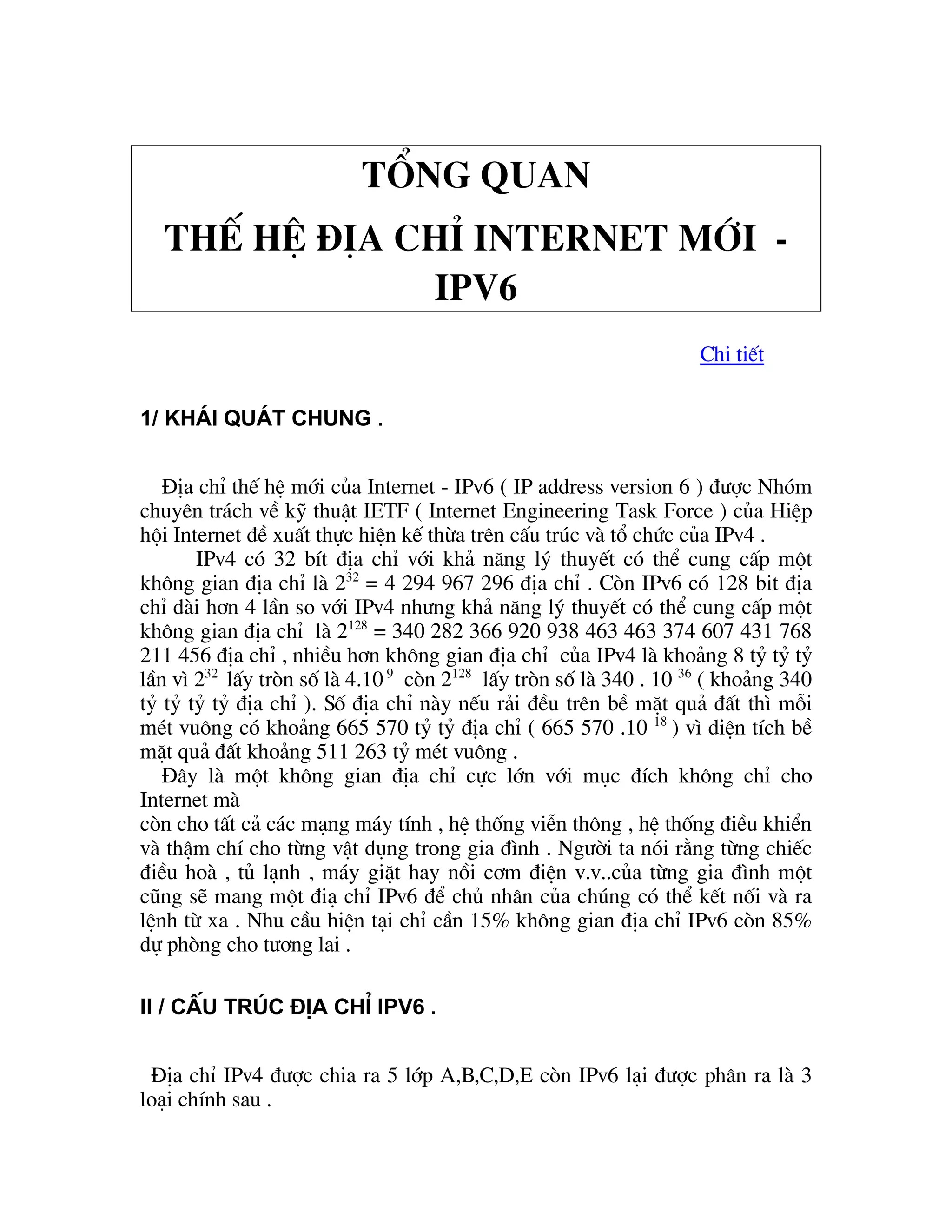
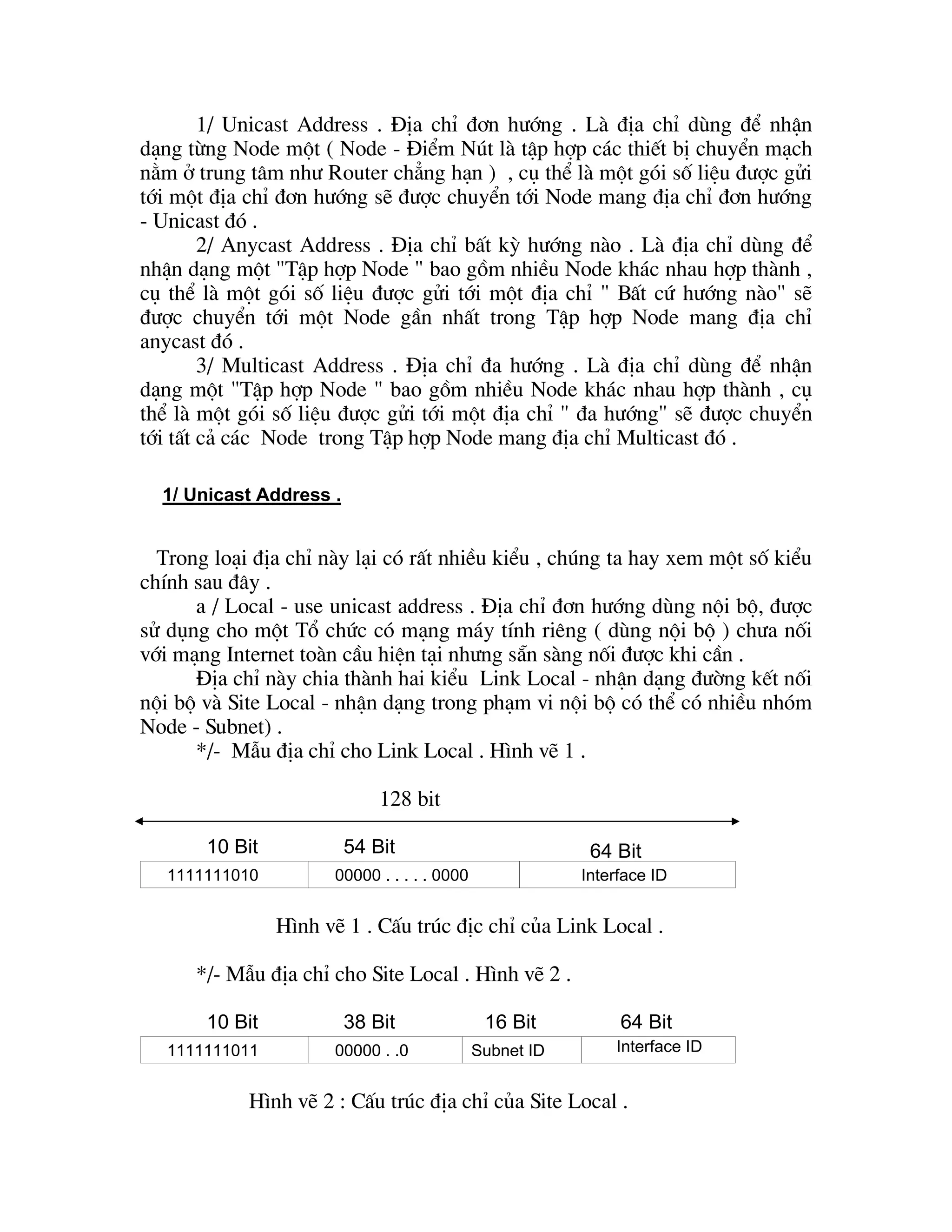
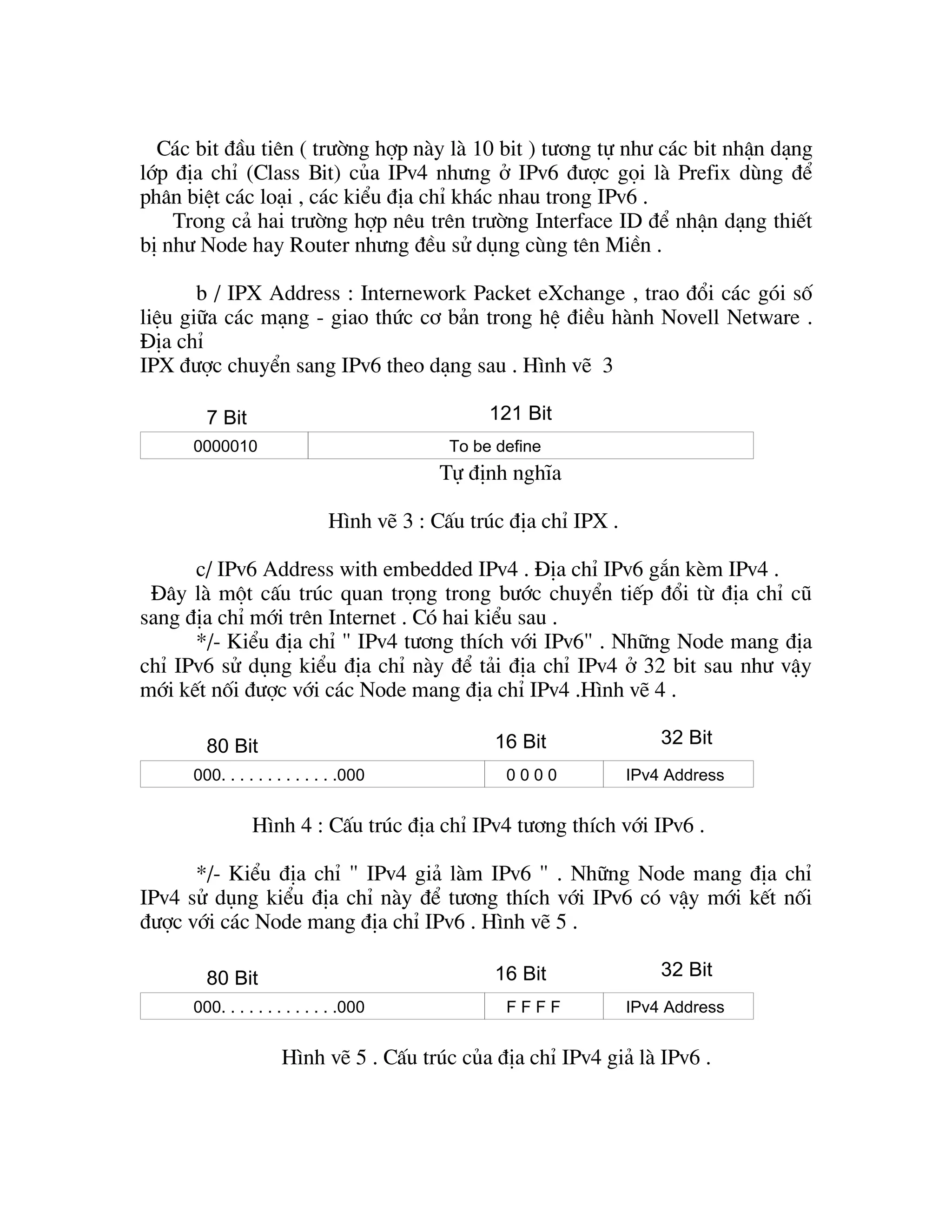
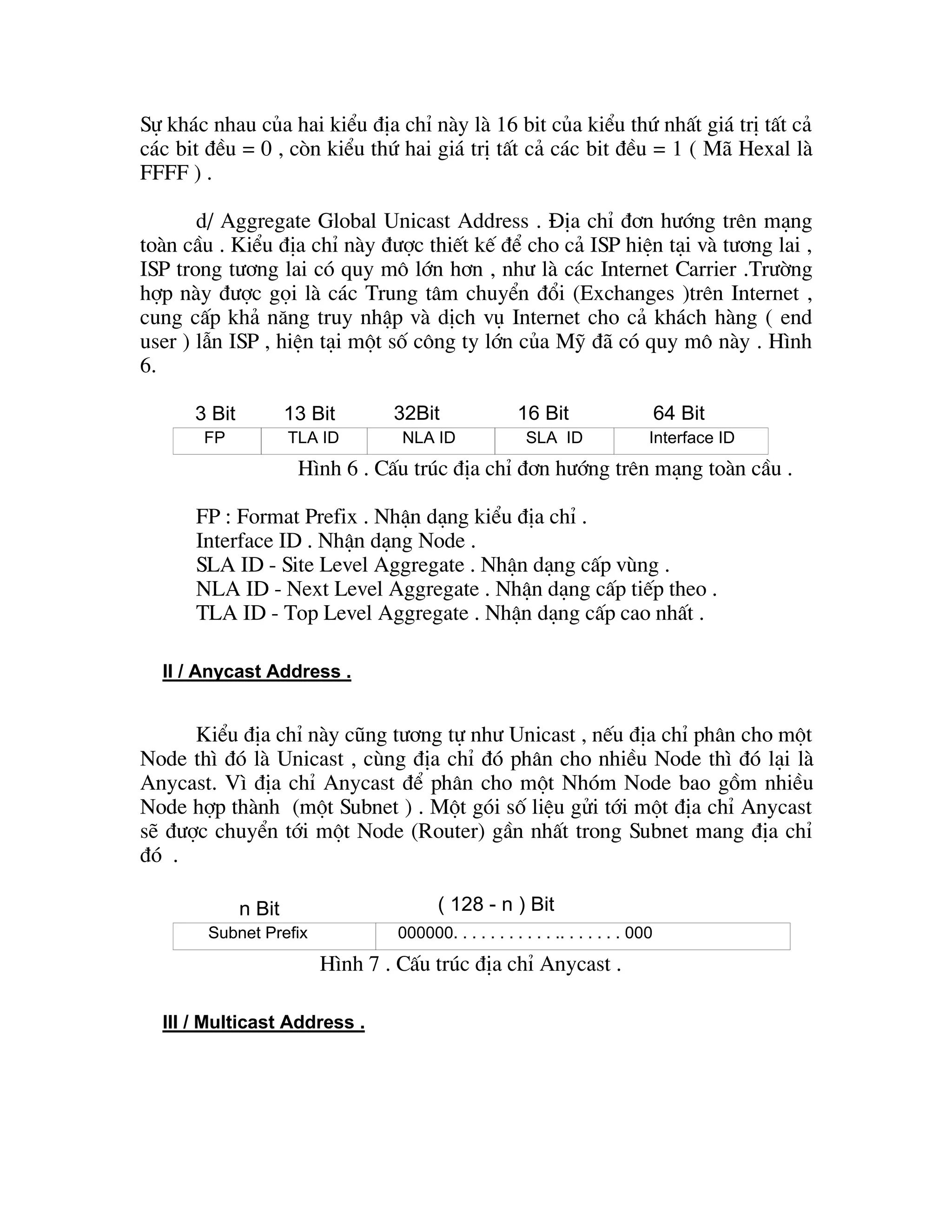
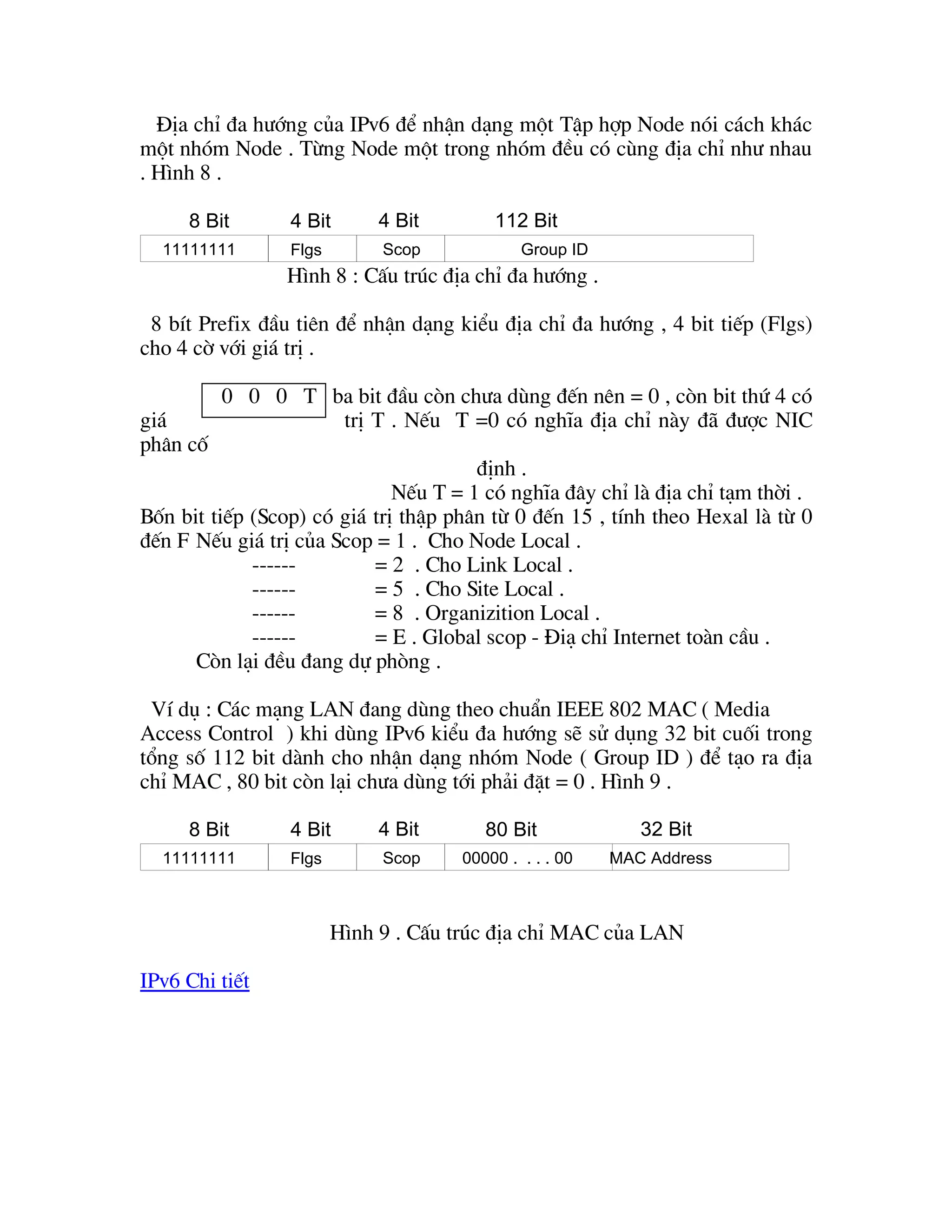
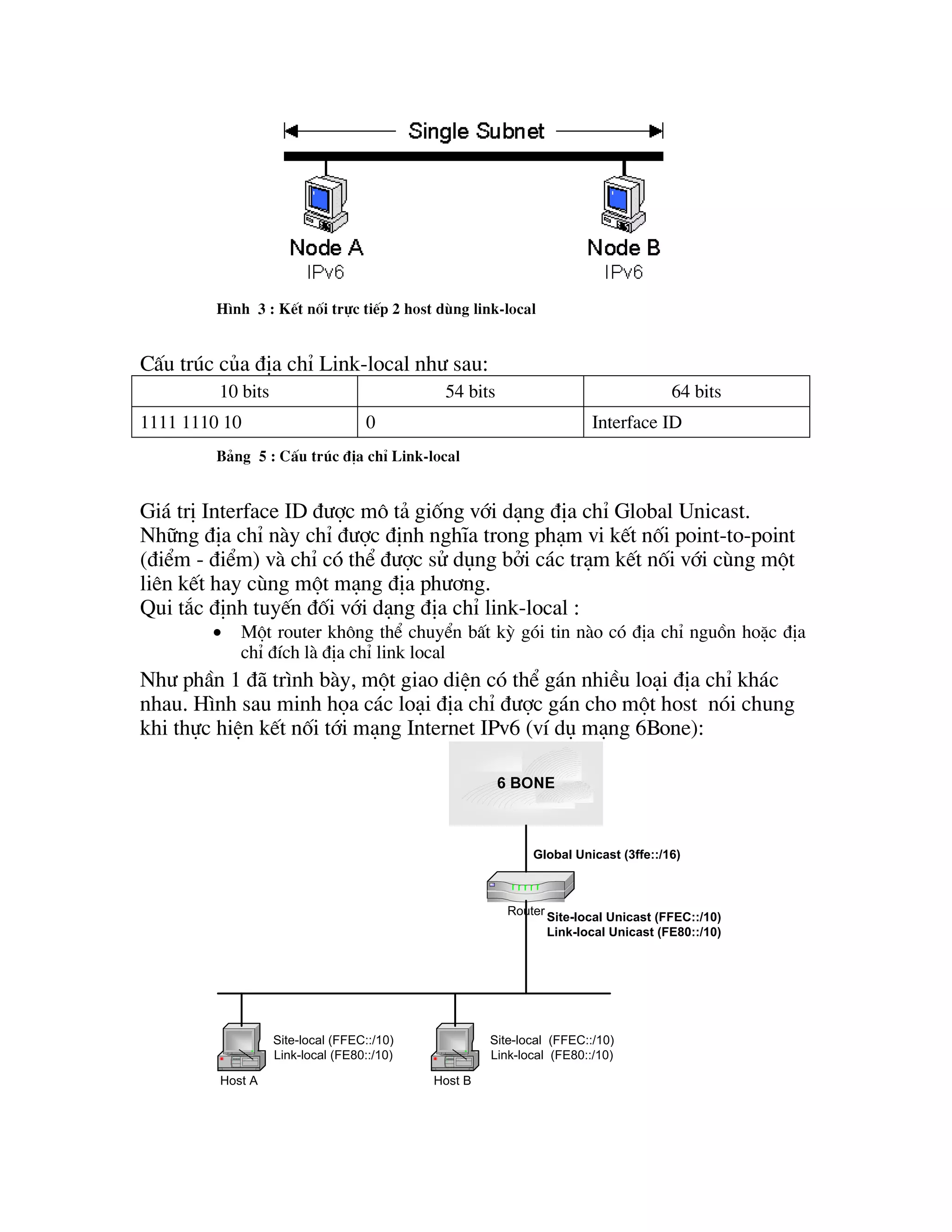
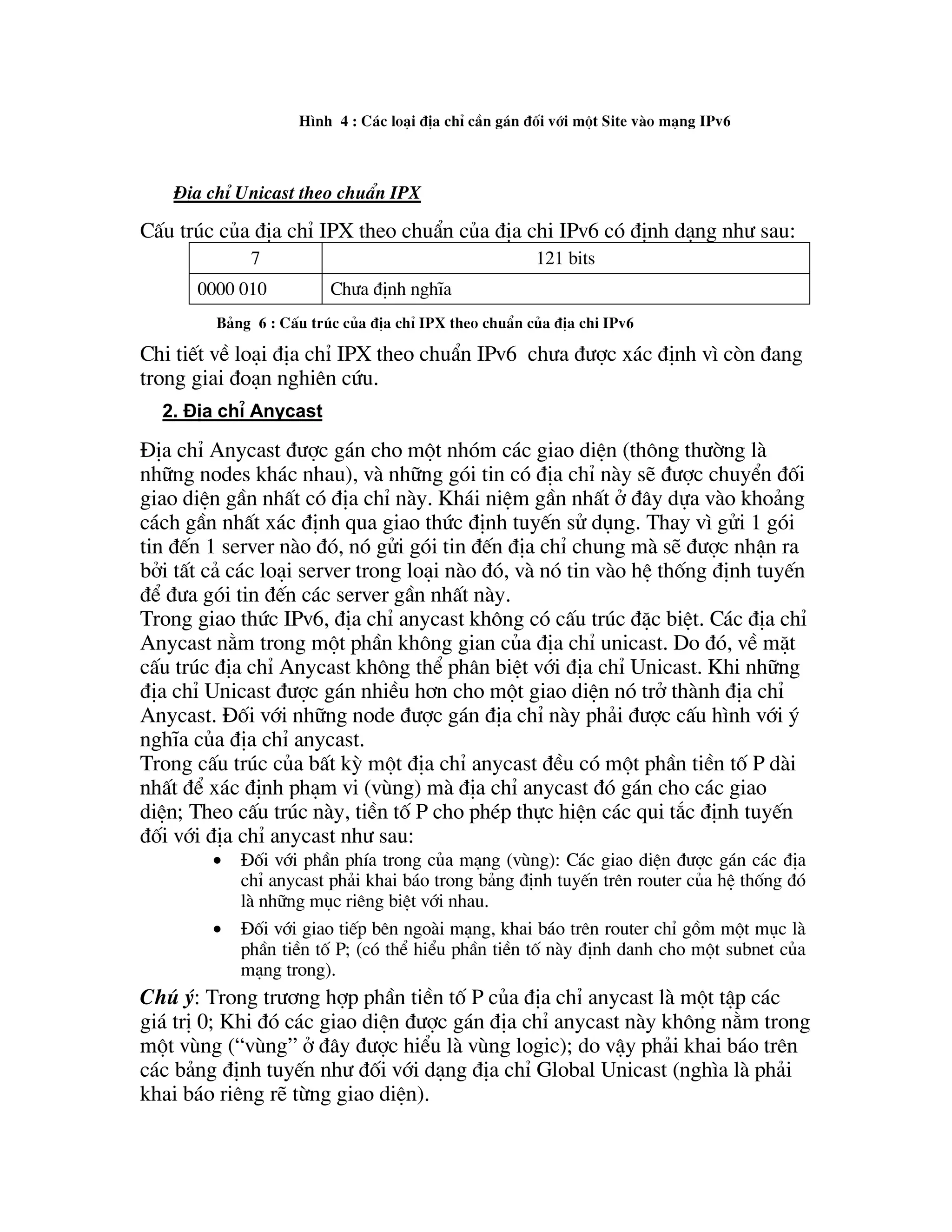
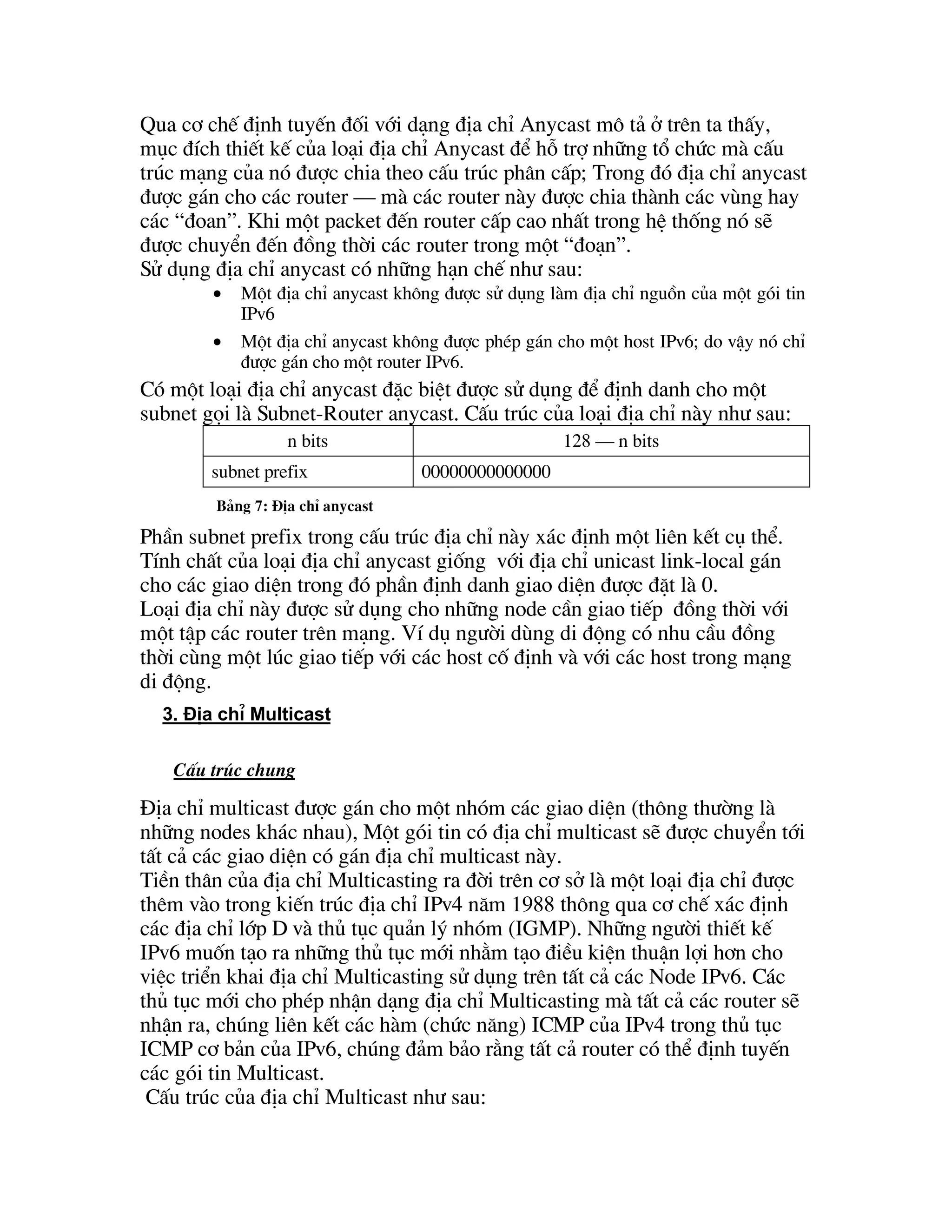
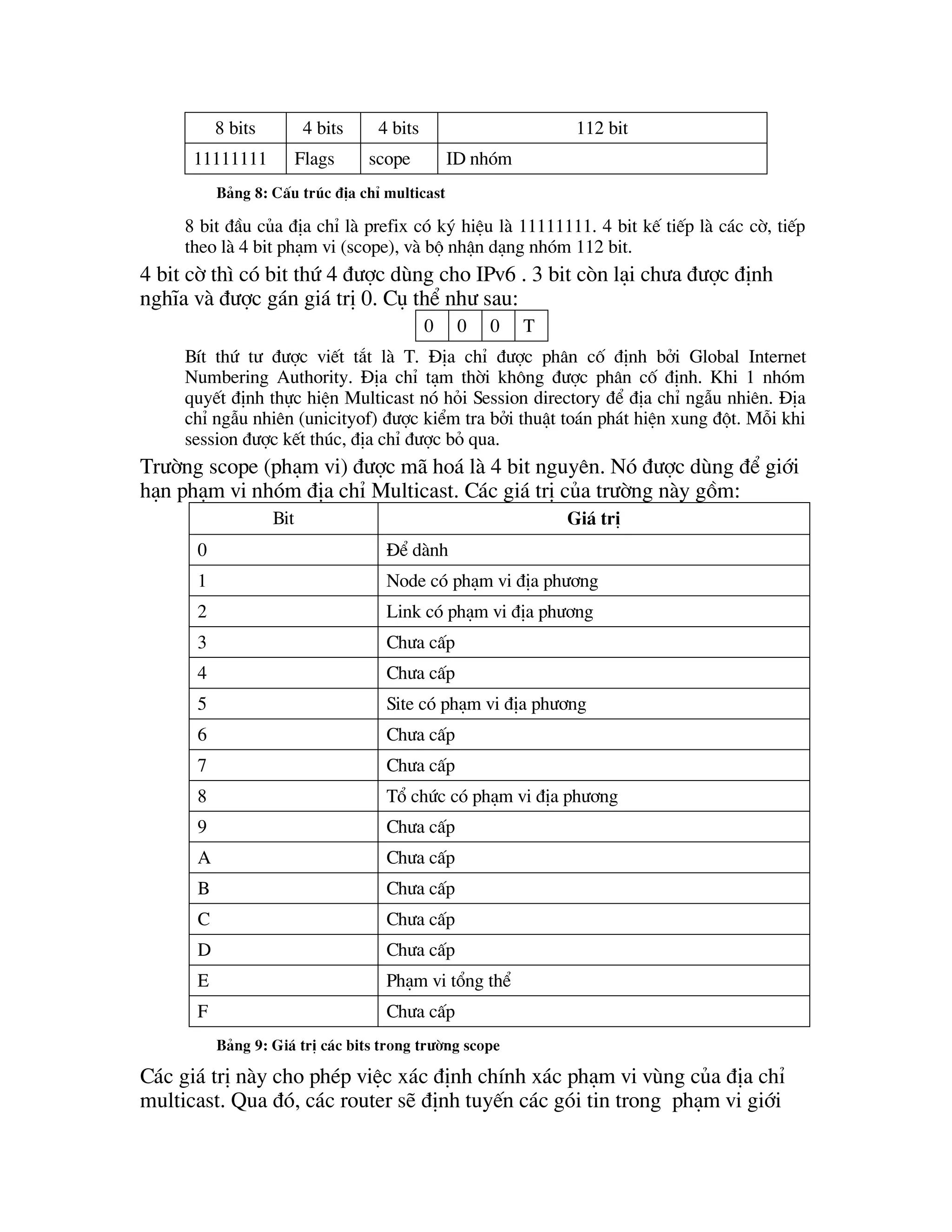
![F§JL‚WU£WK’SSKyQW¸~›QW¢QKWKHR+H[DOOW¸
~›Q) 1›XJL‚WU£F´D6FRS KR1RGH/RFDO
KR/LQN/RFDO
KR6LWH/RFDO
2UJDQL]LWLRQ/RFDO
(*OREDOVFRSwLƒFKž,QWHUQHWWRQFŽX
¤QOƒL~˜X~DQJG¼SK¤QJ
9¢G·‚FPƒQJ/$1~DQJG³QJWKHRFKXQ,(((0$0HGLD
$FFHVVRQWURO](https://image.slidesharecdn.com/gioithieuipversion6-120602031830-phpapp01/75/Gioi-thieu-ip-version-6-21-2048.jpg)
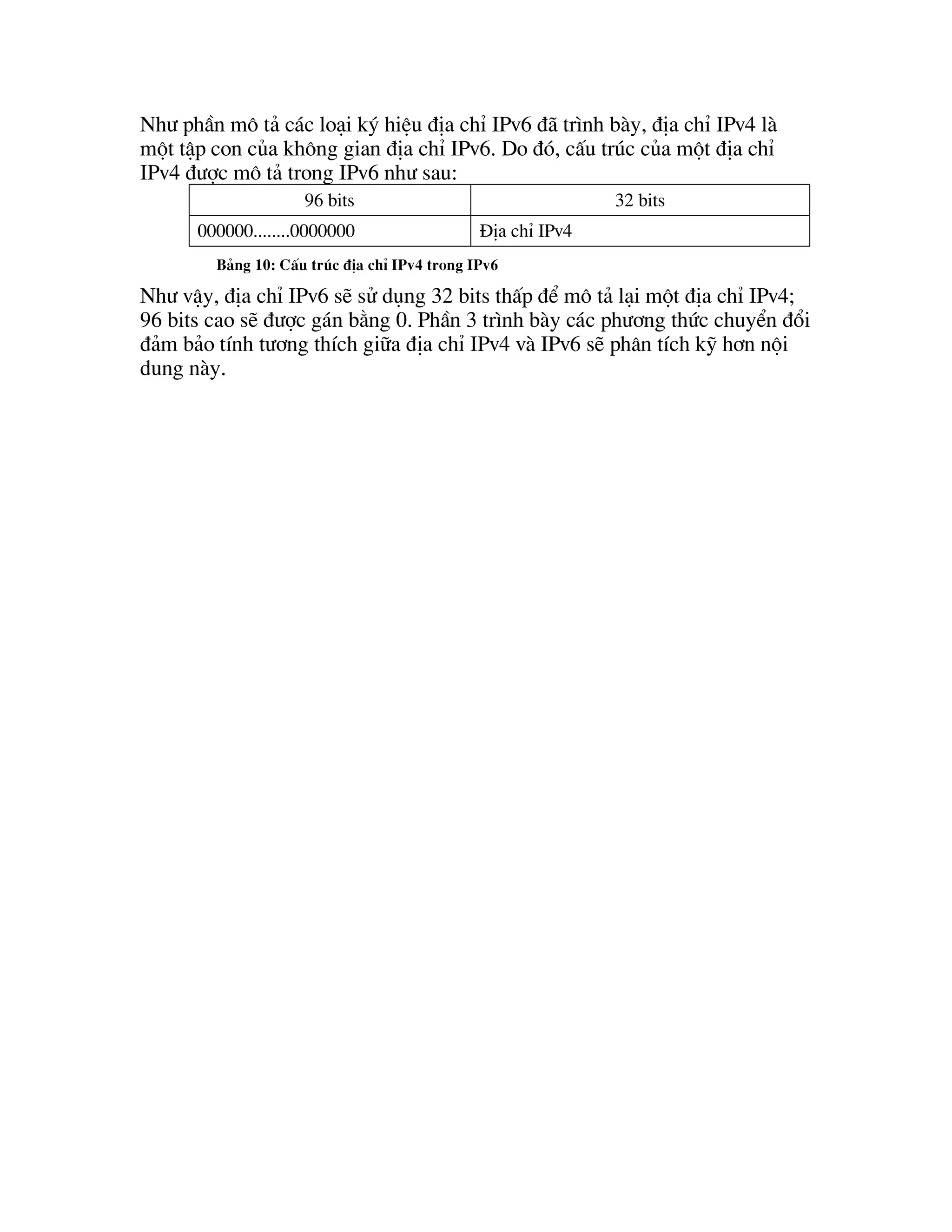

1. IP version 6 (IPv6) addresses are 128 bits long compared to 32 bits for IPv4 addresses. IPv6 addresses are written in hexadecimal format and include sections for global routing prefixes and interface identifiers. 2. There are three types of IPv6 addresses: Unicast for one-to-one communication, Anycast for one-to-nearest communication, and Multicast for one-to-many communication. 3. IPv6 addresses use different address formats for different scopes of communication, including link-local for local subnet, site-local for local site, and IPv6 addresses that function similarly to IPv4.


![[Cbca] steel framing - engenharia](https://cdn.slidesharecdn.com/ss_thumbnails/cbca-steelframing-engenharia-140909092502-phpapp01-thumbnail.jpg?width=640&height=640&fit=bounds)


