The work-life design palette
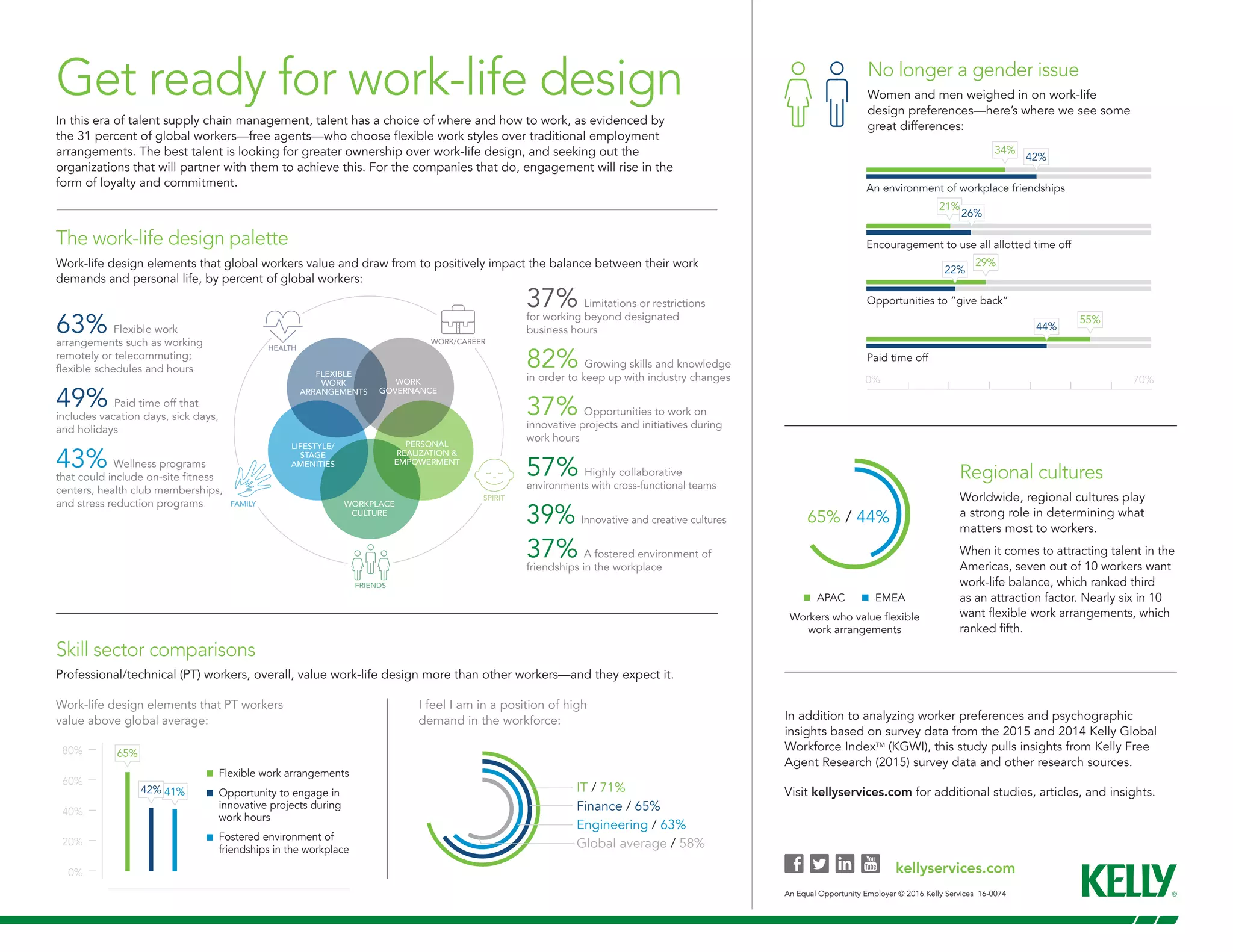
Work-life design elements that global workers value and draw from to positively impact the balance between their work
demands and personal life, by percent of global workers:
Get ready for work-life design
In this era of talent supply chain management, talent has a choice of where and how to work, as evidenced by
the 31 percent of global workers—free agents—who choose flexible work styles over traditional employment
arrangements. The best talent is looking for greater ownership over work-life design, and seeking out the
organizations that will partner with them to achieve this. For the companies that do, engagement will rise in the
form of loyalty and commitment.
Skill sector comparisons
Professional/technical (PT) workers, overall, value work-life design more than other workers—and they expect it.
APAC EMEA
Workers who value flexible
work arrangements
Regional cultures
Worldwide, regional cultures play
a strong role in determining what
matters most to workers.
When it comes to attracting talent in the
Americas, seven out of 10 workers want
work-life balance, which ranked third
as an attraction factor. Nearly six in 10
want flexible work arrangements, which
ranked fifth.
0% 70%
No longer a gender issue
Women and men weighed in on work-life
design preferences—here’s where we see some
great differences:
IT / 71%
Finance / 65%
Engineering / 63%
Global average / 58%
Flexible work arrangements
Opportunity to engage in
innovative projects during
work hours
Fostered environment of
friendships in the workplace
60%
40%
80%
20%
0%
41%42%
65%
I feel I am in a position of high
demand in the workforce:
63% Flexible work
arrangements such as working
remotely or telecommuting;
flexible schedules and hours
49% Paid time off that
includes vacation days, sick days,
and holidays
43% Wellness programs
that could include on-site fitness
centers, health club memberships,
and stress reduction programs
37% Limitations or restrictions
for working beyond designated
business hours
82% Growing skills and knowledge
in order to keep up with industry changes
37% Opportunities to work on
innovative projects and initiatives during
work hours
57% Highly collaborative
environments with cross-functional teams
39% Innovative and creative cultures
37% A fostered environment of
friendships in the workplace
Work-life design elements that PT workers
value above global average: In addition to analyzing worker preferences and psychographic
insights based on survey data from the 2015 and 2014 Kelly Global
Workforce IndexTM
(KGWI), this study pulls insights from Kelly Free
Agent Research (2015) survey data and other research sources.
Visit kellyservices.com for additional studies, articles, and insights.
kellyservices.com
An Equal Opportunity Employer © 2016 Kelly Services 16-0074
65% / 44%
Encouragement to use all allotted time off
21%
26%
An environment of workplace friendships
34%
42%
Paid time off
55%
44%
Opportunities to “give back”
22%
29%

Get ready for work-life design

  • 1.
    The work-life designpalette Work-life design elements that global workers value and draw from to positively impact the balance between their work demands and personal life, by percent of global workers: Get ready for work-life design In this era of talent supply chain management, talent has a choice of where and how to work, as evidenced by the 31 percent of global workers—free agents—who choose flexible work styles over traditional employment arrangements. The best talent is looking for greater ownership over work-life design, and seeking out the organizations that will partner with them to achieve this. For the companies that do, engagement will rise in the form of loyalty and commitment. Skill sector comparisons Professional/technical (PT) workers, overall, value work-life design more than other workers—and they expect it. APAC EMEA Workers who value flexible work arrangements Regional cultures Worldwide, regional cultures play a strong role in determining what matters most to workers. When it comes to attracting talent in the Americas, seven out of 10 workers want work-life balance, which ranked third as an attraction factor. Nearly six in 10 want flexible work arrangements, which ranked fifth. 0% 70% No longer a gender issue Women and men weighed in on work-life design preferences—here’s where we see some great differences: IT / 71% Finance / 65% Engineering / 63% Global average / 58% Flexible work arrangements Opportunity to engage in innovative projects during work hours Fostered environment of friendships in the workplace 60% 40% 80% 20% 0% 41%42% 65% I feel I am in a position of high demand in the workforce: 63% Flexible work arrangements such as working remotely or telecommuting; flexible schedules and hours 49% Paid time off that includes vacation days, sick days, and holidays 43% Wellness programs that could include on-site fitness centers, health club memberships, and stress reduction programs 37% Limitations or restrictions for working beyond designated business hours 82% Growing skills and knowledge in order to keep up with industry changes 37% Opportunities to work on innovative projects and initiatives during work hours 57% Highly collaborative environments with cross-functional teams 39% Innovative and creative cultures 37% A fostered environment of friendships in the workplace Work-life design elements that PT workers value above global average: In addition to analyzing worker preferences and psychographic insights based on survey data from the 2015 and 2014 Kelly Global Workforce IndexTM (KGWI), this study pulls insights from Kelly Free Agent Research (2015) survey data and other research sources. Visit kellyservices.com for additional studies, articles, and insights. kellyservices.com An Equal Opportunity Employer © 2016 Kelly Services 16-0074 65% / 44% Encouragement to use all allotted time off 21% 26% An environment of workplace friendships 34% 42% Paid time off 55% 44% Opportunities to “give back” 22% 29%