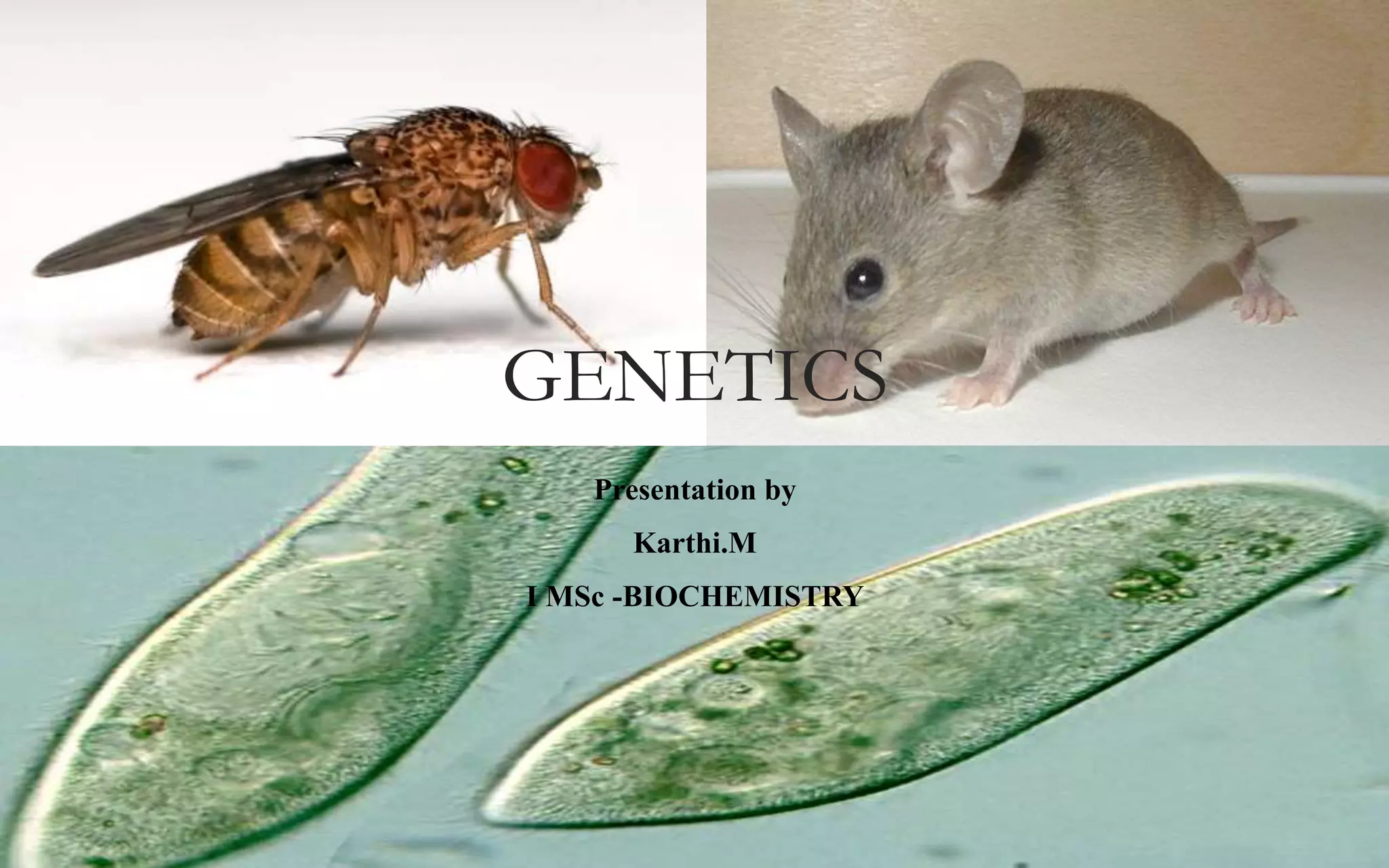
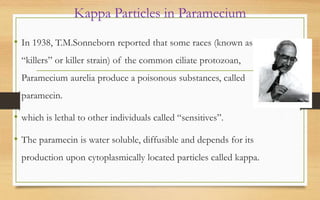
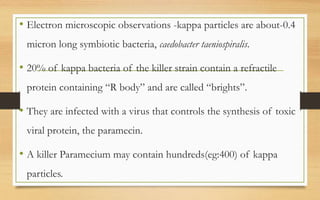
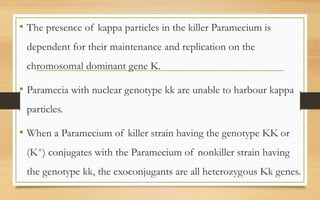
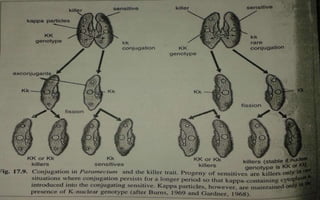
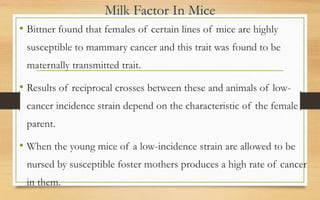
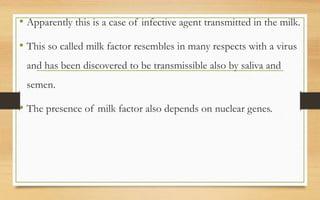
Certain intracellular parasites like bacteria and viruses can maintain symbiotic relationships with host cells and exhibit heritable transmission of their own. Examples include sigma particles, an infectious DNA virus, that causes CO2 sensitivity in certain Drosophila strains and is transmitted maternally. Kappa particles, which are symbiotic bacteria, produce a toxic substance in some Paramecium strains called "killers" that is lethal to other strains called "sensitives". The presence of kappa particles depends on a dominant nuclear gene. A similar "milk factor" transmitted in mouse milk can induce mammary cancer and is also transmitted through saliva and semen, depending on nuclear genes.




![PERI-PROSTHETIC FRACTURE NAIL-PLATE CONSTRUCT [NPC].pptx](https://cdn.slidesharecdn.com/ss_thumbnails/drarunkumardrmohamedashrafperiprostheticfrasturenail-plateconstructnpc-260209164459-7e9d15a1-thumbnail.jpg?width=640&height=640&fit=bounds)


![CTEV [ clubfoot] DR ARUN LAL ,DR MOHAMED ASHRAF travancore medical college k...](https://cdn.slidesharecdn.com/ss_thumbnails/ctevclubfootdrarunlaldrmohamedashraftravancoremedicalcollegekollamkeralaindia-260208063247-18fc466c-thumbnail.jpg?width=640&height=640&fit=bounds)


