ANAND AGRICLTURAL UNIVERSITY
B. A. COLLEGE OF AGRICULTURE
Topic: Gene Pyramiding
GP-501 :- Principles Of Plant breeding (2+1)
Course Teacher: Dr. J. N. Patel
Prepared By,
Dhanya A J,
[ Reg. No: 04-2348-2014 ],
M. Sc. (Agri) Plant Molecular -
Biology & Biotechnology
Introduction
 The development of molecular genetics and
associated technology like MAS has led to the
emergence of a new field in plant breeding-Gene
pyramiding.
 The term gene pyramiding is used in agricultural
research to describe a breeding approach to achieve
pest control and higher crop yield.
 Gene pyramiding aims at the derivation of an ideal
genotype that is homozygous for the favorable alleles
at all n-loci. Molecular markers aid in selecting the
best plants with which to proceed.
Gene Pyramiding
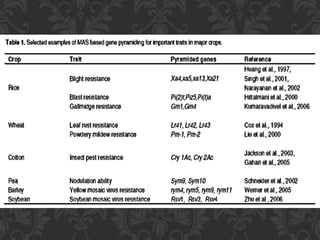
MAS based gene pyramiding could facilitate in
pyramiding of genes effectively into a single genetic
background.
Gene pyramiding or stacking can be defined as
a process of combining two or more genes
from multiple parents to develop elite lines and
varieties.
or
Pyramiding entails stacking multiple genes leading to
the simultaneous expression of more than one gene in
a variety.
Strategies For Gene Stacking /
Pyramiding
Iterative Procedure / Sexual
Hybridization
Re- Transformation
Co- Transformation
Iterative Procedure / Sexual
Hybridization
A plant harboring one or more transgenes
is cross-hybridized with another plant
containing other transgenes. Development
of a multi-stack hybrid occurs via iterative
hybridization.
 Examples of commercial stacks
Maize: Agrisure™ Viptera™ 3220 (Bt11 x MIR162 x
TC1507 x GA21)
Cotton: Roundup Ready™ Flex Bollgard™ II
(MON88913 x MON15985)
Methods
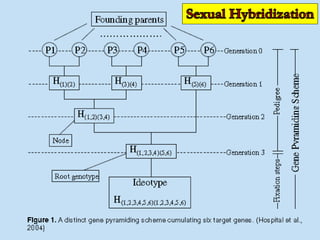
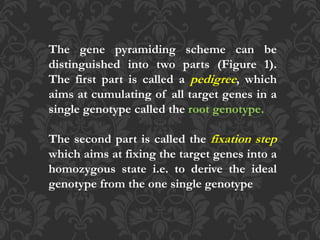
The gene pyramiding scheme can be
distinguished into two parts (Figure 1).
The first part is called a pedigree, which
aims at cumulating of all target genes in a
single genotype called the root genotype.
The second part is called the fixation step
which aims at fixing the target genes into a
homozygous state i.e. to derive the ideal
genotype from the one single genotype
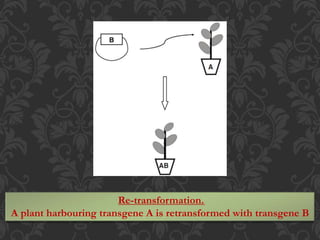
Re- Transformation
Examples of commercial stacks
Cotton: Bollgard™ II
A plant harboring a transgene is
transformed with other transgenes.
Re-transformation.
A plant harbouring transgene A is retransformed with transgene B
Co- Transformation
A plant is transformed with two or more
independent transgenes. The transgenes
of interest are in separate gene constructs
and delivered to the plant simultaneously.
 Examples of commercial stacks
Maize: NaturGard™ Knockout™ (Bt176), BtXtra™
(DBT418), YieldGard™ (MON810,
MON809, MON802), Herculex™ I
(TC1507), Herculex™ RW (59122),
Agrisure™ CB/LL (Bt11)
Soybean: Vistive™ Gold
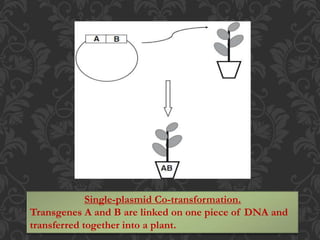
Single-plasmid Co-transformation.
Transgenes A and B are linked on one piece of DNA and
transferred together into a plant.
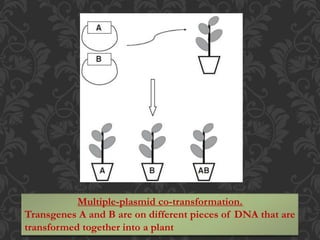
Multiple-plasmid co-transformation.
Transgenes A and B are on different pieces of DNA that are
transformed together into a plant
Conclusion
 Gene pyramiding is an important strategy
for germplasm improvement.
 Molecular marker genotyping can
facilitate the gene pyramiding process by
reducing the number of generations that
breeders must evaluate to ensure they
have the desired gene combination.
Reference
 http://www.isaaa.org/resources/publications/pocketk/42/
 Gene Pyramiding Using Molecular Markers- Francis et
al., 2012
 http://agbiosafety.unl.edu/education/backcross.htm
 Gene pyramiding-A broad spectrum technique for
developing durable stress resistance in crops.- Joshi et al.,
2010

Gene pyramiding

  • 1.
    ANAND AGRICLTURAL UNIVERSITY B.A. COLLEGE OF AGRICULTURE Topic: Gene Pyramiding GP-501 :- Principles Of Plant breeding (2+1) Course Teacher: Dr. J. N. Patel Prepared By, Dhanya A J, [ Reg. No: 04-2348-2014 ], M. Sc. (Agri) Plant Molecular - Biology & Biotechnology
  • 2.
    Introduction  The developmentof molecular genetics and associated technology like MAS has led to the emergence of a new field in plant breeding-Gene pyramiding.  The term gene pyramiding is used in agricultural research to describe a breeding approach to achieve pest control and higher crop yield.  Gene pyramiding aims at the derivation of an ideal genotype that is homozygous for the favorable alleles at all n-loci. Molecular markers aid in selecting the best plants with which to proceed.
  • 3.
    Gene Pyramiding MAS basedgene pyramiding could facilitate in pyramiding of genes effectively into a single genetic background. Gene pyramiding or stacking can be defined as a process of combining two or more genes from multiple parents to develop elite lines and varieties. or Pyramiding entails stacking multiple genes leading to the simultaneous expression of more than one gene in a variety.
  • 4.
    Strategies For GeneStacking / Pyramiding Iterative Procedure / Sexual Hybridization Re- Transformation Co- Transformation
  • 5.
    Iterative Procedure /Sexual Hybridization A plant harboring one or more transgenes is cross-hybridized with another plant containing other transgenes. Development of a multi-stack hybrid occurs via iterative hybridization.  Examples of commercial stacks Maize: Agrisure™ Viptera™ 3220 (Bt11 x MIR162 x TC1507 x GA21) Cotton: Roundup Ready™ Flex Bollgard™ II (MON88913 x MON15985)
  • 6.
  • 7.
    The gene pyramidingscheme can be distinguished into two parts (Figure 1). The first part is called a pedigree, which aims at cumulating of all target genes in a single genotype called the root genotype. The second part is called the fixation step which aims at fixing the target genes into a homozygous state i.e. to derive the ideal genotype from the one single genotype
  • 9.
    Re- Transformation Examples ofcommercial stacks Cotton: Bollgard™ II A plant harboring a transgene is transformed with other transgenes.
  • 10.
    Re-transformation. A plant harbouringtransgene A is retransformed with transgene B
  • 11.
    Co- Transformation A plantis transformed with two or more independent transgenes. The transgenes of interest are in separate gene constructs and delivered to the plant simultaneously.  Examples of commercial stacks Maize: NaturGard™ Knockout™ (Bt176), BtXtra™ (DBT418), YieldGard™ (MON810, MON809, MON802), Herculex™ I (TC1507), Herculex™ RW (59122), Agrisure™ CB/LL (Bt11) Soybean: Vistive™ Gold
  • 12.
    Single-plasmid Co-transformation. Transgenes Aand B are linked on one piece of DNA and transferred together into a plant.
  • 13.
    Multiple-plasmid co-transformation. Transgenes Aand B are on different pieces of DNA that are transformed together into a plant
  • 15.
    Conclusion  Gene pyramidingis an important strategy for germplasm improvement.  Molecular marker genotyping can facilitate the gene pyramiding process by reducing the number of generations that breeders must evaluate to ensure they have the desired gene combination.
  • 16.
    Reference  http://www.isaaa.org/resources/publications/pocketk/42/  GenePyramiding Using Molecular Markers- Francis et al., 2012  http://agbiosafety.unl.edu/education/backcross.htm  Gene pyramiding-A broad spectrum technique for developing durable stress resistance in crops.- Joshi et al., 2010