Concept Attainment Lesson
Lisa M. Gault
EPPL 612
October 15, 2016
Unit title:​ ​“​American Literature: Essential Voices of Reconstruction (1865-1877)”
Lesson concept:​ ​white supremacy
1. Introduction: To introduce our new unit, we are going to dig into one of its major
concepts. Without telling you the name of the concept, I am going to show you several
statements. Some of these statements will be ​yes​ examples of the concept. Some will be
no​ statements, or non-examples. The concept is going to be at the center of what we study
throughout the unit. The ​no​ statements may have some things in common with the​ yes
statements, but they are not complete ​yeses​ . As you examine each​ yes​ example and each
no​ example, try and figure out what the concept. If you can name the concept, that is
terrific. However, understanding the critical attributes of the concept are more important.
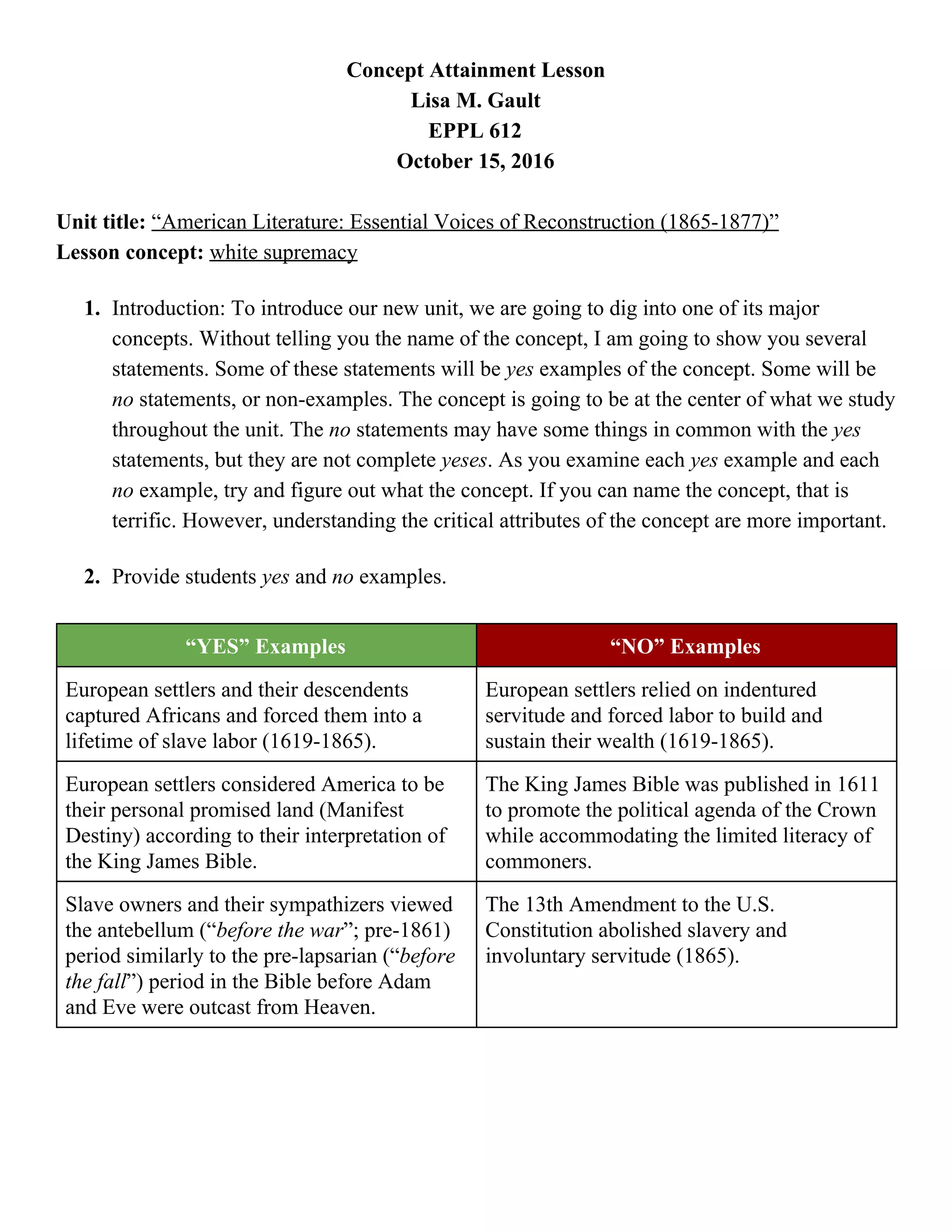
2. Provide students ​yes​ and ​no​ examples.
“YES” Examples “NO” Examples
European settlers and their descendents
captured Africans and forced them into a
lifetime of slave labor (1619-1865).
European settlers relied on indentured
servitude and forced labor to build and
sustain their wealth (1619-1865).
European settlers considered America to be
their personal promised land (Manifest
Destiny) according to their interpretation of
the King James Bible.
The King James Bible was published in 1611
to promote the political agenda of the Crown
while accommodating the limited literacy of
commoners.
Slave owners and their sympathizers viewed
the antebellum (“​before the war​ ”; pre-1861)
period similarly to the pre-lapsarian (“​before
the fall”) period in the Bible before Adam
and Eve were outcast from Heaven.
The 13th Amendment to the U.S.
Constitution abolished slavery and
involuntary servitude (1865).
3. a)​ Identify what all of the ​yes​ statements have in common. Generate a list of adjectives
with your elbow partner that describes the ​yes​ statements.
b)​ What makes the ​no statements ​no​ statements? Generate a list of adjectives with your
elbow partner that describes the ​no​ statements. A few of your ​yes​ adjectives may show up
here, but not more than two or three.
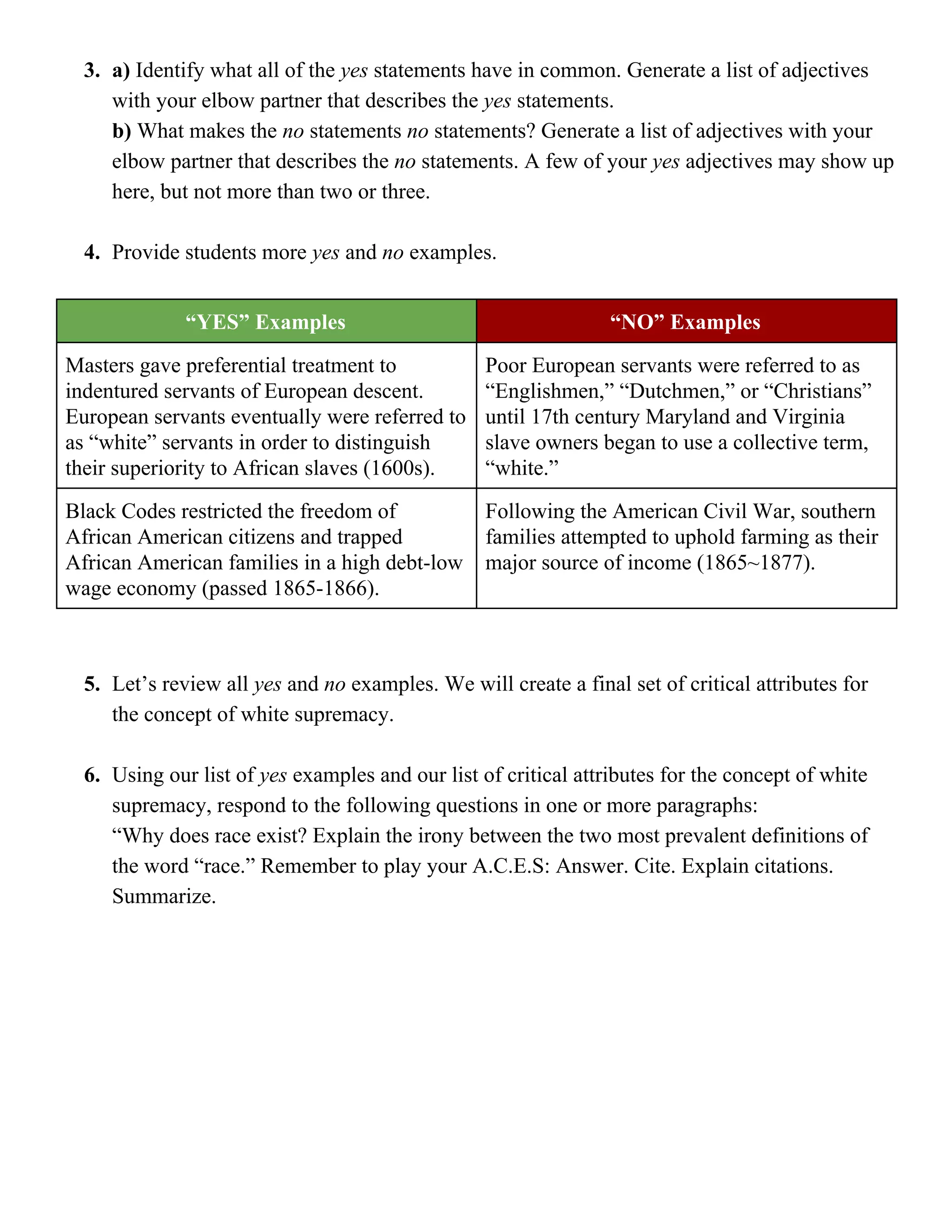
4. Provide students more ​yes and ​no​ examples.
“YES” Examples “NO” Examples
Masters gave preferential treatment to
indentured servants of European descent.
European servants eventually were referred to
as “white” servants in order to distinguish
their superiority to African slaves (1600s).
Poor European servants were referred to as
“Englishmen,” “Dutchmen,” or “Christians”
until 17th century Maryland and Virginia
slave owners began to use a collective term,
“white.”
Black Codes restricted the freedom of
African American citizens and trapped
African American families in a high debt-low
wage economy (passed 1865-1866).
Following the American Civil War, southern
families attempted to uphold farming as their
major source of income (1865~1877).
5. Let’s review all ​yes and ​no examples. We will create a final set of critical attributes for
the concept of white supremacy.
6. Using our list of ​yes examples and our list of critical attributes for the concept of white
supremacy, respond to the following questions in one or more paragraphs:
“Why does race exist? Explain the irony between the two most prevalent definitions of
the word “race.” Remember to play your A.C.E.S: Answer. Cite. Explain citations.
Summarize.

Gault-Concept Attainment Lesson

  • 1.
    Concept Attainment Lesson LisaM. Gault EPPL 612 October 15, 2016 Unit title:​ ​“​American Literature: Essential Voices of Reconstruction (1865-1877)” Lesson concept:​ ​white supremacy 1. Introduction: To introduce our new unit, we are going to dig into one of its major concepts. Without telling you the name of the concept, I am going to show you several statements. Some of these statements will be ​yes​ examples of the concept. Some will be no​ statements, or non-examples. The concept is going to be at the center of what we study throughout the unit. The ​no​ statements may have some things in common with the​ yes statements, but they are not complete ​yeses​ . As you examine each​ yes​ example and each no​ example, try and figure out what the concept. If you can name the concept, that is terrific. However, understanding the critical attributes of the concept are more important. 2. Provide students ​yes​ and ​no​ examples. “YES” Examples “NO” Examples European settlers and their descendents captured Africans and forced them into a lifetime of slave labor (1619-1865). European settlers relied on indentured servitude and forced labor to build and sustain their wealth (1619-1865). European settlers considered America to be their personal promised land (Manifest Destiny) according to their interpretation of the King James Bible. The King James Bible was published in 1611 to promote the political agenda of the Crown while accommodating the limited literacy of commoners. Slave owners and their sympathizers viewed the antebellum (“​before the war​ ”; pre-1861) period similarly to the pre-lapsarian (“​before the fall”) period in the Bible before Adam and Eve were outcast from Heaven. The 13th Amendment to the U.S. Constitution abolished slavery and involuntary servitude (1865).
  • 2.
    3. a)​ Identifywhat all of the ​yes​ statements have in common. Generate a list of adjectives with your elbow partner that describes the ​yes​ statements. b)​ What makes the ​no statements ​no​ statements? Generate a list of adjectives with your elbow partner that describes the ​no​ statements. A few of your ​yes​ adjectives may show up here, but not more than two or three. 4. Provide students more ​yes and ​no​ examples. “YES” Examples “NO” Examples Masters gave preferential treatment to indentured servants of European descent. European servants eventually were referred to as “white” servants in order to distinguish their superiority to African slaves (1600s). Poor European servants were referred to as “Englishmen,” “Dutchmen,” or “Christians” until 17th century Maryland and Virginia slave owners began to use a collective term, “white.” Black Codes restricted the freedom of African American citizens and trapped African American families in a high debt-low wage economy (passed 1865-1866). Following the American Civil War, southern families attempted to uphold farming as their major source of income (1865~1877). 5. Let’s review all ​yes and ​no examples. We will create a final set of critical attributes for the concept of white supremacy. 6. Using our list of ​yes examples and our list of critical attributes for the concept of white supremacy, respond to the following questions in one or more paragraphs: “Why does race exist? Explain the irony between the two most prevalent definitions of the word “race.” Remember to play your A.C.E.S: Answer. Cite. Explain citations. Summarize.