FUTURE
TRENDS IN
SHRM
APPROACHES
(MODULE V)
CAREER MANAGEMENT
Introduction
 Career development is important for companies to

create and sustain a continuous learning
environment
 The biggest challenge companies face is how to
balance advancing current employees’ careers with
simultaneously attracting and acquiring employees
with new skills
 The growing use of teams is influencing the
concept of careers
 e.g., project careers
What Is Career Management?
 Career management is the process through

which employees:
 Become aware of their own interests, values,

strengths, and weaknesses
 Obtain information about job opportunities within
the company
 Identify career goals
 Establish action plans to achieve career goals
Why Is Career Management Important?
(1 of 2)

 From the company’s perspective, the failure

to motivate employees to plan their careers
can result in:
 a shortage of employees to fill open positions
 lower employee commitment
 inappropriate use of monies allocated for training

and development programs
Why Is Career Management Important?
(2 of 2)

 From the employees’ perspective, lack of

career management can result in:
 frustration
 feelings of not being valued by the company
 being unable to find suitable employment should

a job change be necessary due to mergers,
acquisitions, restructuring, or downsizing
What Is A Career?
 Traditional Career
 Sequence of positions held within an occupation
 Context of mobility is within an organization
 Characteristic of the employee

 Protean Career
 Frequently changing based on changes in the

person and changes in the work environment
 Employees take major responsibility for managing
their careers
 Based on self-direction with the goal of
psychological success in one’s work
A Model of Career Development
 Career development is the process by which
employees progress through a series of stages

 Each stage is characterized by a different set of
developmental tasks, activities, and relationships
 There are four career stages:
 Exploration
 Establishment
 Maintenance

 Disengagement
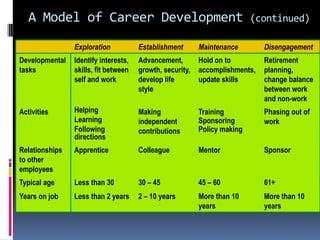
A Model of Career Development

(continued)

Exploration

Establishment

Maintenance

Disengagement

Developmental
tasks

Identify interests,
skills, fit between
self and work

Advancement,
growth, security,
develop life
style

Hold on to
accomplishments,
update skills

Retirement
planning,
change balance
between work
and non-work

Activities

Helping
Learning
Following
directions

Making
independent
contributions

Training
Sponsoring
Policy making

Phasing out of
work

Relationships
to other
employees

Apprentice

Colleague

Mentor

Sponsor

Typical age

Less than 30

30 – 45

45 – 60

61+

Years on job

Less than 2 years

2 – 10 years

More than 10
years

More than 10
years
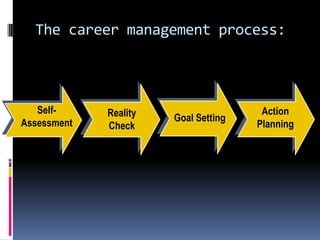
The career management process:

SelfAssessment

Reality
Check

Goal Setting

Action
Planning
Components of the Career Management
Process: (1 of 2)
 Self-Assessment
 Use of information by employees to determine

their career interests, values, aptitudes, and
behavioral tendencies
 Often involves psychological tests

 Reality Check
 Information employees receive about how the

company evaluates their skills and knowledge and
where they fit into company plans
Components of the Career Management
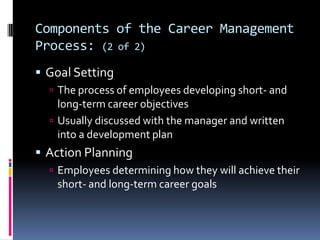
Process: (2 of 2)
 Goal Setting
 The process of employees developing short- and

long-term career objectives
 Usually discussed with the manager and written
into a development plan

 Action Planning
 Employees determining how they will achieve their

short- and long-term career goals
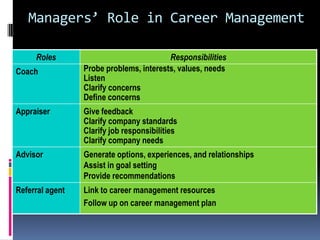
Managers’ Role in Career Management
Roles
Coach

Responsibilities
Probe problems, interests, values, needs
Listen
Clarify concerns
Define concerns

Appraiser

Give feedback
Clarify company standards
Clarify job responsibilities
Clarify company needs

Advisor

Generate options, experiences, and relationships
Assist in goal setting
Provide recommendations

Referral agent

Link to career management resources
Follow up on career management plan
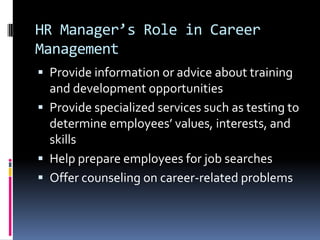
HR Manager’s Role in Career
Management
 Provide information or advice about training

and development opportunities
 Provide specialized services such as testing to
determine employees’ values, interests, and
skills
 Help prepare employees for job searches
 Offer counseling on career-related problems
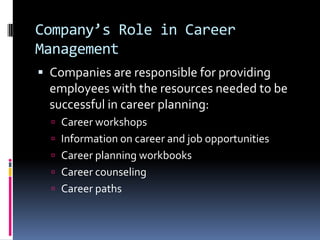
Company’s Role in Career
Management
 Companies are responsible for providing

employees with the resources needed to be
successful in career planning:
 Career workshops
 Information on career and job opportunities
 Career planning workbooks
 Career counseling
 Career paths
MENTORING RELATIONSHIP
Mentorship
 A mentor is an individual with expertise

who can help develop the career of a
mentee. The mentor guides, trains, advises,
and promotes the career development of the
mentee.
 Two types of mentoring functions:
 Career

 Psychosocial
Mentoring Functions
 Career Functions: Help the mentee learn

the ropes and prepare for career advancement.
 Coaching
 Challenging assignments
 Exposure and visibility
 Protection
Mentoring Functions
 Psychosocial Functions: Help the mentee

develop a sense of competence and clarity
of identity.
 Role-Modeling

 Acceptance and confirmation
 Counseling
 Friendship
Advantages of Mentoring
 Advantages for the mentee:
 Career advancement
 Salary
 Organizational/professional identification

 Advantages for the mentor:
 Career enhancement
 “Passing the torch to a new generation”
 Learning from mentee – new technologies, new

developments, important features of next
generation
Disadvantages of Mentoring
 Disadvantages for the mentee:
 Overdependence on the mentor
 Micro-management from the mentor
 Negative halo from mentor who fails

 Disadvantages for the mentor:
 Mentee dependence on mentor
 Time, energy commitment to mentee
 Negative halo from mentee who fails
LIFE-WORK BALANCE
Work-Life Balance
 Work–life balance is a broad concept including

proper prioritizing between “work” (career
and ambition) on one hand and “life” (Health,
pleasure, leisure, family and spiritual
development) on the other. Related, though
broader, terms include “lifestyle balance” and
“life balance”
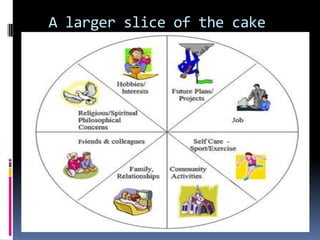
A larger slice of the cake

Future trends in shrm module v

  • 1.
  • 2.
  • 3.
    Introduction  Career developmentis important for companies to create and sustain a continuous learning environment  The biggest challenge companies face is how to balance advancing current employees’ careers with simultaneously attracting and acquiring employees with new skills  The growing use of teams is influencing the concept of careers  e.g., project careers
  • 4.
    What Is CareerManagement?  Career management is the process through which employees:  Become aware of their own interests, values, strengths, and weaknesses  Obtain information about job opportunities within the company  Identify career goals  Establish action plans to achieve career goals
  • 5.
    Why Is CareerManagement Important? (1 of 2)  From the company’s perspective, the failure to motivate employees to plan their careers can result in:  a shortage of employees to fill open positions  lower employee commitment  inappropriate use of monies allocated for training and development programs
  • 6.
    Why Is CareerManagement Important? (2 of 2)  From the employees’ perspective, lack of career management can result in:  frustration  feelings of not being valued by the company  being unable to find suitable employment should a job change be necessary due to mergers, acquisitions, restructuring, or downsizing
  • 7.
    What Is ACareer?  Traditional Career  Sequence of positions held within an occupation  Context of mobility is within an organization  Characteristic of the employee  Protean Career  Frequently changing based on changes in the person and changes in the work environment  Employees take major responsibility for managing their careers  Based on self-direction with the goal of psychological success in one’s work
  • 8.
    A Model ofCareer Development  Career development is the process by which employees progress through a series of stages  Each stage is characterized by a different set of developmental tasks, activities, and relationships  There are four career stages:  Exploration  Establishment  Maintenance  Disengagement
  • 9.
    A Model ofCareer Development (continued) Exploration Establishment Maintenance Disengagement Developmental tasks Identify interests, skills, fit between self and work Advancement, growth, security, develop life style Hold on to accomplishments, update skills Retirement planning, change balance between work and non-work Activities Helping Learning Following directions Making independent contributions Training Sponsoring Policy making Phasing out of work Relationships to other employees Apprentice Colleague Mentor Sponsor Typical age Less than 30 30 – 45 45 – 60 61+ Years on job Less than 2 years 2 – 10 years More than 10 years More than 10 years
  • 10.
    The career managementprocess: SelfAssessment Reality Check Goal Setting Action Planning
  • 11.
    Components of theCareer Management Process: (1 of 2)  Self-Assessment  Use of information by employees to determine their career interests, values, aptitudes, and behavioral tendencies  Often involves psychological tests  Reality Check  Information employees receive about how the company evaluates their skills and knowledge and where they fit into company plans
  • 12.
    Components of theCareer Management Process: (2 of 2)  Goal Setting  The process of employees developing short- and long-term career objectives  Usually discussed with the manager and written into a development plan  Action Planning  Employees determining how they will achieve their short- and long-term career goals
  • 13.
    Managers’ Role inCareer Management Roles Coach Responsibilities Probe problems, interests, values, needs Listen Clarify concerns Define concerns Appraiser Give feedback Clarify company standards Clarify job responsibilities Clarify company needs Advisor Generate options, experiences, and relationships Assist in goal setting Provide recommendations Referral agent Link to career management resources Follow up on career management plan
  • 14.
    HR Manager’s Rolein Career Management  Provide information or advice about training and development opportunities  Provide specialized services such as testing to determine employees’ values, interests, and skills  Help prepare employees for job searches  Offer counseling on career-related problems
  • 15.
    Company’s Role inCareer Management  Companies are responsible for providing employees with the resources needed to be successful in career planning:  Career workshops  Information on career and job opportunities  Career planning workbooks  Career counseling  Career paths
  • 16.
  • 17.
    Mentorship  A mentoris an individual with expertise who can help develop the career of a mentee. The mentor guides, trains, advises, and promotes the career development of the mentee.  Two types of mentoring functions:  Career  Psychosocial
  • 18.
    Mentoring Functions  CareerFunctions: Help the mentee learn the ropes and prepare for career advancement.  Coaching  Challenging assignments  Exposure and visibility  Protection
  • 19.
    Mentoring Functions  PsychosocialFunctions: Help the mentee develop a sense of competence and clarity of identity.  Role-Modeling  Acceptance and confirmation  Counseling  Friendship
  • 20.
    Advantages of Mentoring Advantages for the mentee:  Career advancement  Salary  Organizational/professional identification  Advantages for the mentor:  Career enhancement  “Passing the torch to a new generation”  Learning from mentee – new technologies, new developments, important features of next generation
  • 21.
    Disadvantages of Mentoring Disadvantages for the mentee:  Overdependence on the mentor  Micro-management from the mentor  Negative halo from mentor who fails  Disadvantages for the mentor:  Mentee dependence on mentor  Time, energy commitment to mentee  Negative halo from mentee who fails
  • 22.
  • 23.
    Work-Life Balance  Work–lifebalance is a broad concept including proper prioritizing between “work” (career and ambition) on one hand and “life” (Health, pleasure, leisure, family and spiritual development) on the other. Related, though broader, terms include “lifestyle balance” and “life balance”
  • 25.
    A larger sliceof the cake