11/9/2012
100% of customer service
interactions will be in the
      public domain
Its all about the people

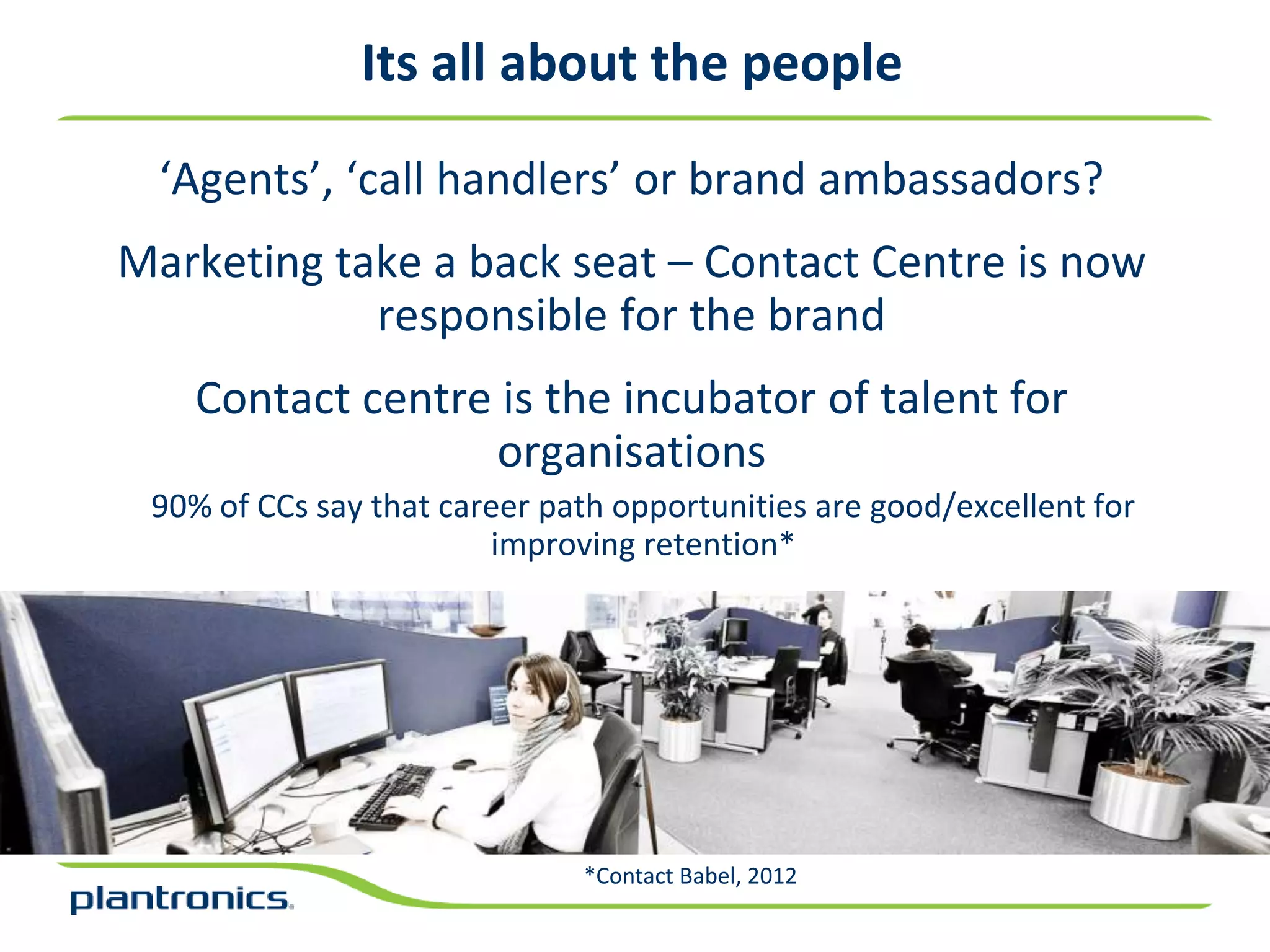
  ‘Agents’, ‘call handlers’ or brand ambassadors?
Marketing take a back seat – Contact Centre is now
            responsible for the brand
    Contact centre is the incubator of talent for
                  organisations
 90% of CCs say that career path opportunities are good/excellent for
                        improving retention*


                              *Contact Babel, 2012
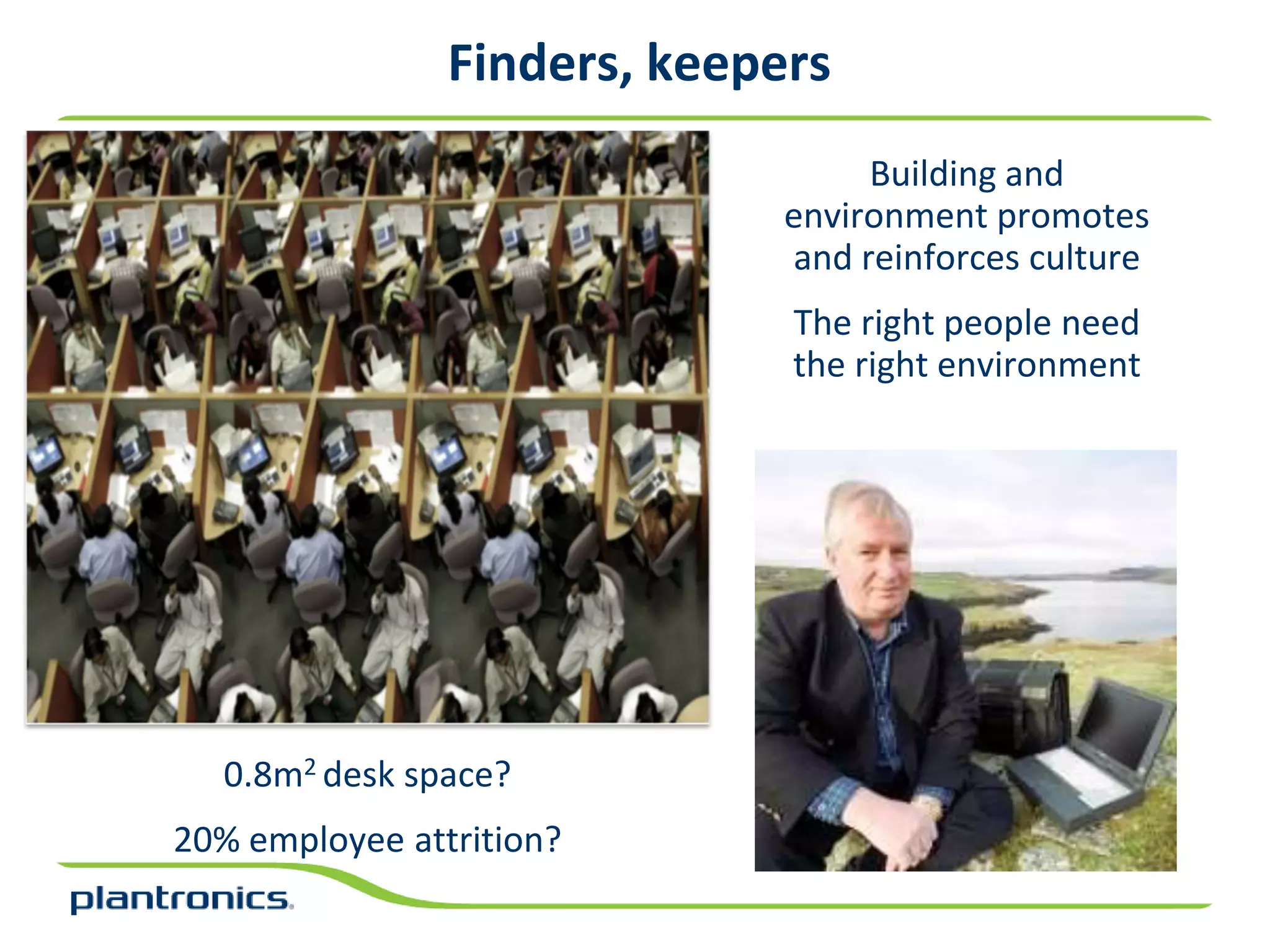
Finders, keepers
                                   Building and
                              environment promotes
                              and reinforces culture
                              The right people need
                              the right environment


  0.8m2 desk space?
20% employee attrition?
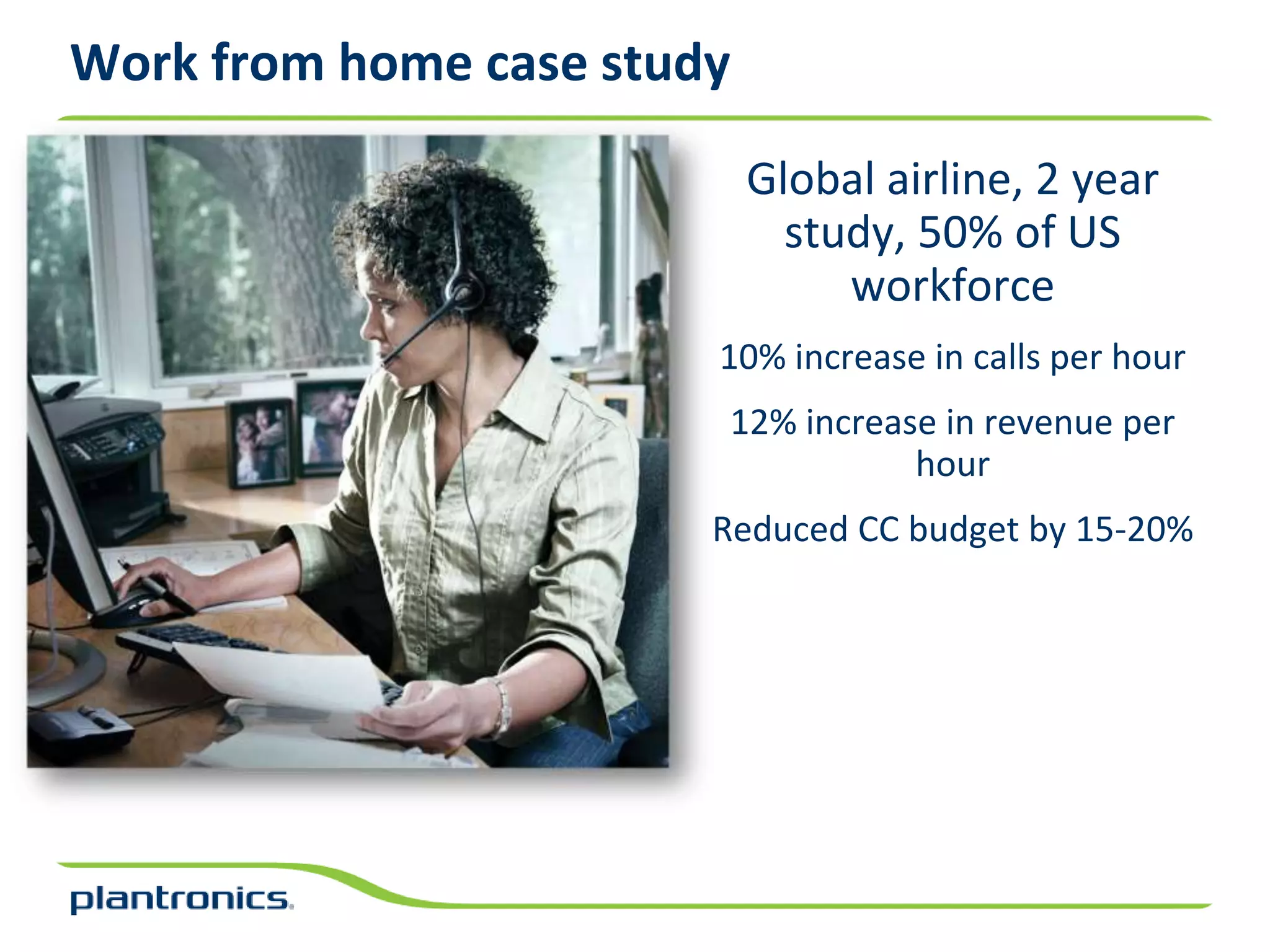
Work from home case study*

                             Global airline, 2 year
                               study, 50% of US
                                  workforce
                           10% increase in calls per hour
                            12% increase in revenue per
                                       hour
                           Reduced CC budget by 15-20%


            *At Home Customer Contacts
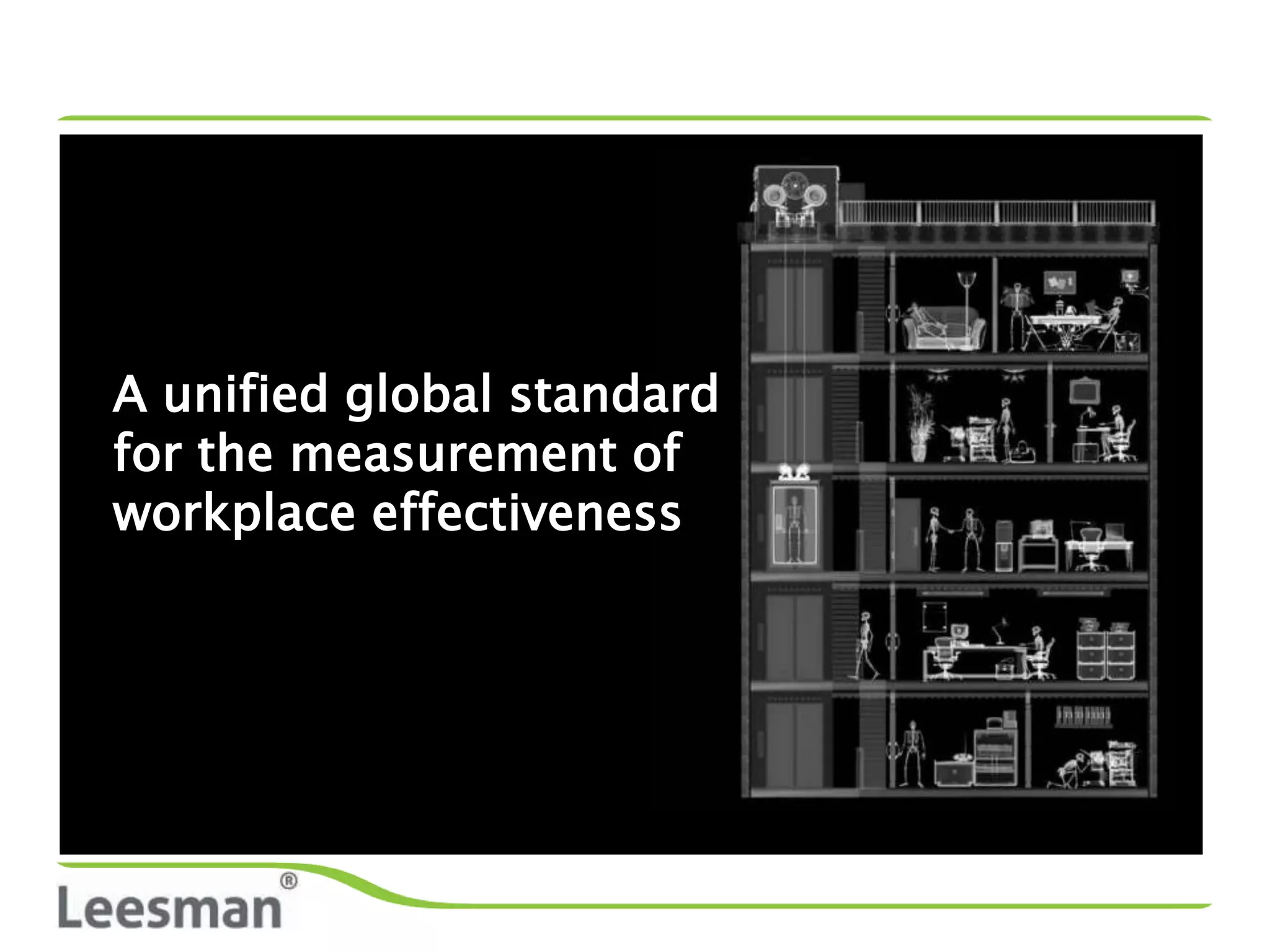
A unified global standard
for the measurement of
workplace effectiveness
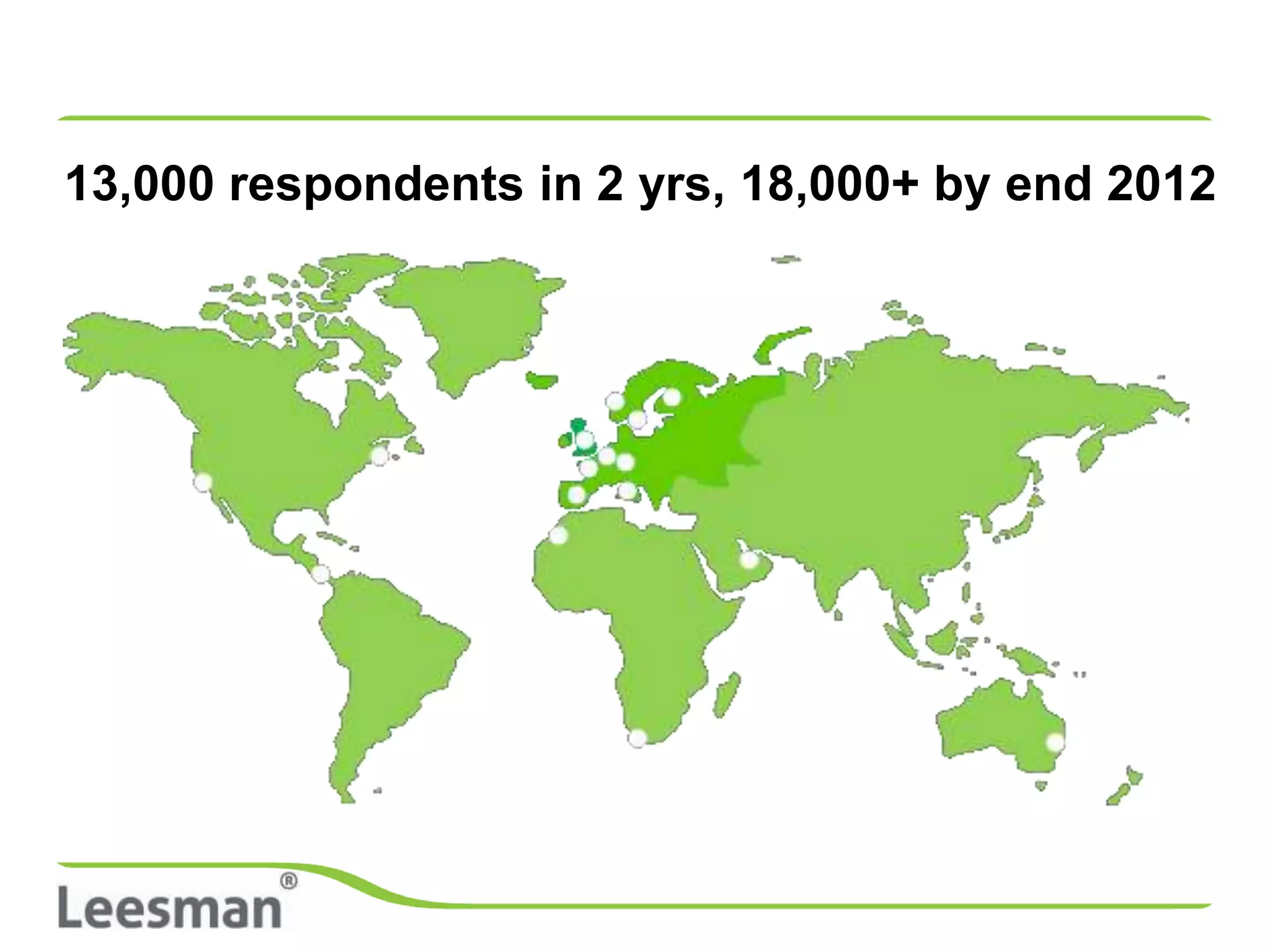
13,000 respondents in 2 yrs, 18,000+ by end 2012
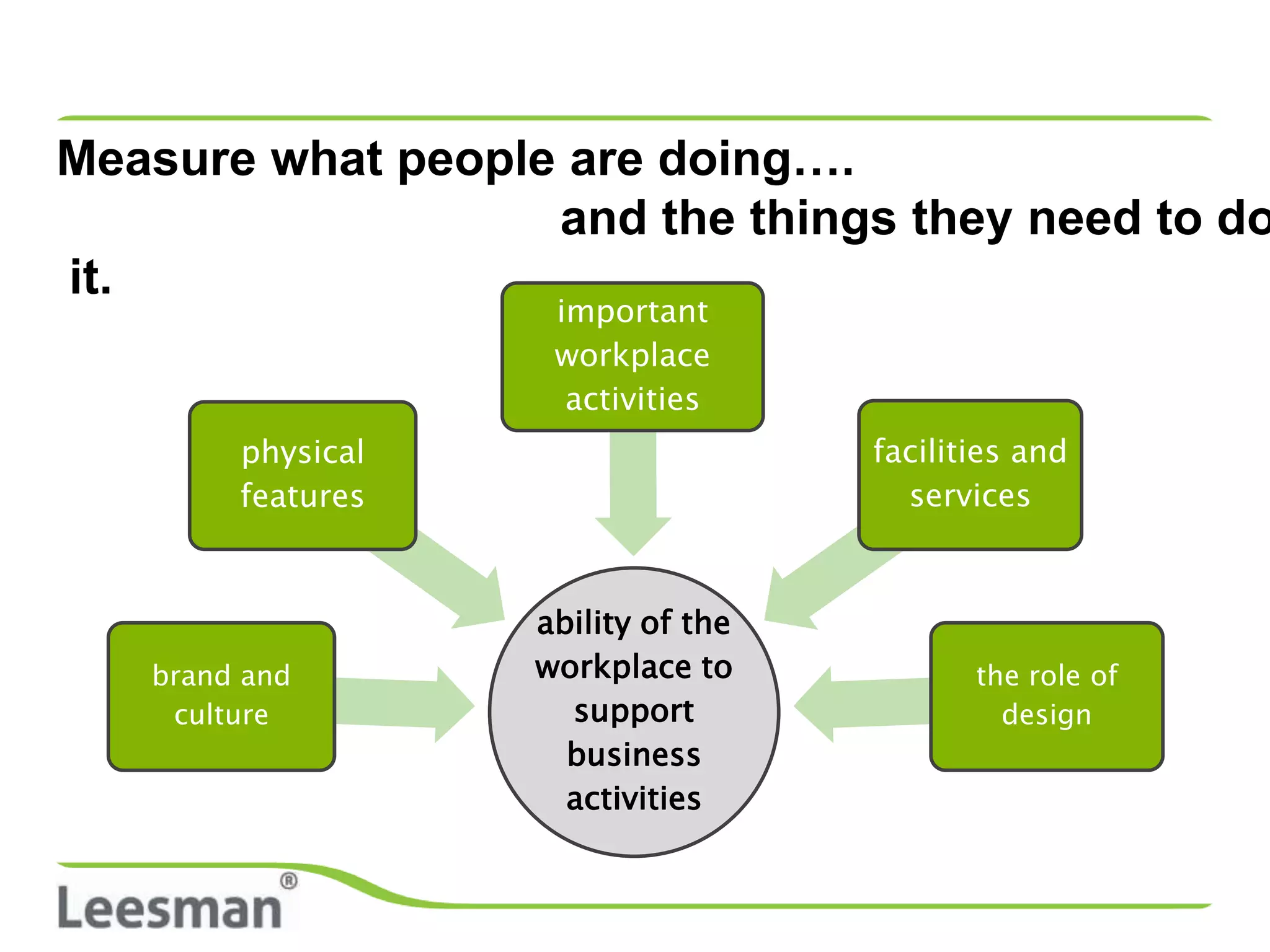
Measure what people are doing….
                   and the things they need to do
it.
                    important
                    workplace
                     activities
        physical                    facilities and
        features                      services


                   ability of the
   brand and       workplace to            the role of
    culture          support                 design
                     business
                     activities
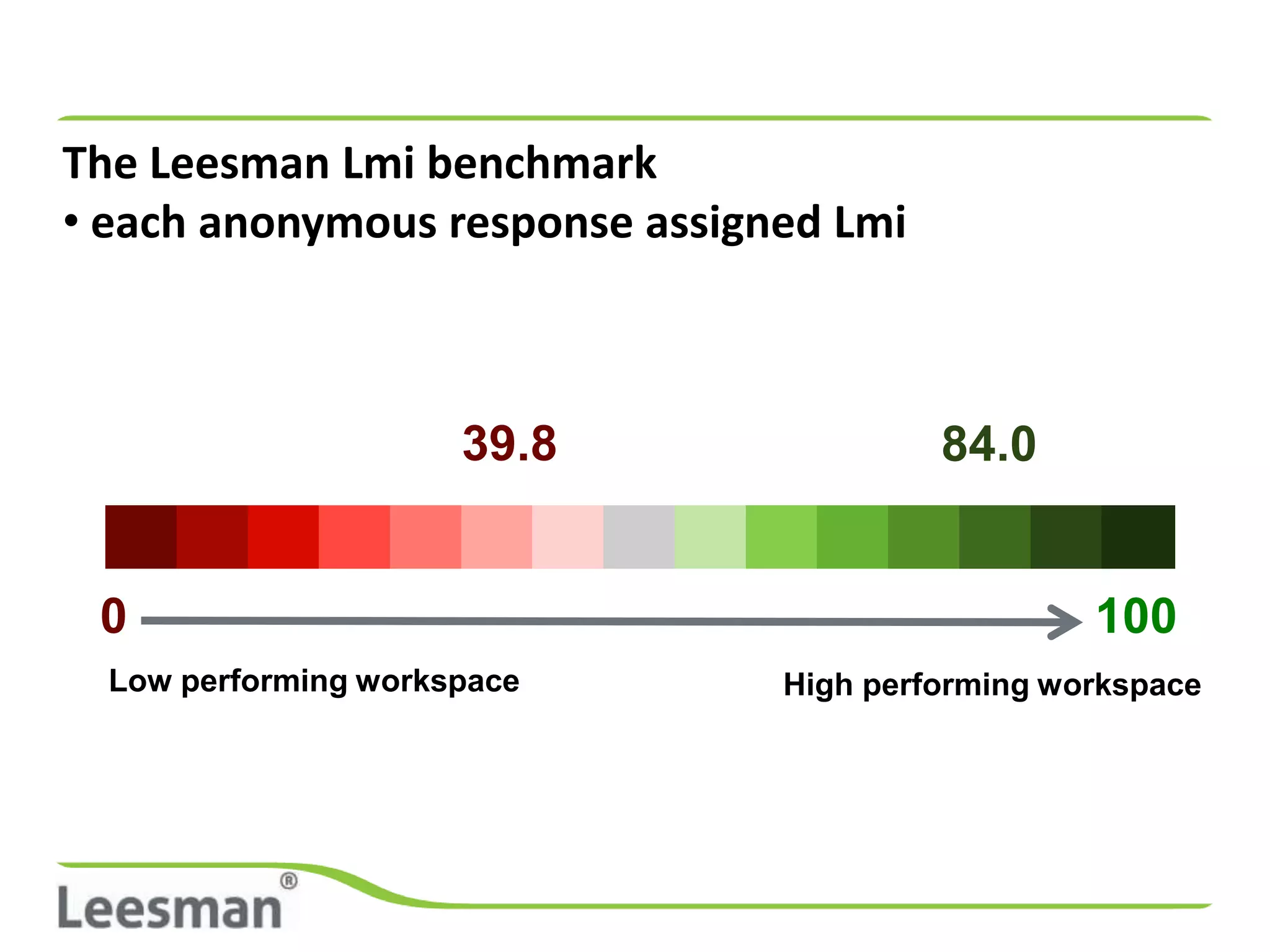
The Leesman Lmi benchmark
   • each anonymous response assigned Lmi


                            39.8            84.0


Lmi 0
        0                                            100
        Low performing workspace   High performing workspace
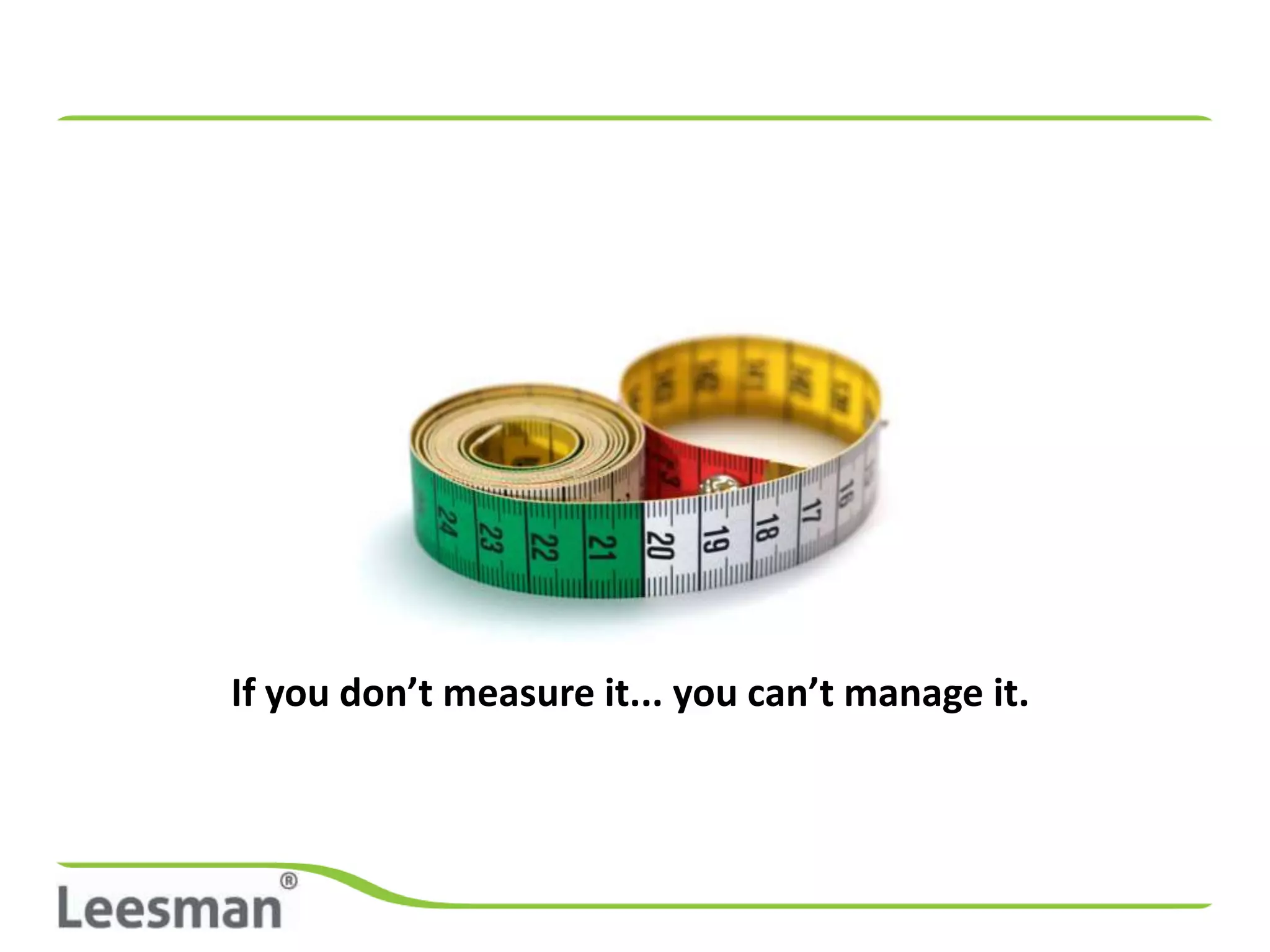
If you don’t measure it... you can’t manage it.


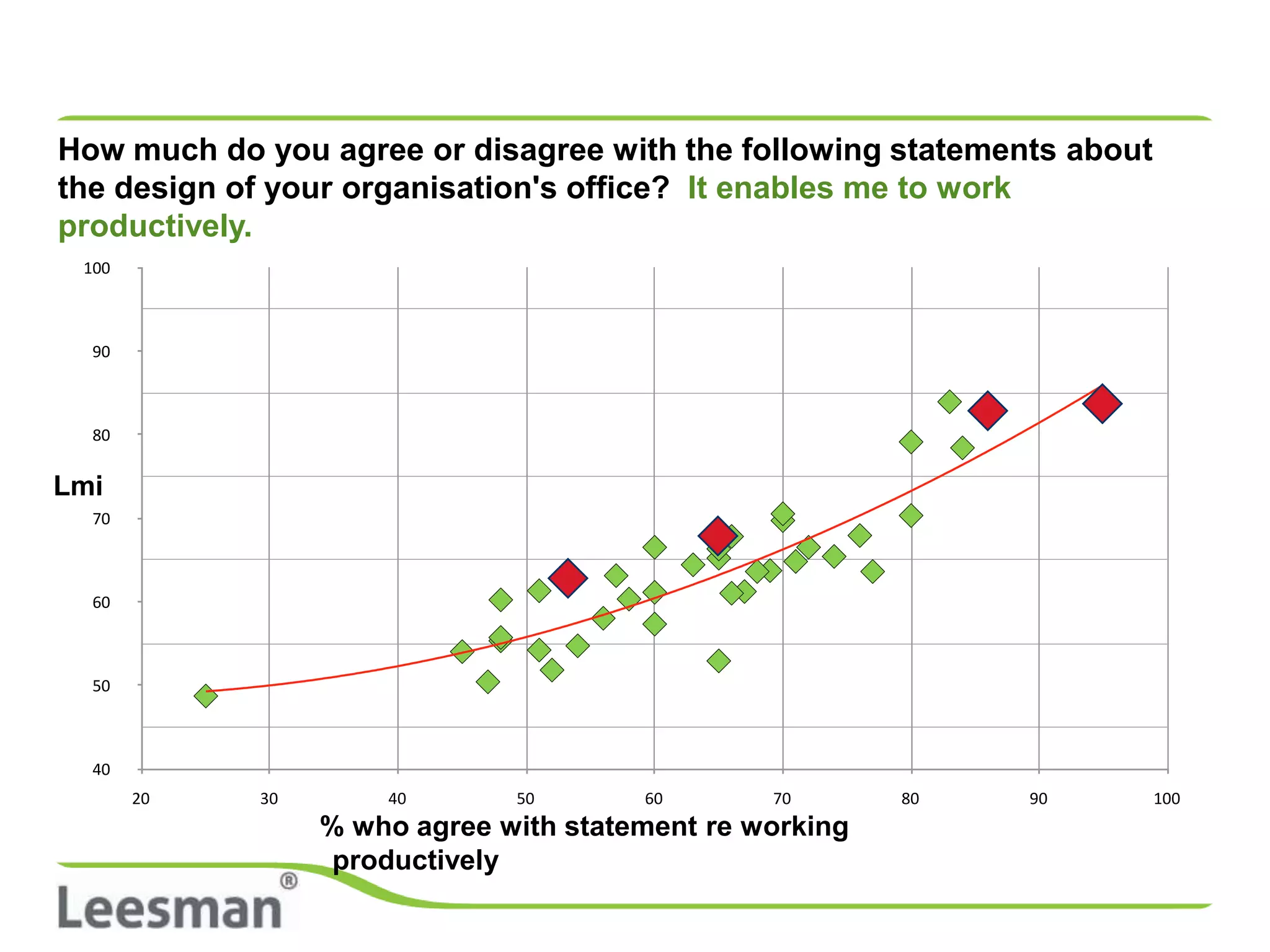
% agreement (agree slightly, agree, agree strongly) that the design of the workplace enables them to work productively
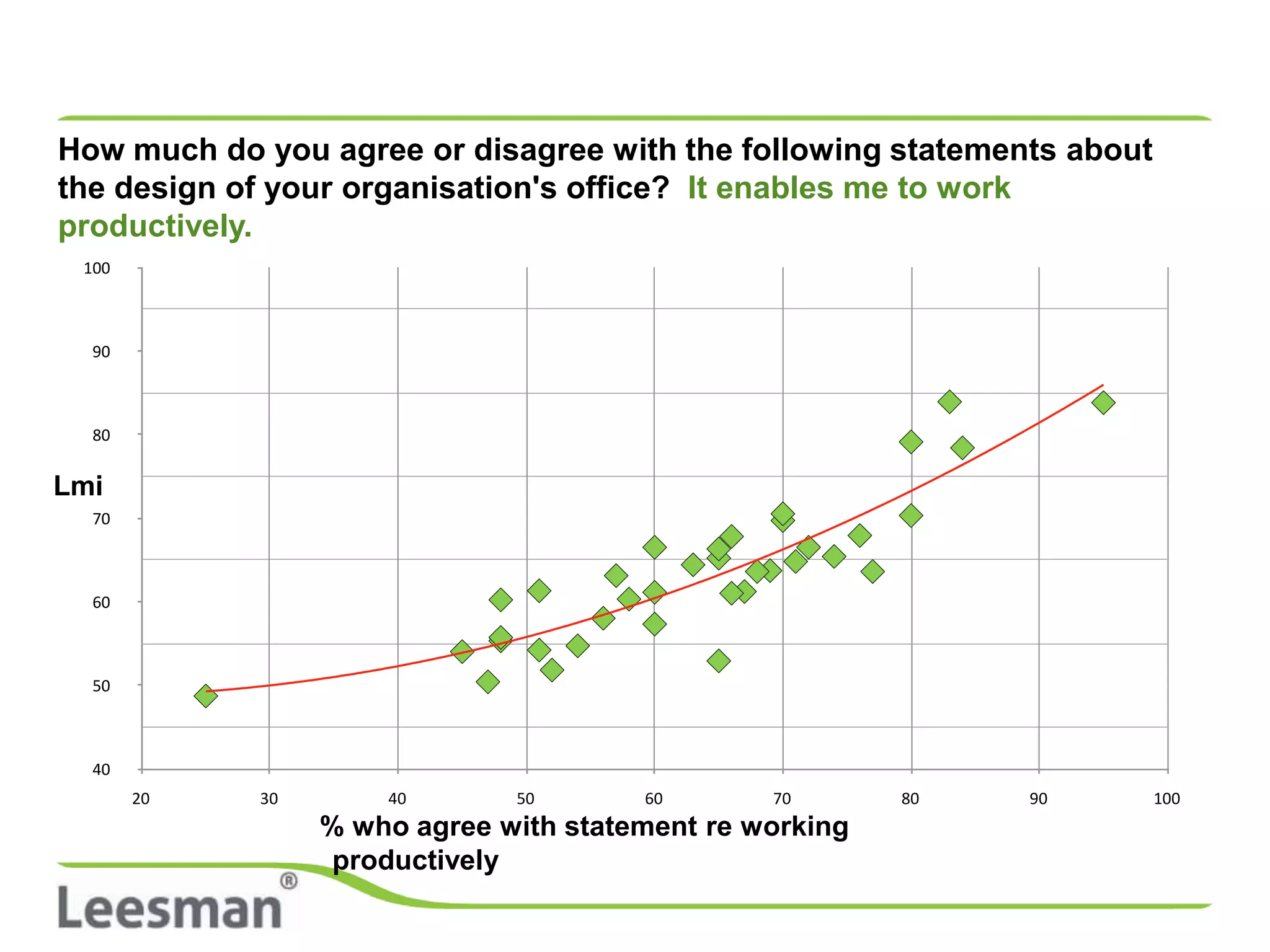
How much do you agree or disagree with the following statements about
the design of your organisation's office? It enables me to work
productively.
 100


  90


  80


Lmi
  70


  60


  50


  40
       20   30       40       50       60       70       80   90        100
                 % who agree with statement re working
                  productively
How much do you agree or disagree with the following statements about
the design of your organisation's office? It enables me to work
productively.
 100


  90


  80


Lmi
  70


  60


  50


  40
       20   30       40       50       60       70       80   90        100
                 % who agree with statement re working
                  productively
6 contact centres, 737 respondents


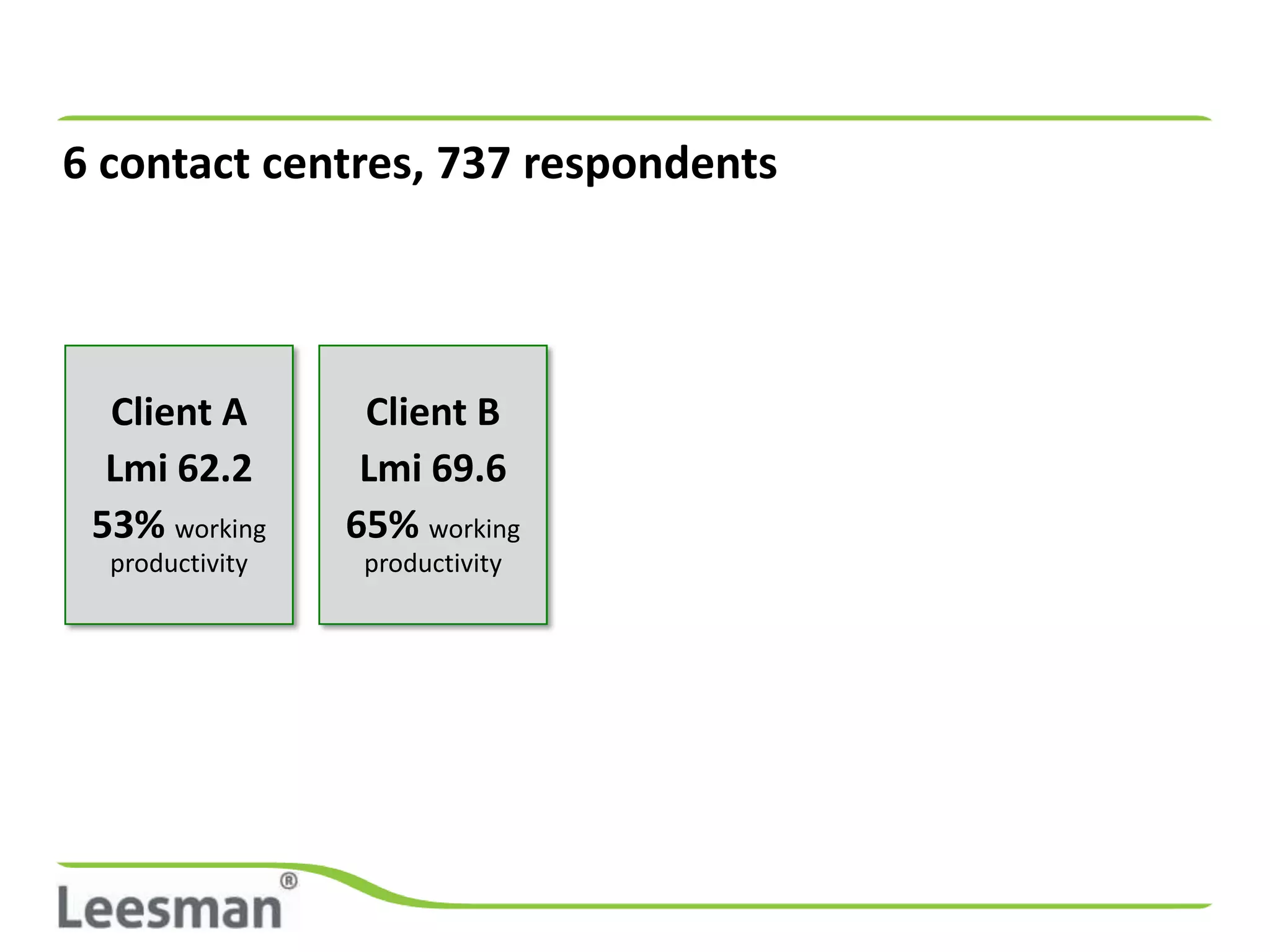
  Client A        Client B
  Lmi 62.2        Lmi 69.6
 53% working     65% working
  productivity    productivity
6 contact centres, 737 respondents


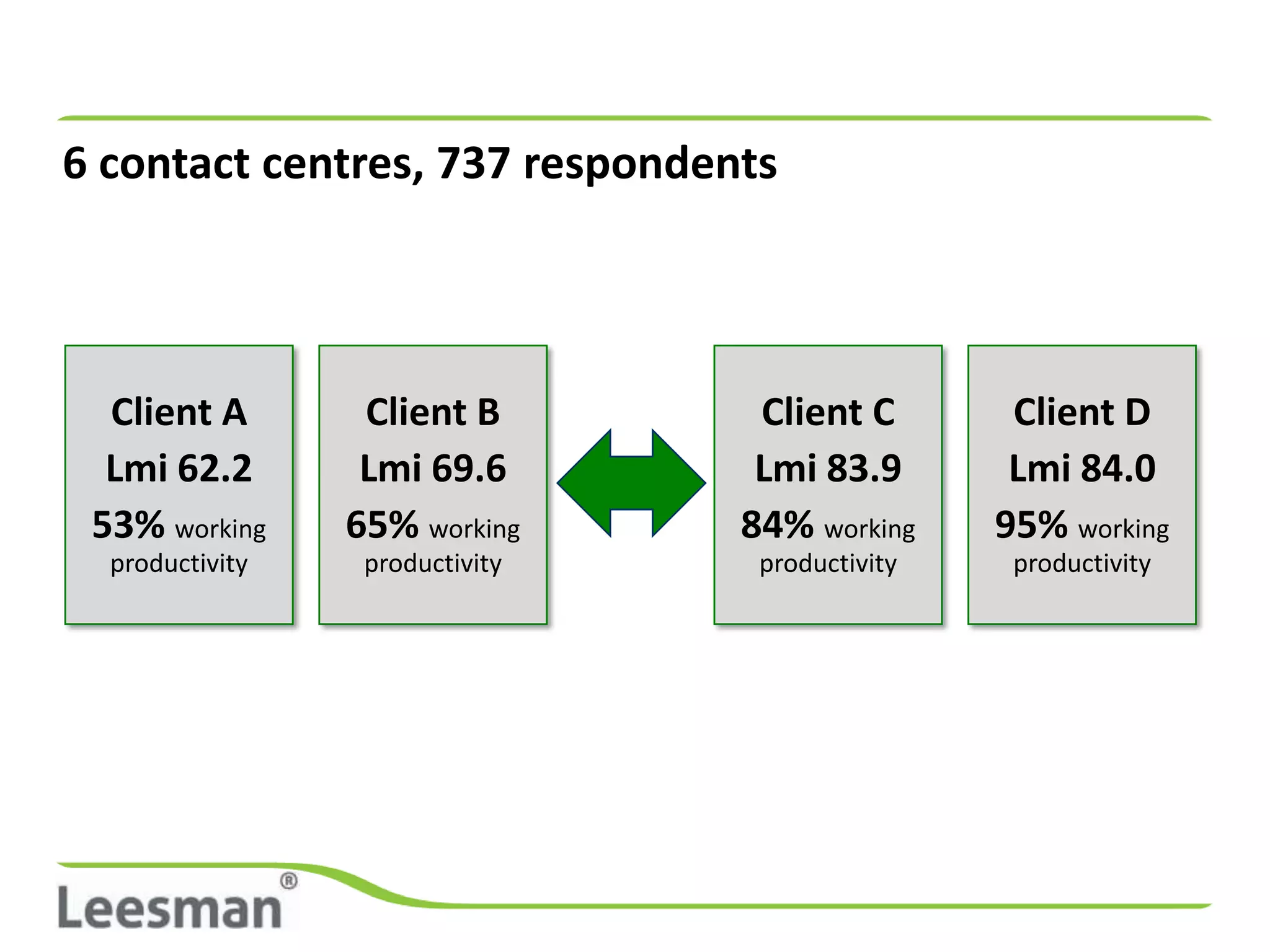
  Client A        Client B        Client C        Client D
  Lmi 62.2        Lmi 69.6        Lmi 83.9        Lmi 84.0
 53% working     65% working     84% working     95% working
  productivity    productivity    productivity    productivity
6 contact centres, 737 respondents


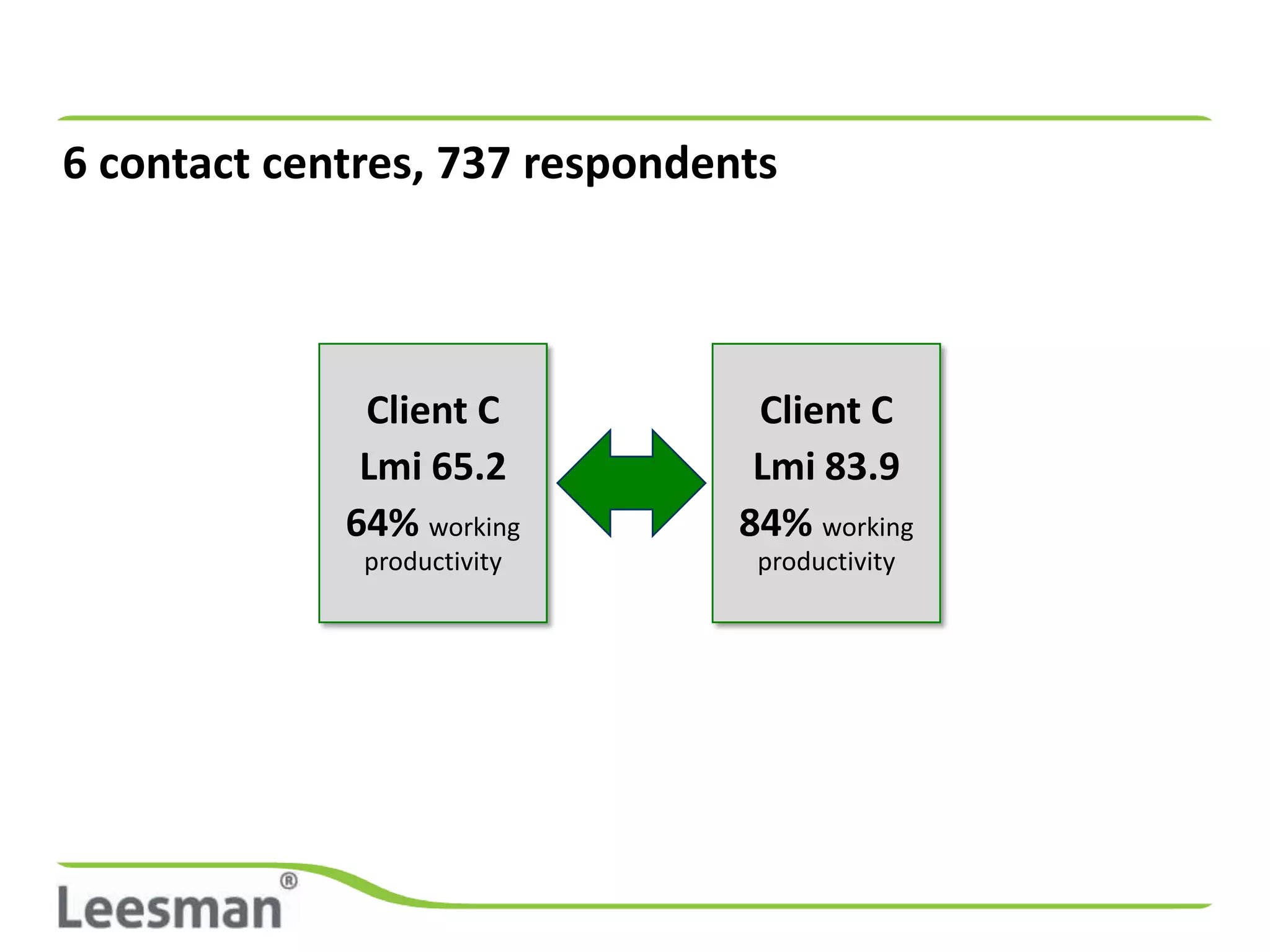
              Client C           Client C
              Lmi 65.2           Lmi 83.9
             64% working        84% working
              productivity       productivity
Client A. Lmi 62.2 - Profile of workplace activities by importance
                 Individual focused work desk based 1 [1]
                           Telephone conversations 2 [2]
                            Relaxing / taking a break 3 [8]
                                  Planned meetings 4 [3]
                      Informal un-planned meetings 5 [4]
                              Learning from others 6 [14]
                              Private conversations 7 [21]
                             Individual routine tasks 8 [9]
                         Informal social interaction 9 [11]
                                           Reading 10 [7]
                       Thinking / creative thinking 11 [10]
                  Business confidential discussions 12 [5]
                     Collaborating on focused work 13 [6]
                 Spreading out paper or materials 14 [12]
              Larger group meetings or audiences 15 [16]
                               Audio conferences 16 [15]
     Individual focused work away from your desk 17 [18]
              Hosting visitors clients or customers 18 [13]
                   Collaborating on creative work 19 [17]
Using technical / specialist equipment or materials 20 [20]
                               Video conferences 21 [19]

                                                              0   95   189   284   378   473
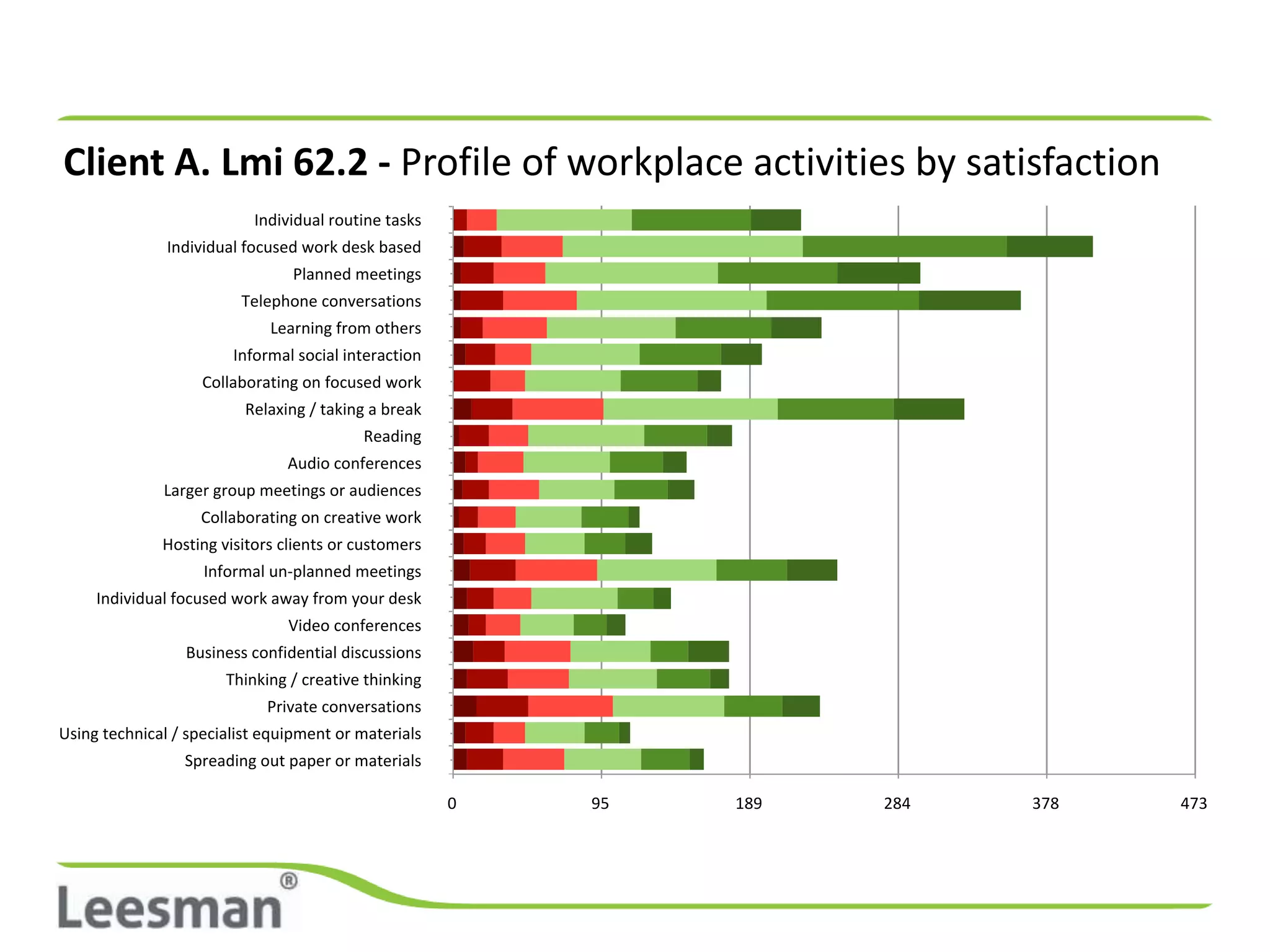
Client A. Lmi 62.2 - Profile of workplace activities by satisfaction
                           Individual routine tasks
               Individual focused work desk based
                                Planned meetings
                         Telephone conversations
                             Learning from others
                        Informal social interaction
                    Collaborating on focused work
                          Relaxing / taking a break
                                          Reading
                                Audio conferences
              Larger group meetings or audiences
                   Collaborating on creative work
              Hosting visitors clients or customers
                    Informal un-planned meetings
     Individual focused work away from your desk
                                Video conferences
                 Business confidential discussions
                       Thinking / creative thinking
                             Private conversations
Using technical / specialist equipment or materials
                 Spreading out paper or materials

                                                      0   95   189   284   378   473
0
                                                 20
                                                      40
                                                           60
                                                                80
                                                                     100
                                    Chair

                                    Desk

                  Computing equipment

                    Temperature control

                        Personal storage

                  Telephone equipment

 Printing / copying / scanning equipment

                             Noise levels

                            Natural light

                               Air quality

                           Office lighting

                          General decor

           In-office network connectivity

    Ability to personalise my workstation

                  Meeting rooms (small)

           People walking past your desk

                  Meeting rooms (large)

  Informal work areas / break-out zones

           Space between work-settings

        Dividers (between desks / areas)

                               Greenery
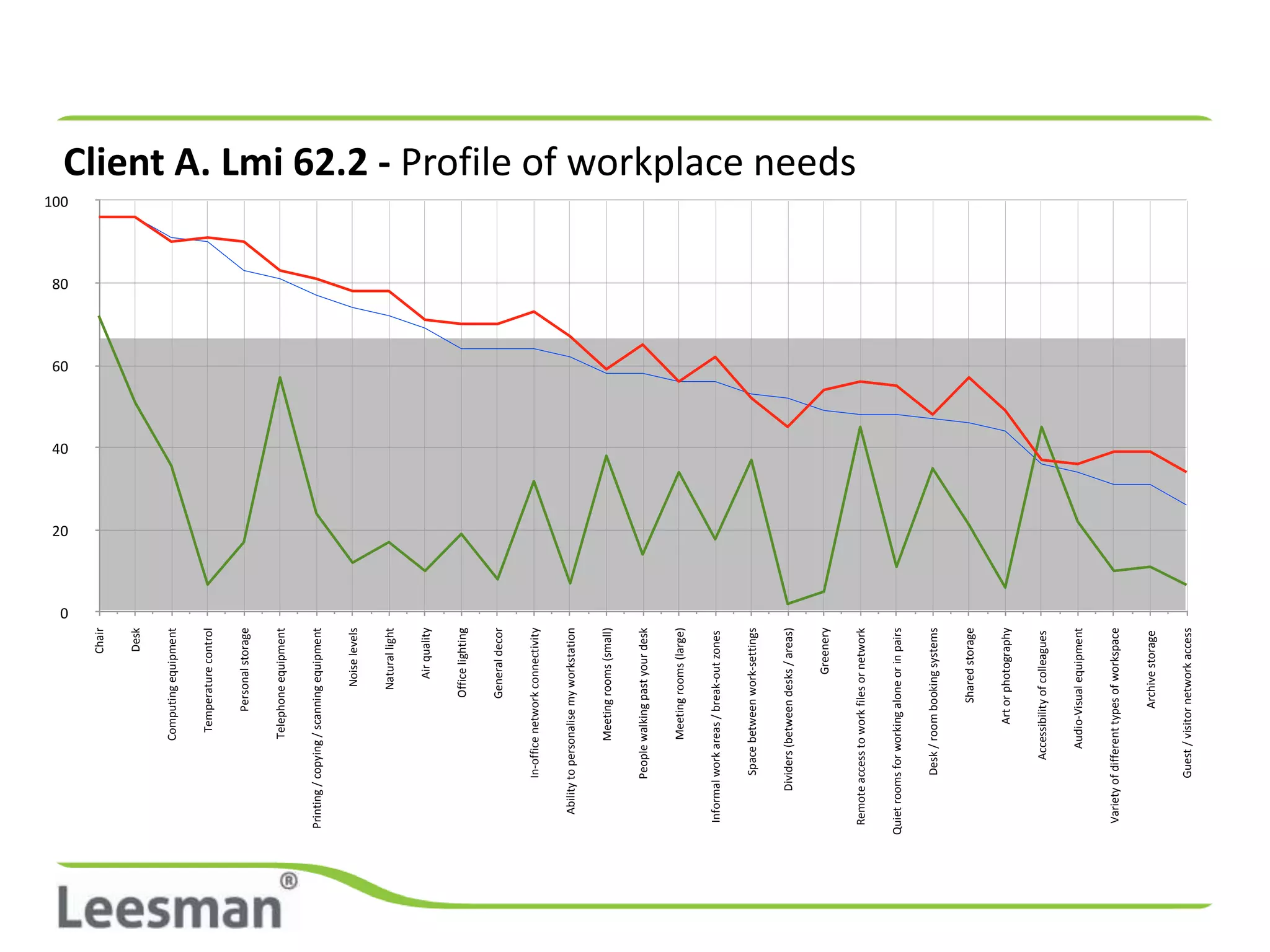
                                                                           Client A. Lmi 62.2 - Profile of workplace needs


 Remote access to work files or network

Quiet rooms for working alone or in pairs

           Desk / room booking systems

                          Shared storage

                     Art or photography

              Accessibility of colleagues

                 Audio-Visual equipment

  Variety of different types of workspace

                        Archive storage

           Guest / visitor network access
0
                                                 20
                                                      40
                                                           60
                                                                80
                                                                     100
                  Computing equipment

                                    Chair

                                    Desk

                    Temperature control

                            Natural light

           In-office network connectivity

                             Noise levels

                  Telephone equipment

                  Meeting rooms (small)

 Printing / copying / scanning equipment

 Remote access to work files or network

                           Office lighting

                  Meeting rooms (large)

                        Personal storage

                          General decor

              Accessibility of colleagues

Quiet rooms for working alone or in pairs

                               Air quality

  Informal work areas / break-out zones

                               Greenery

           Desk / room booking systems
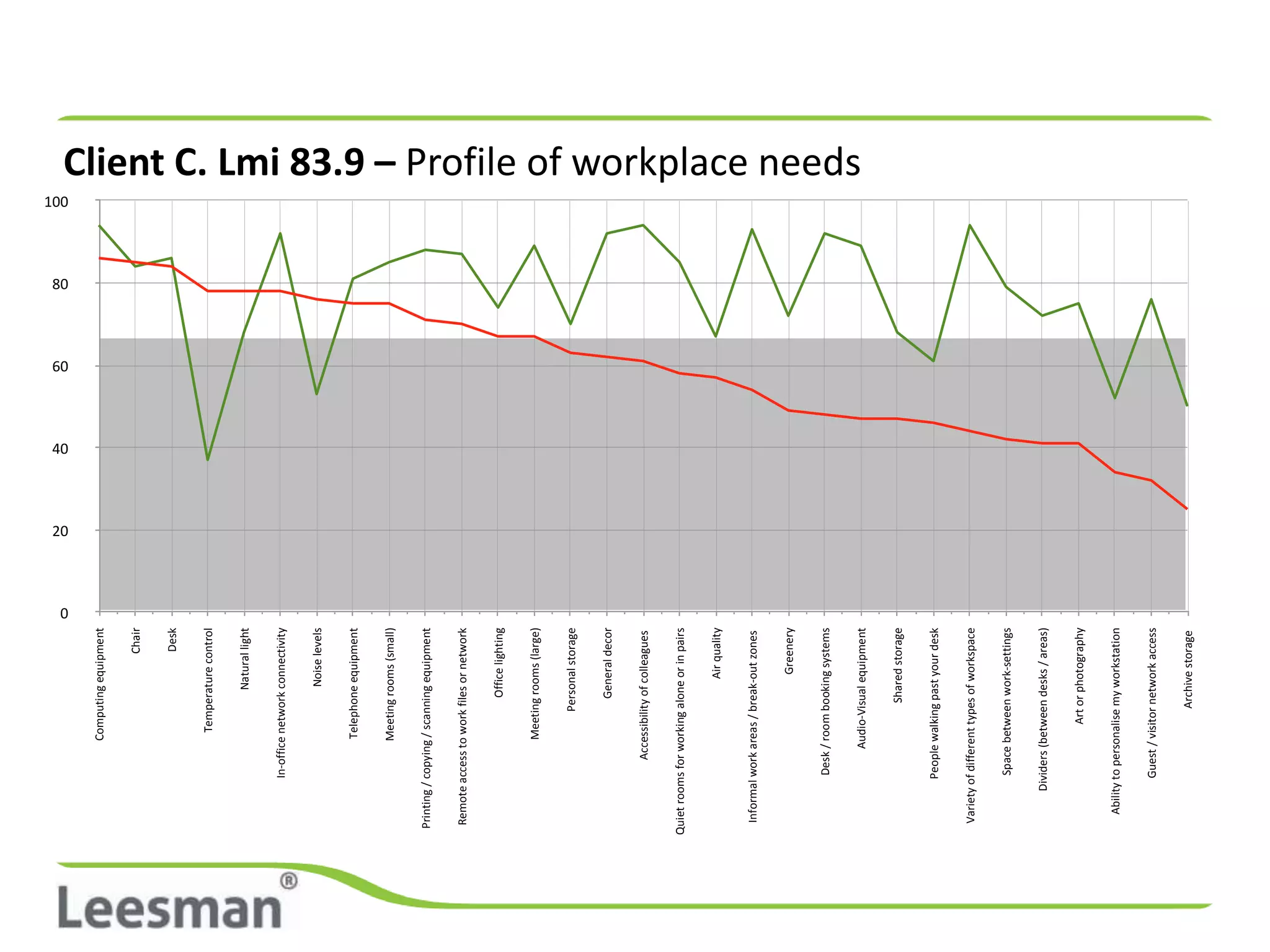
                                                                           Client C. Lmi 83.9 – Profile of workplace needs


                 Audio-Visual equipment

                          Shared storage

           People walking past your desk

  Variety of different types of workspace

           Space between work-settings

        Dividers (between desks / areas)

                     Art or photography

    Ability to personalise my workstation

           Guest / visitor network access

                        Archive storage
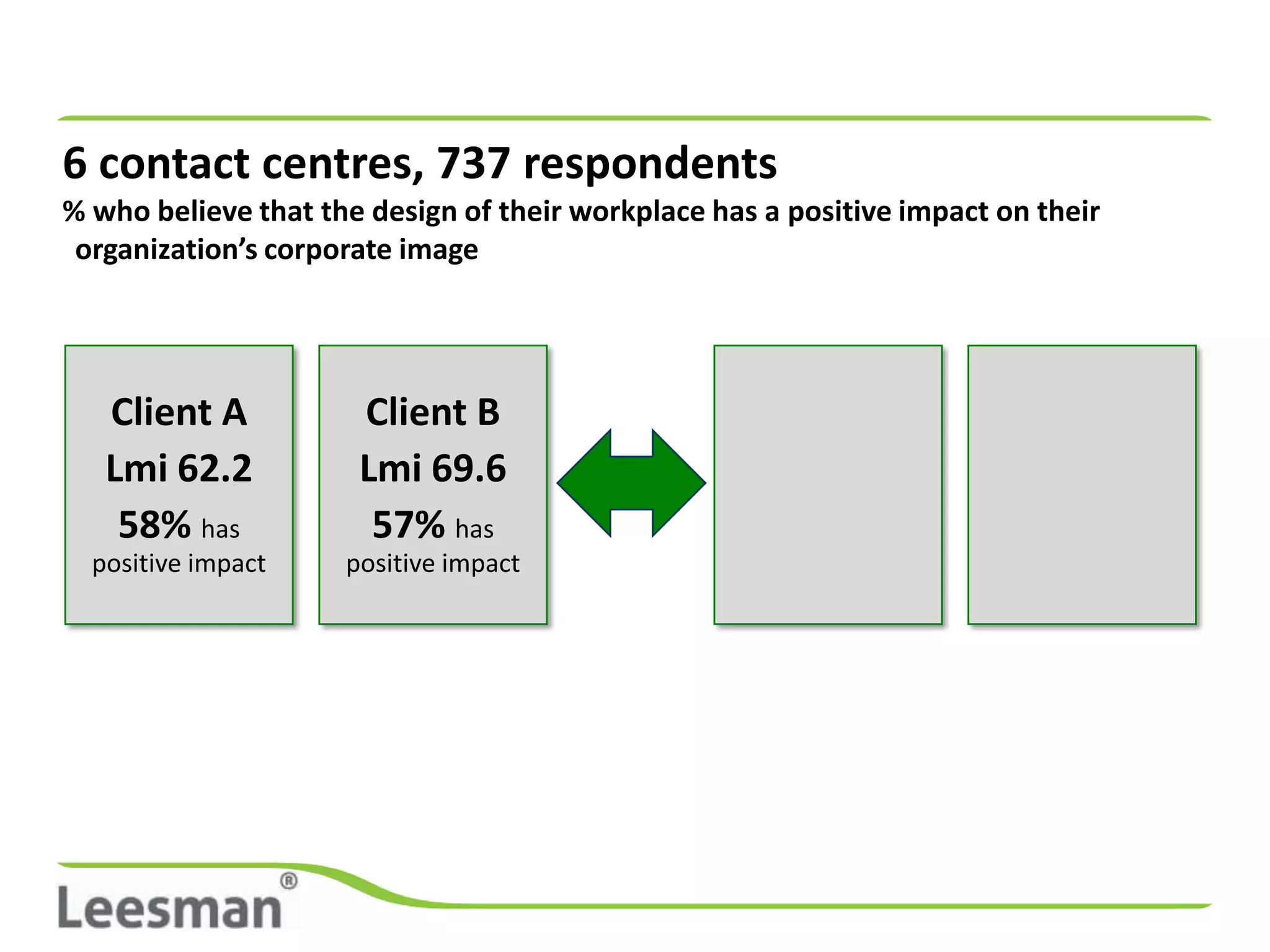
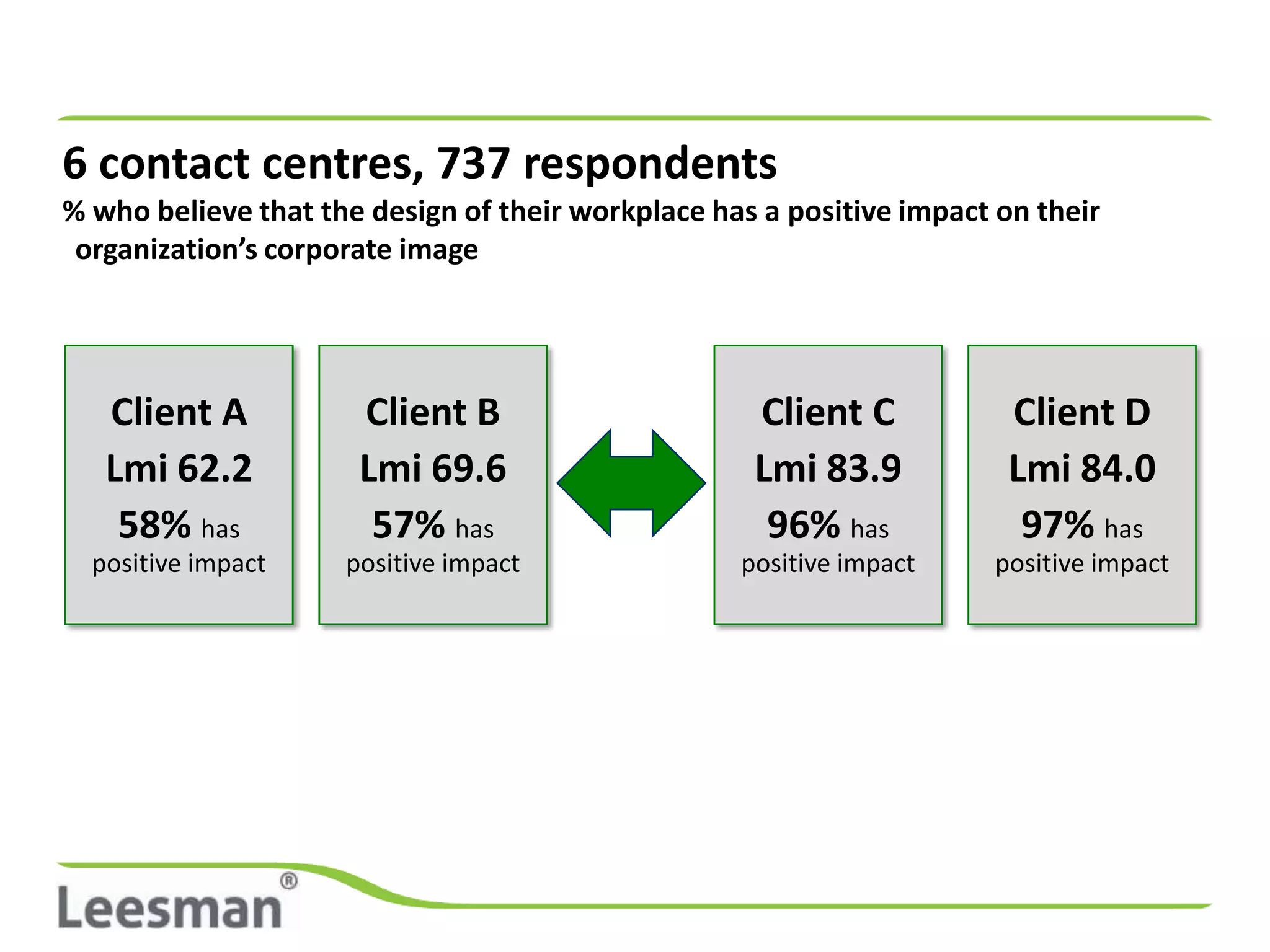
6 contact centres, 737 respondents
% who believe that the design of their workplace has a positive impact on their
 organization’s corporate image


   Client A           Client B
   Lmi 62.2           Lmi 69.6
    58% has            57% has
  positive impact    positive impact
6 contact centres, 737 respondents
% who believe that the design of their workplace has a positive impact on their
 organization’s corporate image


   Client A           Client B                      Client C            Client D
   Lmi 62.2           Lmi 69.6                      Lmi 83.9            Lmi 84.0
    58% has            57% has                       96% has             97% has
  positive impact    positive impact               positive impact    positive impact
Lets put the microscope on Plantronics
www.slideshare.net/richardkenny
@contactcentered

www.leesman.co.uk
@leesman_index

Future of the Contact Centre

  • 1.
  • 2.
    100% of customerservice interactions will be in the public domain
  • 3.
    Its all aboutthe people ‘Agents’, ‘call handlers’ or brand ambassadors? Marketing take a back seat – Contact Centre is now responsible for the brand Contact centre is the incubator of talent for organisations 90% of CCs say that career path opportunities are good/excellent for improving retention* *Contact Babel, 2012
  • 4.
    Finders, keepers Building and environment promotes and reinforces culture The right people need the right environment 0.8m2 desk space? 20% employee attrition?
  • 5.
    Work from homecase study* Global airline, 2 year study, 50% of US workforce 10% increase in calls per hour 12% increase in revenue per hour Reduced CC budget by 15-20% *At Home Customer Contacts
  • 7.
    A unified globalstandard for the measurement of workplace effectiveness
  • 8.
    13,000 respondents in2 yrs, 18,000+ by end 2012
  • 9.
    Measure what peopleare doing…. and the things they need to do it. important workplace activities physical facilities and features services ability of the brand and workplace to the role of culture support design business activities
  • 10.
    The Leesman Lmibenchmark • each anonymous response assigned Lmi 39.8 84.0 Lmi 0 0 100 Low performing workspace High performing workspace
  • 11.
    If you don’tmeasure it... you can’t manage it. % agreement (agree slightly, agree, agree strongly) that the design of the workplace enables them to work productively
  • 12.
    How much doyou agree or disagree with the following statements about the design of your organisation's office? It enables me to work productively. 100 90 80 Lmi 70 60 50 40 20 30 40 50 60 70 80 90 100 % who agree with statement re working productively
  • 13.
    How much doyou agree or disagree with the following statements about the design of your organisation's office? It enables me to work productively. 100 90 80 Lmi 70 60 50 40 20 30 40 50 60 70 80 90 100 % who agree with statement re working productively
  • 14.
    6 contact centres,737 respondents Client A Client B Lmi 62.2 Lmi 69.6 53% working 65% working productivity productivity
  • 15.
    6 contact centres,737 respondents Client A Client B Client C Client D Lmi 62.2 Lmi 69.6 Lmi 83.9 Lmi 84.0 53% working 65% working 84% working 95% working productivity productivity productivity productivity
  • 16.
    6 contact centres,737 respondents Client C Client C Lmi 65.2 Lmi 83.9 64% working 84% working productivity productivity
  • 17.
    Client A. Lmi62.2 - Profile of workplace activities by importance Individual focused work desk based 1 [1] Telephone conversations 2 [2] Relaxing / taking a break 3 [8] Planned meetings 4 [3] Informal un-planned meetings 5 [4] Learning from others 6 [14] Private conversations 7 [21] Individual routine tasks 8 [9] Informal social interaction 9 [11] Reading 10 [7] Thinking / creative thinking 11 [10] Business confidential discussions 12 [5] Collaborating on focused work 13 [6] Spreading out paper or materials 14 [12] Larger group meetings or audiences 15 [16] Audio conferences 16 [15] Individual focused work away from your desk 17 [18] Hosting visitors clients or customers 18 [13] Collaborating on creative work 19 [17] Using technical / specialist equipment or materials 20 [20] Video conferences 21 [19] 0 95 189 284 378 473
  • 18.
    Client A. Lmi62.2 - Profile of workplace activities by satisfaction Individual routine tasks Individual focused work desk based Planned meetings Telephone conversations Learning from others Informal social interaction Collaborating on focused work Relaxing / taking a break Reading Audio conferences Larger group meetings or audiences Collaborating on creative work Hosting visitors clients or customers Informal un-planned meetings Individual focused work away from your desk Video conferences Business confidential discussions Thinking / creative thinking Private conversations Using technical / specialist equipment or materials Spreading out paper or materials 0 95 189 284 378 473
  • 21.
    0 20 40 60 80 100 Chair Desk Computing equipment Temperature control Personal storage Telephone equipment Printing / copying / scanning equipment Noise levels Natural light Air quality Office lighting General decor In-office network connectivity Ability to personalise my workstation Meeting rooms (small) People walking past your desk Meeting rooms (large) Informal work areas / break-out zones Space between work-settings Dividers (between desks / areas) Greenery Client A. Lmi 62.2 - Profile of workplace needs Remote access to work files or network Quiet rooms for working alone or in pairs Desk / room booking systems Shared storage Art or photography Accessibility of colleagues Audio-Visual equipment Variety of different types of workspace Archive storage Guest / visitor network access
  • 22.
    0 20 40 60 80 100 Computing equipment Chair Desk Temperature control Natural light In-office network connectivity Noise levels Telephone equipment Meeting rooms (small) Printing / copying / scanning equipment Remote access to work files or network Office lighting Meeting rooms (large) Personal storage General decor Accessibility of colleagues Quiet rooms for working alone or in pairs Air quality Informal work areas / break-out zones Greenery Desk / room booking systems Client C. Lmi 83.9 – Profile of workplace needs Audio-Visual equipment Shared storage People walking past your desk Variety of different types of workspace Space between work-settings Dividers (between desks / areas) Art or photography Ability to personalise my workstation Guest / visitor network access Archive storage
  • 23.
    6 contact centres,737 respondents % who believe that the design of their workplace has a positive impact on their organization’s corporate image Client A Client B Lmi 62.2 Lmi 69.6 58% has 57% has positive impact positive impact
  • 24.
    6 contact centres,737 respondents % who believe that the design of their workplace has a positive impact on their organization’s corporate image Client A Client B Client C Client D Lmi 62.2 Lmi 69.6 Lmi 83.9 Lmi 84.0 58% has 57% has 96% has 97% has positive impact positive impact positive impact positive impact
  • 26.
    Lets put themicroscope on Plantronics
  • 27.

Editor's Notes

  • #2 How many of you use the phrase, or have heard the phrase “your call may be recorded for quality purposes”? Probably everyone.What if we turn this around – looking forward, the customer will soon tell us “I’m taking notes about what you do on this call and will use it for the purposes of shaming you on social media to improve quality”I wanted to find a statistic that would sum up this change to customer service
  • #3 100% of customer service interactions will be in the public domain. Our customers are monitoring our calls for quality purposes, and making the outcomes public. This is bringing into sharp focus the way that we run our customer service departments. Nobody wants to be the next Dellhell, or United (breaking guitars). You will need smarter customer service – this isn’t just being witty on Twitter, this is organisation wide change
  • #4 We hear more about hyper-specialists and networked experts, I want to add marketing experts or brand ambassadorsto that list. Contact centres have just as much influence on brand as marketing departments do – and this will increase going forward An example of the second point, is that I searched for a leading service oriented company on googleThe first entry was an advert saying ‘people are our best asset’ or similarSecond entry (unpaid for) was a social media forum post indicating that the company were “horrible to work for”You are not going to get the best people with this approach. And if you aren’t getting them in at the floor, you are missing out on talent that can move through and enhance your organisation. Contact centres are the incubator of talent for organisations, and 90% of CCs say that providing career path opportunities is good/excellent for improving retention – so how do we find and keep those people in our organisations?
  • #5 Well, lets start by giving them the right environment to work in. The right people who are capable of delivering smarter customer service, need a smarter environment to work in.2012 attrition rate for contact centres is 20%, and at £1921 to recruit a replacement, there is a real business cost to this continued drain of people. Not counting the impact of lower service quality because we aren’t retaining knowledge
  • #6 We wanted to look at the impact of environment on customer service performance. We chose a home working case study to show a clean transition to new, non traditional CC environment, and to show the impact of this new environment. Home working in UK contact centres hasn't been around long enough to really study the impacts on customer service, hence aUS case study is usedSnapshots from other trials to show impacts are wider than efficiency:10% increase in customer satisfaction across many measures, a markedly improved employee retentionWe can see that a new, smarter environment makes a difference to service level, so how do you find out what makes a good environment? This is where Leesman comes in, as the only independent organisation that measures and benchmarks the performance of physical working environments, they provide a direct insight into how well your employees feel supported in what they do.
  • #7 We measure how well office environments support employees in their work - nothing else. Our workplace satisfaction survey is used by corporate organisations and their consultants worldwide, to measureand benchmark the performance of their physical working environments. Together we are changing the way workplace is measured.
  • #8 The Leesman Index is the workplace industry’s unified and independent workplace effectiveness measurement tool. It is designed for all involved in the brief development, design, delivery and management of commercial workplace environments and provides an inexpensive, systematic approach to the collection, analysis and benchmarking of “workplace satisfaction” data
  • #11 This is how the Leesman Index is represented pictorially, low on the left (red) improving up to high on the right (green). The current lowest performing workplace measured at 39.8, and the highest at 84
  • #15 We can see here, two contact centre organisations with a low LMi score – and a correspondingly low score from the employees regarding support for their productivity
  • #16 Now overlaid with two highly scoring organisations – note the big increase in productivity scores from the organisations with higher LMi scores
  • #17 This illustrates the change that client C achieved – the score on the left is for their old collection of 3 buildings, built up over time as the company expanded. They then went through a process of using Leesman to evaluate their current environment, and understand what was needed for the new environment. Placing the entire process in the hands of the employees to indicate what was need in the new building to support productive activity
  • #18 This is the profile of how important employees in client A rated their activities. No surprises that individual focused work and telephone conversations are the highest rated
  • #19 Now compare to how well those activities are supported by the environment
  • #20 The Leesman survey is like looking at the DNA of an organisation. You may think that two call centres will always be the same in their needs and requirements, but this is not the case. The type of work undertaken, the people employed, the vertical sector – all these influence a different set of needs and requirements
  • #21 There is no cookie cutter approach
  • #22 Here’s a profile of workplace needs – the red line indicates the importance people are placing on an item in their workplace, the green line indicates their satisfaction with it. As the client has 3 sites, the blue line is the average across all sites. The grey bar is the 2/3rds level. As can be seen, only the chair achieves a high satisfaction level.
  • #23 Here’s the profile for an organisation where almost all aspects of the environment are classed as satisfactory
  • #24 Now comparing the LMi score with the % of employees who believe their environment has a positive impact on their corporate image. We can see that the environment in clients A & B does not support the corporate image well. If you are trying to change the culture within an organisation, to one where customer service is vital, these organisations will have significant difficulty achieving this, and struggle to get buy-in and support from employees.
  • #25 Contrast this with the score achieved by organisations with a high LMi – these organisations will be (or have been) successful in implementing cultural change as their employees are in an environment that supports the corporate image.
  • #26 So in an world where contact centre employees have significant and increasing impact on your organisations brand, which environment would you want them sat in? One which supports a corporate image of high customer service, or one where they feel has low impact on the corporate image
  • #27 We went through the process of analysing our workplace, using the Leesman Survey to define our new building. The end result is an award for our office from the British Institute of Facilities Management for Impact on Organisation and Workplace.In addition, our contact centre has been shortlisted in the category ‘great places to work’ by the CCASummary – the future of work will be different to what we experience now, customer service will change – driven by social media, you need the right environment to attract and keep the right people to deliver this next generation of customer service
  • #28 Thankyou for listening!