INTRODUCTORY LECTURE
Lecture - 0
FUNDAMENTAL OF INFORMATION TECHNOLOGY (CAP-170)
Outline of Zero – Lecture
Entire session is having two parts (Part A & Part B)
Part- A
• Introduction and Information about CAP -170
Part - B
• Edu-Revolution: Be the Change Initiatives
Part A
Information about Course
CAP-170
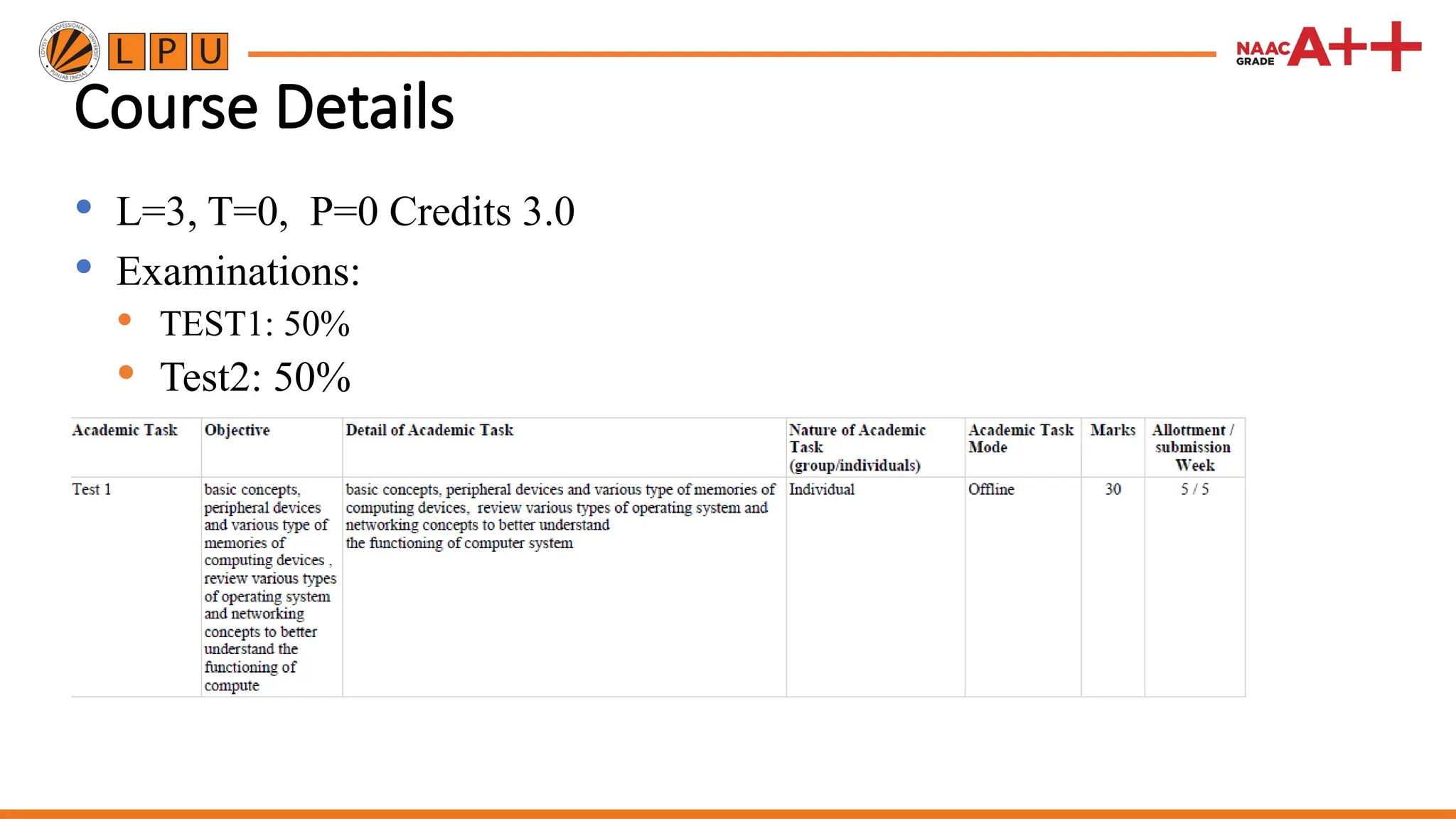
Course Details
 L=3, T=0, P=0 Credits 3.0
 Examinations:
 TEST1: 50%
 Test2: 50%
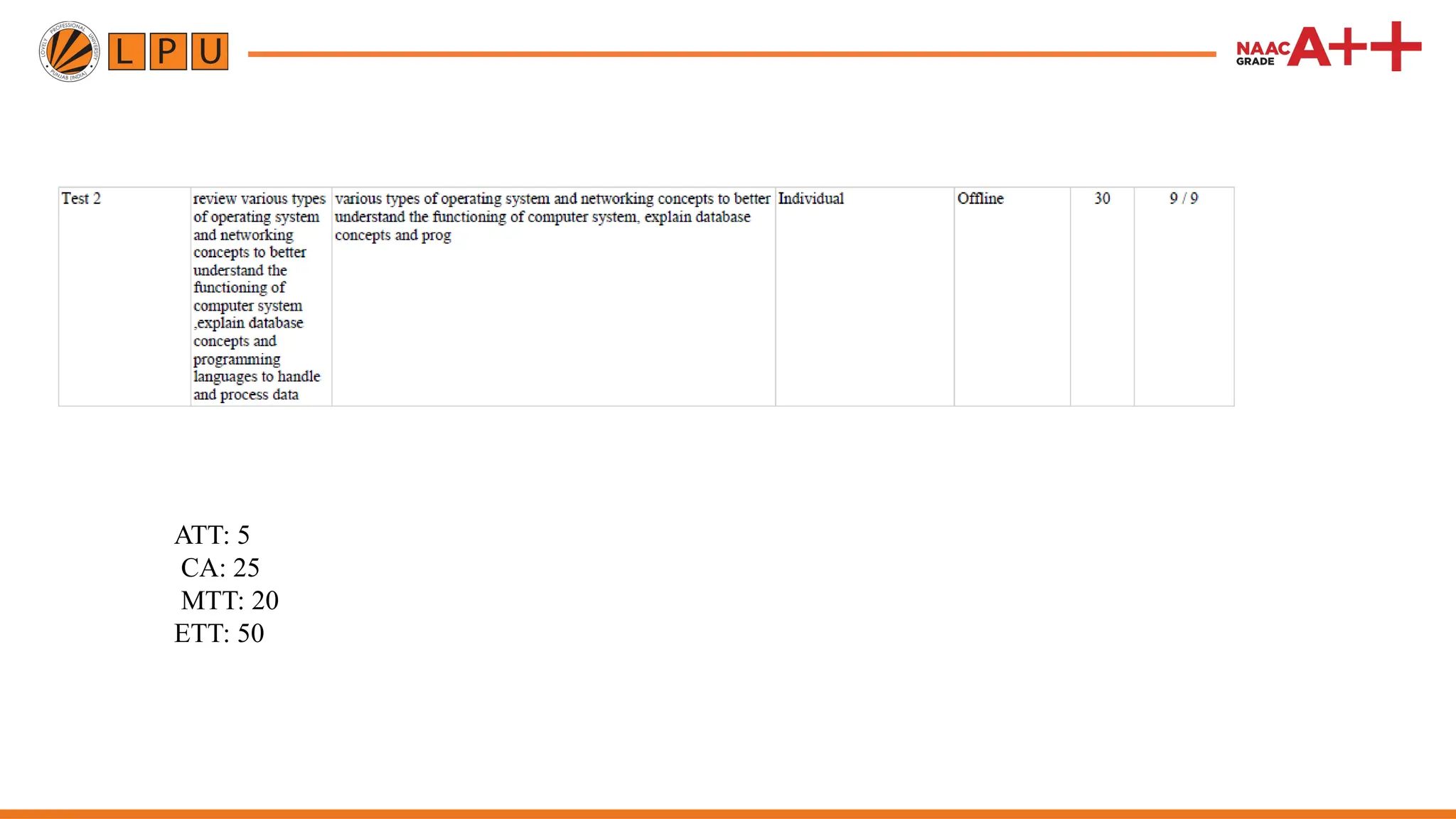
ATT: 5
CA: 25
MTT: 20
ETT: 50
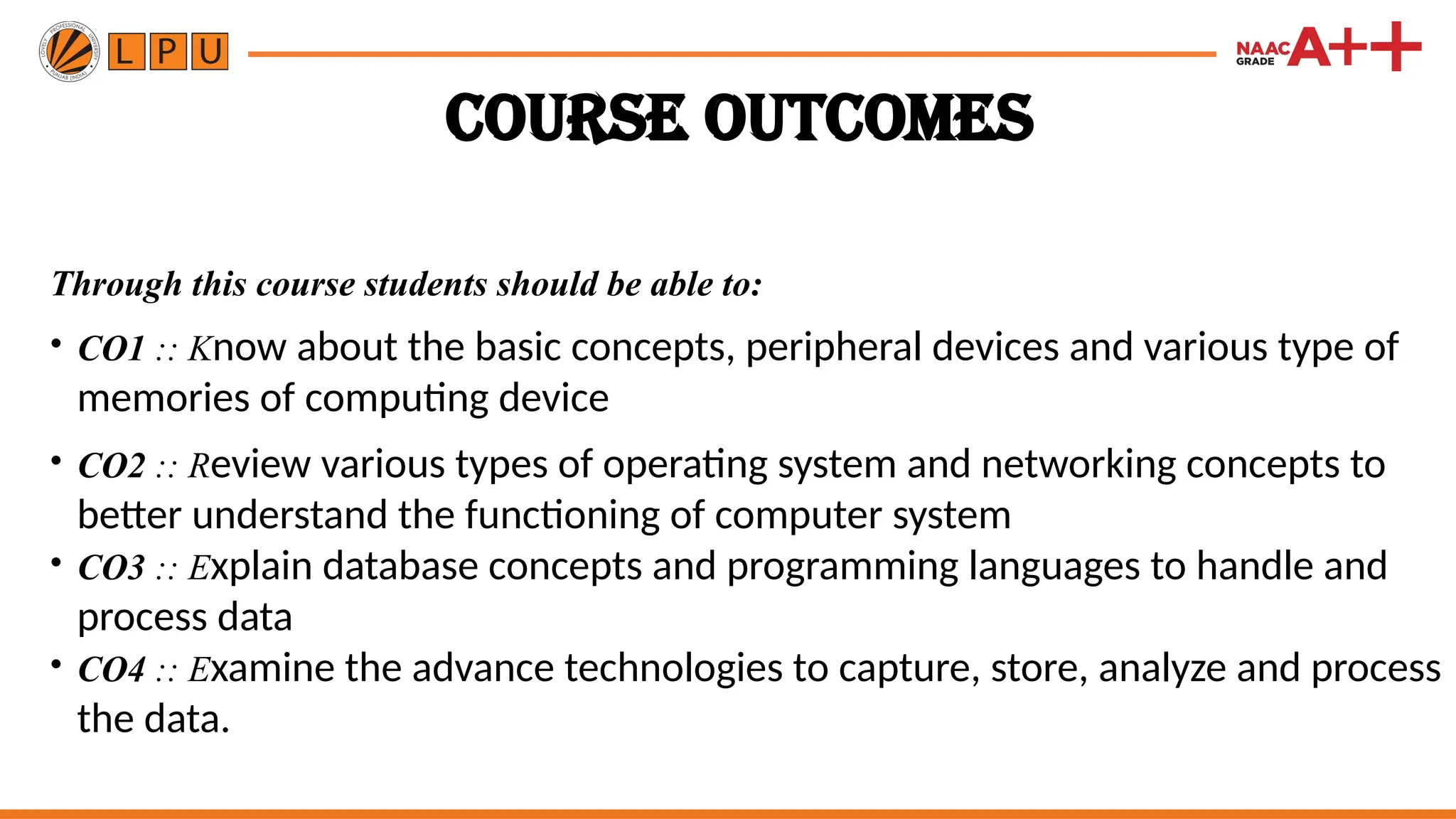
Course Outcomes
Through this course students should be able to:
• CO1 :: Know about the basic concepts, peripheral devices and various type of
memories of computing device
• CO2 :: Review various types of operating system and networking concepts to
better understand the functioning of computer system
• CO3 :: Explain database concepts and programming languages to handle and
process data
• CO4 :: Examine the advance technologies to capture, store, analyze and process
the data.
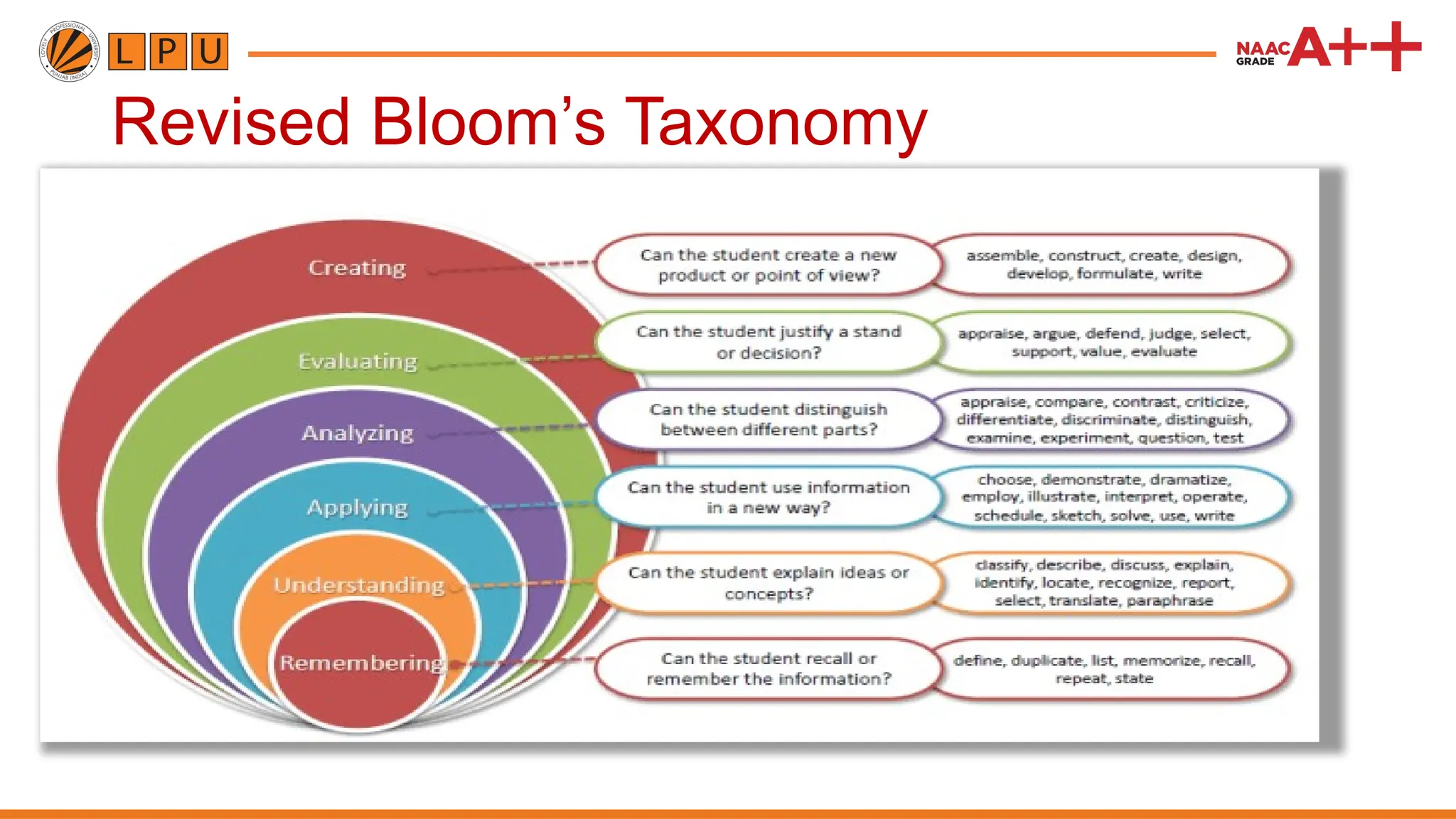
Revised Bloom’s Taxonomy
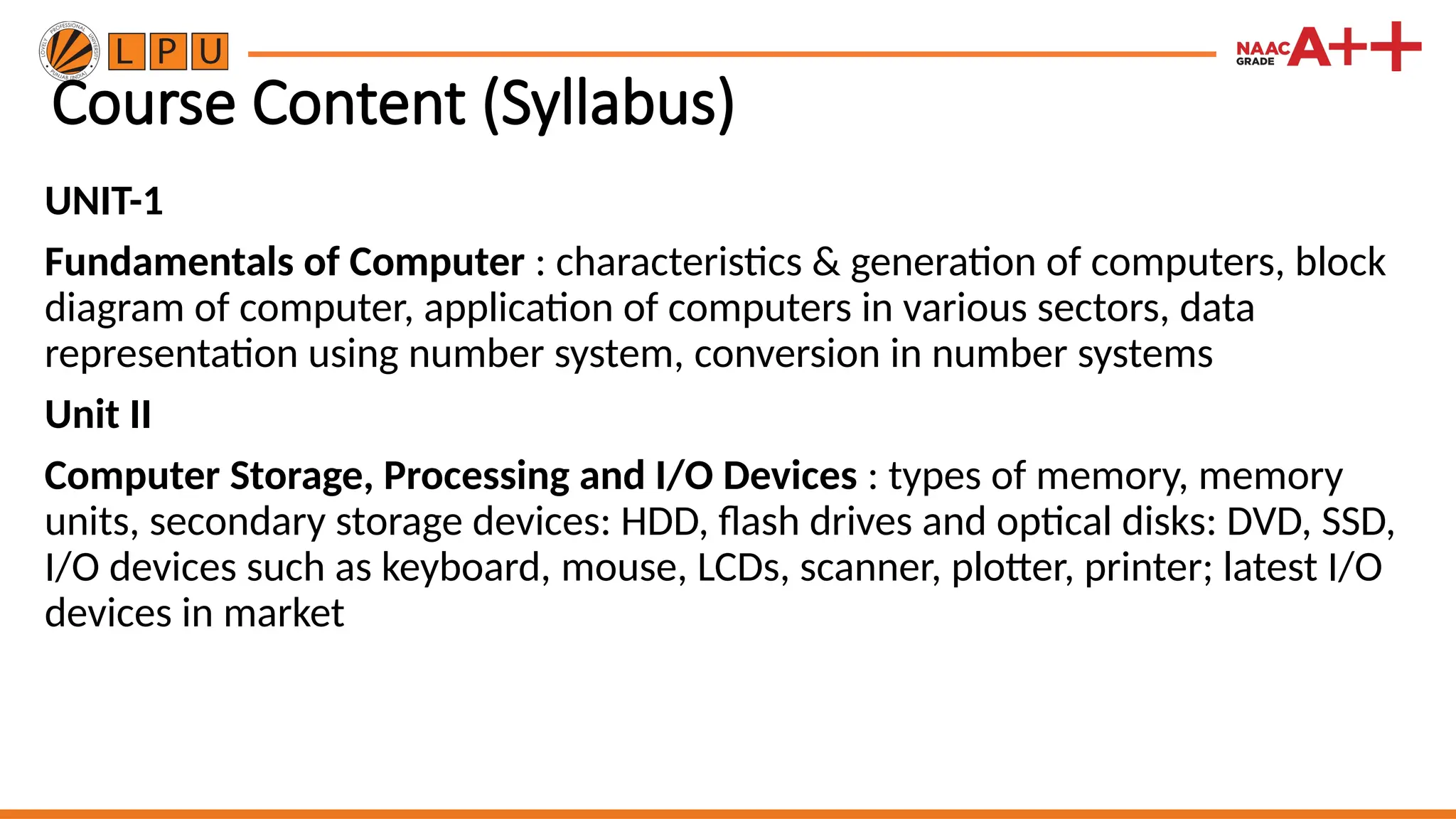
Course Content (Syllabus)
UNIT-1
Fundamentals of Computer : characteristics & generation of computers, block
diagram of computer, application of computers in various sectors, data
representation using number system, conversion in number systems
Unit II
Computer Storage, Processing and I/O Devices : types of memory, memory
units, secondary storage devices: HDD, flash drives and optical disks: DVD, SSD,
I/O devices such as keyboard, mouse, LCDs, scanner, plotter, printer; latest I/O
devices in market
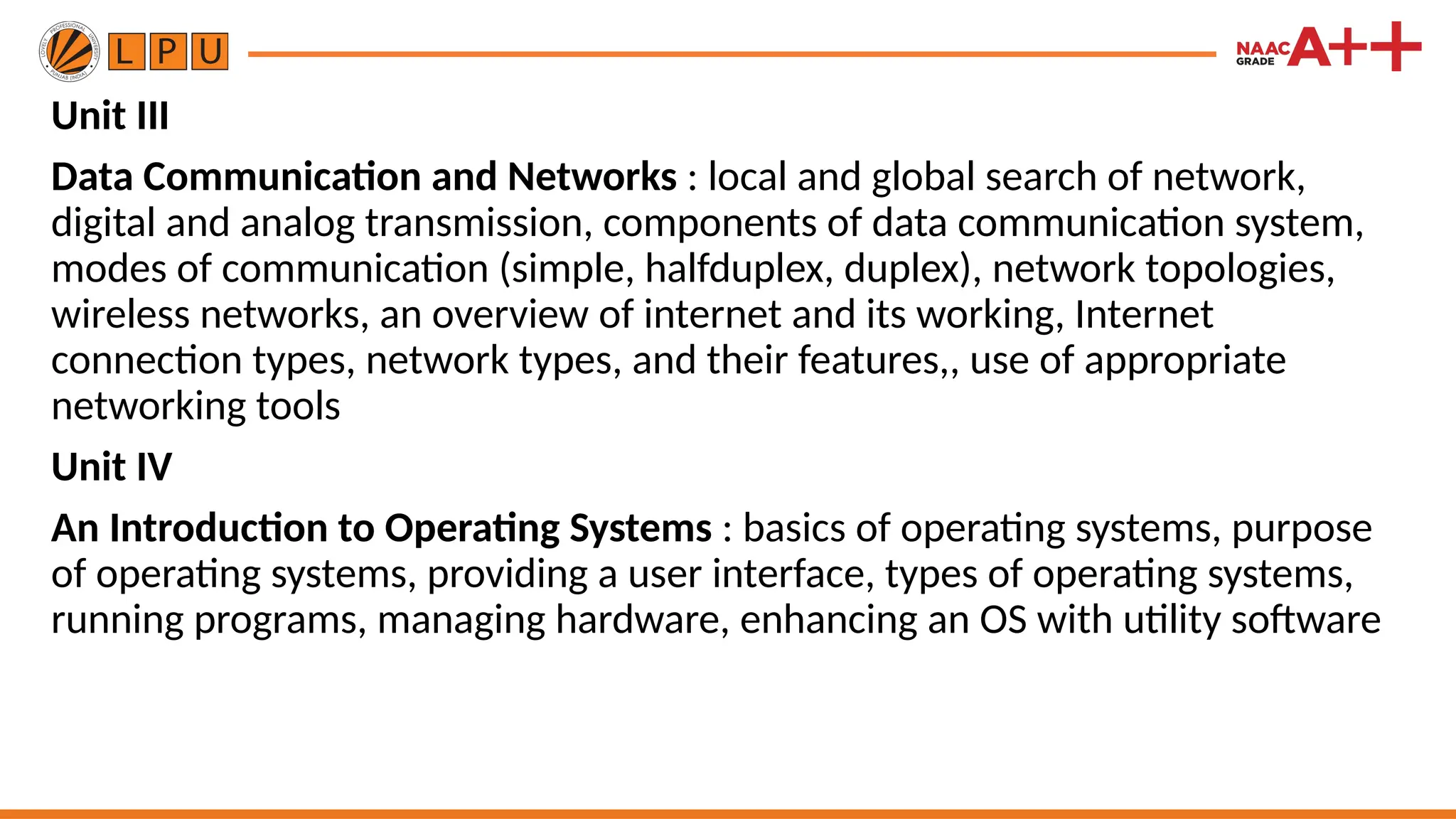
Unit III
Data Communication and Networks : local and global search of network,
digital and analog transmission, components of data communication system,
modes of communication (simple, halfduplex, duplex), network topologies,
wireless networks, an overview of internet and its working, Internet
connection types, network types, and their features,, use of appropriate
networking tools
Unit IV
An Introduction to Operating Systems : basics of operating systems, purpose
of operating systems, providing a user interface, types of operating systems,
running programs, managing hardware, enhancing an OS with utility software
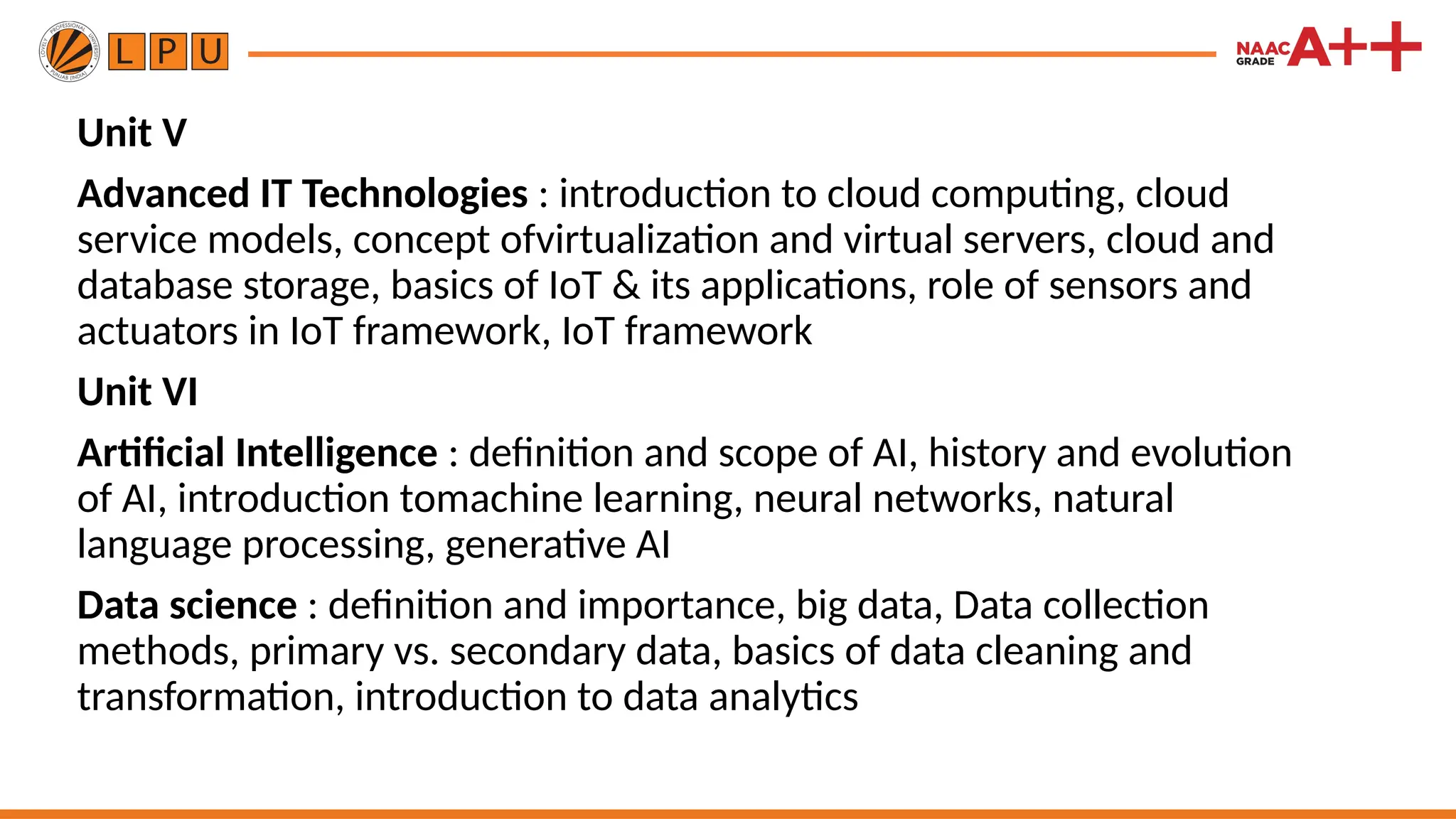
Unit V
Advanced IT Technologies : introduction to cloud computing, cloud
service models, concept ofvirtualization and virtual servers, cloud and
database storage, basics of IoT & its applications, role of sensors and
actuators in IoT framework, IoT framework
Unit VI
Artificial Intelligence : definition and scope of AI, history and evolution
of AI, introduction tomachine learning, neural networks, natural
language processing, generative AI
Data science : definition and importance, big data, Data collection
methods, primary vs. secondary data, basics of data cleaning and
transformation, introduction to data analytics
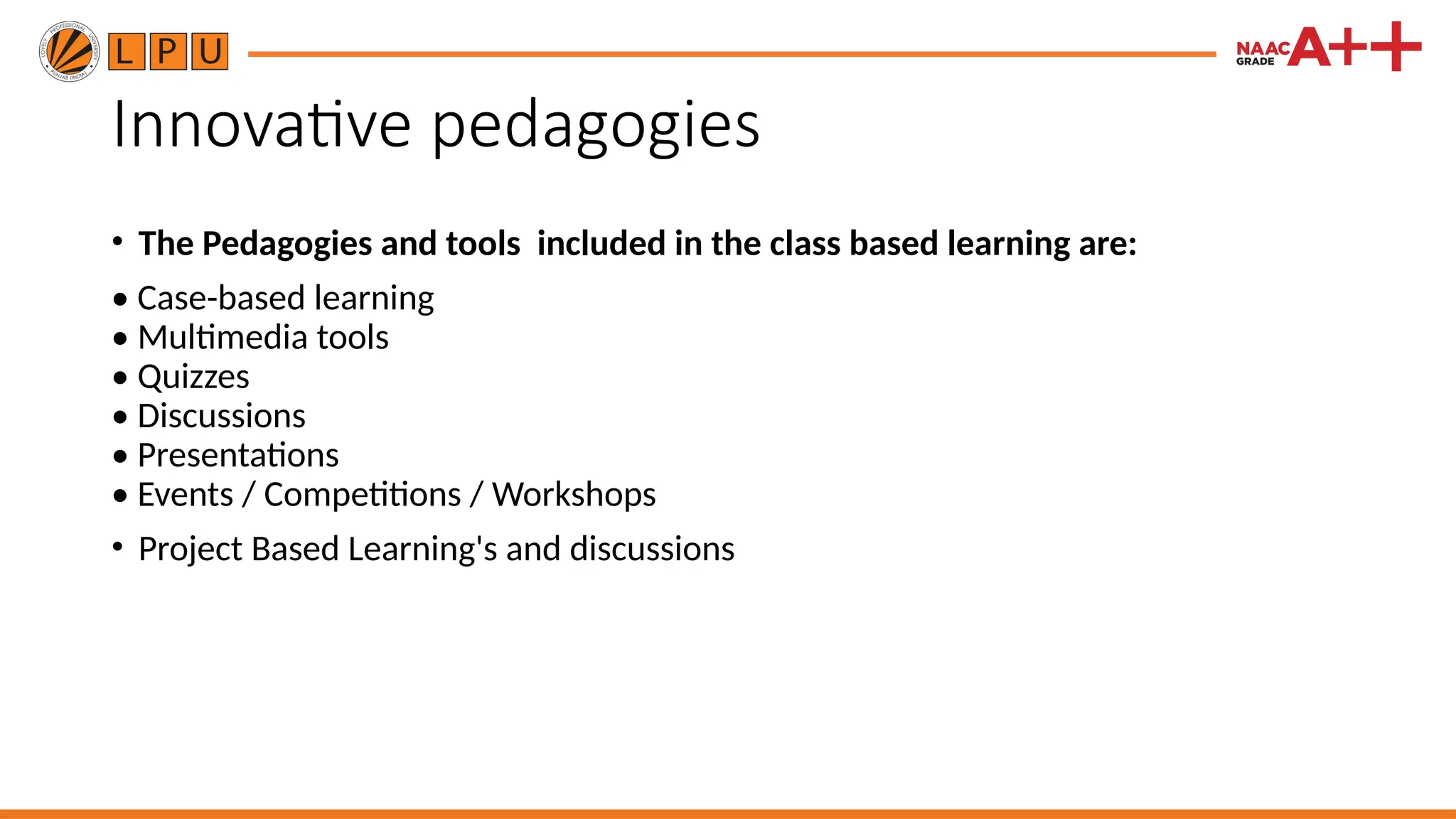
Innovative pedagogies
• The Pedagogies and tools included in the class based learning are:
• Case-based learning
• Multimedia tools
• Quizzes
• Discussions
• Presentations
• Events / Competitions / Workshops
• Project Based Learning's and discussions
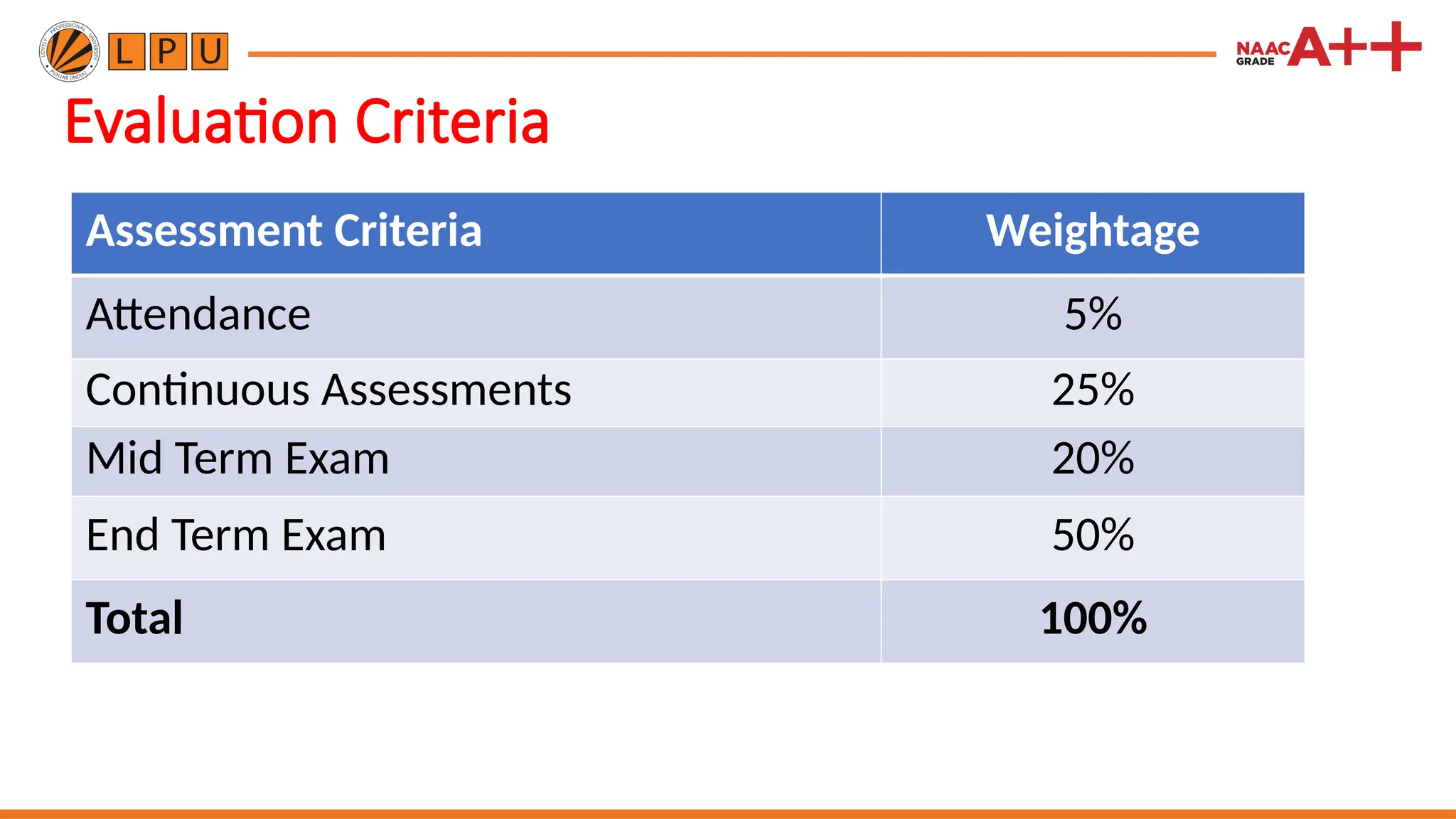
Evaluation Criteria
Assessment Criteria Weightage
Attendance 5%
Continuous Assessments 25%
Mid Term Exam 20%
End Term Exam 50%
Total 100%
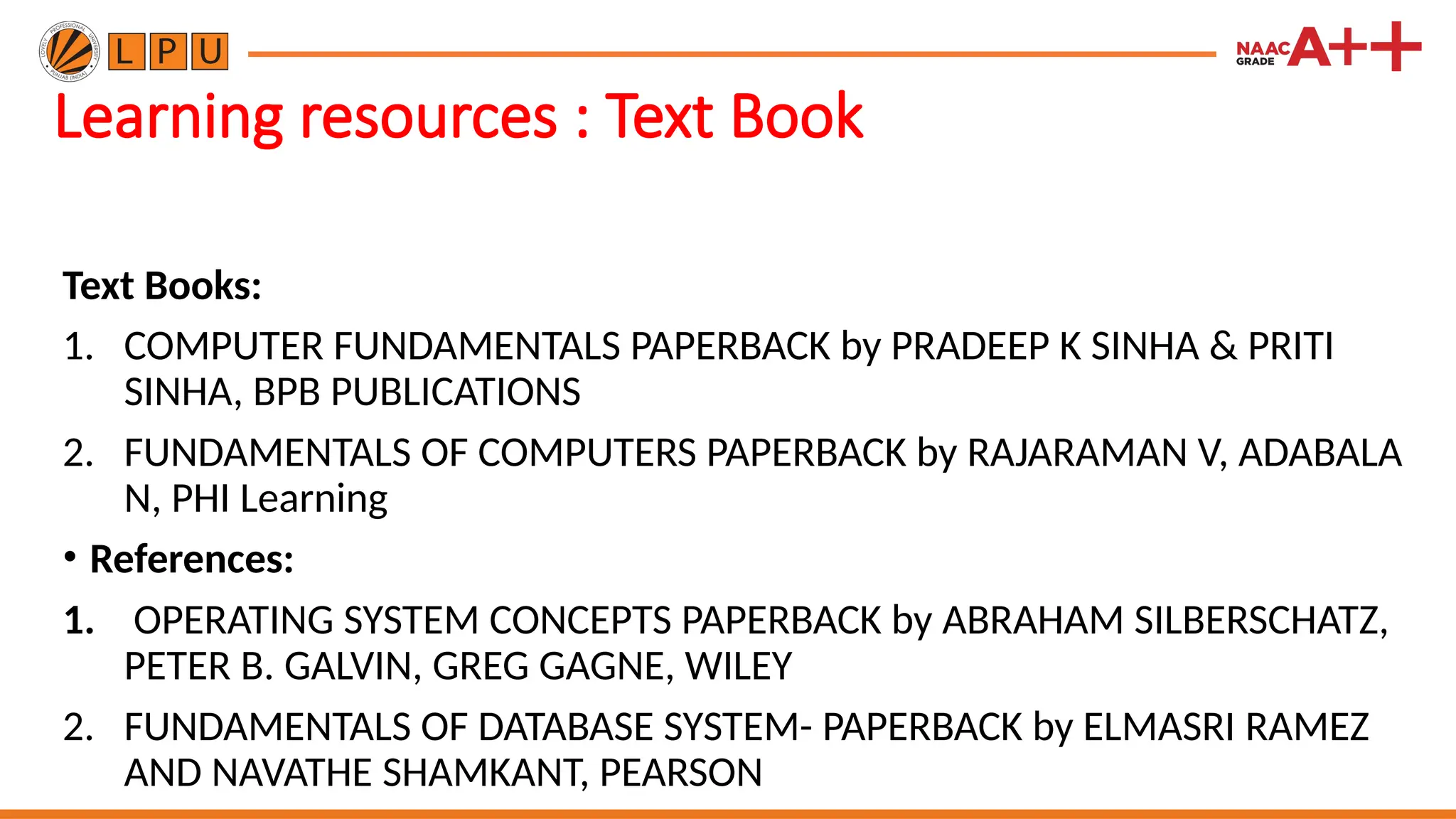
Learning resources : Text Book
Text Books:
1. COMPUTER FUNDAMENTALS PAPERBACK by PRADEEP K SINHA & PRITI
SINHA, BPB PUBLICATIONS
2. FUNDAMENTALS OF COMPUTERS PAPERBACK by RAJARAMAN V, ADABALA
N, PHI Learning
• References:
1. OPERATING SYSTEM CONCEPTS PAPERBACK by ABRAHAM SILBERSCHATZ,
PETER B. GALVIN, GREG GAGNE, WILEY
2. FUNDAMENTALS OF DATABASE SYSTEM- PAPERBACK by ELMASRI RAMEZ
AND NAVATHE SHAMKANT, PEARSON
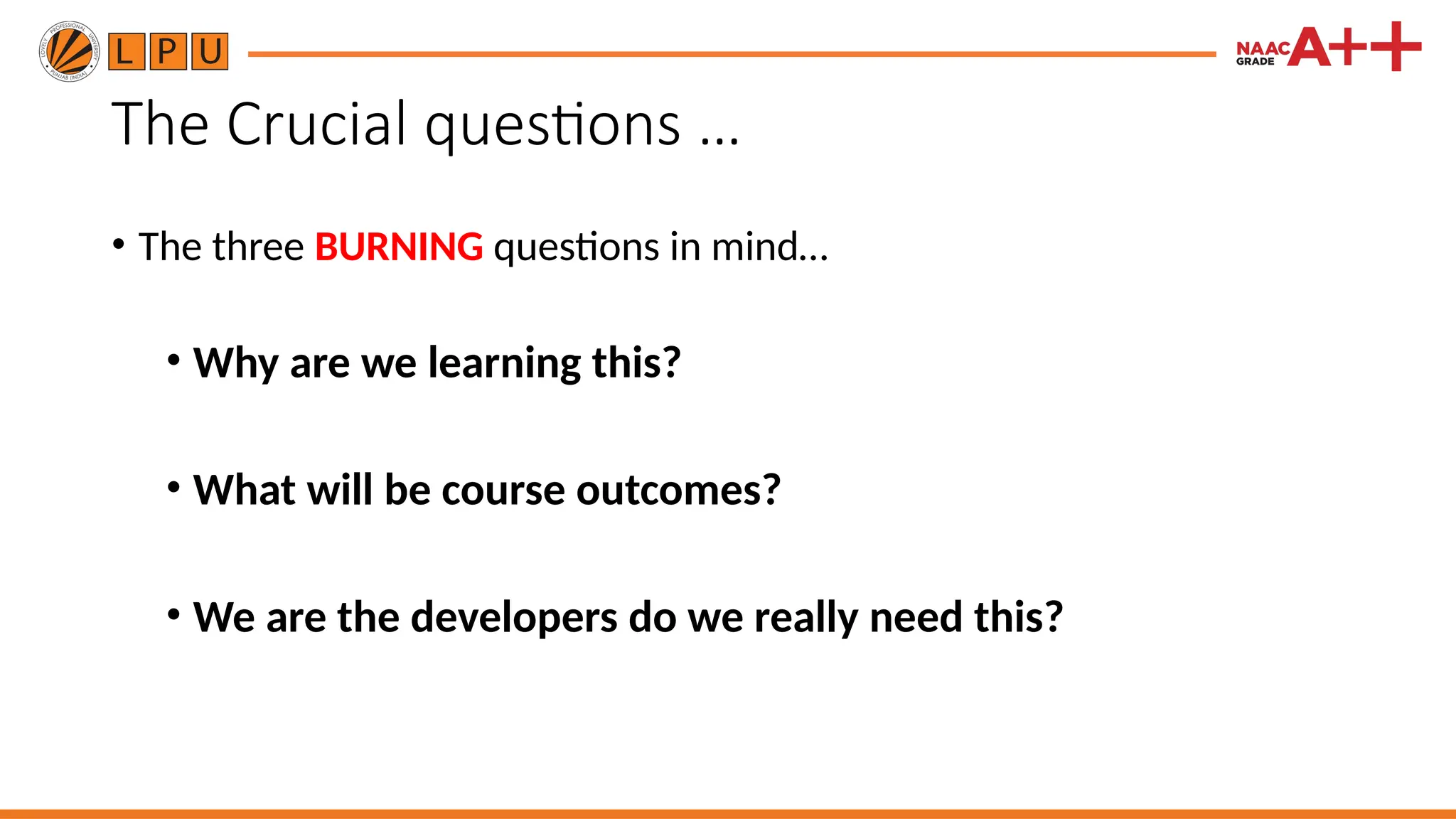
The Crucial questions …
• The three BURNING questions in mind…
• Why are we learning this?
• What will be course outcomes?
• We are the developers do we really need this?
Part- B
Edu-Revolution: Be the Change
Initiatives
EDU Revolution: Be the
Change
• New Session
• New Beginning
• New Excitement
Edu-Revolution – Be the change initiative
UMS Navigation → LMS > Edu-Revolution: Be the Change
Edu-Rev Offerings:
 NPTEL/MOOCs/Certification
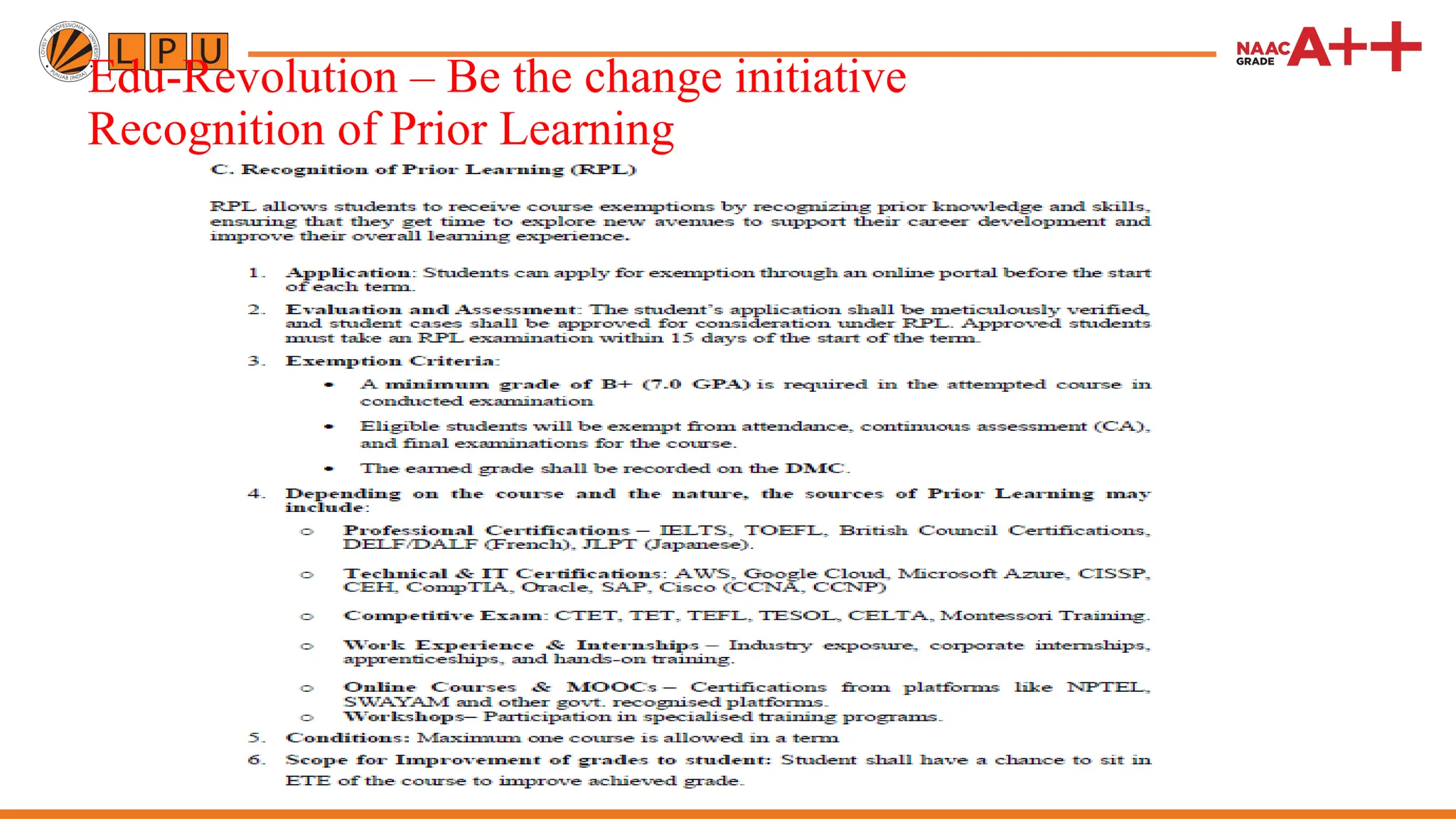
 Recognition of Prior Learning(RPL)
Edu-Revolution – Be the change initiative
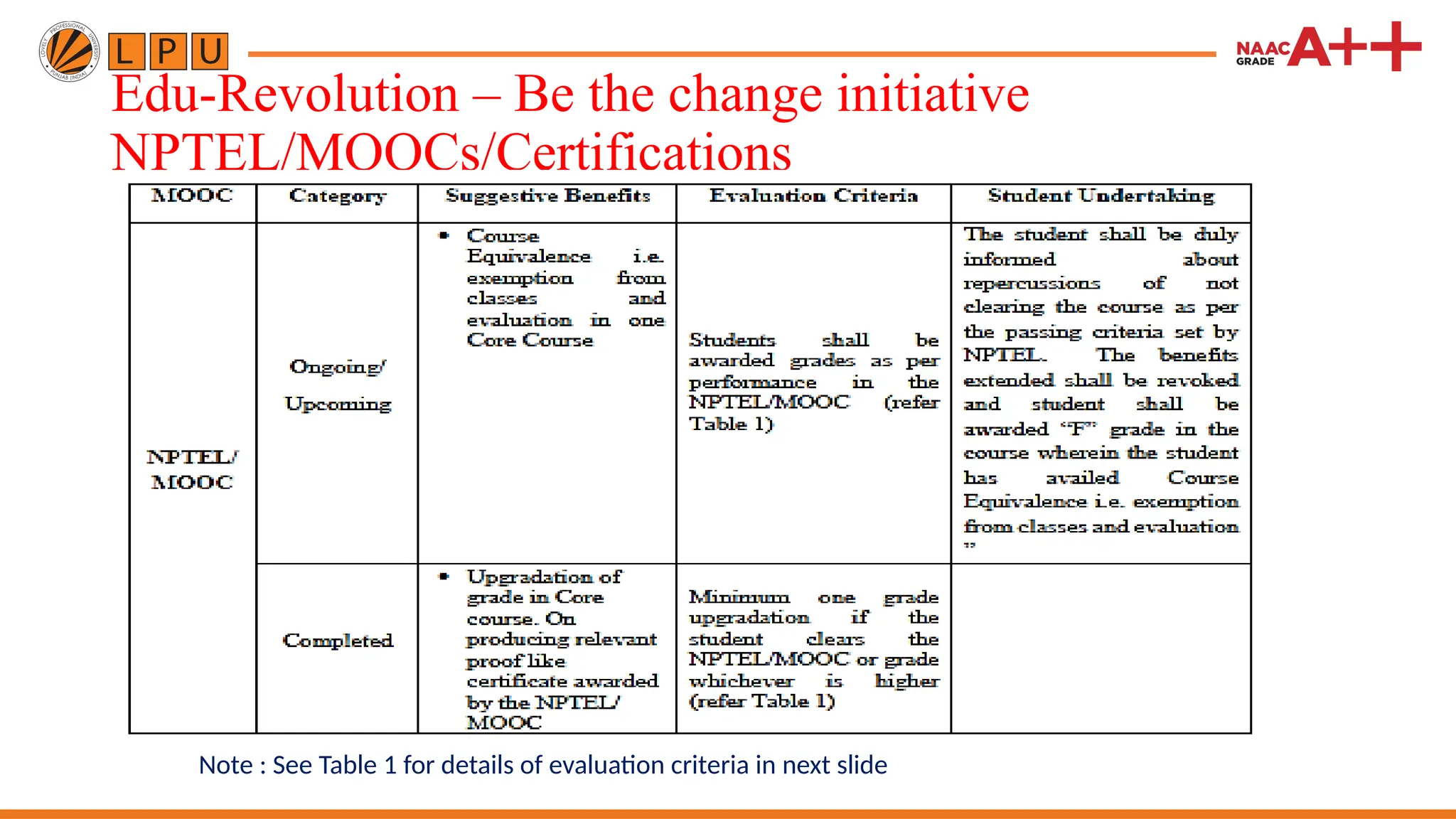
NPTEL/MOOCs/Certifications
Note : See Table 1 for details of evaluation criteria in next slide
Edu-Revolution – Be the change initiative
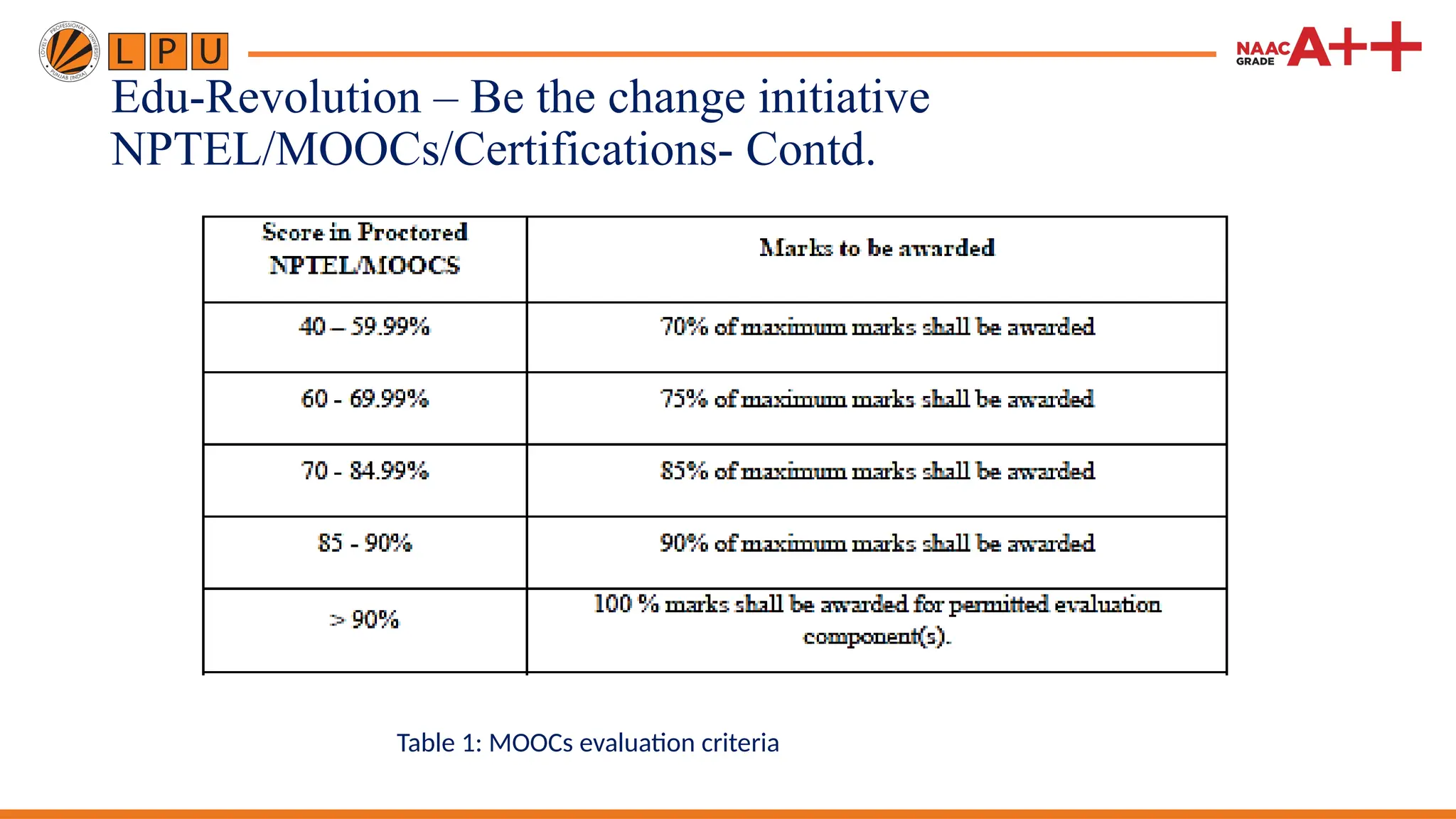
NPTEL/MOOCs/Certifications- Contd.
Table 1: MOOCs evaluation criteria
Edu-Revolution – Be the change initiative
Recognition of Prior Learning
Questions???
Next Class: Introduction to- Basics Computer
Hardware
Thanks!

Fundamental of computer and Generations of computer

  • 1.
    INTRODUCTORY LECTURE Lecture -0 FUNDAMENTAL OF INFORMATION TECHNOLOGY (CAP-170)
  • 2.
    Outline of Zero– Lecture Entire session is having two parts (Part A & Part B) Part- A • Introduction and Information about CAP -170 Part - B • Edu-Revolution: Be the Change Initiatives
  • 3.
  • 4.
    Course Details  L=3,T=0, P=0 Credits 3.0  Examinations:  TEST1: 50%  Test2: 50%
  • 5.
  • 6.
    Course Outcomes Through thiscourse students should be able to: • CO1 :: Know about the basic concepts, peripheral devices and various type of memories of computing device • CO2 :: Review various types of operating system and networking concepts to better understand the functioning of computer system • CO3 :: Explain database concepts and programming languages to handle and process data • CO4 :: Examine the advance technologies to capture, store, analyze and process the data.
  • 9.
  • 10.
    Course Content (Syllabus) UNIT-1 Fundamentalsof Computer : characteristics & generation of computers, block diagram of computer, application of computers in various sectors, data representation using number system, conversion in number systems Unit II Computer Storage, Processing and I/O Devices : types of memory, memory units, secondary storage devices: HDD, flash drives and optical disks: DVD, SSD, I/O devices such as keyboard, mouse, LCDs, scanner, plotter, printer; latest I/O devices in market
  • 11.
    Unit III Data Communicationand Networks : local and global search of network, digital and analog transmission, components of data communication system, modes of communication (simple, halfduplex, duplex), network topologies, wireless networks, an overview of internet and its working, Internet connection types, network types, and their features,, use of appropriate networking tools Unit IV An Introduction to Operating Systems : basics of operating systems, purpose of operating systems, providing a user interface, types of operating systems, running programs, managing hardware, enhancing an OS with utility software
  • 12.
    Unit V Advanced ITTechnologies : introduction to cloud computing, cloud service models, concept ofvirtualization and virtual servers, cloud and database storage, basics of IoT & its applications, role of sensors and actuators in IoT framework, IoT framework Unit VI Artificial Intelligence : definition and scope of AI, history and evolution of AI, introduction tomachine learning, neural networks, natural language processing, generative AI Data science : definition and importance, big data, Data collection methods, primary vs. secondary data, basics of data cleaning and transformation, introduction to data analytics
  • 13.
    Innovative pedagogies • ThePedagogies and tools included in the class based learning are: • Case-based learning • Multimedia tools • Quizzes • Discussions • Presentations • Events / Competitions / Workshops • Project Based Learning's and discussions
  • 14.
    Evaluation Criteria Assessment CriteriaWeightage Attendance 5% Continuous Assessments 25% Mid Term Exam 20% End Term Exam 50% Total 100%
  • 15.
    Learning resources :Text Book Text Books: 1. COMPUTER FUNDAMENTALS PAPERBACK by PRADEEP K SINHA & PRITI SINHA, BPB PUBLICATIONS 2. FUNDAMENTALS OF COMPUTERS PAPERBACK by RAJARAMAN V, ADABALA N, PHI Learning • References: 1. OPERATING SYSTEM CONCEPTS PAPERBACK by ABRAHAM SILBERSCHATZ, PETER B. GALVIN, GREG GAGNE, WILEY 2. FUNDAMENTALS OF DATABASE SYSTEM- PAPERBACK by ELMASRI RAMEZ AND NAVATHE SHAMKANT, PEARSON
  • 16.
    The Crucial questions… • The three BURNING questions in mind… • Why are we learning this? • What will be course outcomes? • We are the developers do we really need this?
  • 17.
    Part- B Edu-Revolution: Bethe Change Initiatives
  • 18.
    EDU Revolution: Bethe Change • New Session • New Beginning • New Excitement
  • 19.
    Edu-Revolution – Bethe change initiative UMS Navigation → LMS > Edu-Revolution: Be the Change Edu-Rev Offerings:  NPTEL/MOOCs/Certification  Recognition of Prior Learning(RPL)
  • 20.
    Edu-Revolution – Bethe change initiative NPTEL/MOOCs/Certifications Note : See Table 1 for details of evaluation criteria in next slide
  • 21.
    Edu-Revolution – Bethe change initiative NPTEL/MOOCs/Certifications- Contd. Table 1: MOOCs evaluation criteria
  • 22.
    Edu-Revolution – Bethe change initiative Recognition of Prior Learning
  • 23.
  • 24.
    Next Class: Introductionto- Basics Computer Hardware
  • 25.