








Functional Soλid
     Matt Stine
About your speaker...
•   Senior Consultant, PSO
    vFabric, Cloud Application Platform
    VMware

•   Speaker (JavaOne, SpringOne/2GX,
    CodeMash, NFJS, RWX, PAX, UberConf)

•   Author (GroovyMag, NFJS the Magazine,
    Selenium 2.0 Refcard)

•   Founder of the Memphis/Mid-South Java
    User Group

•   Former Agile Zone Leader @ DZone
SOLID        Functional
Principles   Programming
SOLID Functional
PrinciplesProgramming
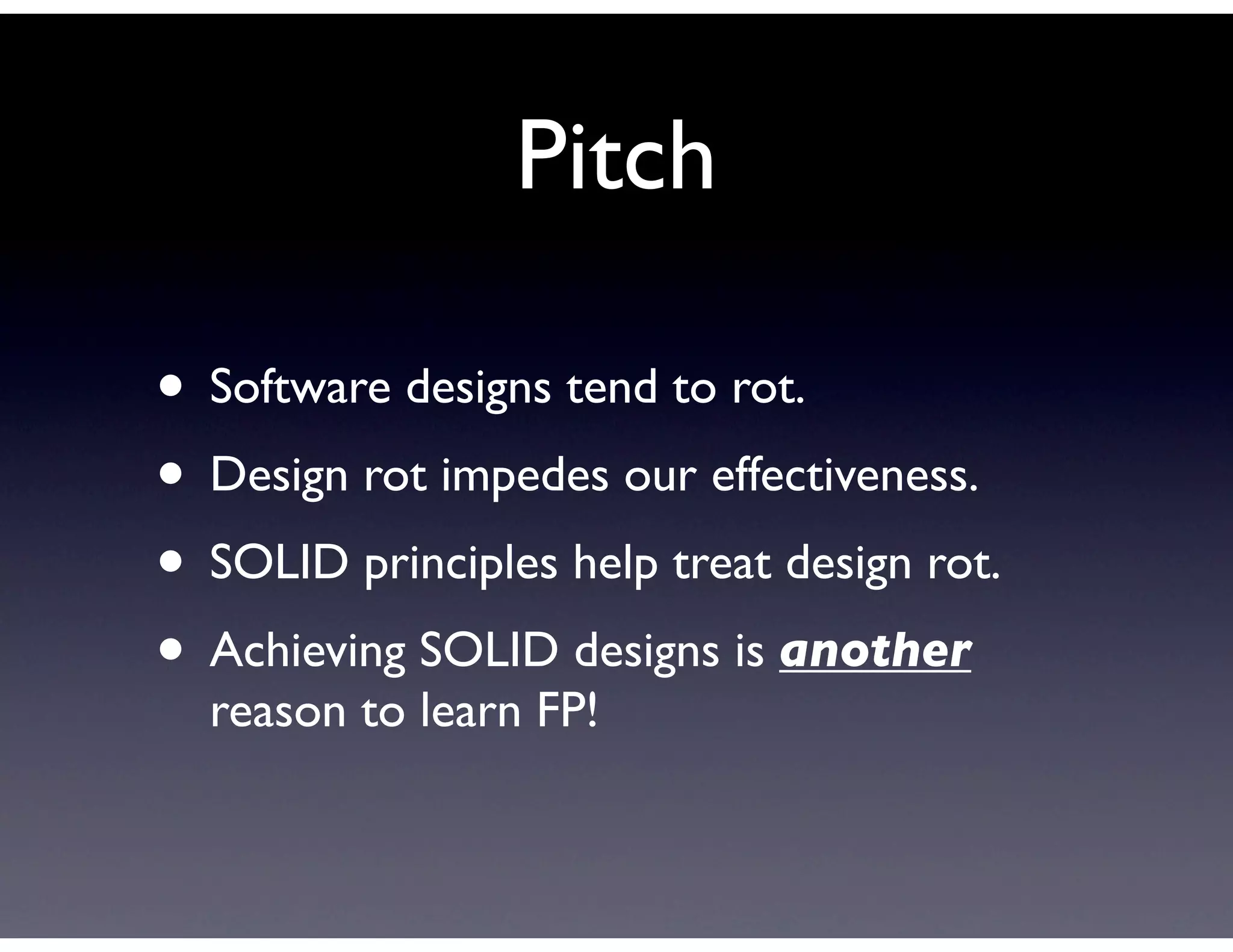
Pitch

• Software designs tend to rot.
• Design rot impedes our effectiveness.
• SOLID principles help treat design rot.
• Achieving SOLID designs is another
  reason to learn FP!
Motivation
Trends

• How Software Systems Evolve
• Programming Paradigms
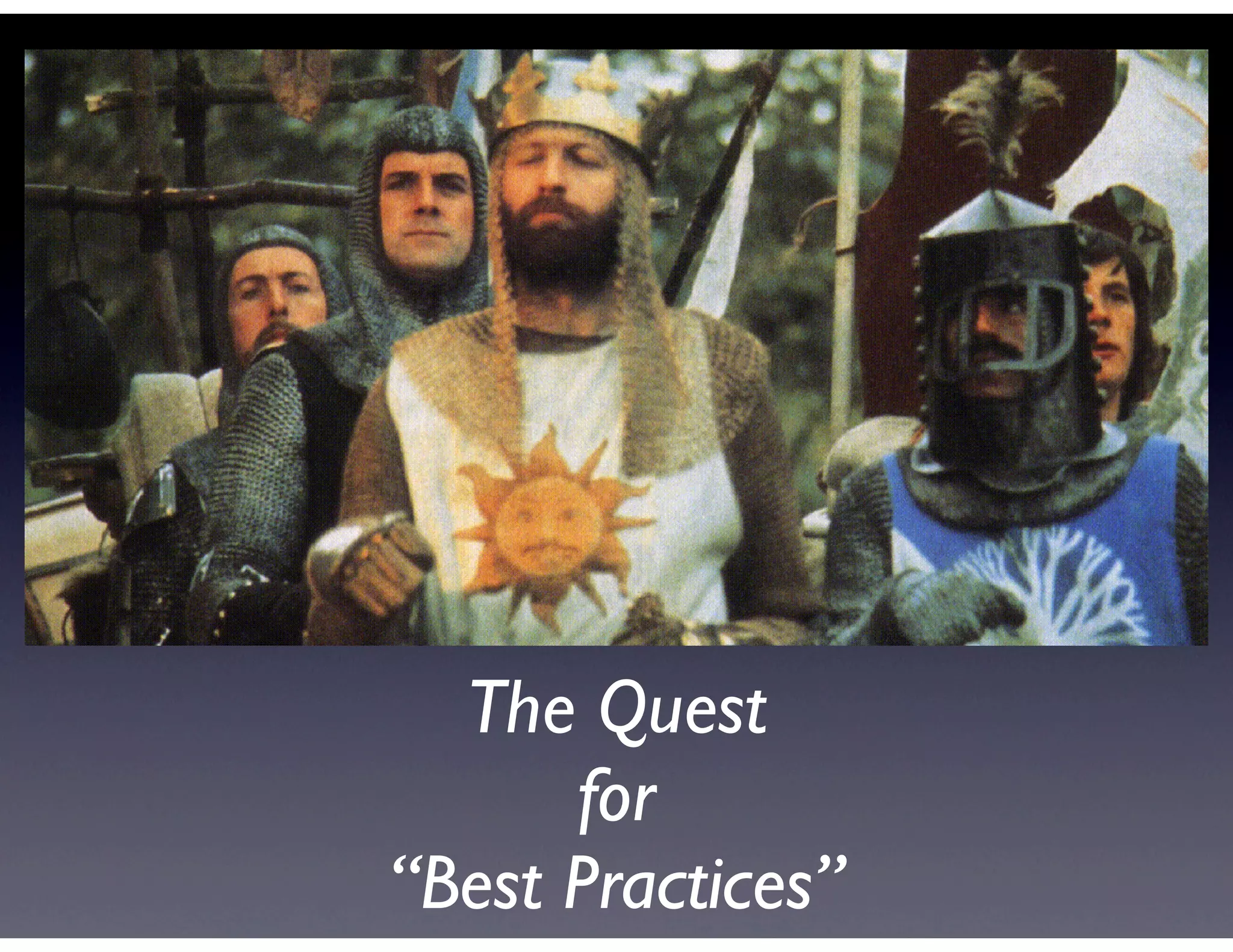
• The Quest for “Best Practices”
The evolution of
  software...
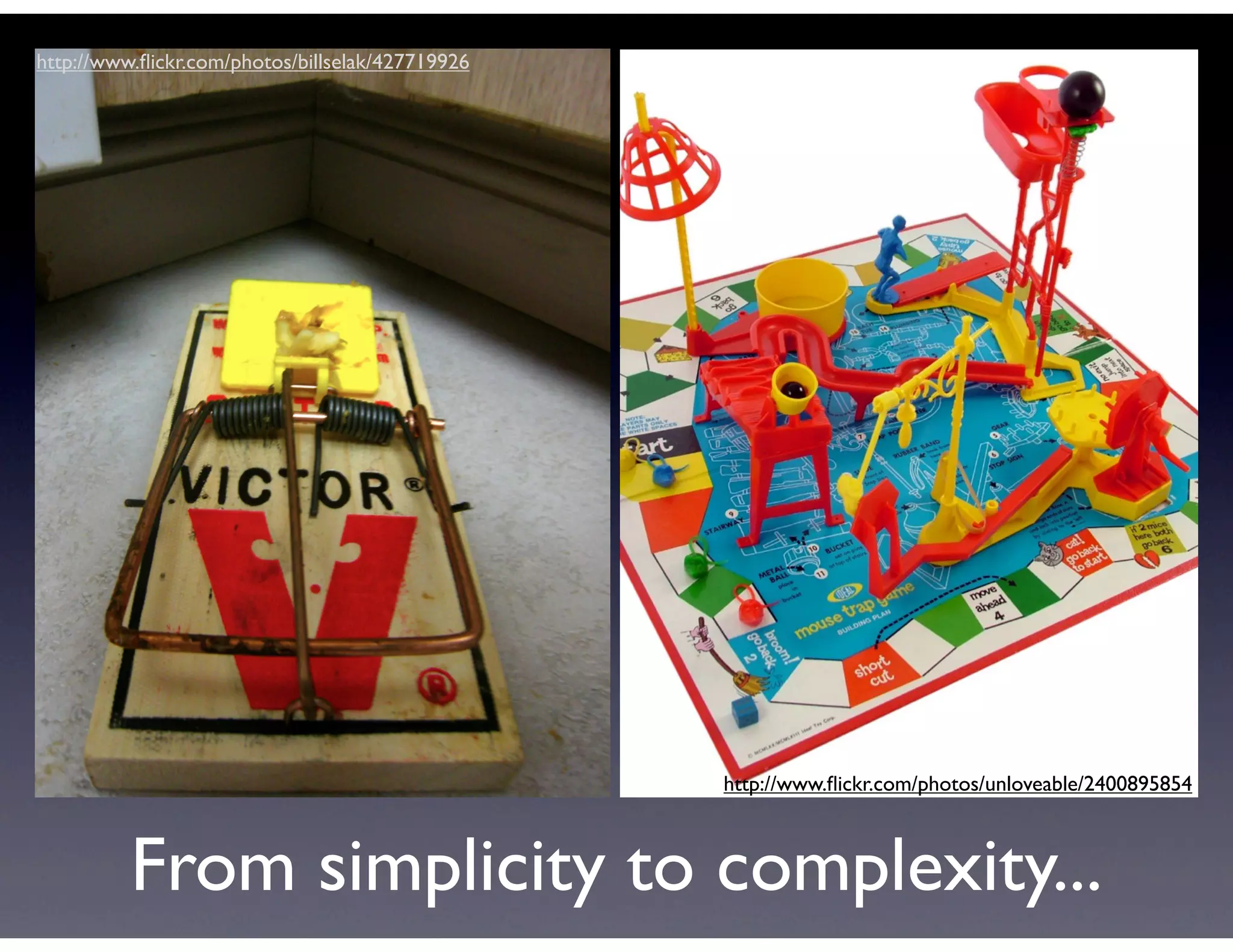
http://www.flickr.com/photos/billselak/427719926


                                                  http://www.flickr.com/photos/unloveable/2400895854


          From simplicity to complexity...
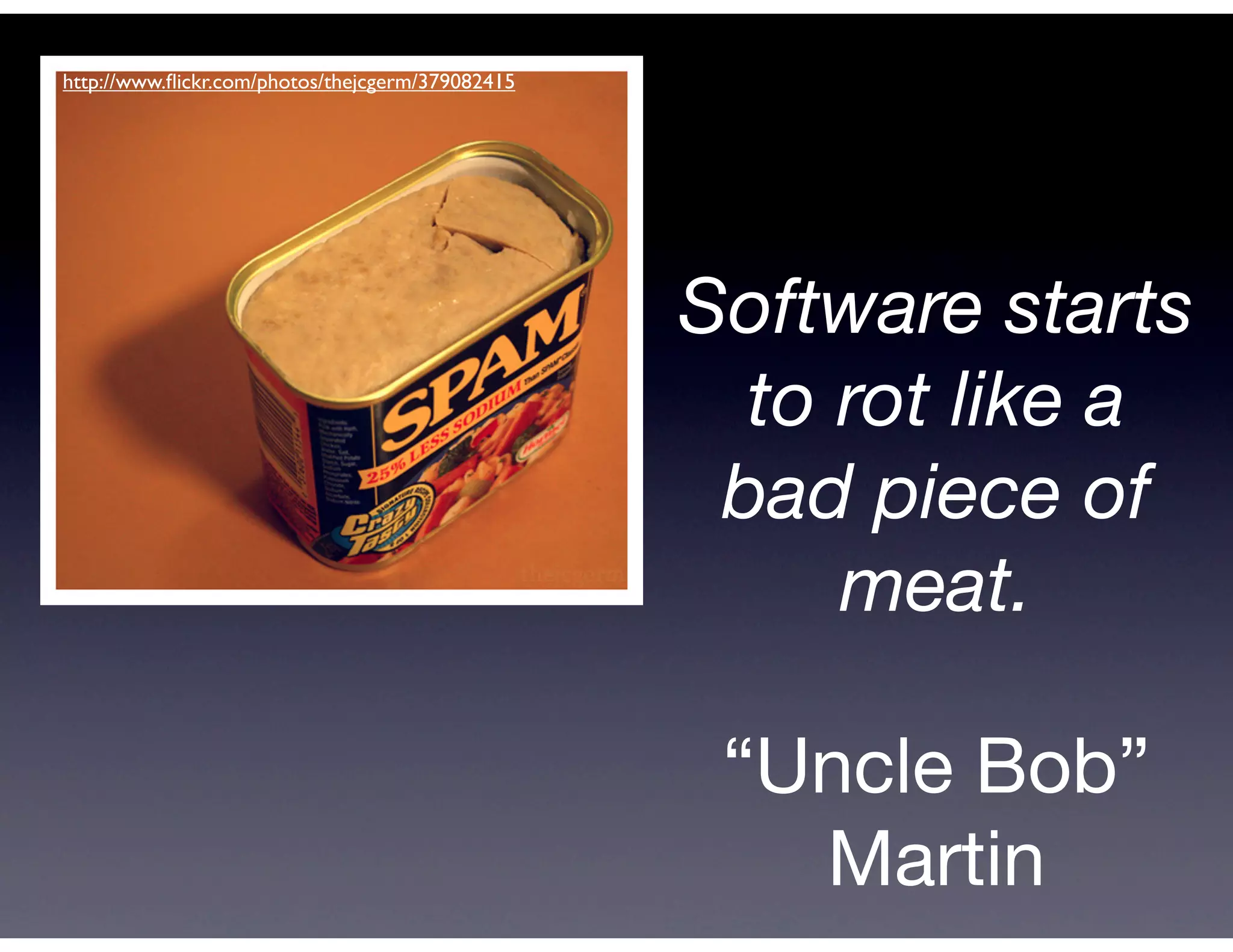
http://www.flickr.com/photos/thejcgerm/379082415


                                                  Software starts
                                                    to rot like a
                                                   bad piece of
                                                       meat.

                                                   “Uncle Bob”
                                                     Martin
We don’t handle
 change well...
Unclear or incomplete
change specifications...
Extreme time
 pressure...
Team members
unfamiliar with original
 design/architecture...
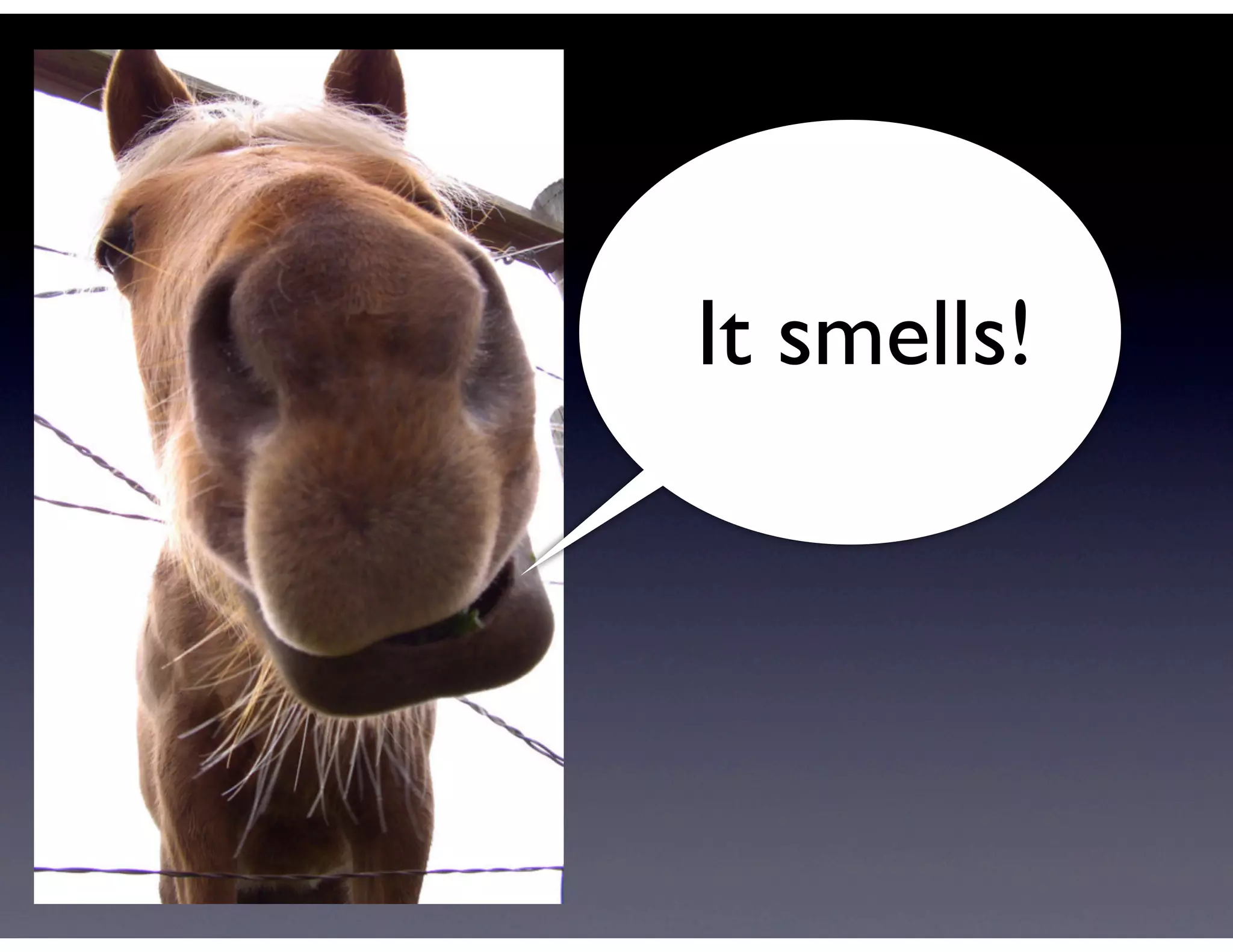
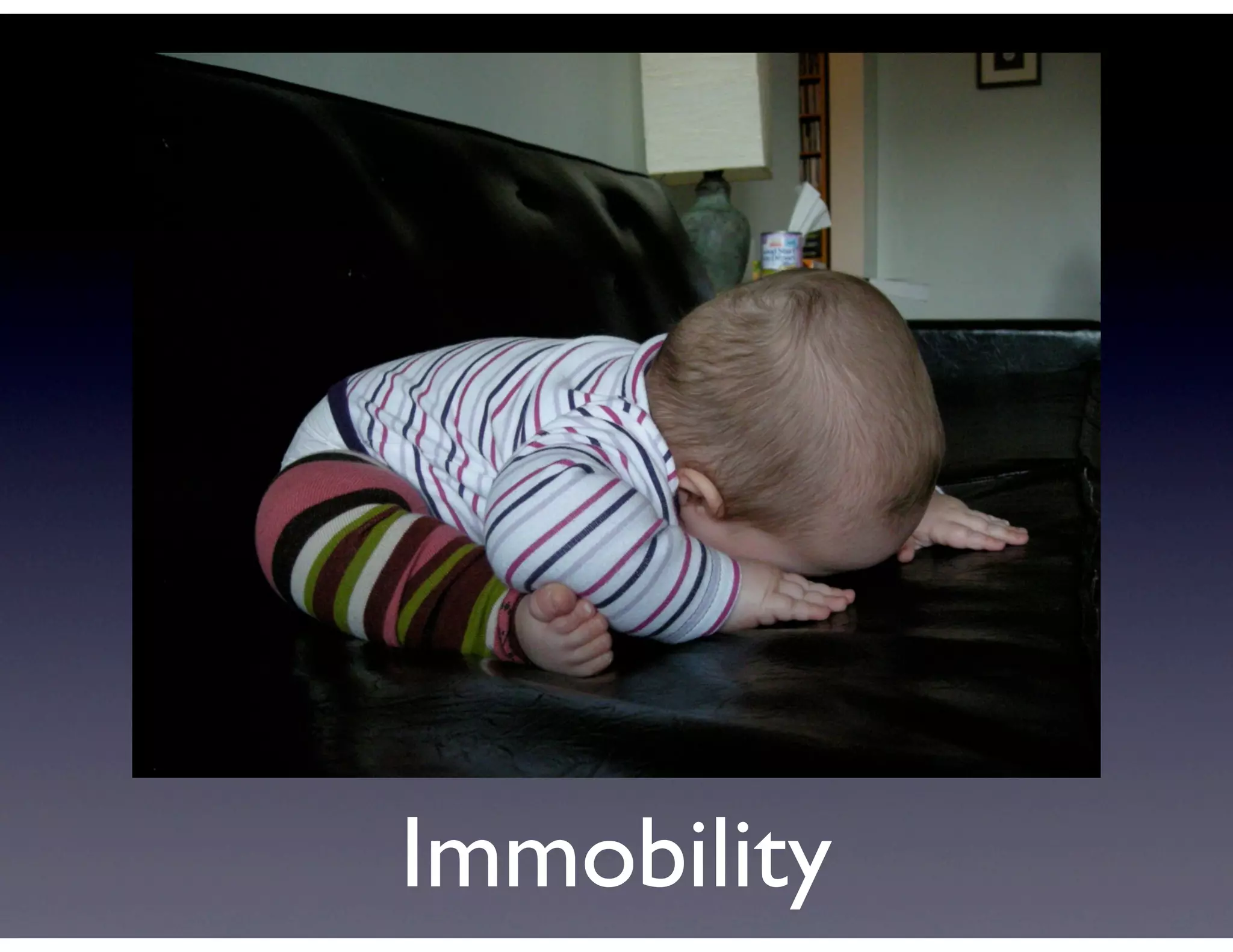
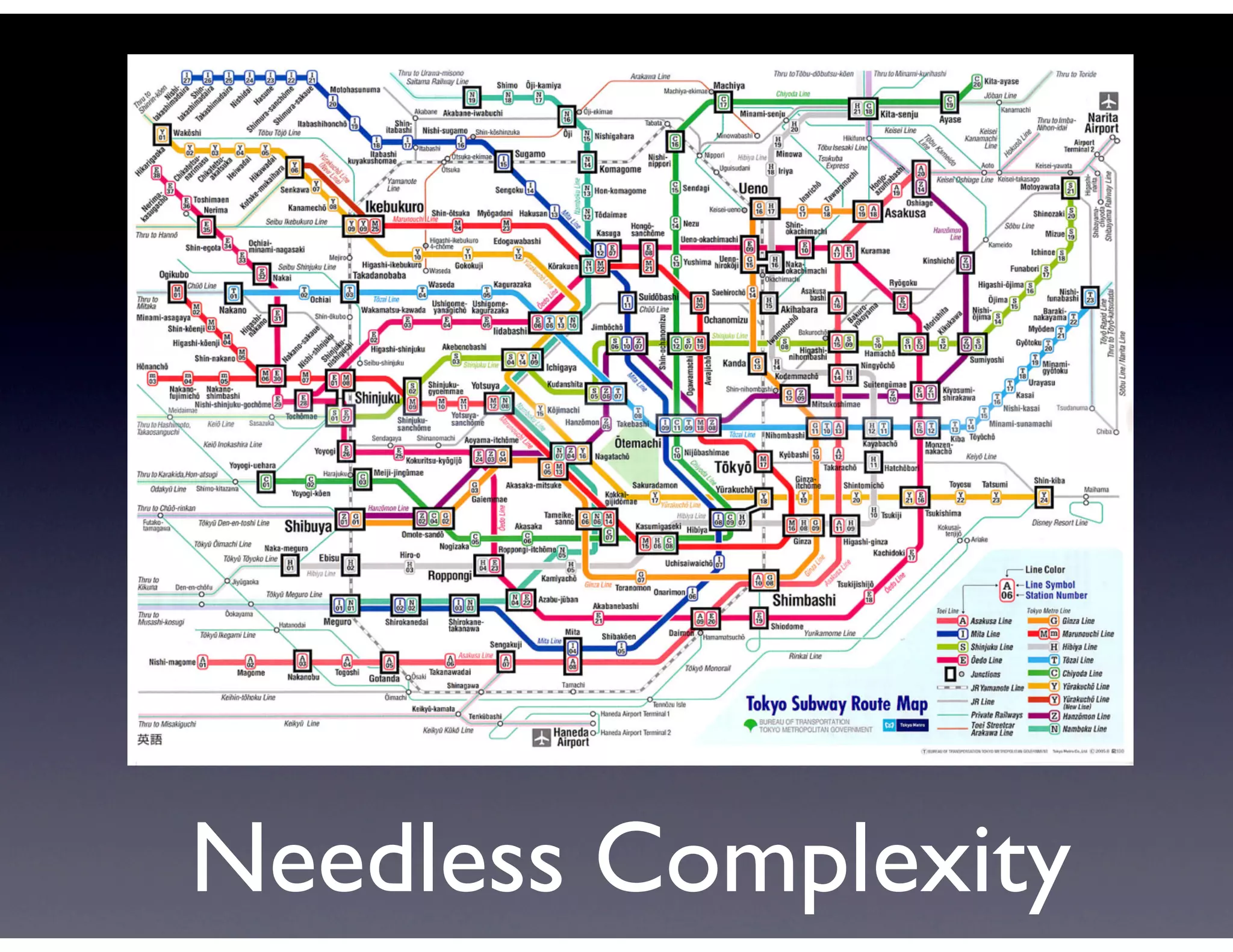
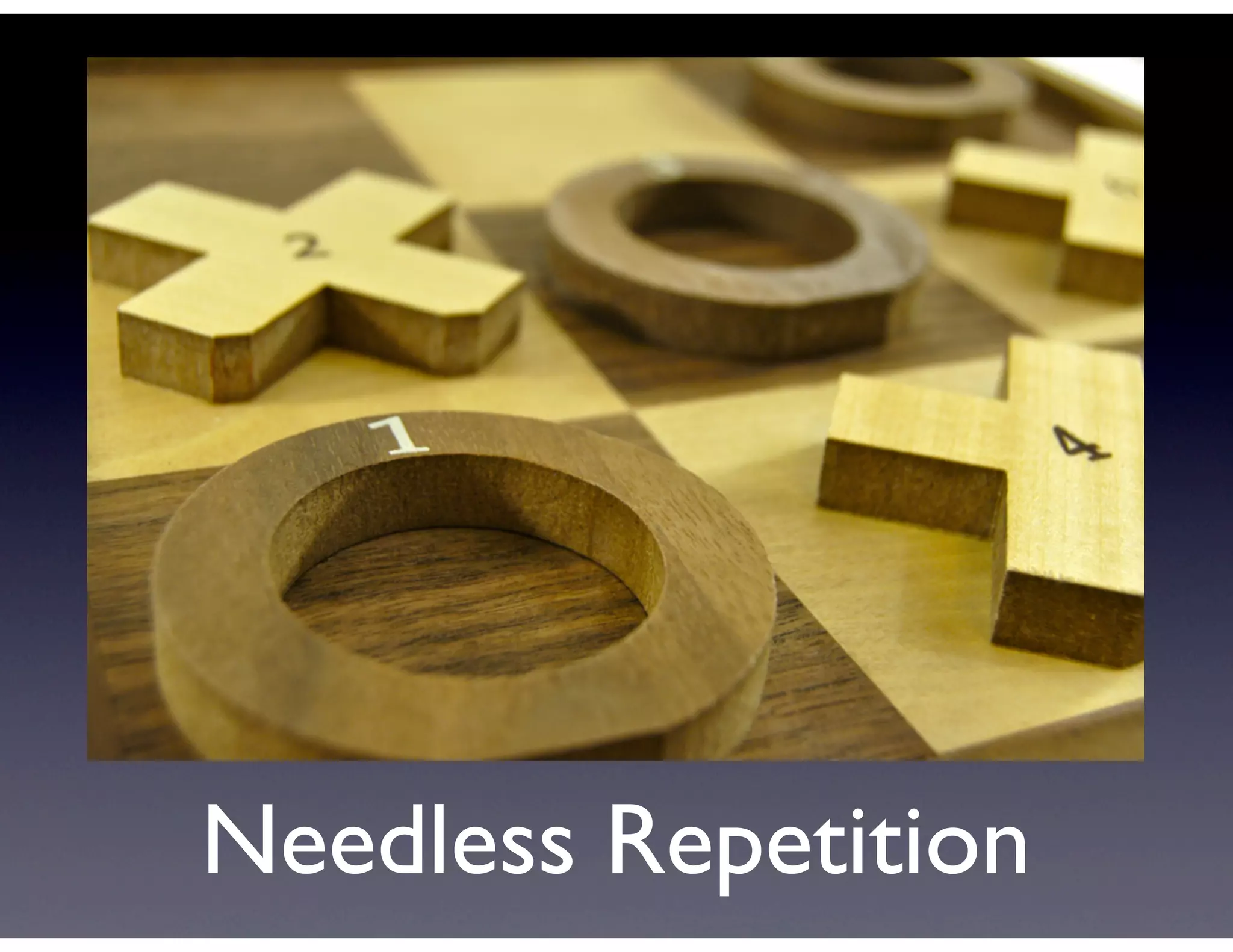
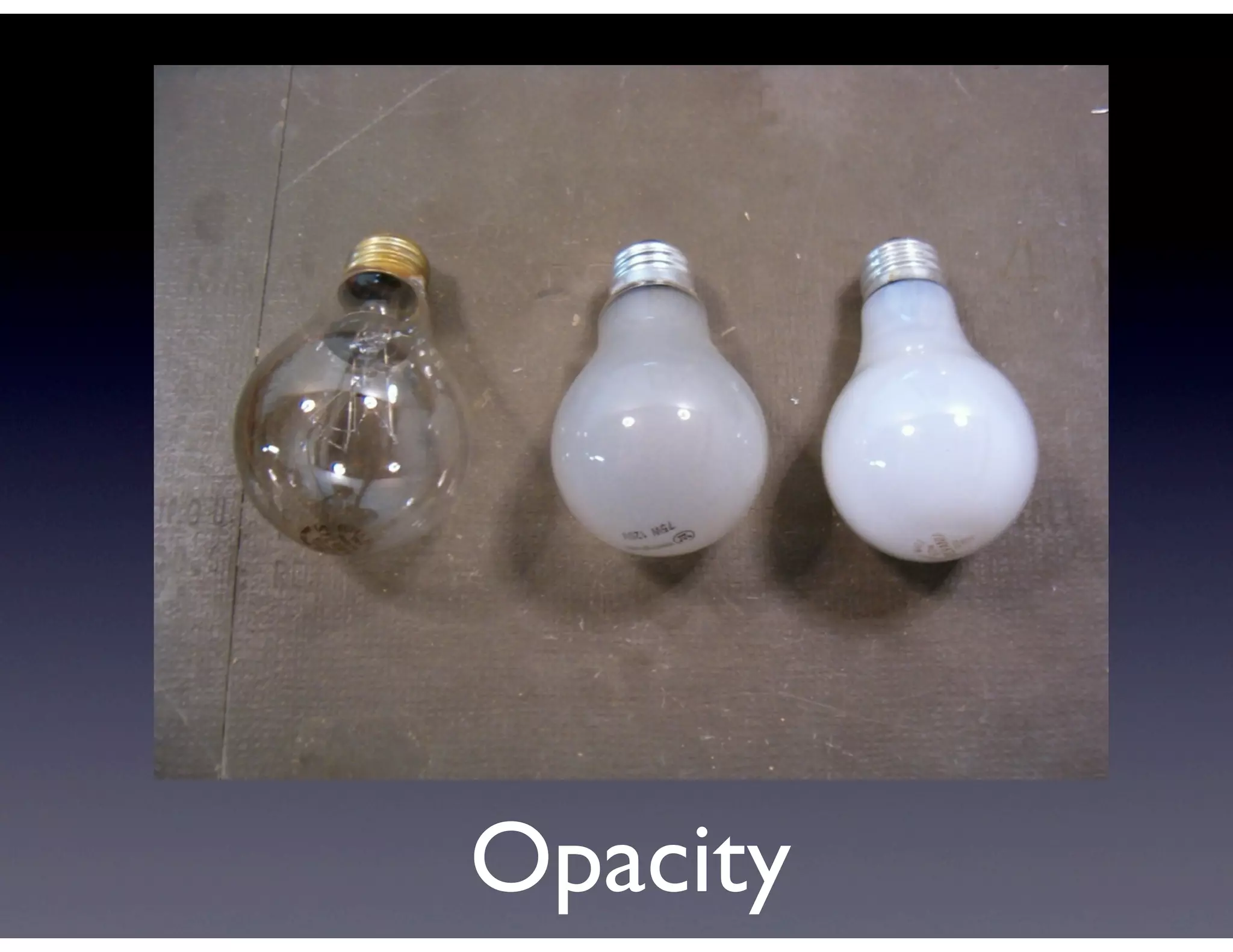
It smells!
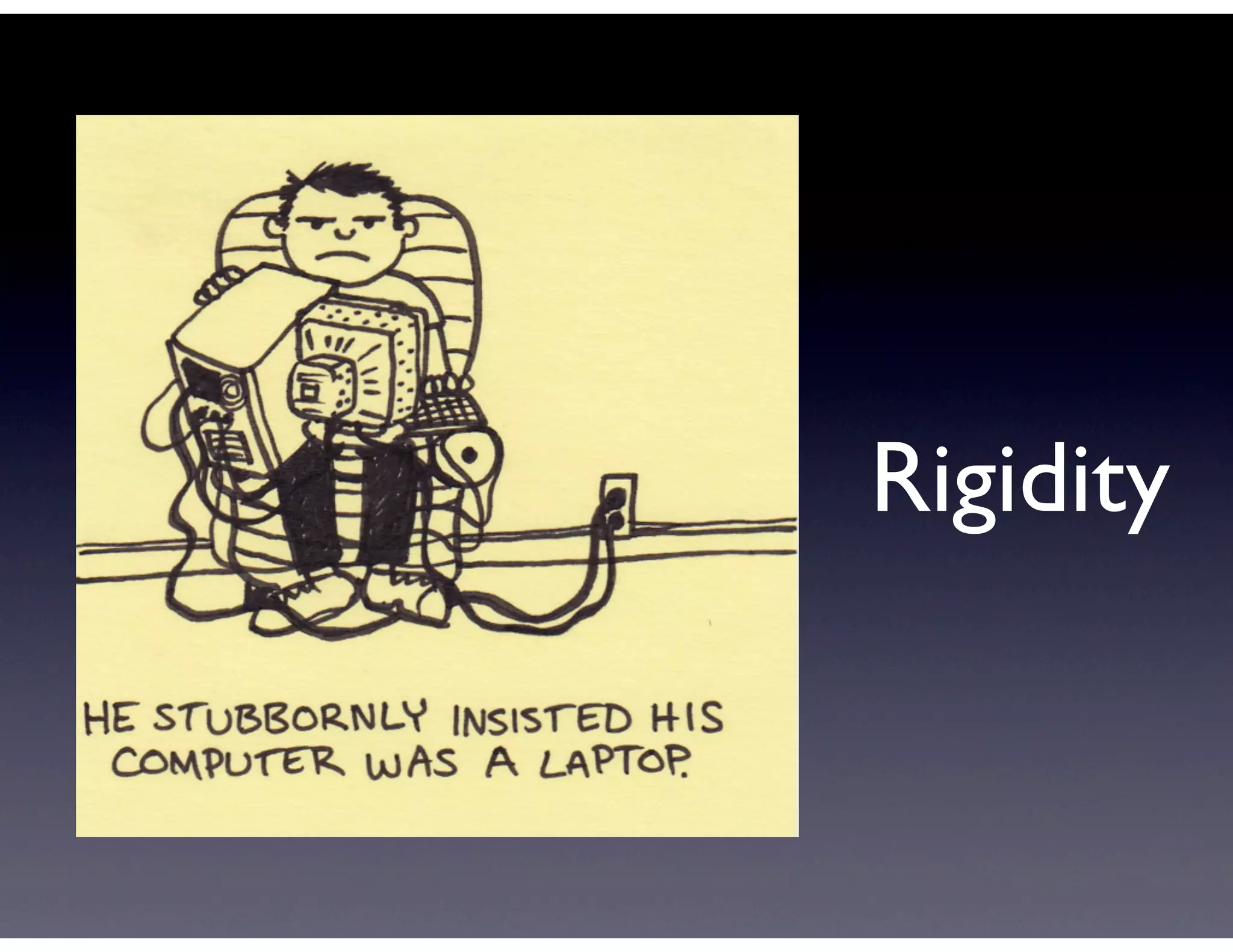
Rigidity
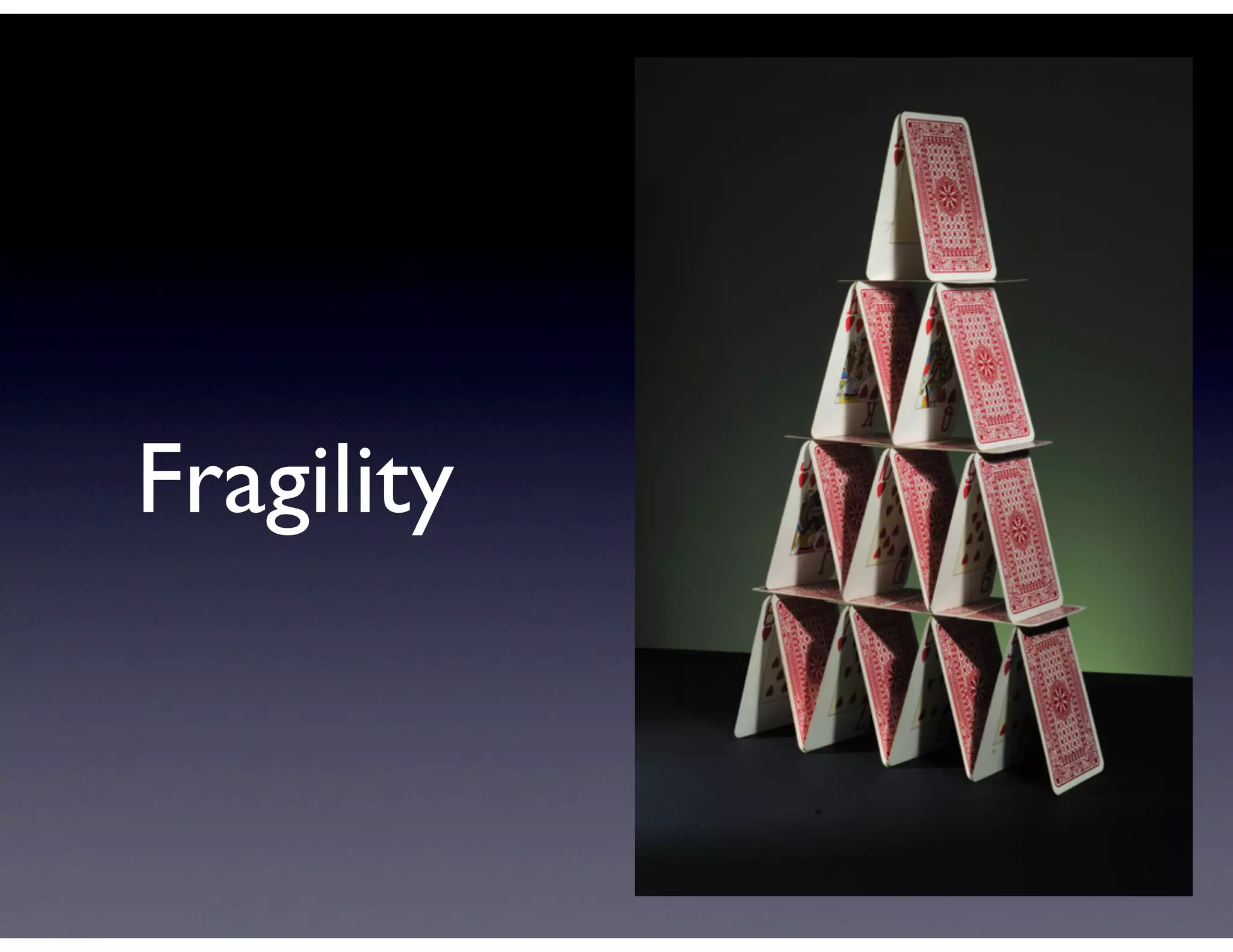
Fragility
Immobility
Viscosity
Needless Complexity
Needless Repetition
Opacity
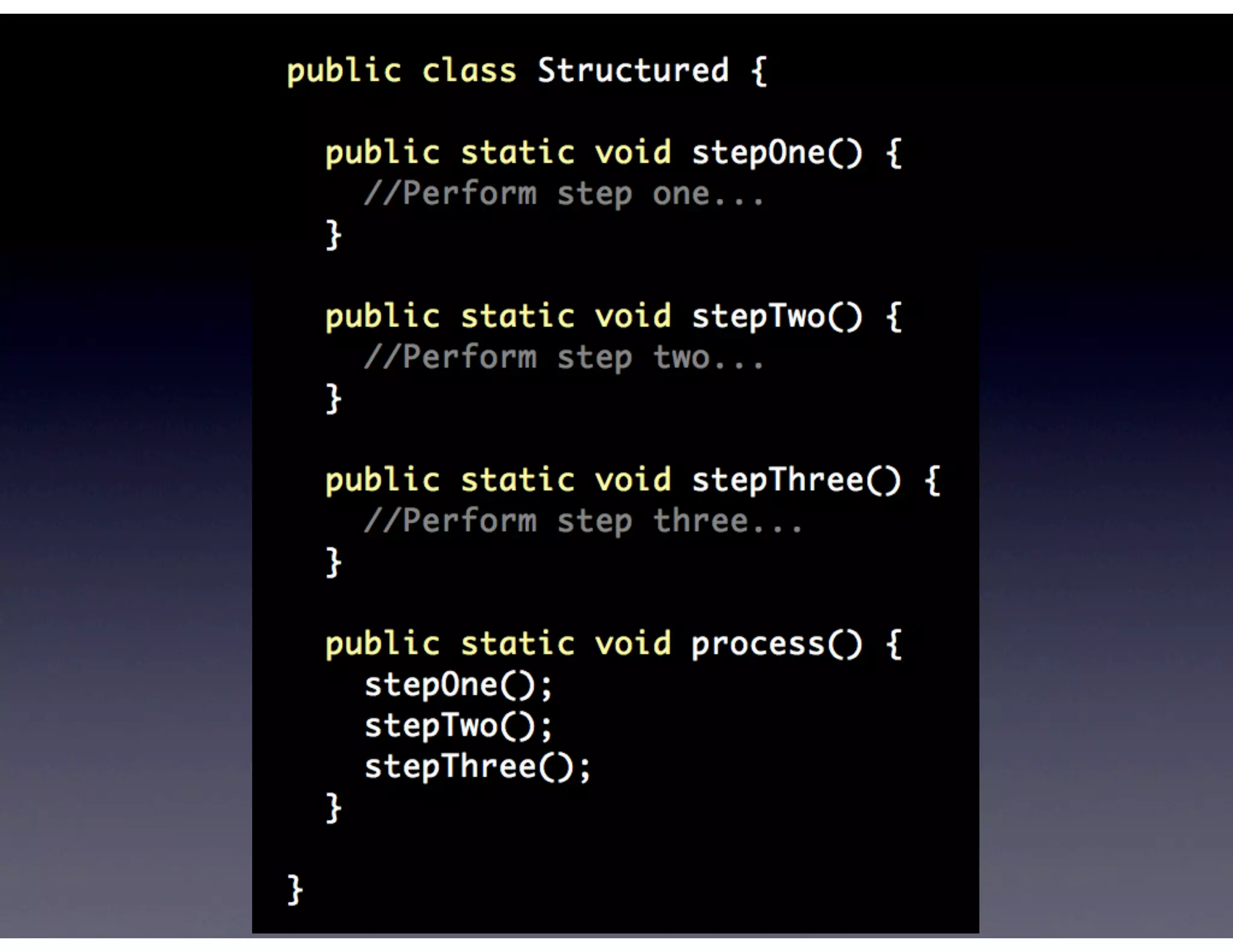
Programming
 Paradigms
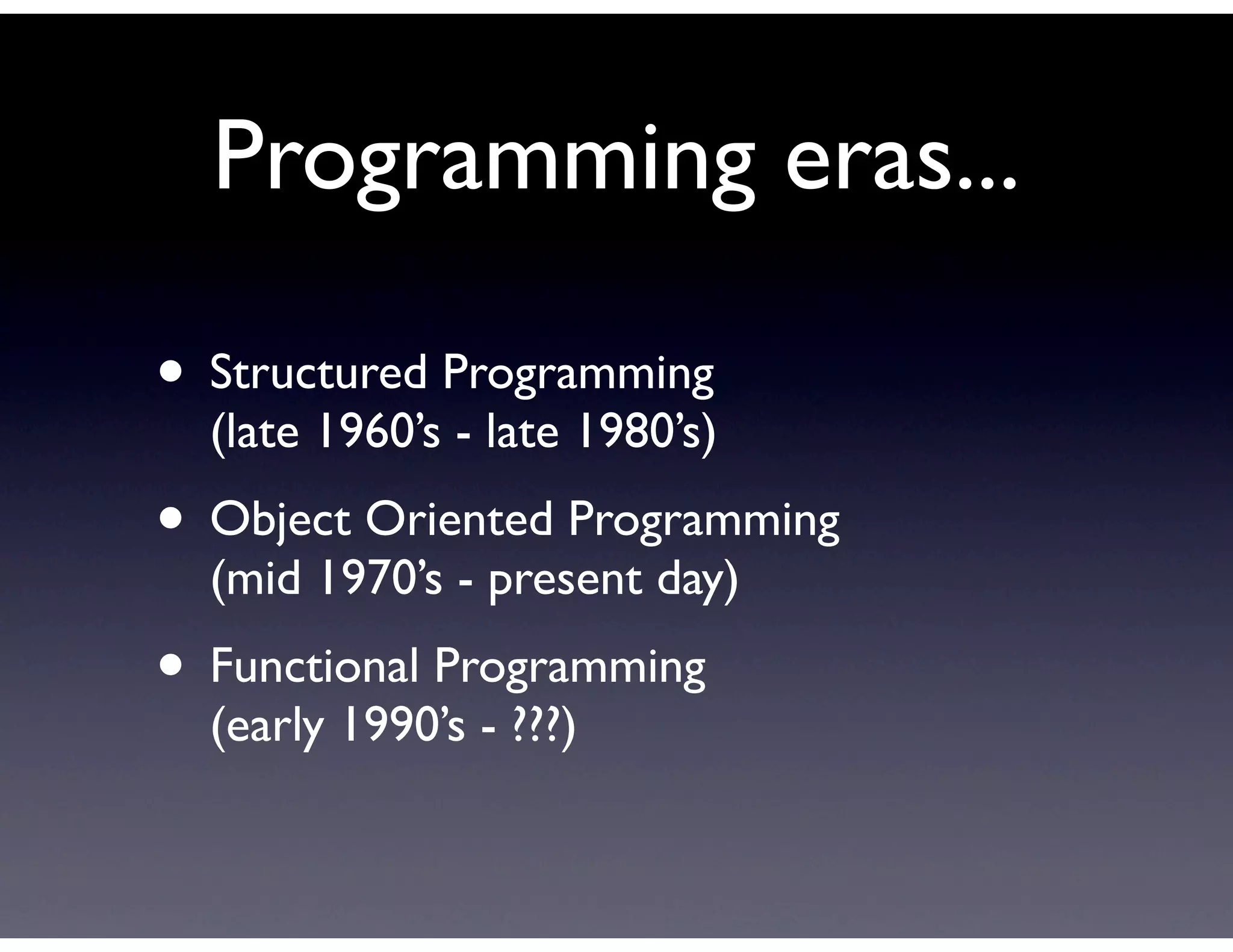
Programming eras...

• Structured Programming
  (late 1960’s - late 1980’s)
• Object Oriented Programming
  (mid 1970’s - present day)
• Functional Programming
  (early 1990’s - ???)
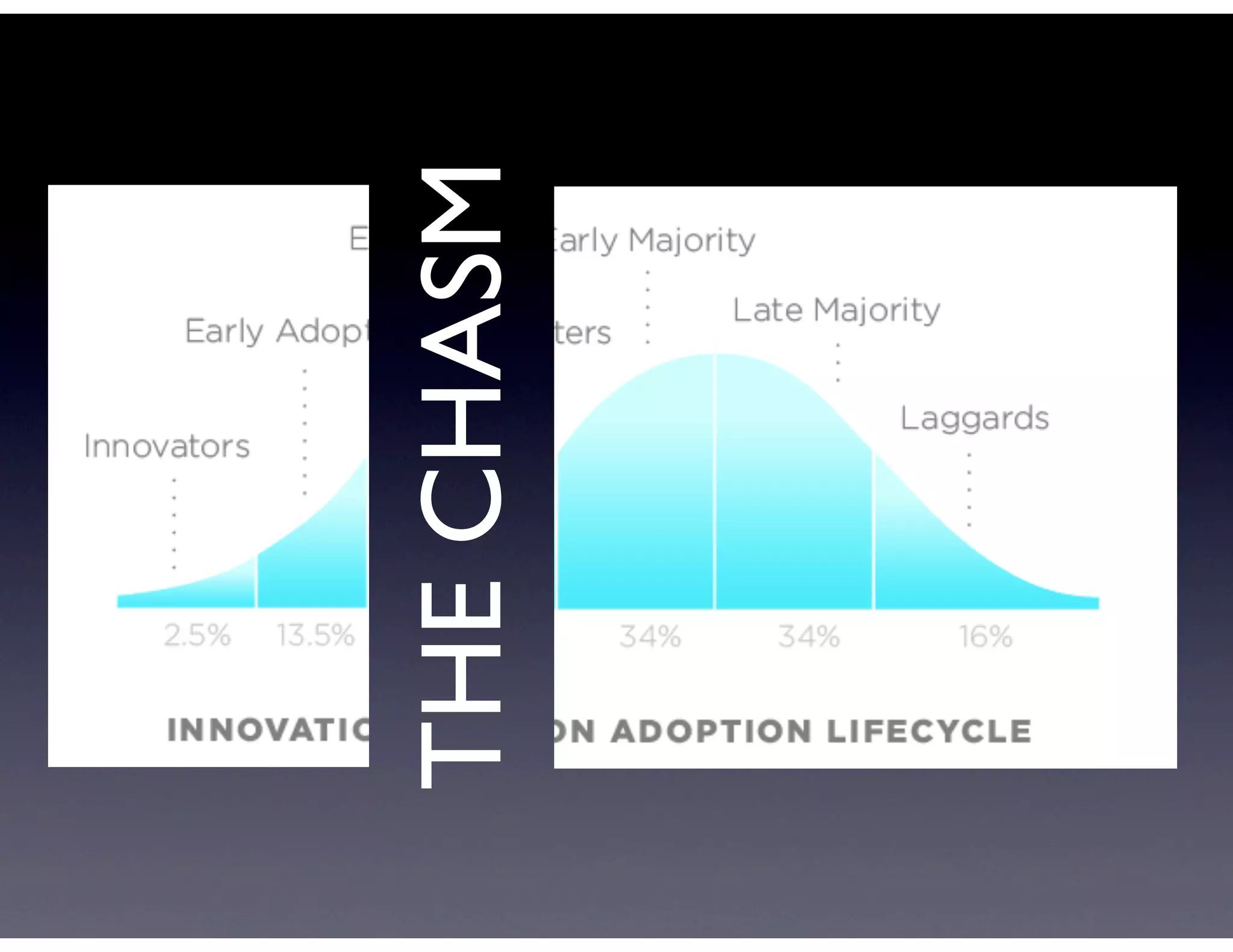
THE CHASM
Accumulation of
 Knowledge?
Accumulation of
 Knowledge?
Paradigm Shifts
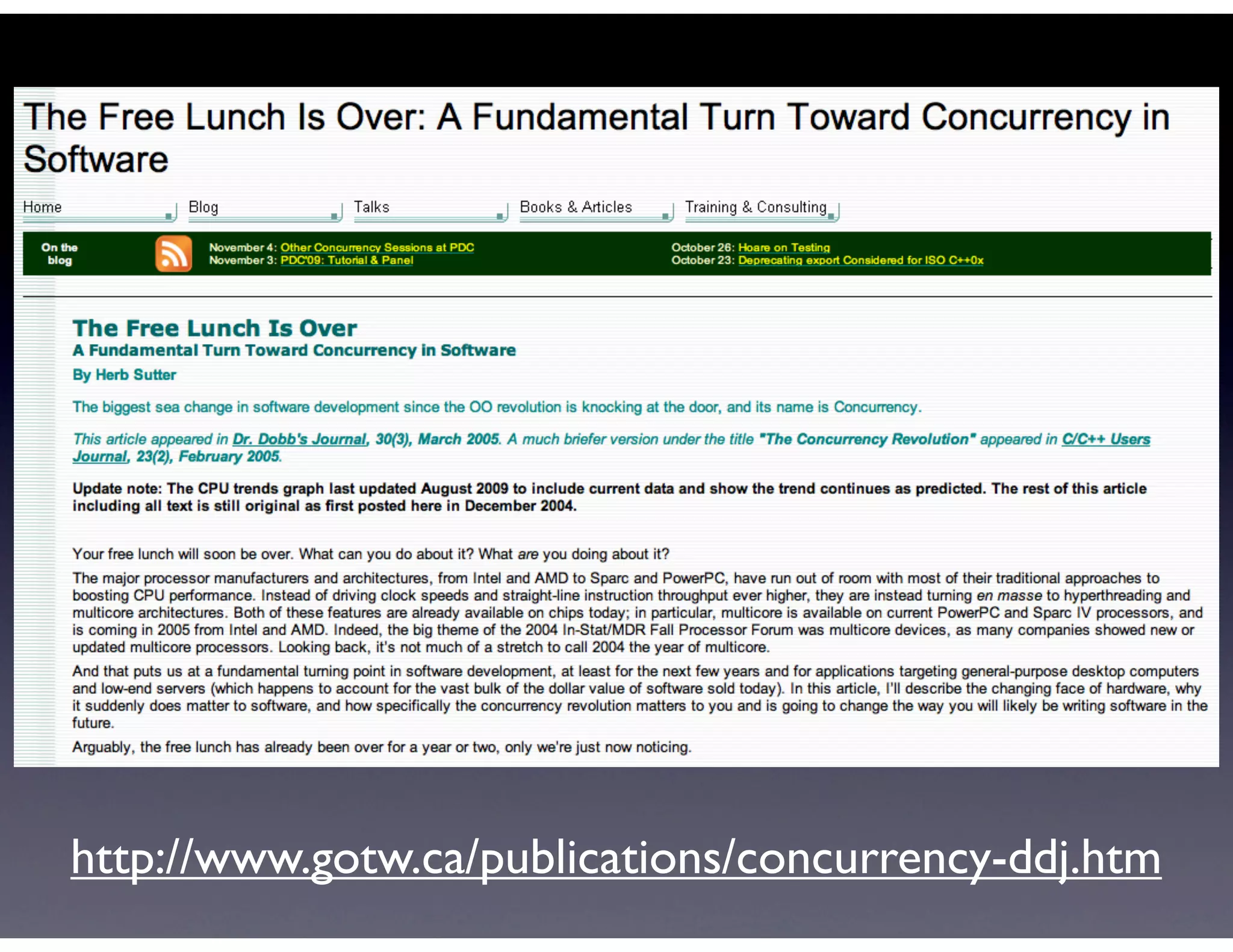
http://www.gotw.ca/publications/concurrency-ddj.htm
The Quest
      for
“Best Practices”
• Which web framework should I use?
• Why are there so many persistence API’s?
• Which is better: Scala or Clojure (or
  Erlang)?

• How should I use design patterns?
• How do I build a good architecture?
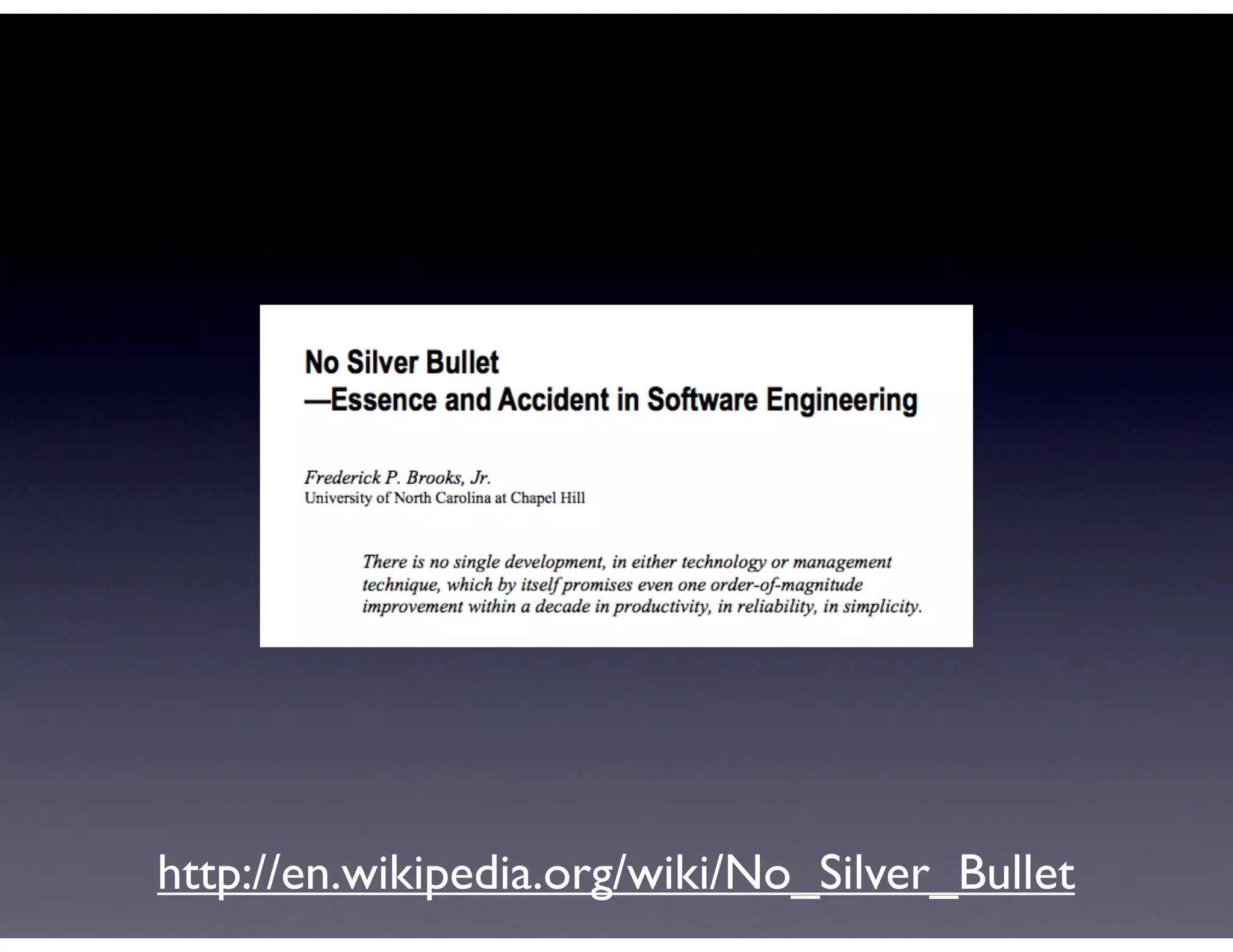
http://en.wikipedia.org/wiki/No_Silver_Bullet
What are the FP best
    practices?
The Perfect Storm
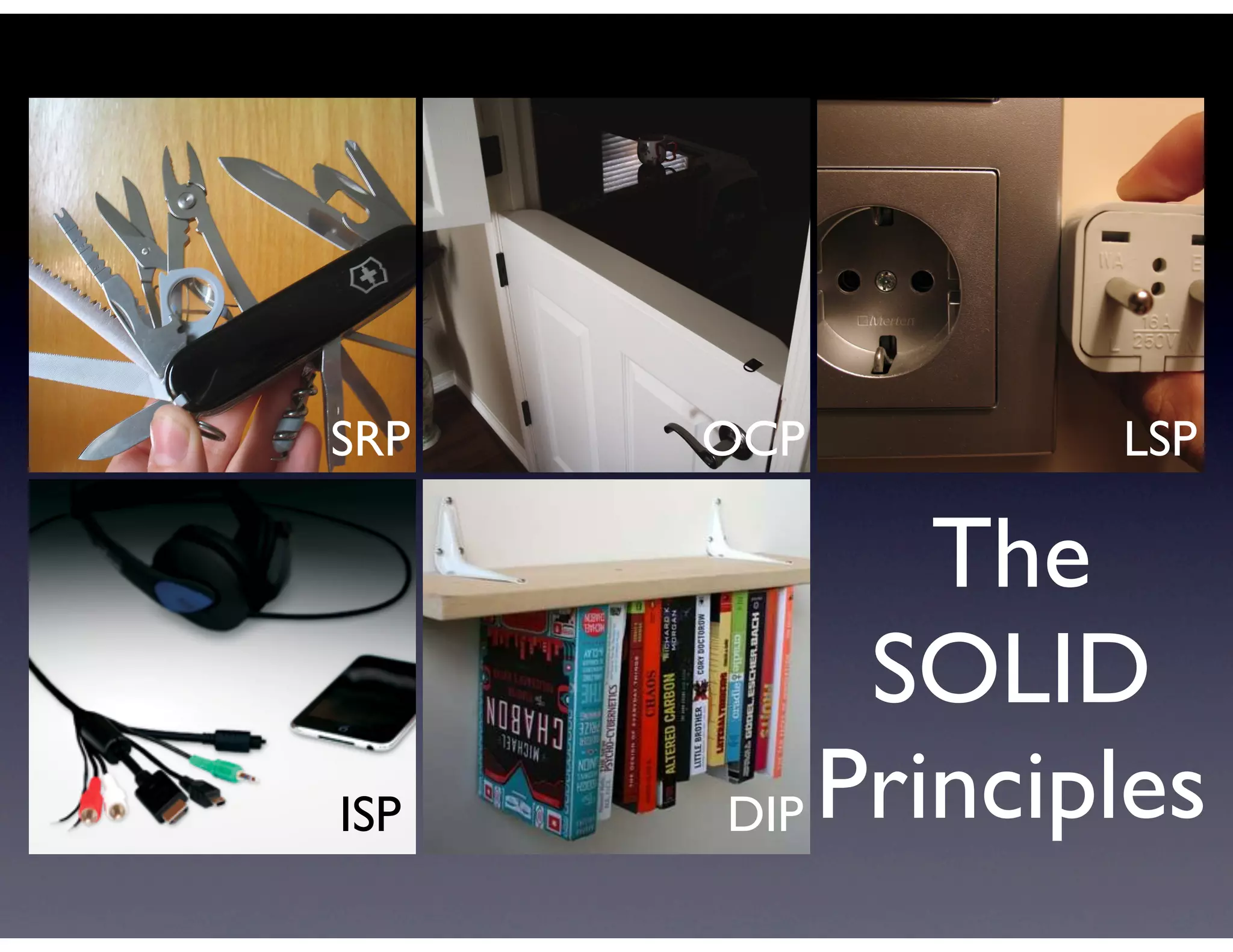
SRP   OCP        LSP

             The
           SOLID
ISP   DIP Principles
http://clojure.org
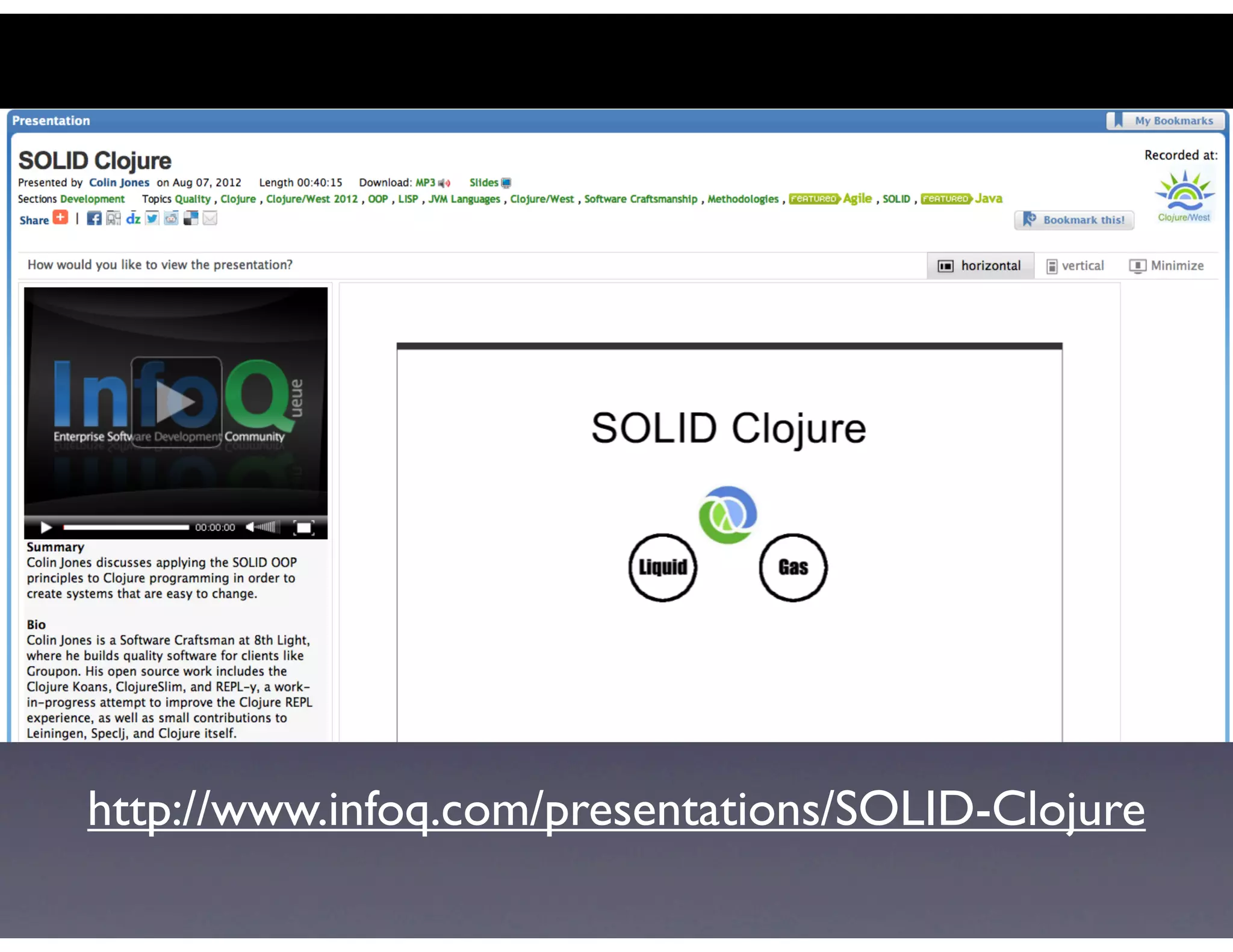
http://www.infoq.com/presentations/SOLID-Clojure
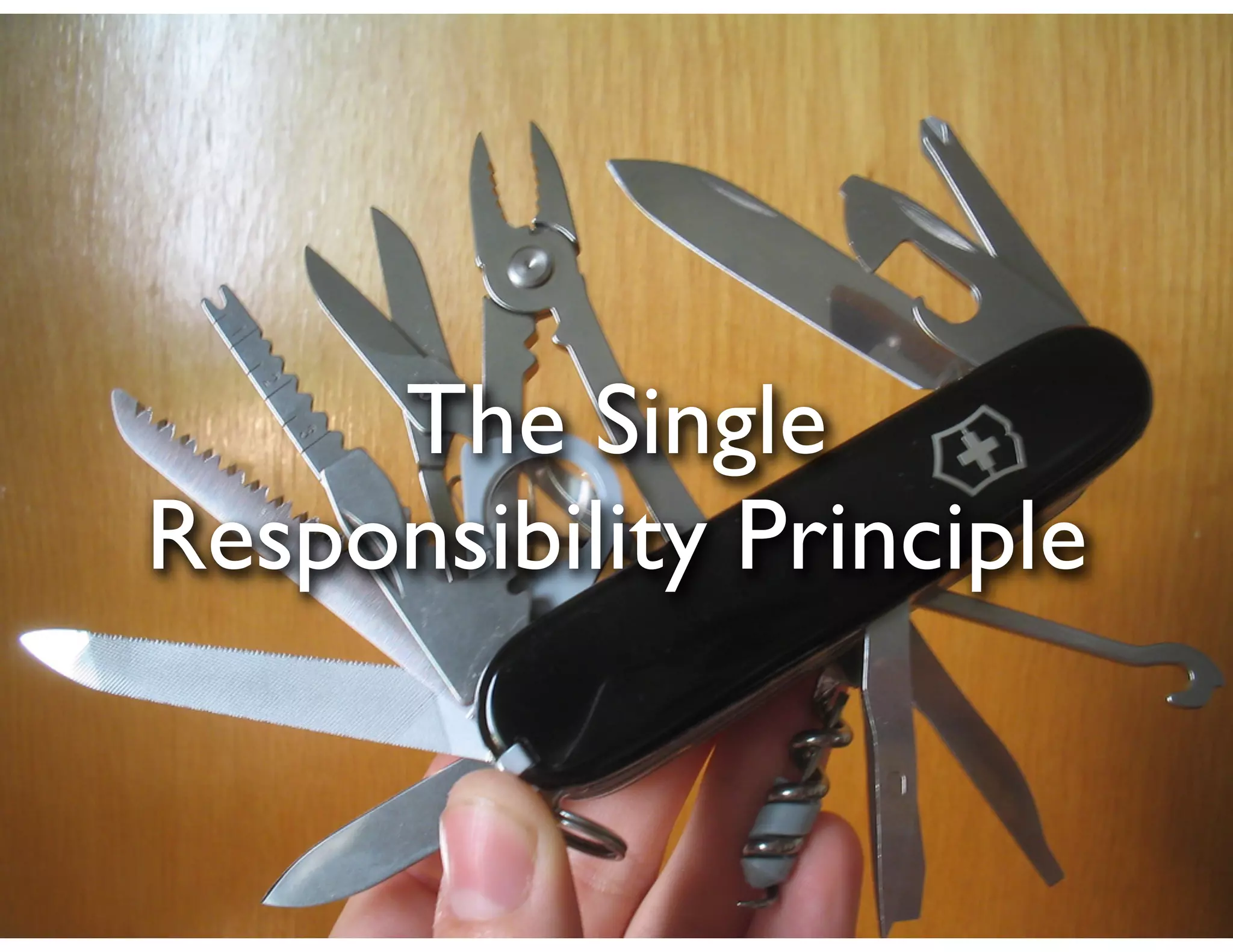
The Single
Responsibility Principle
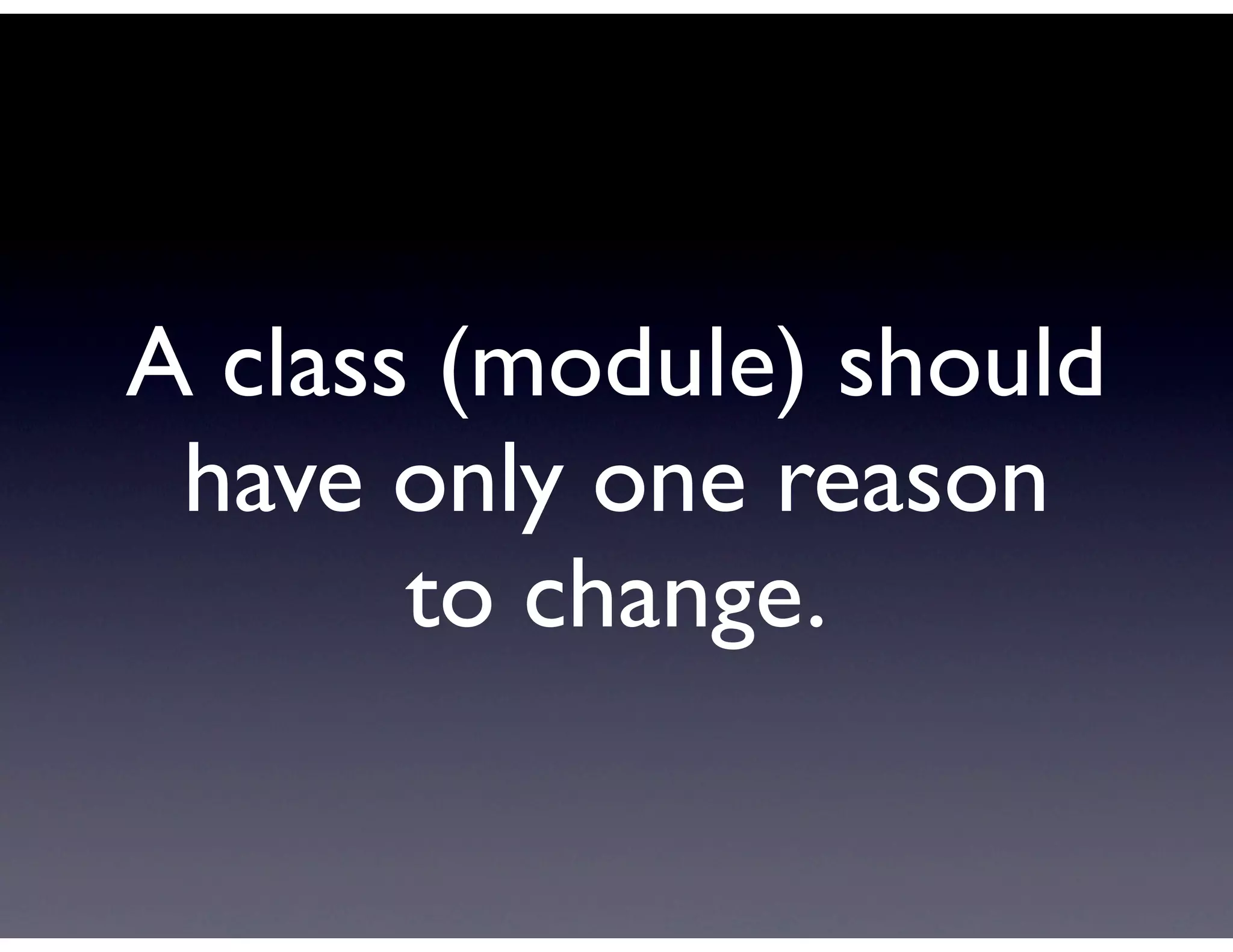
A class (module) should
 have only one reason
       to change.
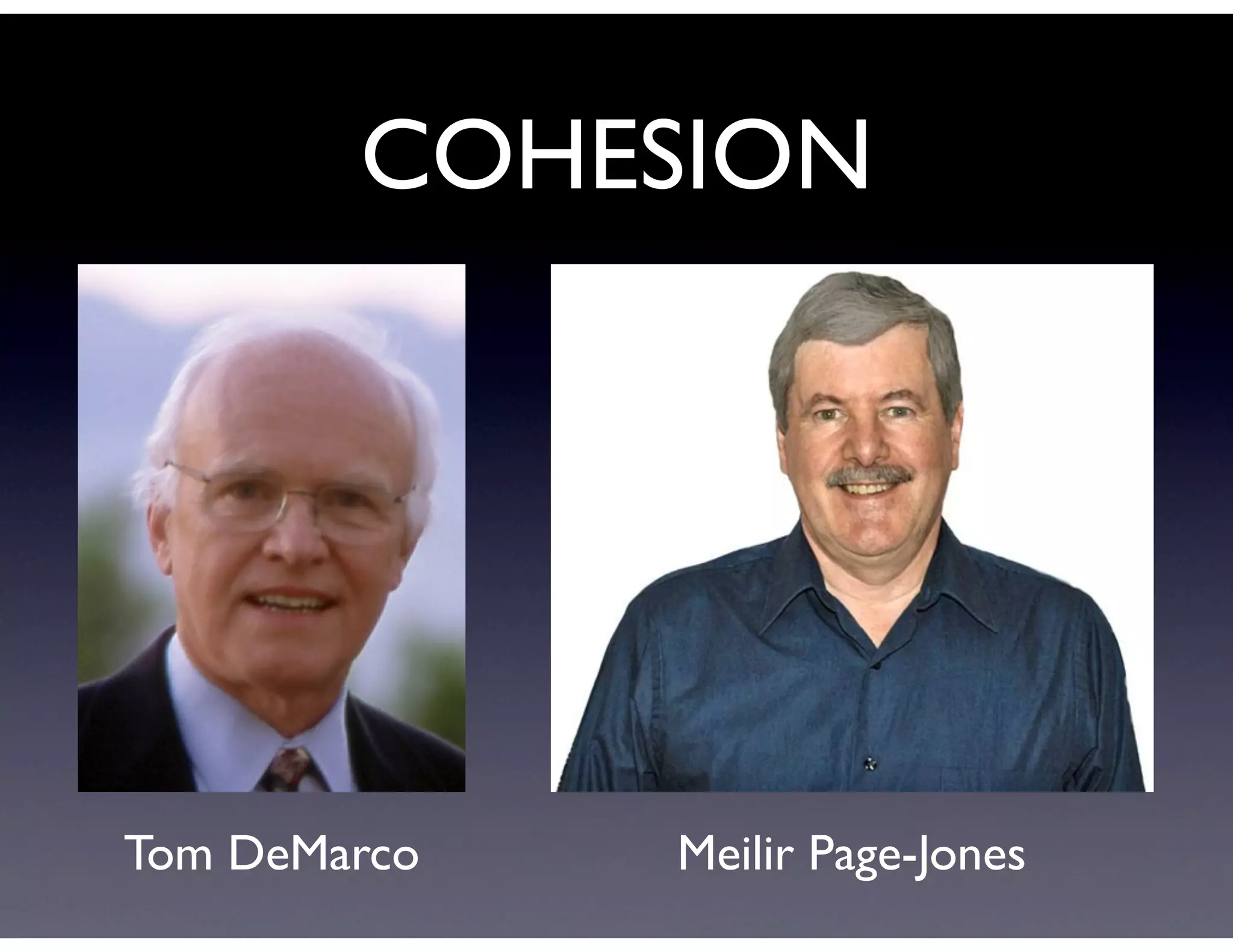
COHESION


Tom DeMarco   Meilir Page-Jones
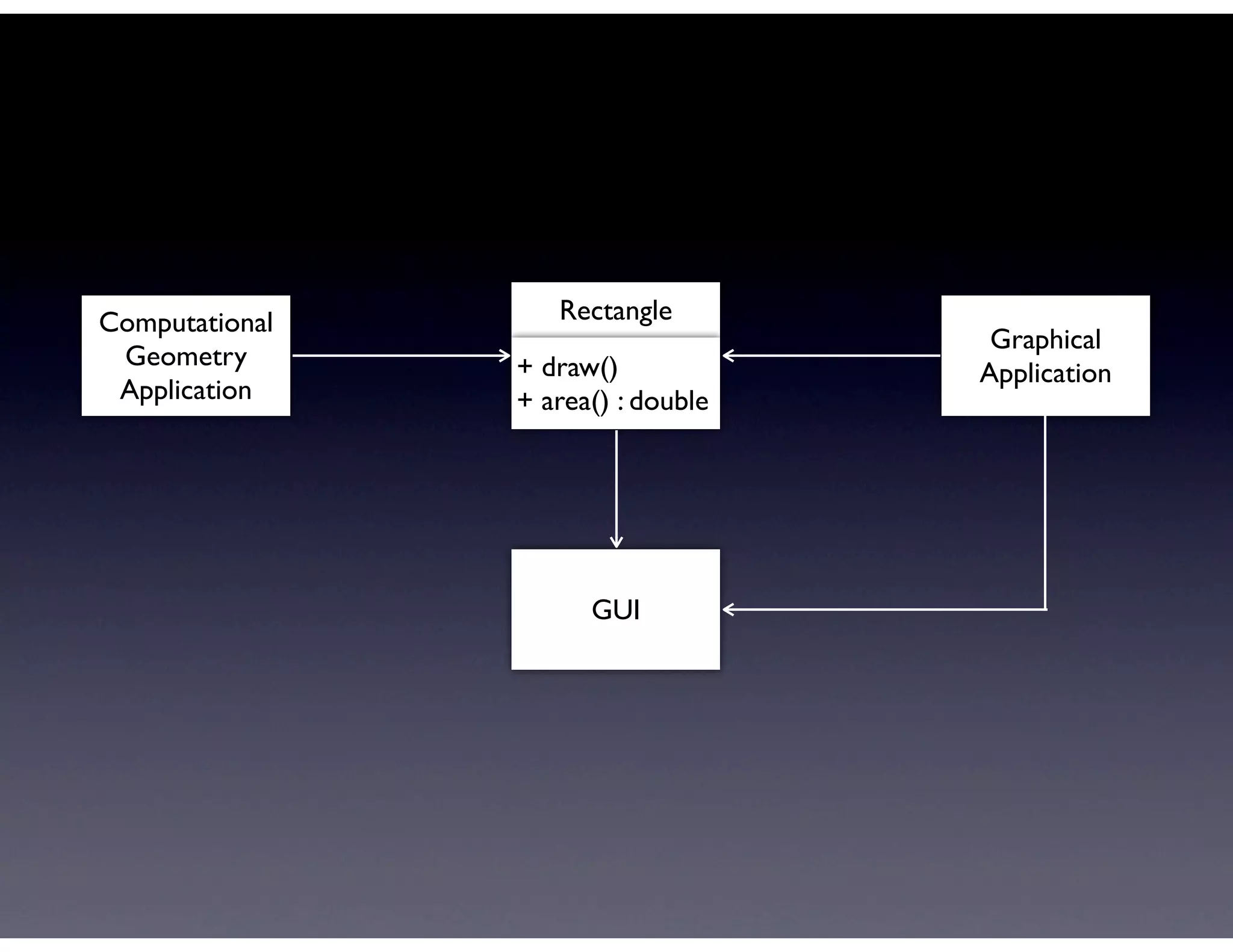
Computational      Rectangle
                                     Graphical
 Geometry       + draw()            Application
 Application    + area() : double


                      GUI
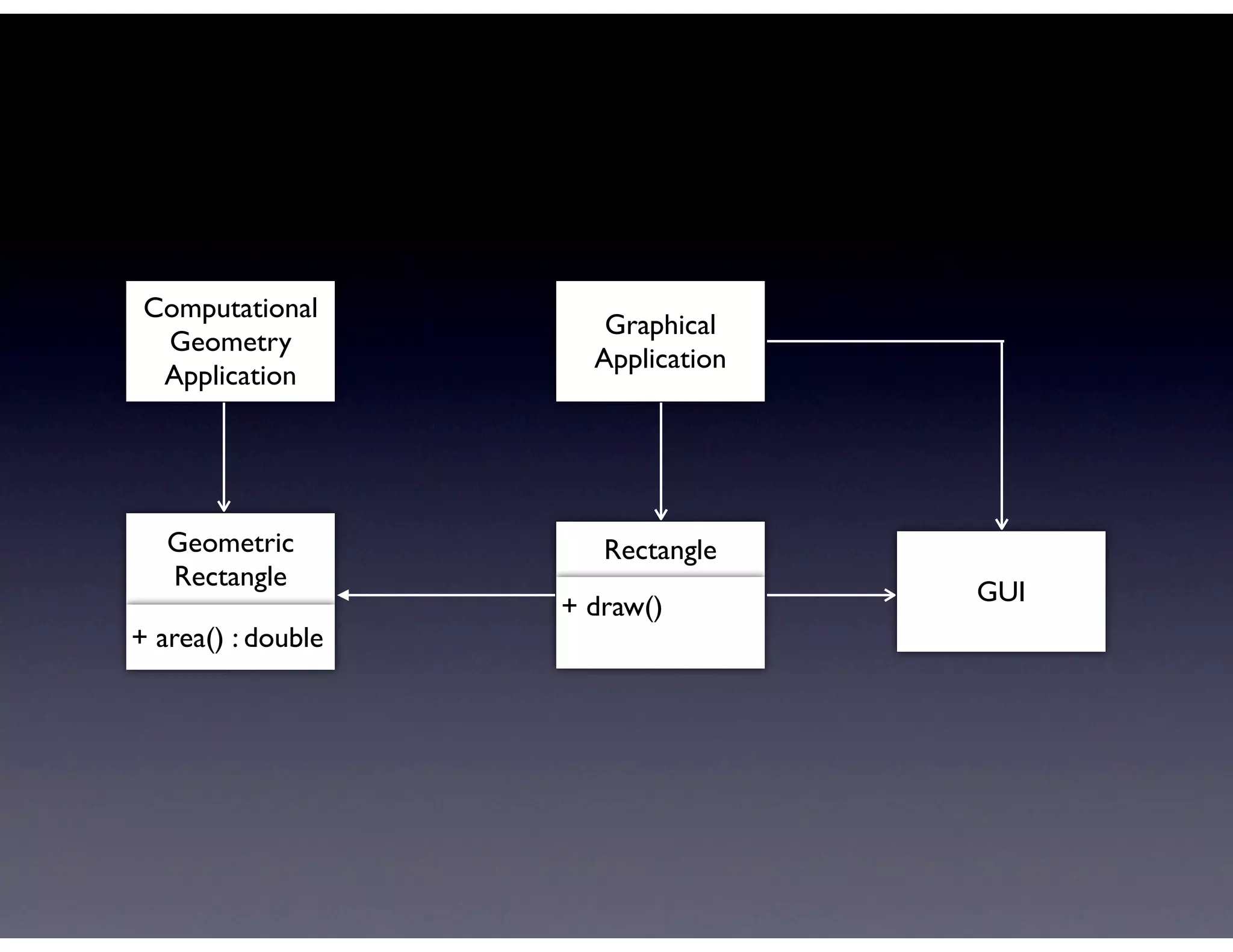
Computational
                       Graphical
  Geometry
                      Application
  Application


   Geometric           Rectangle
   Rectangle
                                    GUI
                    + draw()
+ area() : double
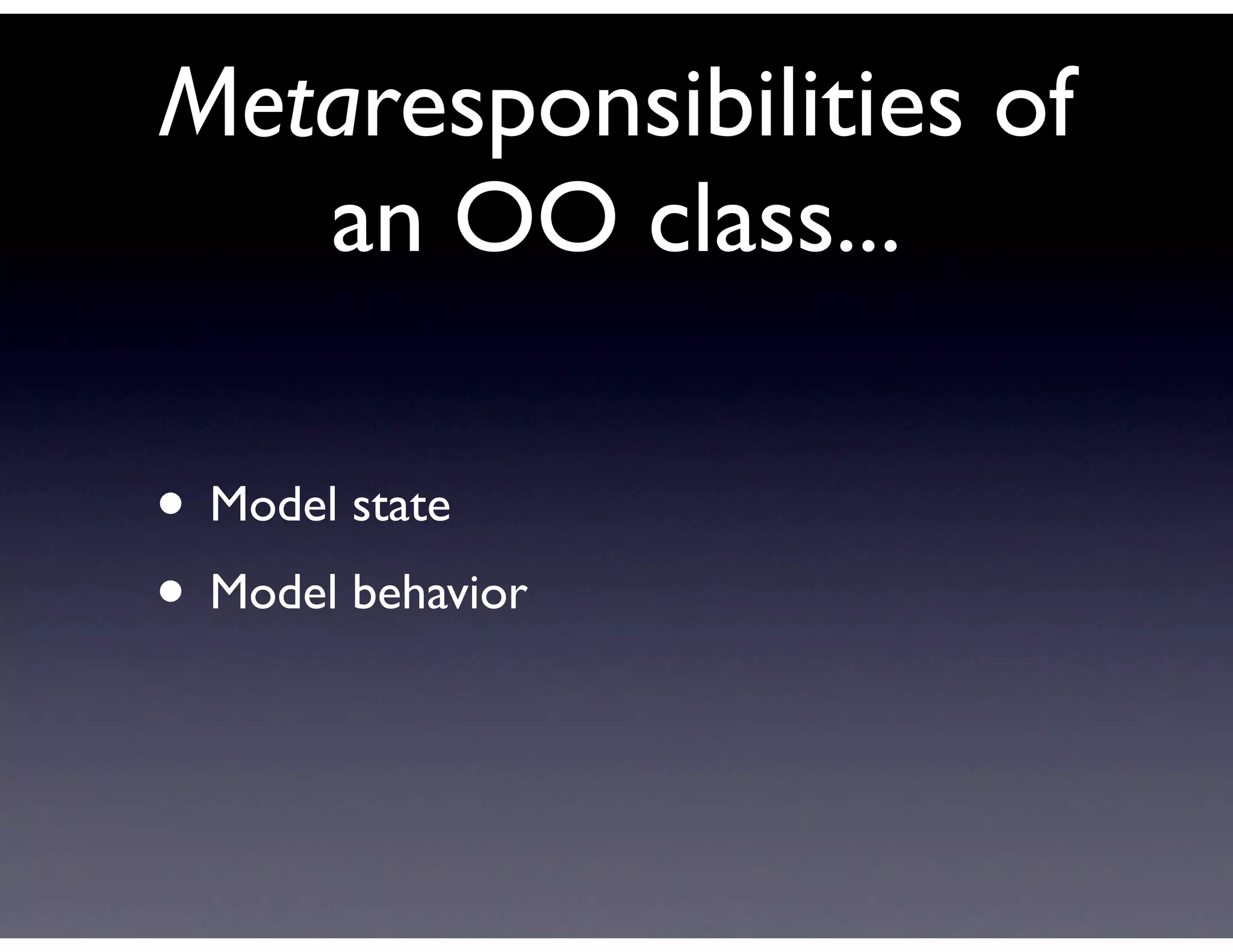
Metaresponsibilities of
   an OO class...

• Model state
• Model behavior
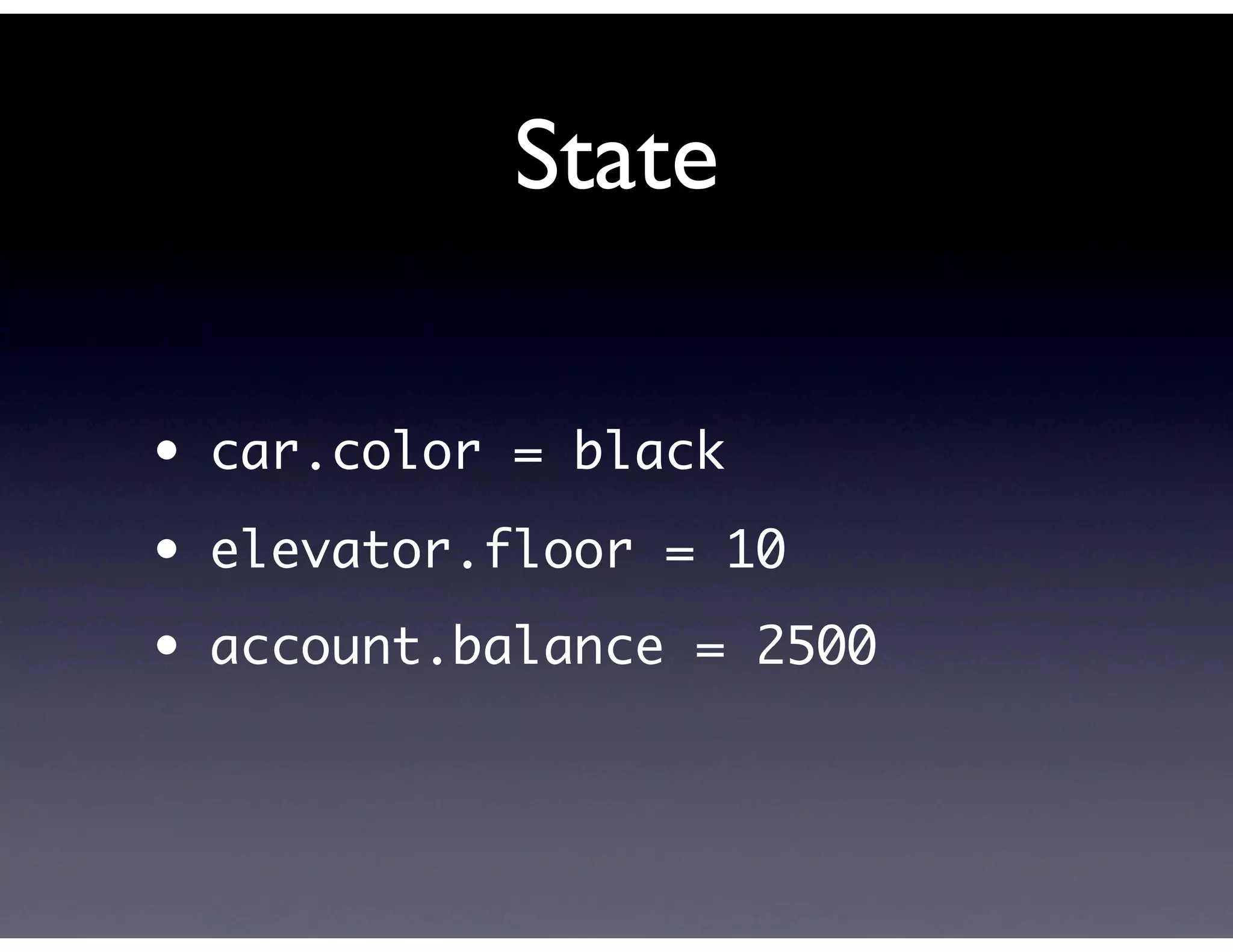
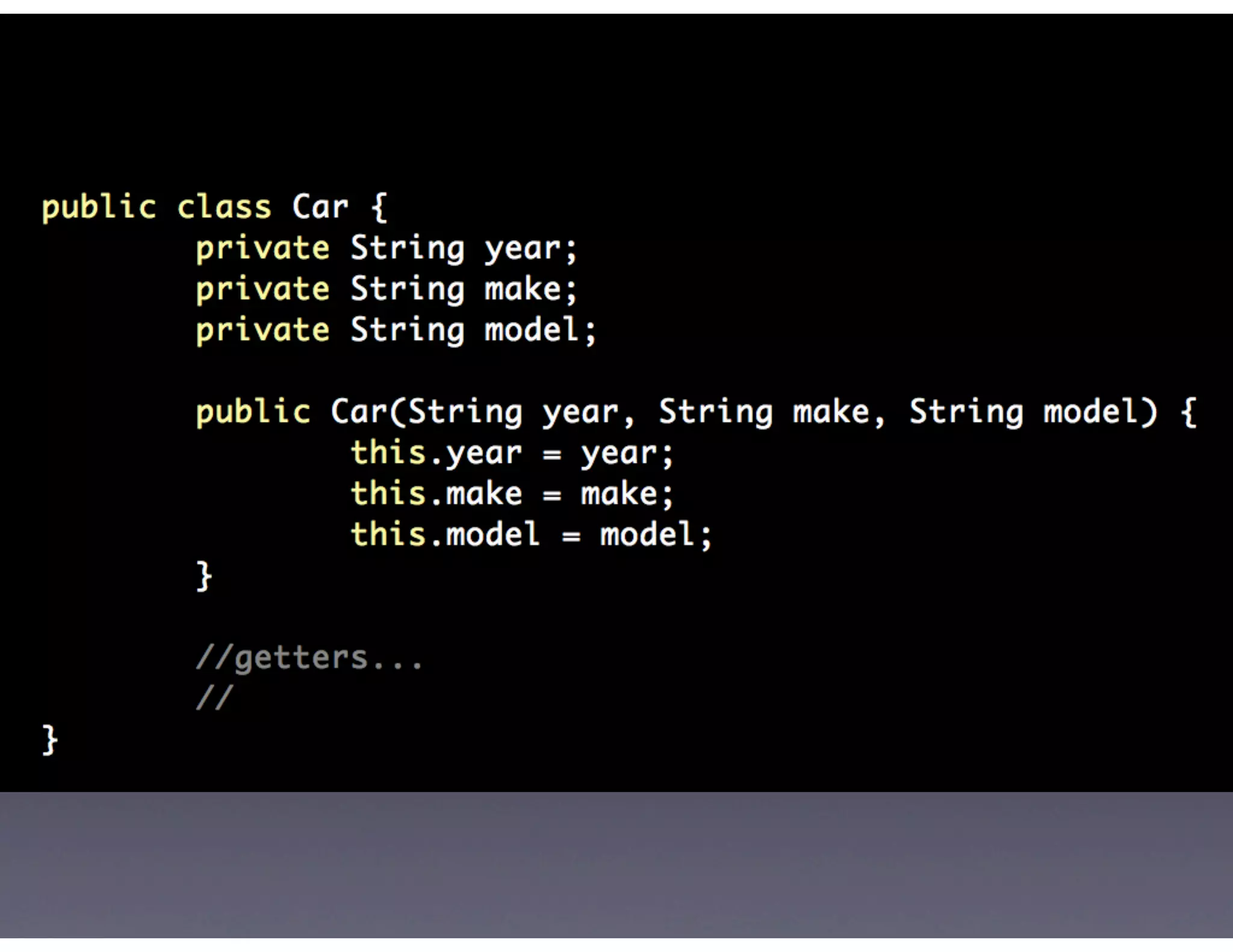
State

•   car.color = black
•   elevator.floor = 10
•   account.balance = 2500
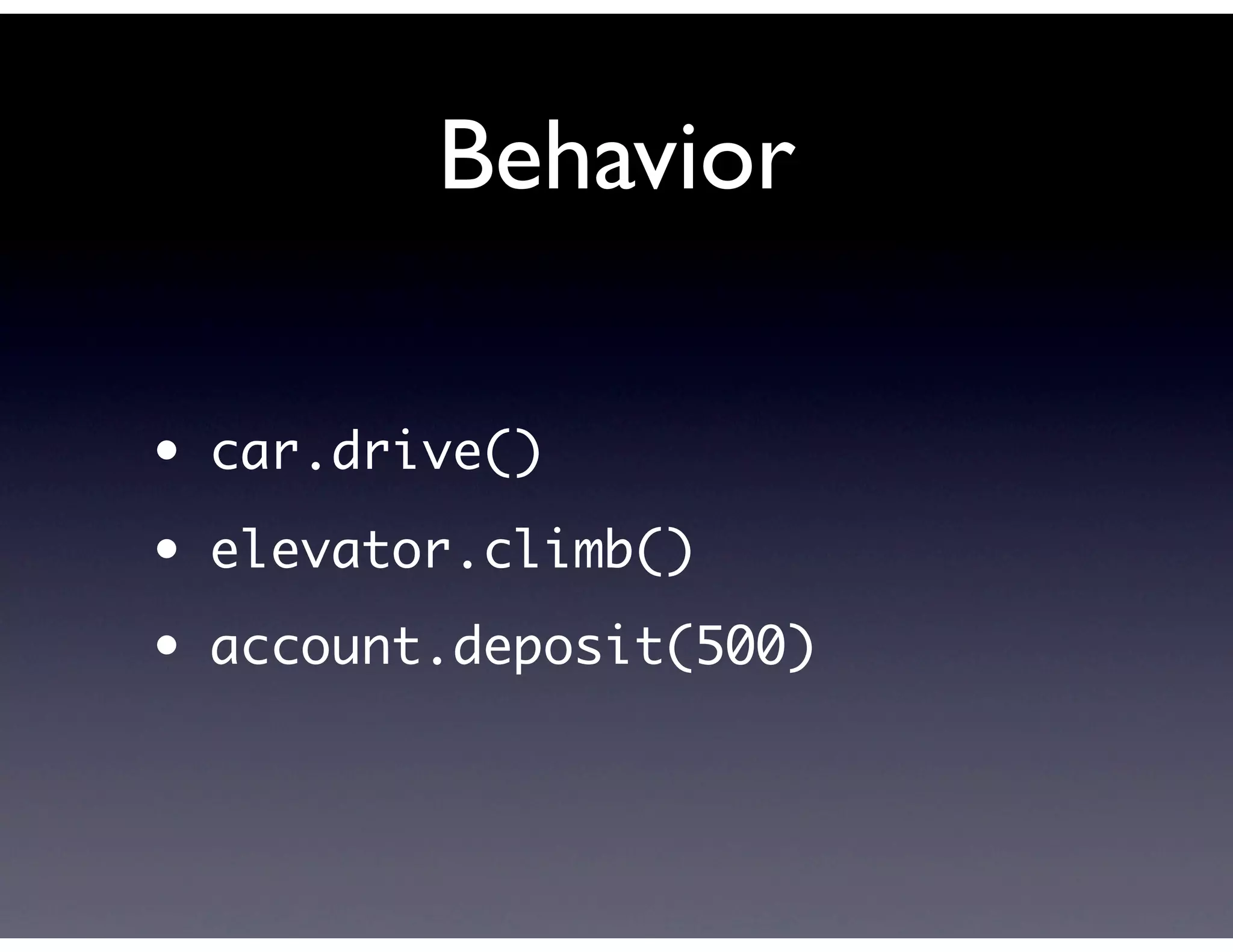
Behavior

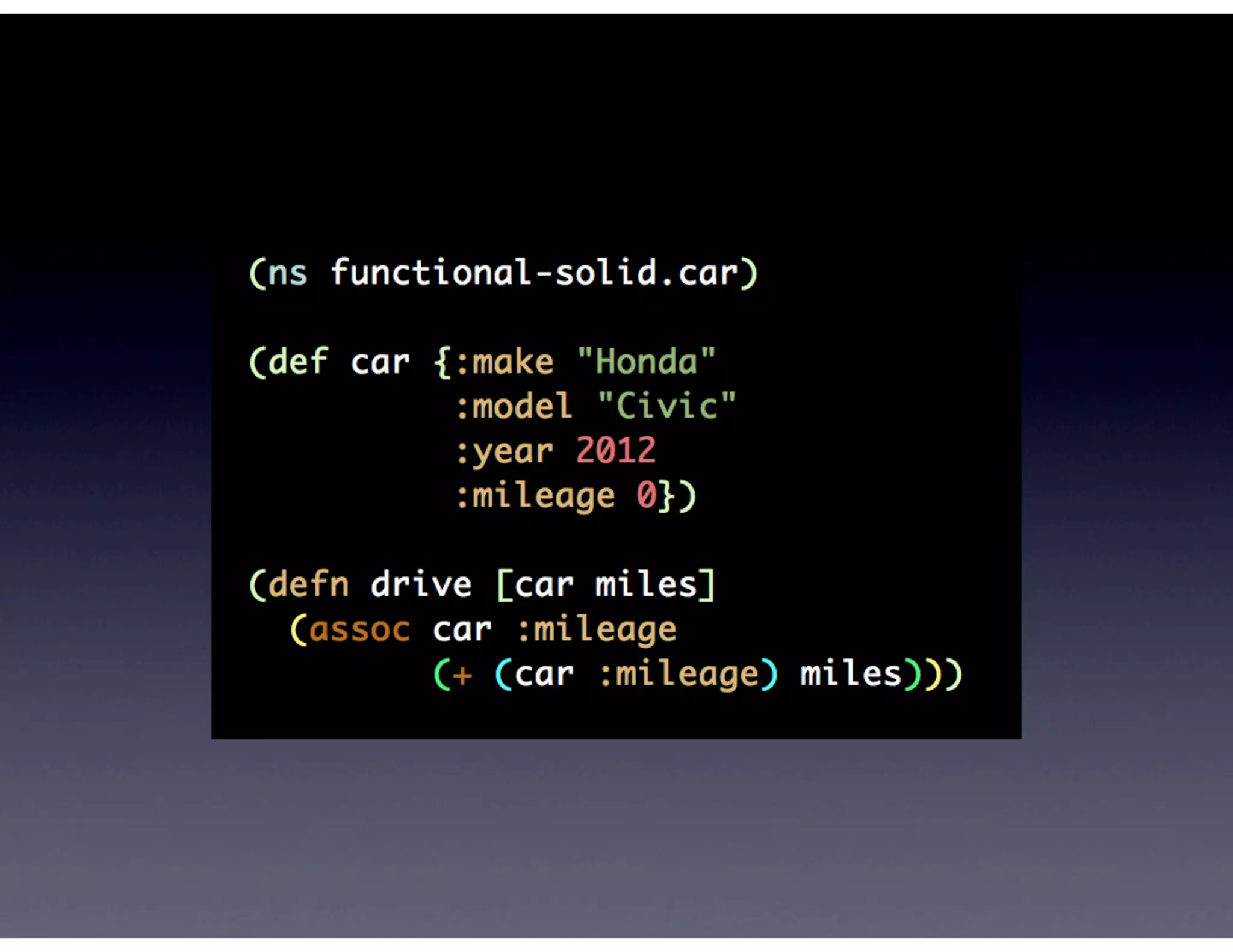
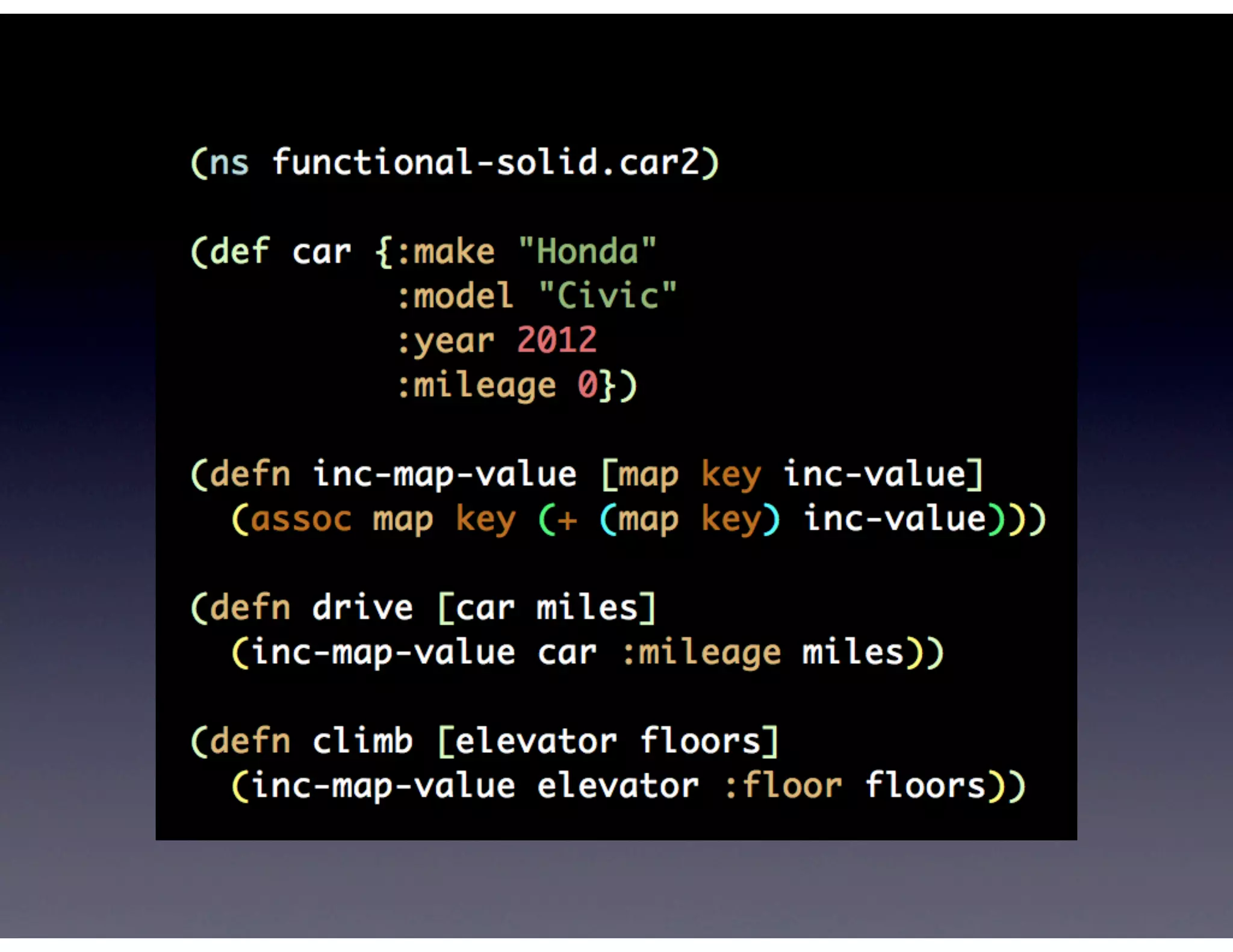
•   car.drive()
•   elevator.climb()
•   account.deposit(500)
How many
metaresponsibilities?
It is better to have 100 functions operate on one
data structure than to have 10 functions operate
               on 10 data structures.

                  Alan J. Perlis
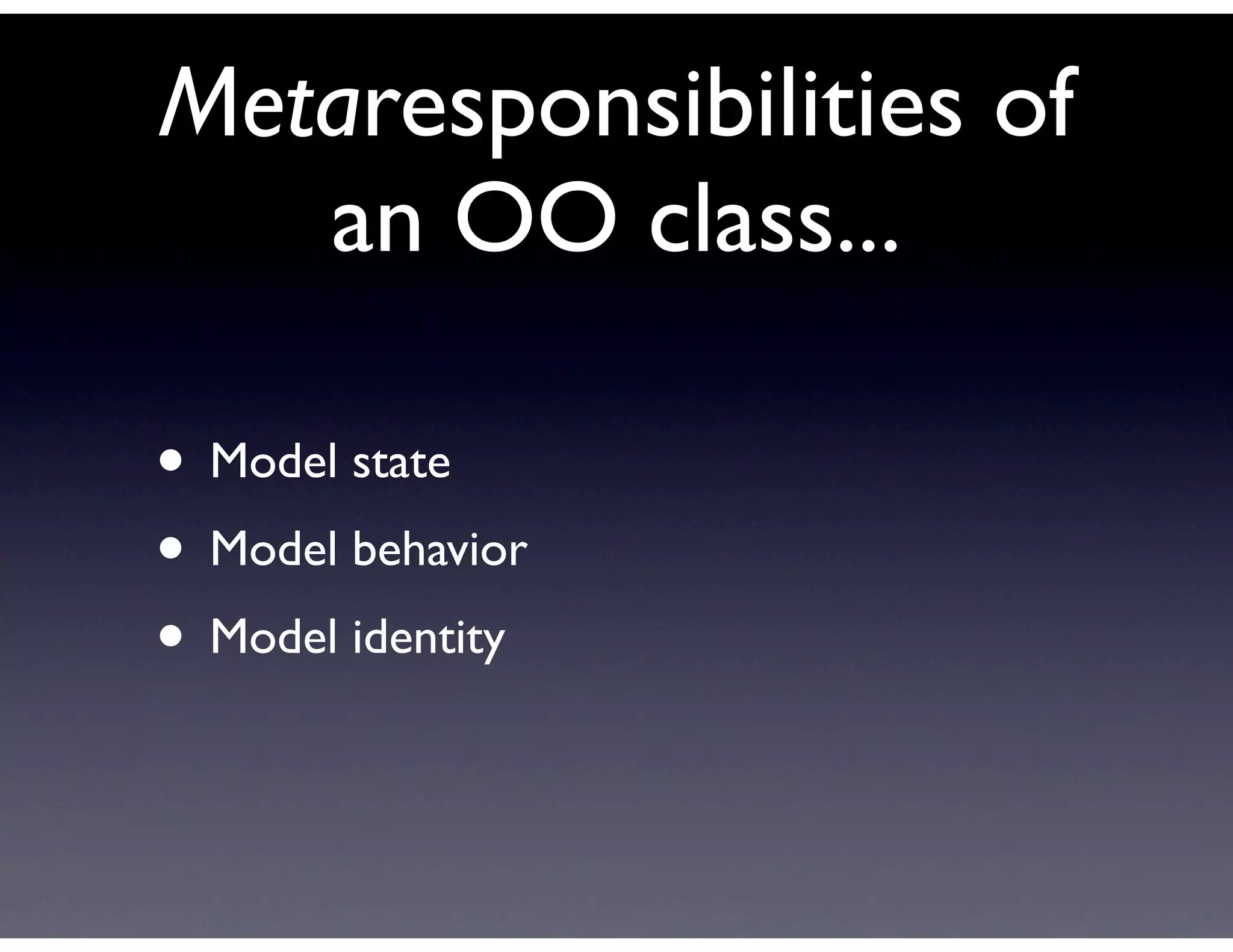
Metaresponsibilities of
   an OO class...

• Model state
• Model behavior
• Model identity
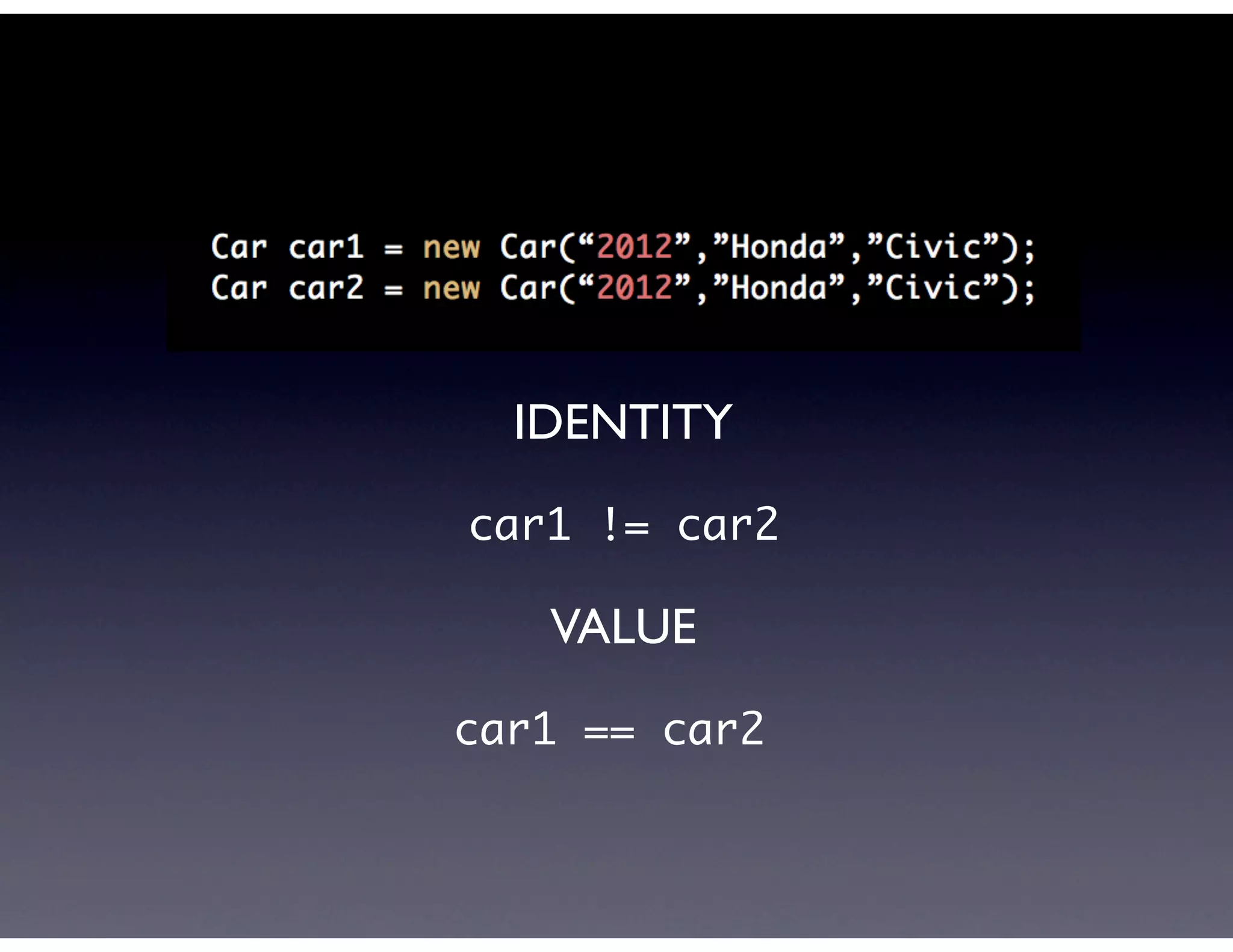
IDENTITY

car1 != car2

   VALUE

car1 == car2
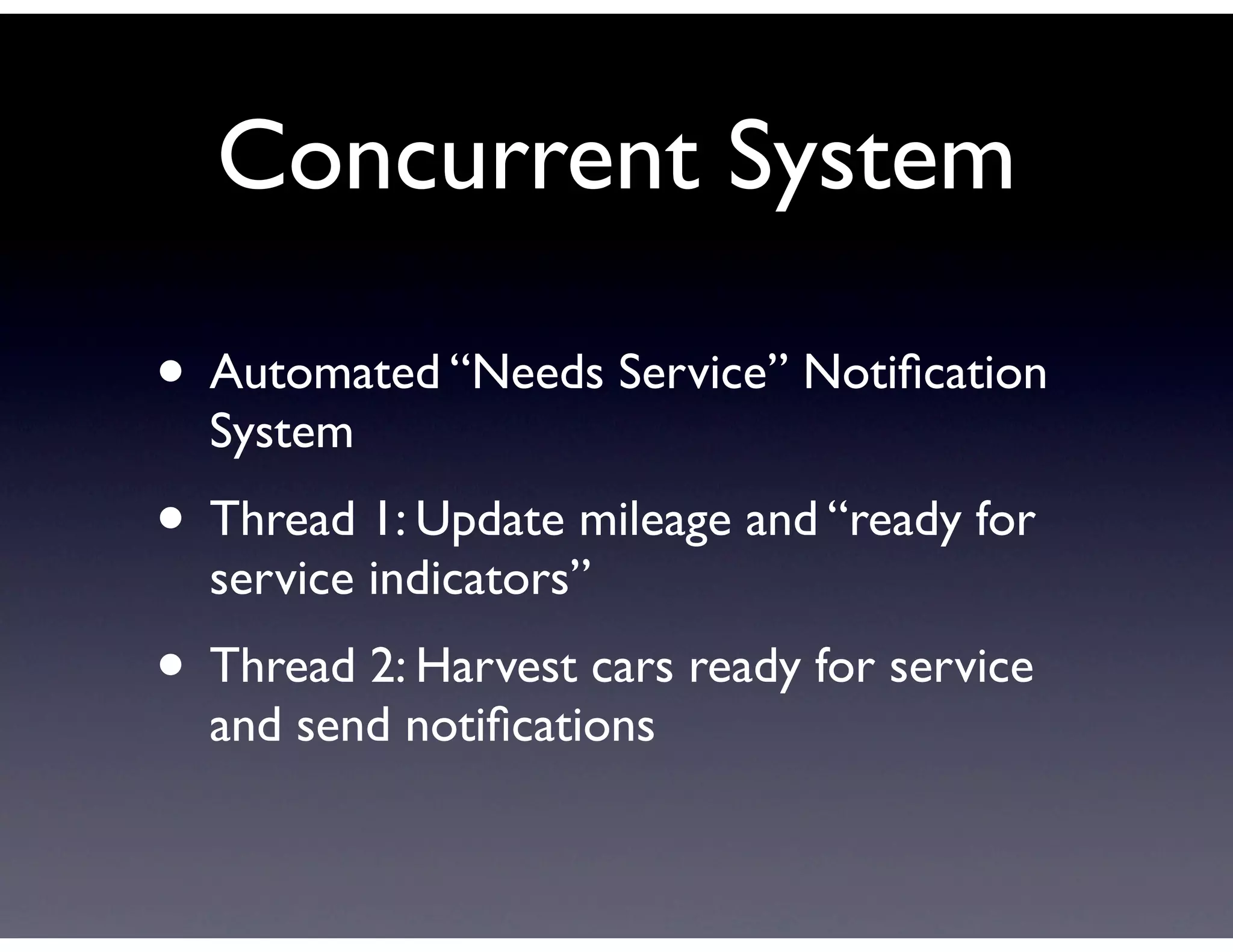
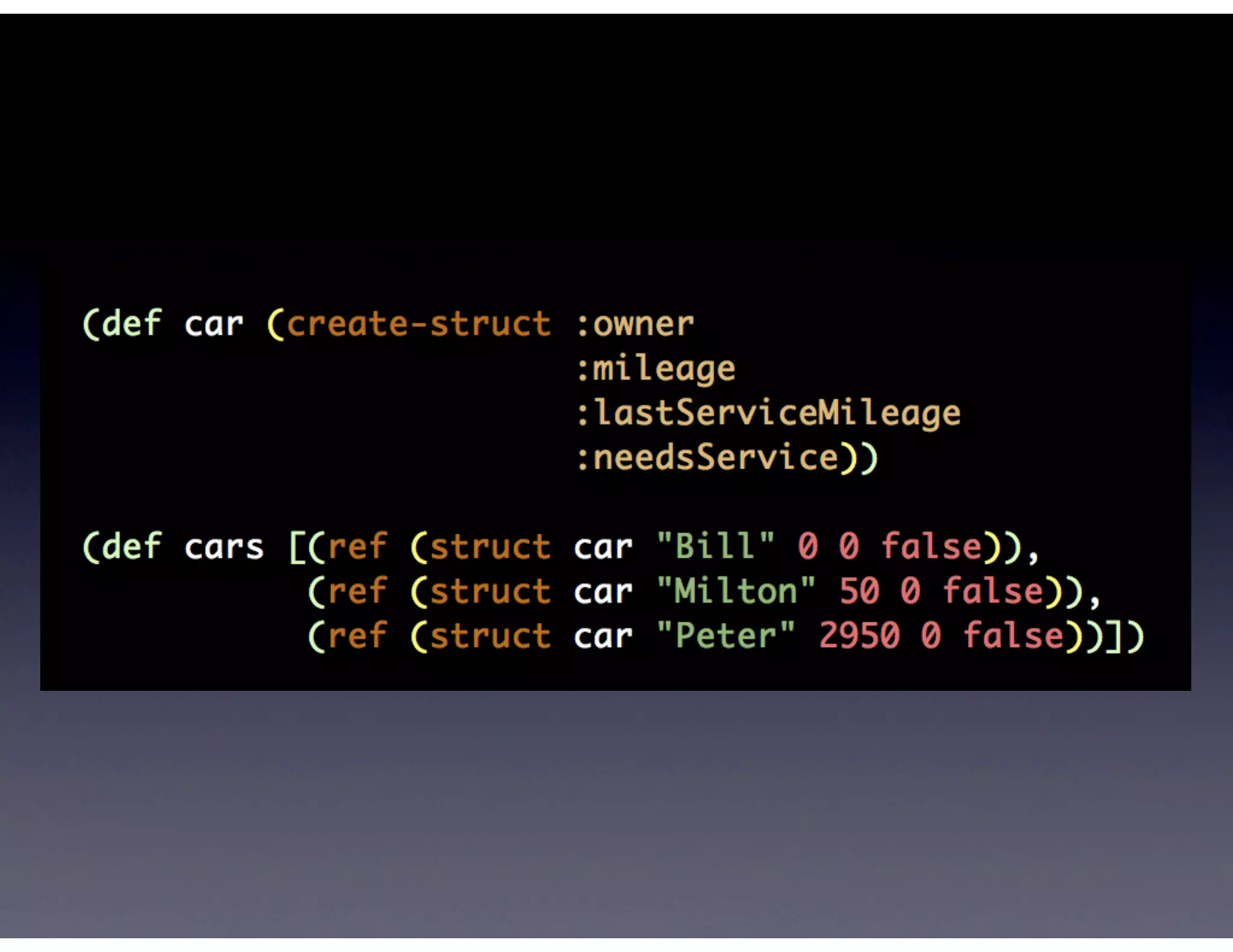
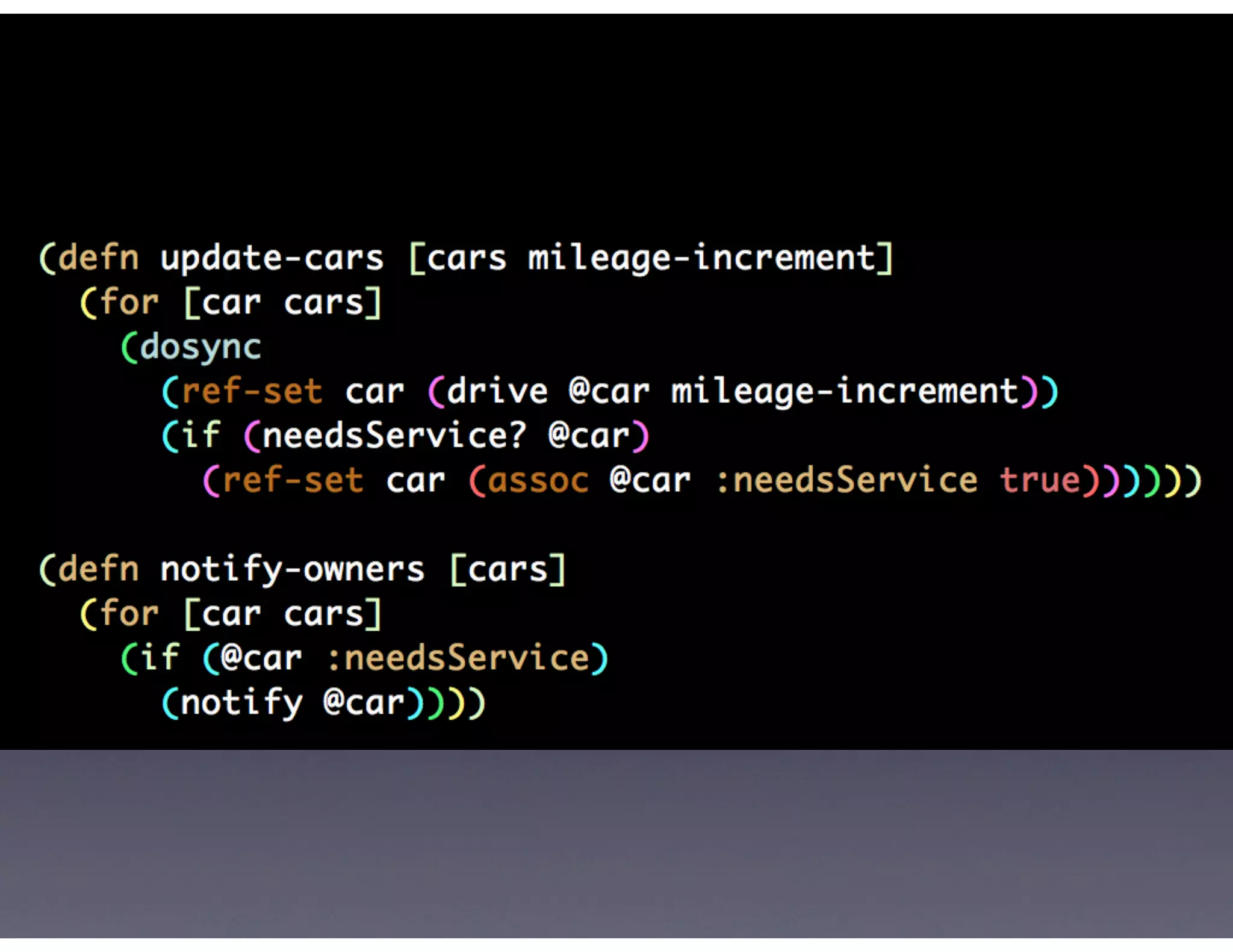
Concurrent System

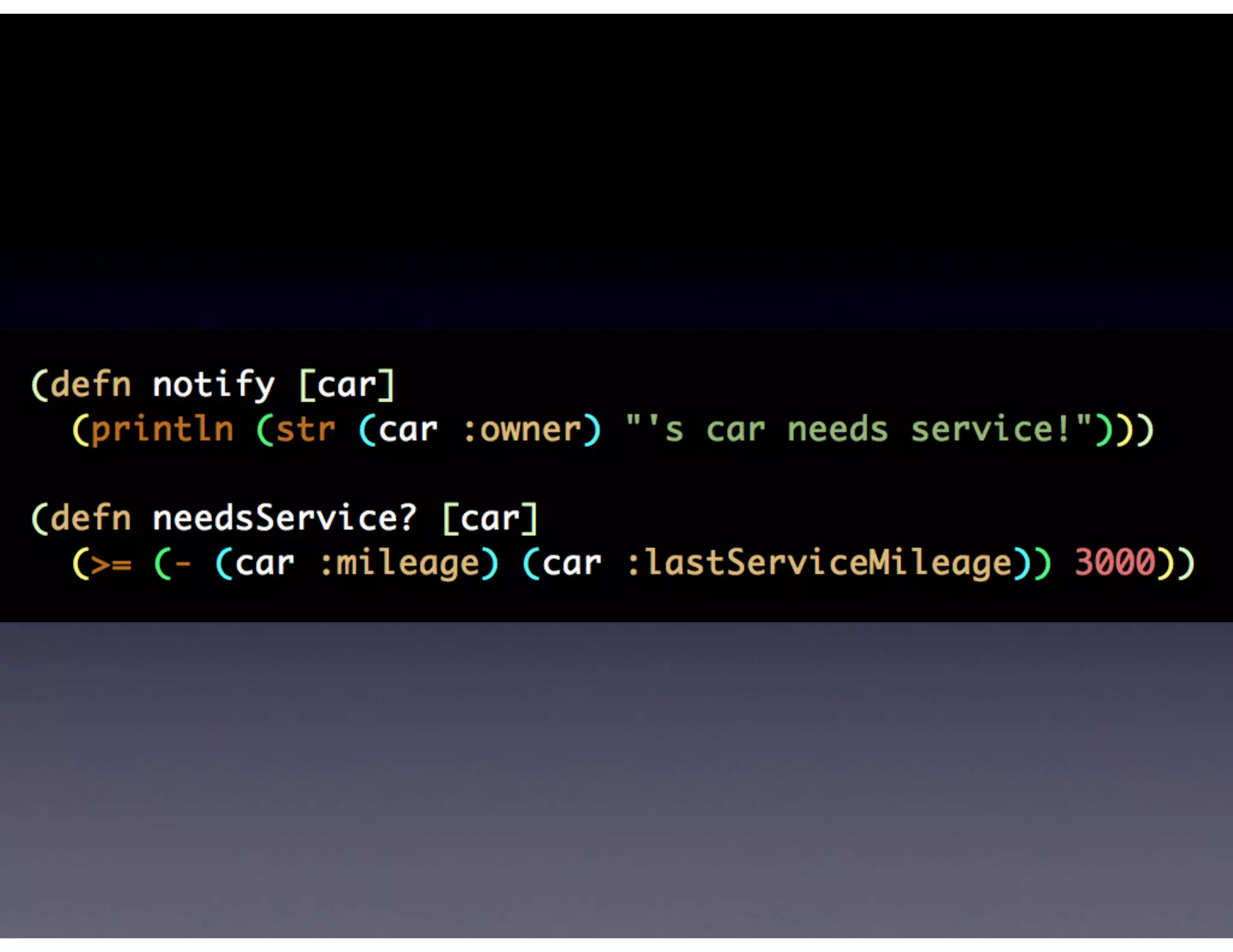
• Automated “Needs Service” Notification
  System
• Thread 1: Update mileage and “ready for
  service indicators”
• Thread 2: Harvest cars ready for service
  and send notifications
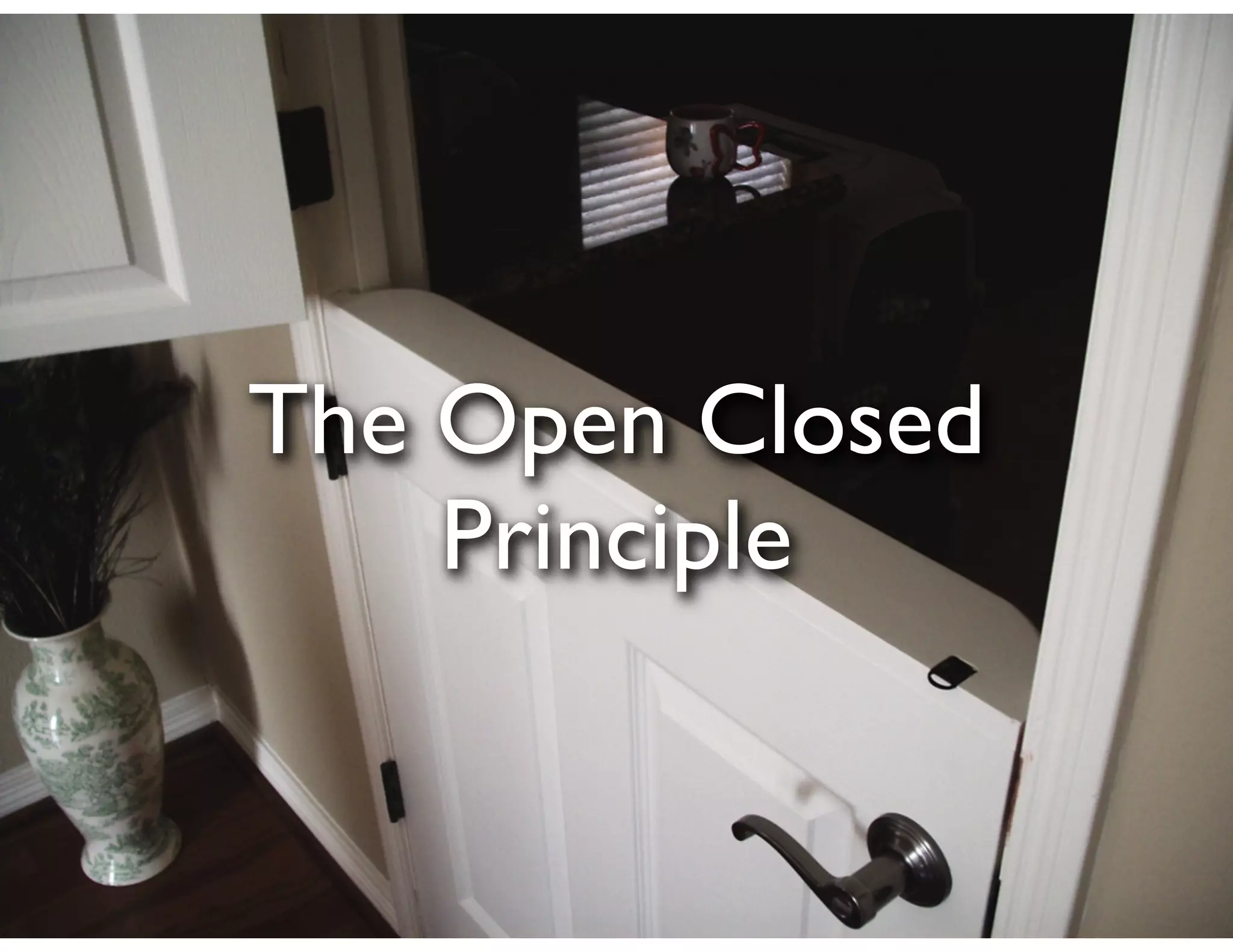
The Open Closed
    Principle
Bertrand Myer
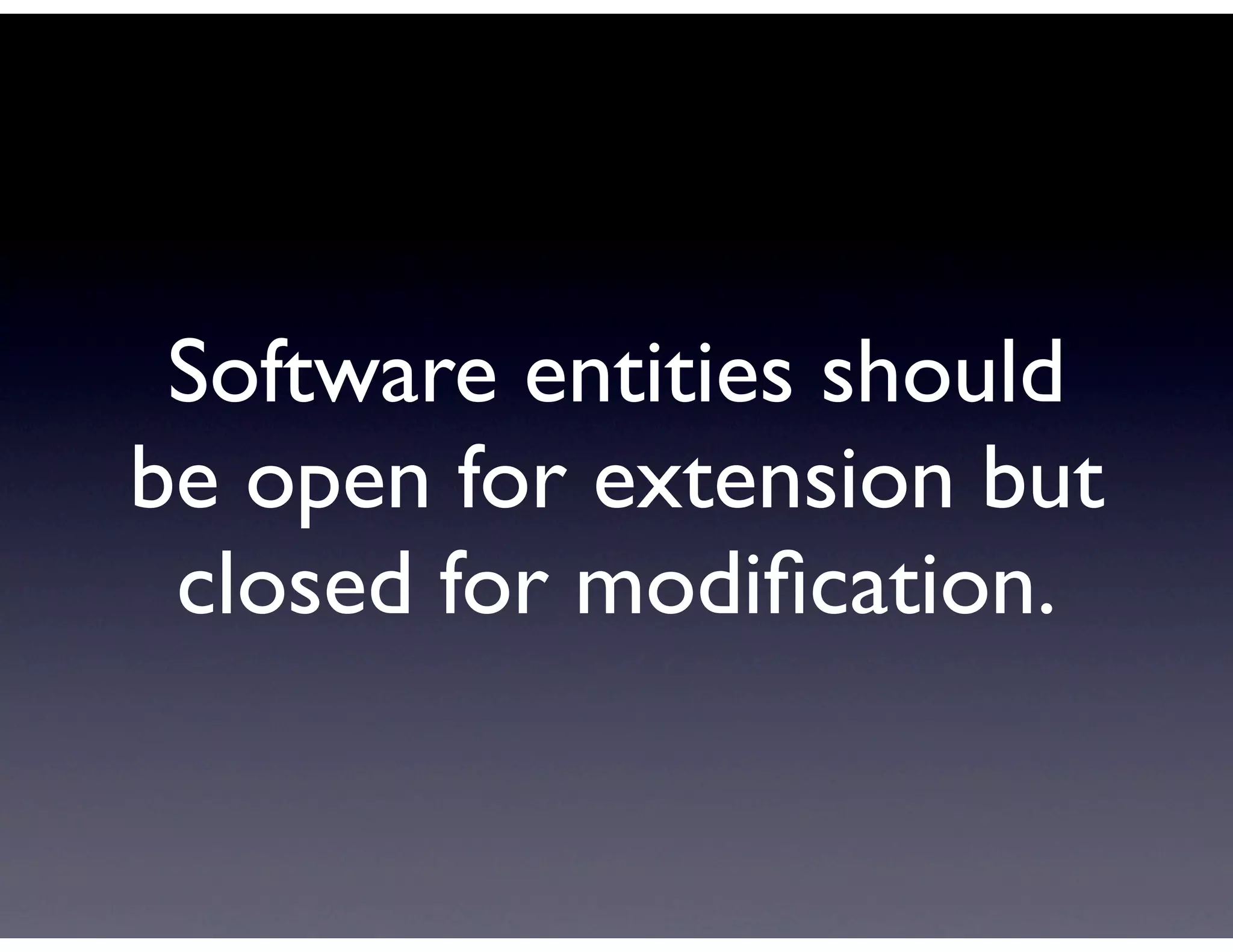
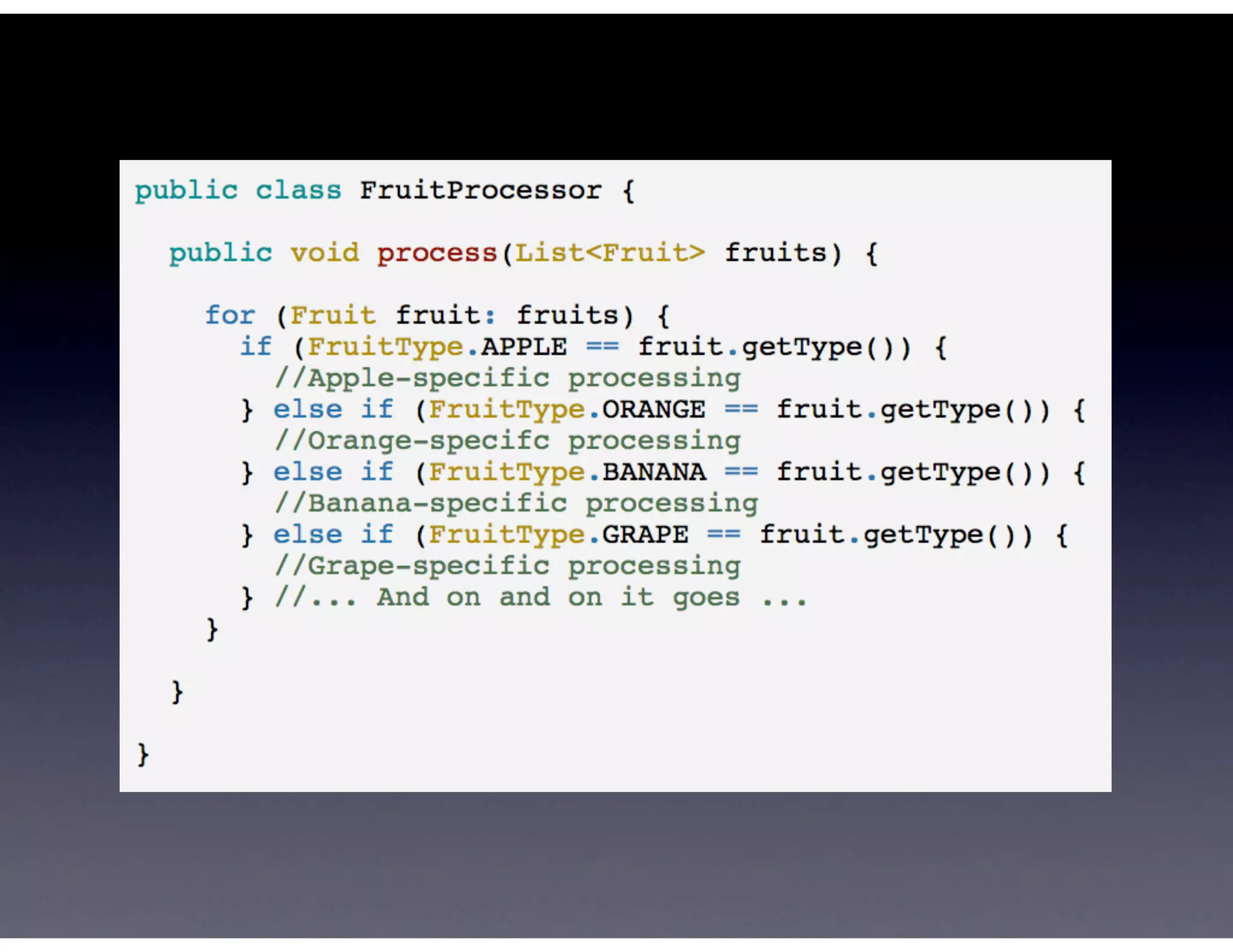
Software entities should
be open for extension but
 closed for modification.
Open for extension...
...closed for
modification.
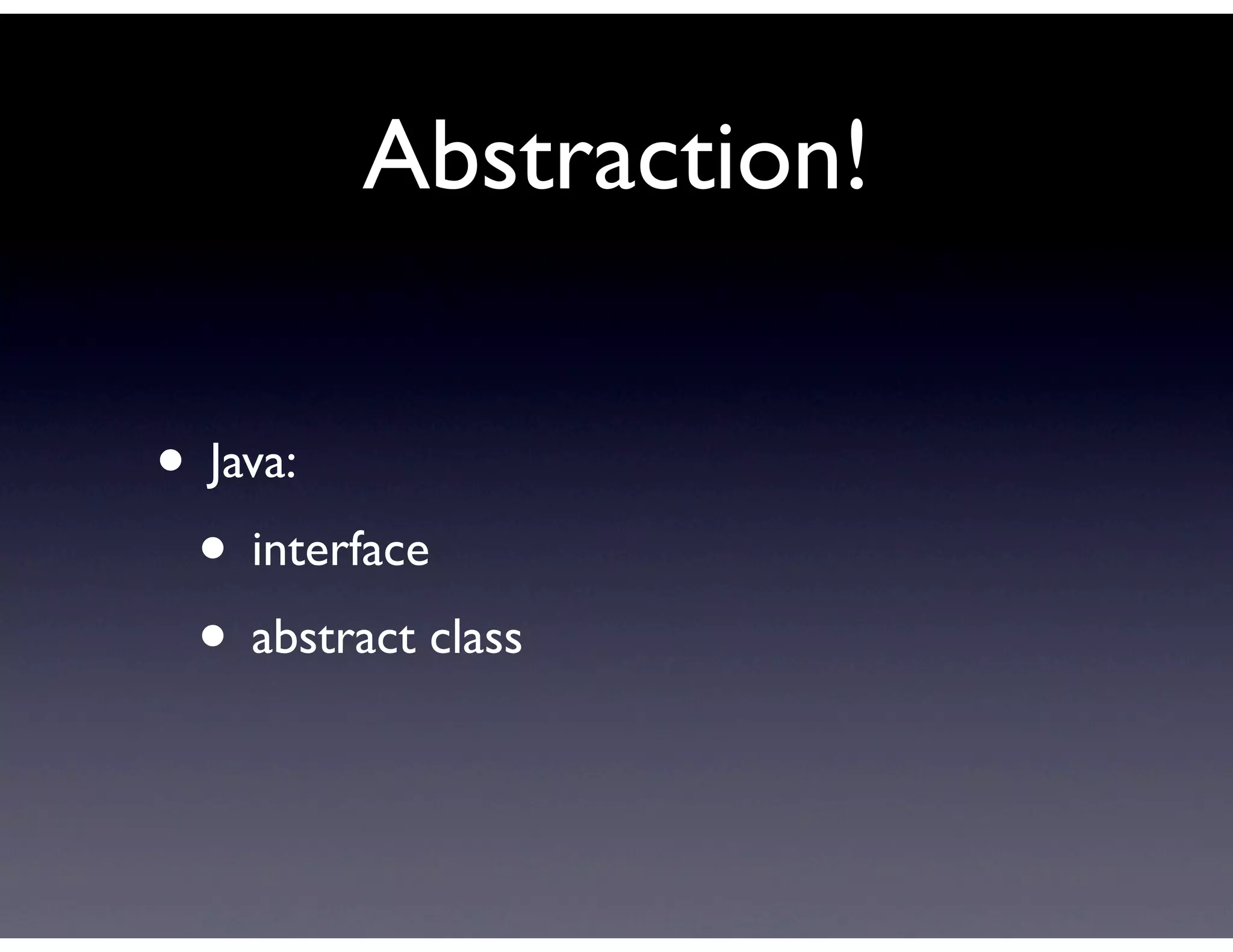
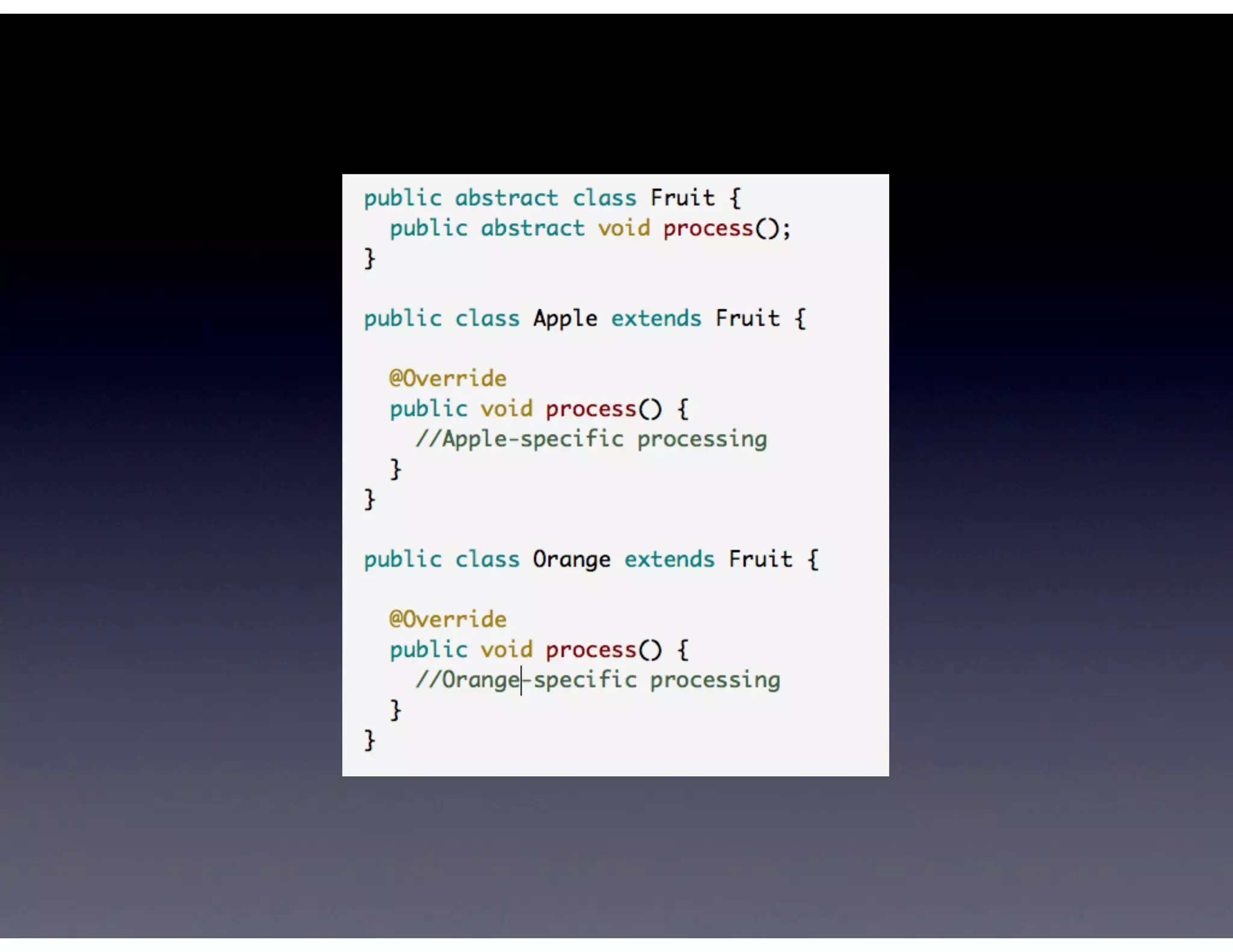
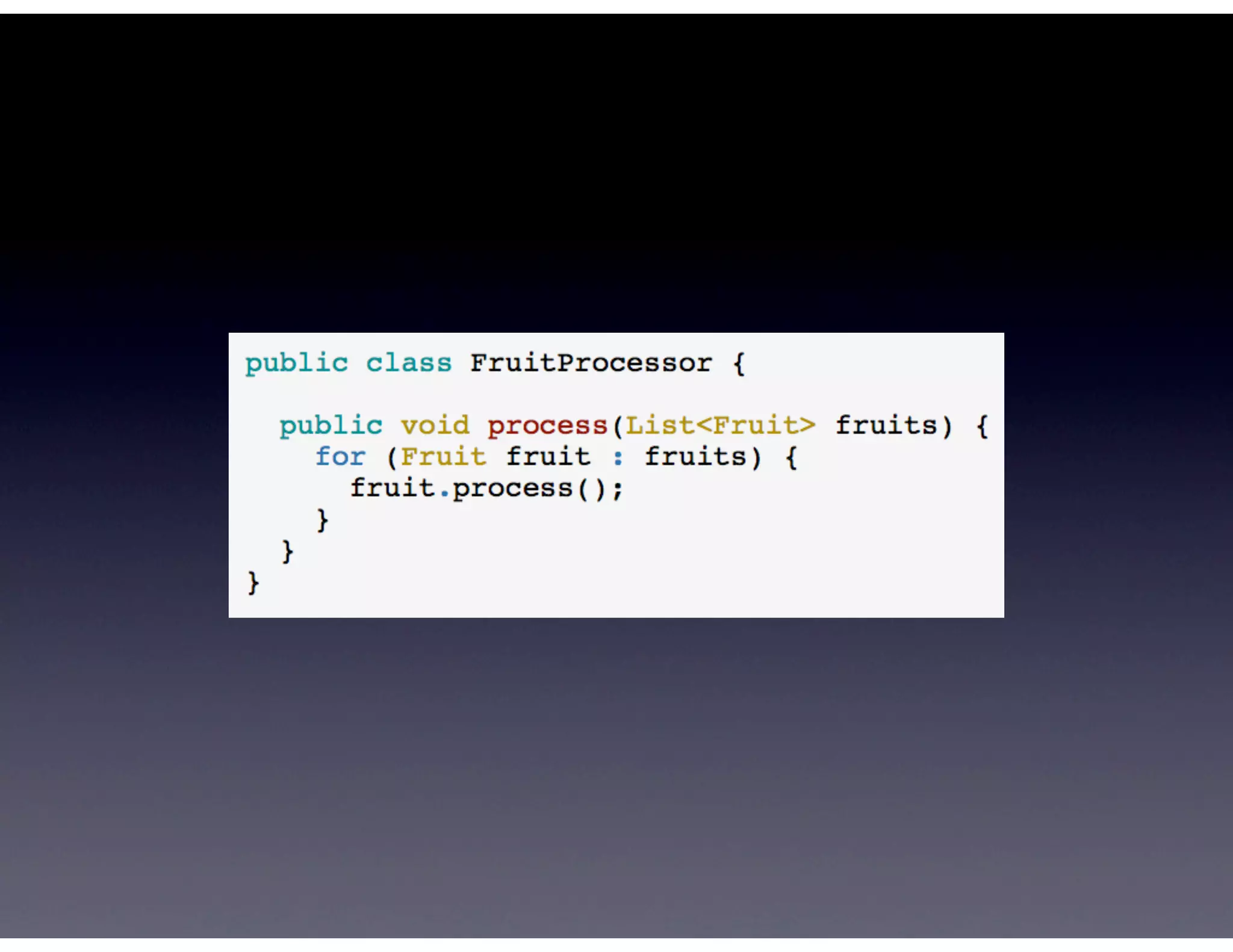
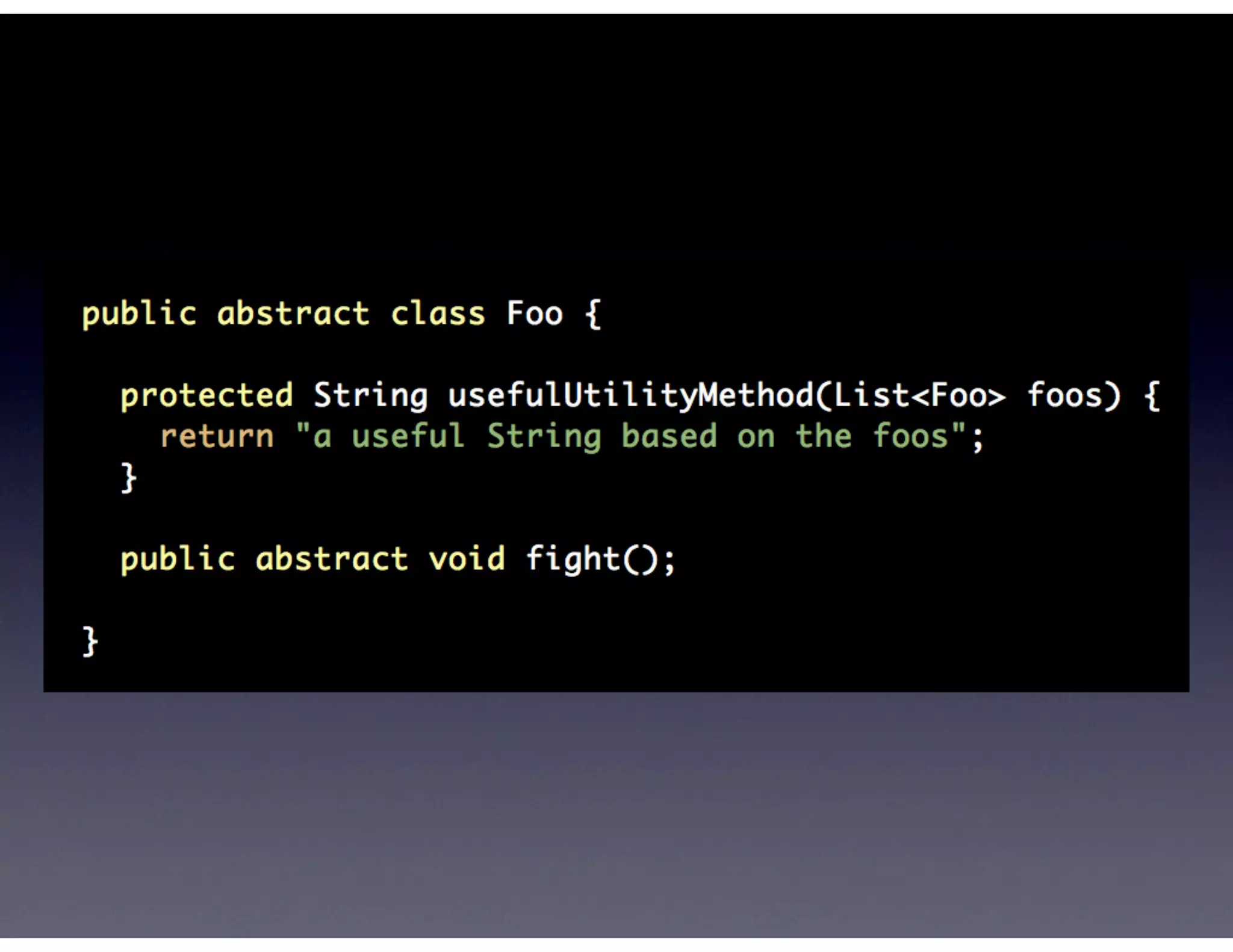
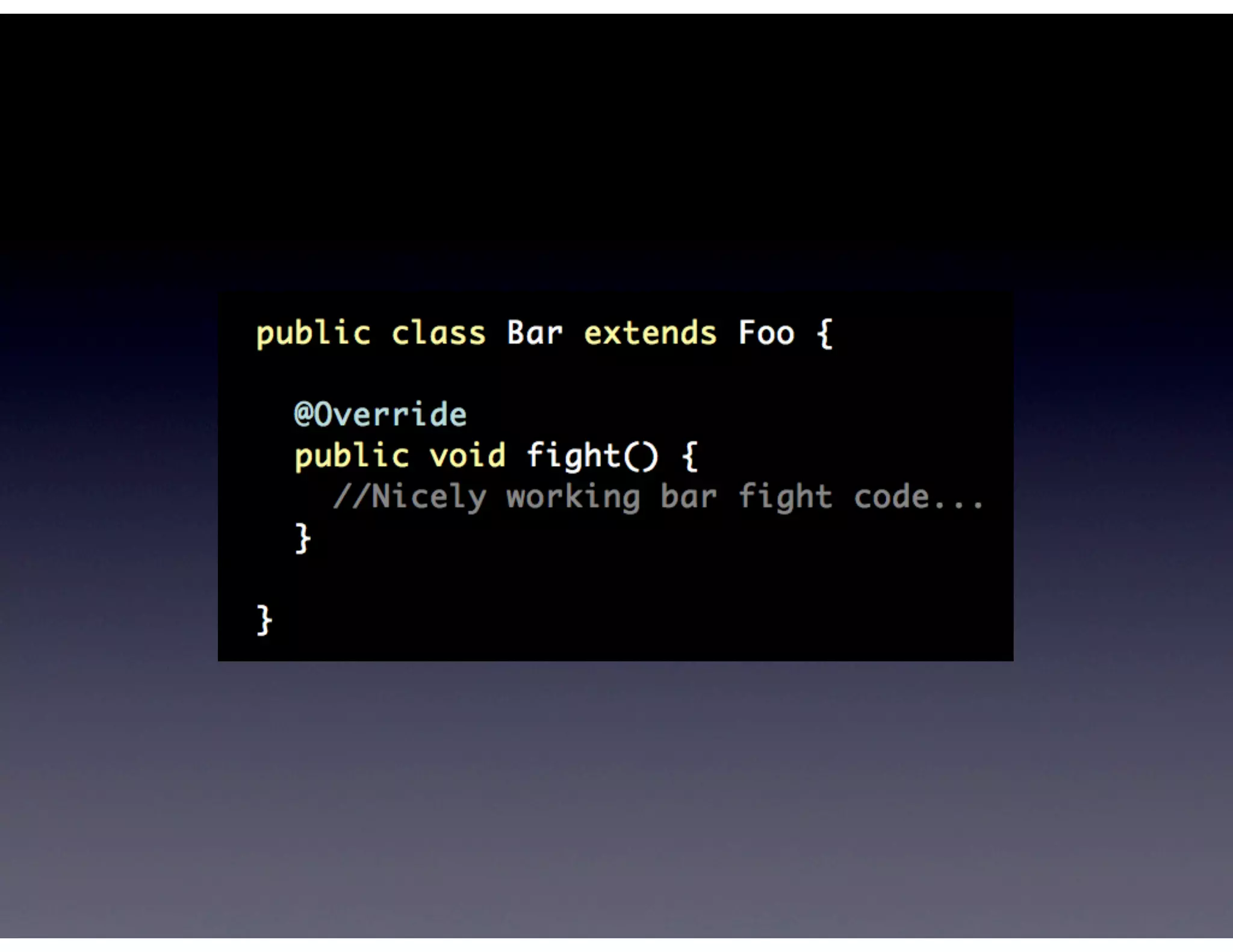
Abstraction!

• Java:
 • interface
 • abstract class
(pause OCP)
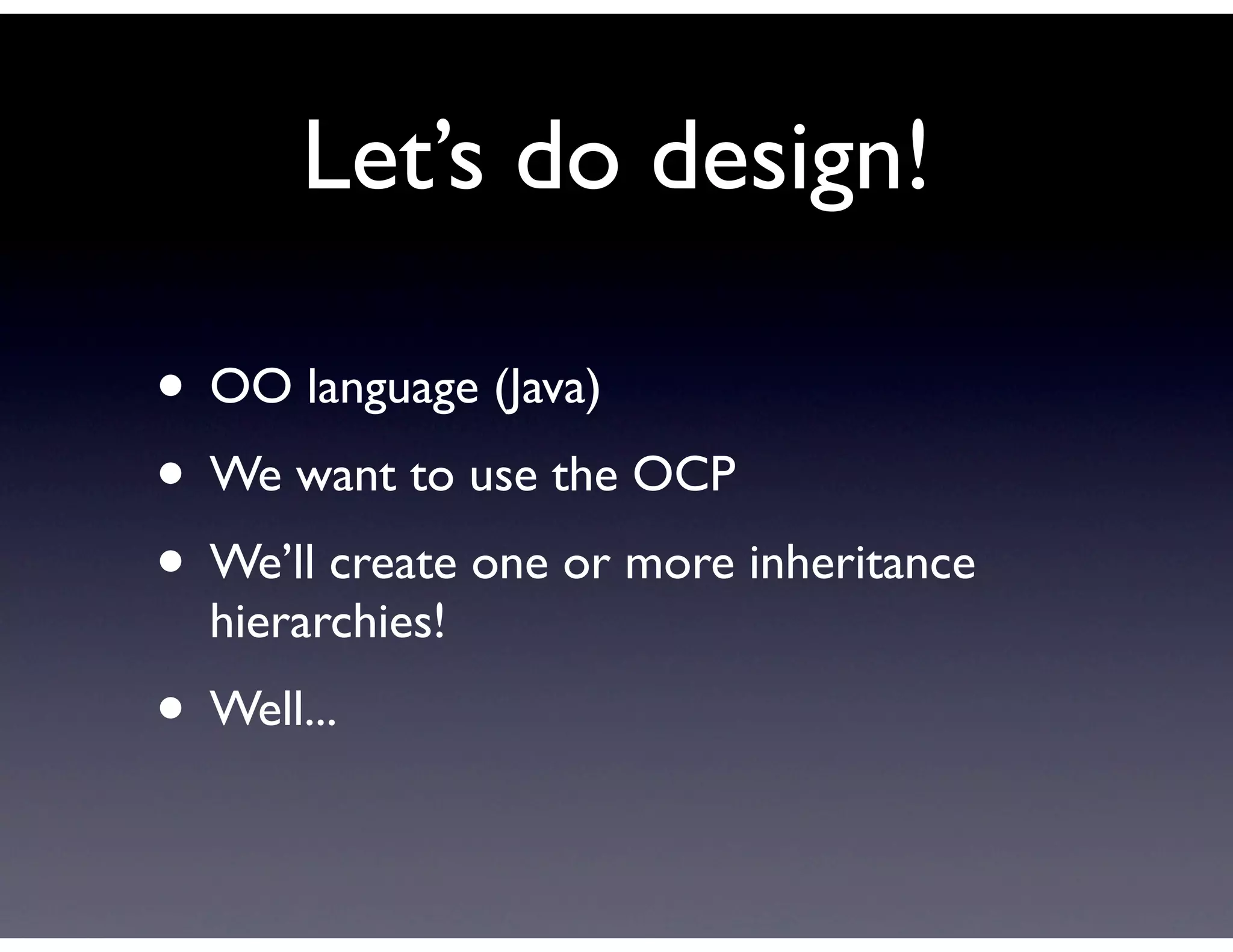
Let’s do design!

• OO language (Java)
• We want to use the OCP
• We’ll create one or more inheritance
  hierarchies!
• Well...
Inheritance
          Hierarchies?

• What do good ones look like?
• Are there rules we can follow (best
  practices even)?
• Are there traps we can fall in to?
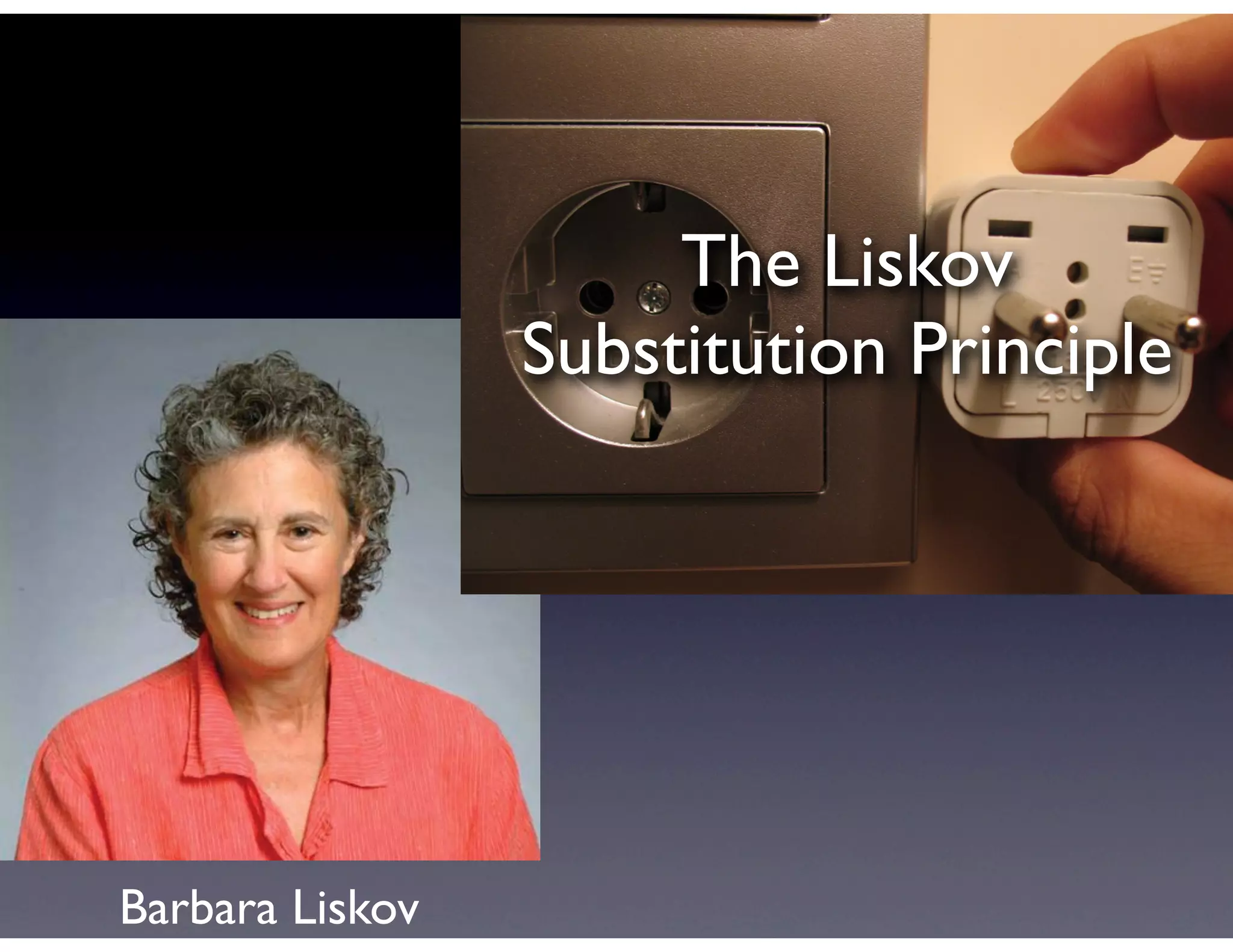
The Liskov
                 Substitution Principle


Barbara Liskov
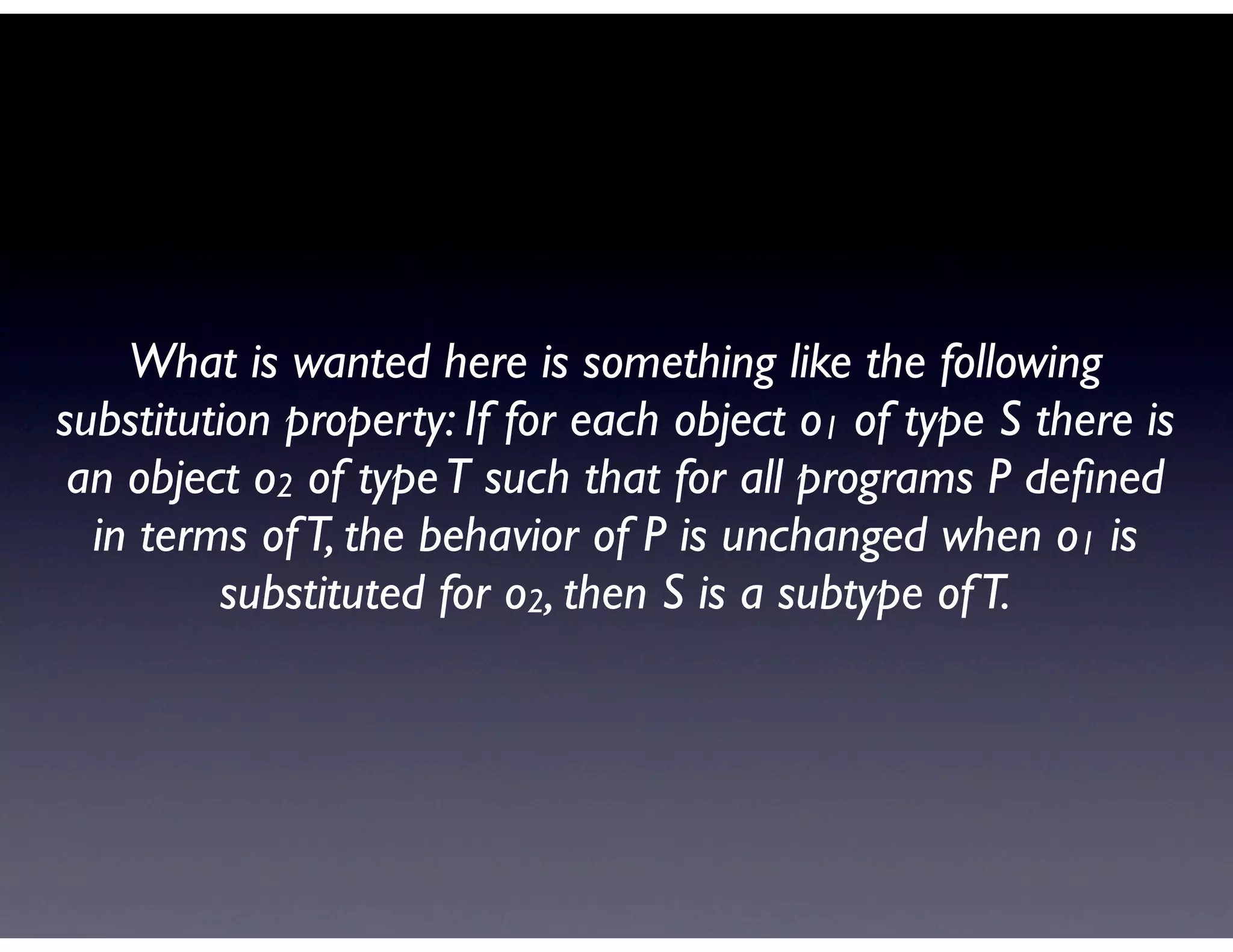
What is wanted here is something like the following
substitution property: If for each object o1 of type S there is
 an object o2 of type T such that for all programs P defined
  in terms of T, the behavior of P is unchanged when o1 is
         substituted for o2, then S is a subtype of T.
Subtypes must be
substitutable for their
     base types.
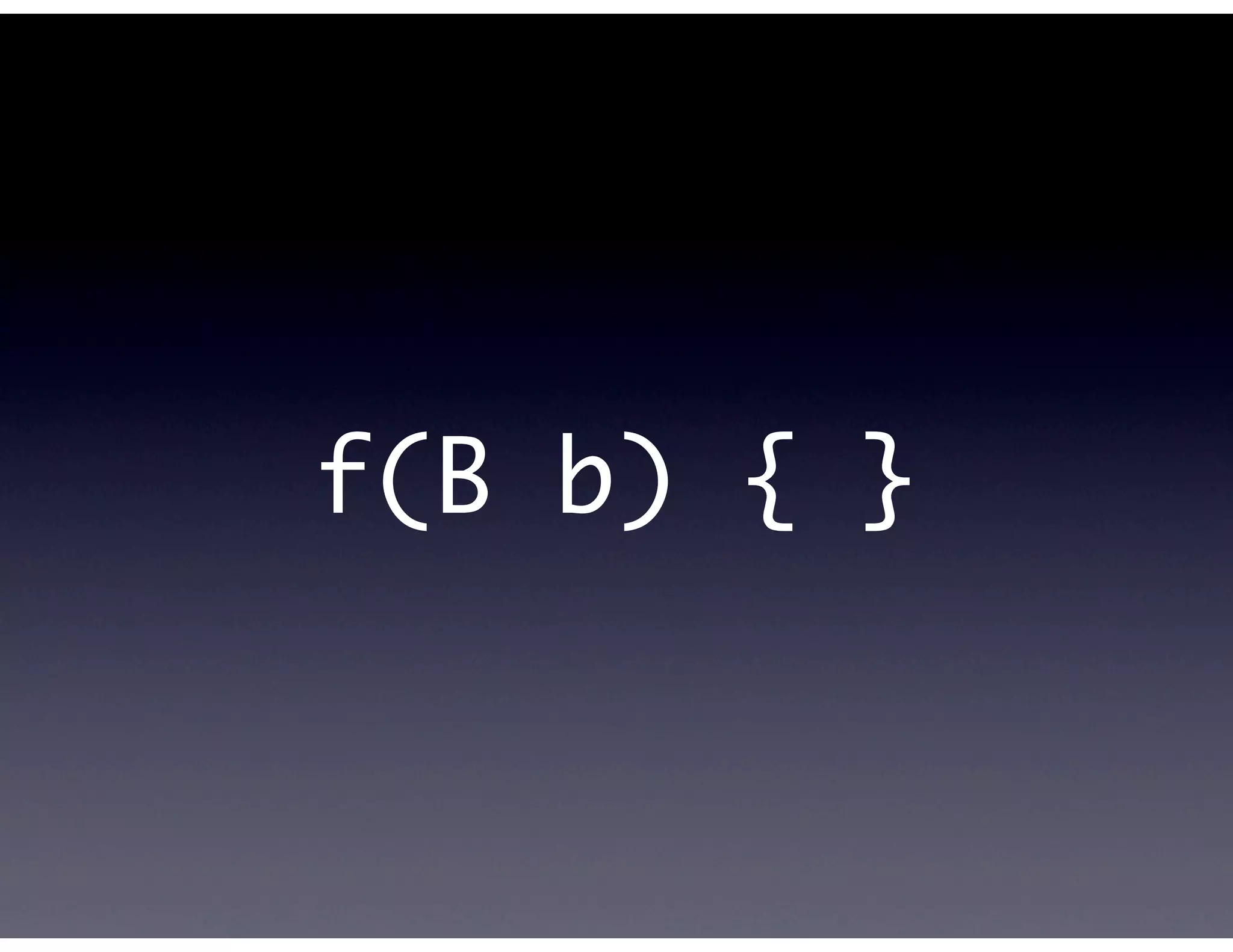
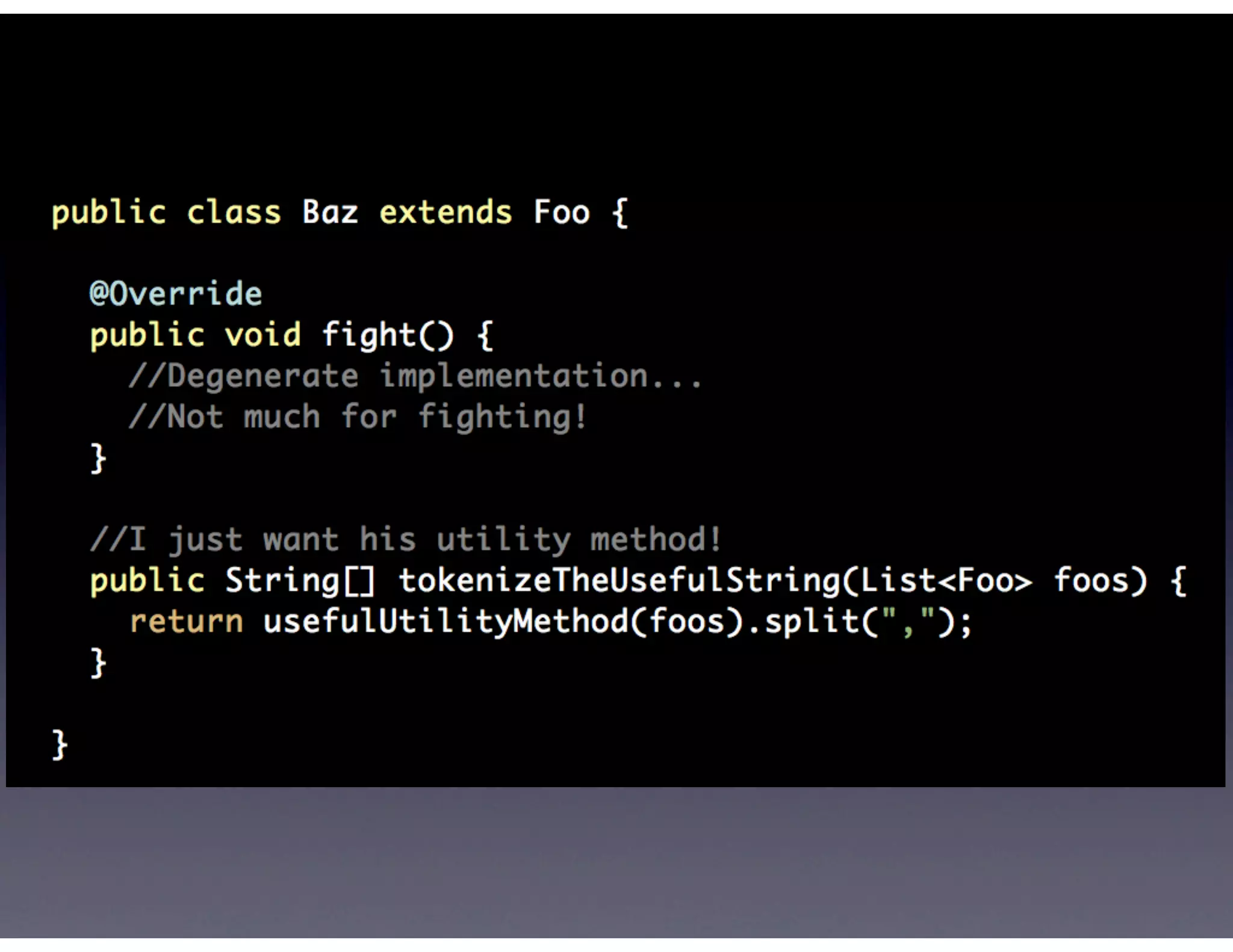
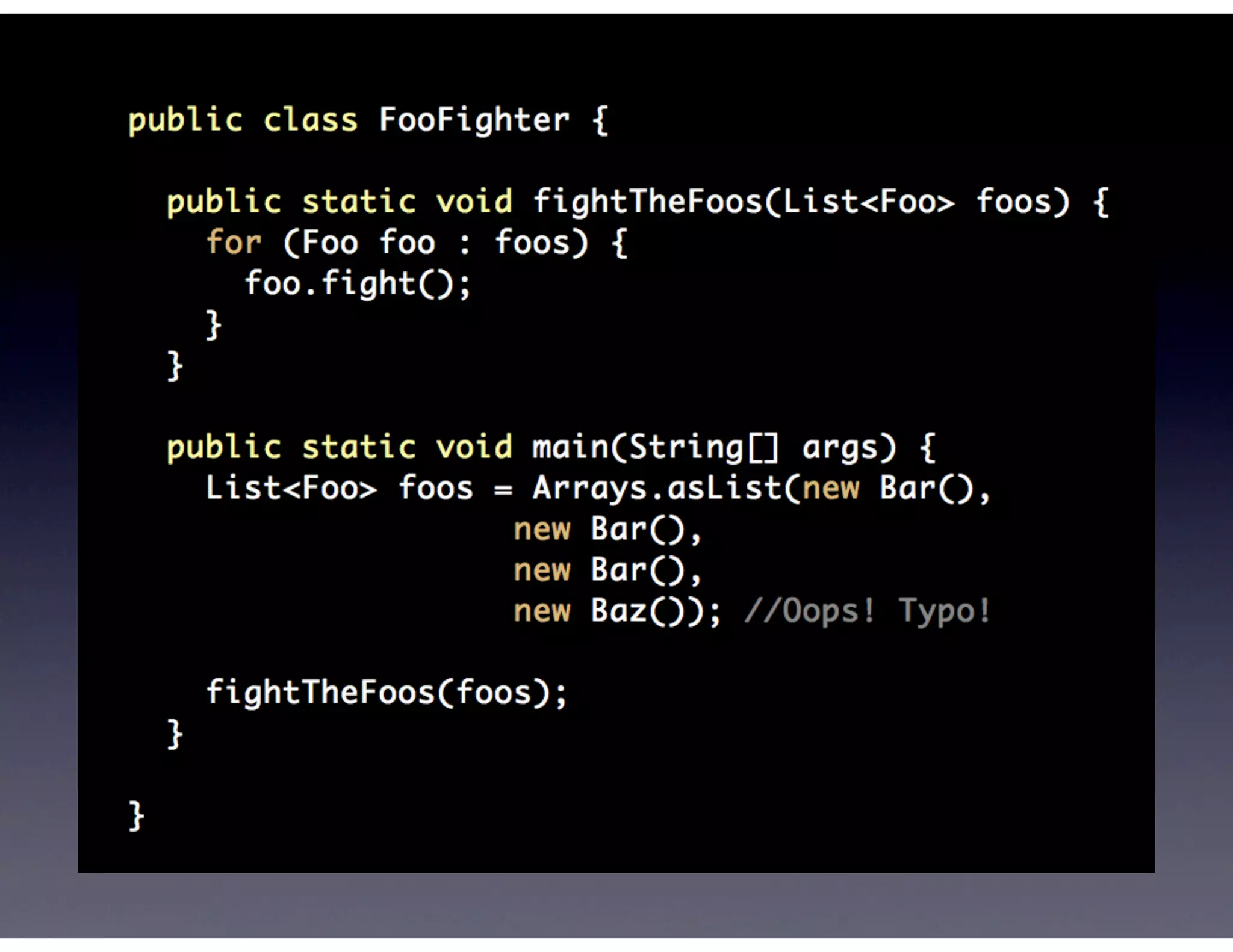
f(B b) { }
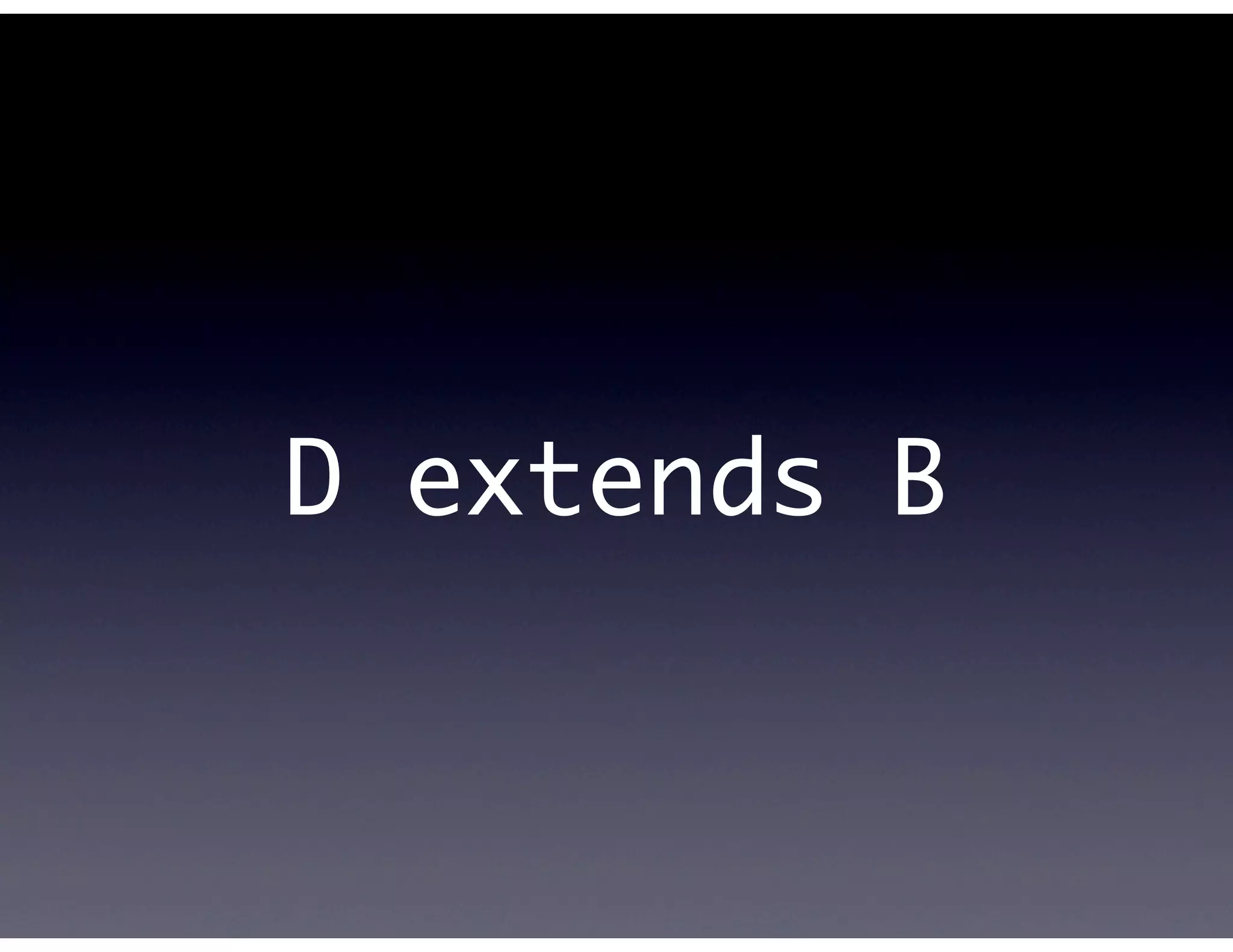
D extends B
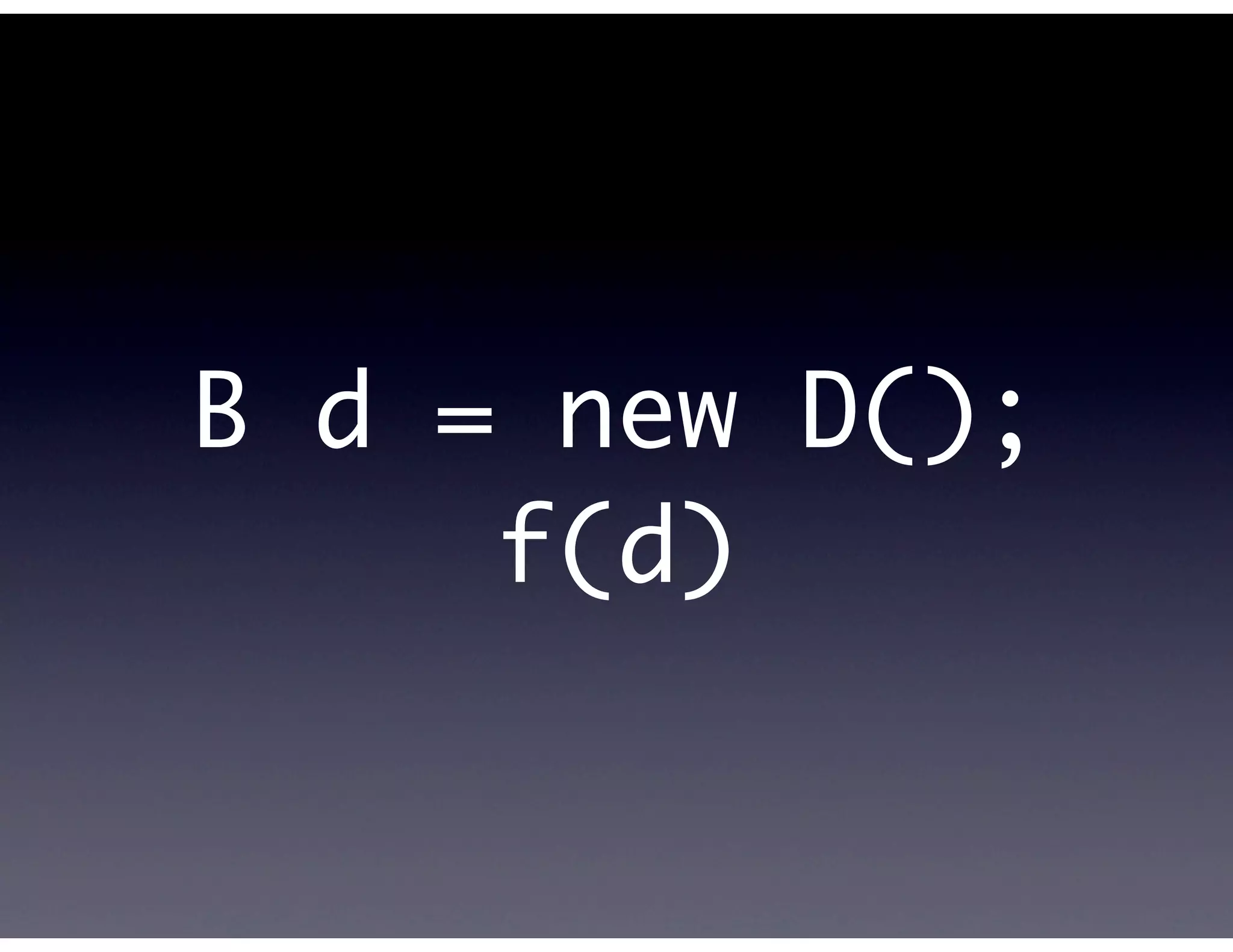
B d = new D();
     f(d)
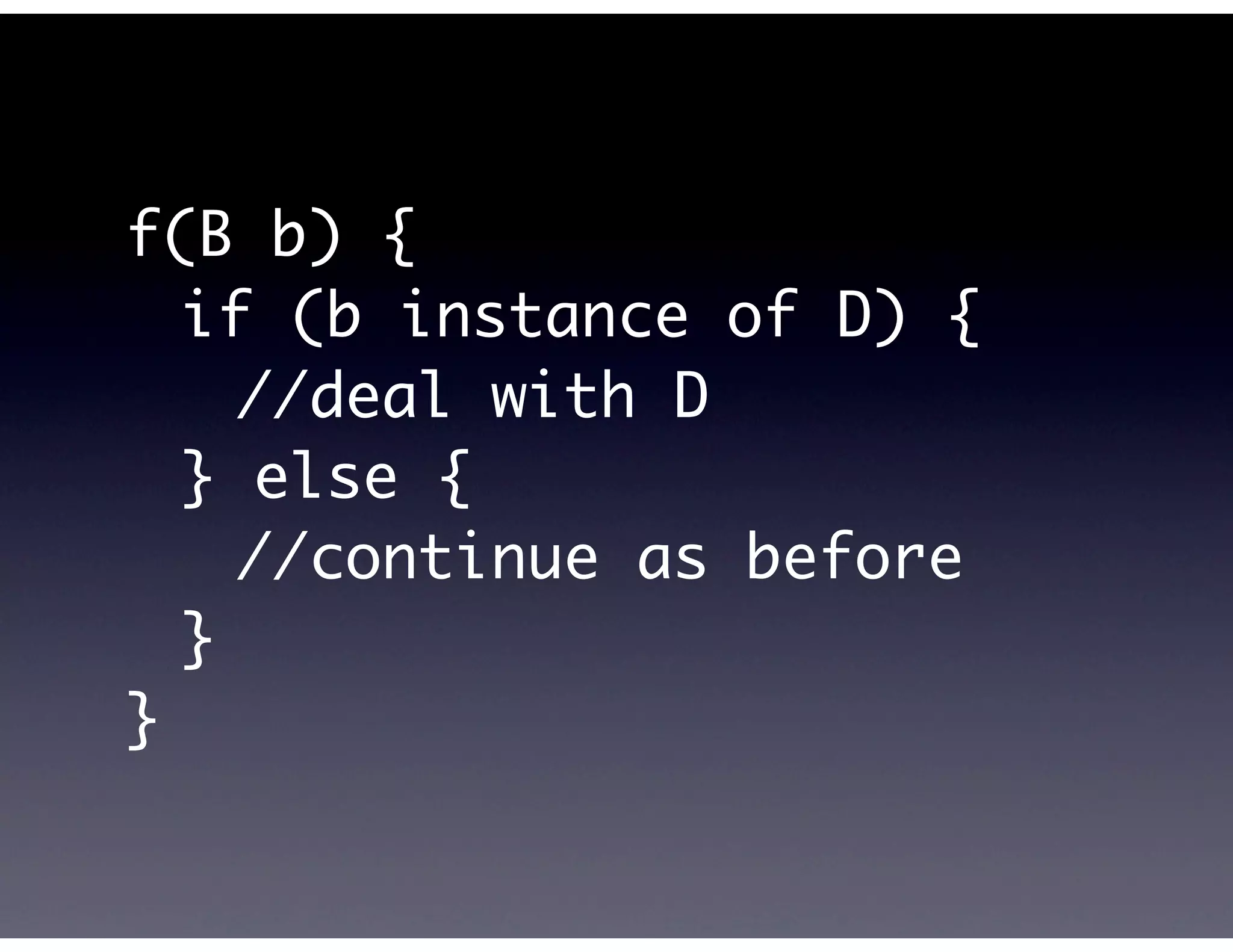
f(B b) {
	 if (b instance of D) {
	 	 //deal with D
	 } else {
	 	 //continue as before
	}
}
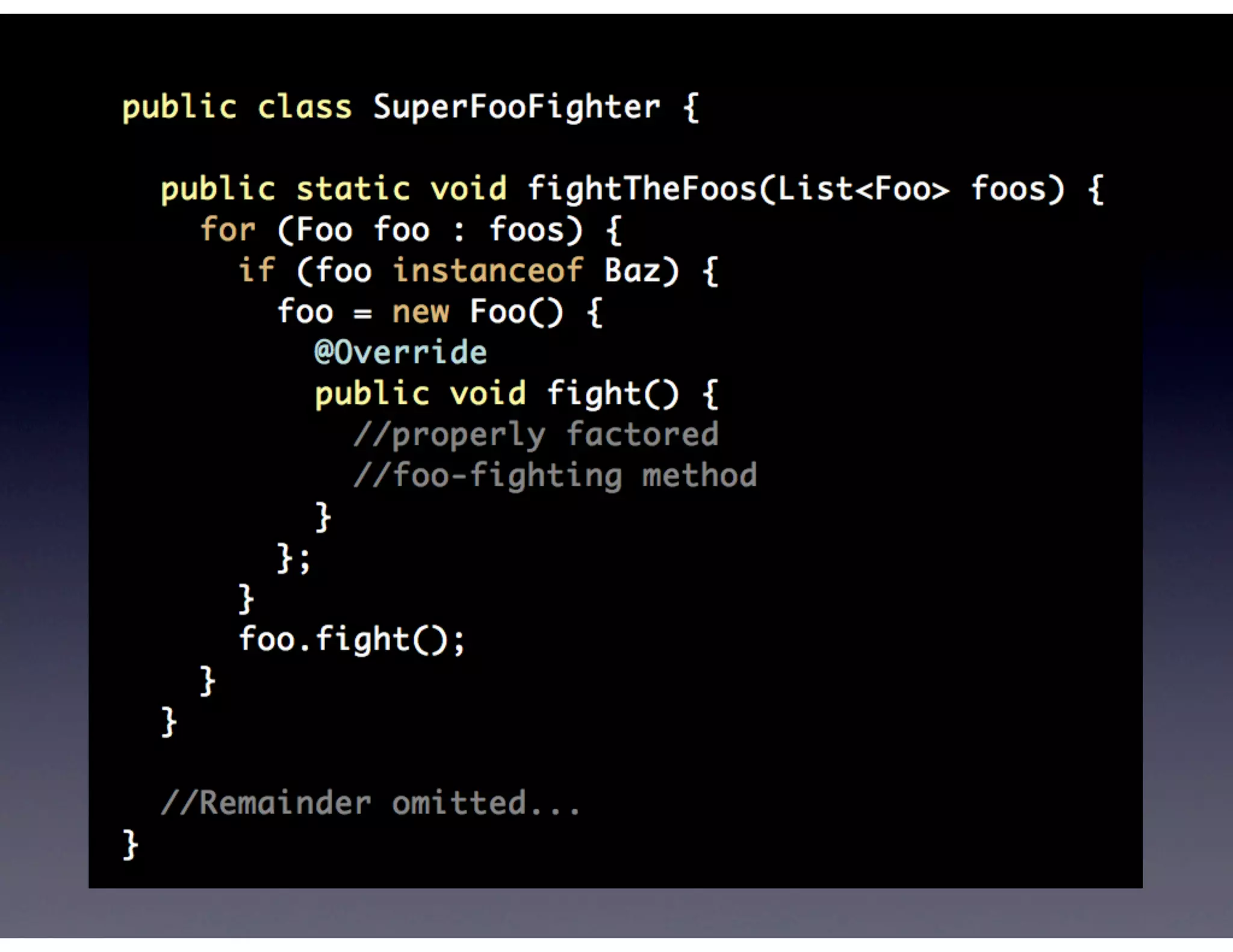
(resume OCP)
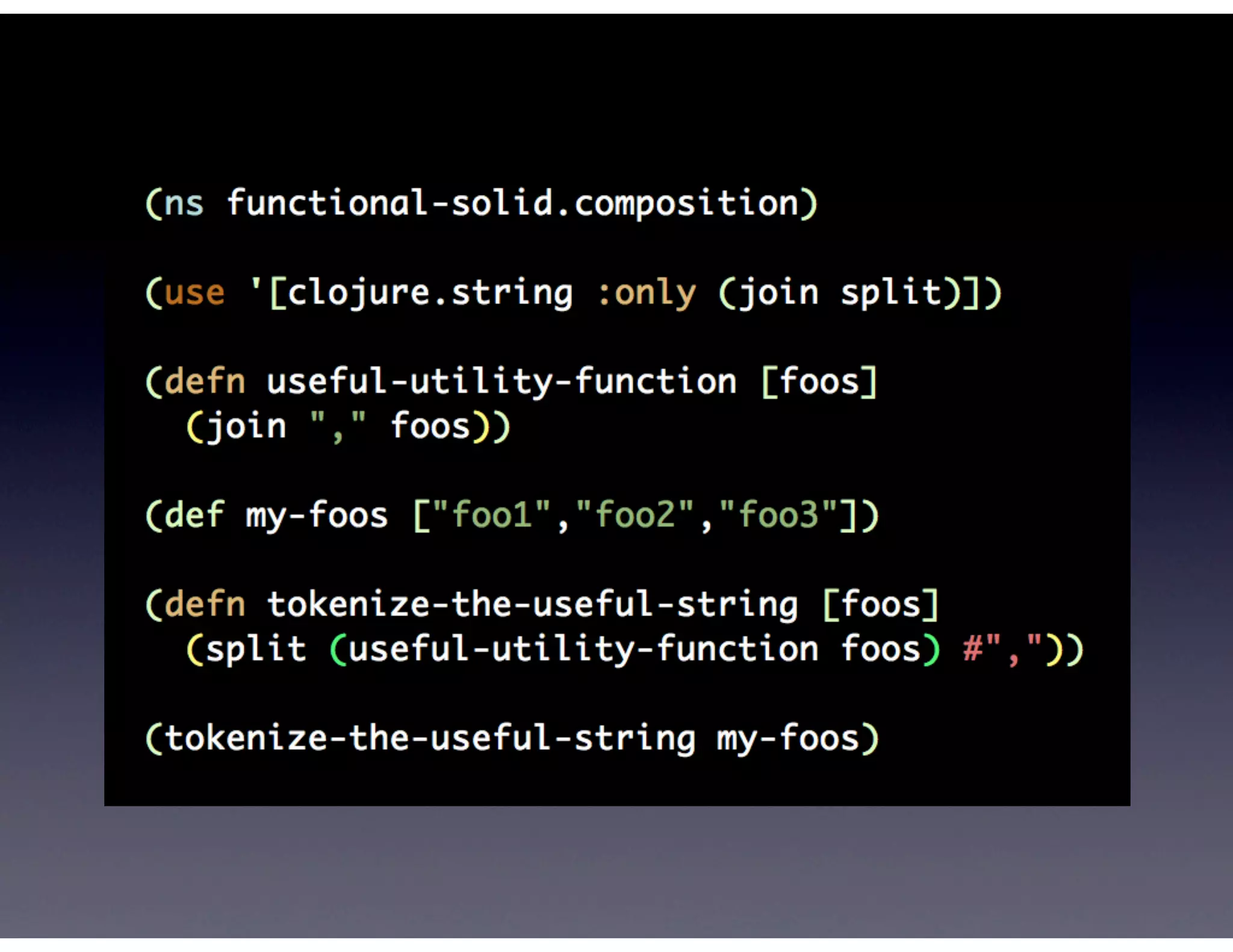
Composition
 The Functional OCP
First-class Functions
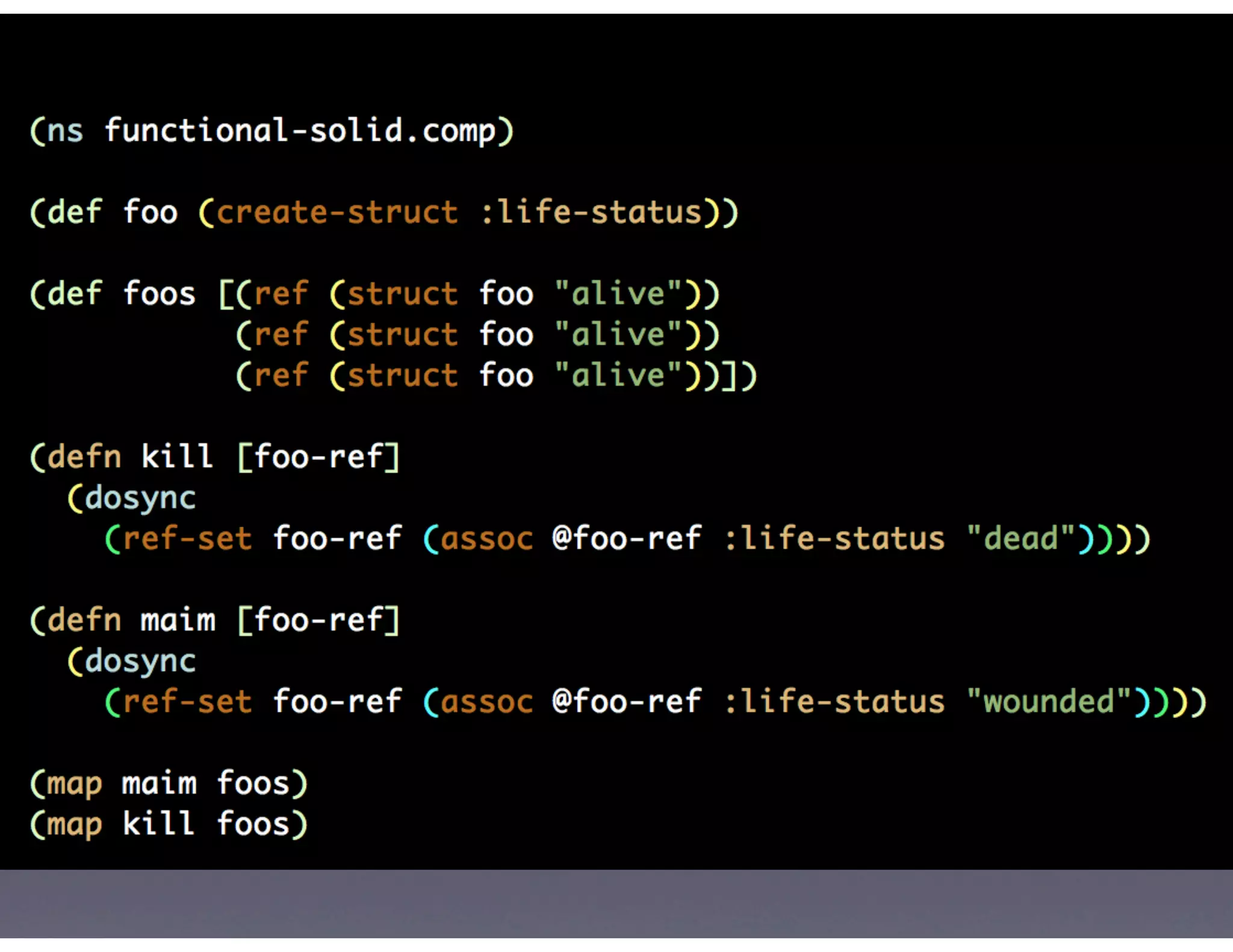
Higher-order Functions
The Interface
Segregation Principle
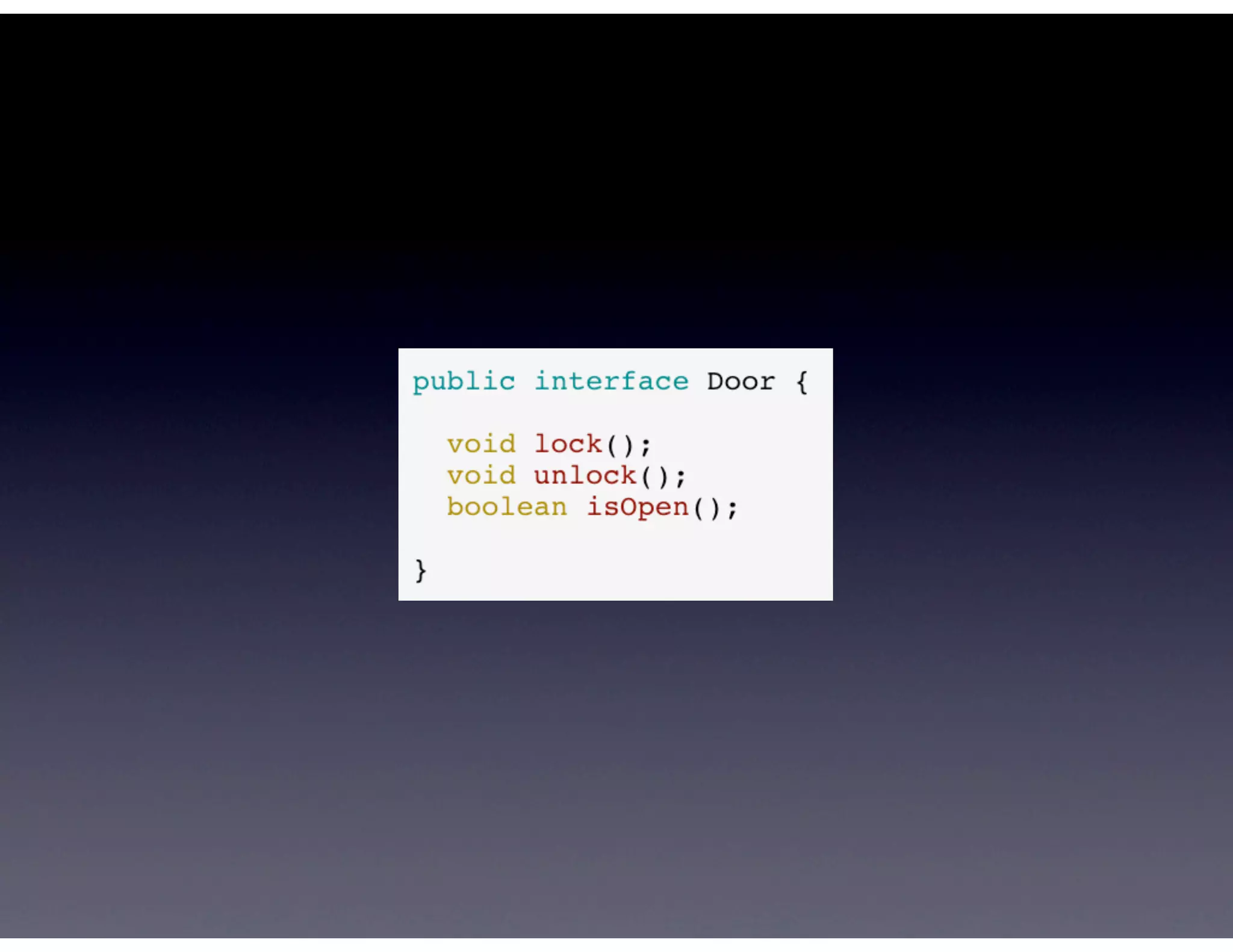
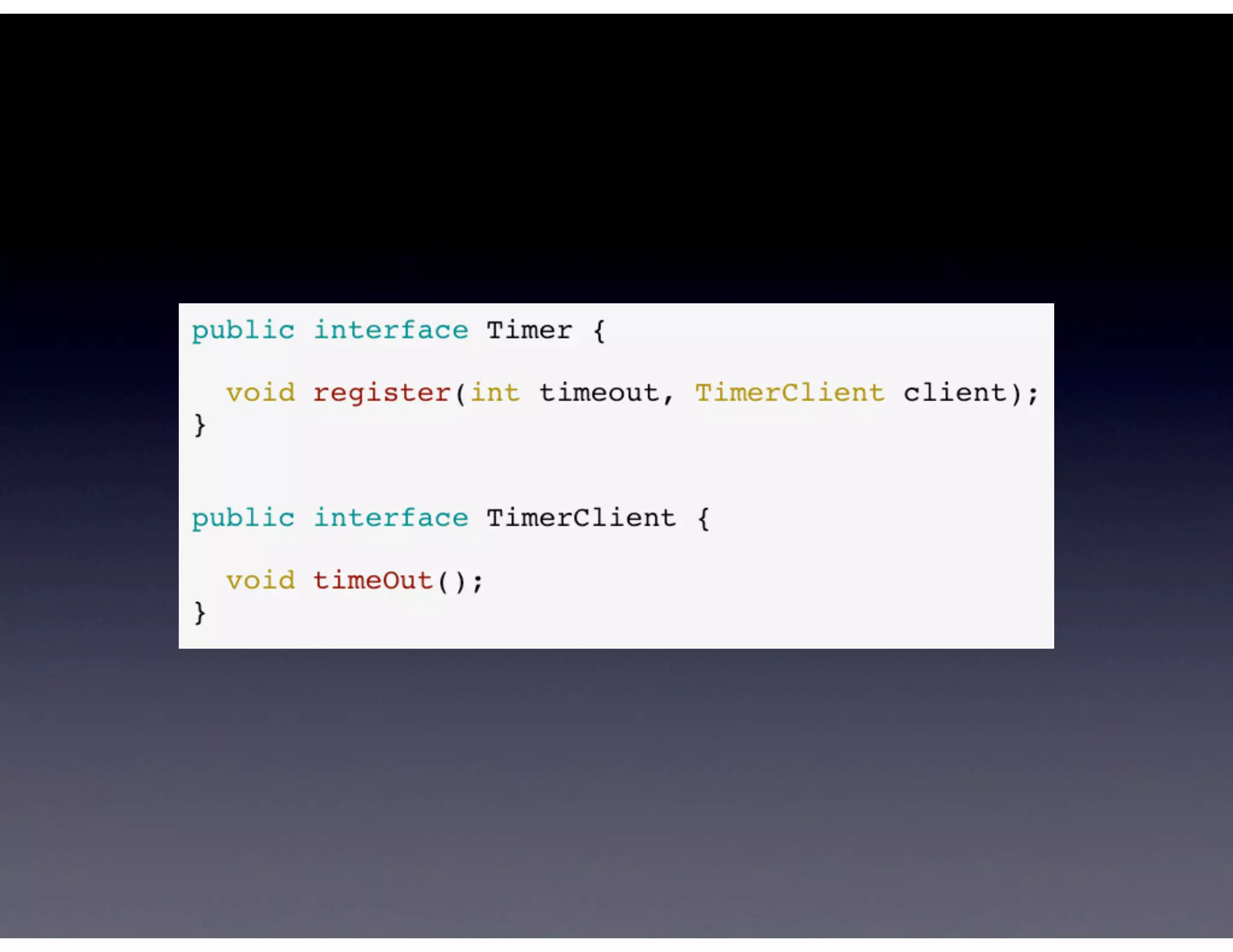
Clients should not be
  forced to depend on
methods they do not use.
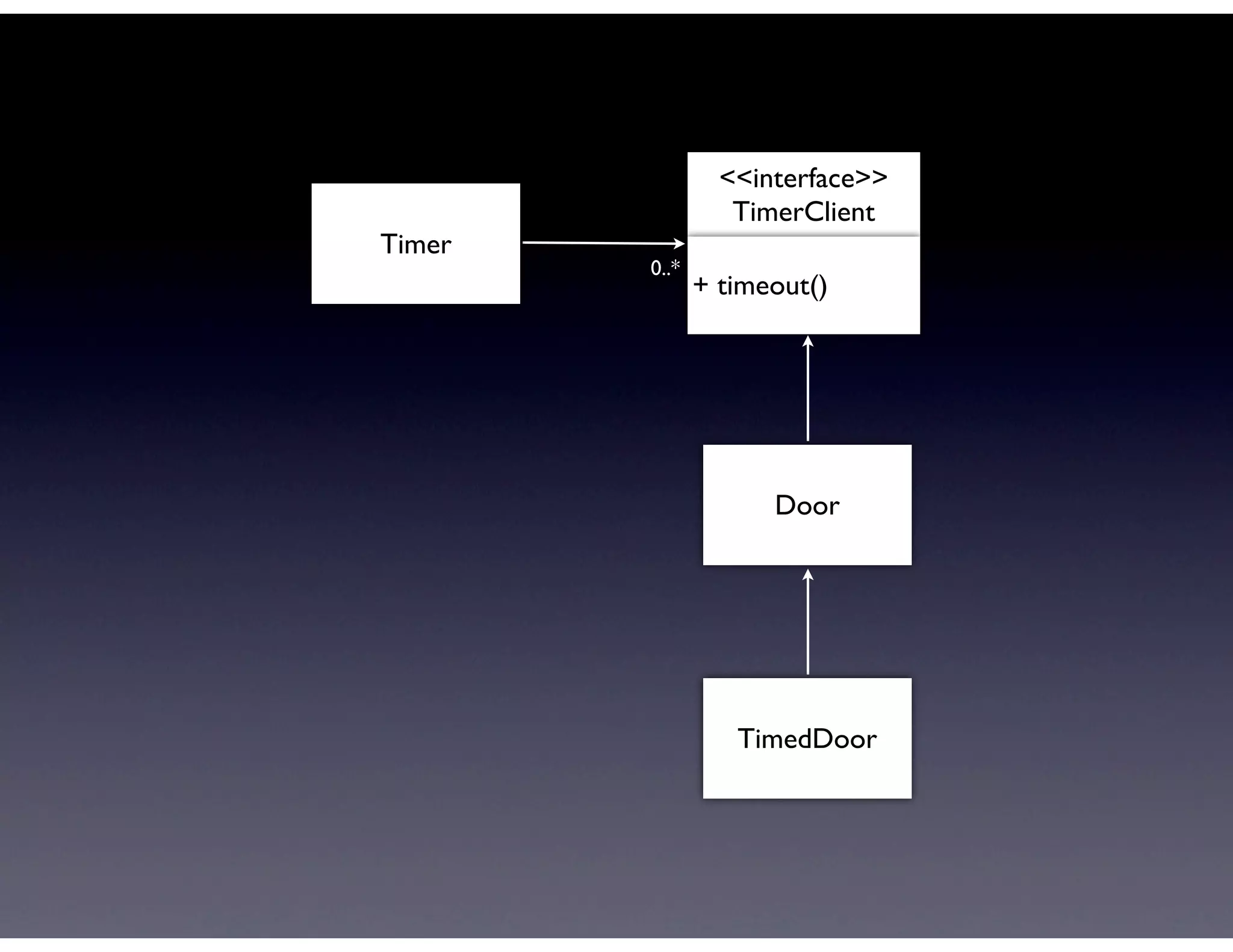
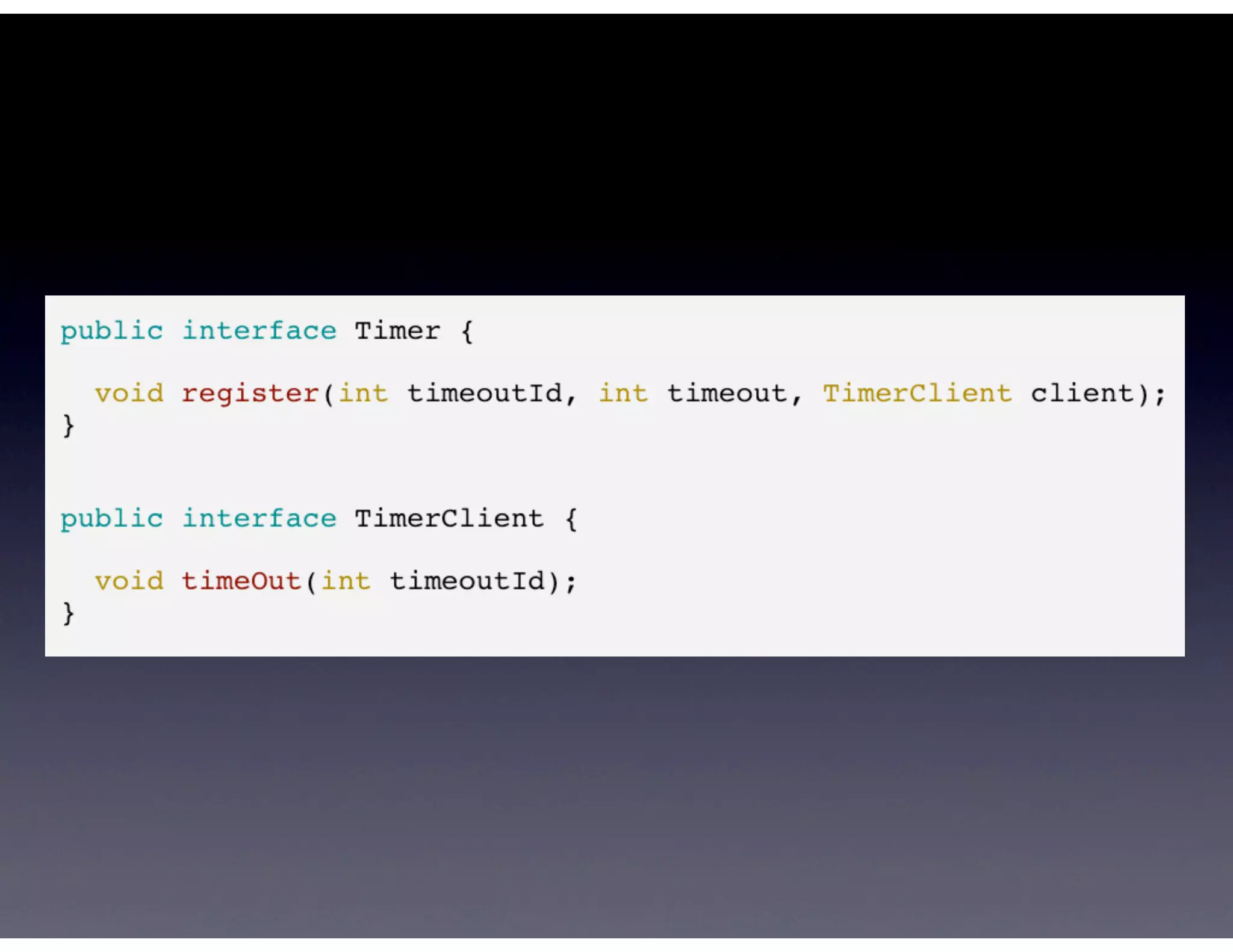
<<interface>>
                  TimerClient
Timer
        0..*
               + timeout()


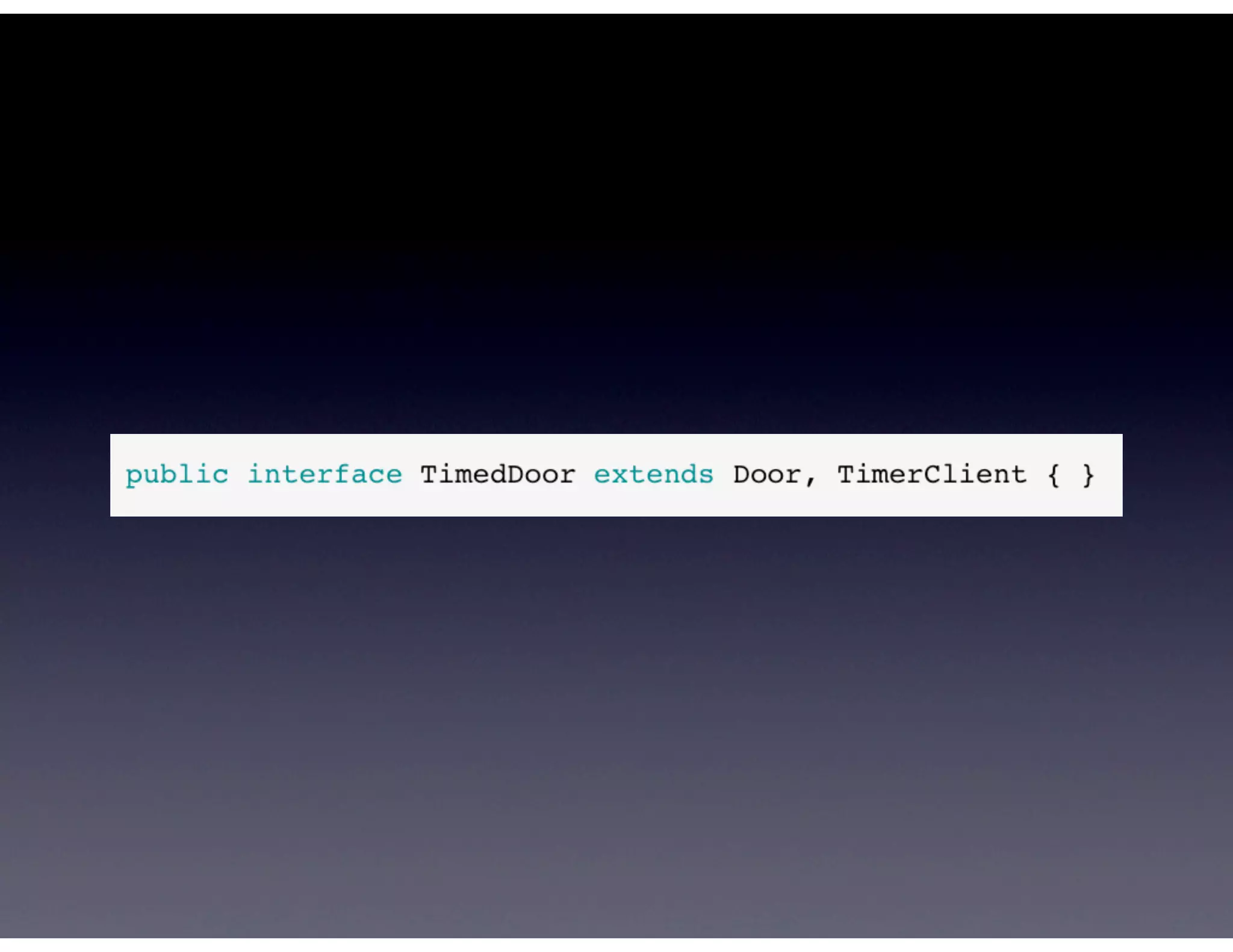
                     Door


                  TimedDoor
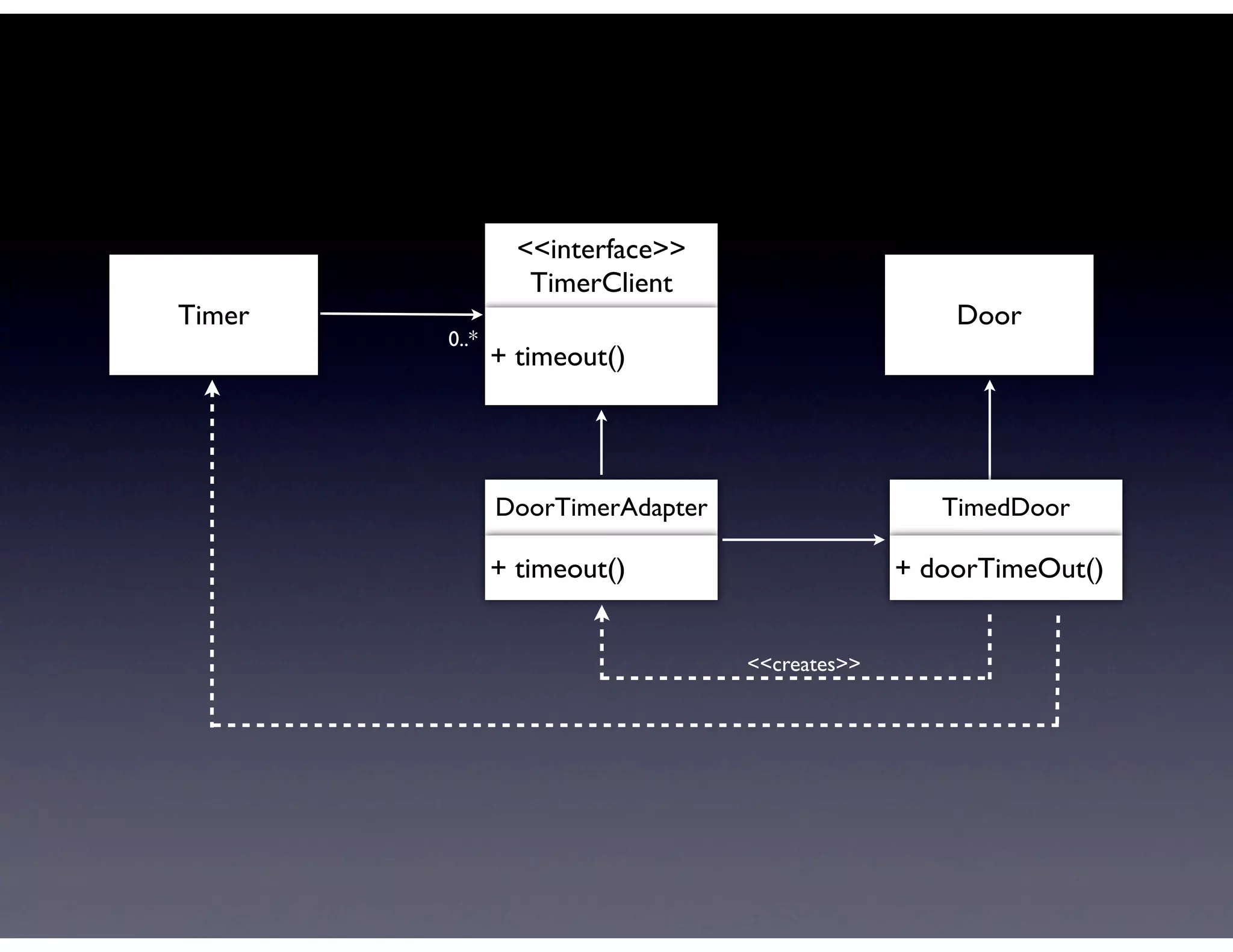
<<interface>>
                  TimerClient
Timer                                               Door
        0..*
               + timeout()


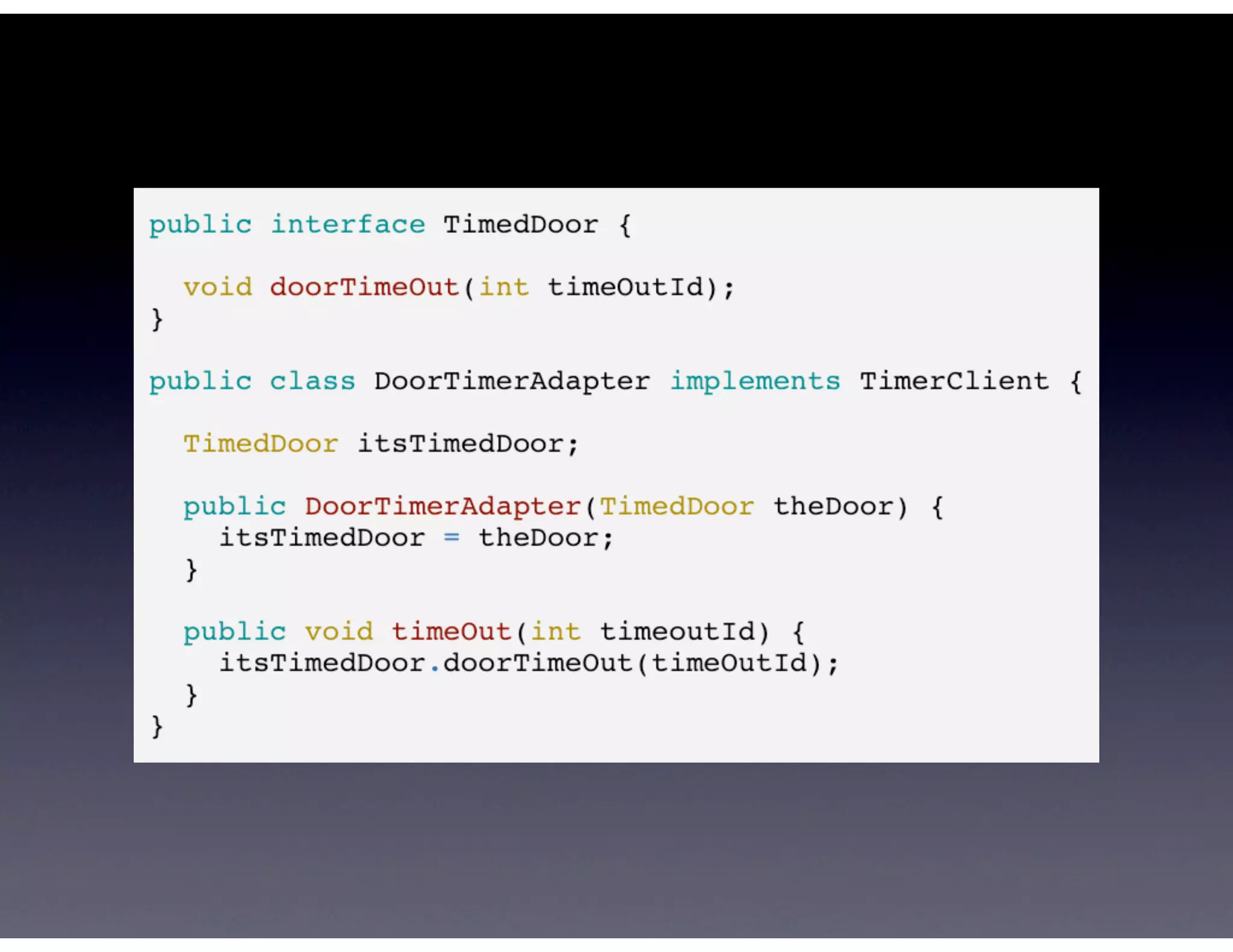
               DoorTimerAdapter                    TimedDoor

               + timeout()                      + doorTimeOut()


                                  <<creates>>
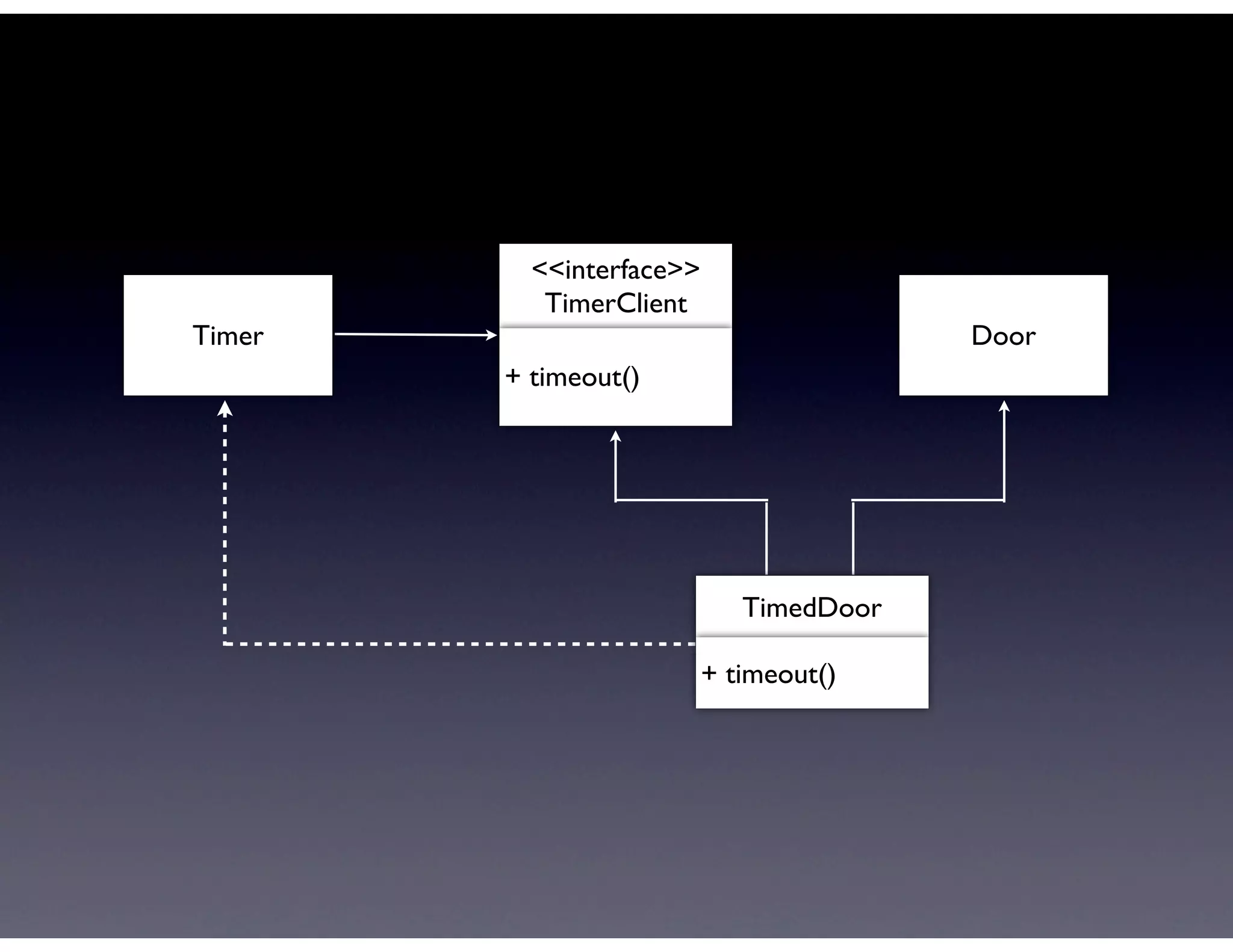
<<interface>>
           TimerClient
Timer                                    Door
        + timeout()


                             TimedDoor

                          + timeout()
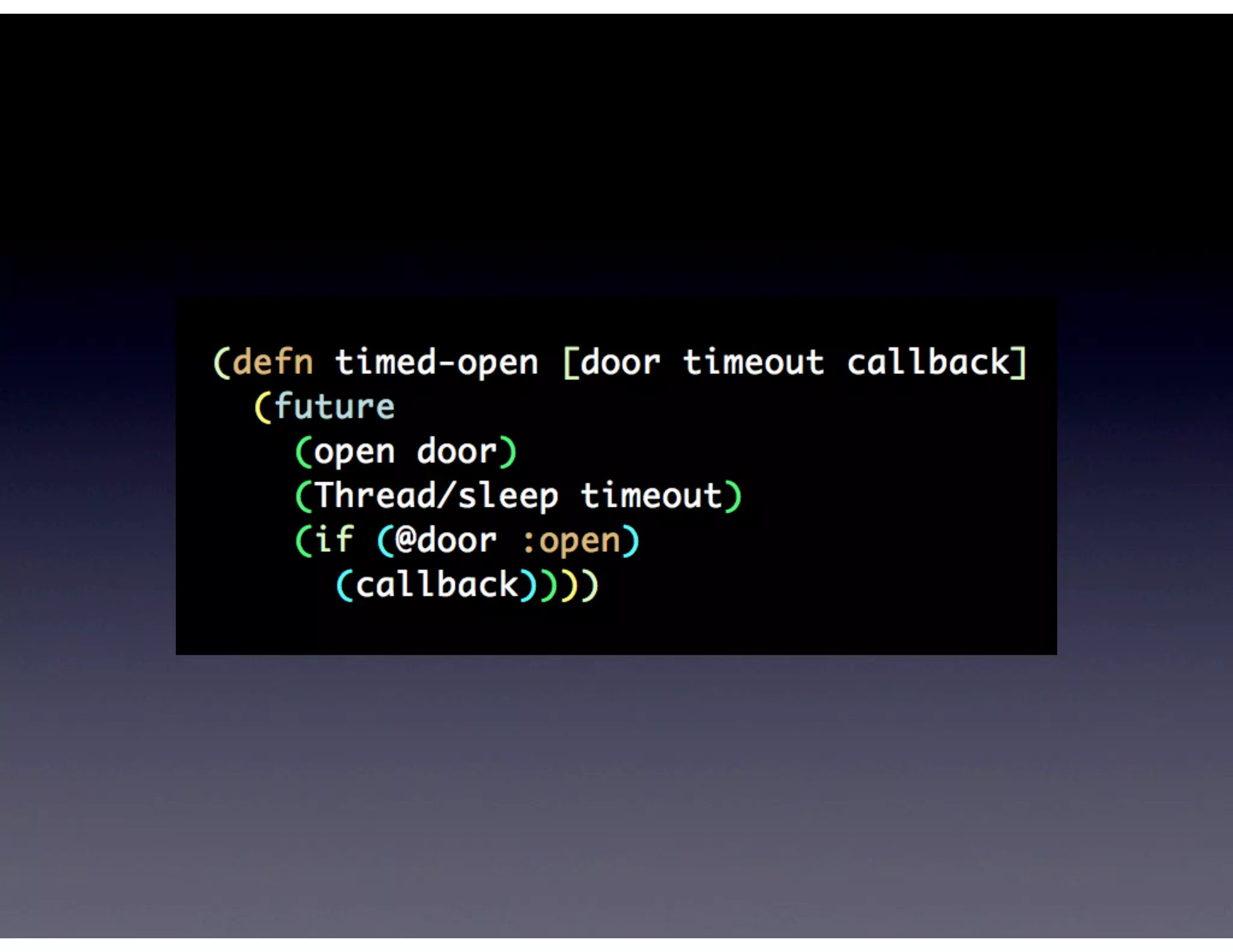
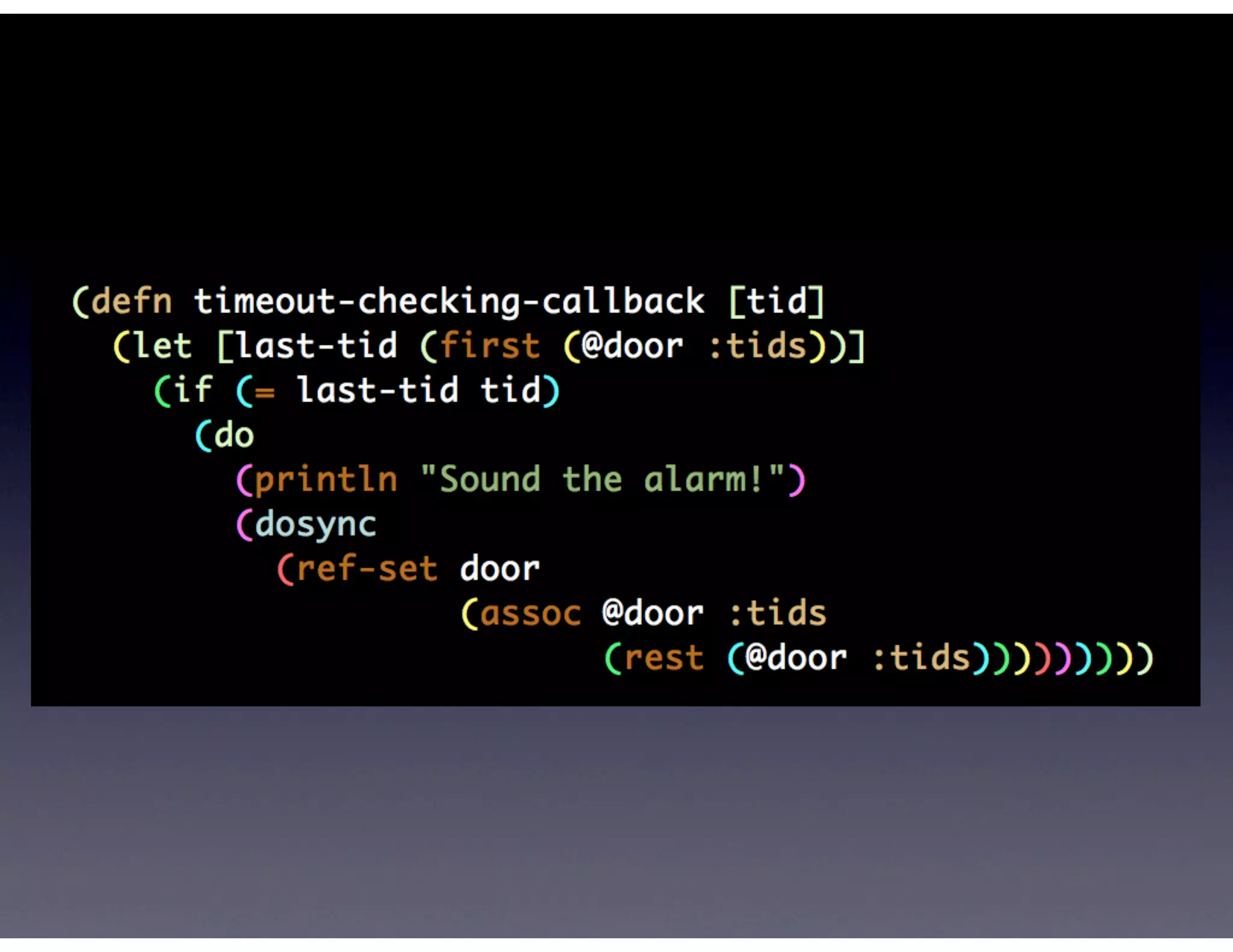
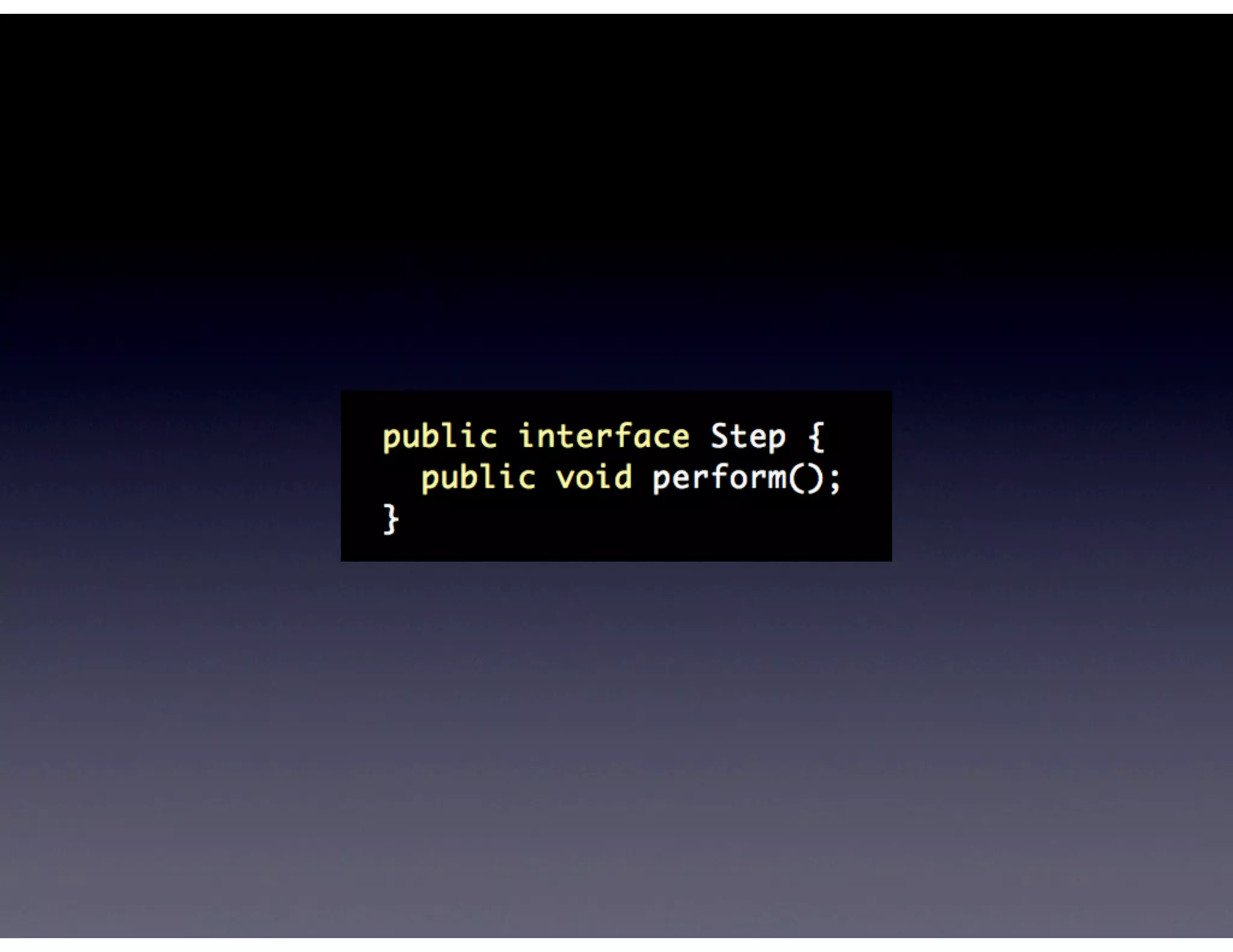
Thinking in Verbs
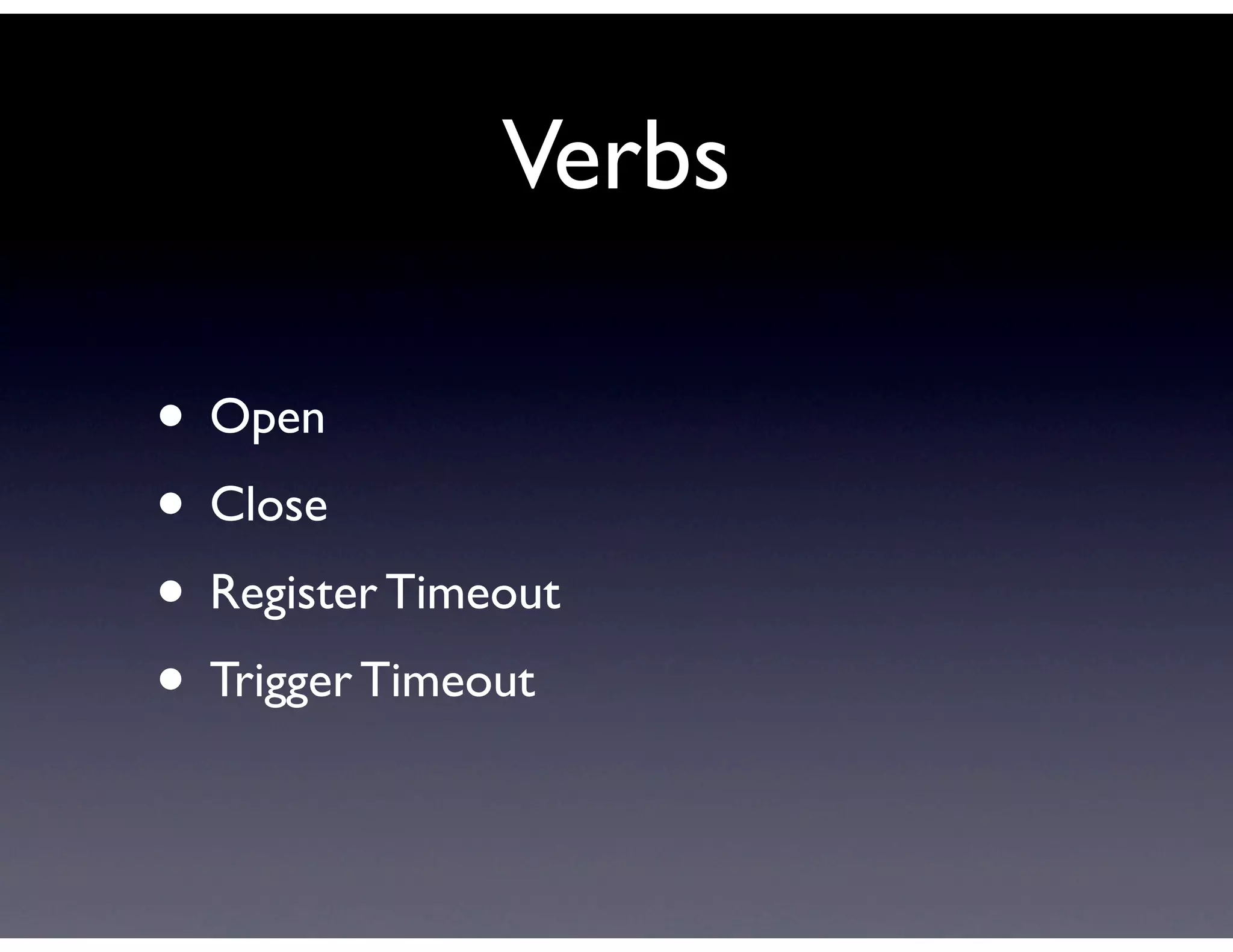
Verbs

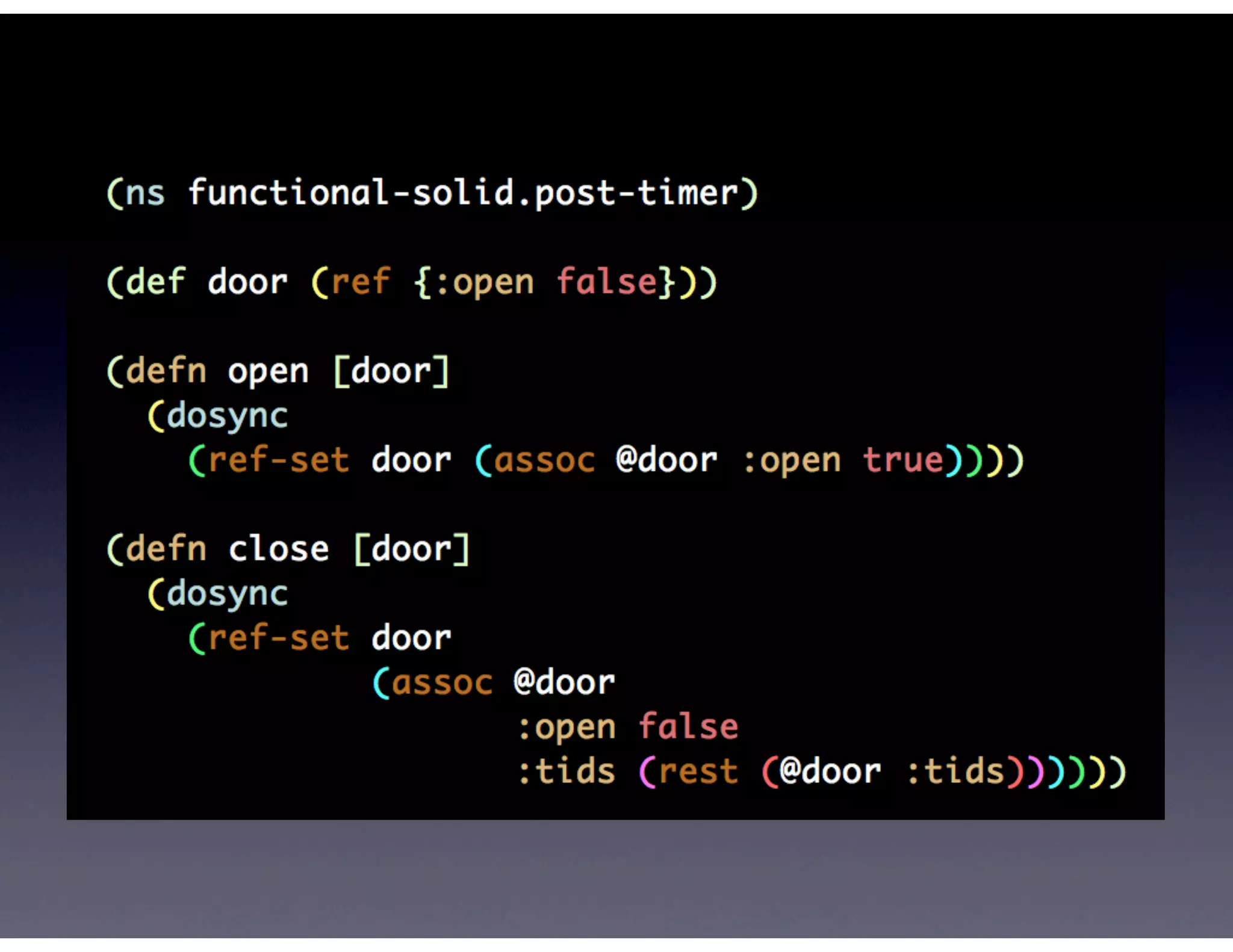
• Open
• Close
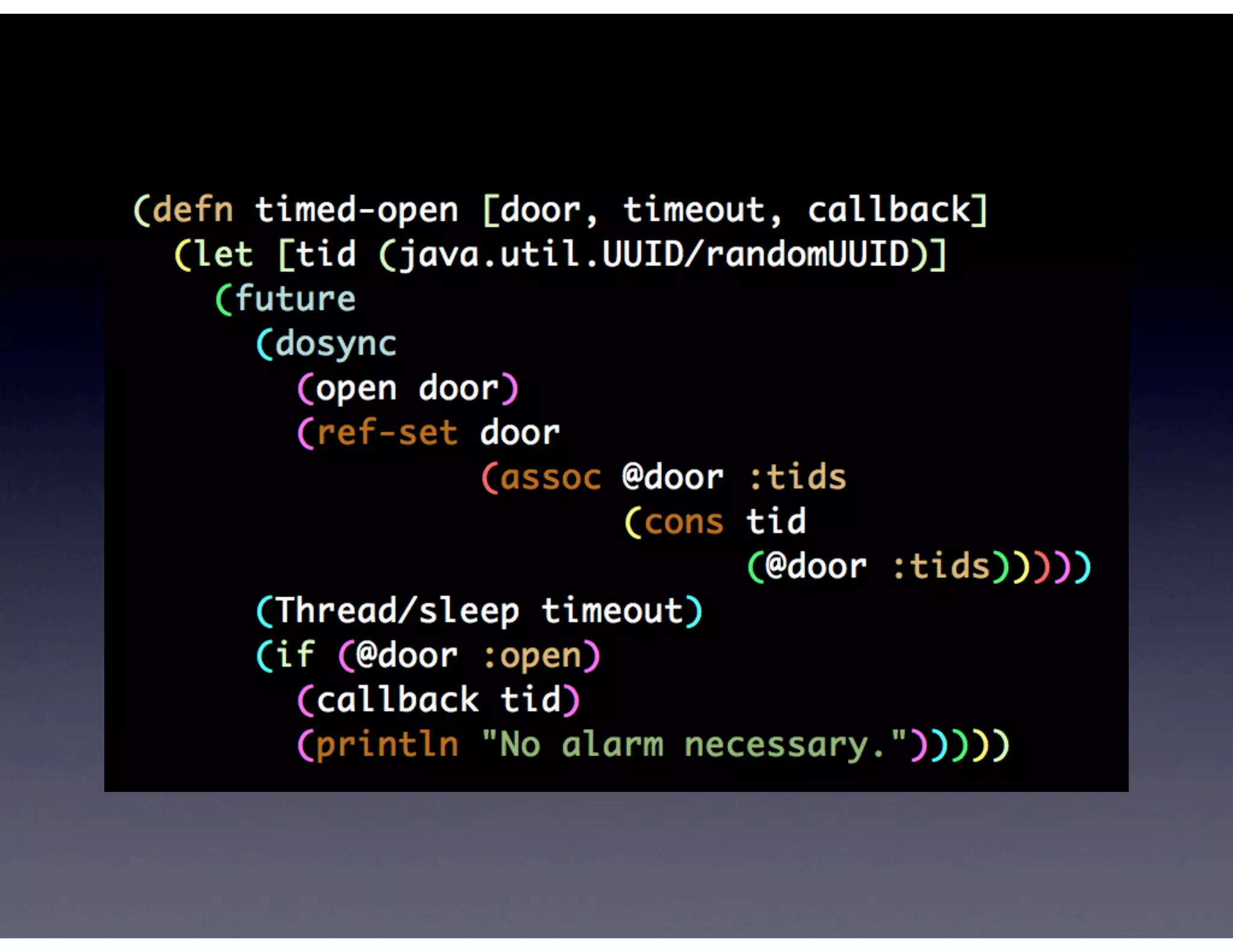
• Register Timeout
• Trigger Timeout
OK...what about that
unique ID problem?
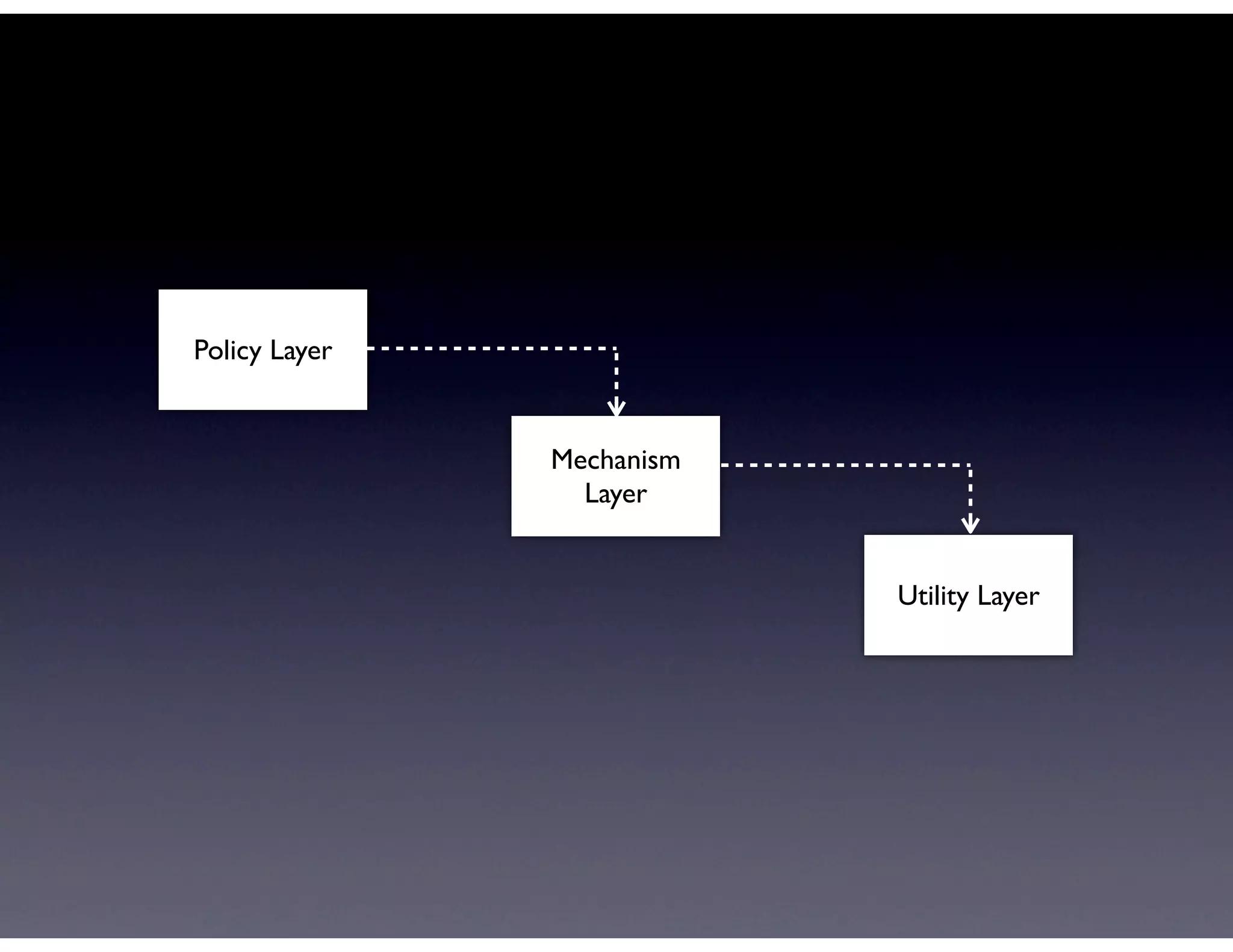
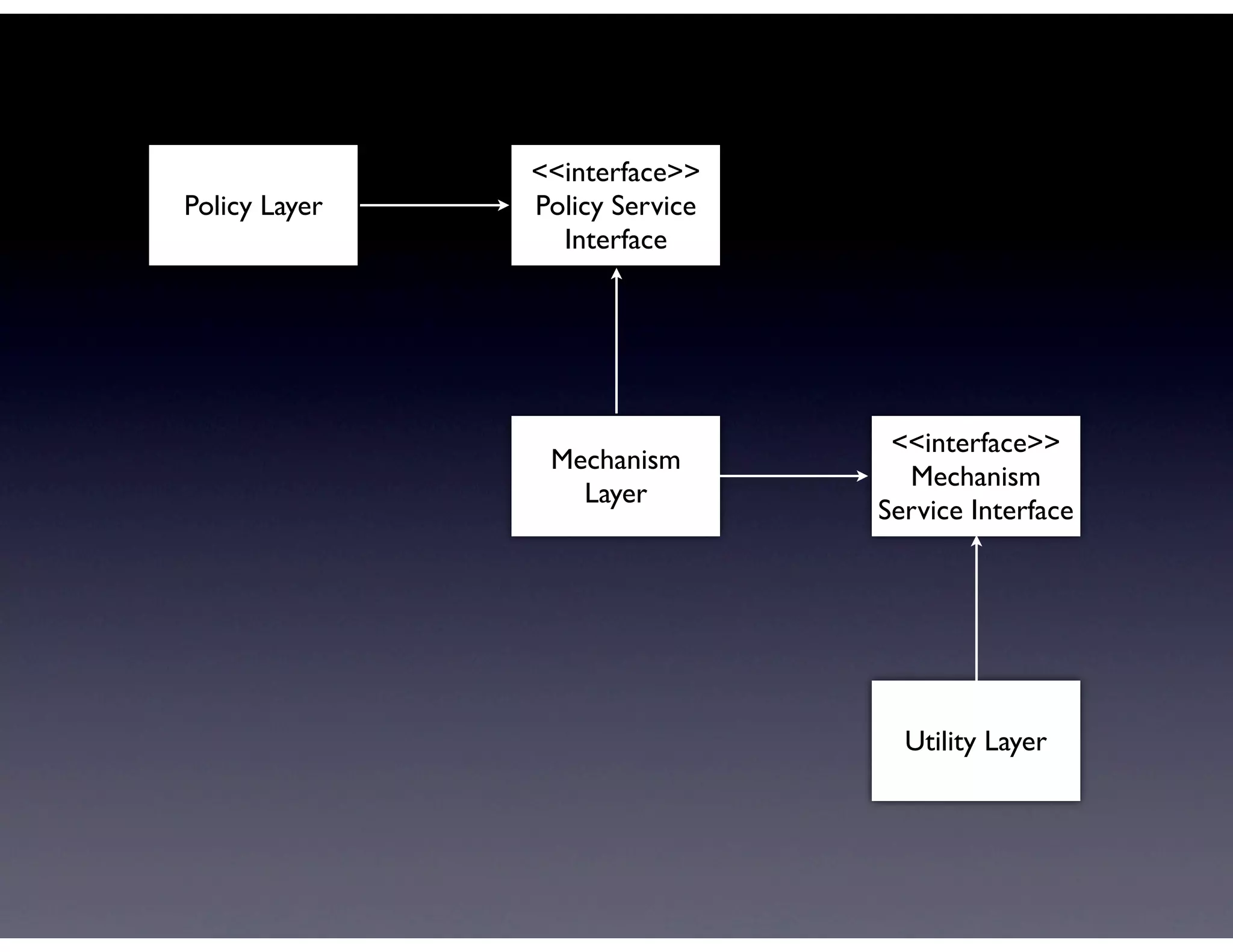
The Dependency
Inversion Principle
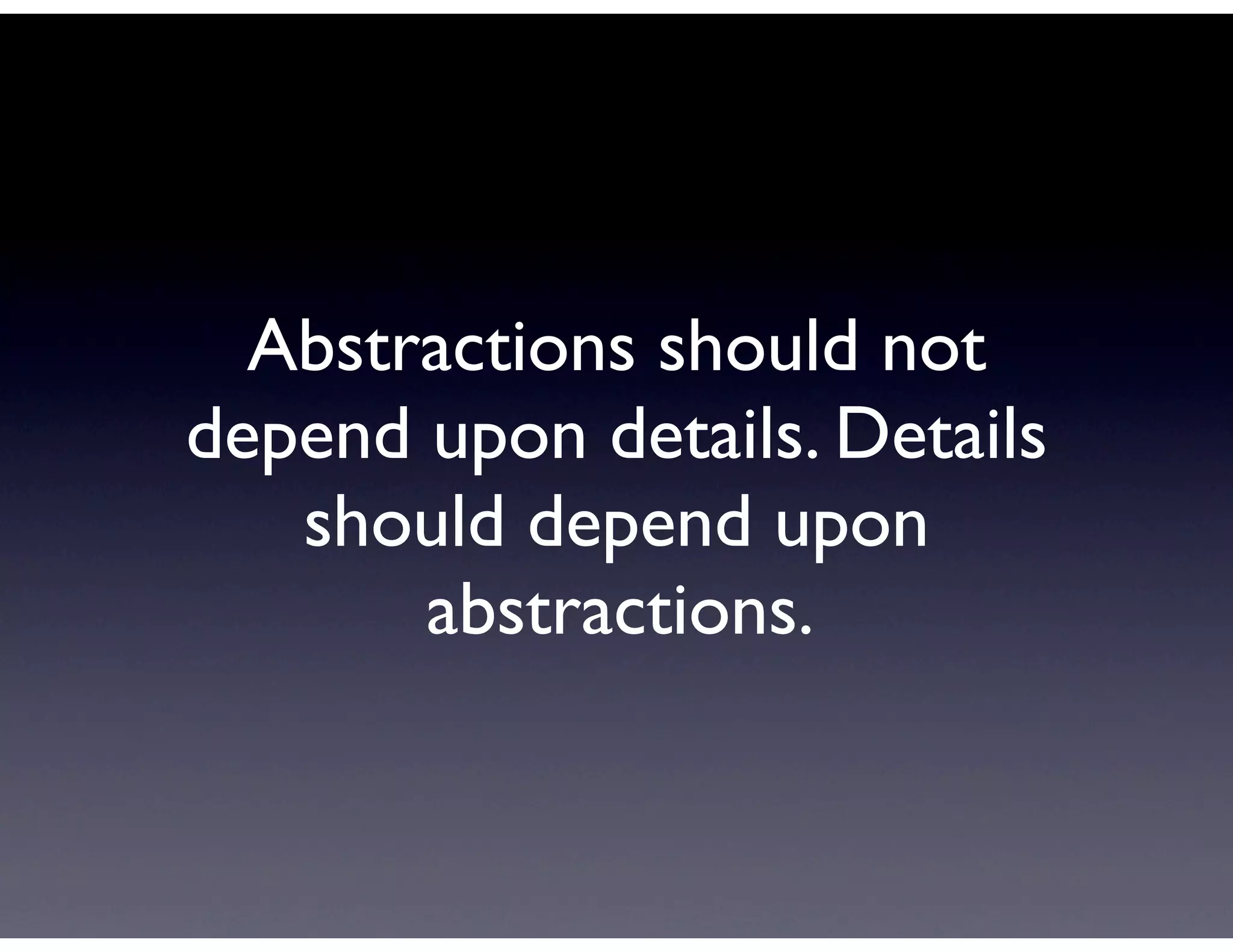
Abstractions should not
depend upon details. Details
   should depend upon
       abstractions.
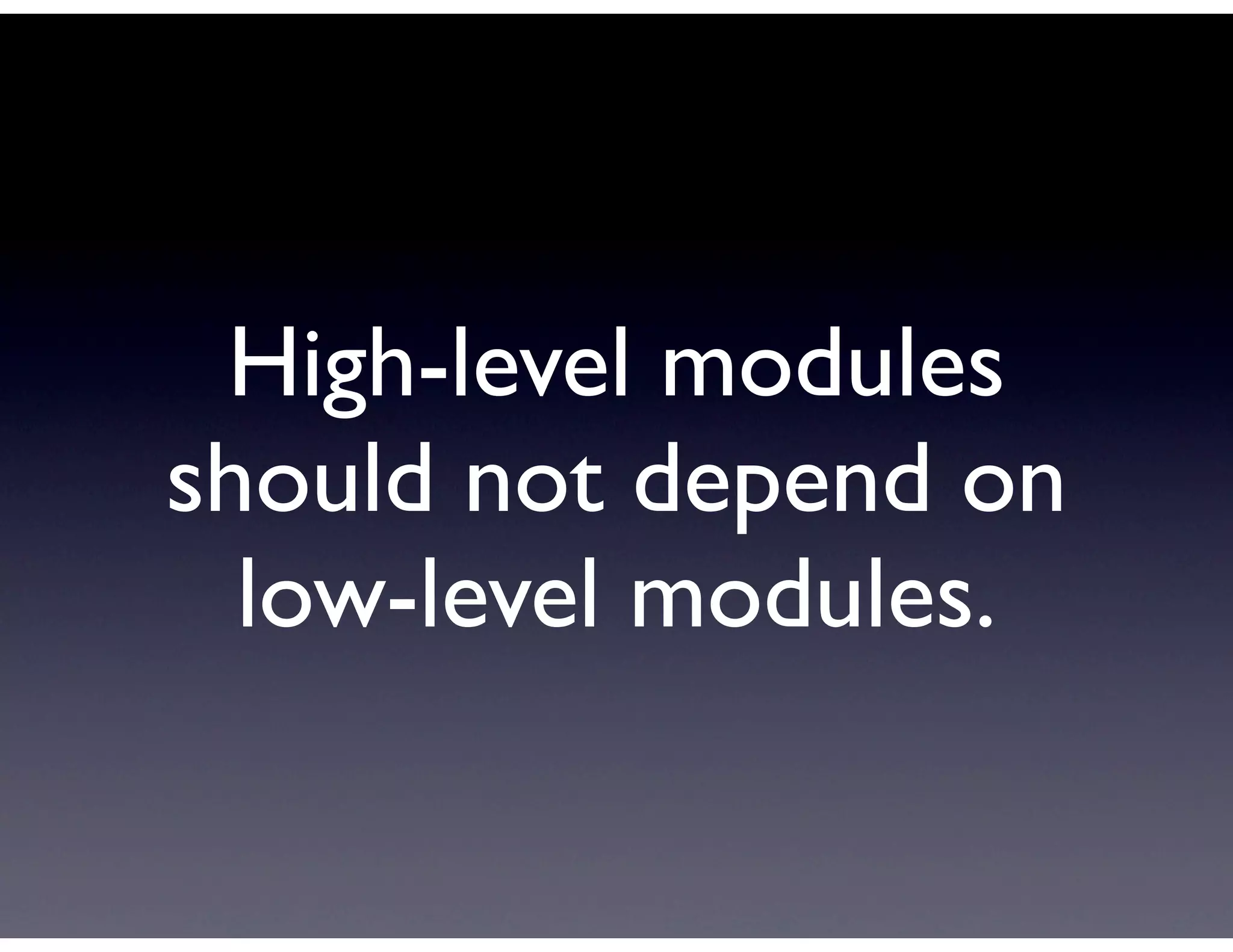
High-level modules
should not depend on
  low-level modules.
Policy Layer


               Mechanism
                 Layer


                           Utility Layer
<<interface>>
Policy Layer   Policy Service
                 Interface


                                 <<interface>>
                Mechanism
                                  Mechanism
                  Layer
                                Service Interface


                                  Utility Layer
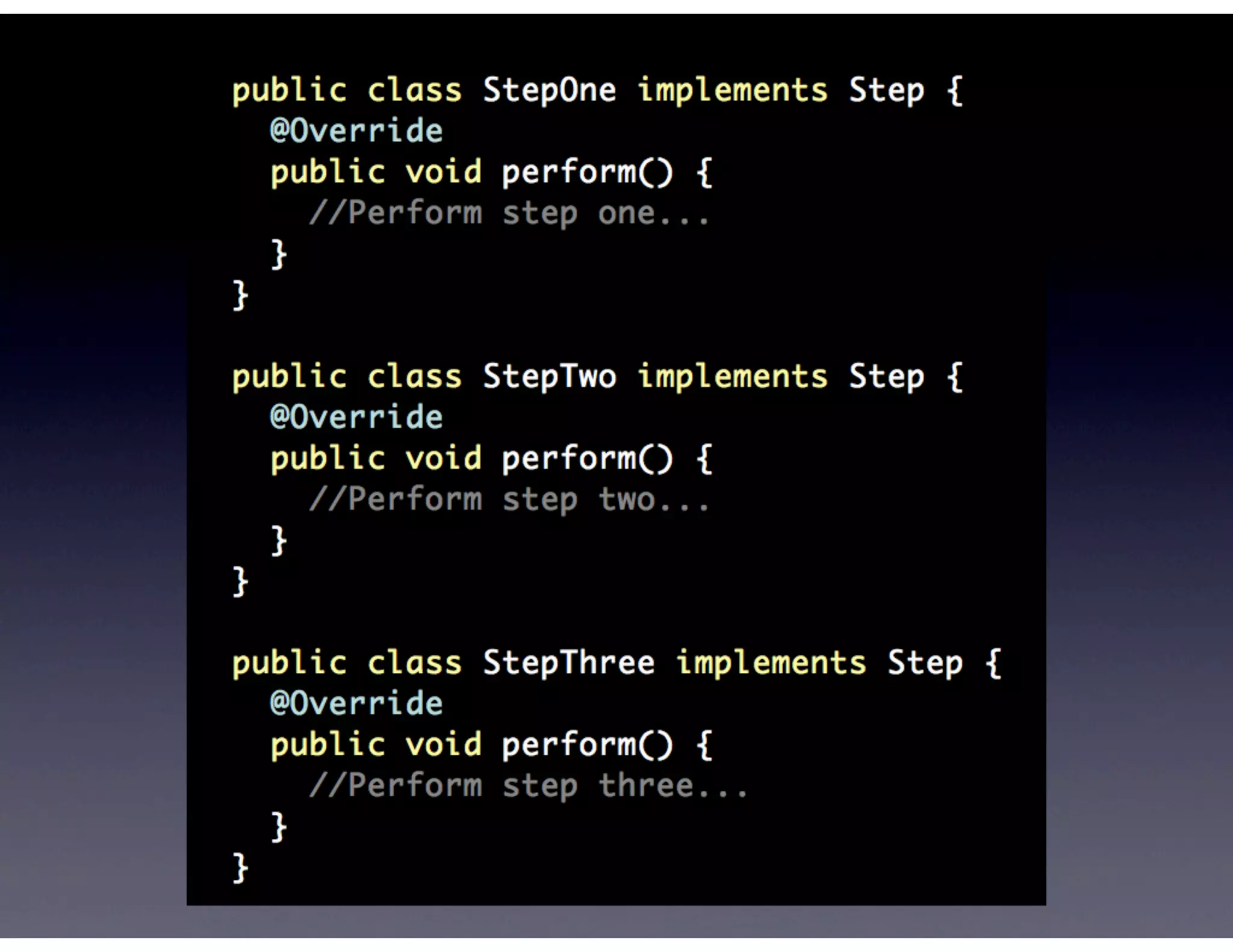
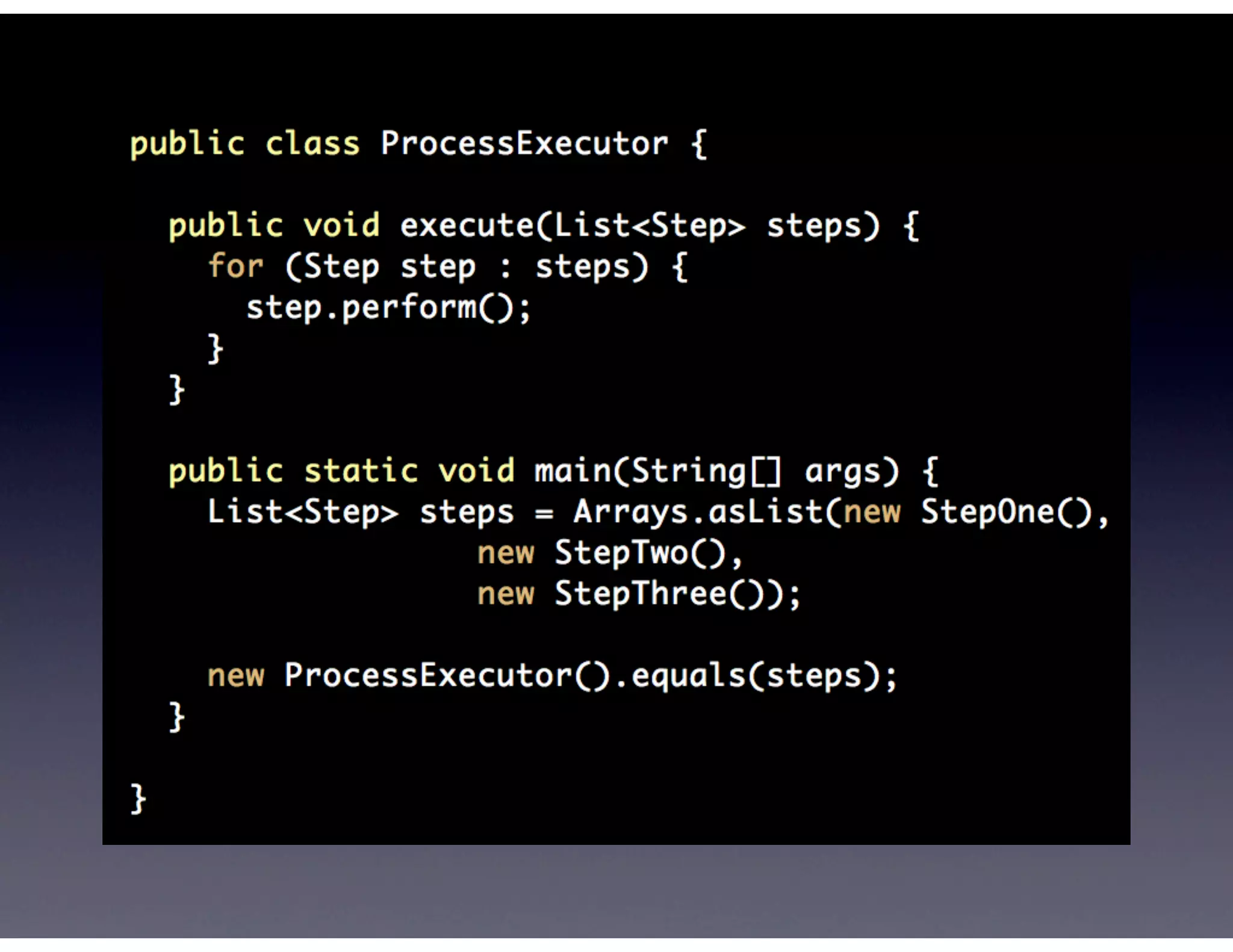
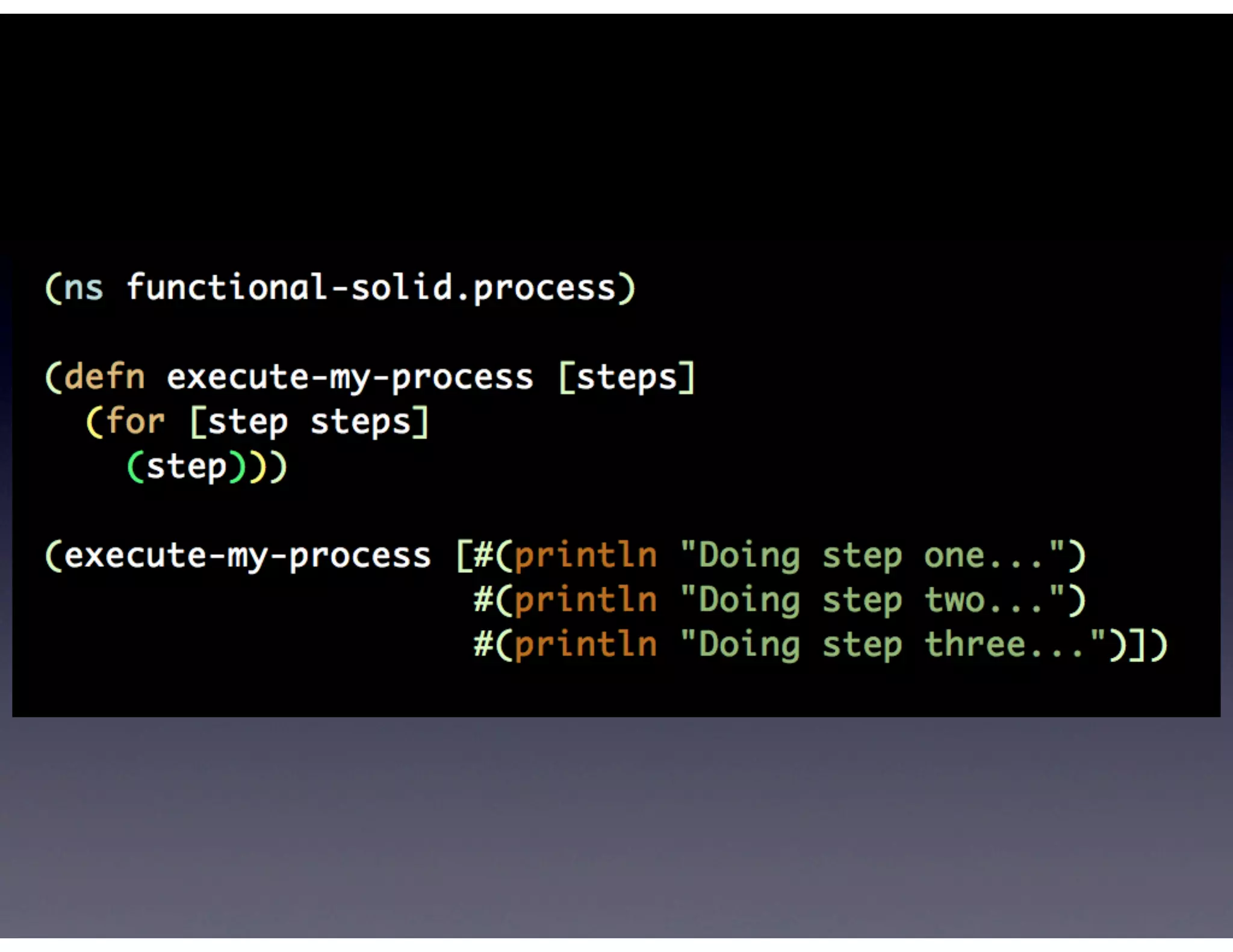
Our verbs have been
       taken captive by
            nouns...

http://steve-yegge.blogspot.com/2006/03/execution-in-
                kingdom-of-nouns.html
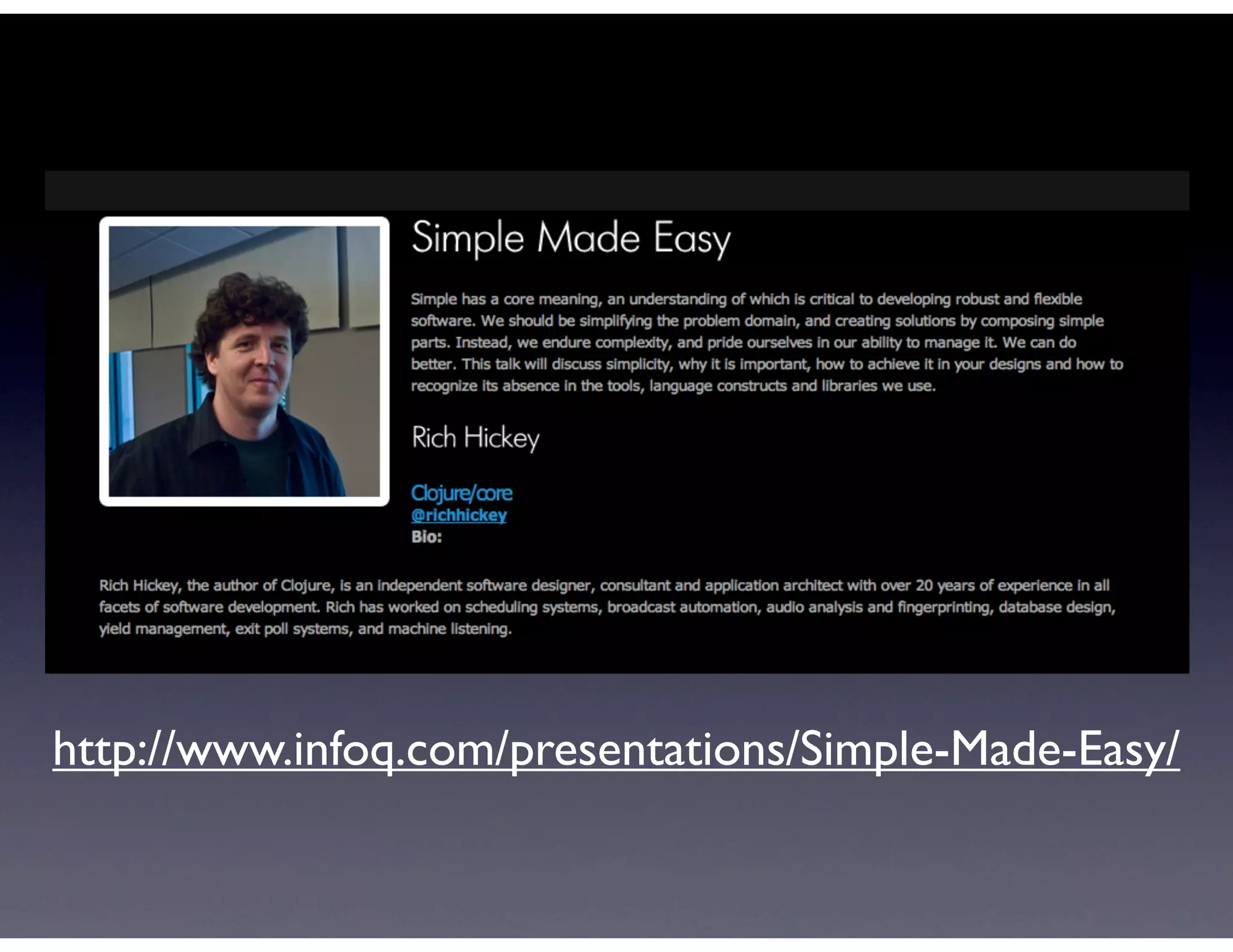
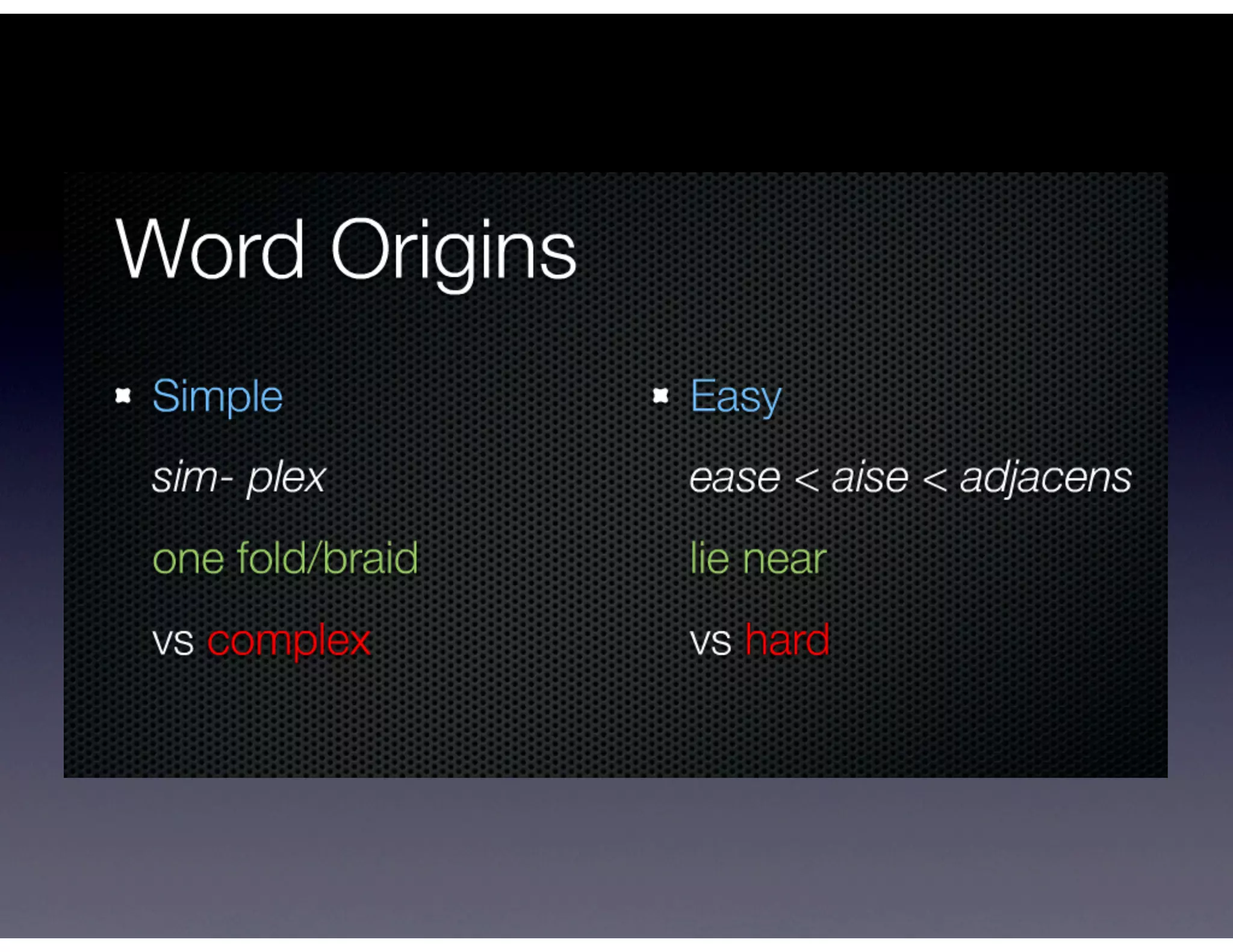
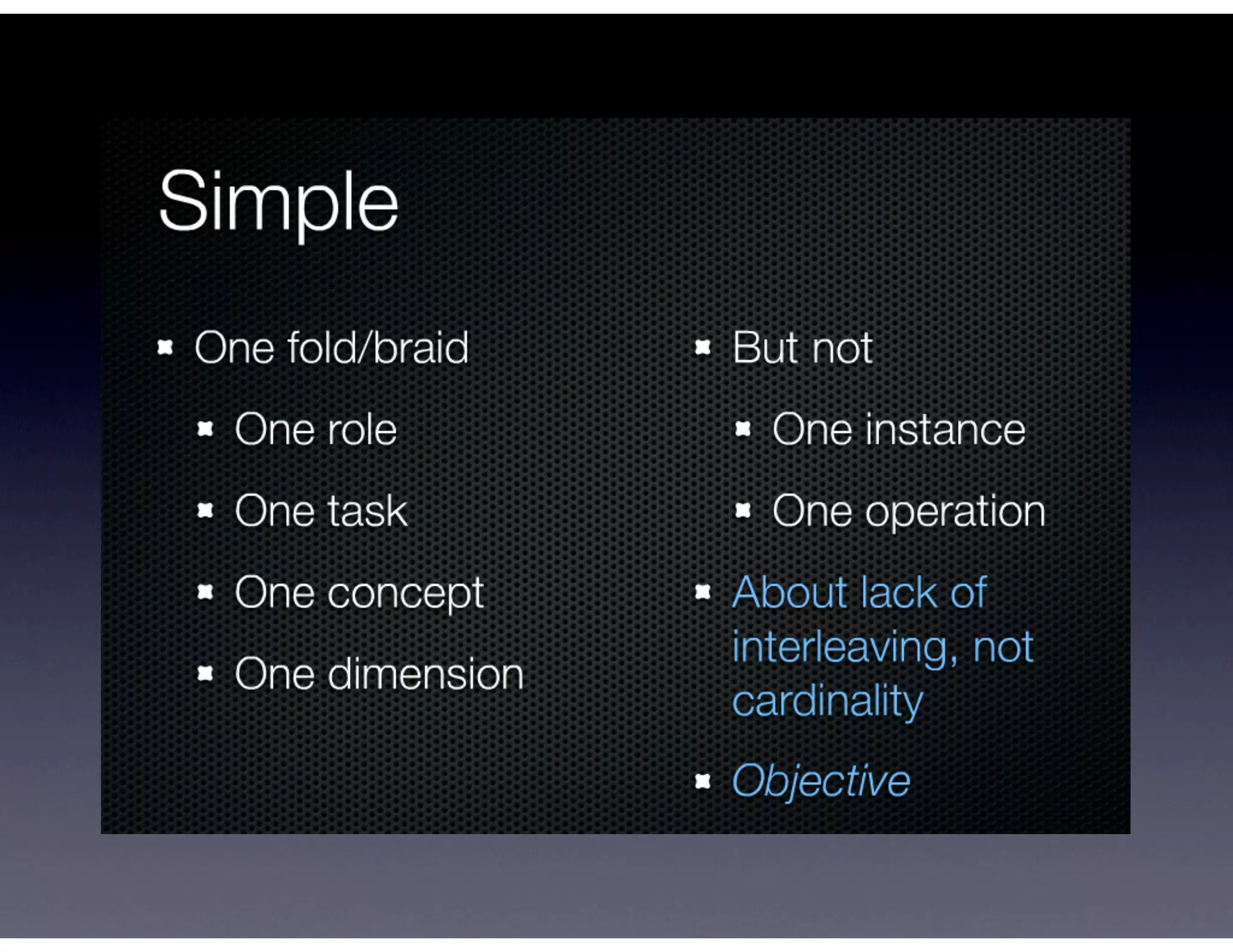
http://www.infoq.com/presentations/Simple-Made-Easy/
Complectedness
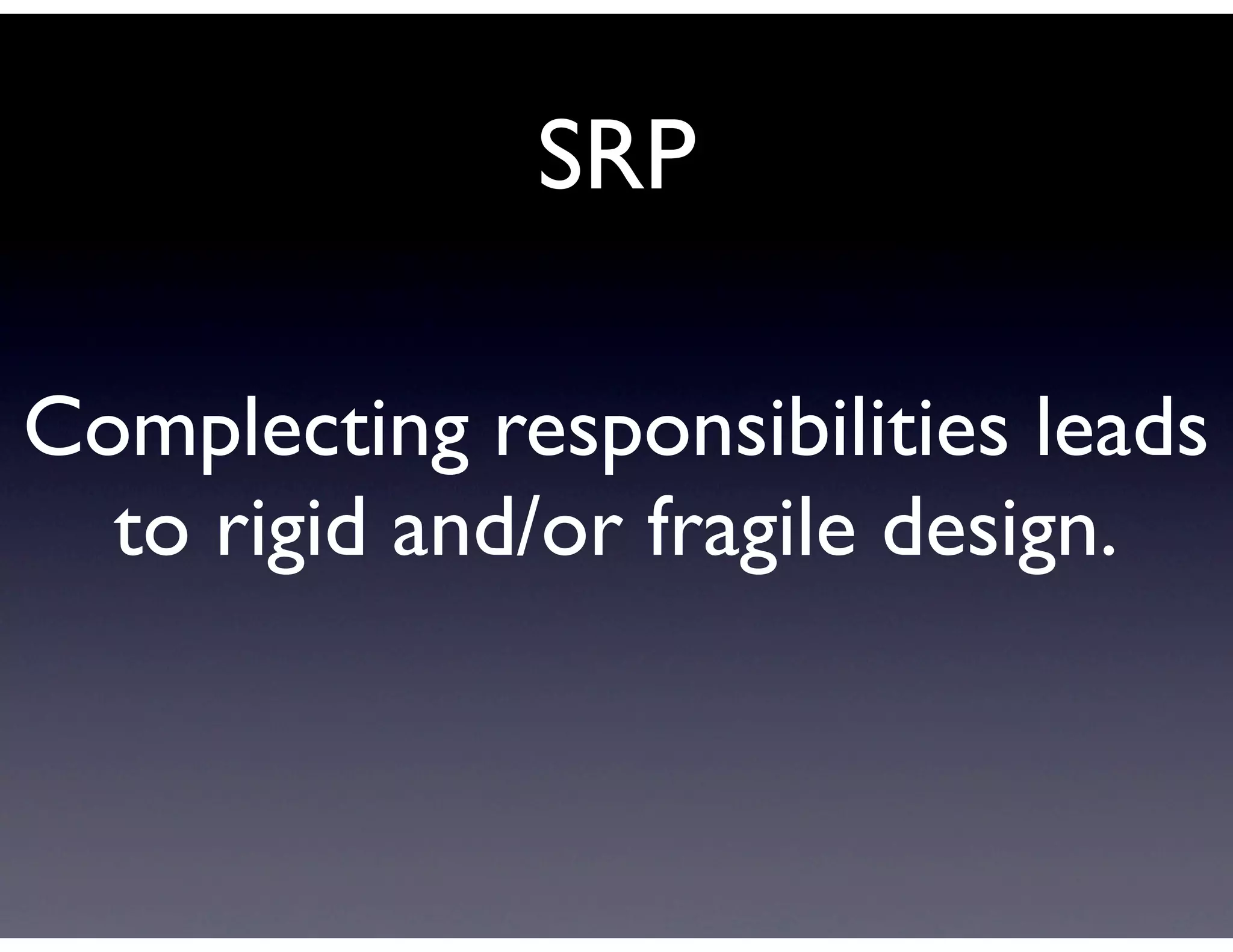
SRP

Complecting responsibilities leads
  to rigid and/or fragile design.
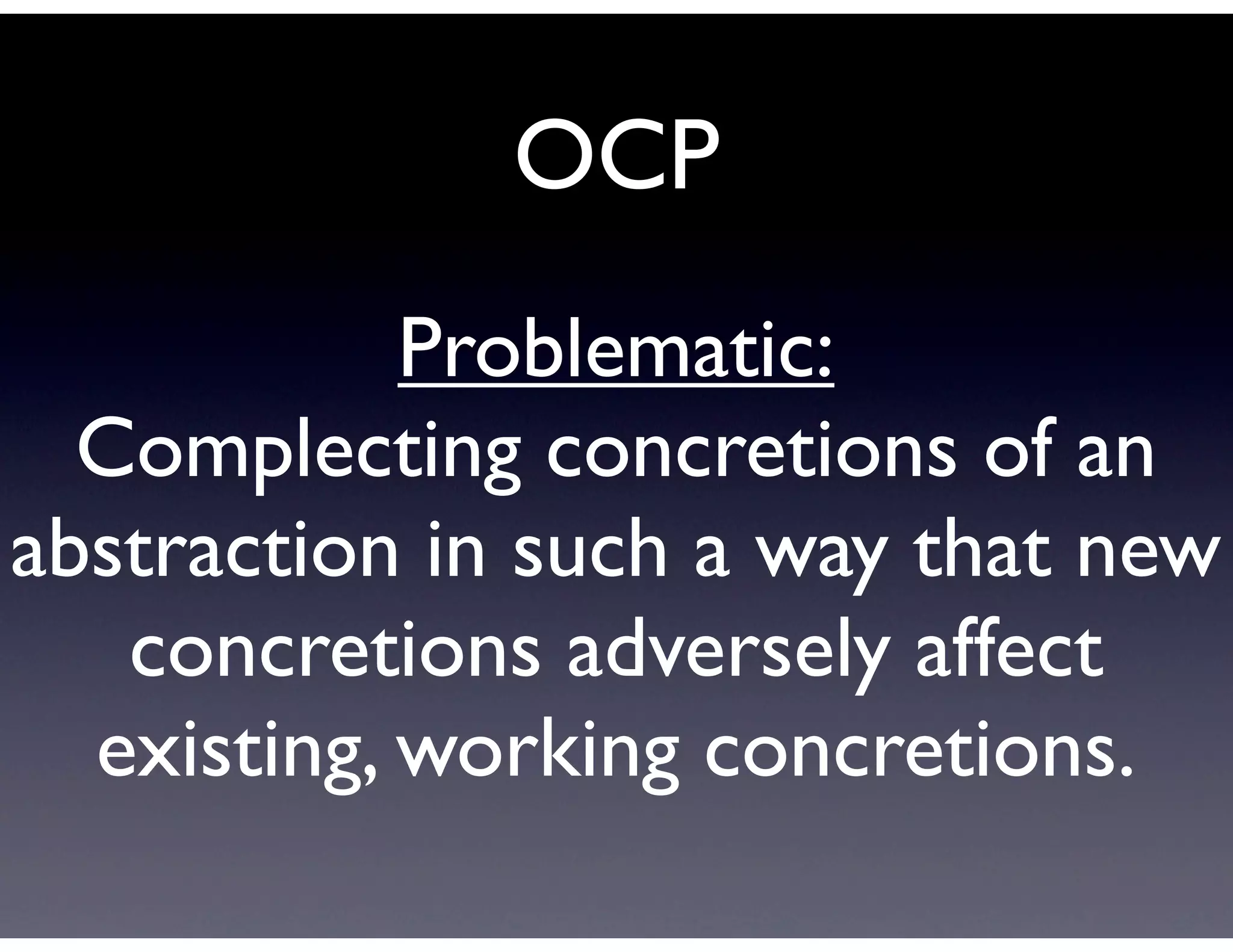
OCP
            Problematic:
  Complecting concretions of an
abstraction in such a way that new
   concretions adversely affect
  existing, working concretions.
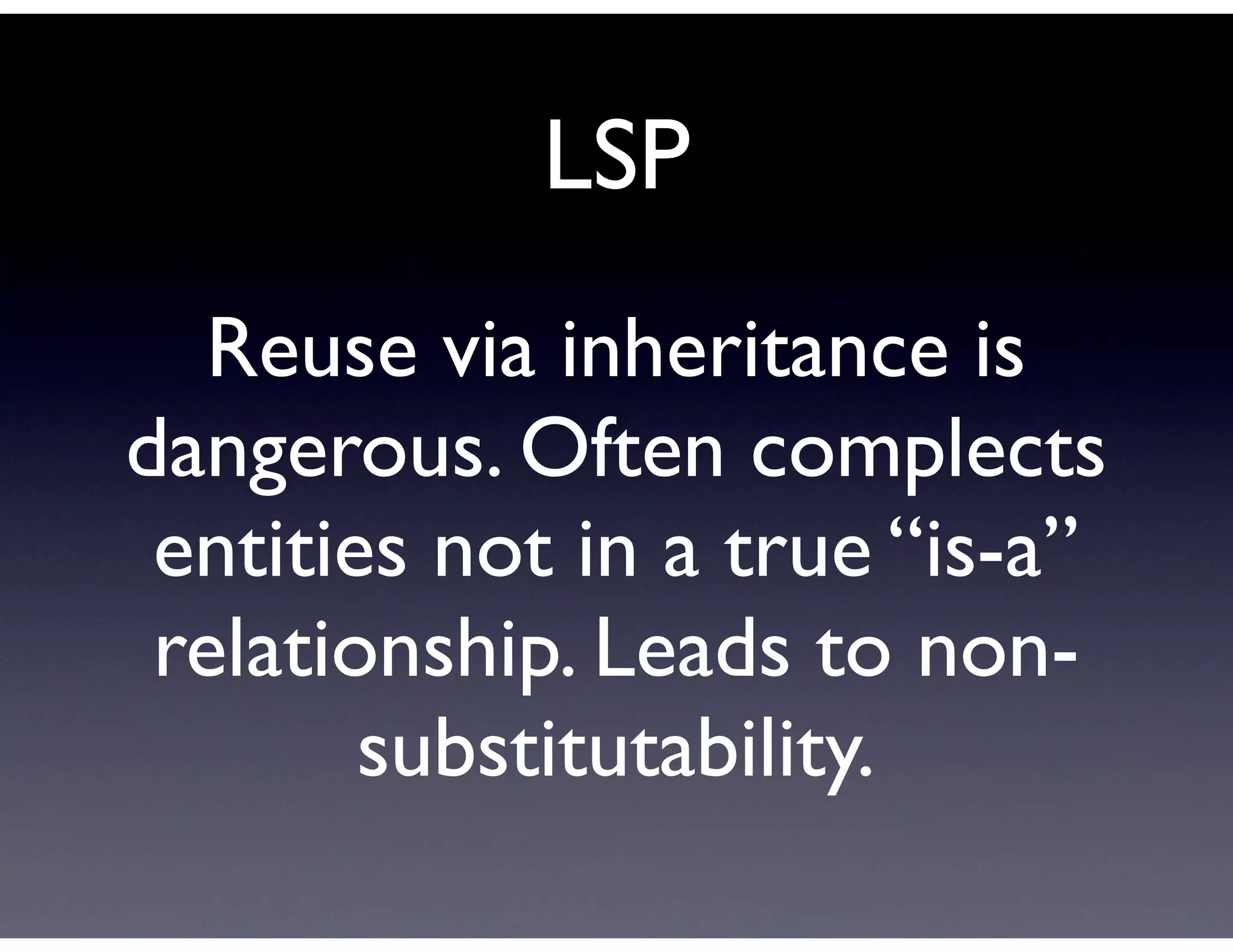
LSP
  Reuse via inheritance is
dangerous. Often complects
 entities not in a true “is-a”
 relationship. Leads to non-
        substitutability.
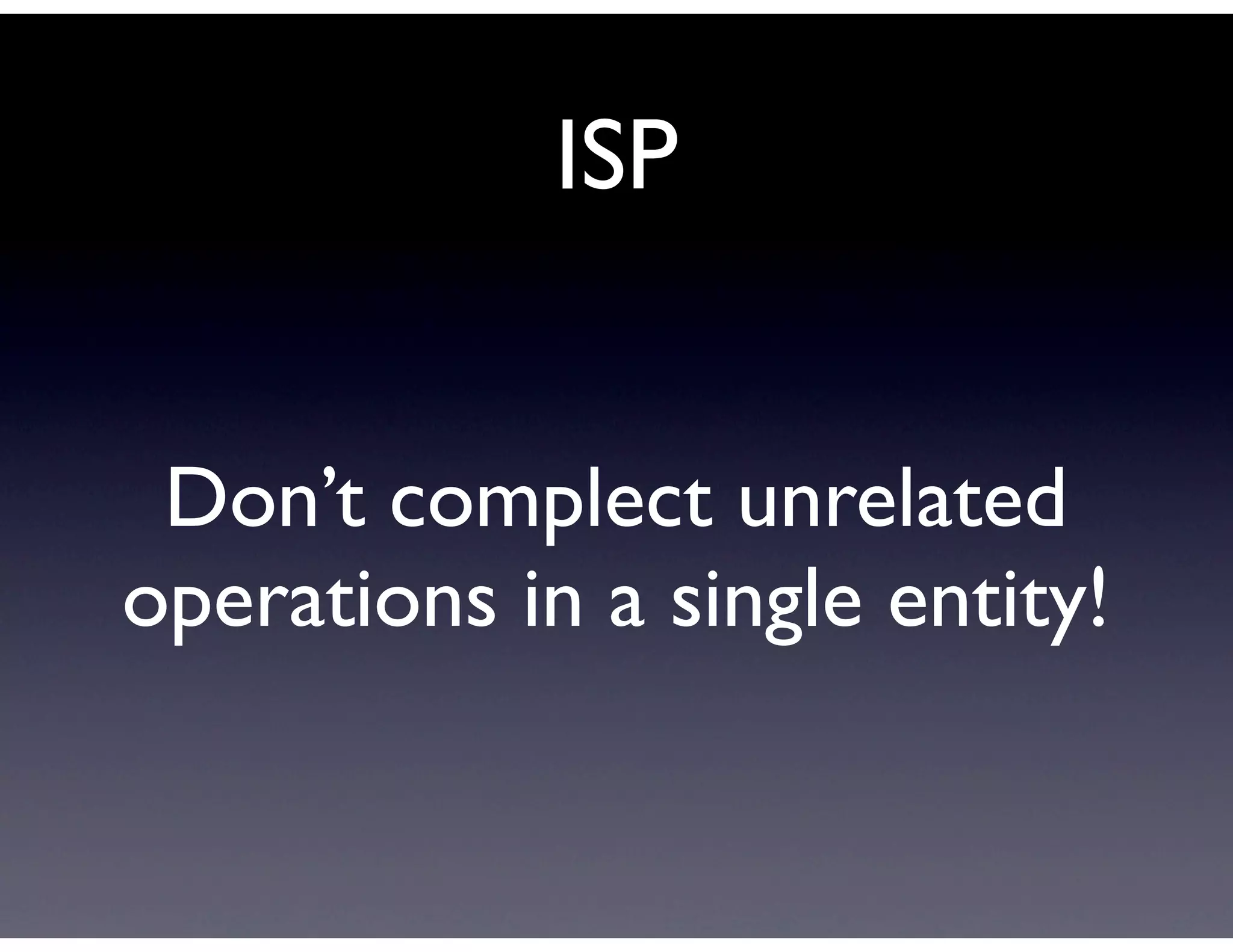
ISP


 Don’t complect unrelated
operations in a single entity!
DIP


Transitive dependency leads to
  transitive complectedness!
Design is the art of breaking
        things apart.

       - Rich Hickey
Matt Stine
         matt.stine@gmail.com
             Twitter: mstine
       http://www.mattstine.com
Please fill out your evaluations!

Functional solid