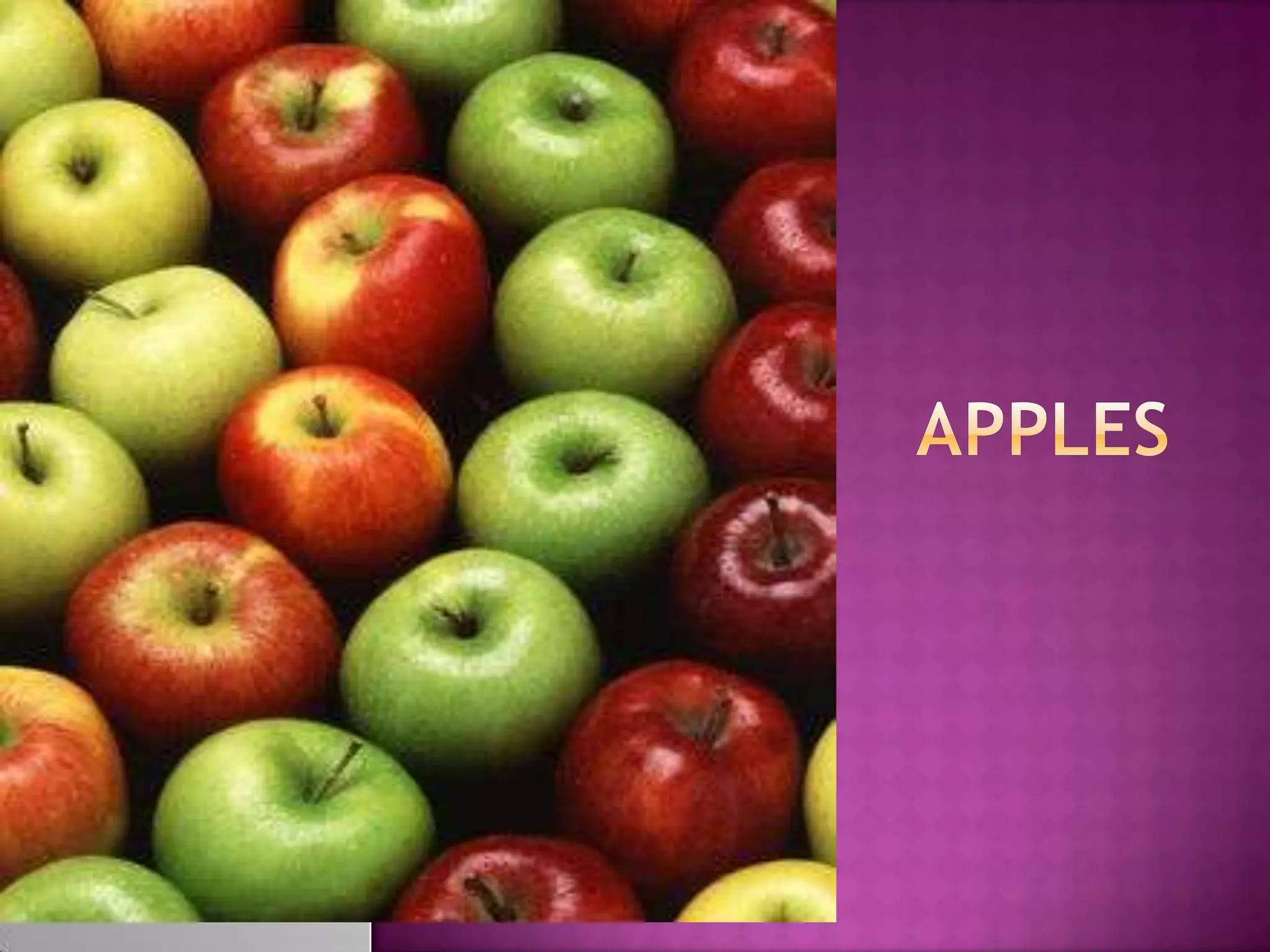
Apples
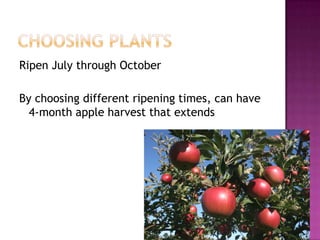
CHOOSING PLANTSRipen July through October By choosing different ripening times, can have 4-month apple harvest that extends
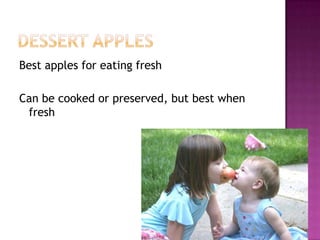
Dessert applesBest apples for eating freshCan be cooked or preserved, but best when fresh
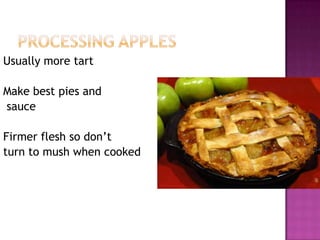
Processing applesUsually more tartMake best pies and sauceFirmer flesh so don’t turn to mush when cooked
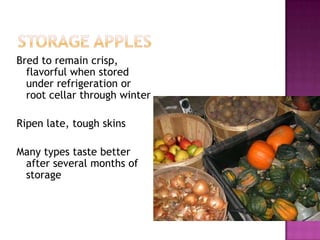
Storage applesBred to remain crisp, flavorful when stored under refrigeration or root cellar through winter Ripen late, tough skinsMany types taste better after several months of storage
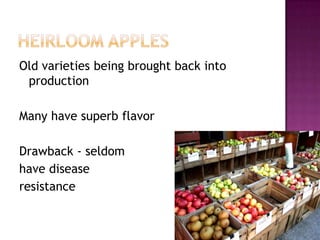
Heirloom applesOld varieties being brought back into productionMany have superb flavorDrawback - seldom have disease resistance
Disease resistanceApples naturally disease proneNew class of disease-resistant apples that are flavorfulResistant to scab, fireblight, rustExamples: Liberty, Freedom, Prima, Jonafree, Williams' Pride, Redfree, Dayton, Novamac, Nova Easygro, Sir Prize, Macfree
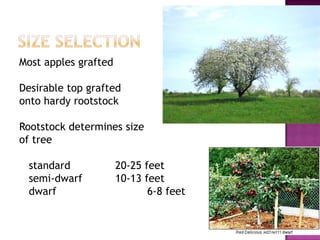
Size selectionMost apples graftedDesirable top grafted onto hardy rootstockRootstock determines size of tree	standard  		20-25 feet	semi-dwarf	 	10-13 feet	dwarf			6-8 feet
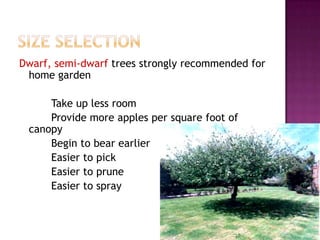
Size selection Dwarf, semi-dwarf trees strongly recommended for  home garden		Take up less room		Provide more apples per square foot of canopy		Begin to bear earlier		Easier to pick		Easier to prune		Easier to spray
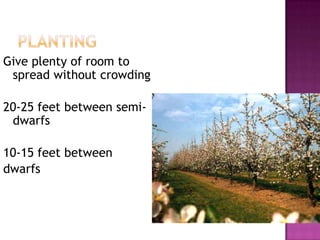
PlantingGive plenty of room to spread without crowding20-25 feet between semi-dwarfs10-15 feet between dwarfs
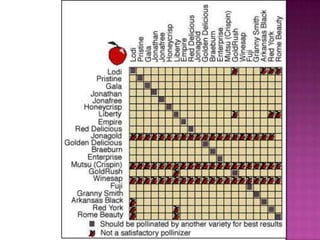
Cross-pollinationMost need another variety planted nearby for cross-pollinationCan be accomplished with wild apples and crabapplesTo assure good crop, plant pollinatorMost resources give extensive lists of appropriate pollinatorshttp://www.fruit-tree.com/applepollen.html
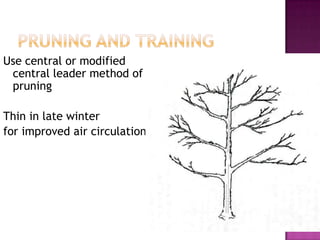
Pruning and trainingUse central or modified central leader method of pruningThin in late winter for improved air circulation
Pests, diseasesFor absolutely clean fruit, necessary to use  spray program with fungicide, insecticideAttitude adjustment - accept fruits that aren’t spotless, perfect specimensWill allow reduction of spray programs
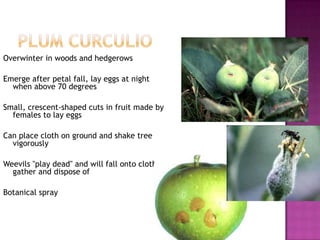
Plum curculioOverwinter in woods and hedgerowsEmerge after petal fall, lay eggs at night when above 70 degreesSmall, crescent-shaped cuts in fruit made by females to lay eggs Can place cloth on ground and shake tree vigorouslyWeevils "play dead" and will fall onto cloth - gather and dispose ofBotanical spray
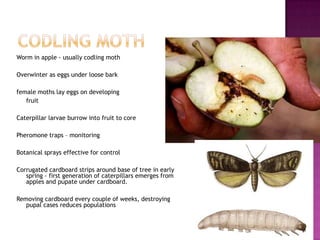
Codling mothWorm in apple - usually codling moth Overwinter as eggs under loose barkfemale moths lay eggs on developing 	fruitCaterpillar larvae burrow into fruit to corePheromone traps – monitoringBotanical sprays effective for controlCorrugated cardboard strips around base of tree in early spring - first generation of caterpillars emerges from apples and pupate under cardboard. Removing cardboard every couple of weeks, destroying pupal cases reduces populations
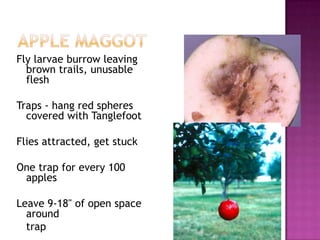
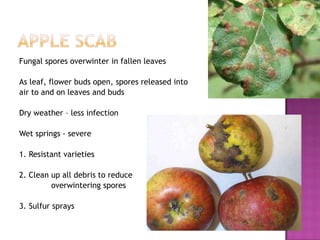
Apple maggotFly larvae burrow leaving brown trails, unusable fleshTraps - hang red spheres covered with TanglefootFlies attracted, get stuckOne trap for every 100 applesLeave 9-18" of open space around 	trap
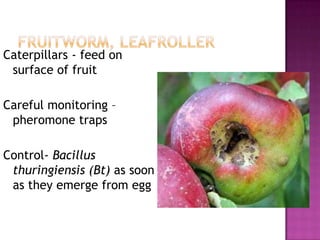
Apple scabFungal spores overwinter in fallen leavesAs leaf, flower buds open, spores released into air to and on leaves and budsDry weather – less infectionWet springs - severe 1.	Resistant varieties2. Clean up all debris to reduce 		overwintering spores3.	Sulfur sprays
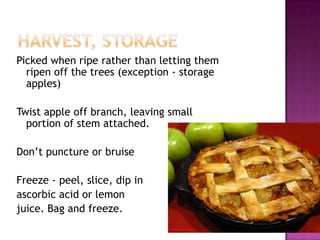
Fruitworm, leafrollerCaterpillars - feed on surface of fruitCareful monitoring – pheromone trapsControl- Bacillus thuringiensis (Bt) as soon as they emerge from egg
Harvest, storagePicked when ripe rather than letting them ripen off the trees (exception - storage apples)Twist apple off branch, leaving small portion of stem attached. Don’t puncture or bruise Freeze - peel, slice, dip in ascorbic acid or lemon juice. Bag and freeze.

Fruits apples

  • 1.
  • 2.
    CHOOSING PLANTSRipen Julythrough October By choosing different ripening times, can have 4-month apple harvest that extends
  • 3.
    Dessert applesBest applesfor eating freshCan be cooked or preserved, but best when fresh
  • 4.
    Processing applesUsually moretartMake best pies and sauceFirmer flesh so don’t turn to mush when cooked
  • 5.
    Storage applesBred toremain crisp, flavorful when stored under refrigeration or root cellar through winter Ripen late, tough skinsMany types taste better after several months of storage
  • 6.
    Heirloom applesOld varietiesbeing brought back into productionMany have superb flavorDrawback - seldom have disease resistance
  • 7.
    Disease resistanceApples naturallydisease proneNew class of disease-resistant apples that are flavorfulResistant to scab, fireblight, rustExamples: Liberty, Freedom, Prima, Jonafree, Williams' Pride, Redfree, Dayton, Novamac, Nova Easygro, Sir Prize, Macfree
  • 8.
    Size selectionMost applesgraftedDesirable top grafted onto hardy rootstockRootstock determines size of tree standard 20-25 feet semi-dwarf 10-13 feet dwarf 6-8 feet
  • 9.
    Size selection Dwarf,semi-dwarf trees strongly recommended for home garden Take up less room Provide more apples per square foot of canopy Begin to bear earlier Easier to pick Easier to prune Easier to spray
  • 10.
    PlantingGive plenty ofroom to spread without crowding20-25 feet between semi-dwarfs10-15 feet between dwarfs
  • 11.
    Cross-pollinationMost need anothervariety planted nearby for cross-pollinationCan be accomplished with wild apples and crabapplesTo assure good crop, plant pollinatorMost resources give extensive lists of appropriate pollinatorshttp://www.fruit-tree.com/applepollen.html
  • 13.
    Pruning and trainingUsecentral or modified central leader method of pruningThin in late winter for improved air circulation
  • 14.
    Pests, diseasesFor absolutelyclean fruit, necessary to use spray program with fungicide, insecticideAttitude adjustment - accept fruits that aren’t spotless, perfect specimensWill allow reduction of spray programs
  • 15.
    Plum curculioOverwinter inwoods and hedgerowsEmerge after petal fall, lay eggs at night when above 70 degreesSmall, crescent-shaped cuts in fruit made by females to lay eggs Can place cloth on ground and shake tree vigorouslyWeevils "play dead" and will fall onto cloth - gather and dispose ofBotanical spray
  • 16.
    Codling mothWorm inapple - usually codling moth Overwinter as eggs under loose barkfemale moths lay eggs on developing fruitCaterpillar larvae burrow into fruit to corePheromone traps – monitoringBotanical sprays effective for controlCorrugated cardboard strips around base of tree in early spring - first generation of caterpillars emerges from apples and pupate under cardboard. Removing cardboard every couple of weeks, destroying pupal cases reduces populations
  • 17.
    Apple maggotFly larvaeburrow leaving brown trails, unusable fleshTraps - hang red spheres covered with TanglefootFlies attracted, get stuckOne trap for every 100 applesLeave 9-18" of open space around trap
  • 18.
    Apple scabFungal sporesoverwinter in fallen leavesAs leaf, flower buds open, spores released into air to and on leaves and budsDry weather – less infectionWet springs - severe 1. Resistant varieties2. Clean up all debris to reduce overwintering spores3. Sulfur sprays
  • 19.
    Fruitworm, leafrollerCaterpillars -feed on surface of fruitCareful monitoring – pheromone trapsControl- Bacillus thuringiensis (Bt) as soon as they emerge from egg
  • 20.
    Harvest, storagePicked whenripe rather than letting them ripen off the trees (exception - storage apples)Twist apple off branch, leaving small portion of stem attached. Don’t puncture or bruise Freeze - peel, slice, dip in ascorbic acid or lemon juice. Bag and freeze.