Courtney Mlinar
      Fall 2012
Bell, Steven J., & Shank, John. (2004). The
blended librarian: A blueprint for redefining the
teaching and learning role of academic
librarians. College & Research Libraries News,
65(7), 372-375.
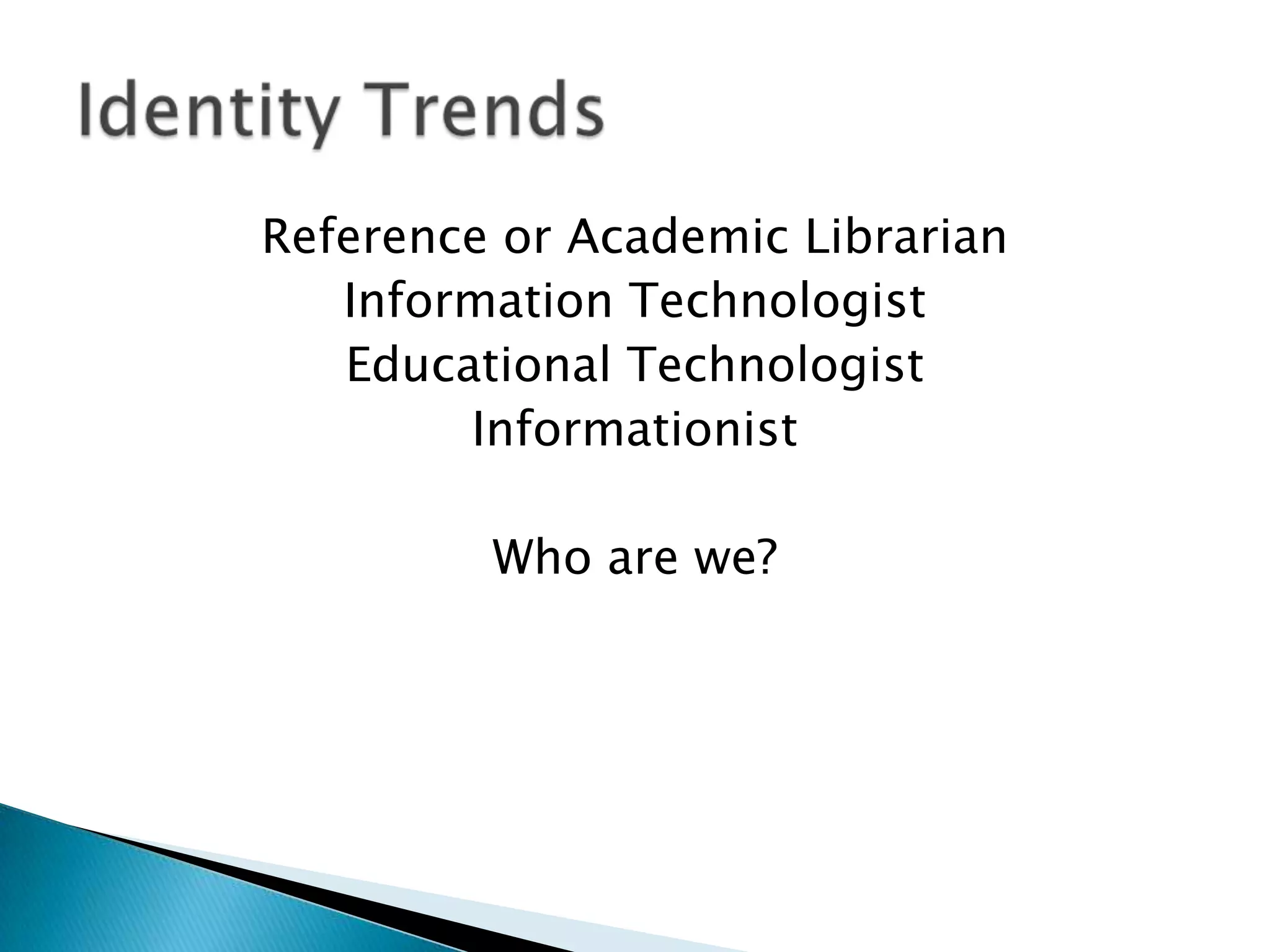
Reference or Academic Librarian
   Information Technologist
   Educational Technologist
        Informationist

         Who are we?
Questions:
Should librarians be embedded in courses?

Should embedded librarians be called
 informationists?
   Leadership in organizational innovations
   Change agents
   Information (literacy) initiatives
   Instructional design
   Partnerships with IT/Faculty/Community
    leaders
   Transforming roles and relationships
   Adapting library resources and access to
    meet needs
Have you had an impact on your library users?

Have you influenced other librarians?

Have you created new resources or used new
 technologies to facilitate learning or finding
 information?
Dewey, Barbara I. (2004). The Embedded
Librarian: Strategic Campus Collaborations.
Resource Sharing & Information Networks,
17(1/2), 5-17. doi: 10.1300/J121v17n01̱02
   Journalists in Iraq war comparison
   Direct interaction within partnerships
   Librarian observes, shares experiences with
    external group
   Comprehensive collaboration
   Share a vision of success with the group you
    want to embed
   Learn what they are trying to accomplish
   Create ways the library resources can help
    them reach their goals
   Think outside the box
   Librarian as key to success
   Fruitful partnerships built on understanding
    of needs
   Library as new Salon
   Center of influence
   Mixing the disciplines
   Bringing people together for synergy
   Becoming the Source
   Librarians appointed to key committees
   Access to programming and planning
    meetings outside the library
   Library integrated into all components of an
    organization
   Librarians must be leaders AND
   Bring people together
   Partners with administrators
   Subject specialists or liaisons
   Research support
   Grant or fundraising expertise
   Technology support
   Involved with content in curriculum
   Homework help
Bowler, Meagan, & Street, Kori. (2008).
Investigating the efficacy of embedment:
experiments in information literacy integration.
Reference Services Review 36, 438-449.
   Bridging the gap between different groups
   Overcoming internal confidence problems
   Learning that you can make a difference
   Becoming familiar with the culture outside
    the library
   Feeling you don’t know how to help them
   Have you ever helped a group outside the
    library in a group setting with your library
    skills?
   What are your strengths?
   What are you afraid of?
Faculty resistance?
 Trust
 Confidence
Key: if they feel they can learn something new
  from you every time they interact with you.
Write a brief summary of what you learned in
  the articles and share your concerns and
  ideas about assuming the embedded librarian
  role.
Please include any observations you have -
  positive and negative- about embedded
  librarianship.
Let’s personalize this discussion board:

Please include your strengths and skills which
  you feel will be most useful in becoming an
  embedded librarian.

Please include any stories about becoming
  embedded or ideas about how you would like
  to become an embedded librarian.

From blended to embedded librarianship: the journey

  • 1.
  • 2.
    Bell, Steven J.,& Shank, John. (2004). The blended librarian: A blueprint for redefining the teaching and learning role of academic librarians. College & Research Libraries News, 65(7), 372-375.
  • 3.
    Reference or AcademicLibrarian Information Technologist Educational Technologist Informationist Who are we?
  • 4.
    Questions: Should librarians beembedded in courses? Should embedded librarians be called informationists?
  • 5.
    Leadership in organizational innovations  Change agents  Information (literacy) initiatives  Instructional design  Partnerships with IT/Faculty/Community leaders  Transforming roles and relationships  Adapting library resources and access to meet needs
  • 6.
    Have you hadan impact on your library users? Have you influenced other librarians? Have you created new resources or used new technologies to facilitate learning or finding information?
  • 7.
    Dewey, Barbara I.(2004). The Embedded Librarian: Strategic Campus Collaborations. Resource Sharing & Information Networks, 17(1/2), 5-17. doi: 10.1300/J121v17n01̱02
  • 8.
    Journalists in Iraq war comparison  Direct interaction within partnerships  Librarian observes, shares experiences with external group  Comprehensive collaboration
  • 9.
    Share a vision of success with the group you want to embed  Learn what they are trying to accomplish  Create ways the library resources can help them reach their goals  Think outside the box
  • 10.
    Librarian as key to success  Fruitful partnerships built on understanding of needs  Library as new Salon
  • 11.
    Center of influence  Mixing the disciplines  Bringing people together for synergy  Becoming the Source
  • 12.
    Librarians appointed to key committees  Access to programming and planning meetings outside the library  Library integrated into all components of an organization  Librarians must be leaders AND  Bring people together
  • 13.
    Partners with administrators  Subject specialists or liaisons  Research support  Grant or fundraising expertise  Technology support  Involved with content in curriculum  Homework help
  • 14.
    Bowler, Meagan, &Street, Kori. (2008). Investigating the efficacy of embedment: experiments in information literacy integration. Reference Services Review 36, 438-449.
  • 15.
    Bridging the gap between different groups  Overcoming internal confidence problems  Learning that you can make a difference  Becoming familiar with the culture outside the library  Feeling you don’t know how to help them
  • 16.
    Have you ever helped a group outside the library in a group setting with your library skills?  What are your strengths?  What are you afraid of?
  • 17.
    Faculty resistance?  Trust Confidence Key: if they feel they can learn something new from you every time they interact with you.
  • 18.
    Write a briefsummary of what you learned in the articles and share your concerns and ideas about assuming the embedded librarian role. Please include any observations you have - positive and negative- about embedded librarianship.
  • 19.
    Let’s personalize thisdiscussion board: Please include your strengths and skills which you feel will be most useful in becoming an embedded librarian. Please include any stories about becoming embedded or ideas about how you would like to become an embedded librarian.