h
 By

default : functions and data of a class are
private to that class
 Only the public members are accessible
outside the class
 Protected members can be inherited along
with public members
 No such condition where private members
can be accessed from outside the class
 So Friend Functions and Friend Classes may
be used where our application requires the
access all the members of a class
 Not

a member of the class
 Invoked like normal function without any object
 Full access to private and protected members
Of the class
 But can use the members for one or more
specific objects
 Called without the use dot operator(does not
need to be qualified with object’s name)


Include its prototype in the class , preceding
it with keyword friend

Syntax: friend ret_type func_name(arguments);
 Can

be declared anywhere (in public,
protected or private section) in the class
 May have no arguments
 Objects of the class or their pointers can be
passed as arguments to the friend function
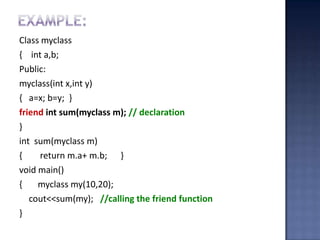
Class myclass
{ int a,b;
Public:
myclass(int x,int y)
{ a=x; b=y; }
friend int sum(myclass m); // declaration
}
int sum(myclass m)
{
return m.a+ m.b; }
void main()
{
myclass my(10,20);
cout<<sum(my); //calling the friend function
}
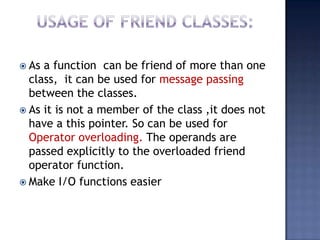
 As

a function can be friend of more than one
class, it can be used for message passing
between the classes.
 As it is not a member of the class ,it does not
have a this pointer. So can be used for
Operator overloading. The operands are
passed explicitly to the overloaded friend
operator function.
 Make I/O functions easier
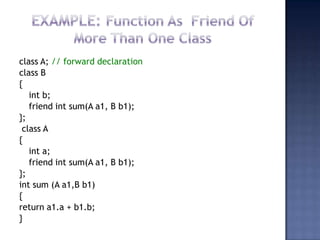
class A; // forward declaration
class B
{
int b;
friend int sum(A a1, B b1);
};
class A
{
int a;
friend int sum(A a1, B b1);
};
int sum (A a1,B b1)
{
return a1.a + b1.b;
}
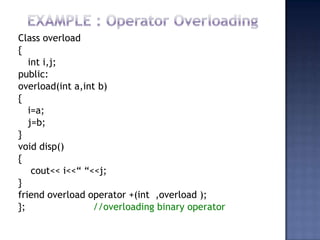
Class overload
{
int i,j;
public:
overload(int a,int b)
{
i=a;
j=b;
}
void disp()
{
cout<< i<<“ “<<j;
}
friend overload operator +(int ,overload );
};
//overloading binary operator
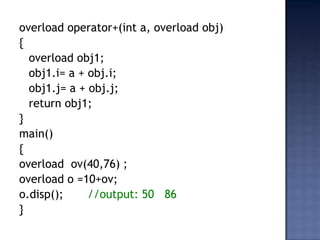
overload operator+(int a, overload obj)
{
overload obj1;
obj1.i= a + obj.i;
obj1.j= a + obj.j;
return obj1;
}
main()
{
overload ov(40,76) ;
overload o =10+ov;
o.disp();
//output: 50 86
}
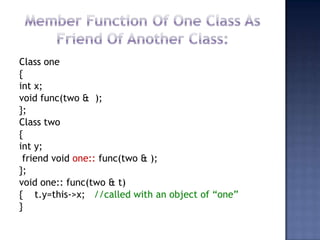
Class one
{
int x;
void func(two & );
};
Class two
{
int y;
friend void one:: func(two & );
};
void one:: func(two & t)
{ t.y=this->x; //called with an object of “one”
}
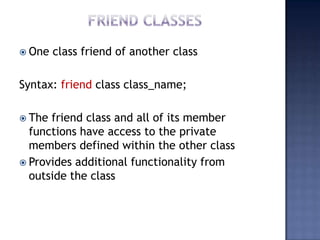
 One

class friend of another class

Syntax: friend class class_name;
 The

friend class and all of its member
functions have access to the private
members defined within the other class
 Provides additional functionality from
outside the class
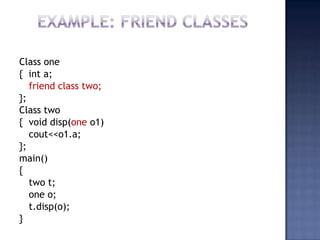
Class one
{ int a;
friend class two;
};
Class two
{ void disp(one o1)
cout<<o1.a;
};
main()
{
two t;
one o;
t.disp(o);
}
 Friend

functions and classes are not inherited
 Friend function cannot have storage-class
specifier i.e. cannot be declared as static or
extern
 Friend classes are not corresponded i.e. if
class A is a friend of B it does not imply that
class B is a friend of A
 Friend classes are not transitive: i.e. friend
of a friend is not considered to be a friend
unless explicitly specified
Friend functions

Friend functions

  • 1.
  • 2.
     By default :functions and data of a class are private to that class  Only the public members are accessible outside the class  Protected members can be inherited along with public members  No such condition where private members can be accessed from outside the class  So Friend Functions and Friend Classes may be used where our application requires the access all the members of a class
  • 3.
     Not a memberof the class  Invoked like normal function without any object  Full access to private and protected members Of the class  But can use the members for one or more specific objects  Called without the use dot operator(does not need to be qualified with object’s name)
  • 4.
     Include its prototypein the class , preceding it with keyword friend Syntax: friend ret_type func_name(arguments);  Can be declared anywhere (in public, protected or private section) in the class  May have no arguments  Objects of the class or their pointers can be passed as arguments to the friend function
  • 5.
    Class myclass { inta,b; Public: myclass(int x,int y) { a=x; b=y; } friend int sum(myclass m); // declaration } int sum(myclass m) { return m.a+ m.b; } void main() { myclass my(10,20); cout<<sum(my); //calling the friend function }
  • 6.
     As a functioncan be friend of more than one class, it can be used for message passing between the classes.  As it is not a member of the class ,it does not have a this pointer. So can be used for Operator overloading. The operands are passed explicitly to the overloaded friend operator function.  Make I/O functions easier
  • 7.
    class A; //forward declaration class B { int b; friend int sum(A a1, B b1); }; class A { int a; friend int sum(A a1, B b1); }; int sum (A a1,B b1) { return a1.a + b1.b; }
  • 8.
    Class overload { int i,j; public: overload(inta,int b) { i=a; j=b; } void disp() { cout<< i<<“ “<<j; } friend overload operator +(int ,overload ); }; //overloading binary operator
  • 9.
    overload operator+(int a,overload obj) { overload obj1; obj1.i= a + obj.i; obj1.j= a + obj.j; return obj1; } main() { overload ov(40,76) ; overload o =10+ov; o.disp(); //output: 50 86 }
  • 10.
    Class one { int x; voidfunc(two & ); }; Class two { int y; friend void one:: func(two & ); }; void one:: func(two & t) { t.y=this->x; //called with an object of “one” }
  • 11.
     One class friendof another class Syntax: friend class class_name;  The friend class and all of its member functions have access to the private members defined within the other class  Provides additional functionality from outside the class
  • 12.
    Class one { inta; friend class two; }; Class two { void disp(one o1) cout<<o1.a; }; main() { two t; one o; t.disp(o); }
  • 13.
     Friend functions andclasses are not inherited  Friend function cannot have storage-class specifier i.e. cannot be declared as static or extern  Friend classes are not corresponded i.e. if class A is a friend of B it does not imply that class B is a friend of A  Friend classes are not transitive: i.e. friend of a friend is not considered to be a friend unless explicitly specified