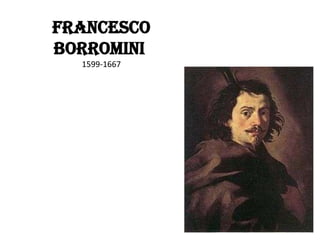
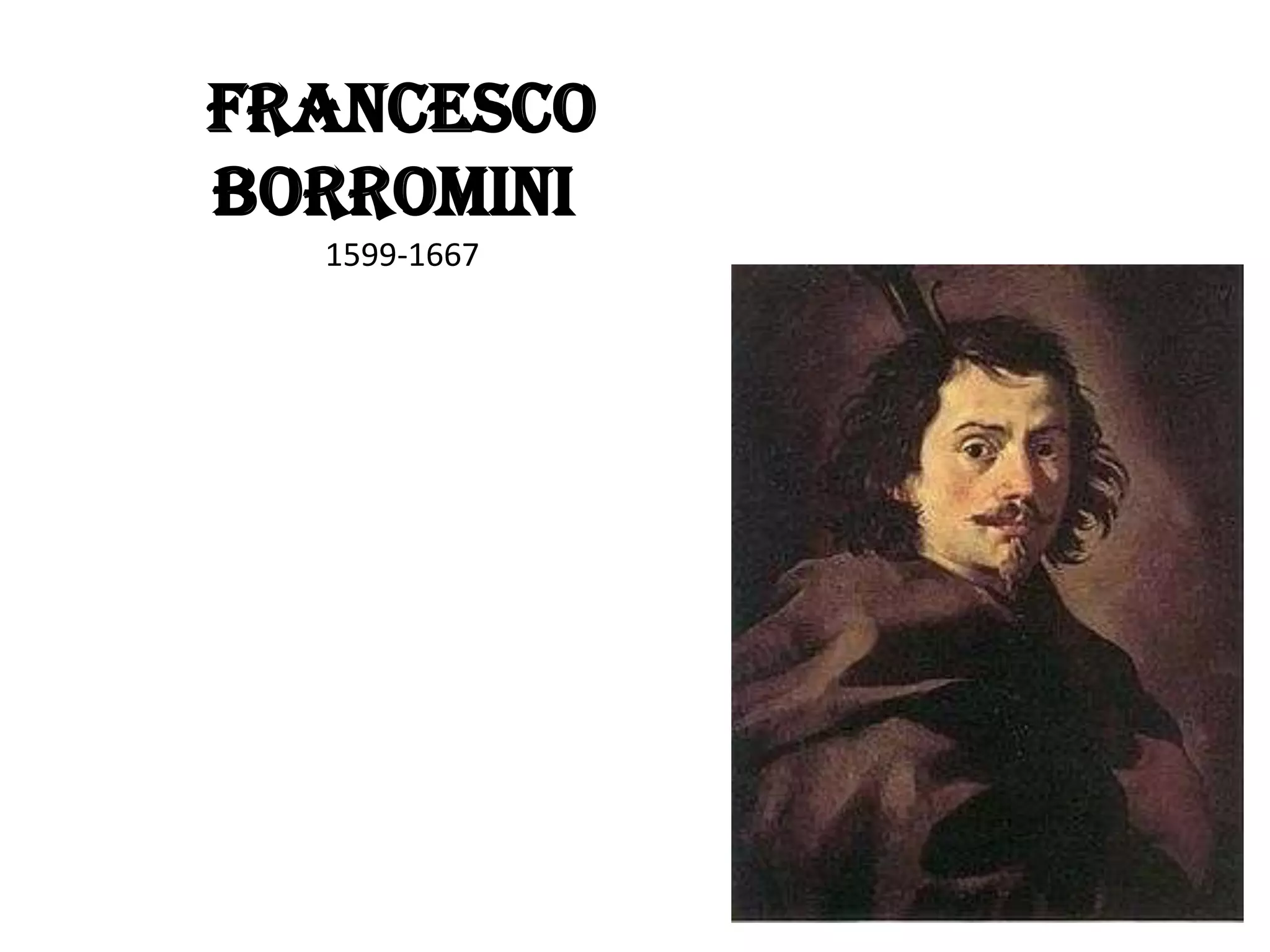
Francesco
Borromini
1599-1667
INTRODUCTION
•

•
•
•
•

•
•

He was the son of a stonemason and began his career as a stonemason himself. He
soon went to Milan to study and practice his craft. He moved to Rome in 1619 and
started working for Carlo Maderno,
Borromini's real name was Francesco Castelli. Once he had become established in
Rome, he changed his name from Castelli to Borromini,
he worked with Gian Lorenzo Bernini on the design of the famous baldachin in St.
Peter Basilica , the two later became bitter rivals.
Francesco Borromini was the master of curved-wall architecture.
He was influenced by the architecture of Michelangelo and the ruins of Antiquity.
His architecture employs manipulations of Classical architectural forms,
geometrical rationales with symbolic meanings behind his buildings.
Classical architectural forms, geometrical rationales in his plans and symbolic
meanings in his buildings.
Quick in temper which resulted in him withdrawing from certain jobs, and his
death was by suicide possibly as a result of nervous disorders and depression,
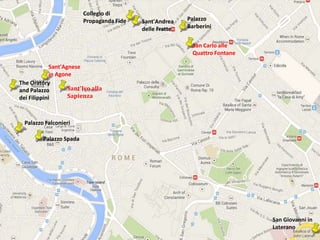
Collegio di
Propaganda Fide

Sant'Andrea
delle Fratte

Palazzo
Barberini
San Carlo alle
Quattro Fontane

Sant'Agnese
in Agone
The Oratory
Sant'Ivo alla
and Palazzo
Sapienza
dei Filippini

Palazzo Falconieri
Palazzo Spada

San Giovanni in
Laterano
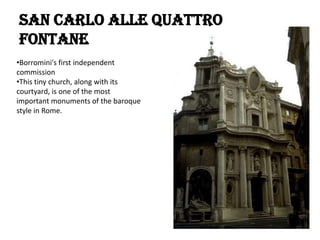
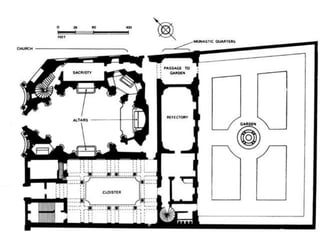
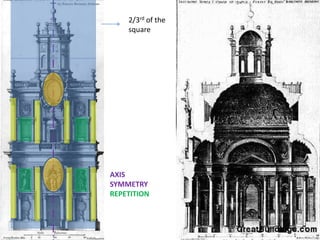
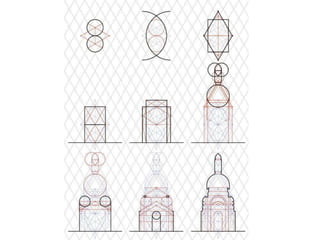
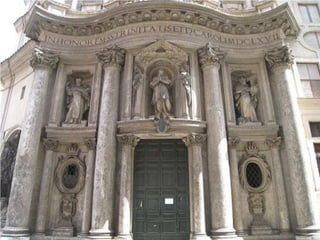
San Carlo alle Quattro
Fontane
•Borromini's first independent
commission
•This tiny church, along with its
courtyard, is one of the most
important monuments of the baroque
style in Rome.
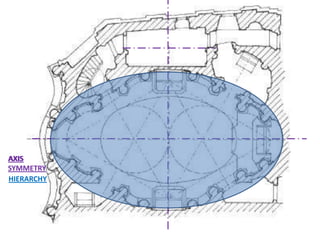
AXIS
SYMMETRY
HIERARCHY
2/3rd of the
square

AXIS
SYMMETRY
REPETITION
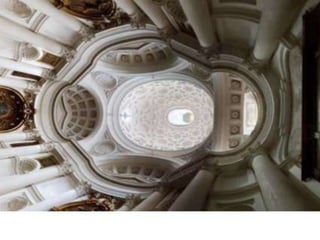
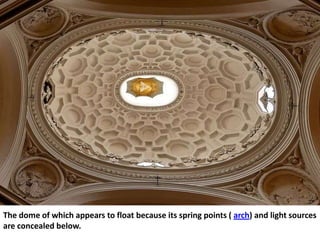
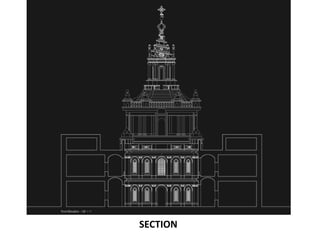
The dome of which appears to float because its spring points ( arch) and light sources
are concealed below.
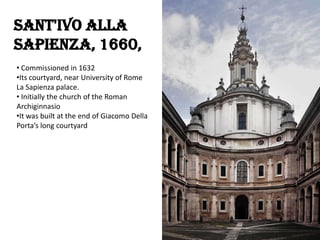
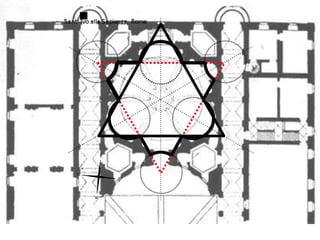
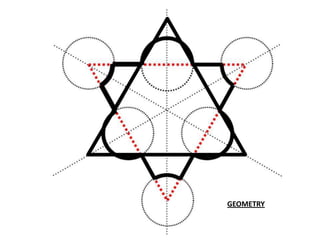
Sant'Ivo alla
Sapienza, 1660,
• Commissioned in 1632
•Its courtyard, near University of Rome
La Sapienza palace.
• Initially the church of the Roman
Archiginnasio
•It was built at the end of Giacomo Della
Porta’s long courtyard
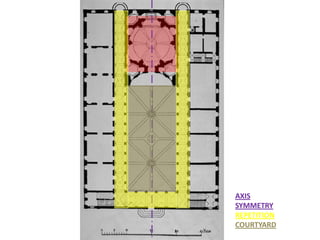
AXIS
SYMMETRY
REPETITION
COURTYARD
GEOMETRY
SECTION
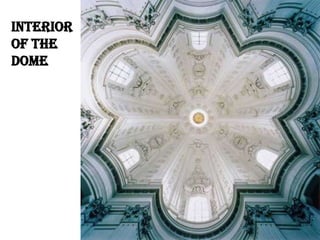
Interior
of the
dome
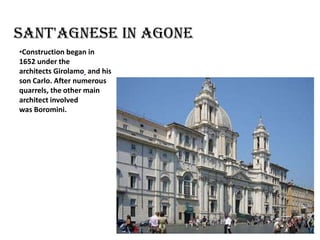
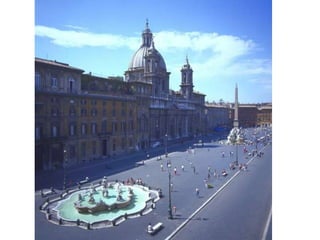
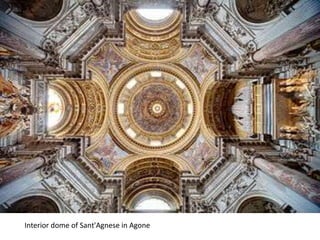
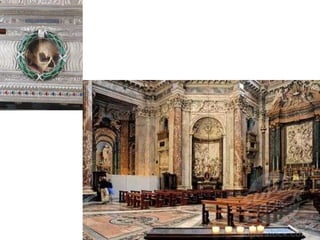
Sant'Agnese in Agone
•Construction began in
1652 under the
architects Girolamo and his
son Carlo. After numerous
quarrels, the other main
architect involved
was Boromini.
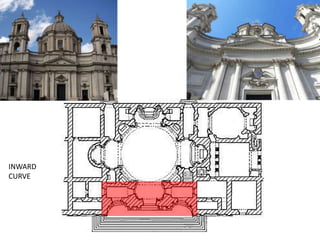
INWARD
CURVE
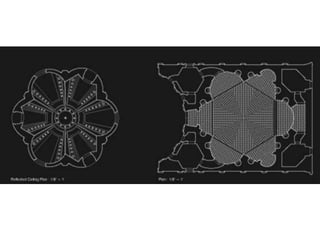
Interior dome of Sant'Agnese in Agone
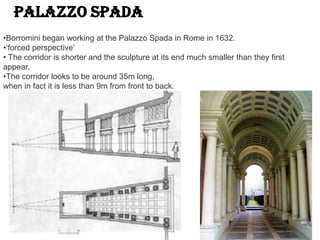
Palazzo Spada
•Borromini began working at the Palazzo Spada in Rome in 1632.
•‘forced perspective’
• The corridor is shorter and the sculpture at its end much smaller than they first
appear.
•The corridor looks to be around 35m long,
when in fact it is less than 9m from front to back.
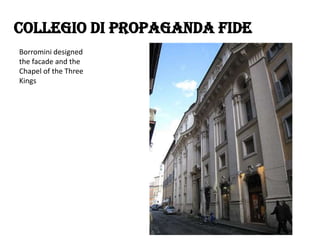
Collegio di Propaganda Fide
Borromini designed
the facade and the
Chapel of the Three
Kings
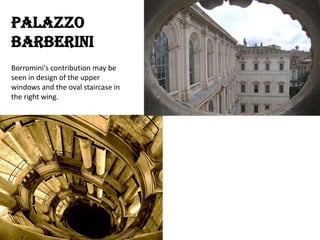
Palazzo
Barberini
Borromini's contribution may be
seen in design of the upper
windows and the oval staircase in
the right wing.
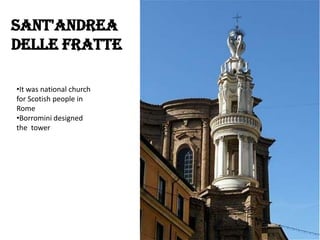
Sant'Andrea
delle Fratte
•It was national church
for Scotish people in
Rome
•Borromini designed
the tower
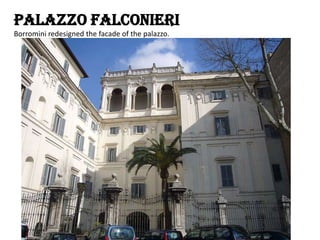
Palazzo Falconieri
Borromini redesigned the facade of the palazzo.
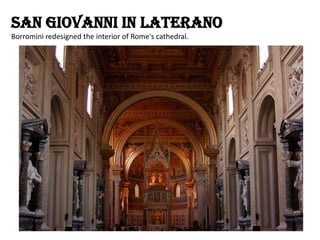
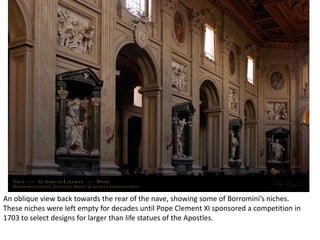
San Giovanni in Laterano
Borromini redesigned the interior of Rome's cathedral.
An oblique view back towards the rear of the nave, showing some of Borromini’s niches.
These niches were left empty for decades until Pope Clement XI sponsored a competition in
1703 to select designs for larger than life statues of the Apostles.
Thank you

FRANCESCO BORROMINI

  • 1.
  • 2.
    INTRODUCTION • • • • • • • He was theson of a stonemason and began his career as a stonemason himself. He soon went to Milan to study and practice his craft. He moved to Rome in 1619 and started working for Carlo Maderno, Borromini's real name was Francesco Castelli. Once he had become established in Rome, he changed his name from Castelli to Borromini, he worked with Gian Lorenzo Bernini on the design of the famous baldachin in St. Peter Basilica , the two later became bitter rivals. Francesco Borromini was the master of curved-wall architecture. He was influenced by the architecture of Michelangelo and the ruins of Antiquity. His architecture employs manipulations of Classical architectural forms, geometrical rationales with symbolic meanings behind his buildings. Classical architectural forms, geometrical rationales in his plans and symbolic meanings in his buildings. Quick in temper which resulted in him withdrawing from certain jobs, and his death was by suicide possibly as a result of nervous disorders and depression,
  • 3.
    Collegio di Propaganda Fide Sant'Andrea delleFratte Palazzo Barberini San Carlo alle Quattro Fontane Sant'Agnese in Agone The Oratory Sant'Ivo alla and Palazzo Sapienza dei Filippini Palazzo Falconieri Palazzo Spada San Giovanni in Laterano
  • 4.
    San Carlo alleQuattro Fontane •Borromini's first independent commission •This tiny church, along with its courtyard, is one of the most important monuments of the baroque style in Rome.
  • 6.
  • 8.
  • 12.
    The dome ofwhich appears to float because its spring points ( arch) and light sources are concealed below.
  • 14.
    Sant'Ivo alla Sapienza, 1660, •Commissioned in 1632 •Its courtyard, near University of Rome La Sapienza palace. • Initially the church of the Roman Archiginnasio •It was built at the end of Giacomo Della Porta’s long courtyard
  • 15.
  • 17.
  • 18.
  • 19.
  • 21.
    Sant'Agnese in Agone •Constructionbegan in 1652 under the architects Girolamo and his son Carlo. After numerous quarrels, the other main architect involved was Boromini.
  • 23.
  • 24.
    Interior dome ofSant'Agnese in Agone
  • 26.
    Palazzo Spada •Borromini beganworking at the Palazzo Spada in Rome in 1632. •‘forced perspective’ • The corridor is shorter and the sculpture at its end much smaller than they first appear. •The corridor looks to be around 35m long, when in fact it is less than 9m from front to back.
  • 27.
    Collegio di PropagandaFide Borromini designed the facade and the Chapel of the Three Kings
  • 28.
    Palazzo Barberini Borromini's contribution maybe seen in design of the upper windows and the oval staircase in the right wing.
  • 29.
    Sant'Andrea delle Fratte •It wasnational church for Scotish people in Rome •Borromini designed the tower
  • 30.
    Palazzo Falconieri Borromini redesignedthe facade of the palazzo.
  • 31.
    San Giovanni inLaterano Borromini redesigned the interior of Rome's cathedral.
  • 32.
    An oblique viewback towards the rear of the nave, showing some of Borromini’s niches. These niches were left empty for decades until Pope Clement XI sponsored a competition in 1703 to select designs for larger than life statues of the Apostles.
  • 33.