FORMATS AND SIZES
OF NEWSPAPERS
Dr. Amaresh Jha
Main formats of newspapers
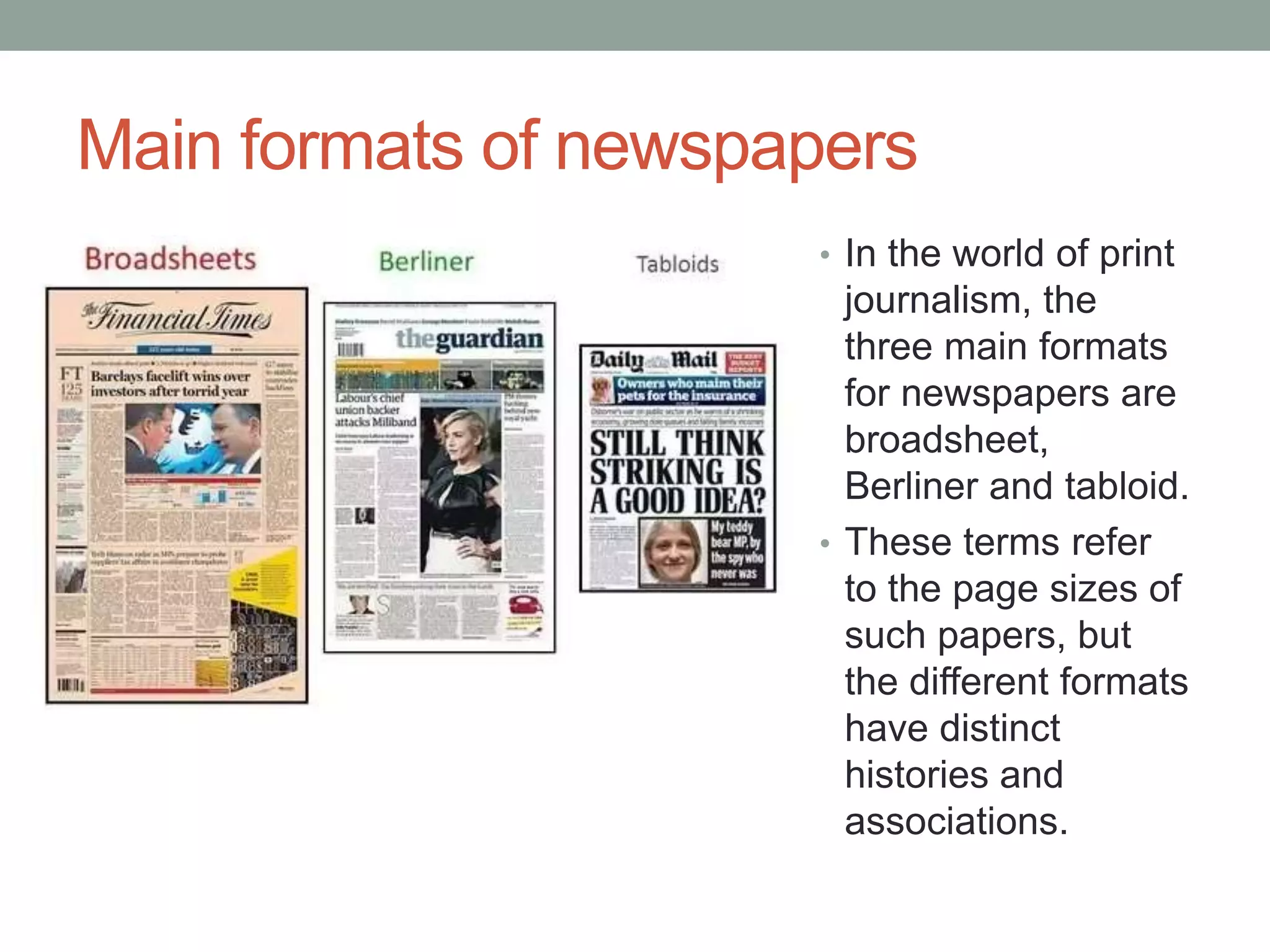
• In the world of print
journalism, the
three main formats
for newspapers are
broadsheet,
Berliner and tabloid.
• These terms refer
to the page sizes of
such papers, but
the different formats
have distinct
histories and
associations.
Broadsheets
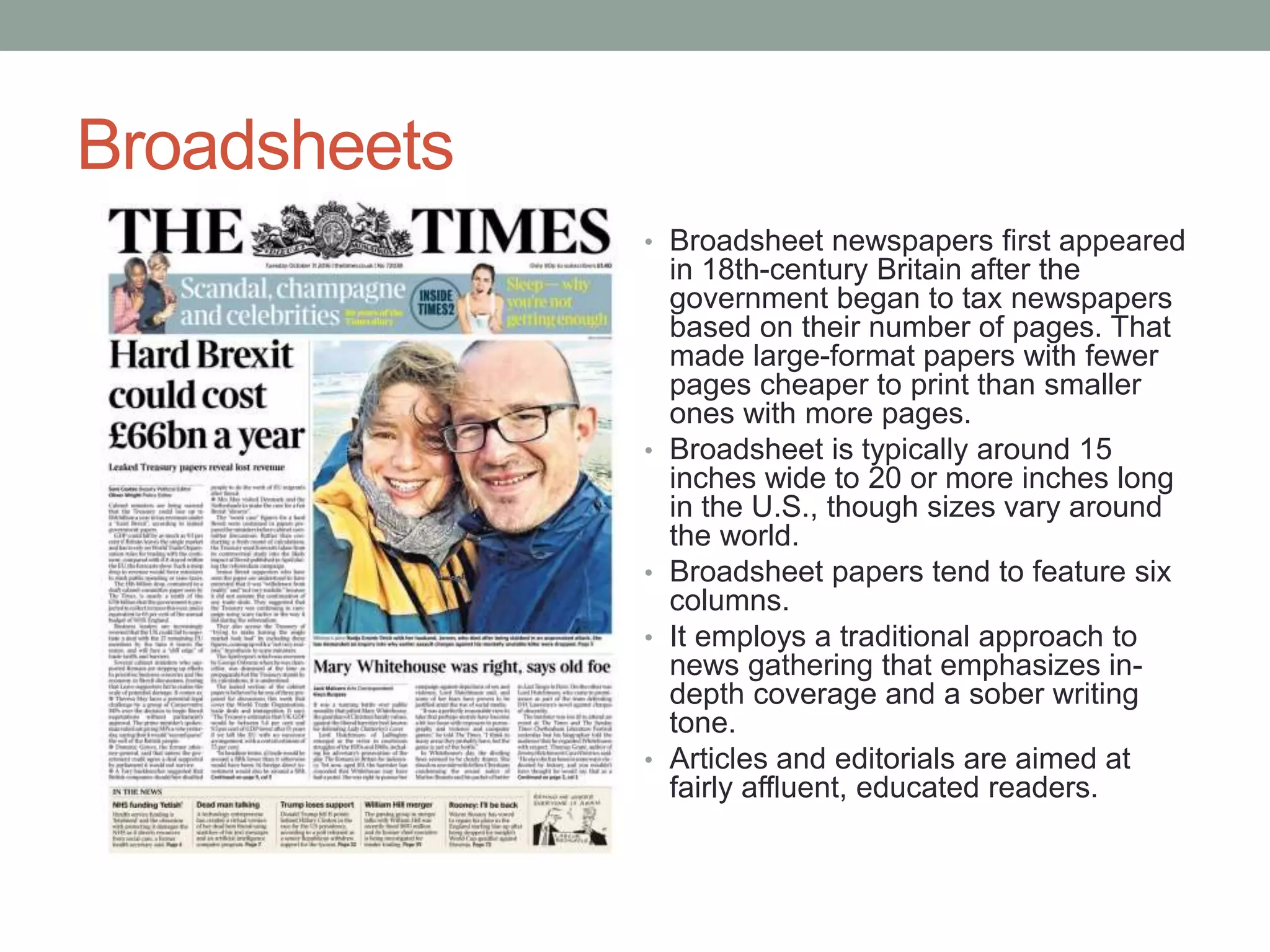
• Broadsheet newspapers first appeared
in 18th-century Britain after the
government began to tax newspapers
based on their number of pages. That
made large-format papers with fewer
pages cheaper to print than smaller
ones with more pages.
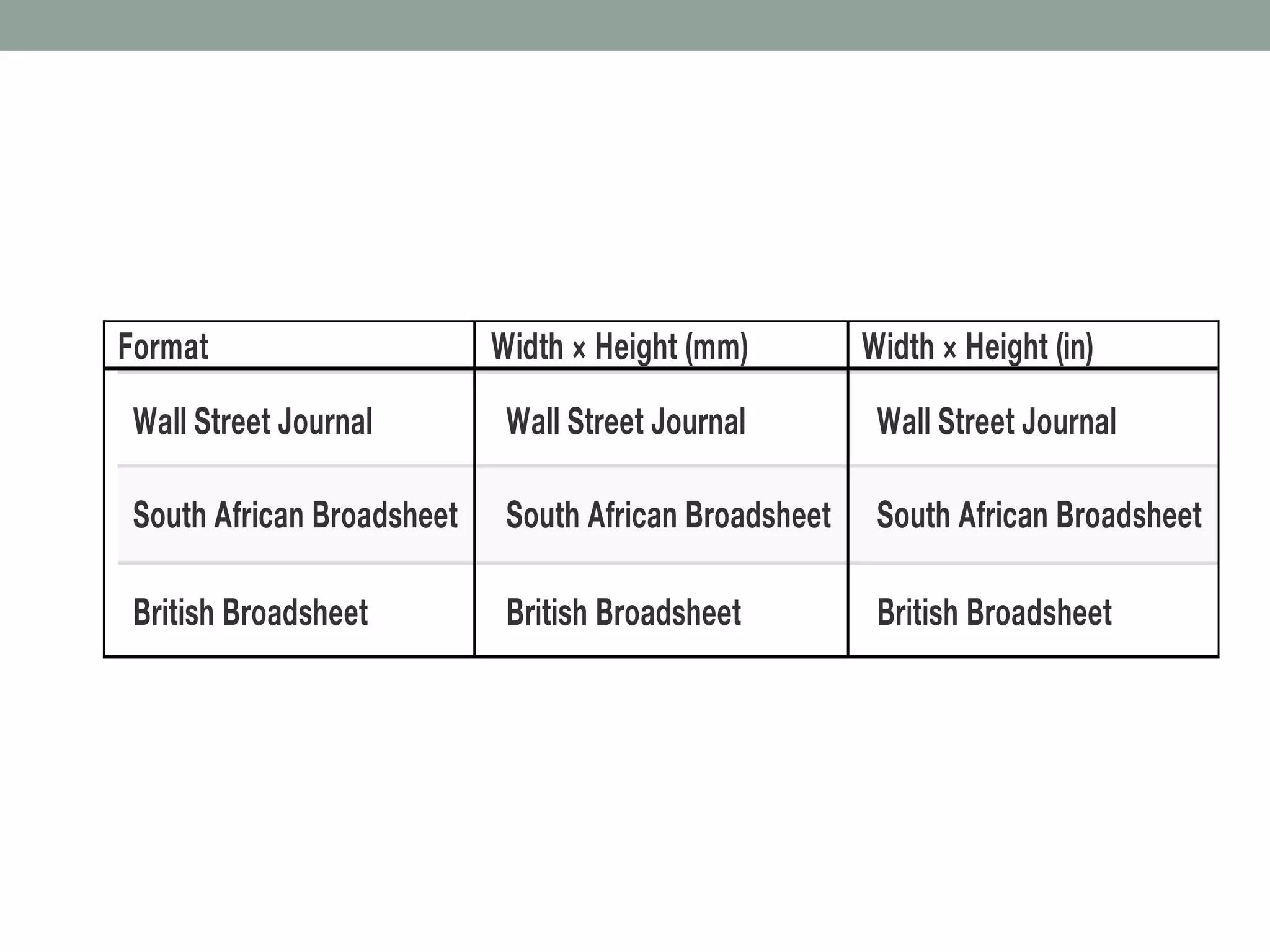
• Broadsheet is typically around 15
inches wide to 20 or more inches long
in the U.S., though sizes vary around
the world.
• Broadsheet papers tend to feature six
columns.
• It employs a traditional approach to
news gathering that emphasizes in-
depth coverage and a sober writing
tone.
• Articles and editorials are aimed at
fairly affluent, educated readers.
Berliners
• The Berliner format is mid-
way between a tabloid and
a broadsheet, with a page
dimension of 470mm x
315mm, and is sold folded.
• While the Berliner format is
unique to presses in the
UK, globally this format is
used for many other titles,
including La Stampa (Italy),
La Vanguardia (Spain) and
Le Monde (France).
Tabloids
• Tabloids date to the early 1900s when
they were referred to as "small
newspapers" containing condensed
stories easily consumed by everyday
readers.
• Tabloid newspapers, perhaps due to
their smaller size, are often associated
with shorter, crisper stories.
• Tabloid refers to a newspaper that
typically measures 11 by 17 inches—
smaller than a broadsheet—and is
usually no more than five columns
across.
• Many city dwellers prefer tabloids
because they are easier to carry and
read on the subway or bus.
• Tabloid readers traditionally came from
the lower working classes, but that
has changed somewhat in the past
few decades.
Formats and sizes of newspapers

Formats and sizes of newspapers

  • 1.
    FORMATS AND SIZES OFNEWSPAPERS Dr. Amaresh Jha
  • 2.
    Main formats ofnewspapers • In the world of print journalism, the three main formats for newspapers are broadsheet, Berliner and tabloid. • These terms refer to the page sizes of such papers, but the different formats have distinct histories and associations.
  • 3.
    Broadsheets • Broadsheet newspapersfirst appeared in 18th-century Britain after the government began to tax newspapers based on their number of pages. That made large-format papers with fewer pages cheaper to print than smaller ones with more pages. • Broadsheet is typically around 15 inches wide to 20 or more inches long in the U.S., though sizes vary around the world. • Broadsheet papers tend to feature six columns. • It employs a traditional approach to news gathering that emphasizes in- depth coverage and a sober writing tone. • Articles and editorials are aimed at fairly affluent, educated readers.
  • 4.
    Berliners • The Berlinerformat is mid- way between a tabloid and a broadsheet, with a page dimension of 470mm x 315mm, and is sold folded. • While the Berliner format is unique to presses in the UK, globally this format is used for many other titles, including La Stampa (Italy), La Vanguardia (Spain) and Le Monde (France).
  • 5.
    Tabloids • Tabloids dateto the early 1900s when they were referred to as "small newspapers" containing condensed stories easily consumed by everyday readers. • Tabloid newspapers, perhaps due to their smaller size, are often associated with shorter, crisper stories. • Tabloid refers to a newspaper that typically measures 11 by 17 inches— smaller than a broadsheet—and is usually no more than five columns across. • Many city dwellers prefer tabloids because they are easier to carry and read on the subway or bus. • Tabloid readers traditionally came from the lower working classes, but that has changed somewhat in the past few decades.