How Infection canspreads through Food
1. Biological Contamination
2. Chemical contamination
3. Physical Contamination
4. Cross Contamination
4.
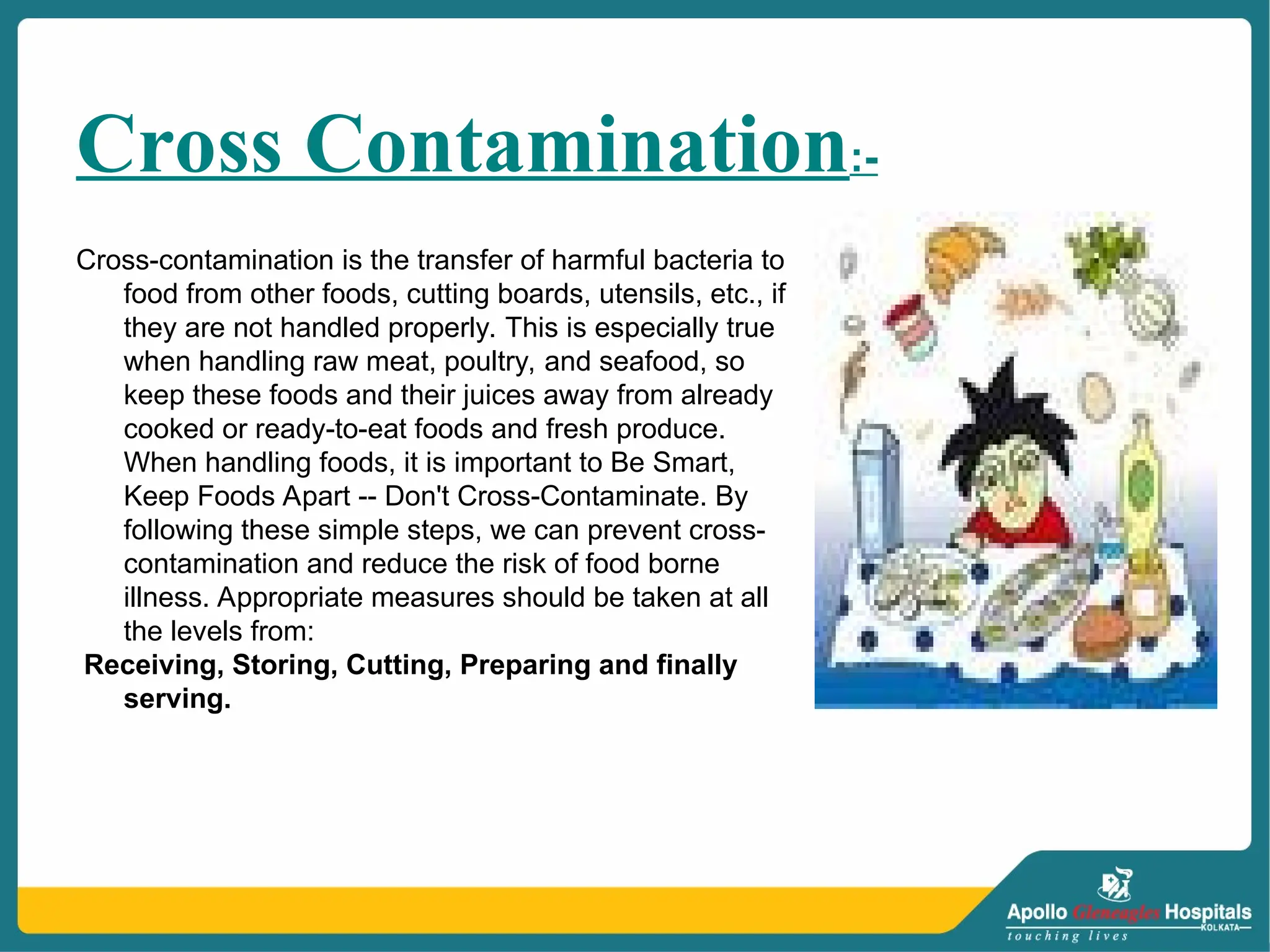
Cross Contamination:-
Cross-contamination isthe transfer of harmful bacteria to
food from other foods, cutting boards, utensils, etc., if
they are not handled properly. This is especially true
when handling raw meat, poultry, and seafood, so
keep these foods and their juices away from already
cooked or ready-to-eat foods and fresh produce.
When handling foods, it is important to Be Smart,
Keep Foods Apart -- Don't Cross-Contaminate. By
following these simple steps, we can prevent cross-
contamination and reduce the risk of food borne
illness. Appropriate measures should be taken at all
the levels from:
Receiving, Storing, Cutting, Preparing and finally
serving.
5.
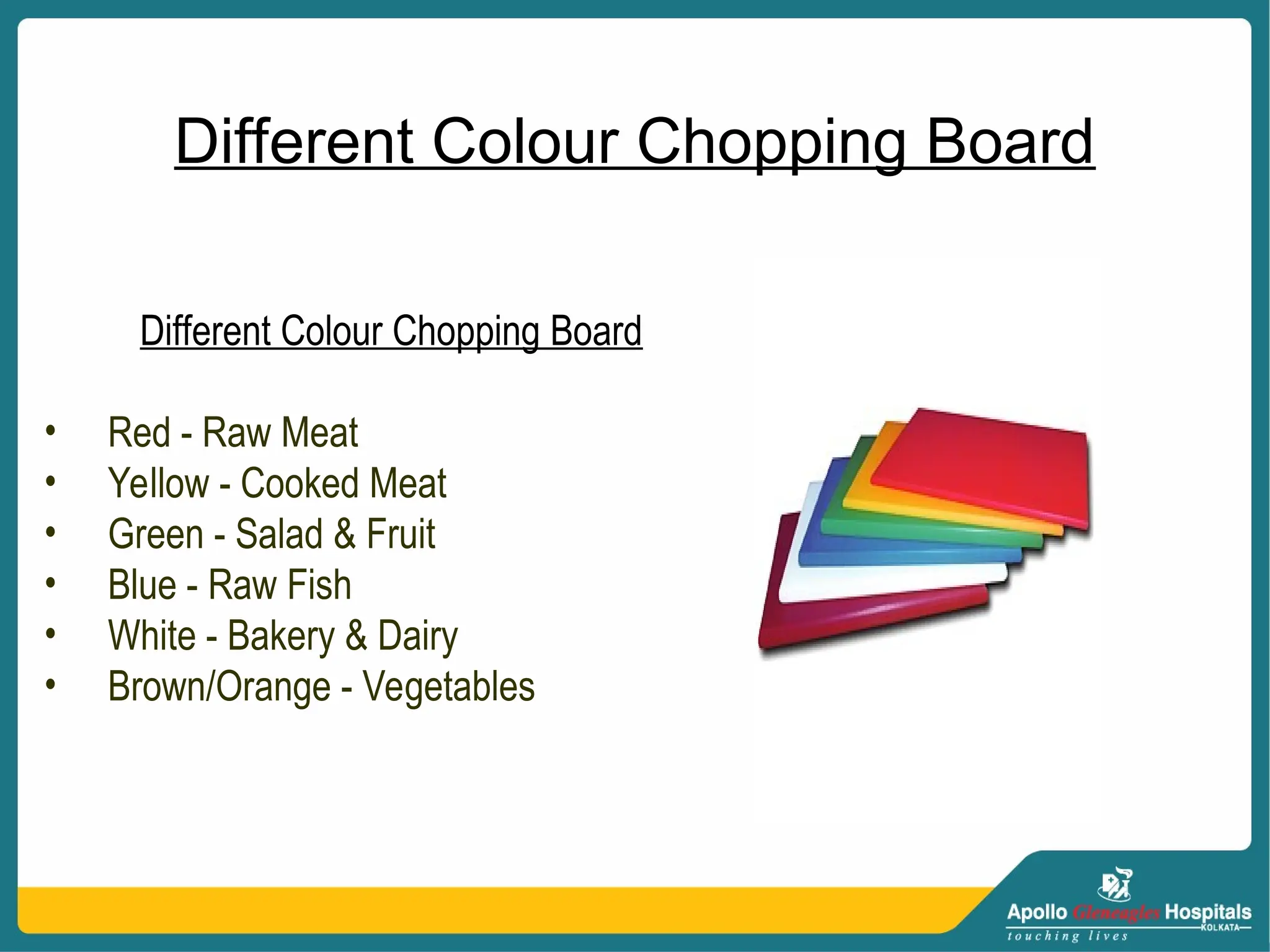
Different Colour ChoppingBoard
Different Colour Chopping Board
• Red - Raw Meat
• Yellow - Cooked Meat
• Green - Salad & Fruit
• Blue - Raw Fish
• White - Bakery & Dairy
• Brown/Orange - Vegetables
6.
Layers of Protection:-
•We can prevent food borne illness by
enforcing “Layers of Protection.”
• leading causes of food borne illness come
from violations in the food safety layers of
protection associated with the following:
• (1) Personal hygiene and work habits
• (2) Time and temperature discipline
• (3) Proper cleaning and sanitizing
7.
Why ISO:22000 (HACCP)
•ISO 22000 is the systematic preventative
approach to food safety.
• It addresses physical, chemical, and
biological hazards as a means of
prevention rather than finished product
inspection.
8.
Seven Steps ofHACCP
• Analyze hazards:
• Identify critical control points: these are points in the food chain at which
the potential hazard can be controlled or eliminated
• Establish preventive measures with critical limits for each control point: for
a cooked food, for example, this might include setting the minimum cooking
temperature and time required to ensure the elimination of any microbes
• Establish procedures to monitor the critical control points
• Establish corrective actions to be taken when monitoring shows that a
critical limit has not been met
• Establish procedures to verify that the system is working properly
• Establish effective record keeping to document the HACCP system: this
would include records of hazards and their control methods, the monitoring
of safety requirements, and action taken to correct potential problems
9.
How HACCP hasHelped:-
• We have defined receiving and purchasing norms of
supplies.
• Proper time and temperature is maintained to avoid
any problem.
• Different CCP is developed and monitored regularly
for better control.
• PRP and OPRP are developed for better control over
the process and system.
• Different policies has been developed to monitor
• Monitoring of new measures:
• 1) Receiving Temp. 2) Thawing process monitoring
• 3) Preparation of food temp. 4) PPM level monitoring
10.
Infection Control Practicesin Liquid Diet section
• All the liquids oral or enteral( tube feeding) are prepared in the Liquid Diet Room.
• All feeds are prepared under the laminar flow following all the instructions to prevent
any kind of infections under the supervision of Dietitian.
• All equipment used for feed preparation are calibrated.
• Regular training classes are conducted by Dietitian and Biomedical for the proper
use of Laminar hood.
• Surface wiping of refrigerator is done thrice a day with sanitizer.
• All feeds are prepared on 2nd
hourly basis. No left over feeds are served to patients.
• Each feed is labeled with Name, UHID, Date & time.
• Trained staff is deputed to prepare the feed in the Liquid section.
• Every month random sample is sent for Microbial test.
11.
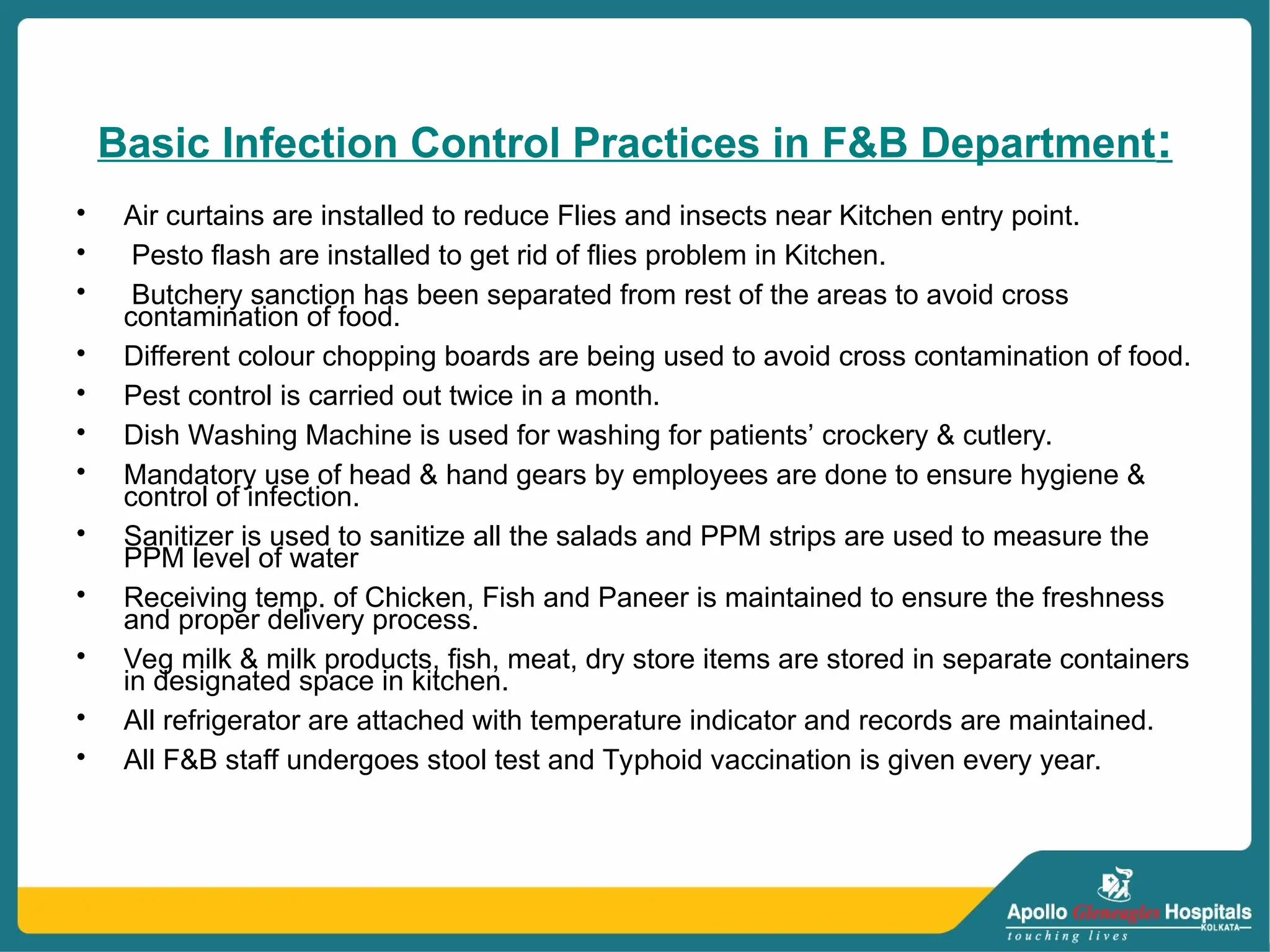
Basic Infection ControlPractices in F&B Department:
• Air curtains are installed to reduce Flies and insects near Kitchen entry point.
• Pesto flash are installed to get rid of flies problem in Kitchen.
• Butchery sanction has been separated from rest of the areas to avoid cross
contamination of food.
• Different colour chopping boards are being used to avoid cross contamination of food.
• Pest control is carried out twice in a month.
• Dish Washing Machine is used for washing for patients’ crockery & cutlery.
• Mandatory use of head & hand gears by employees are done to ensure hygiene &
control of infection.
• Sanitizer is used to sanitize all the salads and PPM strips are used to measure the
PPM level of water
• Receiving temp. of Chicken, Fish and Paneer is maintained to ensure the freshness
and proper delivery process.
• Veg milk & milk products, fish, meat, dry store items are stored in separate containers
in designated space in kitchen.
• All refrigerator are attached with temperature indicator and records are maintained.
• All F&B staff undergoes stool test and Typhoid vaccination is given every year.
14.
Safer Food =Better customer satisfaction = Better Business
#2 A quote: “Although food and water systems in the United States are among the safest in the world, the occurrence of nationwide outbreaks due to unintentional food or water contamination demonstrates the ongoing need for vigilance in protecting food and water supplies.” Food as a potential biological terrorism agent is regarded as a lesser threat than many other biological agents (such as smallpox, anthrax, plague, botulism, tularemia, viral hemorrhagic fevers).
Responsibility for food safety is managed by a complex network of Federal, State, local and territorial agencies. The main Federal players are: Food Safety and Inspection Service (FSIS), USDA; Center for Food Safety and Applied Nutrition (CFSAN), FDA; and the National Center for Infectious Diseases (NCID), CDC. [Other agencies include EPA, National Oceanic and Atmospheric Administration, Bureau of Alcohol, Tobacco, and Firearms, the US Customs Service, and FTC.]
Prevention activities, including education, training, surveillance, and research (at the bottom of the slide), are directed at all elements along the route of this framework with the exception of food transportation, where Congressional authority has not been granted.
Over the last few years, FDA CFSAN and USDA FSIS have worked with food safety agencies at federal, State and local levels to significantly strengthen the Nation's food safety system across the entire distribution chain -- from farm to table. The main results of this cooperation -- more effective prevention programs, new surveillance systems, and faster foodborne illness outbreak response capabilities -- have enabled the agencies to more efficiently protect the safety of our food supply against natural and accidental threats.
HP2010 food safety objectives are directed at decreasing the magnitude of foodborne illness, and increasing consumer and retail food safety practices.







![FOOD_SAFETY-The_Top_Priority_For_Human_Survival[1]](https://cdn.slidesharecdn.com/ss_thumbnails/d2cde1eb-c134-439c-ab4b-9c9fffbeeaf5-160204082126-thumbnail.jpg?width=640&height=640&fit=bounds)


