PLANNING & FACILITATING
FOCUS GROUPS
A Hands-On Session for
New Jersey VISTA Leaders
INTENDED OUTCOMES
➤Understand what a focus group
is & steps involved
➤Hands-on opportunity to
develop a plan and questions
for a 60-90-minute focus group
➤Strategies for facilitating a
focus group and practice
➤Be able to conduct focus
groups as a viable strategy
“
The power of a focus group lies in its
ability to leverage the multiple channels
of communication and thought. When
you buckle down and really explore the
many facets of a possible innovation,
you are more able to make well thought-
out decisions.
-Craig Cochran
USING FOCUS GROUPS TO GATHER INFORMATION
➤Focus groups are planned small group
discussions of about 8-12 people
➤They are highly participatory and can
be used to obtain diverse ideas and
perceptions about a topic of interest
➤Different experiences, ideas and views
often emerge
BENEFITS
➤Group dialogue can generate rich info
as participants engage one another
➤Gathers information from those who
are most involved in an issue/
community and have expert knowledge
about the topic
➤Relatively low cost and efficient
➤Discussions can be sidetracked or
dominated by more vocal participants
➤Susceptible to facilitator bias which can
impact the validity of findings
➤Cannot assess how generalizable
individual themes or viewpoints are
within a like population
LIMITATIONS
STEPS INVOLVED
1.Identify purpose/information needed
2.Develop 5-6 broad, open-ended questions
3.Recruit (& confirm) participants
4.Determine plan and logistics for conducting
5.Location, time, potential incentives
6.Conduct the focus groups
7.Analyze and summarize data
What info do you need and from whom?
STEP 1. PURPOSE
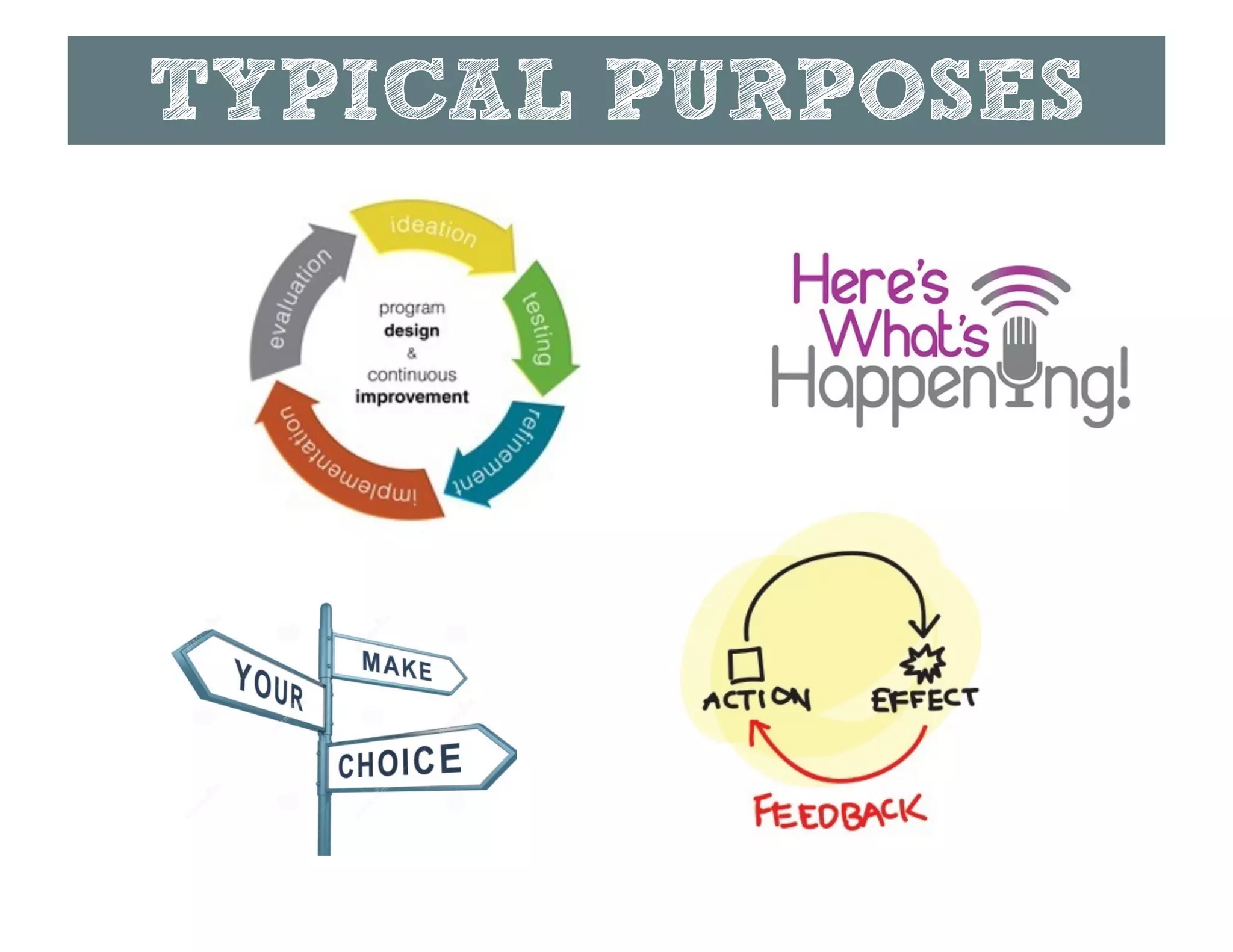
TYPICAL PURPOSES
➤Constituents/Clients
➤Working group members
➤Community members/residents
➤Organizational staff
➤Stakeholders
➤Funders
➤A mix
WHICH PEOPLE?
WHAT AND WHO
IS IN YOURS
?
Let’s discuss!
Develop 5-7 Open-Ended Questions
STEP 2.
OPEN-ENDED MEANS…
They cannot be answered with “yes” or “no”.
➤Always first ask yourself what problem or
need will be addressed by the info gathered.
➤For example: to find out if a new service or
idea will work, understand how a program
(or process) is working/failing, etc.
➤Basically multiple interviews.
➤Encourage the exchange of ideas and stories
v. individual turn-taking in answering.
DEVELOP AND SHARE YOUR QUESTIONS
Focus Group Series Summary
10-Year Plan to End Chronic Homelessness in Pitt County
➤ How did you become homeless?
➤ How long have you been homeless or were you homeless?
➤ How did homelessness affect the way you think about yourself?
➤ Thinking back to when you first became homeless, what would it have taken to prevent it?
➤ What do you need to maintain a home/housing?
➤ What would you do if you had unlimited resources and could end homelessness?
➤ Many experts think estimates of the numbers who are homeless are not accurate because
they do not include people who are doubling up with relatives or friends. Did you ever
double up? Do you know others who have?
➤ What three things should Pitt County do to end homelessness?
➤ http://www.pittcountync.gov/depts/planning/homelessness/news/
focusgroupseriessummary.pdf
EXAMPLE: FOCUS GROUP OF HOMELESS
Focus Group Protocol
program evaluation and to identify effective strategies for promoting college access
➤ Ice Breaker: Do students at _____ school talk with each other about college? What do people say?
What about [public postsecondary institutions in your state]?
➤ Do you talk about college issues in your classes? If so, which classes (all classes?)?
➤ At what point (e.g., which grade -- 8, 9, 10, 11, 12?) do your counselors begin meeting with students
to talk about college? Can you tell me about them?
➤ Do any colleges and universities in your state have college nights at your school? Have you attended
any and what did you learn?
➤ Do you think it would be difficult or easy to gain admission to a college or university? What factors
influence your decision to apply?
➤ Do you feel like you understand what will be expected of you in college, academically, and how you
should prepare for it?
➤ Do you have any suggestions about ways to improve the information you receive about the college
admissions process – either how you receive the information, or the content of the information that
you receive?
➤ http://annenberginstitute.org/sites/default/files/BTOProtocolStudents.pdf
EXAMPLE: HIGH SCHOOL STUDENTS
Focus Group Protocol
program to identify strategies for increasing college access
➤ What things about your program at _____ School make you confident about graduating
on time?
➤ What things about your program at _____ School make you worried about graduating on
time?
➤ What things about your program at _____ School make you confident about going on to
college or a technical school?
➤ What things about your program at _____ School make you worried about going on to
college or a technical school?
➤ How could _____ School make it easier for you to graduate and feel prepared for college
or technical school?
➤ What do your parents know about what you need to graduate and be prepared for
college?
➤ https://web.stanford.edu/group/bridgeproject/policytoolkit/student_focus_group.pdf
EXAMPLE: HIGH SCHOOL STUDENTS
DRAFT YOUR
QUESTIONS
Share and
get feedback!
REFINE
➤ Interview Questions – These are predetermined
and limited in number. Most recommend 5-6, but
may have 10-12 (google your area!).
➤ Follow-up (Probes) Questions – These are written
questions added in interview questions below. There
are 16 follow-up questions in our interview.
➤ Spontaneous Follow-up Questions – These are
questions that the facilitators – especially the backup
co-facilitator – can ask after listening to the first set
of responses to each question. You may find you will
use 25 – 50 spontaneous follow-up questions.
Recruit & confirm participants
Plan: strategy & agenda
Logistics: location, time, incentives
STEPS 3, 4, 5.
RECRUIT
What works best?
➤Select members who are likely to be
participatory and reflective.
➤Call, email, Facebook, text…potential
participants to invite them
➤Send a follow-up invitation
➤Proposed agenda, session time and
list of questions
PLAN
➤Review with colleagues. Anticipate.
➤Who will help you (notetaker, etc.)?
➤You may want to plan to provide a
copy of the report (let them know).
➤In the days before, remind each person
to attend (& extra details).
➤Clear GOAL written and shared.
➤Connect with the BIG PICTURE
(your organization, project?)
➤Rapport building.
➤Flow of the questions.
➤Open dialogue. Building TRUST!?!
STRATEGY
1.Welcome
2.Review of agenda
3.Review the goal
4.Ground rules
5.Introductions
6.Q&A/Dialogue (at least half time)
7.Wrap up
AGENDA
➤Timing - captive 1 to 1.5 hours?
➤Space - Consider travel issues. Comfort?
Lighting?
➤Seating? Configure chairs so that all
members can see each other. Name tags!
➤Refreshments - Beverages, snacks, lunch?
➤Rewards or incentives?
LOGISTICS
Be ready to facilitate and
run the focus group.
STEP 6. DO IT!
➤Participation is not linked to services
➤Information is confidential - use group norms
➤"Getting to know each other" time (flow)
➤Respect/honor participant expertise and time
➤Consider language, gender and ethnic match
of facilitator and participants
➤Cultural norms?
➤Role of community leaders?
INCLUSIVITY
➤Use “I” Statements
➤What is said here, stays here
➤discuss if there will be attribution
➤Everyone speak at least once (NOSTUESO)
➤Right to pass
➤Humor helps
➤Respect/honor other’s viewpoints and
experiences
GROUND RULES
➤Know your stuff! Questions…names
➤Establish rapport and create a
comfortable, informal environment for
discussion
➤Set expectations for participation and
group norms
➤Keep participants engaged and interested
➤Monitor time and use time effectively
YOUR ROLES
➤Obtain consent
(written or verbal)
➤Address
confidentiality
➤Record the
discussion (tape
recorder or note
taker)
FOR FOCUS GROUPS…
➤Define key terms
➤Minimize pressure to conform to dominant view
➤Repeat the question
➤Pause for an answer
➤Repeat the reply
➤Ask when, what, where, and how questions to
provoke more detailed information
➤Use neutral comments (e.g. "anything else?")
EXTRA TIPS
EXAMPLE
Pause 7 seconds after asking a question
– don’t rush in.
Invite participants to express a different point of view:
- “Does anyone see it differently?”
Request more information.
- “Tell me more about that.”
- “I don’t understand.”
- “Could you please say more?”
- “Will you give me an example so I can understand better?”
Try to maintain neutrality while listening to your participants. Avoid
piling on with such statements as:
- “Yeh, that’s how I see it too.”
- “No, that’s not right.”
Don’t offer advice or solutions. This isn’t a session about fixing things or
providing resources – it’s to get their ideas and thoughts about a small
number of issues concerning program or organization.
Make sure to get everyone to the extent possible to contribute.
Summarize and synthesize your
findings and discussion.
STEP 7. ANALYZE
➤Cluster and group information(codes,
repeated words, post-its)
➤Literally make counts
➤Summarize recurring themes and "types"
of comments for individual questions
(i.e., 5 of 8 said…)
➤Create a descriptive narrative
➤Capture outliers
ANALYSIS
➤Write a formal report on each focus group.
➤Summarize the findings by category (e.g.,
Mission, Board of Directors, Personnel). This
will be useful when you analyze the data in
other categories.
➤Include one or more of the following elements:
1.Themes (counts/codes)
2.Verbatim transcripts
3.Insightful comments and suggestions
REPORT

Focus Groups

  • 1.
    PLANNING & FACILITATING FOCUSGROUPS A Hands-On Session for New Jersey VISTA Leaders
  • 2.
    INTENDED OUTCOMES ➤Understand whata focus group is & steps involved ➤Hands-on opportunity to develop a plan and questions for a 60-90-minute focus group ➤Strategies for facilitating a focus group and practice ➤Be able to conduct focus groups as a viable strategy
  • 3.
    “ The power ofa focus group lies in its ability to leverage the multiple channels of communication and thought. When you buckle down and really explore the many facets of a possible innovation, you are more able to make well thought- out decisions. -Craig Cochran
  • 4.
    USING FOCUS GROUPSTO GATHER INFORMATION ➤Focus groups are planned small group discussions of about 8-12 people ➤They are highly participatory and can be used to obtain diverse ideas and perceptions about a topic of interest ➤Different experiences, ideas and views often emerge
  • 5.
    BENEFITS ➤Group dialogue cangenerate rich info as participants engage one another ➤Gathers information from those who are most involved in an issue/ community and have expert knowledge about the topic ➤Relatively low cost and efficient
  • 6.
    ➤Discussions can besidetracked or dominated by more vocal participants ➤Susceptible to facilitator bias which can impact the validity of findings ➤Cannot assess how generalizable individual themes or viewpoints are within a like population LIMITATIONS
  • 7.
    STEPS INVOLVED 1.Identify purpose/informationneeded 2.Develop 5-6 broad, open-ended questions 3.Recruit (& confirm) participants 4.Determine plan and logistics for conducting 5.Location, time, potential incentives 6.Conduct the focus groups 7.Analyze and summarize data
  • 8.
    What info doyou need and from whom? STEP 1. PURPOSE
  • 9.
  • 10.
    ➤Constituents/Clients ➤Working group members ➤Communitymembers/residents ➤Organizational staff ➤Stakeholders ➤Funders ➤A mix WHICH PEOPLE?
  • 11.
    WHAT AND WHO ISIN YOURS ? Let’s discuss!
  • 12.
    Develop 5-7 Open-EndedQuestions STEP 2.
  • 13.
    OPEN-ENDED MEANS… They cannotbe answered with “yes” or “no”.
  • 14.
    ➤Always first askyourself what problem or need will be addressed by the info gathered. ➤For example: to find out if a new service or idea will work, understand how a program (or process) is working/failing, etc. ➤Basically multiple interviews. ➤Encourage the exchange of ideas and stories v. individual turn-taking in answering. DEVELOP AND SHARE YOUR QUESTIONS
  • 15.
    Focus Group SeriesSummary 10-Year Plan to End Chronic Homelessness in Pitt County ➤ How did you become homeless? ➤ How long have you been homeless or were you homeless? ➤ How did homelessness affect the way you think about yourself? ➤ Thinking back to when you first became homeless, what would it have taken to prevent it? ➤ What do you need to maintain a home/housing? ➤ What would you do if you had unlimited resources and could end homelessness? ➤ Many experts think estimates of the numbers who are homeless are not accurate because they do not include people who are doubling up with relatives or friends. Did you ever double up? Do you know others who have? ➤ What three things should Pitt County do to end homelessness? ➤ http://www.pittcountync.gov/depts/planning/homelessness/news/ focusgroupseriessummary.pdf EXAMPLE: FOCUS GROUP OF HOMELESS
  • 16.
    Focus Group Protocol programevaluation and to identify effective strategies for promoting college access ➤ Ice Breaker: Do students at _____ school talk with each other about college? What do people say? What about [public postsecondary institutions in your state]? ➤ Do you talk about college issues in your classes? If so, which classes (all classes?)? ➤ At what point (e.g., which grade -- 8, 9, 10, 11, 12?) do your counselors begin meeting with students to talk about college? Can you tell me about them? ➤ Do any colleges and universities in your state have college nights at your school? Have you attended any and what did you learn? ➤ Do you think it would be difficult or easy to gain admission to a college or university? What factors influence your decision to apply? ➤ Do you feel like you understand what will be expected of you in college, academically, and how you should prepare for it? ➤ Do you have any suggestions about ways to improve the information you receive about the college admissions process – either how you receive the information, or the content of the information that you receive? ➤ http://annenberginstitute.org/sites/default/files/BTOProtocolStudents.pdf EXAMPLE: HIGH SCHOOL STUDENTS
  • 17.
    Focus Group Protocol programto identify strategies for increasing college access ➤ What things about your program at _____ School make you confident about graduating on time? ➤ What things about your program at _____ School make you worried about graduating on time? ➤ What things about your program at _____ School make you confident about going on to college or a technical school? ➤ What things about your program at _____ School make you worried about going on to college or a technical school? ➤ How could _____ School make it easier for you to graduate and feel prepared for college or technical school? ➤ What do your parents know about what you need to graduate and be prepared for college? ➤ https://web.stanford.edu/group/bridgeproject/policytoolkit/student_focus_group.pdf EXAMPLE: HIGH SCHOOL STUDENTS
  • 18.
  • 19.
    REFINE ➤ Interview Questions– These are predetermined and limited in number. Most recommend 5-6, but may have 10-12 (google your area!). ➤ Follow-up (Probes) Questions – These are written questions added in interview questions below. There are 16 follow-up questions in our interview. ➤ Spontaneous Follow-up Questions – These are questions that the facilitators – especially the backup co-facilitator – can ask after listening to the first set of responses to each question. You may find you will use 25 – 50 spontaneous follow-up questions.
  • 20.
    Recruit & confirmparticipants Plan: strategy & agenda Logistics: location, time, incentives STEPS 3, 4, 5.
  • 21.
    RECRUIT What works best? ➤Selectmembers who are likely to be participatory and reflective. ➤Call, email, Facebook, text…potential participants to invite them ➤Send a follow-up invitation ➤Proposed agenda, session time and list of questions
  • 22.
    PLAN ➤Review with colleagues.Anticipate. ➤Who will help you (notetaker, etc.)? ➤You may want to plan to provide a copy of the report (let them know). ➤In the days before, remind each person to attend (& extra details).
  • 23.
    ➤Clear GOAL writtenand shared. ➤Connect with the BIG PICTURE (your organization, project?) ➤Rapport building. ➤Flow of the questions. ➤Open dialogue. Building TRUST!?! STRATEGY
  • 24.
    1.Welcome 2.Review of agenda 3.Reviewthe goal 4.Ground rules 5.Introductions 6.Q&A/Dialogue (at least half time) 7.Wrap up AGENDA
  • 25.
    ➤Timing - captive1 to 1.5 hours? ➤Space - Consider travel issues. Comfort? Lighting? ➤Seating? Configure chairs so that all members can see each other. Name tags! ➤Refreshments - Beverages, snacks, lunch? ➤Rewards or incentives? LOGISTICS
  • 26.
    Be ready tofacilitate and run the focus group. STEP 6. DO IT!
  • 27.
    ➤Participation is notlinked to services ➤Information is confidential - use group norms ➤"Getting to know each other" time (flow) ➤Respect/honor participant expertise and time ➤Consider language, gender and ethnic match of facilitator and participants ➤Cultural norms? ➤Role of community leaders? INCLUSIVITY
  • 28.
    ➤Use “I” Statements ➤Whatis said here, stays here ➤discuss if there will be attribution ➤Everyone speak at least once (NOSTUESO) ➤Right to pass ➤Humor helps ➤Respect/honor other’s viewpoints and experiences GROUND RULES
  • 29.
    ➤Know your stuff!Questions…names ➤Establish rapport and create a comfortable, informal environment for discussion ➤Set expectations for participation and group norms ➤Keep participants engaged and interested ➤Monitor time and use time effectively YOUR ROLES
  • 30.
    ➤Obtain consent (written orverbal) ➤Address confidentiality ➤Record the discussion (tape recorder or note taker) FOR FOCUS GROUPS…
  • 31.
    ➤Define key terms ➤Minimizepressure to conform to dominant view ➤Repeat the question ➤Pause for an answer ➤Repeat the reply ➤Ask when, what, where, and how questions to provoke more detailed information ➤Use neutral comments (e.g. "anything else?") EXTRA TIPS
  • 32.
    EXAMPLE Pause 7 secondsafter asking a question – don’t rush in. Invite participants to express a different point of view: - “Does anyone see it differently?” Request more information. - “Tell me more about that.” - “I don’t understand.” - “Could you please say more?” - “Will you give me an example so I can understand better?” Try to maintain neutrality while listening to your participants. Avoid piling on with such statements as: - “Yeh, that’s how I see it too.” - “No, that’s not right.” Don’t offer advice or solutions. This isn’t a session about fixing things or providing resources – it’s to get their ideas and thoughts about a small number of issues concerning program or organization. Make sure to get everyone to the extent possible to contribute.
  • 33.
    Summarize and synthesizeyour findings and discussion. STEP 7. ANALYZE
  • 34.
    ➤Cluster and groupinformation(codes, repeated words, post-its) ➤Literally make counts ➤Summarize recurring themes and "types" of comments for individual questions (i.e., 5 of 8 said…) ➤Create a descriptive narrative ➤Capture outliers ANALYSIS
  • 35.
    ➤Write a formalreport on each focus group. ➤Summarize the findings by category (e.g., Mission, Board of Directors, Personnel). This will be useful when you analyze the data in other categories. ➤Include one or more of the following elements: 1.Themes (counts/codes) 2.Verbatim transcripts 3.Insightful comments and suggestions REPORT