FIRST AID
Mrs. Shilma
K
Nursing tutor
DEFINITION
First aid is the first and immediate assistance given to any person suffering from
either a minor or serious illness or injury, with care provided to preserve life, prevent
the condition from worsening, or to promote recovery.
PHILOSOPHY OF FIRST AID
•Airway
•Breathing
•Circulation
•Bleeding control
PHYSICAL CONDITIONS THAT OFTEN REQUIRE
FIRST AID
• ASPHYXIA
• DROWNING
• SHOCK
• WOUND AND BLEEDING
• BURNS AND SCALDS
• INJURIES
• FOREIGN BODY
• POISONING
ASPHYXIA
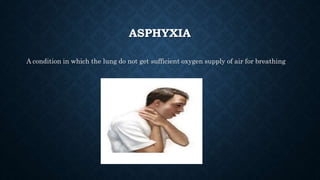
A condition in which the lung do not get sufficient oxygen supply of air for breathing
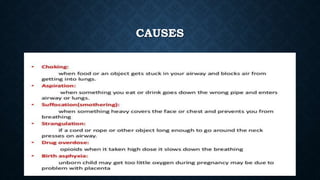
CAUSES
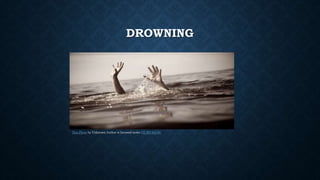
DROWNING
This Photo by Unknown Author is licensed under CC BY-SA-NC
WHAT SHOULD YOU DO WHEN YOU SEE
SOMEONE DROWNING?
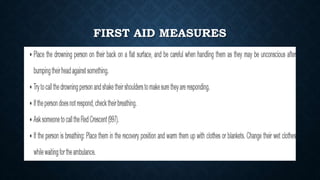
•Get immediate help from those present.
•Make sure that the area is clear for the lifeguard
•Take the drowning person out of the water immediately if they are nearby, but if they are far you
must not swim to them unless you are a skilled lifeguard
FIRST AID MEASURES
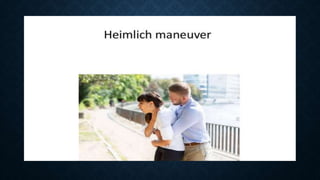
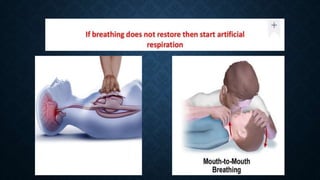
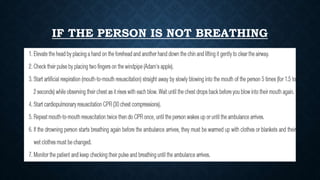
IF THE PERSON IS NOT BREATHING
SHOCK
• Shock is a critical condition brought on by the
sudden drop in blood flow through the body
SIGNS AND SYMPTOMS
• Cool, clammy skin
• Pale or ashen skin
• Bluish tinge to lips or fingernails
• Rapid pulse
• Rapid breathing
• Nausea or vomiting
• Enlarged pupils
• Weakness or fatigue
• Dizziness or fainting
• Changes in mental status or behavior, such as anxiousness or agitation
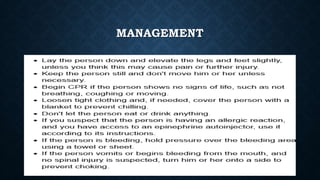
MANAGEMENT
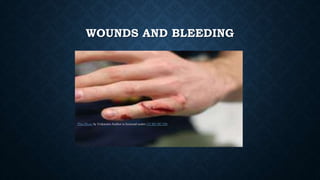
WOUNDS AND BLEEDING
This Photo by Unknown Author is licensed under CC BY-NC-ND
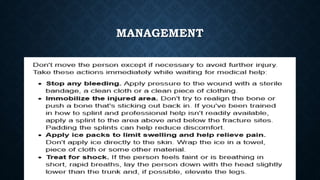
MANAGEMENT
• Remove any clothing or debris on the wound
• Stop the bleeding
• Help the injured person lie down
• Don't remove the gauze or bandage
• Tourniquets
• Immobilize the injured body part as much as possible
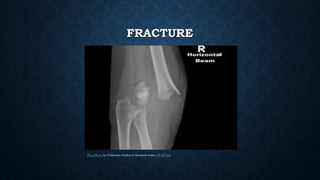
FRACTURE
This Photo by Unknown Author is licensed under CC BY-SA
MANAGEMENT
HANGING
This Photo by Unknown Author is licensed under CC BY
HOW TO RECOGNIZE?
• There may be a constricting article around the neck.
• Marks around the casualty’s neck where a constriction has been removed.
• Uneven breathing, impaired consciousness; grey-blue skin (cyanosis).
• Congestion of the face, with prominent veins and possible; tiny red spots on the face
or on the whites of the eyes.
WHAT TO DO?
1.Immediately remove any constriction from around the casualty’s neck, Support
the body while you do so if it is still hanging
2.Do not move the casualty unnecessarily in case of spinal injury
3.Do not destroy or interfere with any material, such as knotted rope, that police may
need as evidence.
4.Lay the casualty on the floor. Open the airway and check breathing.
5.If she is not breathing be prepared to resuscitate
6.If she is breathing, place her in the recovery position
BURNS
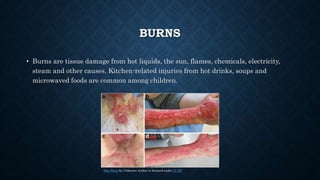
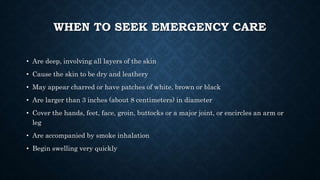
• Burns are tissue damage from hot liquids, the sun, flames, chemicals, electricity,
steam and other causes. Kitchen-related injuries from hot drinks, soups and
microwaved foods are common among children.
This Photo by Unknown Author is licensed under CC BY
WHEN TO SEEK EMERGENCY CARE
• Are deep, involving all layers of the skin
• Cause the skin to be dry and leathery
• May appear charred or have patches of white, brown or black
• Are larger than 3 inches (about 8 centimeters) in diameter
• Cover the hands, feet, face, groin, buttocks or a major joint, or encircles an arm or
leg
• Are accompanied by smoke inhalation
• Begin swelling very quickly
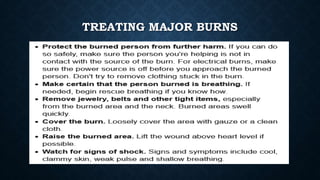
TREATING MAJOR BURNS
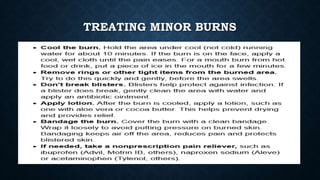
TREATING MINOR BURNS
POISONING
Poisoning is injury or death due to swallowing, inhaling,
touching or injecting various drugs, chemicals, venoms or
gases
WHEN TO SUSPECT POISONING
• Burns or redness around the mouth and lips
• Breath that smells like chemicals, such as gasoline or paint thinner
• Vomiting
• Difficulty breathing
• Drowsiness
• Confusion or other altered mental status
WHEN TO CALL FOR HELP
•Drowsy or unconscious
•Having difficulty breathing or has stopped breathing
•Uncontrollably restless or agitated
•Having seizures
•Known to have taken medications, or any other substance, intentionally or accidentally overdosed
(in these situations the poisoning typically involves larger amounts, often along with alcohol)
WHAT TO DO WHILE WAITING FOR HELP
• Swallowed poison. Remove anything remaining in the person's mouth. If the
suspected poison is a household cleaner or other chemical, read the container's label
and follow instructions for accidental poisoning
• Poison on the skin. Remove any contaminated clothing using gloves. Rinse the skin
for 15 to 20 minutes in a shower or with a hose
• Poison in the eye. Gently flush the eye with cool or lukewarm water for 20 minutes
or until help arrives
CONT..
• Inhaled poison. Get the person into fresh air as soon as possible
• If the person vomits, turn his or her head to the side to prevent choking
• Begin CPR if the person shows no signs of life, such as moving, breathing or
coughing
• Have somebody gather pill bottles, packages or containers with labels, and any other
information about the poison to send along with the ambulance team
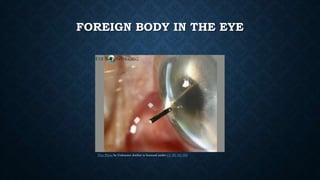
FOREIGN BODY IN THE EYE
This Photo by Unknown Author is licensed under CC BY-NC-ND
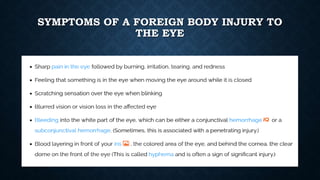
SYMPTOMS OF A FOREIGN BODY INJURY TO
THE EYE
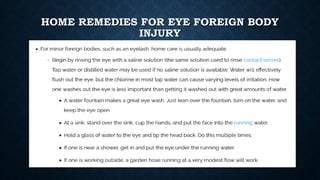
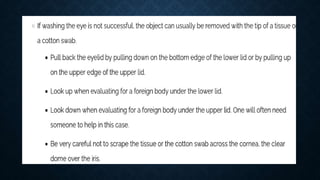
HOME REMEDIES FOR EYE FOREIGN BODY
INJURY
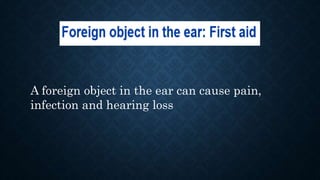
A foreign object in the ear can cause pain,
infection and hearing loss
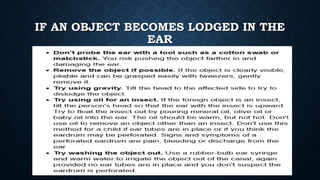
IF AN OBJECT BECOMES LODGED IN THE
EAR
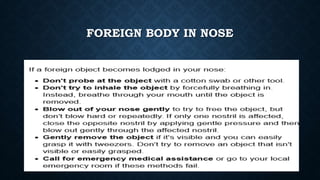
FOREIGN BODY IN NOSE
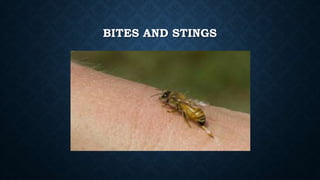
BITES AND STINGS
Most reactions to insect bites and stings are mild,
causing little more than redness, itching, stinging or
minor swelling. Rarely, insect bites and stings, such
as from a bee, a wasp, a hornet, a fire ant or a
scorpion, can result in severe reactions. Some insects
also carry disease, such as West Nile virus.
This Photo by Unknown Author is licensed under CC BY-SA-NC

First aid.pptx

  • 1.
  • 2.
    DEFINITION First aid isthe first and immediate assistance given to any person suffering from either a minor or serious illness or injury, with care provided to preserve life, prevent the condition from worsening, or to promote recovery.
  • 3.
    PHILOSOPHY OF FIRSTAID •Airway •Breathing •Circulation •Bleeding control
  • 4.
    PHYSICAL CONDITIONS THATOFTEN REQUIRE FIRST AID • ASPHYXIA • DROWNING • SHOCK • WOUND AND BLEEDING • BURNS AND SCALDS • INJURIES • FOREIGN BODY • POISONING
  • 5.
    ASPHYXIA A condition inwhich the lung do not get sufficient oxygen supply of air for breathing
  • 6.
  • 10.
    DROWNING This Photo byUnknown Author is licensed under CC BY-SA-NC
  • 11.
    WHAT SHOULD YOUDO WHEN YOU SEE SOMEONE DROWNING? •Get immediate help from those present. •Make sure that the area is clear for the lifeguard •Take the drowning person out of the water immediately if they are nearby, but if they are far you must not swim to them unless you are a skilled lifeguard
  • 12.
  • 13.
    IF THE PERSONIS NOT BREATHING
  • 14.
    SHOCK • Shock isa critical condition brought on by the sudden drop in blood flow through the body
  • 15.
    SIGNS AND SYMPTOMS •Cool, clammy skin • Pale or ashen skin • Bluish tinge to lips or fingernails • Rapid pulse • Rapid breathing • Nausea or vomiting • Enlarged pupils • Weakness or fatigue • Dizziness or fainting • Changes in mental status or behavior, such as anxiousness or agitation
  • 16.
  • 17.
    WOUNDS AND BLEEDING ThisPhoto by Unknown Author is licensed under CC BY-NC-ND
  • 18.
    MANAGEMENT • Remove anyclothing or debris on the wound • Stop the bleeding • Help the injured person lie down • Don't remove the gauze or bandage • Tourniquets • Immobilize the injured body part as much as possible
  • 19.
    FRACTURE This Photo byUnknown Author is licensed under CC BY-SA
  • 20.
  • 21.
    HANGING This Photo byUnknown Author is licensed under CC BY
  • 22.
    HOW TO RECOGNIZE? •There may be a constricting article around the neck. • Marks around the casualty’s neck where a constriction has been removed. • Uneven breathing, impaired consciousness; grey-blue skin (cyanosis). • Congestion of the face, with prominent veins and possible; tiny red spots on the face or on the whites of the eyes.
  • 23.
    WHAT TO DO? 1.Immediatelyremove any constriction from around the casualty’s neck, Support the body while you do so if it is still hanging 2.Do not move the casualty unnecessarily in case of spinal injury 3.Do not destroy or interfere with any material, such as knotted rope, that police may need as evidence. 4.Lay the casualty on the floor. Open the airway and check breathing. 5.If she is not breathing be prepared to resuscitate 6.If she is breathing, place her in the recovery position
  • 24.
    BURNS • Burns aretissue damage from hot liquids, the sun, flames, chemicals, electricity, steam and other causes. Kitchen-related injuries from hot drinks, soups and microwaved foods are common among children. This Photo by Unknown Author is licensed under CC BY
  • 25.
    WHEN TO SEEKEMERGENCY CARE • Are deep, involving all layers of the skin • Cause the skin to be dry and leathery • May appear charred or have patches of white, brown or black • Are larger than 3 inches (about 8 centimeters) in diameter • Cover the hands, feet, face, groin, buttocks or a major joint, or encircles an arm or leg • Are accompanied by smoke inhalation • Begin swelling very quickly
  • 26.
  • 27.
  • 28.
    POISONING Poisoning is injuryor death due to swallowing, inhaling, touching or injecting various drugs, chemicals, venoms or gases
  • 29.
    WHEN TO SUSPECTPOISONING • Burns or redness around the mouth and lips • Breath that smells like chemicals, such as gasoline or paint thinner • Vomiting • Difficulty breathing • Drowsiness • Confusion or other altered mental status
  • 30.
    WHEN TO CALLFOR HELP •Drowsy or unconscious •Having difficulty breathing or has stopped breathing •Uncontrollably restless or agitated •Having seizures •Known to have taken medications, or any other substance, intentionally or accidentally overdosed (in these situations the poisoning typically involves larger amounts, often along with alcohol)
  • 31.
    WHAT TO DOWHILE WAITING FOR HELP • Swallowed poison. Remove anything remaining in the person's mouth. If the suspected poison is a household cleaner or other chemical, read the container's label and follow instructions for accidental poisoning • Poison on the skin. Remove any contaminated clothing using gloves. Rinse the skin for 15 to 20 minutes in a shower or with a hose • Poison in the eye. Gently flush the eye with cool or lukewarm water for 20 minutes or until help arrives
  • 32.
    CONT.. • Inhaled poison.Get the person into fresh air as soon as possible • If the person vomits, turn his or her head to the side to prevent choking • Begin CPR if the person shows no signs of life, such as moving, breathing or coughing • Have somebody gather pill bottles, packages or containers with labels, and any other information about the poison to send along with the ambulance team
  • 33.
    FOREIGN BODY INTHE EYE This Photo by Unknown Author is licensed under CC BY-NC-ND
  • 34.
    SYMPTOMS OF AFOREIGN BODY INJURY TO THE EYE
  • 35.
    HOME REMEDIES FOREYE FOREIGN BODY INJURY
  • 39.
    A foreign objectin the ear can cause pain, infection and hearing loss
  • 40.
    IF AN OBJECTBECOMES LODGED IN THE EAR
  • 41.
  • 42.
  • 43.
    Most reactions toinsect bites and stings are mild, causing little more than redness, itching, stinging or minor swelling. Rarely, insect bites and stings, such as from a bee, a wasp, a hornet, a fire ant or a scorpion, can result in severe reactions. Some insects also carry disease, such as West Nile virus.
  • 50.
    This Photo byUnknown Author is licensed under CC BY-SA-NC