IMPLEMENTING APPLICATION OF IT IN
DIFFERENT FIELDS OF MANAGEMENT


                    Presented by:
                           Kiran Burakoti
INTRODUCTION
 IT has captured each and every sphere of modern
  world. Be it be in the field of education ,or
  banking or any other to name.
 Management and business is also using
  computers and internet technology but they are
  still not utilizing Information technology at its
  best.
 There are many opportunities in this field if
  properly exploited.
 But many challenges are also associated in
  implementing IT in business and management.
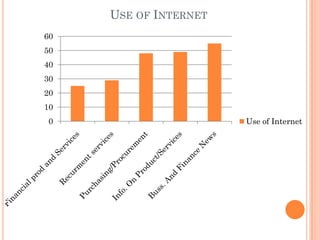
USE OF INTERNET
60
50
40
30
20
10
0                      Use of Internet
OPPORTUNITIES


 The Information systems play a vital role in
  decision making and thus in the growth of any
  organization.
 It supports faster
  communication, coordination, control and
  visualization.
 It helps in reducing the high costs, expanding
  business globally, standardizing business
  processes and supporting new strategies for the
  growth.
                                           (contd.)
 Use of ERP in organizations has increased
  maintenance cost, operational cost but has
  contributed in Business process improvement and
  increased responsiveness.
 The performance at managerial level is also
  improved.
 Provision of multi function environment and
  availability of facilities 24 x7.
 Provision of security.
IT IN THE FIELD OF MARKETING AND
PRODUCTION
   Reduced production cost and shorter product life
    cycle.

   Market risk is reduced as information is
    instantly available .

   Information of latest trends helps in making
    marketing strategies.
IT IN THE FIELD OF FINANCIAL
MANAGEMENT
   The use of IT has enabled the business world to
    manage, collect and organize its data in a better
    and easy way.

   Graphical interface has enabled better use of
    charts and graphs.

   Use of Data Warehouse and Data Mining.
IT IN THE FIELD OF HRM

 E -HRM is an application of IT which enables
  better communication between employee and
  employers.
 IT is changing the way HR department handle
  record keeping and information sharing.
 Payroll Management , managing employee
  personal data, recruitment, training, strategic
  orientation is much more convenient now.
 Managing workforce with right portfolio of skills
  and knowledge.
CHALLENGES
 If IT provides benefits then there are certain
  challenges also it has to face
 Technical complexities.

 Server down

 Program crash

 Wire glitch

 Hardware problem, software problem network
  problem .
 Users’ reluctance to move towards new
  technologies.
 Installation cost.
ERP(ENTERPRISE RESOURCE PLANNING)

    The ERP system, a business information system
    that considers all facets of a business, provides
    an integrated presentation that is needed to
    educate future managers. It also creates an
    active-learning environment that uses modern
    technology. The integration also simulates real
    employment and addresses educational concerns
    ERP systems are packaged software applications
    that connect and manage information flows
    within and across complex organizations,allowing
    managers to make decisions based on
    information that truly reflects the current state
    of their business.
SAP (SYSTEM APPLICATION AND
PRODUCTS IN DATA PROCESSING)

   SAP is one of the leading vendors of integrated
    information systems. It provides integrated
    information from accounting to
    manufacturing, and from sales to service.
    Whenever data is entered in one functional area
    for one particular transaction, this data is
    automatically reflected in all the related
    functional areas. The SAP system supports and
    integrates thousands of business processes. The
    core system uses a single database. SAP is
    module based and supports multiple languages
    and currencies.
 Introducing two new terms.
 Techno-friendly- its time for people to get techno
  friendly and explore the world of IT to get
  solution to their problem and also to be more
  efficient and to enhance their performance
 E-Management – all the task of management
  should turn electronic so that management
  becomes E-Management.
CONCLUSION
 The future of business organizations lies in these
  two technologies (SAP and ERP).
 People have to be techno friendly and accept the
  new technologies
 The risk associated with the technologies are
  very less as compared to the benefits they
  provide.
 It’s the need of time to switch over to new
  technologies for better performance and better
  management. i.e switch to E- management.
Thank You

Final presentation

  • 1.
    IMPLEMENTING APPLICATION OFIT IN DIFFERENT FIELDS OF MANAGEMENT Presented by: Kiran Burakoti
  • 2.
    INTRODUCTION  IT hascaptured each and every sphere of modern world. Be it be in the field of education ,or banking or any other to name.  Management and business is also using computers and internet technology but they are still not utilizing Information technology at its best.  There are many opportunities in this field if properly exploited.  But many challenges are also associated in implementing IT in business and management.
  • 3.
  • 4.
    OPPORTUNITIES  The Informationsystems play a vital role in decision making and thus in the growth of any organization.  It supports faster communication, coordination, control and visualization.  It helps in reducing the high costs, expanding business globally, standardizing business processes and supporting new strategies for the growth. (contd.)
  • 5.
     Use ofERP in organizations has increased maintenance cost, operational cost but has contributed in Business process improvement and increased responsiveness.  The performance at managerial level is also improved.  Provision of multi function environment and availability of facilities 24 x7.  Provision of security.
  • 6.
    IT IN THEFIELD OF MARKETING AND PRODUCTION  Reduced production cost and shorter product life cycle.  Market risk is reduced as information is instantly available .  Information of latest trends helps in making marketing strategies.
  • 7.
    IT IN THEFIELD OF FINANCIAL MANAGEMENT  The use of IT has enabled the business world to manage, collect and organize its data in a better and easy way.  Graphical interface has enabled better use of charts and graphs.  Use of Data Warehouse and Data Mining.
  • 8.
    IT IN THEFIELD OF HRM  E -HRM is an application of IT which enables better communication between employee and employers.  IT is changing the way HR department handle record keeping and information sharing.  Payroll Management , managing employee personal data, recruitment, training, strategic orientation is much more convenient now.  Managing workforce with right portfolio of skills and knowledge.
  • 9.
    CHALLENGES  If ITprovides benefits then there are certain challenges also it has to face  Technical complexities.  Server down  Program crash  Wire glitch  Hardware problem, software problem network problem .  Users’ reluctance to move towards new technologies.  Installation cost.
  • 10.
    ERP(ENTERPRISE RESOURCE PLANNING)  The ERP system, a business information system that considers all facets of a business, provides an integrated presentation that is needed to educate future managers. It also creates an active-learning environment that uses modern technology. The integration also simulates real employment and addresses educational concerns ERP systems are packaged software applications that connect and manage information flows within and across complex organizations,allowing managers to make decisions based on information that truly reflects the current state of their business.
  • 11.
    SAP (SYSTEM APPLICATIONAND PRODUCTS IN DATA PROCESSING)  SAP is one of the leading vendors of integrated information systems. It provides integrated information from accounting to manufacturing, and from sales to service. Whenever data is entered in one functional area for one particular transaction, this data is automatically reflected in all the related functional areas. The SAP system supports and integrates thousands of business processes. The core system uses a single database. SAP is module based and supports multiple languages and currencies.
  • 12.
     Introducing twonew terms.  Techno-friendly- its time for people to get techno friendly and explore the world of IT to get solution to their problem and also to be more efficient and to enhance their performance  E-Management – all the task of management should turn electronic so that management becomes E-Management.
  • 13.
    CONCLUSION  The futureof business organizations lies in these two technologies (SAP and ERP).  People have to be techno friendly and accept the new technologies  The risk associated with the technologies are very less as compared to the benefits they provide.  It’s the need of time to switch over to new technologies for better performance and better management. i.e switch to E- management.
  • 14.