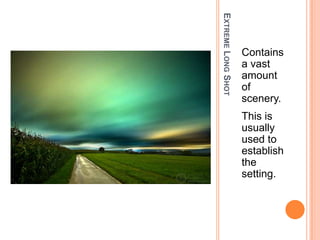
EXTREME LONG SHOT
                    Contains
                    a vast
                    amount
                    of
                    scenery.
                    This is
                    usually
                    used to
                    establish
                    the
                    setting.
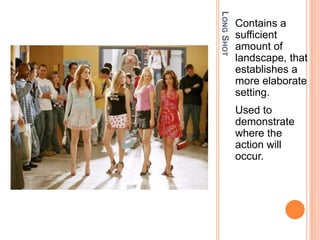
LONG SHOT
            Contains a
            sufficient
            amount of
            landscape, that
            establishes a
            more elaborate
            setting.
            Used to
            demonstrate
            where the
            action will
            occur.
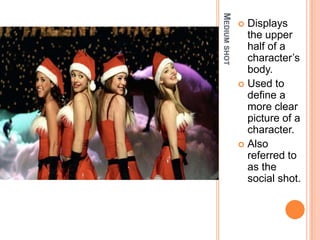
MEDIUM SHOT
               Displays
                the upper
                half of a
                character’s
                body.
               Used to
                define a
                more clear
                picture of a
                character.
               Also
                referred to
                as the
                social shot.
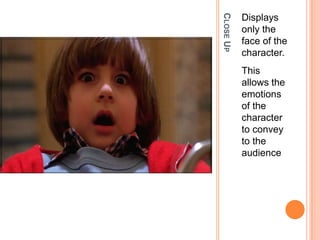
CLOSE UP
           Displays
           only the
           face of the
           character.
           This
           allows the
           emotions
           of the
           character
           to convey
           to the
           audience
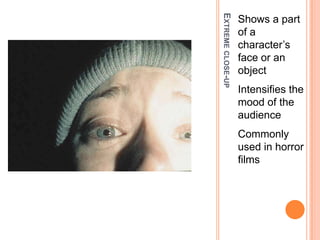
EXTREME CLOSE-UP
                   Shows a part
                   of a
                   character’s
                   face or an
                   object
                   Intensifies the
                   mood of the
                   audience
                   Commonly
                   used in horror
                   films
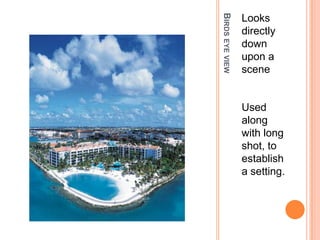
BIRDS EYE VIEW
                 Looks
                 directly
                 down
                 upon a
                 scene


                 Used
                 along
                 with long
                 shot, to
                 establish
                 a setting.
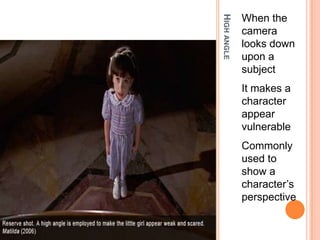
HIGH ANGLE
             When the
             camera
             looks down
             upon a
             subject
             It makes a
             character
             appear
             vulnerable
             Commonly
             used to
             show a
             character’s
             perspective
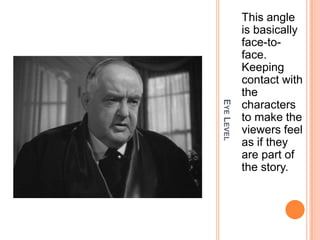
This angle
            is basically
            face-to-
            face.
            Keeping
            contact with
            the


EYE LEVEL
            characters
            to make the
            viewers feel
            as if they
            are part of
            the story.
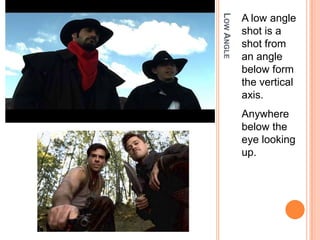
LOW ANGLE
            A low angle
            shot is a
            shot from
            an angle
            below form
            the vertical
            axis.
            Anywhere
            below the
            eye looking
            up.
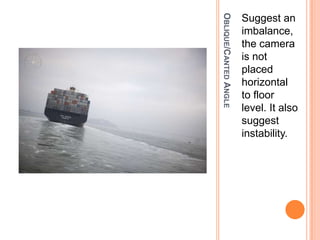
OBLIQUE/CANTED ANGLE
                       Suggest an
                       imbalance,
                       the camera
                       is not
                       placed
                       horizontal
                       to floor
                       level. It also
                       suggest
                       instability.
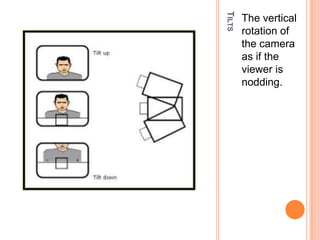
TILTS
        The vertical
        rotation of
        the camera
        as if the
        viewer is
        nodding.
Final cinematography notes

Final cinematography notes

  • 2.
    EXTREME LONG SHOT Contains a vast amount of scenery. This is usually used to establish the setting.
  • 3.
    LONG SHOT Contains a sufficient amount of landscape, that establishes a more elaborate setting. Used to demonstrate where the action will occur.
  • 4.
    MEDIUM SHOT  Displays the upper half of a character’s body.  Used to define a more clear picture of a character.  Also referred to as the social shot.
  • 5.
    CLOSE UP Displays only the face of the character. This allows the emotions of the character to convey to the audience
  • 6.
    EXTREME CLOSE-UP Shows a part of a character’s face or an object Intensifies the mood of the audience Commonly used in horror films
  • 7.
    BIRDS EYE VIEW Looks directly down upon a scene Used along with long shot, to establish a setting.
  • 8.
    HIGH ANGLE When the camera looks down upon a subject It makes a character appear vulnerable Commonly used to show a character’s perspective
  • 9.
    This angle is basically face-to- face. Keeping contact with the EYE LEVEL characters to make the viewers feel as if they are part of the story.
  • 10.
    LOW ANGLE A low angle shot is a shot from an angle below form the vertical axis. Anywhere below the eye looking up.
  • 11.
    OBLIQUE/CANTED ANGLE Suggest an imbalance, the camera is not placed horizontal to floor level. It also suggest instability.
  • 14.
    TILTS The vertical rotation of the camera as if the viewer is nodding.