
Facebook  &  MySpace Understanding the Issues
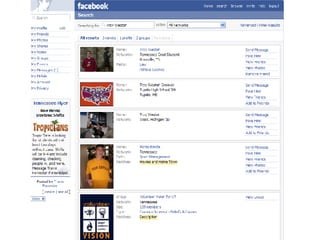
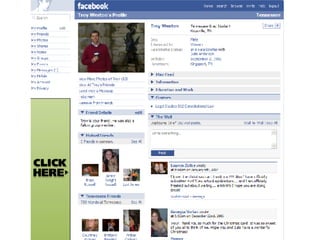
What is Facebook & MySpace? Social networking websites providing interactive: Blogs User profiles Groups Photos Internal email capability
MySpace Started as a home to various bands trying to attract attention.  Now many celebrities and musicians have pages. Purchased by Rupert Murdoch for $580 million. Anyone over 14 may register for an account. You do not need an account to browse profiles.
MySpace – What is the big deal? MySpace has  95 million  registered users.  500,000 new members are registering each day.  78% are over 18 years of age. MySpace is the world’s 4 th  most popular English language website and the 8 th  most popular in the world.
Facebook Founded by three Harvard students in 2004 as a replacement for the traditional “facebook.” Initially, facebook required an .edu email address.  Recently, it expanded to other organizations.
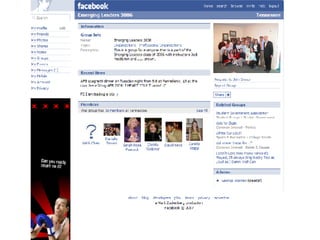
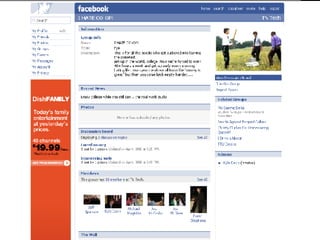
Facebook Users can create profiles and upload pictures. Users can search for “friends” by favorite music, residence, high school, etc. Users can create groups for others to join. Requires an account to access.
Facebook – What’s the big deal? Facebook is the 7 th  most visited site on the internet. Approximately 85% of students at supported colleges have accounts. 60% of students log onto their account daily.


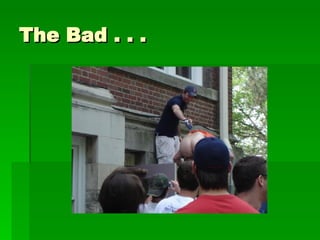
The Bad . . .
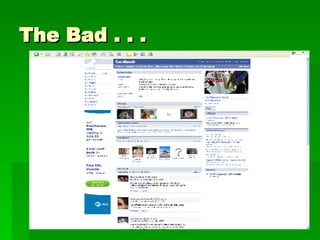
The Bad . . .
The Bad . . .
What can we do? First Amendment Issues Three cases form the basis of review when evaluating student speech. There is no direct law involving facebook & myspace, but these cases have been used to evaluate personal websites.
What can we do? Tinker v. Des Moines Independent Community School District Schools may regulate speech: When the speech “materially & substantially interferes with the requirements of appropriate discipline in the operation of the school.” “unqualified fear of disruption” does not meet the material interference standard.
What can we do? Tinker con’d: May regulate speech that interferes with “the rights of other students to be secure and left alone.” Bethel School District v. Fraser: Schools may prohibit offensive language that undermines the “basic educational mission” of the school at school events.
What can we do? Hazelwood v. Kuhlmeir: Schools may regulate student sponsored publications as long as the regulations relate to “legitimate pedagogical concerns.” Problems with  Tinker, Bethel, & Hazelwood.
What can we do? J.S. v. Bethlehem Area School District Court found that school district has not violated student’s 1 st  Amendment rights when they expelled him for creating a website called “Teacher Sux.”  The website contained threats against the teacher, a picture of the teacher with “her head cut off, blood dripping from her neck, and her face morphing into Hitler’s face.”
What can we do? Evaluate content of site Use issues as a “teachable moment.”
What should we do? Do we have a duty to review Facebook/MySpace accounts? What if we want to review Facebook/MySpace accounts? Do we need to inform students that we may view their account?
Questions/Comments Angi Smith Director, Office of Student Judicial Affairs University of Tennessee 409 Student Services Building Knoxville, TN  37996 865.974.3171 [email_address]
Disclaimer: This presentation is informational only and is not meant to serve as legal advice.  Please contact your General Counsel or Attorney for legal advice.

FacebookandMySpace

  • 1.
    Facebook & MySpace Understanding the Issues
  • 2.
    What is Facebook& MySpace? Social networking websites providing interactive: Blogs User profiles Groups Photos Internal email capability
  • 3.
    MySpace Started asa home to various bands trying to attract attention. Now many celebrities and musicians have pages. Purchased by Rupert Murdoch for $580 million. Anyone over 14 may register for an account. You do not need an account to browse profiles.
  • 4.
    MySpace – Whatis the big deal? MySpace has 95 million registered users. 500,000 new members are registering each day. 78% are over 18 years of age. MySpace is the world’s 4 th most popular English language website and the 8 th most popular in the world.
  • 5.
    Facebook Founded bythree Harvard students in 2004 as a replacement for the traditional “facebook.” Initially, facebook required an .edu email address. Recently, it expanded to other organizations.
  • 6.
    Facebook Users cancreate profiles and upload pictures. Users can search for “friends” by favorite music, residence, high school, etc. Users can create groups for others to join. Requires an account to access.
  • 7.
    Facebook – What’sthe big deal? Facebook is the 7 th most visited site on the internet. Approximately 85% of students at supported colleges have accounts. 60% of students log onto their account daily.
  • 8.
  • 9.
  • 10.
  • 11.
  • 12.
  • 13.
  • 14.
  • 15.
    What can wedo? First Amendment Issues Three cases form the basis of review when evaluating student speech. There is no direct law involving facebook & myspace, but these cases have been used to evaluate personal websites.
  • 16.
    What can wedo? Tinker v. Des Moines Independent Community School District Schools may regulate speech: When the speech “materially & substantially interferes with the requirements of appropriate discipline in the operation of the school.” “unqualified fear of disruption” does not meet the material interference standard.
  • 17.
    What can wedo? Tinker con’d: May regulate speech that interferes with “the rights of other students to be secure and left alone.” Bethel School District v. Fraser: Schools may prohibit offensive language that undermines the “basic educational mission” of the school at school events.
  • 18.
    What can wedo? Hazelwood v. Kuhlmeir: Schools may regulate student sponsored publications as long as the regulations relate to “legitimate pedagogical concerns.” Problems with Tinker, Bethel, & Hazelwood.
  • 19.
    What can wedo? J.S. v. Bethlehem Area School District Court found that school district has not violated student’s 1 st Amendment rights when they expelled him for creating a website called “Teacher Sux.” The website contained threats against the teacher, a picture of the teacher with “her head cut off, blood dripping from her neck, and her face morphing into Hitler’s face.”
  • 20.
    What can wedo? Evaluate content of site Use issues as a “teachable moment.”
  • 21.
    What should wedo? Do we have a duty to review Facebook/MySpace accounts? What if we want to review Facebook/MySpace accounts? Do we need to inform students that we may view their account?
  • 22.
    Questions/Comments Angi SmithDirector, Office of Student Judicial Affairs University of Tennessee 409 Student Services Building Knoxville, TN 37996 865.974.3171 [email_address]
  • 23.
    Disclaimer: This presentationis informational only and is not meant to serve as legal advice. Please contact your General Counsel or Attorney for legal advice.