Exploring Physical Properties of
Dry Sand, Wet Sand, and Sand
Play-dough through Play and
Tool Use
Alexandra Lee
May 19, 2011
Beginnings…
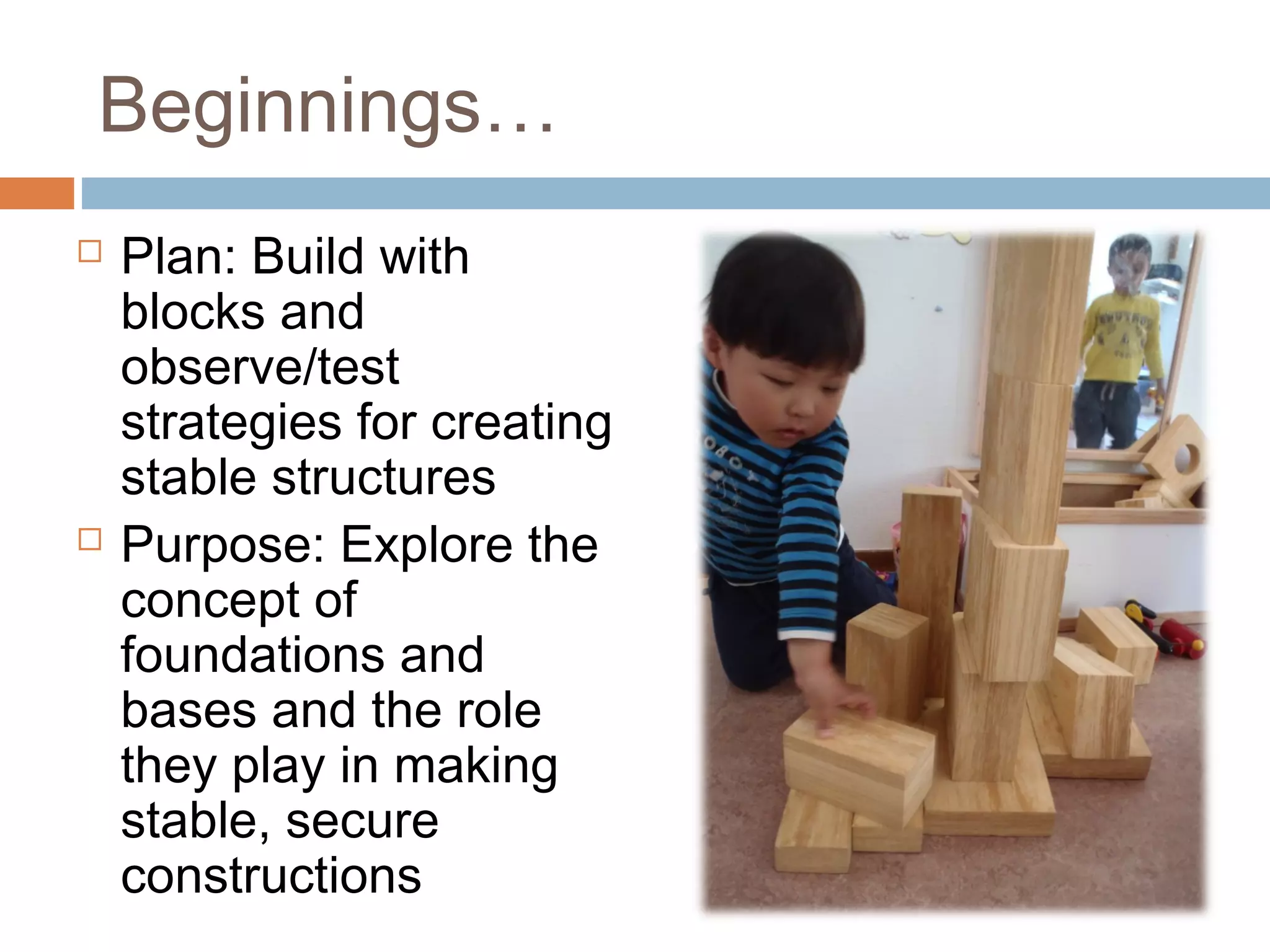
 Plan: Build with
blocks and
observe/test
strategies for creating
stable structures
 Purpose: Explore the
concept of
foundations and
bases and the role
they play in making
stable, secure
constructions
…Later that Day
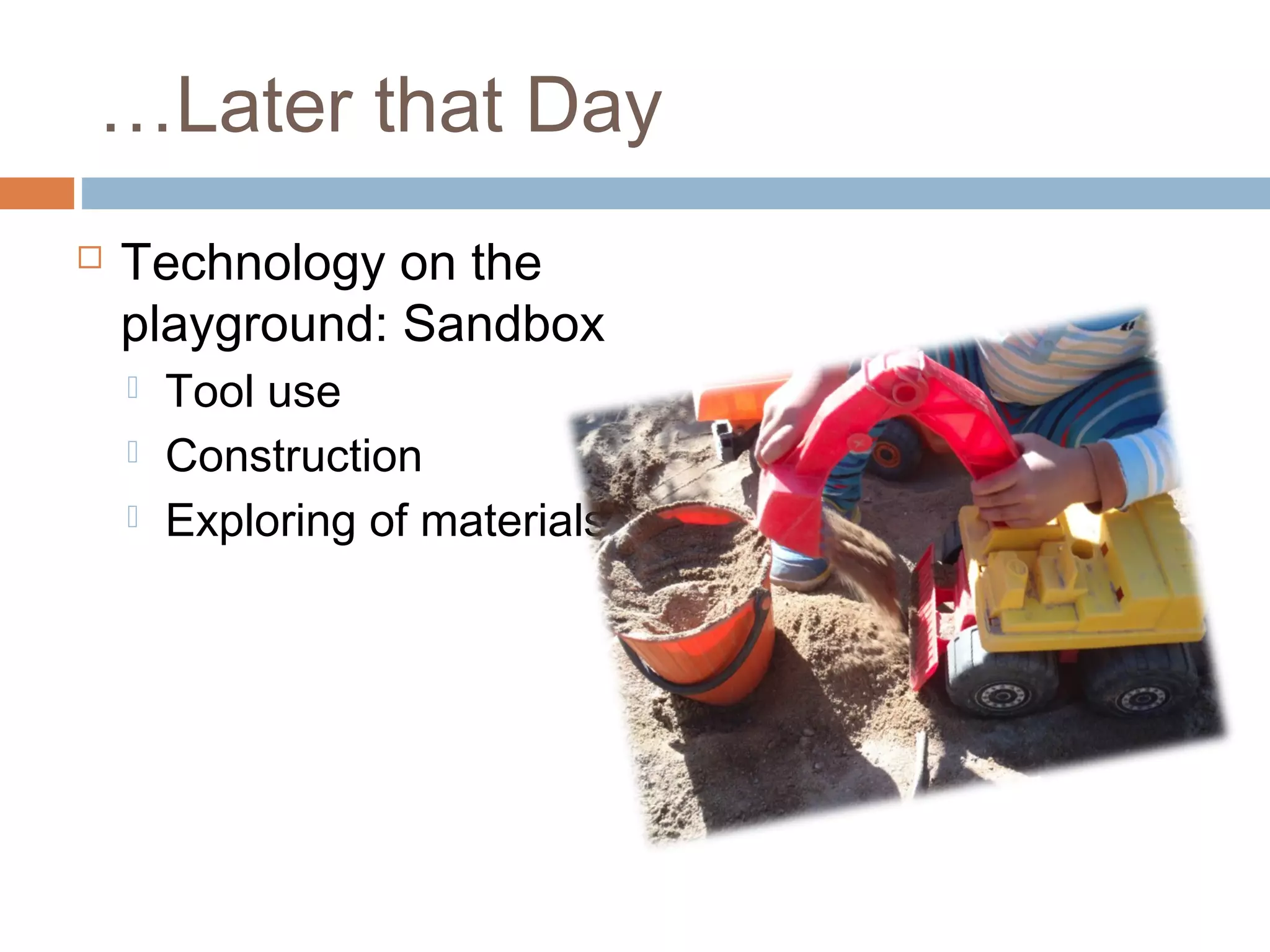
 Technology on the
playground: Sandbox
 Tool use
 Construction
 Exploring of materials
Redirection
 New Plan:
 Explore construction techniques and purpose/use of
tools through a variation of the same material (dry
sand, wet sand, sand play-dough, oobleck)
 Observe similarities and differences in the way
children approach the differing materials and how it
influences their construction strategies, the way they
utilize tools, and in which ways they explore the
material
 Learning outcomes:
 Discover and explore the properties of varied
materials
 How to adapt and expand schemas and strategies to
effectively and satisfactorily work with a new material
Dry Sand
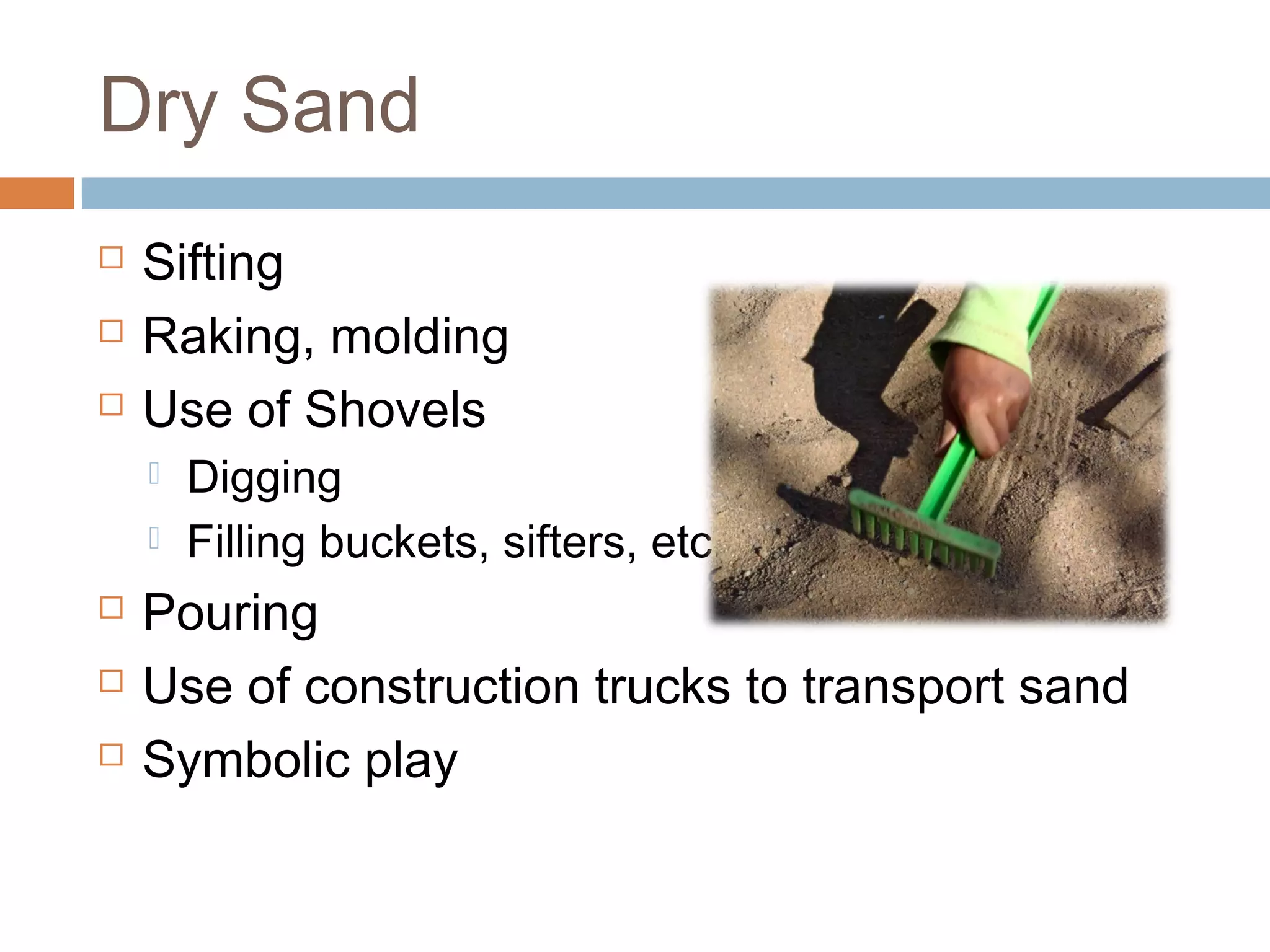
 Sifting
 Raking, molding
 Use of Shovels
 Digging
 Filling buckets, sifters, etc.
 Pouring
 Use of construction trucks to transport sand
 Symbolic play
Water and Sand
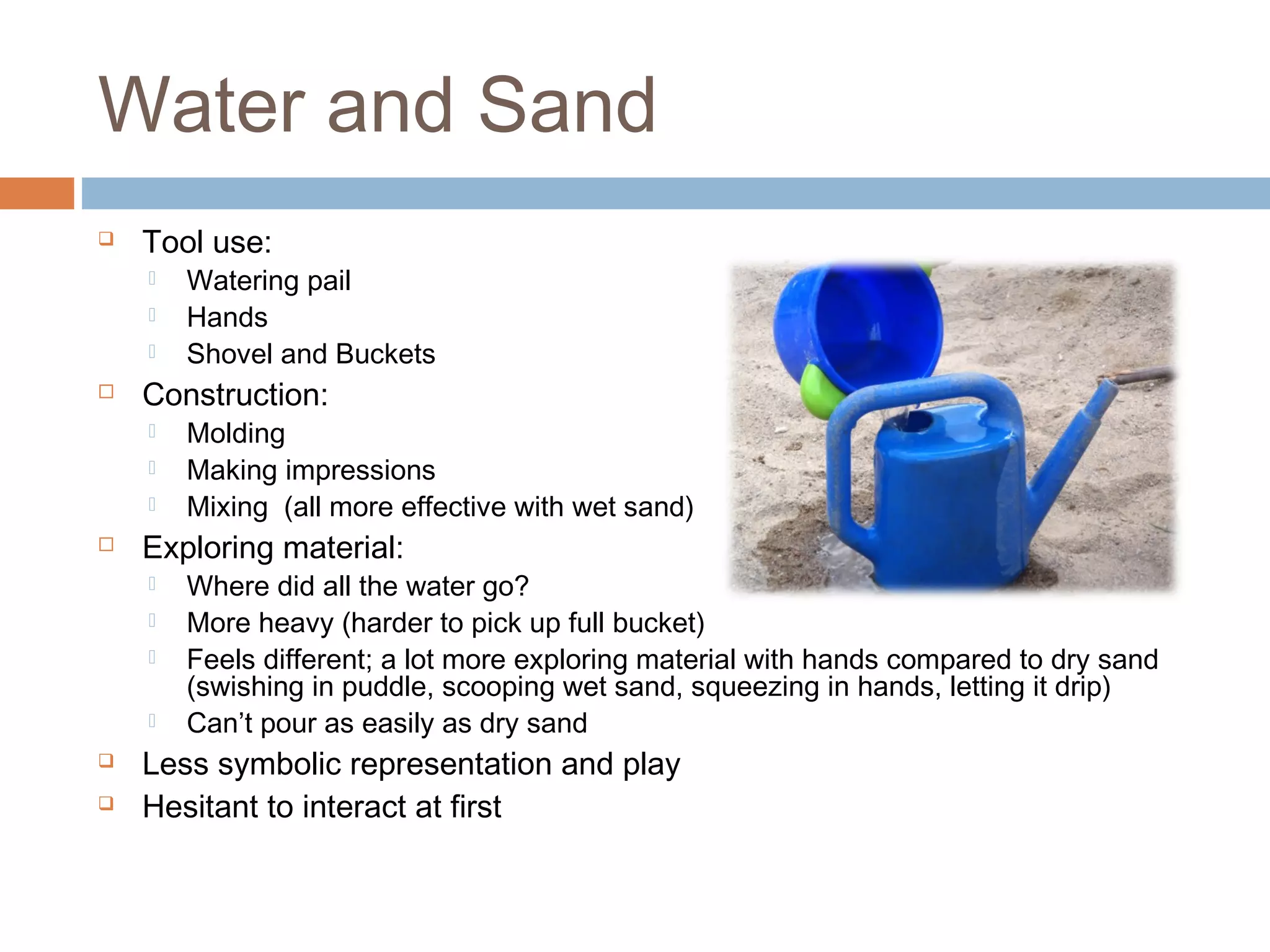
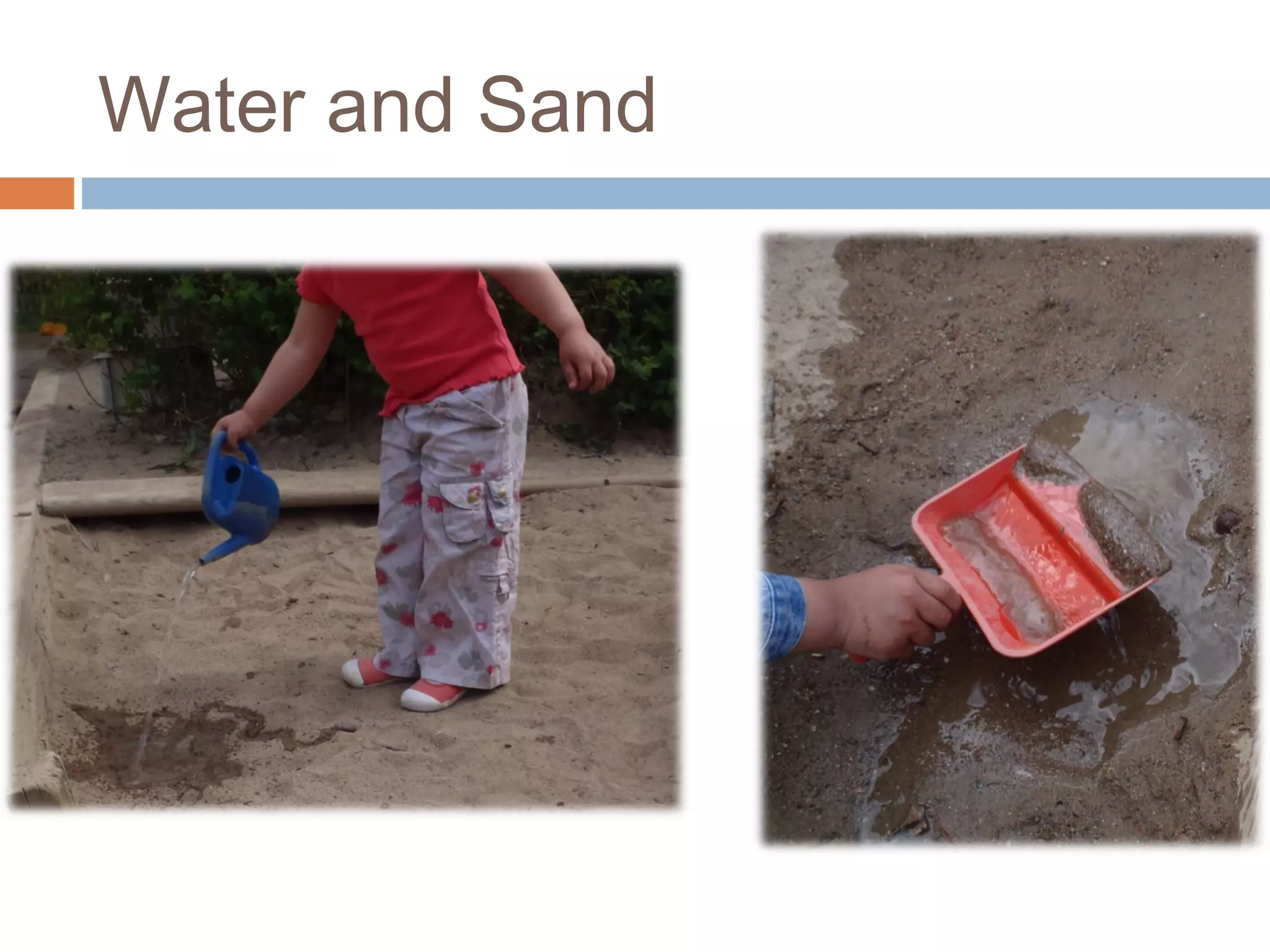
 Tool use:
 Watering pail
 Hands
 Shovel and Buckets
 Construction:
 Molding
 Making impressions
 Mixing (all more effective with wet sand)
 Exploring material:
 Where did all the water go?
 More heavy (harder to pick up full bucket)
 Feels different; a lot more exploring material with hands compared to dry sand
(swishing in puddle, scooping wet sand, squeezing in hands, letting it drip)
 Can’t pour as easily as dry sand
 Less symbolic representation and play
 Hesitant to interact at first
Water and Sand
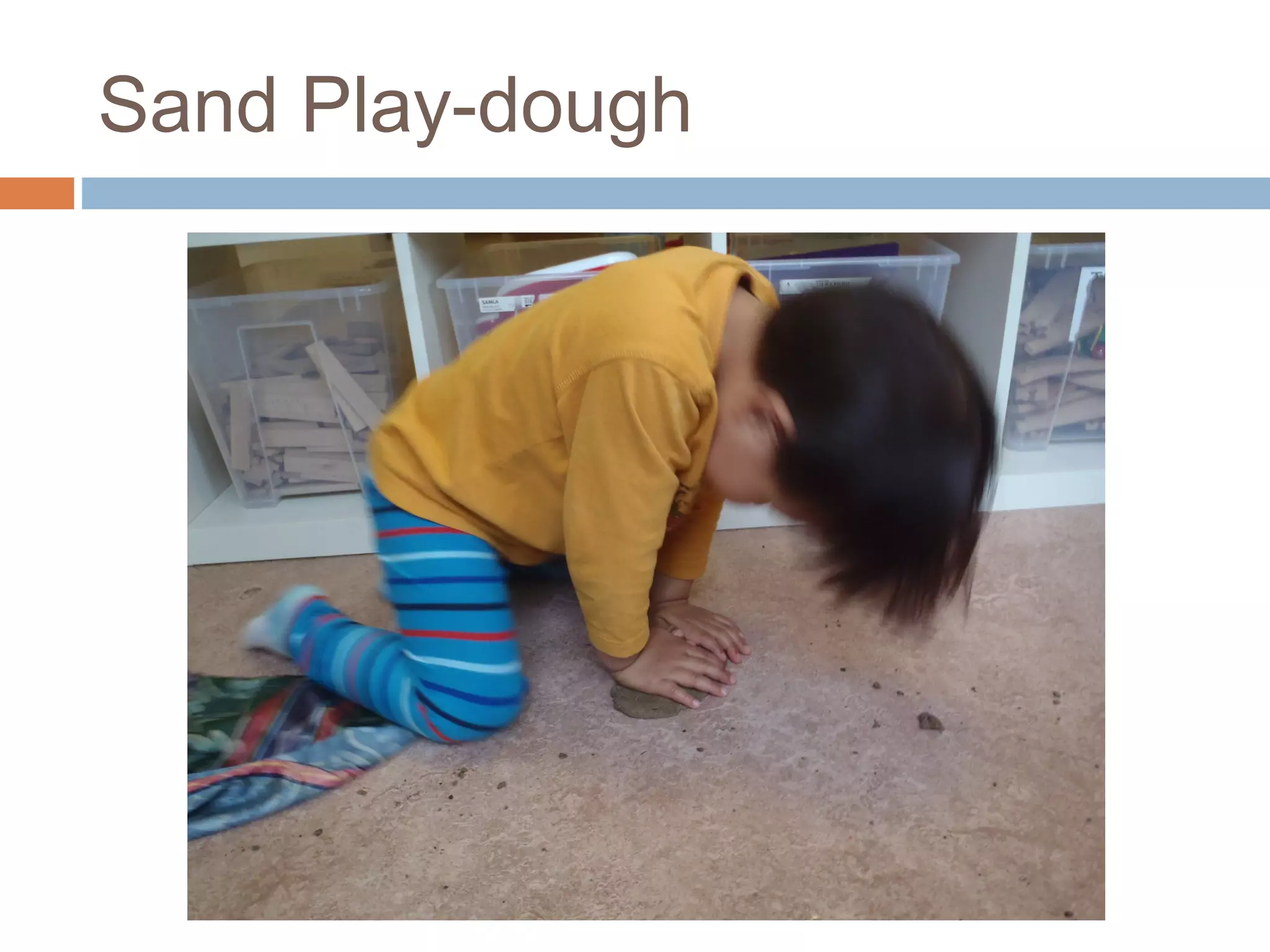
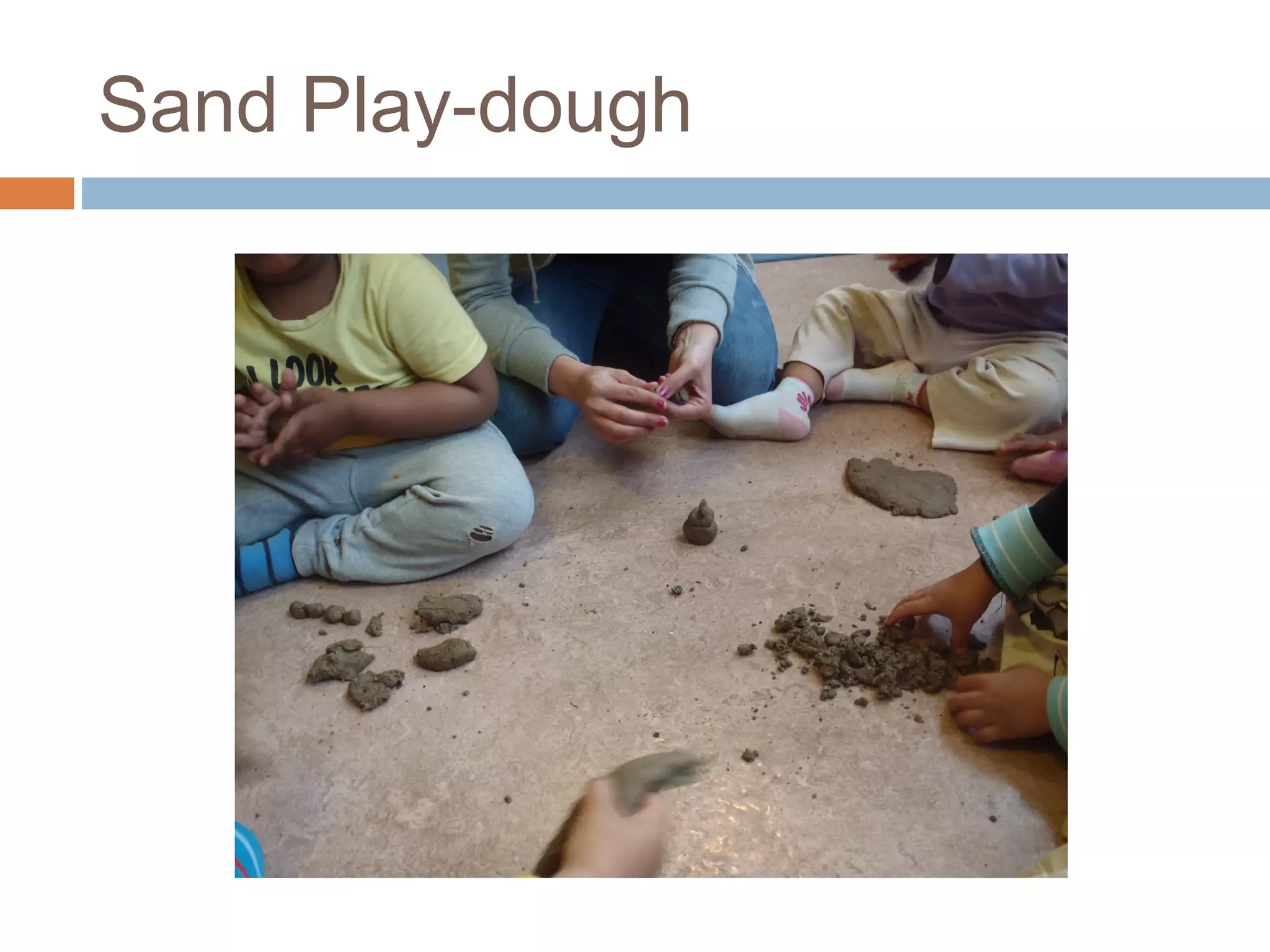
Sand Play-dough
 Construction:
 Similar to play-dough (rolling balls/snakes, pancakes)
 Tools:
 Hands
 Exploring material:
 Rolling
 Squeezing in hands
 Flattening
 Crumbling in fingers
 Symbolic representation
Sand Play-dough
Sand Play-dough
Self-Initiation
 A rainy day on the playground…
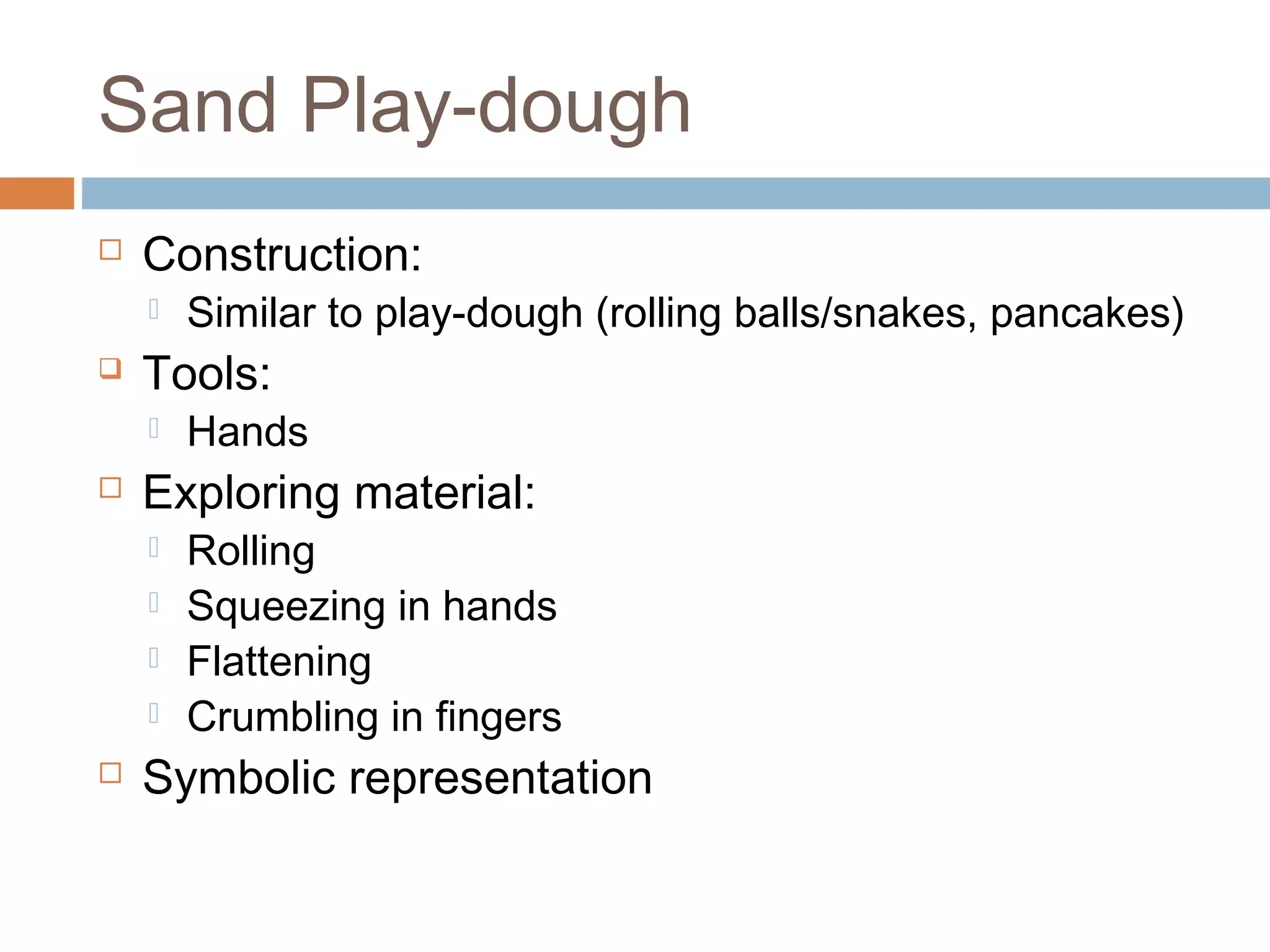
 Filling up buckets using shovels, with water from
puddles
 Little symbolic representation
 Transporting filled buckets to sandbox
 In the sandbox:
 Symbolic play (unlike first interaction with sand
and water)
 Wet sand becomes incorporated with dry sand
 Wet sand for molding, dry sand for pouring etc.
 Combining varying amounts of water and sand to
create a variety of textures
Observations
 More explorative with unfamiliar materials
 More purposeful, higher level of symbolic
representation with familiar materials
 Discovered new strategies/purposes to initiate
and utilize in future situations
 Using wet sand for molding
 Using dry sand for pouring or transport
Next Steps…
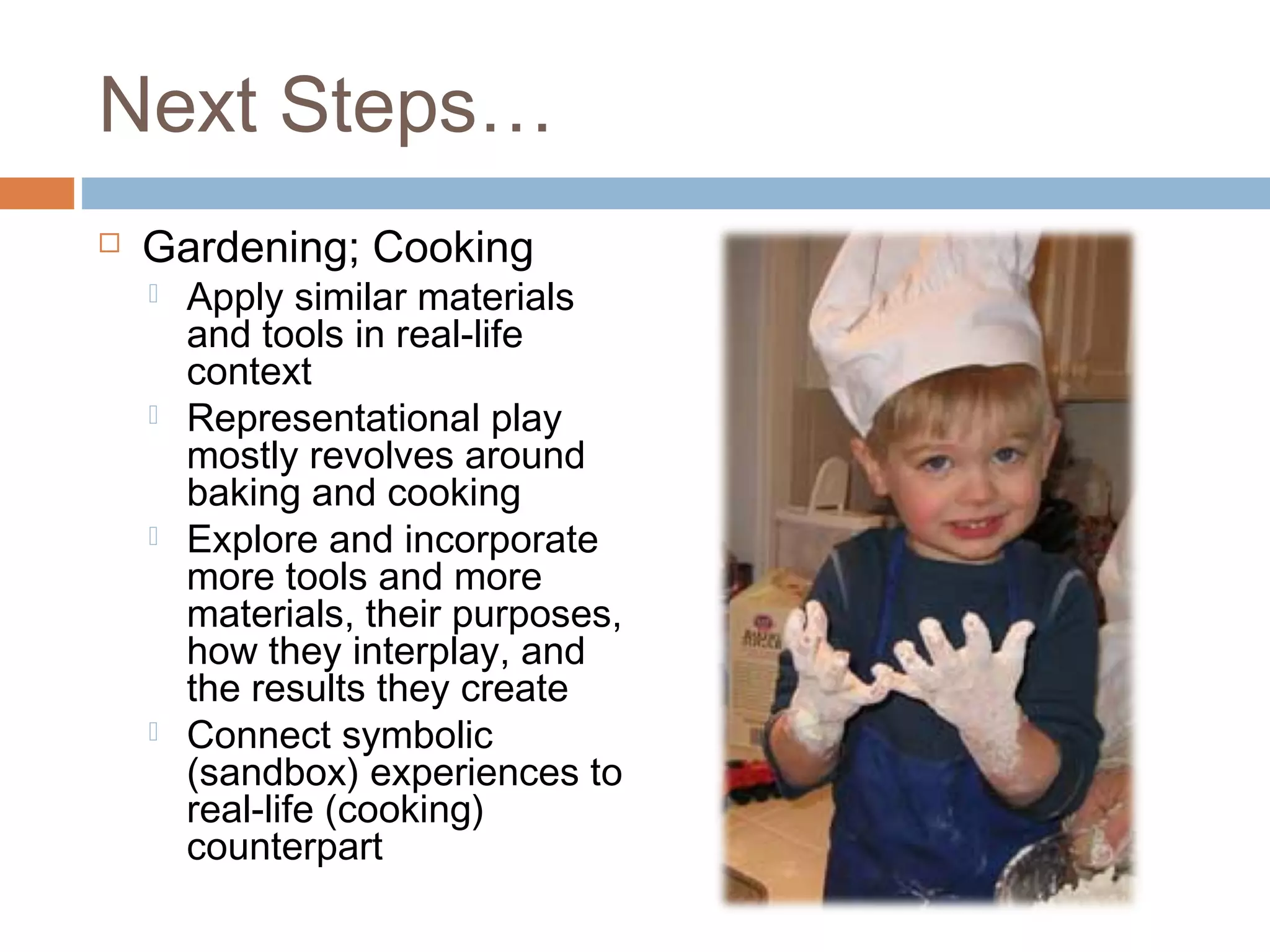
 Gardening; Cooking
 Apply similar materials
and tools in real-life
context
 Representational play
mostly revolves around
baking and cooking
 Explore and incorporate
more tools and more
materials, their purposes,
how they interplay, and
the results they create
 Connect symbolic
(sandbox) experiences to
real-life (cooking)
counterpart

Exploring physical properties of Sand through Play and Tool Use

  • 1.
    Exploring Physical Propertiesof Dry Sand, Wet Sand, and Sand Play-dough through Play and Tool Use Alexandra Lee May 19, 2011
  • 2.
    Beginnings…  Plan: Buildwith blocks and observe/test strategies for creating stable structures  Purpose: Explore the concept of foundations and bases and the role they play in making stable, secure constructions
  • 3.
    …Later that Day Technology on the playground: Sandbox  Tool use  Construction  Exploring of materials
  • 4.
    Redirection  New Plan: Explore construction techniques and purpose/use of tools through a variation of the same material (dry sand, wet sand, sand play-dough, oobleck)  Observe similarities and differences in the way children approach the differing materials and how it influences their construction strategies, the way they utilize tools, and in which ways they explore the material  Learning outcomes:  Discover and explore the properties of varied materials  How to adapt and expand schemas and strategies to effectively and satisfactorily work with a new material
  • 5.
    Dry Sand  Sifting Raking, molding  Use of Shovels  Digging  Filling buckets, sifters, etc.  Pouring  Use of construction trucks to transport sand  Symbolic play
  • 6.
    Water and Sand Tool use:  Watering pail  Hands  Shovel and Buckets  Construction:  Molding  Making impressions  Mixing (all more effective with wet sand)  Exploring material:  Where did all the water go?  More heavy (harder to pick up full bucket)  Feels different; a lot more exploring material with hands compared to dry sand (swishing in puddle, scooping wet sand, squeezing in hands, letting it drip)  Can’t pour as easily as dry sand  Less symbolic representation and play  Hesitant to interact at first
  • 7.
  • 8.
    Sand Play-dough  Construction: Similar to play-dough (rolling balls/snakes, pancakes)  Tools:  Hands  Exploring material:  Rolling  Squeezing in hands  Flattening  Crumbling in fingers  Symbolic representation
  • 9.
  • 10.
  • 11.
    Self-Initiation  A rainyday on the playground…  Filling up buckets using shovels, with water from puddles  Little symbolic representation  Transporting filled buckets to sandbox  In the sandbox:  Symbolic play (unlike first interaction with sand and water)  Wet sand becomes incorporated with dry sand  Wet sand for molding, dry sand for pouring etc.  Combining varying amounts of water and sand to create a variety of textures
  • 12.
    Observations  More explorativewith unfamiliar materials  More purposeful, higher level of symbolic representation with familiar materials  Discovered new strategies/purposes to initiate and utilize in future situations  Using wet sand for molding  Using dry sand for pouring or transport
  • 13.
    Next Steps…  Gardening;Cooking  Apply similar materials and tools in real-life context  Representational play mostly revolves around baking and cooking  Explore and incorporate more tools and more materials, their purposes, how they interplay, and the results they create  Connect symbolic (sandbox) experiences to real-life (cooking) counterpart