Experimental Study of the Effects of Tilt, Shading, and Temperature 
on Photovoltaic Panel Performance 
Presented to the 
University of California, San Diego 
Department of Mechanical and Aerospace Engineering 
MAE 126A 
Date: 2/6/2014 
Prepared by: 
Section A08 (Friday 1-4pm) 
Akash Gupta, Alex Lin, Colin Moynihan, Mei Tsuruta
2 
Abstract 
Solar energy is one of the most popular and sustainable forms of alternative energy in the 
modern age. This experiment explores the effect of various environmental factors on the power 
output of two photovoltaic solar panels. The experiments test the effects of power output and 
panel efficiency with respect to tilt angle, shading, and temperature. The maximum power output 
of 9.96 W was found to occur when the tilt angle is 60°. This was found by testing the response 
of the solar panels at various angles. This occurs at the point of maximum irradiance, which 
correlates to a higher output. The effect of shading was observed by covering the photovoltaic 
panels horizontally and vertically with a completely opaque material. Horizontal shading has a 
larger effect than vertical shading on the PV panels due to the wiring of the panel. Finally, 
temperature was observed to decrease the electrical conversion efficiency of the panel as 
temperature increased.
3 
Table of Contents 
Abstract ……………………………………………………...……….………………………….. 2 
List of Figures ……………………………………………….....……………………………....... 4 
Introduction …………………………………………………….....……………………………... 5 
Theory …………………………………………………………………………………………… 6 
Experimental Procedure …………………………………...…………………………………….. 8 
Results ………………………………………………………………………………………..… 11 
Discussion (with Error Analysis) …………………………………...………………………….. 20 
Conclusion ……………………………………………………………………………………... 23 
References …………………………………………...…………………………………………. 24 
Appendix ……………………………………………….………………………………………. 25
4 
List of Figures 
Figure 1. Solar Angles 
Figure 2. Effect of Temperature on I-V Curve 
Figure 3. Schematics of Solar Panel I-V Measurement System 
Figure 4. Connection Diagram for Solar Operational Interface 
Figure 5. Panel Shading Coordinates 
Figure 6. I-V curves for Kyocera and UniSolar Panels at 0º and 30º 
Figure 7. Isc vs Panel Angle of Tilt 
Figure 8. Voc vs Panel Angle of Tilt 
Figure 9. Least Squares Fit of Vmpp vs Irradiance 
Figure 10. Least Squares Fit of Pmpp vs Irradiance 
Figure 11. Output Power vs Voltage for Vertical Shading of UniSolar Panel 
Figure 12. Output Power vs Voltage for Horizontal Shading of UniSolar Panel 
Figure 13. Ratio of Shaded/Unshaded Pmpp vs Ratio of Shaded Area/Total Panel Area 
Figure 14. Conversion Efficiency vs Ratio of Shaded Area/Total Panel Area 
Figure 15. Pmpp vs Panel Temperature 
Figure 16. Electrical Conversion Efficiency vs Panel Temperature 
Figure 17. Vmpp vs Panel Temperature 
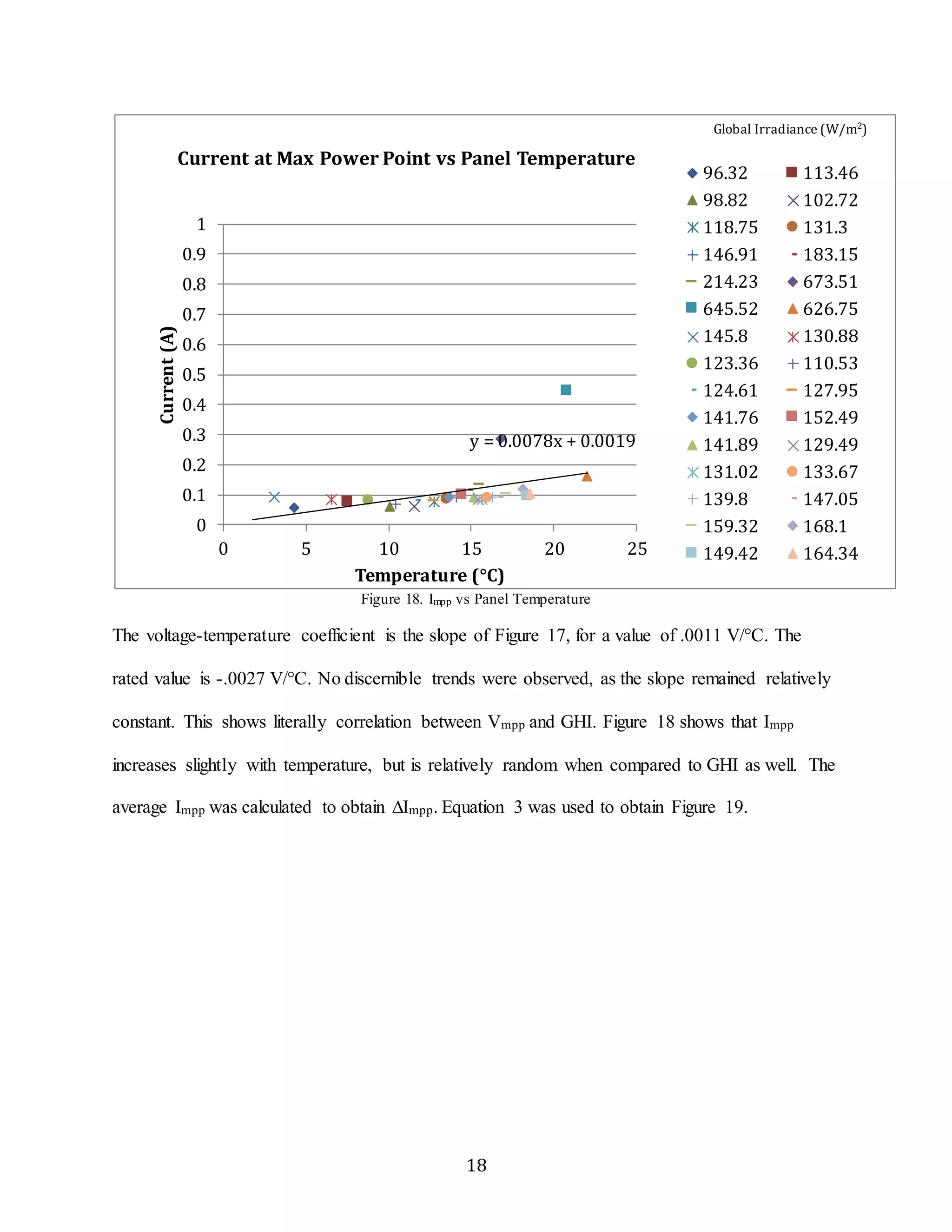
Figure 18. Impp vs Panel Temperature 
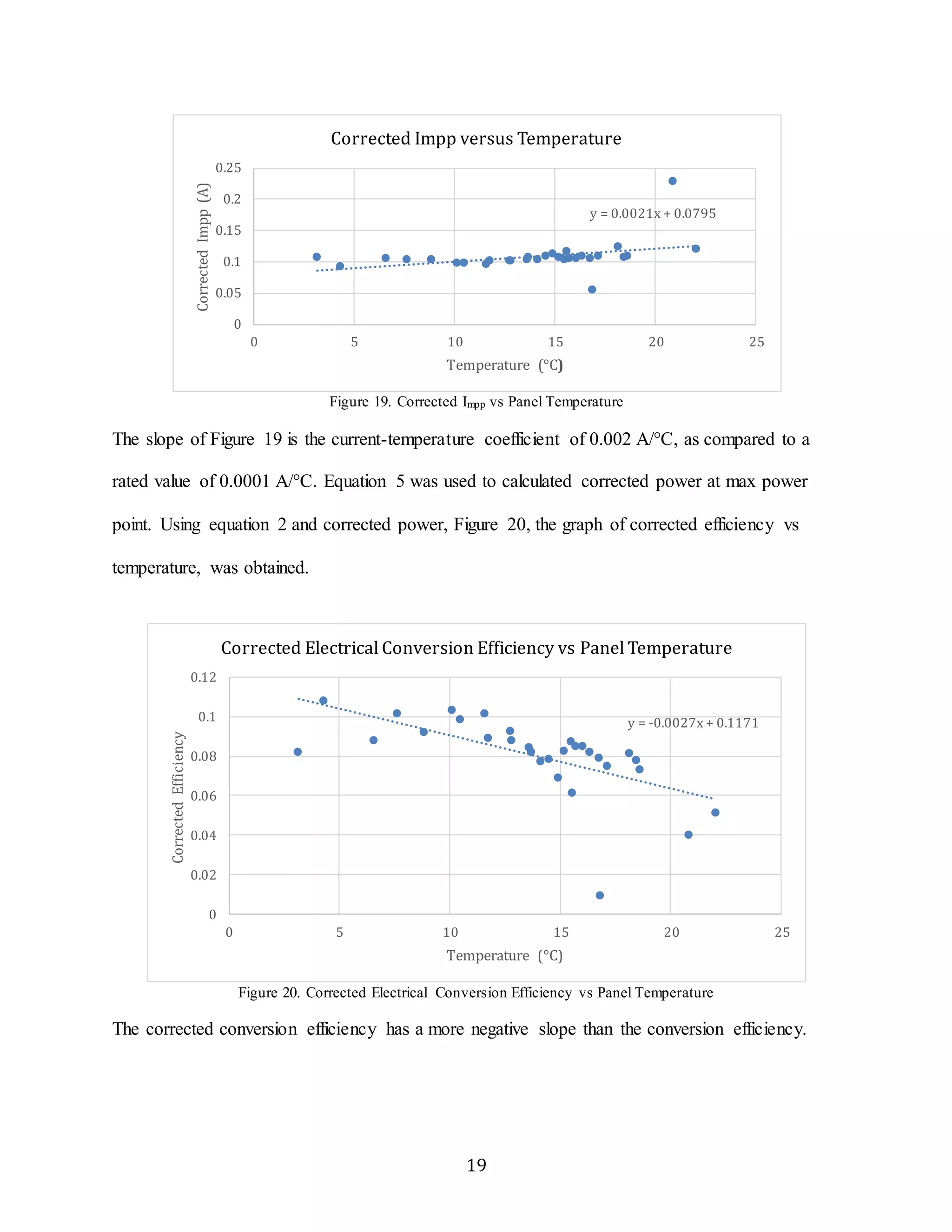
Figure 19. Corrected Impp vs Panel Temperature 
Figure 20. Corrected Electrical Conversion Efficiency vs Panel Temperature
5 
Introduction 
Devices powered by solar cells are expected to operate under maximum power. To 
accomplish this, maximum power point trackers have been used to find a point at which cells 
generate maximum power as a product of current and voltage regarding a particular value of 
resistance. Specifically, the performance of solar cells is determined by several external factors 
such as the angle of incidence of incoming light, shading of the panel, and changes in solar cell 
temperature. In this experiment, an EKO MP-170 PV Module & Array Tester is utilized to 
compare the performance of two different PV panels as well as investigate the effect of panel tilt, 
shading, and cooling on panel performance. Additionally, the reduction in panel power output 
and efficiency as a function of shaded panel area and temperature will be measured.
6 
Theory 
A solar inverter is a vital component of a photovoltaic system that uses maximum power 
point tracking (MPPT) to get the maximum possible power from a PV panel. Solar cells have a 
complex relationship between solar irradiance, temperature, and total resistance that produces an 
output efficiency represented by the I-V curve. The purpose of the MPPT system is to sample the 
output of the cells and determine a load to obtain maximum power for variable environmental 
conditions. 
The equation for electrical power is related to current and voltage by the equation 
P = IV (1) 
where I is the current through and V is the voltage. 
The short circuit current (Isc) is defined as the current through the solar cell when the voltage 
across the solar cell is zero, as if the load on the PV panel had zero resistance, and is therefore 
the maximum current from a panel. The open circuit voltage (Voc) is defined as the voltage drop 
across the circuit when no current flows through the circuit, as if the load on the PV panel had 
infinite resistance, and is therefore the maximum voltage available from a solar cell. 
The conversion efficiency of a PV panel, , describes the percentage of solar radiation incident 
on the panel that is converted to electrical energy. The conversion efficiency is usually listed for 
the maximum power point, and can be calculate using the following equation 
(2) 
where Pmpp is the power at the maximum power point on the I-V curve, GHI is the incident 
irradiance in the same plane as the surface of the PV panel, and A is the panel surface area. The 
global horizontal irradiance, GHI, is the sum of direct and diffuse irradiance, and can be 
measured using a pyranometer. Direct irradiance describes solar radiation traveling on a straight
line from the sun to the surface of the panel, while diffuse irradiance describes sunlight that has 
been scattered by particles in the atmosphere and comes into contact with the panel. 
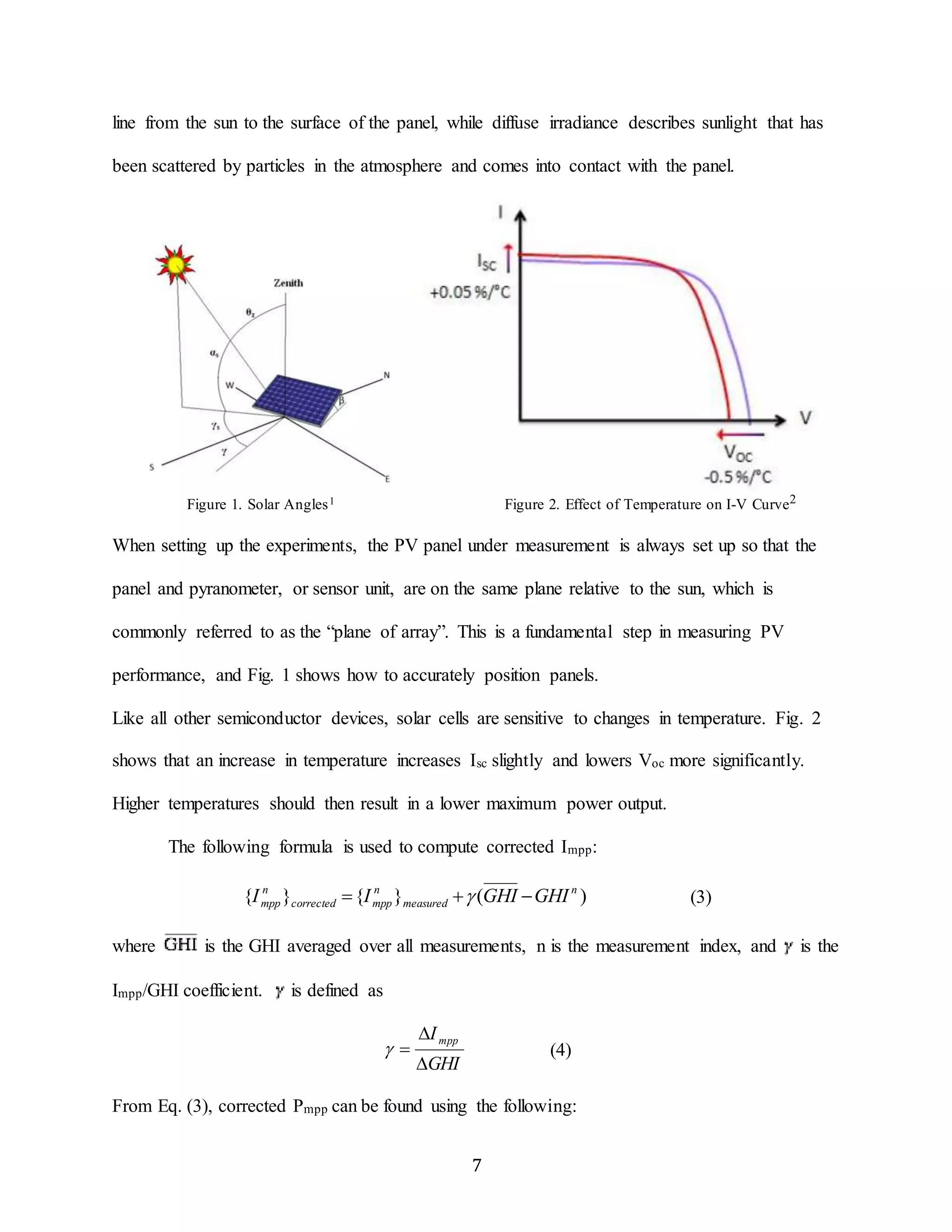
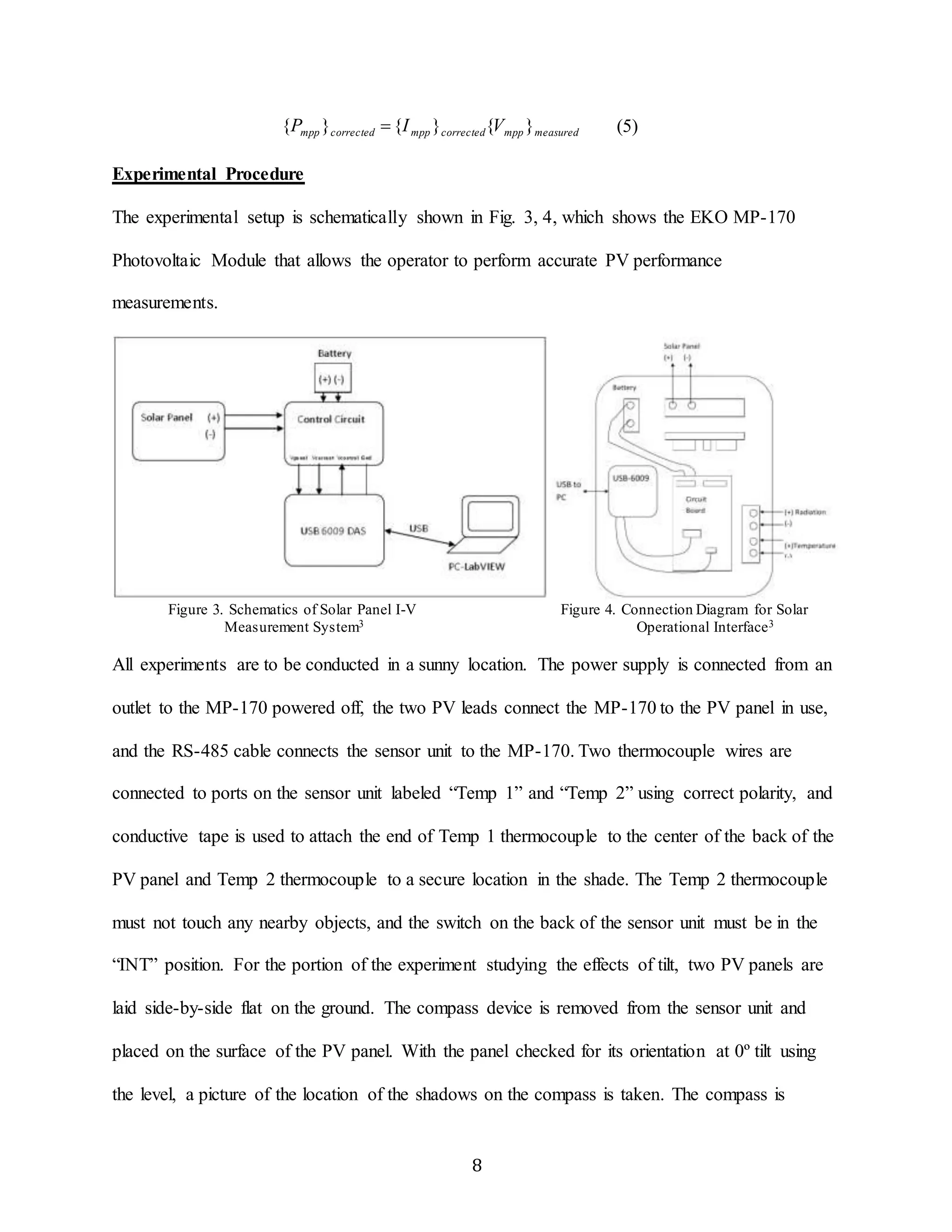
Figure 1. Solar Angles1 Figure 2. Effect of Temperature on I-V Curve2 
When setting up the experiments, the PV panel under measurement is always set up so that the 
panel and pyranometer, or sensor unit, are on the same plane relative to the sun, which is 
commonly referred to as the “plane of array”. This is a fundamental step in measuring PV 
performance, and Fig. 1 shows how to accurately position panels. 
Like all other semiconductor devices, solar cells are sensitive to changes in temperature. Fig. 2 
shows that an increase in temperature increases Isc slightly and lowers Voc more significantly. 
Higher temperatures should then result in a lower maximum power output. 
The following formula is used to compute corrected Impp: 
{ } { } ( ) n 
n 
mpp I  I  GHI GHI (3) 
  (4) 
7 
measured 
n 
corrected mpp 
where is the GHI averaged over all measurements, n is the measurement index, and is the 
Impp/GHI coefficient. is defined as 
 
I mpp 
 
GHI 
From Eq. (3), corrected Pmpp can be found using the following:
mpp corrected mpp corrected mpp measured {P }  {I } {V } (5) 
8 
Experimental Procedure 
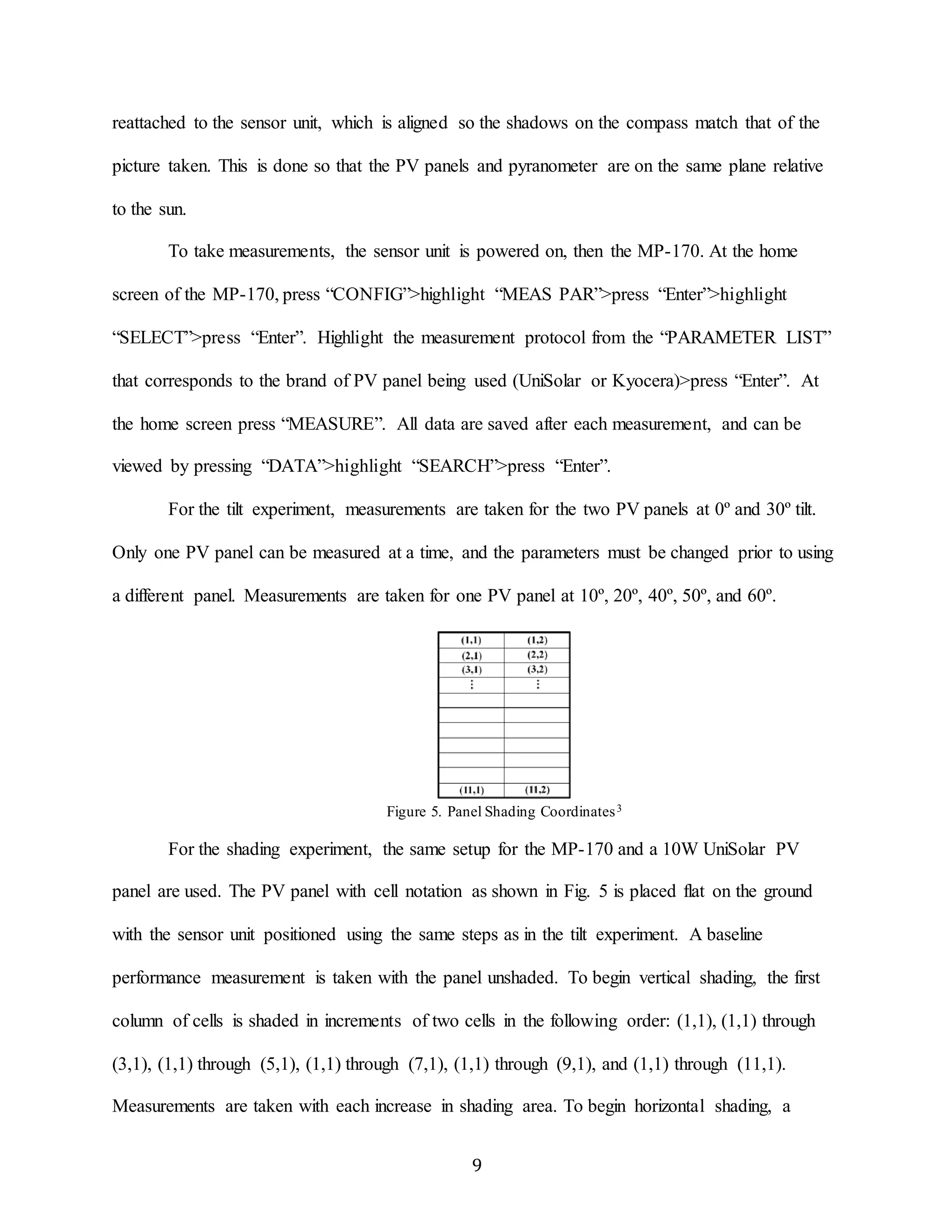
The experimental setup is schematically shown in Fig. 3, 4, which shows the EKO MP-170 
Photovoltaic Module that allows the operator to perform accurate PV performance 
measurements. 
Figure 3. Schematics of Solar Panel I-V Figure 4. Connection Diagram for Solar 
Measurement System3 Operational Interface3 
All experiments are to be conducted in a sunny location. The power supply is connected from an 
outlet to the MP-170 powered off, the two PV leads connect the MP-170 to the PV panel in use, 
and the RS-485 cable connects the sensor unit to the MP-170. Two thermocouple wires are 
connected to ports on the sensor unit labeled “Temp 1” and “Temp 2” using correct polarity, and 
conductive tape is used to attach the end of Temp 1 thermocouple to the center of the back of the 
PV panel and Temp 2 thermocouple to a secure location in the shade. The Temp 2 thermocouple 
must not touch any nearby objects, and the switch on the back of the sensor unit must be in the 
“INT” position. For the portion of the experiment studying the effects of tilt, two PV panels are 
laid side-by-side flat on the ground. The compass device is removed from the sensor unit and 
placed on the surface of the PV panel. With the panel checked for its orientation at 0º tilt using 
the level, a picture of the location of the shadows on the compass is taken. The compass is
reattached to the sensor unit, which is aligned so the shadows on the compass match that of the 
picture taken. This is done so that the PV panels and pyranometer are on the same plane relative 
9 
to the sun. 
To take measurements, the sensor unit is powered on, then the MP-170. At the home 
screen of the MP-170, press “CONFIG”>highlight “MEAS PAR”>press “Enter”>highlight 
“SELECT”>press “Enter”. Highlight the measurement protocol from the “PARAMETER LIST” 
that corresponds to the brand of PV panel being used (UniSolar or Kyocera)>press “Enter”. At 
the home screen press “MEASURE”. All data are saved after each measurement, and can be 
viewed by pressing “DATA”>highlight “SEARCH”>press “Enter”. 
For the tilt experiment, measurements are taken for the two PV panels at 0º and 30º tilt. 
Only one PV panel can be measured at a time, and the parameters must be changed prior to using 
a different panel. Measurements are taken for one PV panel at 10º, 20º, 40º, 50º, and 60º. 
Figure 5. Panel Shading Coordinates 3 
For the shading experiment, the same setup for the MP-170 and a 10W UniSolar PV 
panel are used. The PV panel with cell notation as shown in Fig. 5 is placed flat on the ground 
with the sensor unit positioned using the same steps as in the tilt experiment. A baseline 
performance measurement is taken with the panel unshaded. To begin vertical shading, the first 
column of cells is shaded in increments of two cells in the following order: (1,1), (1,1) through 
(3,1), (1,1) through (5,1), (1,1) through (7,1), (1,1) through (9,1), and (1,1) through (11,1). 
Measurements are taken with each increase in shading area. To begin horizontal shading, a
completely opaque material covers the cells in the following order: Row 1, Rows 1 through 2, 
Rows 1 through 3, Rows 1 through 4, and Rows 1 through 5. Measurements are taken with each 
10 
increase in shading area. 
For the temperature experiment, the same setup for the MP-170 and 10W UniSolar PV 
panel are used. One measurement is taken to ensure everything is set up correctly. A plastic bag 
is filled with enough ice to cover the entire surface area of the PV panel and placed on the panel 
to allow it to cool for 10-15 minutes. The bag is removed and measurements are taken with the 
MP-170. Measurements are taken as frequently as possible until the panel reaches a steady state 
temperature. Once the panel has reached steady state, 5-10 minutes must pass before repeating 
the process with the ice bag and measurements. There should be two complete sets of 
measurements. 
To download the collected data, access a computer that has the MP-170 Control Program 
and USB-COM drivers installed. Connect the MP-170 to the computer using the USB-MiniUSB 
cable and turn on the MP-170 if not already powered on. Open the “MP-170 Control Program” 
(Start>All Programs> EKO). On the “Measure” tab click “General”. Check that the correct COM 
port is selected and the “Data Folder” and “Converted Data Folder” fields show the correct path 
for saved files. Click “Ok”. On the “Measure” tab click “Load Data”. All data are saved on the 
computer as MDF files, which must be converted. This is done by going to the “Save” tab and 
checking that the directory in the field “File Name” is the same as the location of the MDF files. 
Select all data records needed by confirming that the “Date” fields shows the same date and time 
as the filename of the MDF files and click “Convert”. This generates a CSV file that can be read 
using MATLAB or MS Excel.
I-V Curves 
Short-Circuit Current vs Tilt Angle 
11 
Experimental Results 
Week 1: Effects of Tilt on PV Panel Performance 
0.8 
0.6 
0.4 
0.2 
0 
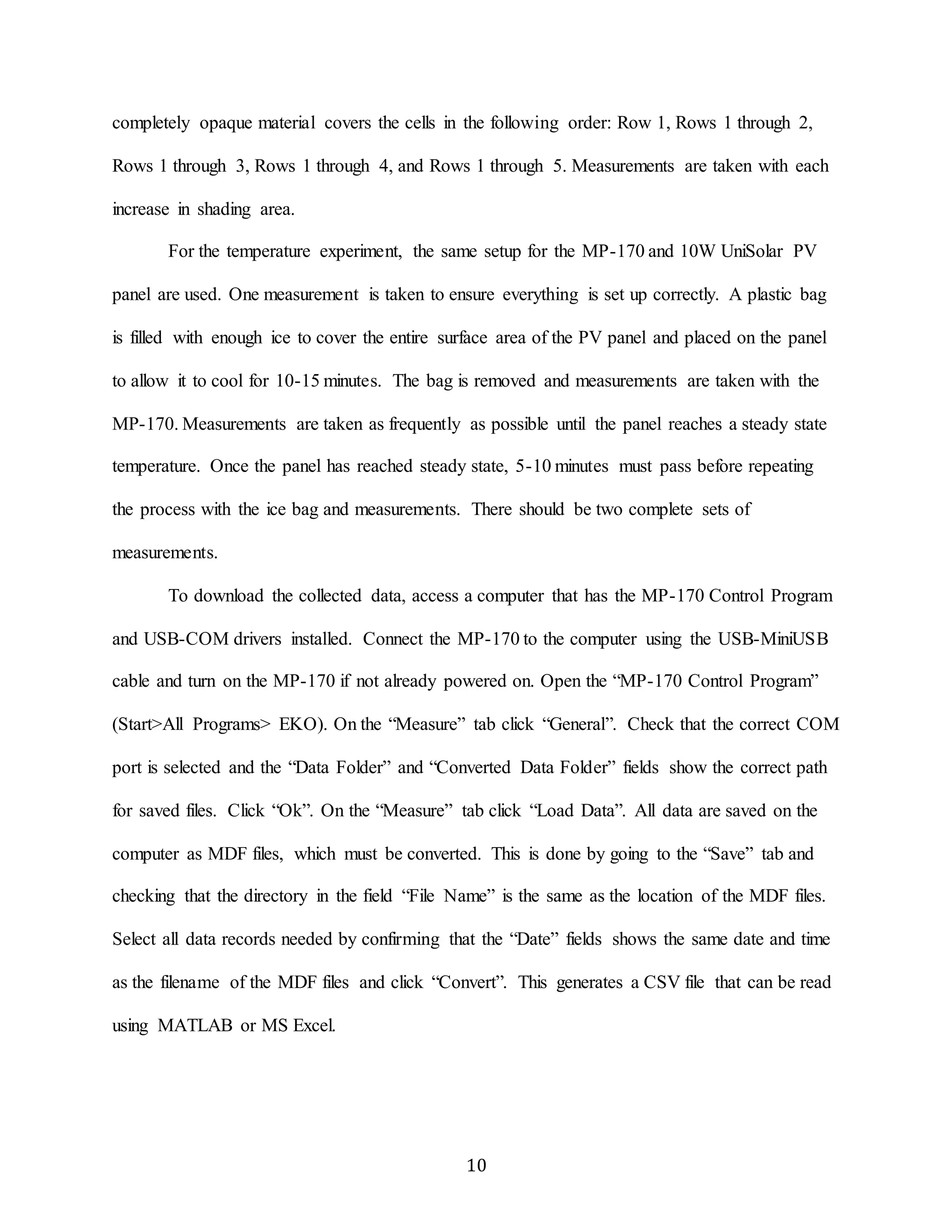
Figure 6. I-V curves for Kyocera and UniSolar Panels at 0º and 30º 
The relationship between power and tilt angle can be determined from Fig. 6 by plotting voltage 
against current. The power output for both the UniSolar and Kyocera panels is greater when the 
tilt angle is at 30º compared to when the tilt angle is at 0º. The measured values for the UniSolar 
and Kyocera panels were slightly lower than the rated values (see Table 1 in Appendix). 
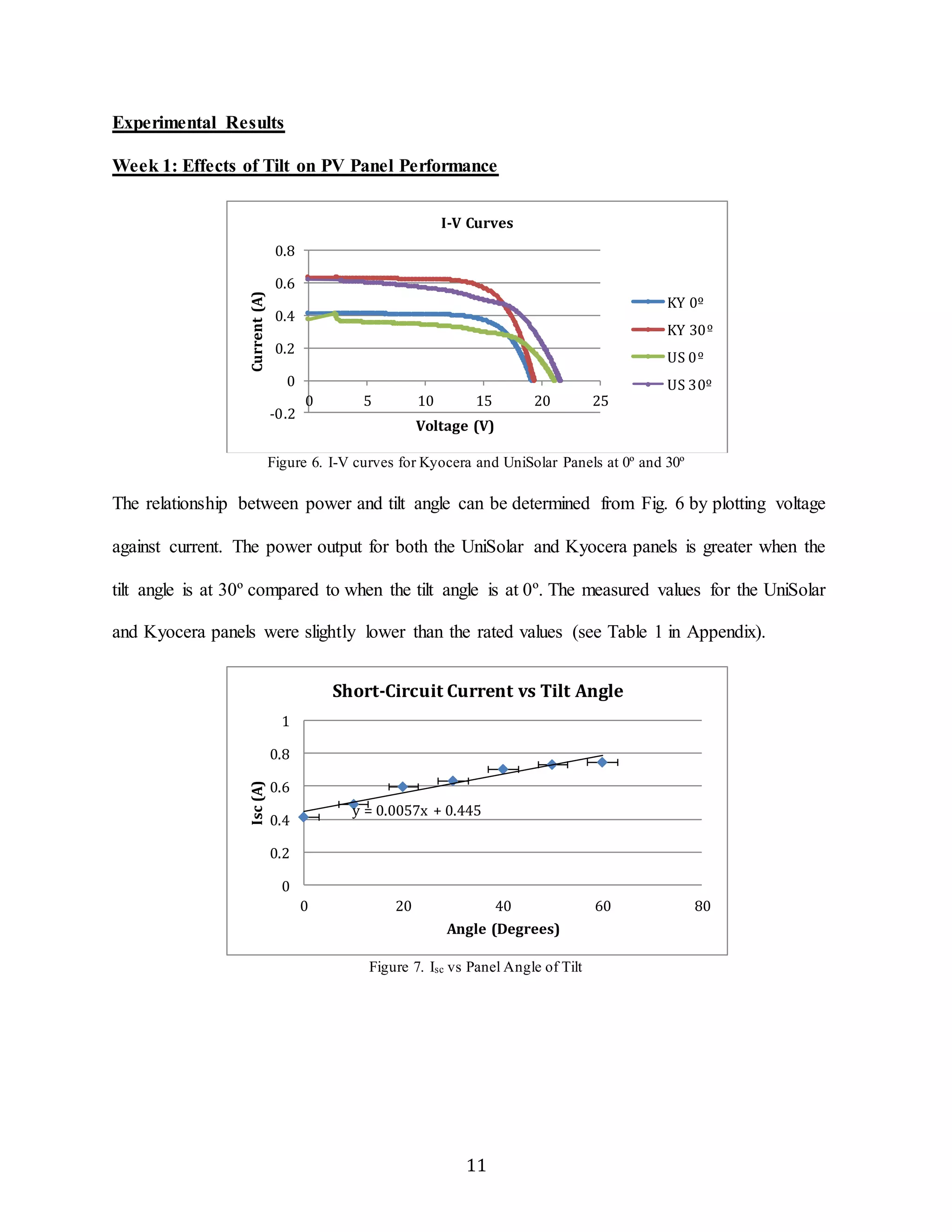
Figure 7. Isc vs Panel Angle of Tilt 
-0.2 
0 5 10 15 20 25 
Current (A) 
Voltage (V) 
KY 0º 
KY 30º 
US 0º 
US 30º 
y = 0.0057x + 0.445 
1 
0.8 
0.6 
0.4 
0.2 
0 
0 20 40 60 80 
Isc (A) 
Angle (Degrees)
Open-Circuit Voltage vs Tilt Angle 
y = 0.0007x + 19.346 
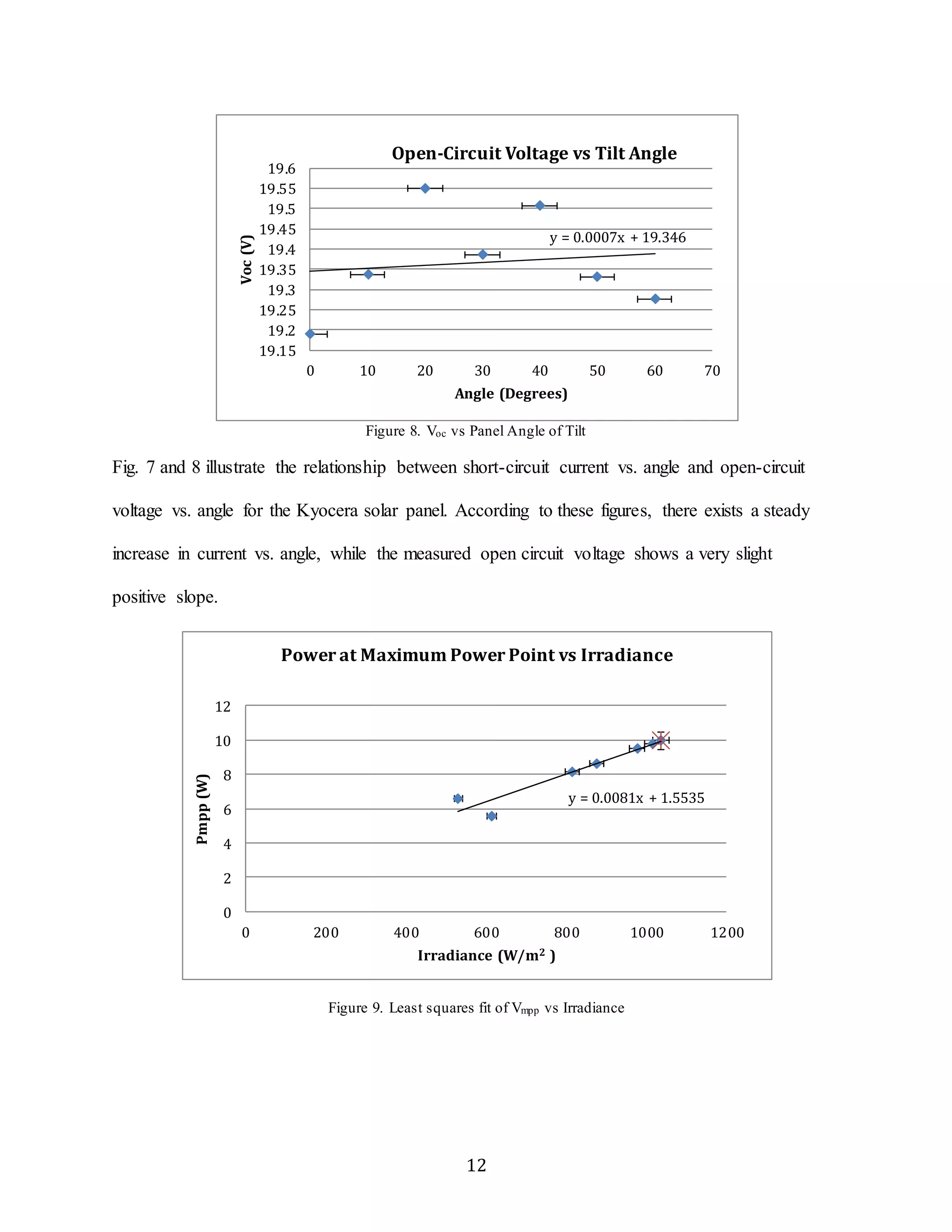
Figure 8. Voc vs Panel Angle of Tilt 
19.6 
19.55 
19.5 
19.45 
19.4 
19.35 
19.3 
19.25 
19.2 
Fig. 7 and 8 illustrate the relationship between short-circuit current vs. angle and open-circuit 
voltage vs. angle for the Kyocera solar panel. According to these figures, there exists a steady 
increase in current vs. angle, while the measured open circuit voltage shows a very slight 
Power at Maximum Power Point vs Irradiance 
12 
positive slope. 
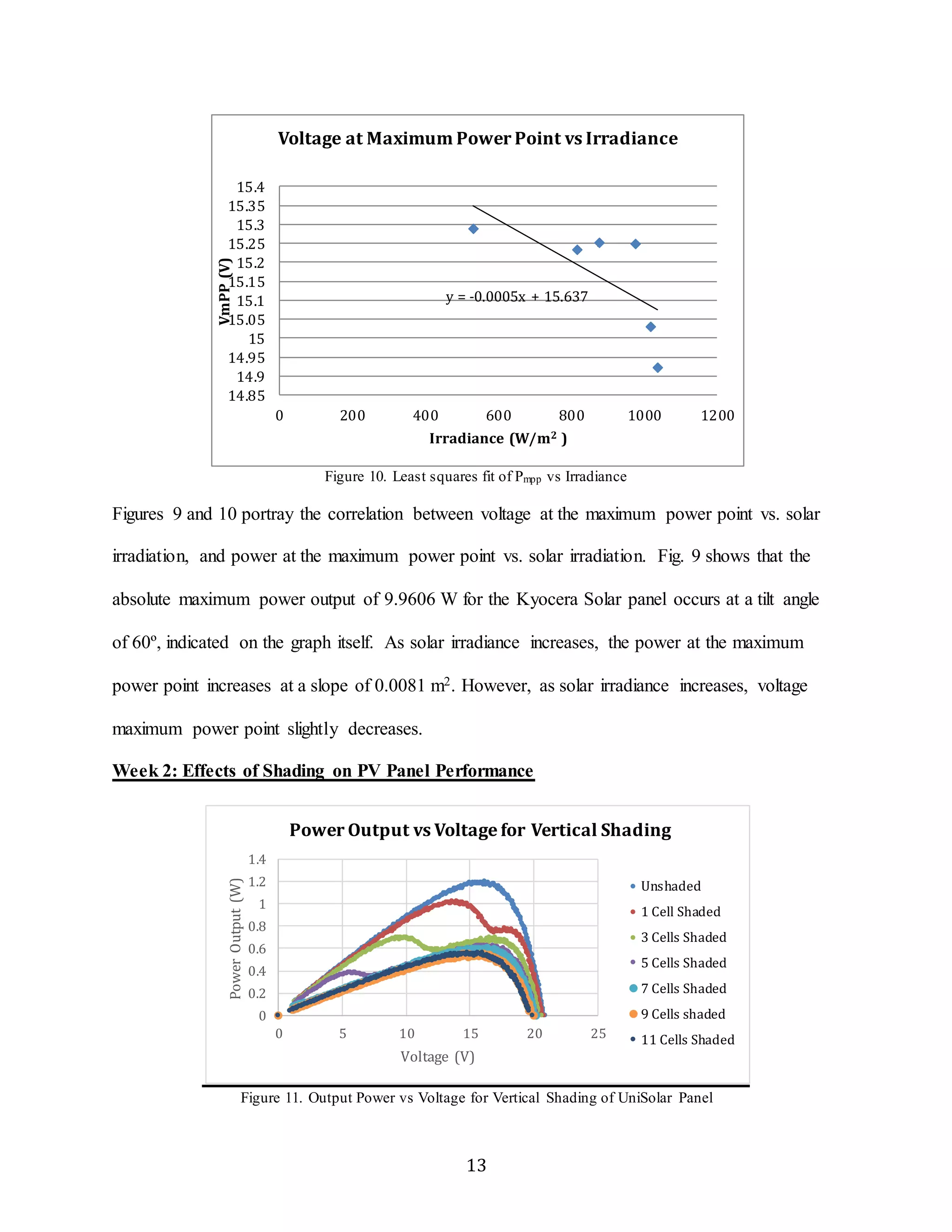
Figure 9. Least squares fit of Vmpp vs Irradiance 
19.15 
0 10 20 30 40 50 60 70 
Voc (V) 
Angle (Degrees) 
y = 0.0081x + 1.5535 
12 
10 
8 
6 
4 
2 
0 
0 200 400 600 800 1000 1200 
Pmpp (W) 
Irradiance (W/m2 )
Voltage at Maximum Power Point vs Irradiance 
y = -0.0005x + 15.637 
0 200 400 600 800 1000 1200 
Figure 10. Least squares fit of Pmpp vs Irradiance 
15.4 
15.35 
15.3 
15.25 
15.2 
15.15 
15.1 
15.05 
15 
14.95 
14.9 
14.85 
Figures 9 and 10 portray the correlation between voltage at the maximum power point vs. solar 
irradiation, and power at the maximum power point vs. solar irradiation. Fig. 9 shows that the 
absolute maximum power output of 9.9606 W for the Kyocera Solar panel occurs at a tilt angle 
of 60º, indicated on the graph itself. As solar irradiance increases, the power at the maximum 
power point increases at a slope of 0.0081 m2. However, as solar irradiance increases, voltage 
Power Output vs Voltage for Vertical Shading 
13 
maximum power point slightly decreases. 
Week 2: Effects of Shading on PV Panel Performance 
1.4 
1.2 
1 
0.8 
0.6 
0.4 
0.2 
Figure 11. Output Power vs Voltage for Vertical Shading of UniSolar Panel 
VmPP (V) 
Irradiance (W/m2 ) 
0 
0 5 10 15 20 25 
Power Output (W) 
Voltage (V) 
Unshaded 
1 Cell Shaded 
3 Cells Shaded 
5 Cells Shaded 
7 Cells Shaded 
9 Cells shaded 
11 Cells Shaded
Power Output vs Voltage for Horizontal Shading 
Trial 2 
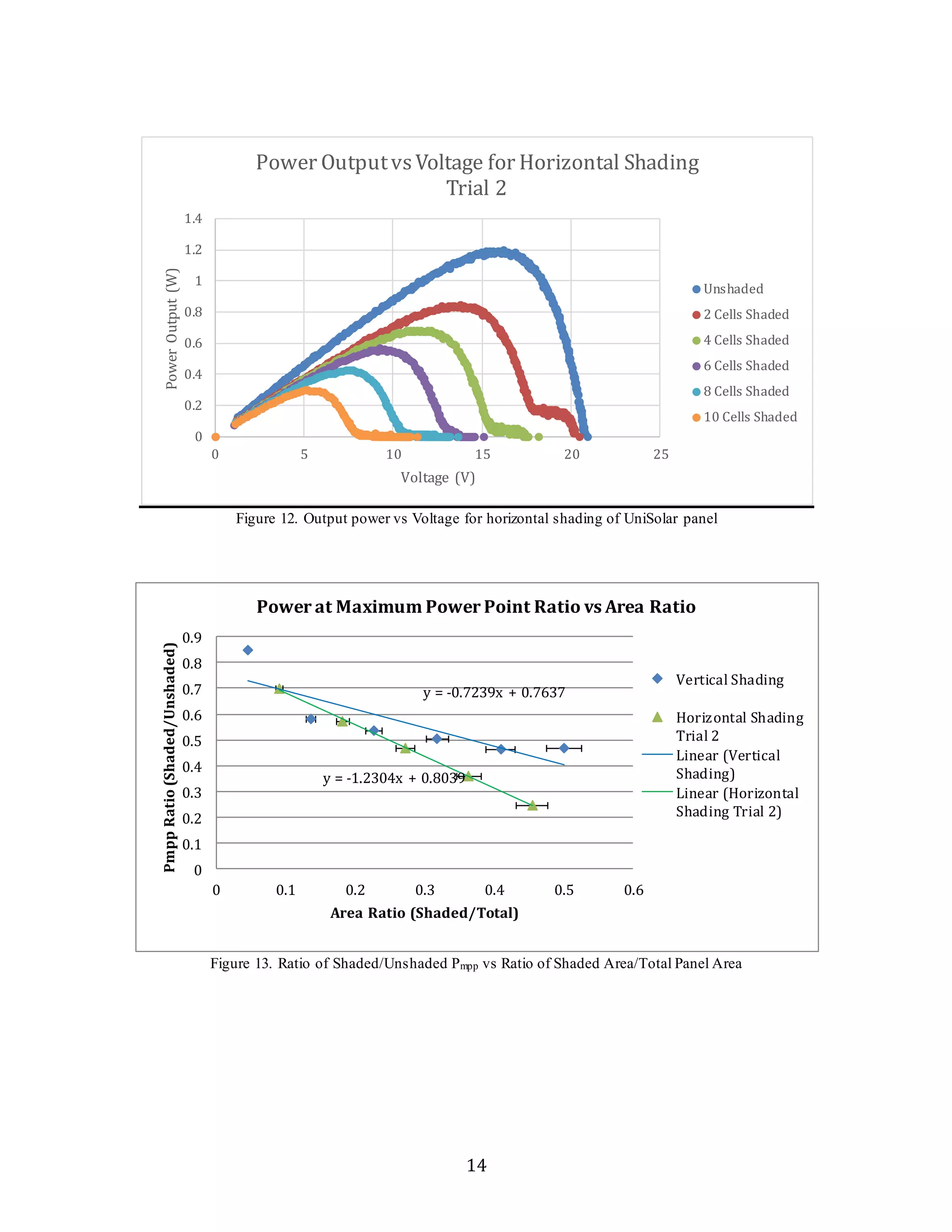
Figure 12. Output power vs Voltage for horizontal shading of UniSolar panel 
Power at Maximum Power Point Ratio vs Area Ratio 
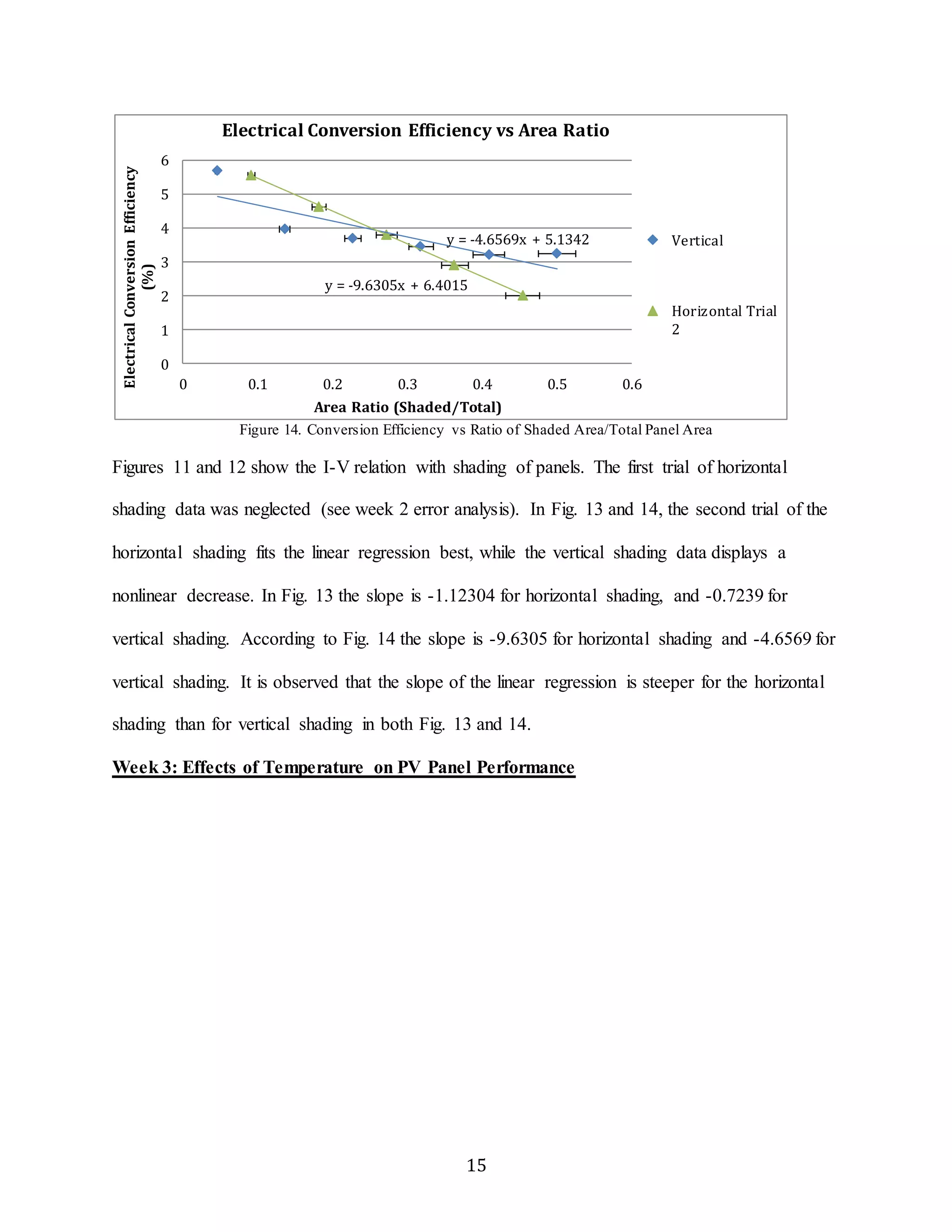
Figure 13. Ratio of Shaded/Unshaded Pmpp vs Ratio of Shaded Area/Total Panel Area 
14 
1.4 
1.2 
1 
0.8 
0.6 
0.4 
0.2 
0 
0 5 10 15 20 25 
Power Output (W) 
Voltage (V) 
Unshaded 
2 Cells Shaded 
4 Cells Shaded 
6 Cells Shaded 
8 Cells Shaded 
10 Cells Shaded 
y = -0.7239x + 0.7637 
y = -1.2304x + 0.8039 
0.9 
0.8 
0.7 
0.6 
0.5 
0.4 
0.3 
0.2 
0.1 
0 
0 0.1 0.2 0.3 0.4 0.5 0.6 
Pmpp Ratio (Shaded/Unshaded) 
Area Ratio (Shaded/Total) 
Vertical Shading 
Horizontal Shading 
Trial 2 
Linear (Vertical 
Shading) 
Linear (Horizontal 
Shading Trial 2)
Electrical Conversion Efficiency vs Area Ratio 
y = -4.6569x + 5.1342 
y = -9.6305x + 6.4015 
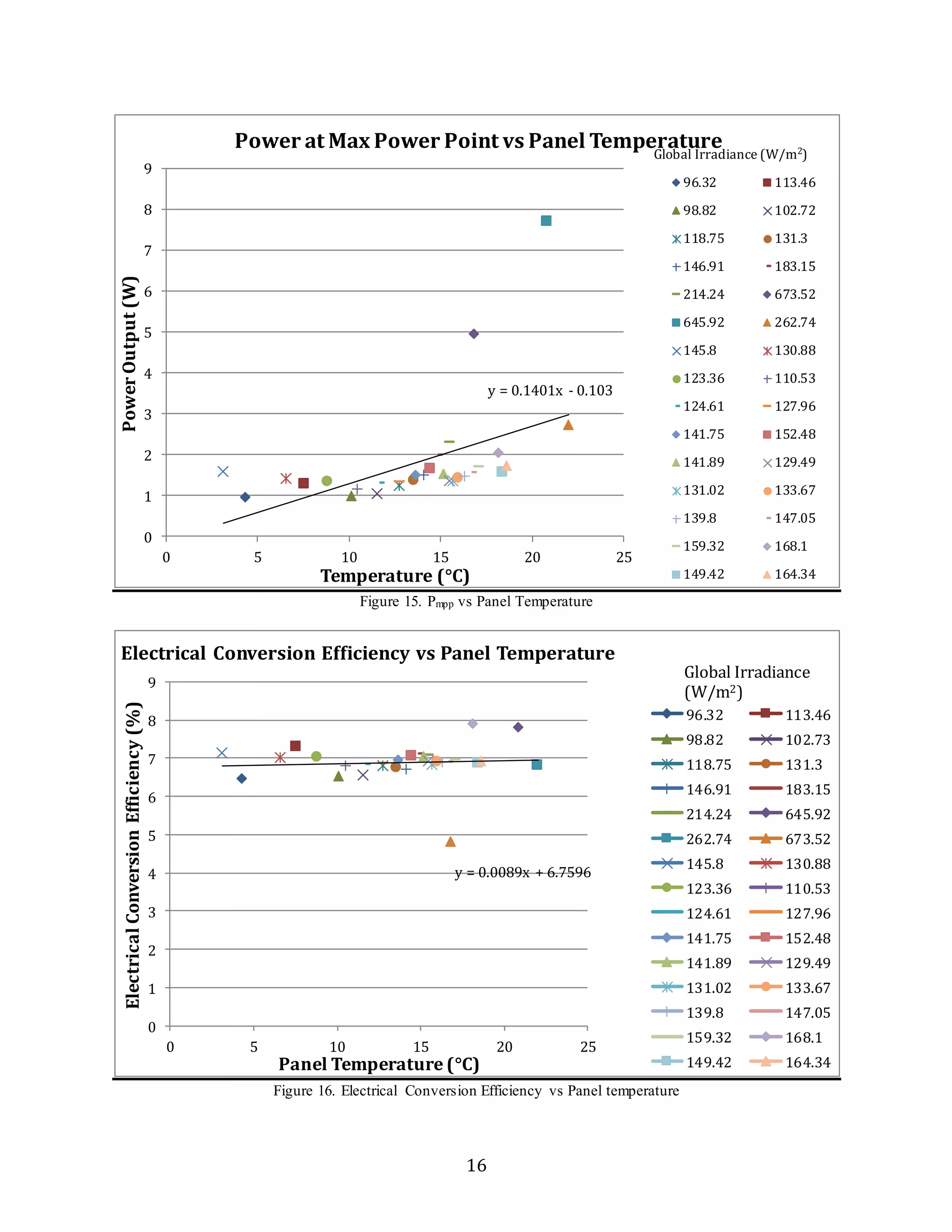
Figure 14. Conversion Efficiency vs Ratio of Shaded Area/Total Panel Area 
6 
5 
4 
3 
2 
1 
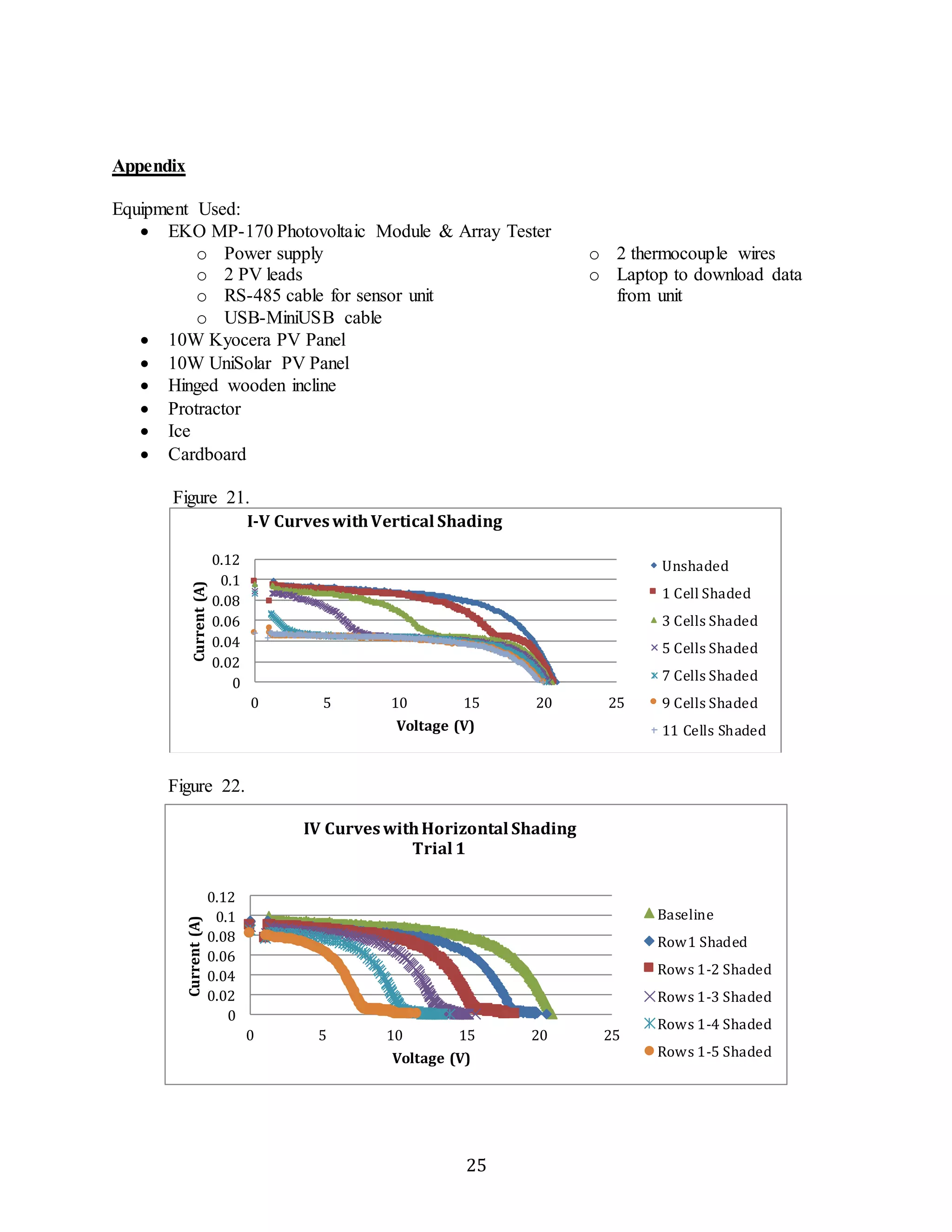
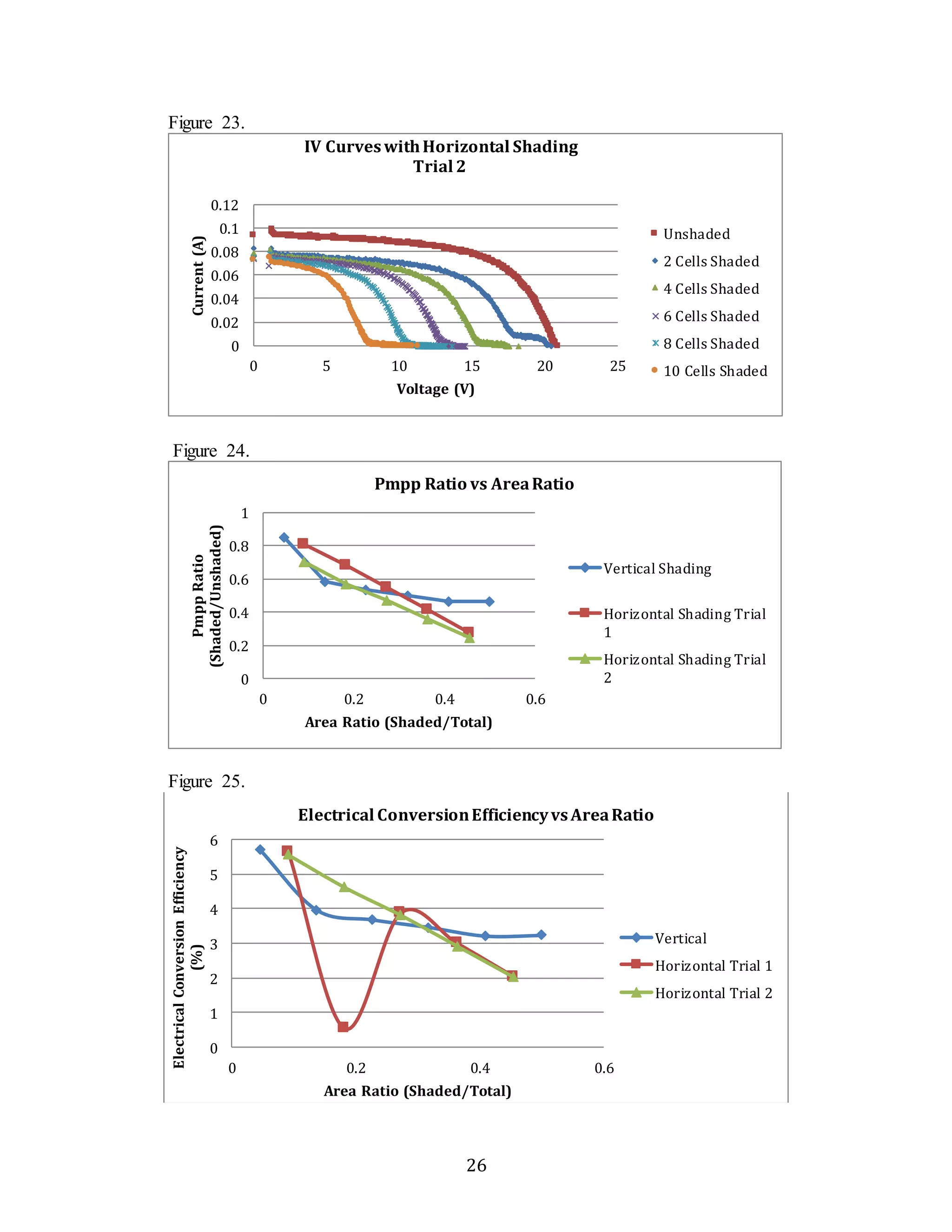
Figures 11 and 12 show the I-V relation with shading of panels. The first trial of horizontal 
shading data was neglected (see week 2 error analysis). In Fig. 13 and 14, the second trial of the 
horizontal shading fits the linear regression best, while the vertical shading data displays a 
nonlinear decrease. In Fig. 13 the slope is -1.12304 for horizontal shading, and -0.7239 for 
vertical shading. According to Fig. 14 the slope is -9.6305 for horizontal shading and -4.6569 for 
vertical shading. It is observed that the slope of the linear regression is steeper for the horizontal 
shading than for vertical shading in both Fig. 13 and 14. 
Week 3: Effects of Temperature on PV Panel Performance 
15 
0 
0 0.1 0.2 0.3 0.4 0.5 0.6 
Electrical Conversion Efficiency 
(%) 
Area Ratio (Shaded/Total) 
Vertical 
Horizontal Trial 
2
Power at Max Power Point vs Panel Temperature 
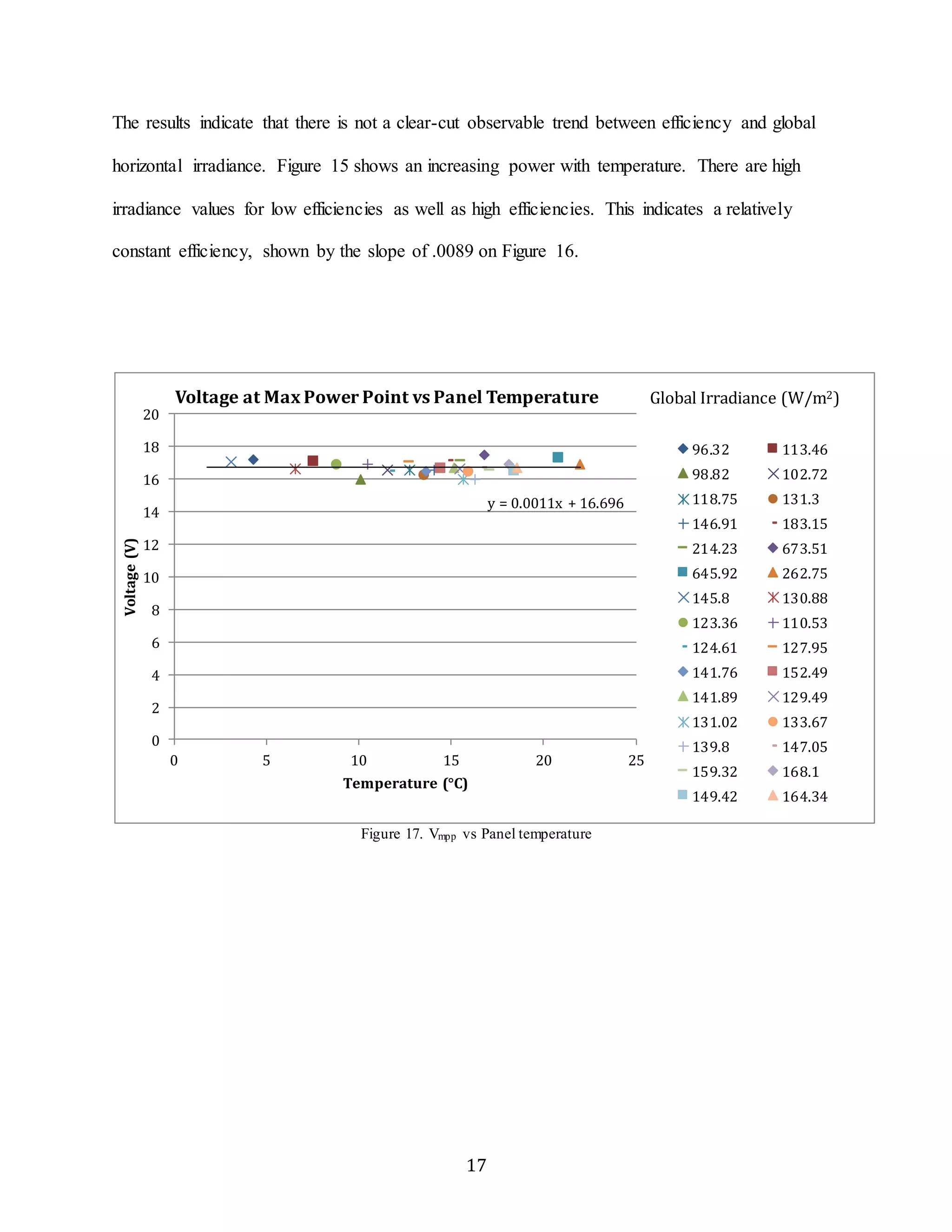
Figure 15. Pmpp vs Panel Temperature 
Global Irradiance (W/m2) 
Electrical Conversion Efficiency vs Panel Temperature 
Figure 16. Electrical Conversion Efficiency vs Panel temperature 
16 
y = 0.1401x - 0.103 
9 
8 
7 
6 
5 
4 
3 
2 
1 
0 
0 5 10 15 20 25 
Power Output (W) 
Temperature (°C) 
96.32 113.46 
98.82 102.72 
118.75 131.3 
146.91 183.15 
214.24 673.52 
645.92 262.74 
145.8 130.88 
123.36 110.53 
124.61 127.96 
141.75 152.48 
141.89 129.49 
131.02 133.67 
139.8 147.05 
159.32 168.1 
149.42 164.34 
y = 0.0089x + 6.7596 
9 
8 
7 
6 
5 
4 
3 
2 
1 
0 
0 5 10 15 20 25 
Electrical Conversion Efficiency (%) 
Panel Temperature (°C) 
Global Irradiance 
(W/m2) 
96.32 113.46 
98.82 102.73 
118.75 131.3 
146.91 183.15 
214.24 645.92 
262.74 673.52 
145.8 130.88 
123.36 110.53 
124.61 127.96 
141.75 152.48 
141.89 129.49 
131.02 133.67 
139.8 147.05 
159.32 168.1 
149.42 164.34
The results indicate that there is not a clear-cut observable trend between efficiency and global 
horizontal irradiance. Figure 15 shows an increasing power with temperature. There are high 
irradiance values for low efficiencies as well as high efficiencies. This indicates a relatively 
constant efficiency, shown by the slope of .0089 on Figure 16. 
Voltage at Max Power Point vs Panel Temperature 
Figure 17. Vmpp vs Panel temperature 
17 
y = 0.0011x + 16.696 
20 
18 
16 
14 
12 
10 
8 
6 
4 
2 
0 
0 5 10 15 20 25 
Voltage (V) 
Temperature (°C) 
Global Irradiance (W/m2) 
96.32 113.46 
98.82 102.72 
118.75 131.3 
146.91 183.15 
214.23 673.51 
645.92 262.75 
145.8 130.88 
123.36 110.53 
124.61 127.95 
141.76 152.49 
141.89 129.49 
131.02 133.67 
139.8 147.05 
159.32 168.1 
149.42 164.34
Current at Max Power Point vs Panel Temperature 
y = 0.0078x + 0.0019 
Figure 18. Impp vs Panel Temperature 
1 
0.9 
0.8 
0.7 
0.6 
0.5 
0.4 
0.3 
0.2 
0.1 
Global Irradiance (W/m2) 
The voltage-temperature coefficient is the slope of Figure 17, for a value of .0011 V/°C. The 
rated value is -.0027 V/°C. No discernible trends were observed, as the slope remained relatively 
constant. This shows literally correlation between Vmpp and GHI. Figure 18 shows that Impp 
increases slightly with temperature, but is relatively random when compared to GHI as well. The 
average Impp was calculated to obtain ΔImpp. Equation 3 was used to obtain Figure 19. 
18 
0 
0 5 10 15 20 25 
Current (A) 
Temperature (°C) 
96.32 113.46 
98.82 102.72 
118.75 131.3 
146.91 183.15 
214.23 673.51 
645.52 626.75 
145.8 130.88 
123.36 110.53 
124.61 127.95 
141.76 152.49 
141.89 129.49 
131.02 133.67 
139.8 147.05 
159.32 168.1 
149.42 164.34
Corrected Impp versus Temperature 
y = 0.0021x + 0.0795 
0 5 10 15 20 25 
Temperature (°C) 
Figure 19. Corrected Impp vs Panel Temperature 
0.25 
0.2 
0.15 
0.1 
0.05 
0 
Corrected Impp (A) 
The slope of Figure 19 is the current-temperature coefficient of 0.002 A/°C, as compared to a 
rated value of 0.0001 A/°C. Equation 5 was used to calculated corrected power at max power 
point. Using equation 2 and corrected power, Figure 20, the graph of corrected efficiency vs 
Corrected Electrical Conversion Efficiency vs Panel Temperature 
0 5 10 15 20 25 
Temperature (°C) 
19 
temperature, was obtained. 
y = -0.0027x + 0.1171 
Figure 20. Corrected Electrical Conversion Efficiency vs Panel Temperature 
0.12 
0.1 
0.08 
0.06 
0.04 
0.02 
0 
Corrected Efficiency 
The corrected conversion efficiency has a more negative slope than the conversion efficiency.
20 
Discussion with Error Analysis 
All measurements obtained by the EKO MP-170 PV Module & Array Tester are accurate 
to the order of 10-6. Because these errors are so small compared to the measurements, they can be 
neglected. Error propagation for Pmpp Ratio, Power (Figures [12, 13]) yield similar results, and 
can be neglected as well. 
Week 1: 
The figures and the recorded data show that both types of solar panel slightly vary from 
the rated (stc) specifications. The rated values were slightly higher than the measured values at 
every angle. This could be due to the location where the data was recorded and it could be 
caused by the effect of shading on the solar panels. Further, the rated values represent extremely 
high efficiency, whereas the measured values do not necessarily represent the maximally 
optimizing all factors (such as temperature and irradiance). Voltage should theoretically increase 
with solar irradiance because more voltage would be generated when there is more irradiance. 
However, Fig. 10 shows a negative relation between voltage and solar irradiance. This could be 
explained by other factors affecting the actual voltage that was generated. The voltage decreases 
at in extremely slight negative fashion, indicating that a small factor, such as a slight temperature 
shift, could have switched the voltage from barely positive to barely negative. 
According to the Power at maximum power point vs. Irradiance curves, the maximum 
panel power output occurs at an angle of 60 degrees, where irradiance is at the greatest. This 
potentially can be attributed to the time of day the data was collected. Because it was late 
afternoon, the sun had shifted from the highest point and came in at a lower angle, thus changing 
the angle at which the highest irradiance would be observed. The maximum power point occurs
on the I-V curve where the curves transitions to a decreasing slope due to power being related to 
21 
voltage and current by P = IV. 
While taking measurements at different angles, we needed to manually measure the angle 
as well as hold the PV panel at the desired angle by hand. Due to these imprecise experimental 
techniques the errors associated with PV panel angle are large, +/- 3 degrees. Another type of 
error was having negative slope for Vmpp vs. Irradiance is due to application-related errors where 
we might have accidentally changed the orientation of the sensors or not accounted for other 
factors in the environment. The built in intrinsic errors within the M-170 sensor unit in the 
measurement of voltage, current, power, and irradiance are negligible. 
Week 2: 
The results imply that PV systems are designed so as to maximize the power output even 
when shaded. The more rapid decrease in both power at maximum power point and electrical 
conversion efficiency for horizontal shading compared to vertical shading (Figures [13, 14]) can 
possibly be attributed to the way the individual cells of the PV panel are connected. While 
vertically shading, only one cell in each horizontal module (group of two horizontal PV cells) 
falls was shaded. That cell falls to a power output of zero, but the power output of the entire 
module does not fall to zero. However, while horizontally shading, the entire module is covered, 
and thus the entire power output of the full module falls to zero.4 In order to accommodate for 
potential power losses due to shading, the PV system would have to be designed to minimize 
coverage of full horizontal modules. To accomplish this, the rows of the PV panel could be wired 
in series, while the columns could be wired in parallel. According to Ohm’s Law, the connection 
in series would maximize output voltage, but would create power-draining loads when individual
cells are shaded. Thus, the parallel connection serves to create an equal distribution of voltage to 
22 
minimize the power loss due to shading. 
The shading was produced by hand with a piece of cardboard. This imperfect technique 
could have led to some imperfect shading. To account for this potential error, we assumed a 5% 
error. This application related error was due to user interaction with the equipment. Further, 
inconsistent irradiance from changing cloud cover affected the data significantly. 
Week 3: 
The experiment the relative trends between irradiance, temperature, and efficiency on a 
PV panel. Theoretically, increased temperatures should lead to decreased efficiency in a PV 
panel. However, other factors do play a significant role in affecting the efficiency. There is no 
observable trend because of the different changing factors involved in the temperature-based 
experiment. The data indicates a slight positive increase in electrical conversion efficiency and 
voltage as temperature increases. However, the irradiance was extremely scattered throughout 
the dataset, and therefore negates observable correlation between global irradiance and 
efficiency. Shifting levels of irradiance due to cloud cover changed ambient air temperatures, 
and thus disturbed the data sets. One possible reason for a positive increase in efficiency with 
increased temperature is increasing irradiance at a higher rate than temperature. The corrected 
electrical conversion efficiency indicates the true correlation between efficiency and 
temperature, with a clear decrease in efficiency as temperature increases. Further complications 
include water spillage on the solar panel. This not only increases the specific heat capacity, but it 
cools down the panel, thus changing the correlative data. The trends for Impp vs Panel 
Temperature and Corrected Impp vs Panel Temperature both have a similar positive behavior.
23 
Conclusion 
This experiment has concentrated on the analysis of the relationship between solar panel 
tilt angle, the effect of shading on solar panel performance, and the effect of temperature on PV 
performance. The maximum power output for Kyocera solar panel was found to be 9.96W at the 
tilt angle of 60º, where the solar irradiance has a positive correlation with power output. The 
experiment had shown that horizontal shading had a more significant impact on power output 
than vertical shading. The experiment also shows that temperature has a negative correlation 
with electrical conversion efficiency. Changes in any factors affecting power output can 
significantly change the result. Therefore, PV systems must be designed to accommodate a 
balance between the least amount of horizontal shading, the most irradiance, and the least 
possible panel temperature.
24 
References 
1. "Solar Angles and Tracking Systems." Solar Angles and Tracking Systems - Lesson - 
Www.TeachEngineering.org. N.p., 05 Feb. 2014. Web. 02 Feb. 2014. 
2. "Part II – Photovoltaic Cell I-V Characterization Theory and LabVIEW Analysis Code." - 
National Instruments. N.p., 10 May 2012. Web. 02 Feb. 2014. 
3. Kleissl, Jan, and R. A. De Callafon. "Laboratory Course Website, Dept. of Mechanical and 
Aerospace Engineering at UCSD." Laboratory Course Website, Dept. of Mechanical and 
Aerospace Engineering at UCSD. N.p., 18 Feb. 2013. Web. 02 Feb. 2014. 
4. “Solar Electronics, Panel Integration and Bankability Challenge.” GreenTechMedia. 
http://www.greentechmedia.com/articles/read/solar-electronics-panel-integration-and-the-bankability- 
challenge. 06 Feb. 2014.
I-V Curves with Vertical Shading 
IV Curves with Horizontal Shading 
25 
Appendix 
Equipment Used: 
 EKO MP-170 Photovoltaic Module & Array Tester 
o Power supply 
o 2 PV leads 
o RS-485 cable for sensor unit 
o USB-MiniUSB cable 
o 2 thermocouple wires 
o Laptop to download data 
from unit 
 10W Kyocera PV Panel 
 10W UniSolar PV Panel 
 Hinged wooden incline 
 Protractor 
 Ice 
 Cardboard 
Figure 21. 
0.12 
0.1 
0.08 
0.06 
0.04 
0.02 
0 
Figure 22. 
0 5 10 15 20 25 
Current (A) 
Voltage (V) 
Unshaded 
1 Cell Shaded 
3 Cells Shaded 
5 Cells Shaded 
7 Cells Shaded 
9 Cells Shaded 
11 Cells Shaded 
0.12 
0.1 
0.08 
0.06 
0.04 
0.02 
0 
Trial 1 
0 5 10 15 20 25 
Current (A) 
Voltage (V) 
Baseline 
Row1 Shaded 
Rows 1-2 Shaded 
Rows 1-3 Shaded 
Rows 1-4 Shaded 
Rows 1-5 Shaded
IV Curves with Horizontal Shading 
Trial 2 
Pmpp Ratio vs Area Ratio 
Electrical Conversion Efficiency vs Area Ratio 
26 
Figure 23. 
0.12 
0.1 
0.08 
0.06 
0.04 
0.02 
0 
Figure 24. 
1 
0.8 
0.6 
0.4 
0.2 
Figure 25. 
0 5 10 15 20 25 
Current (A) 
Voltage (V) 
Unshaded 
2 Cells Shaded 
4 Cells Shaded 
6 Cells Shaded 
8 Cells Shaded 
10 Cells Shaded 
0 
0 0.2 0.4 0.6 
Pmpp Ratio 
(Shaded/Unshaded) 
Area Ratio (Shaded/Total) 
Vertical Shading 
Horizontal Shading Trial 
1 
Horizontal Shading Trial 
2 
6 
5 
4 
3 
2 
1 
0 
0 0.2 0.4 0.6 
Electrical Conversion Efficiency 
(%) 
Area Ratio (Shaded/Total) 
Vertical 
Horizontal Trial 1 
Horizontal Trial 2
Current at Max Power Point vs Panel Temp 
y = 0.016x - 0.0821 
0 5 10 15 20 25 
Temperature (°C) 
27 
Figure 26. 
Table 1. 
KY PV 
Panel 
0.5 
0.4 
0.3 
0.2 
0.1 
0 
-0.1 
Current (A) 
Solar 
Irradiance 
(Er)[W/m^2] 
y = 0.0014x + 0.0708 
Trial 1 
Trial 2 
Trial 1 Impp 
Trial 2 Impp 
PV Device 
Temp.[degC] Isc[A] Voc[V] Pm[W] Ipm[A] Vpm[V] 
Rated 1000 25 0.62 21.7 10 0.58 17.4 
0 Degrees 614.415929 53.766987 0.413645 19.189079 5.589738 0.366618 15.246755 
10 
Degrees 530.923451 54.466408 0.488166 19.336191 6.589841 0.431026 15.288747 
20 
Degrees 814.993215 54.670582 0.59202 19.548725 8.123451 0.533357 15.230793 
30 
Degrees 875.20826 57.693634 0.633405 19.386742 8.58644 0.563004 15.251104 
40 
Degrees 977.099853 57.42136 0.7029 19.506508 9.532833 0.625251 15.246416 
50 
Degrees 1016.128024 60.871288 0.728513 19.330552 9.759039 0.649358 15.028747 
60 
Degrees 1036.060177 61.873493 0.744509 19.274462 9.960568 0.66762 14.919507

Experimental study of the effects of tilt, shading, and temperature on photovoltaic panel performance gupta, tsuruta, lin moynihan

  • 1.
    Experimental Study ofthe Effects of Tilt, Shading, and Temperature on Photovoltaic Panel Performance Presented to the University of California, San Diego Department of Mechanical and Aerospace Engineering MAE 126A Date: 2/6/2014 Prepared by: Section A08 (Friday 1-4pm) Akash Gupta, Alex Lin, Colin Moynihan, Mei Tsuruta
  • 2.
    2 Abstract Solarenergy is one of the most popular and sustainable forms of alternative energy in the modern age. This experiment explores the effect of various environmental factors on the power output of two photovoltaic solar panels. The experiments test the effects of power output and panel efficiency with respect to tilt angle, shading, and temperature. The maximum power output of 9.96 W was found to occur when the tilt angle is 60°. This was found by testing the response of the solar panels at various angles. This occurs at the point of maximum irradiance, which correlates to a higher output. The effect of shading was observed by covering the photovoltaic panels horizontally and vertically with a completely opaque material. Horizontal shading has a larger effect than vertical shading on the PV panels due to the wiring of the panel. Finally, temperature was observed to decrease the electrical conversion efficiency of the panel as temperature increased.
  • 3.
    3 Table ofContents Abstract ……………………………………………………...……….………………………….. 2 List of Figures ……………………………………………….....……………………………....... 4 Introduction …………………………………………………….....……………………………... 5 Theory …………………………………………………………………………………………… 6 Experimental Procedure …………………………………...…………………………………….. 8 Results ………………………………………………………………………………………..… 11 Discussion (with Error Analysis) …………………………………...………………………….. 20 Conclusion ……………………………………………………………………………………... 23 References …………………………………………...…………………………………………. 24 Appendix ……………………………………………….………………………………………. 25
  • 4.
    4 List ofFigures Figure 1. Solar Angles Figure 2. Effect of Temperature on I-V Curve Figure 3. Schematics of Solar Panel I-V Measurement System Figure 4. Connection Diagram for Solar Operational Interface Figure 5. Panel Shading Coordinates Figure 6. I-V curves for Kyocera and UniSolar Panels at 0º and 30º Figure 7. Isc vs Panel Angle of Tilt Figure 8. Voc vs Panel Angle of Tilt Figure 9. Least Squares Fit of Vmpp vs Irradiance Figure 10. Least Squares Fit of Pmpp vs Irradiance Figure 11. Output Power vs Voltage for Vertical Shading of UniSolar Panel Figure 12. Output Power vs Voltage for Horizontal Shading of UniSolar Panel Figure 13. Ratio of Shaded/Unshaded Pmpp vs Ratio of Shaded Area/Total Panel Area Figure 14. Conversion Efficiency vs Ratio of Shaded Area/Total Panel Area Figure 15. Pmpp vs Panel Temperature Figure 16. Electrical Conversion Efficiency vs Panel Temperature Figure 17. Vmpp vs Panel Temperature Figure 18. Impp vs Panel Temperature Figure 19. Corrected Impp vs Panel Temperature Figure 20. Corrected Electrical Conversion Efficiency vs Panel Temperature
  • 5.
    5 Introduction Devicespowered by solar cells are expected to operate under maximum power. To accomplish this, maximum power point trackers have been used to find a point at which cells generate maximum power as a product of current and voltage regarding a particular value of resistance. Specifically, the performance of solar cells is determined by several external factors such as the angle of incidence of incoming light, shading of the panel, and changes in solar cell temperature. In this experiment, an EKO MP-170 PV Module & Array Tester is utilized to compare the performance of two different PV panels as well as investigate the effect of panel tilt, shading, and cooling on panel performance. Additionally, the reduction in panel power output and efficiency as a function of shaded panel area and temperature will be measured.
  • 6.
    6 Theory Asolar inverter is a vital component of a photovoltaic system that uses maximum power point tracking (MPPT) to get the maximum possible power from a PV panel. Solar cells have a complex relationship between solar irradiance, temperature, and total resistance that produces an output efficiency represented by the I-V curve. The purpose of the MPPT system is to sample the output of the cells and determine a load to obtain maximum power for variable environmental conditions. The equation for electrical power is related to current and voltage by the equation P = IV (1) where I is the current through and V is the voltage. The short circuit current (Isc) is defined as the current through the solar cell when the voltage across the solar cell is zero, as if the load on the PV panel had zero resistance, and is therefore the maximum current from a panel. The open circuit voltage (Voc) is defined as the voltage drop across the circuit when no current flows through the circuit, as if the load on the PV panel had infinite resistance, and is therefore the maximum voltage available from a solar cell. The conversion efficiency of a PV panel, , describes the percentage of solar radiation incident on the panel that is converted to electrical energy. The conversion efficiency is usually listed for the maximum power point, and can be calculate using the following equation (2) where Pmpp is the power at the maximum power point on the I-V curve, GHI is the incident irradiance in the same plane as the surface of the PV panel, and A is the panel surface area. The global horizontal irradiance, GHI, is the sum of direct and diffuse irradiance, and can be measured using a pyranometer. Direct irradiance describes solar radiation traveling on a straight
  • 7.
    line from thesun to the surface of the panel, while diffuse irradiance describes sunlight that has been scattered by particles in the atmosphere and comes into contact with the panel. Figure 1. Solar Angles1 Figure 2. Effect of Temperature on I-V Curve2 When setting up the experiments, the PV panel under measurement is always set up so that the panel and pyranometer, or sensor unit, are on the same plane relative to the sun, which is commonly referred to as the “plane of array”. This is a fundamental step in measuring PV performance, and Fig. 1 shows how to accurately position panels. Like all other semiconductor devices, solar cells are sensitive to changes in temperature. Fig. 2 shows that an increase in temperature increases Isc slightly and lowers Voc more significantly. Higher temperatures should then result in a lower maximum power output. The following formula is used to compute corrected Impp: { } { } ( ) n n mpp I  I  GHI GHI (3)   (4) 7 measured n corrected mpp where is the GHI averaged over all measurements, n is the measurement index, and is the Impp/GHI coefficient. is defined as  I mpp  GHI From Eq. (3), corrected Pmpp can be found using the following:
  • 8.
    mpp corrected mppcorrected mpp measured {P }  {I } {V } (5) 8 Experimental Procedure The experimental setup is schematically shown in Fig. 3, 4, which shows the EKO MP-170 Photovoltaic Module that allows the operator to perform accurate PV performance measurements. Figure 3. Schematics of Solar Panel I-V Figure 4. Connection Diagram for Solar Measurement System3 Operational Interface3 All experiments are to be conducted in a sunny location. The power supply is connected from an outlet to the MP-170 powered off, the two PV leads connect the MP-170 to the PV panel in use, and the RS-485 cable connects the sensor unit to the MP-170. Two thermocouple wires are connected to ports on the sensor unit labeled “Temp 1” and “Temp 2” using correct polarity, and conductive tape is used to attach the end of Temp 1 thermocouple to the center of the back of the PV panel and Temp 2 thermocouple to a secure location in the shade. The Temp 2 thermocouple must not touch any nearby objects, and the switch on the back of the sensor unit must be in the “INT” position. For the portion of the experiment studying the effects of tilt, two PV panels are laid side-by-side flat on the ground. The compass device is removed from the sensor unit and placed on the surface of the PV panel. With the panel checked for its orientation at 0º tilt using the level, a picture of the location of the shadows on the compass is taken. The compass is
  • 9.
    reattached to thesensor unit, which is aligned so the shadows on the compass match that of the picture taken. This is done so that the PV panels and pyranometer are on the same plane relative 9 to the sun. To take measurements, the sensor unit is powered on, then the MP-170. At the home screen of the MP-170, press “CONFIG”>highlight “MEAS PAR”>press “Enter”>highlight “SELECT”>press “Enter”. Highlight the measurement protocol from the “PARAMETER LIST” that corresponds to the brand of PV panel being used (UniSolar or Kyocera)>press “Enter”. At the home screen press “MEASURE”. All data are saved after each measurement, and can be viewed by pressing “DATA”>highlight “SEARCH”>press “Enter”. For the tilt experiment, measurements are taken for the two PV panels at 0º and 30º tilt. Only one PV panel can be measured at a time, and the parameters must be changed prior to using a different panel. Measurements are taken for one PV panel at 10º, 20º, 40º, 50º, and 60º. Figure 5. Panel Shading Coordinates 3 For the shading experiment, the same setup for the MP-170 and a 10W UniSolar PV panel are used. The PV panel with cell notation as shown in Fig. 5 is placed flat on the ground with the sensor unit positioned using the same steps as in the tilt experiment. A baseline performance measurement is taken with the panel unshaded. To begin vertical shading, the first column of cells is shaded in increments of two cells in the following order: (1,1), (1,1) through (3,1), (1,1) through (5,1), (1,1) through (7,1), (1,1) through (9,1), and (1,1) through (11,1). Measurements are taken with each increase in shading area. To begin horizontal shading, a
  • 10.
    completely opaque materialcovers the cells in the following order: Row 1, Rows 1 through 2, Rows 1 through 3, Rows 1 through 4, and Rows 1 through 5. Measurements are taken with each 10 increase in shading area. For the temperature experiment, the same setup for the MP-170 and 10W UniSolar PV panel are used. One measurement is taken to ensure everything is set up correctly. A plastic bag is filled with enough ice to cover the entire surface area of the PV panel and placed on the panel to allow it to cool for 10-15 minutes. The bag is removed and measurements are taken with the MP-170. Measurements are taken as frequently as possible until the panel reaches a steady state temperature. Once the panel has reached steady state, 5-10 minutes must pass before repeating the process with the ice bag and measurements. There should be two complete sets of measurements. To download the collected data, access a computer that has the MP-170 Control Program and USB-COM drivers installed. Connect the MP-170 to the computer using the USB-MiniUSB cable and turn on the MP-170 if not already powered on. Open the “MP-170 Control Program” (Start>All Programs> EKO). On the “Measure” tab click “General”. Check that the correct COM port is selected and the “Data Folder” and “Converted Data Folder” fields show the correct path for saved files. Click “Ok”. On the “Measure” tab click “Load Data”. All data are saved on the computer as MDF files, which must be converted. This is done by going to the “Save” tab and checking that the directory in the field “File Name” is the same as the location of the MDF files. Select all data records needed by confirming that the “Date” fields shows the same date and time as the filename of the MDF files and click “Convert”. This generates a CSV file that can be read using MATLAB or MS Excel.
  • 11.
    I-V Curves Short-CircuitCurrent vs Tilt Angle 11 Experimental Results Week 1: Effects of Tilt on PV Panel Performance 0.8 0.6 0.4 0.2 0 Figure 6. I-V curves for Kyocera and UniSolar Panels at 0º and 30º The relationship between power and tilt angle can be determined from Fig. 6 by plotting voltage against current. The power output for both the UniSolar and Kyocera panels is greater when the tilt angle is at 30º compared to when the tilt angle is at 0º. The measured values for the UniSolar and Kyocera panels were slightly lower than the rated values (see Table 1 in Appendix). Figure 7. Isc vs Panel Angle of Tilt -0.2 0 5 10 15 20 25 Current (A) Voltage (V) KY 0º KY 30º US 0º US 30º y = 0.0057x + 0.445 1 0.8 0.6 0.4 0.2 0 0 20 40 60 80 Isc (A) Angle (Degrees)
  • 12.
    Open-Circuit Voltage vsTilt Angle y = 0.0007x + 19.346 Figure 8. Voc vs Panel Angle of Tilt 19.6 19.55 19.5 19.45 19.4 19.35 19.3 19.25 19.2 Fig. 7 and 8 illustrate the relationship between short-circuit current vs. angle and open-circuit voltage vs. angle for the Kyocera solar panel. According to these figures, there exists a steady increase in current vs. angle, while the measured open circuit voltage shows a very slight Power at Maximum Power Point vs Irradiance 12 positive slope. Figure 9. Least squares fit of Vmpp vs Irradiance 19.15 0 10 20 30 40 50 60 70 Voc (V) Angle (Degrees) y = 0.0081x + 1.5535 12 10 8 6 4 2 0 0 200 400 600 800 1000 1200 Pmpp (W) Irradiance (W/m2 )
  • 13.
    Voltage at MaximumPower Point vs Irradiance y = -0.0005x + 15.637 0 200 400 600 800 1000 1200 Figure 10. Least squares fit of Pmpp vs Irradiance 15.4 15.35 15.3 15.25 15.2 15.15 15.1 15.05 15 14.95 14.9 14.85 Figures 9 and 10 portray the correlation between voltage at the maximum power point vs. solar irradiation, and power at the maximum power point vs. solar irradiation. Fig. 9 shows that the absolute maximum power output of 9.9606 W for the Kyocera Solar panel occurs at a tilt angle of 60º, indicated on the graph itself. As solar irradiance increases, the power at the maximum power point increases at a slope of 0.0081 m2. However, as solar irradiance increases, voltage Power Output vs Voltage for Vertical Shading 13 maximum power point slightly decreases. Week 2: Effects of Shading on PV Panel Performance 1.4 1.2 1 0.8 0.6 0.4 0.2 Figure 11. Output Power vs Voltage for Vertical Shading of UniSolar Panel VmPP (V) Irradiance (W/m2 ) 0 0 5 10 15 20 25 Power Output (W) Voltage (V) Unshaded 1 Cell Shaded 3 Cells Shaded 5 Cells Shaded 7 Cells Shaded 9 Cells shaded 11 Cells Shaded
  • 14.
    Power Output vsVoltage for Horizontal Shading Trial 2 Figure 12. Output power vs Voltage for horizontal shading of UniSolar panel Power at Maximum Power Point Ratio vs Area Ratio Figure 13. Ratio of Shaded/Unshaded Pmpp vs Ratio of Shaded Area/Total Panel Area 14 1.4 1.2 1 0.8 0.6 0.4 0.2 0 0 5 10 15 20 25 Power Output (W) Voltage (V) Unshaded 2 Cells Shaded 4 Cells Shaded 6 Cells Shaded 8 Cells Shaded 10 Cells Shaded y = -0.7239x + 0.7637 y = -1.2304x + 0.8039 0.9 0.8 0.7 0.6 0.5 0.4 0.3 0.2 0.1 0 0 0.1 0.2 0.3 0.4 0.5 0.6 Pmpp Ratio (Shaded/Unshaded) Area Ratio (Shaded/Total) Vertical Shading Horizontal Shading Trial 2 Linear (Vertical Shading) Linear (Horizontal Shading Trial 2)
  • 15.
    Electrical Conversion Efficiencyvs Area Ratio y = -4.6569x + 5.1342 y = -9.6305x + 6.4015 Figure 14. Conversion Efficiency vs Ratio of Shaded Area/Total Panel Area 6 5 4 3 2 1 Figures 11 and 12 show the I-V relation with shading of panels. The first trial of horizontal shading data was neglected (see week 2 error analysis). In Fig. 13 and 14, the second trial of the horizontal shading fits the linear regression best, while the vertical shading data displays a nonlinear decrease. In Fig. 13 the slope is -1.12304 for horizontal shading, and -0.7239 for vertical shading. According to Fig. 14 the slope is -9.6305 for horizontal shading and -4.6569 for vertical shading. It is observed that the slope of the linear regression is steeper for the horizontal shading than for vertical shading in both Fig. 13 and 14. Week 3: Effects of Temperature on PV Panel Performance 15 0 0 0.1 0.2 0.3 0.4 0.5 0.6 Electrical Conversion Efficiency (%) Area Ratio (Shaded/Total) Vertical Horizontal Trial 2
  • 16.
    Power at MaxPower Point vs Panel Temperature Figure 15. Pmpp vs Panel Temperature Global Irradiance (W/m2) Electrical Conversion Efficiency vs Panel Temperature Figure 16. Electrical Conversion Efficiency vs Panel temperature 16 y = 0.1401x - 0.103 9 8 7 6 5 4 3 2 1 0 0 5 10 15 20 25 Power Output (W) Temperature (°C) 96.32 113.46 98.82 102.72 118.75 131.3 146.91 183.15 214.24 673.52 645.92 262.74 145.8 130.88 123.36 110.53 124.61 127.96 141.75 152.48 141.89 129.49 131.02 133.67 139.8 147.05 159.32 168.1 149.42 164.34 y = 0.0089x + 6.7596 9 8 7 6 5 4 3 2 1 0 0 5 10 15 20 25 Electrical Conversion Efficiency (%) Panel Temperature (°C) Global Irradiance (W/m2) 96.32 113.46 98.82 102.73 118.75 131.3 146.91 183.15 214.24 645.92 262.74 673.52 145.8 130.88 123.36 110.53 124.61 127.96 141.75 152.48 141.89 129.49 131.02 133.67 139.8 147.05 159.32 168.1 149.42 164.34
  • 17.
    The results indicatethat there is not a clear-cut observable trend between efficiency and global horizontal irradiance. Figure 15 shows an increasing power with temperature. There are high irradiance values for low efficiencies as well as high efficiencies. This indicates a relatively constant efficiency, shown by the slope of .0089 on Figure 16. Voltage at Max Power Point vs Panel Temperature Figure 17. Vmpp vs Panel temperature 17 y = 0.0011x + 16.696 20 18 16 14 12 10 8 6 4 2 0 0 5 10 15 20 25 Voltage (V) Temperature (°C) Global Irradiance (W/m2) 96.32 113.46 98.82 102.72 118.75 131.3 146.91 183.15 214.23 673.51 645.92 262.75 145.8 130.88 123.36 110.53 124.61 127.95 141.76 152.49 141.89 129.49 131.02 133.67 139.8 147.05 159.32 168.1 149.42 164.34
  • 18.
    Current at MaxPower Point vs Panel Temperature y = 0.0078x + 0.0019 Figure 18. Impp vs Panel Temperature 1 0.9 0.8 0.7 0.6 0.5 0.4 0.3 0.2 0.1 Global Irradiance (W/m2) The voltage-temperature coefficient is the slope of Figure 17, for a value of .0011 V/°C. The rated value is -.0027 V/°C. No discernible trends were observed, as the slope remained relatively constant. This shows literally correlation between Vmpp and GHI. Figure 18 shows that Impp increases slightly with temperature, but is relatively random when compared to GHI as well. The average Impp was calculated to obtain ΔImpp. Equation 3 was used to obtain Figure 19. 18 0 0 5 10 15 20 25 Current (A) Temperature (°C) 96.32 113.46 98.82 102.72 118.75 131.3 146.91 183.15 214.23 673.51 645.52 626.75 145.8 130.88 123.36 110.53 124.61 127.95 141.76 152.49 141.89 129.49 131.02 133.67 139.8 147.05 159.32 168.1 149.42 164.34
  • 19.
    Corrected Impp versusTemperature y = 0.0021x + 0.0795 0 5 10 15 20 25 Temperature (°C) Figure 19. Corrected Impp vs Panel Temperature 0.25 0.2 0.15 0.1 0.05 0 Corrected Impp (A) The slope of Figure 19 is the current-temperature coefficient of 0.002 A/°C, as compared to a rated value of 0.0001 A/°C. Equation 5 was used to calculated corrected power at max power point. Using equation 2 and corrected power, Figure 20, the graph of corrected efficiency vs Corrected Electrical Conversion Efficiency vs Panel Temperature 0 5 10 15 20 25 Temperature (°C) 19 temperature, was obtained. y = -0.0027x + 0.1171 Figure 20. Corrected Electrical Conversion Efficiency vs Panel Temperature 0.12 0.1 0.08 0.06 0.04 0.02 0 Corrected Efficiency The corrected conversion efficiency has a more negative slope than the conversion efficiency.
  • 20.
    20 Discussion withError Analysis All measurements obtained by the EKO MP-170 PV Module & Array Tester are accurate to the order of 10-6. Because these errors are so small compared to the measurements, they can be neglected. Error propagation for Pmpp Ratio, Power (Figures [12, 13]) yield similar results, and can be neglected as well. Week 1: The figures and the recorded data show that both types of solar panel slightly vary from the rated (stc) specifications. The rated values were slightly higher than the measured values at every angle. This could be due to the location where the data was recorded and it could be caused by the effect of shading on the solar panels. Further, the rated values represent extremely high efficiency, whereas the measured values do not necessarily represent the maximally optimizing all factors (such as temperature and irradiance). Voltage should theoretically increase with solar irradiance because more voltage would be generated when there is more irradiance. However, Fig. 10 shows a negative relation between voltage and solar irradiance. This could be explained by other factors affecting the actual voltage that was generated. The voltage decreases at in extremely slight negative fashion, indicating that a small factor, such as a slight temperature shift, could have switched the voltage from barely positive to barely negative. According to the Power at maximum power point vs. Irradiance curves, the maximum panel power output occurs at an angle of 60 degrees, where irradiance is at the greatest. This potentially can be attributed to the time of day the data was collected. Because it was late afternoon, the sun had shifted from the highest point and came in at a lower angle, thus changing the angle at which the highest irradiance would be observed. The maximum power point occurs
  • 21.
    on the I-Vcurve where the curves transitions to a decreasing slope due to power being related to 21 voltage and current by P = IV. While taking measurements at different angles, we needed to manually measure the angle as well as hold the PV panel at the desired angle by hand. Due to these imprecise experimental techniques the errors associated with PV panel angle are large, +/- 3 degrees. Another type of error was having negative slope for Vmpp vs. Irradiance is due to application-related errors where we might have accidentally changed the orientation of the sensors or not accounted for other factors in the environment. The built in intrinsic errors within the M-170 sensor unit in the measurement of voltage, current, power, and irradiance are negligible. Week 2: The results imply that PV systems are designed so as to maximize the power output even when shaded. The more rapid decrease in both power at maximum power point and electrical conversion efficiency for horizontal shading compared to vertical shading (Figures [13, 14]) can possibly be attributed to the way the individual cells of the PV panel are connected. While vertically shading, only one cell in each horizontal module (group of two horizontal PV cells) falls was shaded. That cell falls to a power output of zero, but the power output of the entire module does not fall to zero. However, while horizontally shading, the entire module is covered, and thus the entire power output of the full module falls to zero.4 In order to accommodate for potential power losses due to shading, the PV system would have to be designed to minimize coverage of full horizontal modules. To accomplish this, the rows of the PV panel could be wired in series, while the columns could be wired in parallel. According to Ohm’s Law, the connection in series would maximize output voltage, but would create power-draining loads when individual
  • 22.
    cells are shaded.Thus, the parallel connection serves to create an equal distribution of voltage to 22 minimize the power loss due to shading. The shading was produced by hand with a piece of cardboard. This imperfect technique could have led to some imperfect shading. To account for this potential error, we assumed a 5% error. This application related error was due to user interaction with the equipment. Further, inconsistent irradiance from changing cloud cover affected the data significantly. Week 3: The experiment the relative trends between irradiance, temperature, and efficiency on a PV panel. Theoretically, increased temperatures should lead to decreased efficiency in a PV panel. However, other factors do play a significant role in affecting the efficiency. There is no observable trend because of the different changing factors involved in the temperature-based experiment. The data indicates a slight positive increase in electrical conversion efficiency and voltage as temperature increases. However, the irradiance was extremely scattered throughout the dataset, and therefore negates observable correlation between global irradiance and efficiency. Shifting levels of irradiance due to cloud cover changed ambient air temperatures, and thus disturbed the data sets. One possible reason for a positive increase in efficiency with increased temperature is increasing irradiance at a higher rate than temperature. The corrected electrical conversion efficiency indicates the true correlation between efficiency and temperature, with a clear decrease in efficiency as temperature increases. Further complications include water spillage on the solar panel. This not only increases the specific heat capacity, but it cools down the panel, thus changing the correlative data. The trends for Impp vs Panel Temperature and Corrected Impp vs Panel Temperature both have a similar positive behavior.
  • 23.
    23 Conclusion Thisexperiment has concentrated on the analysis of the relationship between solar panel tilt angle, the effect of shading on solar panel performance, and the effect of temperature on PV performance. The maximum power output for Kyocera solar panel was found to be 9.96W at the tilt angle of 60º, where the solar irradiance has a positive correlation with power output. The experiment had shown that horizontal shading had a more significant impact on power output than vertical shading. The experiment also shows that temperature has a negative correlation with electrical conversion efficiency. Changes in any factors affecting power output can significantly change the result. Therefore, PV systems must be designed to accommodate a balance between the least amount of horizontal shading, the most irradiance, and the least possible panel temperature.
  • 24.
    24 References 1."Solar Angles and Tracking Systems." Solar Angles and Tracking Systems - Lesson - Www.TeachEngineering.org. N.p., 05 Feb. 2014. Web. 02 Feb. 2014. 2. "Part II – Photovoltaic Cell I-V Characterization Theory and LabVIEW Analysis Code." - National Instruments. N.p., 10 May 2012. Web. 02 Feb. 2014. 3. Kleissl, Jan, and R. A. De Callafon. "Laboratory Course Website, Dept. of Mechanical and Aerospace Engineering at UCSD." Laboratory Course Website, Dept. of Mechanical and Aerospace Engineering at UCSD. N.p., 18 Feb. 2013. Web. 02 Feb. 2014. 4. “Solar Electronics, Panel Integration and Bankability Challenge.” GreenTechMedia. http://www.greentechmedia.com/articles/read/solar-electronics-panel-integration-and-the-bankability- challenge. 06 Feb. 2014.
  • 25.
    I-V Curves withVertical Shading IV Curves with Horizontal Shading 25 Appendix Equipment Used:  EKO MP-170 Photovoltaic Module & Array Tester o Power supply o 2 PV leads o RS-485 cable for sensor unit o USB-MiniUSB cable o 2 thermocouple wires o Laptop to download data from unit  10W Kyocera PV Panel  10W UniSolar PV Panel  Hinged wooden incline  Protractor  Ice  Cardboard Figure 21. 0.12 0.1 0.08 0.06 0.04 0.02 0 Figure 22. 0 5 10 15 20 25 Current (A) Voltage (V) Unshaded 1 Cell Shaded 3 Cells Shaded 5 Cells Shaded 7 Cells Shaded 9 Cells Shaded 11 Cells Shaded 0.12 0.1 0.08 0.06 0.04 0.02 0 Trial 1 0 5 10 15 20 25 Current (A) Voltage (V) Baseline Row1 Shaded Rows 1-2 Shaded Rows 1-3 Shaded Rows 1-4 Shaded Rows 1-5 Shaded
  • 26.
    IV Curves withHorizontal Shading Trial 2 Pmpp Ratio vs Area Ratio Electrical Conversion Efficiency vs Area Ratio 26 Figure 23. 0.12 0.1 0.08 0.06 0.04 0.02 0 Figure 24. 1 0.8 0.6 0.4 0.2 Figure 25. 0 5 10 15 20 25 Current (A) Voltage (V) Unshaded 2 Cells Shaded 4 Cells Shaded 6 Cells Shaded 8 Cells Shaded 10 Cells Shaded 0 0 0.2 0.4 0.6 Pmpp Ratio (Shaded/Unshaded) Area Ratio (Shaded/Total) Vertical Shading Horizontal Shading Trial 1 Horizontal Shading Trial 2 6 5 4 3 2 1 0 0 0.2 0.4 0.6 Electrical Conversion Efficiency (%) Area Ratio (Shaded/Total) Vertical Horizontal Trial 1 Horizontal Trial 2
  • 27.
    Current at MaxPower Point vs Panel Temp y = 0.016x - 0.0821 0 5 10 15 20 25 Temperature (°C) 27 Figure 26. Table 1. KY PV Panel 0.5 0.4 0.3 0.2 0.1 0 -0.1 Current (A) Solar Irradiance (Er)[W/m^2] y = 0.0014x + 0.0708 Trial 1 Trial 2 Trial 1 Impp Trial 2 Impp PV Device Temp.[degC] Isc[A] Voc[V] Pm[W] Ipm[A] Vpm[V] Rated 1000 25 0.62 21.7 10 0.58 17.4 0 Degrees 614.415929 53.766987 0.413645 19.189079 5.589738 0.366618 15.246755 10 Degrees 530.923451 54.466408 0.488166 19.336191 6.589841 0.431026 15.288747 20 Degrees 814.993215 54.670582 0.59202 19.548725 8.123451 0.533357 15.230793 30 Degrees 875.20826 57.693634 0.633405 19.386742 8.58644 0.563004 15.251104 40 Degrees 977.099853 57.42136 0.7029 19.506508 9.532833 0.625251 15.246416 50 Degrees 1016.128024 60.871288 0.728513 19.330552 9.759039 0.649358 15.028747 60 Degrees 1036.060177 61.873493 0.744509 19.274462 9.960568 0.66762 14.919507