DATA COLLECTION
METHODS
Presentation by : ENHT 07
Abhilashini, Chathura, Croos, Dhanusha, Hema,
Madhusha, Niroshini, Sajith, Sanjaya, Shehani, Udari
Data Collection Methods
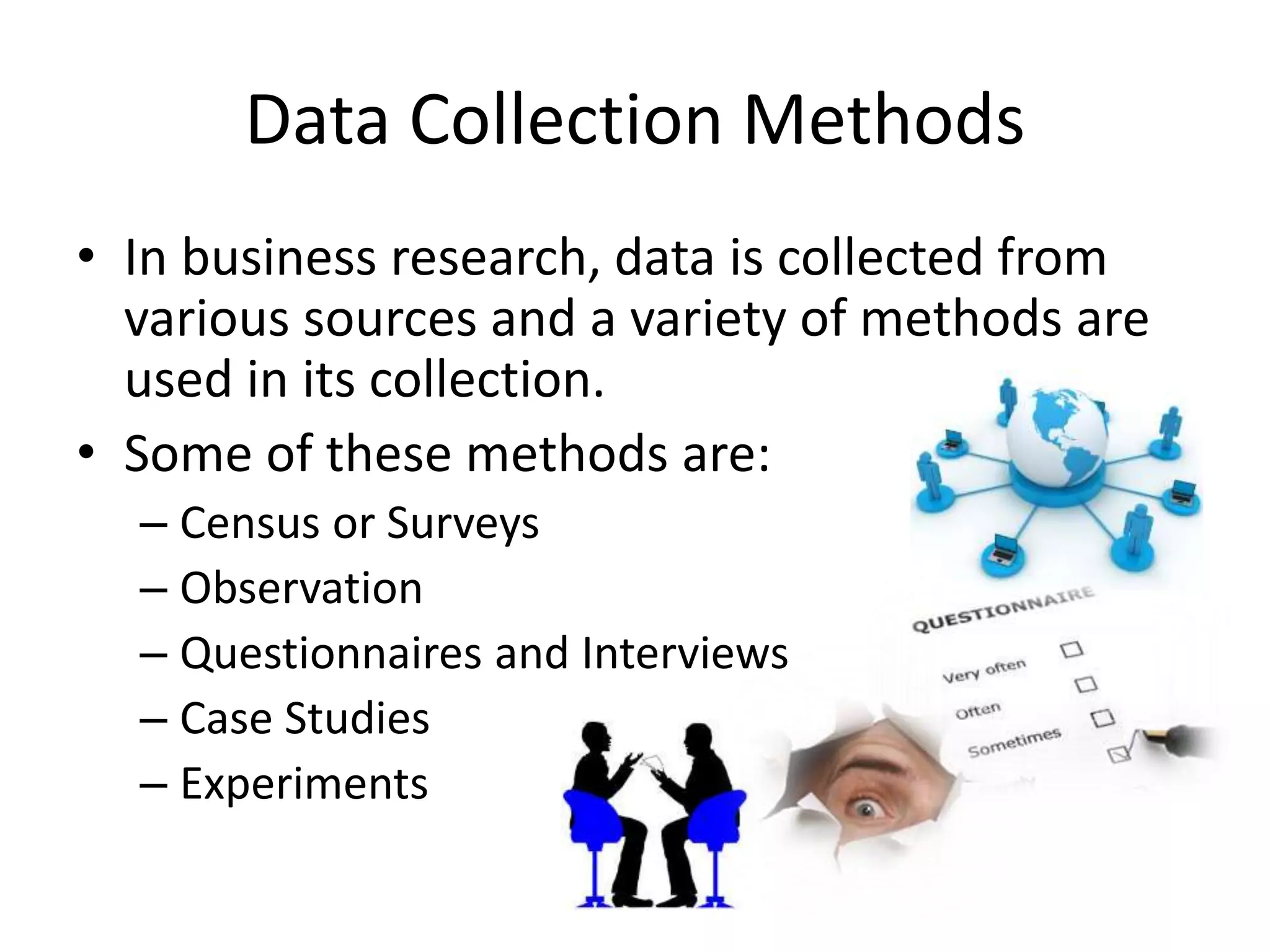
• In business research, data is collected from
various sources and a variety of methods are
used in its collection.
• Some of these methods are:
– Census or Surveys
– Observation
– Questionnaires and Interviews
– Case Studies
– Experiments
Experimental Method
• The experimental method involves
manipulating one variable to determine if
changes in one variable cause changes in
another variable.
Variables?
• A variable is anything in an experiment that
can change or vary.
• There are 3 kinds of variables:
– Independent Variable
– Dependent variable
– Controlled Variables or Controlled Environment
Characteristics of An Experiment
• Test one variable at a time.
• Must be fair and unbiased.
• Does not allow any out side factor to affect
the final out come
• Is a valid test. (proving a hypothesis)
• Has repeated trials. (minimizing outcome
errors)
Merits of Experimentation
• The biggest advantage of the experimental
method is it's unique ability to isolate causal
factors, since an experiment is highly
controlled.
• This method promises more accuracy in the
study.
• Reliable data can be collected.
• This is more suitable to the problem with
heterogeneous (varied) influencing factors.
Demerits of Experimentation
• The disadvantage is that exactly this control
may distort the validity of the obtained
results, and especially the ecological validity.
• This is very costly method.
• This is suitable to Simple problems with
limited scope.
• This is a time consuming method.
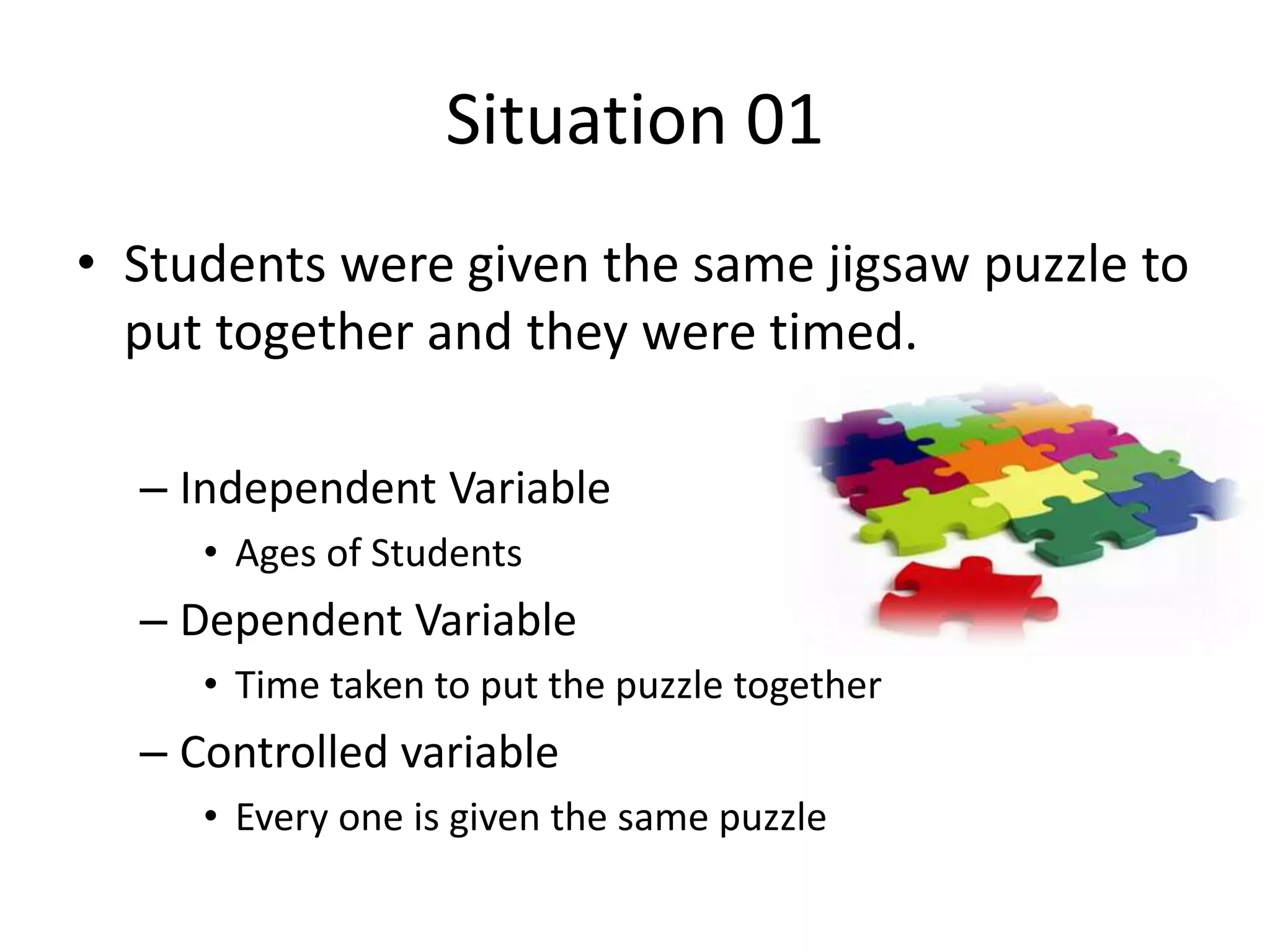
Situation 01
• Students were given the same jigsaw puzzle to
put together and they were timed.
– Independent Variable
• Ages of Students
– Dependent Variable
• Time taken to put the puzzle together
– Controlled variable
• Every one is given the same puzzle
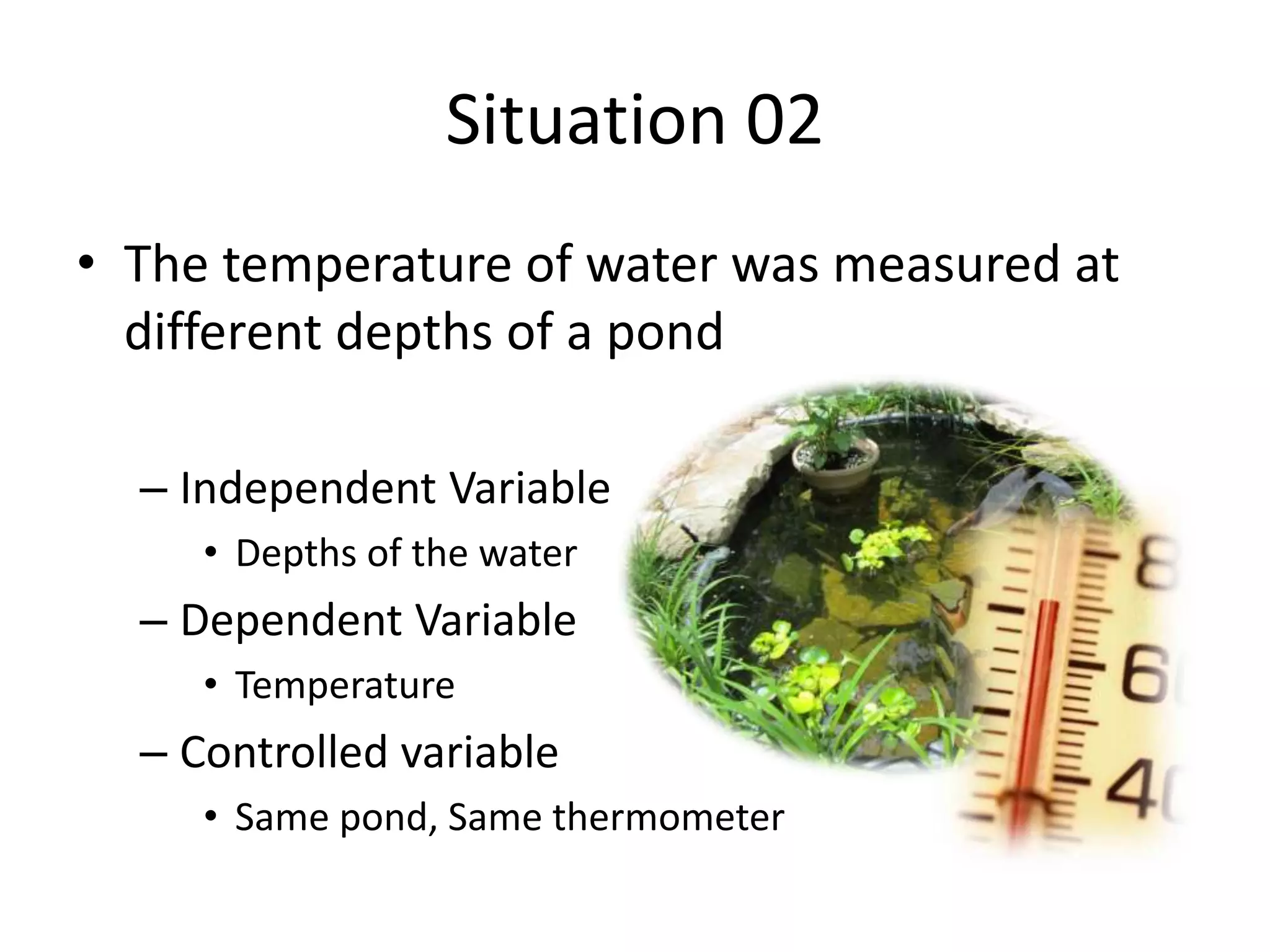
Situation 02
• The temperature of water was measured at
different depths of a pond
– Independent Variable
• Depths of the water
– Dependent Variable
• Temperature
– Controlled variable
• Same pond, Same thermometer
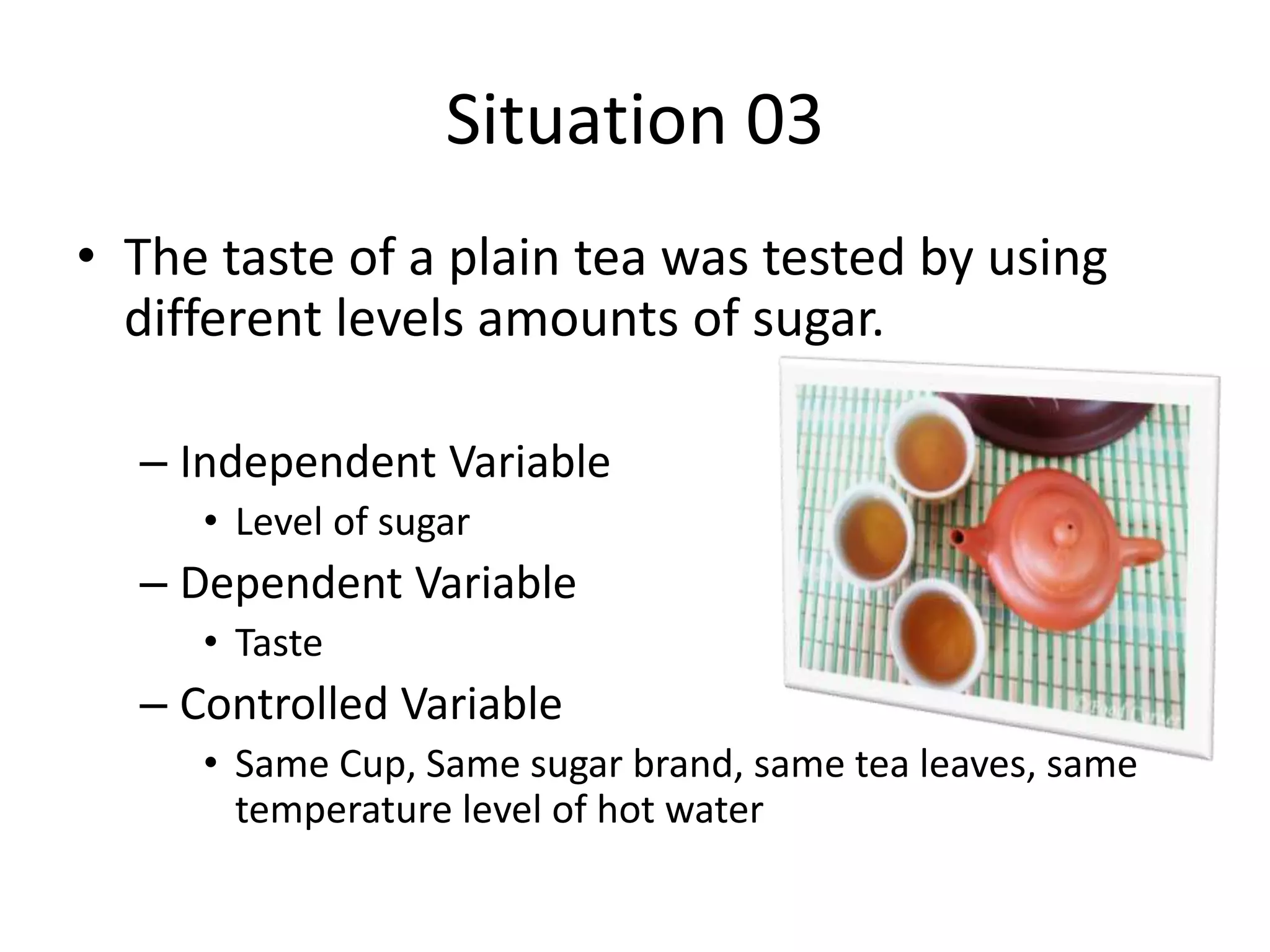
Situation 03
• The taste of a plain tea was tested by using
different levels amounts of sugar.
– Independent Variable
• Level of sugar
– Dependent Variable
• Taste
– Controlled Variable
• Same Cup, Same sugar brand, same tea leaves, same
temperature level of hot water
Sources :
• Lightfoot, Cole & Cole (2008). The
development of children.
• Lilienfeld (2011). Psychology: from inquiry to
understanding.
• http://www.extension.org/pages/67849/expe
rimental-design#.U22yAvmSwro
• Wikipedia.com
Experimental Method of Data Collection

Experimental Method of Data Collection

  • 1.
    DATA COLLECTION METHODS Presentation by: ENHT 07 Abhilashini, Chathura, Croos, Dhanusha, Hema, Madhusha, Niroshini, Sajith, Sanjaya, Shehani, Udari
  • 2.
    Data Collection Methods •In business research, data is collected from various sources and a variety of methods are used in its collection. • Some of these methods are: – Census or Surveys – Observation – Questionnaires and Interviews – Case Studies – Experiments
  • 6.
    Experimental Method • Theexperimental method involves manipulating one variable to determine if changes in one variable cause changes in another variable.
  • 7.
    Variables? • A variableis anything in an experiment that can change or vary. • There are 3 kinds of variables: – Independent Variable – Dependent variable – Controlled Variables or Controlled Environment
  • 8.
    Characteristics of AnExperiment • Test one variable at a time. • Must be fair and unbiased. • Does not allow any out side factor to affect the final out come • Is a valid test. (proving a hypothesis) • Has repeated trials. (minimizing outcome errors)
  • 9.
    Merits of Experimentation •The biggest advantage of the experimental method is it's unique ability to isolate causal factors, since an experiment is highly controlled. • This method promises more accuracy in the study. • Reliable data can be collected. • This is more suitable to the problem with heterogeneous (varied) influencing factors.
  • 10.
    Demerits of Experimentation •The disadvantage is that exactly this control may distort the validity of the obtained results, and especially the ecological validity. • This is very costly method. • This is suitable to Simple problems with limited scope. • This is a time consuming method.
  • 11.
    Situation 01 • Studentswere given the same jigsaw puzzle to put together and they were timed. – Independent Variable • Ages of Students – Dependent Variable • Time taken to put the puzzle together – Controlled variable • Every one is given the same puzzle
  • 12.
    Situation 02 • Thetemperature of water was measured at different depths of a pond – Independent Variable • Depths of the water – Dependent Variable • Temperature – Controlled variable • Same pond, Same thermometer
  • 13.
    Situation 03 • Thetaste of a plain tea was tested by using different levels amounts of sugar. – Independent Variable • Level of sugar – Dependent Variable • Taste – Controlled Variable • Same Cup, Same sugar brand, same tea leaves, same temperature level of hot water
  • 14.
    Sources : • Lightfoot,Cole & Cole (2008). The development of children. • Lilienfeld (2011). Psychology: from inquiry to understanding. • http://www.extension.org/pages/67849/expe rimental-design#.U22yAvmSwro • Wikipedia.com